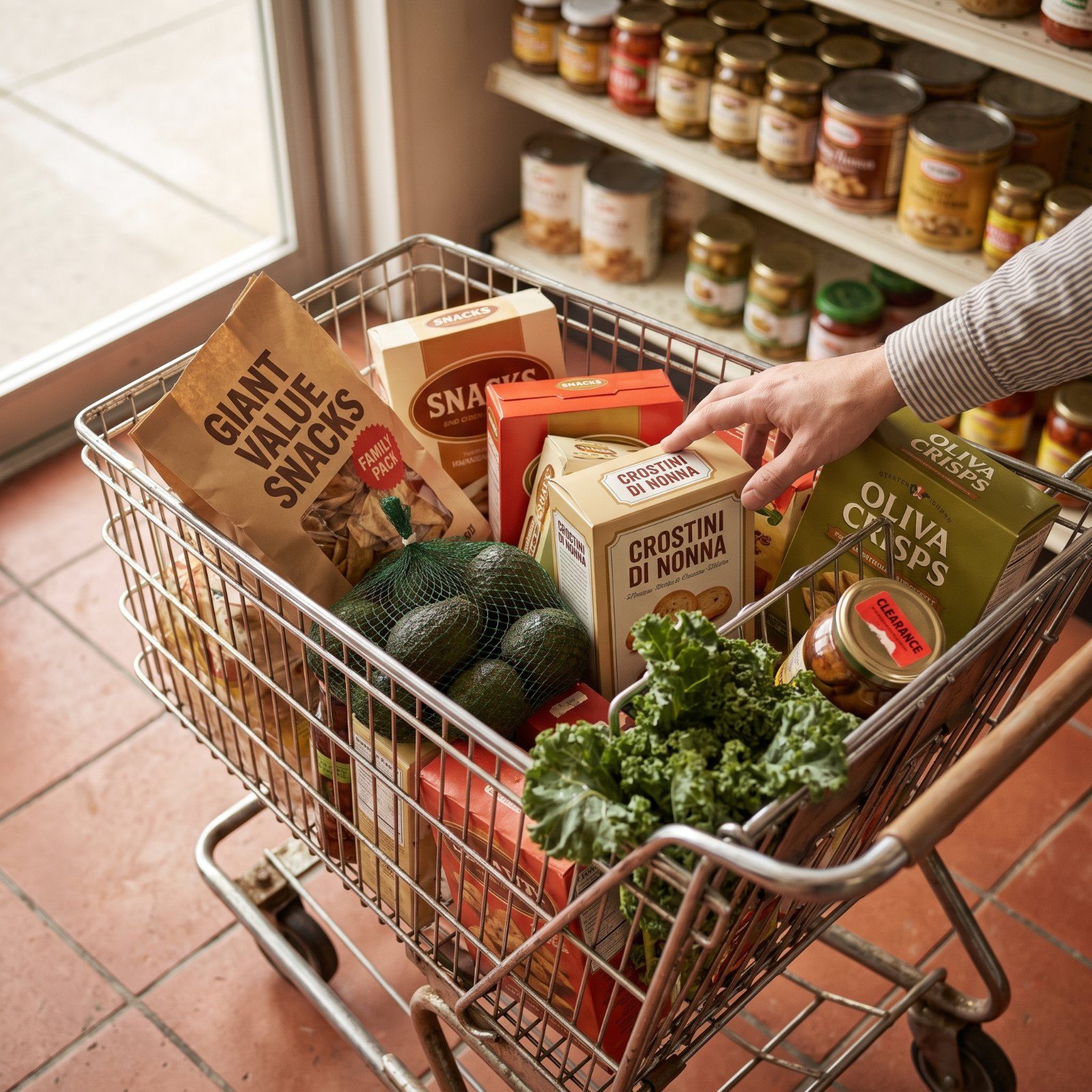
The cart is already full and you haven’t eaten since breakfast. That’s when the trouble starts. Suddenly the cookies with the hand-lettered label look like they understand you, the family-size bag of something you’ve never tried feels like destiny, and the kale in your hand is a promise to a future version of yourself who meal preps and goes to bed early.
Please note that some of the images in this article were created with the assistance of AI.
Nobody admits this at checkout: the way you shop is the way you date. Same wiring, different aisle. The same brain that defends a bad clementine because it was on sale will defend a bad relationship for the exact same reason. Let’s walk the aisles together. You’re going to recognize someone, and it might be you.
12. You Shop Hungry and Every Snack Looks Like Soulmate Material
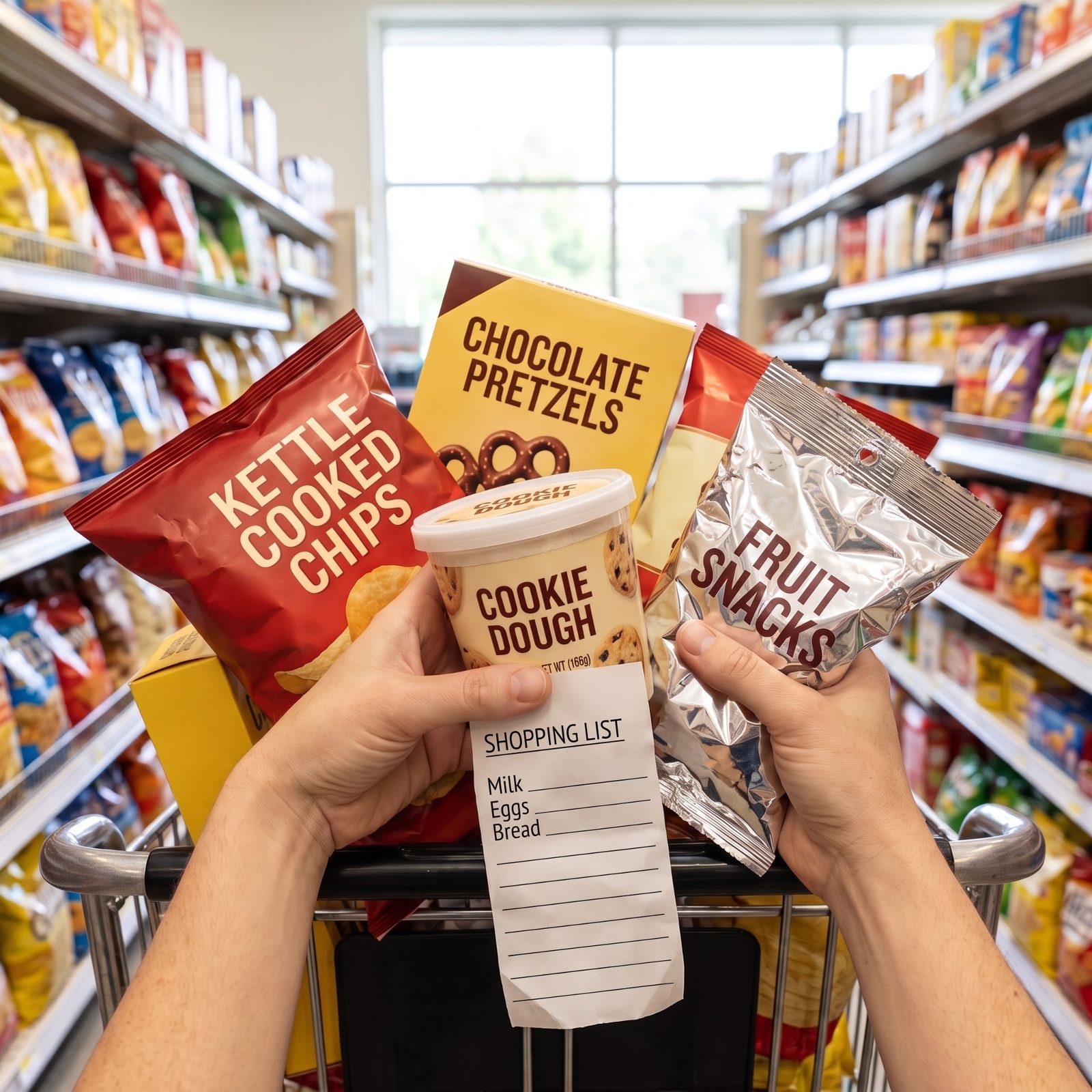
You walked in with a sensible list: milk, eggs, bread. You’re leaving with four things that spoke to your stomach and nothing to your common sense. Every aisle looks like a profession of love when your blood sugar is on the floor.
This is the exact chemistry that makes you fall hardest when you’re emptiest, because lonely and hungry feel remarkably similar to the brain. There’s a name for it — hangry decision-making — and it’s why grocery stores adore a shopper who skipped lunch. When you’re depleted, everything shiny reads as the thing that will finally fix you.
The partner picked in that state is the snack bought in that state. Chosen to fill a hole, not to last the week.
11. You Trust Gorgeous Packaging Over the Ingredient List
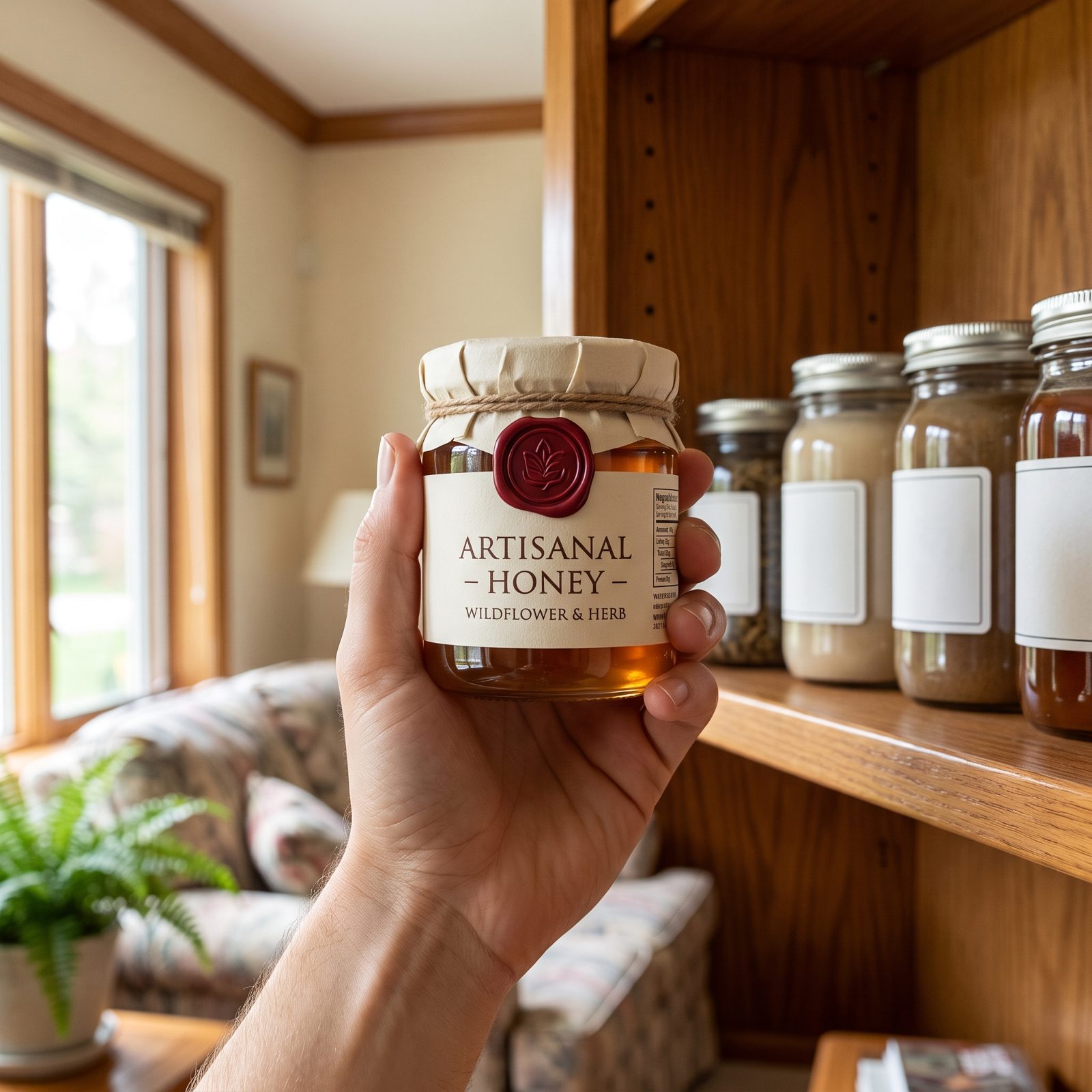
The jar with the serif font and the little wax seal costs twice as much and you don’t even read the back. Beautiful packaging makes a product feel honest. You assume anything that looks this considered must also taste good, be good for you, and treat you right.
It’s the halo effect, plain and simple — one attractive trait and your brain fills in all the rest for free. We do it to people the moment they walk in looking put together. Charming at dinner, so surely kind when the lights go out. Well dressed, so surely reliable. The label tells you nothing about what’s inside, and you buy it anyway.
Turn the jar over. Read the ingredients. Do the same with the person before you commit the pantry space.
10. You Believe This Time the Avocados Will Be Different
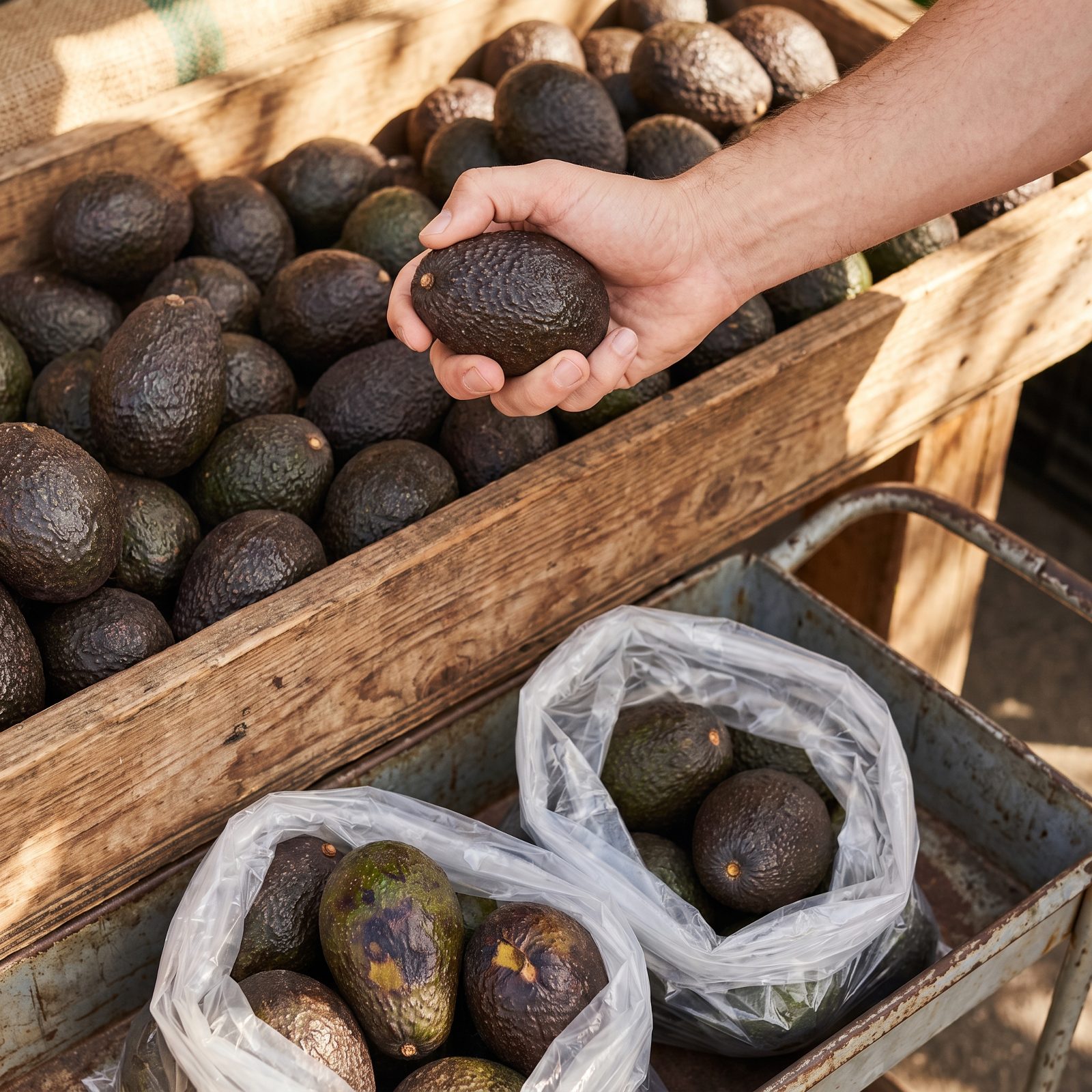
Rock hard today, black and stringy by Thursday, and next week you’ll do the whole thing again, fully convinced that this batch — these particular avocados — will ripen on your schedule for once. They never do. You’ve been losing this bet for years. Most of us have, and we still reach for them like we’ve never met.
This is the gambler’s fallacy wearing a produce apron. Past disappointment feels like it should earn you a win, so you keep betting on a pattern that was never in your favor.
It’s the same hope that keeps someone waiting for a partner to finally become the person they swear is in there somewhere. The potential is real. The timing never cooperates.
9. A Red Sale Sticker Makes Obvious Flaws Feel Negotiable
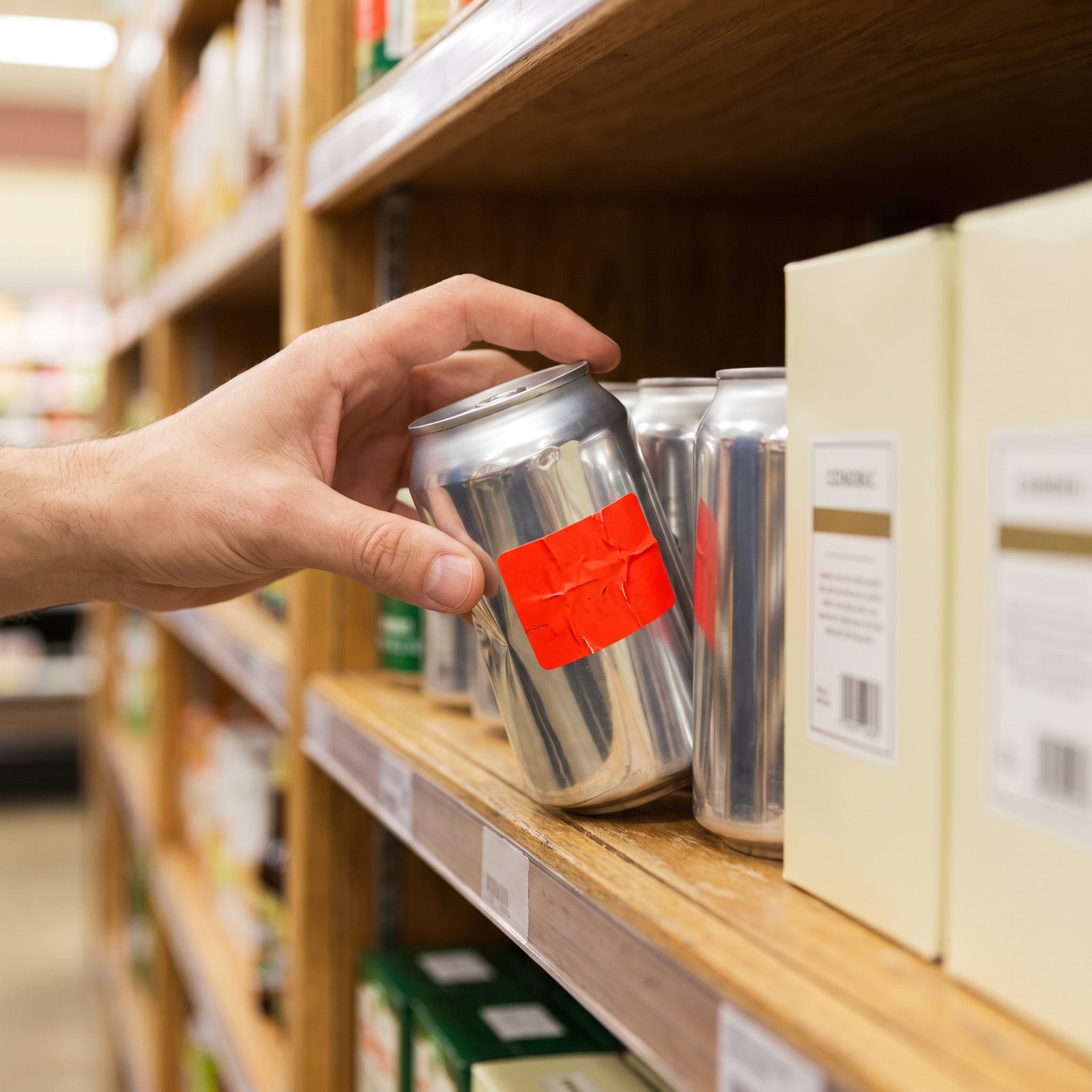
The can is dented. The box has a crushed corner. But there’s a red sticker slapped across it, and suddenly those flaws feel like features you’re clever enough to overlook. A discount reframes a problem as a deal.
We do this with people too, recategorizing flaws as quirks the moment we feel we’re getting a bargain. He’s not unreliable, he’s spontaneous. She’s not cold, she’s low maintenance. The markdown on the heart works exactly like the markdown on the shelf.
What’s really happening is a quiet anchoring trick. The crossed-out original price tells your brain the real value is higher, so the flaw feels like something you’re being paid to tolerate. You’re not evaluating the item anymore — you’re congratulating yourself on the discount.
8. You Buy the Family Pack Before Testing One Serving
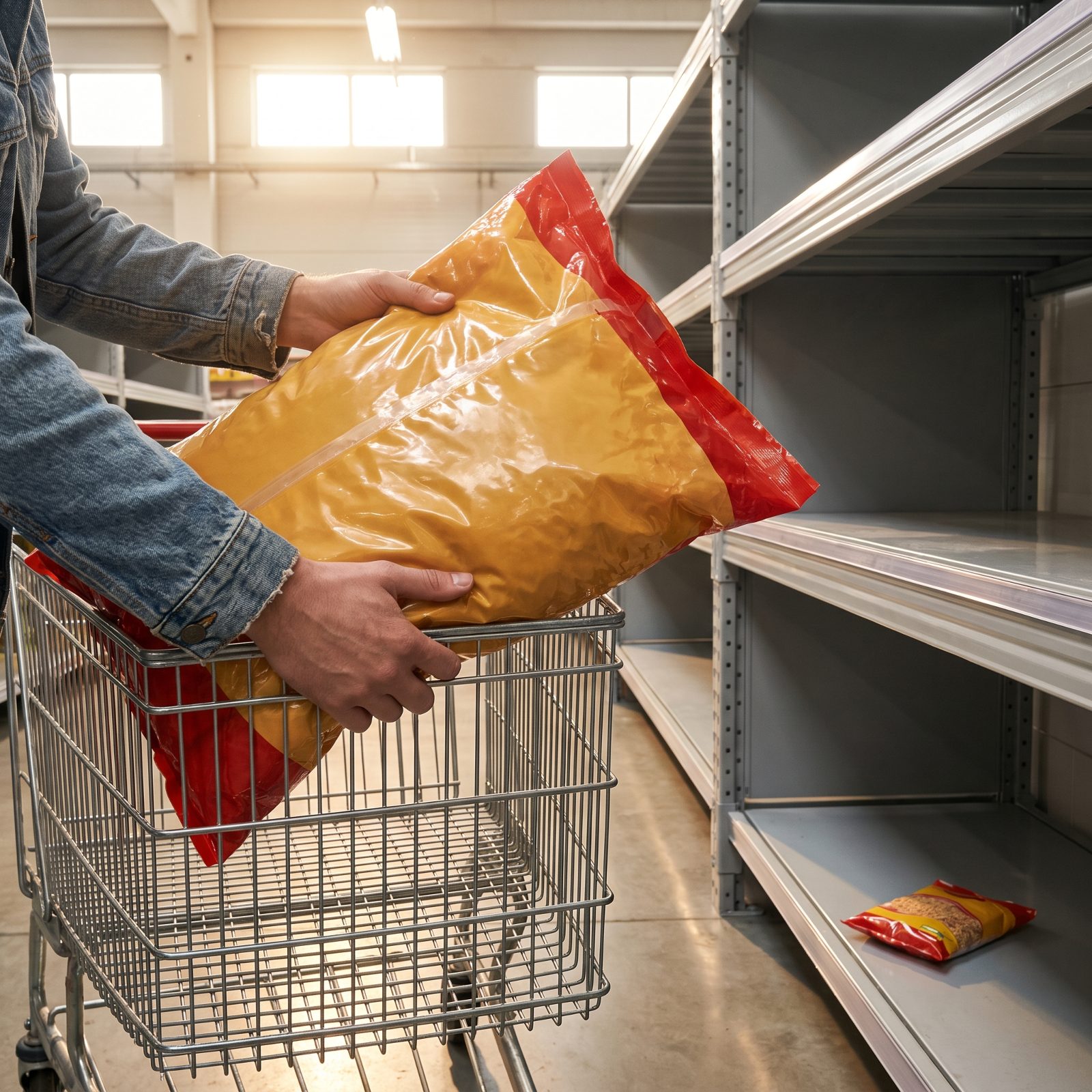
Never tried it. Bought the three-pound bag anyway. Why commit to a sample when you can commit to a quarter of a year’s supply of something that might taste like cardboard?
Commitment escalation runs this show. The more you invest up front, the more your brain insists the thing must be worth it, because surely you wouldn’t buy that much of a mistake. So you talk yourself into loving it.
This is the person who moves in on month two and gets engaged by month six, all before learning how the other one handles a bad day. Going all in fast feels like confidence. Usually it’s just skipping the part where you find out.
The bulk bag and the whirlwind romance make the same bet: that scale can substitute for knowing.
7. Once It Hits Your Cart, You Start Defending It
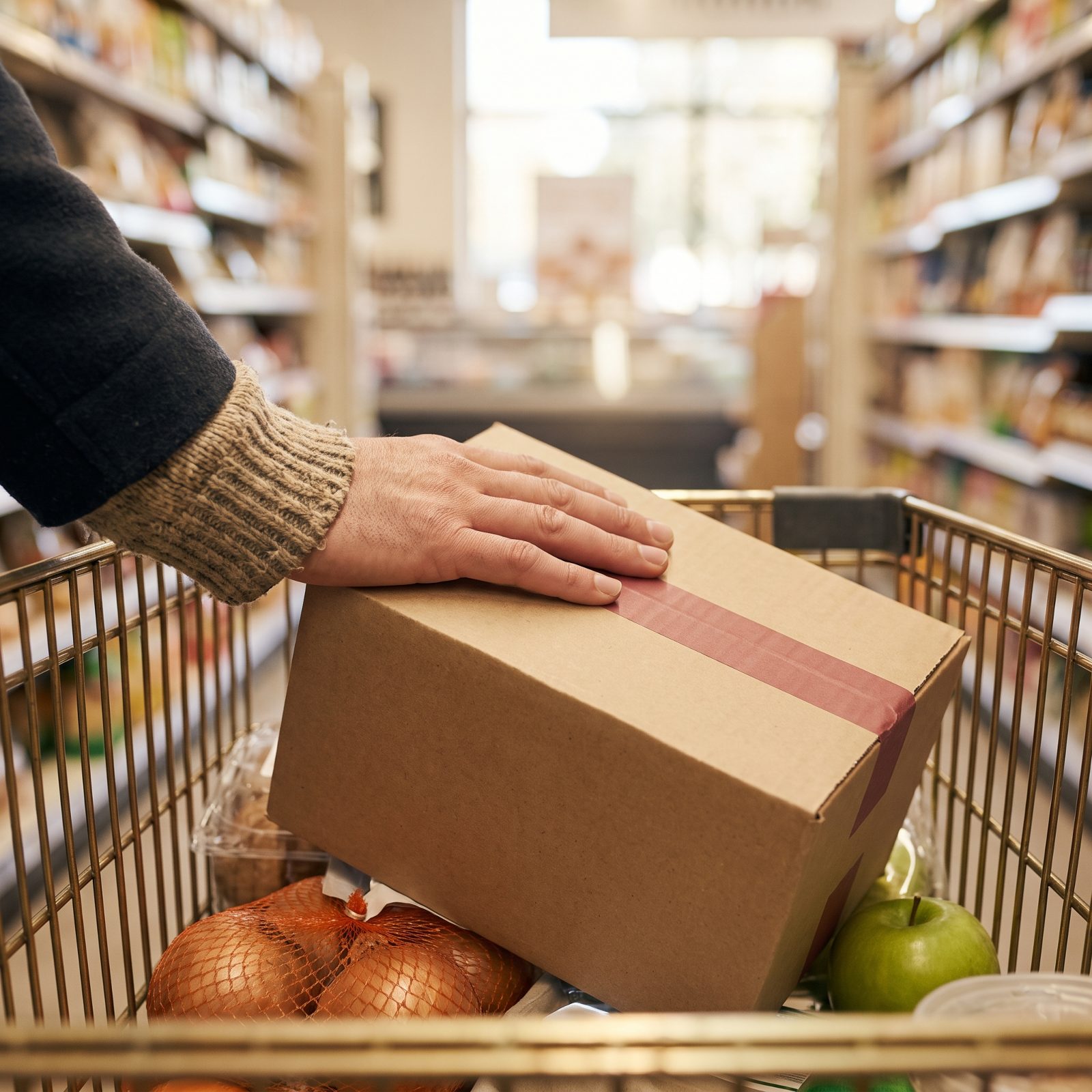
The second something lands in your cart, it becomes yours, and you’ll argue for it. Try putting it back and watch yourself resist. You weren’t even sure about it on the shelf, but now that it’s in your possession, parting with it feels like a small loss.
This is the endowment effect, one of the most studied quirks in behavioral economics. We value things more the moment we own them, purely because we own them. The mug in your hand is worth more to you than the identical mug on the shelf.
Relationships run on the same engine. The longer someone is yours, the harder it is to see them clearly, because letting go now registers as losing something rather than choosing better. Ownership blurs judgment. Ask yourself whether you’d grab it fresh off the shelf today. If the answer is no, the cart is lying to you.
6. You Keep Wilting Produce Because Tossing It Feels Wasteful
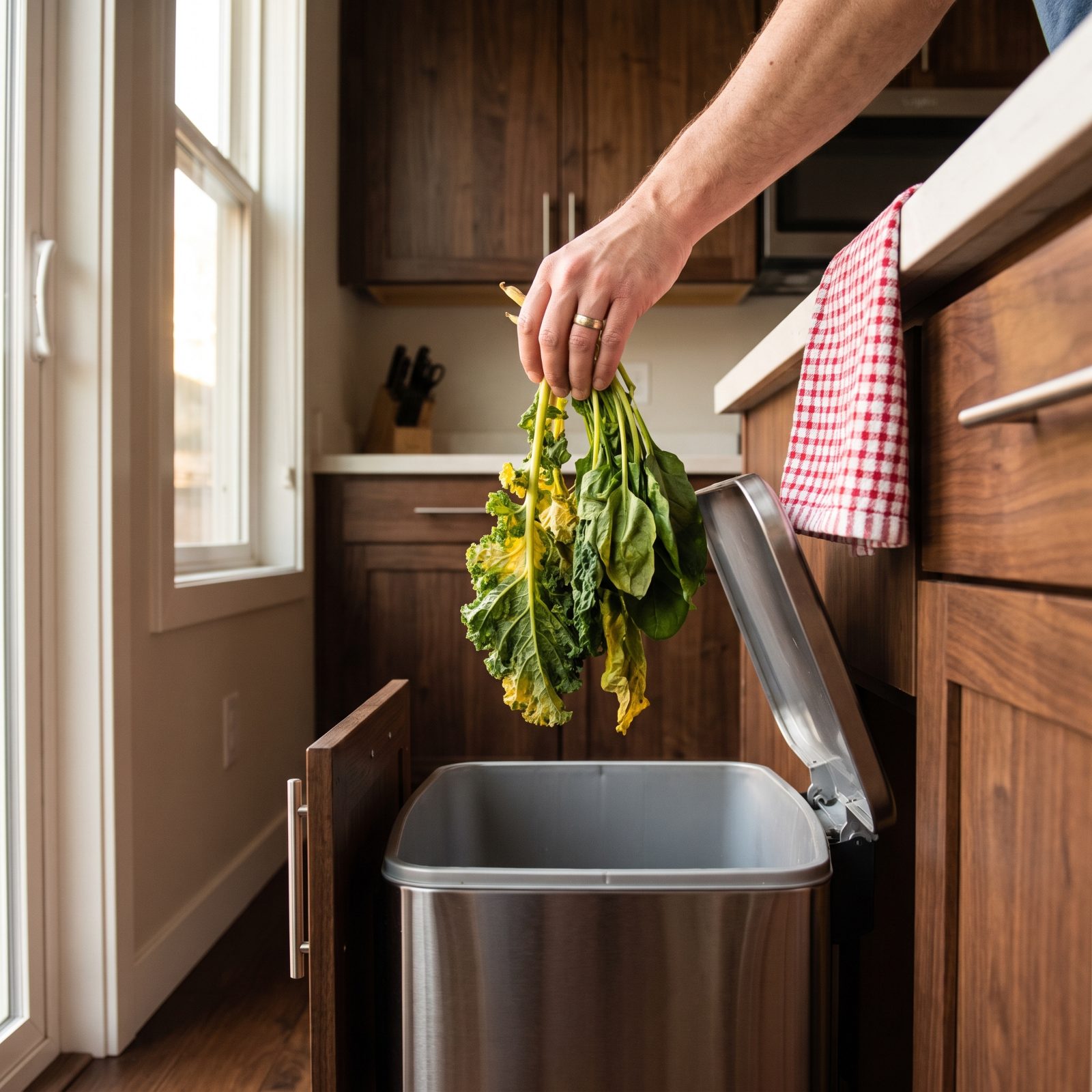
The spinach went slimy days ago. You know it. It’s still in the drawer because throwing it out means admitting the money and the good intentions are gone, so you keep it, as if keeping it might redeem it.
That’s sunk cost, the heaviest anchor in the whole store. You can’t get the money back by hanging on. You just add the fridge space and the smell to your losses. The spent is spent whether you keep it or chuck it.
People do this with years instead of dollars — staying because of what’s already been poured in, calling it loyalty when it’s really just the fear of admitting a loss. The vegetable won’t un-wilt and neither will the time. Only one of those is still rotting in your crisper tonight.
5. Limited Edition Makes an Average Flavor Feel Urgent
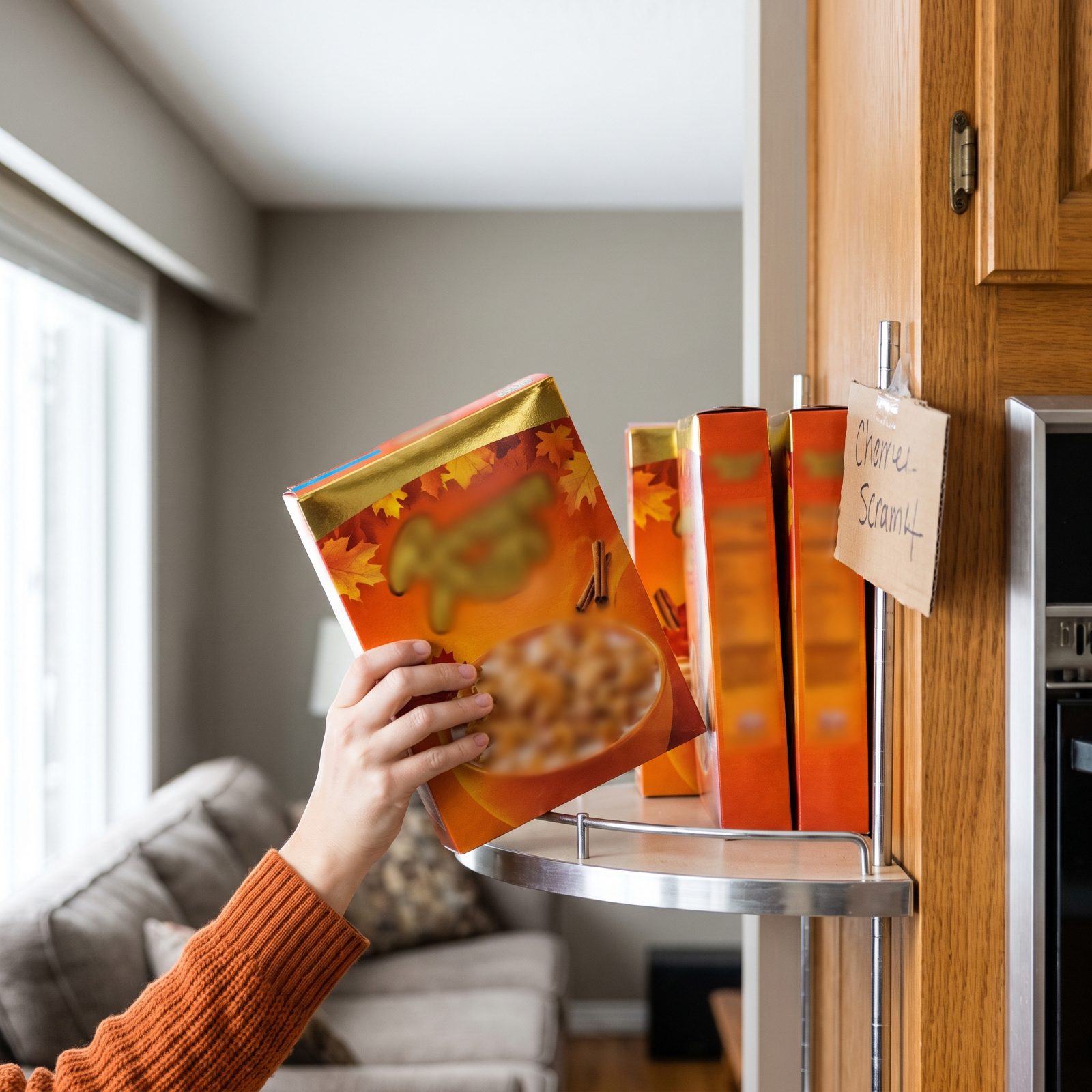
Pumpkin spice something. Peppermint something. A flavor you’d walk right past if it lived on the shelf all year, but stamp “limited edition, this season only” on it and your hand moves before your brain does.
Scarcity is the oldest trick in the aisle. The moment something feels like it might disappear, we want it more, regardless of whether it’s any good. The clock does the convincing.
It’s exactly why the unavailable person is so magnetic. The one who’s hard to pin down, who might vanish, who makes you feel like you’re on a deadline. Urgency gets mistaken for chemistry. You’re not drawn to them. You’re drawn to the countdown.
4. One Free Sample Somehow Earns Your Total Commitment
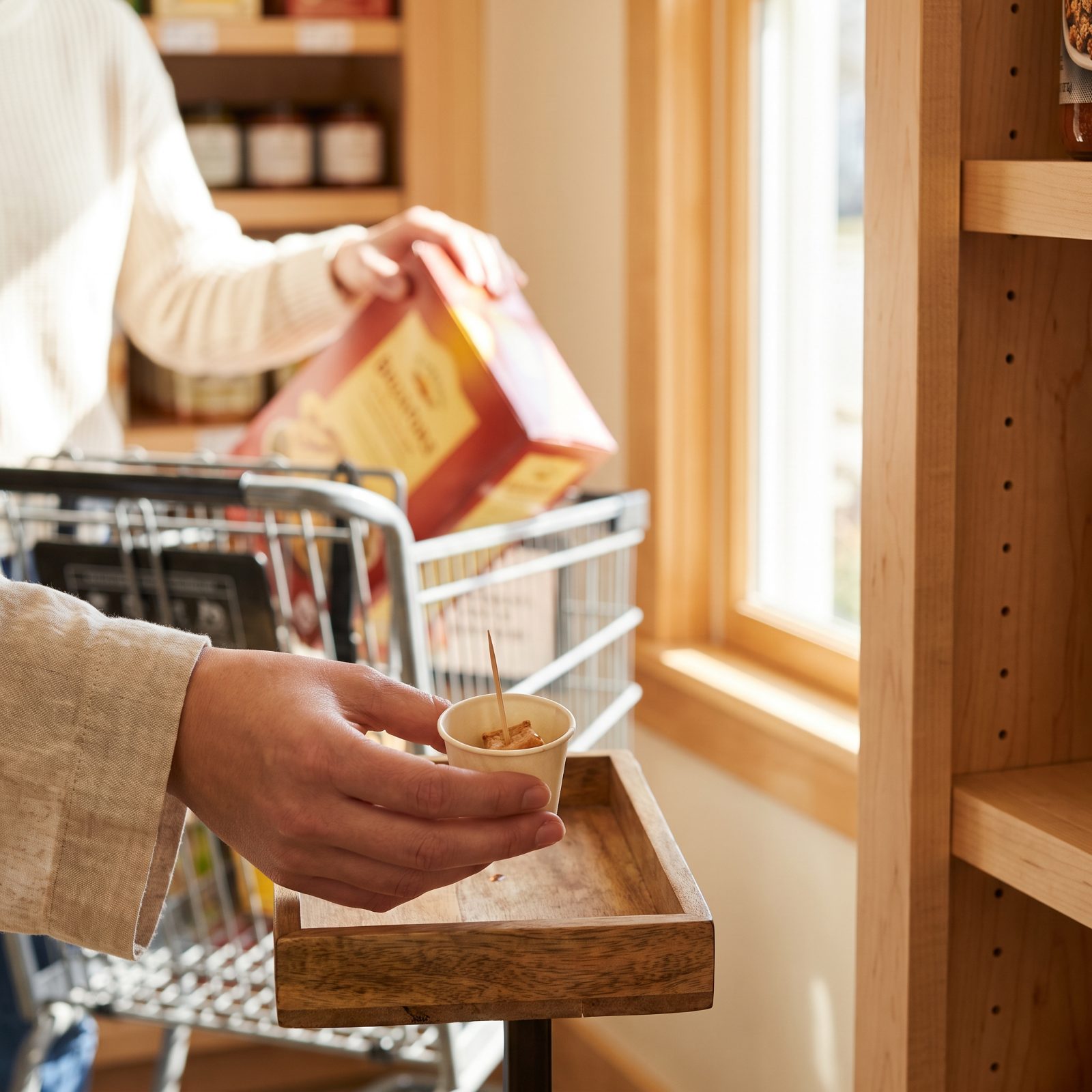
A toothpick’s worth of cheese on a cracker and now you feel like you owe somebody. You didn’t want the full wheel. You weren’t even cheese shopping. But a stranger handed you something for free, and your conscience quietly added it to the cart.
Reciprocity is hardwired so deep we barely notice it working. Someone does something small for us and we feel a debt that wildly outweighs the gift. Stores print money on this. One cube of cheese sells a whole block.
In love, it’s the grand early gesture that locks you in before you’ve decided anything. The lavish first date, the generosity that arrives too soon. You feel obligated to reciprocate with your trust. Generosity isn’t character. Sometimes it’s just a very good sample table, and the real bill comes later.
3. You Buy Kale for the Person You Plan to Become
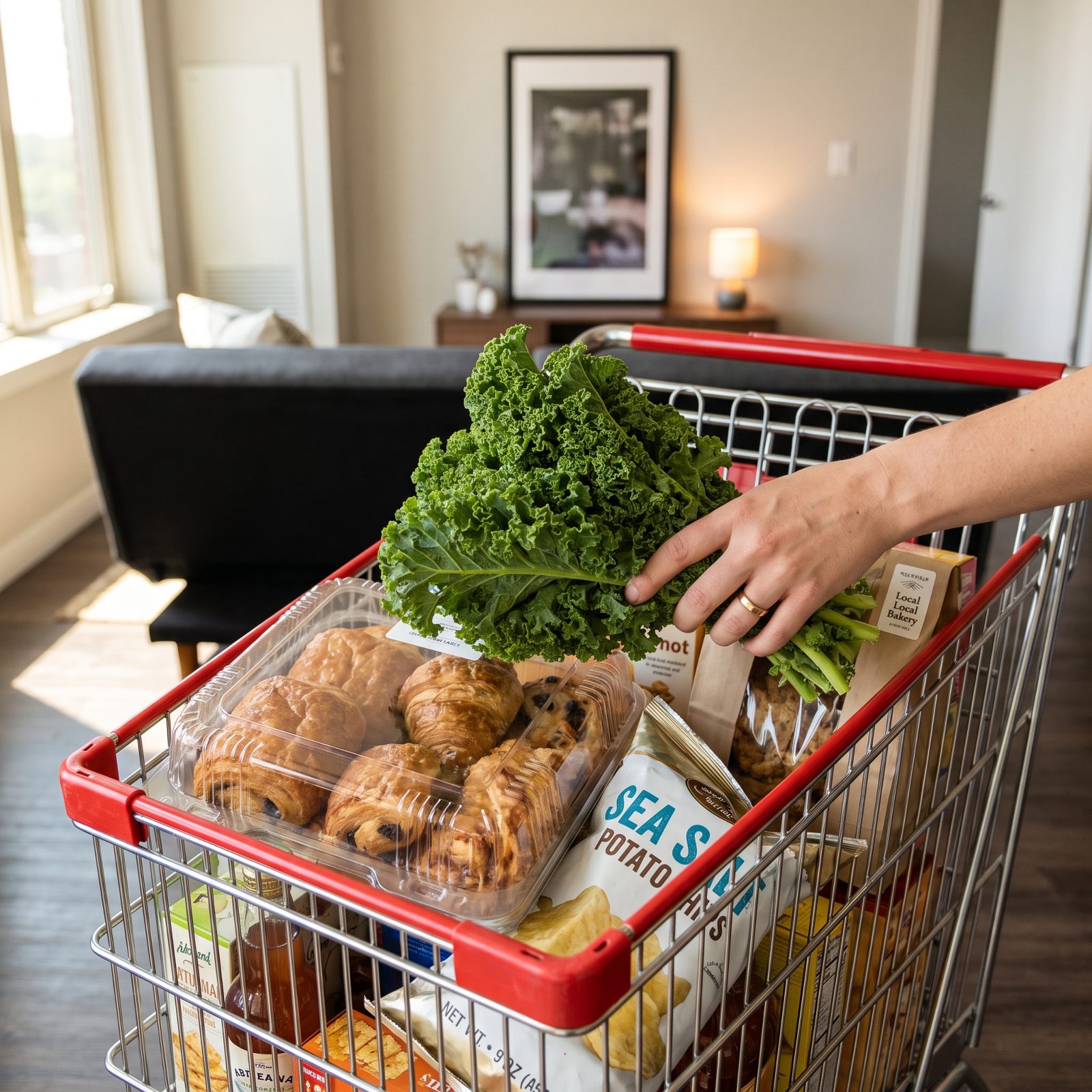
You buy kale for a stranger — specifically, the organized, energetic, well-rested person you fully intend to become by Sunday. That person eats kale. The actual you, the one driving home right now, bought it to sit in the drawer and judge you until it wilts (see the earlier confession about hanging onto wilting produce, because yes, these two are in cahoots).
This is the identity you’re shopping for, not the identity you have. Psychologists call it aspirational buying. You purchase the symbol of the self you want, and the symbol does the wishing for you.
Love runs the same con. You don’t fall for the person in front of you. You fall for who you imagine you’ll both become together, the version where they change and you bloom. The kale is less a vegetable than a promise to a future self who may never show up for dinner.
2. You Choose the Giant Watermelon and Ignore the Carry Home
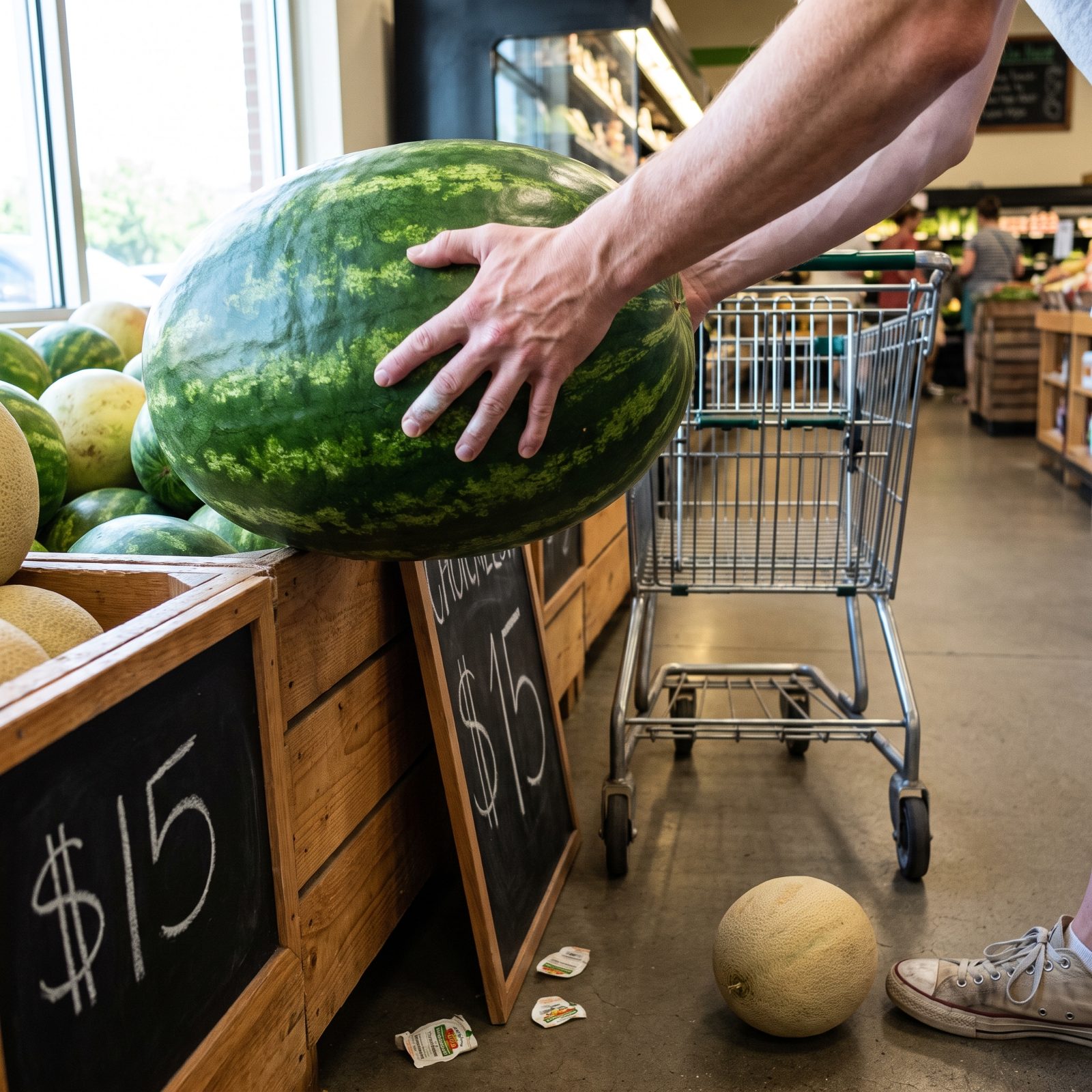
There’s always one watermelon bigger than the rest, and it practically dares you to pick it up. So you heft it, you grin, you picture the picnic. What you don’t picture is the parking lot, the second bag biting into your palm, or the fridge shelf you’ll have to clear out to make room for the thing. You went for the thrill and left the logistics for Future You.
Romance runs on the same wiring. The exciting one. The big personality. The person who makes a dull Tuesday feel like somebody’s birthday. You fall for the size of the feeling and wave off the daily weight of actually hauling it around. Psychologists call this affective forecasting, and we are famously bad at it — we predict how good the high point will feel and skip right past the thousand small Tuesdays in between.
Pick the melon you can actually carry to the car. It still tastes like summer. No one needs to learn that lesson limping across a lot with a melon and a bag of ice both splitting open at the exact same moment.
1. Without a List, Every Aisle Gets a Say
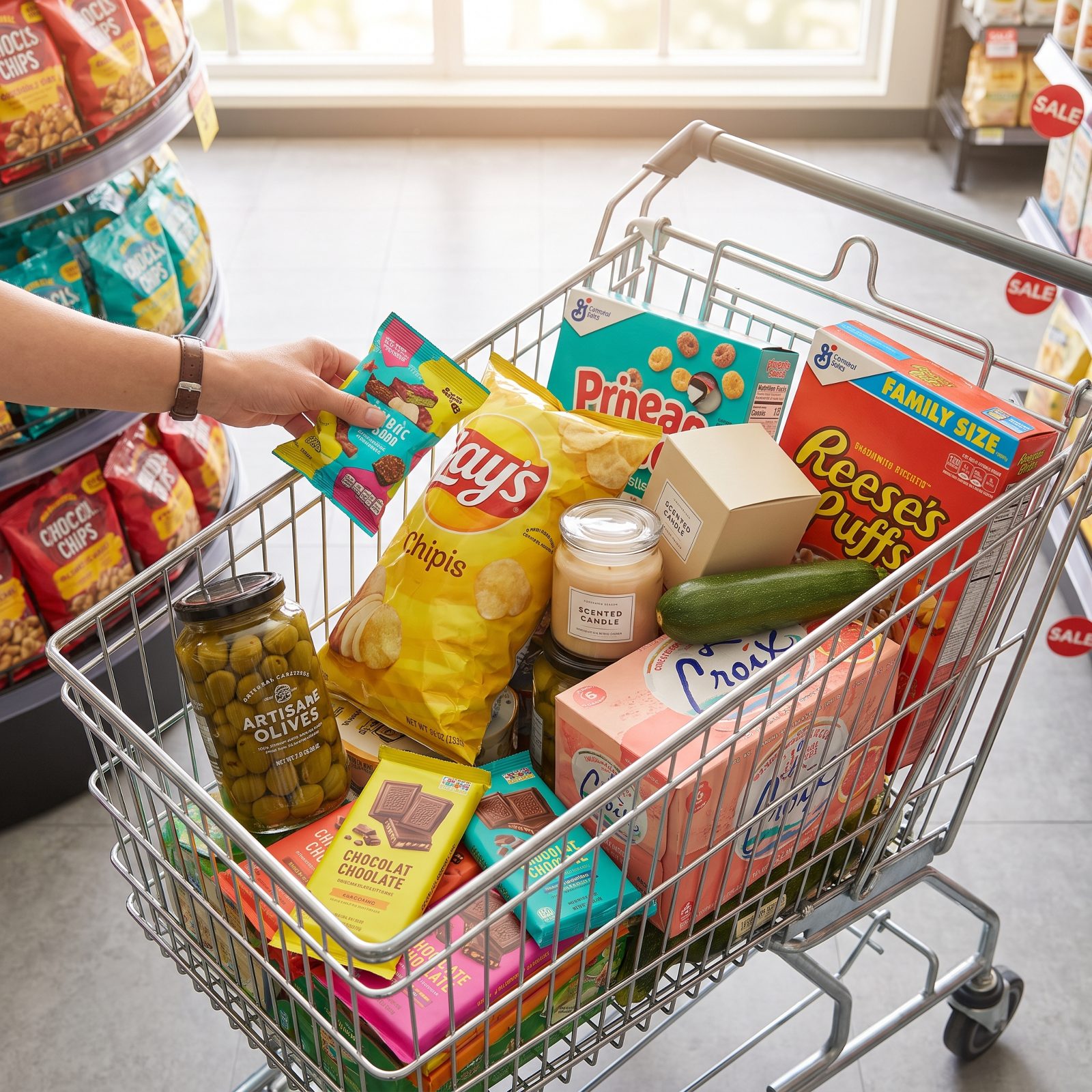
Walk in without a list and watch what happens. The chip aisle makes a compelling case, the candle smells exactly like some cabin you stayed in once, and suddenly you own three dinners’ worth of things that refuse to combine into a meal — and still no eggs. Every shelf got a vote. You never actually cast one of your own.
That’s the same machinery that keeps people glued to someone who keeps auditioning for the role instead of being measured against what they actually need. When you don’t walk in knowing your own non-negotiables, whoever’s standing in front of you sets the terms. Charm in aisle four. A good story in aisle nine. You respond to whatever’s loudest, not to what you came for.
A list isn’t about being rigid. It’s about deciding what matters before the shelf decides for you.
A list is a pre-commitment. You made the hard calls back at the kitchen table — calm, fridge open, nobody selling you anything — so the store couldn’t talk you into a cart full of maybes. People work the same way. Know your deal-breakers before the charm starts, because in the moment the charm always wins the argument. Trust the paper over your own good mood.