Would you like to save this?
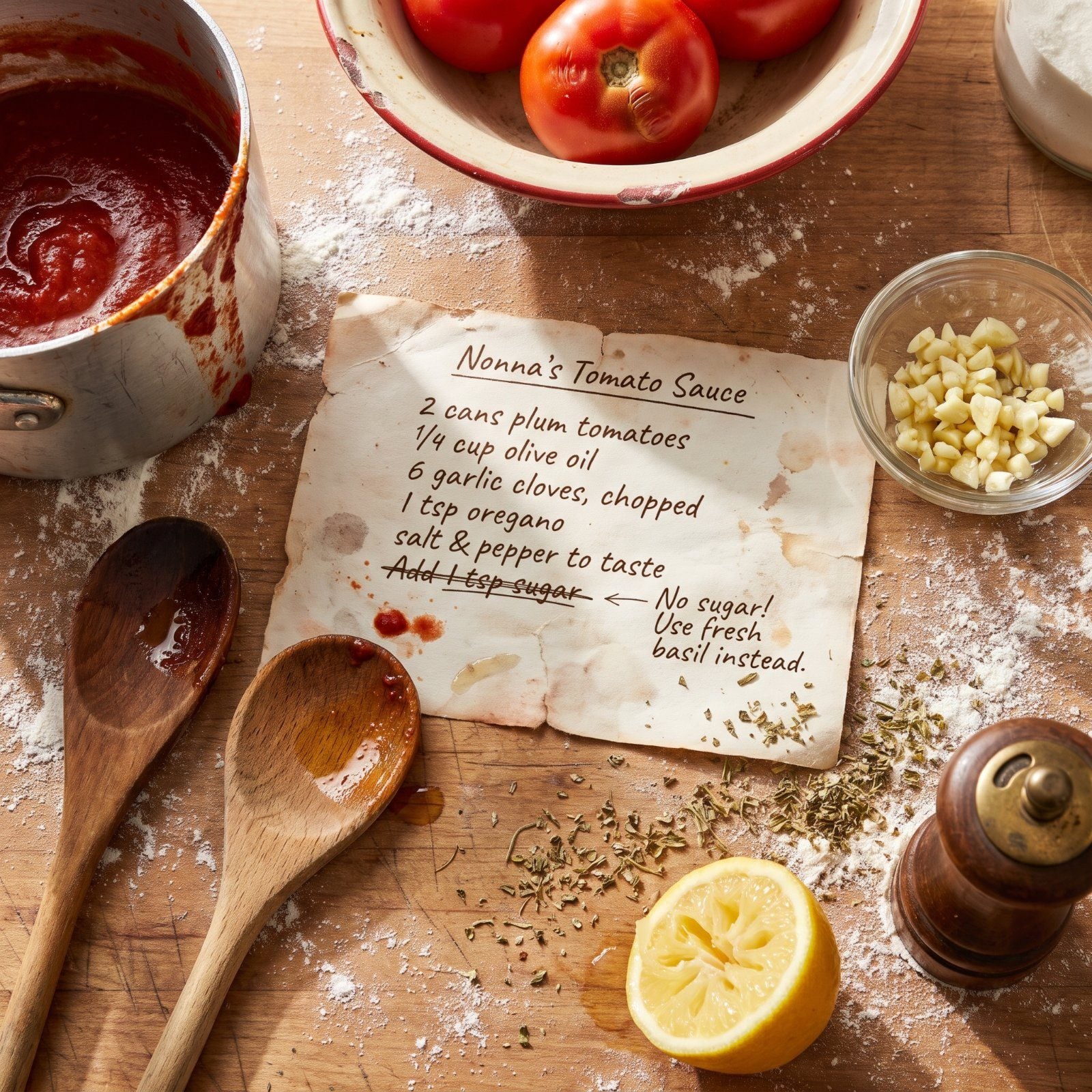
The sauce never tastes the way it did when you were nine. You know this. And still you keep trying, standing over the same dented pot, stirring with the same wooden spoon, convinced that this batch, finally, will be the one that fixes everything. Anyone who has tried to resurrect a family recipe and anyone who has tried to resurrect a struggling relationship is running the same old software — same hope, same stubbornness, same flat refusal to admit the burnt bottom. What follows is a kitchen-counter tour of that overlap, the tasting-spoon moments where love and marinara start to look suspiciously alike. You’ll see yourself in at least one of these. Probably the one about the secret ingredient nobody wants to question.
Please note that some of the images in this article were created with the assistance of AI.
13. You Keep Chasing the Version You Remember From Childhood
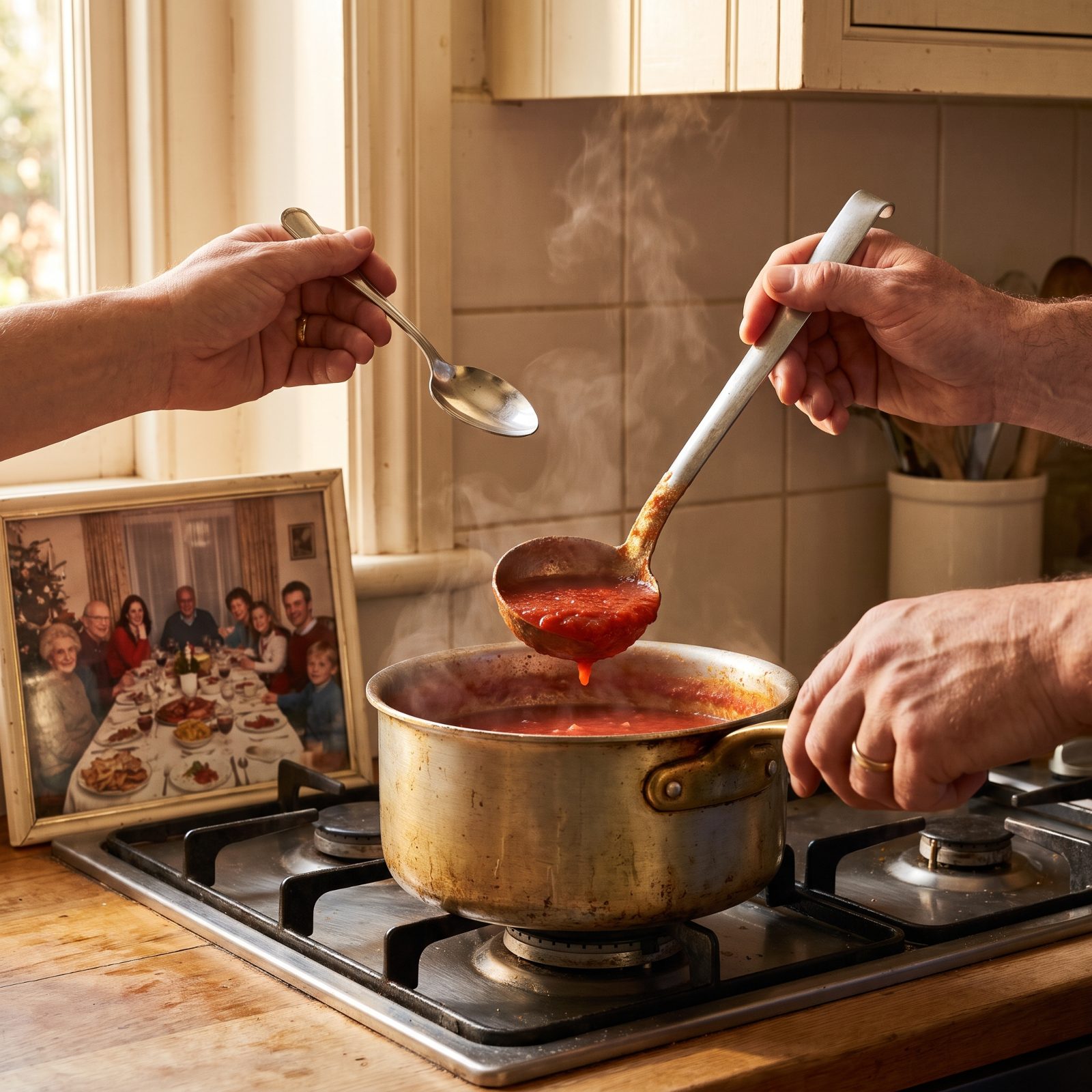
The sauce in your memory is thicker, sweeter, somehow redder. You’ve made it eleven times and none of them land. The recipe isn’t the problem. The problem is that you’re not nine anymore, the kitchen isn’t full of the same people, and the version you’re chasing never fully existed outside of a specific Sunday you can’t get back.
Same thing happens in a relationship on the mend. You keep reaching for the way it felt in year one, before the mortgage and the silences. You want that back, the exact flavor — and you keep getting frustrated that the current batch tastes like now.
What Our Readers Say
- When Piaci Pizza readers loved a food photo and tapped a reason, “nostalgic” and “comfort” tied at the top at 22% each, just ahead of “looks good.”
From Piaci Pizza reader polls and votes.
12. You Call Three Relatives and Get Four Different Recipes
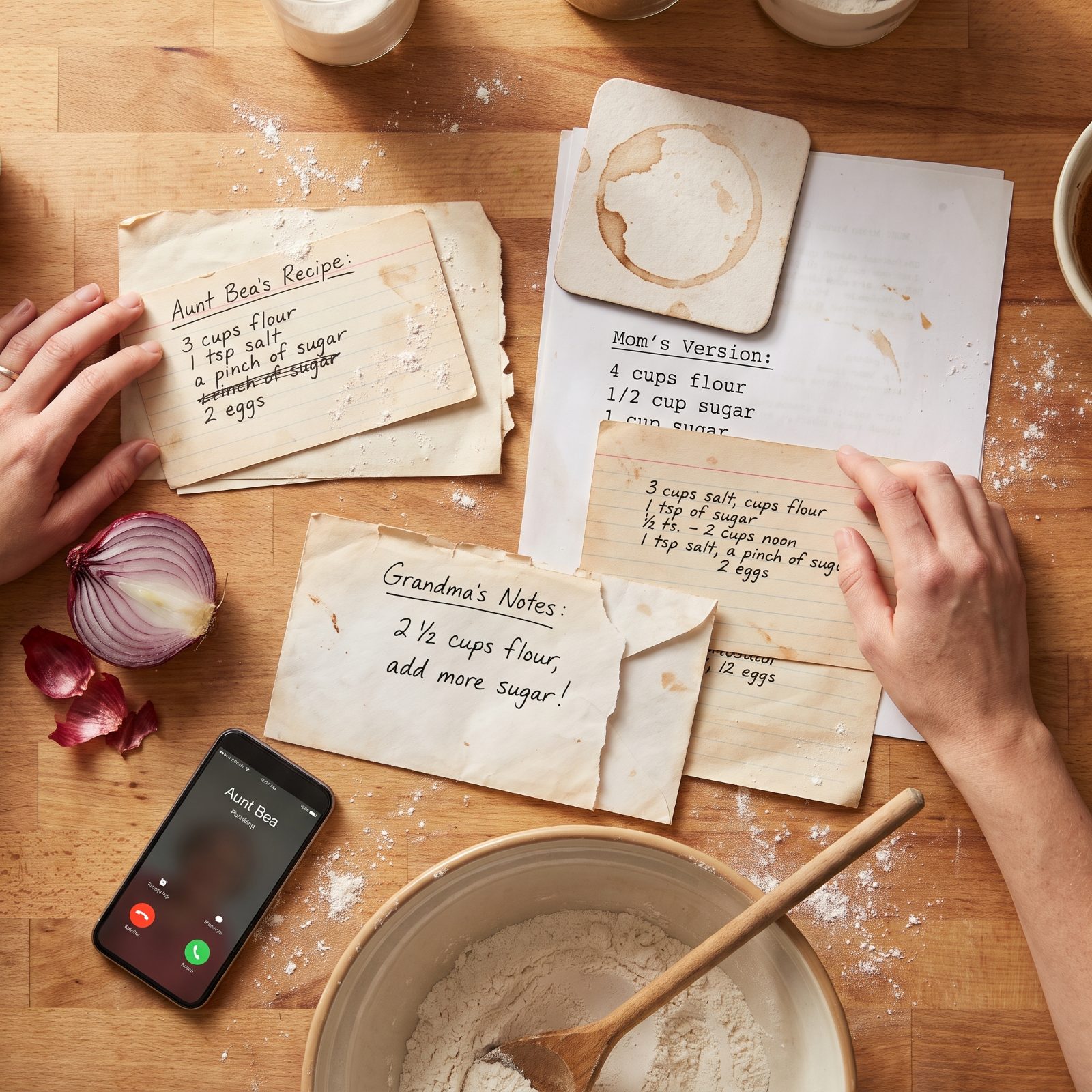
Aunt one swears it’s a tablespoon of sugar. Aunt two is appalled at the very idea of sugar. The cousin insists Grandma never measured anything and you’re all wasting your time. You hang up with four contradictory versions and less confidence than when you started.
Ask around when a relationship is wobbling and you get that same chorus. Everyone has advice, all of it certain, none of it agreeing — the marriage counselor friend, the never-married friend, the one who’s been divorced twice and somehow has the most opinions.
Too many confident sources don’t clarify. They paralyze. Call it choice overload wearing an apron. The more authorities you consult, the harder it gets to trust the one thing that actually matters: your own tongue, your own read on the room.
11. You Blame the Oven Before Questioning Grandma’s Instructions

The lasagna came out scorched on top and raw in the middle, and your first move is to accuse the oven of running hot. Not the recipe. Never the recipe. Grandma’s instructions are sacred text, and sacred text doesn’t get audited.
Watch anyone defending a troubled relationship and you’ll hear the same reflex. It’s the timing, it’s work stress, it’s the kids, it’s the weather. Anything external. The actual pattern — the thing you repeat every single time — stays off the table.
10. One Person Chops Everything, but Everyone Says “We Cooked”
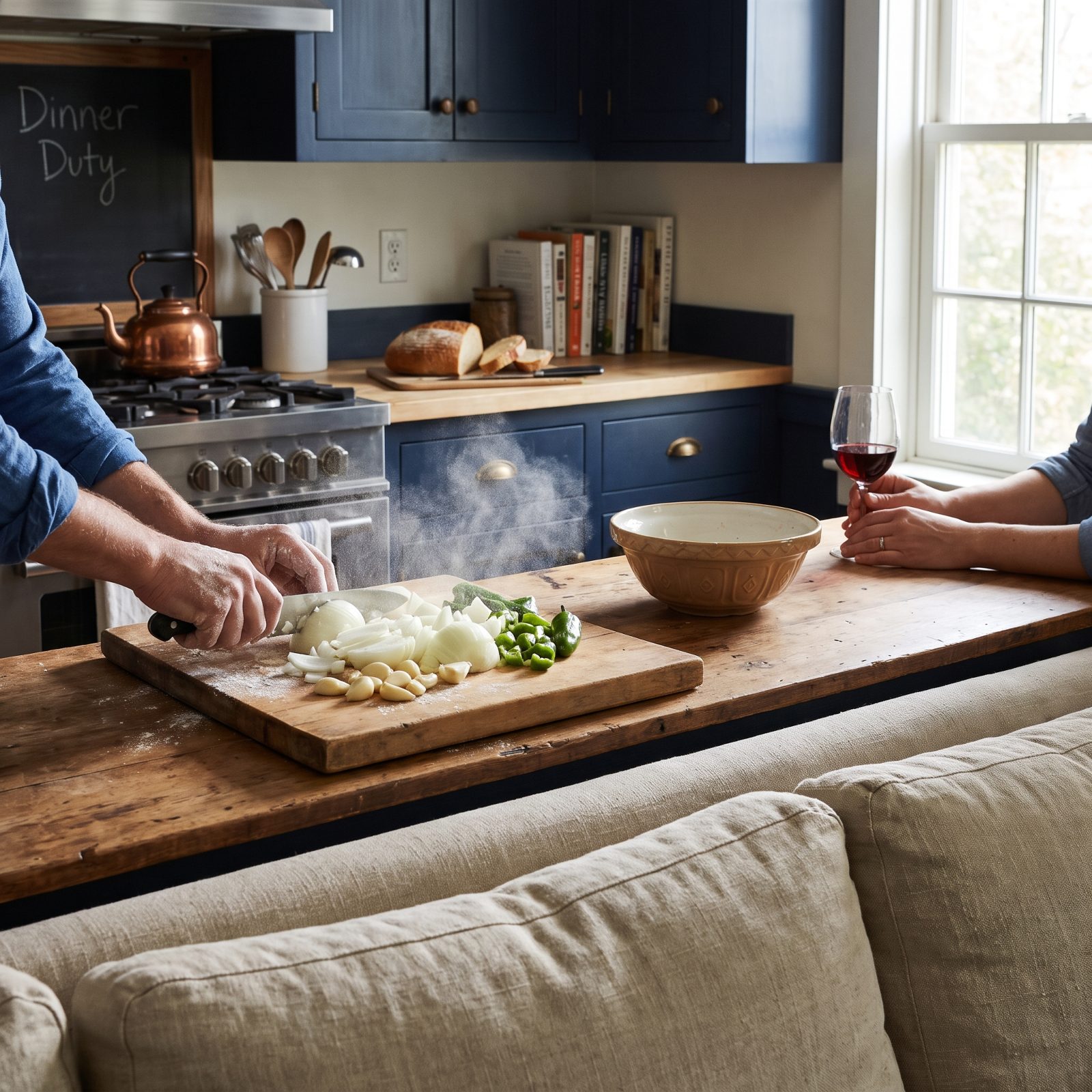
One person has been dicing onions for forty minutes, eyes streaming, while the other stirred the pot twice and poured a glass of wine. Dinner arrives. Guests ask who made it. The answer, delivered with a straight face: “Oh, we did it together.”
Every uneven partnership has this exact dynamic. One person carries the emotional labor, books the counseling, remembers the birthdays, smooths the tension. The other shows up for the toast and genuinely believes it was a joint effort.
And there’s a comfort in that fiction. Nobody wants to be the one who admits they’re doing most of the stirring. Saying “we cooked” protects the relationship from a conversation nobody’s ready to have.
9. You Treat Honest Feedback Like an Attack on Grandma

Someone at the table says, gently, that the sauce could use a little more salt. You hear: your grandmother was a fraud and your whole family is a lie. Your spine straightens. The spoon goes down a little hard.
Honest feedback in a relationship triggers the same overreaction. A partner says “I felt unheard last night” and you process it as a full character indictment rather than one data point about one evening. The defenses slam up before the sentence finishes.
Somewhere along the way, the recipe and the relationship both got tangled up with your identity. Criticizing the dish feels like criticizing where you come from. But here’s the quiet truth: the people who tell you it needs salt are the ones still eating at your table.
8. Nobody Wants to Admit the Secret Ingredient Tastes Awful
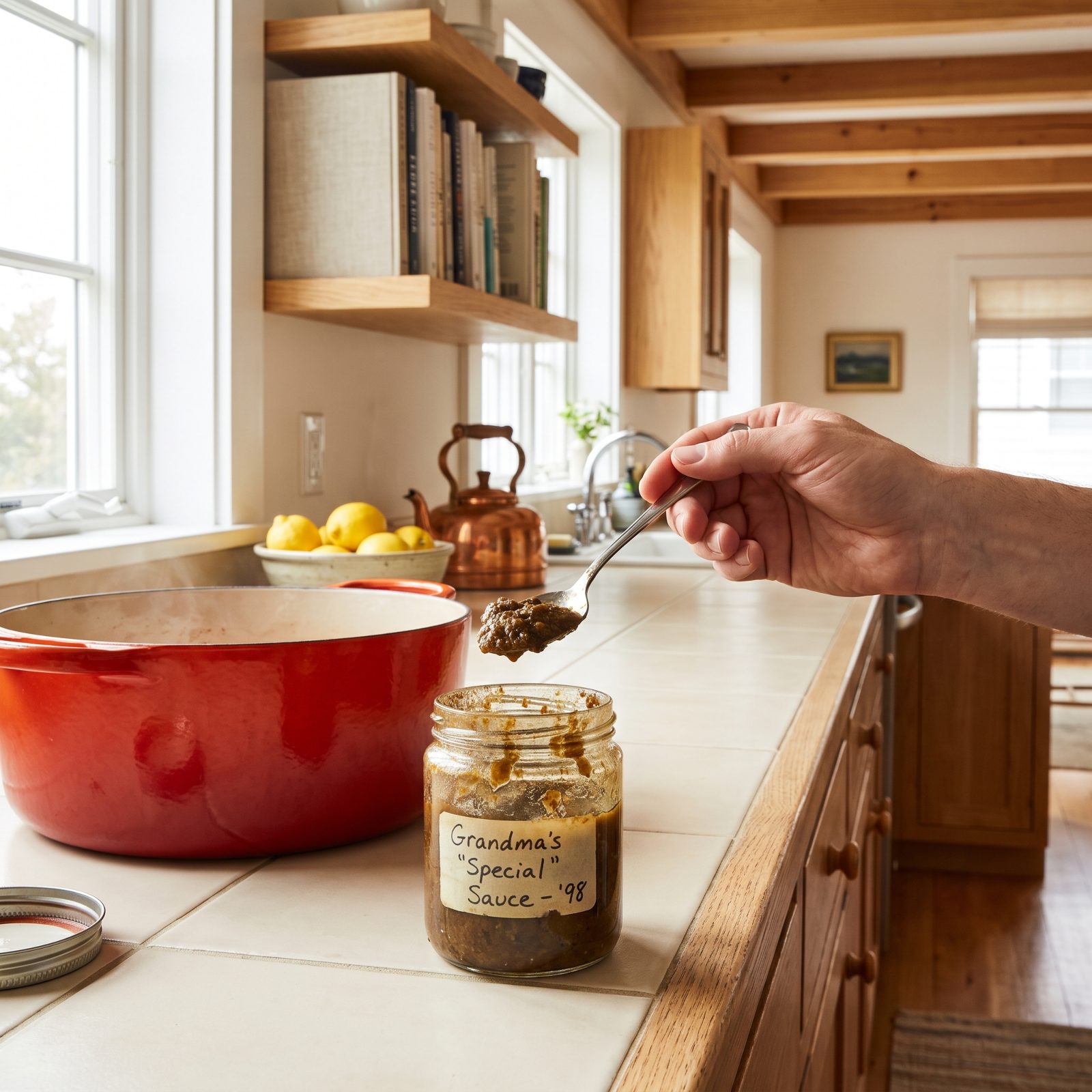
The family insists the magic comes from one secret ingredient — a splash of something nobody can name, handed down like a relic. You add it faithfully. And privately, every year, you suspect it’s the exact thing making the dish taste a little off.
Relationships have their own untouchable ingredient. The in-law everyone tiptoes around. The tradition that quietly causes a fight every holiday. The thing that’s “just how we do it” that no one will admit stopped working years ago.
7. You Avoid Tasting It Until the Guests Are Seated

You never once tasted it during the cooking. You stirred, you adjusted on faith, and you carried it to the table praying. The first real taste happens with eight people watching your face for the verdict. Brave. Insane. Very human.
People do this with relationships constantly. They dodge the hard check-in, the real conversation, the honest look at how things actually are. Then everything comes to a head at the worst possible moment, with an audience, when fixing it is hardest.
Tasting early is uncomfortable. Finding out it’s ruined in front of guests is worse.
Avoidance feels like protection. If you don’t taste it, you can’t confirm it’s bad yet. But the dish doesn’t improve while you’re not looking, and neither does the thing you’re not talking about.
6. You Photograph the Success but Never Discuss the Burnt Bottom

The photo is immaculate. Golden pears, toasted almonds, every piece placed with intention. What the photo shoves to the edge of the frame is the other tart beside it, scorched black underneath, still sitting in its cast-iron skillet while the perfect one gets the plate. The record shows triumph. The pan tells another story.
Every relationship has its highlight reel. The anniversary dinner posted for everyone to admire, right next to a week of cold silences nobody mentions. We curate the top of the dish and quietly scrape the burnt bottom when no one’s watching.
For what it’s worth, our readers gave photos of cooking in progress hearts 88% of the time, versus 82% for the other images in the same articles.
5. You Change Five Ingredients and Learn Absolutely Nothing
Would you like to save this?
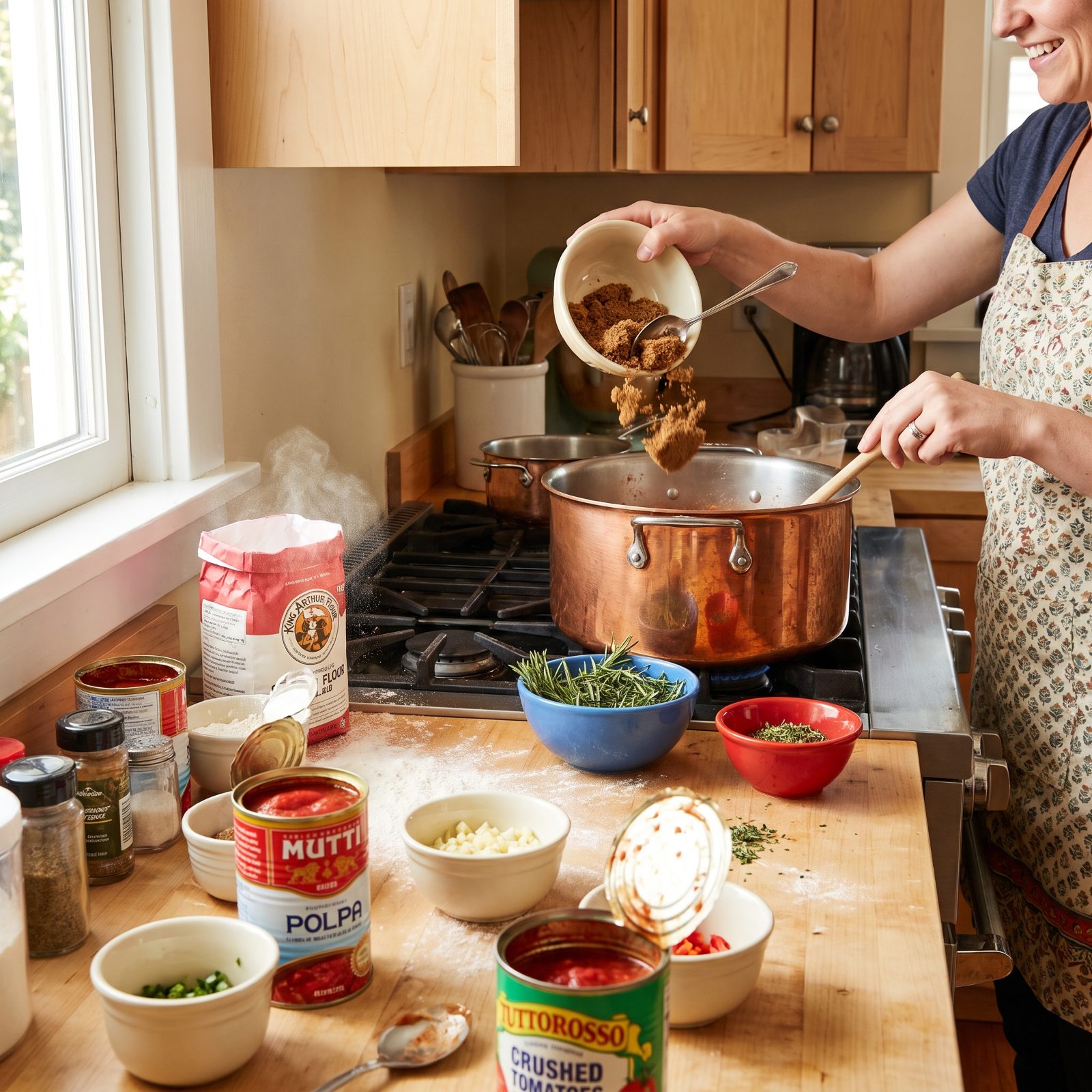
This batch was off, so you changed the tomatoes, the herb, the sugar, the pan, and the cooking time — all at once. It came out different. You have no idea why, because you changed everything simultaneously and controlled for nothing.
People do this to relationships in crisis. New routine, new therapist, new city, new rules, all at once. Something shifts, maybe better, maybe worse, and you can’t tell which change did it, so you’ve learned nothing you can repeat.
4. You Follow the Same Steps While Expecting a Different Crust
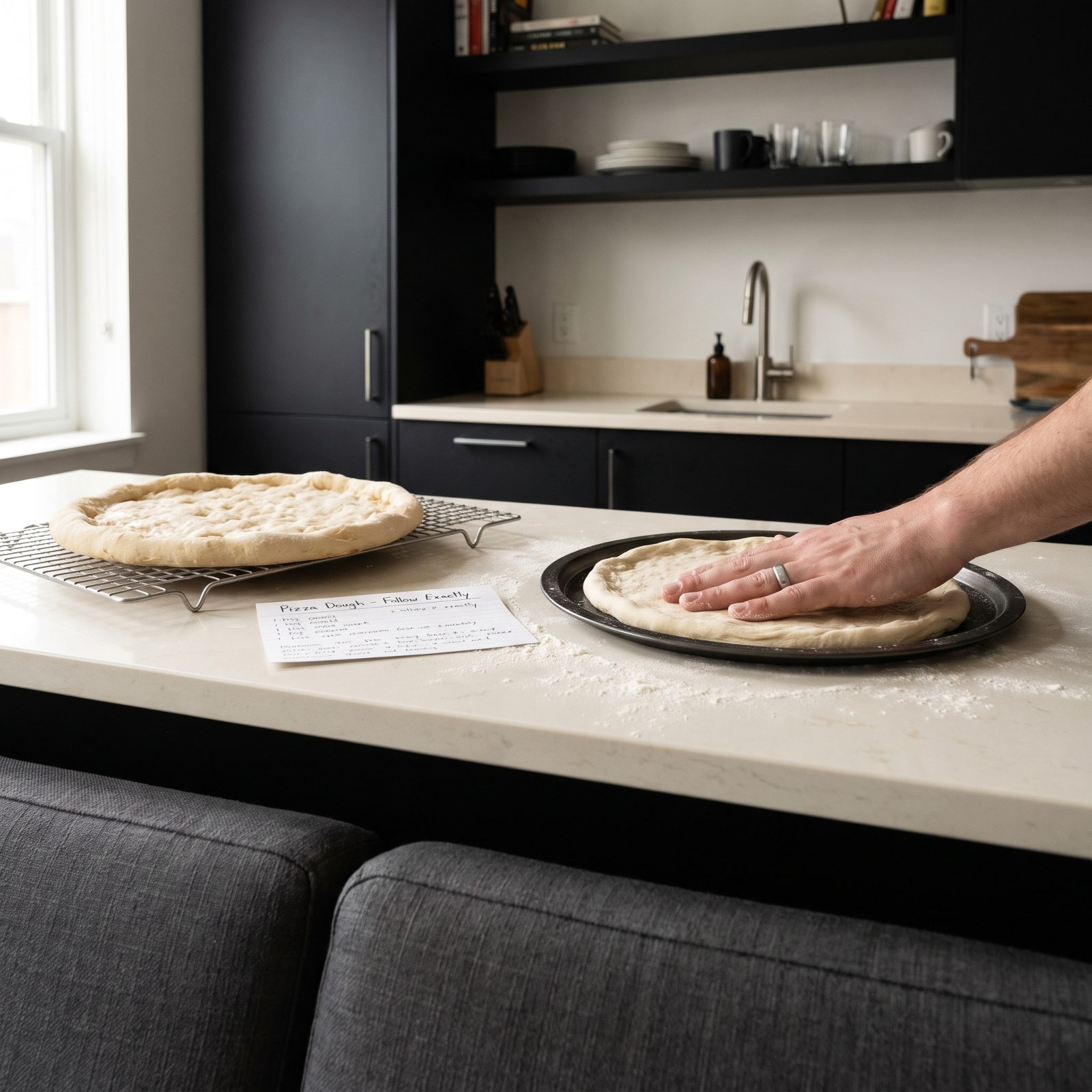
The crust keeps coming out soggy. So you make it again, identically, with the exact same method, fully expecting a crisp bottom this time. It arrives soggy. You are genuinely surprised, which is the funniest part.
This is the deepest groove of all — repeating the same fight, the same cold shoulder, the same avoidance, and bracing for a different ending each time. The steps haven’t changed. The hope renews anyway.
The pattern is the result. If you want a different crust you have to do something different, even one small thing, even something that feels wrong. A recipe isn’t a prayer. It’s a set of actions, and the actions are what you’ve been repeating. Change the move, or make peace with the soggy bottom. Those are the only two options — in the kitchen and everywhere else.
3. You Double the Batch Before Fixing the Original Problem
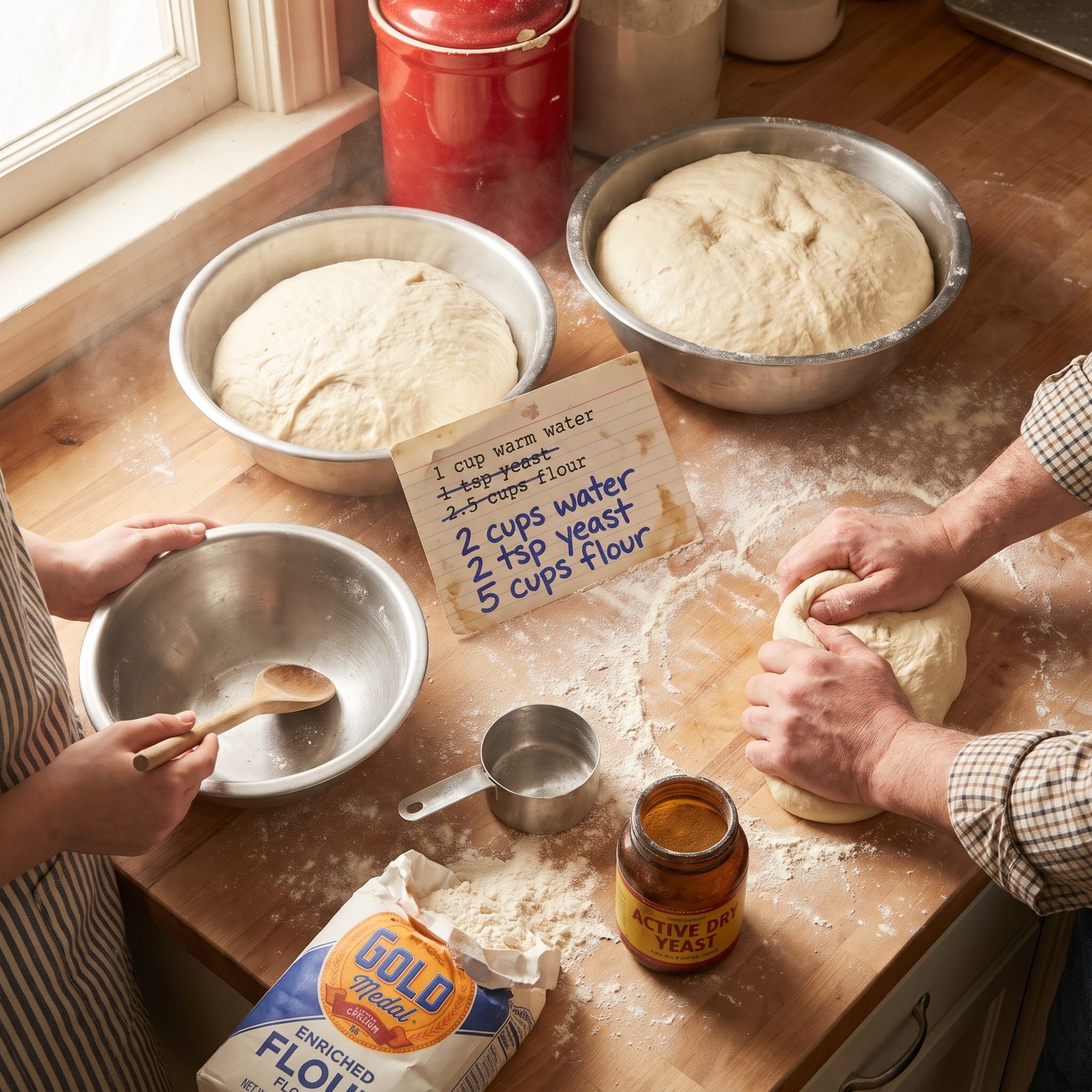
The bread came out dense. Everyone agreed on that much. So the obvious move is to make twice as much of it, because somewhere in your head a bigger batch means a better loaf. It doesn’t. You now have double the dough and the same mistake — just more of it to knead your way through on Sunday.
We pull the same stunt with people. Something’s gone strained, so we answer it with volume: more date nights, more grand gestures, a whole pile of effort heaped on top of the exact problem nobody has said out loud. Doubling the batch feels like doing something. It can even pass for love. But scale isn’t repair, and you can’t out-quantity a thing that broke at the recipe level.
Fix the one cup first. Earn the right to make more of it later.
2. You Keep Cooking Because You’ve Already Used Every Pan
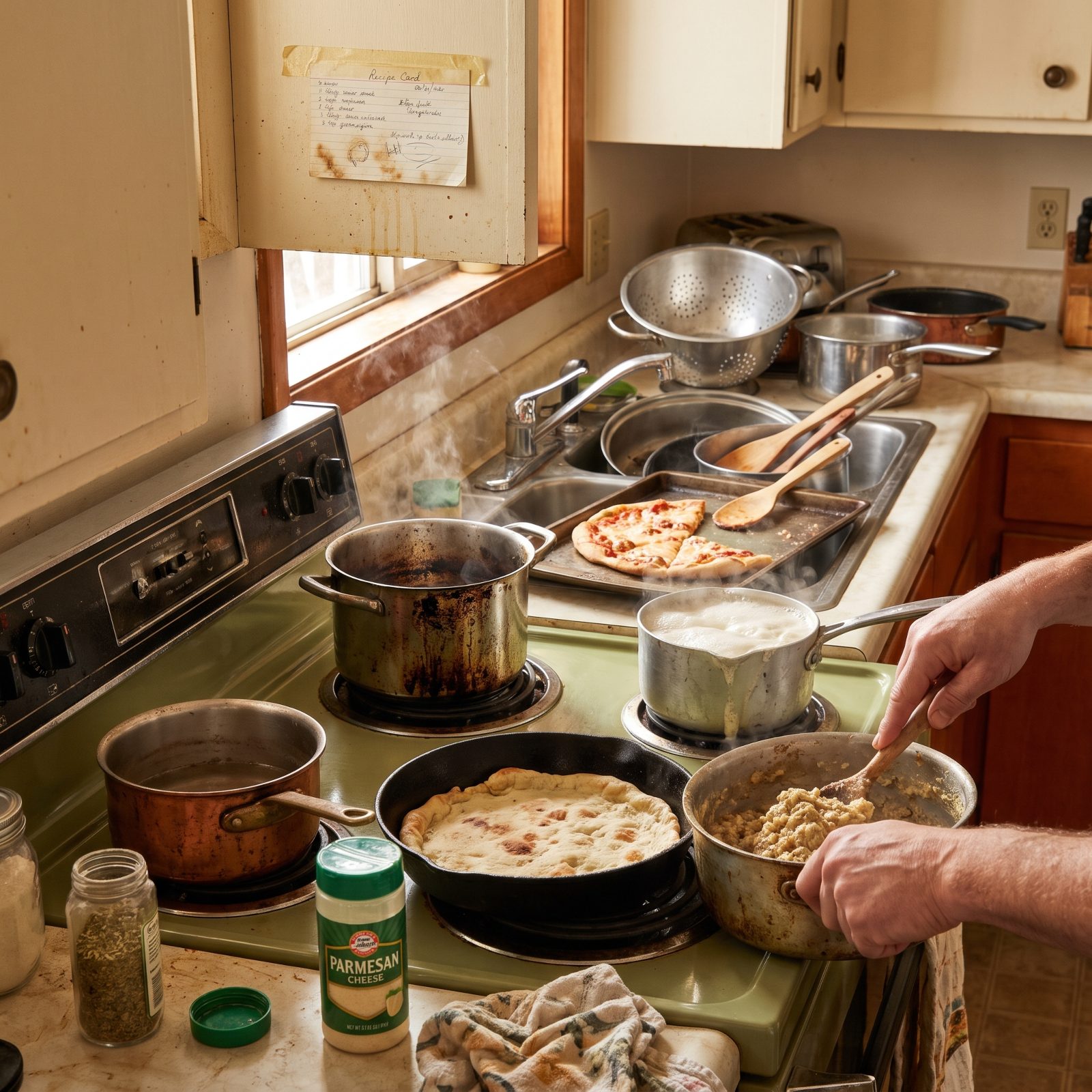
Nobody wants this pizza anymore. Not even the person who started it.
But look at the kitchen. Every pot is dirty, the oven’s been running an hour, and there’s flour in places flour should never be. Walking away now would mean all of that was for nothing — so you keep going, salvaging a dinner that stopped being worth salvaging three steps back.
Sunk-cost fallacy in an apron. The time and effort already spent feel like reasons to continue, when really they’re just gone. Spent money doesn’t come back because you spend more. A ruined evening doesn’t un-ruin because you push it another hour.
The dishes are already dirty whether you finish or not.
People live in that same loop. We’ve all watched someone defend a dead situation by pointing backward at everything they’ve already poured in — years, holidays, a shared last name. All real. All already spent. None of it a reason to keep cooking something that was never going to taste right. And sometimes the bravest move in the whole kitchen is turning off the burner with the mess still on the counter.
1. You Finally Improve It by Letting the Recipe Change

Here’s the quiet heartbreak nobody warns you about: the recipe you’ve been chasing was never going to work as written. Grandma’s crust turned out because of her oven, her flour, her hands, her altitude. You’ve been failing a test that was rigged against you from the first ball of dough.
The turn comes when you quit recreating it exactly and start cooking it like yourself. A little more water in the dough. Oven cranked hotter. A topping she never would’ve allowed within ten feet of the kitchen. And suddenly it’s good — not the same, just good.
Relationships pull the same trick. The ones that last aren’t restored to some original version that honestly never existed outside memory. They become something new, shaped by who both people actually are now instead of who they were back in the good old days.
Keep the card. Add your own notes under hers. That isn’t betrayal — it’s how a recipe stays alive.