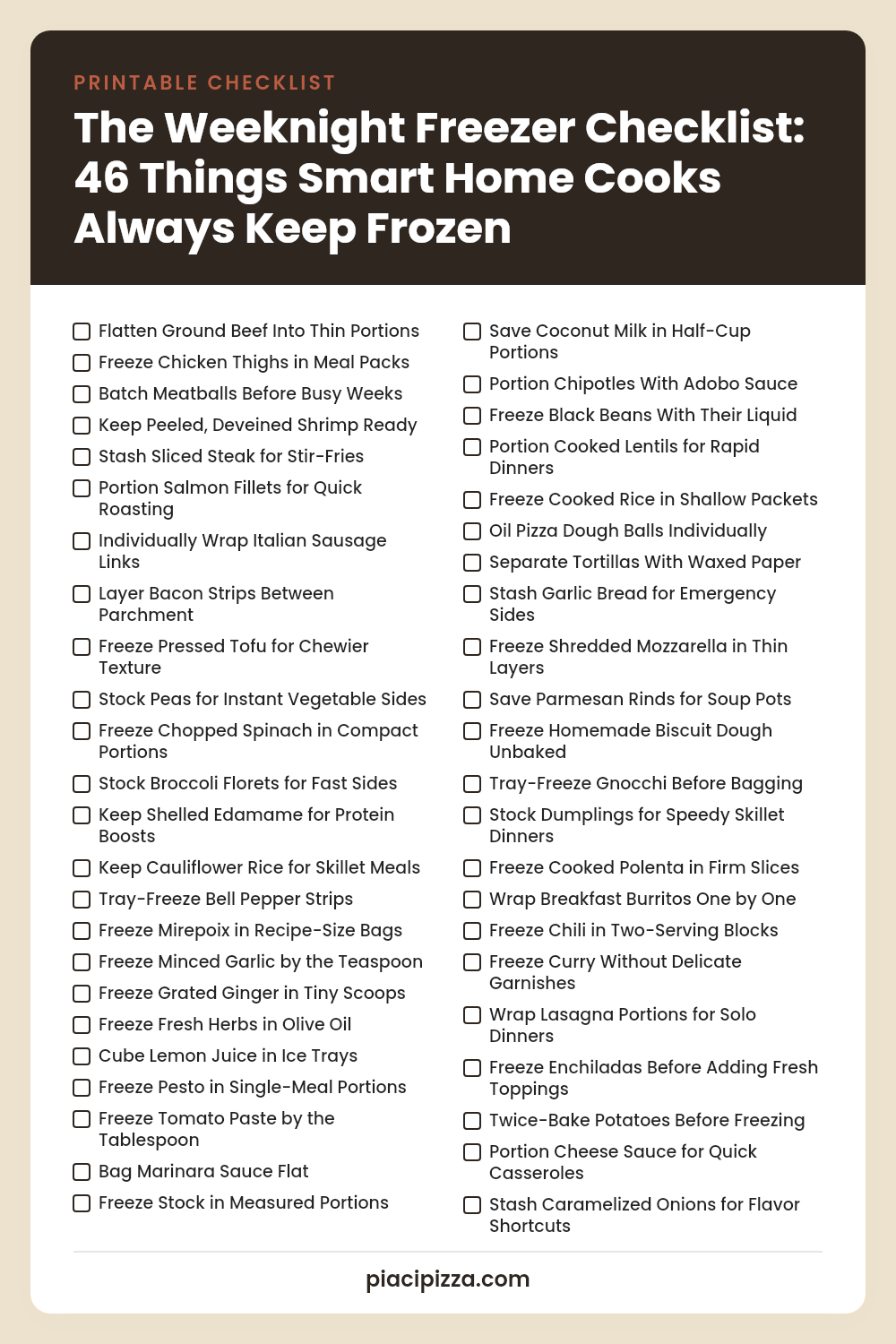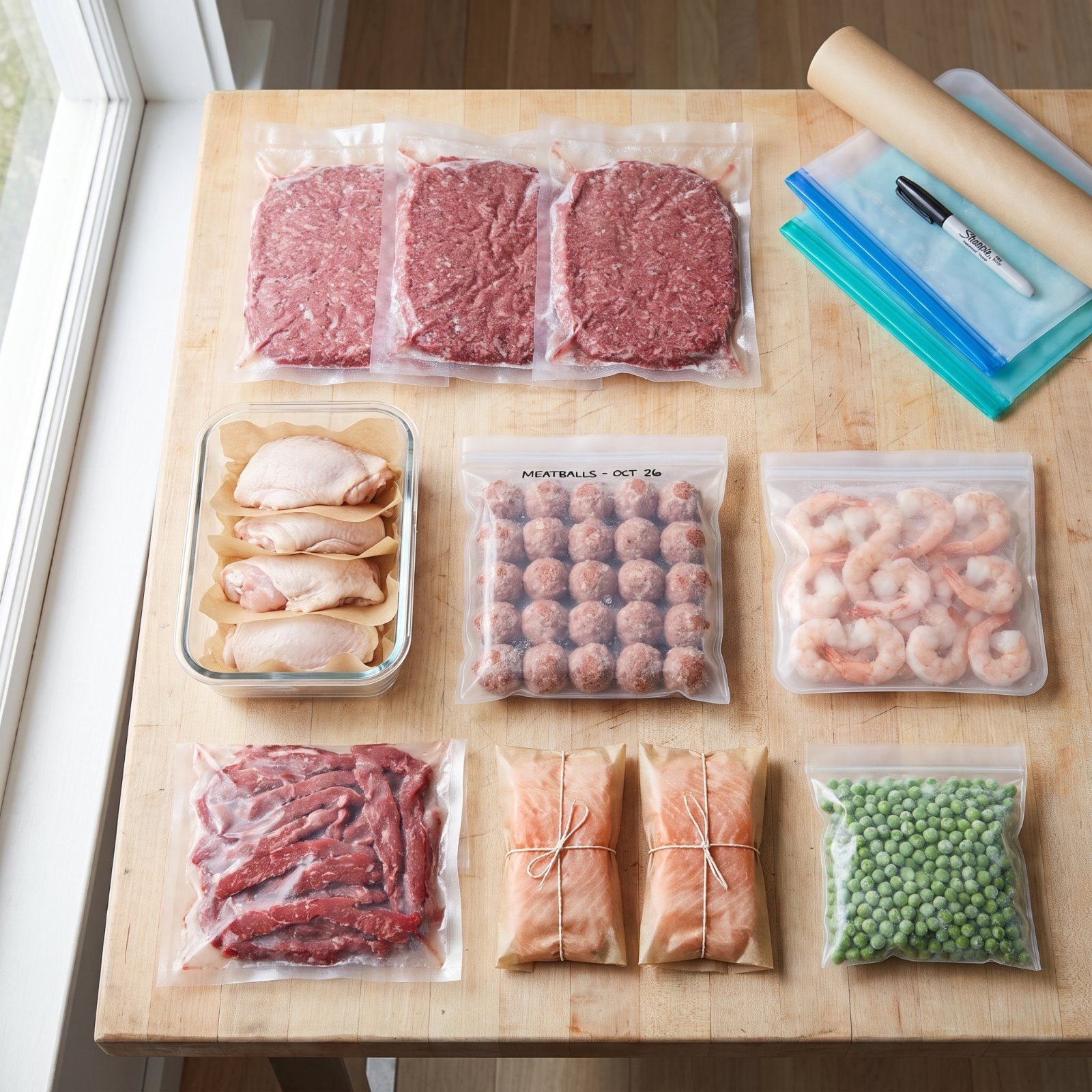
A full freezer and nothing to eat. That’s the lie most of us live with. Chicken frozen in a brick the size of a cinder block, beef you’d need a chisel to separate, shrimp fused into one sad clump. The freezer was never the problem — it was how you packed it. Portion these proteins the right way before the week starts, and dinner stops being a negotiation with a block of ice. Work through this list and check off what you’ve stocked.
Please note that some of the images in this article were created with the assistance of AI.
46. Flatten Ground Beef Into Thin Portions
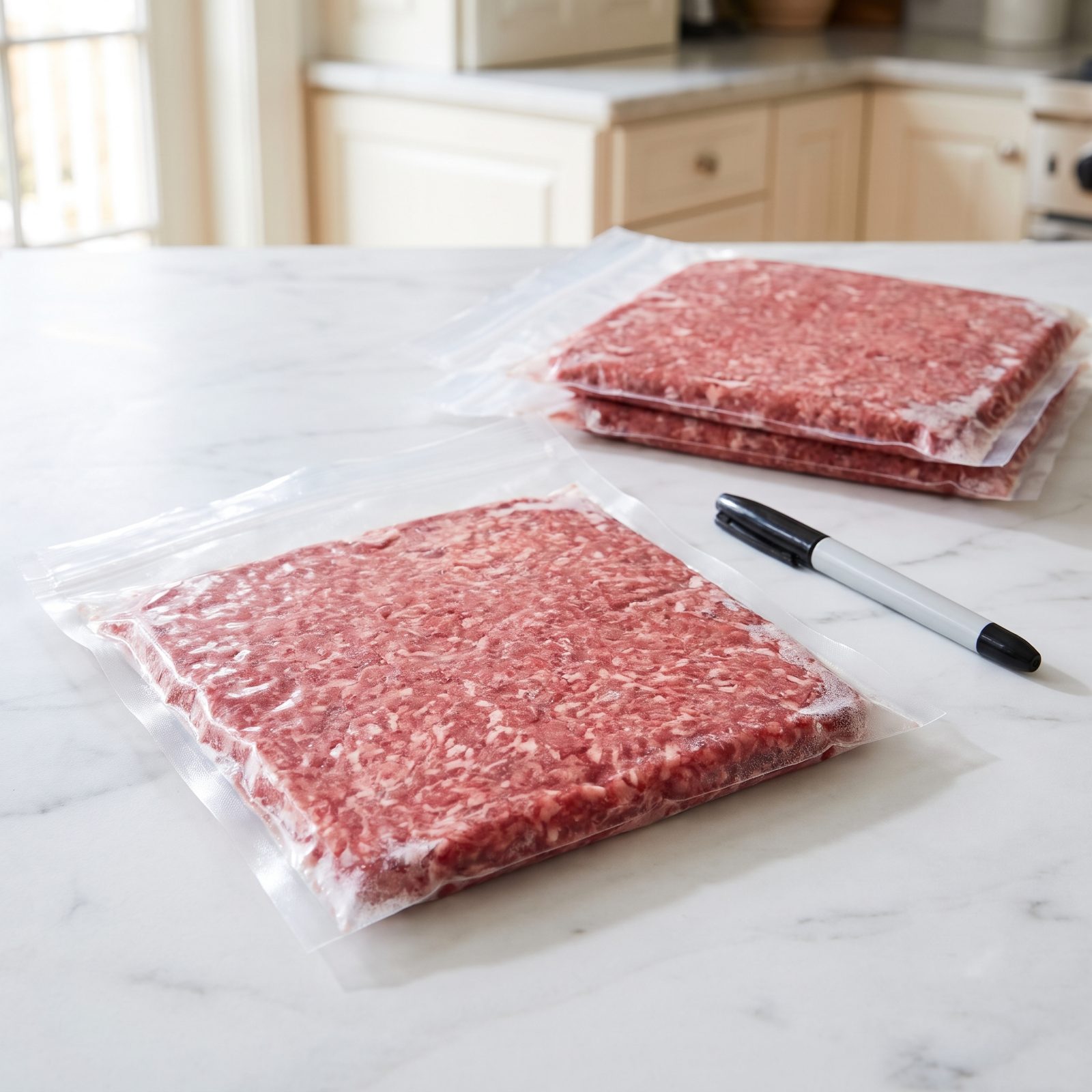
A pound of ground beef frozen in a ball takes forever to thaw and comes out cold in the middle, warm at the edges. Flatten it instead. Press the meat into a thin, even slab inside a freezer bag, push out every bit of air, and lay it flat until solid. What you get is a sheet maybe half an inch thick that thaws in a bowl of cold water in a quarter of an hour, or breaks apart frozen straight into a hot pan.
Here’s the bit most people skip: score the flat bag into quarters with the edge of your hand before it freezes. Now you can snap off exactly what you need and leave the rest solid.
45. Freeze Chicken Thighs in Meal Packs
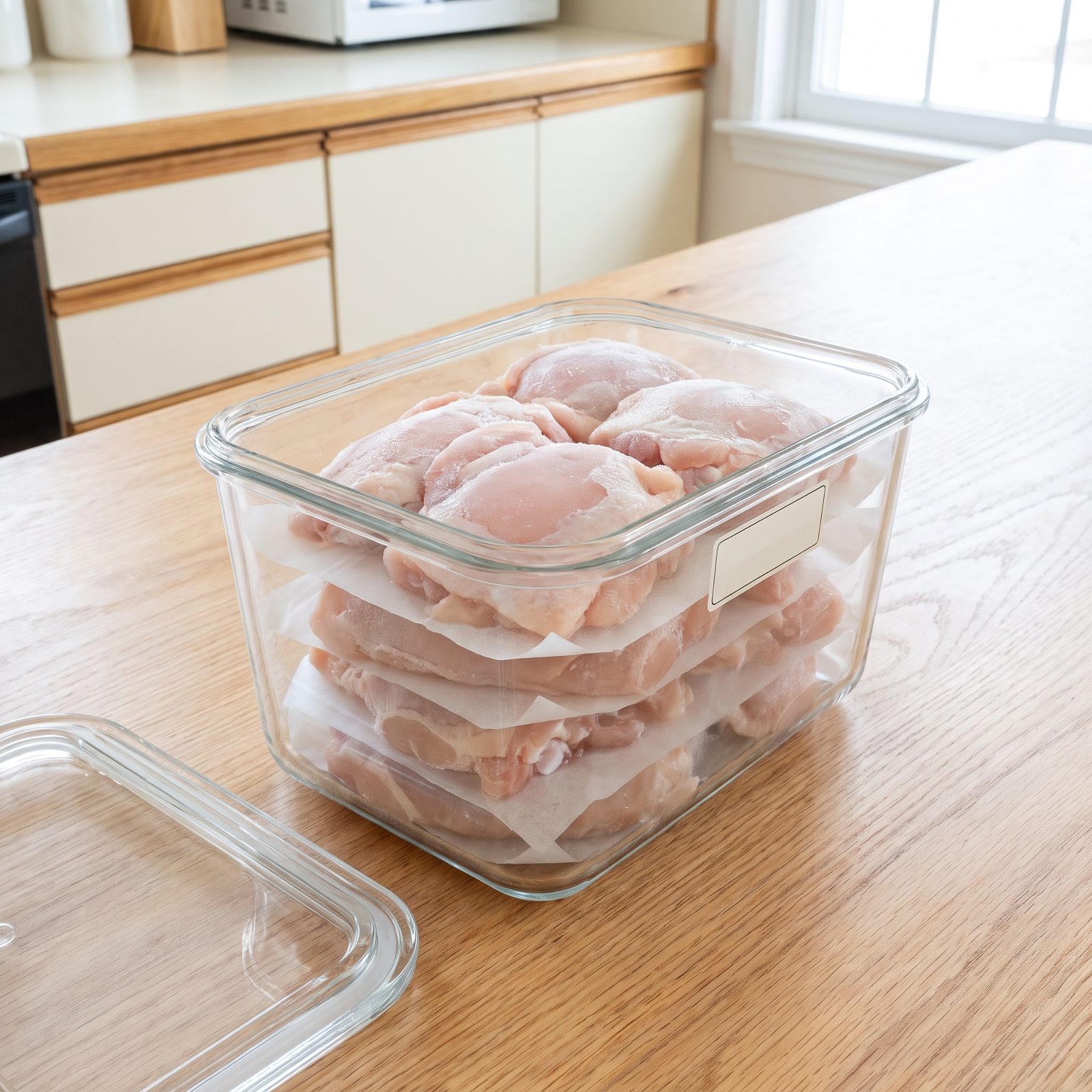
Chicken thighs forgive everything. Overcook them and they’re still juicy, which makes them the one protein you can trust on a tired Tuesday. A dozen or more frozen together in one container? Fine, as long as they’re layered with parchment between so they peel apart instead of tearing, and you can pull out just the number you actually cook at once.
Thighs beat breasts in the freezer for a real reason. The extra fat guards against the dry, cottony texture that ruins thawed lean meat. I switched years ago and never looked back.
Season them before they freeze if you want. The marinade works into the meat as it thaws, and you’ve done tomorrow’s job today.
44. Batch Meatballs Before Busy Weeks
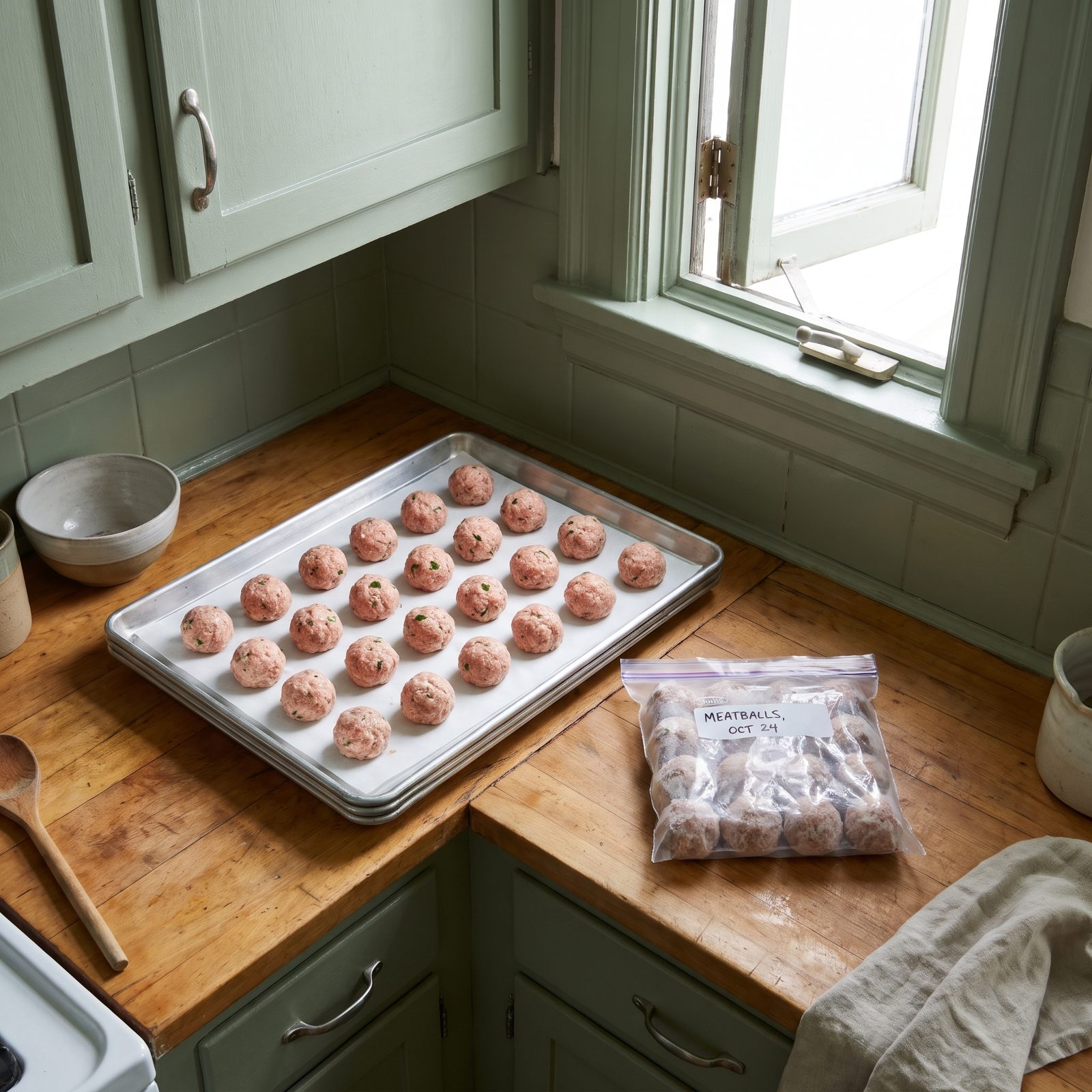
Roll a double batch on a Sunday and you’ve bought yourself four dinners. The trick is freezing them loose first. Line a sheet pan, space the raw meatballs so they don’t touch, and freeze solid before bagging. Skip this and they clump into one boulder you have to hack apart.
Once frozen, pour them into a flat bag and shake out six or twenty as needed. They go from freezer to simmering sauce without thawing, which is exactly what you want on a Wednesday.
What Our Readers Say
- When Piaci Pizza readers loved a food photo and tapped a reason, comfort came out on top at 30%, ahead of ingredients and looks.
From Piaci Pizza reader polls and votes.
43. Keep Peeled, Deveined Shrimp Ready
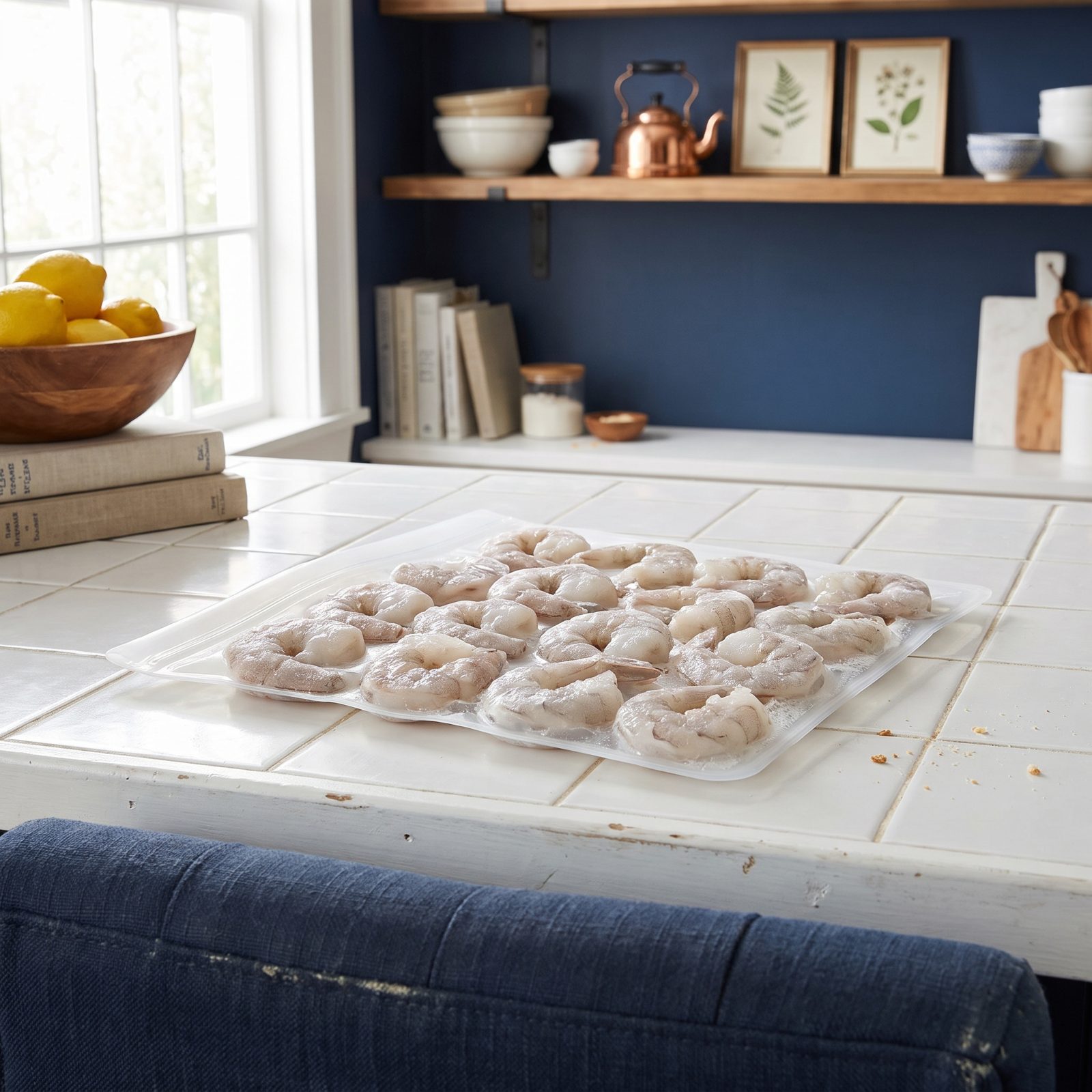
Shrimp is the fastest protein you can own. It cooks in three minutes and thaws in five under cold running water. Buy it peeled and deveined, lay it flat in a single layer, and freeze so each piece stays loose.
Here’s what nobody tells you: that bag of “fresh” shrimp at the counter was almost certainly frozen and thawed before you ever saw it. Buying frozen means you control when it thaws, and it’s usually cheaper besides. Scatter what you need straight into a hot pan, no planning required.
42. Stash Sliced Steak for Stir-Fries
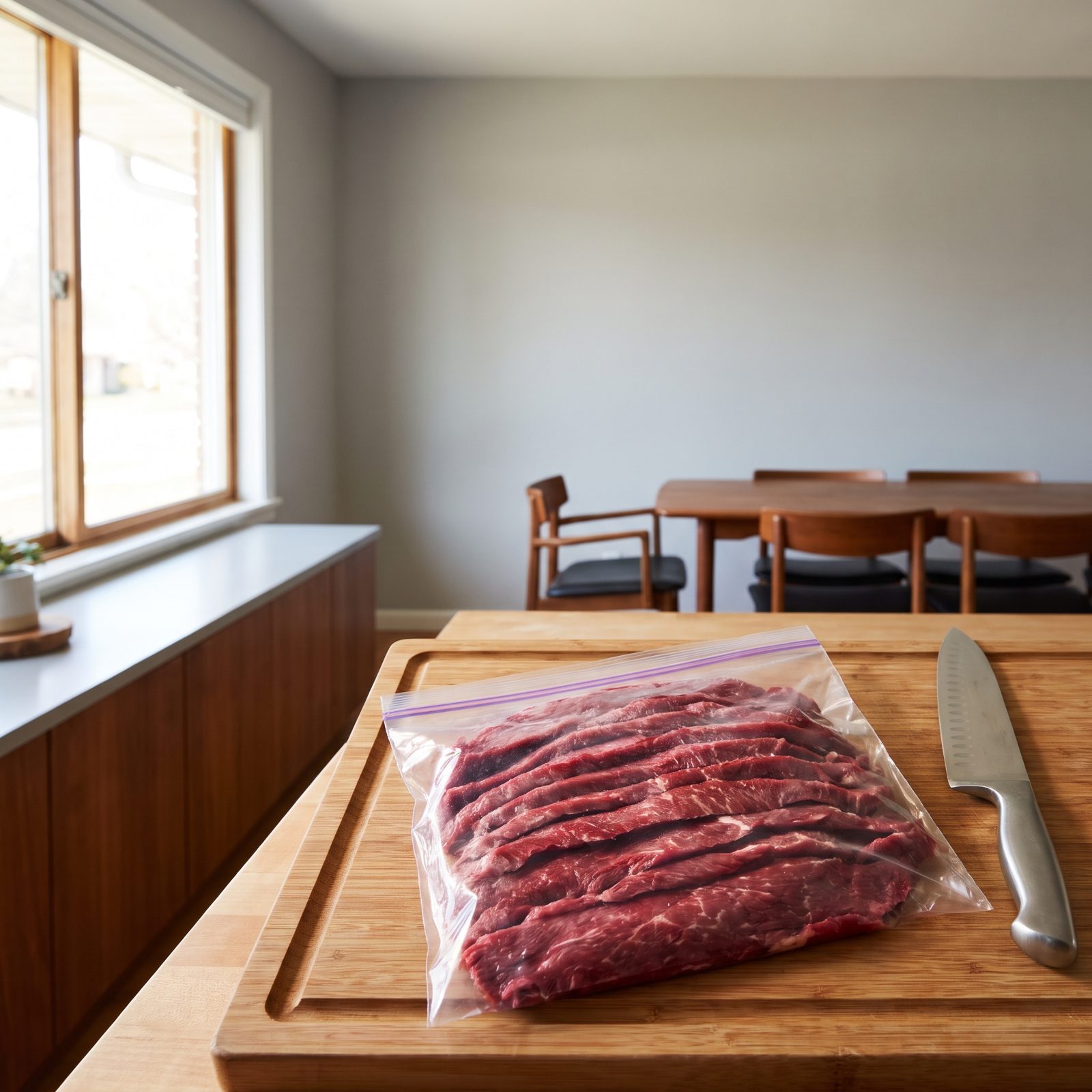
Pre-slicing steak for the freezer solves two problems at once. Partially frozen beef is far easier to cut thin, and thin frozen slices cook in the time it takes to warm the pan. Slice flank or sirloin against the grain, lay the strips flat in a bag, and you’ve got stir-fry or fajita meat on standby for whenever you need it.
The move most people miss: freeze the raw steak for about forty minutes first, until firm but not solid, then slice. You’ll get clean, even ribbons instead of ragged chunks. Thaw just enough to separate and they hit the wok still half-frozen, which keeps them from cooking down into shoe leather.
41. Portion Salmon Fillets for Quick Roasting
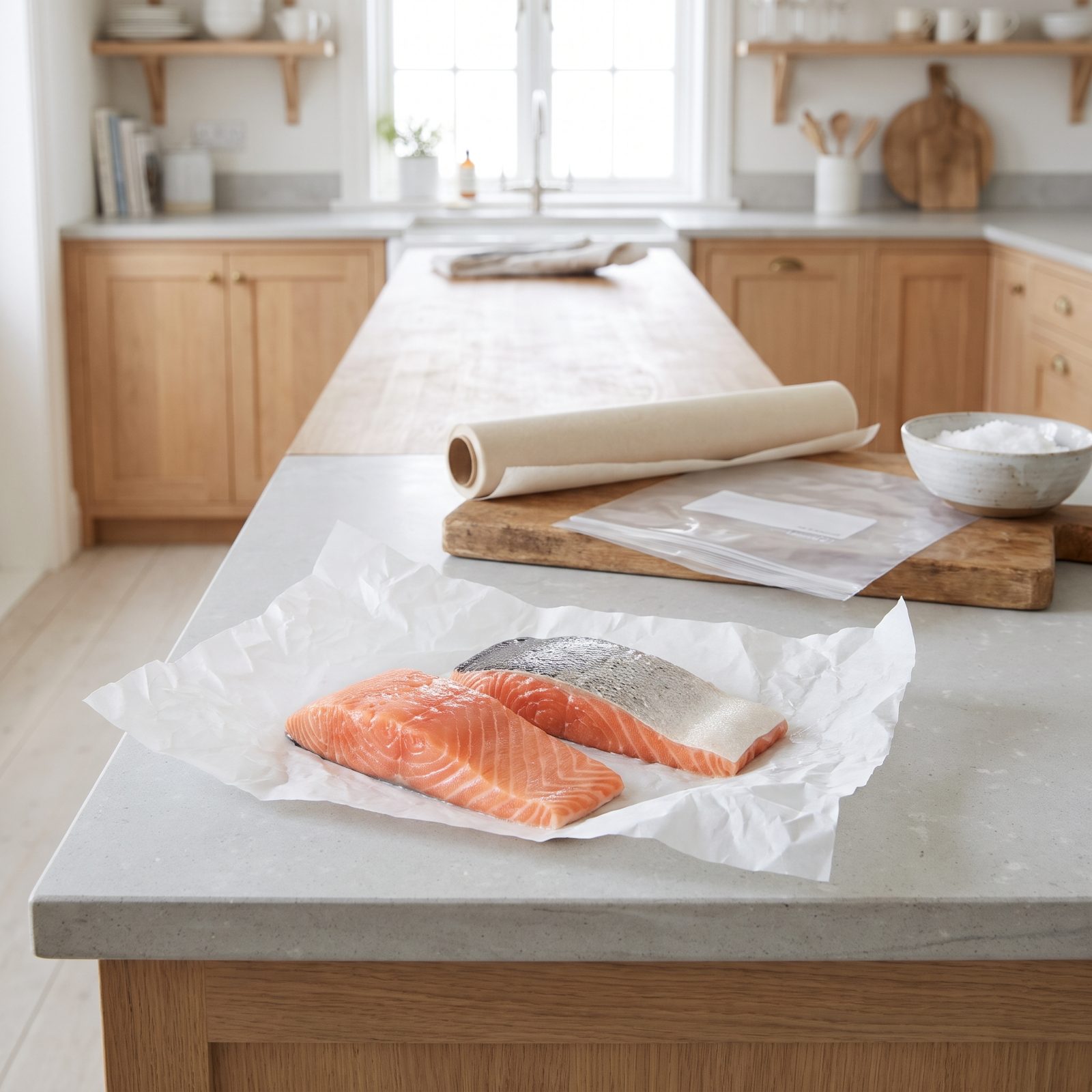
Salmon doesn’t need thawing to roast beautifully, which makes it a genuine weeknight hero. Wrap each fillet on its own in parchment, then seal them together in a bag. Grab one, bake it frozen at a high heat for twenty-odd minutes, and dinner cooks itself while you set the table.
Why wrap singly? Because salmon fillets are soft. Freeze them touching and they fuse, then tear when you pry them apart. Individual parchment keeps each one whole.
40. Individually Wrap Italian Sausage Links
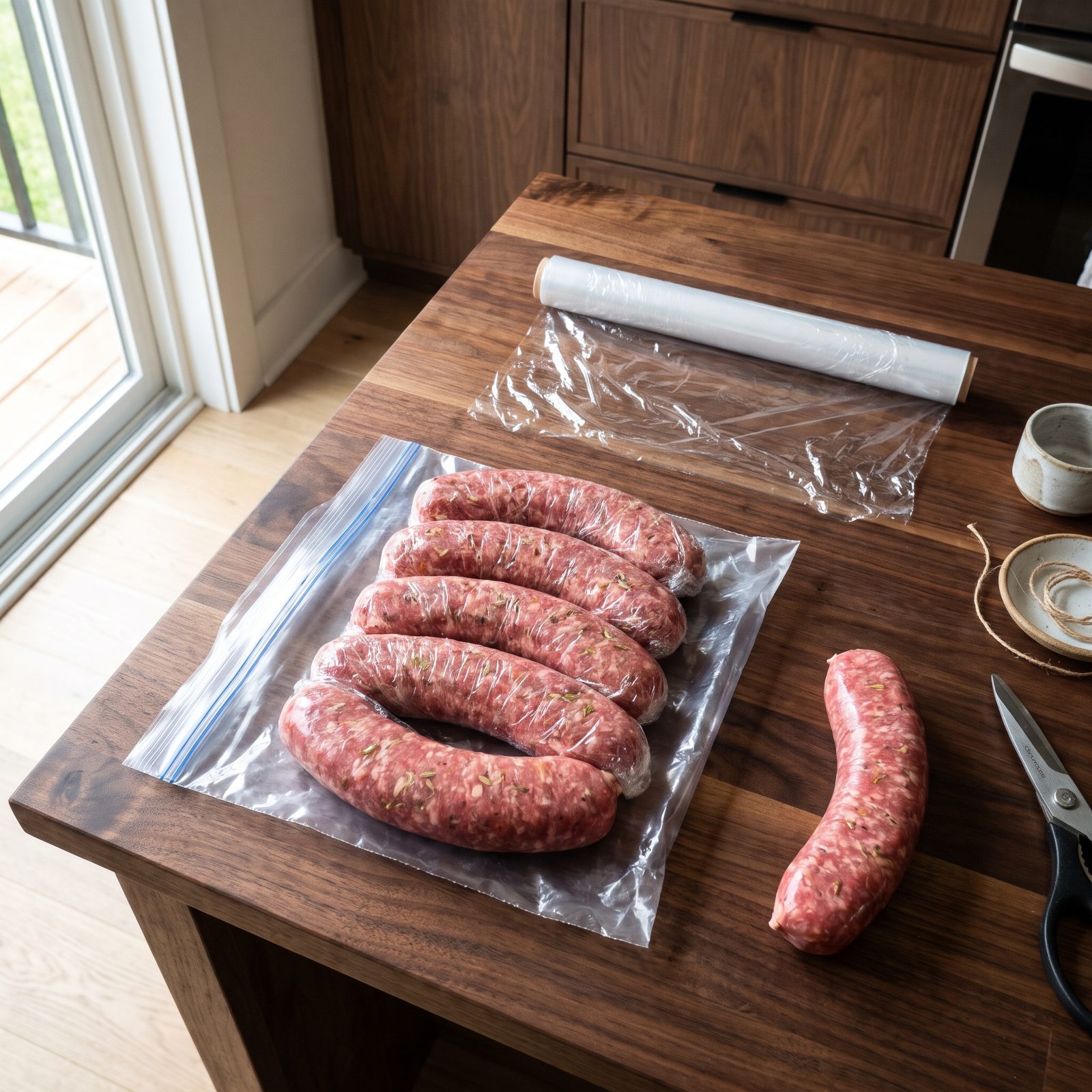
A pound of sausage links frozen together is a commitment to cooking all of them. Wrap each link on its own and you can pull one for a quick pasta or four for a sheet-pan dinner. Sweet or hot, sausage carries a dish with almost no effort — exactly what a weeknight wants.
Squeeze the meat out of the casing while still slightly frozen for a quick ragu, or roast the links whole. Either way, wrapping them one by one means you grab only what tonight needs and leave the rest untouched.
39. Layer Bacon Strips Between Parchment
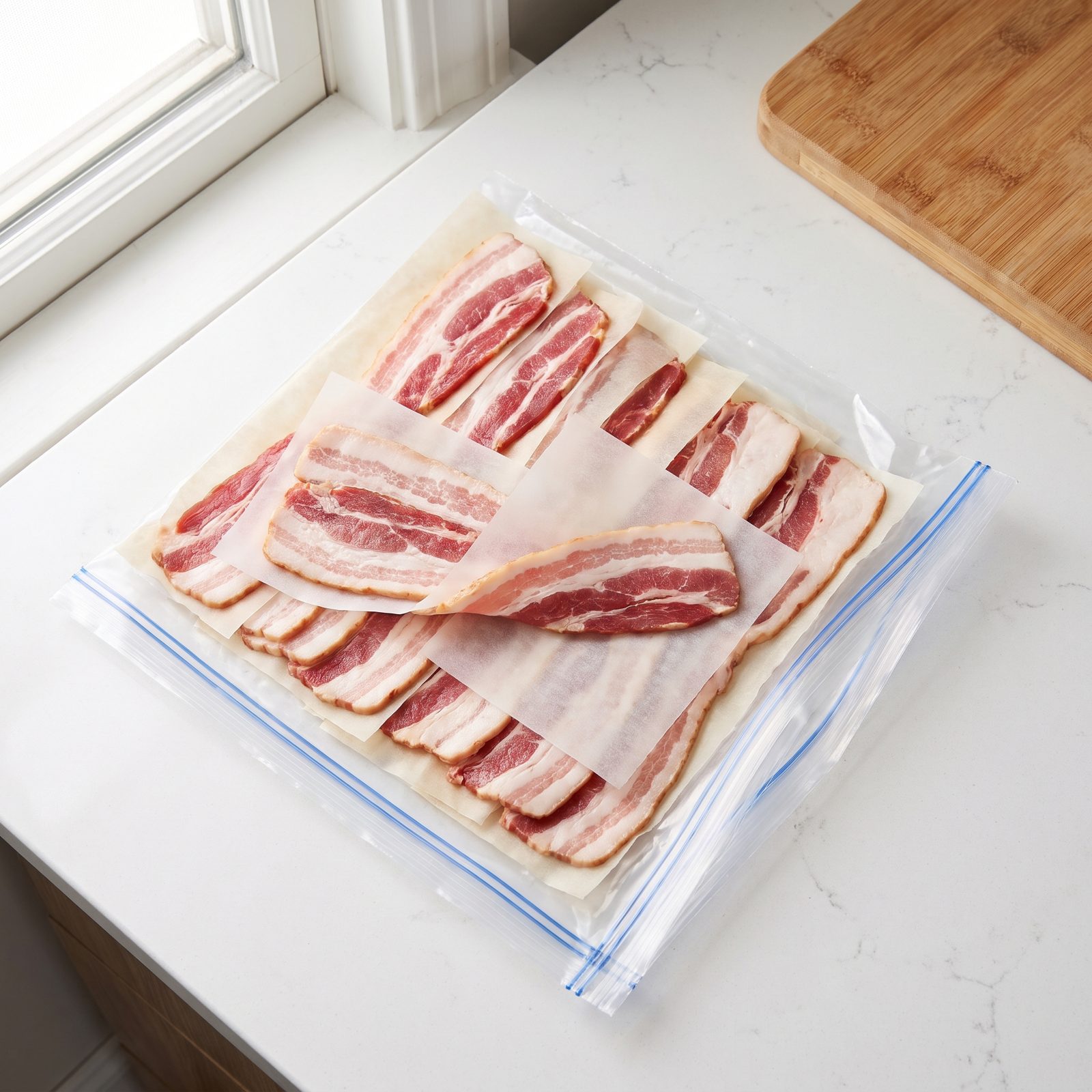
Nothing is more frustrating than wanting two slices of bacon and facing a frozen slab welded shut. Fold parchment between strips, or roll them individually, before freezing. Then you peel off exactly what you need — two for a BLT, six for a carbonara — and the rest stays put.
With parchment between the strips, a stack separates with a gentle tug even straight from the freezer. Five minutes of prep that saves you a hundred small annoyances later.
38. Freeze Pressed Tofu for Chewier Texture
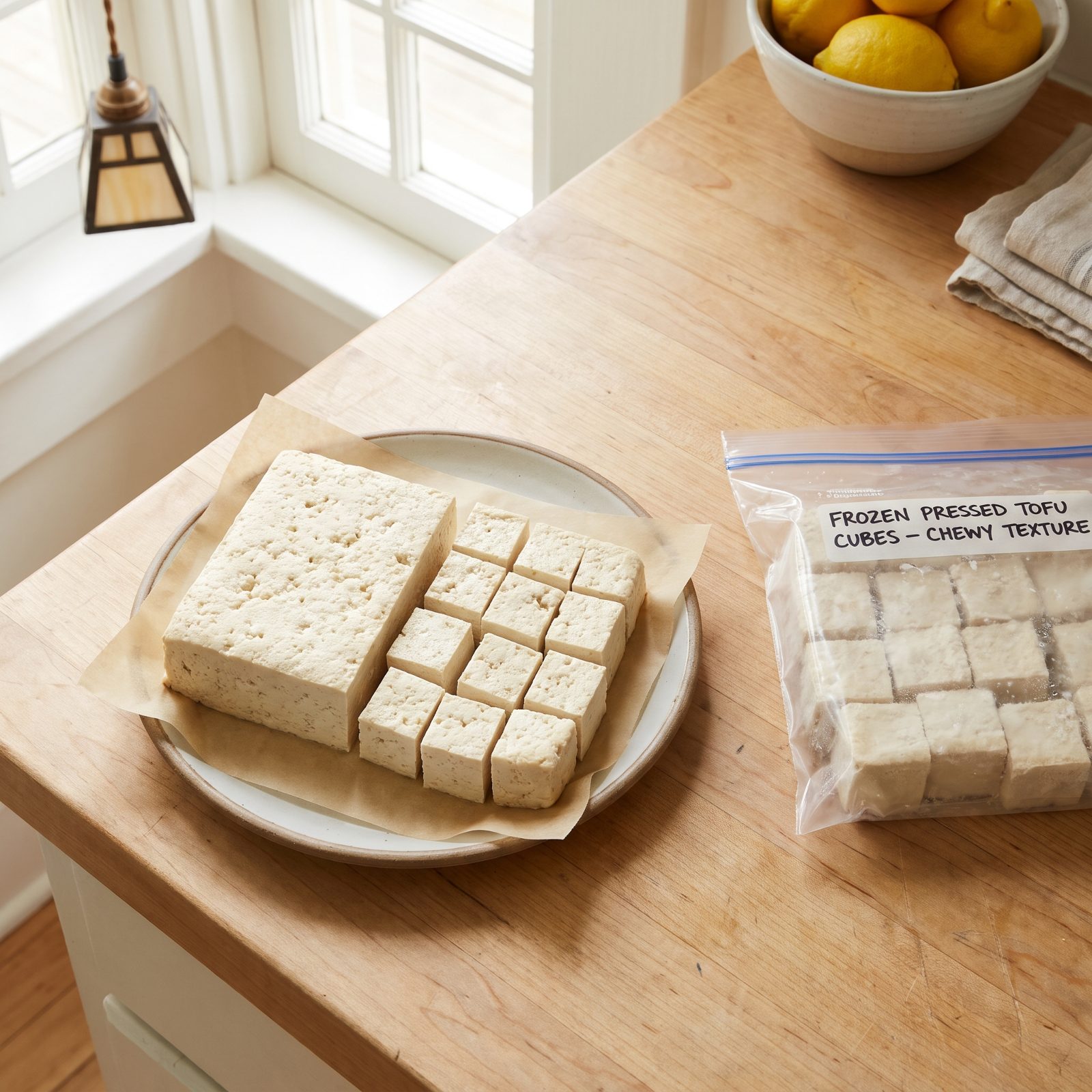
Freezing tofu is the one trick that changes its texture for the better. Press out the water, cut it into cubes, freeze them in a bag, then thaw. The ice crystals open up the structure and leave it spongy and chewy, with far more bite than fresh tofu ever manages. It also drinks up marinade like a sponge, which is the real payoff.
Press it first — hard — before freezing. Skip that and you’re just freezing water. Cube it before freezing, squeeze out the excess after thawing, and it crisps in a pan or holds its shape in a curry without falling apart.
37. Stock Peas for Instant Vegetable Sides
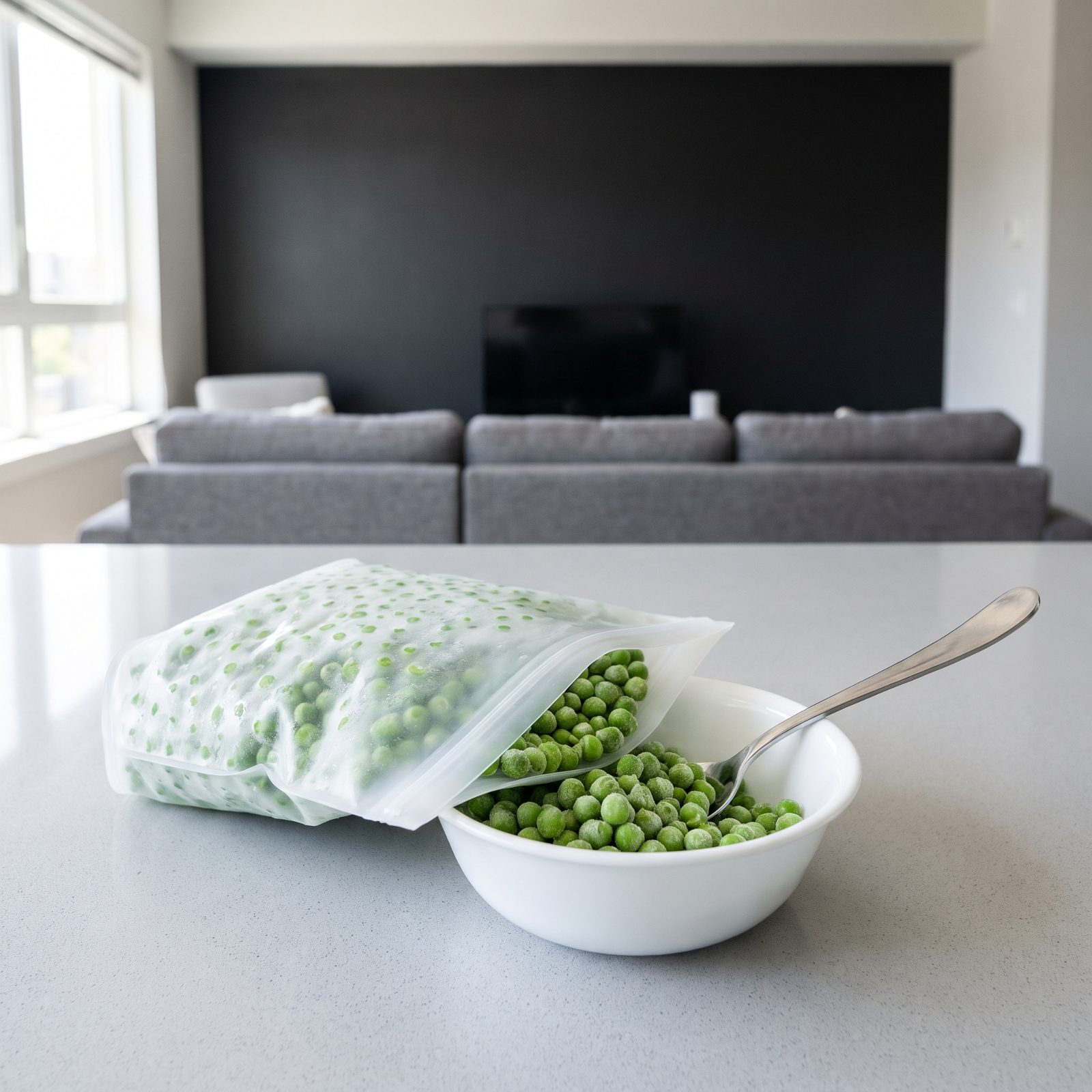
Not a protein, but the green you’ll reach for most. Frozen peas are picked and frozen within hours, so they often taste sweeter than the sad “fresh” ones trucked across the country. No thawing, no prep, bag to plate in two minutes.
Keep a bag always. Toss a handful into pasta, rice, soup, or a curry in the last minute of cooking and you’ve added color, sweetness, and a vegetable without peeling or chopping a single thing.
36. Freeze Chopped Spinach in Compact Portions
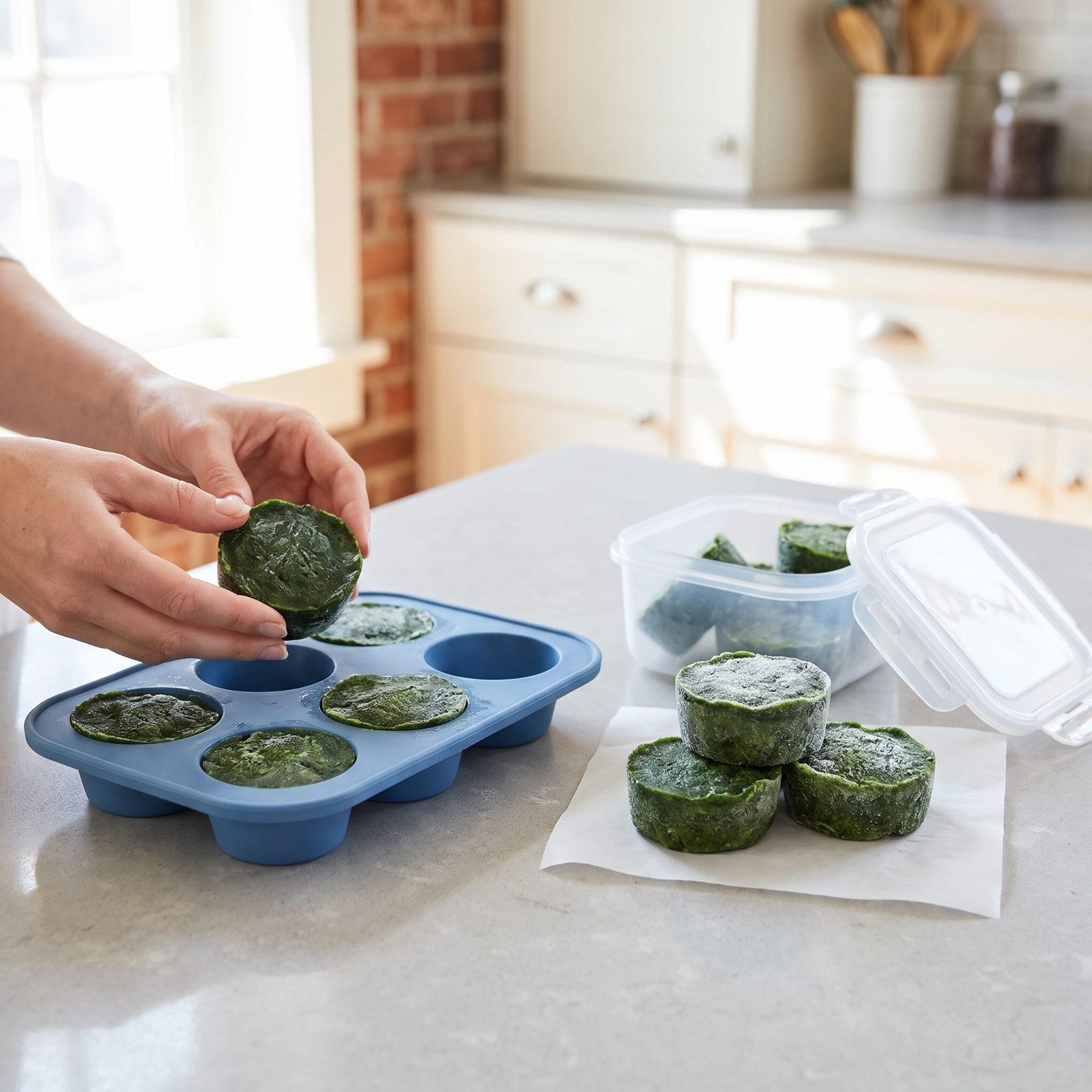
Loose-pack bags of frozen spinach are a lie of convenience. You need two tablespoons for an omelet, and you end up hacking at a frozen boulder with a butter knife. I did this for years before I wised up.
Portion it instead. Pack cooked, squeezed spinach into a silicone muffin tray or an ice-cube tray, freeze solid, then pop the pucks into a flat labeled bag. Each one is roughly a half-cup, ready to drop straight into soup, eggs, pasta or a skillet. No chopping, no guessing.
The part most people skip: squeeze out the water first. Wring it in a clean towel until it stops dripping. Wet spinach refreezes into a watery mess that dilutes everything you add it to.
35. Stock Broccoli Florets for Fast Sides
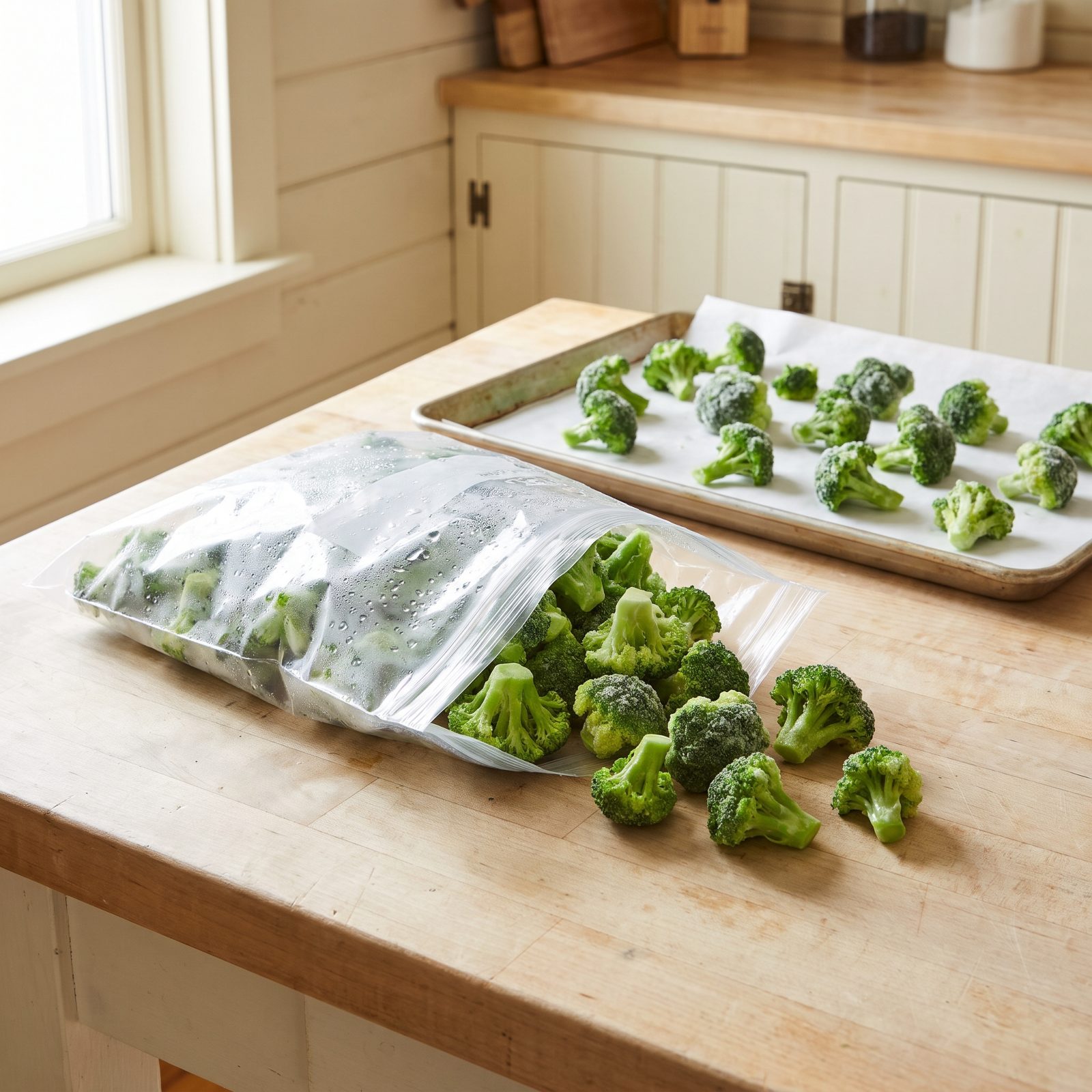
Frozen broccoli gets a bad name because most people cook it like fresh. Don’t. It’s already par-cooked from blanching, so dump it straight into a hot pan or oven, no thawing, and it crisps instead of steaming into gray mush.
Freezing your own? Blanch florets for two minutes, shock them in ice water, dry them well, then tray-freeze so they don’t clump. A side of broccoli goes from freezer to plate in about eight minutes.
Quick tell for store-bought: shake the bag. If it rattles like loose gravel, it was frozen right. If it thuds as one lump, it thawed and refroze somewhere between the plant and your cart.
34. Keep Shelled Edamame for Protein Boosts
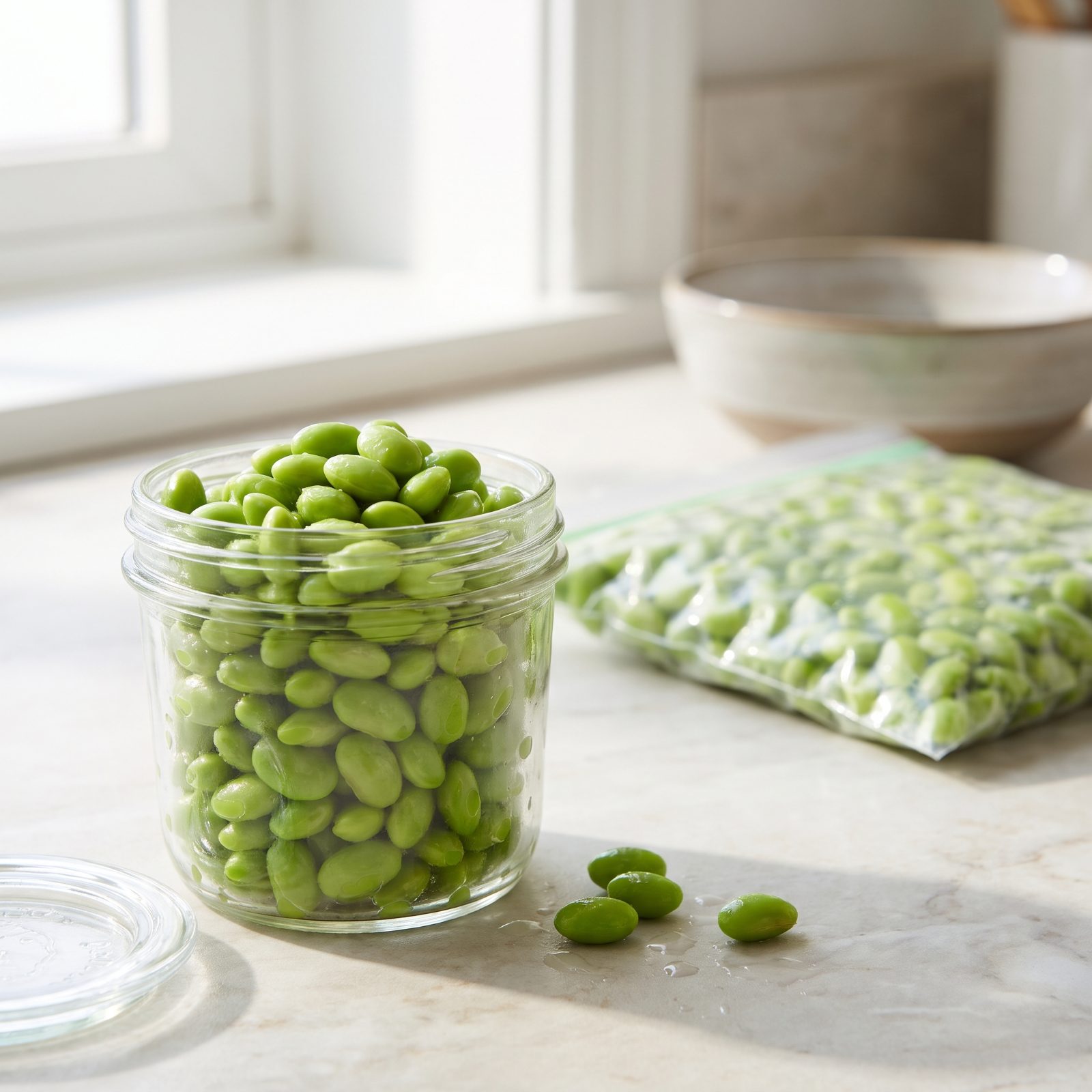
Shelled edamame is the protein you forget you have until the night nothing is thawed. A cup brings a solid dose of protein and needs maybe three minutes in boiling water or a hot pan. No chopping, no raw-meat cleanup, no decisions.
Toss it into fried rice, grain bowls, pasta, or straight into soup in the last few minutes. It stays bright green and holds a little bite instead of going soft.
33. Keep Cauliflower Rice for Skillet Meals
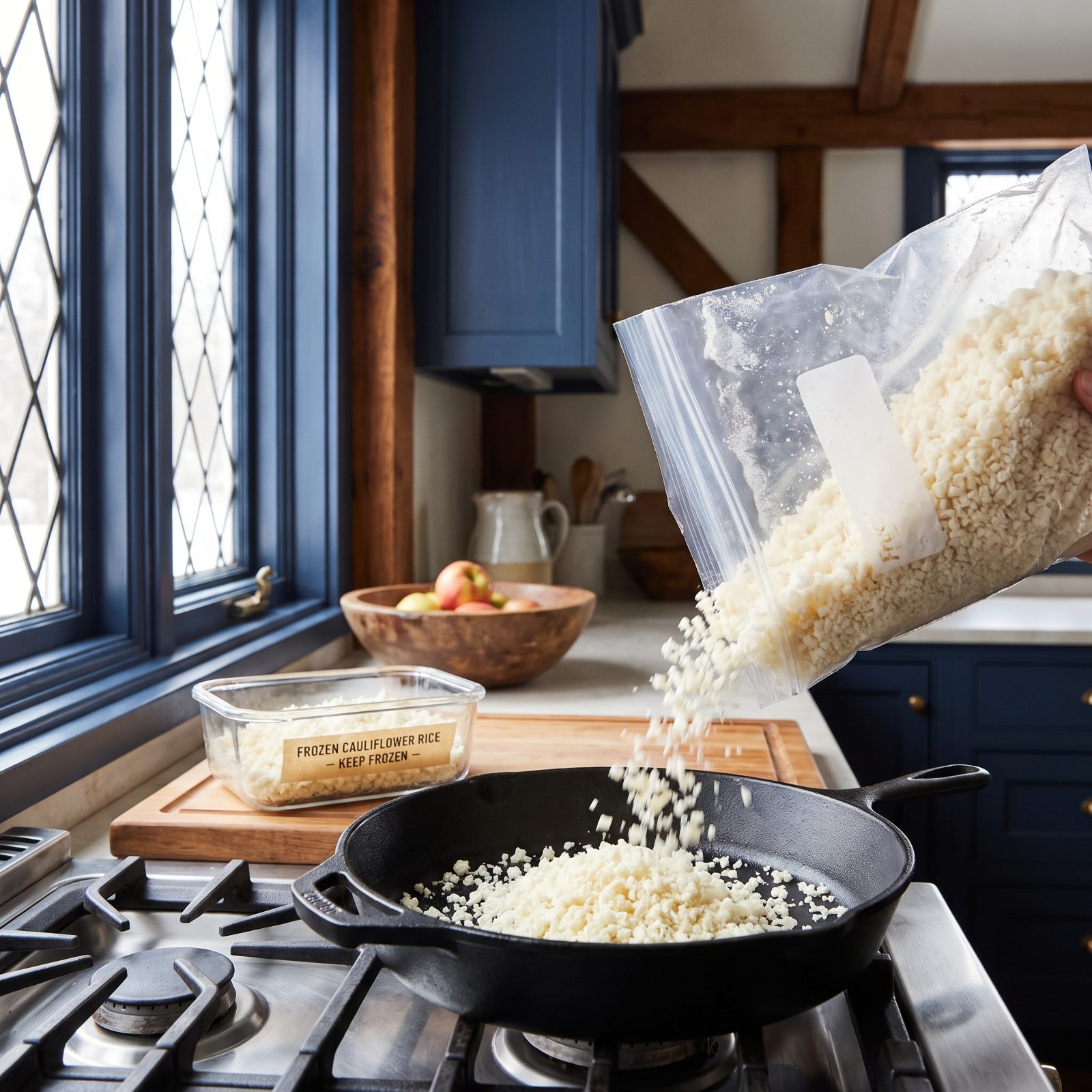
Cauliflower rice earns its freezer spot because it cooks straight from frozen with nothing added — no thawing, no water. Hit a hot pan with a little oil, spread it thin, and let it sit undisturbed a minute or two before stirring.
That sitting-still part is where most people go wrong. Stir it constantly and it weeps water and turns to paste. Leave it alone so the moisture cooks off and the grains pick up a toasty edge. Then it works under a stir-fry, in a grain bowl, or mixed half-and-half with regular rice.
32. Tray-Freeze Bell Pepper Strips
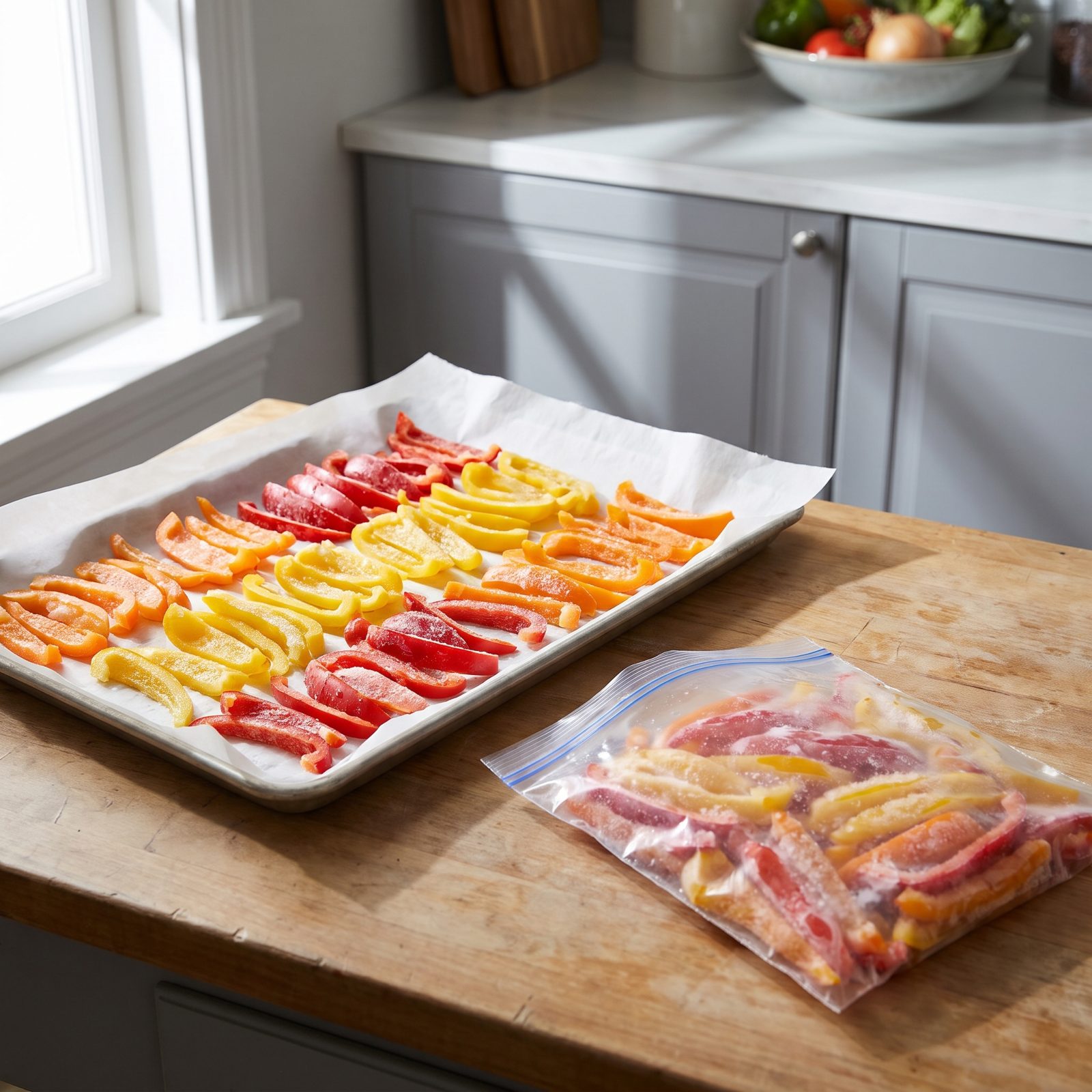
Fresh peppers go slimy in the crisper drawer faster than almost anything, and chopping three colors of them on a Tuesday is a chore you’ll skip. Do it once on a Sunday instead.
Slice them into strips, lay them in neat rows on a parchment-lined sheet, and freeze until firm before bagging. Tray-freezing keeps them loose, so you grab a handful instead of prying apart a frozen brick.
Here’s the honest trade-off: frozen peppers lose their raw crunch. Don’t put them in salad. But in fajitas, stir-fries, chili, soups and skillet scrambles where they soften anyway? You’ll never taste the difference.
31. Freeze Mirepoix in Recipe-Size Bags
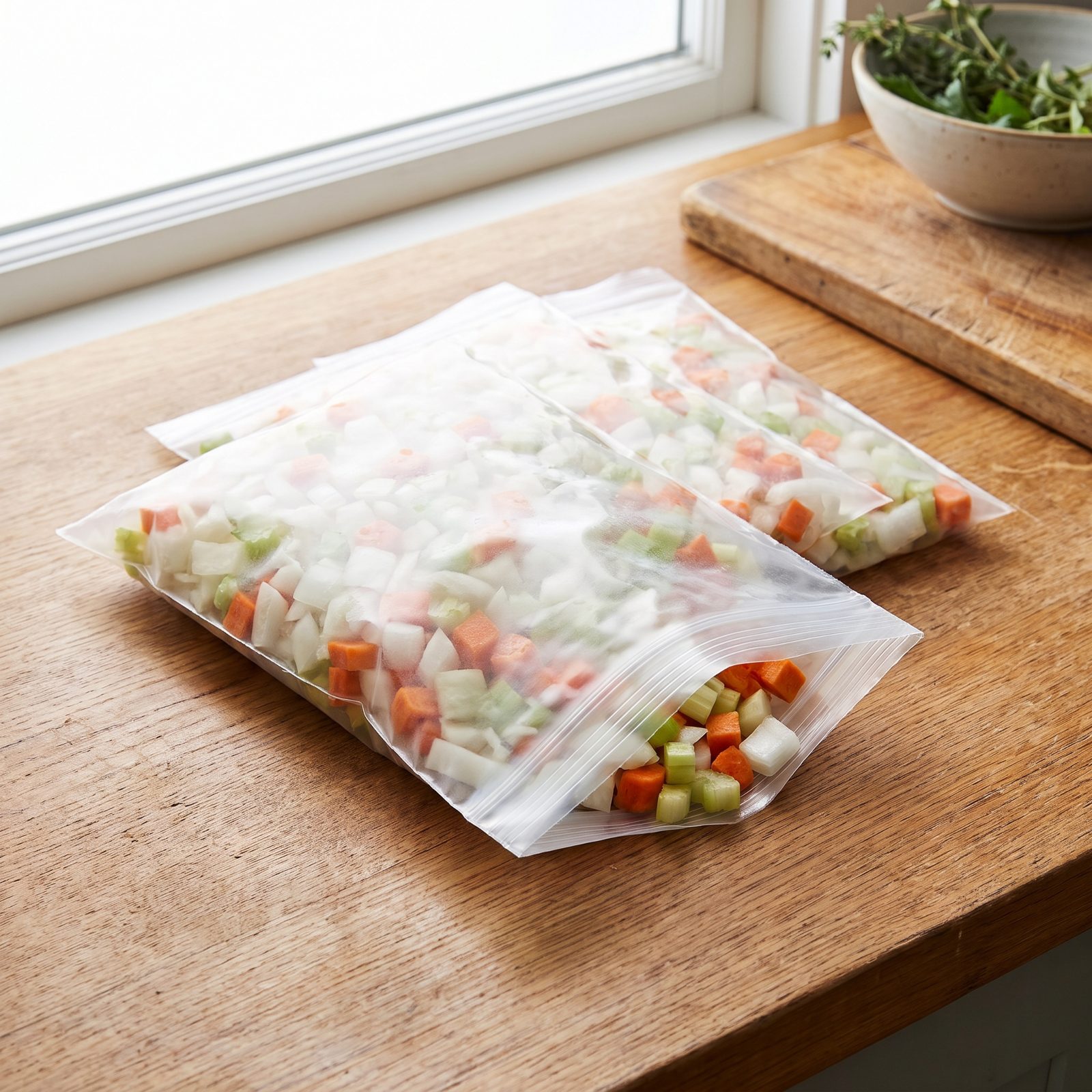
The first ten minutes of nearly every soup, stew, braise and sauce is the same: dice an onion, a couple of carrots, a few ribs of celery, and sweat them down. Why do it from scratch every single time?
Dice a big batch, mix it, and freeze in flat recipe-size portions, say two cups a bag. Drop a frozen slab straight into hot oil and let it cook off its moisture before it browns. You’ve just skipped the most tedious prep in the kitchen.
What people miss: freeze it raw, not sauteed. Raw mirepoix keeps its structure and browns properly. Pre-cooked, then frozen, it turns to baby food the moment it thaws.
30. Freeze Minced Garlic by the Teaspoon
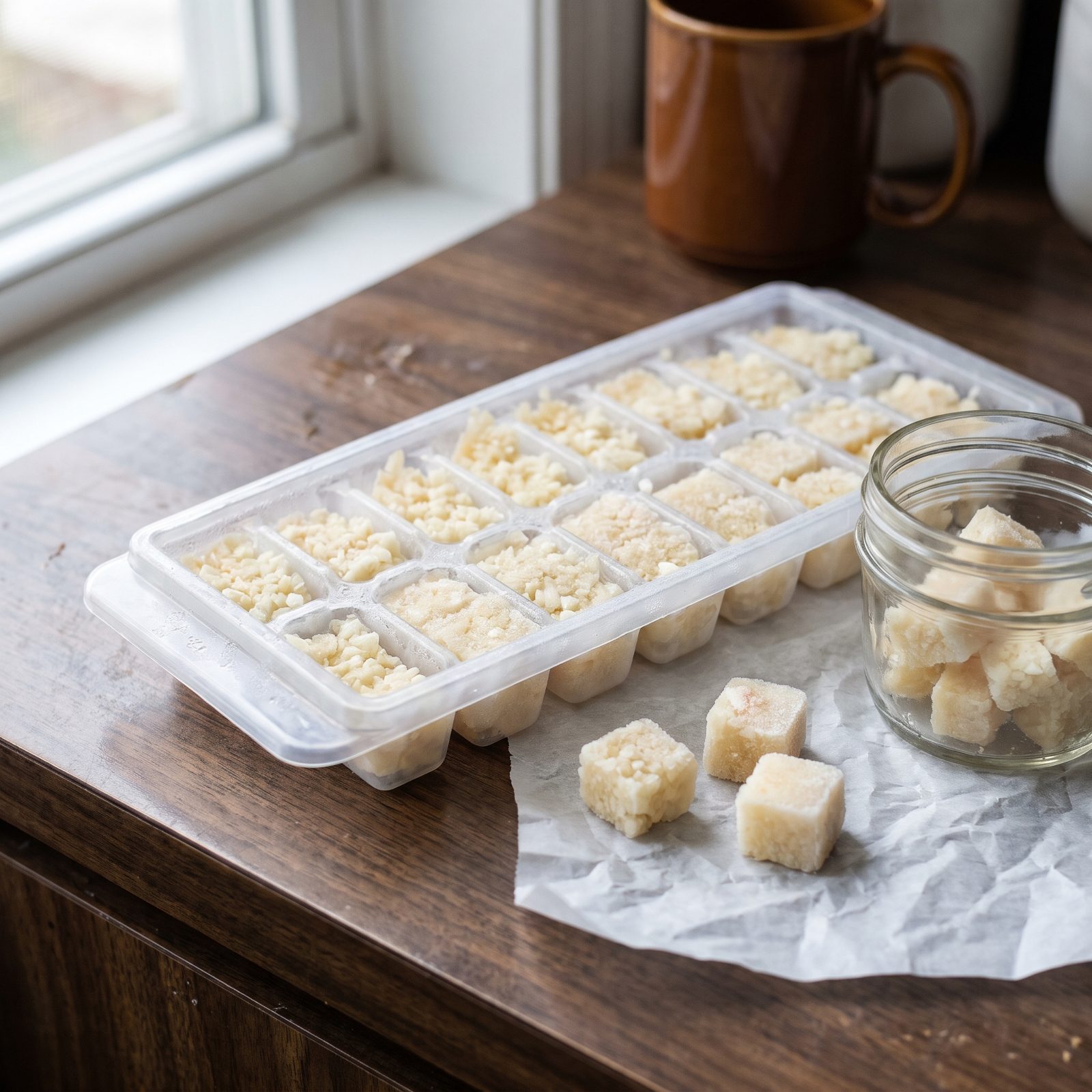
Jarred garlic tastes like jarred garlic — sour and flat. But peeling and mincing cloves mid-recipe slows you down. Split the difference.
Mince a whole head at once, press it into a tray in teaspoon portions, freeze, then store the cubes in a jar. One cube drops straight into the pan. Real garlic flavor, zero knife work on a weeknight.
29. Freeze Grated Ginger in Tiny Scoops
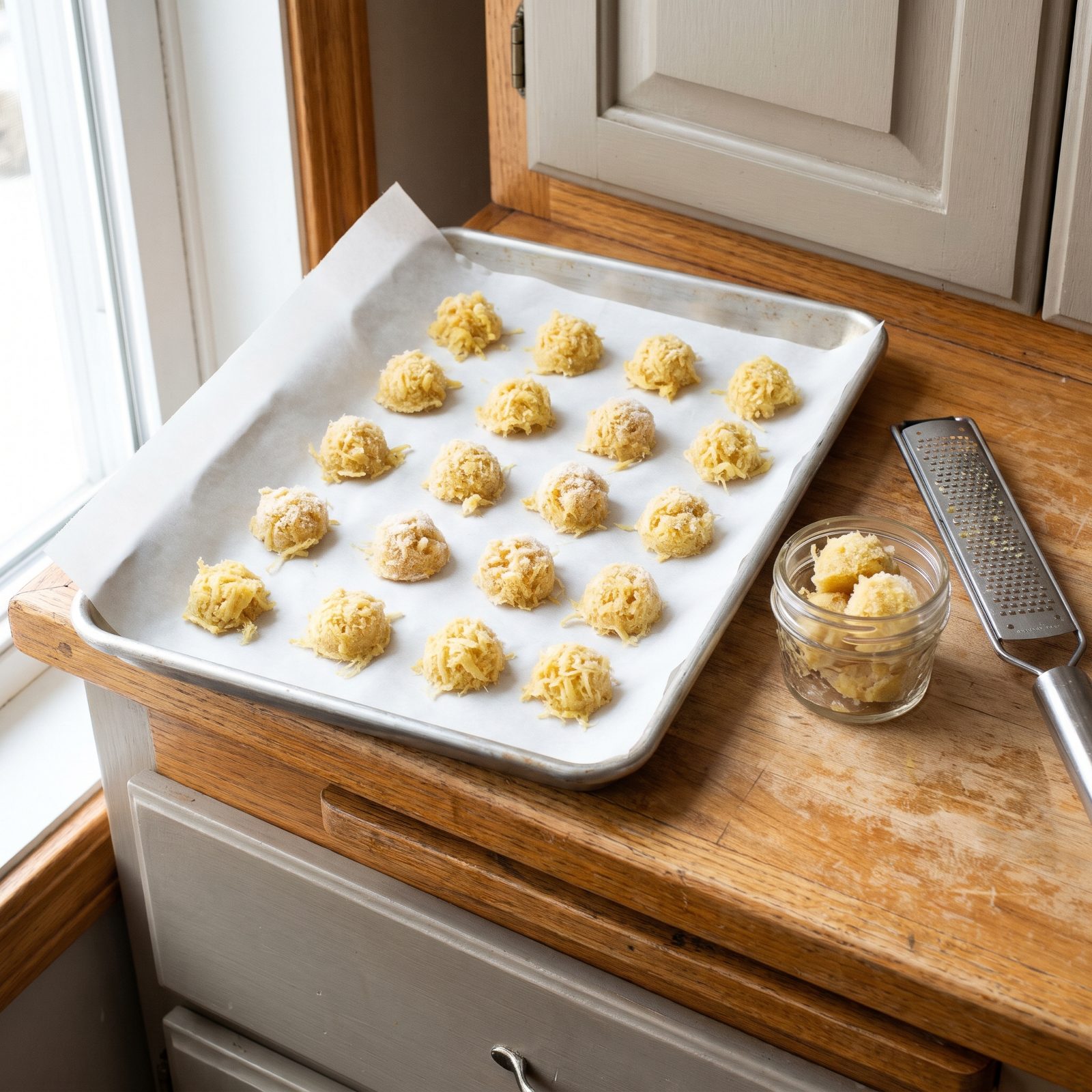
A knob of fresh ginger lives in two states: too much for one recipe, then shriveled and fuzzy in the drawer three weeks later. I throw out more ginger than I’d like to admit. So now I freeze it.
Grate the whole piece, drop teaspoon mounds onto parchment, freeze firm, and jar them. Fresh ginger grates easier when it’s cold anyway, and freezing it first makes the fibers snap instead of stringing.
Toss a frozen scoop straight into stir-fries, soups, marinades or tea. The flavor holds for months, far longer than it would ever survive in the crisper.
28. Freeze Fresh Herbs in Olive Oil
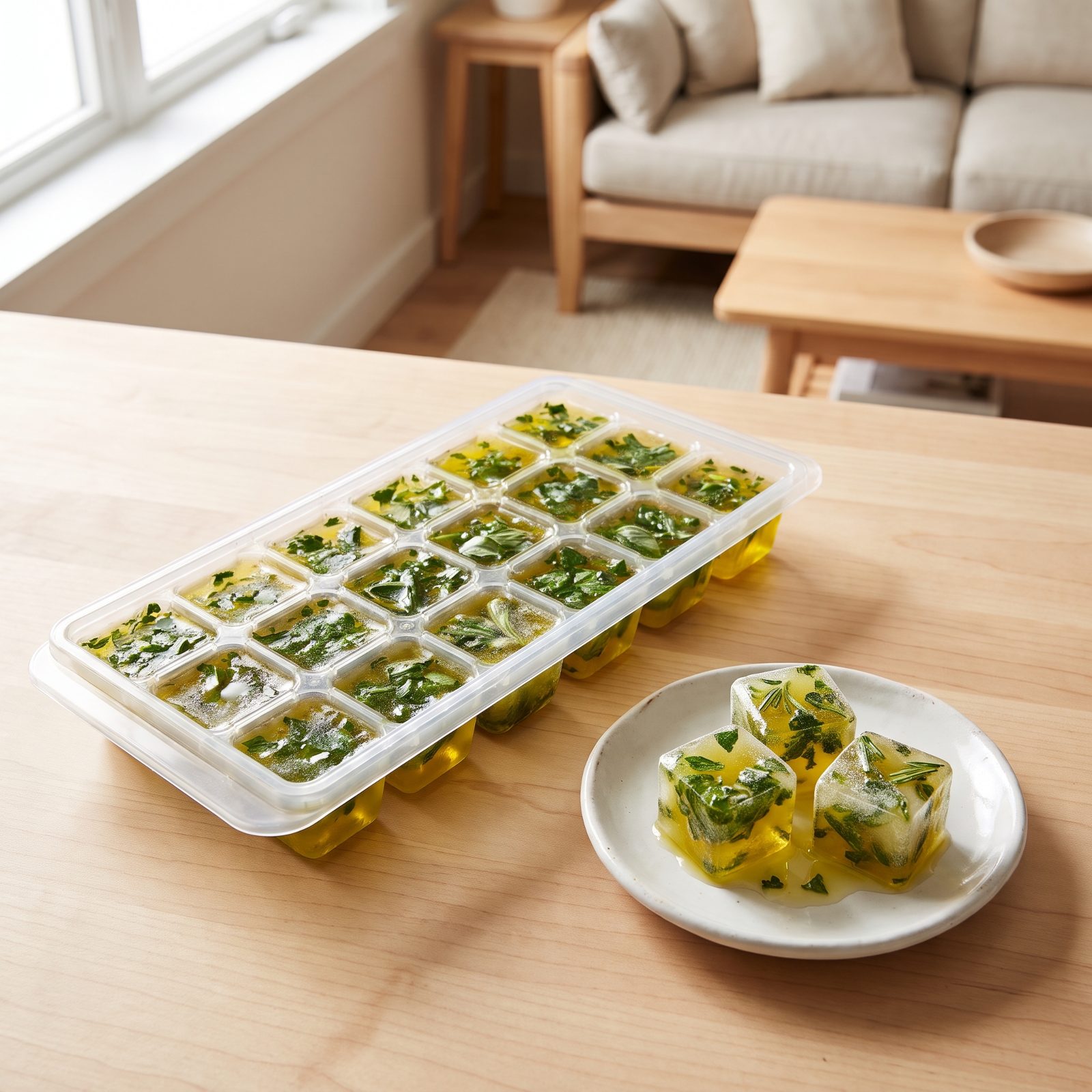
Delicate herbs don’t freeze well dry. Thaw a bag of loose basil and you get a slimy black heap. The fix is olive oil.
Chop herbs, pack them into an ice-cube tray, top each cavity with olive oil, and freeze. The oil shields the leaves from freezer burn, and the cube drops straight into a hot pan, melting into instant flavored oil for sauteing or finishing.
Best with sturdy, oil-friendly herbs: rosemary, thyme, sage, oregano, and yes, basil. Keep tender ones like cilantro and dill for fresh use, since their bright flavor fades fast no matter how you store them.
27. Cube Lemon Juice in Ice Trays
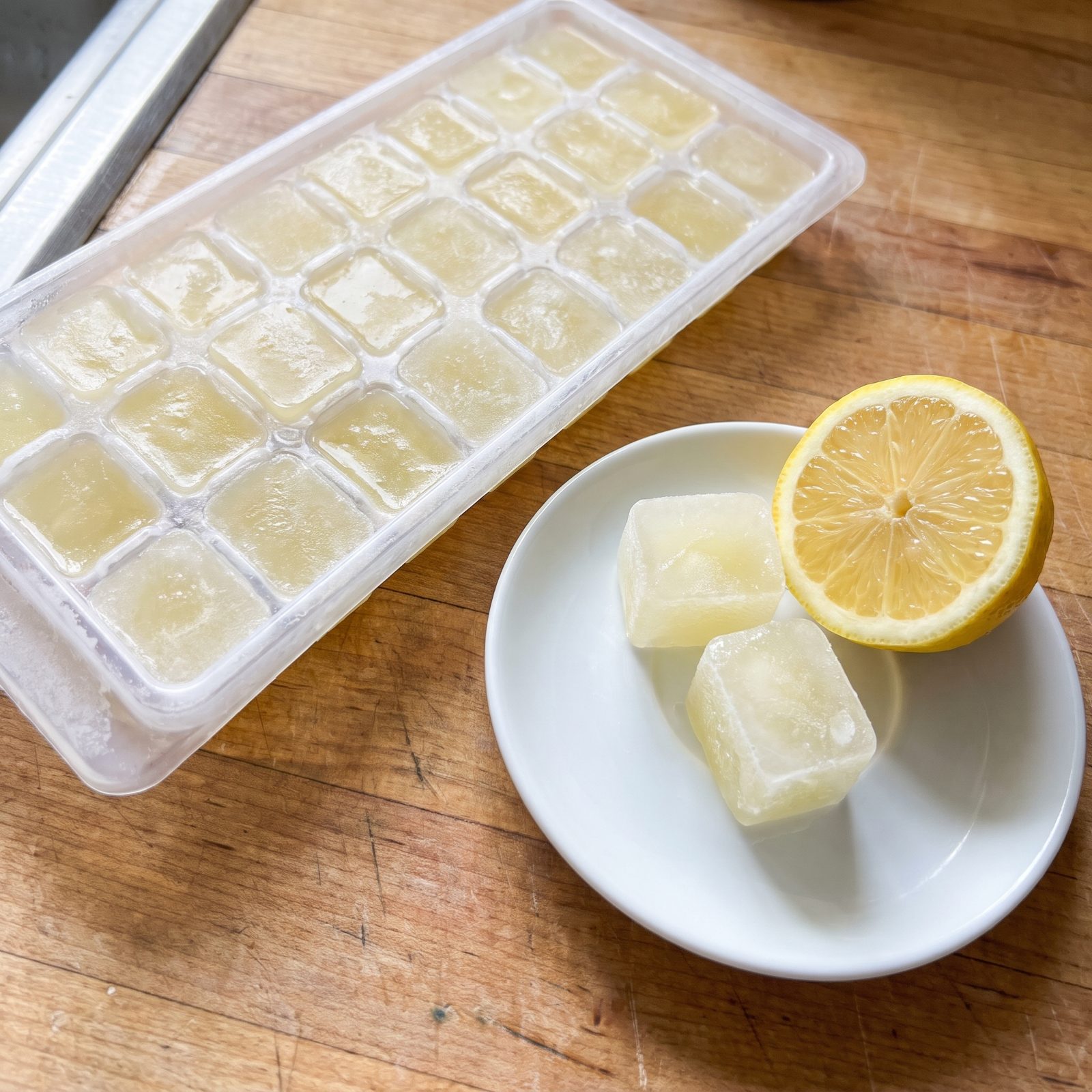
How many times have you reached for a lemon to finish a dish and found a rock-hard dried-out one in the fruit bowl? Fresh acid is the thing that wakes up a flat sauce, and it’s never around when you need it.
Juice a bag of lemons when they’re on sale, pour the juice into an ice-cube tray, freeze, and store the cubes in a bag. Most trays make cubes around one to two tablespoons, close enough to the juice of half a lemon.
Drop a cube into soup, pan sauce, a dressing or a braise right at the end. It melts in seconds and brightens the whole pot. Same trick works for lime.
26. Freeze Pesto in Single-Meal Portions
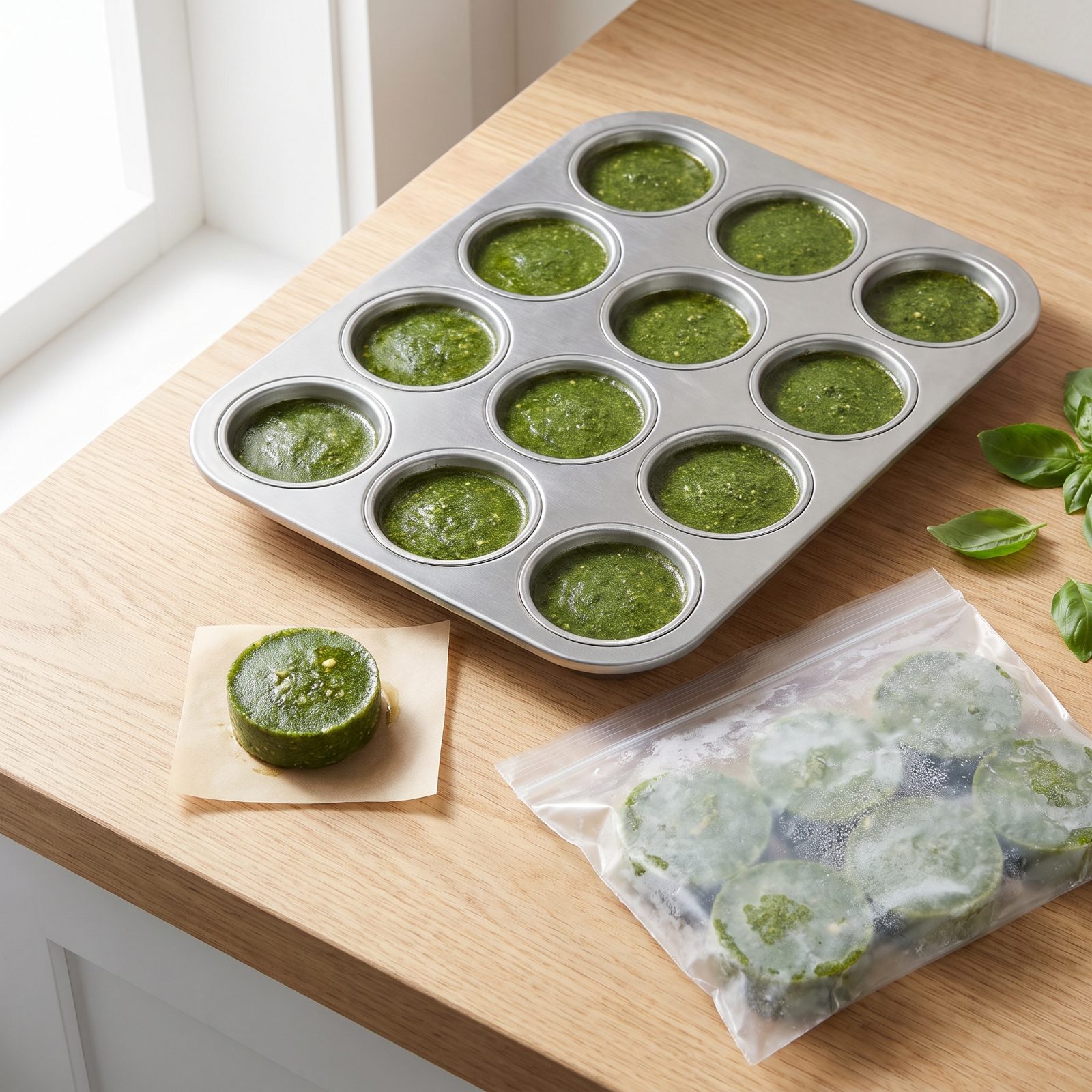
Pesto turns brown and sad the second it sits open in the fridge, and a whole jar is almost never what one dinner needs. Freeze it in a muffin tin or ice cube tray instead, each portion sized for a pound of pasta. Once solid, pop the pucks into a flat freezer bag so they don’t weld into one green lump.
Here’s the part people miss. Skip the raw garlic if you’re freezing it, because raw garlic can turn harsh in pesto over a few weeks. Stir it in fresh when you thaw. A puck drops straight into hot drained pasta and melts in under a minute.
25. Freeze Tomato Paste by the Tablespoon
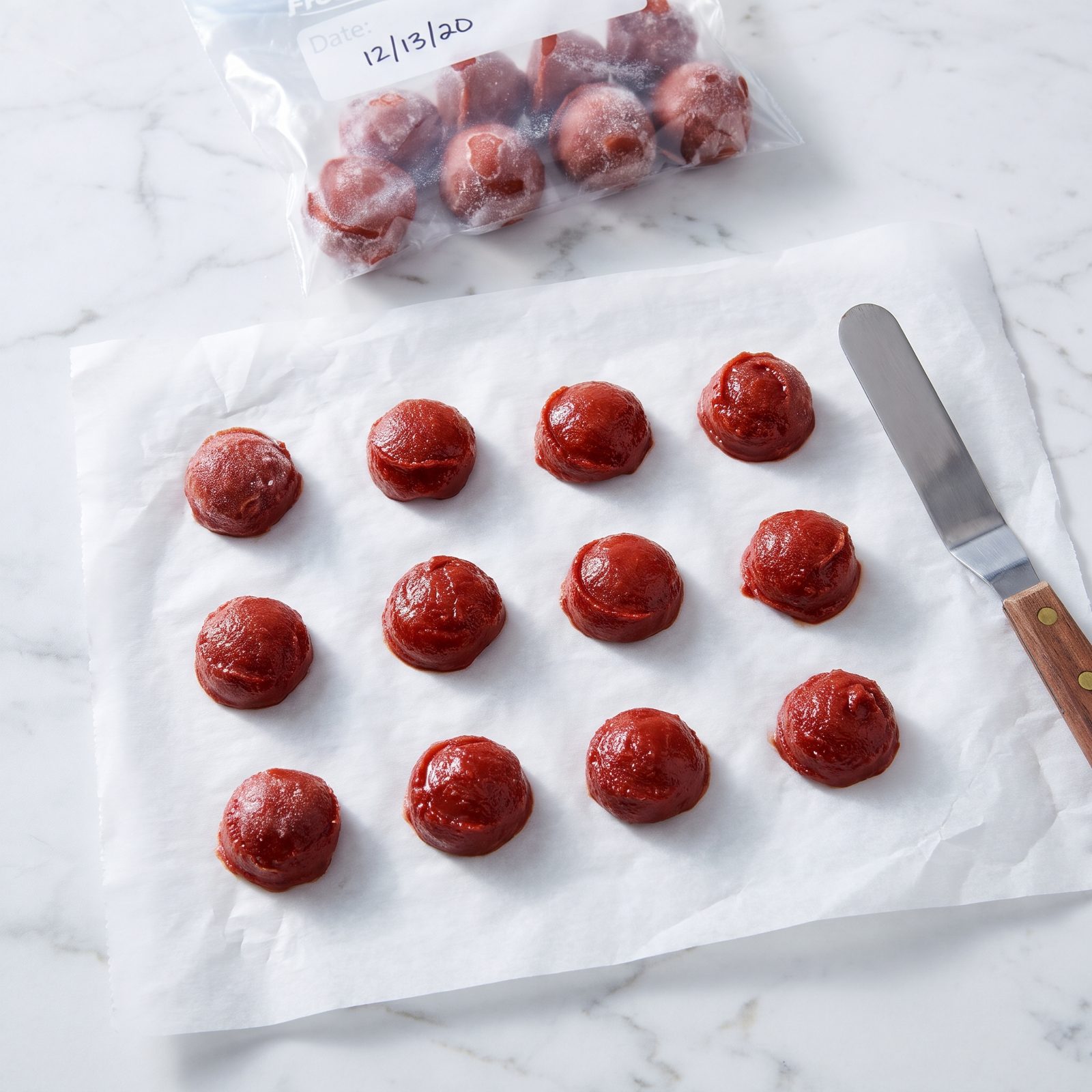
Recipes ask for a tablespoon of tomato paste. The can gives you ten or so. The rest hardens into a rusty crust at the back of the fridge and gets tossed two weeks later, every single time.
Spoon tablespoon dollops onto a parchment-lined tray, freeze them solid, then bag them. Each nugget drops straight into a hot pan with no thawing, and the cold hit actually helps you bloom it in oil without scorching. One can gives you months of stir-fries, braises, and quick sauces. No waste, no crust, no guilt.
24. Bag Marinara Sauce Flat
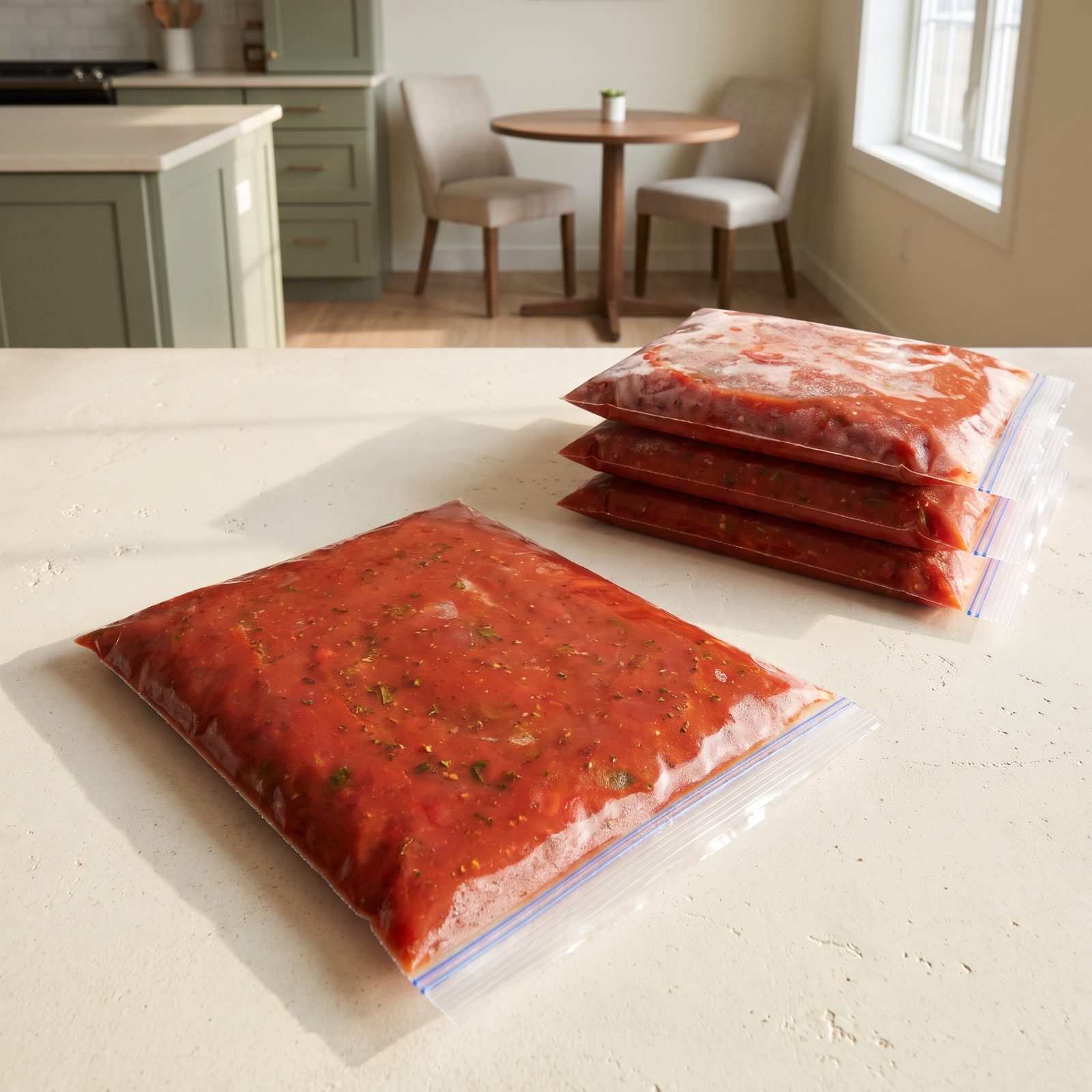
Freezing sauce flat is the single best space trick in the whole freezer. Fill a quart bag maybe two-thirds, press out the air, seal it, and lay it flat on a baking sheet until it’s frozen into a thin tile. Then stand the tiles upright like records in a crate.
Flat sauce thaws in a bowl of warm water in about ten minutes, versus the hour a frozen brick takes, and you fit three times as much on the same shelf. Label the bag with a marker before you fill it. Once it’s sloshing around, that chance is gone.
23. Freeze Stock in Measured Portions
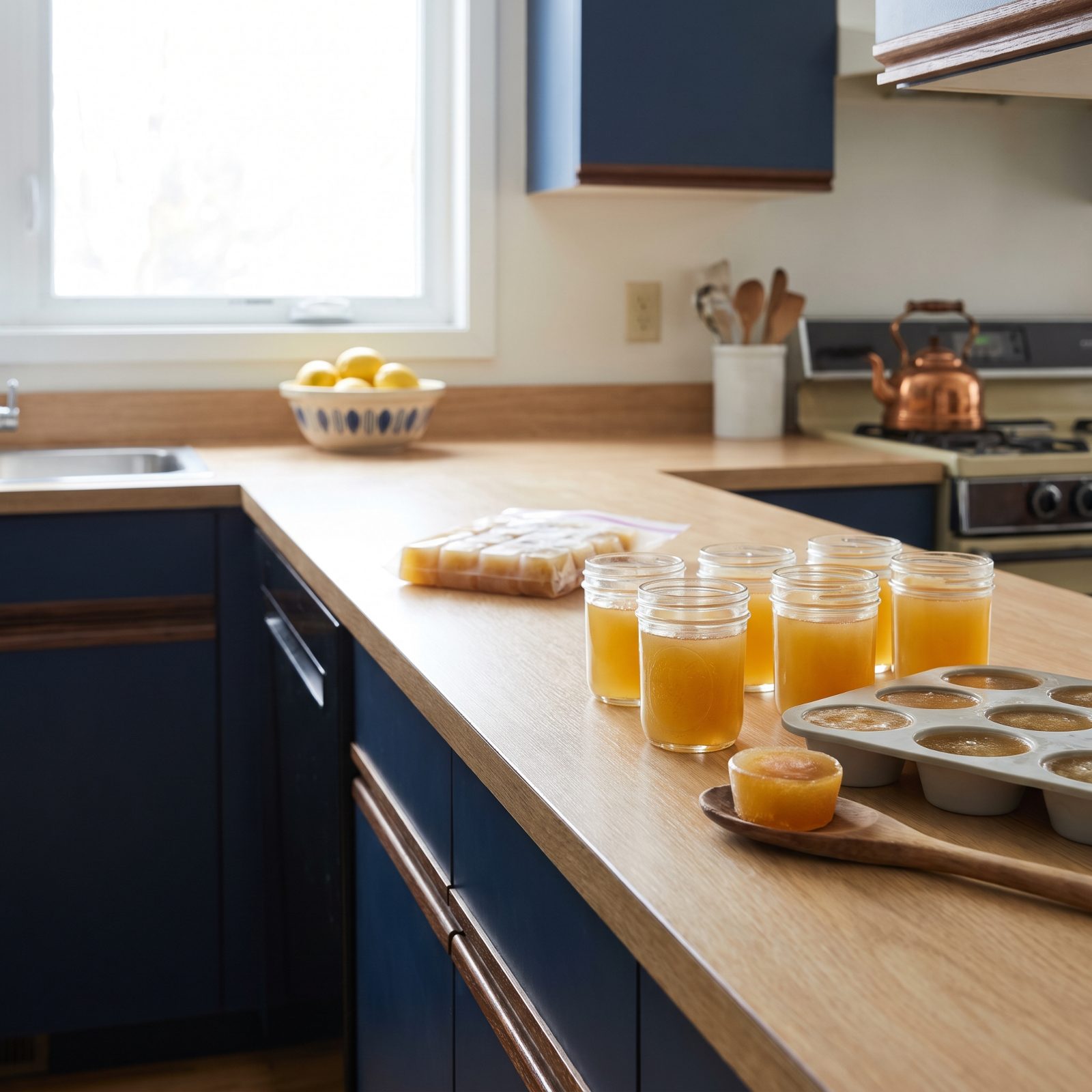
A splash of real stock does more for a weeknight pan sauce than any bouillon cube ever could. But only if you can grab the right amount without defrosting a whole quart.
Freeze stock in two sizes: ice-cube portions for deglazing and quick sauces, and half-cup or one-cup amounts for soups and risotto. Leave an inch of headroom in any rigid container, because liquid expands as it freezes and will crack glass that’s filled to the brim.
22. Save Coconut Milk in Half-Cup Portions
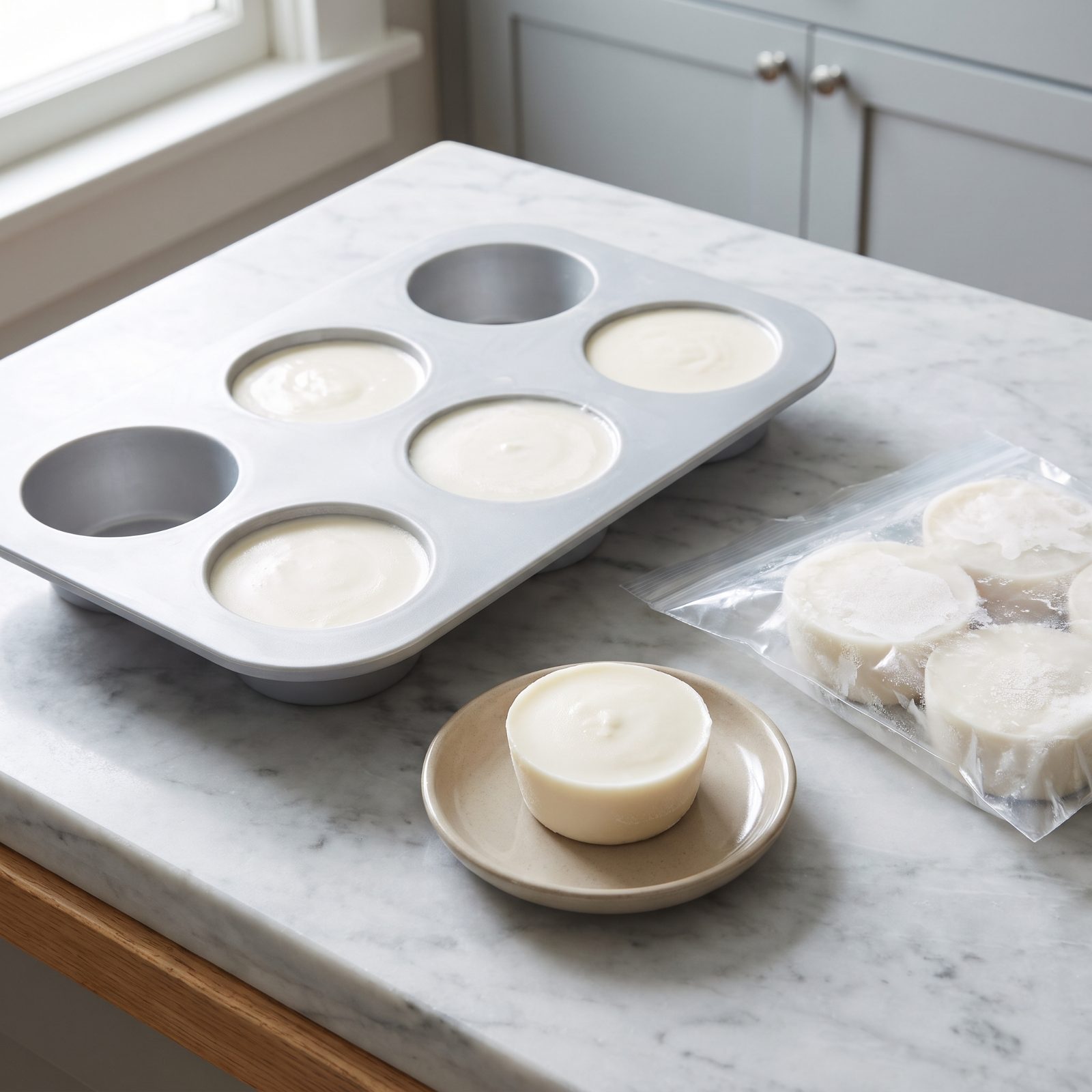
You crack open a can of coconut milk for a curry, use half, and the rest grows a science experiment in the fridge by Thursday. Full-fat coconut milk freezes beautifully, which almost nobody realizes. Whisk the can smooth first so the thick cream and the watery part don’t separate into two sad layers, then pour half-cup portions into a muffin tray, freeze, and bag them.
Fair warning going in: the texture can look slightly grainy once thawed. It smooths right back out the moment it hits a warm pan, so don’t panic and toss it. A half-cup puck turns a sheet-pan dinner into something with sauce in minutes.
21. Portion Chipotles With Adobo Sauce
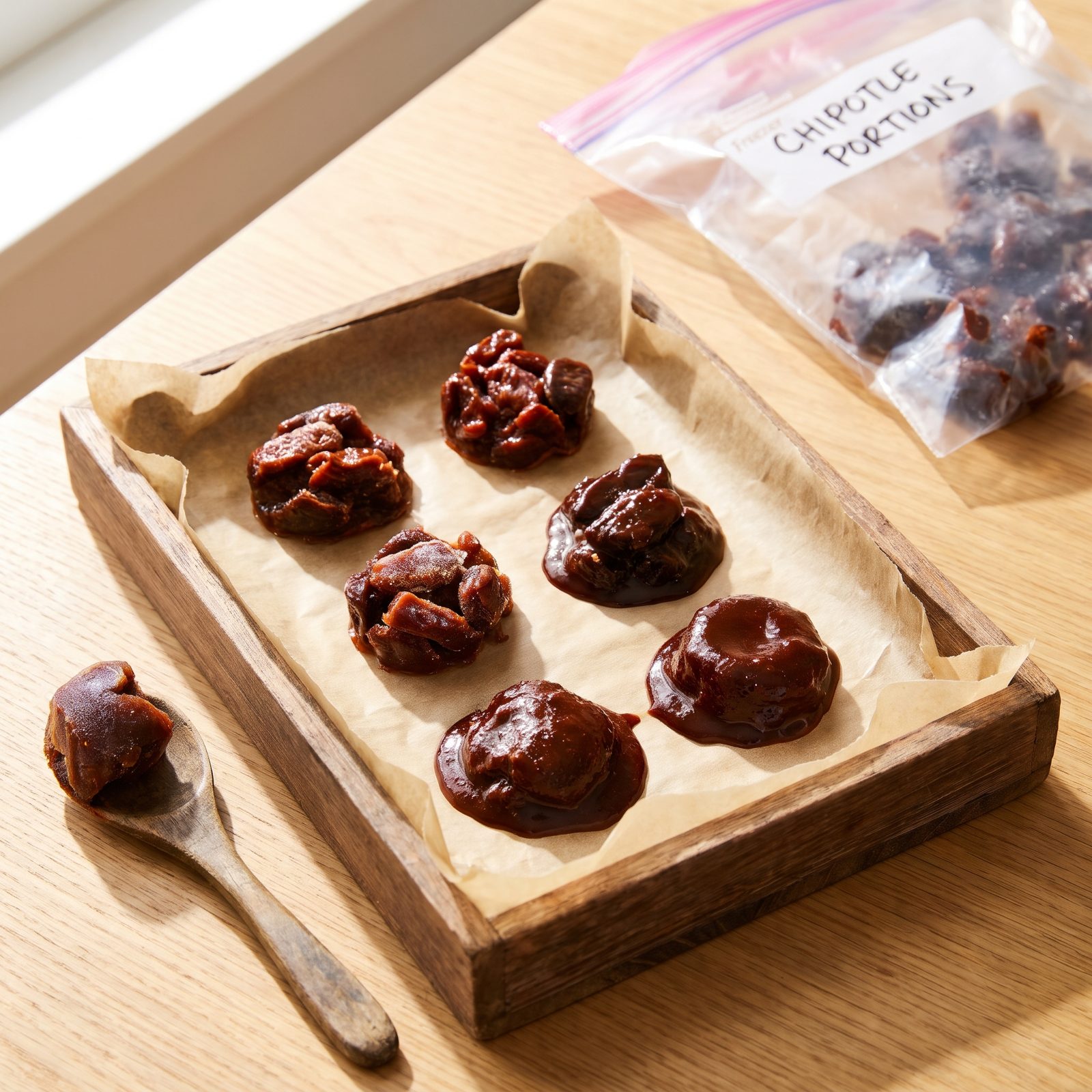
A recipe wants one chipotle. The can holds seven, plus all that smoky adobo sauce you’d be crazy to waste. Left in the open can, they rust the metal and taste tinny within days.
Spoon one or two peppers plus a spoonful of sauce into each well of a mini muffin tin or onto parchment, freeze, then bag. You get instant smoke and heat for chili, marinades, mayo, or soup without committing to the whole can’s firepower at once.
20. Freeze Black Beans With Their Liquid
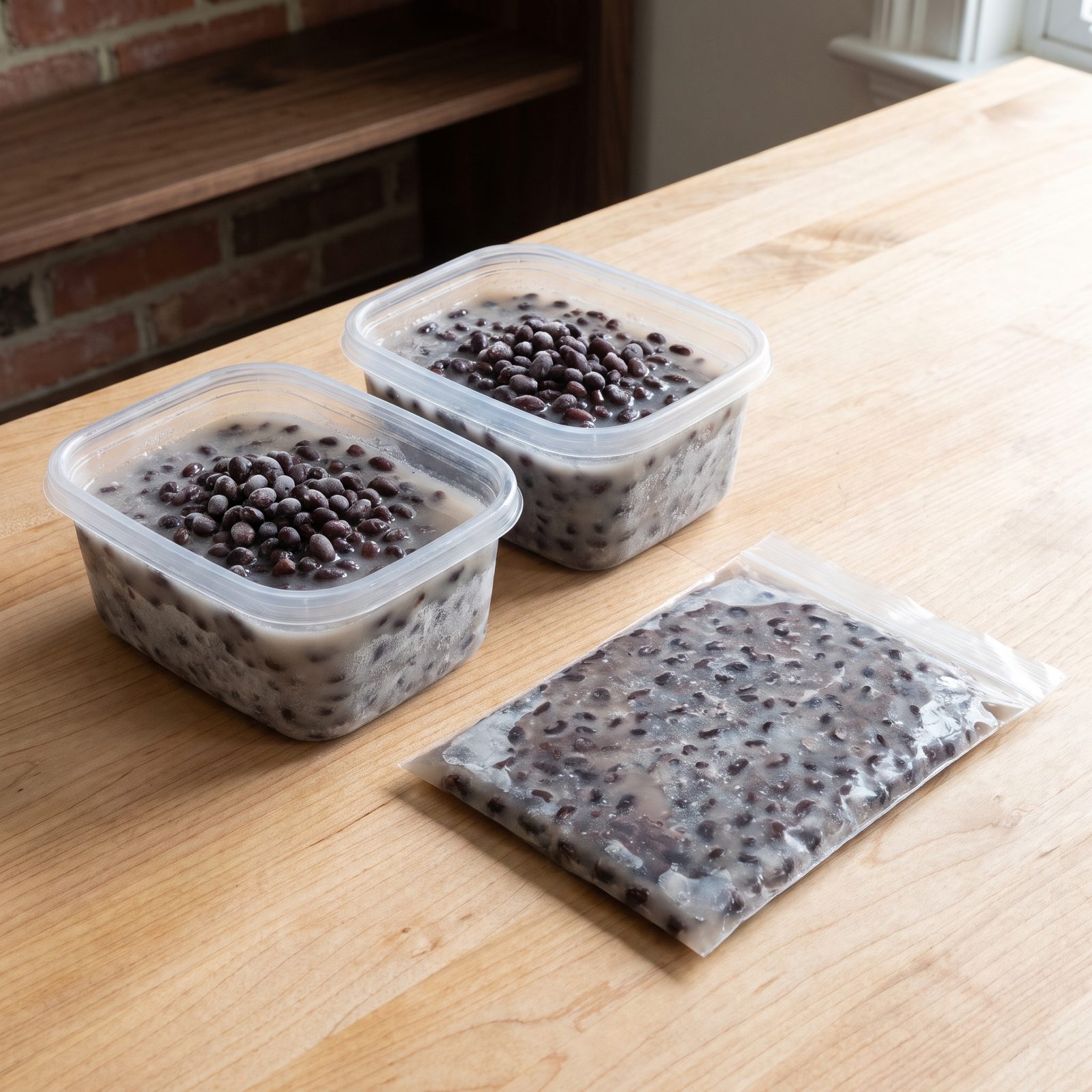
People drain and rinse their beans before freezing, then wonder why they thaw dry and mealy. The liquid is the whole point. That starchy, salty broth keeps the beans plump and turns into instant sauce body.
Freeze cooked beans right in their liquid, in meal-size portions, flat in a bag or in a container with headroom. When you reheat, that liquid thickens into a loose gravy that makes a pot of beans feel like you actually cooked something. Season lightly before freezing and adjust after, since flavors concentrate in the cold.
19. Portion Cooked Lentils for Rapid Dinners
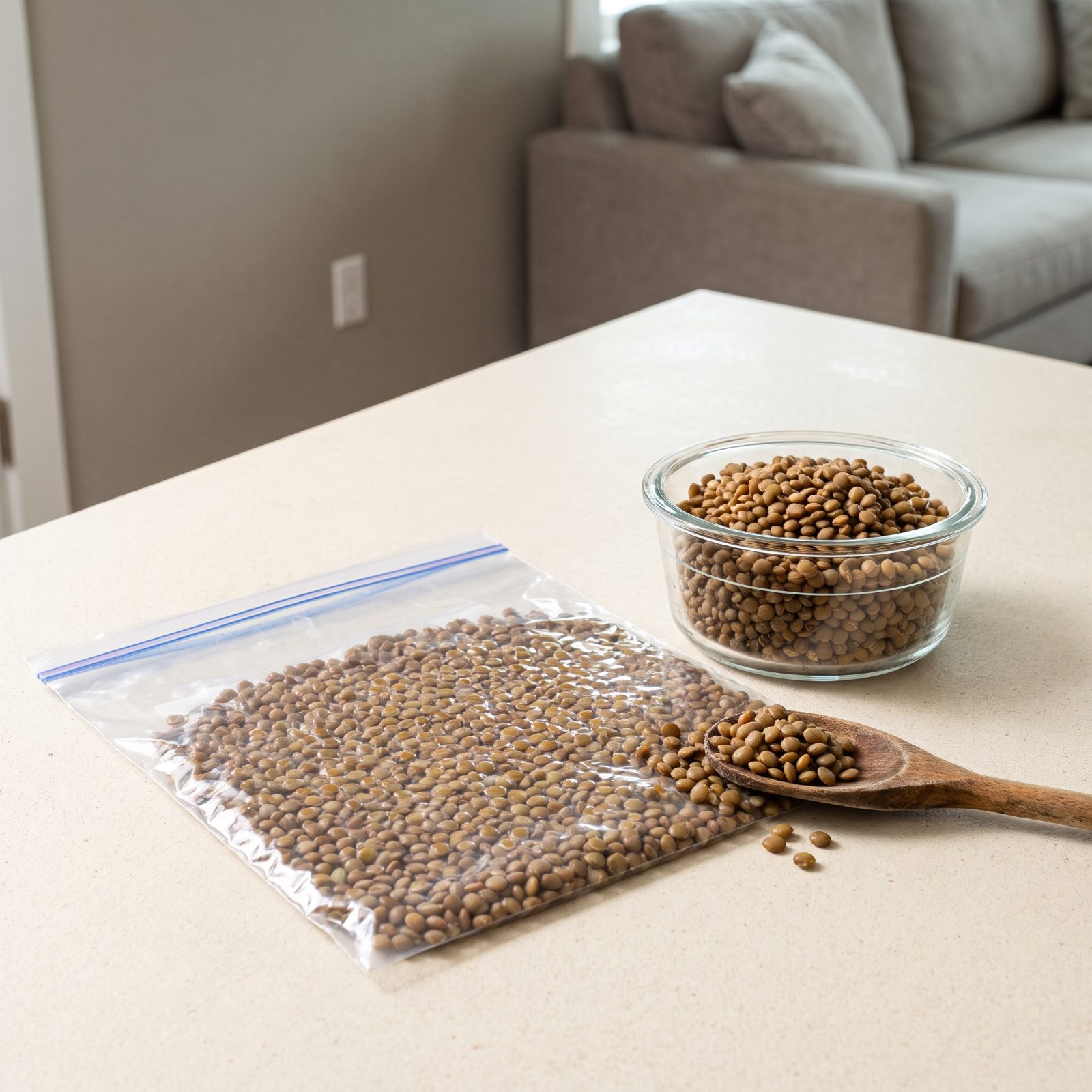
Lentils cook fast compared to dried beans, but twenty-five minutes is still twenty-five minutes you don’t have at six o’clock. So on a slow Sunday, cook a big pot of lentils, then freeze them in flat bags and one-cup containers.
Use firmer varieties. Brown, green, and black lentils hold their shape, while red lentils collapse into mush in the pot. Pre-measured, a portion goes straight from bag to pot, and once cooked it drops into soup, grain bowls, a quick salad, or a skillet with onions and that frozen tomato paste you already stashed.
18. Freeze Cooked Rice in Shallow Packets
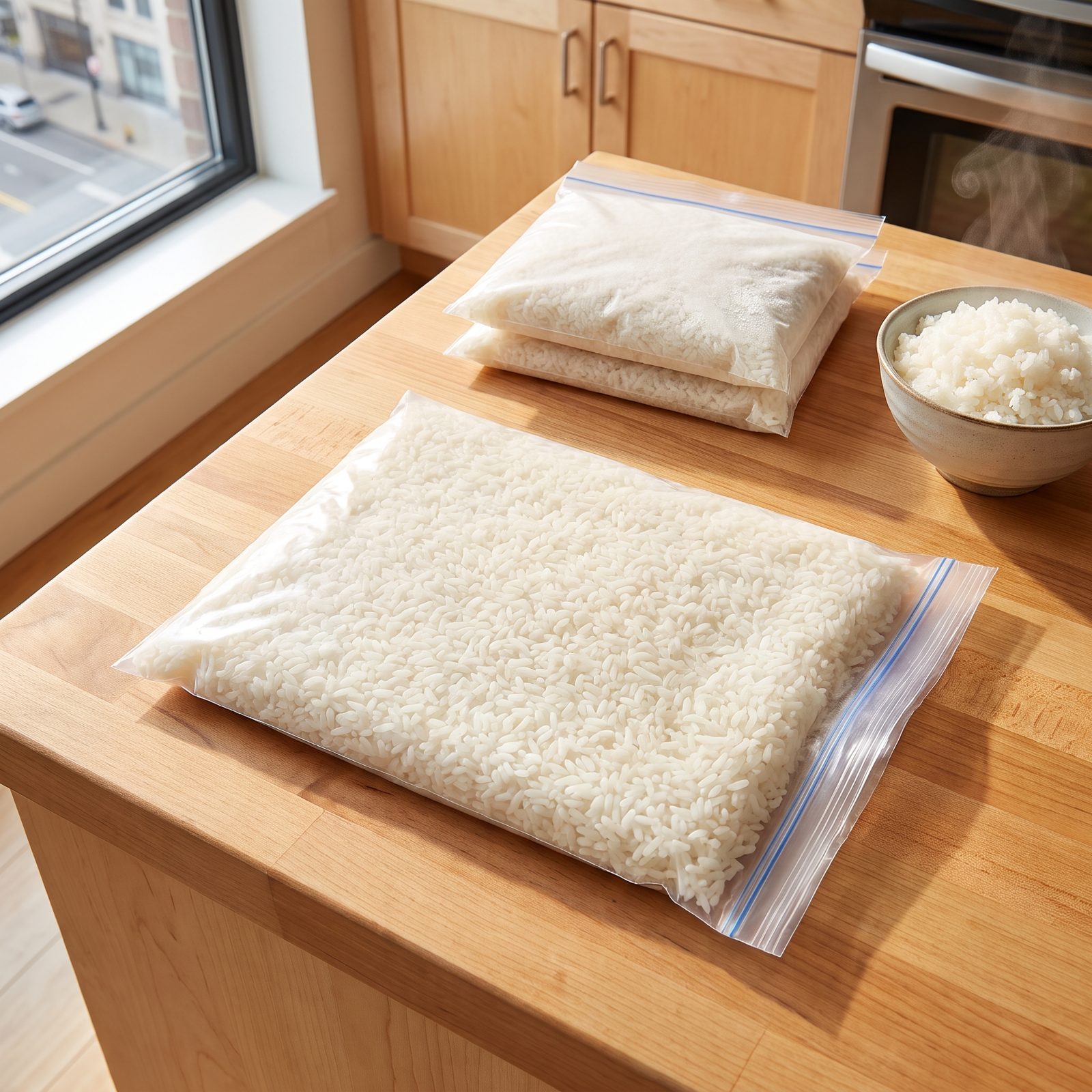
Frozen rice reheats better than fresh, and I’ll die on that hill. The freezing locks in moisture, so a microwave splash and ninety seconds gives you fluffy grains instead of a dried-out clump.
Spread cooked rice in a thin layer in a flat bag so it freezes fast and reheats evenly. The speed matters for food safety too, since rice left sitting at room temperature is one of the sneakier causes of a rough night. Cool it quickly, freeze it flat, and you’ve got the base for fried rice, bowls, or a side in less time than takeout.
17. Oil Pizza Dough Balls Individually
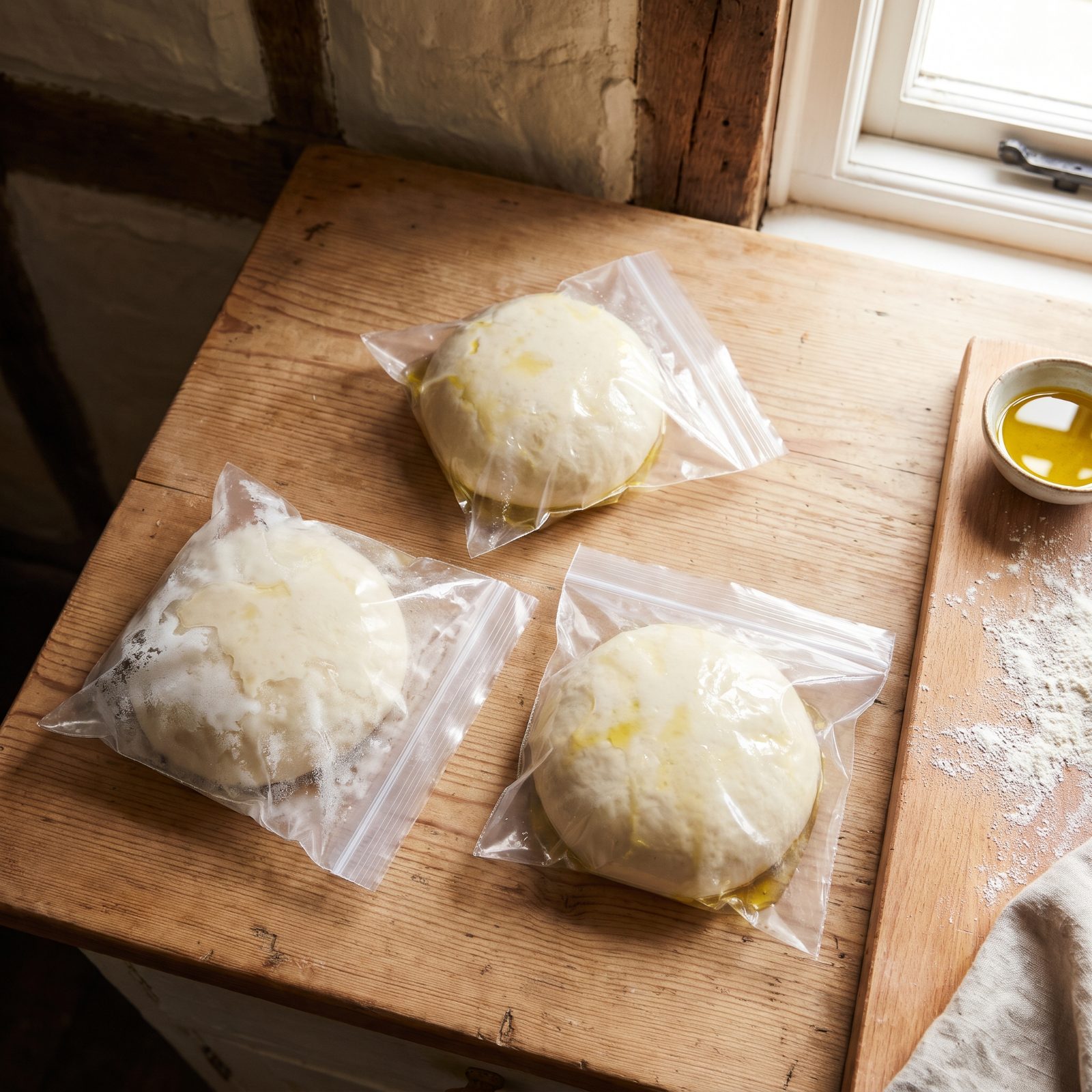
Homemade pizza dies on the vine because nobody wants to mix and proof it on a Friday night. Make a double batch when you do make it, then freeze the extra as individual balls, each rubbed with a thin coat of olive oil and sealed in its own bag.
The oil keeps the surface from drying into a crusty skin and stops the ball from sticking to the plastic. Pull a ball out that morning, let it thaw and come to room temperature on the counter, and by dinner it stretches like it was made fresh.
One batch, three or four Friday nights handled. Done.
16. Separate Tortillas With Waxed Paper
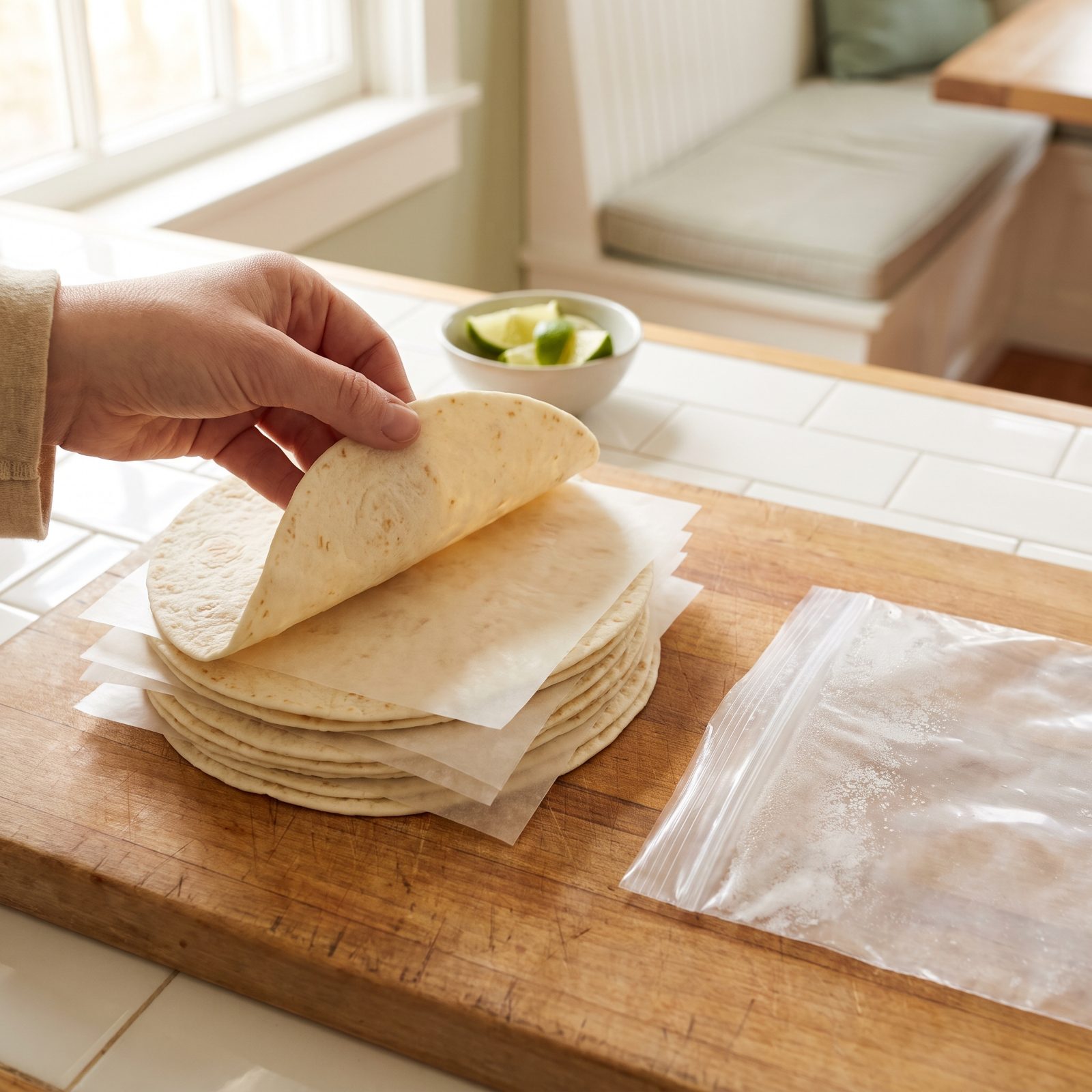
Pull a frozen tortilla stack out without waxed paper and you get a frisbee — one solid disc, impossible to peel, destined for the trash. The paper is the whole trick.
Cut squares a touch bigger than the tortilla, slide one between each, then flatten the whole thing into a freezer bag and press the air out. When taco night hits you grab exactly four and the rest stay put. They thaw on the counter in minutes, or go straight into a dry skillet.
15. Stash Garlic Bread for Emergency Sides
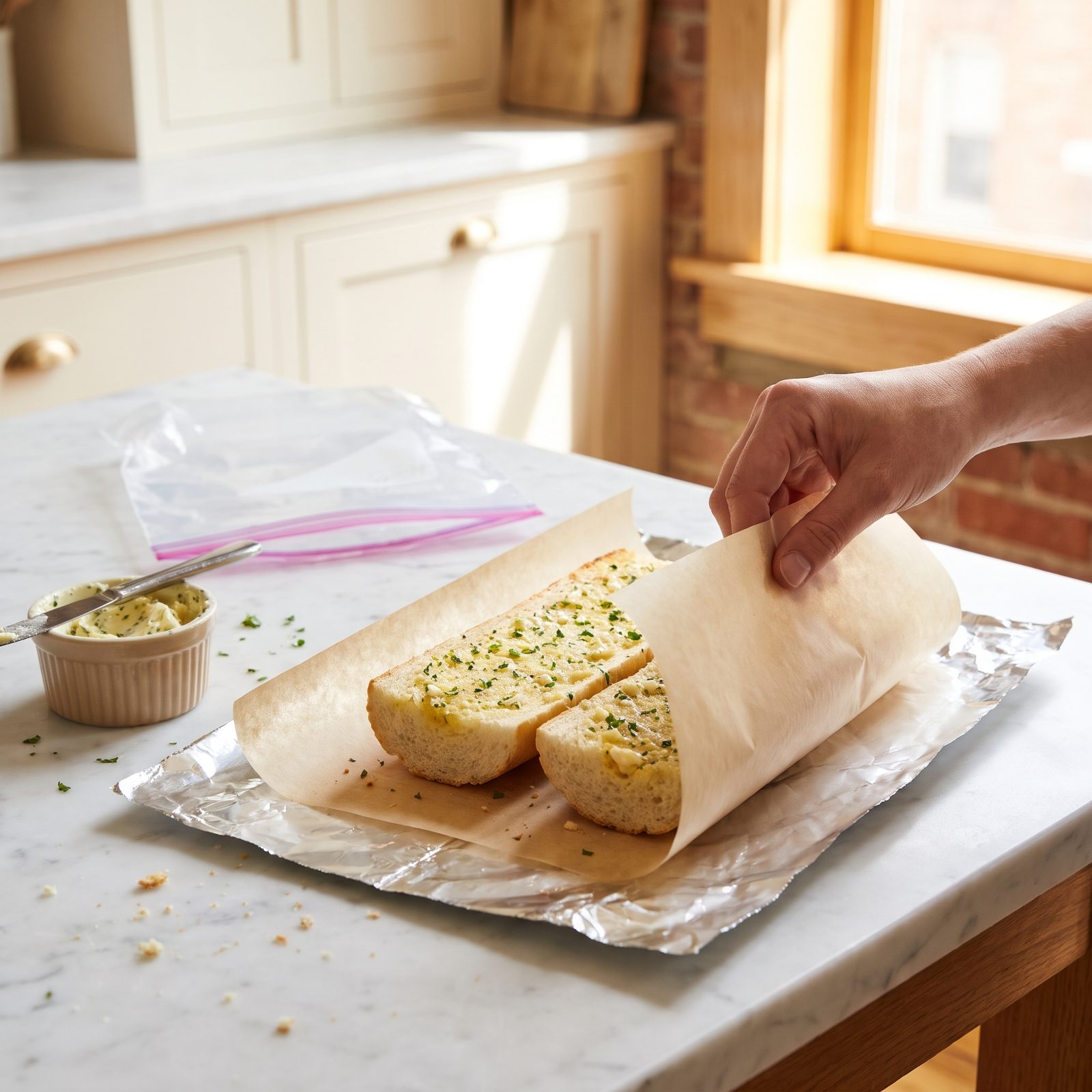
Nothing turns a thrown-together pasta into a real dinner faster than garlic bread, and the kind you make yourself beats the grocery freezer version by a mile.
Split a loaf, spread it thick with softened butter, garlic, and parsley, then wrap each half in parchment and foil before freezing flat. It goes into the oven frozen — no thaw — and comes out in about fifteen minutes while the water boils. Keep two halves in rotation and you always have a side.
I used to buy the shrink-wrapped stuff and tell myself it was fine. It was not fine.
14. Freeze Shredded Mozzarella in Thin Layers
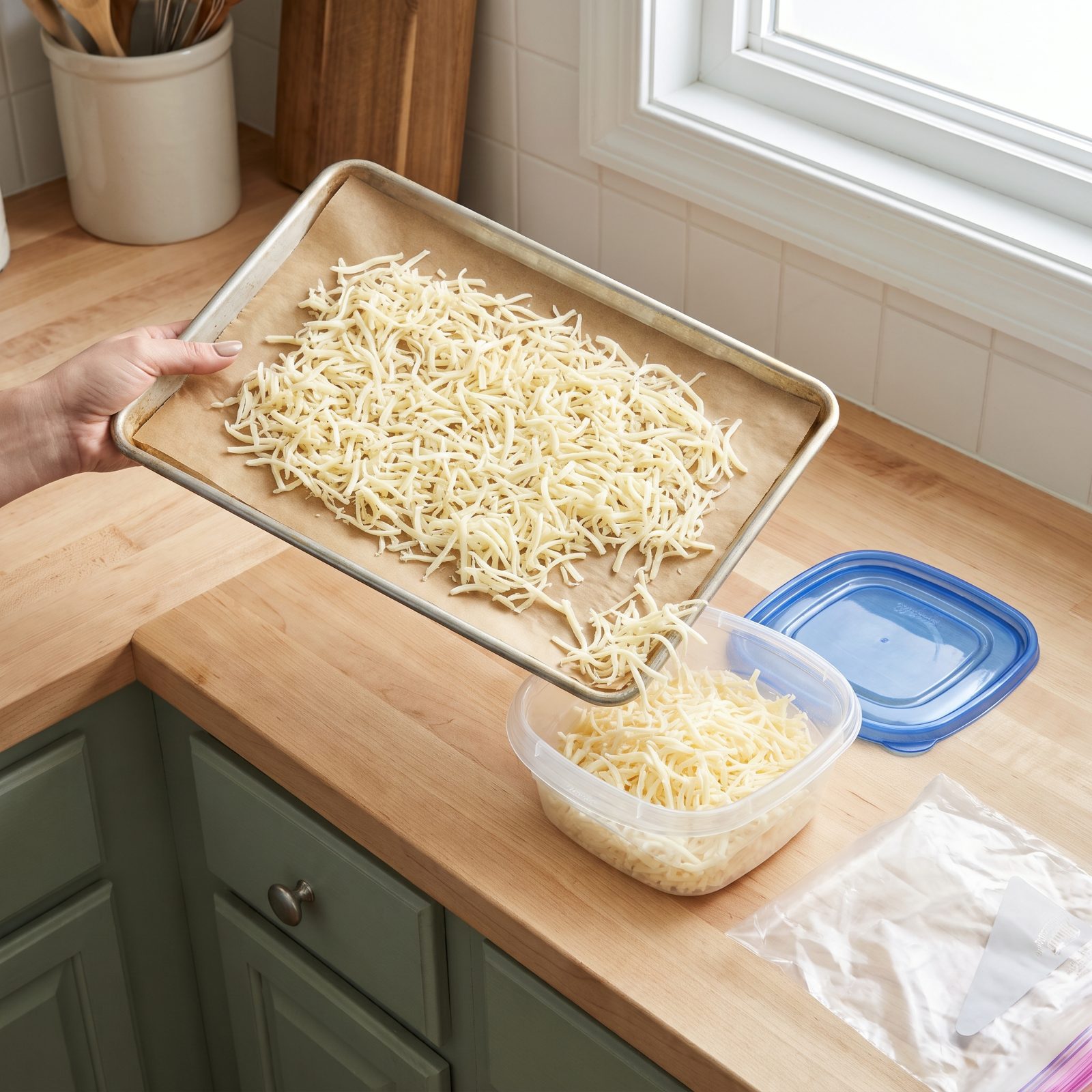
Shredded mozzarella freezes straight from the bag into one hard brick, and then you’re hacking at it with a knife over a hot pizza. Not the move.
Spread the shreds thin on a parchment-lined tray, freeze for an hour until they’re loose, then pour them into a container. They stay scoopable. Take exactly what one flatbread or quesadilla needs and leave the rest.
13. Save Parmesan Rinds for Soup Pots
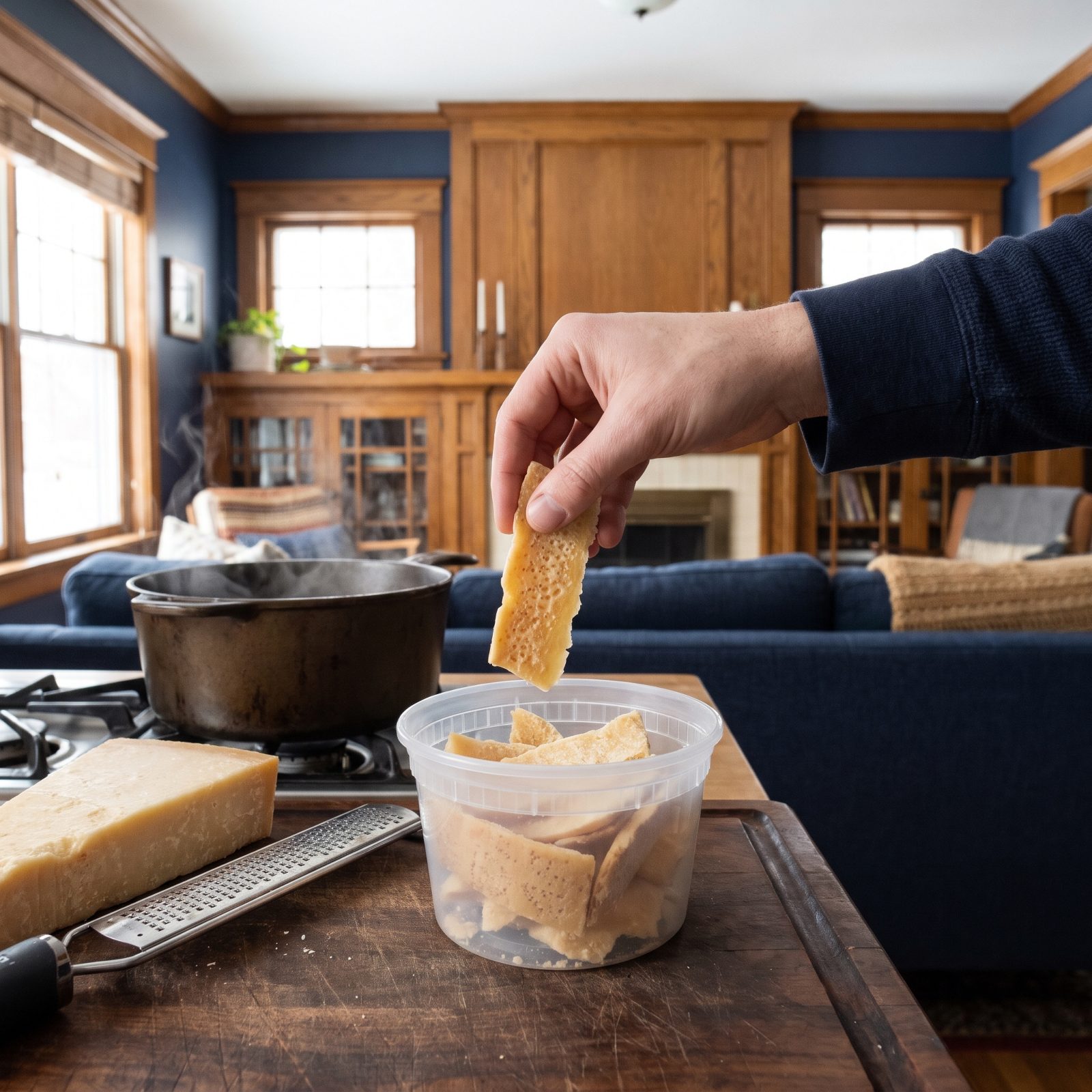
You’ve grated a wedge down to the hard knob at the end and tossed it. Stop doing that. That rind is pure savory gold.
Drop every leftover rind into a container in the freezer. When you build a minestrone, a white bean soup, or even a simple tomato sauce, toss one in while it simmers. It melts slowly and leaves the whole pot deeper and rounder — the kind of flavor you can’t fake with salt.
12. Freeze Homemade Biscuit Dough Unbaked
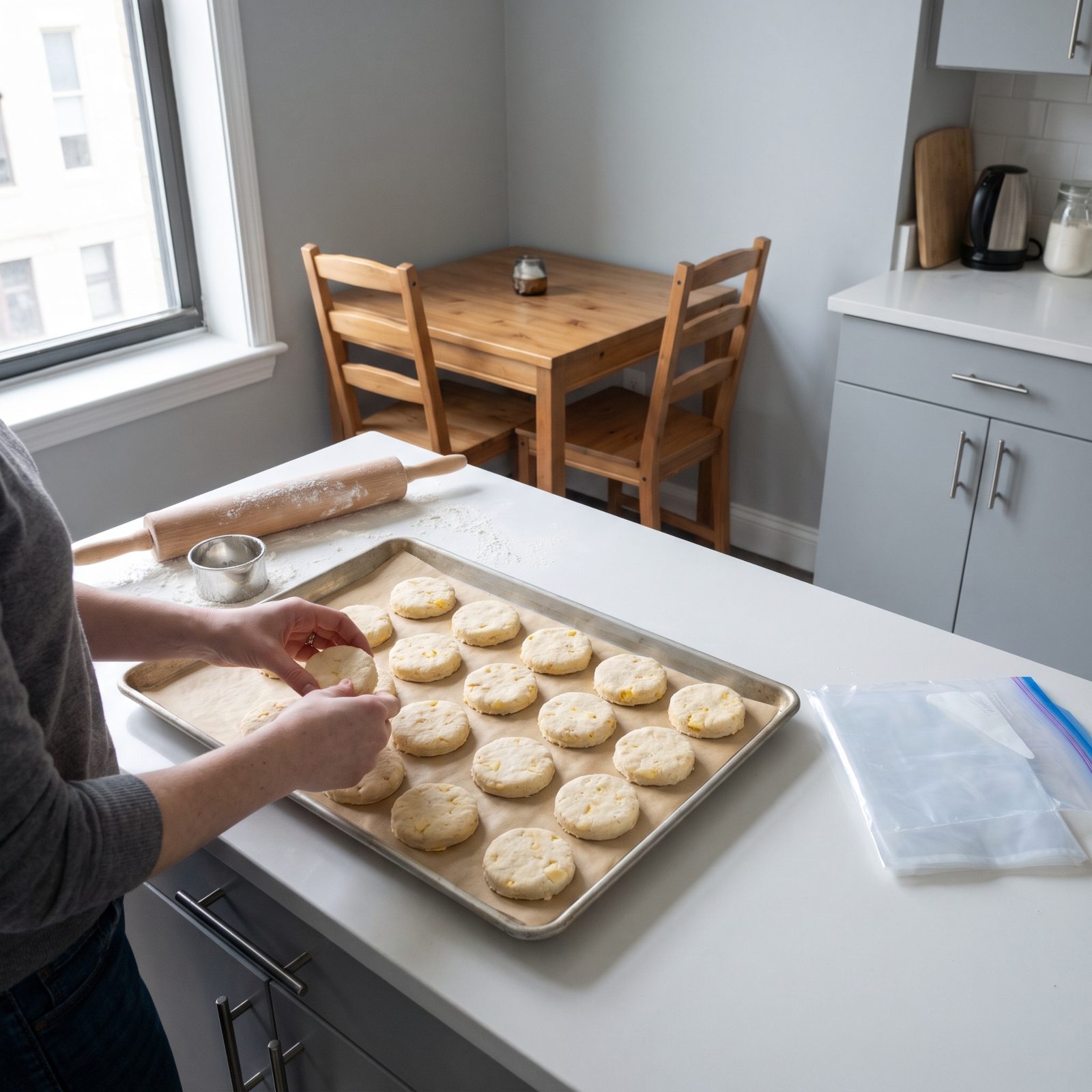
Freeze biscuits after baking and they come back dry and crumbly. Freeze the dough raw and cut, though, and they bake up tall and flaky like you made them that morning.
Cut your rounds, tray-freeze them solid, then bag them. Into the oven they go frozen, with just a few extra minutes on the bake time. No thawing, no planning, no sad reheated puck.
This changed my weekend breakfasts more than almost anything else in the freezer. Six biscuits for two people means four waiting for next Sunday.
11. Tray-Freeze Gnocchi Before Bagging
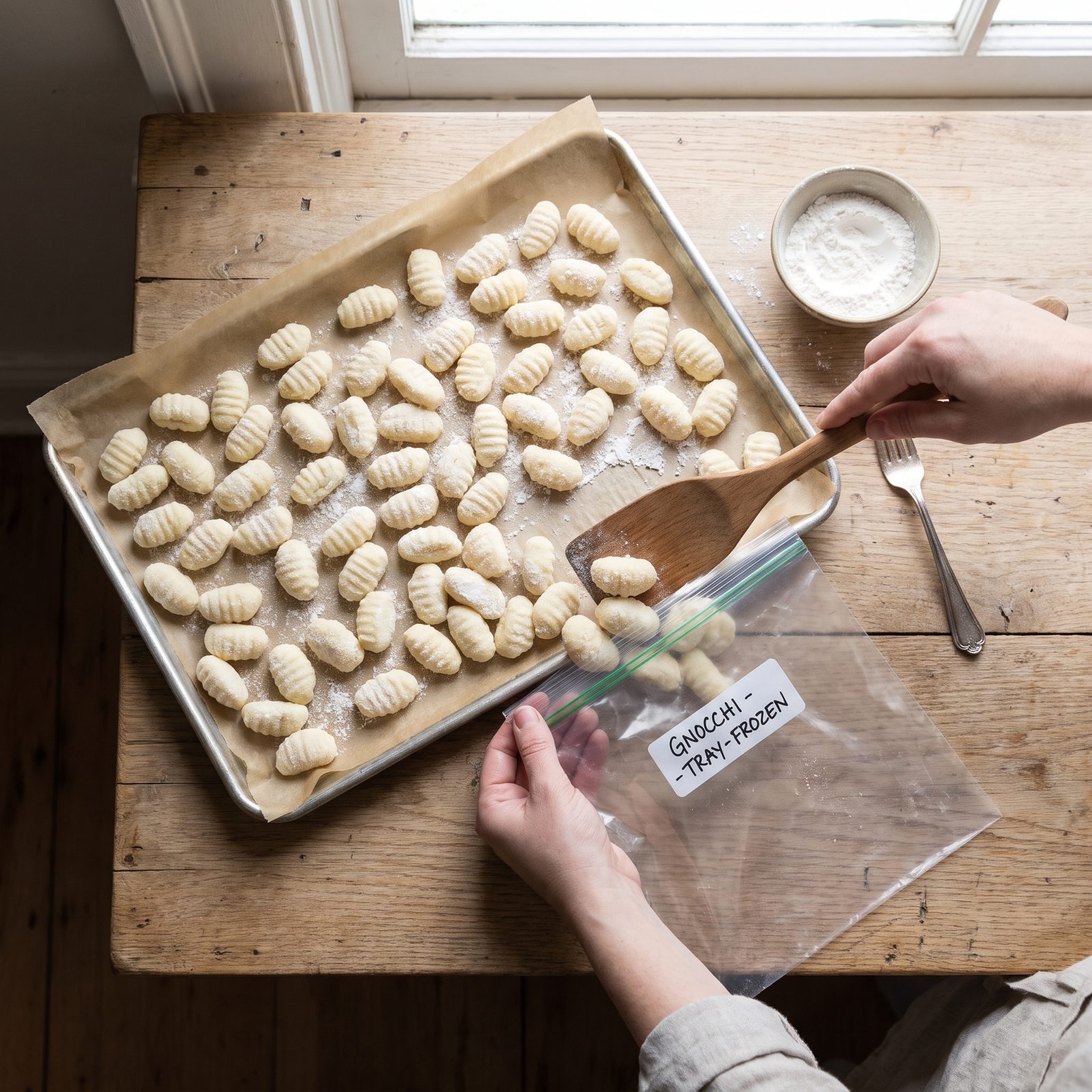
Bag fresh gnocchi straight away and they fuse into a starchy lump. Tray-freeze them first and they pour out loose, ready to drop frozen into boiling water or a hot pan.
Spread them on a floured tray so none touch, freeze an hour, then bag flat. Cook them straight from the freezer — no defrost. Crisping them frozen in a little butter and sage gives you crisp edges around pillowy centers.
10. Stock Dumplings for Speedy Skillet Dinners
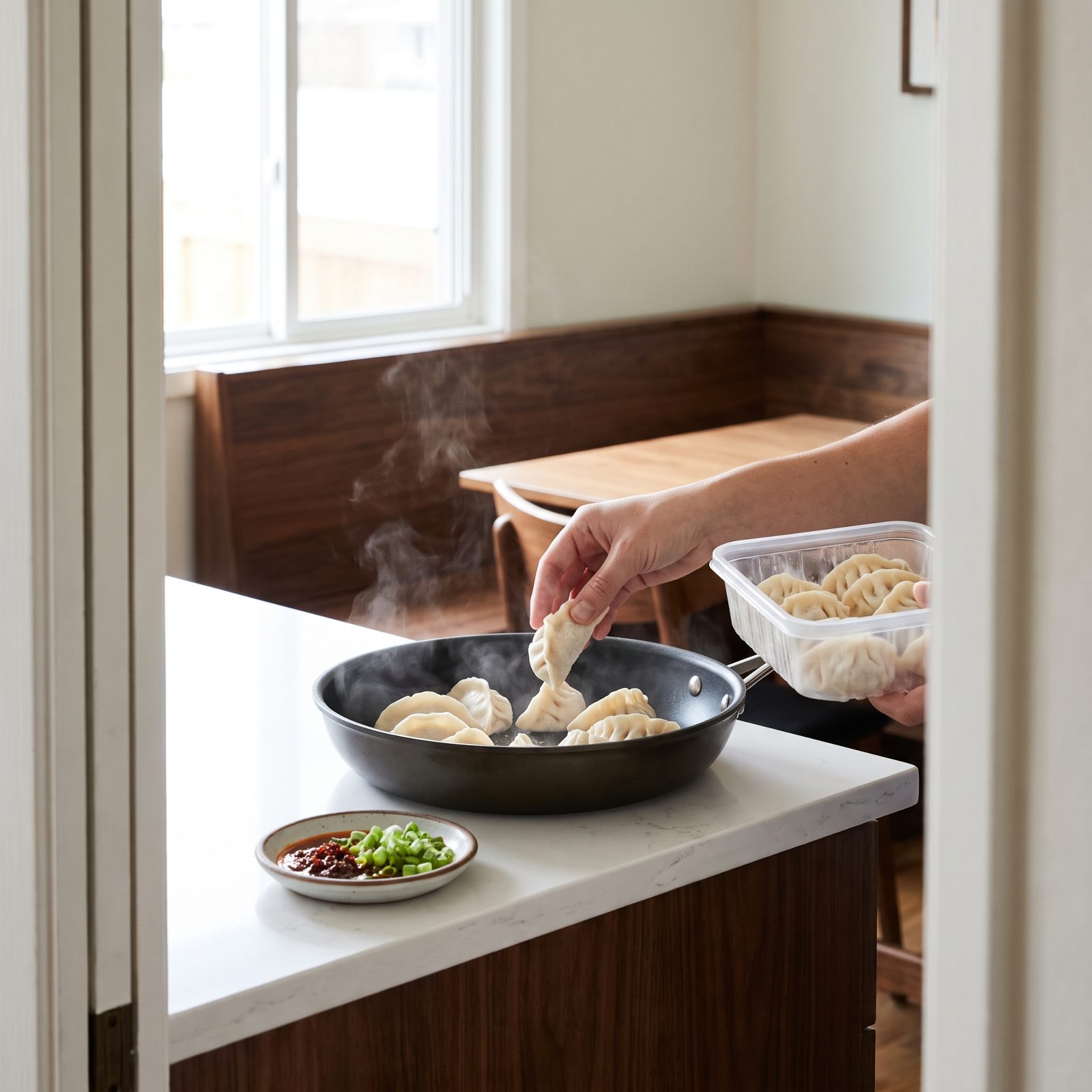
A bag of dumplings is the most useful thing in my freezer, full stop. Fifteen minutes from frozen to a real meal, no thaw.
Pan-fry them in a thin film of oil, add a splash of water, cover, and let the steam finish them. Crisp bottoms, tender tops. Toss in some frozen edamame or sliced greens and you’ve got dinner.
9. Freeze Cooked Polenta in Firm Slices
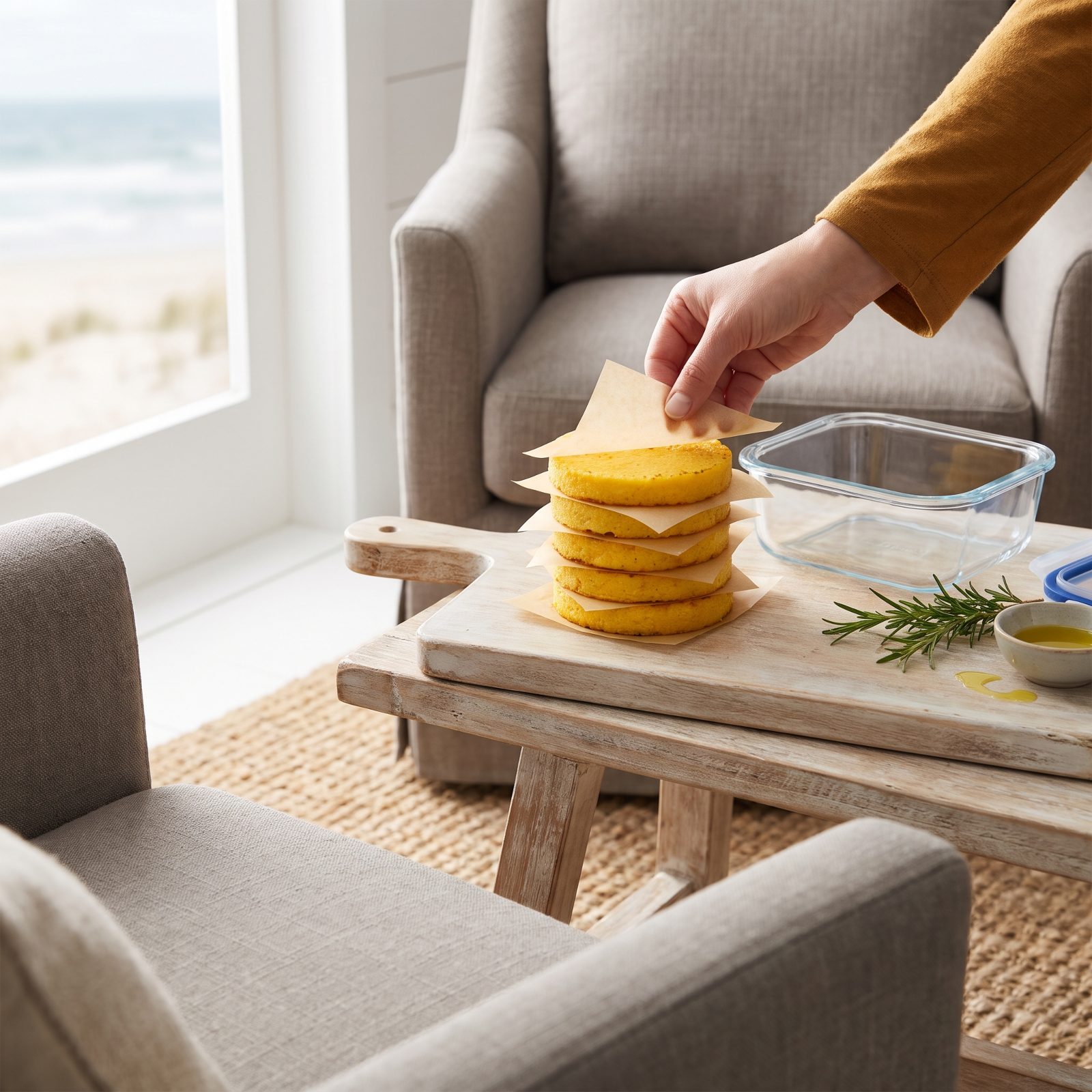
Cook a pot of polenta, pour the extra into a dish, let it set firm, then slice it into slabs. Frozen with parchment between the slices, it becomes an instant base for a dozen dinners.
Pan-fry a slab until the outside crisps and the inside stays creamy, then top it with a fried egg, sautéed mushrooms, or last night’s sauce. It goes from frozen to golden in a hot skillet, no thawing.
Polenta gets treated like a side dish. Give it a crispy crust and it carries the whole plate.
8. Wrap Breakfast Burritos One by One
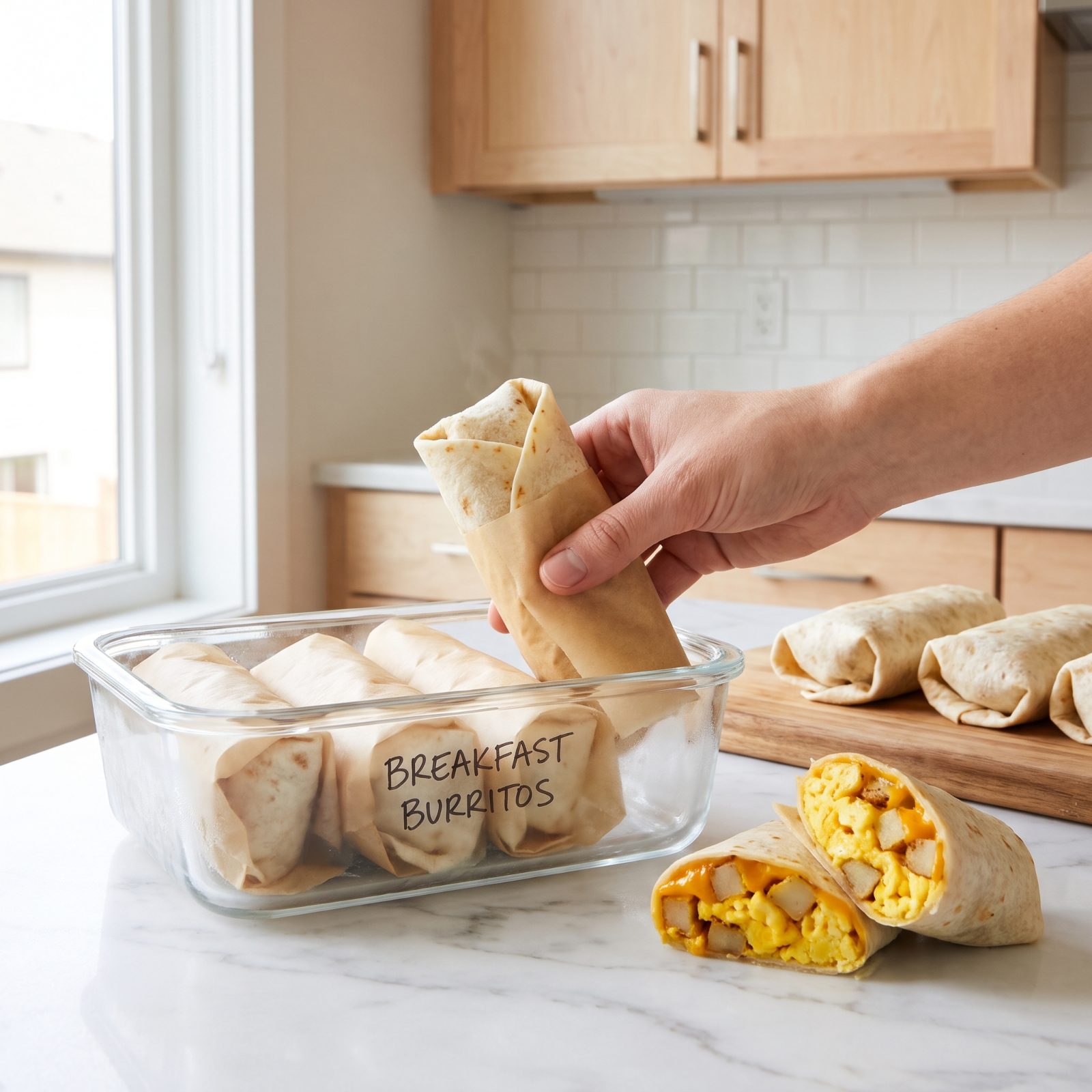
Make a dozen breakfast burritos on a Sunday and you’ve bought yourself weeks of fast mornings. The trick is wrapping each one alone so you grab exactly what you need.
Roll them with egg, cheese, potato, whatever you like, then wrap each in parchment and stack them in a container. Microwave a frozen one right in its parchment for about two minutes, flipping halfway, and it steams instead of drying out.
7. Freeze Chili in Two-Serving Blocks
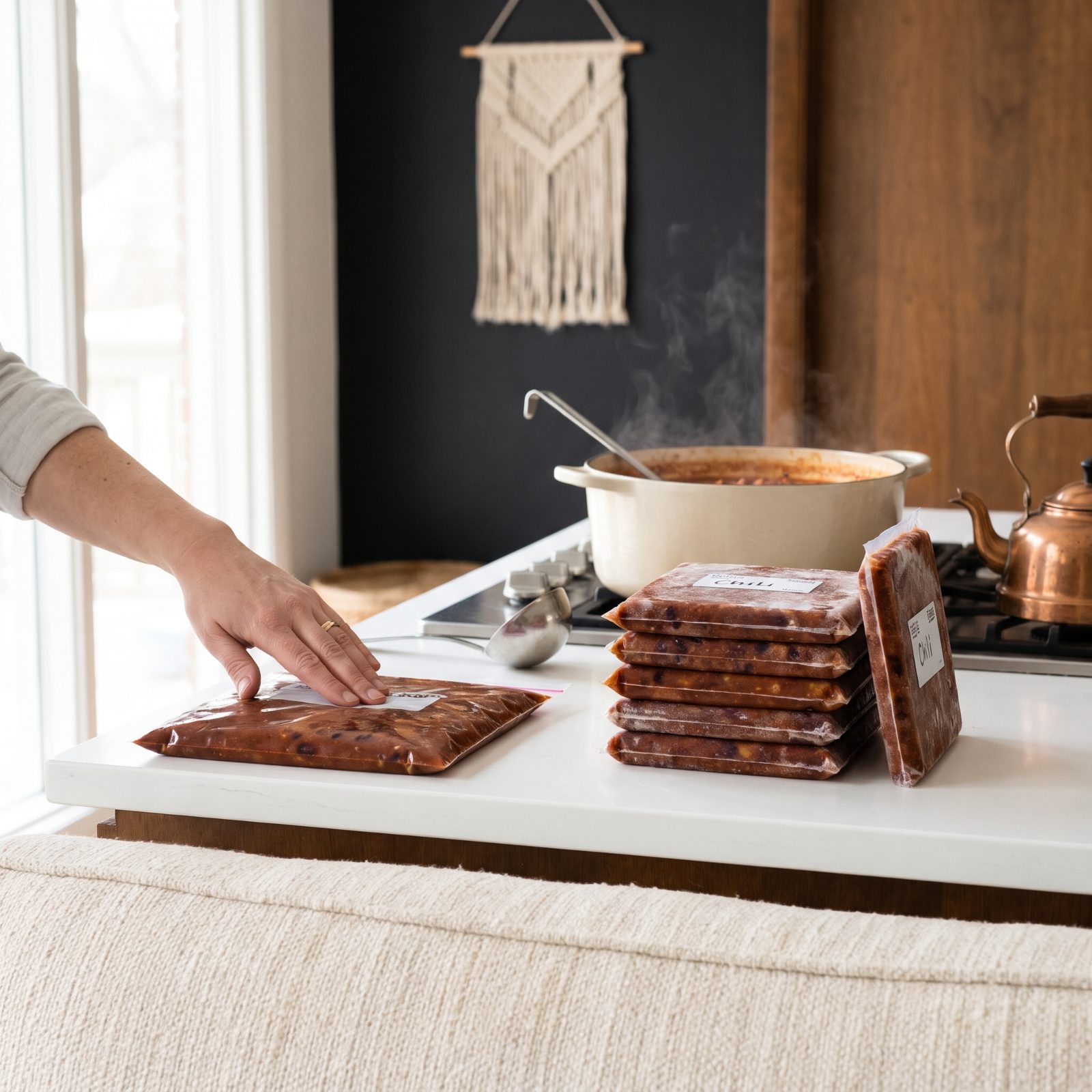
A giant tub of frozen chili sounds smart until you want two bowls and have to thaw the whole thing. Portion it into two-serving blocks instead and the math works every time.
Ladle chili into flat freezer bags, press out the air, and lay them flat to freeze. They stack like files and thaw in minutes under warm water or straight into a pot. You pull out only what you’re eating and the rest stays sealed.
6. Freeze Curry Without Delicate Garnishes
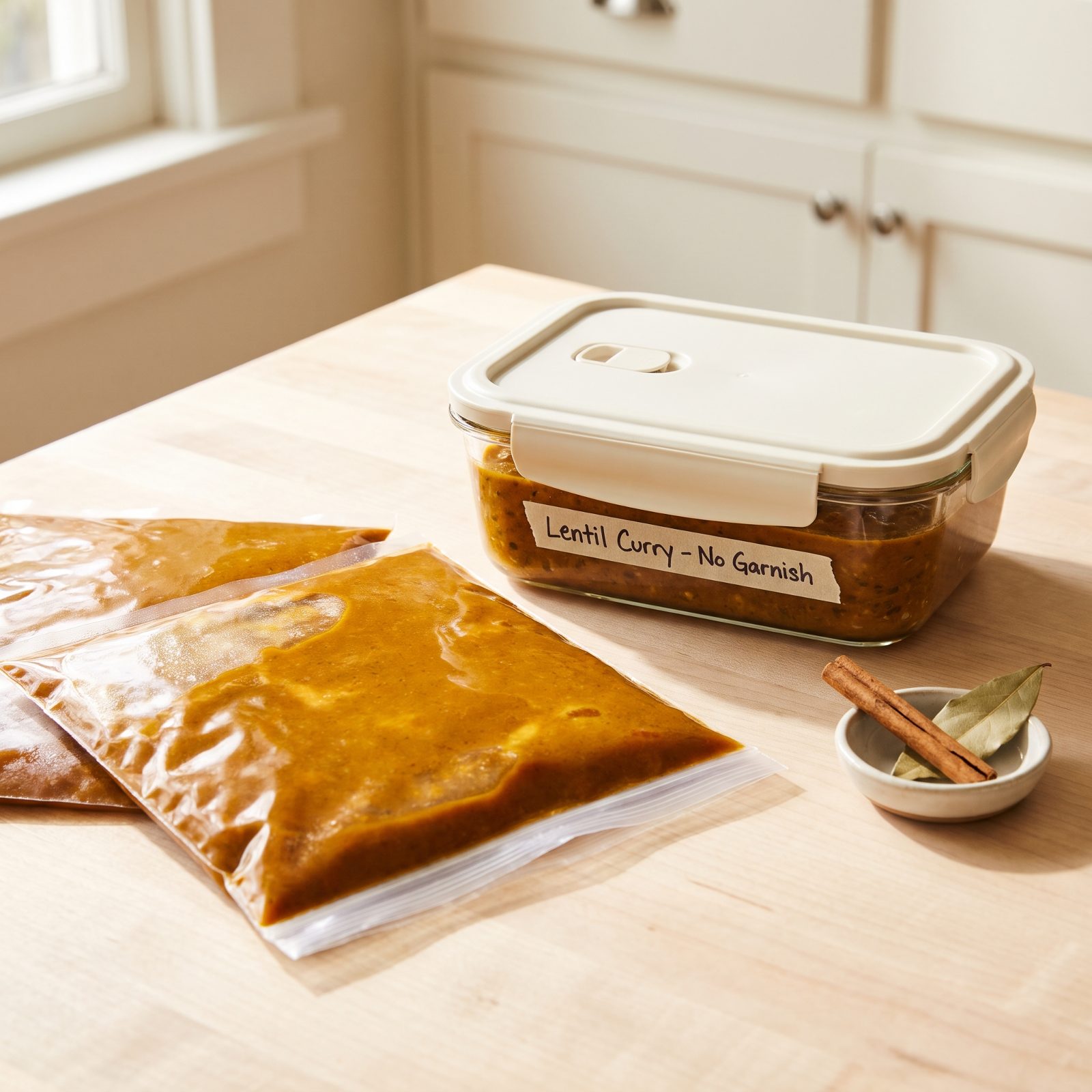
Curry freezes like a dream, but only if you leave the pretty stuff out. Cilantro turns to black mush, fresh chili loses its snap, and a swirl of yogurt breaks into something sad and grainy the second it thaws. So freeze the base — the sauce, the protein, the aromatics that have already cooked down — and add the garnishes the night you actually serve it.
Press the bag flat before it freezes. Flat bags stack like files and thaw in a bowl of warm water in about fifteen minutes, which matters a lot at 6pm on a Tuesday when everyone’s already hungry and circling the kitchen.
5. Wrap Lasagna Portions for Solo Dinners
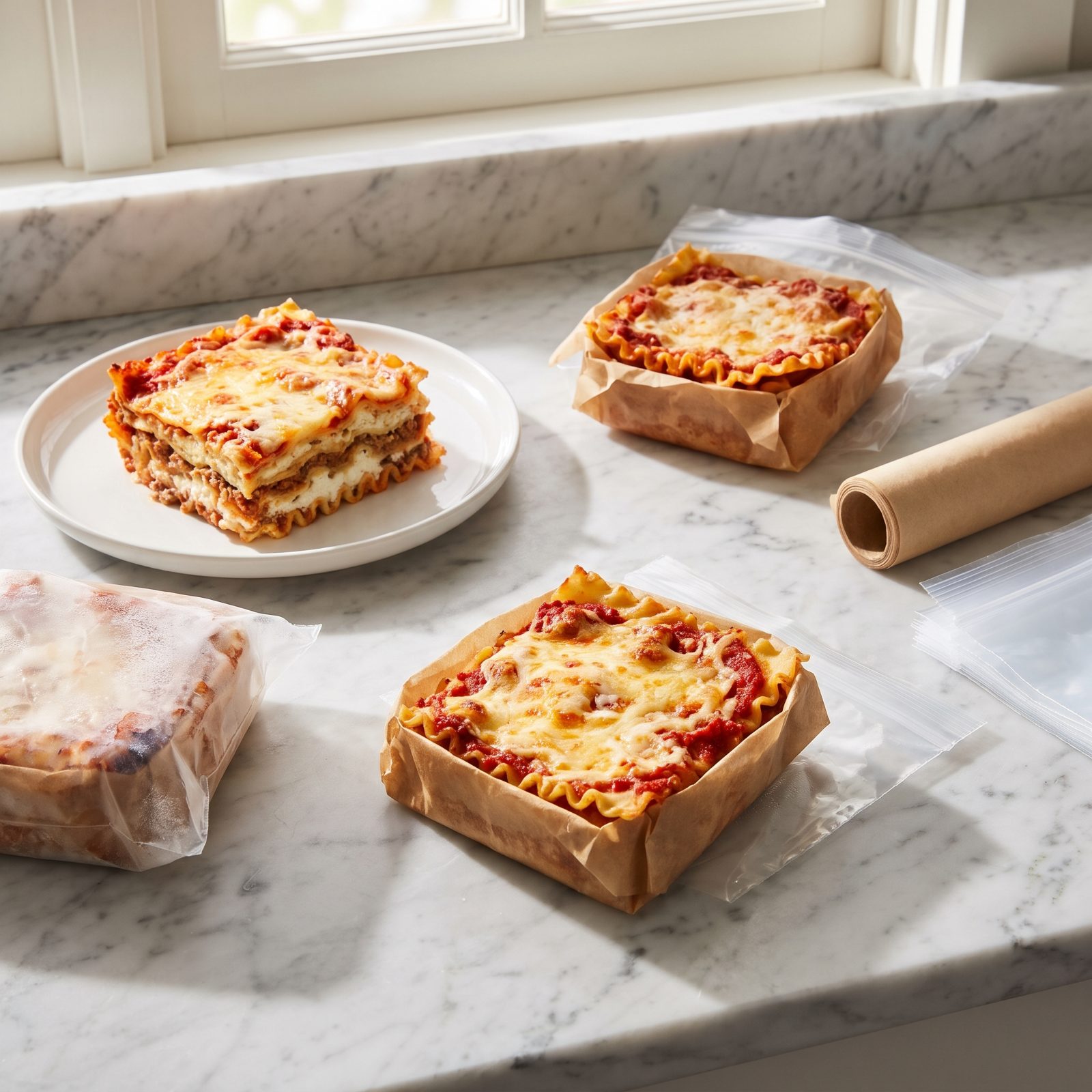
A whole lasagna is a commitment. Individual squares are a gift to your future self. Cut the pan into single servings after it has fully cooled and set, which usually means refrigerating it overnight first — warm lasagna crumbles the second your knife goes in, but cold lasagna slices clean.
Double-wrap each square: parchment against the food, freezer bag around that. The parchment keeps the sauce from welding itself to the plastic.
Honestly, I resisted portioning for years because it felt fussy. Then I spent one too many evenings reheating a slab for one and tossing the dried-out leftovers the next morning. Single squares reheat evenly in about forty minutes at 375, no thawing needed. Wish I’d started sooner.
Our readers seem to agree that a proper main course is worth the effort: main-course photos got hearts 79% of the time, versus 75% for other images in the same articles.
4. Freeze Enchiladas Before Adding Fresh Toppings
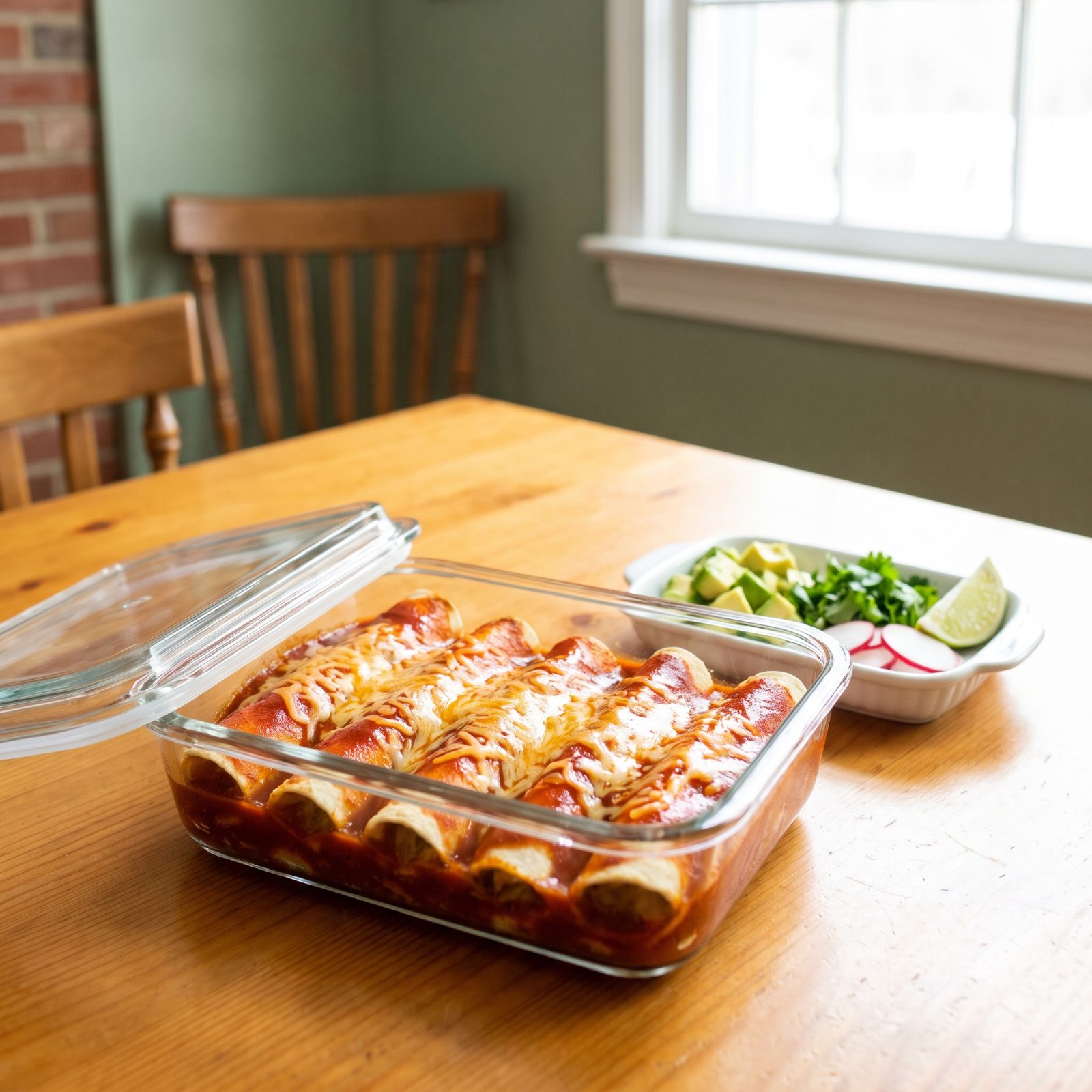
Enchiladas freeze beautifully. The toppings that make them sing do not — avocado browns, lettuce wilts into slime, sour cream separates. So freeze the rolled tortillas in their sauce and cheese, assembled but untouched by anything fresh.
Got a spare dish? Freeze them right in the pan you plan to bake in. Otherwise, line a loaf pan with parchment, freeze the block, then lift it out and bag it. That trick frees up your dish and keeps the enchiladas in a tidy, stackable brick you can shuffle around the freezer.
3. Twice-Bake Potatoes Before Freezing
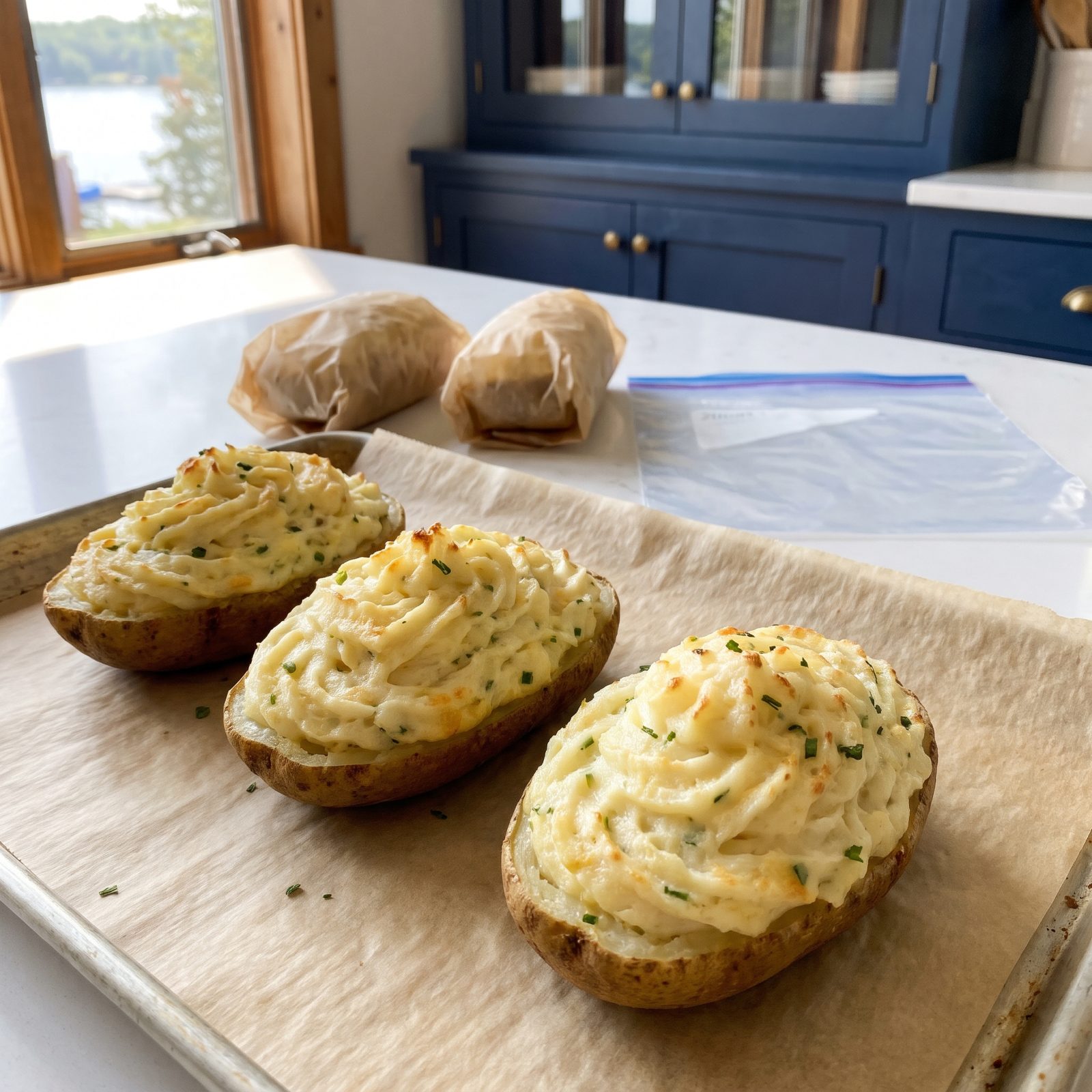
The beauty of freezing twice-baked potatoes is that the hard part is done before they ever hit the freezer. Bake them, scoop them, mash the filling with cheese and butter and whatever else you like, pile it back in, bake them a second time until the tops are golden, then freeze on a tray before bagging. That tray step keeps them from fusing into one lumpy mass.
One thing people get backwards: freeze them after the second bake, not before. A stuffed but unbaked potato can go watery and grainy in the freezer. Doing the second bake first sets the filling and browns the top, so the oven only has to reheat them and the texture stays fluffy.
They go straight from freezer to a 400 oven. Give them about an hour from frozen. The tops crisp, the centers go molten, and nobody needs to know you did the work last Sunday.
2. Portion Cheese Sauce for Quick Casseroles
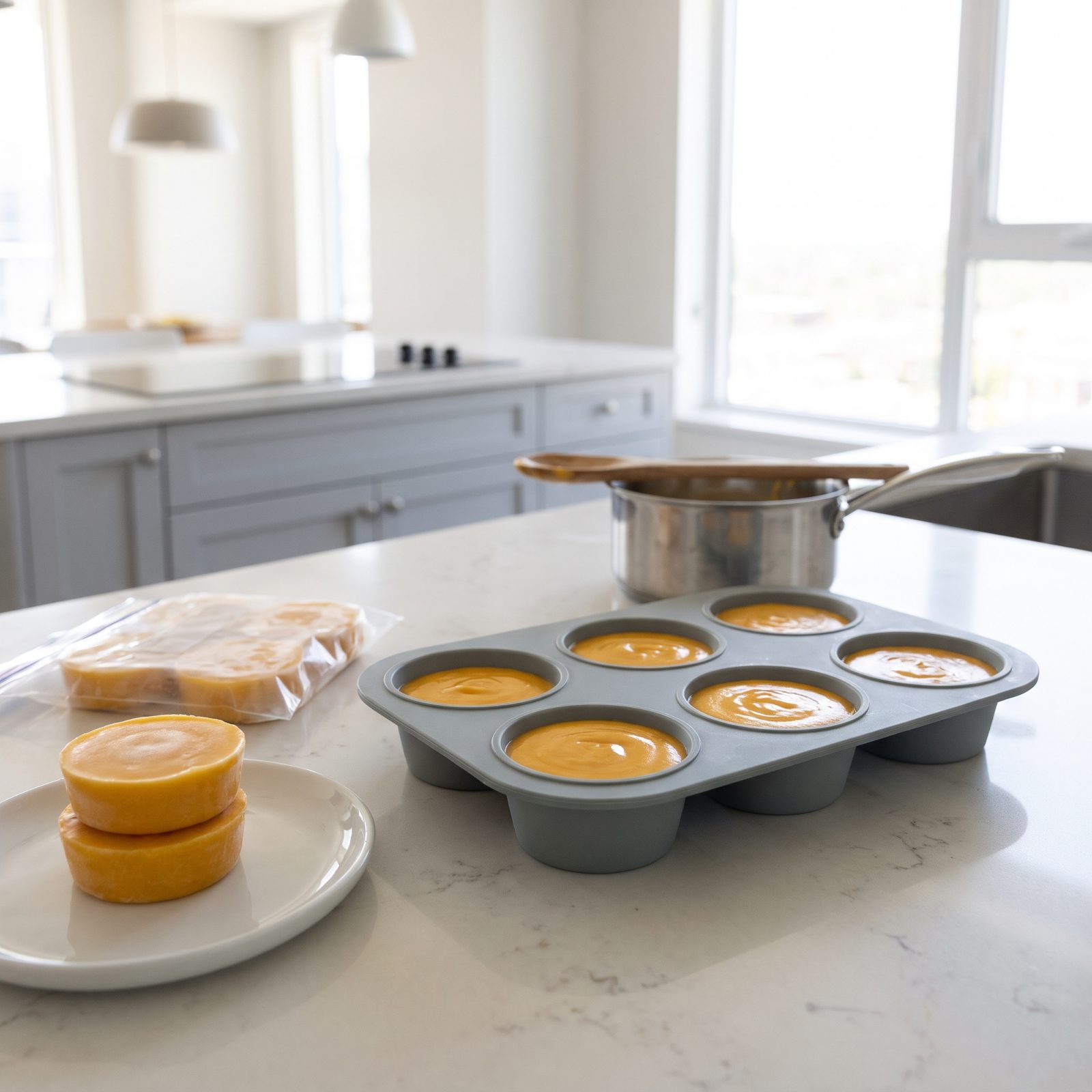
A good cheese sauce is worth making in bulk and parking in the freezer in exact portions. Pour it into a silicone muffin tray, freeze solid, then pop the pucks into a bag. Each puck is roughly one serving, so you grab what you need and leave the rest buried for another night.
Most people get this part wrong. Plain cheese sauce breaks when you freeze and reheat it — the oil and dairy split into a greasy mess. Build it on a proper flour-and-butter roux, which holds everything together, then reheat it low and slow with a splash of milk whisked in. It comes back smooth, like nothing happened.
1. Stash Caramelized Onions for Flavor Shortcuts
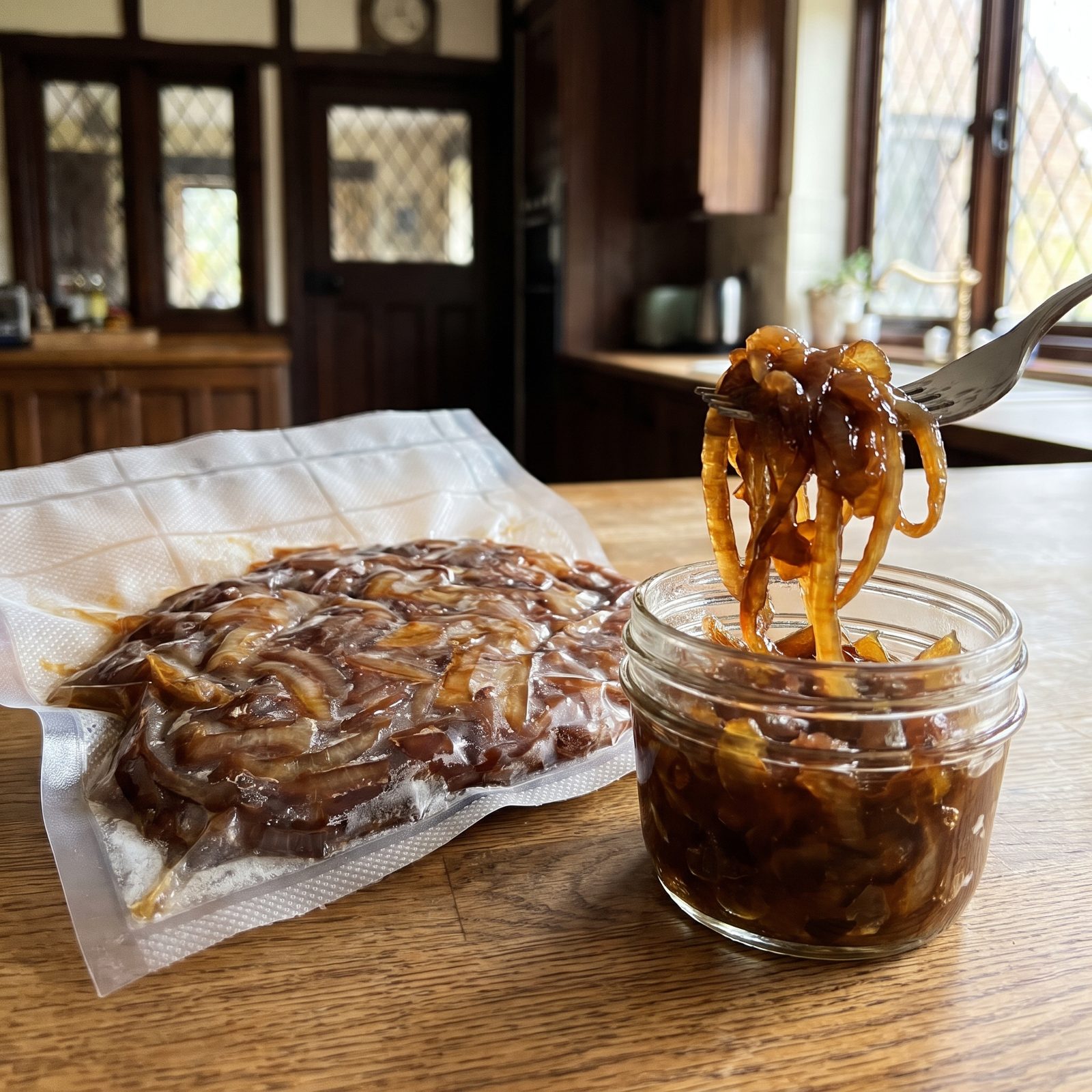
Caramelized onions take the better part of an hour of patient, low-heat stirring. Nobody has that on a weeknight. So make a huge batch on a lazy weekend, when the whole kitchen smells like something good is coming, and freeze the lot.
Spread them in a flat bag and press shallow lines across the top with the side of a chopstick before freezing. Those scored sections snap off like a chocolate bar. Break off a tablespoon for an omelet, or half the bag for French onion soup, without thawing the whole thing.
Your Printable Checklist
Save it to Pinterest or print it — every check from the list above on one page.