Would you like to save this?
The sauce started at seven in the morning. That’s the first thing to know. By noon, the whole house smelled like Sunday, and you understood without anyone explaining it that this was the center of the week. The table had already been set with the good plates. Someone’s grandmother had already argued with someone’s mother about the meatballs. What follows is every piece of that ritual, exactly as it was.
21. The Pot of Water That Took Forever to Boil and Everybody Watched It
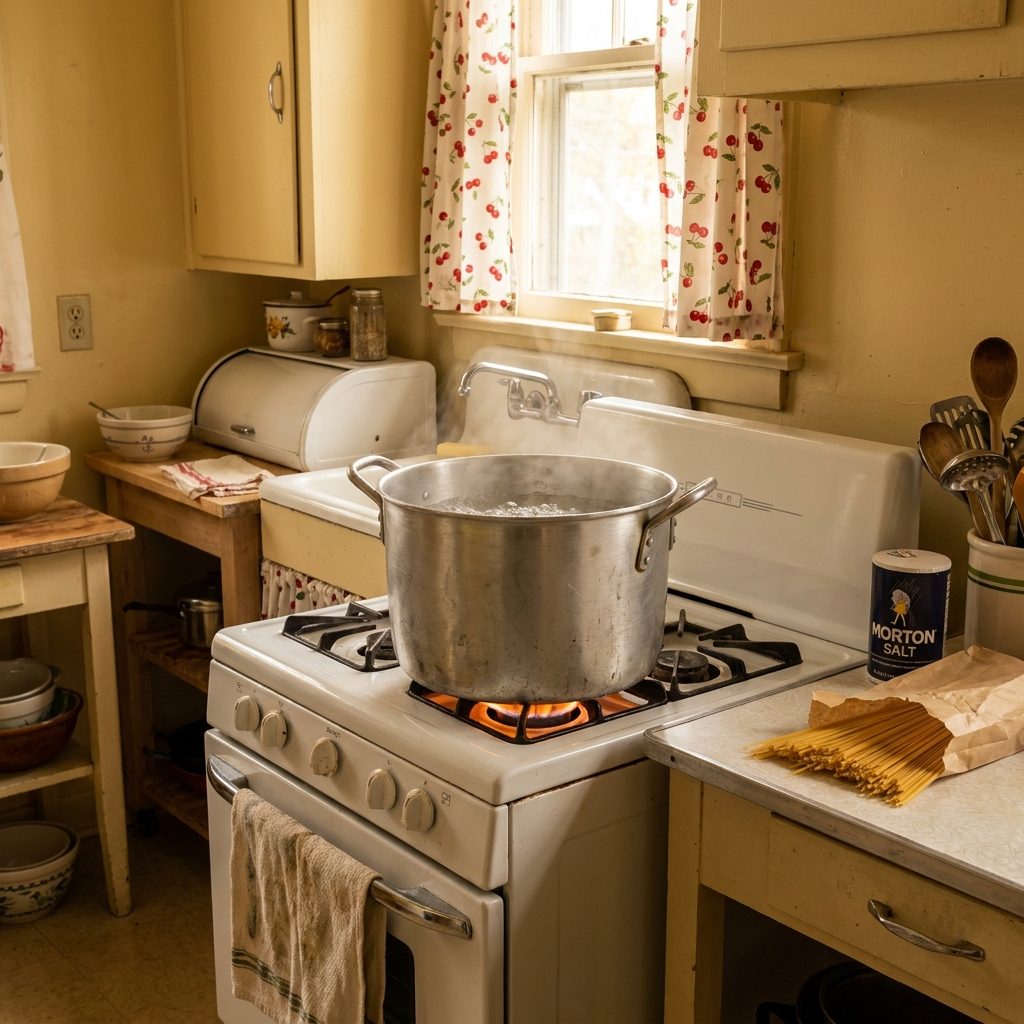
The pasta went in last, which meant the wait was longest. That stockpot went on the burner an hour before dinner and sat there doing essentially nothing while the whole family orbited the kitchen asking when it would be ready. The pot was always too big for the family and not quite big enough for the amount of spaghetti the occasion required.
Salting the water was the moment things got serious. A palmful of salt, straight from the box, because nobody in a 1950s Italian-American kitchen measured anything that didn’t involve baking. The boil, when it finally came, was cause for a kind of quiet relief.
20. The Paper Bag of Italian Bread From the Bakery Two Streets Over
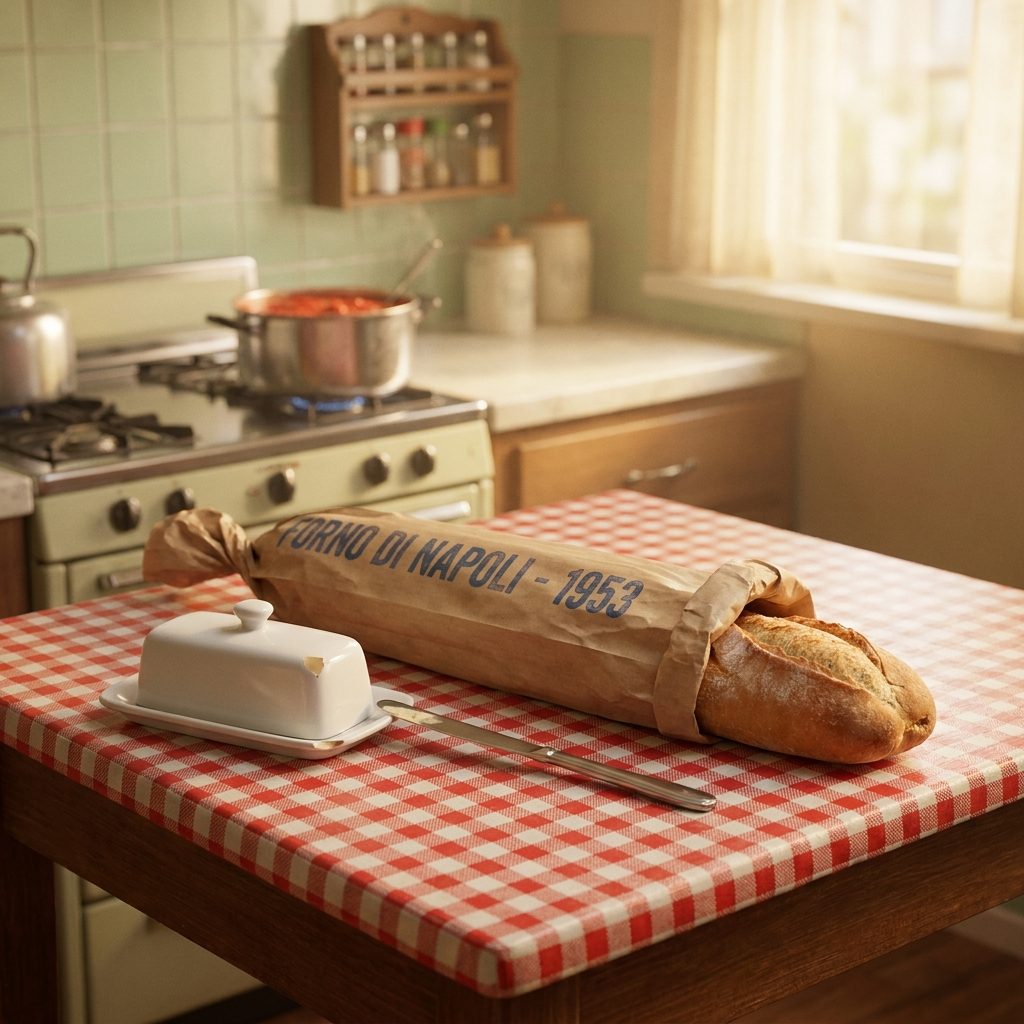
Somebody went to the bakery. That was just part of Sunday. The bread came back in a thin paper bag that was already spotted with grease by the time it hit the kitchen table, and it was gone before the pasta was drained.
Nobody sliced it. You tore it. And the first piece went straight into the sauce pot for the cook’s inspection, which was the best bite of the whole meal and everyone knew it.
19. The Chair at the Head of the Table That Only One Person Ever Sat In
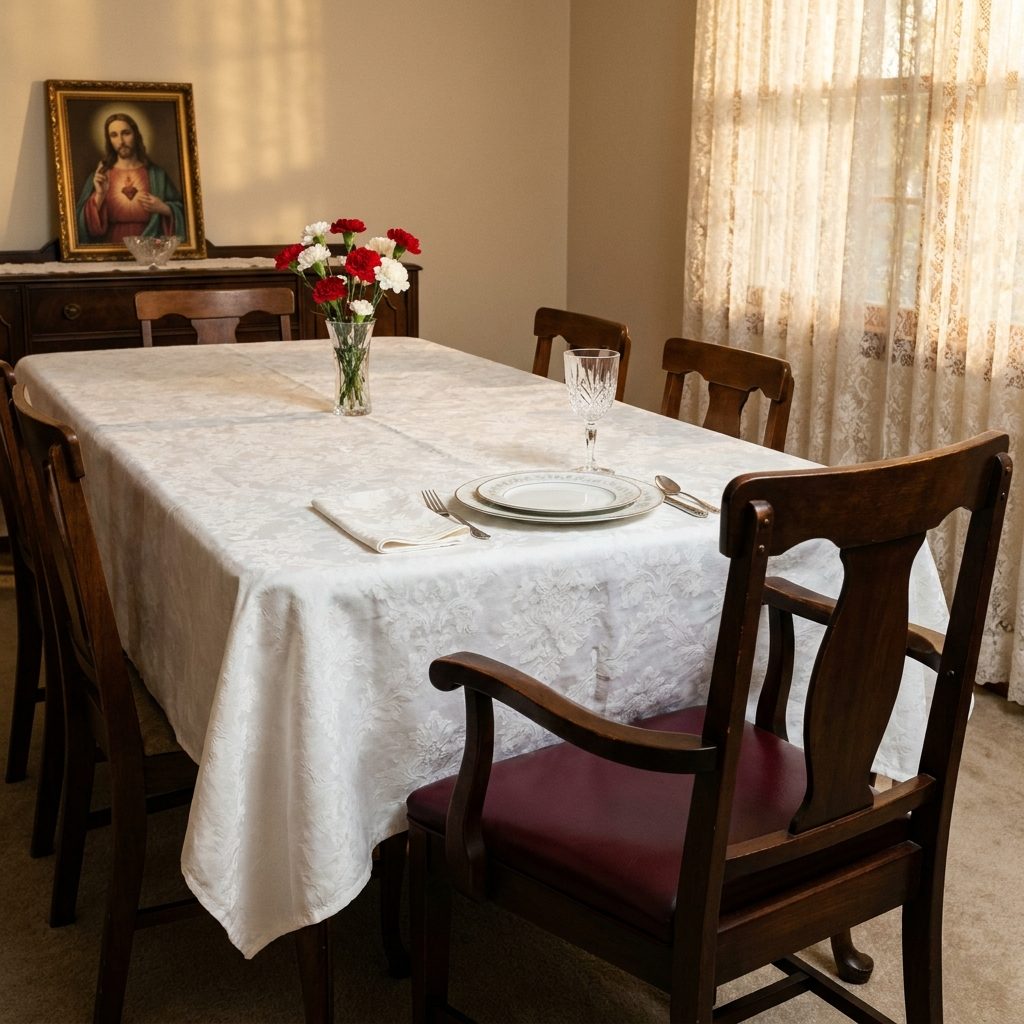
Everyone knew whose chair it was. You didn’t have to be told. You were never going to sit in it, and neither was anyone else at the table except the one person who always sat in it, and that person sat in it from the day they moved into the house until the day they didn’t anymore.
It wasn’t a throne exactly. It was just slightly bigger, slightly sturdier, and positioned so you could see both the kitchen door and the front hall at the same time. Which was, in retrospect, the whole point.
18. The Colander That Drained the Pasta Over the Sink in a Cloud of Steam
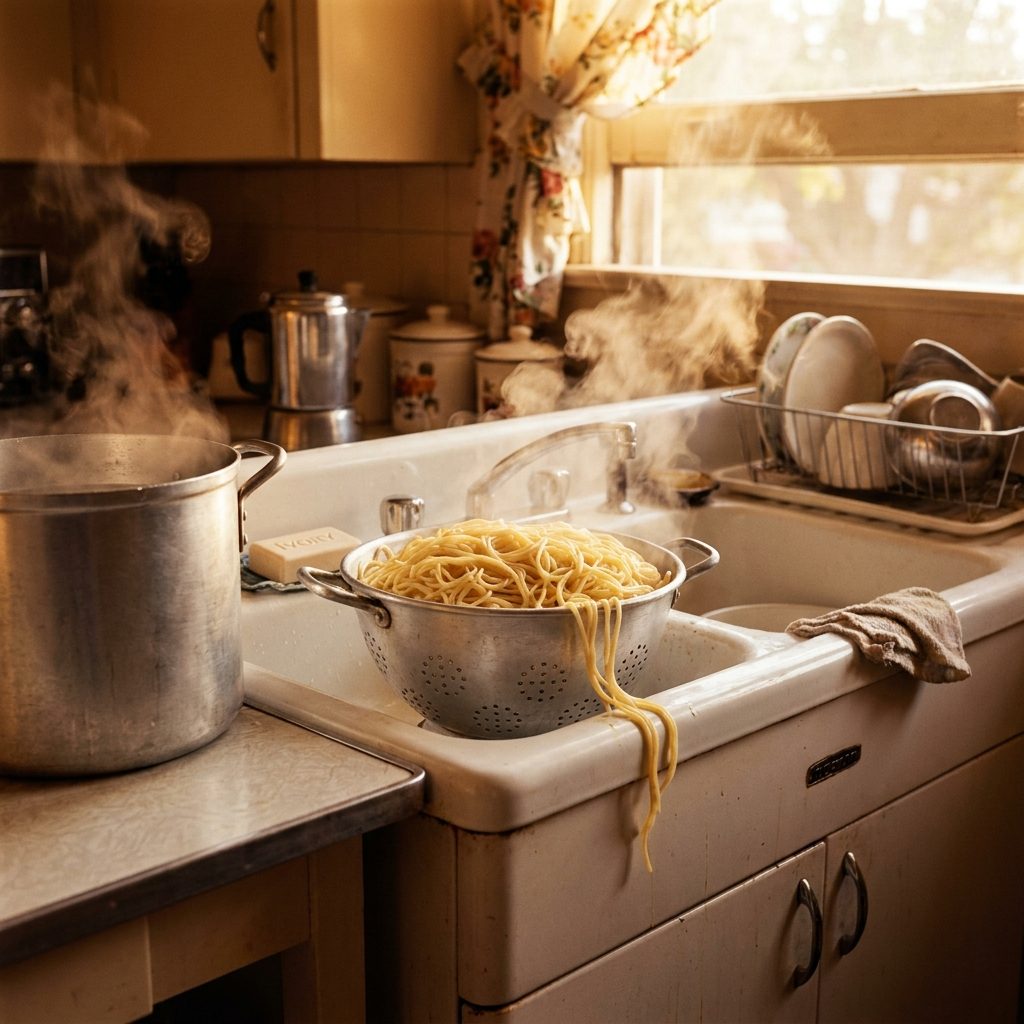
The steam hit you in the face every time. Didn’t matter how many times you’d done it. You carried a full stockpot of boiling water to the sink, tipped it into the colander, and the whole kitchen went white for about four seconds.
The colander itself was a family heirloom in all but name. Tin, slightly rusted at two of the feet, punched with a pattern of small holes that never quite drained fast enough. It sat in a cabinet under the sink every other day of the week and came out for this exact moment like it had been waiting.
17. The Gravy Boat That Was Only For Company and Lived in the China Cabinet
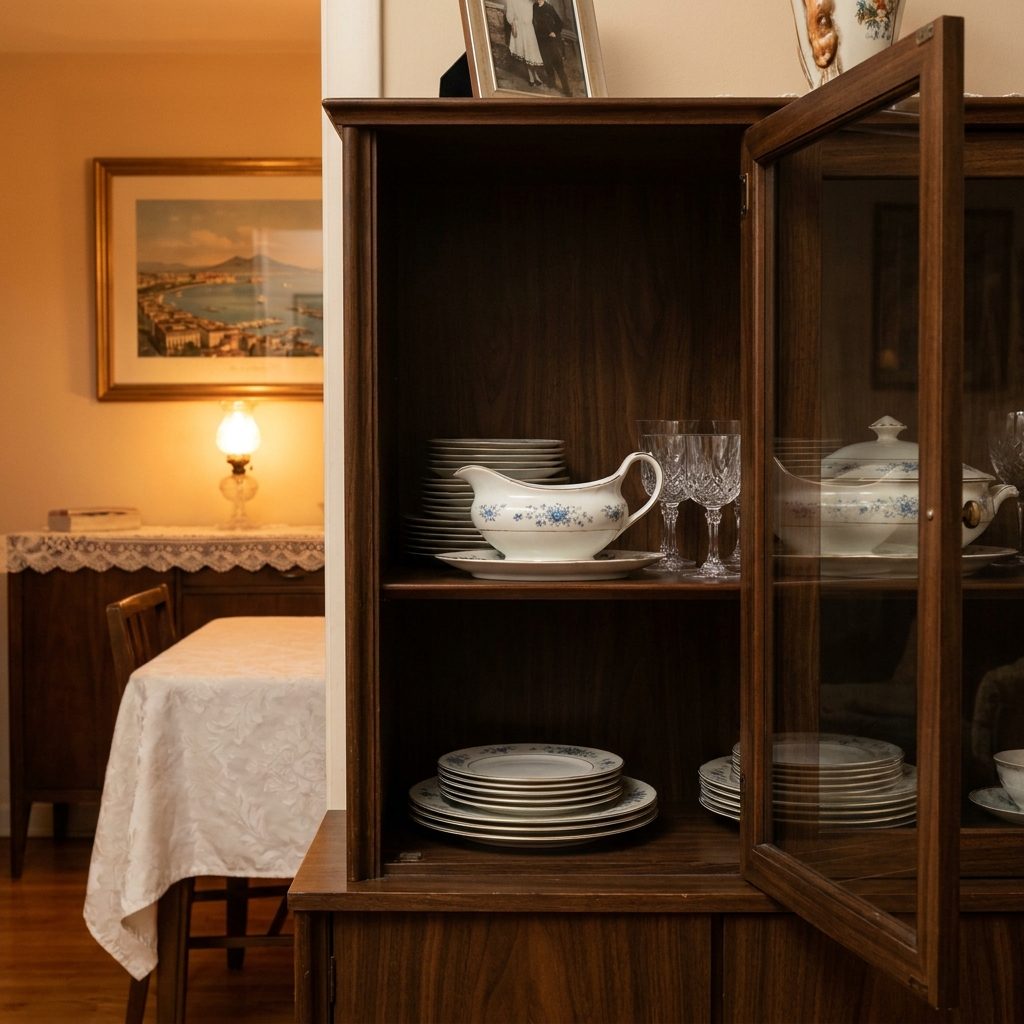
The gravy boat came out maybe four times a year. Easter, Christmas, maybe a baptism. Every other Sunday the sauce went straight from the pot to the table in its cooking vessel, which was fine and arguably more honest.
But when the gravy boat appeared on the table, you knew something was different about the day. It held about a cup and a half of sauce and required a second trip to the kitchen to refill it before the pasta course was even finished. Nobody ever pointed this out.
16. The Fork-and-Spoon Technique That Divided the Table Into Two Camps
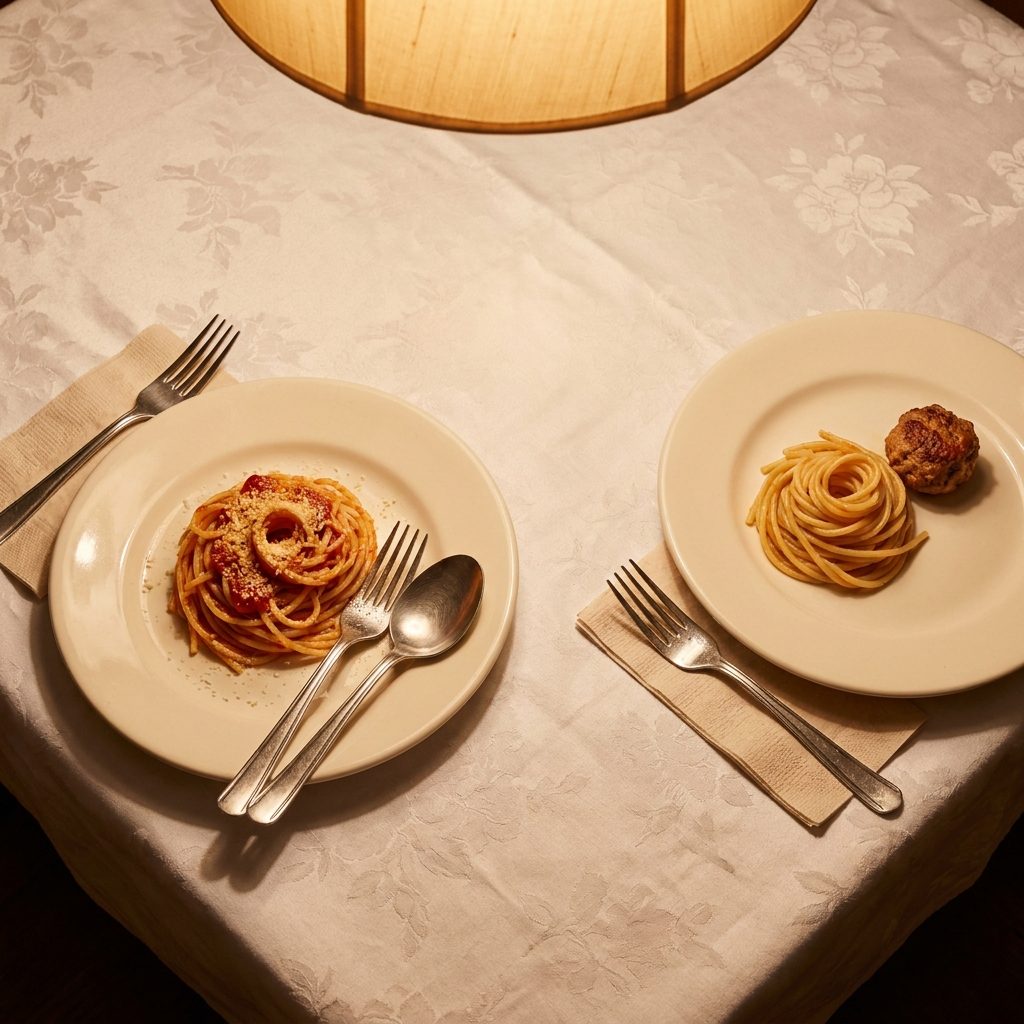
Fork and spoon, or just the fork. This was a genuine point of contention at 1950s Italian-American tables, argued with the low-grade intensity of a debate that had no stakes and also somehow all the stakes.
The spoon camp said the spoon gave you a clean twirl. The fork-only camp said the spoon was unnecessary, possibly affected, and that anyone who knew what they were doing didn’t need it. Both sides produced the same result: a forkful of spaghetti that was either perfect or dropping half of itself back onto the plate on the way up.
15. The Tablecloth That Came Out of the Cedar Chest Twice a Year
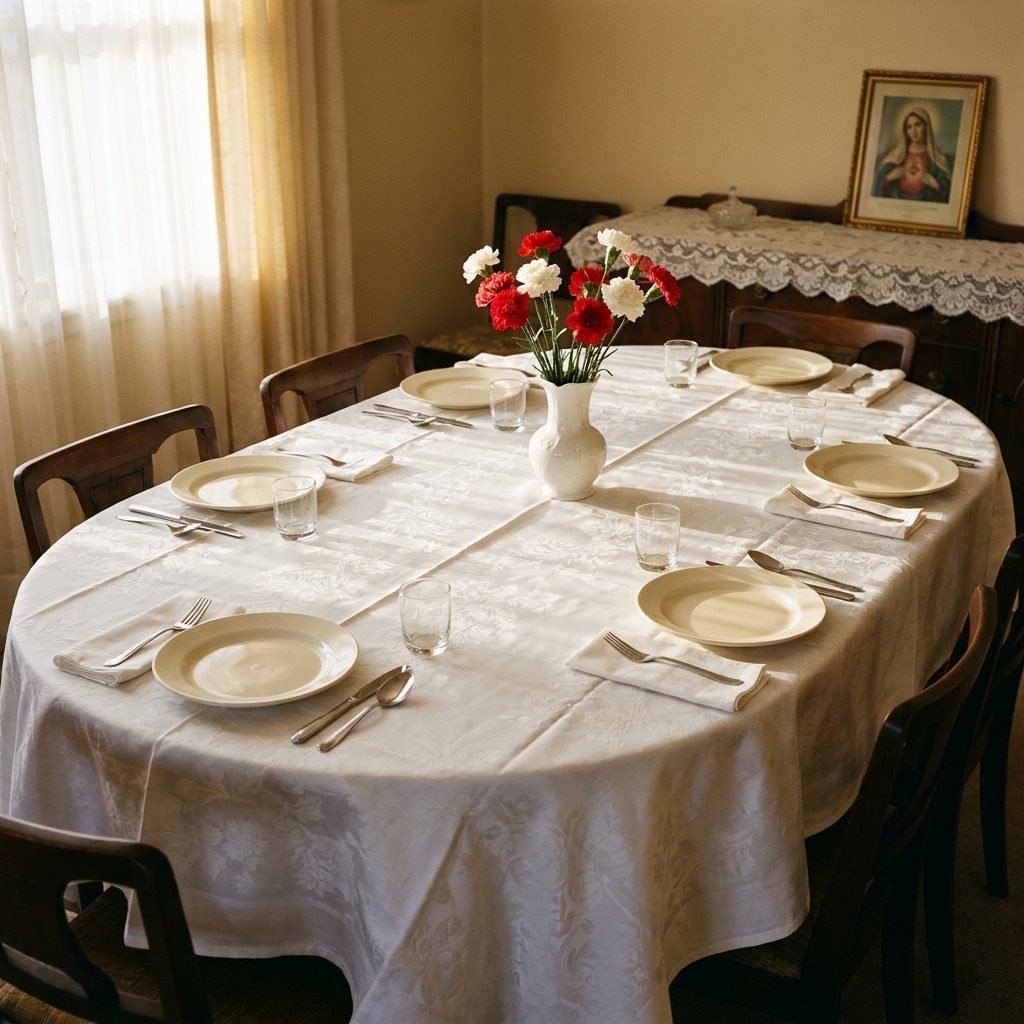
The white damask tablecloth meant something different from the oilcloth. The oilcloth was every week. The damask was for when the meal required it to be a little more than a meal.
It came out of the cedar chest ironed and folded, and it went back the same way. The fold lines never quite disappeared no matter how many times it was washed, and those lines, running in a grid across the table, became part of how Sunday looked.
14. The Leftover Meatballs in the Refrigerator That Were Better on Monday
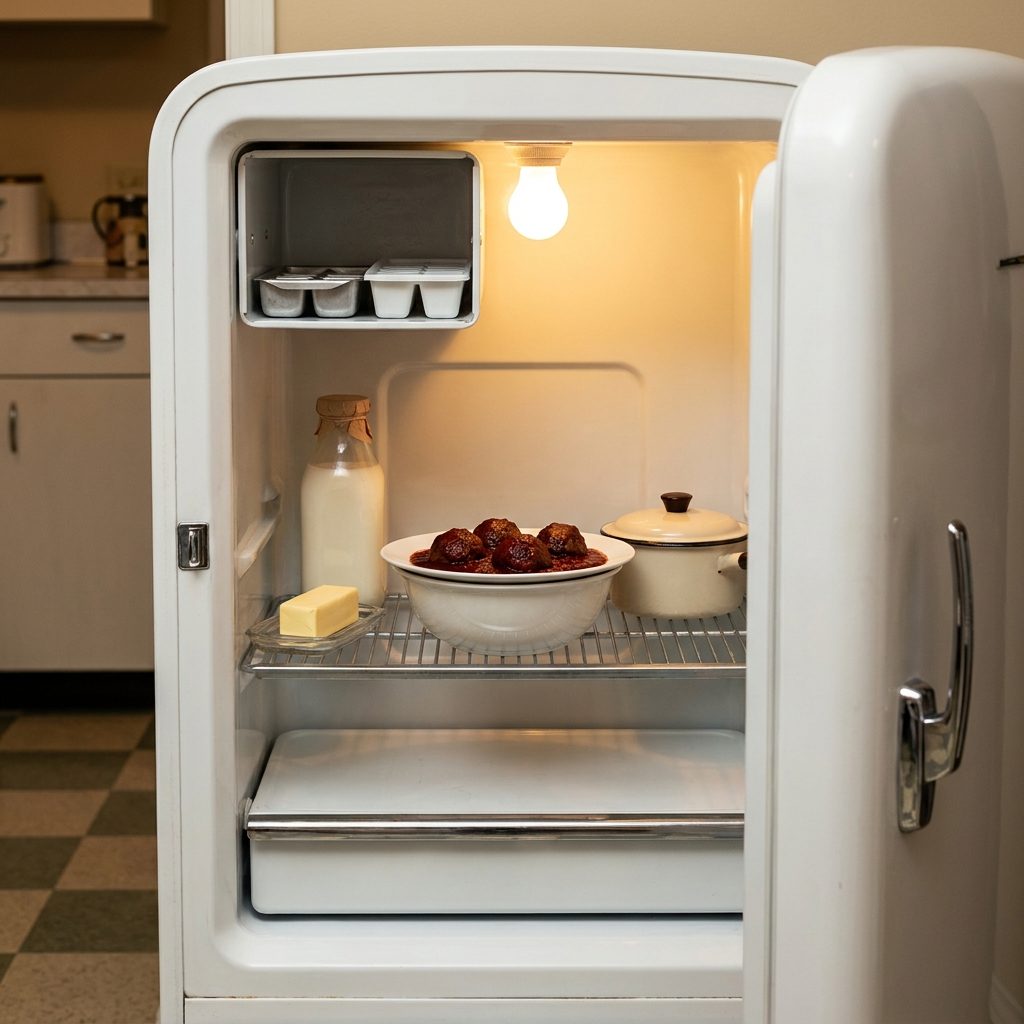
Cold meatballs from the refrigerator the next morning were not leftovers. They were the reward for having been patient through Sunday dinner when you couldn’t eat a fourth one no matter how much you wanted to.
The sauce thickened overnight into something more serious than it had been at the table. You ate them cold, standing at the open refrigerator door, with a fork and no plate, and it was the best thing you’d have all week. Nobody ever talked about this. Everyone did it.
13. The Pot of Water That Boiled for What Felt Like an Hour
Would you like to save this?
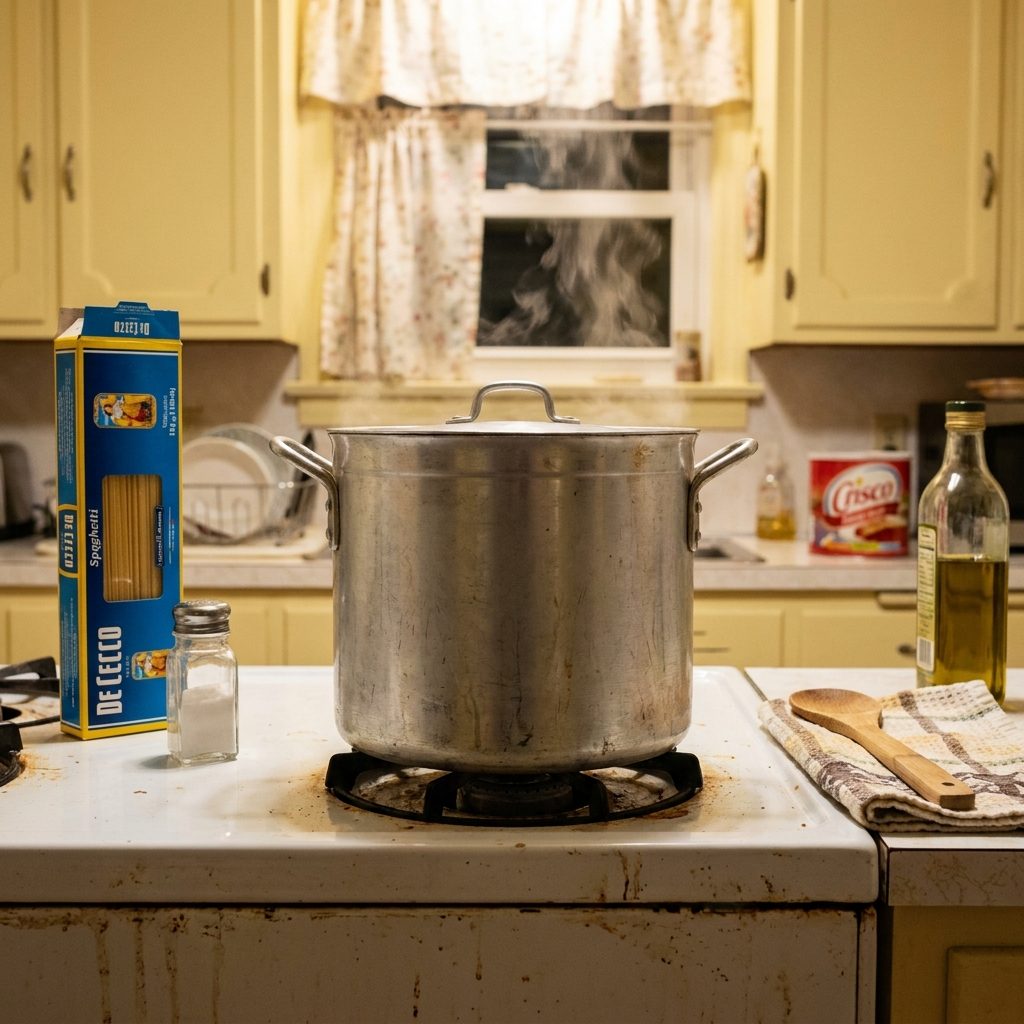
The water went on early. That was the rule. You didn’t wait until the sauce was ready, you started the water when you weren’t sure you needed it yet, because the alternative was standing over the stove willing a pot to boil while everyone at the table got restless. The big aluminum pot. Filled almost to the rim. Salted with a handful thrown in without measuring.
Watched pots, supposedly, don’t boil. But plenty of Italian-American grandmothers watched anyway, arms crossed, waiting for the moment they could fan the spaghetti in and press it down with the wooden spoon.
12. The Colander in the Sink, the Steam Cloud, the Near-Scalding
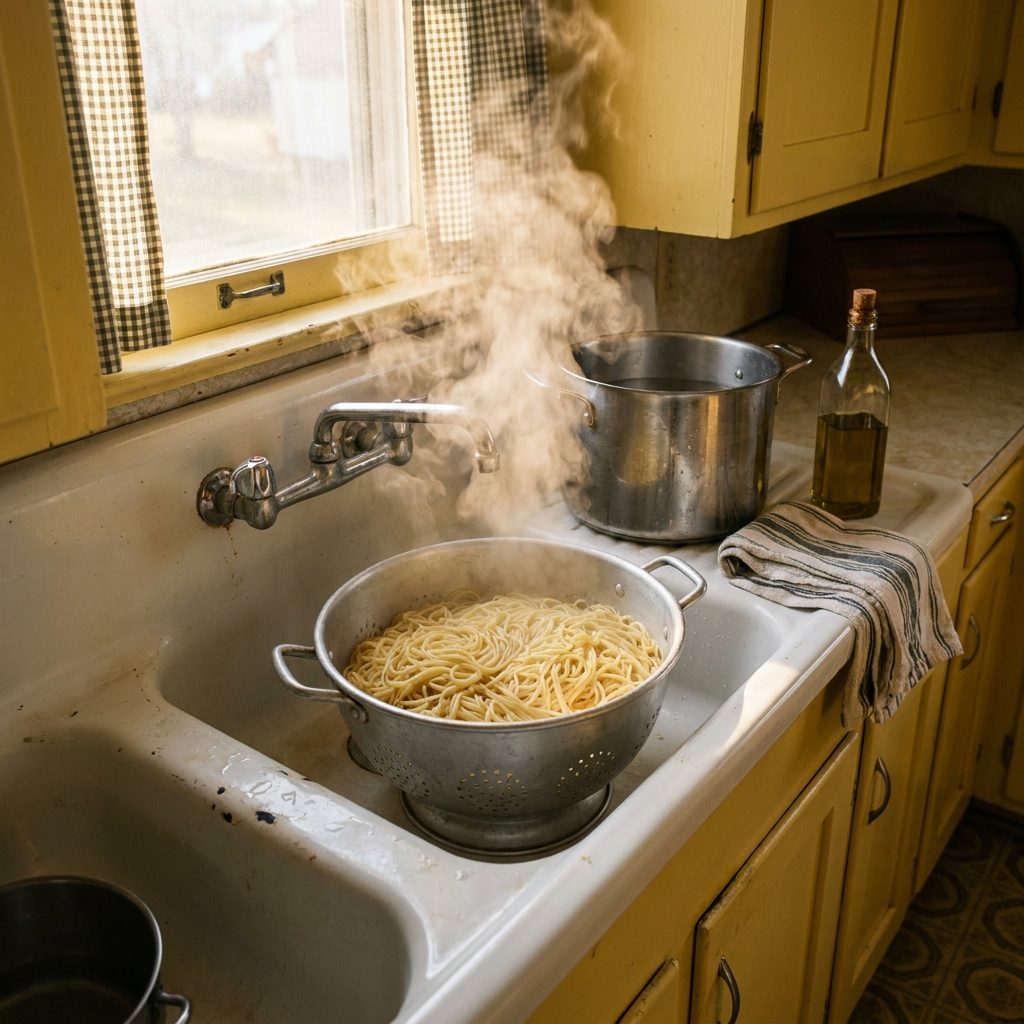
Every household had its own variation of this moment. The pot came off the burner. Someone carried it to the sink, carefully, a two-handed grip, a warning called out to anyone nearby. The spaghetti hit the colander and the steam rose in a cloud that fogged up the window and dampened every forehead in the room.
Then came the split-second decision: rinse or don’t rinse. Grandmothers had strong opinions on this. The sauce, they’d tell you, needed something to hold onto. Cold water was not the answer.
11. The Bread Basket With the Sliced Italian Loaf Nobody Could Keep Their Hands Off
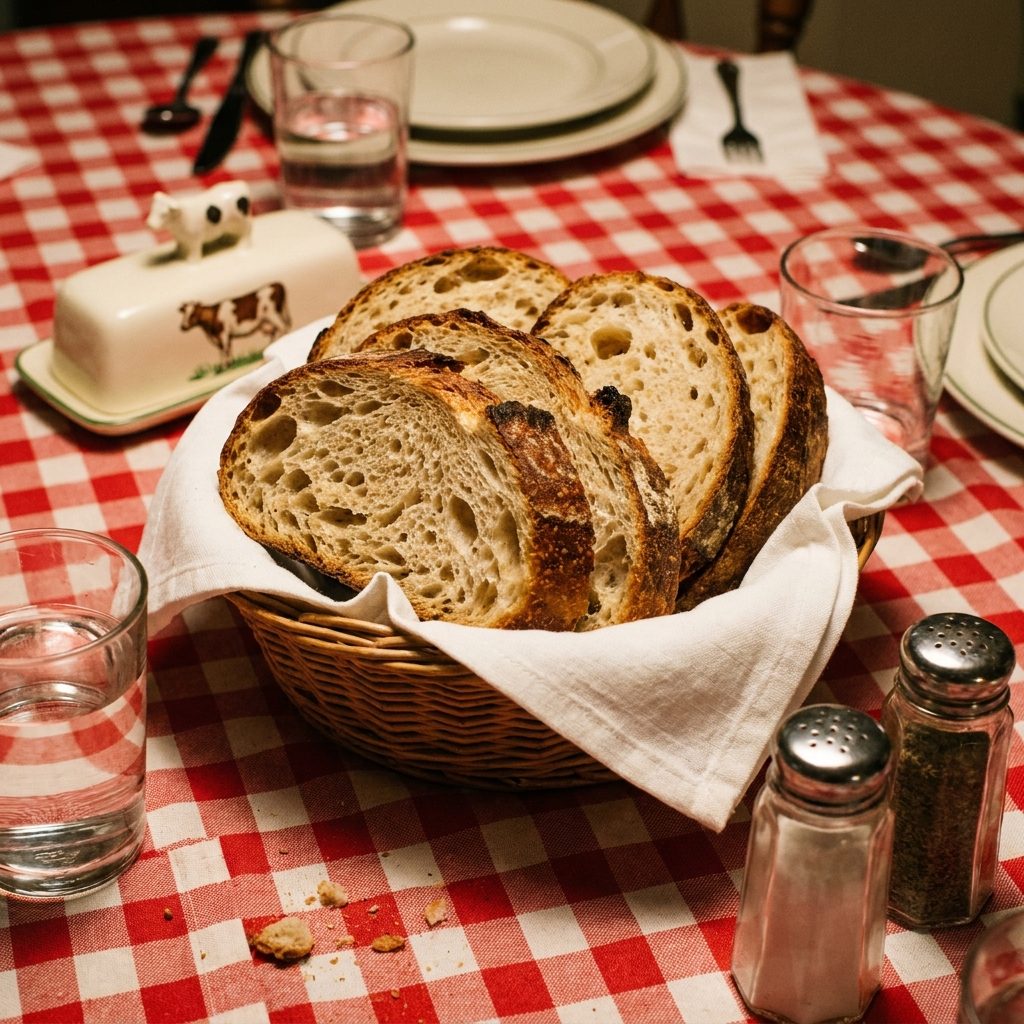
The bread was not a side dish. It was a tool and everyone at the table knew it. You used it to push spaghetti onto the fork when the sauce wasn’t cooperating. You used it to clean the plate at the end. You used it before any of that, plain, because it was sitting there and dinner was still ten minutes away and the smell coming from the stove was making it hard to wait.
A good Italian bakery loaf in 1955 had a crust that shattered when you pressed it and a crumb that soaked up red sauce like it was designed for that exact purpose. It was.
10. The Paper Napkins Folded Under Every Fork on the Good Tablecloth
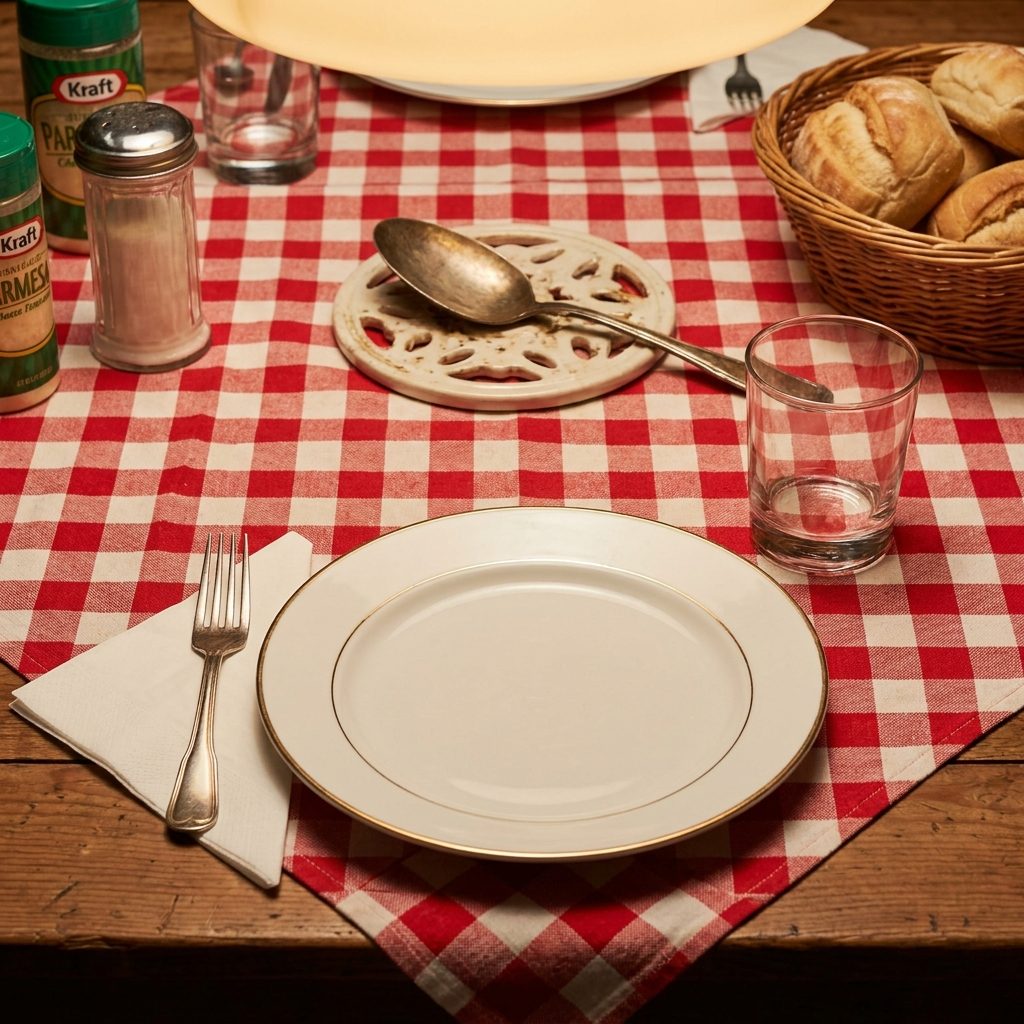
The good tablecloth came out for Sunday. Red-and-white check, laundered and pressed, spread over the table with more care than any weeknight ever saw. And then, placed under every fork: a paper napkin, folded into quarters.
Not the cloth napkins. Those were for someone else’s house, or a different kind of occasion. This was a working meal, sauce would fly, bread would be dunked, plates would be cleaned, and paper napkins were the honest choice. You went through four of them without thinking about it.
9. The Way the Meatballs Finished Cooking Right in the Sauce
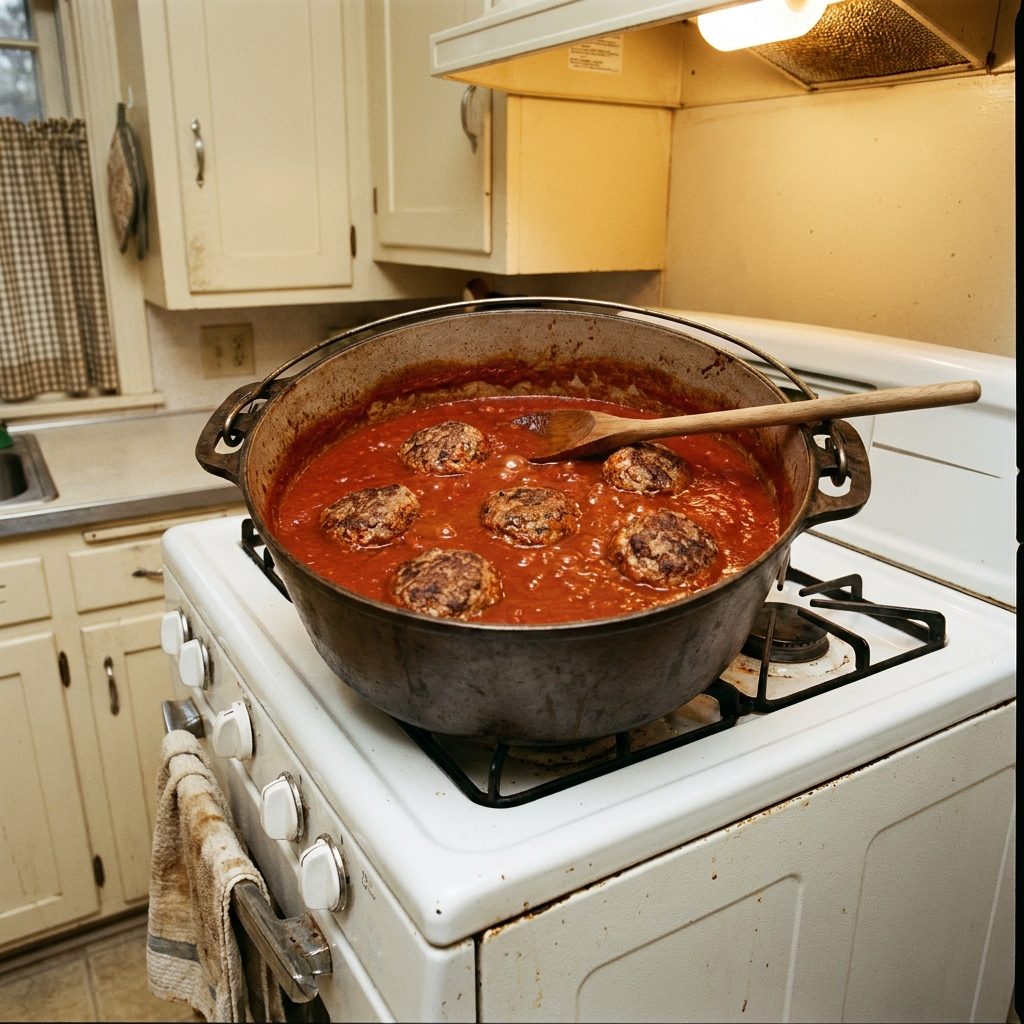
The meatballs didn’t go straight from the pan into the bowl. After they were browned, in lard or olive oil, with the sputtering and the smell that brought everyone out of whatever room they were in, they went into the sauce. They simmered there for the last hour, low and slow, absorbing flavor from the tomatoes while the tomatoes absorbed something back from the meat.
By the time they hit the platter, they weren’t just meatballs anymore. The outside had taken on the color of the sauce, and the inside had gone tender in a way that a pan-fried meatball served immediately never quite achieves. This was the whole point of starting early.
8. The San Marzano Cans Stacked in the Pantry Like a Small Reserve
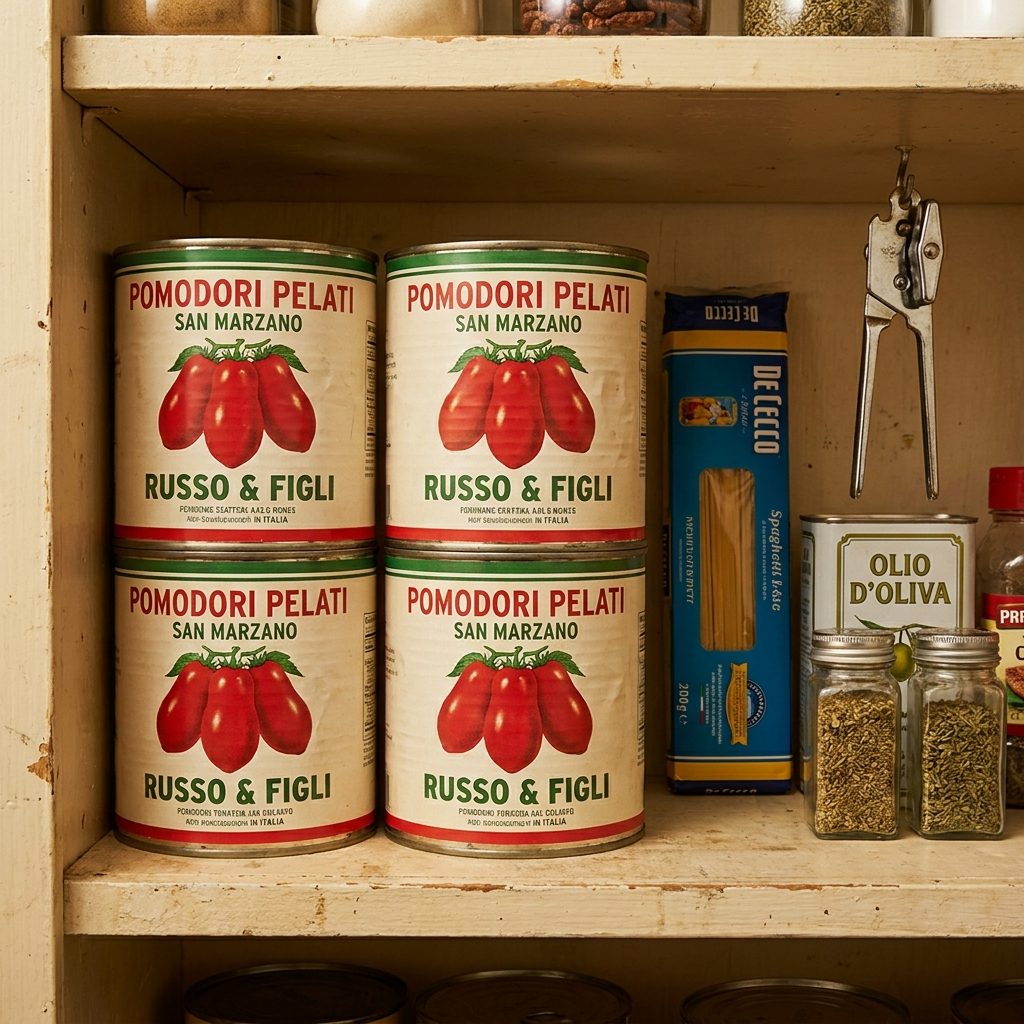
The sauce started with cans. Whole peeled tomatoes, the Italian ones, the ones some households bought six at a time because running out on a Saturday night when the sauce was already going was not a situation anyone wanted to explain.
You broke them up by hand into the pot or crushed them against the side with a wooden spoon. Some cooks added a pinch of sugar. Some added nothing but time. The pantry shelf where those cans lived was its own kind of planning, evidence that Sunday dinner wasn’t improvised. It was anticipated.
7. The Second Helping That Everyone Said They Weren’t Going to Take
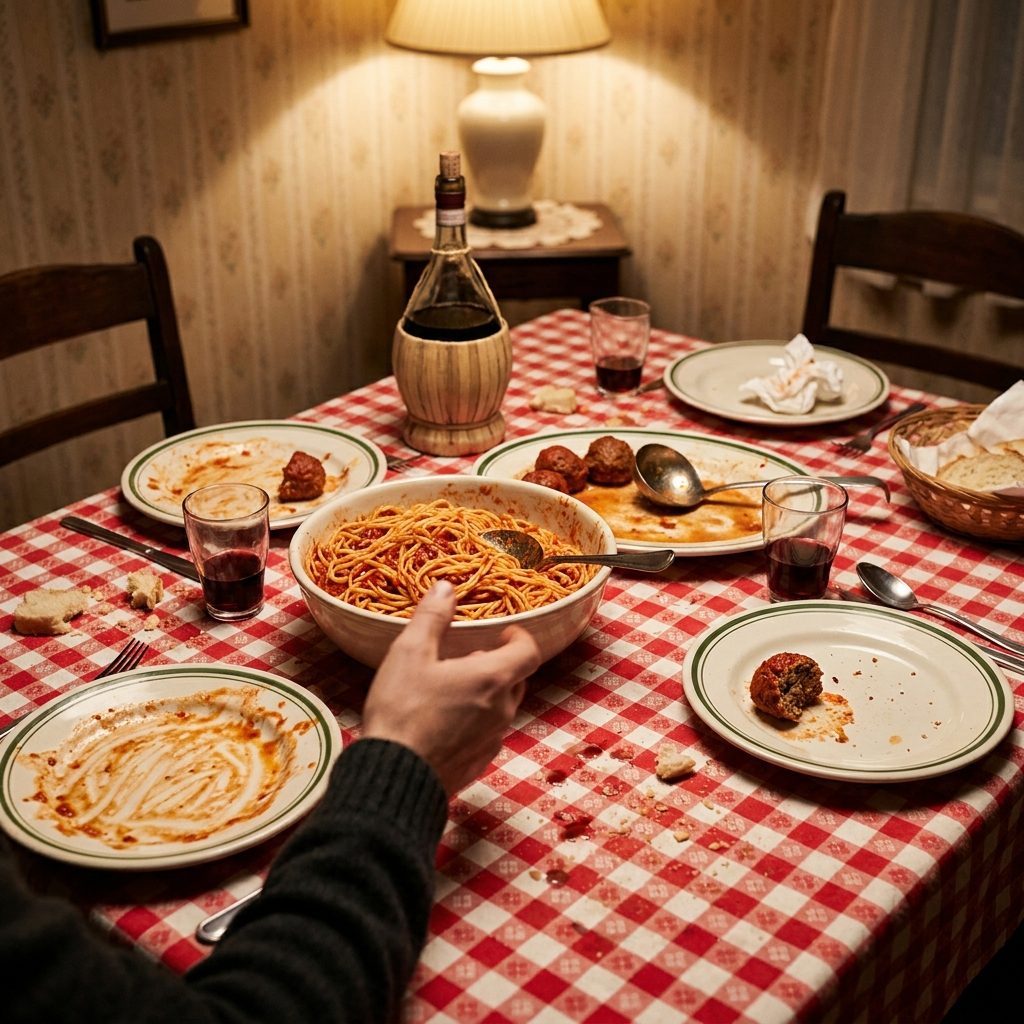
Everyone pushed back from the table a little and said they were done. Couldn’t eat another bite. The food was wonderful, but no. Then someone picked up the serving spoon.
The second helping was a ritual as fixed as the first. A smaller portion, half a meatball, a modest twist of spaghetti, taken with the slight guilt of a person who meant what they said and then didn’t. The conversation kept going and nobody really noticed and the bowl got a little lighter and that was fine.
6. The Leftover Plate in the Icebox That Was Better on Monday
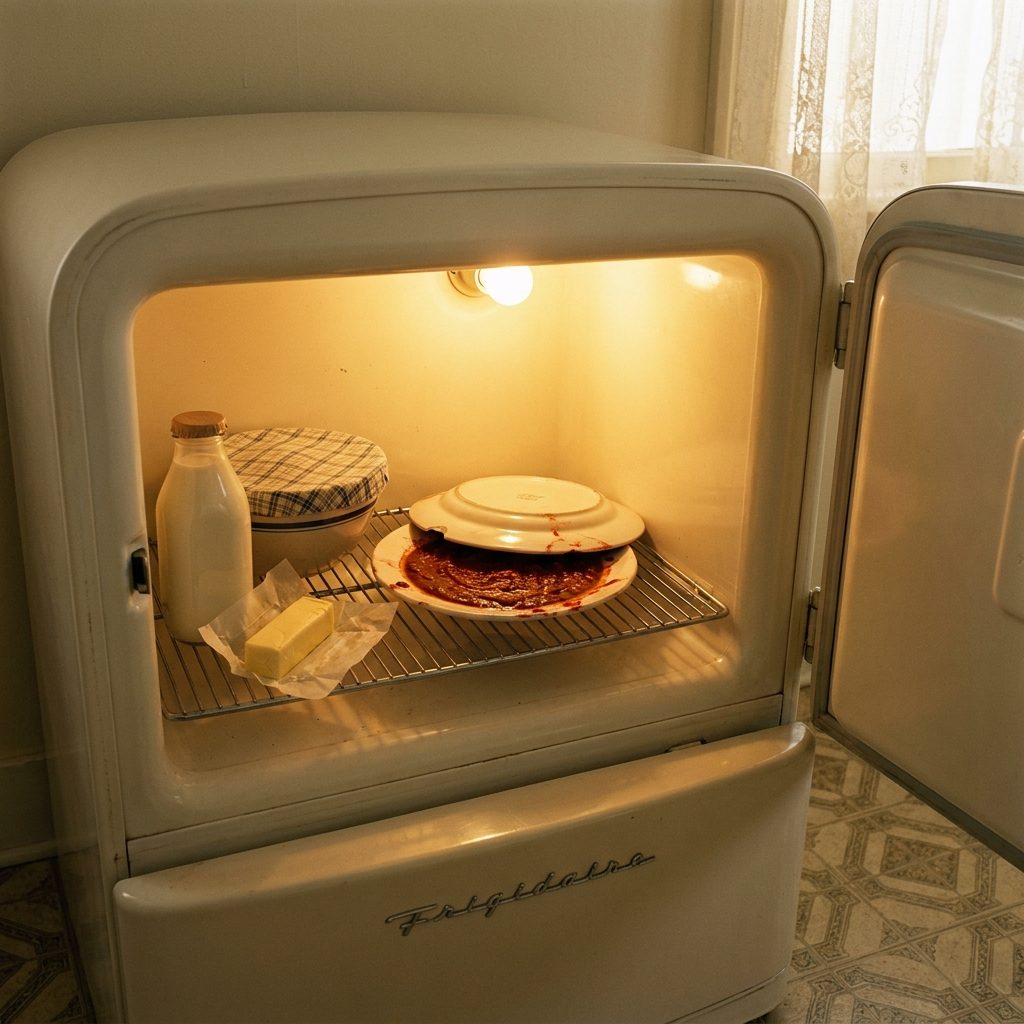
Sunday dinner ended but the sauce didn’t. Whatever was left went onto a plate, got covered with another plate or a piece of wax paper, and went into the icebox.
Monday’s lunch, or dinner, if the week started with that kind of luck, was the leftovers reheated slowly in the same pot, the sauce tighter now, the meatballs more themselves somehow, the pasta a little soft but better for it. Cold pasta with Sunday sauce straight from the plate, eaten standing at the counter, was also not a bad option. Nobody who grew up with this will argue otherwise.
5. The Chianti Bottle on the Table That Nobody Ever Actually Drank From
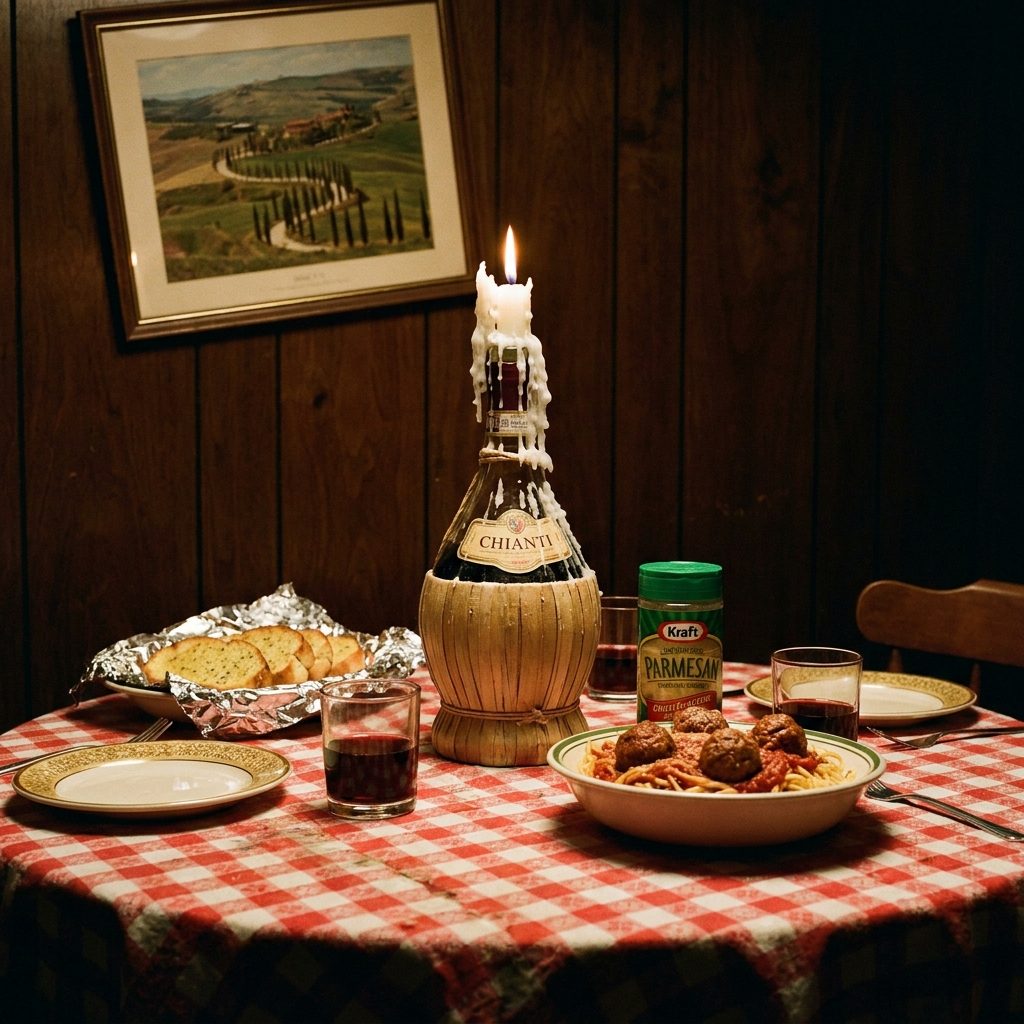
Every table had one. The wicker-wrapped Chianti bottle with the candle jammed in the top and the wax dripping down in long white stalactites, some nights still soft, some nights hard as plaster from the week before. It wasn’t decoration so much as evidence. Proof that this table had been here before, that families had eaten here in the dark, that the place had earned its candles the slow way.
Nobody ordered the Chianti. That wasn’t really the point. The bottle was atmosphere. It was the Italian restaurant signaling that it knew what it was, and that you were welcome inside the idea of it.
4. The Kraft Parmesan Shaker That Lived on Every Table Like a Salt Cellar
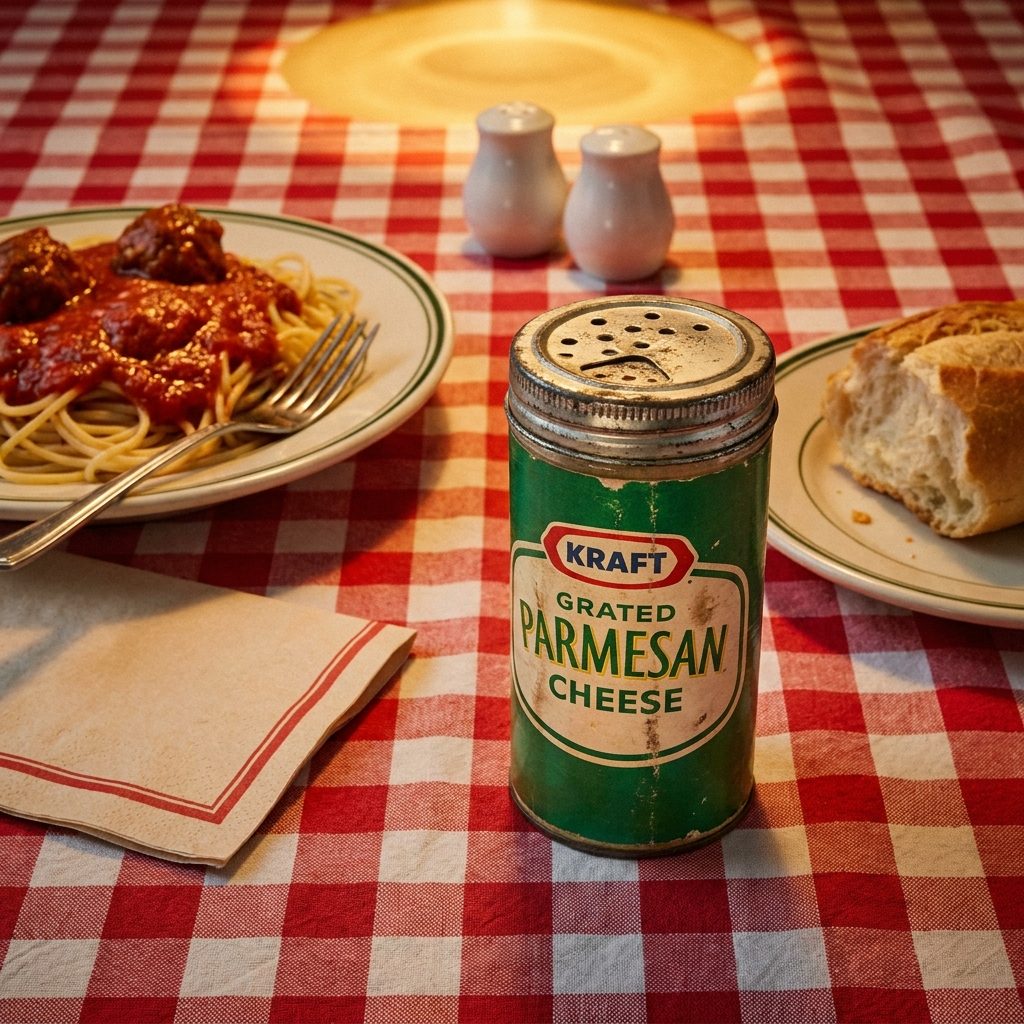
The green cardboard Kraft shaker was as fixed a part of the Italian-American table as the salt and pepper. It sat in the same spot every Sunday, slightly sticky near the lid, the label softened from years of handling. Nobody questioned it.
Fresh Parmigiano-Reggiano was for someone else’s table in some other decade. This was the real thing as we knew it then: powdery, sharp, a little salty, shaken over everything in a slow clockwise circle before the first bite. The smell when you opened the lid still triggers the whole memory in about half a second.
3. The Sunday Sauce That Started on Saturday Night
Would you like to save this?
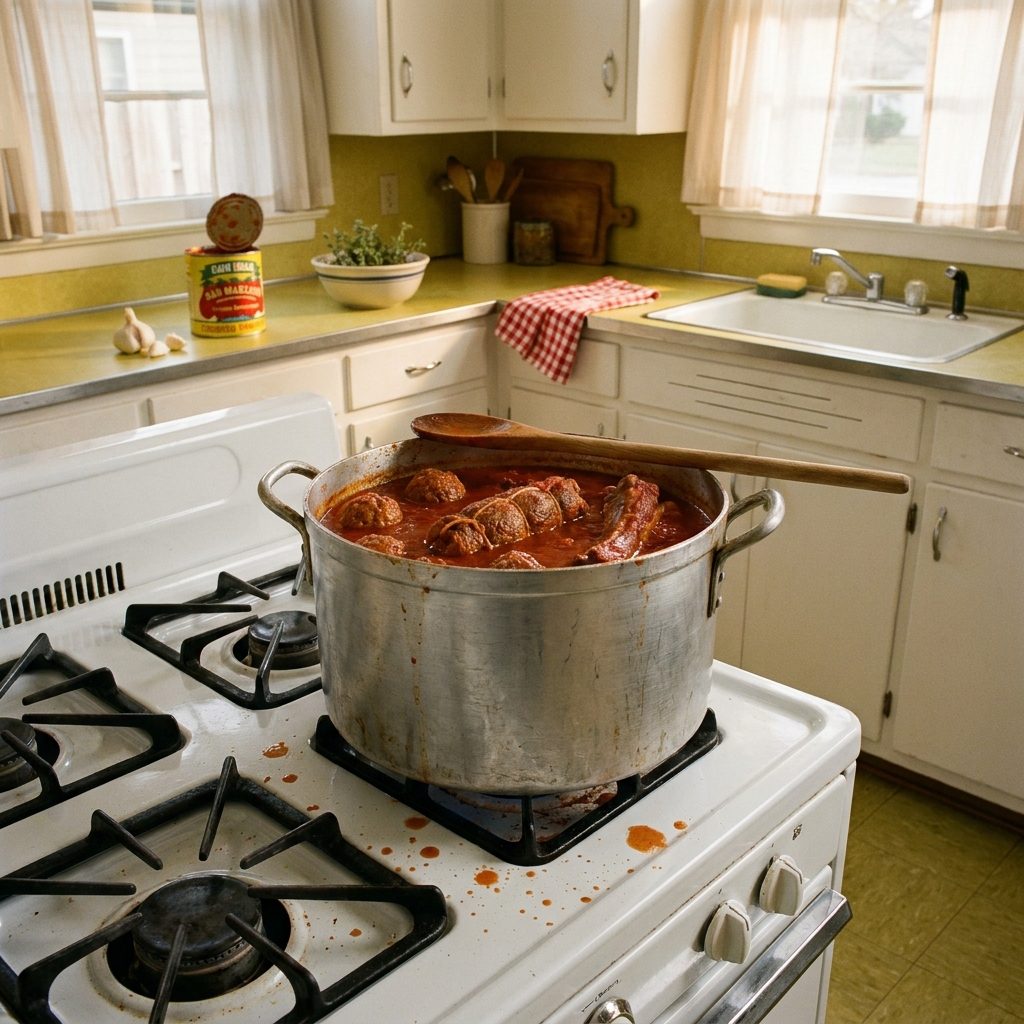
Sunday sauce didn’t start Sunday morning. It started the night before, or at least that’s how the serious households handled it. The pot went on early, the meatballs went in raw, and the whole thing simmered so low you almost couldn’t hear it. By the time anyone was dressed for church, the kitchen already smelled like the meal.
The difference between Sunday sauce and weeknight tomato sauce was time, mostly, plus a piece of pork, ribs or a neck bone, dropped in to deepen everything. The meatballs cooked in the sauce, not separately. That detail mattered. The sauce changed the meatballs and the meatballs changed the sauce, and by noon you couldn’t tell where one ended and the other began.
2. The Giant Oval Platter That Meant Company Was Coming
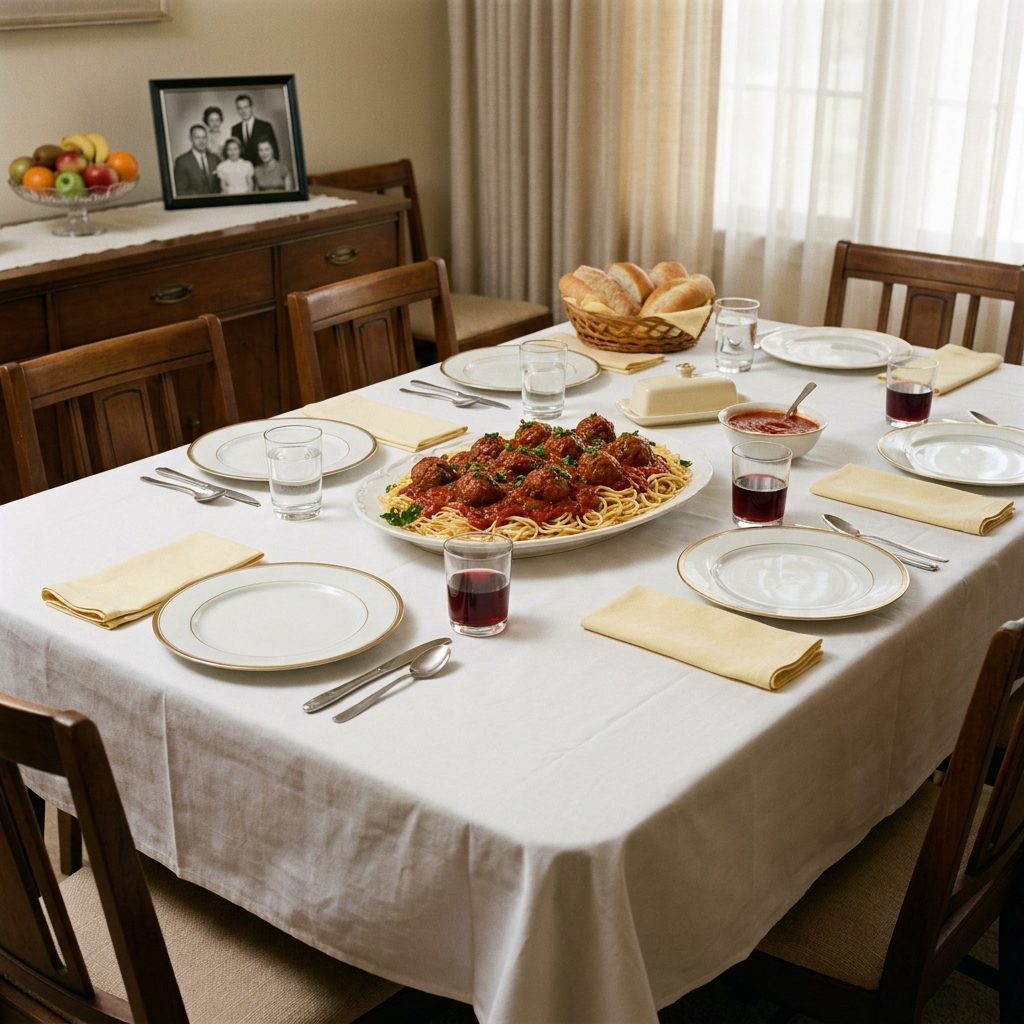
The big oval platter only came down from the high cabinet when someone was coming. Weeknights, spaghetti went into whatever bowl was clean. But Sunday, with the cousins or the neighbors or the in-laws on their way, someone pulled out the platter, and the whole presentation changed.
Spaghetti piled high in the center. Meatballs arranged on top, not hidden underneath. A little sauce ladled over everything, parsley scattered from the pinch of someone’s fingers. It was still the same dinner. But the platter said it wasn’t ordinary, and that meant something.
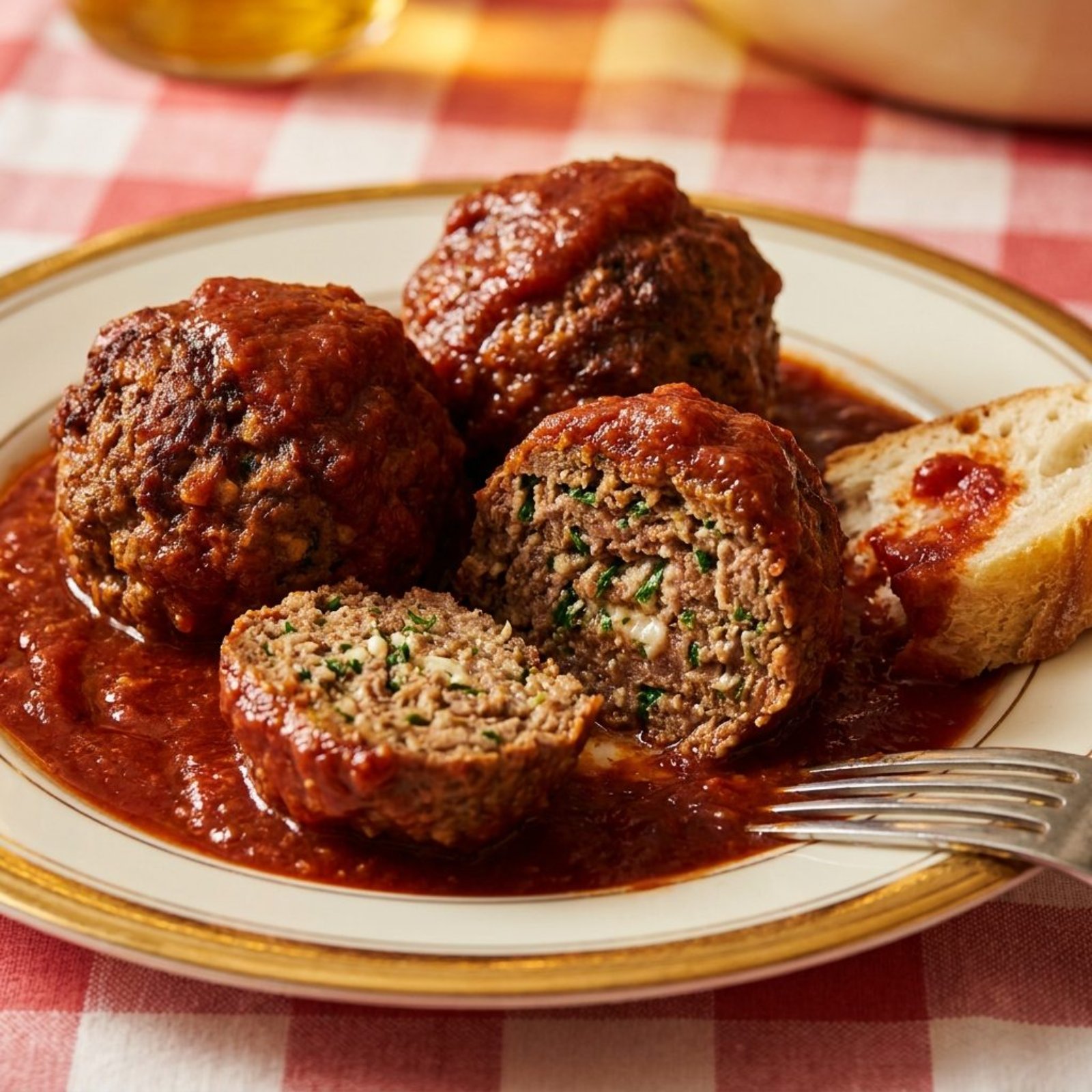
1. The Meatball Itself: Half Beef, Half Pork, Breadcrumb-Heavy, No Apologies
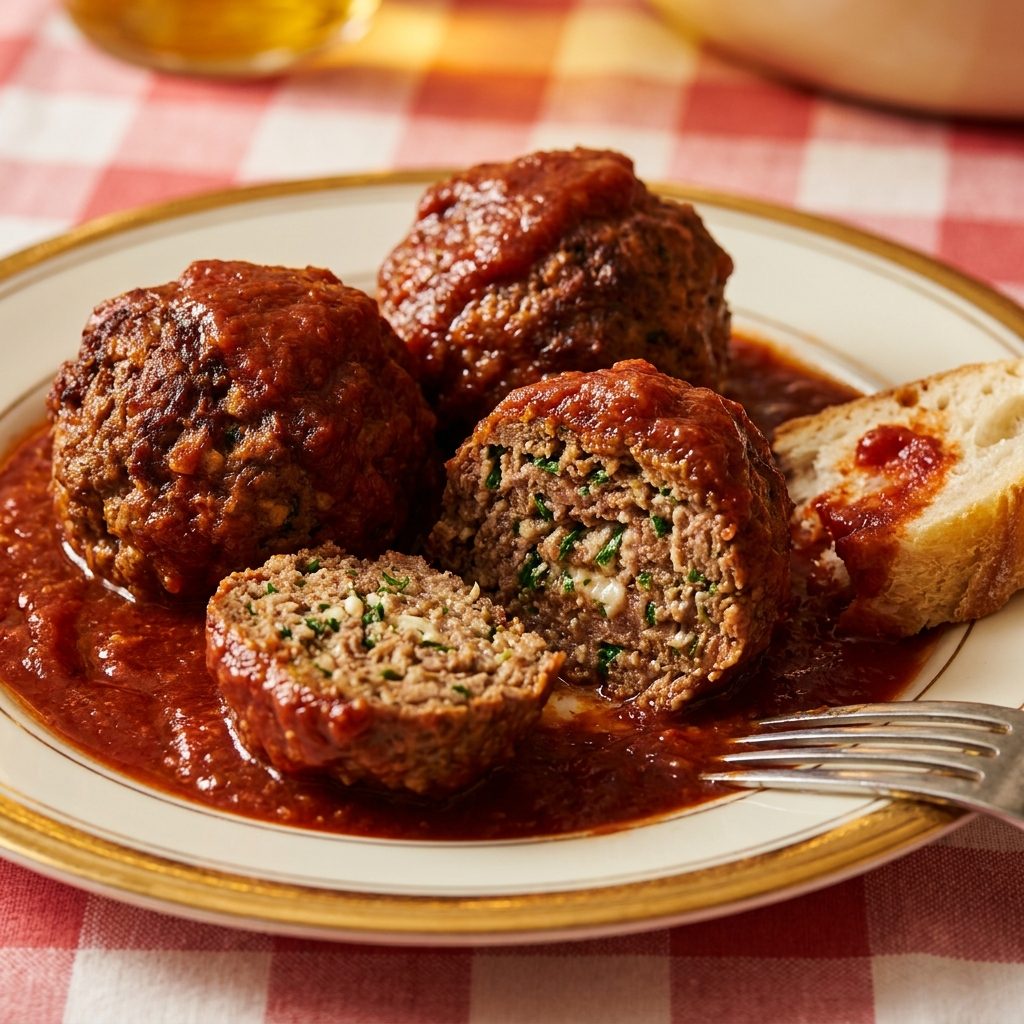
The recipe wasn’t written down anywhere. It lived in someone’s hands. Half beef, half pork, soaked white bread squeezed dry and worked in, an egg, garlic, parsley, and a palm full of Romano cheese grated right into the bowl. Mixed with the hands until it held together, rolled into balls larger than a golf ball, browned in a hot skillet, and finished in the sauce.
The breadcrumb-to-meat ratio was heavier than anyone admits now. That’s what made them tender enough to cut with the side of a fork. Modern meatball recipes keep pulling the breadcrumbs back in the name of texture. The 1950s version knew the breadcrumbs were load-bearing.