
Would you like to save this?
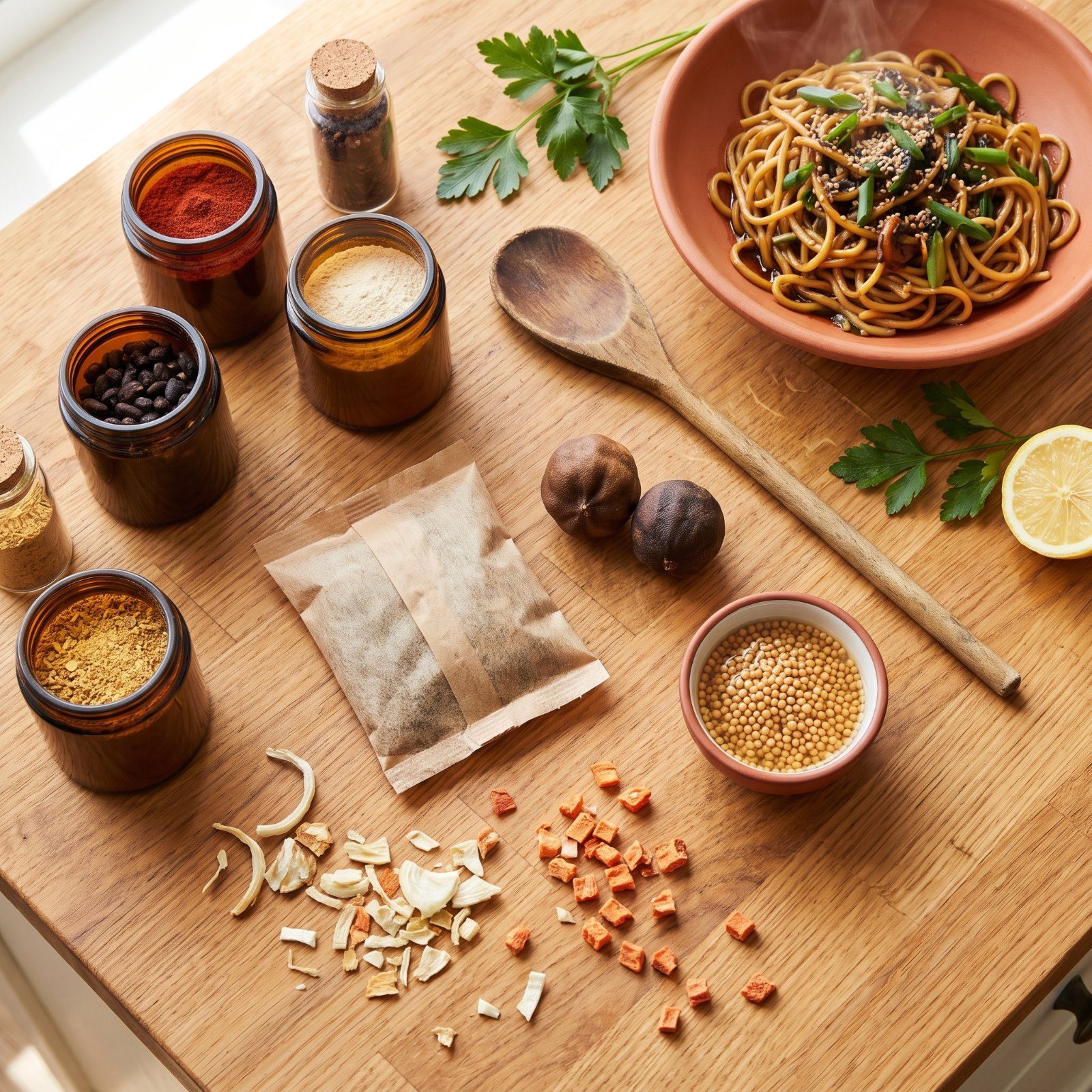
The best cooks you know aren’t faster at chopping. They’re just stocked with a few odd jars most people walk right past. There’s a difference between a meal that’s done and a meal that tastes done, and that difference usually lives in some shelf-stable thing nobody brings up at dinner parties. The ones below sit in a cupboard for months, ask nothing of you, and quietly fix the exact problems that make weeknight food taste flat. No fresh herbs wilting in the crisper, no last-minute store runs. Just the stuff that makes 25 minutes taste like 90.
Please note that some of the images in this article were created with the assistance of AI.
41. Freeze-Dried Mirepoix for Skipping the Chopping
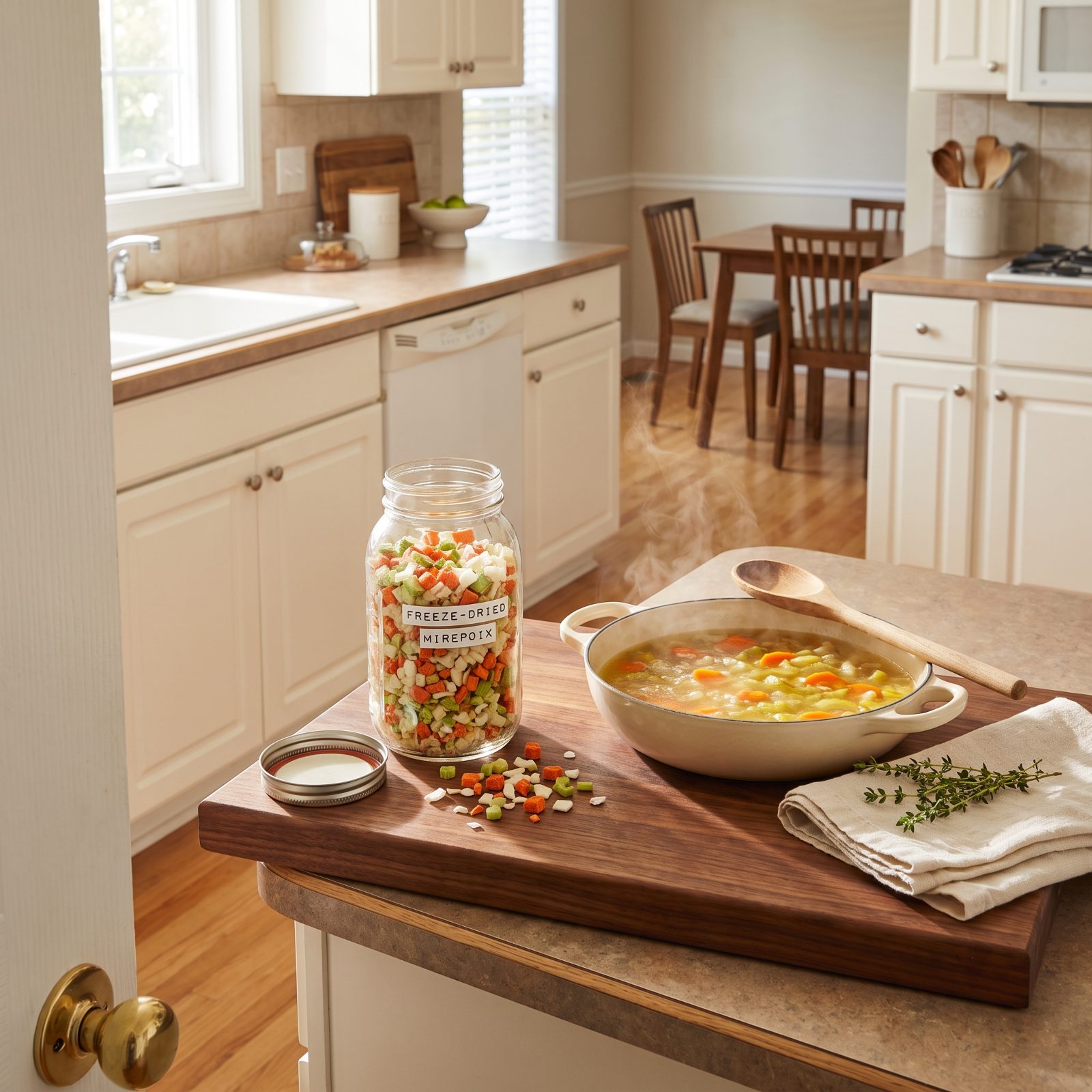
Soffritto is the soul of half of Italian-American cooking, and it’s also the reason most people never make soup on a Tuesday. Twenty minutes of chopping before anything happens in the pan. Freeze-dried mirepoix skips the knife entirely, so you toss a handful into hot oil, let it rehydrate and brown, and you’ve got the aromatic base of a braise or sauce in about four minutes.
It won’t match a fresh carrot for a slow Sunday gravy. Honestly, who’s comparing on a weeknight. For the pot of soup you’d otherwise never bother with, it’s the difference between dinner and takeout.
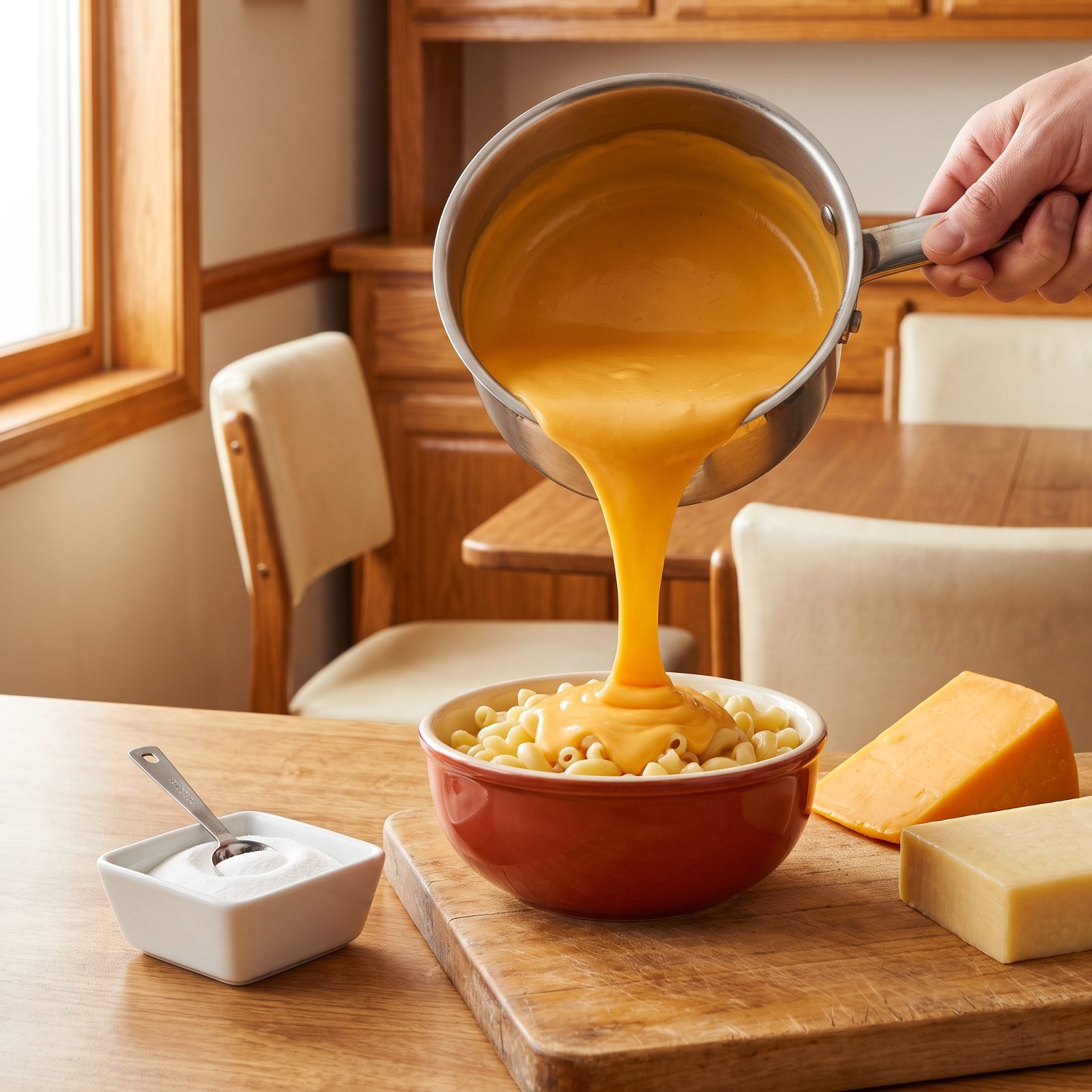
40. Sodium Citrate for Foolproof Cheese Sauce
Ever made a cheese sauce that split into a greasy, grainy mess the second it hit the heat? That’s not a skill problem. That’s chemistry refusing to cooperate.
Sodium citrate is the emulsifier that keeps restaurant and processed cheese so absurdly smooth, and a pinch of it turns any real cheese into a sauce that never breaks. Melt sharp cheddar, aged gruyere, whatever’s in the drawer, into warm liquid with a little of this powder and it stays glossy and pourable. No roux, no flour, no bechamel to babysit. Mac and cheese on a weeknight with actual good cheese, not the neon stuff. A small bag lasts a year of Tuesdays.
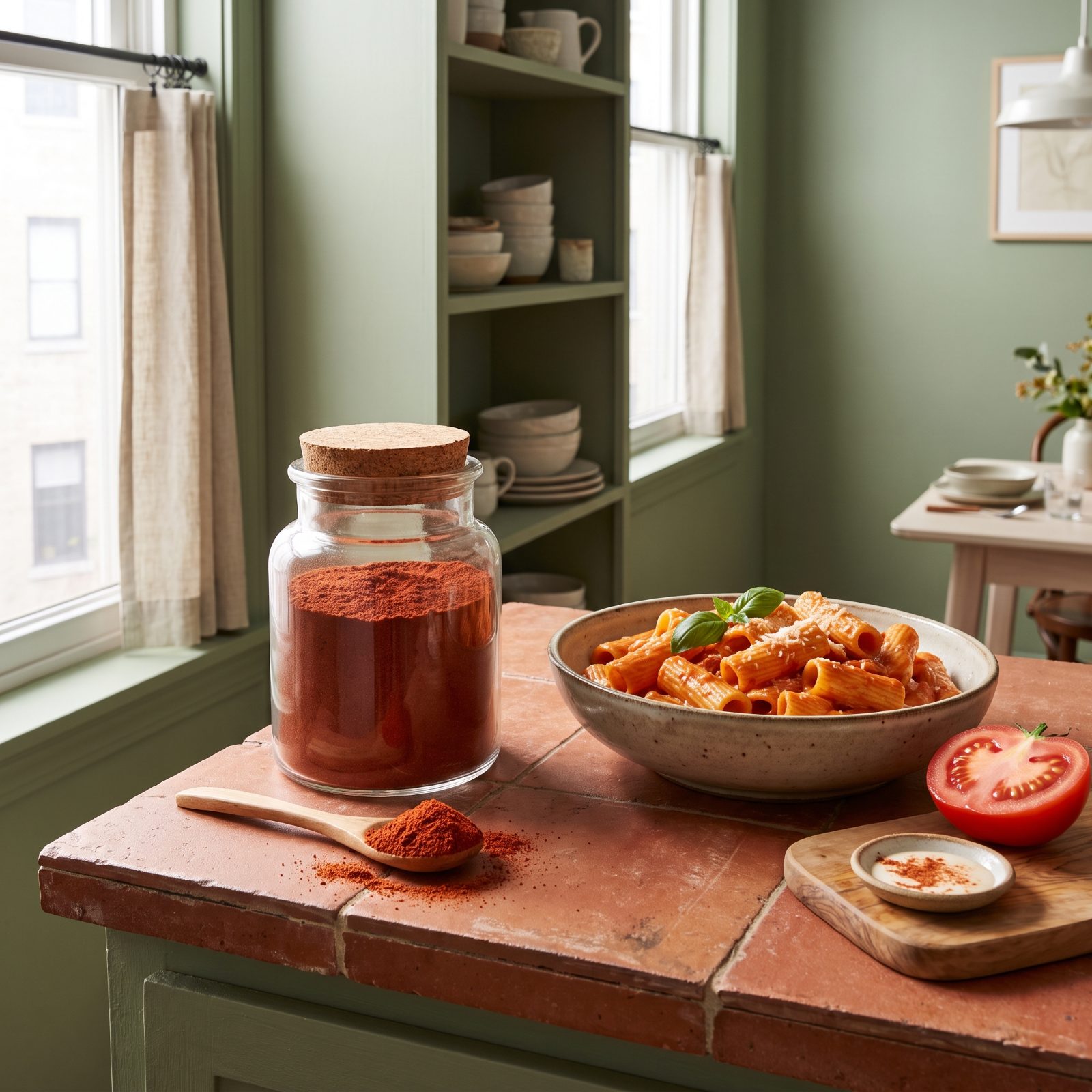
39. Tomato Powder for Instant Depth Without Opening a Can
The half-can problem is real. A recipe wants two tablespoons of tomato paste, you open a can, use a spoonful, and the rest fossilizes in the fridge until you throw it out two weeks later.
Tomato powder is dehydrated tomato ground to dust, and it fixes that waste completely. A spoonful stirred into a pan sauce, a braise, or even scrambled eggs adds that deep, sun-concentrated tomato flavor without liquid thinning everything out. Want paste? Add a few drops of water. Want a splash of sauce? Add more. It makes you wonder why you ever stored a sticky open can at all.
38. Powdered Coconut Milk for Single-Serving Curries
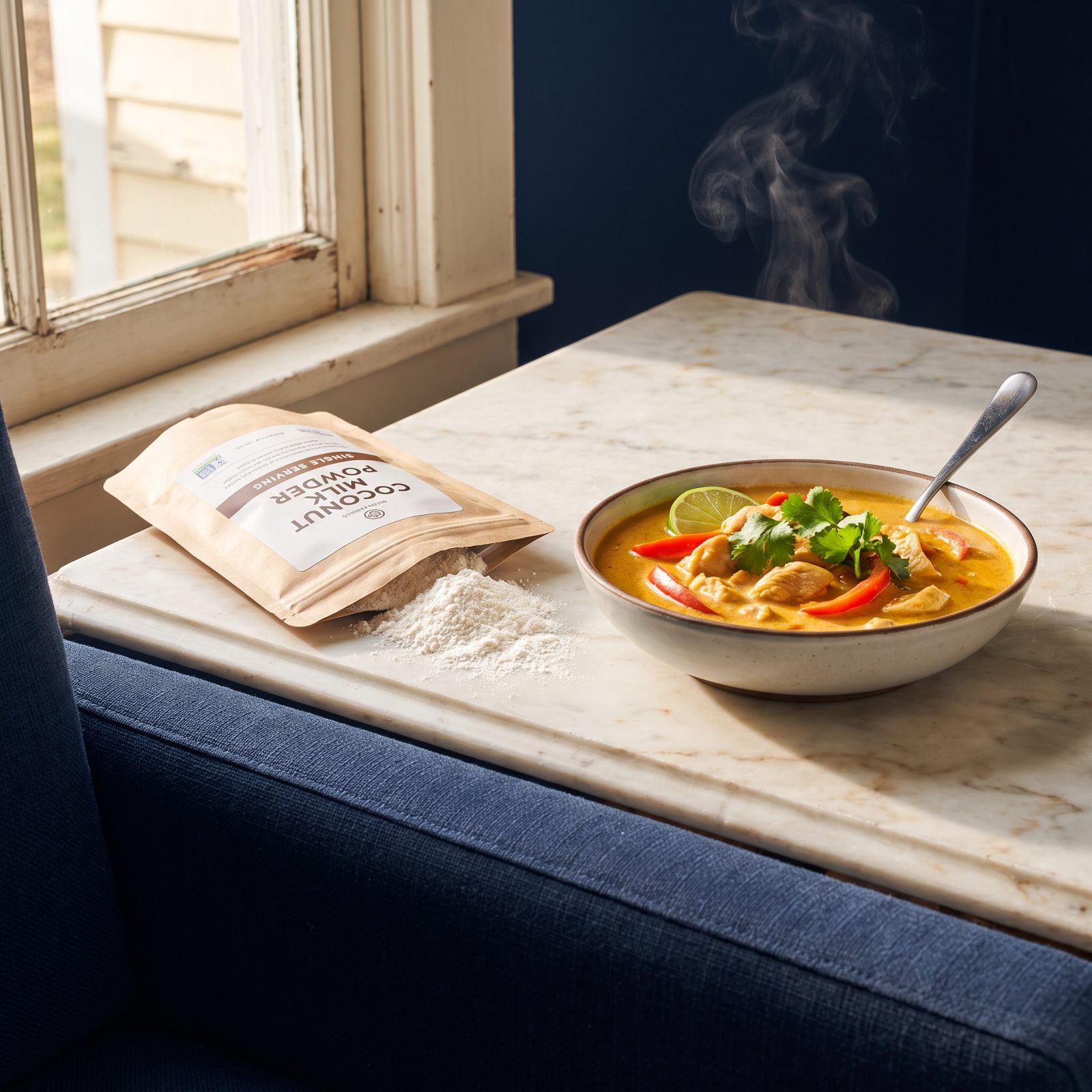
Opening a full can of coconut milk for one portion of curry is a commitment nobody wants on a Wednesday. The rest goes gummy in the fridge, you forget about it, and round and round it goes.
Powdered coconut milk lets you dial in exactly how much richness you need. Whisk a spoonful into hot broth for a thin soup, or more for a thick, clingy curry sauce. It stores for months in the pantry with no refrigeration drama. Perfect for the single-bowl dinner that would never justify cracking a whole can.
37. Dried Limes for Bright, Complex Braises

Dried limes look like something you’d find at the back of a drawer and throw out. Hard, dark, hollow, vaguely ominous. And yet they’re one of the most interesting flavor tricks in Persian cooking.
Pierce one, drop it into a braise or a pot of beans, and over an hour of simmering it releases a sour, almost fermented brightness. Nothing like a squeeze of fresh lime. Deeper, murkier, with a musty tang that makes a heavy stew taste alive. They keep practically forever, so a jar of them is years of weeknight depth waiting in the cupboard.
36. Fermented Black Beans for Five-Minute Stir-Fry Sauce
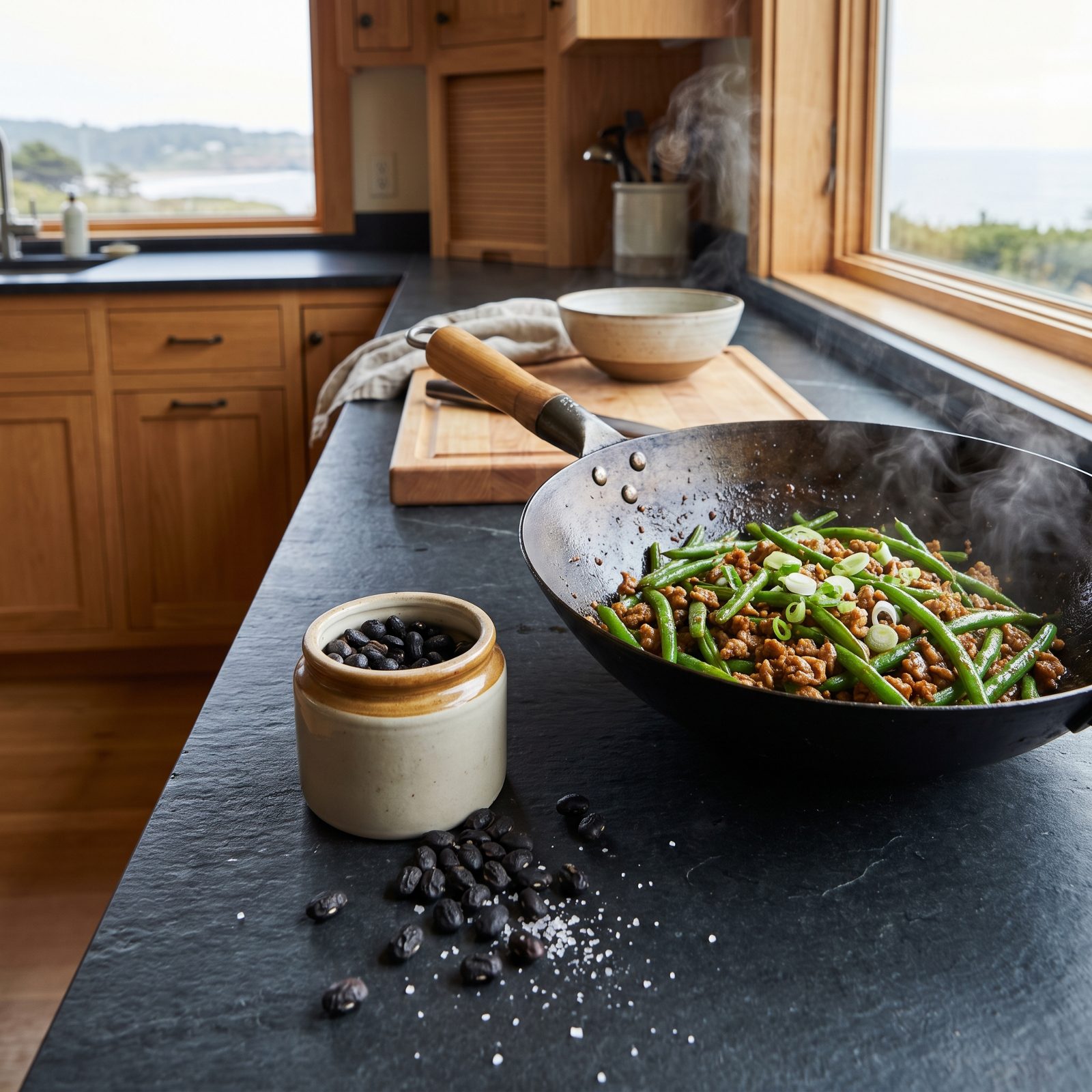
These little salty, funky fermented soybeans are the secret behind every great black bean sauce you’ve had in a Chinese restaurant. A small spoonful, mashed into garlic and oil, builds a savory, almost meaty base in the time it takes the wok to heat up.
They’re intensely salty, so a little goes a long way. Rinse them if you’re nervous, mince them, hit the pan, and you’ve got the backbone of a stir-fry sauce without reaching for three bottles. A jar lives in the pantry for ages. The smell is strong. The payoff is stronger.
35. Mushroom Seasoning Powder for Fast Savory Flavor
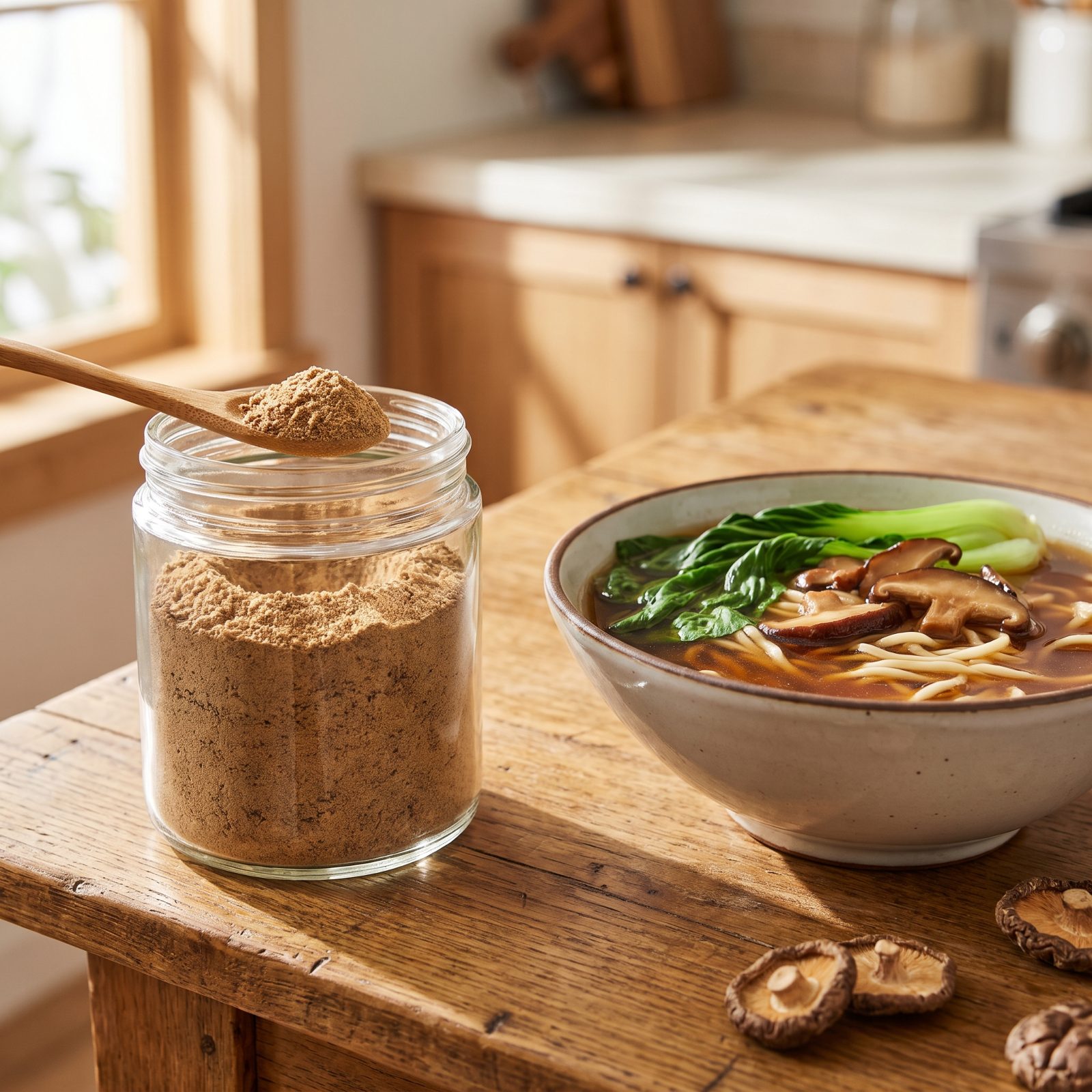
Call it umami in a shaker. Mushroom seasoning powder, usually ground dried shiitake or porcini blended with salt, adds that deep savory roundness that normally takes browning, simmering, and patience.
A pinch in soup, over roasting vegetables, or stirred into ground beef makes everything taste like it cooked longer than it did. It’s the trick behind a lot of vegetarian cooking that somehow tastes rich. Honestly, a shake into a boring pot of rice turns it into something you’d actually go back for seconds of.
34. Dashi Packets for Broth in Minutes
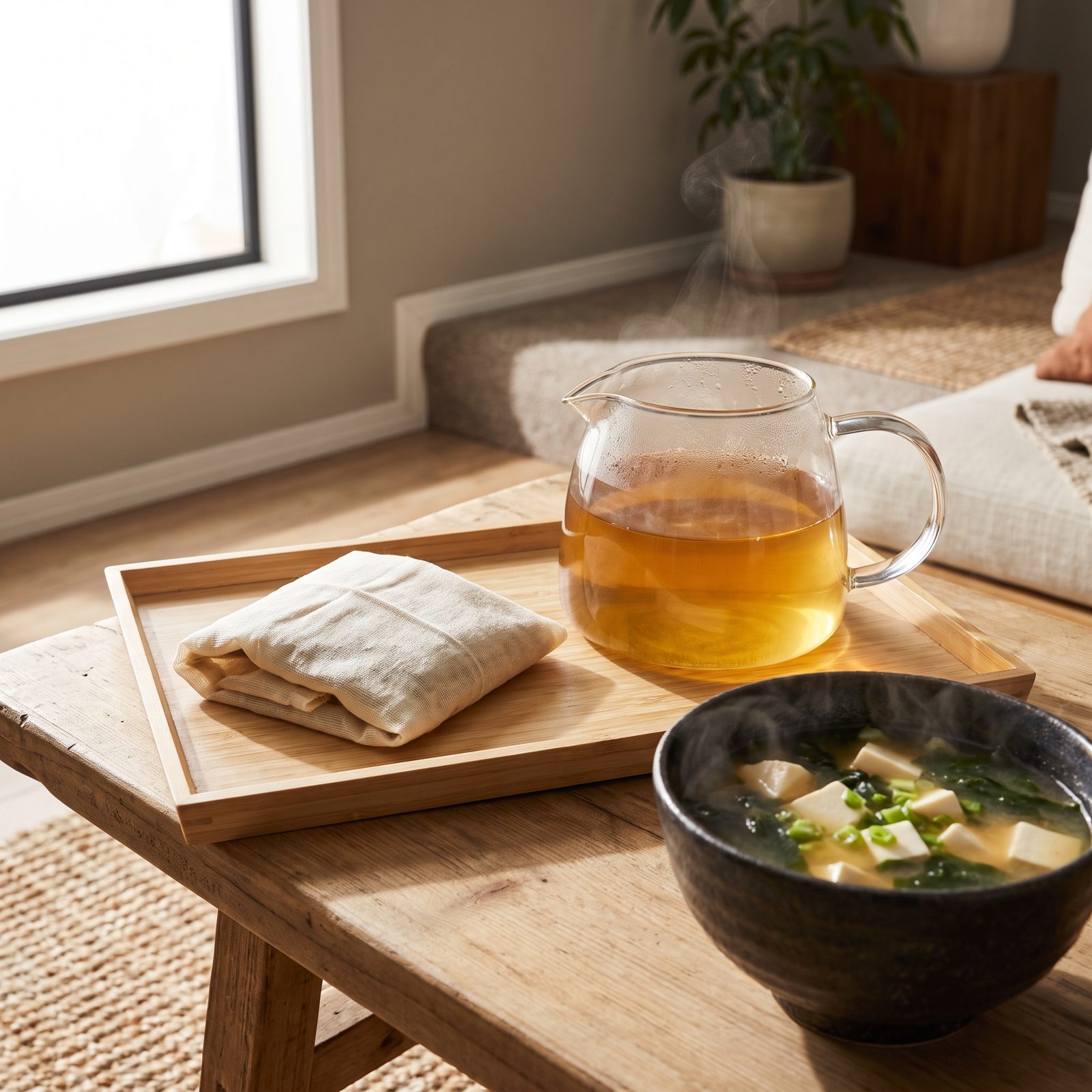
Real dashi, the backbone of Japanese cooking, traditionally means simmering kelp and shaving bonito flakes. Beautiful, meditative, and completely unrealistic at 6:45 on a weeknight.
A dashi packet works like a tea bag. Drop it in simmering water, steep for a few minutes, pull it out, and you’ve got a clean, smoky, savory broth that forms the base of miso soup, a quick noodle bowl, or a braising liquid for vegetables. The depth-to-effort ratio is almost unfair. Once this lives in your pantry, a bowl of something warm and genuinely good is never more than five minutes away.
33. Vacuum-Packed Roasted Chestnuts for Speedy Soups
Would you like to save this?
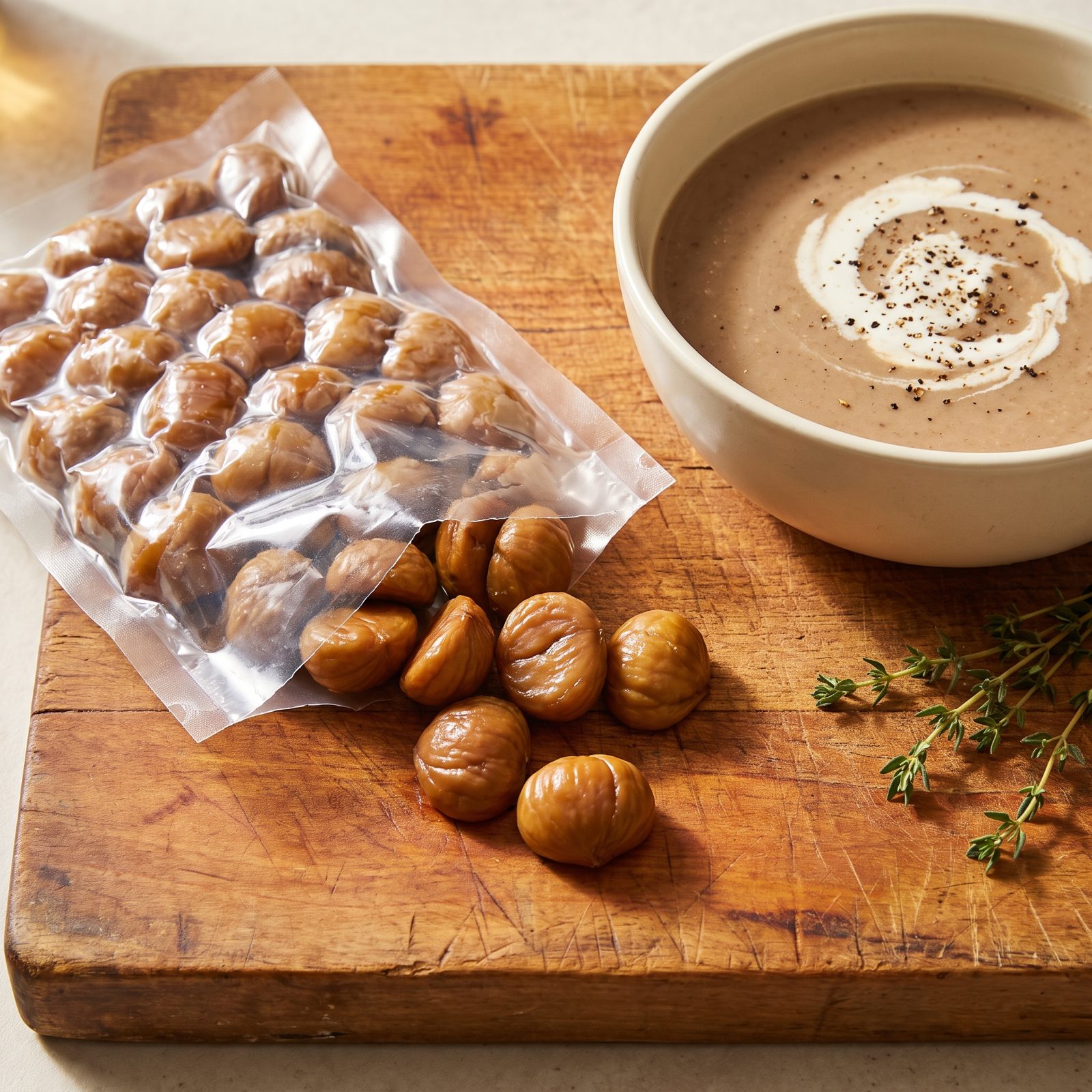
Peeling chestnuts is a wintertime punishment. Scoring, roasting, burning your fingers, fighting the papery skin, ending up with half the yield you started with. Pre-roasted vacuum-packed chestnuts skip every bit of that.
They come already cooked and peeled, soft enough to blend straight into a soup for instant velvety body, or chop into a stuffing, or toss into a braise for a sweet, nutty richness. A soup that would’ve taken an afternoon of prep comes together in twenty minutes. The pouch sits in the pantry until you want it. No refrigeration, no fuss.
32. Pickled Mustard Seeds for Instant Tang and Texture

These look like tiny golden caviar, and they behave a little like it too. Pickled mustard seeds swell plump in their brine and pop between your teeth with a sharp, vinegary burst.
A spoonful over a plain seared pork chop, roasted vegetables, or a sad weeknight grain bowl does two jobs at once: it brightens the whole plate with acidity and adds a texture that was missing. That pop of tang and a little bite is exactly what makes a fast dinner read as finished instead of thrown together.
31. Black Garlic for Ready-Made Sweet-Savory Depth
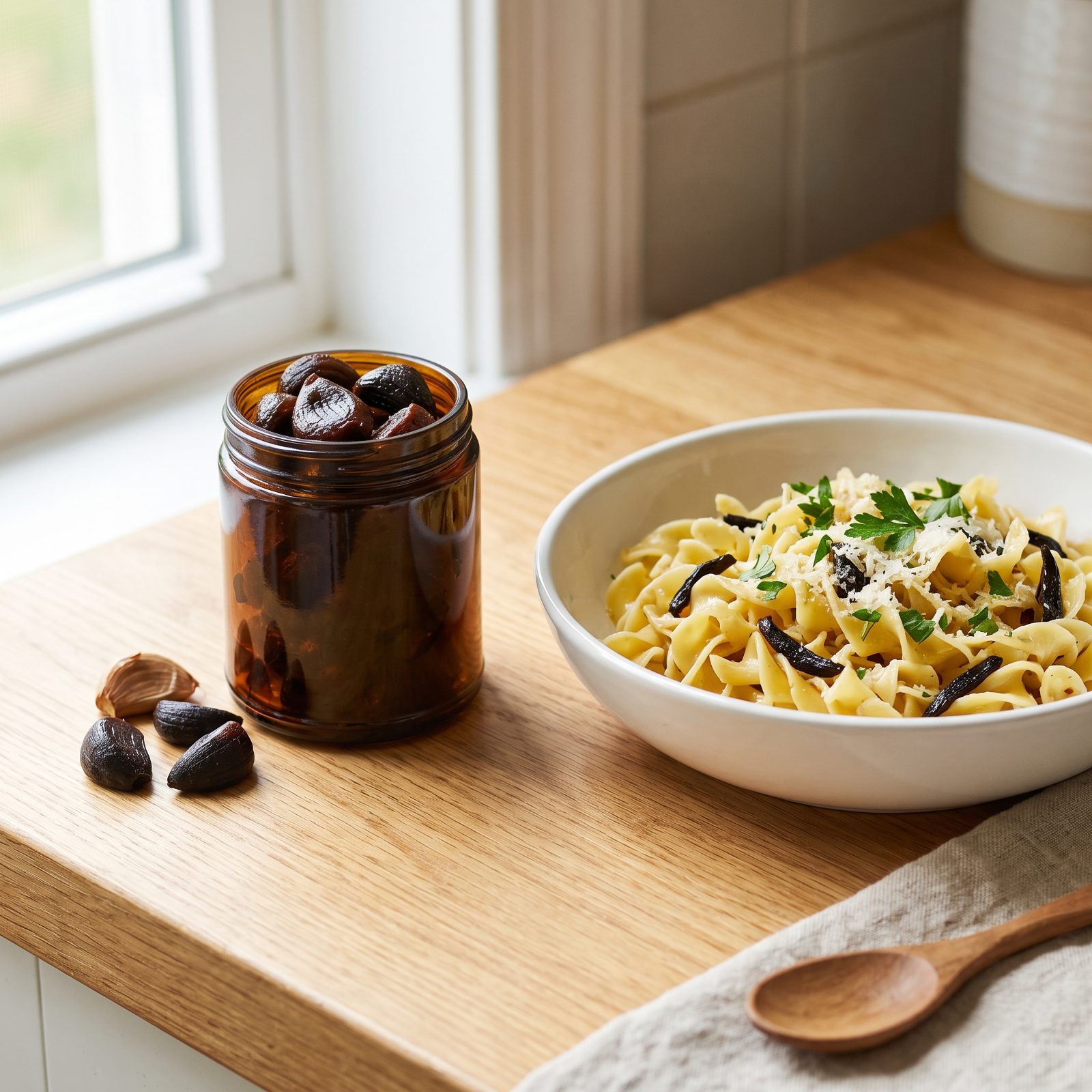
Regular garlic hits you over the head. Black garlic whispers. Weeks of slow warmth turn the raw cloves soft and dark, closer to molasses and balsamic than anything that ever made your eyes water, and the upfront bite is gone, replaced by a mellow sweetness with a savory tail.
Smash a clove or two into a pan sauce, a vinaigrette, or a bowl of plain buttered noodles and suddenly the dish tastes like it simmered all afternoon. It didn’t. You just borrowed somebody else’s weeks of waiting.
30. Potato Flakes for Thickening Soups and Binding Patties
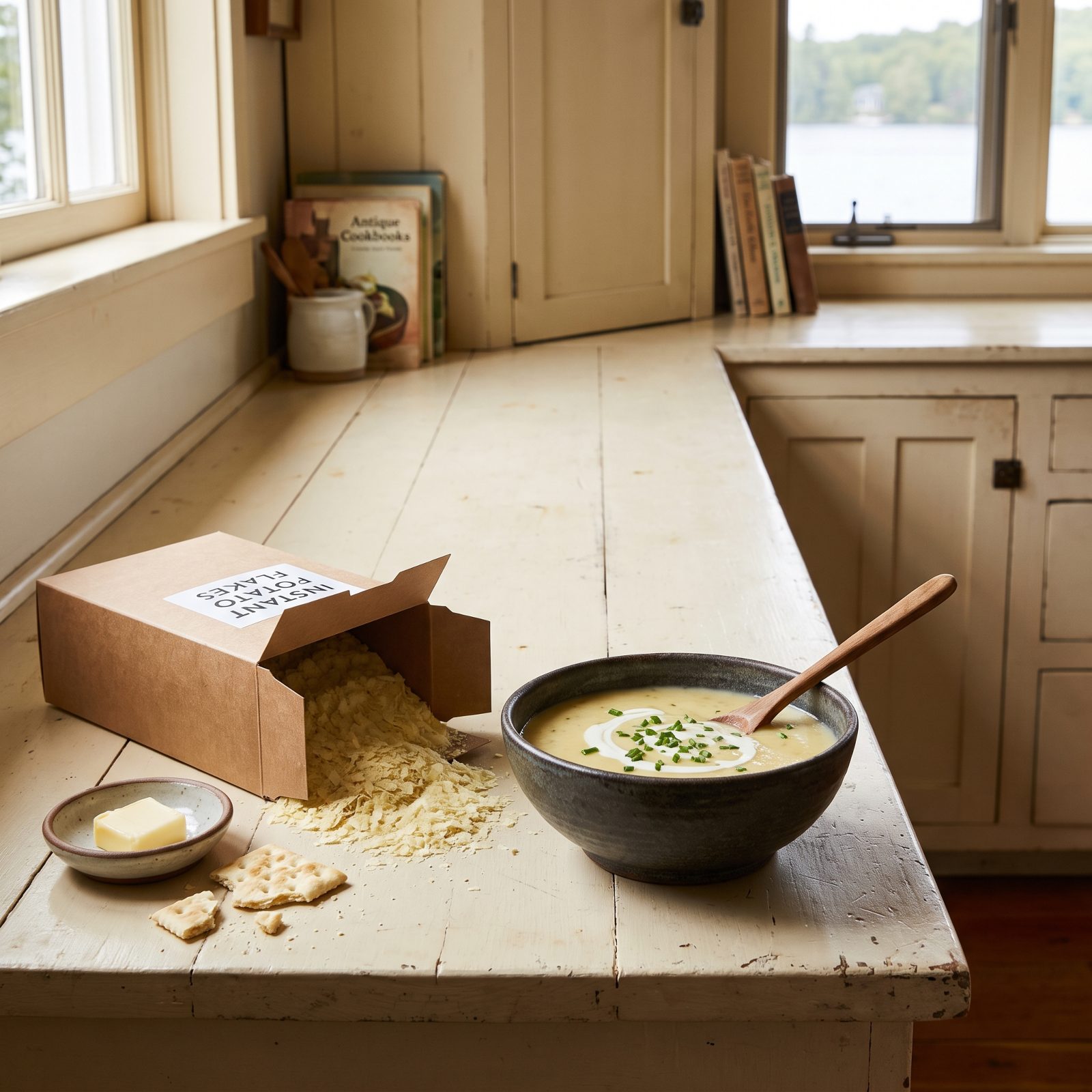
Cornstarch leaves a sauce glassy, and flour needs cooking out or it tastes like paste. Instant potato flakes do neither. A spoonful stirred into a thin soup thickens it in seconds with a clean, starchy body and zero raw taste — no lumps, as long as you sprinkle slowly.
They’re the secret to patties that hold together, too. Work a handful into ground meat or bean mash and the flakes soak up stray moisture so your burger doesn’t crumble on the flip. Cheap, forgiving, and sitting right there in the baking aisle pretending to be boring.
29. Powdered Buttermilk for Biscuits and Marinades

How many times has a recipe called for buttermilk when you had none, and the carton you’d buy would rot half-used in the door of the fridge? Powdered buttermilk ends that game for good.
Stir it dry into biscuit or pancake flour and add plain water, or spoon it straight into a marinade where its gentle acid tenderizes chicken overnight. It keeps for months in the pantry and never curdles on you.
28. Unflavored Gelatin for Giving Pan Sauces Body
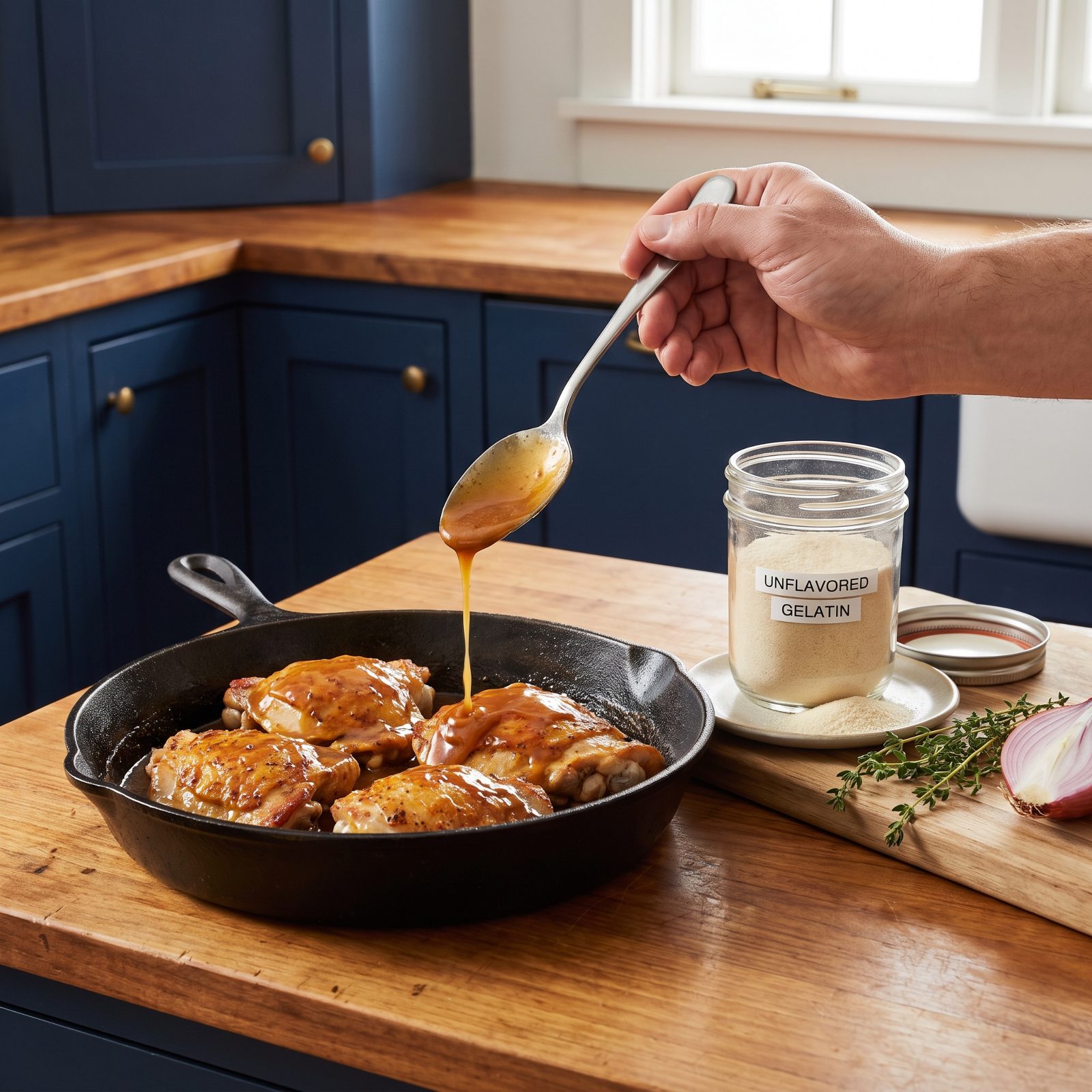
Ever wonder why a restaurant pan sauce coats the back of a spoon while yours runs off like dishwater? Part of the answer is gelatin, usually from long-simmered bones you don’t have time to make on a Wednesday.
So cheat. Bloom a pinch of unflavored gelatin in cold water and whisk it into a finished sauce off the heat. It adds silkiness and that lip-sticking body without touching the flavor, and the sauce starts behaving like it had a real stock behind it. It didn’t.
27. Citric Acid for Adding Brightness Without Extra Liquid
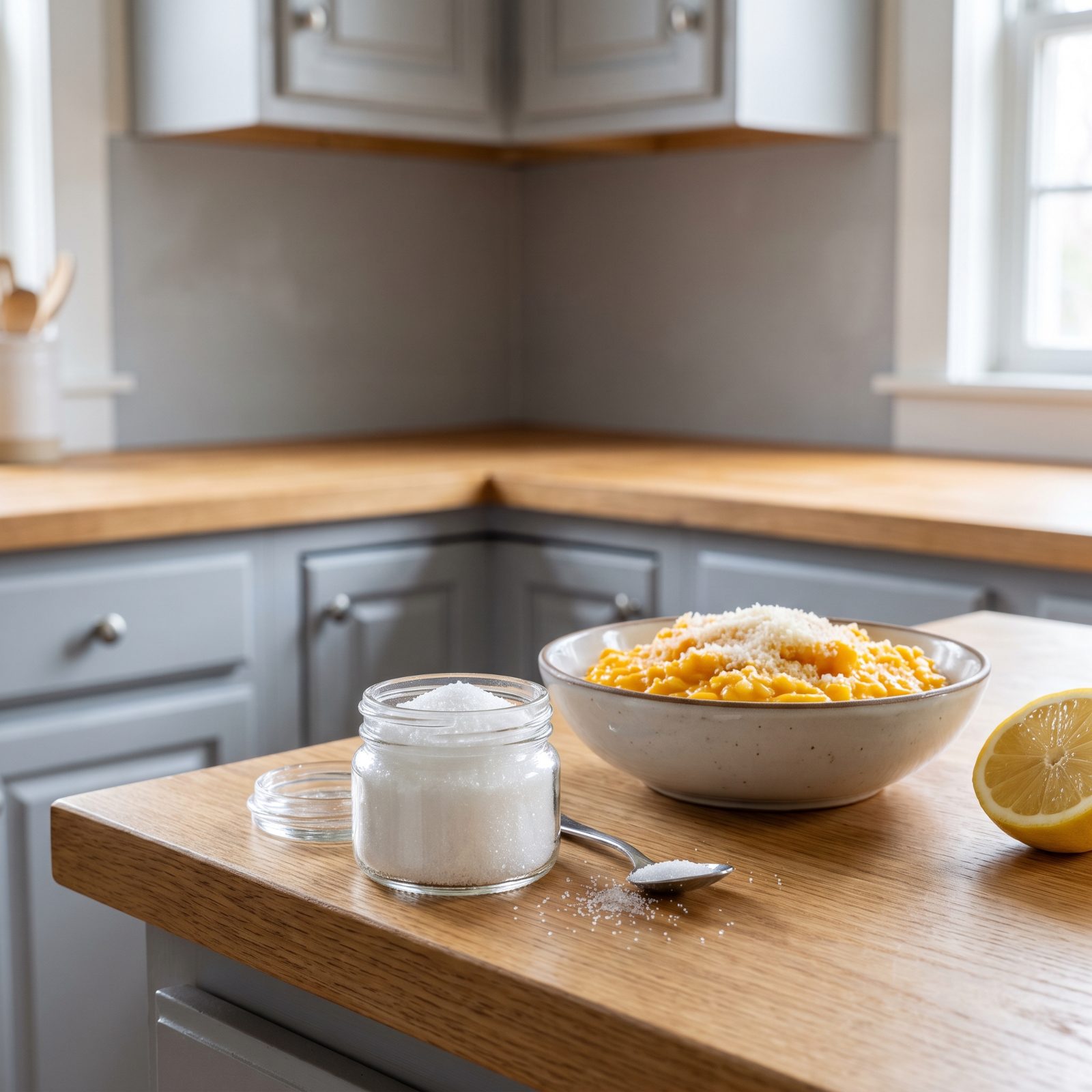
When a dish tastes flat and heavy, the fix is almost always acid. But squeeze in lemon juice and you water down a risotto you spent twenty minutes reducing. Citric acid solves that.
A few crystals deliver the same clean sourness as fresh citrus with no added liquid at all. Sprinkle it into a cheese sauce, a soup, or a tomato base that needs waking up.
26. Demi-Glace Concentrate for Restaurant-Style Sauces
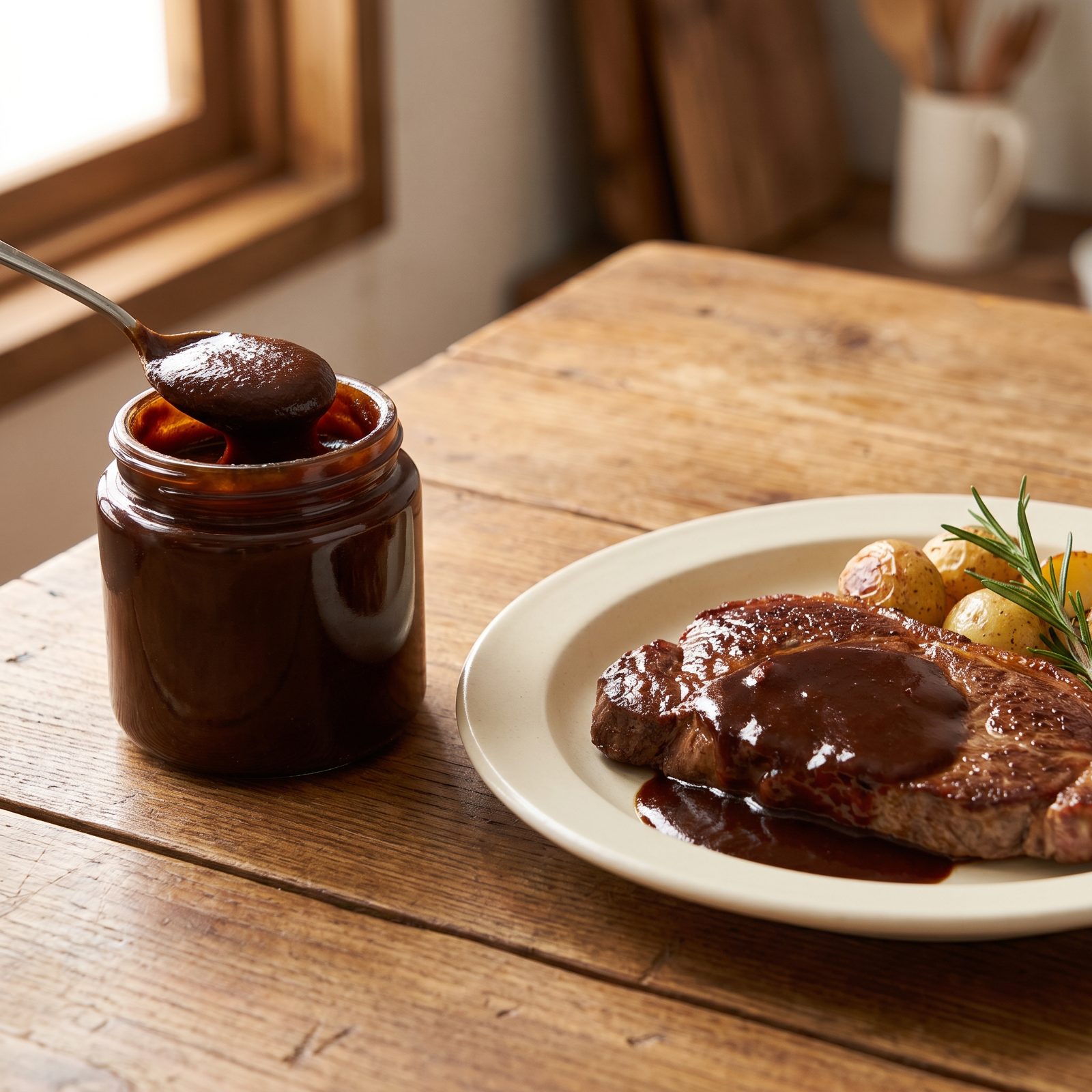
Demi-glace is what happens when veal stock and brown sauce reduce for the better part of a day into a dark, jelly-thick concentrate. Nobody has time for that on a weeknight. A jar hands you the result and skips the patience you don’t have.
A spoonful melted into pan drippings with a splash of wine gives you a sauce that tastes like it came off a white tablecloth. A little goes a long way — one jar lasts through a lot of steaks.
25. Preserved Lemons for Waking Up Grain Bowls
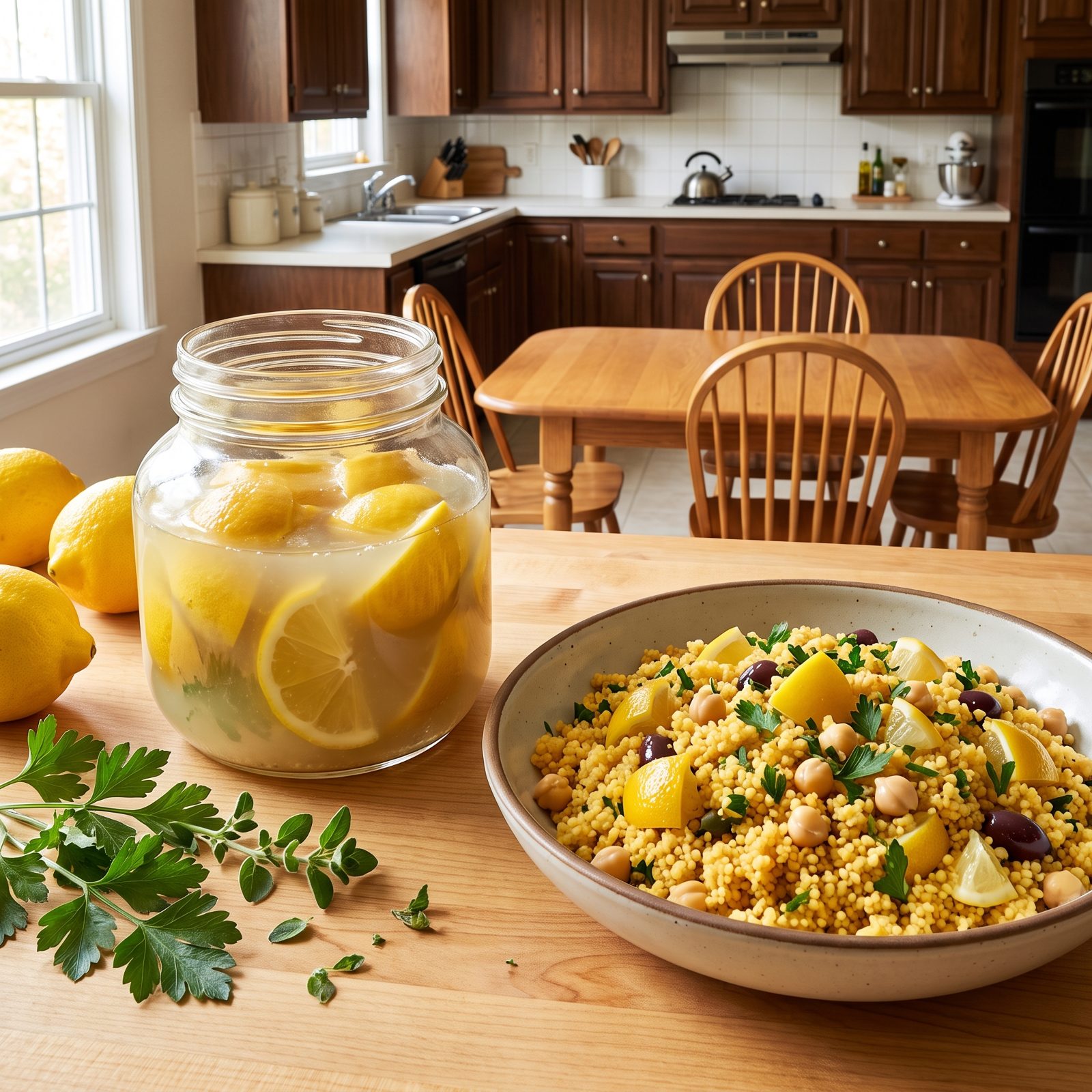
A grain bowl can be healthy and worthy and still taste like homework.
Preserved lemons fix that in one move. Months in salt turn the whole fruit soft, intense, and savory — bitterness gone, citrus cranked to eleven. You chop the rind fine and stir it through couscous, rice, or lentils, and the dull becomes bright and complicated. A jar keeps in the pantry basically forever. That’s the kind of ingredient that makes you look like you know something nobody taught you.
24. Tamarind Concentrate for Fast Sweet-Sour Sauces
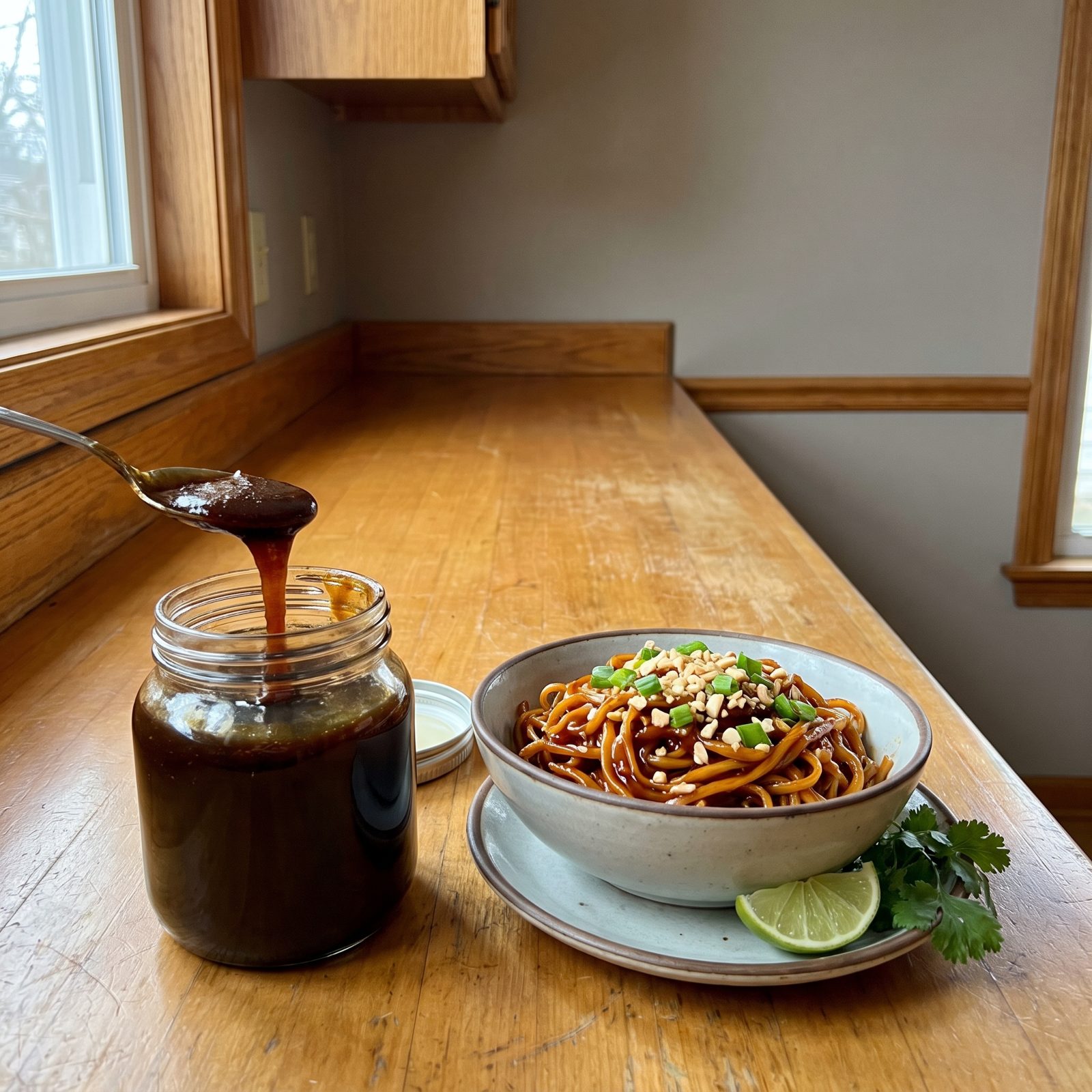
Tamarind is the sour-sweet backbone of pad thai, Worcestershire, and half the chutneys you’ve ever loved without knowing why. The concentrate puts that whole flavor in a jar you keep for a year.
A teaspoon stirred with a little sugar and fish sauce builds a complex sweet-sour glaze faster than you can chop an onion. It does something vinegar can’t — a fruity, almost date-like depth running under the tartness.
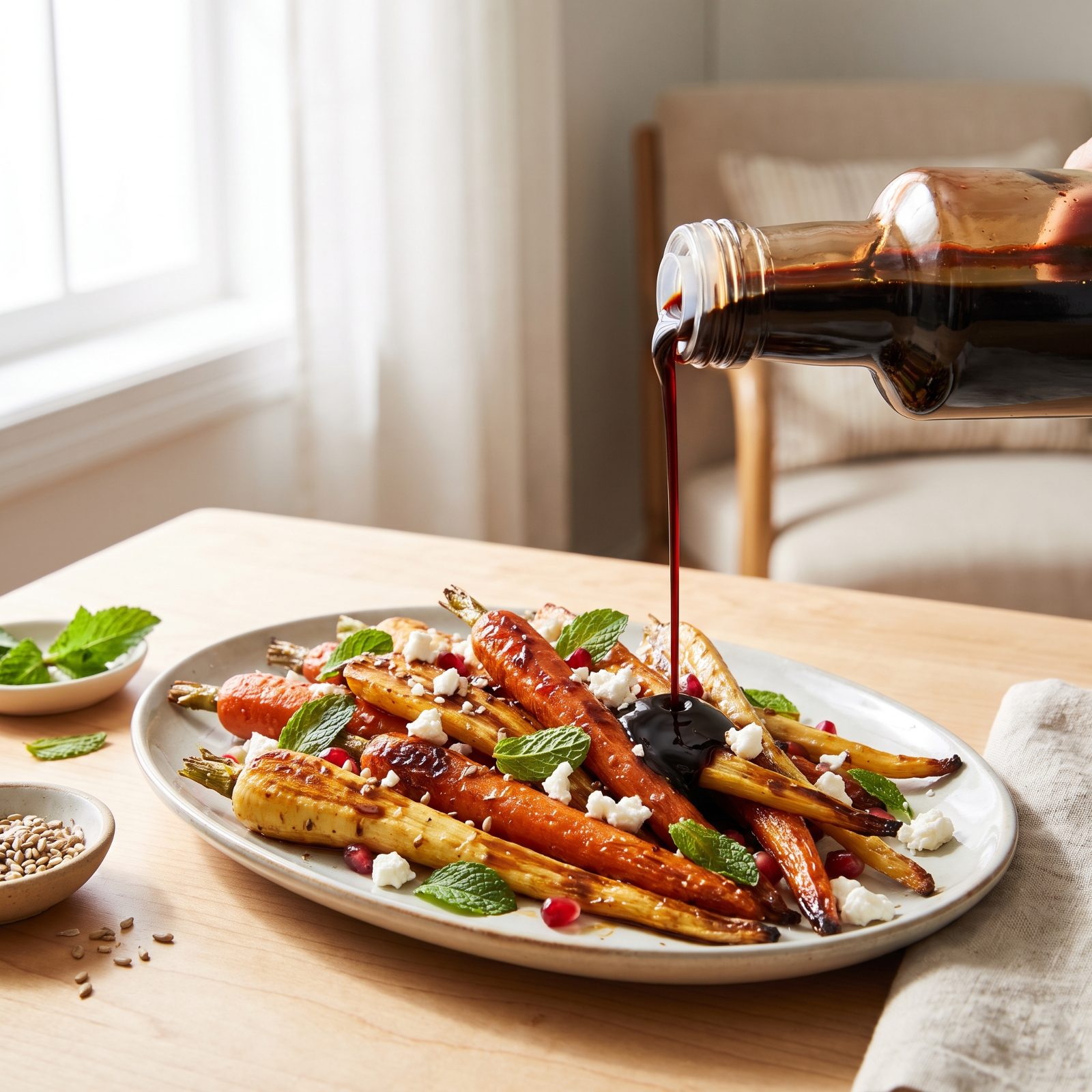
23. Pomegranate Molasses for Glazes and Dressings
Would you like to save this?
Picture balsamic’s richer, fruitier cousin: pomegranate juice boiled down to a dark, tart syrup that lands somewhere between sour cherry and red wine.
A drizzle over roasted vegetables fresh out of the oven turns a plain side into something people ask about. Whisk it into a vinaigrette and you’ve got a dressing with body and tang that store-bought can’t touch.
22. Marmite for Deepening Stews and Pan Sauces
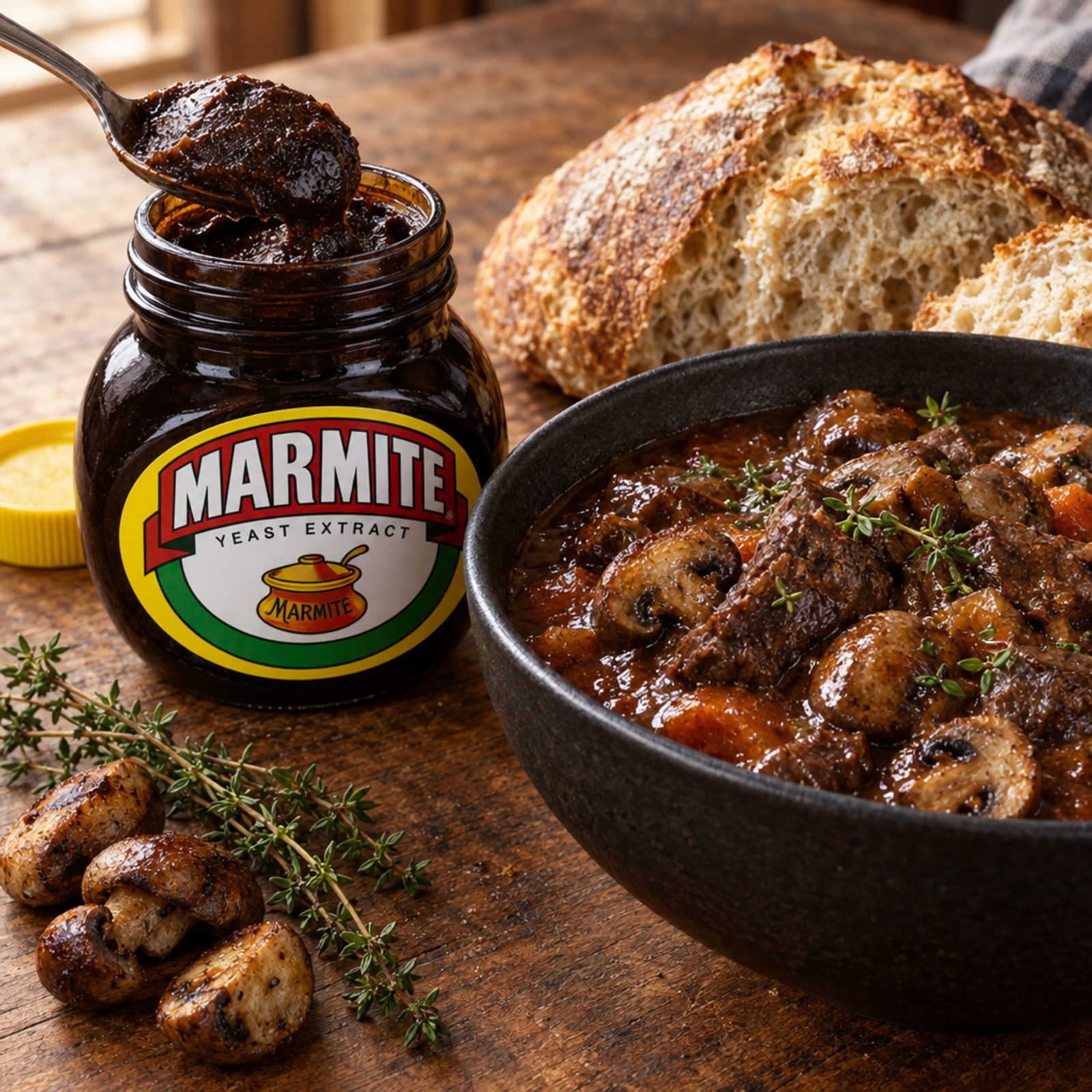
Americans love to hate Marmite, usually because somebody tried to eat a spoonful of it like it was peanut butter. That’s not what it’s for. A thumbnail-sized dab melted into a stew or a mushroom pan sauce vanishes completely and leaves behind pure, meaty savoriness.
This is the trick for making vegetarian dishes taste like they had bones in them, and for giving a beef stew an extra floor of depth you can’t quite name. Nobody at the table will know it’s there — which is exactly what you want.
21. Japanese Curry Roux Blocks for Instant Curry Night
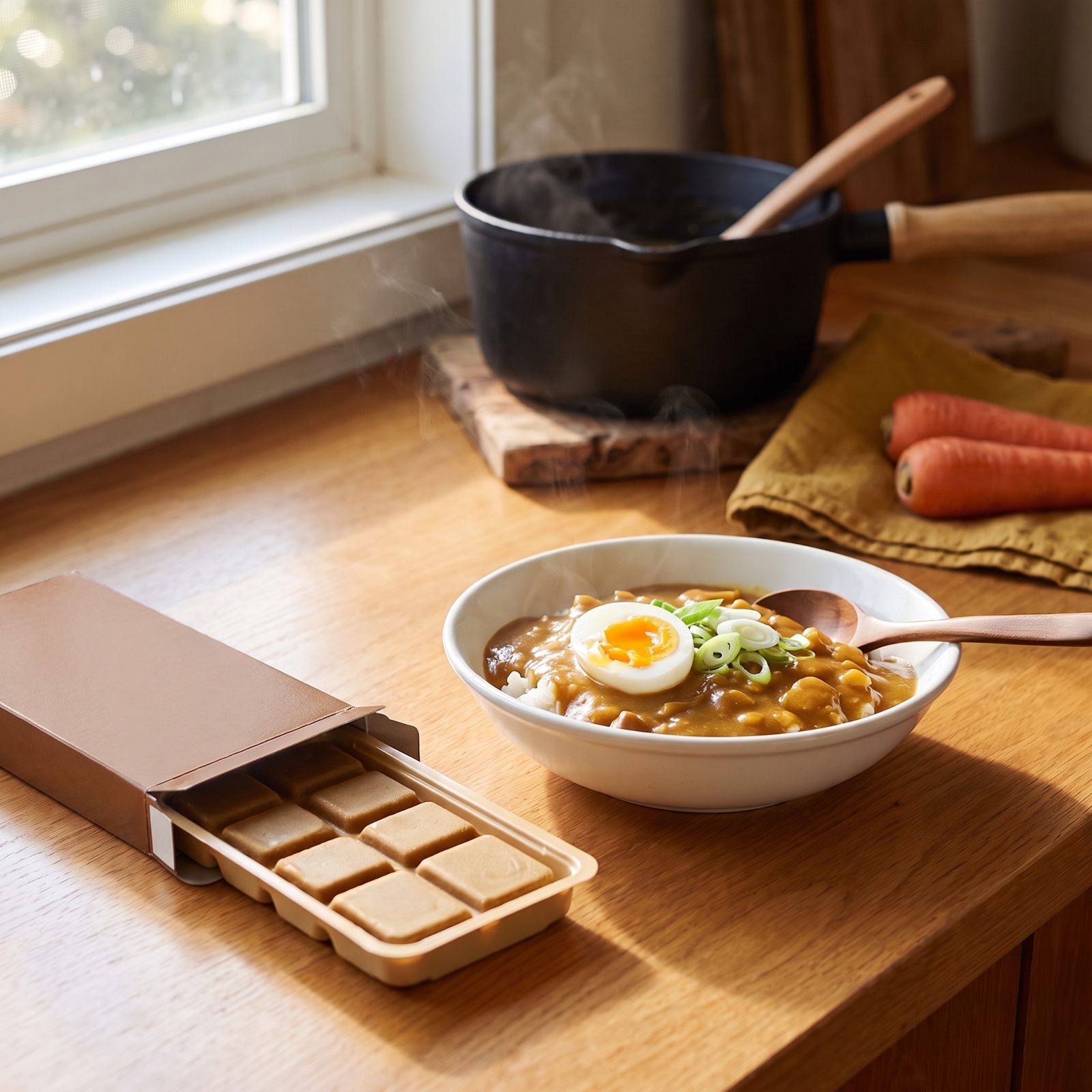
These pale tan little blocks look like squares of fudge and behave like a cheat code. You brown whatever protein’s around, add vegetables and water, then drop in a few squares and watch a flat pot of liquid thicken into something that tastes like it simmered all afternoon. It didn’t. Twenty minutes, tops.
The roux carries the flour, fat, spice, and umami built right in, so there’s no slurry to whisk and no spice rack to raid. Mild, medium, or hot — the box tells you. Keep one box in the pantry and dinner is never further away than a pot of rice.
20. Shaoxing Wine for Takeout-Style Stir-Fries

Your stir-fries taste a little hollow and you can’t figure out why. It’s this bottle. Shaoxing wine is what restaurant woks have that your home version doesn’t — a nutty rice wine that hits the hot pan and throws up a puff of aromatic steam that coats everything in reach.
A splash down the side of a screaming-hot pan does in two seconds what no amount of soy sauce can fake. It rounds off the sharp edges and lends the dish that savory depth you taste at the good place downtown and keep trying to reverse-engineer at home.
19. Dry Vermouth for Deglazing Pans Without Opening Wine
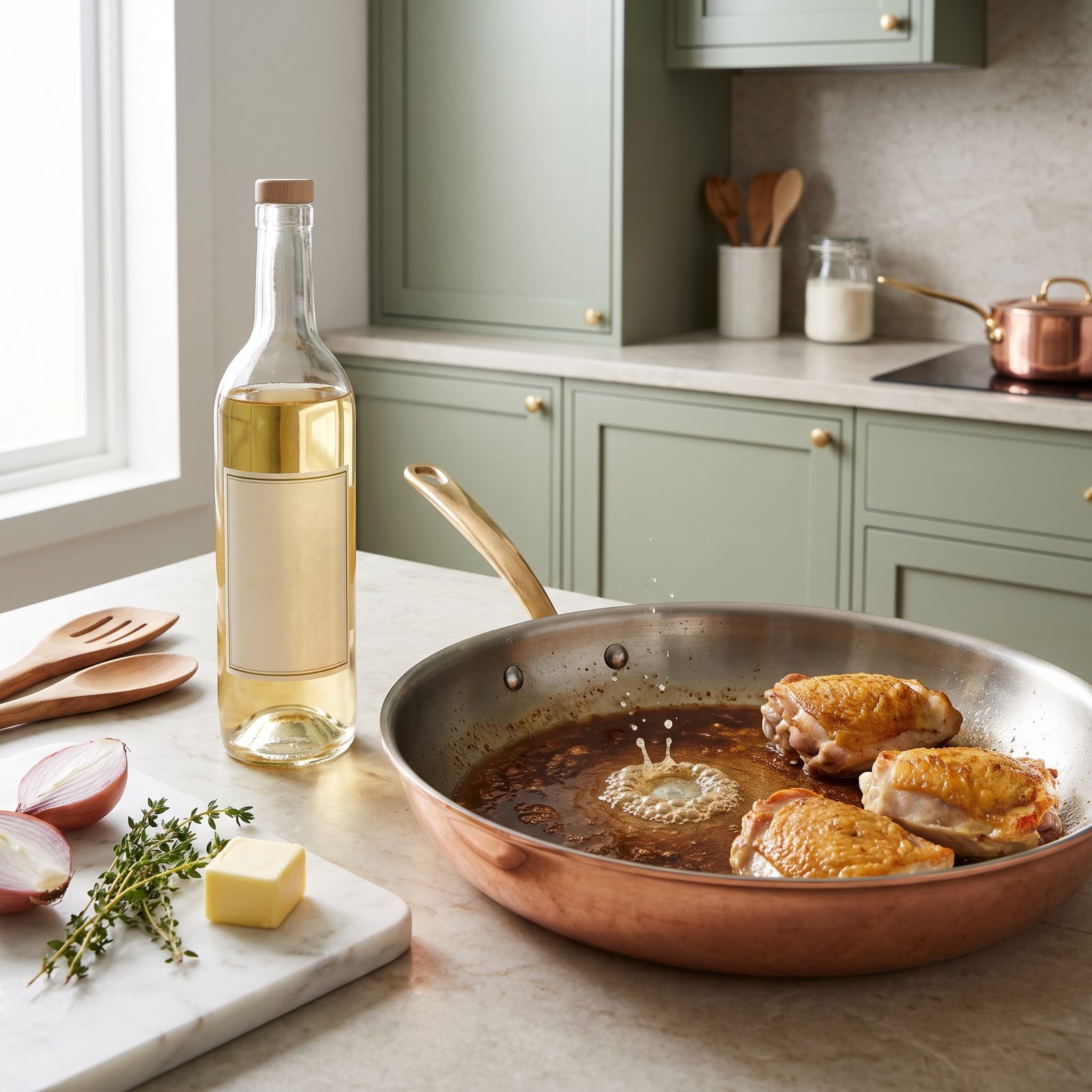
A full bottle of wine creates its own problem: you need a quarter cup to deglaze and the rest goes flat before you ever drink it. Dry vermouth sidesteps that. It’s fortified, so an open bottle holds up for months in the fridge instead of days.
It’s wine with an upgrade, really — laced with herbs and a touch more backbone. Pour a splash into a hot pan after you’ve seared something, scrape up the browned bits glued to the bottom, and that’s your sauce. Those bits are pure flavor, and most people wash them straight down the drain. Don’t. Deglaze.
18. Chinese Black Vinegar for Complex Sweet-Sour Dishes

Balsamic gets all the attention, but Chinese black vinegar quietly runs the kitchens you admire. It’s malty, almost smoky, with a sour note that’s rounder than regular vinegar and a faint sweetness hiding underneath.
A teaspoon stirred into a stir-fry sauce or a braise gives you that layered sweet-sour thing that would otherwise take three ingredients to build. It’s the backbone of good dumpling dipping sauce and the quiet secret in a lot of noodle bowls. Start small — it’s assertive, and you’re after depth, not pucker.
17. Fish Sauce for Deepening Soups and Marinades

The smell scares people off, which is a shame, because the second it hits heat the funk vanishes and leaves pure savory depth behind. Fish sauce is salt with a personality. A few drops in a pot of soup, a chili, even a pan of greens, and suddenly the dish tastes like it has a bottom to it.
Nobody at the table will ask whether you snuck fish sauce in. They’ll just say the soup tastes richer than usual. Use it like salt, not like a flavor. A little disappears into everything and props the whole thing up.
16. Calabrian Chile Paste for One-Spoon Heat
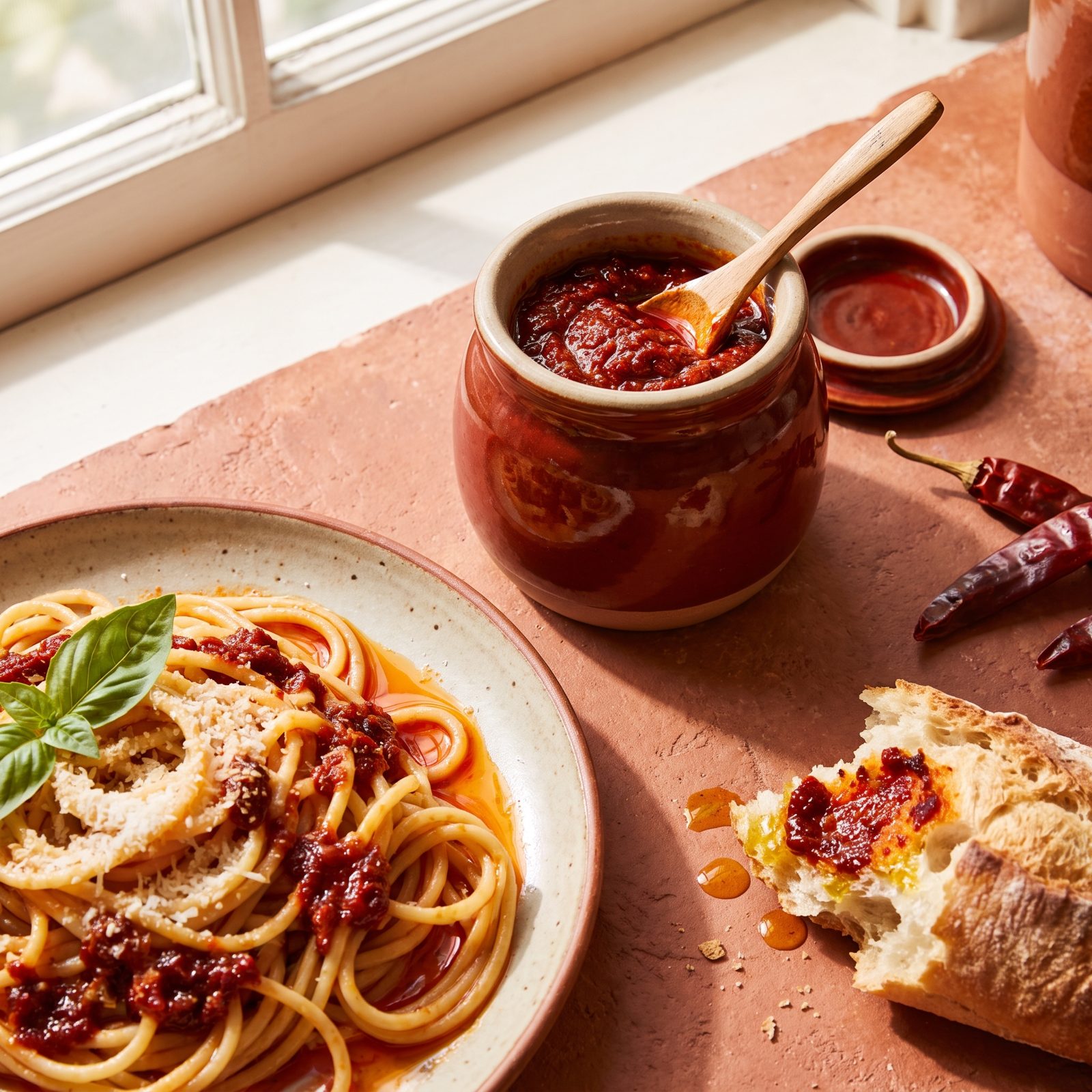
Hot sauce brings heat and vinegar. Calabrian chile paste brings heat, fruit, smoke, and a little oil that carries all of it into whatever you’re cooking. One spoonful off the jar changes a whole pot.
Stir it into pasta, swipe it on a sandwich, melt it into a pan sauce, whisk it into mayo until the sandwich tastes like a restaurant made it. The heat is warm and rolling rather than sharp. This is the jar that quietly fixes “this tastes kind of boring” across a dozen different dinners.
15. Giardiniera for Punchy Sandwiches and Pasta
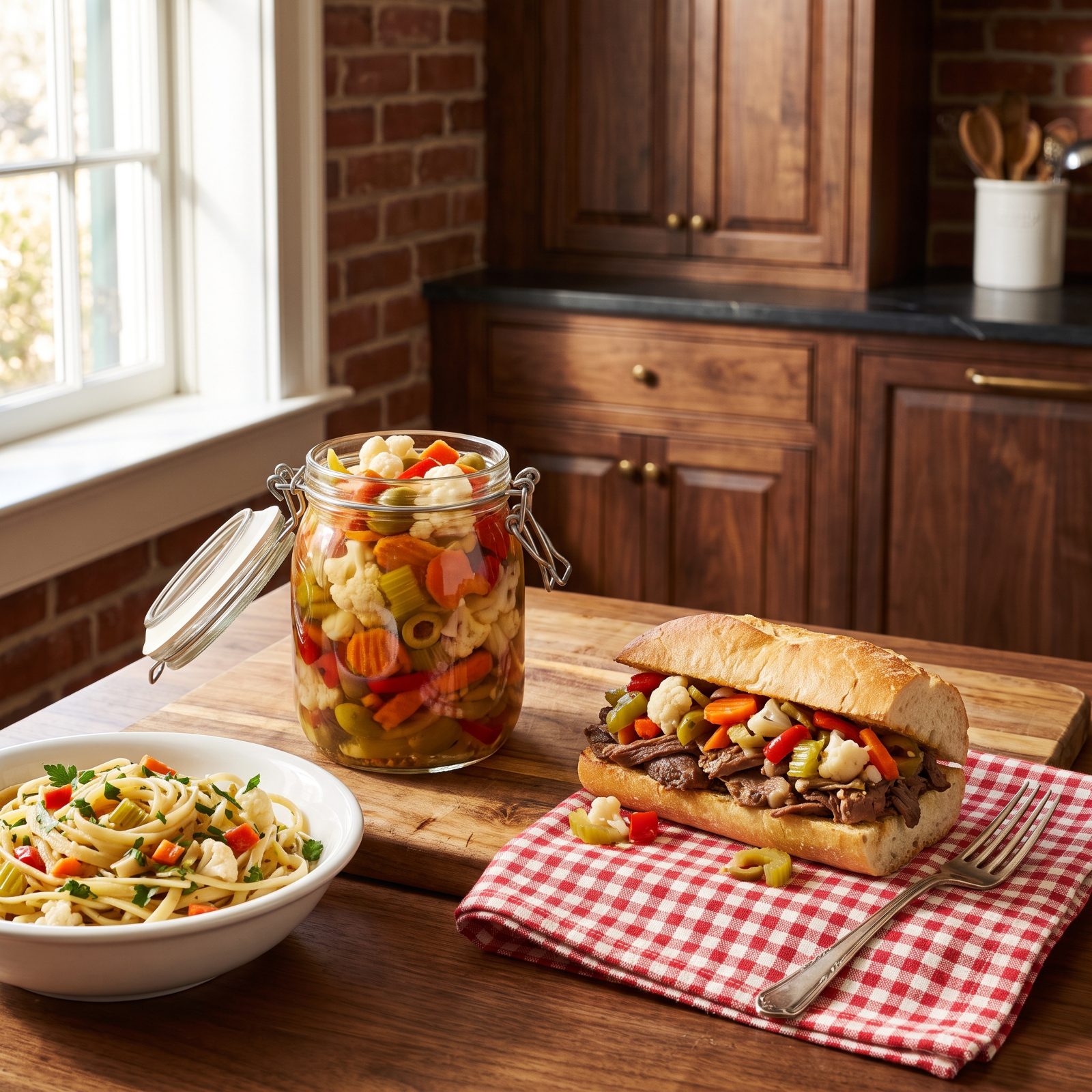
Anyone who grew up near a Chicago Italian beef stand already knows what this jar does. For everyone else: giardiniera is chopped vegetables pickled in oil and spice, and it’s the fastest route from a sad sandwich to an interesting one.
Crunch, heat, acid, salt — all in a single spoon. Pile it on a cold-cut sub. Fold it into tuna salad. Chop it and toss it through hot pasta with a little of its oil and some parmesan, and you’ve got dinner before the water even finishes boiling. Buy the hot kind. The mild kind is for people who are scared, and life is short.
14. Jarred Roasted Peppers for Ready-to-Blend Sauces
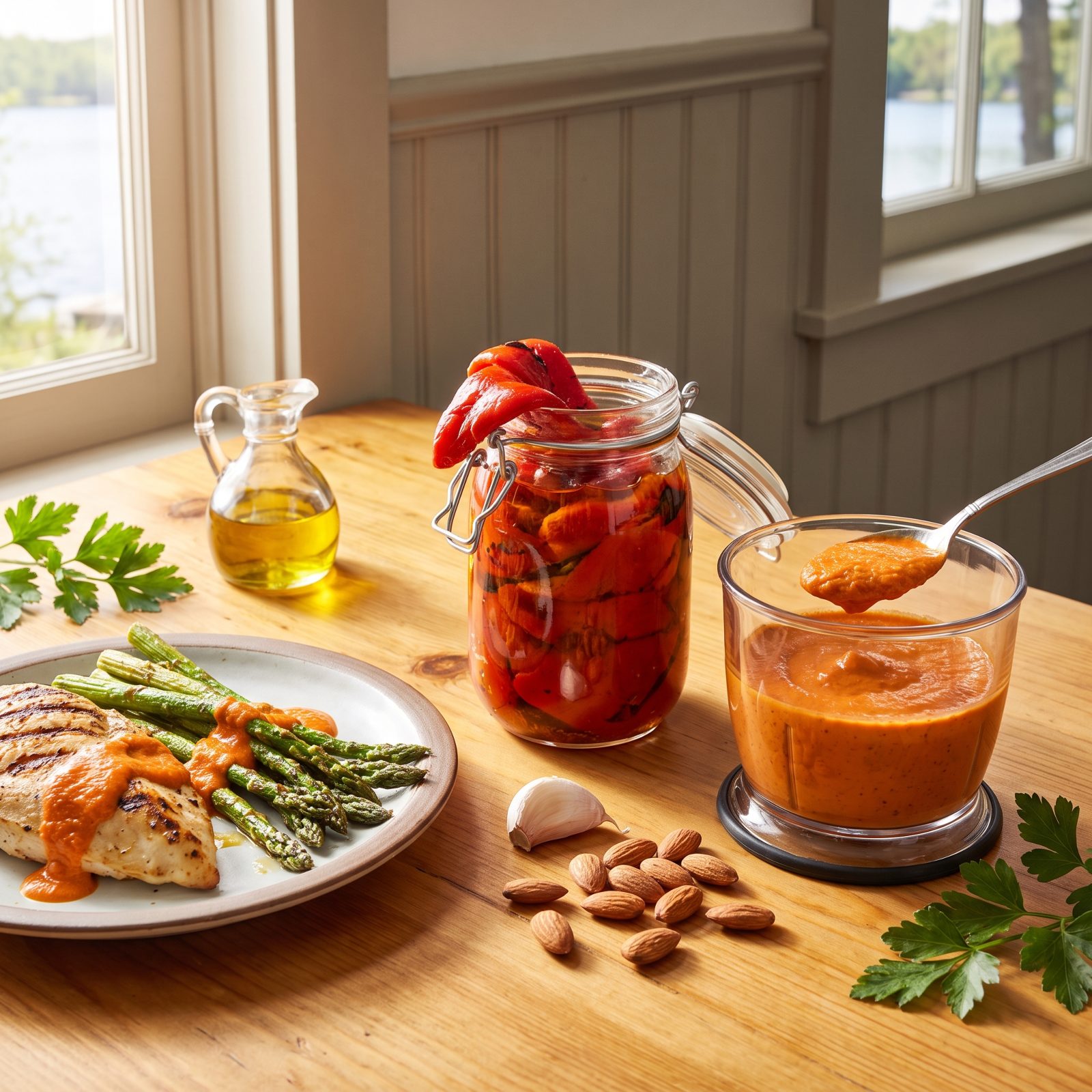
Roasting peppers yourself means charring them over a flame, steaming them in a bag, then peeling off the skin with your fingers while they’re still too hot to hold. Genuinely satisfying. Nobody has time for it on a Tuesday.
The jarred ones come already roasted, peeled, and soft. Blend them with garlic, almonds, and olive oil for a romesco that makes grilled chicken feel like a meal, or stir them into tomato sauce when it needs more weight. Lay them on a sandwich straight from the jar. They’ve handled the slow part so you don’t have to.
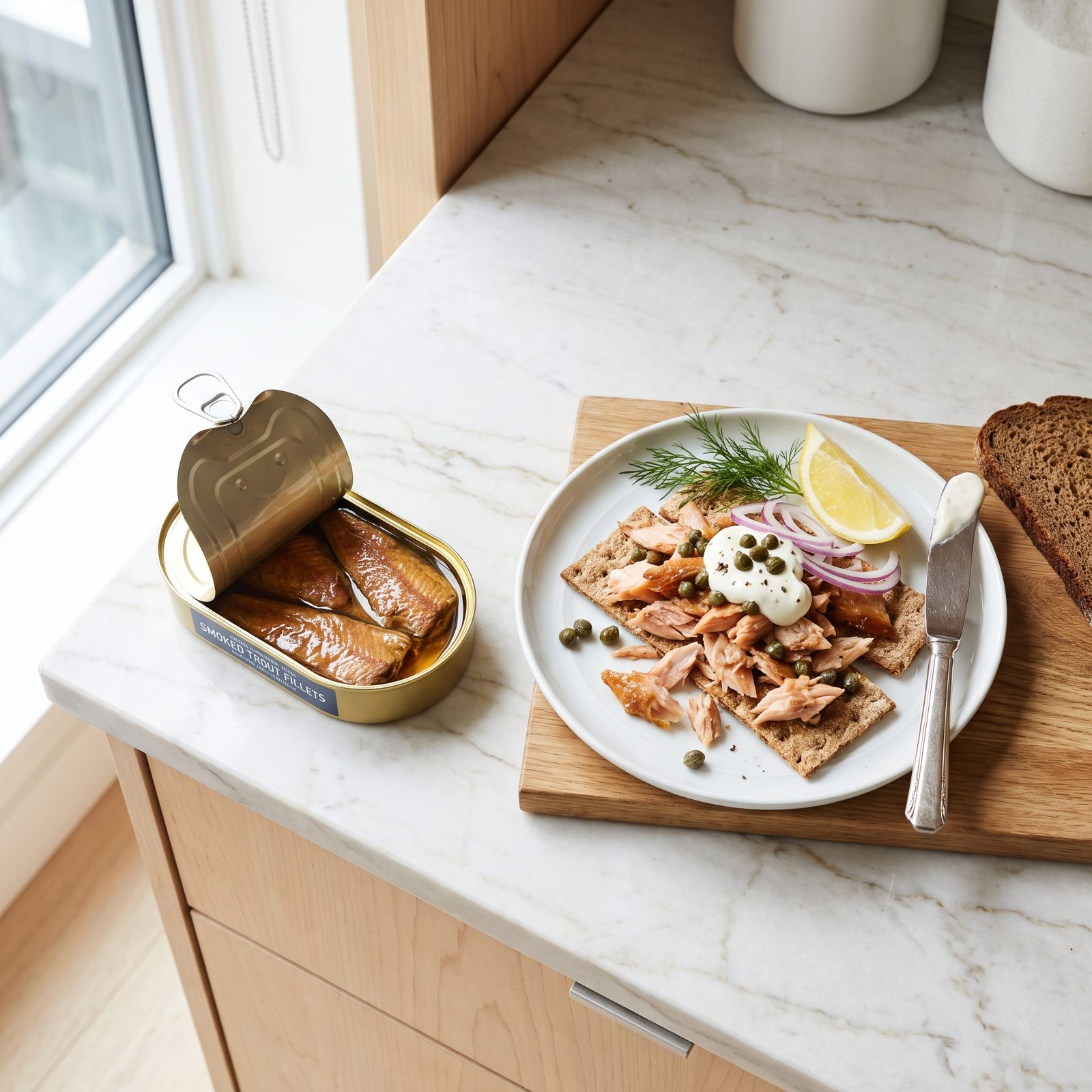
13. Canned Smoked Trout for No-Cook Dinner Plates
Would you like to save this?
Tinned fish had its big moment and the crowd mostly stopped at anchovies and sardines. Smoked trout is the one worth your attention — tender, mildly smoky, the best friend an evening with no energy ever had.
Flake it over toasted bread with a smear of cream cheese and a few capers. Fold it through warm potatoes. Scatter it on a salad with lemon and dill and call it a plate. No stove, no cleanup, and it tastes like you tried harder than you actually did. Which is, let’s be real, the whole draw.
12. Canned Hominy for Hearty Soups and Skillet Meals
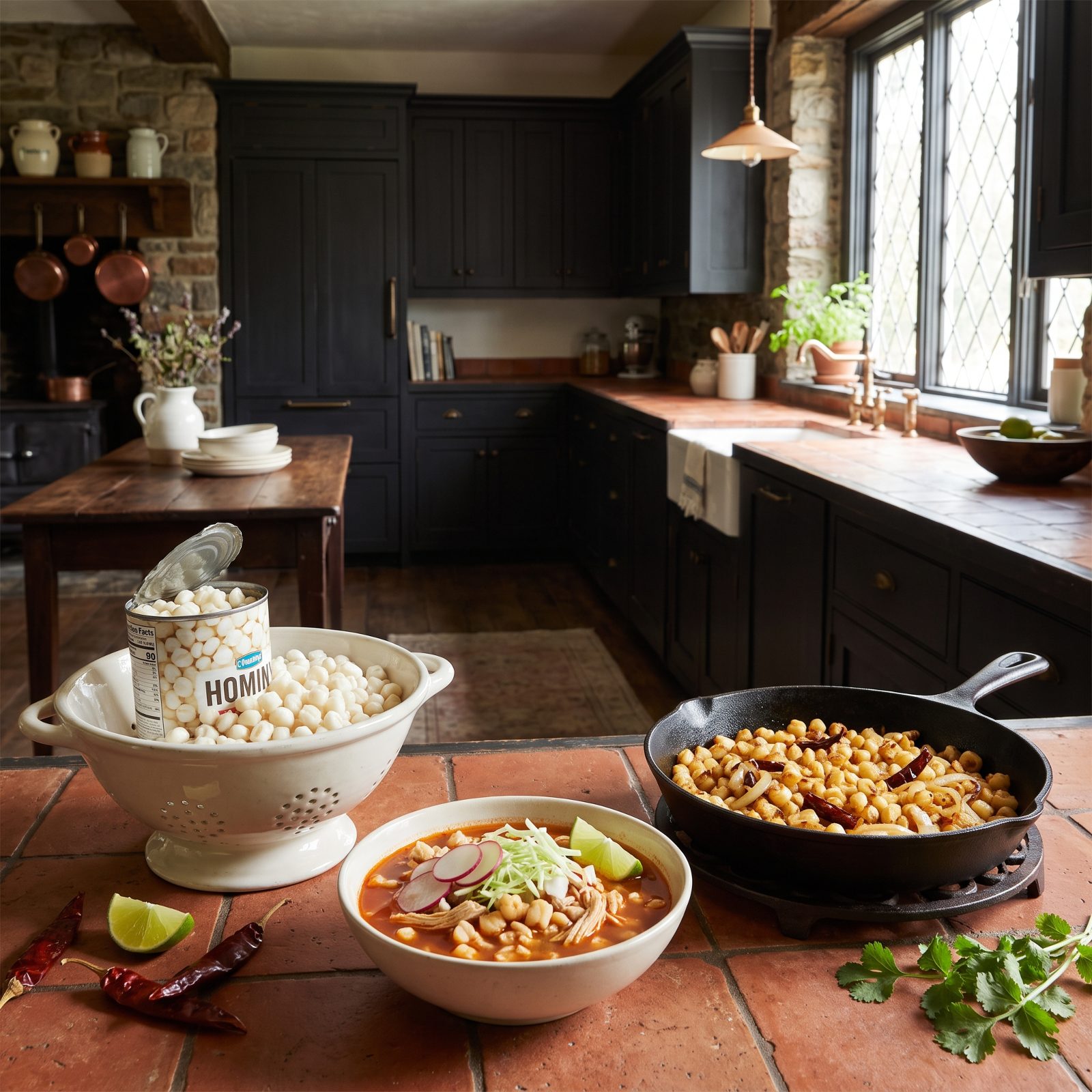
Hominy is corn kernels treated with lime until they swell up fat and chewy, and the can holds something nothing else in the pantry quite matches. Heartier than beans. More interesting than rice.
Dump it into a brothy soup and you’re most of the way to posole with barely any effort. Or crisp it in a hot skillet with onions and chile until the edges brown, and it turns into a side dish people keep asking about. It gives body to a thin meal and a texture — part tender, part toothsome — that makes a fast dinner feel like it actually has substance.
11. Shelf-Stable Gnocchi for Emergency Skillet Dinners
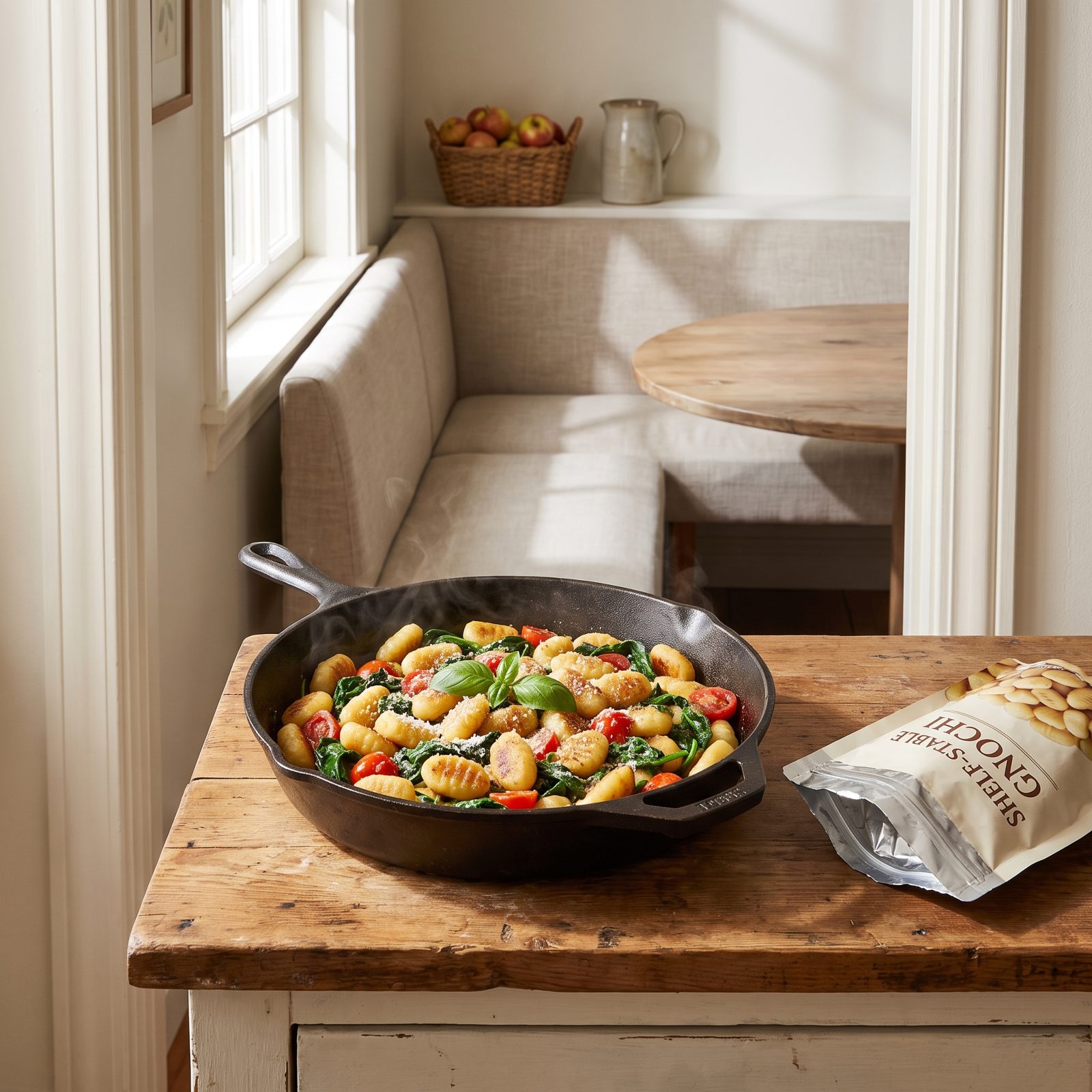
Forget boiling it. The move nobody tells you is to skip the water entirely and pan-fry shelf-stable gnocchi straight from the pouch in a little oil until the outsides go crisp and golden and the insides stay pillowy. Ten minutes, one pan, zero planning.
It keeps for months in the cupboard, which makes it the closest thing to a frozen pizza you can dress up. Throw in whatever’s dying in the crisper drawer, a handful of cheese, done. One bag can turn a genuinely sad fridge into a real dinner.
10. Water Chestnuts for Effortless Crunch
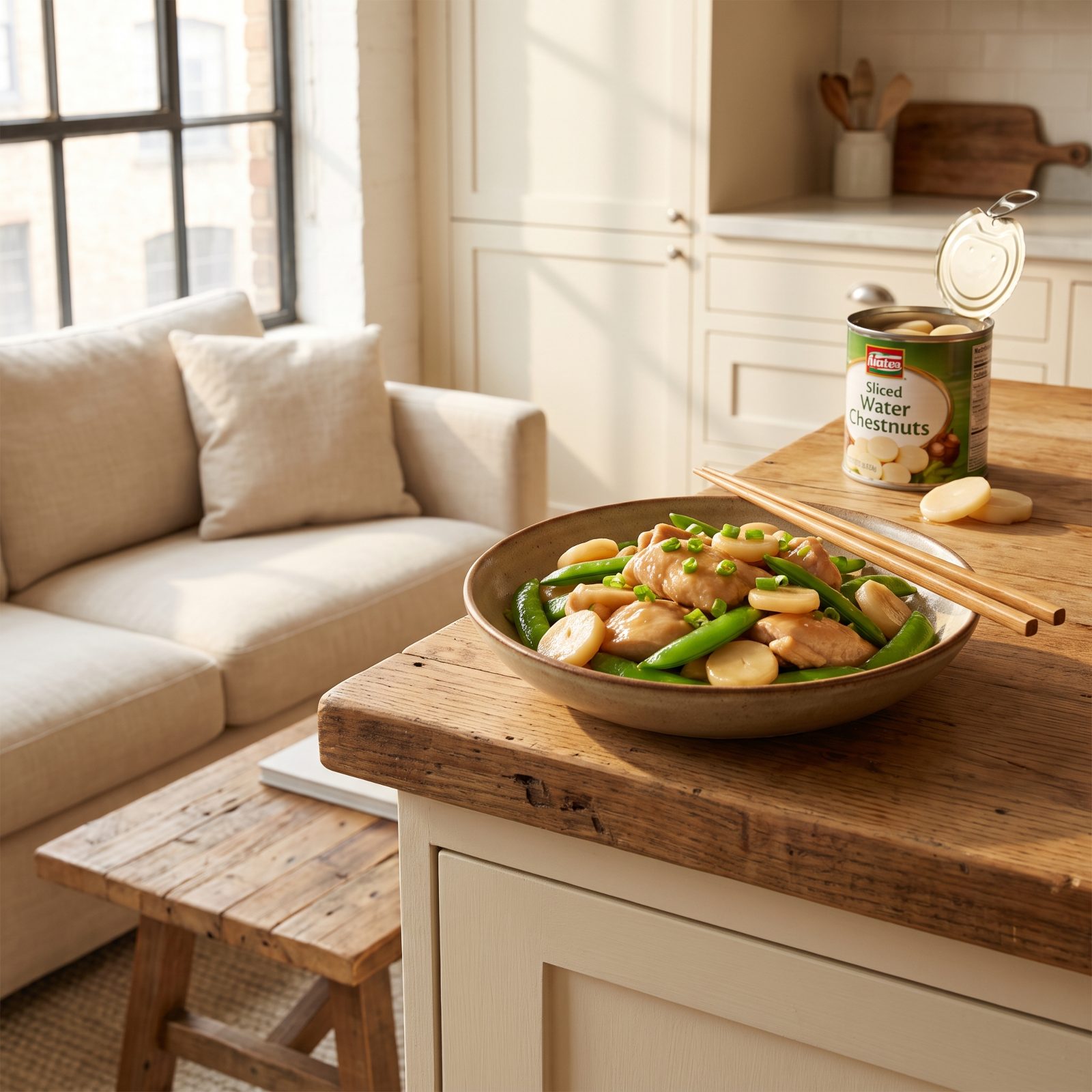
Here’s the strange thing about water chestnuts. They stay crunchy no matter what you do to them — boil them, stir-fry them, fold them into a casserole, and they hold that crisp snap through all of it. Almost nothing else in the can aisle can say that.
A can lives in the pantry for years and costs next to nothing. Chop them into chicken salad, scatter them through fried rice, tuck them into lettuce wraps. Any dish that feels soft and samey gets a little spark of texture back.
9. Crispy Fried Shallots for Instant Crunch
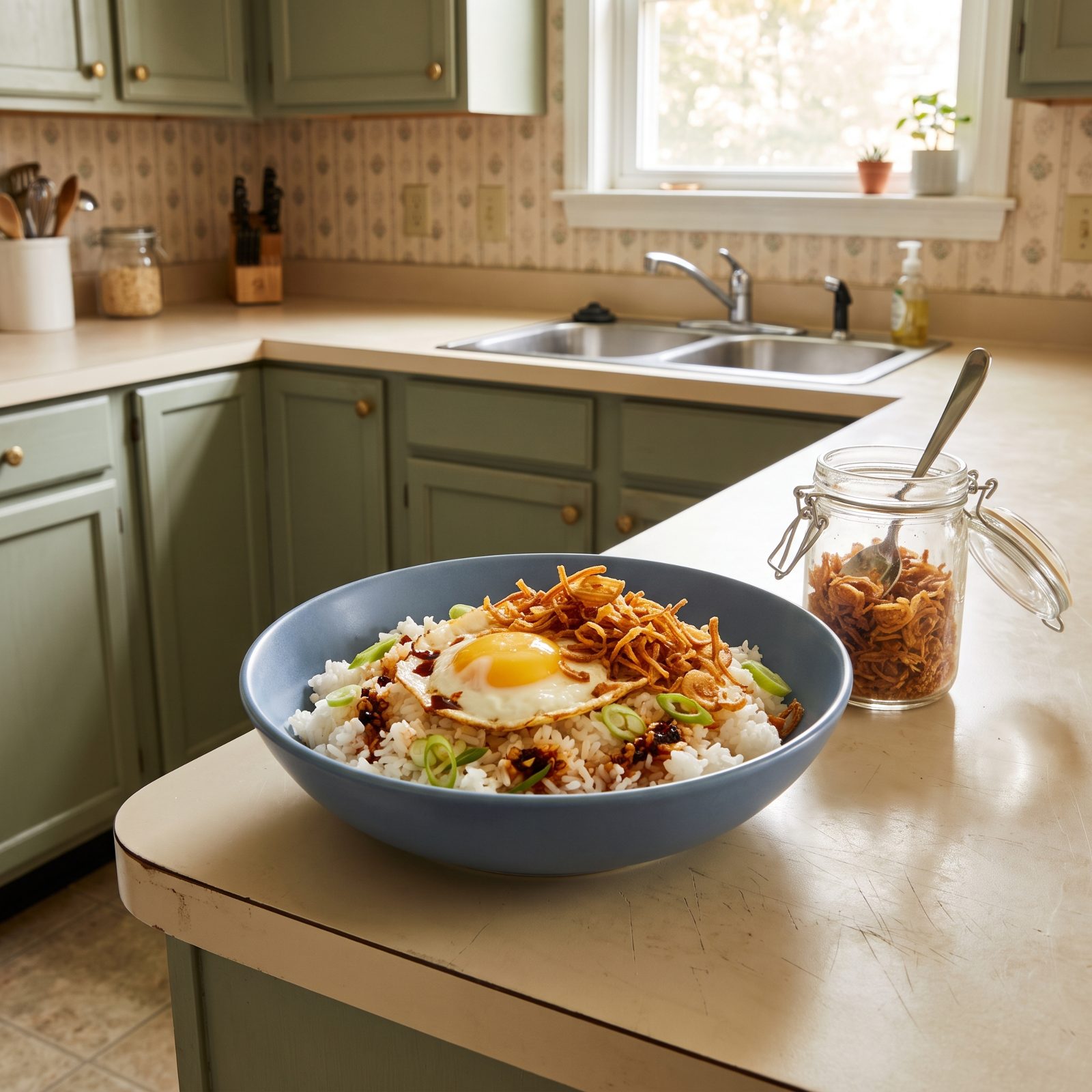
This is the single best upgrade in the entire pantry for the least effort. Fried shallots already did the hard part. Somebody sliced them paper-thin and fried them to a shatter, and now they live in a jar, ready to make anything taste like it got a finishing touch.
Spoon them over rice, soup, noodles, a fried egg, roasted vegetables, even a baked potato. They bring crunch and a sweet, toasty onion flavor you’d otherwise spend twenty minutes building from scratch. Once a jar is open it’s gone fast, so buy two.
A good finishing crunch is the difference between food that’s fine and food you actually remember.
8. Furikake for Finishing Rice, Eggs, and Vegetables
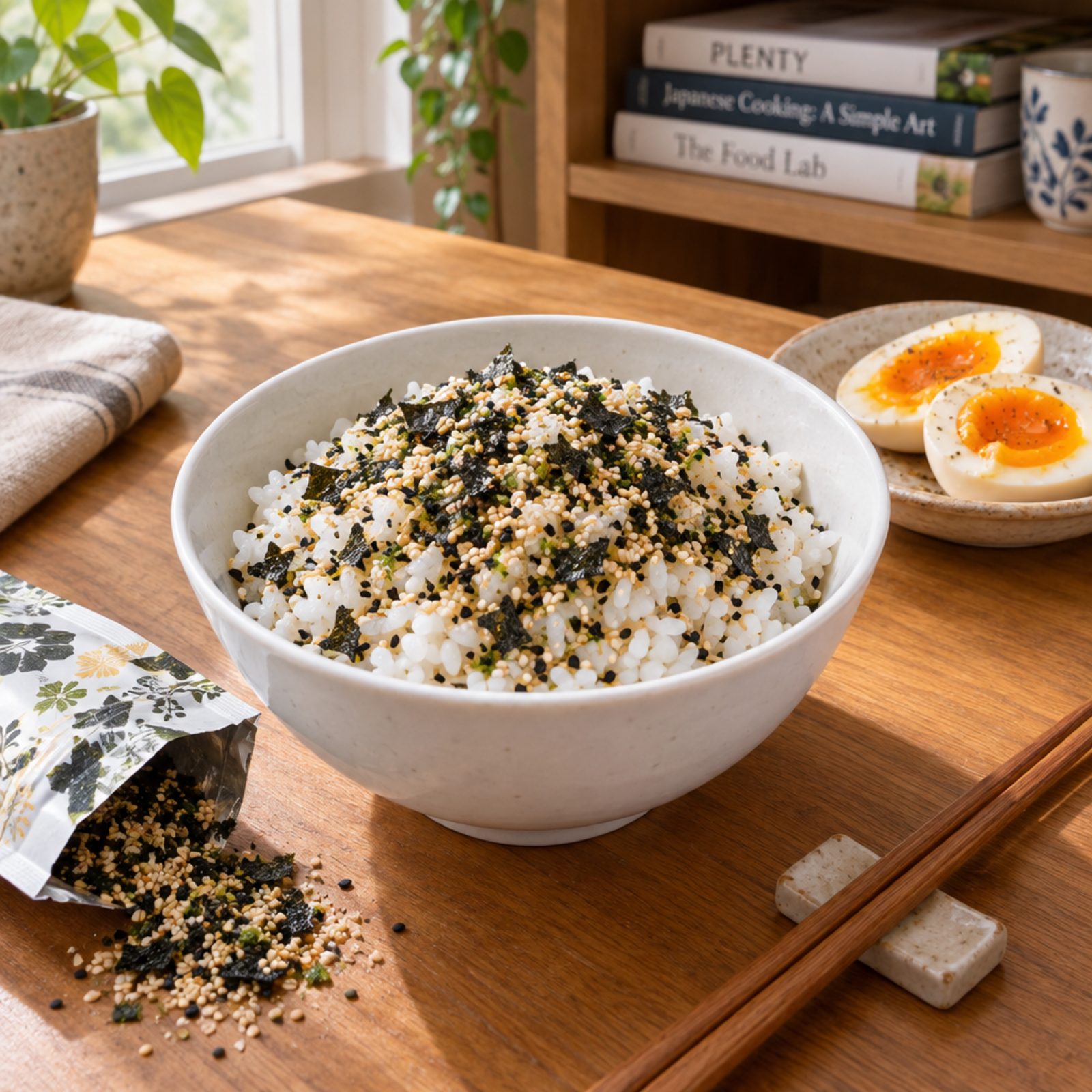
Furikake is the Japanese rice seasoning that tastes like the ocean and toasted sesame had a very good idea together. Seaweed, sesame seeds, salt, sometimes bonito or a little sugar, all dried and ready to shake.
A pinch turns plain rice into something you’d actually order. The real trick, though, is using it everywhere else: on scrambled eggs, over roasted broccoli, dusted on buttered toast, stirred into popcorn. Savory depth and a toasty crunch, and nothing had to cook.
7. Nutritional Yeast for Savory, Cheese-Free Flavor
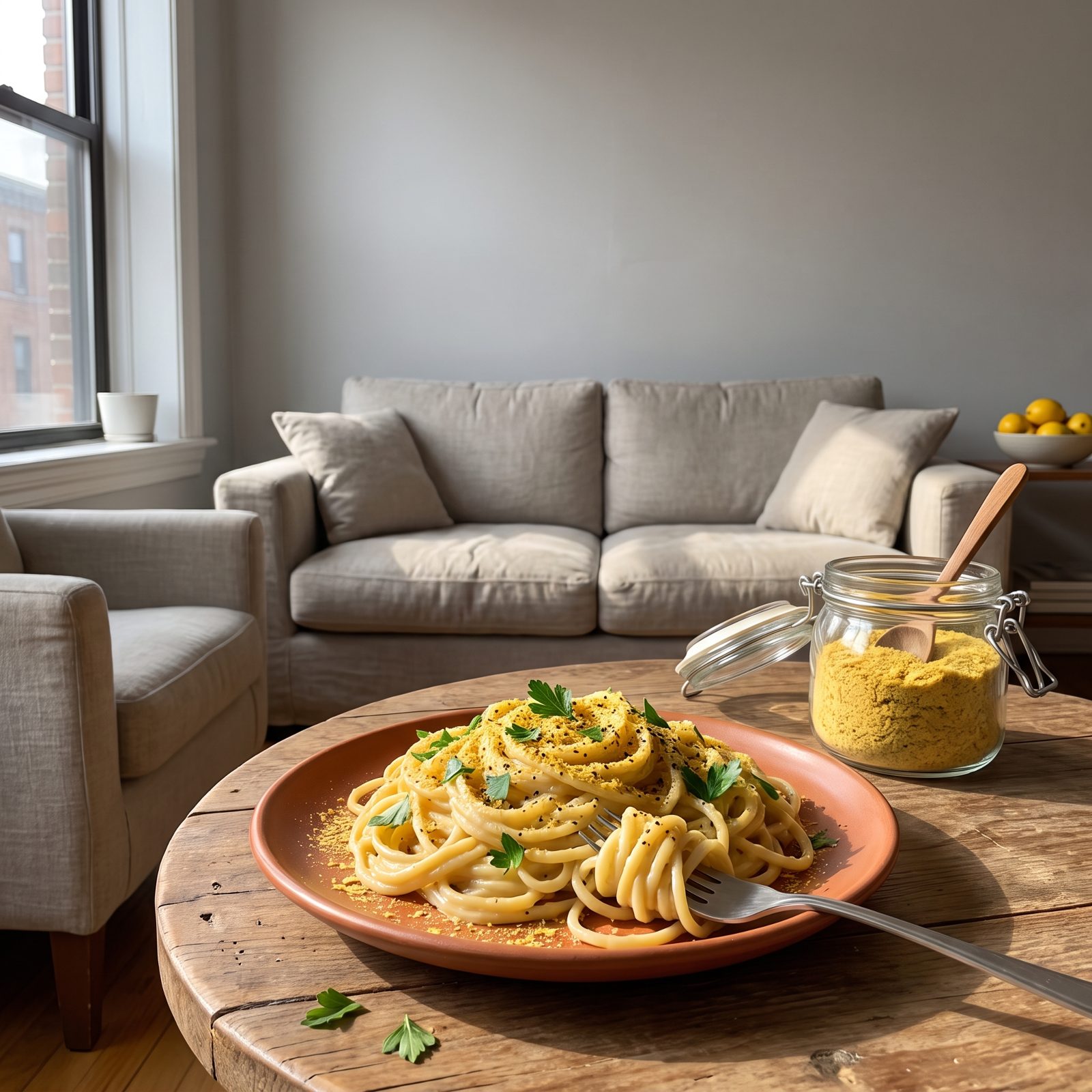
The name does it no favors. Nutritional yeast sounds like something a health-food store would try to make you choke down, and for years that’s exactly why it sat untouched in a lot of cupboards.
What it actually tastes like is cheese and roasted nuts. Those pale yellow flakes bring a deep savory, almost parmesan punch to anything without a scrap of dairy. Stir it into a cream sauce, dust it over popcorn, whisk it into mashed potatoes. It costs a fraction of good parmesan and never goes bad. Ignoring it is a mistake.
6. MSG for Making Simple Food Taste Complete

Let me just say it: MSG is not the villain somebody told you it was. The scare stories from decades back never held up to real research, and plenty of chefs you admire have been reaching for it the whole time.
What it does is deliver glutamate — the same savory compound in parmesan, mushrooms, and tomatoes — in pure form. A small pinch makes soup taste like it simmered all day, makes roasted vegetables taste meatier, makes a bland sauce click into place. It’s the thing a dish is missing when you can’t put your finger on what’s missing.
5. Liquid Smoke for Indoor Barbecue Flavor

No smoker, no backyard, no eight hours to spare. A few drops of liquid smoke give you the campfire flavor anyway, out of a bottle no bigger than your vanilla.
It’s real smoke, condensed from burning wood and bottled, not some chemical trick. The whole secret is restraint. A tiny bit goes into baked beans, chili, a weeknight pot of braised pork, and suddenly the kitchen smells like a barbecue joint. Too much and you’ve got an ashtray. Start with less than you think.
4. Unsweetened Cocoa Powder for Darker Chili
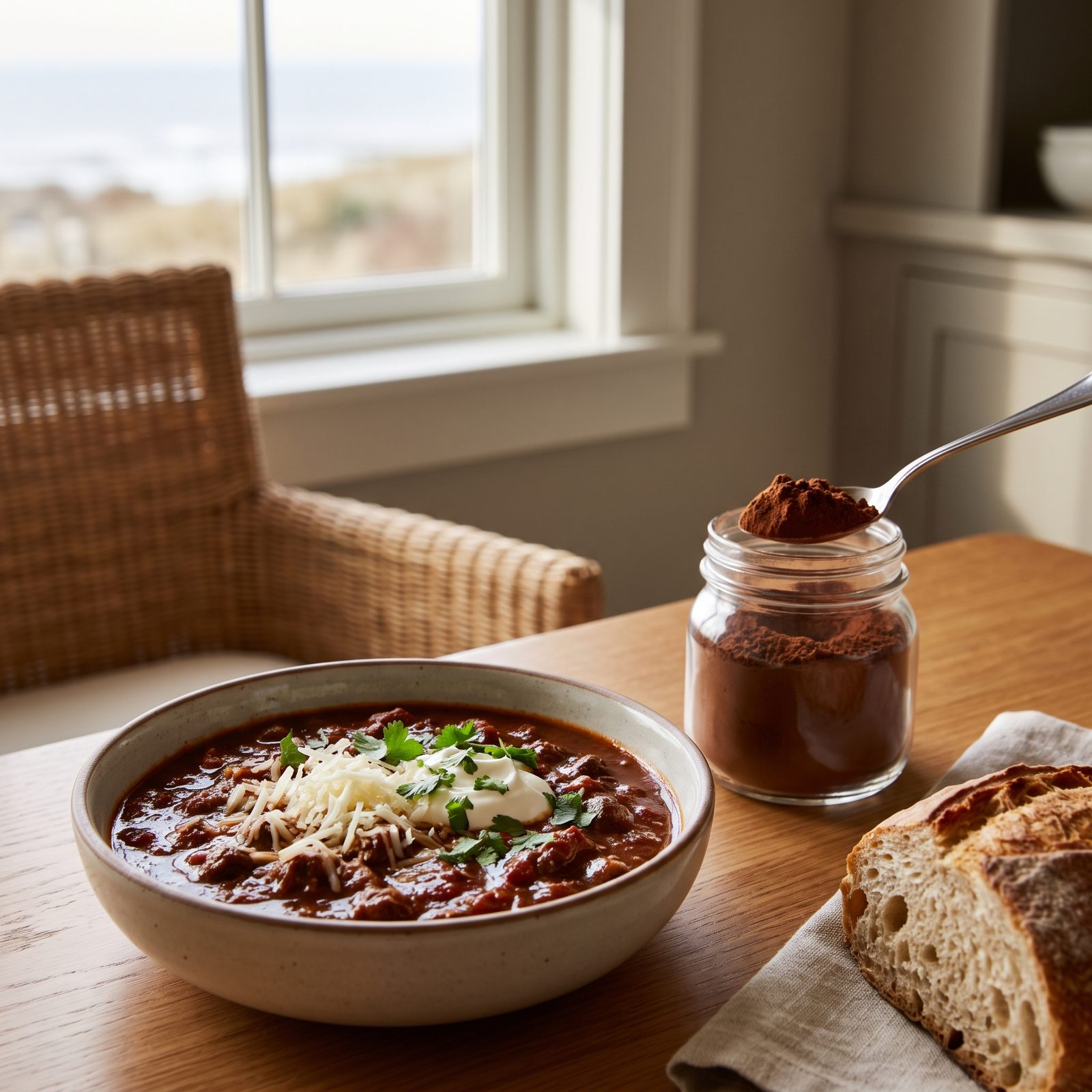
A spoonful of unsweetened cocoa in a pot of chili is one of those moves that sounds wrong until the first taste. It doesn’t make chili taste like chocolate. It makes it taste darker, rounder, like it cooked for hours.
Cocoa brings a bitter, earthy depth that balances the acid in the tomatoes and the heat of the chilies. Same move works in mole, in beef stew, in any long-simmered red-sauce dish that tastes a little flat. Nobody will guess it’s in there, which is half the fun.
3. Prunes for Rich, Balanced Braises
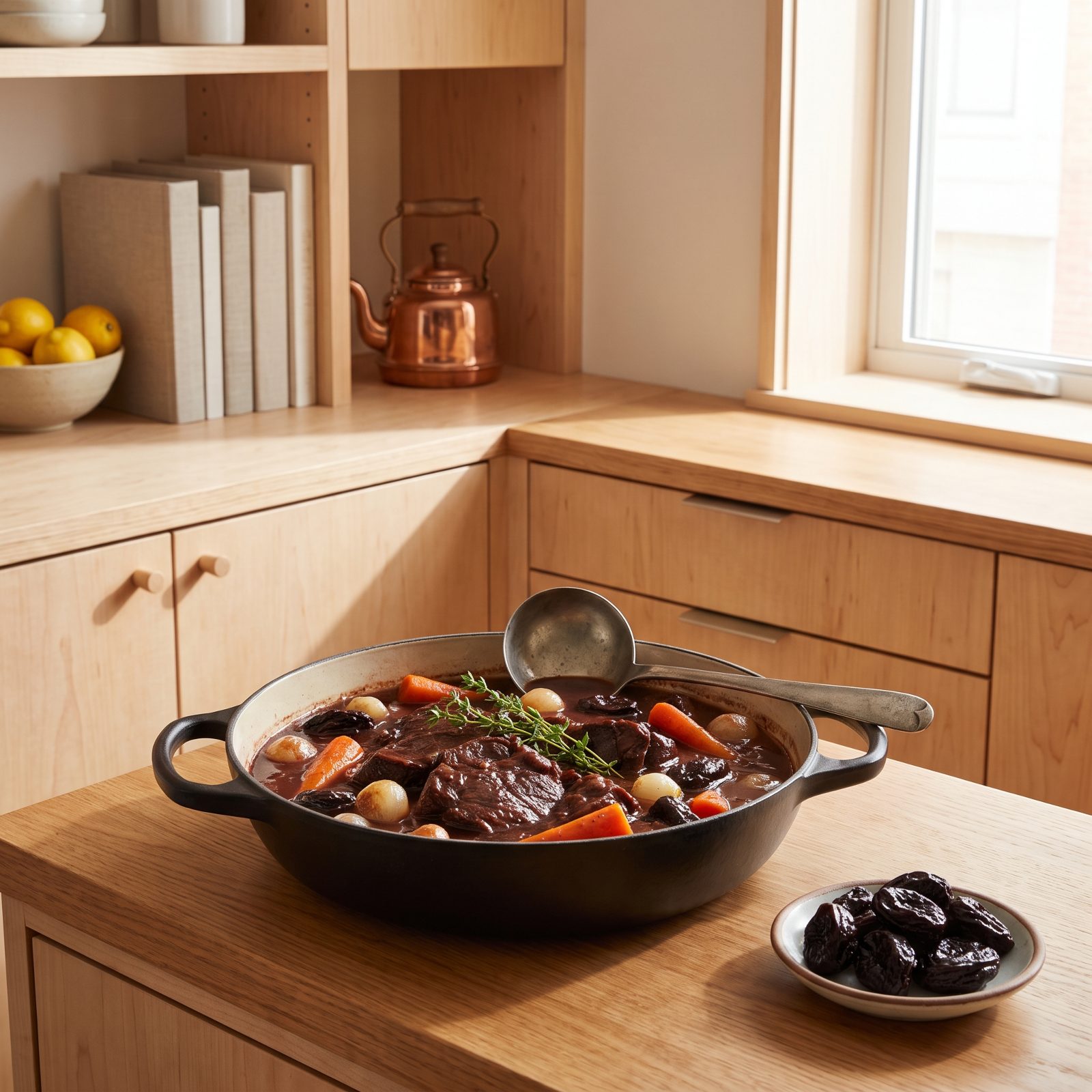
Prunes have a reputation. Most people keep them around for reasons that have nothing to do with dinner, which is a shame, because they’re one of the best secret weapons a braise ever had.
Drop a few whole into a pot of beef or lamb and they melt down over the cooking time into a dark, jammy sweetness that thickens the sauce and balances all that richness. Cooks across North Africa and Eastern Europe have known this forever. The prunes don’t read as fruit in the finished dish — they read as depth, the kind that usually takes a splash of wine and a long reduction to get.
2. Boxed Stuffing Mix for Crunchy Casserole Toppings
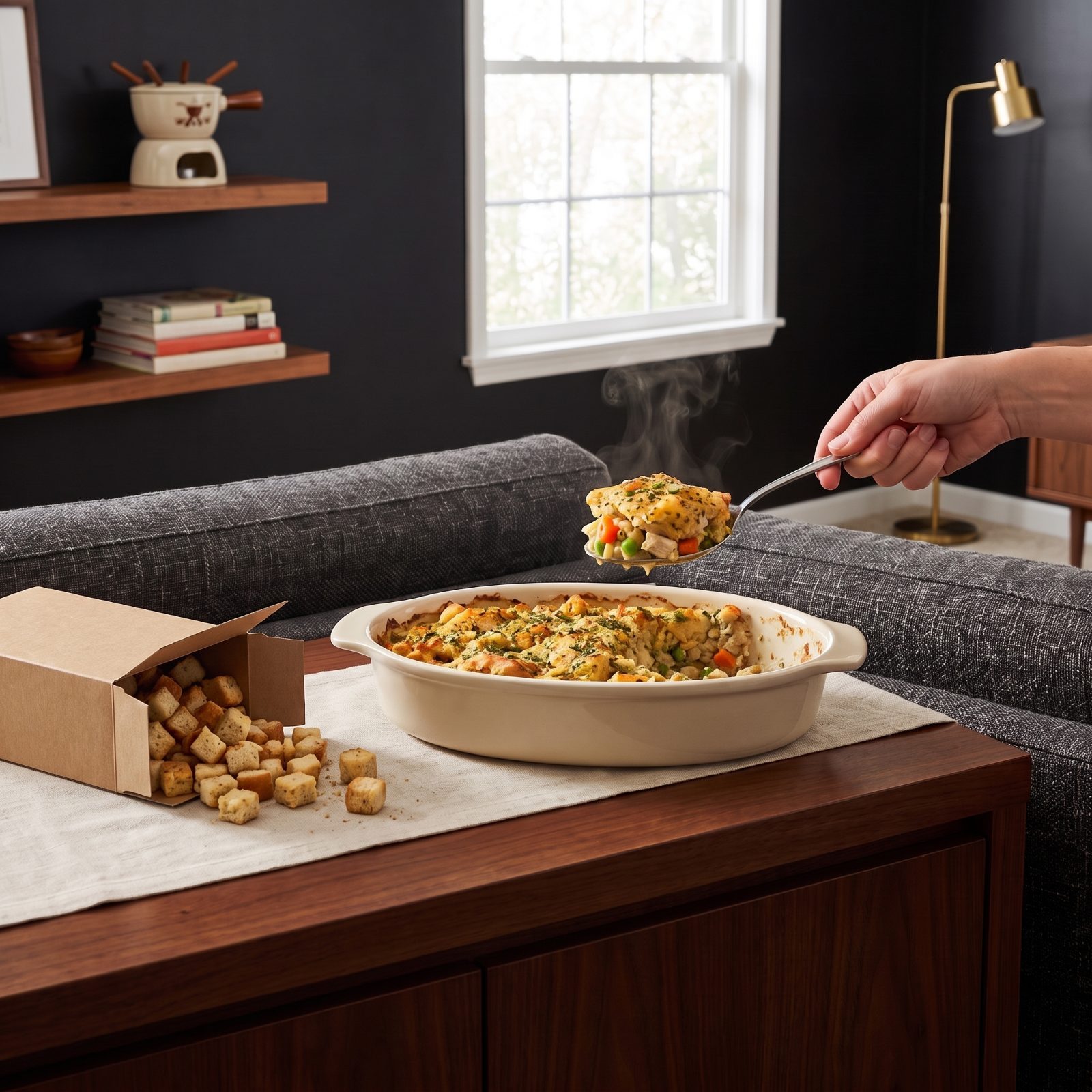
Why crush crackers or make breadcrumbs from scratch when a box of stuffing mix already did the seasoning for you? Those dry, herb-coated bread cubes are breadcrumbs with a built-in flavor bonus, and they go gloriously crunchy under the broiler.
Crush a handful over any casserole, dot with butter, bake until golden. Now you’ve got a crisp, savory, Thanksgiving-adjacent top on a Tuesday-night tuna bake. It also stretches into a fast coating for baked chicken. One box, many jobs, and it waits patiently in the pantry until you need it.
1. Ranch Seasoning Powder: The Shortcut Hiding in Your Spice Drawer
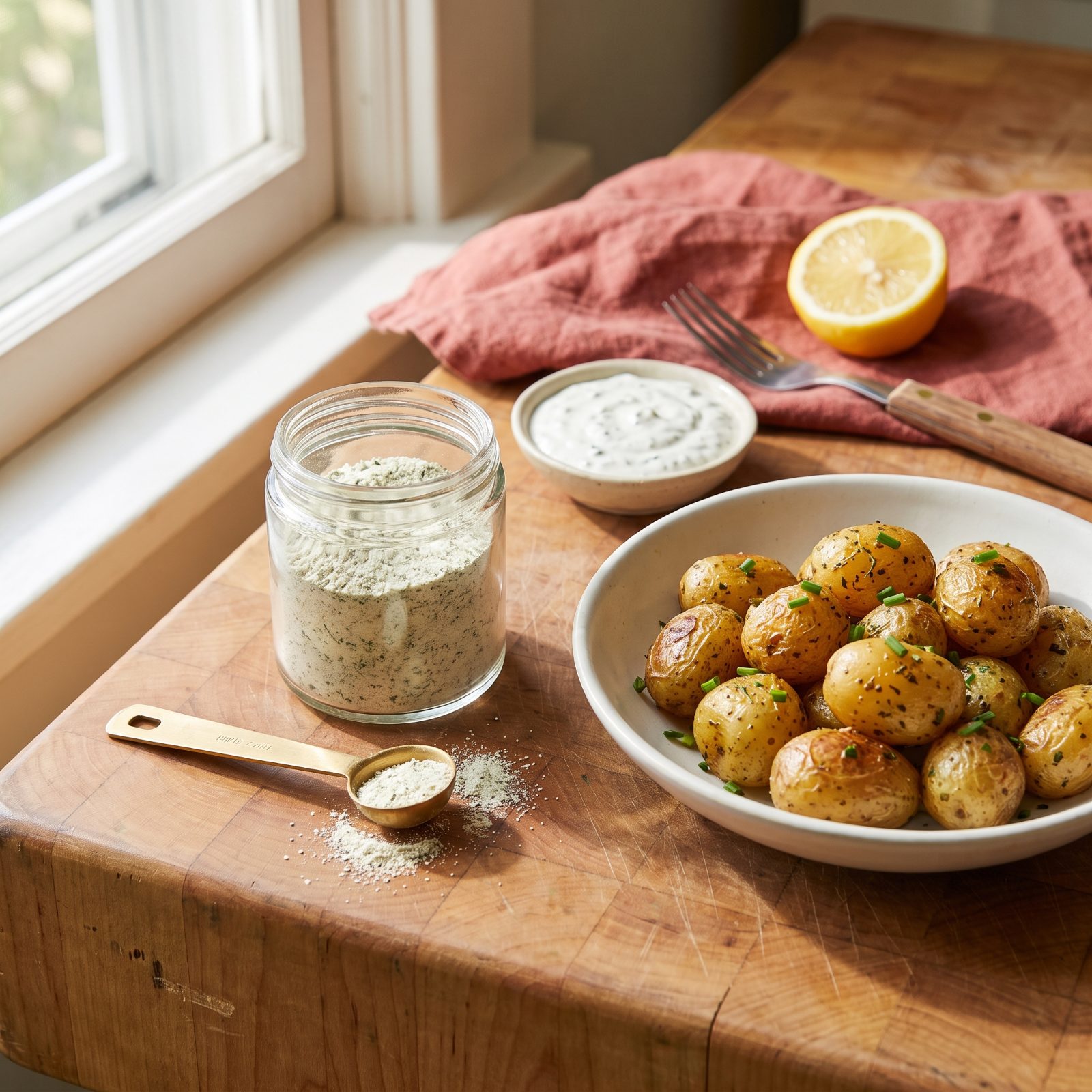
One packet does two completely different jobs, and that’s the whole trick. Stir a spoonful into sour cream or plain yogurt and you’ve got dip in thirty seconds. But toss that same powder over potatoes before they hit the oven and the buttermilk solids brown into a tangy crust that tastes like somebody stood at the stove sweating over it all afternoon — when really you dumped and shook.
Most people only crack the jar open when a sad vegetable tray shows up at a party. What a waste. The dried buttermilk, garlic, onion, and dill in there will wake up roasted carrots, popcorn, chicken thighs, even a boring bag of frozen fries that suddenly tastes like it came from a place with a neon sign out front.
Keep the jar within arm’s reach of the stove. Not buried in the back of the cabinet behind the cumin you bought once in 2009. You want to grab it without thinking, and a jar you can’t find is a jar you never use.