Would you like to save this?
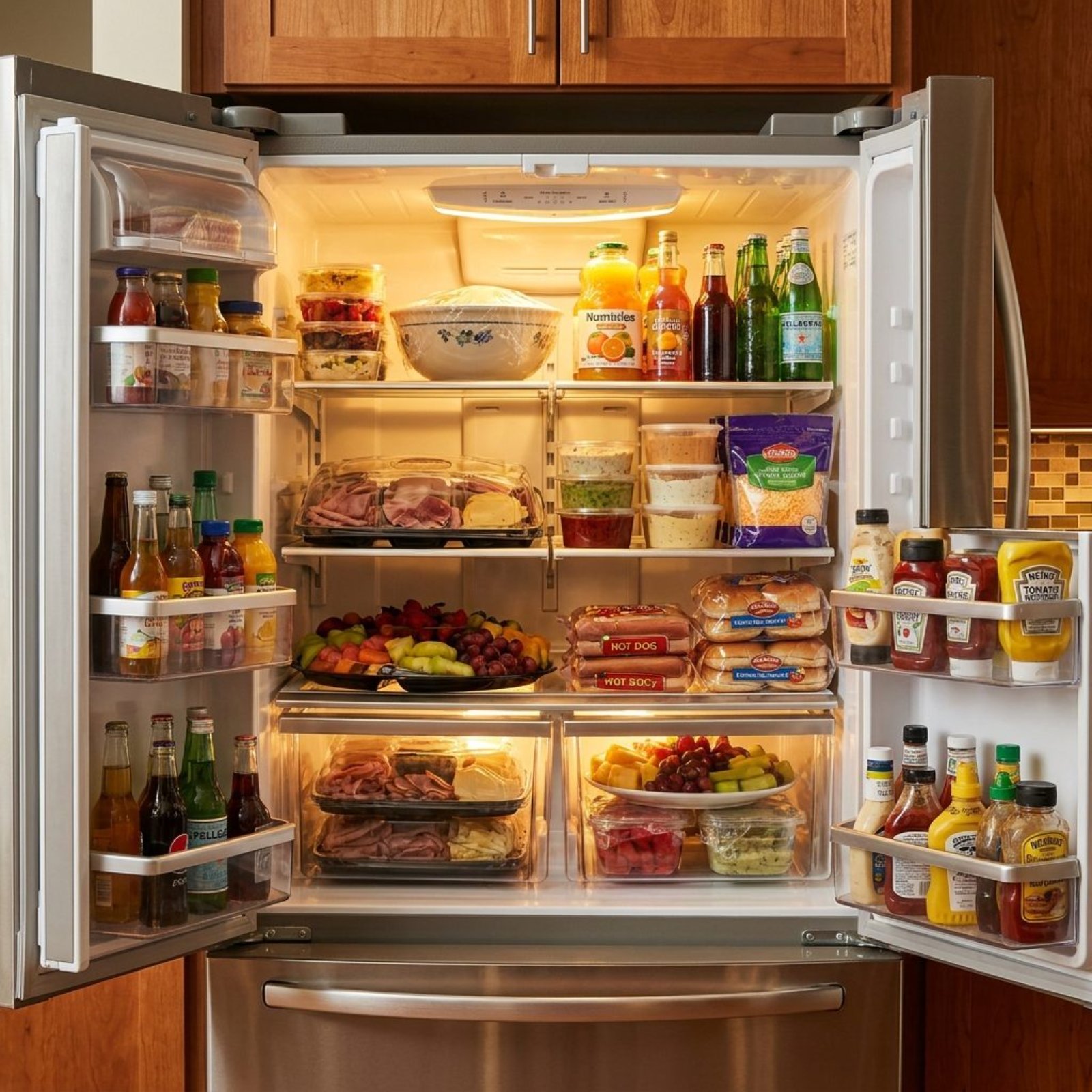
The receipt says $537. The pantry is full. The fridge is packed so tight the door barely closes. And yet, at 6:14 PM on a Wednesday, someone in the house will open that fridge, stare into it like it owes them money, and say the words: “There’s nothing to eat.” This isn’t a food supply problem. It’s a planning problem disguised as a shopping trip. Here are 30 of the most common reasons that grocery bill keeps climbing while dinner keeps not happening.
Buying Groceries for the Fantasy Version of Yourself Who Meal Preps Every Night After Work
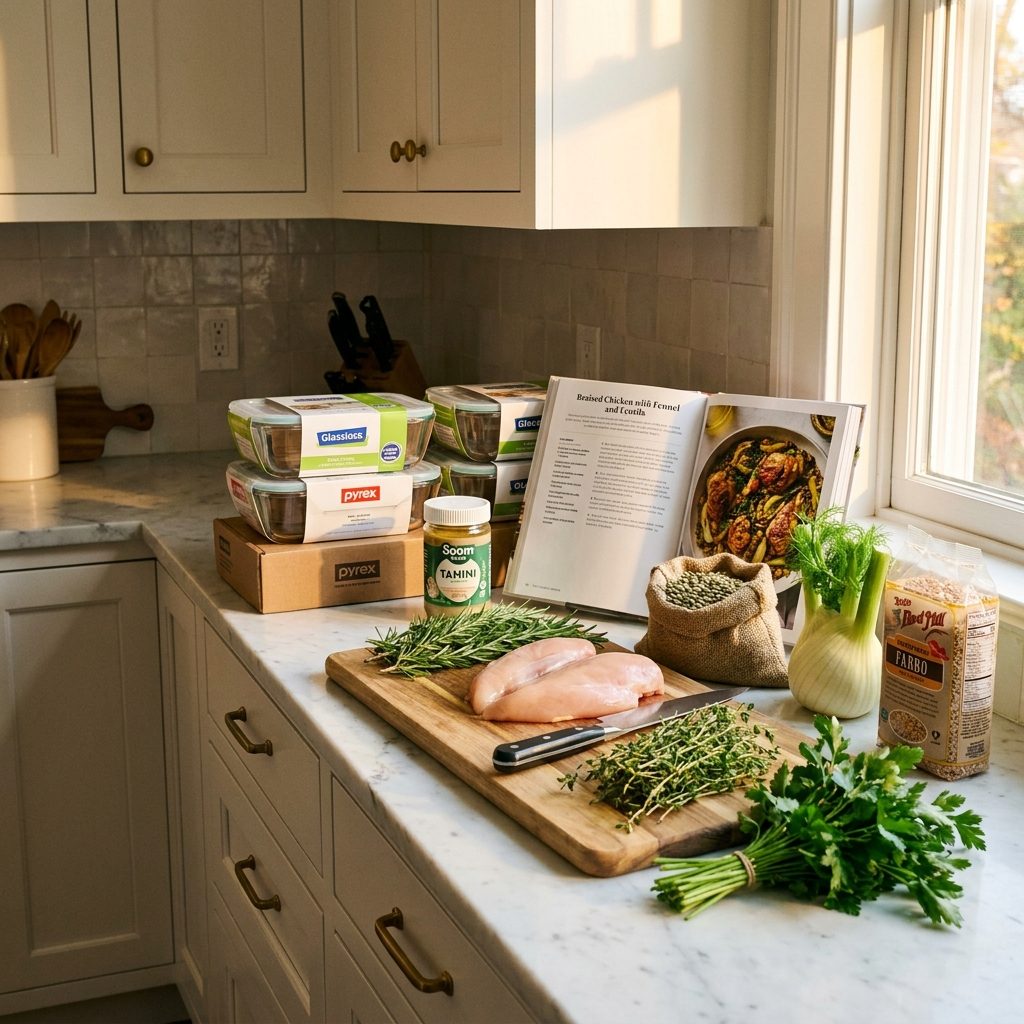
Farro. Tahini. A whole fennel bulb. Fresh dill. These are the groceries of someone who believes Tuesday night will involve 45 minutes of calm, focused cooking after a full workday, two kid pickups, and a pile of laundry that’s been sitting in the dryer since Sunday. I’ve been this person. I’ve bought the farro. The farro expired.
The actual problem is that you’re shopping for an aspirational schedule, not your real one. Those beautiful ingredients need prep time, recipe-following, and energy you simply won’t have at 6 PM on a school night. The fix: plan two, maybe three “real cooking” nights per week. Fill the rest with meals that assemble in under fifteen minutes. Rotisserie chicken, tortillas, pre-shredded cheese, jarred salsa. That’s a dinner. A good one.
Walking Into Costco for ‘A Few Things’ and Leaving with $240 in Snacks, Drinks, and Bakery Items Nobody Needed
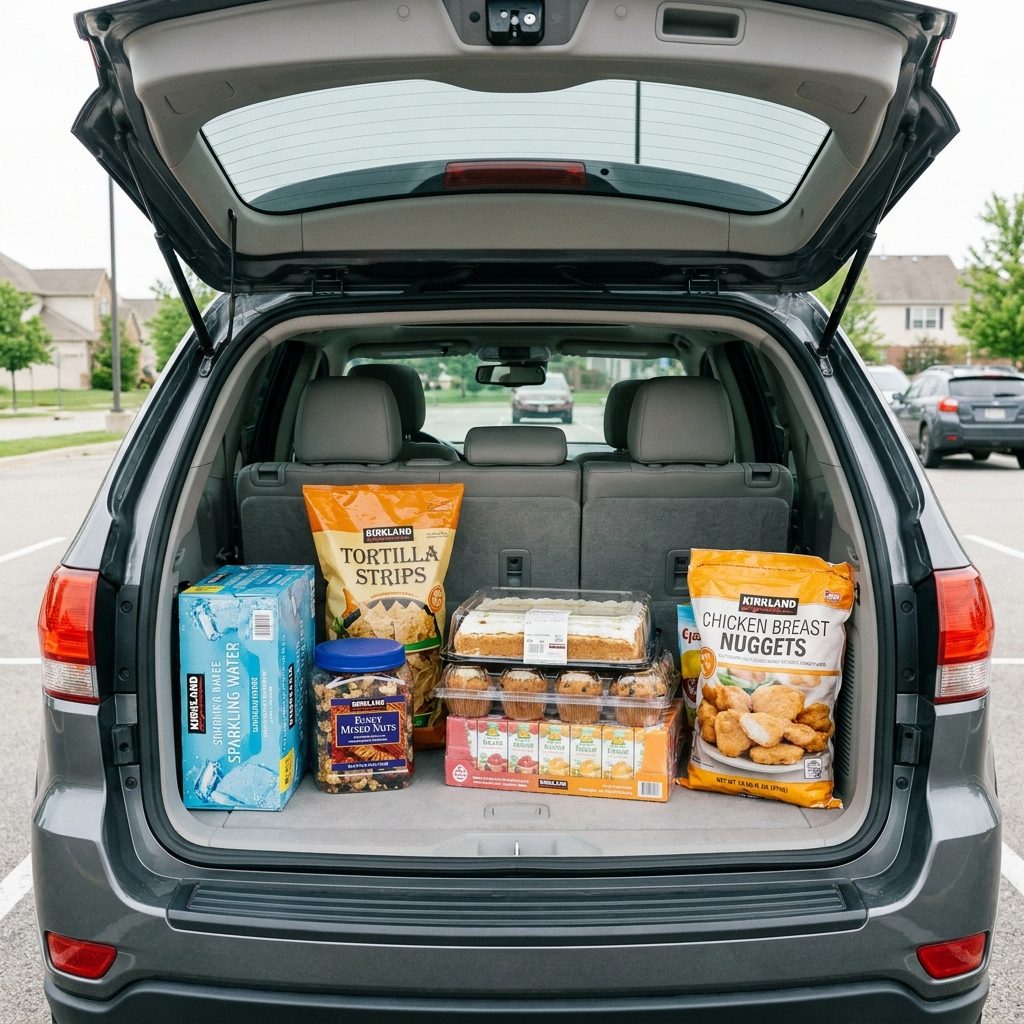
Nobody has ever walked out of a warehouse club with only what they came for. You went in for paper towels and olive oil. You left with a sheet cake the size of a hubcap, a 48-pack of sparkling water, a bag of pita chips large enough to insulate a shed, and something called “jalapeño artichoke dip” that sounded incredible near the sample station.
Here’s what’s really happening: those items aren’t meals. They’re snacks, impulse treats, and beverages. Your family grazes through them in four days, the fridge is suddenly empty of anything resembling dinner, and you’re back at a regular grocery store by Wednesday spending another $80. The warehouse trip didn’t replace your weekly shop. It just added to it.
If you love the warehouse run, fine. But go with a list of exactly five to seven items, stick to it, and never shop there hungry. The savings on bulk staples only work if you’re not also dropping $60 on things that vanish before anyone notices they existed.
Overbuying Produce on Sunday with Beautiful Intentions Only to Throw Half of It Away Slimy by Friday
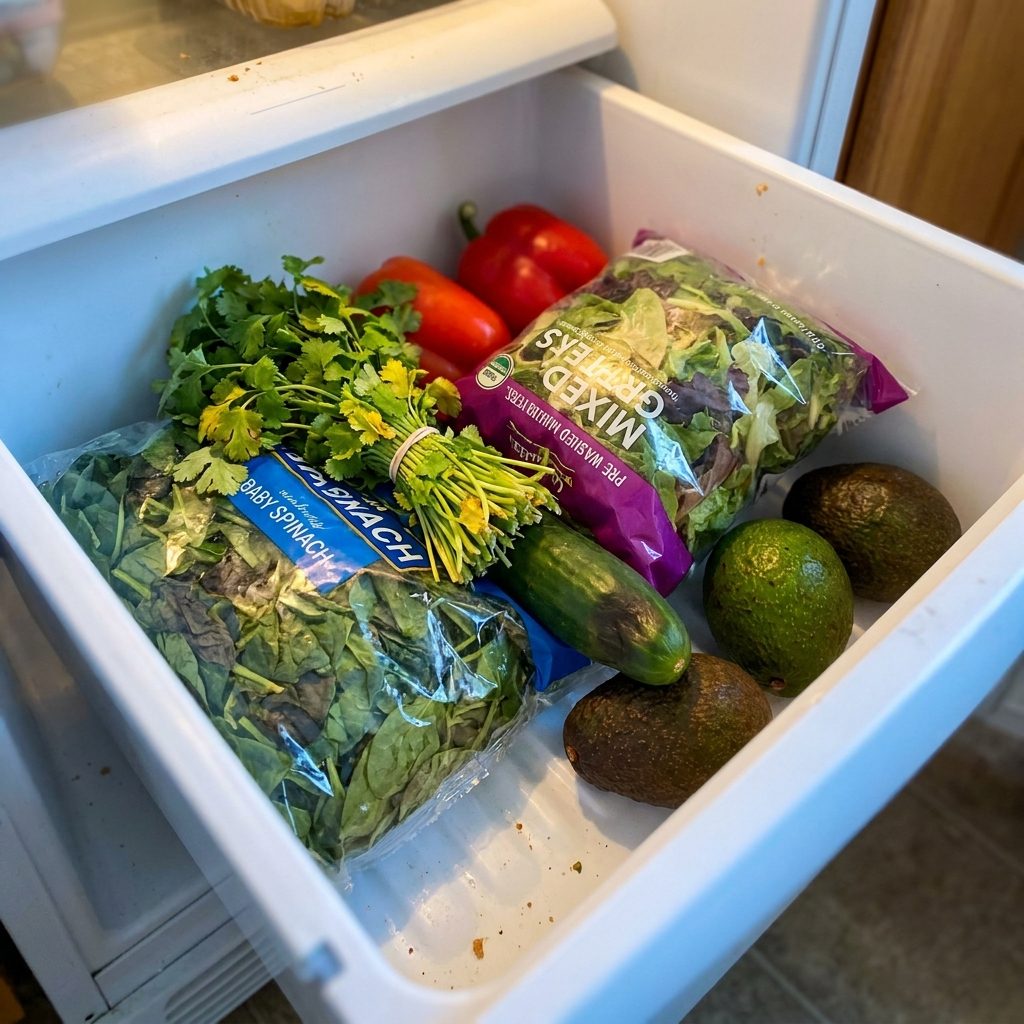
Sunday you’re a health visionary. Kale, fresh berries, three bell peppers, a bag of arugula, cilantro, two avocados, a head of cauliflower. By Thursday that cilantro is a brown puddle in the crisper drawer and the cauliflower has developed a smell you’d rather not investigate. I say this as someone who has composted more produce than some families eat.
Fresh vegetables lose quality fast, and most families overestimate how much cooking they’ll actually do in five days. Buy produce for three days, max. Plan a midweek restock for the back half. And be honest about what your household actually eats versus what you wish they ate. If nobody touches the kale by Tuesday, stop buying kale.
Stocking Ingredients Instead of Actual Meals, Leaving Everyone Staring Into the Fridge at 6:15 PM
Eggs. Sour cream. Half an onion. A block of cheddar. Soy sauce. Hot sauce. Three different mustards. The fridge is objectively full, and yet the question hangs in the air every single evening: what are we supposed to do with any of this?
Ingredients are not meals. This is the single biggest disconnect in American grocery shopping. You bought components without a blueprint. It’s like filling a garage with lumber and nails and being confused that a deck didn’t appear.
The Simple Fix
Before you shop, write down five specific dinners. Not ingredients. Dinners. “Chicken tacos Tuesday. Pasta with sausage and peppers Wednesday. Quesadillas with leftover chicken Thursday.” Then buy only what those five meals require. Your cart gets smaller, your bill drops, and nobody stands in front of the fridge at 6:15 performing an existential crisis.
Buying Different Snacks and Drinks for Every Family Member Like You’re Running a Personalized Convenience Store
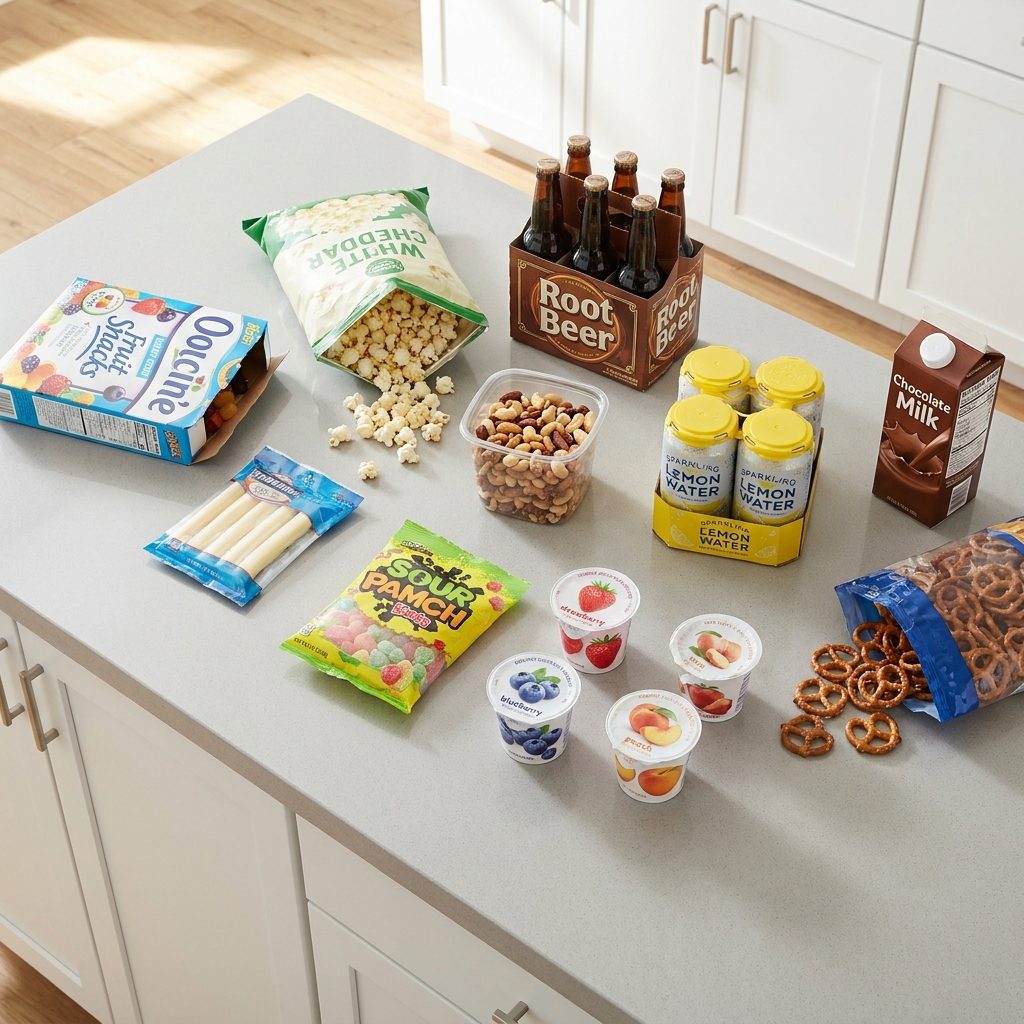
One kid wants Goldfish. The other wants white cheddar popcorn. Dad needs his sparkling water. Mom has her specific yogurt. The teenager drinks a particular brand of iced tea that costs $7 for four cans. Congratulations, you’ve built a miniature bodega inside your home and you’re subsidizing it at full retail.
This one adds up brutally fast because personalized snacks and drinks are some of the highest per-unit costs in the store. And the psychological kicker? When someone’s “their” snack runs out, they declare there’s nothing to eat, even though twenty other options surround them. The move: pick two or three crowd-pleasing snacks the whole house shares. Popcorn. Apples. Tortilla chips and salsa. Everyone adjusts. Nobody starves. Your snack line on the receipt shrinks by $40 a week, easy.
Shopping Hungry and Suddenly Believing Every Frozen Appetizer Is an ‘Easy Dinner Solution’
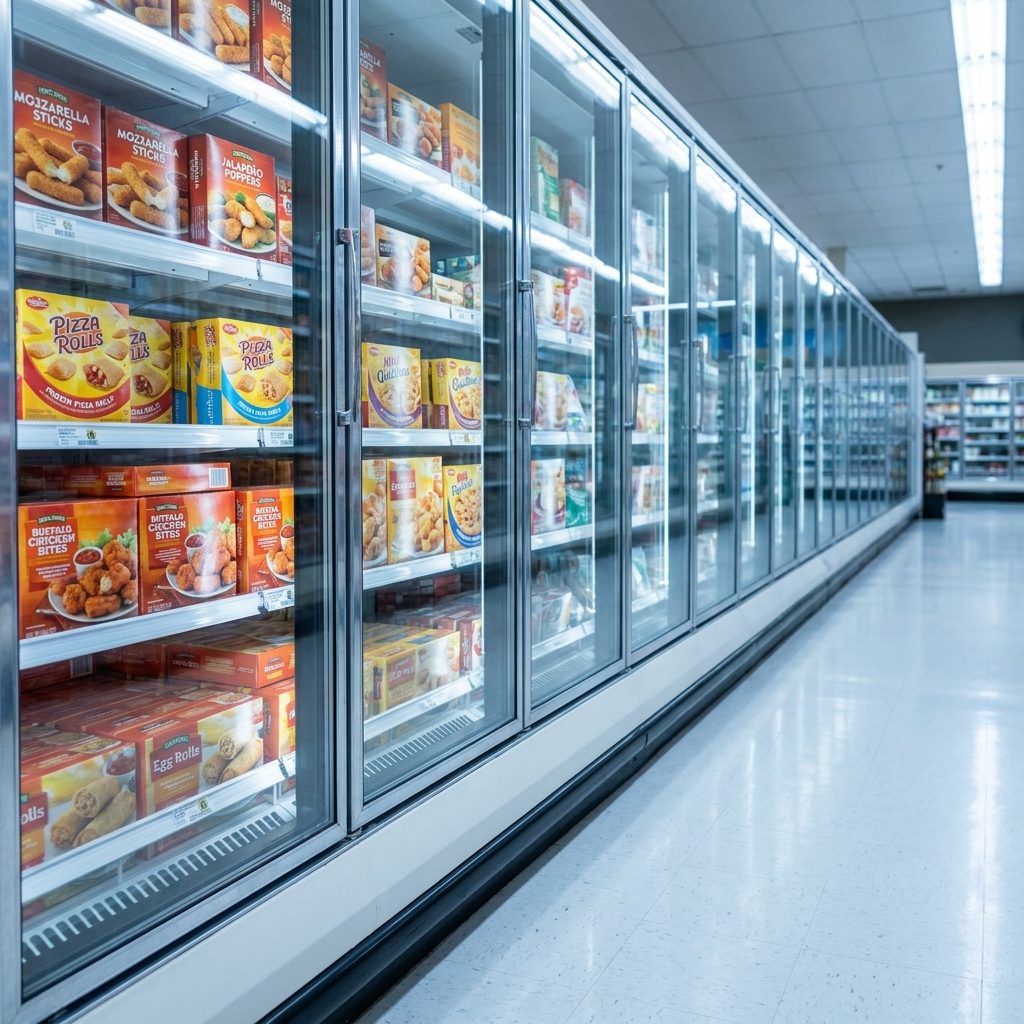
You skipped lunch. Now you’re in the frozen aisle at 5:30 PM and a box of mozzarella sticks is whispering that it counts as dinner. It does not.
Hunger rewires your brain in the grocery store. Studies on this go back decades, and the conclusion is always the same: shopping on an empty stomach increases both the quantity and the impulsiveness of what lands in your cart. Frozen appetizers, deli prepared foods, fancy cheese you’ll eat in the parking lot. None of it forms a meal plan. All of it inflates the receipt.
Filling the Cart with Healthy Foods That Require Time and Energy Nobody Realistically Has on Weeknights
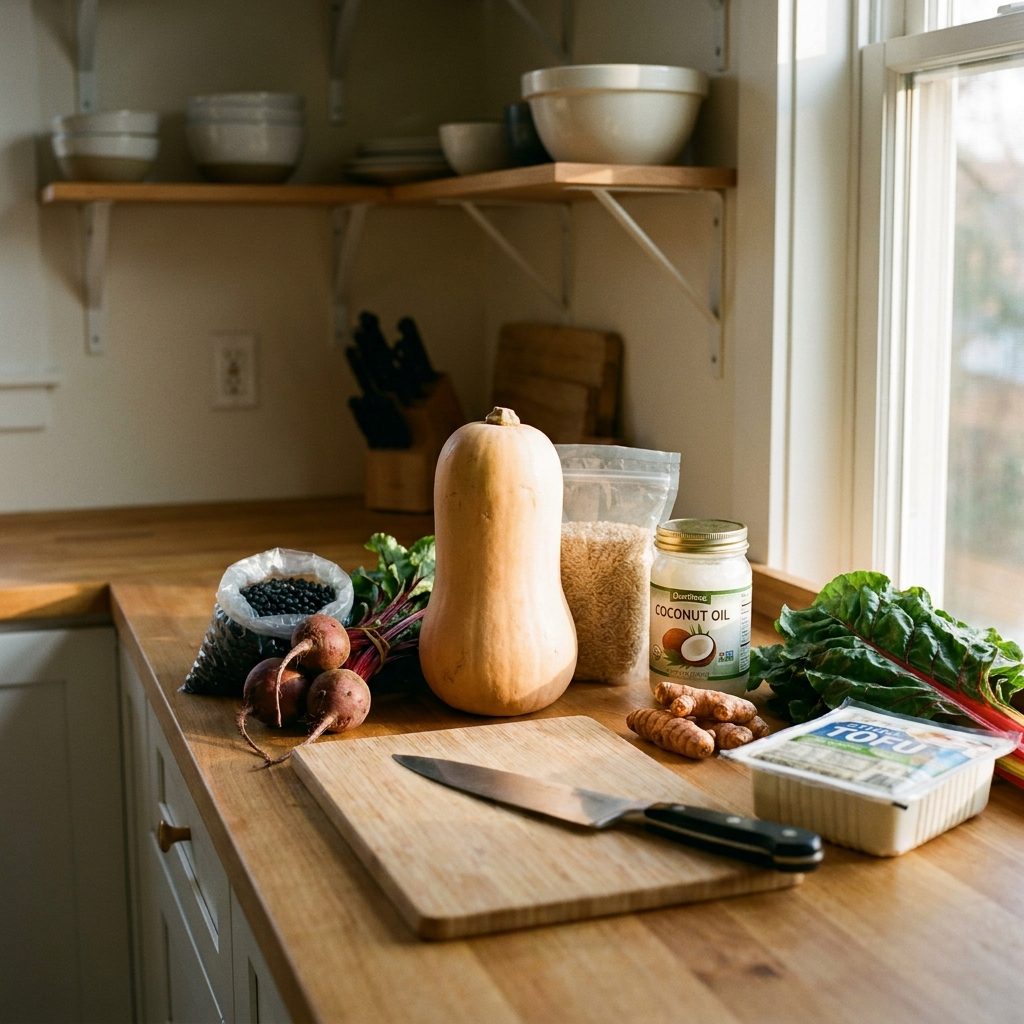
Whole butternut squash. Dried beans that need overnight soaking. A head of cauliflower destined to become “rice.” Beets that require roasting, peeling, and the acceptance that your hands will look like a crime scene for two days.
These are all fine foods. Good foods. But they take real time and real effort, and on a Tuesday night after work, you have approximately eleven minutes of patience before someone orders pizza anyway. The gap between “healthy” and “realistic” is where most grocery budgets go to die. Healthy eating on weeknights means pre-cut vegetables, canned beans that are already cooked, frozen broccoli florets that steam in four minutes, and rotisserie chicken you shred in sixty seconds. Buy the shortcut version. It’s still healthy. And you’ll actually eat it.
Constantly Buying Duplicate Condiments, Sauces, and Spices Because Nobody Can Find What’s Already in the Pantry
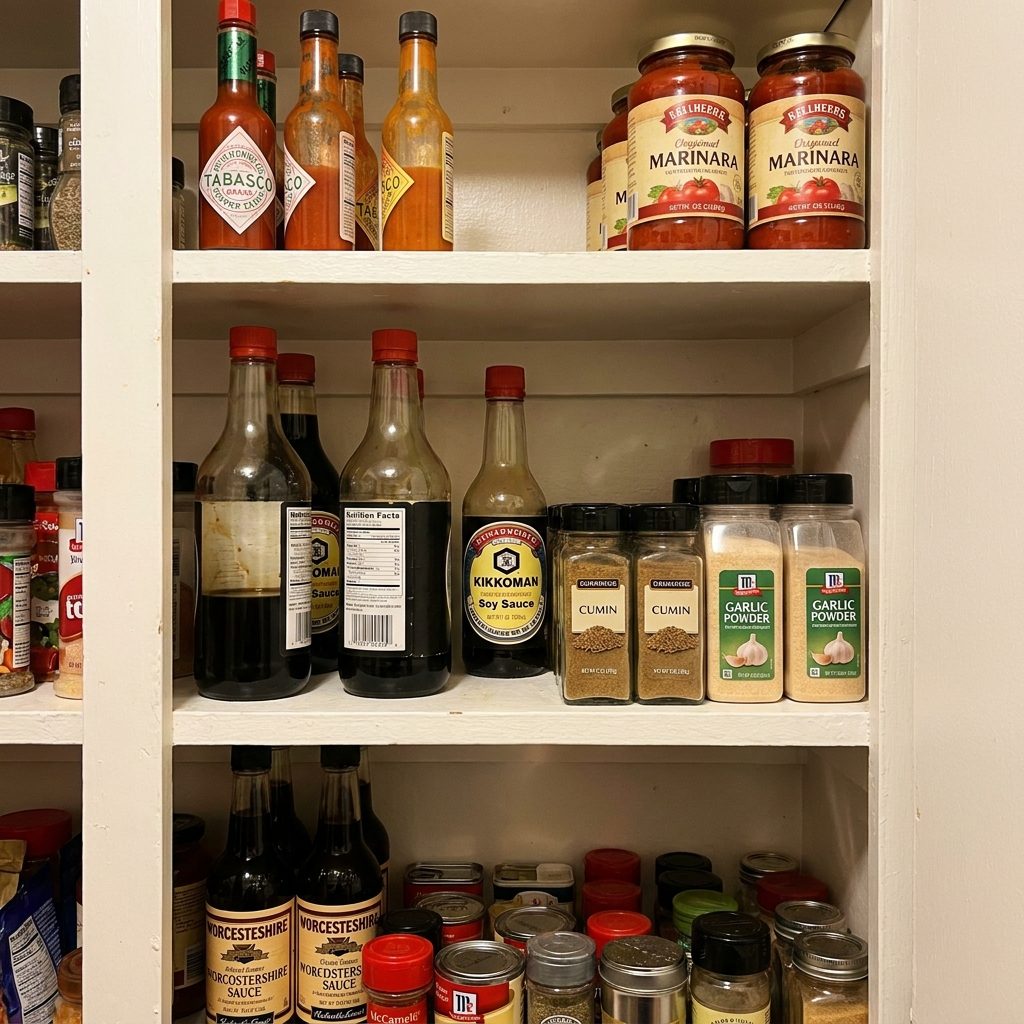
Open your pantry right now. Count how many bottles of soy sauce you own. If the answer is one, you’re in the minority. Most households are sitting on two, three, sometimes four partial bottles of the same condiment because the existing one migrated behind a box of pasta two months ago and became invisible.
Garlic powder is the worst offender. Cumin is a close second. I once found three identical jars of ground cinnamon in my own cabinet, which is how I lost the right to judge anyone about this.
The duplication problem is really an organization problem. Fifteen minutes with a permanent marker, some clear bins, and a ruthless attitude fixes it permanently. Label your shelves by category: oils and vinegars, dried spices, sauces, baking. When you can see everything, you stop rebuying it. That alone probably saves $15 to $20 per shopping trip.
Paying Premium Grocery Delivery and Convenience Prices Multiple Times Per Week Because Meal Planning Already Failed by Tuesday
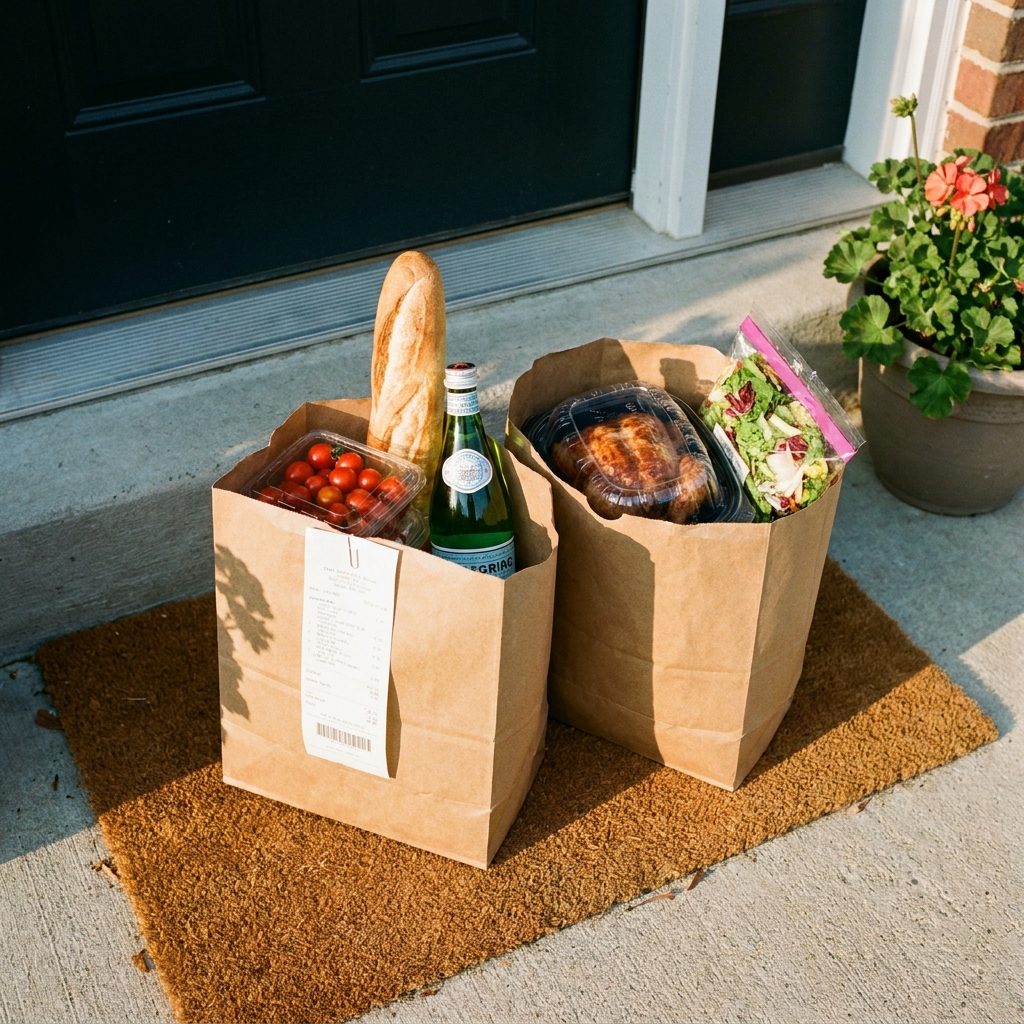
The big grocery run happened Sunday. By Tuesday the plan collapsed. Somebody forgot to defrost the chicken. The produce situation is already looking grim. So you open the delivery app, add a few things to the cart, pay the service fee, the delivery fee, the tip, and the invisible markup on every item that runs 15 to 20 percent higher than in-store prices. Then you do it again Thursday.
Two midweek delivery orders at $45 each adds roughly $360 a month on top of the main shopping trip. That’s a car payment. That’s a flight somewhere nice. And the food from those deliveries? It’s usually gap-filling stuff: bread, milk, something for tomorrow’s lunch. Not the kind of shopping that solves the underlying problem, which is that the original trip didn’t account for how the week actually unfolds.
The delivery app isn’t the problem. The missing Tuesday-through-Thursday plan is the problem.
Buying Bulk Quantities of Food the Family Gets Sick of Long Before the Container Is Empty
Would you like to save this?
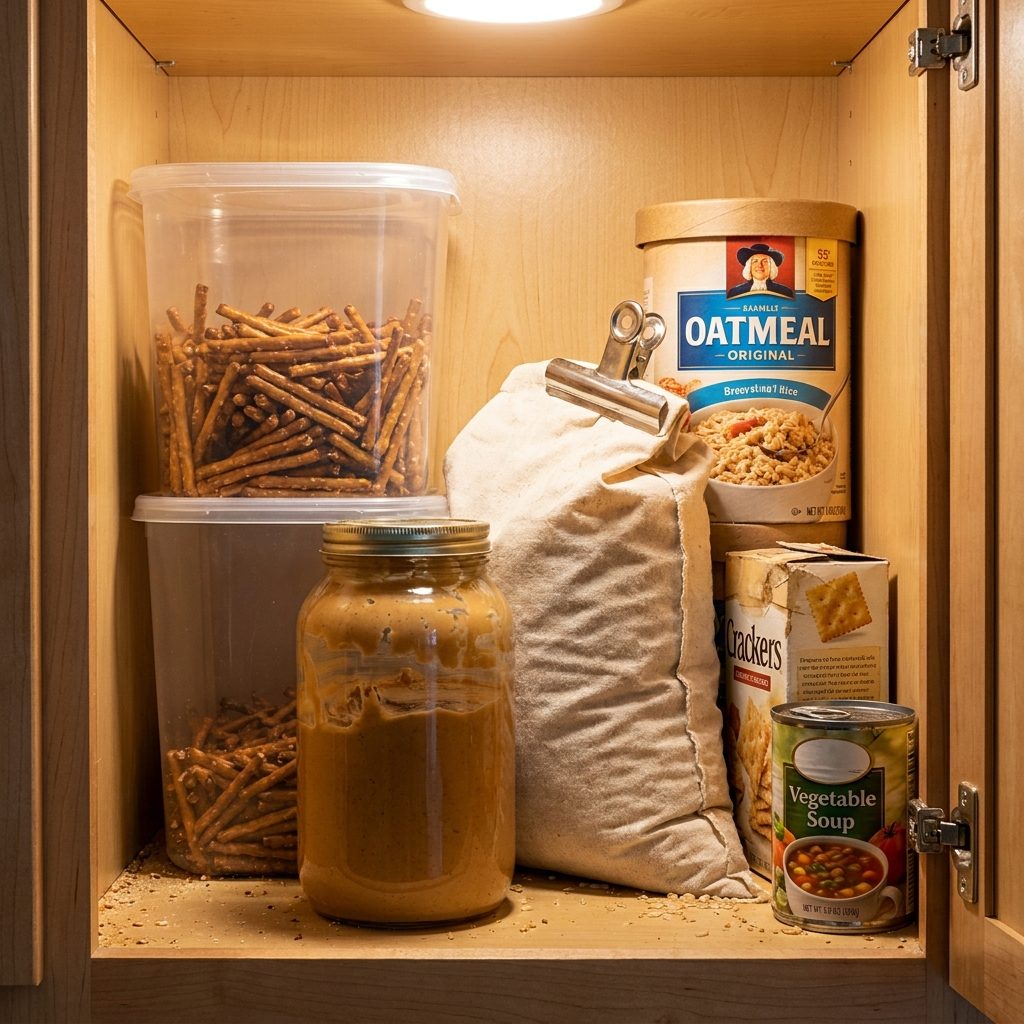
That five-pound bag of brown rice seemed smart in the store. Now it’s been sitting in the pantry for three months with a binder clip on it, and everyone in the house would rather eat cardboard than look at brown rice again.
Bulk buying only saves money if the food actually gets consumed. A 64-ounce jar of peanut butter is a great deal right up until the household collectively decides it hates peanut butter by week three. Then it’s not a bargain. It’s a $9 jar of guilt taking up shelf space. Buy bulk only for things your family uses consistently and never tires of: pasta, canned tomatoes, rice if your family actually eats rice regularly. For everything else, the regular-sized container is cheaper in practice because you finish it before the enthusiasm dies.
Letting Kids Roam the Grocery Store Tossing “Just One Thing” Into the Cart for an Hour Straight
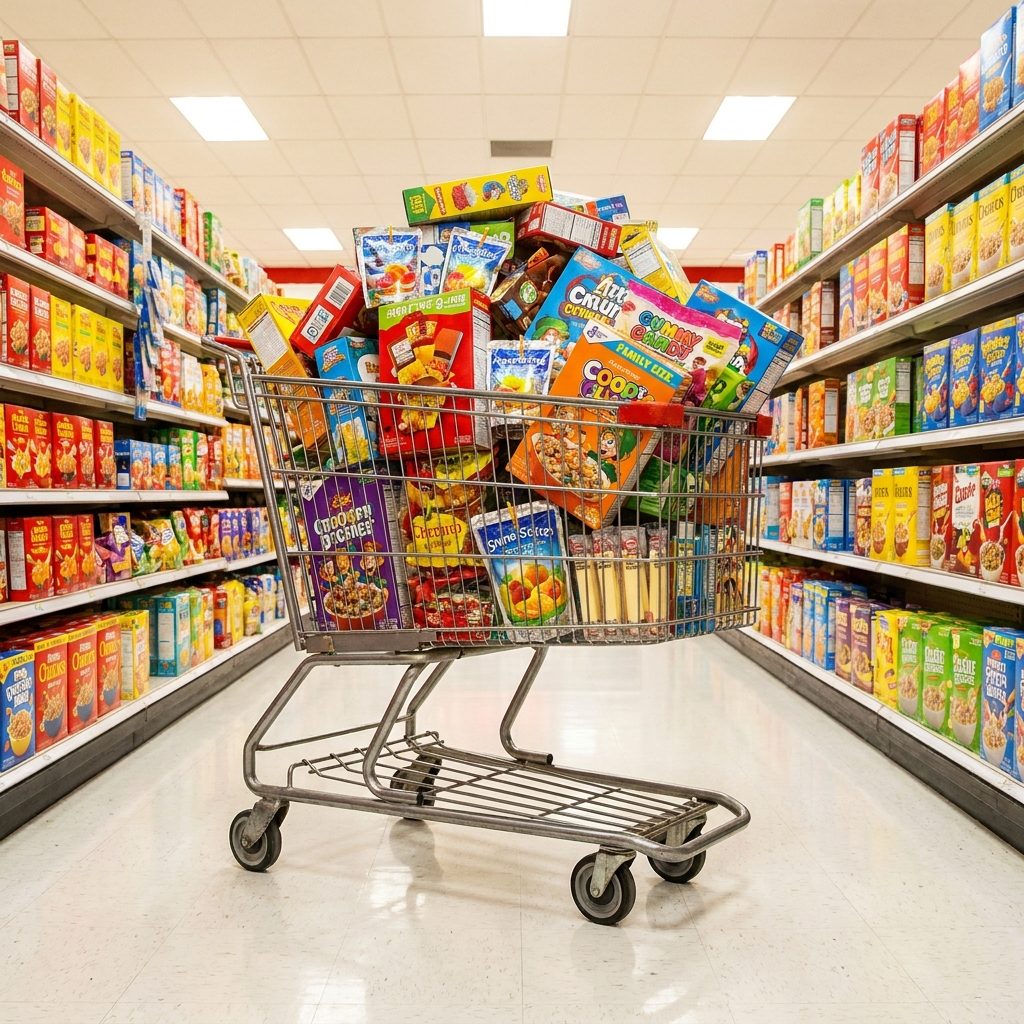
“Just one thing” might be the most expensive phrase in the English language when spoken inside a grocery store by anyone under fourteen. Each child grabs a box of fruit snacks here, a bottle of chocolate milk there, a bag of chips from endcap three, and before checkout the cart holds forty dollars of impulse snacks that’ll get half-eaten and abandoned in a pantry bin.
Cost isn’t even the real damage. None of those items form a meal — they’re isolated snacks with no connective tissue. Tuesday night rolls in, the pantry’s bursting with opened granola bar boxes and fruit leather wrappers, and someone still says the magic words: “There’s nothing to eat.”
Give each kid a budget and a job instead. Five dollars, two items, and both have to go with dinner. A ten-year-old picking out shredded cheddar and a can of black beans is learning something. A ten-year-old hurling Takis into a moving cart is not.
Keeping Freezers So Packed with Mystery Meat and Forgotten Leftovers That Nobody Trusts Eating Anything Inside
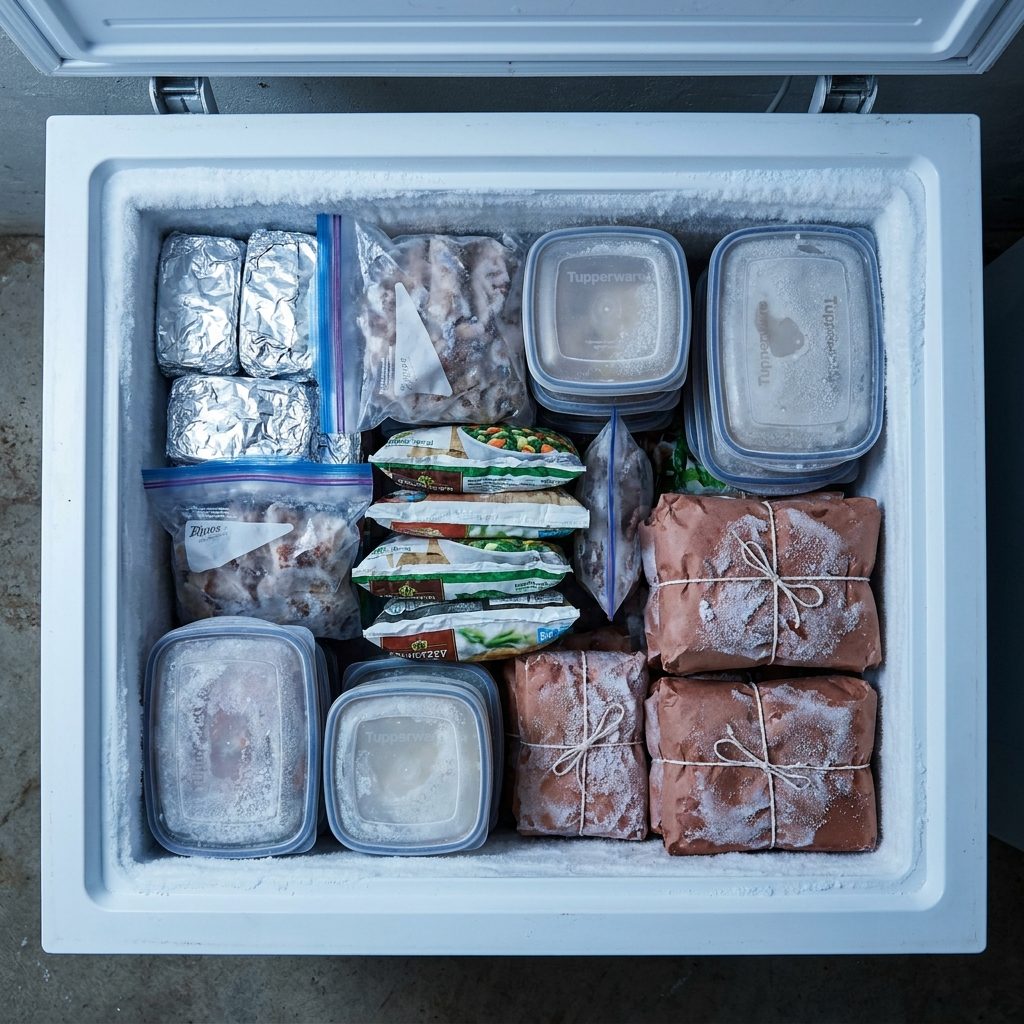
A freezer isn’t a savings account. It’s a ticking clock. When the bottom layer holds a foil-wrapped something from last Thanksgiving and the top layer is three bags of frozen ravioli bought on sale in February, nobody wants to dig through that archaeological site at 6 PM on a Wednesday.
Frozen food loses texture, flavor, and appeal faster than most people realize. Unlabeled leftovers stuffed into recycled yogurt containers? Those become permanent residents — just dead weight breeding distrust. And ground beef, even stored properly, drops off in quality after a few months. So that mystery lump behind the frozen peas? Probably not worth the gamble.
The 15-Minute Freezer Reset
Once a month, pull everything out onto a table. Toss anything unlabeled or older than three months. Use a black permanent marker and masking tape to date every single item going back in. Organize by category: proteins left, vegetables middle, prepared meals right. A freezer you can read at a glance is a freezer people actually cook from.
Shopping Without Checking the Fridge First and Discovering Three Open Shredded Cheese Bags Afterward
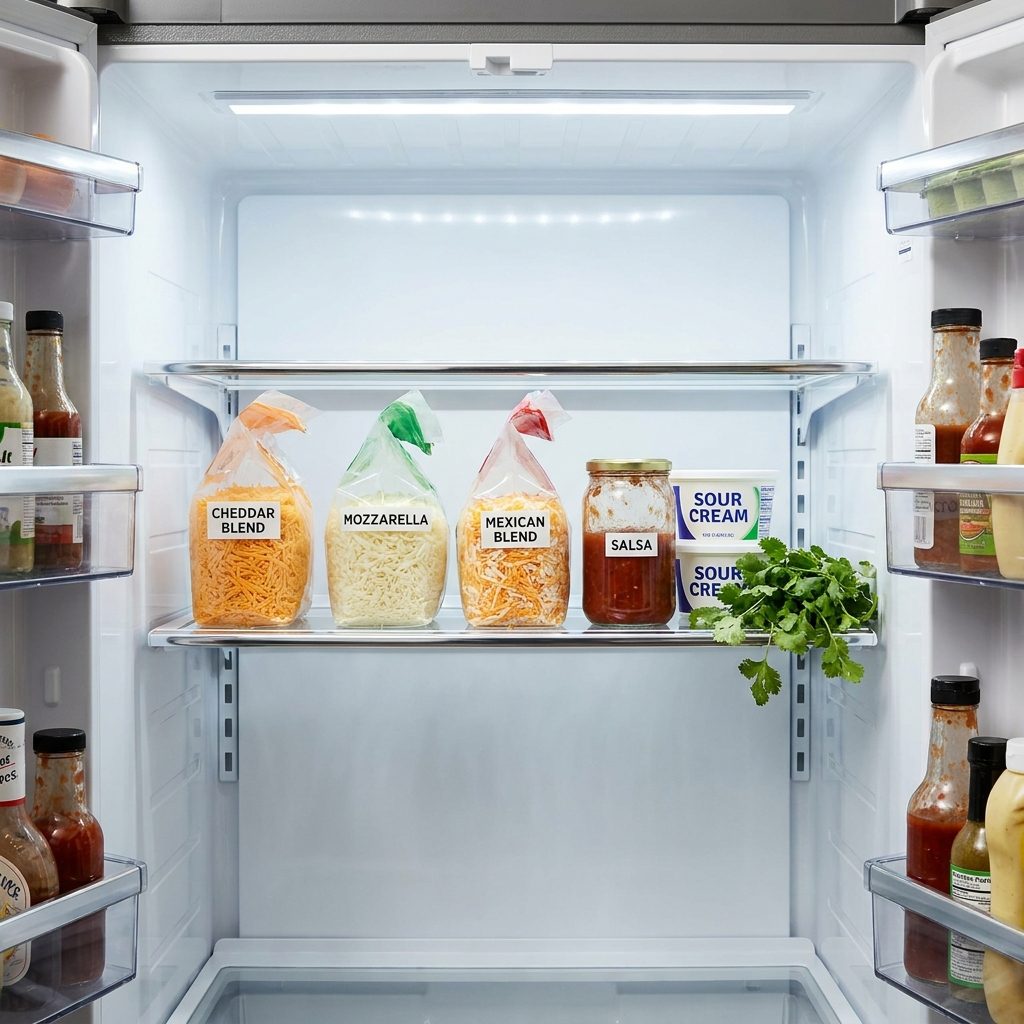
Three open bags of shredded cheese. Two half-used jars of marinara. A lime so old it could bounce. This is what happens when somebody shops from memory instead of from evidence, and it happens in almost every household running on autopilot.
Duplicate buying piles up quietly — redundant dairy and produce alone can tack on a surprising chunk per trip. But the bigger issue is that those doubles crowd the fridge, shove older items to the back where they die in silence, and create a feeling of fullness that has nothing to do with actual meals. A fridge crammed with ingredients is not the same as a fridge stocked with dinners.
Snap a photo of your fridge and pantry before leaving the house. Four seconds. Spares you from cheese bag number four.
Buying Elaborate Lunch Ingredients While Still Ordering Takeout at Work Four Days a Week
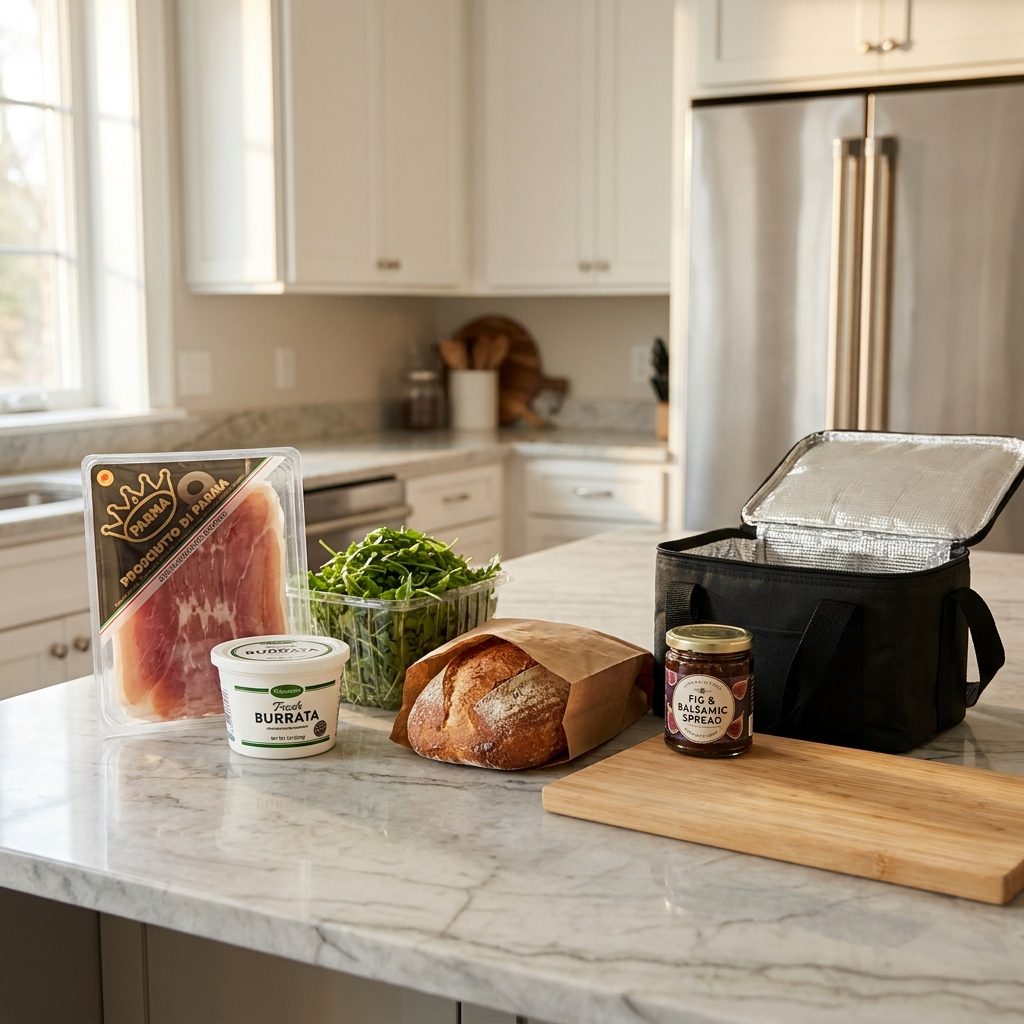
I did this for an embarrassingly long time. Every Sunday I’d buy prosciutto, fresh mozzarella, fancy greens, and some artisan bread with the absolute conviction that Monday through Friday would be a parade of beautiful homemade lunches. By Tuesday the prosciutto was oxidizing in its open package. Thursday? Arugula had become slime. I’d eaten Chipotle three times.
The math is brutal — you’re paying for lunch twice. Once at the grocery store, once at the register by your office. That artisan sourdough quietly goes stale while a burrito bowl fills its role. If you order out more than twice a week, stop buying perishable lunch ingredients entirely. Accept your actual behavior. Switch to shelf-stable lunch components — canned tuna, crackers, nut butter, pickles — and save the prosciutto for weekends when you’ll actually sit down and enjoy it.
Treating Trader Joe’s, Whole Foods, or Target Grocery Aisles Like Stress-Relief Shopping After Exhausting Workdays
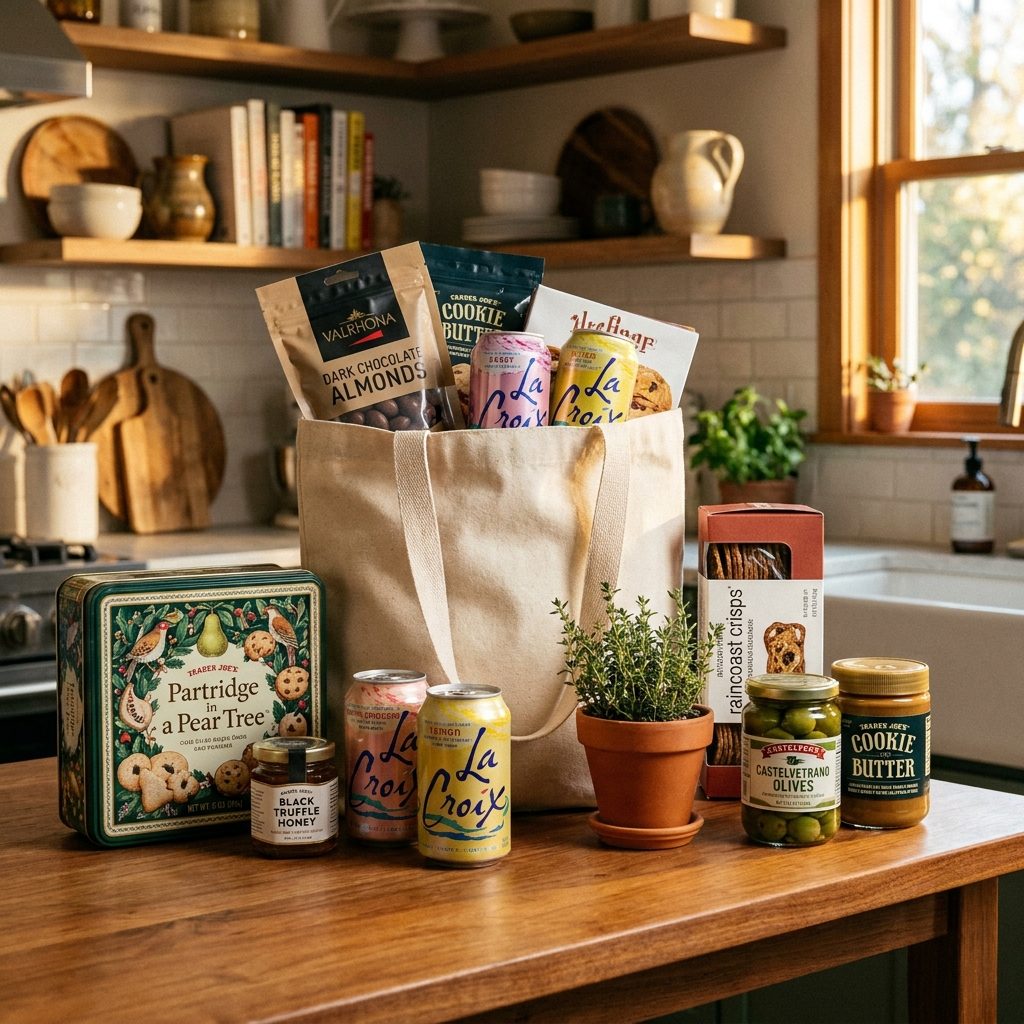
Trader Joe’s understands something about tired adults that most therapists would need an hour to unpack. The seasonal packaging, the low-stakes price points, the whispered promise of a tiny treat you’ve earned. It’s retail therapy disguised as a grocery run, and it’s one of the sneakiest budget killers in any modern kitchen.
Nobody walks into that store for milk and walks out with just milk. They leave carrying everything bagel seasoned crackers, cookie butter, two frozen Indian entrees, sparkling water in a flavor that sounded interesting, and a small cheese wedge that “was only $4.” None of it adds up to a week of dinners. All of it adds up to a pile of comfort purchases that get grazed on for two days and then forgotten.
If you’re shopping to feel better, you’re not shopping to eat better. Those are two completely different trips.
Separate the missions. Meal groceries come from a list at your regular store. Want to wander Trader Joe’s for fun? Bring a twenty-dollar bill and leave the card in the car. Honestly, bringing cash feels almost quaint now, but that’s what makes it work — the friction is the feature.
Failing to Build Even Three Reliable Low-Effort Emergency Dinners for Chaotic Nights
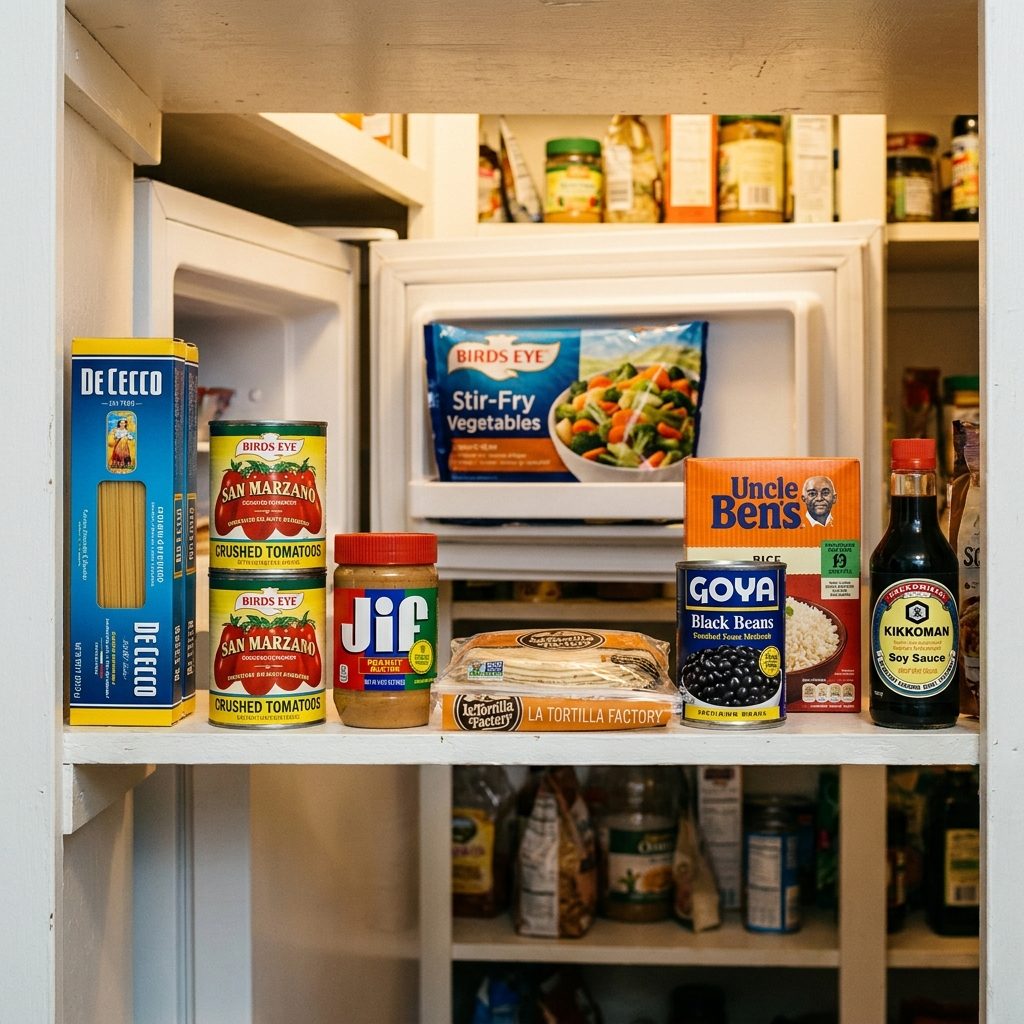
Every household needs exactly three dinners that go from pantry to plate in under twenty minutes with zero advance planning. Not five. Not ten. Three. Everyone in the house should know what they are by heart.
Without them, one chaotic Tuesday — kid’s practice ran late, the meeting dragged, nobody thawed a thing — triggers a delivery order that didn’t need to happen. Let that repeat twice a week and the monthly takeout damage gets genuinely painful.
Here’s what works:
- Pasta with jarred sauce and whatever cheese lives in the fridge. Twelve minutes. Keep spaghetti, a jar of sauce, and garlic powder permanently stocked.
- Bean and cheese quesadillas. Canned beans, shredded cheese, tortillas, hot sauce. Eight minutes.
- Fried rice. Day-old rice (or nuke a bag of frozen rice), soy sauce, eggs, frozen peas. Fifteen minutes.
Write those meals on a card. Tape it inside the pantry door. Stock the ingredients the way you stock toilet paper: before you run out, not after.
Spending Heavily on “Quick Dinner Shortcuts” That Somehow Still End with Someone Saying “There’s Nothing to Eat”
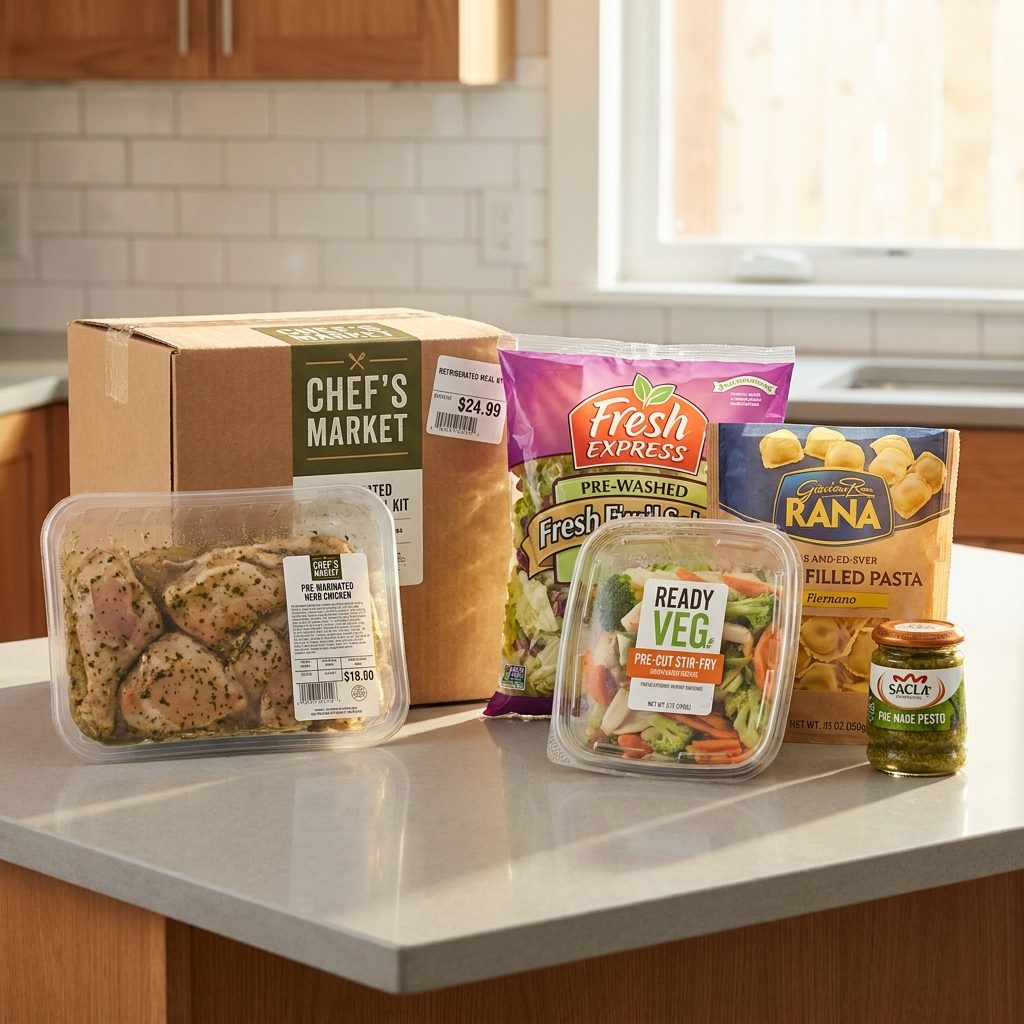
Pre-cut vegetables. Meal kits in a box. Refrigerated fresh pasta at triple the price of dried. Pre-marinated chicken thighs in resealable pouches. Supposed to save time, and technically they do — but they also expire in about four days, and if Wednesday’s plan falls apart and Thursday gets weird, by Friday those shortcuts are wilting in the produce drawer while somebody scrolls the Domino’s app.
The shortcut didn’t fail because the product was bad. It failed because it was perishable convenience bought on pure optimism. The family dropped serious money on a meal kit requiring 35 minutes of active cooking, which — and this is the part that always gets me — takes longer than boiling pasta and heating jarred sauce.
Buy shortcuts that wait for you instead. Frozen stir-fry kits, canned soup, frozen pizzas, dried pasta with a decent jarred sauce. These don’t punish you for abandoning Thursday’s plan.
Buying Aspirational Ingredients from TikTok Recipes Nobody in the House Actually Wants to Eat
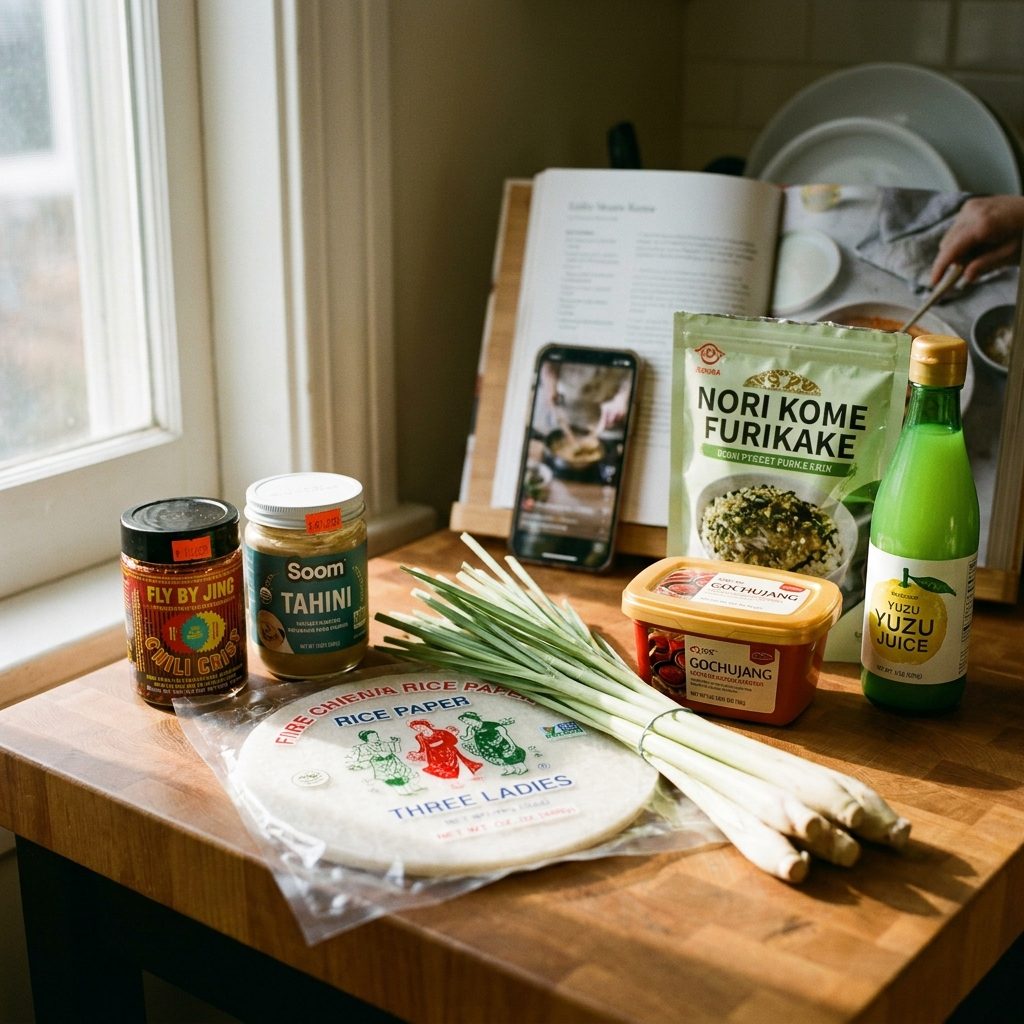
Gochujang. Rice paper wrappers. A $9 bottle of chili crisp. All purchased because a thirty-second video made a dish look life-changing at 11 PM on a Tuesday. All sitting in the pantry six weeks later, seals intact, because nobody in a household of four actually wanted Korean-inspired rice paper dumplings for dinner on a school night.
This is aspiration shopping — one of the most reliable reasons grocery bills climb while dinner satisfaction flatlines. The algorithm served up something gorgeous. The cook bought every ingredient. The family wanted tacos. And now a nearly full bottle of yuzu ponzu gathers dust beside the soy sauce.
Nothing wrong with trying new recipes. But try once with small quantities before committing to full-size bottles of specialty condiments. And be honest with yourself: if the rest of the household won’t touch it, that recipe is a solo project, not a family dinner. Buy accordingly.
Accumulating Random “Healthy Replacement” Foods That Everyone Secretly Hates but Nobody Admits
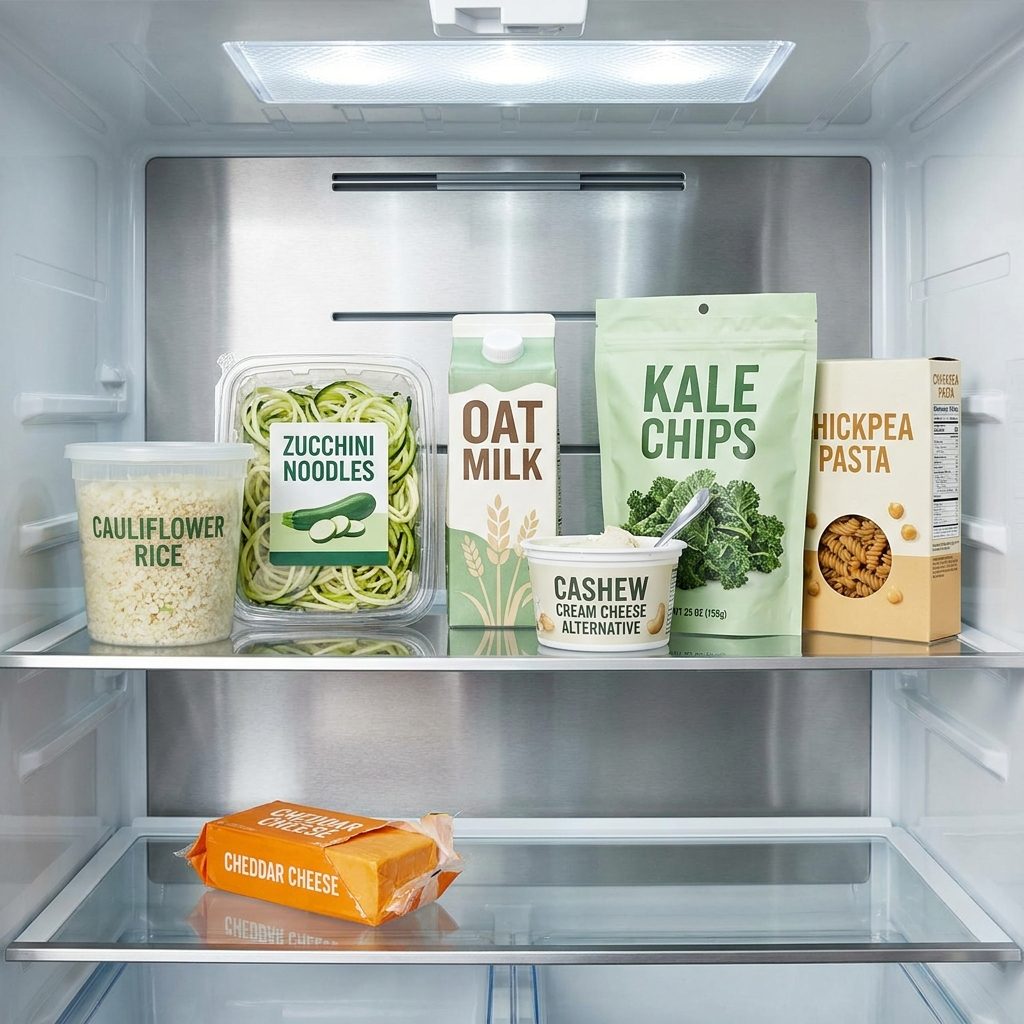
Somewhere in America right now, a bag of cauliflower rice is going bad in someone’s fridge and absolutely no one is sad about it.
The cycle goes like this: someone in the house decides the family should eat better. Cauliflower pizza crust appears. Chickpea pasta replaces the regular stuff. Cashew cheese materializes where cheddar used to live. The family politely tries each item once, then quietly stops reaching for any of it, gravitating toward crackers and peanut butter instead — because at least those taste like something. Meanwhile, the grocery bill inflates because you’re now funding two parallel pantries: the aspirational one and the real one where people actually eat.
Pick your battles. If whole wheat pasta genuinely goes over well, great — stock it. But if cauliflower rice has been tried three times and rejected three times, quit restocking it. Wasted health food is still wasted food, and it still cost money. That cheddar block on the lower shelf getting demolished twice as fast as anything above it? That’s your household casting its vote.
Turning Grocery Shopping into a Weekend Family Outing Where Boredom Spending Quietly Explodes the Bill
Would you like to save this?
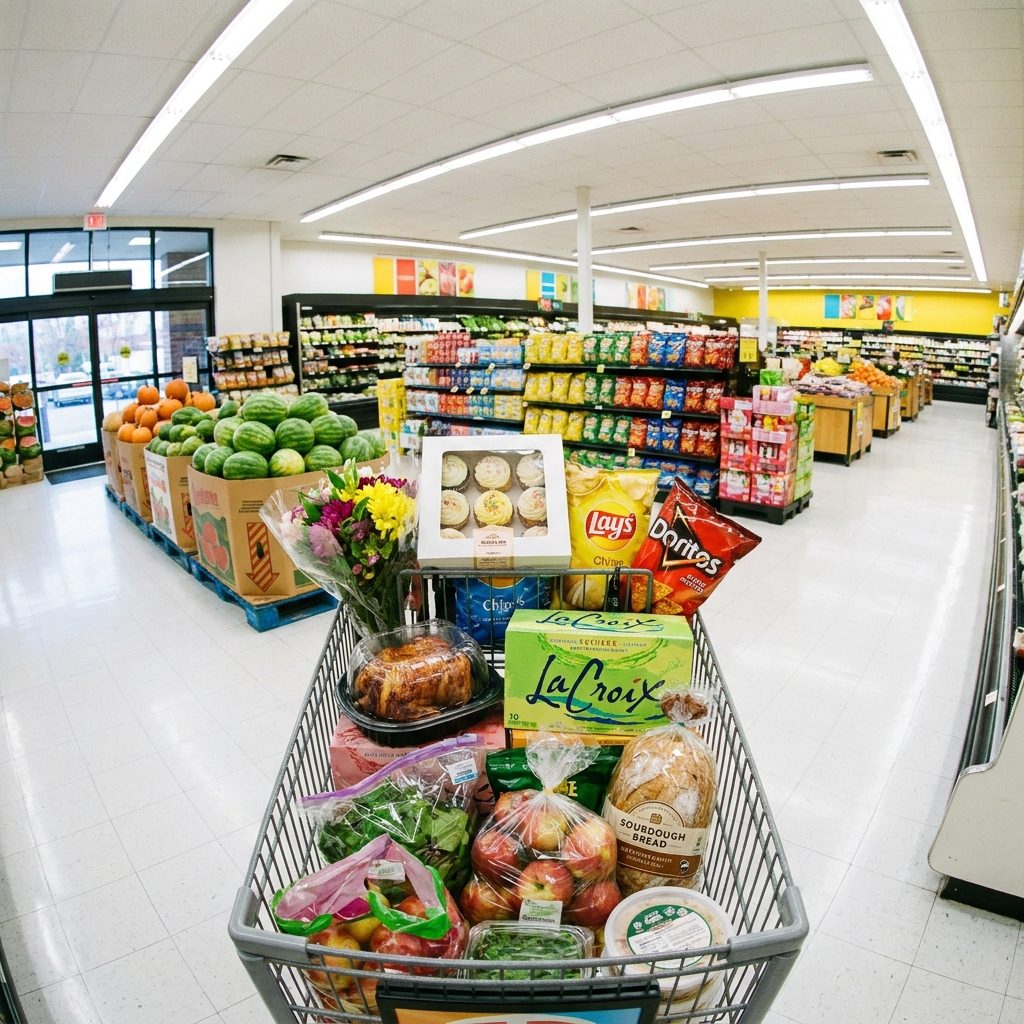
Saturday morning. The whole family piles into the car, a little bored, a little hungry, and the grocery store becomes the activity. Two hours later the cart looks like it feeds a family of twelve — a rotisserie chicken nobody asked for, a bakery box of cupcakes somebody sampled, flowers from the display by the entrance, three things from the cheese counter that seemed interesting while everyone was wandering.
Every endcap, every sample station, every seasonal display near the front door exists to convert browsing time into spending. More time in the store means more money spent. Four people inside instead of one means four times the hands pulling things off shelves. Grocery stores are engineered for this. The floor plan is doing its job.
Send one person. With a list. On a weekday. Boring? Absolutely. That’s the whole reason it works — boring grocery trips produce focused carts, and focused carts produce meals. Saturday family expeditions produce eye-watering receipts and a fridge full of things that don’t go together.
Buying Fresh Bread, Berries, Avocados, and Salad Greens All in the Same Trip, Then Watching the Clock Start Ticking Immediately
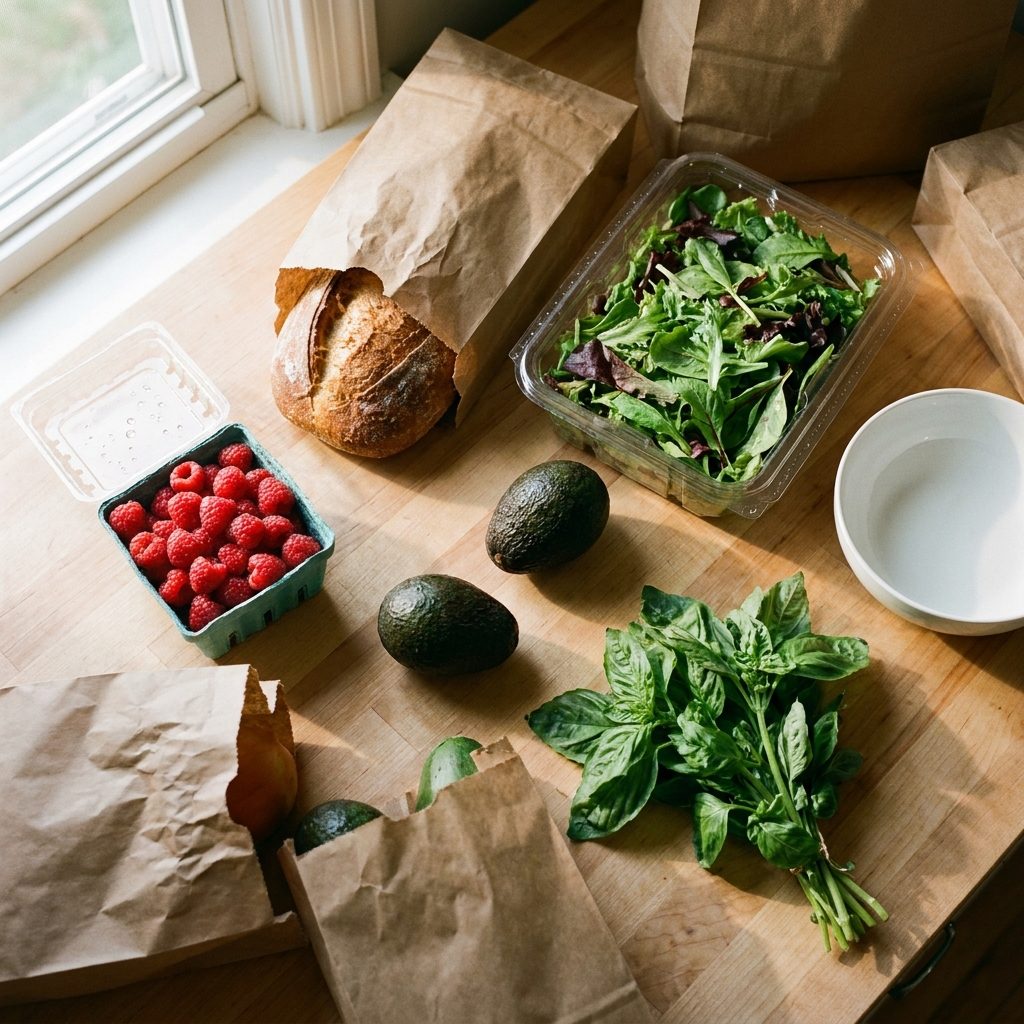
Every single item in that bag has a different expiration countdown, and they’re all short. The avocados have maybe two days in their perfect window. The berries might give you three if you’re lucky. That salad mix starts wilting before you’ve even planned the meal it’s supposed to go in. And the bread? It’s already going stale on the drive home.
The problem isn’t buying fresh food. It’s buying ALL the perishables at once without a realistic plan for when each one gets used. You end up in a bizarre race against six different spoilage clocks, and something always loses.
Here’s what actually works: buy perishables in two smaller runs per week instead of one massive haul. Sunday and Wednesday, or whatever fits your life. Get the berries and greens only when you know they’re getting eaten within 48 hours. Freeze the bread immediately if it’s not for tonight. And avocados? Buy them firm and let them ripen on your counter so you control the timing, not the store.
Shopping at Multiple Stores to “Save Money” While Burning Hours and Impulse-Buying at Every Stop
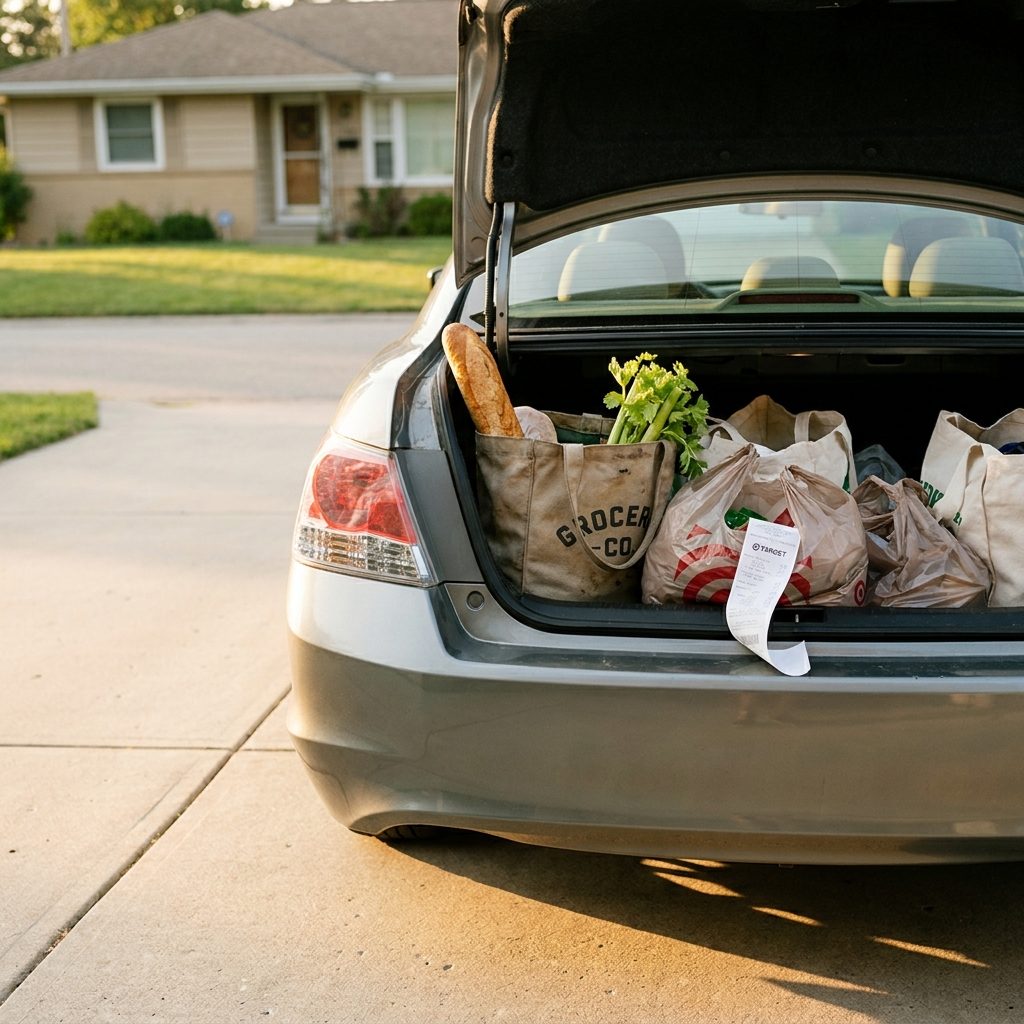
Three stores, four hours, and somehow the bill is higher than if you’d just gone to one place. I did this for years. Aldi for staples, Costco for bulk, the regular grocery store for everything else, and then a quick stop at Trader Joe’s because I was “right there.” Each store had its own gravitational pull. Each one added $30 to $50 in things I hadn’t planned on.
The math rarely works out. Gas, time, and impulse buys at each location almost always exceed whatever you saved on cheaper eggs or that deal on olive oil. And the mental fatigue of managing three different inventories means you lose track of what you already have at home.
Pick one primary store. Learn its layout, its sale cycle, its store-brand winners. Go there with a list. Done. If Costco is your second store, limit it to monthly trips for the five or six things that genuinely save you money in bulk. That’s it. Two stores, max.
Treating Every Warehouse-Club Purchase Like a Deal Even When Half of It Expires Untouched
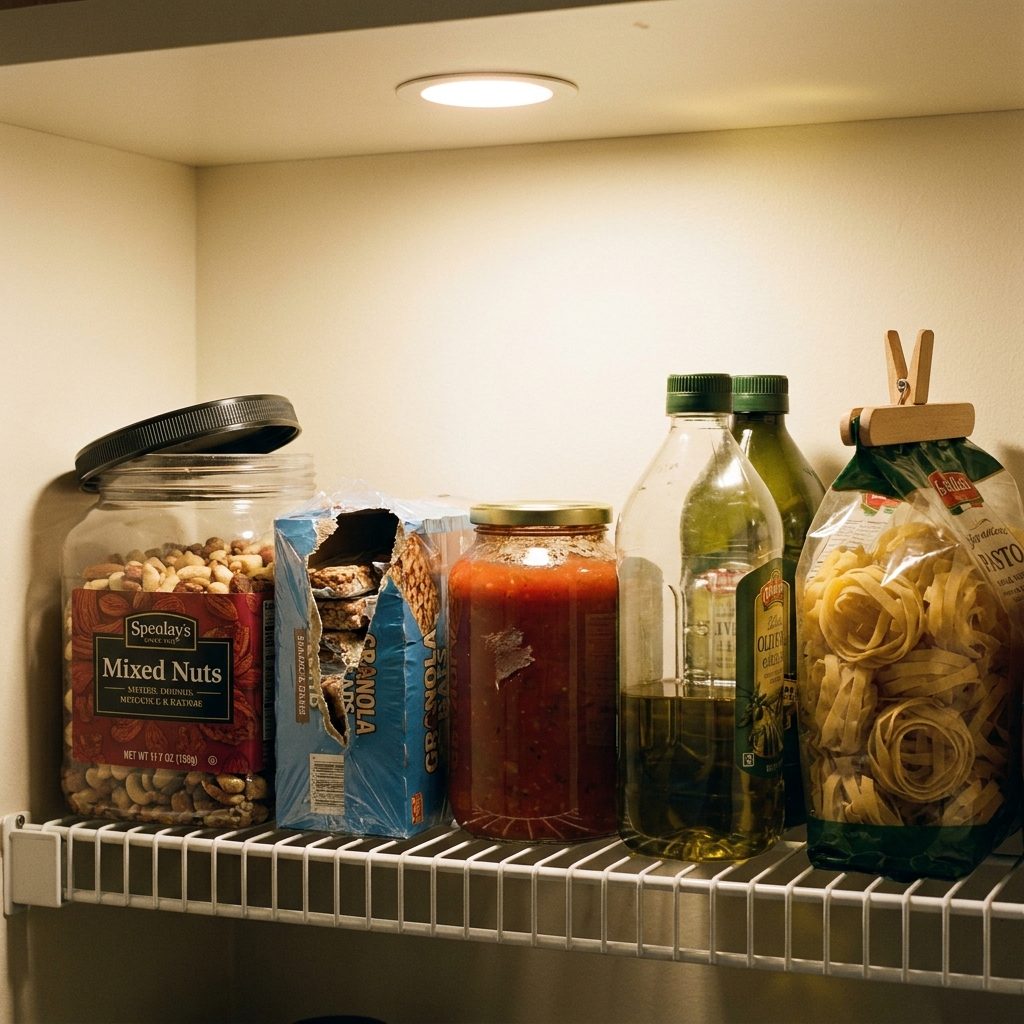
That 48-count muffin pack was $7.99 and seemed like a steal. Three weeks later, thirty muffins are in the freezer getting freezer burn, and the remaining eighteen went in the trash last Tuesday. Warehouse clubs are brilliant at making you feel like you’re winning while you’re actually just pre-paying for waste.
The Real Cost Per Unit
A “deal” only works if you consume the entire quantity before it goes bad. Two gallons of milk for $5 is not a deal if your family drinks one gallon a week. A five-pound bag of spinach is not a deal if it liquefies in the crisper drawer by day four. The actual cost per unit includes whatever percentage you throw away.
Before buying bulk, ask one question: will we realistically finish this? If the answer involves freezing, repackaging, or hoping someone suddenly develops a new snacking habit, put it back.
Buying Individually Packaged Convenience Foods Because Everyone’s Schedules Are Chaotic, Then Wondering Why Groceries Cost More Than Restaurants
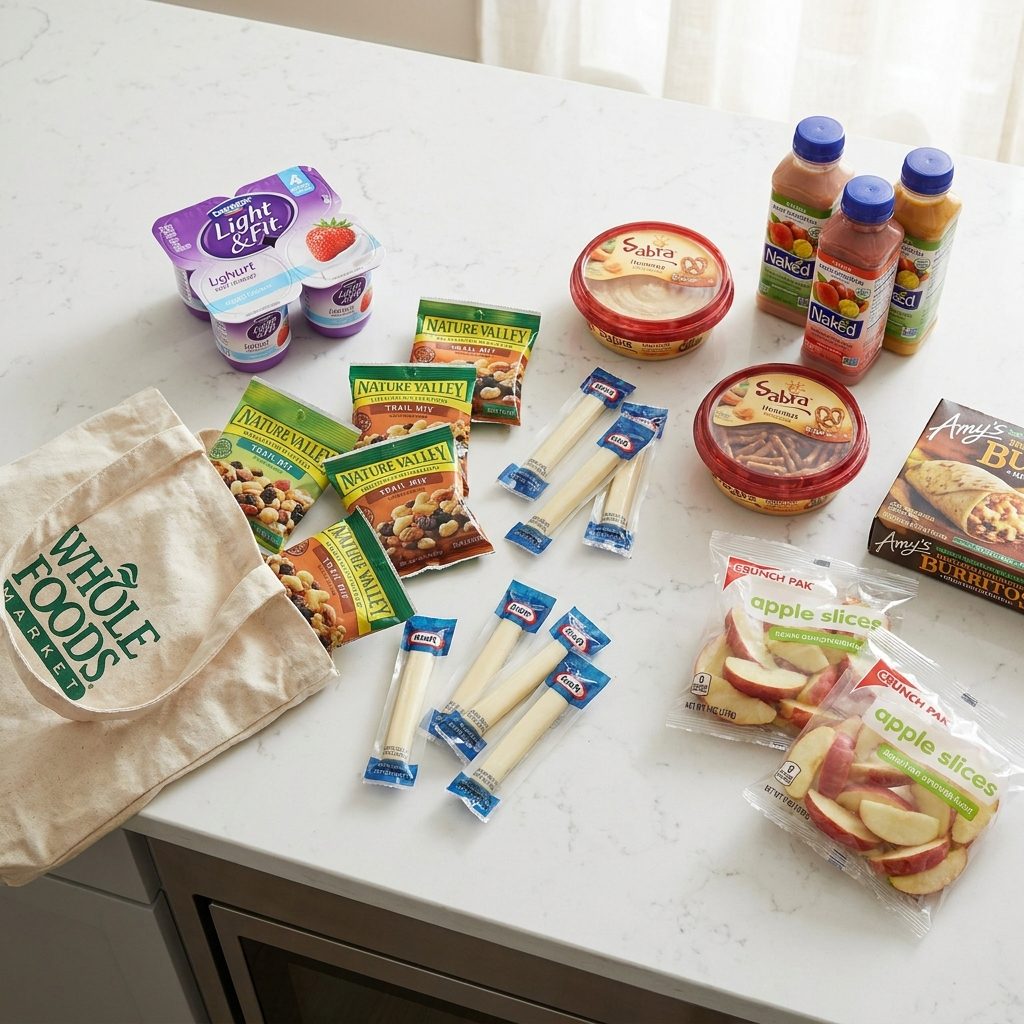
Grab-and-go everything. Single-serve hummus cups. Pre-sliced apple packs. Those little protein boxes that cost $5 for what amounts to some cheese, a few crackers, and six almonds. When four family members are all running in different directions, individual packaging feels like the only sane option. But the markup on convenience is brutal, sometimes 300% or more over buying the same ingredients in regular sizes and portioning them yourself.
A block of cheddar, a sleeve of crackers, and a bag of almonds can make ten of those little snack boxes for the price of two. Spend 20 minutes on Sunday putting snacks into small containers. Reusable glass snack containers or even just zip-top bags. It’s not glamorous meal prep. It’s just dividing food into smaller piles. The savings are genuinely startling once you start tracking them.
Overbuying “Just in Case” Before Storms, Holidays, Sports Weekends, or Guests Who Barely Eat Anything
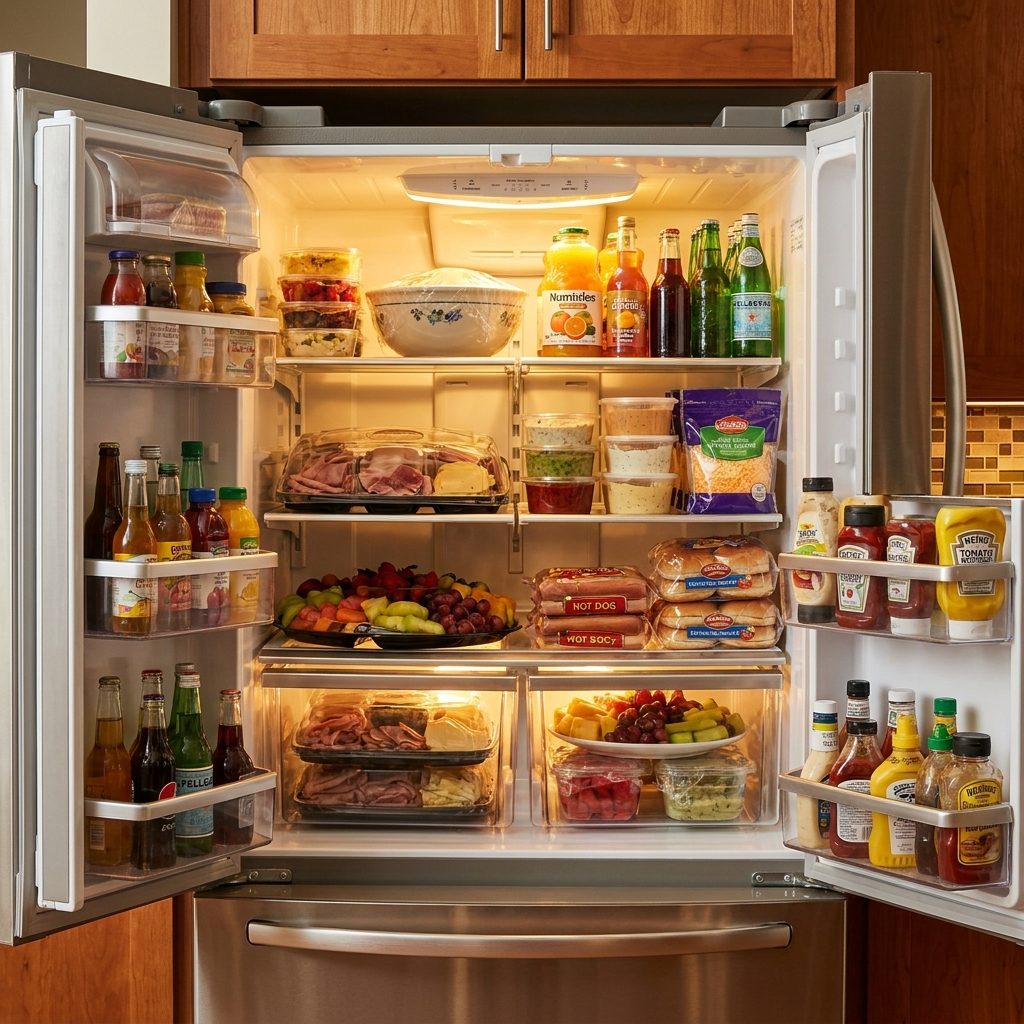
Panic math. That’s what this is. “What if twelve people come instead of eight? What if everyone wants seconds? What if Uncle Rick brings his new girlfriend and she’s a big eater?” So you buy for a small army, and then six people show up, everyone grazes politely, and you’re eating leftover party subs for the next five days.
I’ve been guilty of this before every single Super Bowl since roughly 2004. The wings alone could have fed a second party.
A better approach:
- Plan for the number of confirmed guests, not the theoretical maximum.
- Make one “hero” dish in abundance and keep sides modest.
- Accept that running out of something is not a moral failure. Nobody has ever left a gathering angry about insufficient chips.
Keeping a Pantry Full of Ingredients for Cuisines Nobody Has the Energy to Cook on Weeknights
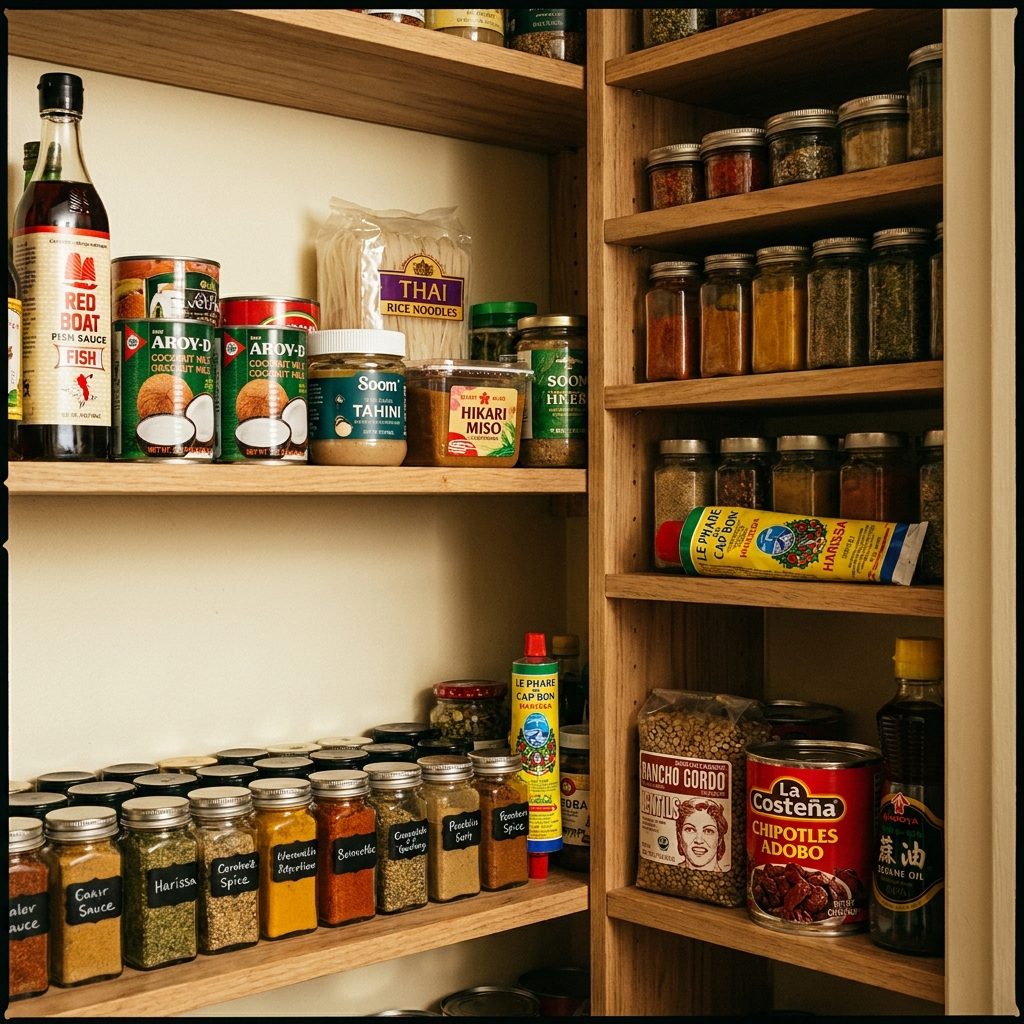
Somewhere in the back of your pantry there’s a jar of preserved lemons you bought in 2022 because a recipe in the New York Times cooking section sounded incredible on a quiet Saturday afternoon. Next to it: tamarind paste, sumac, three different curry pastes, and a bag of dried ancho chiles. All purchased with good intentions. All waiting for a weeknight that never arrives because by 6:30 PM you’re exhausted and the idea of toasting whole spices feels like being asked to summit Everest before dinner.
Those ingredients aren’t bad purchases. They’re aspirational ones. And aspiration has a shelf life. Stock your pantry around the meals you actually make during the week, not the meals you dream about. Keep the adventure cooking to weekends when you have bandwidth. Your Tuesday self doesn’t want to make pad thai from scratch. Your Tuesday self wants pasta with jarred sauce, and that’s completely fine.
Stocking “Healthy Snacks” Nobody Reaches For While the Expensive Berries and Hummus Quietly Die in the Fridge
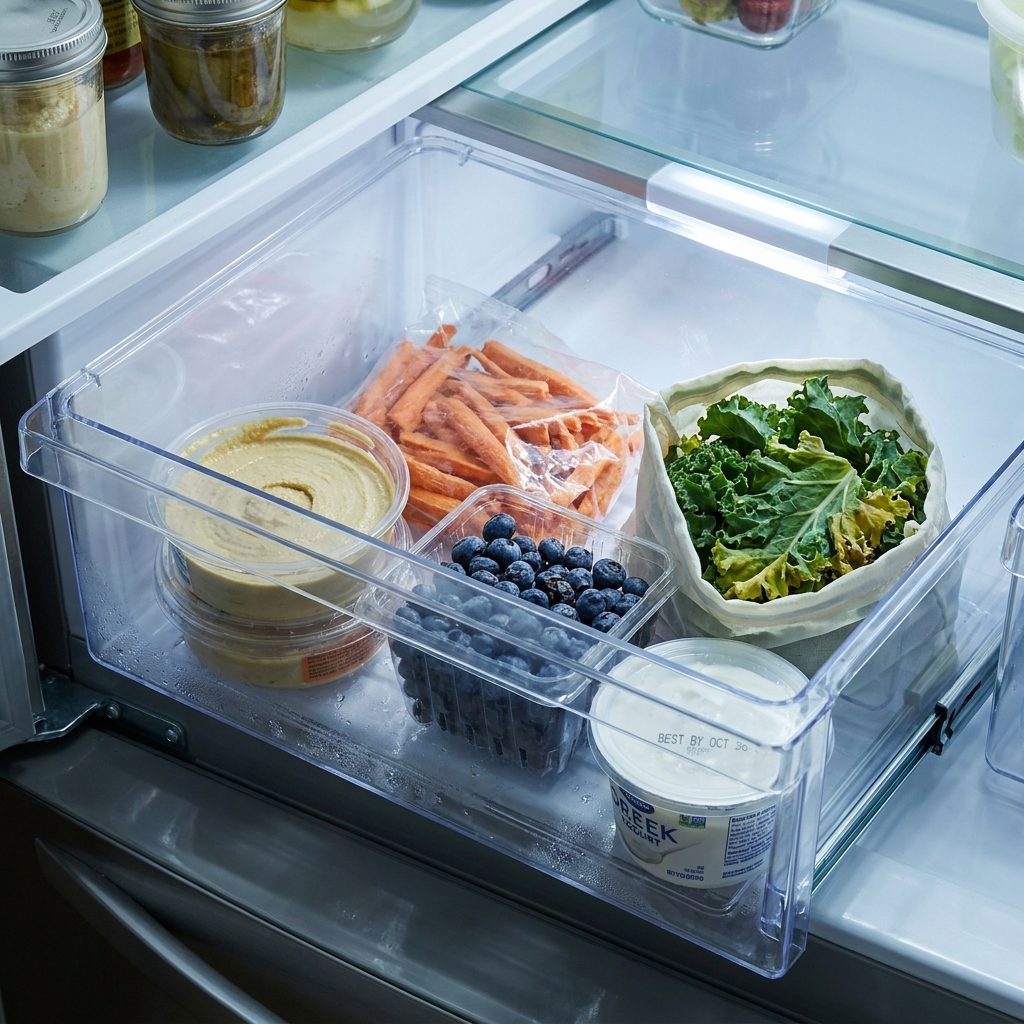
The aspirational snack graveyard. Every fridge has one.
You buy the organic blueberries ($6.99), the fancy hummus ($5.49), the pre-washed sugar snap peas, the little tub of overnight oats. You feel virtuous at checkout. Then everyone gets home, opens the pantry, grabs the chips, and the berries slowly fur over in the produce drawer. This cycle repeats weekly.
Here’s what I finally figured out after years of composting guilt: buy healthy snacks only if someone in the house has already been eating them consistently. Past behavior predicts future behavior. If nobody ate the sugar snap peas last week, they won’t eat them this week either, no matter how prominently you display them. Buy fewer, buy smaller quantities, and put them at eye level where they compete with the easy stuff. Visibility drives consumption more than intention does.
Keeping Too Many Beverage Options, Sauce Varieties, Frozen Snacks, and Specialty Condiments That Quietly Consume Half the Food Budget
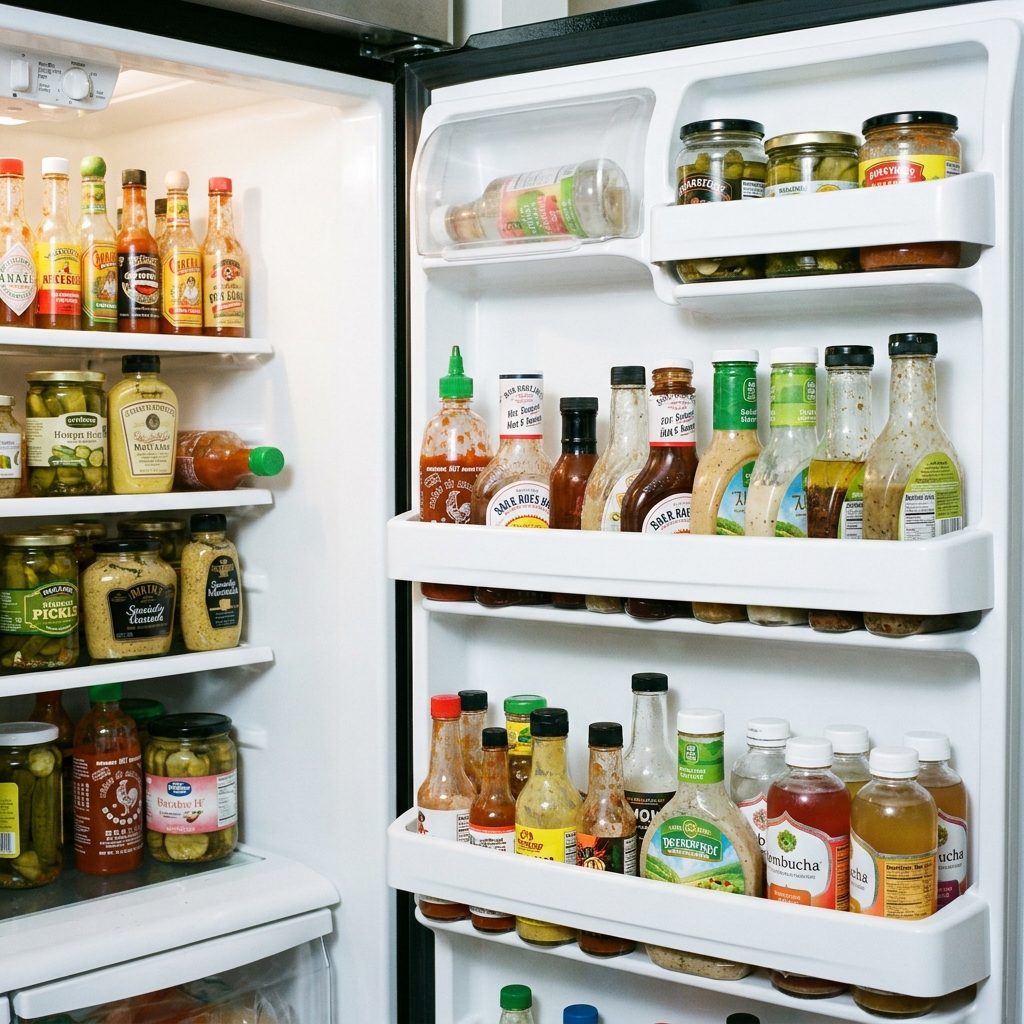
Count the condiments in your fridge door right now. I’ll wait. If the number is north of fifteen, welcome to the club. The door alone probably holds $40 to $60 worth of sauces, dressings, and specialty items, many of which get used once and then live out their remaining days slowly oxidizing behind the sriracha.
And that’s just the door. Add the beverage shelf (sparkling water, juice boxes, kombucha, three kinds of milk or milk alternatives), the freezer snacks (ice cream bars, frozen fruit bars, those little phyllo cups you bought for a party in March), and suddenly a significant slice of your grocery budget is going to things that sit around the perimeter of your meals rather than being the meals themselves.
Do a fridge-door audit. Toss anything expired. Commit to finishing open bottles before buying new ones. And set a rule: no more than three beverage types at a time. Your family doesn’t need a convenience-store selection. They need dinner.
Buying Trendy High-Protein, Organic, Keto, or Wellness Foods Because of Marketing Rather Than Actual Eating Habits
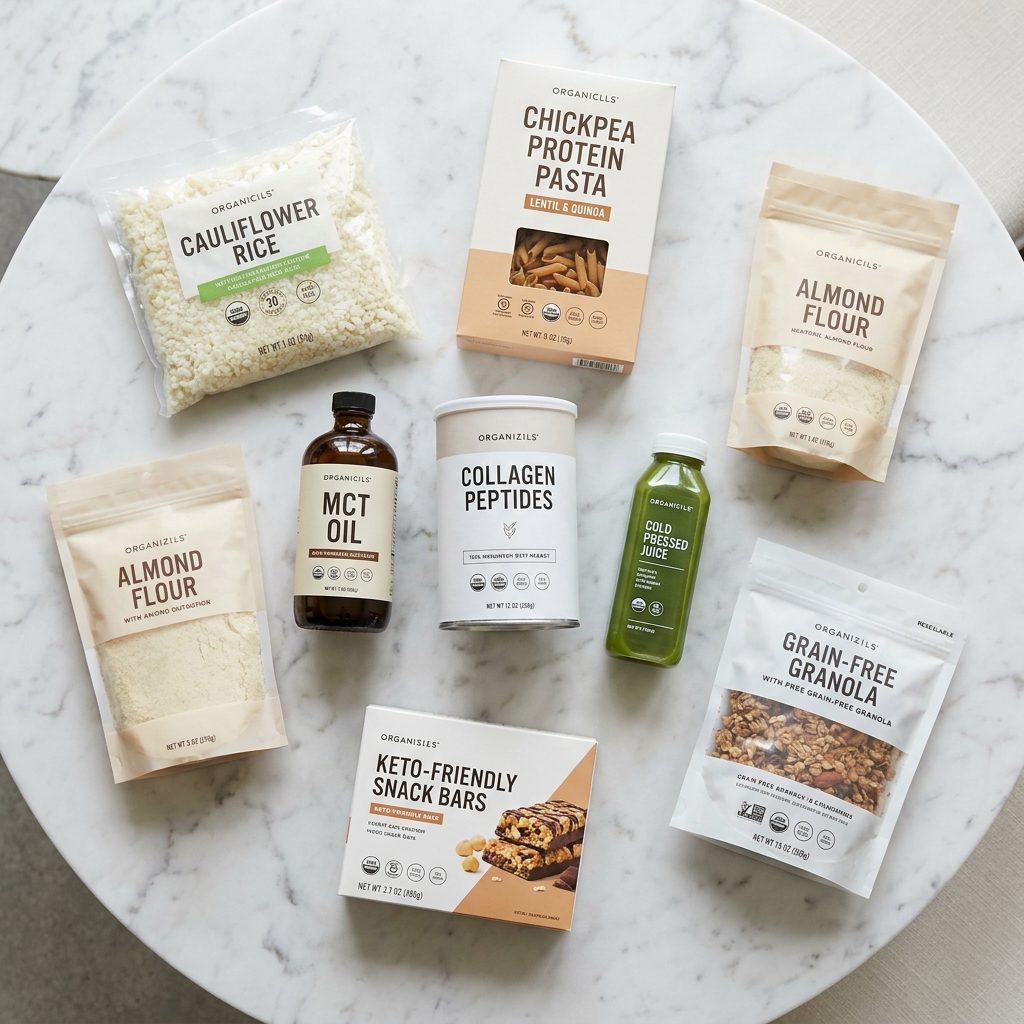
That $8 bag of cauliflower rice is not going to change your life. I know this because I’ve bought it four times and used it once, and even then I added enough butter and cheese to defeat the entire purpose.
Food marketing in 2024 is extraordinarily good at making you feel like buying something is the same as eating it, and eating it is the same as being healthier. The collagen peptides powder, the high-protein pasta, the organic cold-pressed juice that costs more per ounce than decent wine. These products aren’t scams, exactly. They’re just optimized to appeal to who you want to be on Saturday morning, not who you actually are on a tired Wednesday.
Before buying any specialty health food, ask: have I eaten this specific type of product before and enjoyed it? If the answer is no, you’re buying a fantasy, not food. Start with one new item at a time. See if it sticks. The rest of your cart should be built around meals your household already eats and likes.
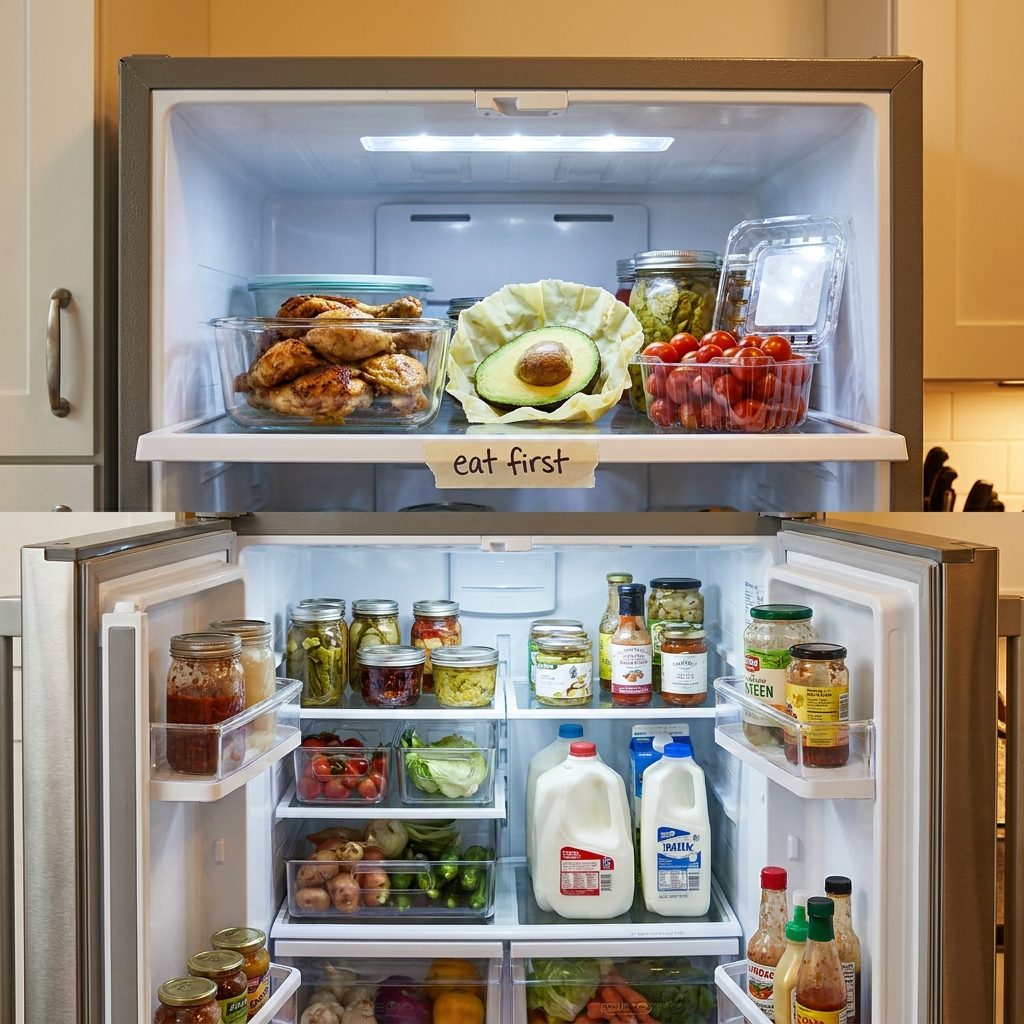
Failing to Designate “Eat This First” Foods in the Fridge, Leading to Constant Spoilage Roulette
Would you like to save this?
Without a system, the fridge becomes a gentle chaos where last Tuesday’s leftover roasted vegetables get shoved behind today’s new groceries and slowly disappear from memory. Three days later you find them, sigh, and throw them out. This happens every single week in most households, and the cumulative waste is genuinely painful once you start paying attention.
The food that’s closest to going bad should be the easiest thing to see and reach. That’s it. That’s the whole system.
Designate one shelf or one clear clear fridge storage bin as the “eat this first” zone. Every time you unpack groceries or put away leftovers, move the oldest perishables there. Opened hummus, last night’s extra pasta, the berries from four days ago, the half avocado. When someone opens the fridge looking for a snack or planning a quick meal, that zone is where they look first. It takes thirty seconds to maintain and can cut household food waste by a shocking amount. I started doing this two years ago and the difference was immediate. Not life-changing. Just obvious, like I should have been doing it all along.
Buying Groceries With No Realistic Plan for the Nights When Everyone Is Tired, Busy, and Emotionally Done With the Day
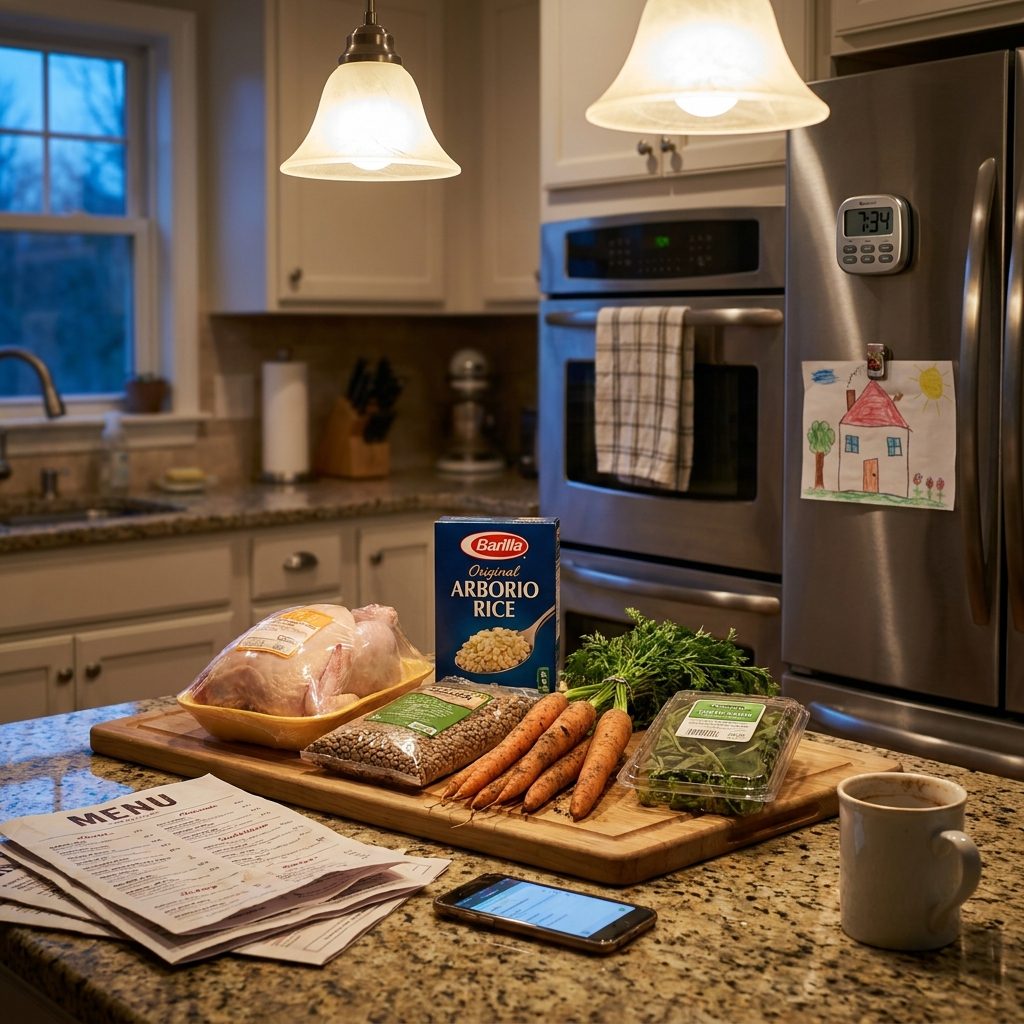
On paper, this grocery trip looks responsible: a cart full of fresh chicken thighs, good produce, a bag of quinoa, three different vegetables that need roasting. Nutritious across the board. Every item also requires you to actually stand at the stove and cook it. And on a Tuesday at 7:15 PM — after someone’s practice ran late, the dog got into something in the yard, and you still haven’t opened your laptop for that thing due tomorrow — not one of those ingredients is becoming dinner. They’re going to sit in the fridge while you order Thai food. By Thursday, those chicken thighs are a guilt-colored science experiment.
Buying ambitious ingredients isn’t the mistake. Buying only ambitious ingredients is. I did this for years. I was convinced that meal planning meant planning meals I’d be proud of, which is absolutely backwards — it means planning for the version of yourself that exists at 7 PM on the worst night of the week. That person needs a twelve-minute meal, not a forty-five-minute project that also dirties the food processor.
The Fix That Actually Sticks
For every three “real” dinners you plan, stock at least two no-effort backups. A box of good dried pasta, a jar of Rao’s marinara, and a block of Pecorino Romano — that’s a complete dinner in the time it takes to boil water. Rao’s marinara sauce tastes closer to homemade than anything else on the shelf, and it keeps forever in the pantry. Beneath that, your emergency layer: a bag of frozen cheese ravioli and a can of San Marzano tomatoes. Tortillas, shredded cheese, and a can of black beans become quesadillas before anyone has time to complain about what’s for dinner. Glamorous? No. But every bit of it gets eaten, which is more than I can say for that wilting bunch of kale you had big plans for.