Would you like to save this?
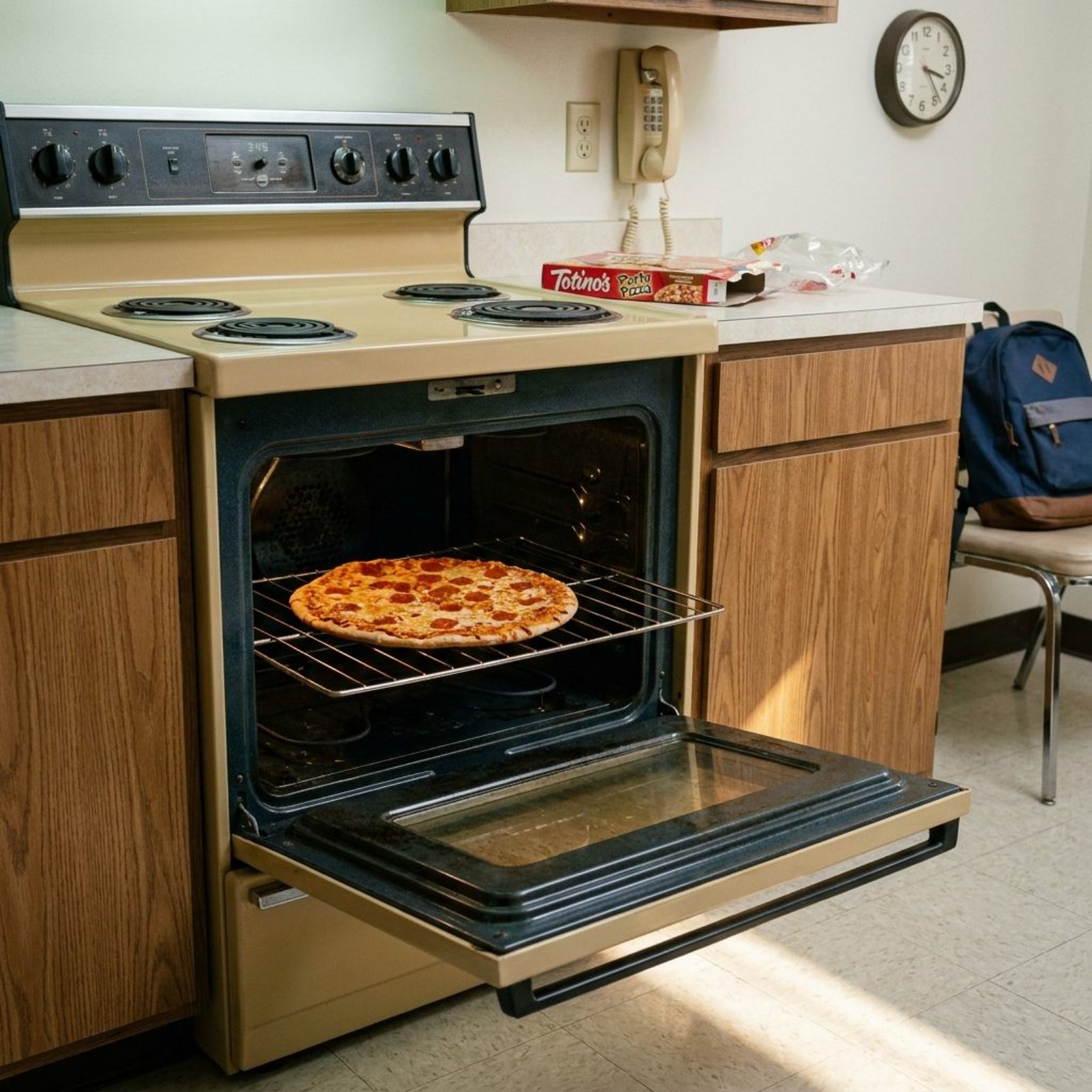
The key was under the mat. The house was empty. Somewhere in the back of that frost-caked freezer, wedged between a bag of peas nobody was ever going to eat and a half-empty tub of Cool Whip, was dinner in a cardboard box. For latchkey kids, that box had real authority. You pulled it out like you had a plan, peeled back the plastic, and studied the directions like the afternoon depended on it. Preheat. Remove from tray. Place directly on center rack if you felt brave.
The oven made you feel older than you were. The cheese always bubbled too fast, the crust always threatened to go from pale to volcanic, and the first slice burned the roof of your mouth because waiting was not part of the skill set. This was independence with tomato sauce on it: a little risky, a little overdone, and somehow exactly what after school was supposed to taste like.
25. The Jeno’s Pizza Roll Box That Rattled Like a Bag of Marbles When You Shook It
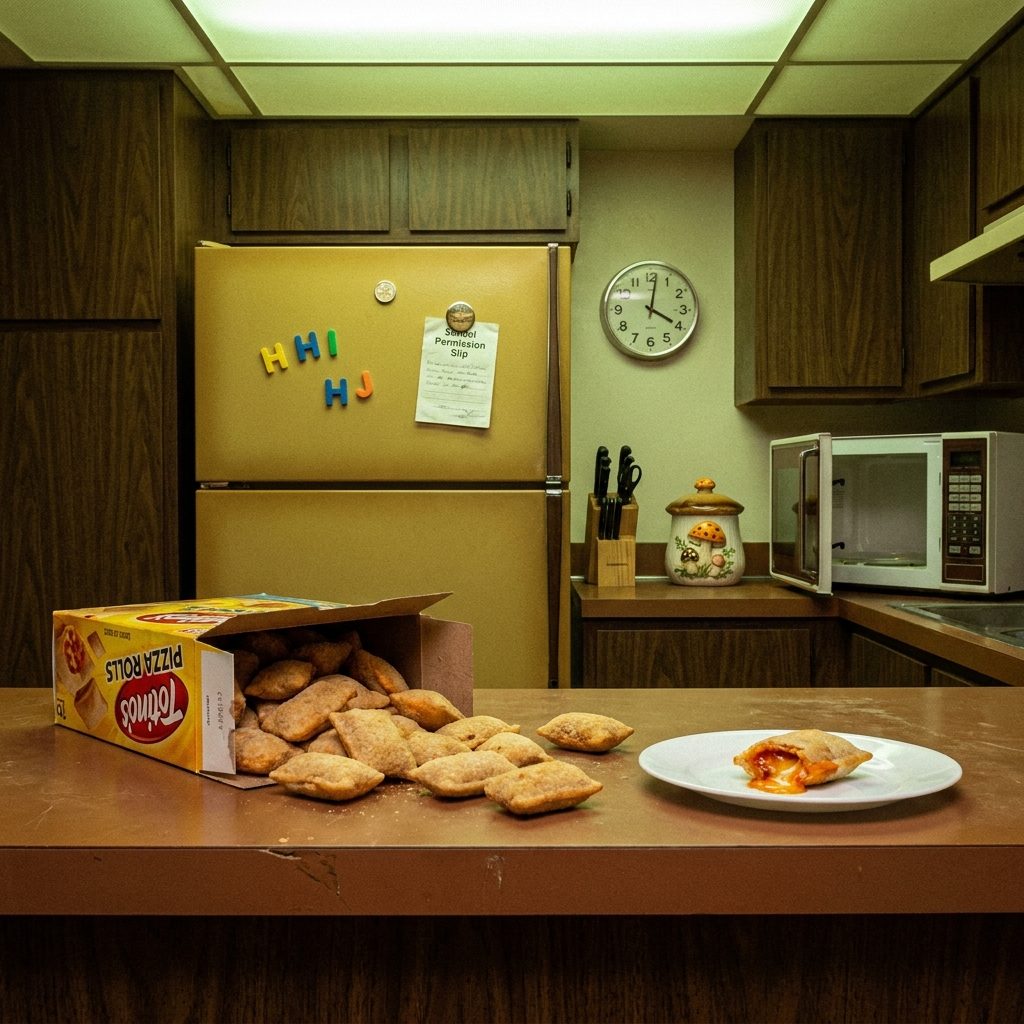
You didn’t cook these. You detonated them. Ninety seconds in the microwave and the outside was still frozen while the filling had become actual lava — no middle ground existed for a Jeno’s Pizza Roll. Wait too long, rubber. Bite too early, and you carried the scar on the roof of your mouth for three days.
That rattle when you pulled the box from the freezer was the unofficial after-school bell. Dump a dozen on a plate, nuke them, eat them standing at the counter while the dog watched with unreasonable hope. Jeno Paulucci sold the brand to Pillsbury in 1985, and they eventually became Totino’s Pizza Rolls. Different box, same thermal assault on your soft palate.
24. Celeste Pizza for One, the Loneliest and Most Perfect After-School Meal
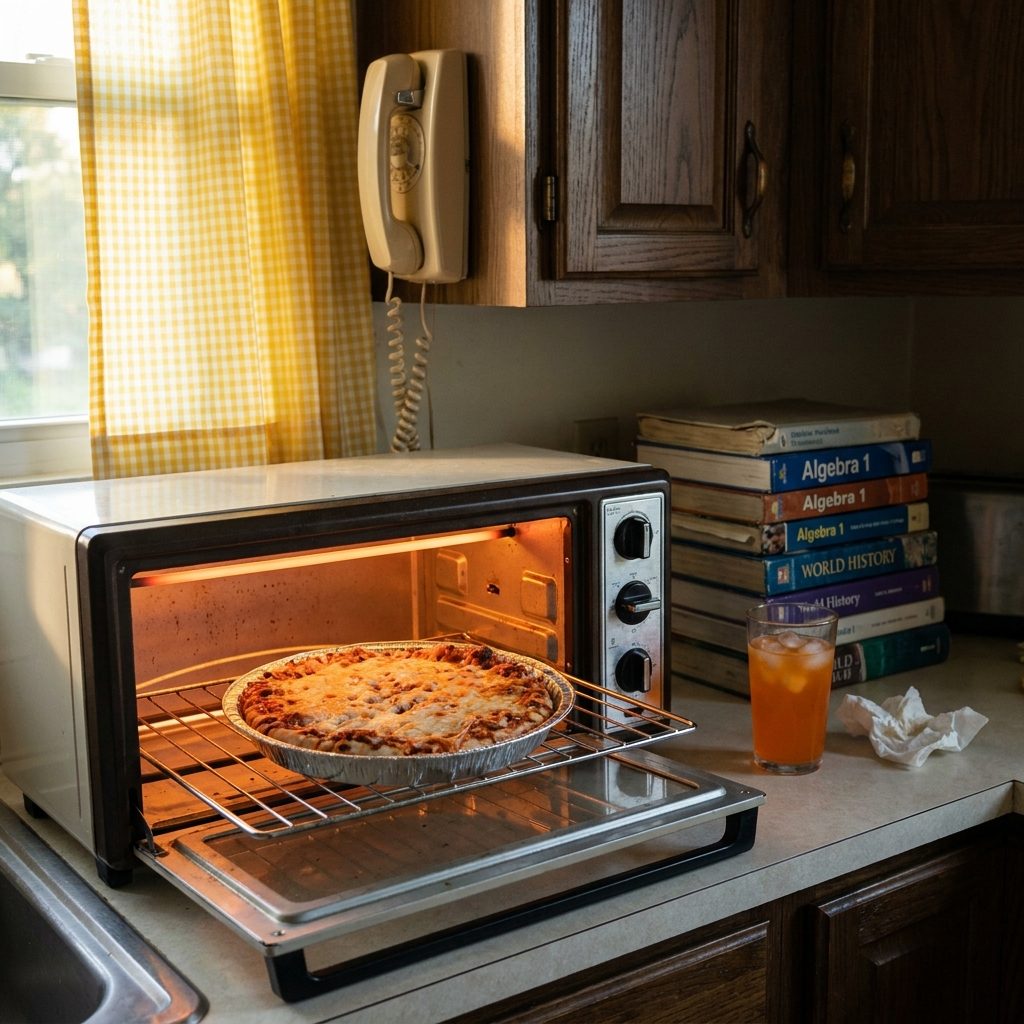
Six inches of frozen pizza on a foil tray. Your name on it. Nobody else’s. In a decade when everything was shared — the phone, the TV, the bathroom — the Celeste Pizza for One belonged to you alone, and that mattered when you were eleven.
Microwaving it produced something closer to a wet napkin with sauce, so the toaster oven was mandatory. Twenty minutes at 425 gave you a crust that actually crunched, and you ate it right off the foil tray because no latchkey kid in 1986 was dirtying a real plate for a pizza the size of a salad plate. The whole ritual — preheat, bake, devour — took less time than one episode of DuckTales.
23. Stouffer’s French Bread Pizza and the Foil Tray You Burned Your Fingers On Every Single Time
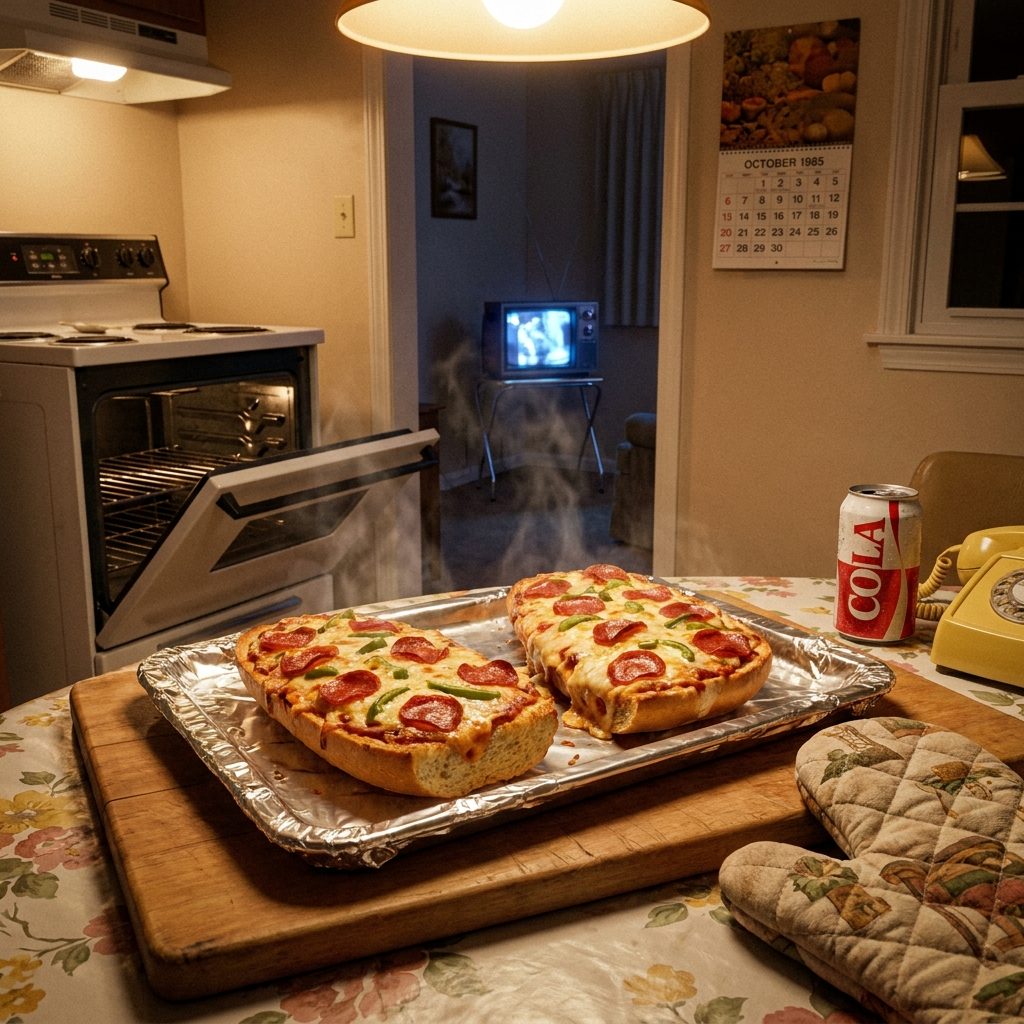
That foil tray came out of the oven approximately one thousand degrees. You knew this. Grabbed it anyway, bare fingers, every single time, then did the little juggling dance to the cutting board while whispering words you weren’t supposed to know yet.
But the pizza itself made the burns worthwhile. The French bread base had real crunch. The sauce was tangy in a way no other frozen pizza sauce replicated. And the cheese — bubbly golden craters with darker spots where it caught the broiler — looked like a tiny edible moonscape. Two halves per box. You told yourself one half was lunch and one was a snack. Both halves vanished in eleven minutes. Stouffer’s understood something the round-pizza brands didn’t: shape matters. French bread felt like real food in a way a flimsy frozen disc never quite managed.
22. Red Baron Pizza and the Cartoon Pilot Who Made Frozen Pizza Feel Like an Adventure
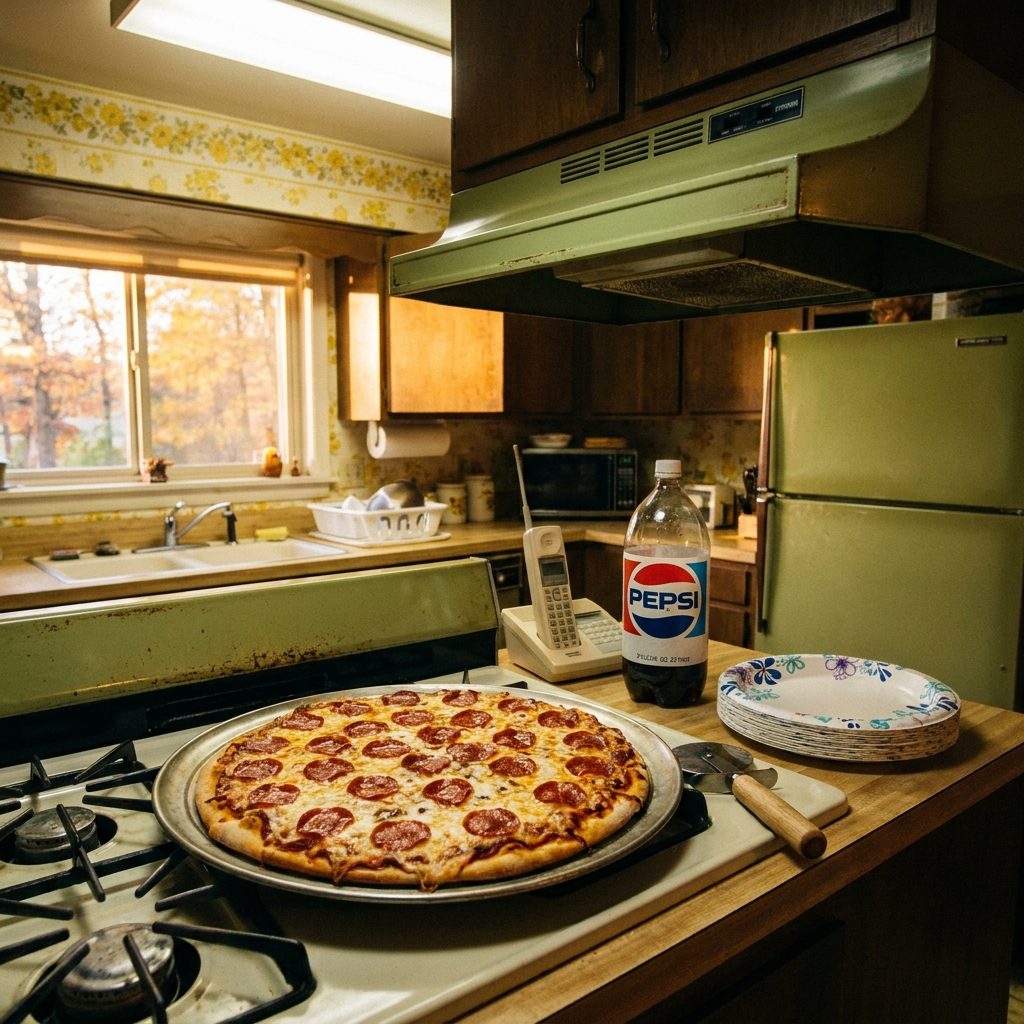
Goggles up, scarf trailing, flying a biplane that had zero business being on a frozen pepperoni pizza box. The Red Baron on the front looked like he was having the time of his life, and somehow that made you grab it off the freezer shelf. Branding is weird like that.
Red Baron was the full-sized pie you graduated to when Celeste felt too small and Mom’s homemade felt too far away. Thicker crust than Tombstone, pepperoni with that specific slight curl at the edges. You baked it on a round metal sheet because nobody owned a pizza stone in 1987. Nobody you knew, anyway.
21. Tombstone Pizza, the One That Took Itself Seriously
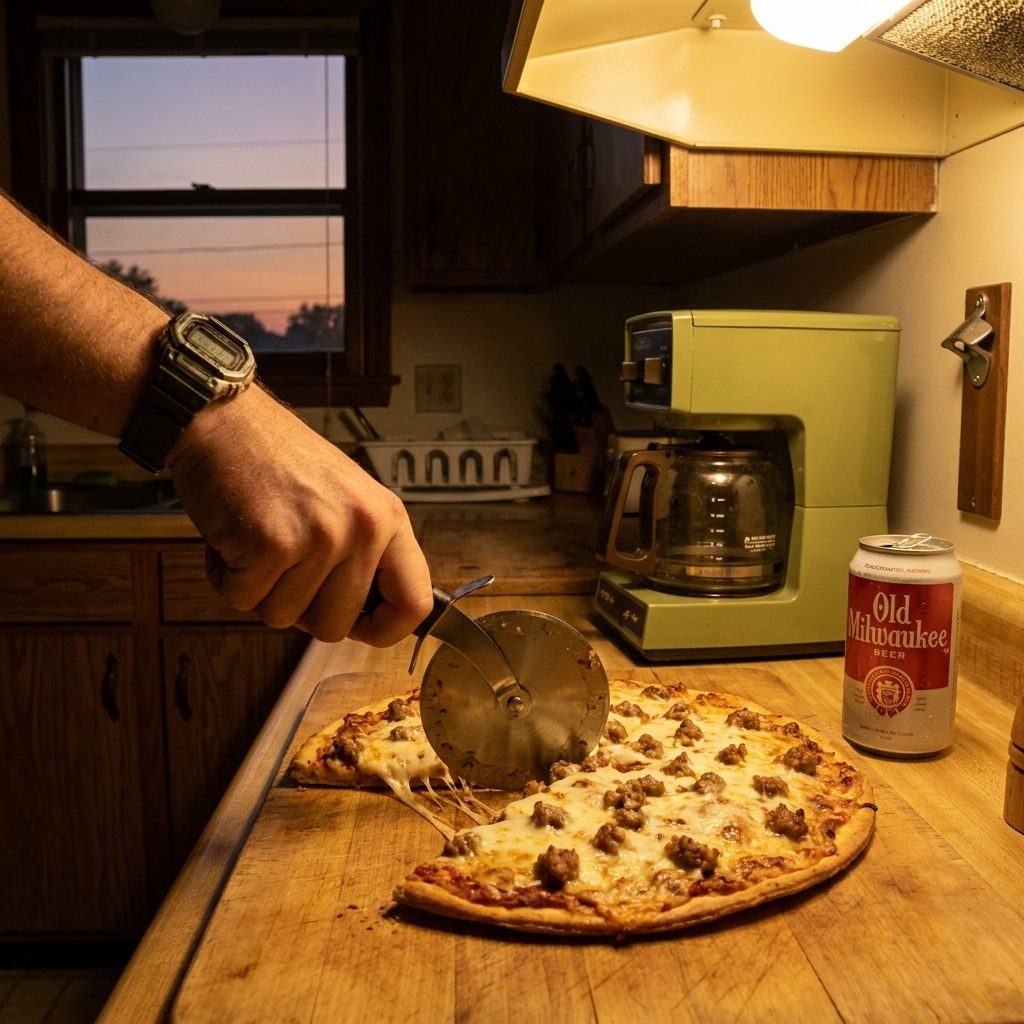
No cartoon mascots. No jingle you could hum. Just a name borrowed from a town in Arizona and a pizza that carried itself like it had somewhere to be.
Tombstone’s crust ran thinner than Red Baron’s — closer to what you’d get at a real pizzeria if you squinted hard enough. This was the frozen pizza dads bought. It sat in the back of the freezer behind the ice cream and the bag of frozen corn, emerging on nights when nobody felt like cooking and nobody felt like calling Domino’s either. A Tuesday pizza. A Wednesday pizza. Not exciting. Reliable. Sometimes reliable is exactly what a weeknight needs.
20. Tony’s Frozen Pizza, the Budget King That Showed Up at Every Sleepover
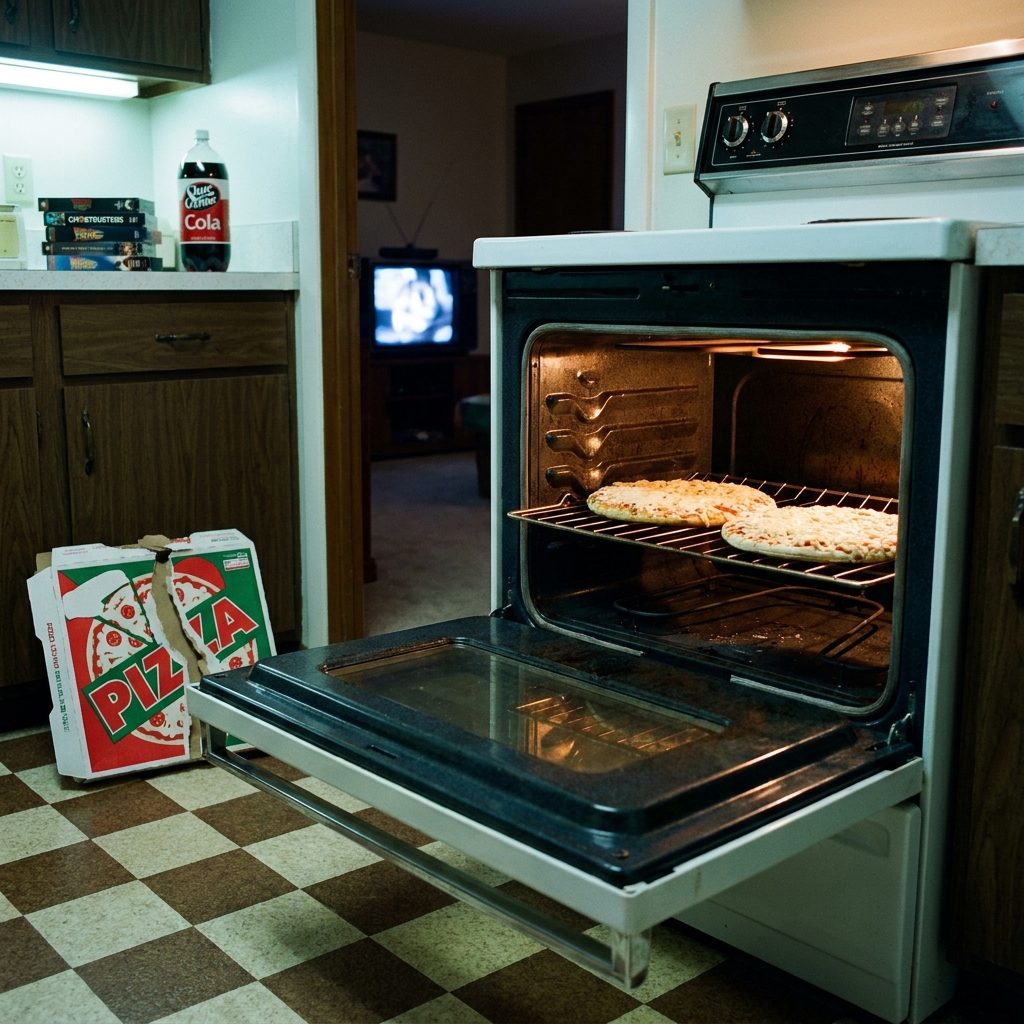
Tony’s cost almost nothing. For a latchkey kid with no allowance and a freezer stocked with whatever Kroger had on sale, Tony’s answered every afternoon hunger pang without requiring a phone call or a parent.
Thin crust — not artisan-thin, more like it was trying to save on dough. Sweet sauce. Cheese distribution so uneven every slice had its own personality. None of that mattered, though. You could demolish four slices guilt-free because each one weighed about as much as a playing card. And at sleepovers? Tony’s appeared in stacks of three or four boxes, because at that price point abundance was effortless. Quantity over quality, and nobody at a fifth-grade sleepover had complaints.
19. Bagel Bites and the Jingle That Gave You Permission to Eat Pizza at Any Hour
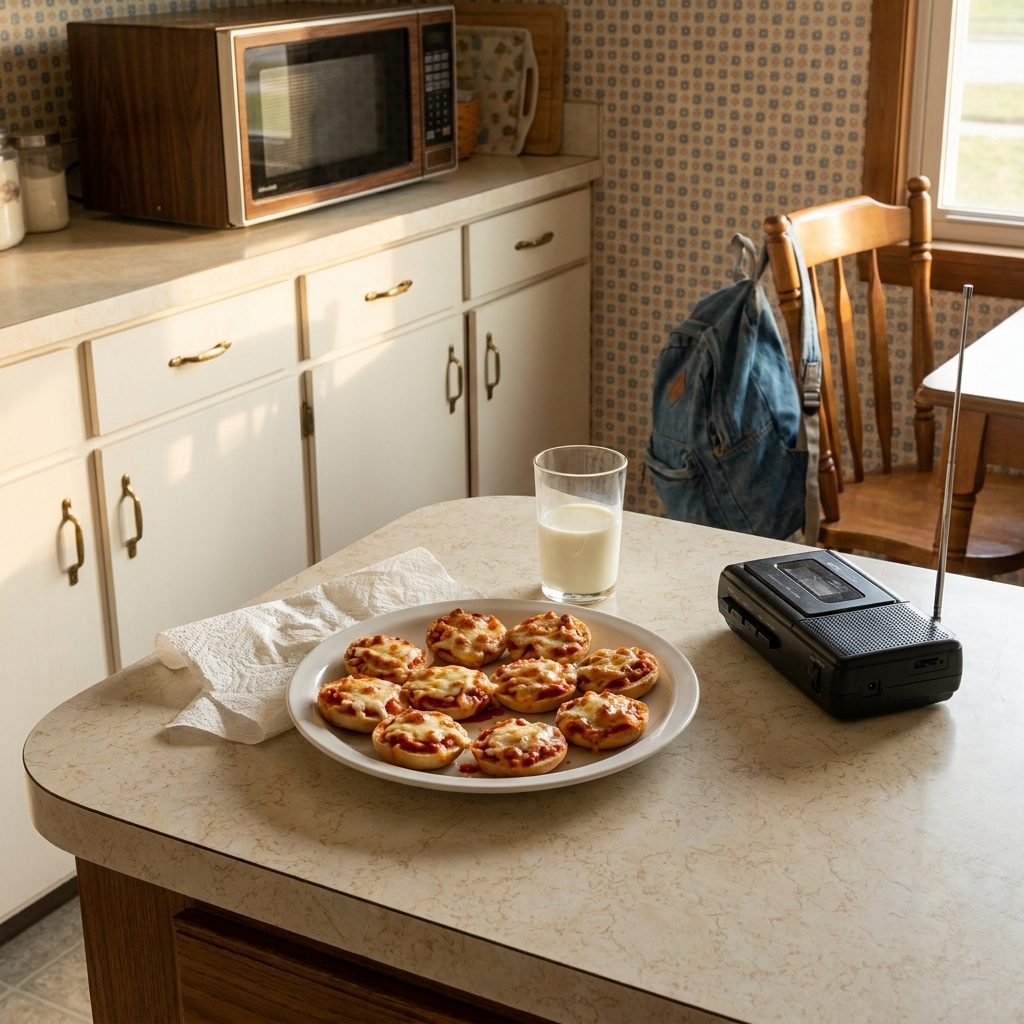
Pizza in the morning, pizza in the evening, pizza at suppertime. When pizza’s on a bagel, you can eat pizza anytime. You just sang that in your head. Don’t pretend otherwise.
Bagel Bites showed up in 1985 and immediately understood their audience: kids who wanted pizza but couldn’t handle a whole frozen pie, and parents who felt marginally better about a snack that contained bread with a hole in it. The serving size was nine. You ate all nine. Tops were molten while the bagel bottoms stayed somehow cold in the center — that cruel microwave trick. The toaster oven fixed this, but patience wasn’t a quality most ten-year-olds brought to an after-school plate of miniature pizza bagels, so you just dealt with the frozen middle and moved on.
18. The Totino’s Party Pizza Crust That Snapped Like a Cracker If You Overbaked It by Two Minutes
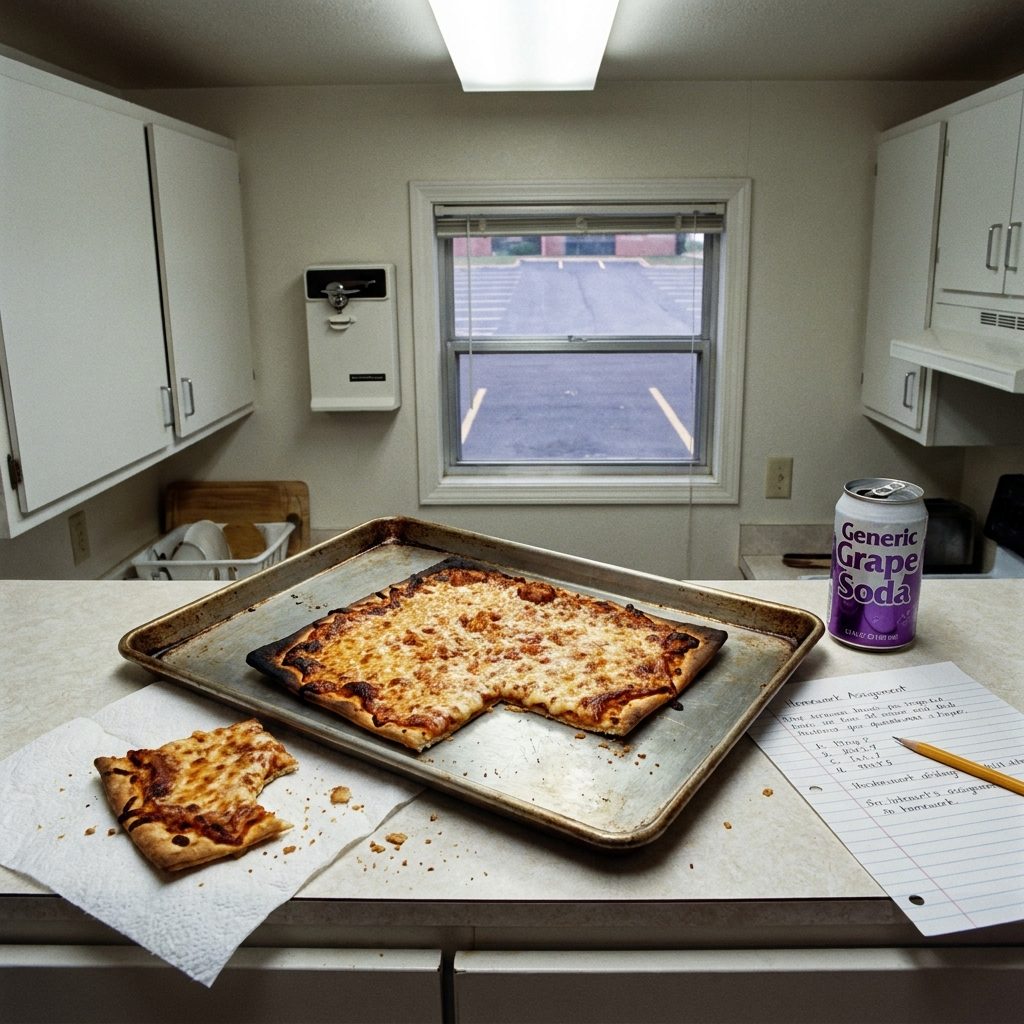
Two minutes was the entire margin between golden perfection and cracker. Totino’s instructions said 12–15 minutes, but you set nothing — watched TV and remembered the pizza only when you smelled it. Sometimes that meant bubbly and gorgeous. Sometimes that meant a crust so rigid it snapped when you tried to fold it, raining crumbs down your shirt.
Both versions got eaten. Honestly? The overbaked one had its own thing going — crunchy all the way through, more snack than meal, a food you could grip with one hand while the other worked the remote. Cost barely over a dollar. The cheapest solo dinner in America, probably.
17. Ellio’s Pizza, the Rectangular Frozen Slices That Came Three to a Box Like a Promise
Would you like to save this?
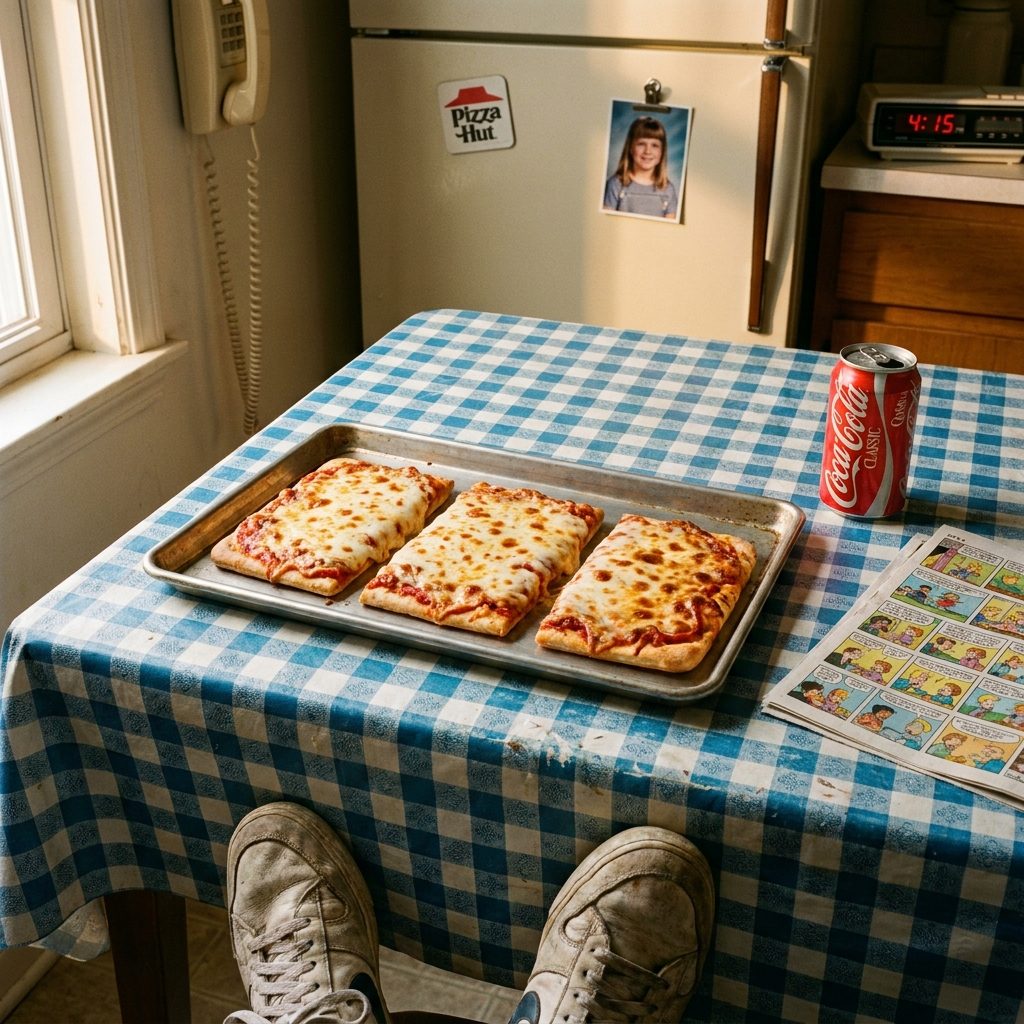
Three rectangular slices per box, each one the exact geometry of a cafeteria slice but better in every measurable way — better cheese, better sauce, and nobody rushing you through a lunch line to finish. Ellio’s was the bridge between school lunch and home.
Microwaved Ellio’s was a tragedy. A genuine culinary crime. But slide those three rectangles onto the toaster oven rack, wait until the cheese hit that specific bubbly-golden moment, and you had something weirdly close to a New York slice. Closer than any round frozen pizza in the aisle ever got, at least.
16. The Mr. P’s Pizza Box With the Mustached Chef Who Looked Like Somebody’s Uncle
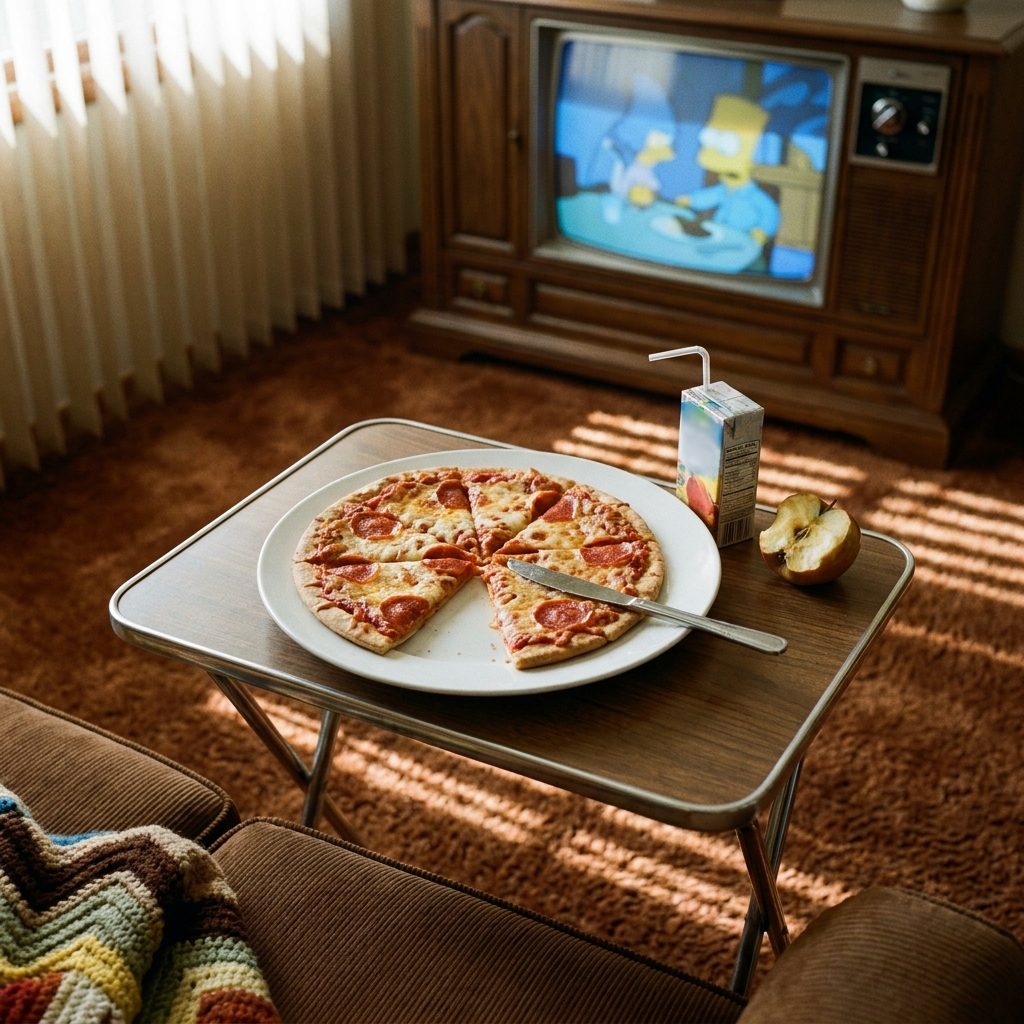
Mr. P’s was the frozen pizza you found when your family shopped at the store that wasn’t the nice store. The mustachioed chef on the box looked like he’d been sketched during a coffee break, and the pizza inside matched that exact level of effort.
Thin. Very thin. Pepperoni slices so sparse they were practically translucent, cheese coverage best described as aspirational. But Mr. P’s cost less than a dollar at some stores, and for a kid home alone with three channels and a toaster oven, it required zero adult involvement. You didn’t compare it to delivery — you compared it to hunger. Hunger lost every time.
15. The Totino’s Party Pizza That Was Never Actually a Party for One
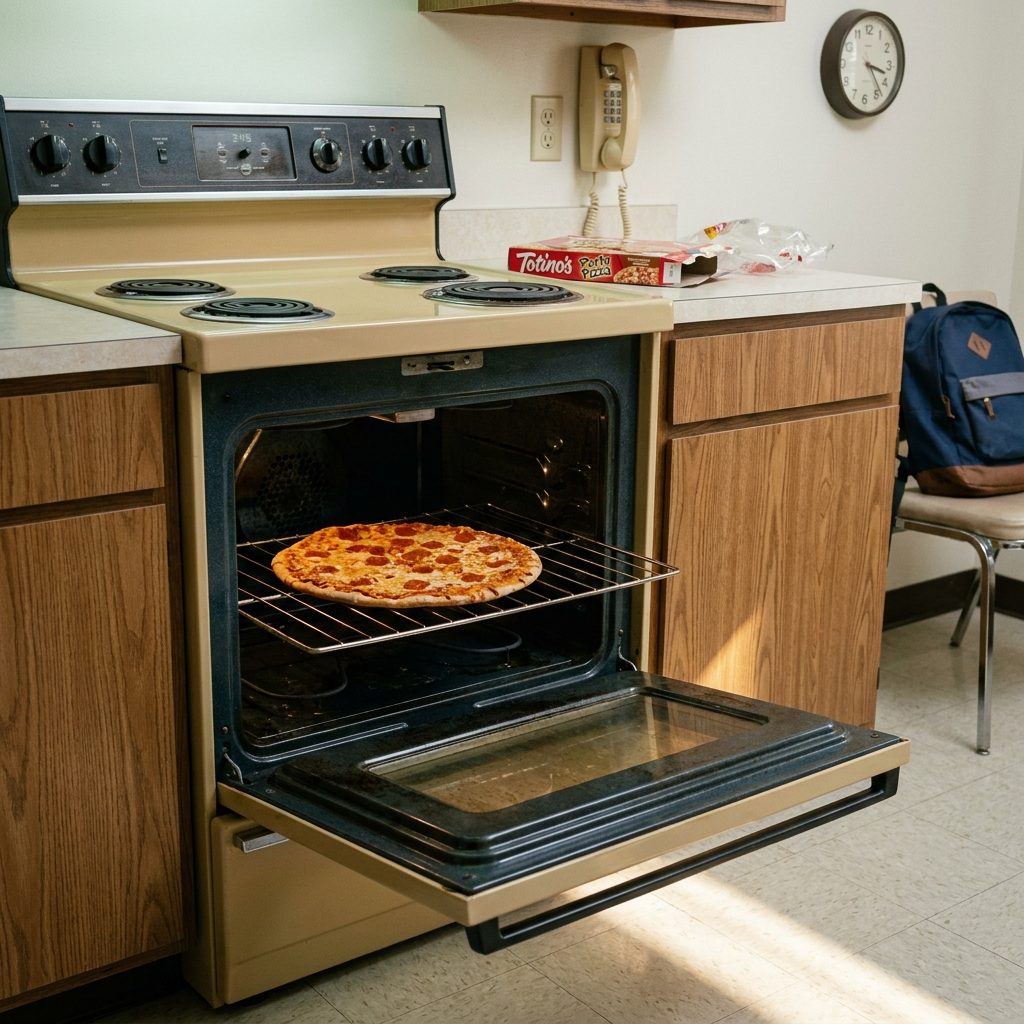
The instructions said 450 degrees for twelve to fifteen minutes, and every latchkey kid in America treated those fifteen minutes like a countdown to something actually good. You knew the drill: pull it out of the freezer, tear the cellophane, slide the whole thing directly onto the oven rack because there was no baking sheet in the world that made it taste better. The crust was thin enough to read a newspaper through. The cheese was less “mozzarella” and more “substance that melted.” The pepperoni curled up at the edges into little orange grease cups, and that was the best part.
Nobody ate Totino’s because it was great. They ate it because it was theirs, start to finish, no adult required. At sixty-nine cents a pizza in 1985, the freezer held four or five at any given time, and the ritual of making one alone in a quiet house at 3:45 on a Tuesday was its own kind of freedom.
14. McCain’s Pizza Pockets and the Molten Cheese That Taught You Patience (or Didn’t)
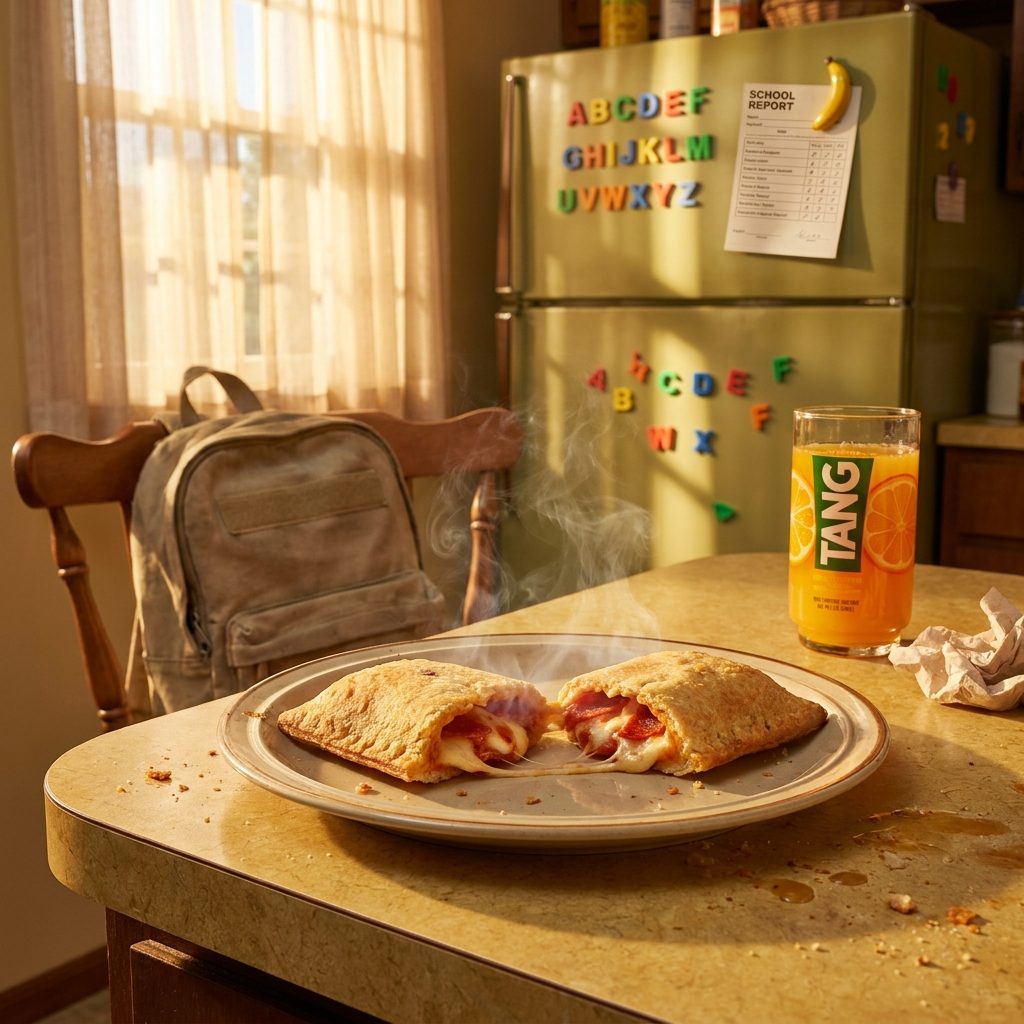
Two minutes out of the microwave and you bit into one anyway. Outside, barely warm. Inside, foundry temperature. That cheese found the exact spot on your palate where the nerve endings lived closest to the surface and just parked there, searing.
Pizza Pockets were the backup plan when a real frozen pizza felt like too much commitment — you could hold one in your hand, eat it over the sink like a raccoon, and still make it back to the couch before the commercial break ended. Nobody ate just one. And nobody waited long enough for the second one to cool down, either, because apparently the first-degree burn taught us nothing.
13. Mama Celeste Rising Crust That Rose About a Quarter Inch and Called It a Day
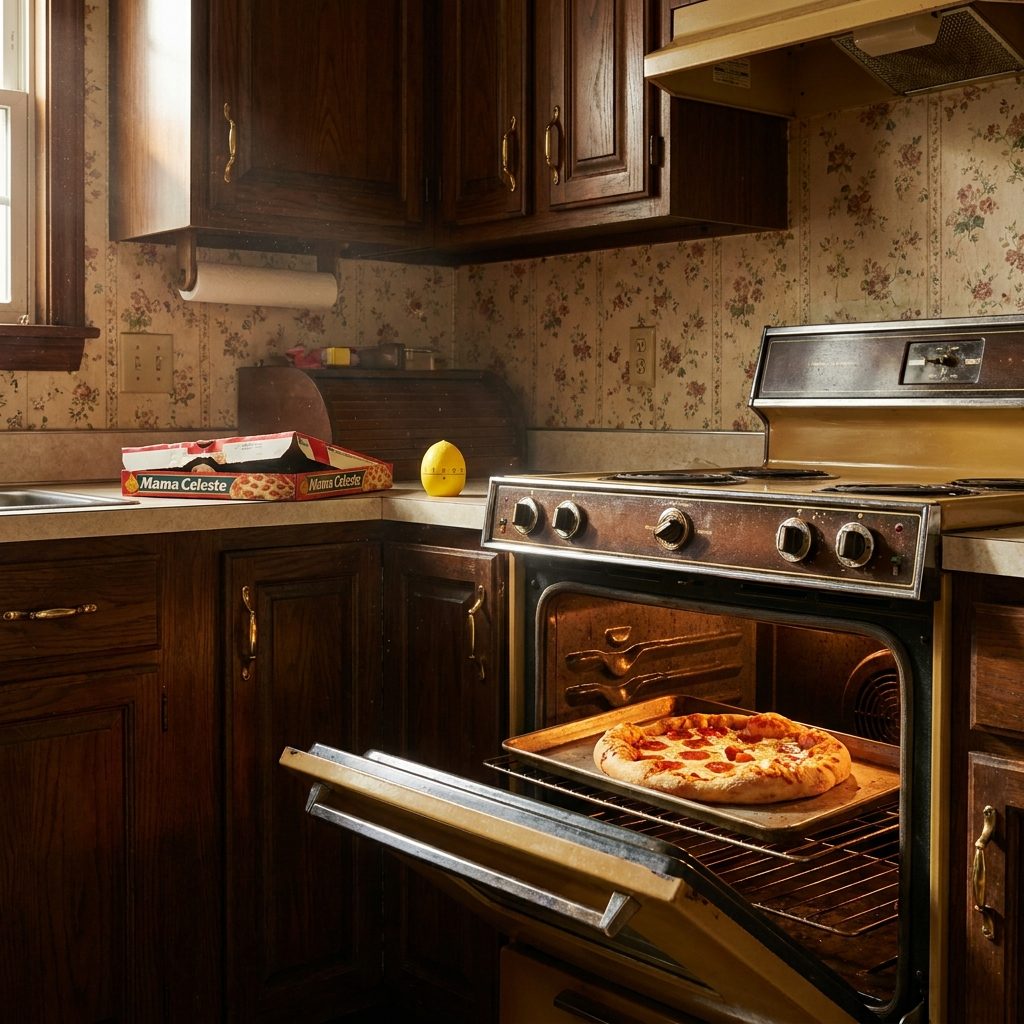
The box said rising crust. The pizza heard the suggestion and gave it about a quarter inch of effort — technically qualifying while impressing no one who’d ever watched actual bread dough do its thing.
But that little pocket of air in the dough changed the texture completely. Not the cracker-snap of Totino’s, not the cardboard chew of the bargain brands. Almost soft. Almost bakery-adjacent. When you were eleven and eating alone at 3:45 on a Tuesday afternoon, almost was more than enough. Honestly, almost felt luxurious.
12. Pappalo’s Frozen Pizza, the Brand You Swore Existed but Nobody Else Remembers
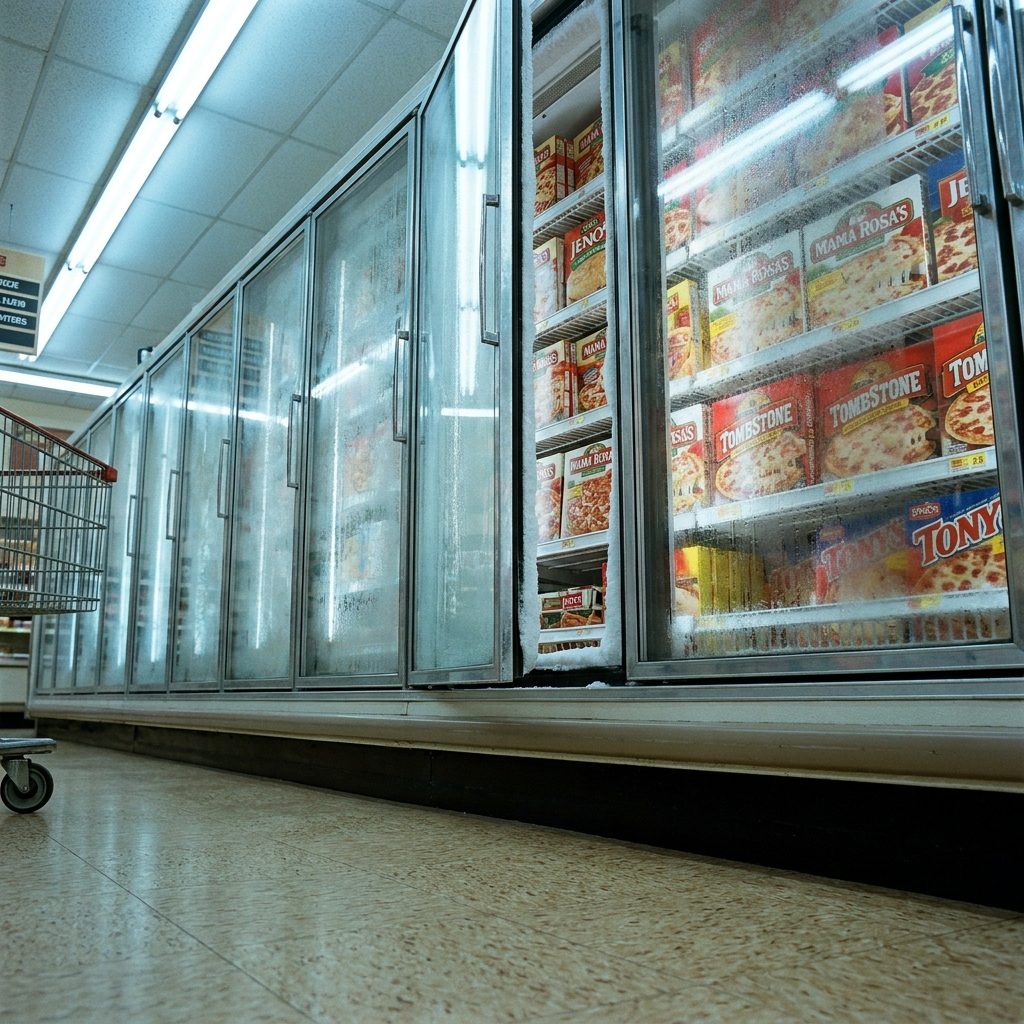
Every region had one. A frozen pizza brand that showed up in your local grocery store for maybe three years, vanished without a press release, and now occupies the same brain drawer as the name of your third-grade teacher’s aide.
Pappalo’s, Palerma’s, Palermo’s, Pappa’s — the names blur together. The pizza was always roughly the same deal: a round disc, sauce that leaned sweet, cheese that browned in patches, crust that tasted faintly of the cardboard circle beneath it. You ate it. Fine. Then it disappeared and the freezer aisle carried on without it, and you spent decades half-convinced you’d invented the whole thing.
11. The Microwave Frozen Pizza Era, When We All Pretended Rubber Crust Was Acceptable
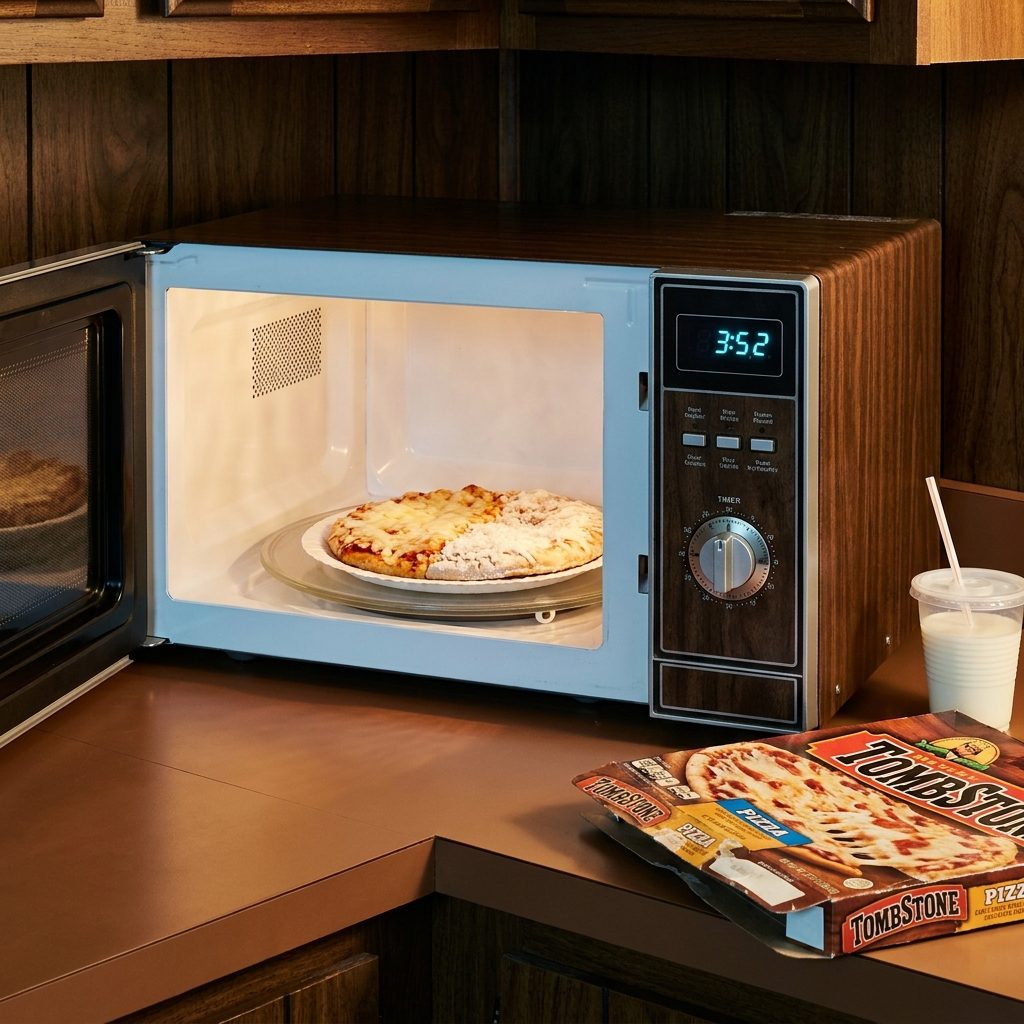
The oven took twenty minutes. The microwave took four. For a latchkey kid with a Thundercats rerun starting in six minutes, this was not a difficult calculation.
What the microwave did to frozen pizza deserves its own forensic investigation. The crust went from frozen to leather in ninety seconds, the cheese melted into a single rubbery sheet you could peel off whole like a latex glove, and the sauce underneath ran both scalding and flavorless at the same time. The center stayed cold. Always. A microwaved frozen pizza had temperature zones like a swimming pool in April — step two inches in any direction and you’re in a different climate.
We ate it anyway. Hundreds of times. The oven was the right way, sure, but the microwave was our way, and nobody was home to argue.
10. Jeno’s Crisp ‘N Tasty, the Pizza That Delivered Exactly What the Name Promised and Nothing More
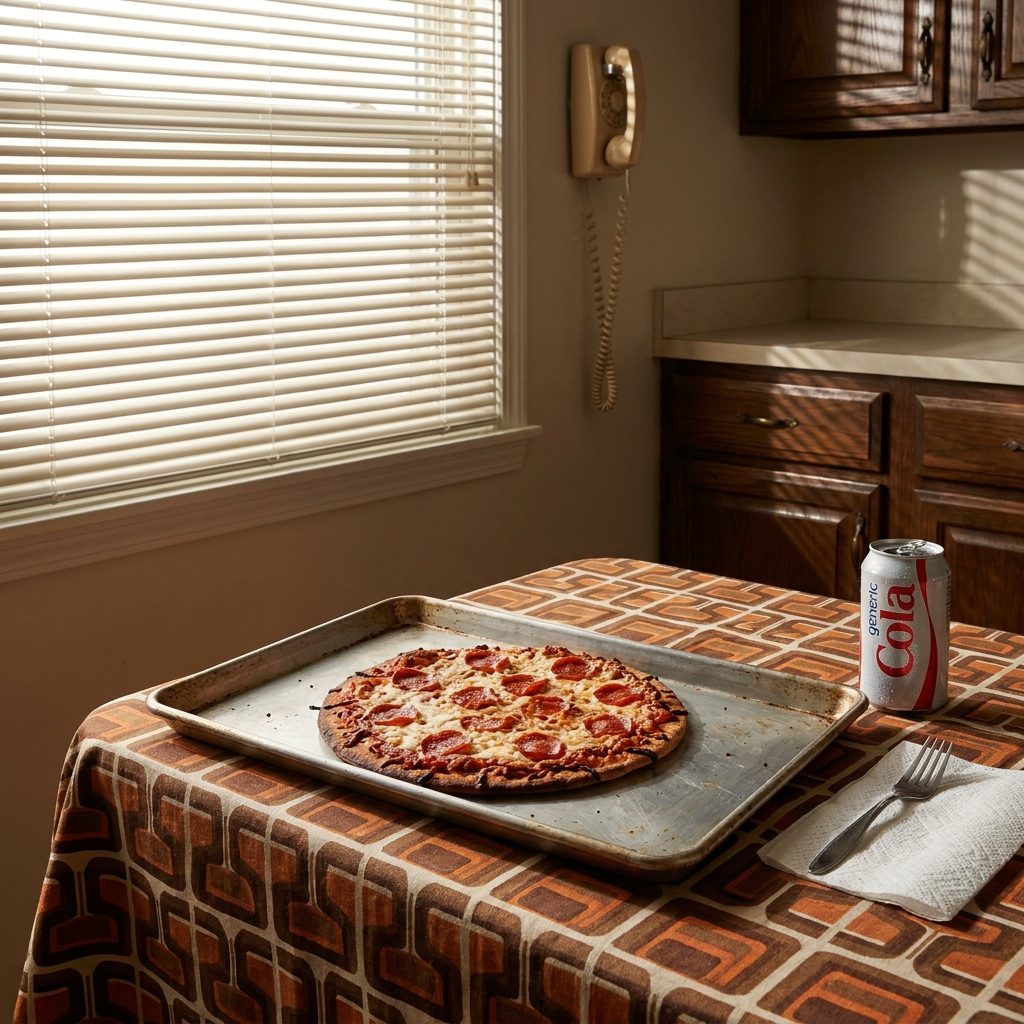
Crisp. Tasty. That was the entire pitch, and Jeno’s had the decency not to oversell it. No rising crust promises, no stuffed-edge ambitions, no pizzeria comparisons. Take it or leave it.
The crust was thin enough to see through if you held it up to a lamp, but baked right it had a shatterpoint crunch that was genuinely satisfying — unreasonably so for what was basically a seasoned cracker with toppings. Sparse cheese. Sweet, simple sauce. A pepperoni Crisp ‘N Tasty weighed about as much as a magazine and fed one hungry kid or two who weren’t that hungry but were splitting it because Mom bought one box and siblings existed. Jeno’s understood its lane and stayed in it, which is more than you can say for most frozen pizza brands that came after.
9. The Pillsbury Microwave Pizza That Came With Its Own Gray Plastic Tray
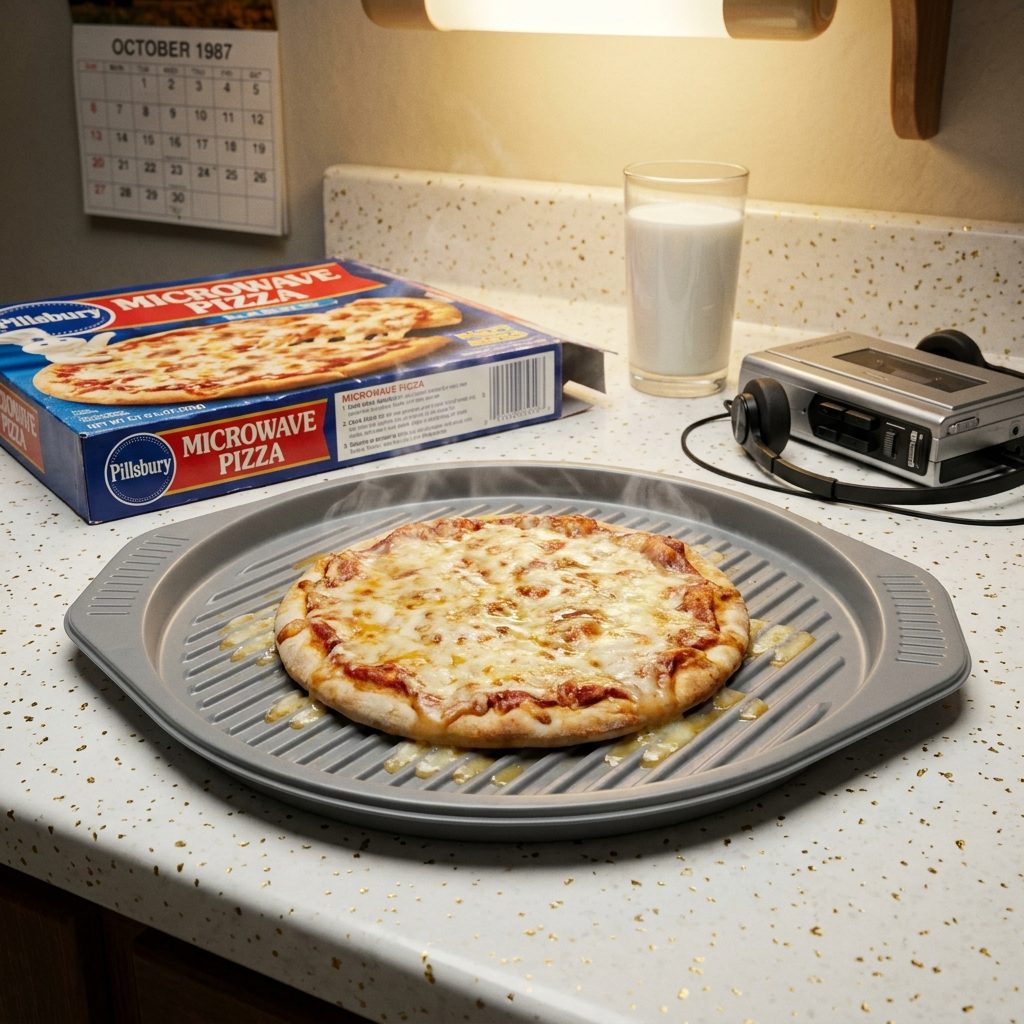
Pillsbury tried to crack the microwave pizza problem by including a special gray plastic tray with ridges. The idea: the raised grid would lift the crust off the turntable surface, let air circulate underneath, and produce something approaching crispness.
Generous theory.
What you actually got was a crust that went from frozen to warm and pliable — an improvement over outright rubber, sure, but it wouldn’t fool anyone who’d ever used an oven. The tray itself became a permanent resident of the kitchen junk drawer, repurposed as a paint palette, a coin sorter, or the mystery object your mom held up every time she cleaned. “What IS this gray thing?” It’s from the pizza, Mom. Always has been. Always will be.
8. Chef Boyardee Pizza in a Box, the Kit That Made You Feel Like You Were Cooking
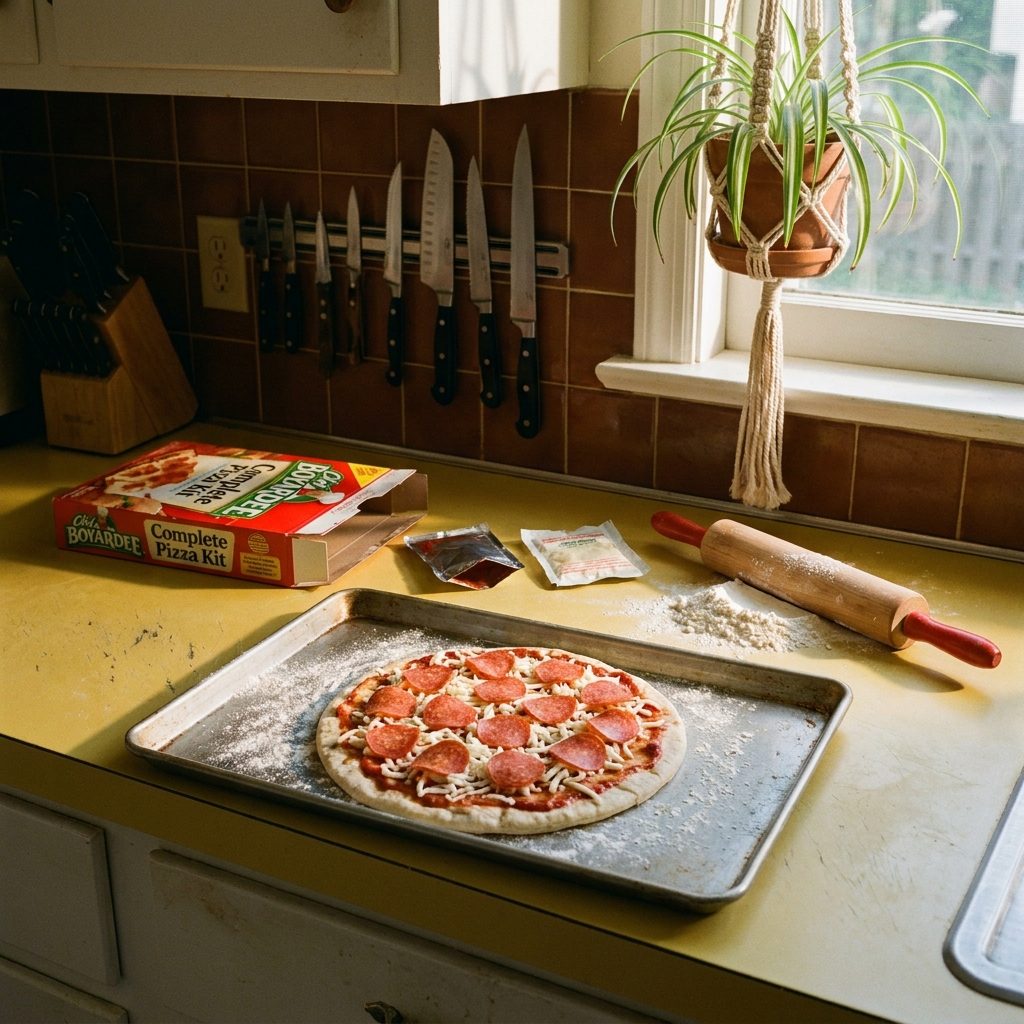
Not a frozen pizza. A kit. And that distinction mattered enormously when you were nine.
You opened the box and found a pouch of dough mix, a can of pizza sauce, and a packet of grated cheese that smelled frankly terrible. Didn’t matter. You were a chef now. Rolling out the dough was a nightmare — it stuck to the counter, the rolling pin, your hands, your shirt, and when you peeled it off one surface it bonded instantly to the next. Eventually you wrestled something roughly circular onto a cookie sheet, smeared the sauce on with a spoon, and scattered the cheese like you were feeding pigeons.
Thirty minutes later you had a pizza that looked like a crime scene and tasted like absolute victory. You made this. The fact that it came from a $2 box on a grocery shelf? Irrelevant.
7. Fox Deluxe Pizza, the Dollar Pizza That Lived in Every Bodega Freezer
Would you like to save this?
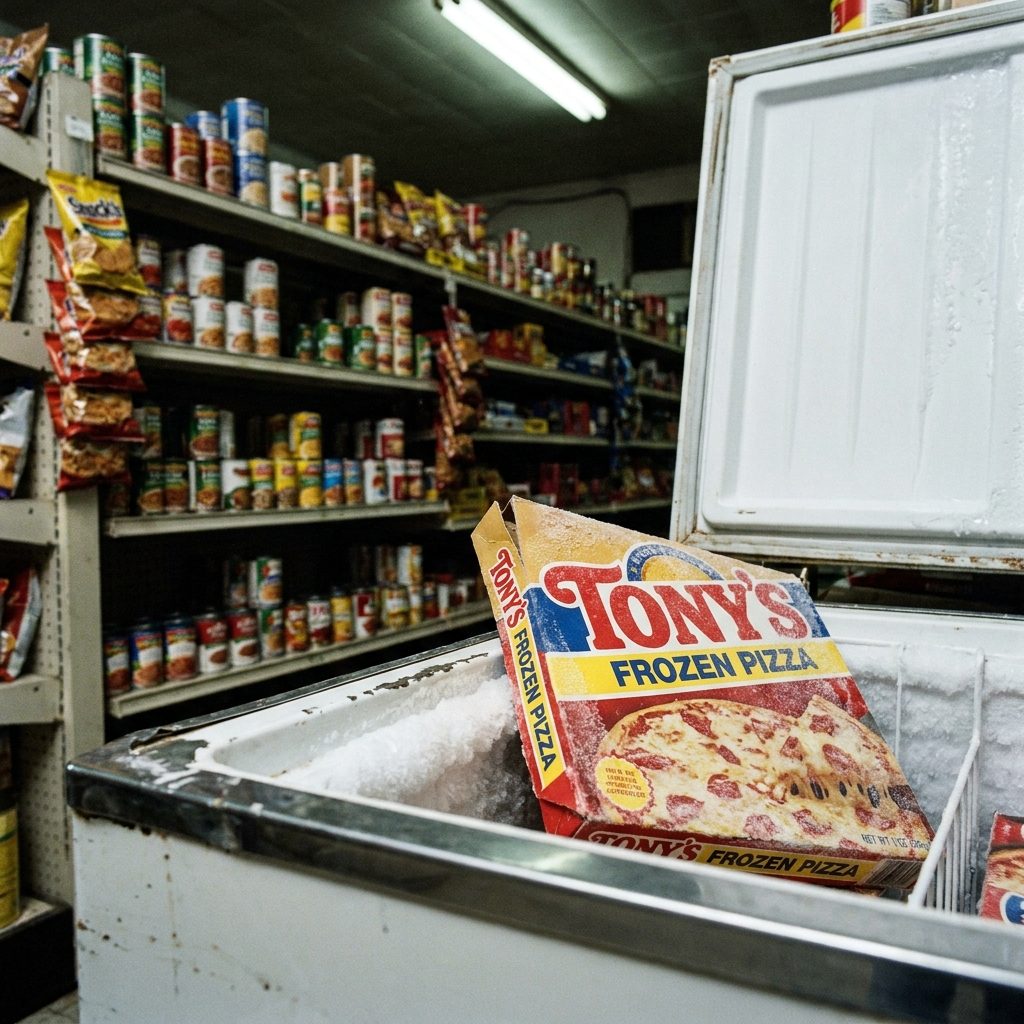
A dollar. Sometimes less. Fox Deluxe occupied the absolute basement of the frozen pizza hierarchy and made zero apologies about it. No promises about quality. No claims about flavor. Pizza. Dollar. Done.
The cheese had a texture suggesting it had once been near a dairy farm, possibly in a neighboring county. The sauce tasted like ketchup’s quieter, less ambitious cousin. And the crust matched the thickness and flexibility of the cardboard round underneath it so closely that more than one kid ate part of that cardboard by accident and didn’t notice for two bites. Maybe three.
Fox Deluxe wasn’t good. But it was there — in every freezer case, in every corner store, waiting for someone with four quarters and the bare minimum of expectations. Honest work, honestly done.
6. The Frozen French Bread Pizza From the School Book Fair That Cost Three Tickets
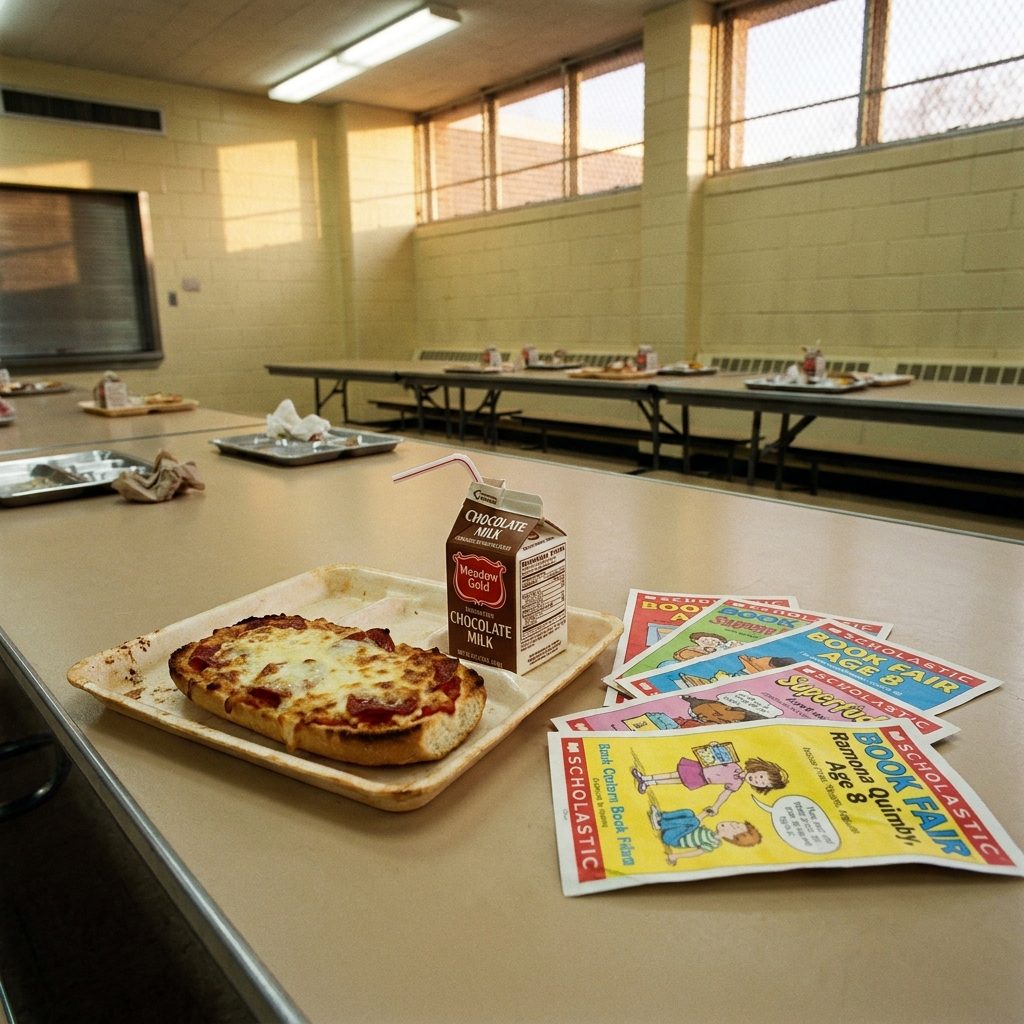
Not every frozen French bread pizza lived in your home freezer. Some showed up at school events, wrapped in foil, lukewarm by the time they hit your tray, served beside a juice box and whatever fundraiser was happening that week.
The school version was always a half-piece — one long rectangle of French bread with sauce, cheese, and occasionally a pepperoni or two that had curled into tiny grease cups. Never hot enough. Slightly stale at the bread’s edges where the foil hadn’t sealed right. But it was pizza at school that wasn’t the cafeteria rectangle, and that novelty alone turned a mediocre lunch into something resembling an occasion. We were easily impressed. Or maybe just hungry.
5. The Totino’s Pizza Rolls Commercial Where the Kid Opened the Freezer Like He’d Found Buried Treasure
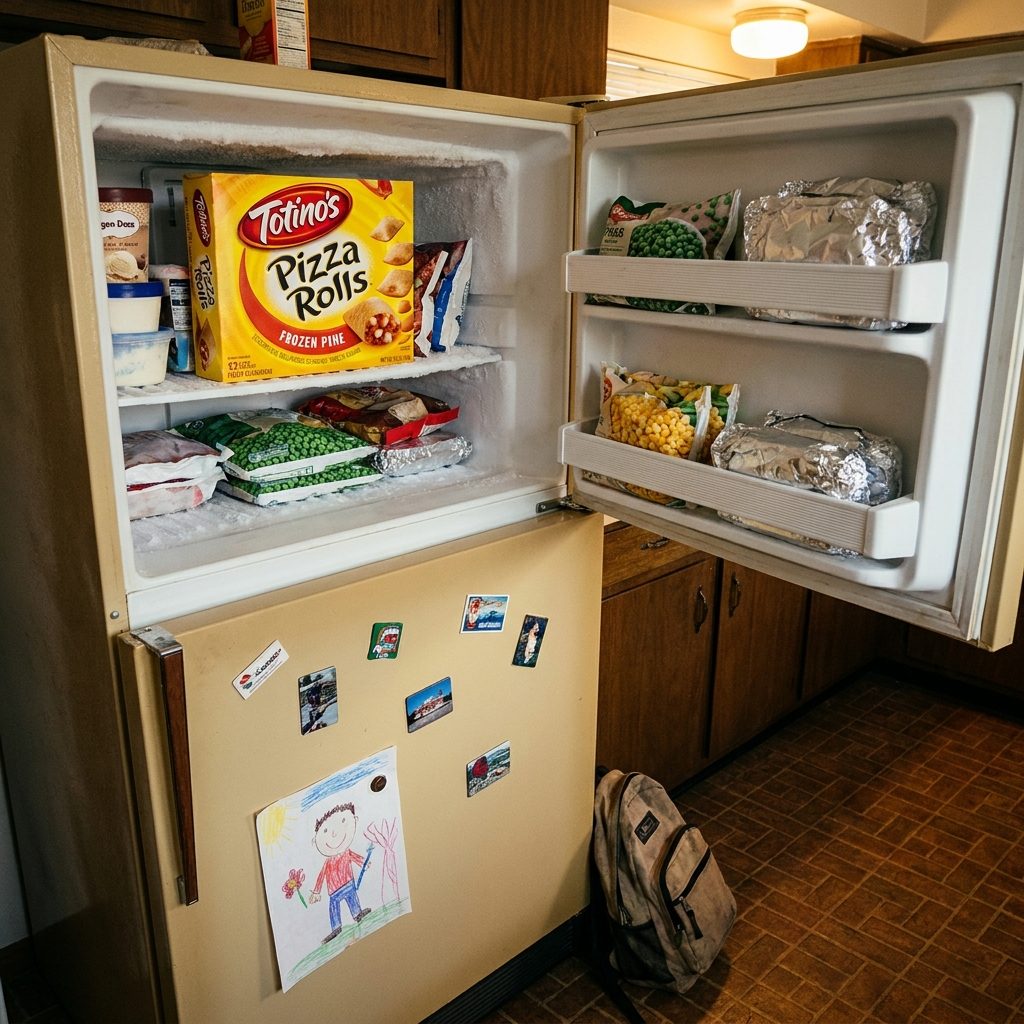
The freezer door swung open and there they sat — behind the frozen peas, beside the ice cream nobody was allowed to touch until after dinner. The yellow box.
Those commercials nailed the after-school kitchen raid so precisely it was almost annoying. Kid walks in, drops backpack, goes straight to the freezer. No browsing, no deliberation. He knew what he wanted before the front door closed behind him. Every latchkey kid recognized the ritual: first thirty seconds through the door, direct line to the freezer. Pizza Rolls weren’t just in there by accident. They were the whole reason you opened that door in the first place, and the commercial knew it, and you knew it knew.
4. John’s Pizza, the Frozen Brand With a Name So Generic It Felt Like a Witness Protection Alias
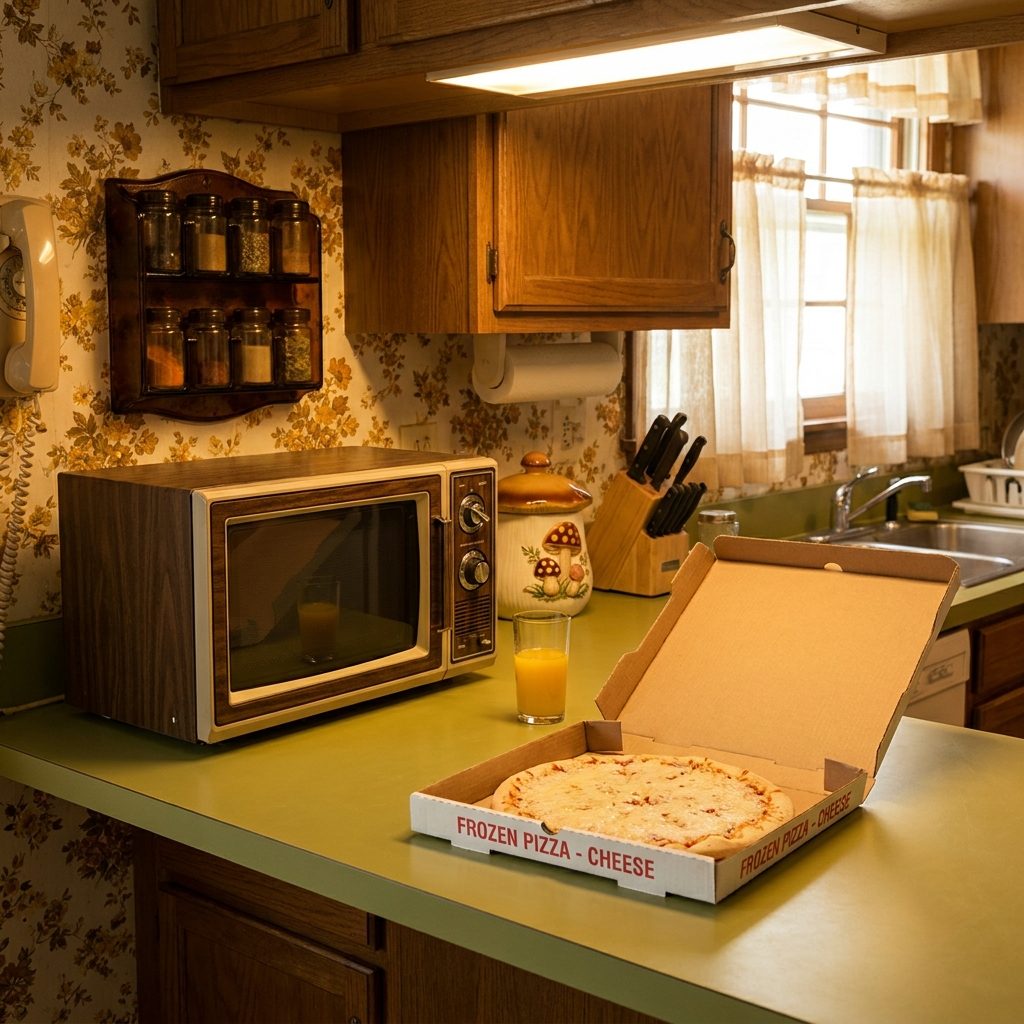
Certain frozen pizza brands in the 1980s seemed to exist without anyone founding them, choosing them, or buying them on purpose. John’s Pizza belonged to that category completely. It just materialized in the freezer behind a bag of frozen corn, like the house itself had placed it there during the night.
The box gave you nothing. Red and white. No mascot, no cartoon chef with a twirled mustache, no winking pilot or lasso-wielding cowboy. Just “John’s” in plain type — which honestly raised the question of whether John existed at all or whether someone had panicked and picked the blandest possible name. Thin crust. Sparse toppings. Cheaper than a gallon of milk. It never tried to impress you, just fed you after school and asked nothing back.
3. The Weight Watchers Frozen Pizza That Sat in the Freezer Untouched Until Somebody Got Desperate
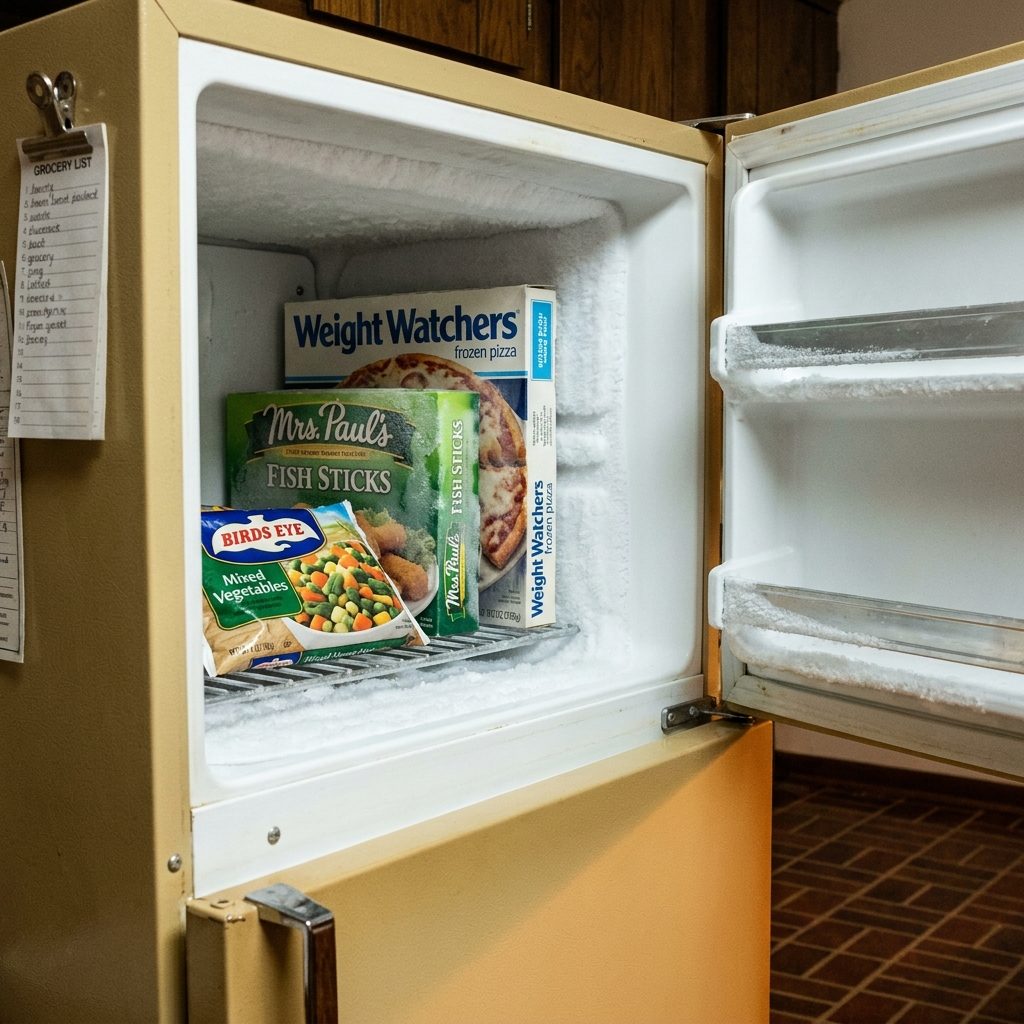
Every freezer had its diet section. The Weight Watchers pizza lived there, exiled behind the real food, wedged next to a Lean Cuisine fettuccine that hadn’t moved since March. Nobody grabbed it first. Nobody grabbed it second, either. It was a Tuesday-night last resort — the Totino’s had run out, the bread was a frozen brick, you were eleven, and the only adult supervision in the house was the television set blinking in the other room.
Small barely covers it. The thing was aggressively undersized, and the cheese had a translucent quality, like it felt guilty for being dairy. But it came out hot. It was shaped like pizza. And at 3:45 on a school afternoon, that cleared the bar.
2. The Kroger or Safeway Store-Brand Frozen Pizza That Came in a White Box With Exactly Zero Personality
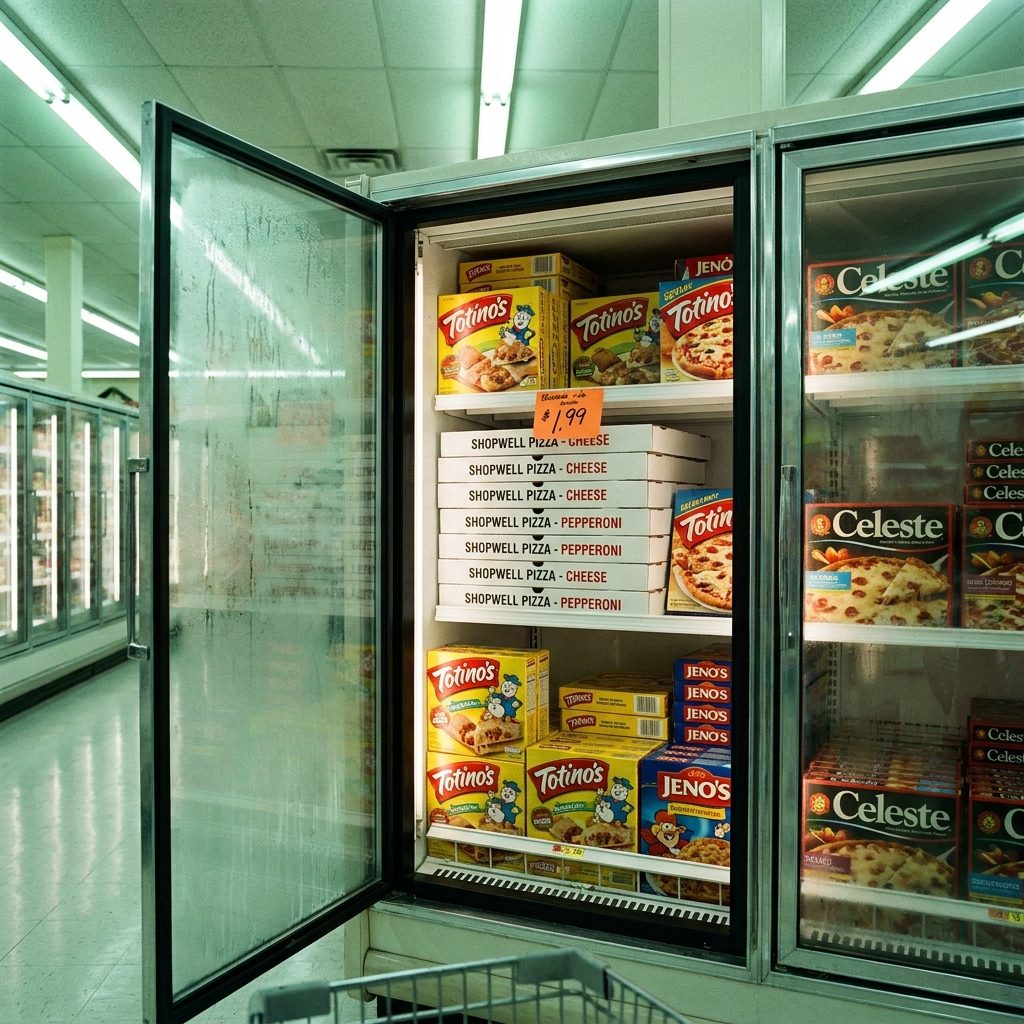
A white box with the store name and PIZZA in a font that suggested the graphic designer had left at lunch and never come back. No mascot, no jingle, nothing. This was the pizza your family bought when groceries were a math problem.
It sat on the shelf next to Red Baron and Tombstone looking like a wallflower at a loud party. But it showed up in freezers everywhere because it cost a dollar less than everything flanking it, and in a household buying four at a time? That dollar added up fast.
The taste matched the packaging perfectly. Adequate. Sauce ran a little sweet, the crust came out pale, and the pepperoni circles sat in suspiciously even rows — too geometric to feel handmade. None of that mattered much. It cooked at the same temperature, in the same oven, during the same after-school dead zone as every other brand. And a latchkey kid eating alone at the kitchen counter didn’t need a logo or a backstory. They needed something hot on a plate.
1. The Appian Way Pizza Mix That Wasn’t Frozen at All but Lived Next to the Hamburger Helper and Made You Feel Like a Pizzeria Owner for Forty-Five Minutes
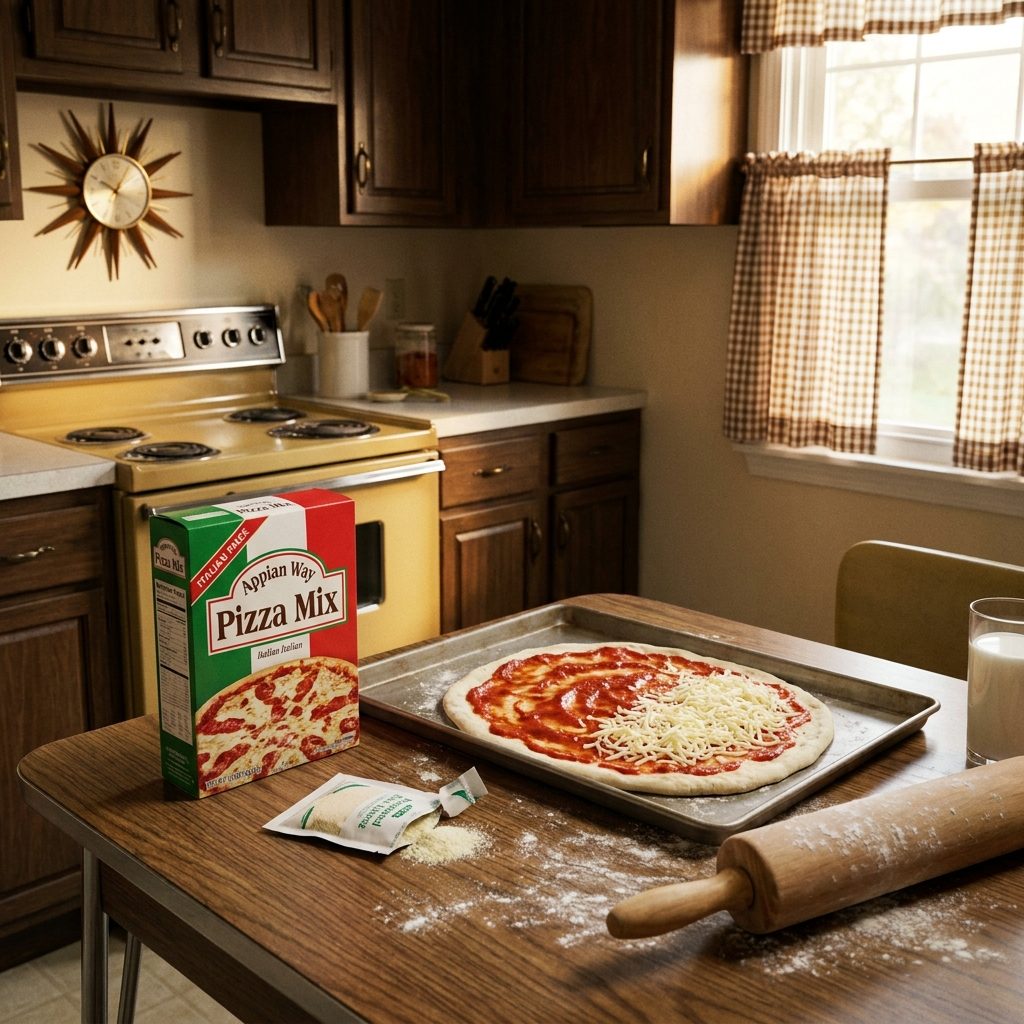
This one cheats the category — it wasn’t frozen at all. A flat box living in the baking aisle next to the Bisquick, holding a pouch of dough mix, a small can of sauce, and a tiny envelope of powdered cheese that smelled like someone had opened every jar in a Parmesan factory at once. But latchkey kids found it. Latchkey kids made it. And for those forty-five minutes between mixing dough and pulling the pan from the oven, you were convinced you were running your own restaurant.
The dough fought you every step. Stuck to the counter, tore when you stretched it, shrank from the edges of the pan like it had second thoughts. So you patched the holes, smeared sauce around with the back of a spoon, and scattered cheese from that little packet — which was never, ever, remotely enough.
But when it came out? Bubbling and lopsided and looking nothing like the picture on the box — it was yours. You made the thing. That counted for more than flavor, though honestly the flavor was fine. A little bready, a little sweet. Entirely earned.