Would you like to save this?
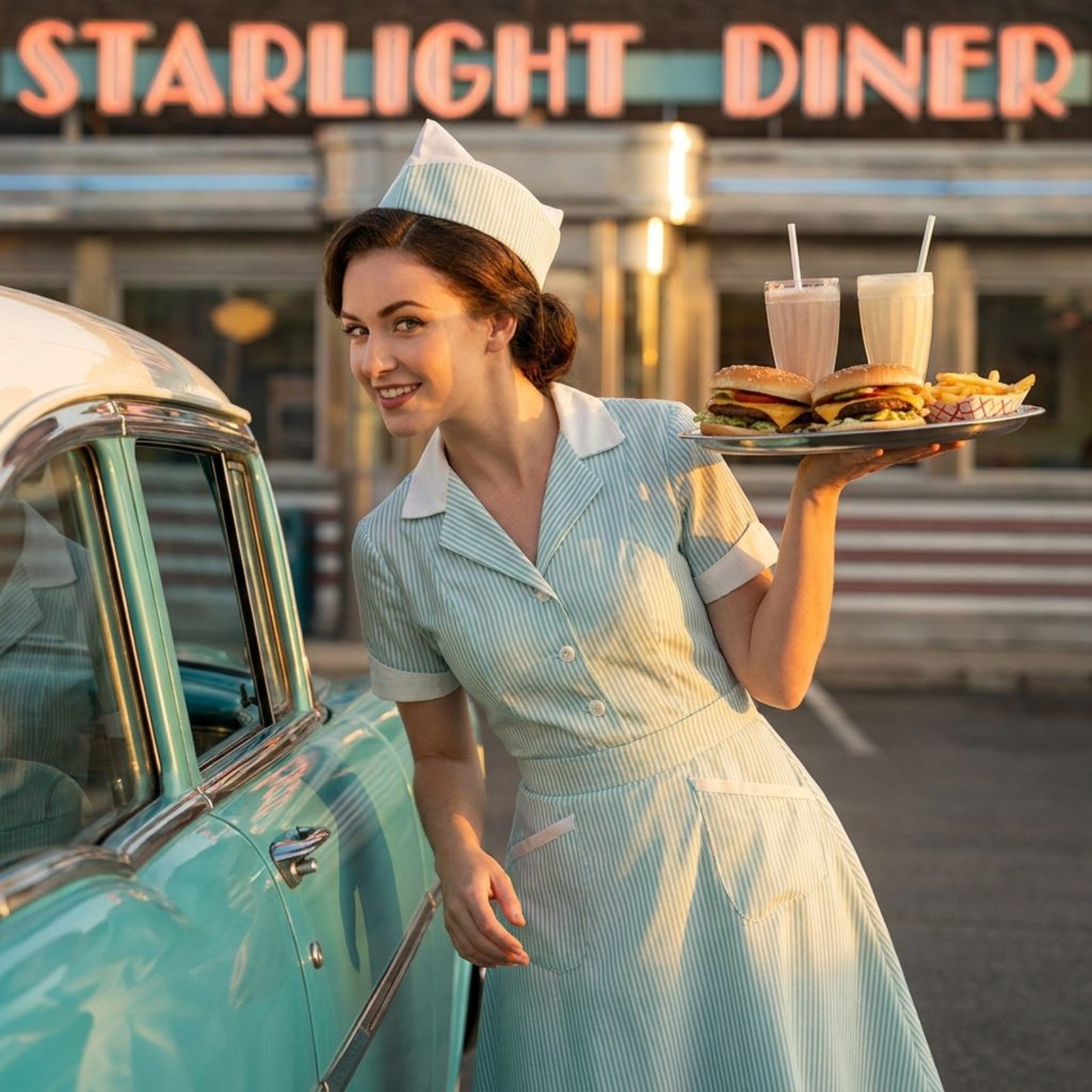
The speaker crackled before it said a word. That static alone meant something was about to happen. In 1960s America, the drive-in diner was its own civilization: carhops on roller skates, trays hooked to half-rolled-down windows, root beer so cold the mug sweated through a paper napkin in sixty seconds. It was dinner and theater and the best possible excuse to sit close to someone in a front seat. These are the details that made it feel like nowhere else on earth.
The Little Cardboard Salt and Pepper Packets That Always Ended Up on the Floor Mat
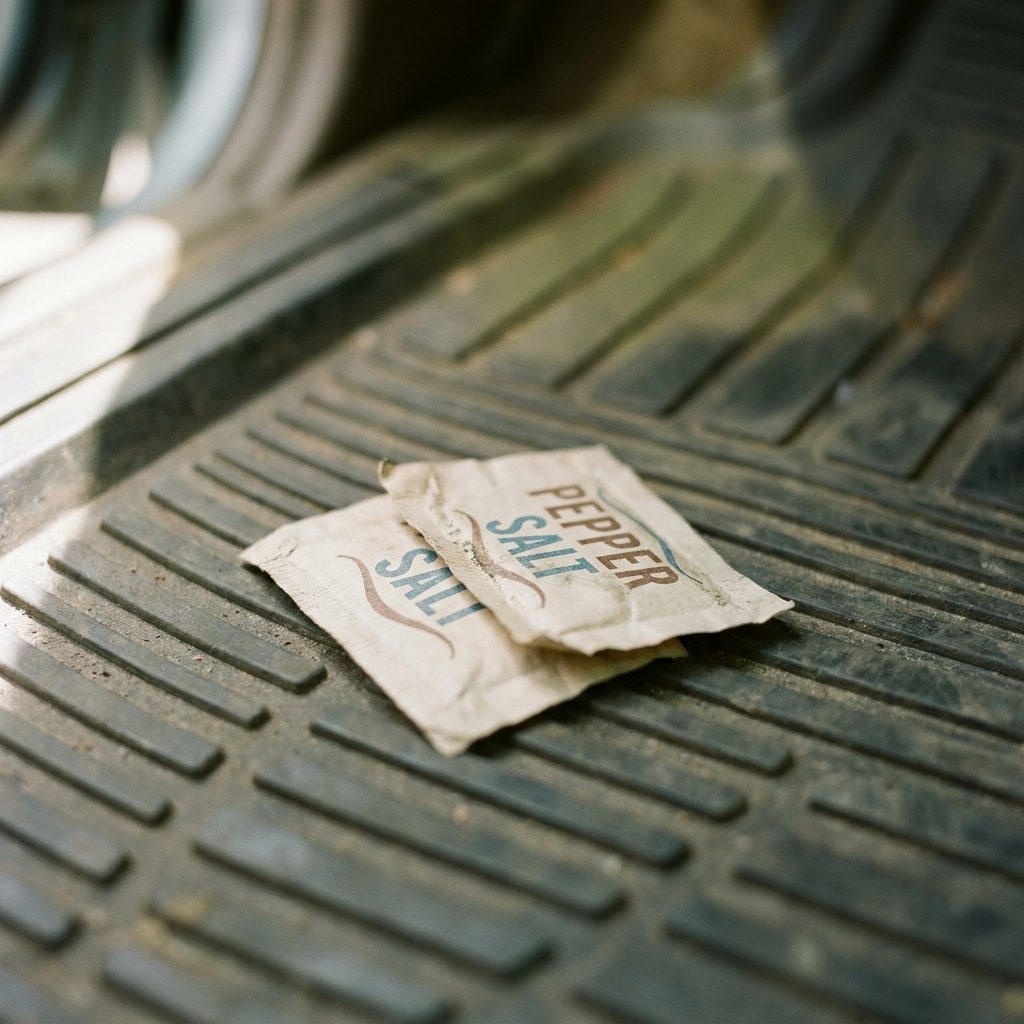
Those little flat cardboard salt packets were roughly the size of a postage stamp and roughly as useful. You had to tear the corner just right or the whole thing crumpled and half the salt went sideways onto the tray. Everyone had a technique. Nobody’s technique was reliable.
By the end of the meal, at least one packet had made it onto the floor mat. That was basically physics. The pepper packets were even worse, smaller, darker, completely indistinguishable from the salt until you’d already used them. The drive-in condiment experience was an exercise in patience, and somehow nobody complained.
The Overhead Speaker That Crackled Before Anyone Said a Word
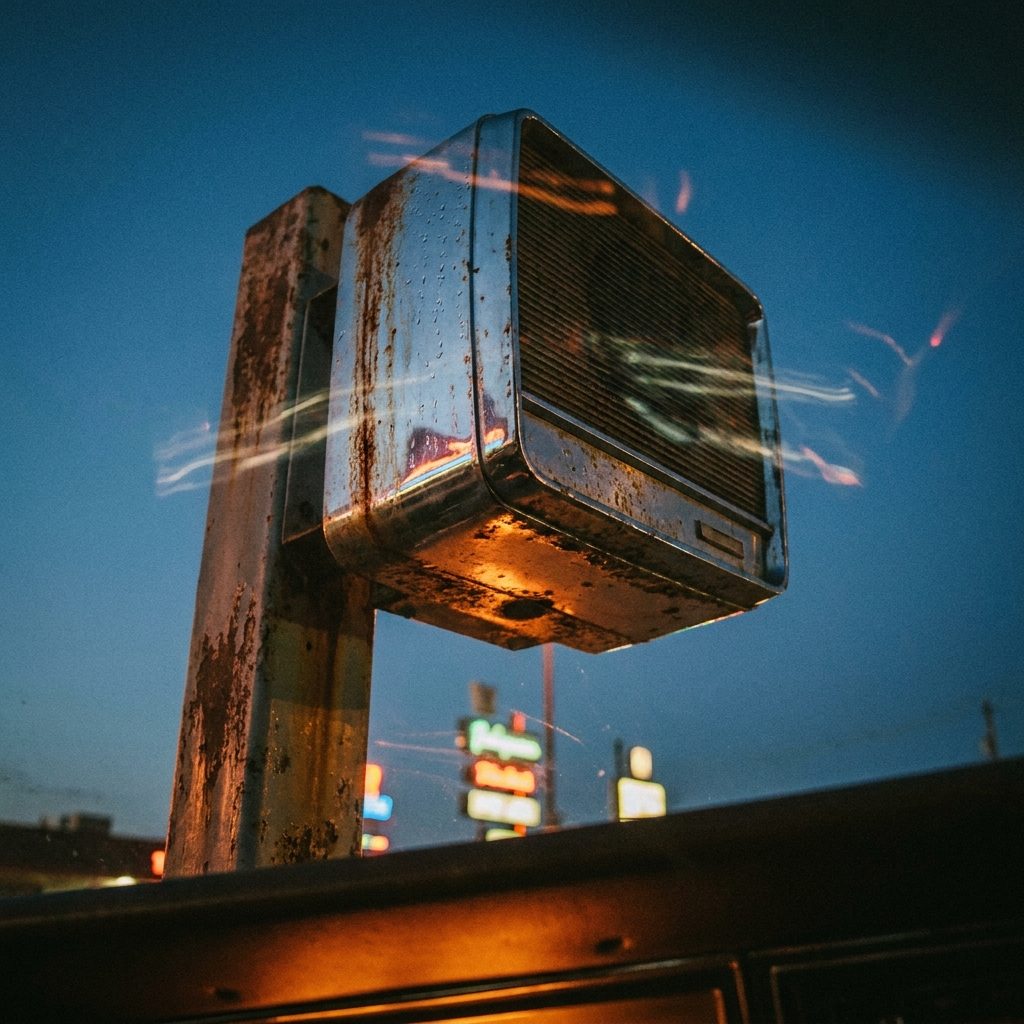
The static came first. Always. A half-second of crackling white noise before the voice cut in, slightly too loud, slightly tinny, with a quality that made every order feel like it was being transmitted from a considerable distance. You learned to wait for the crackle before you started talking.
Rolling the window down and pressing that red call button was its own small ritual. The button sometimes stuck. The speaker sometimes hummed. The person on the other end sometimes had to ask you to repeat yourself twice because a car two stalls over had their radio on. None of this was a problem. It was just how it worked, and it worked fine.
Sharing One Basket of Onion Rings on a Date and Both Pretending You Weren’t Going to Eat All of Them
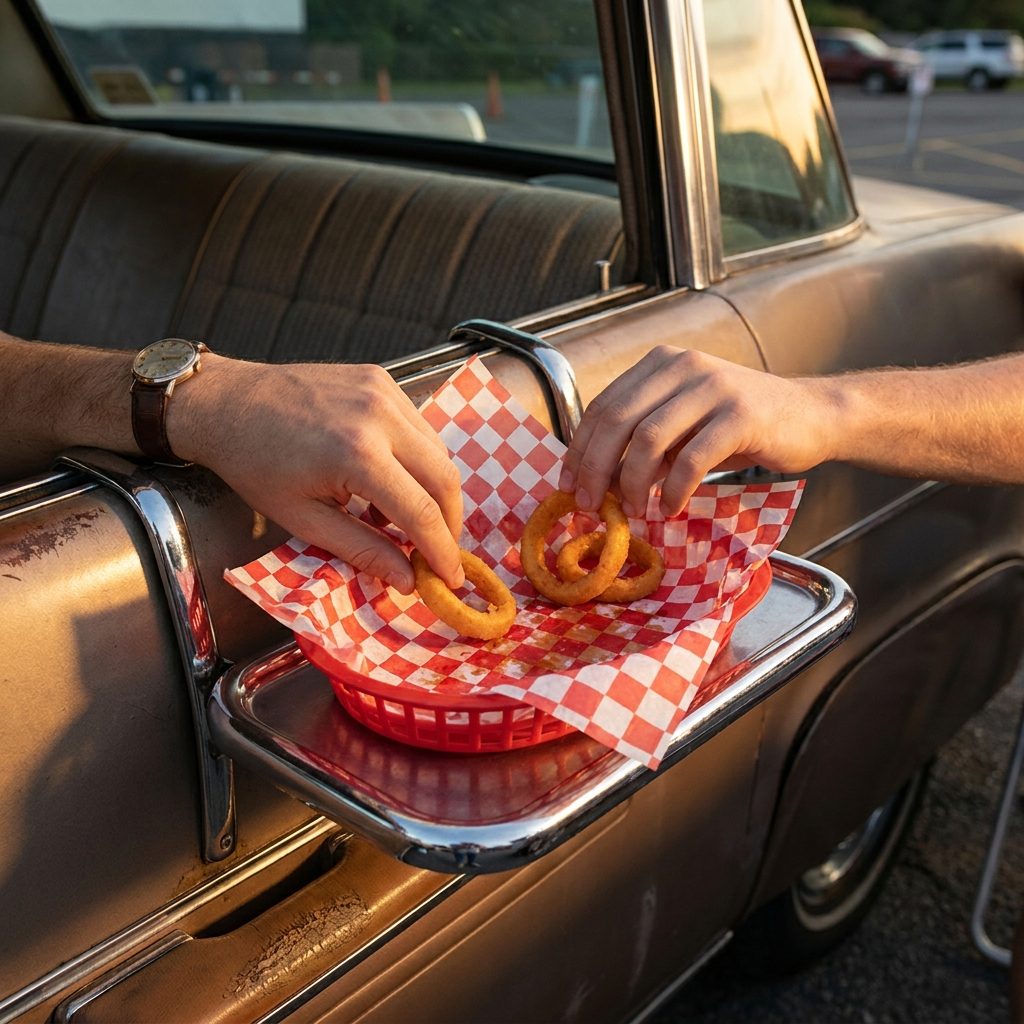
One basket. Two people. The polite fiction that you were splitting it, when everyone within a five-stall radius could see you were both going to eat exactly half and spend the last three rings doing the back-and-forth of “go ahead, you take it.”
Onion rings at a drive-in were a different food than onion rings anywhere else. The batter was thick, the rings slightly uneven, the whole thing arrived in that paper basket still steaming, and they were best eaten in the first four minutes before the car’s heater made the tray too warm. Sharing a basket on a date was a small negotiation with very high stakes and somehow everyone came out fine.
The Metal Tray That Hooked Onto the Driver’s Side Window
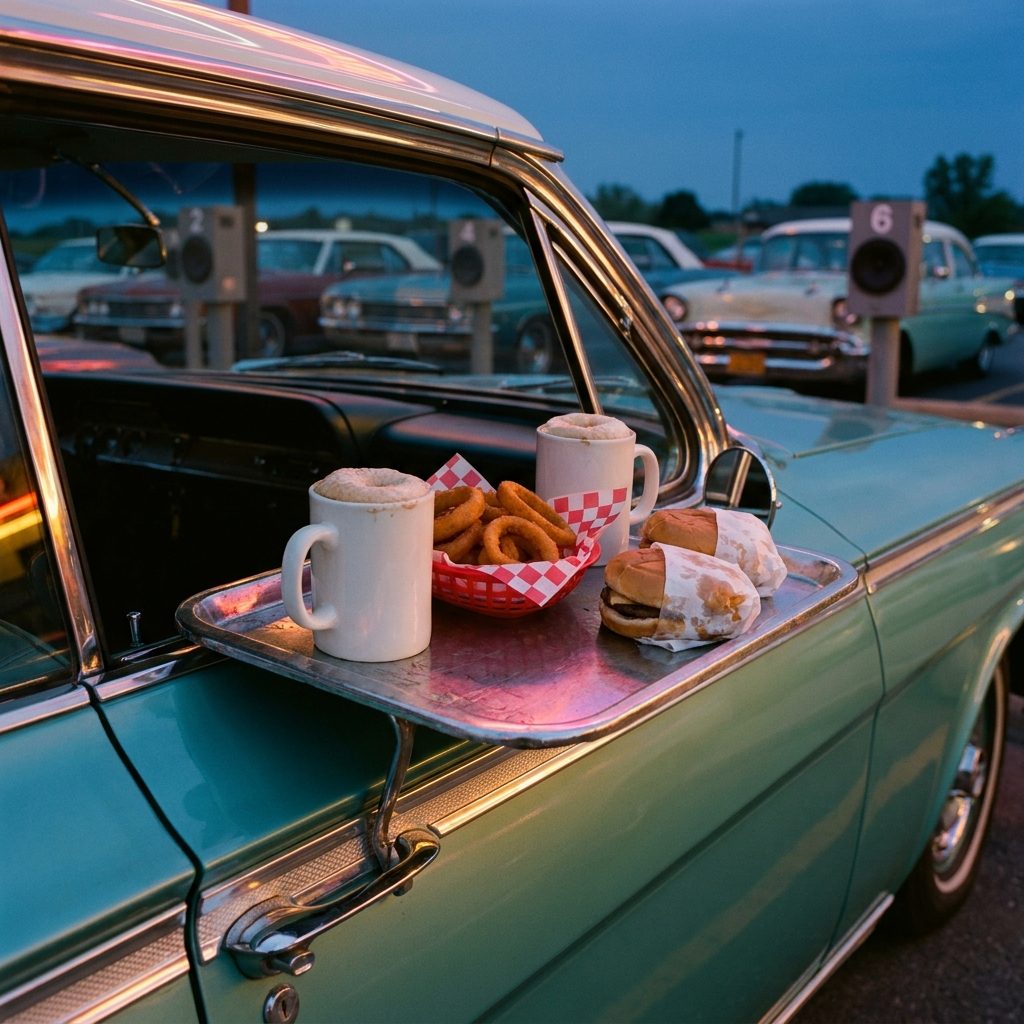
The tray was heavier than it looked. That first hook-on moment — the metal edge biting into the rolled-down glass — was the whole promise of the evening delivered in one small clunk. Dinner had arrived and nobody had to get out of the car.
You learned quickly not to roll the window up too far or too little, because too high made the tray wobble and too low sent the whole thing sliding into your lap. The right amount of glass was a skill you developed by your second or third visit. Once you had it, you had it for life.
The Numbered Speaker Post Between Every Two Cars
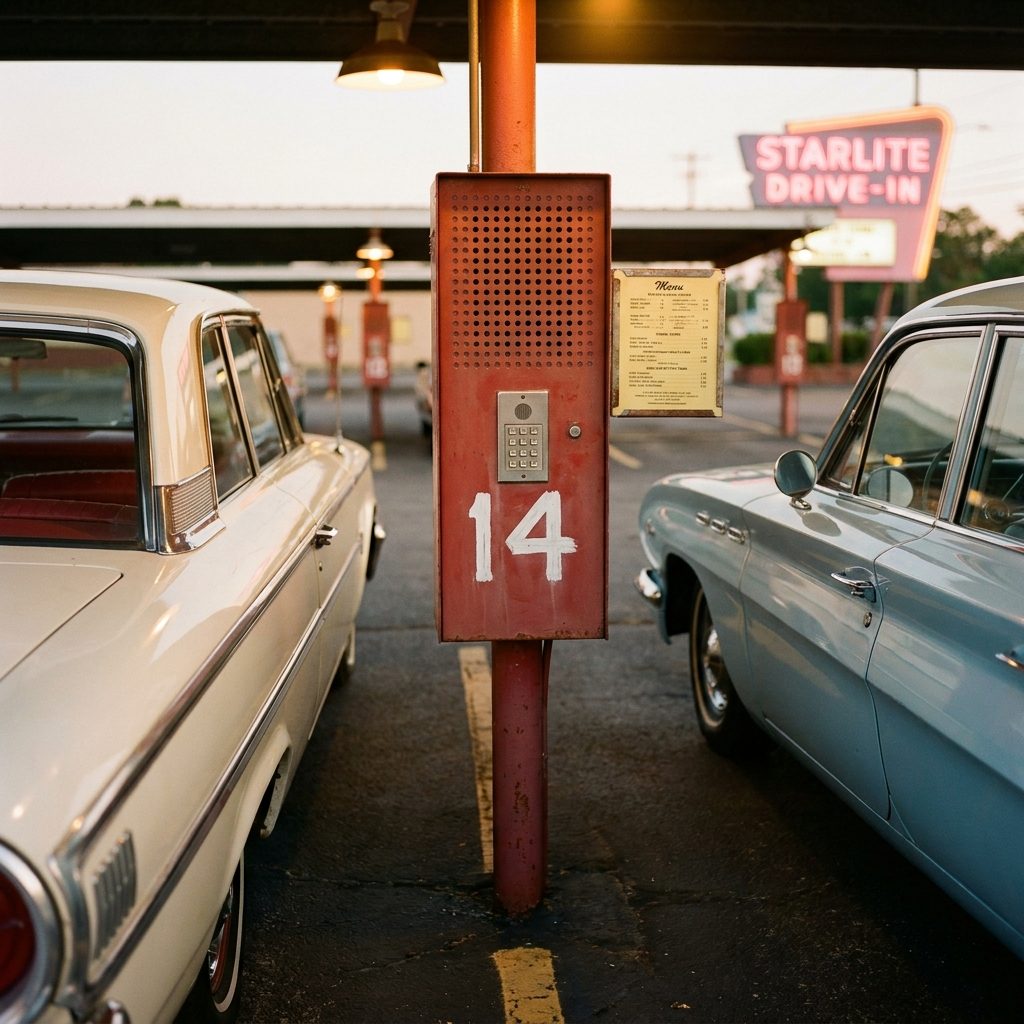
Every stall had its number. Fourteen. Twenty-two. Thirty-seven. You pulled in, checked your slot, and memorized it like a phone number because that was what the carhop needed to find you again out there in the sea of chrome fenders.
The speaker itself was tinny and always sounded a little underwater. You’d lean toward the driver’s window to shout your order into it, and half the time the person on the other end had to ask you to repeat the milkshake flavor. Nobody minded. That was part of it.
The Roller Skates That Turned Every Carhop Into a Minor Celebrity
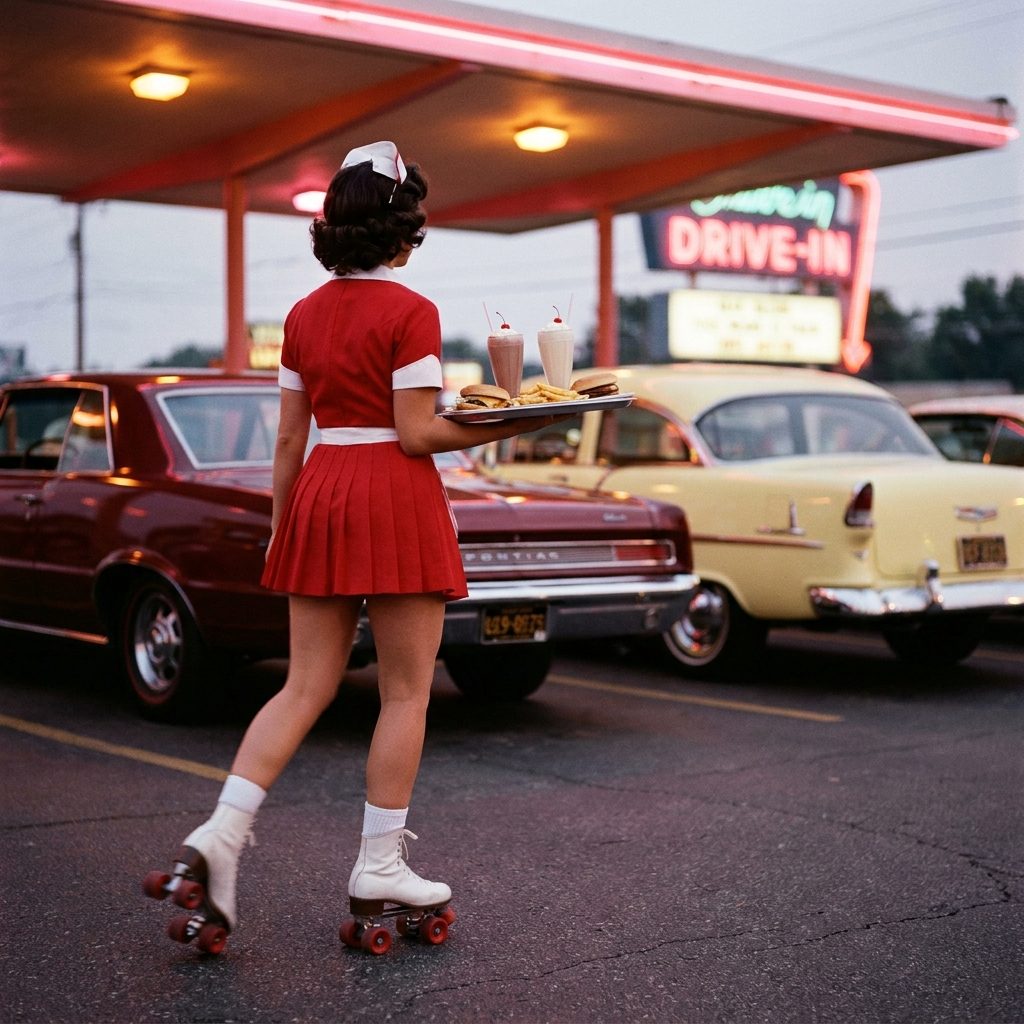
The good ones could carry a full tray, take an order, and pivot around a Buick without spilling a drop of a chocolate malt. That was a skill. Not a gimmick.
Some had been doing it for years and could hear a car pull in behind them without turning around, and when you watched them glide past you knew you were watching somebody who was very good at their job.
The Frosted Mug of Root Beer So Cold It Hurt Your Teeth
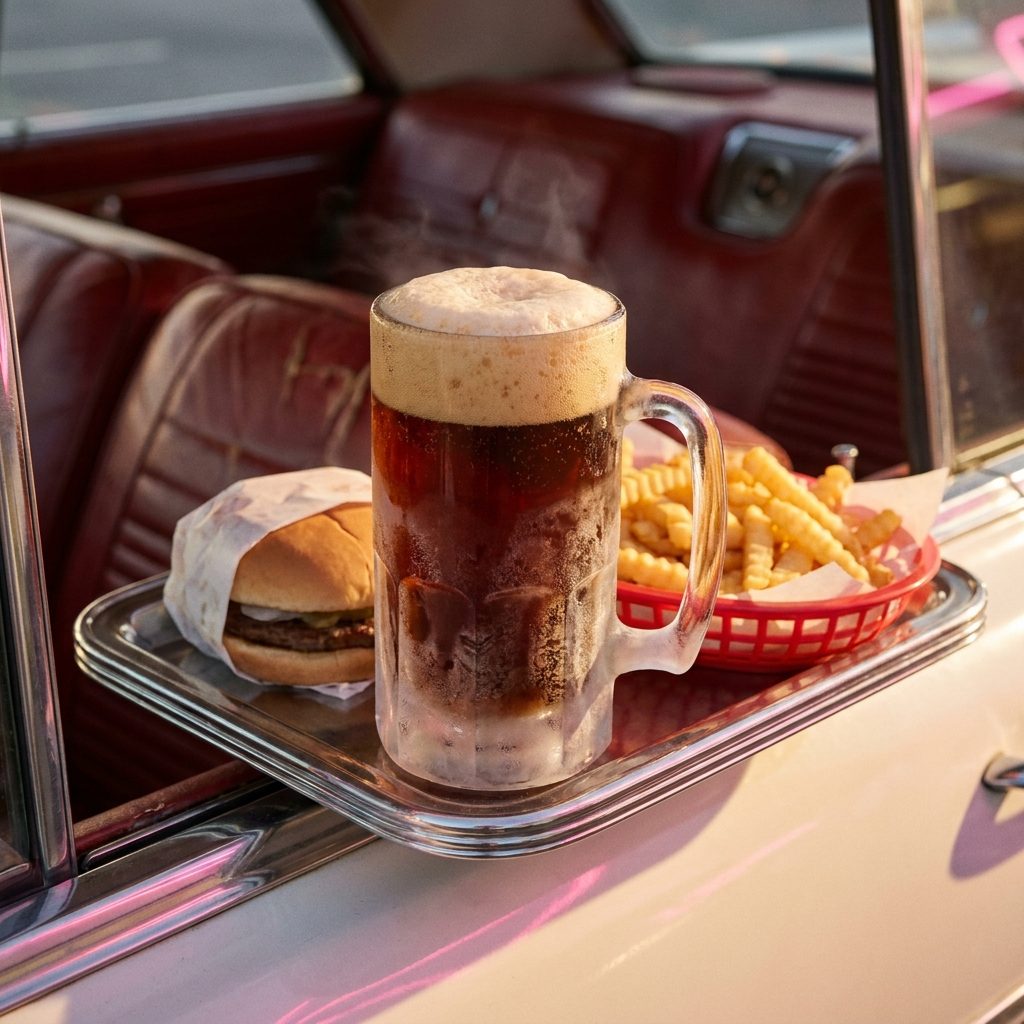
A&W did it right. The mug came out of a deep freeze and hit the tray already fogging over, and you took the first sip and your front teeth immediately regretted it.
Nothing else ever tasted quite the same. The plastic cup version came later and it was fine, but it wasn’t the mug. The mug had weight. Ice crystals clung to the handle. The mug was the whole point.
The Steering Wheel Doubling as a Dinner Table
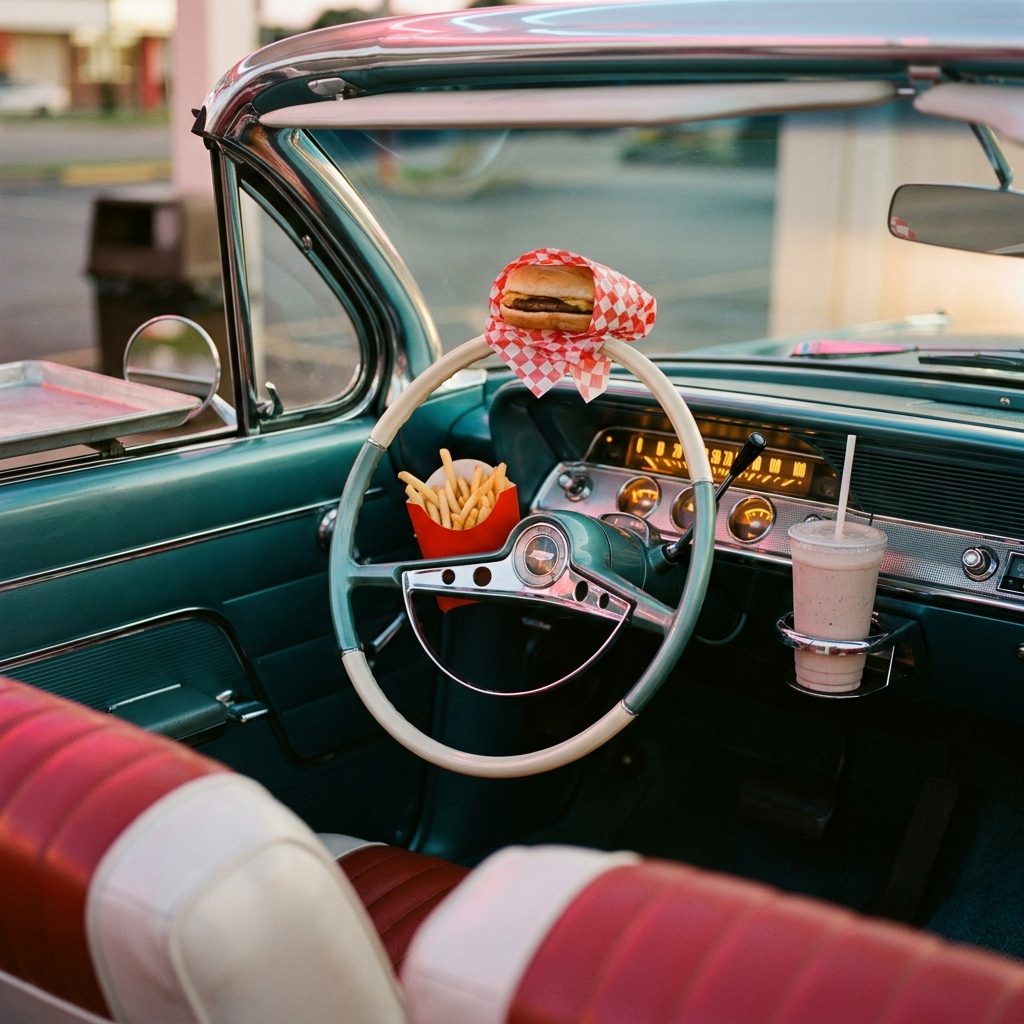
The wheel was flat enough to hold a burger. Not a great table. A workable one.
You’d wedge the fries between the spokes and prop the burger on the top curve, then eat like that for forty minutes with your elbows tucked in. Ketchup on the horn ring was a rite of passage. You either learned to angle your napkin or you didn’t — and if you didn’t, Dad found the smear the next morning and everybody heard about it.
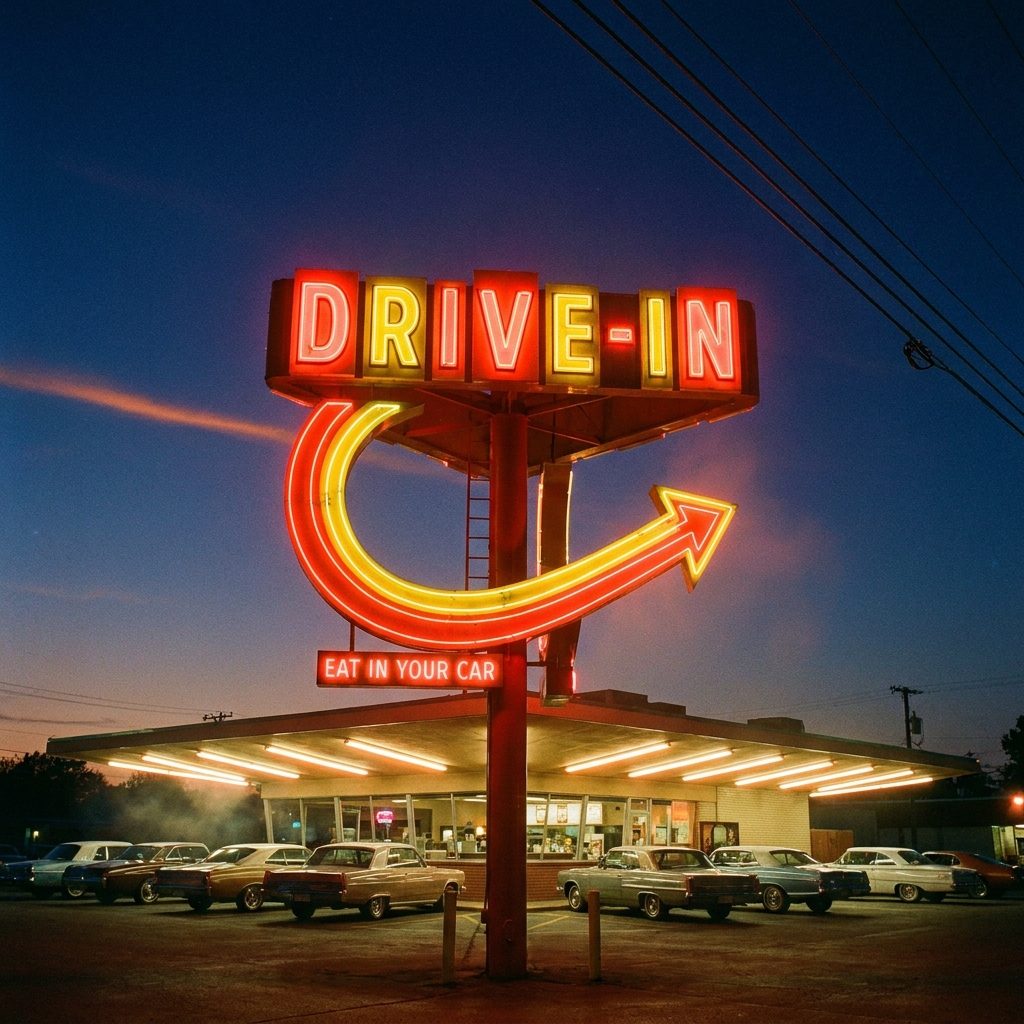
The Neon Sign You Could See From Three Blocks Away
Would you like to save this?
You knew you were getting close when the pink and yellow started bouncing off the clouds. Dad would sometimes take the long route on purpose so you’d come up on the sign from the direction where it looked biggest, and he never admitted this out loud but you could tell.
Every town had one. And every town’s was the best one, according to the people who lived there.
The Ashtray in the Armrest That Everyone Used at Dinner
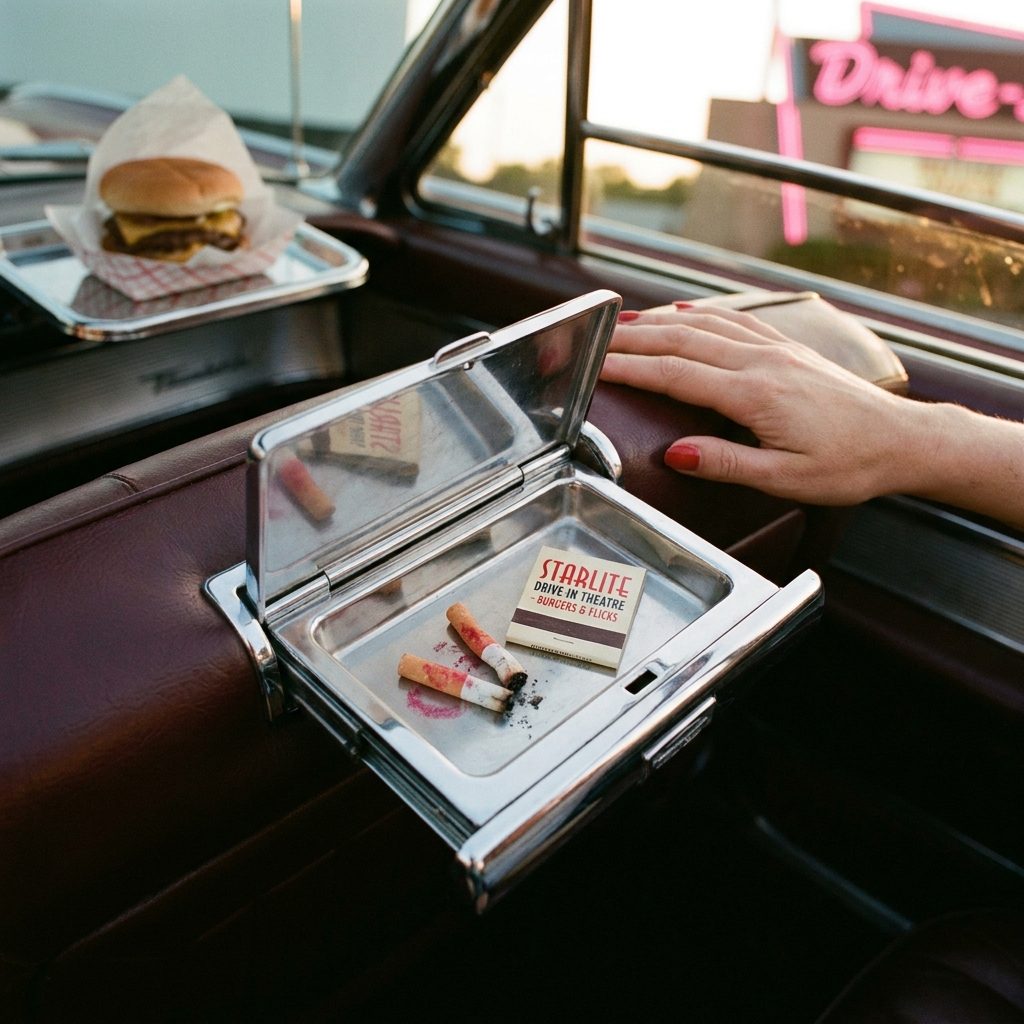
Nobody thought twice about it. Cigarettes came out with the check in a restaurant, and they came out with the milkshake at the drive-in, and that was the whole deal.
The armrest ashtray was where the matchbook lived, right next to the ticket stub from the show earlier and a bobby pin that had lost track of whose head it belonged to. Cars kept receipts of the evening in ways houses never did.
The Foot-Long Hot Dog Split Down the Middle and Grilled Flat
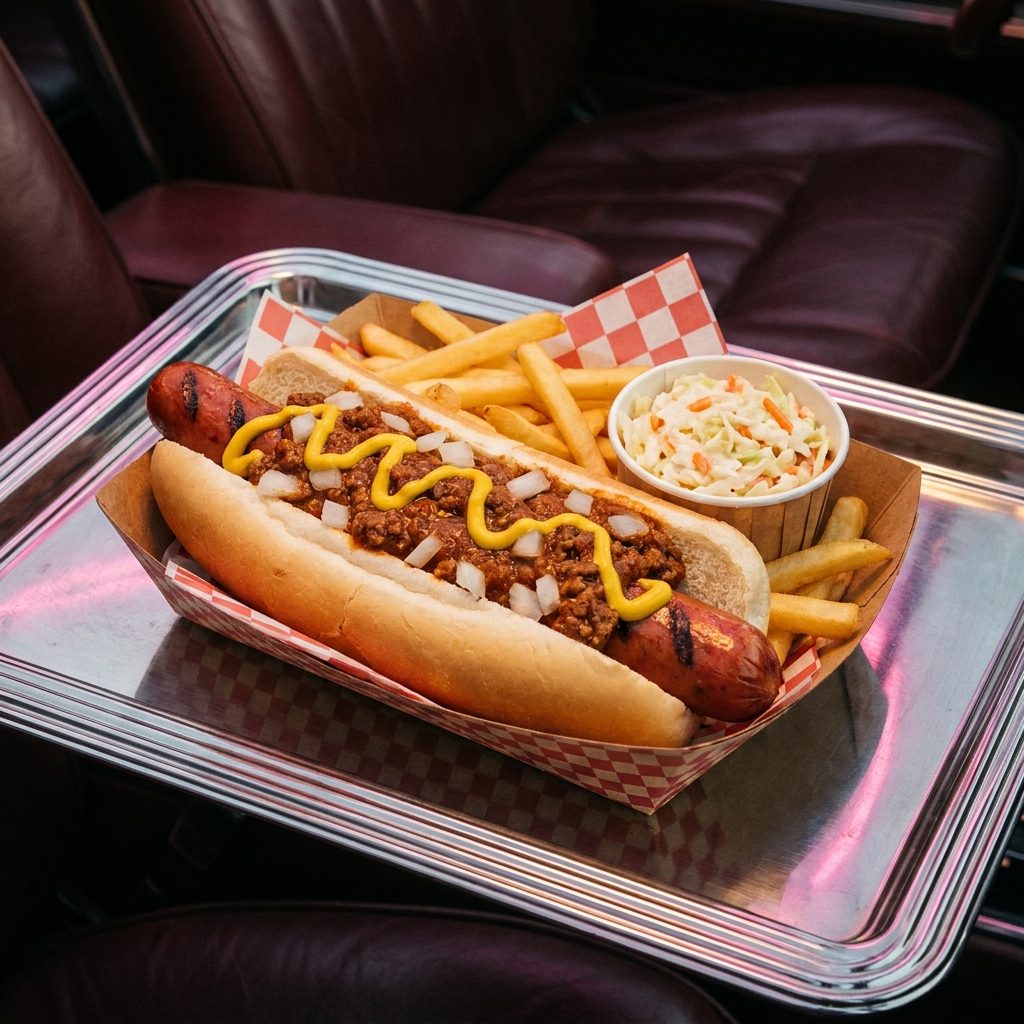
Splitting it opened up more surface area for the grill — more char, more crispy edges, a better bun-to-dog bite ratio all the way down the line. Whoever figured this out deserves a plaque somewhere.
You got it with chili and onions and had to switch to a fork halfway through because the bun gave up. Nobody cared. The fork was there for a reason.
The Kids Falling Asleep in the Back Seat Halfway Through the Fries
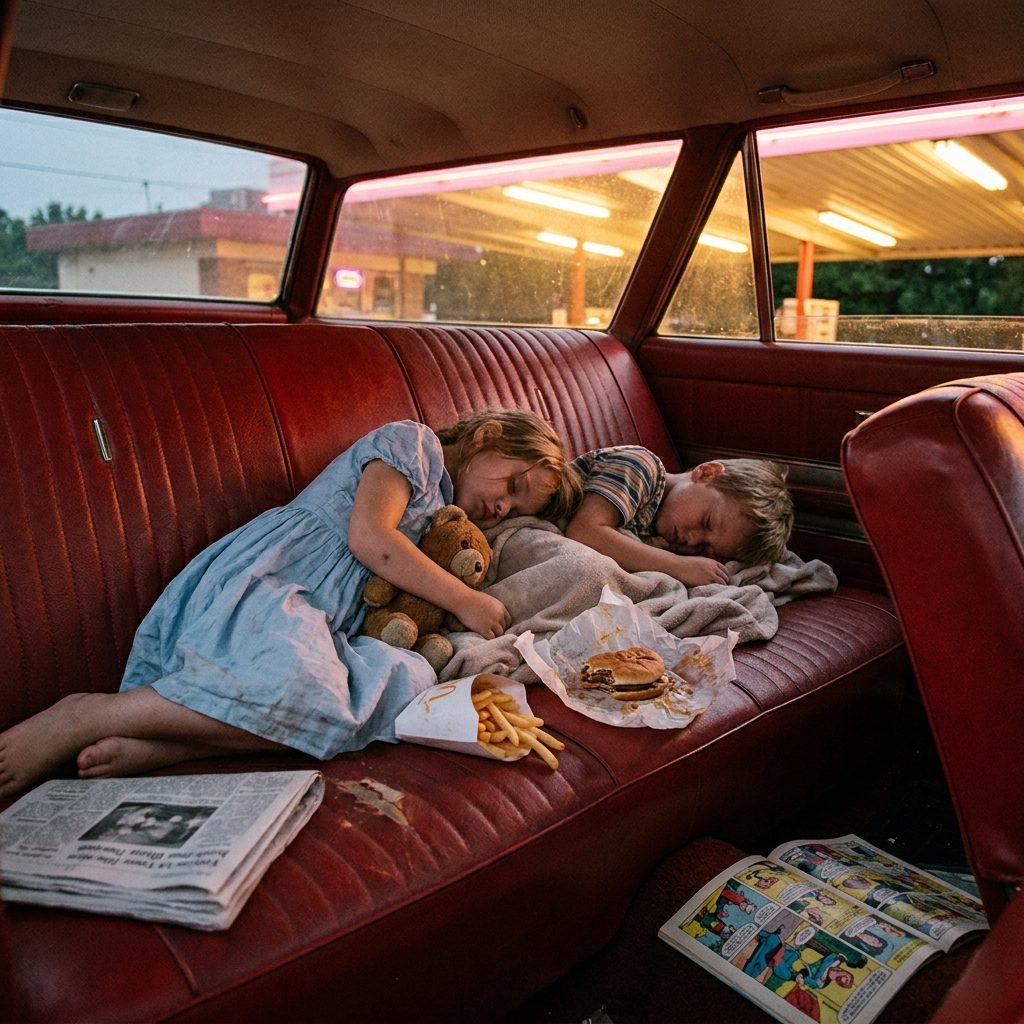
They made it through the burger. The fries were negotiable. By the time the milkshake showed up, one of them was face-down on the vinyl and the other was working on it.
Mom would reach back and quietly finish whatever they hadn’t touched, and Dad would put the tray back on its hook and take the long way home so nobody had to wake up until the driveway.
The Car Hop Who Remembered Your Order Without Writing It Down
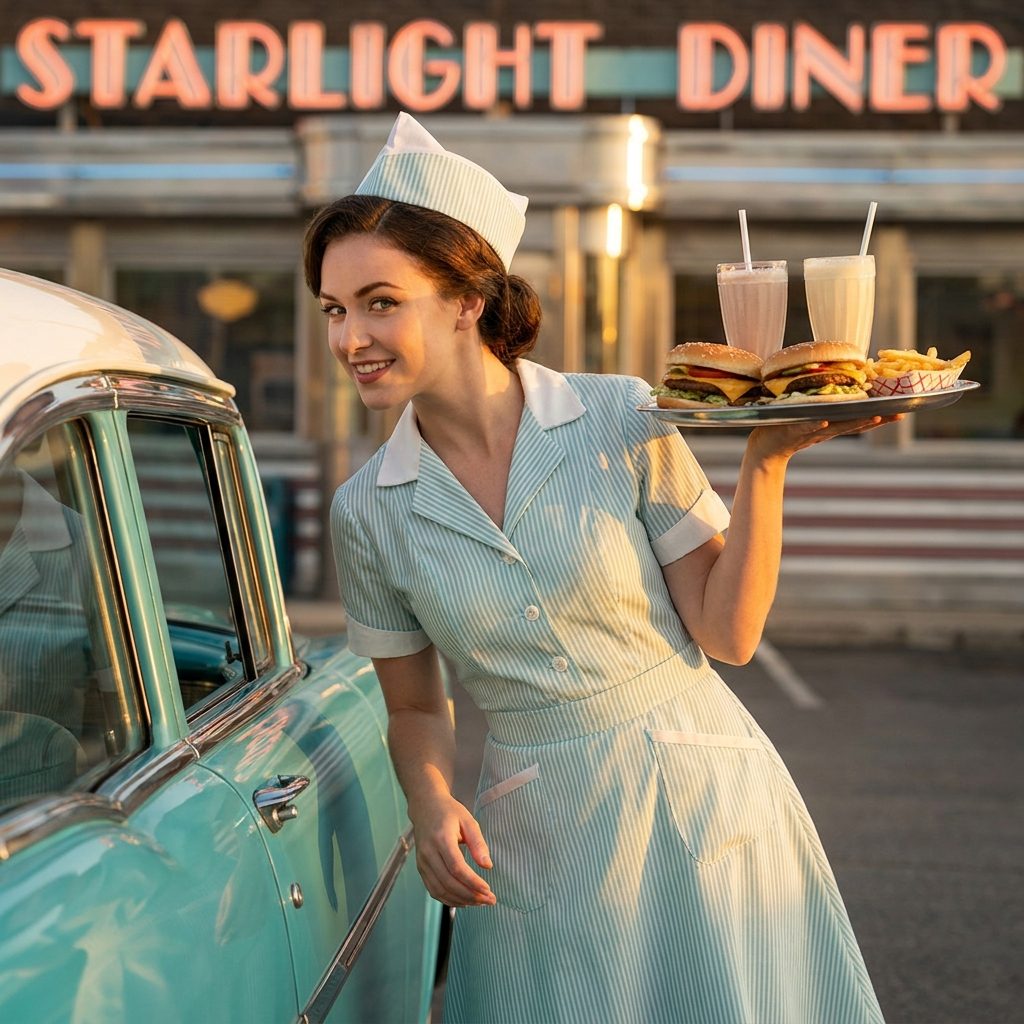
She never wrote it down. You said it once, she nodded once, and four minutes later she was back with a cheeseburger, a vanilla shake, and a root beer, in the right order, for the right people, without a single glance at a ticket. It felt like a minor magic trick every time.
There was real pride in that. The good carhops at every drive-in from Tulsa to Terre Haute knew the regulars, knew the usuals, and could hold a six-car order in their heads without blinking. You left a bigger tip when they pulled it off, which was most nights.
The Long Drive Home With the Windows Down and the Radio Low
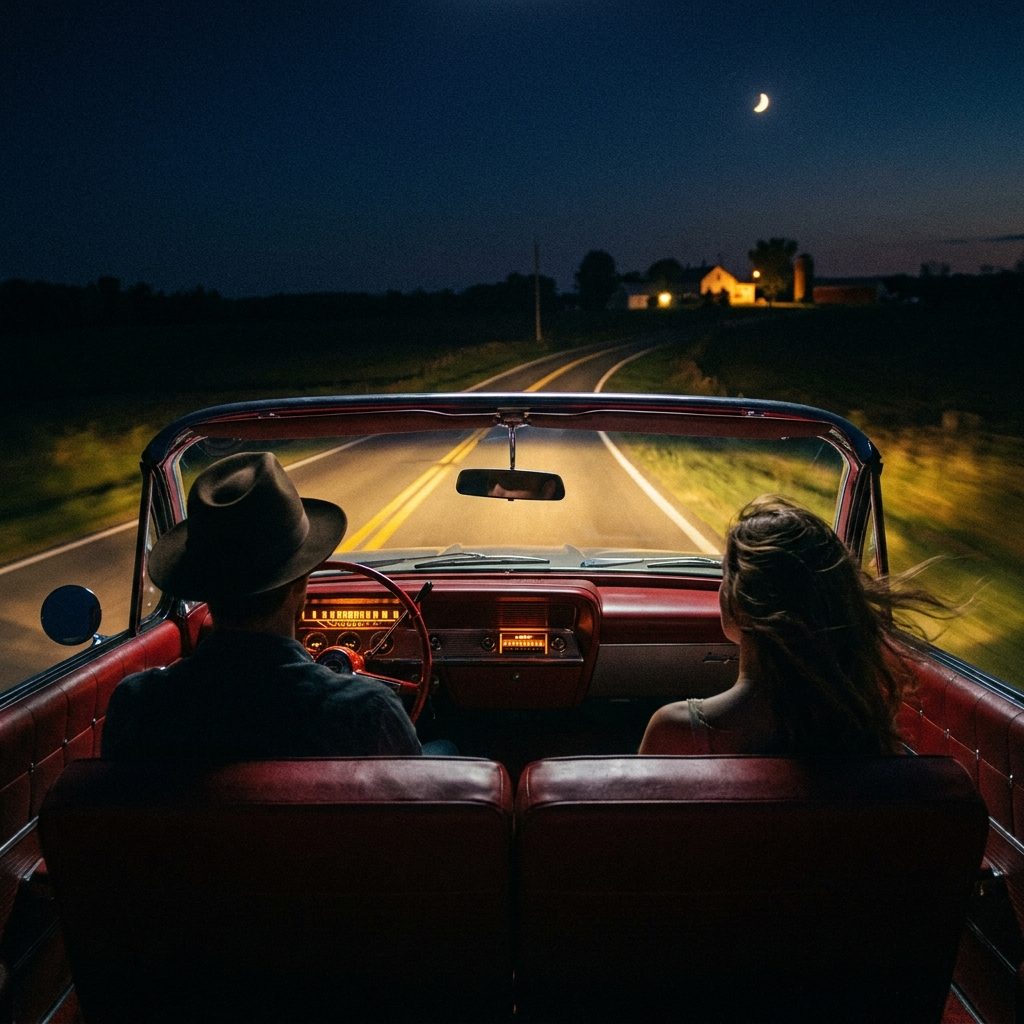
The tray was gone. The mugs were back on the counter. The lot was in the rearview.
You rolled the windows down because summer air was worth having, and Dad kept the radio just loud enough to catch the ballgame or a slow song from the station out of the city. The kids were out. Nobody said much. That drive home was its own chapter of the evening — the quiet one after the loud one — and it might have been the best part of all.
The Chrome Napkin Dispenser Bolted to the Dashboard Tray
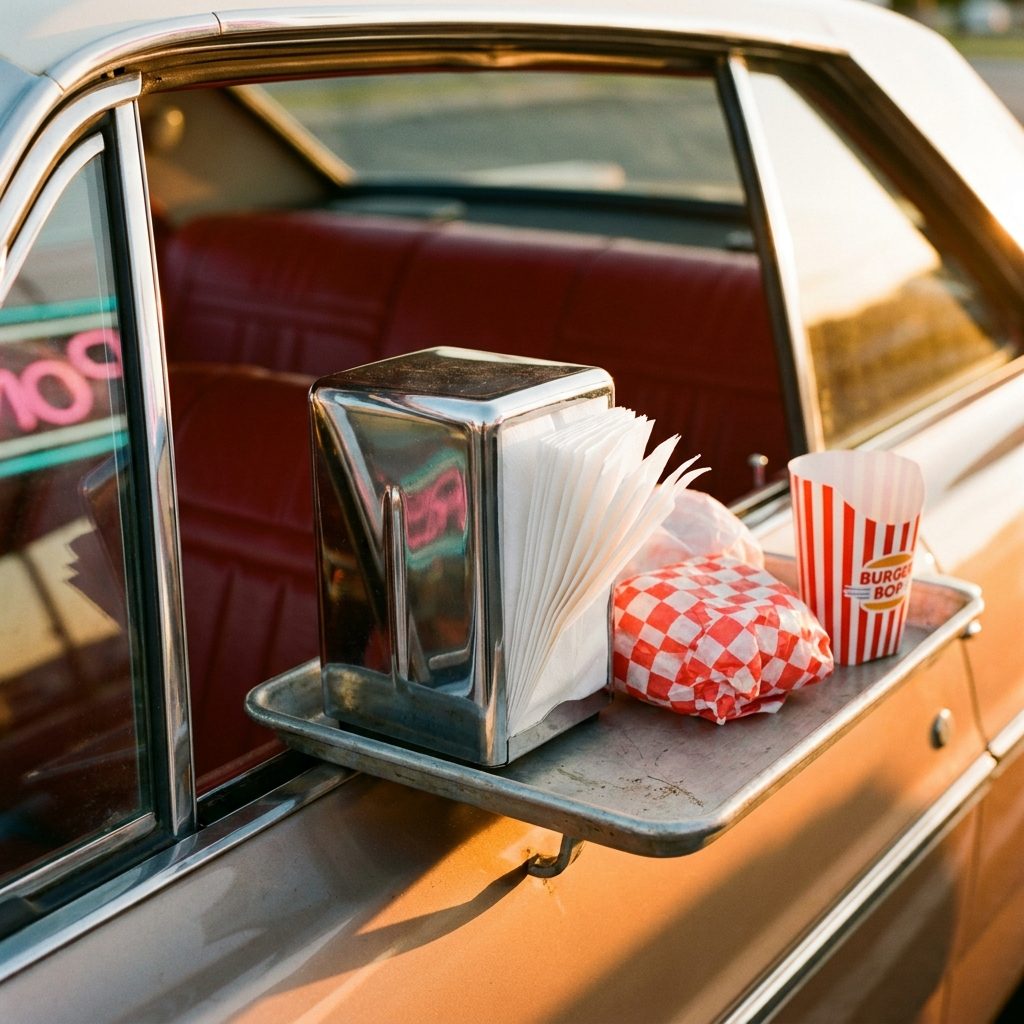
The napkins were always the wrong size — too small for a real spill, too thin to survive one bite of a chili dog. So you pulled three or four at once because you knew.
That dispenser weighed more than it had any business weighing. Built when everything on a tray had a job and a heft to match, it sat there catching the neon and throwing it back at you across the dash like a little chrome monument to nothing in particular.
The Cherry Coke Mixed Right There at the Fountain
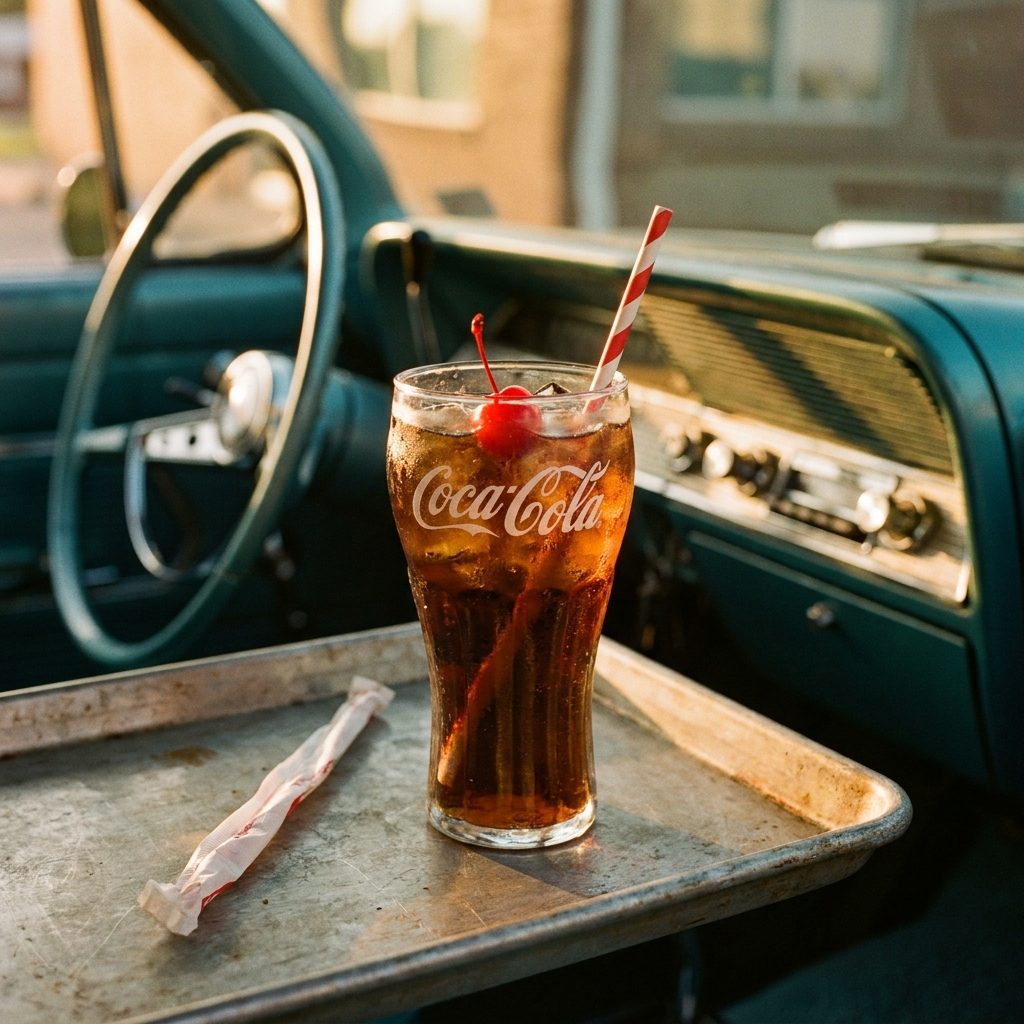
Not from a can. Not from a bottle. Poured from the fountain with a shot of cherry syrup that the counter kid measured by feel, which meant every glass came out slightly different and yours was always somehow slightly better than the one your brother got.
The cherry floated for one sip. After that it was a hunt with the straw for the rest of the meal.
The Little Booklet of Coupons Torn Out of the Local Paper
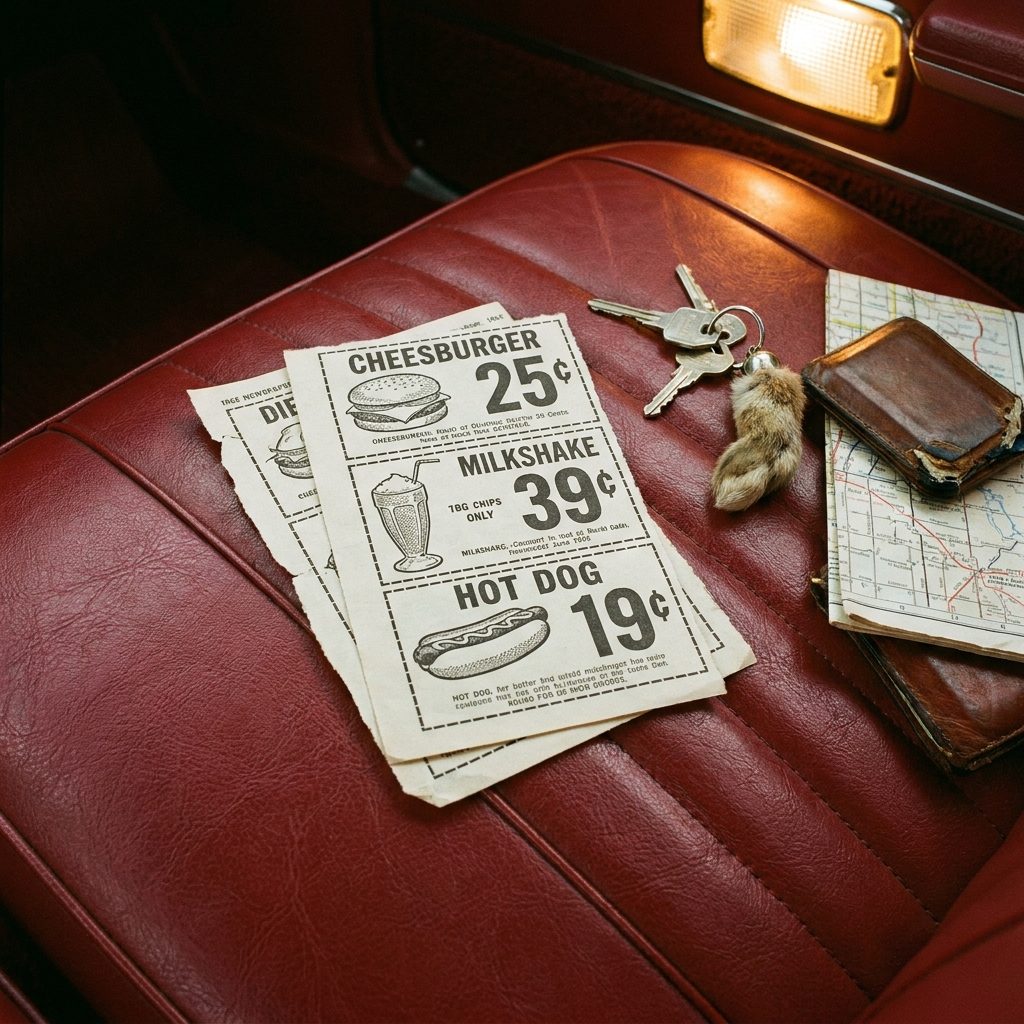
Dad kept them in the glove box, folded once, sometimes twice. Fifteen cents off a family-sized order of onion rings. A free root beer with two burgers. Small money that felt like winning something bigger.
You handed the whole book to the carhop and she tore out what applied and passed the rest back through the window. Nobody ever lost the booklet. Too important.
The Carhop’s Change Belt With the Metal Cylinders
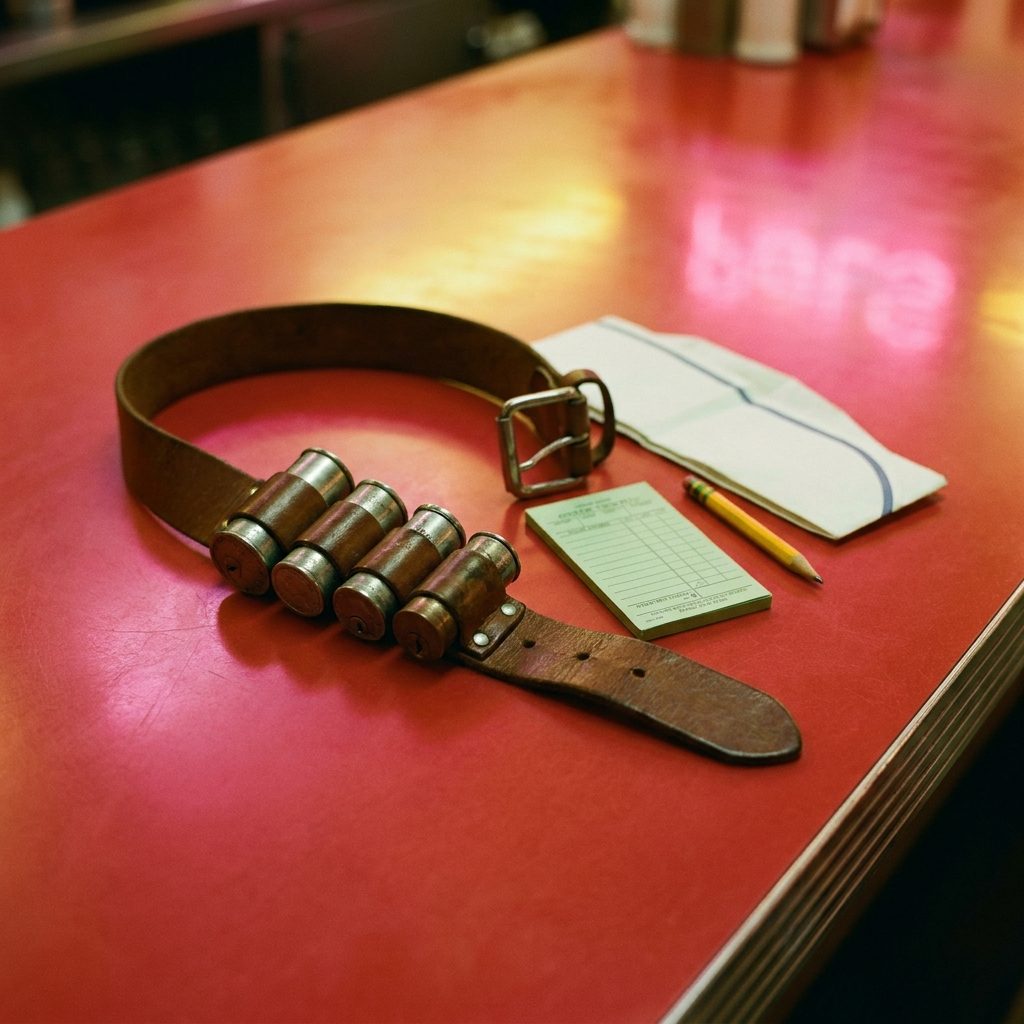
Four little cylinders clipped to a leather belt, one per coin, and she could count out your change without ever looking down — just a thumb pressing the top of each tube. Click, click, click.
The whole rig looked heavier than she was.
The Menu Painted Right on the Side of the Building
Would you like to save this?
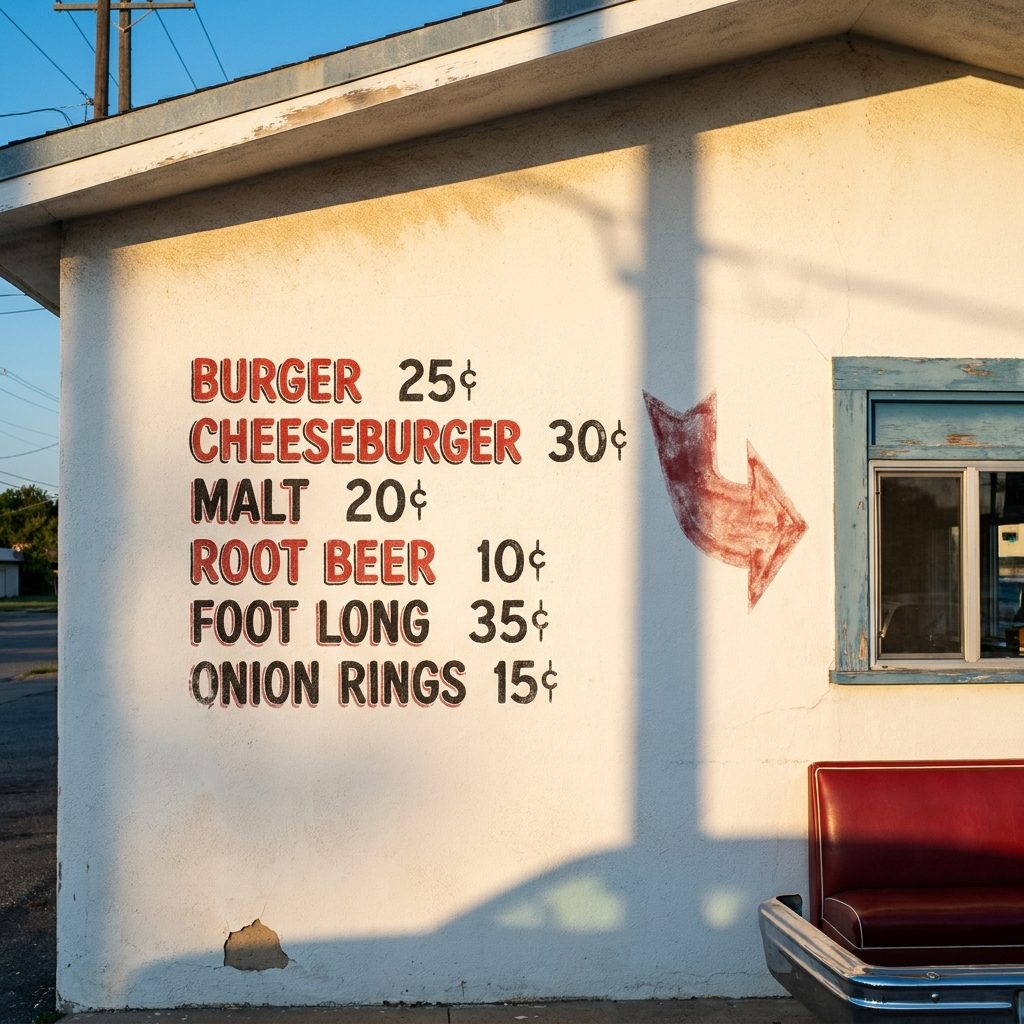
No printed menu. No plastic board with slide-in letters. Just the wall itself, painted by some sign guy back in 1958 and touched up every couple of summers when the red started fading toward pink.
You read it from the car window while you decided, and it hadn’t changed in years, and everybody knew it hadn’t changed in years, and that was the appeal.
The Metal Straw Holders Full of Paper Straws With the Red Stripe
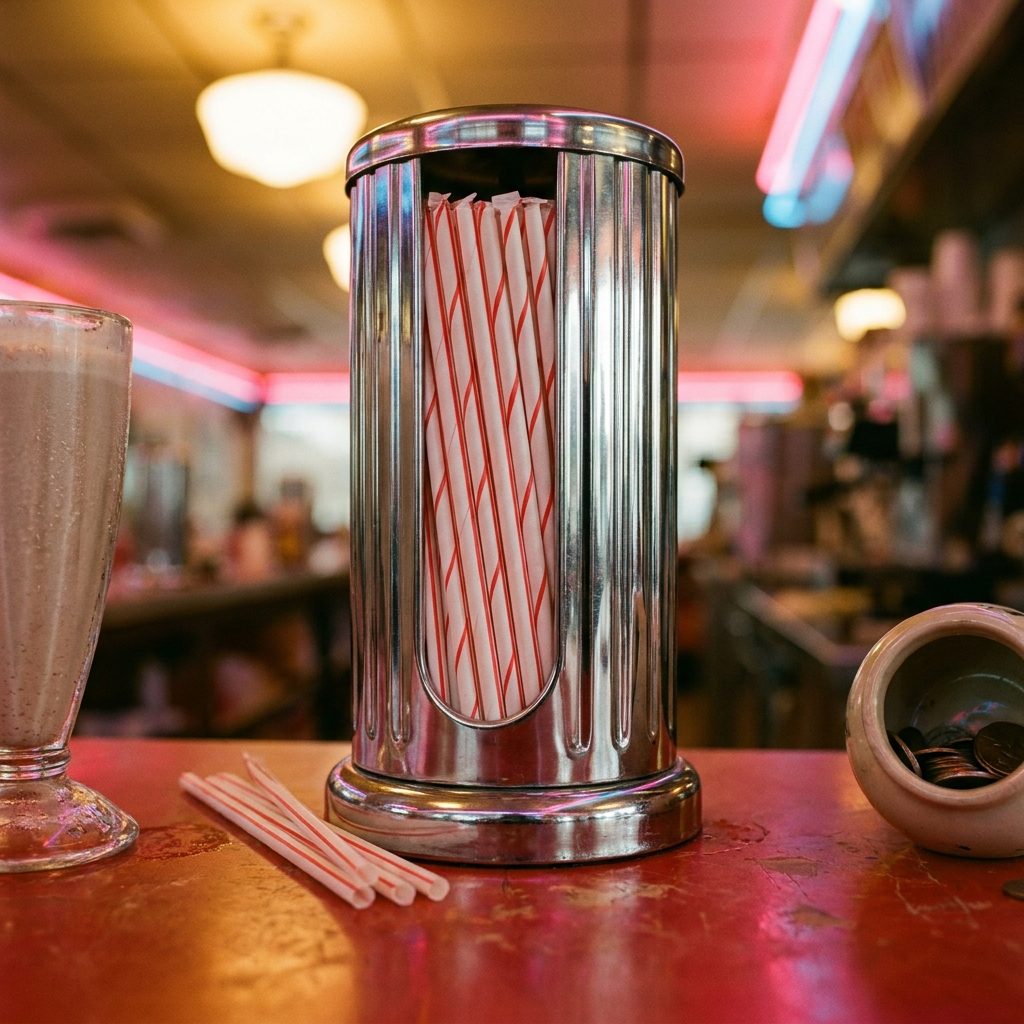
Before plastic. Long before. Paper straws with a single red stripe spiraling up, and if you sat too long they went soft and folded in on themselves halfway down the malt — which just meant you drank faster.
The Little Cardboard Boat the French Fries Came In
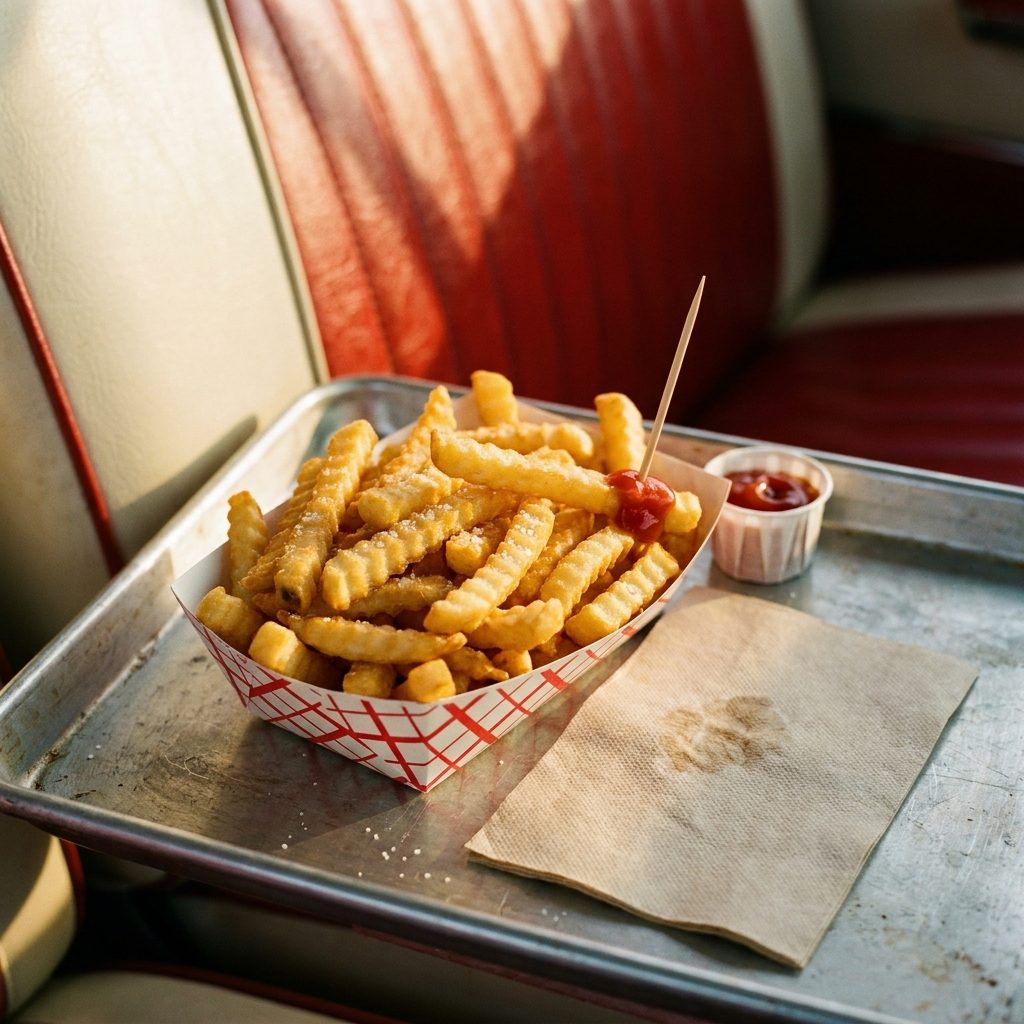
Waxed cardboard, red and white checks, held maybe fifteen fries if you counted generously, and the grease started soaking through by the time it hit the tray.
You ate them with your fingers. A fork on a drive-in tray was a crime against the whole setup.
The Guys Two Cars Over Turning Their Headlights On and Off
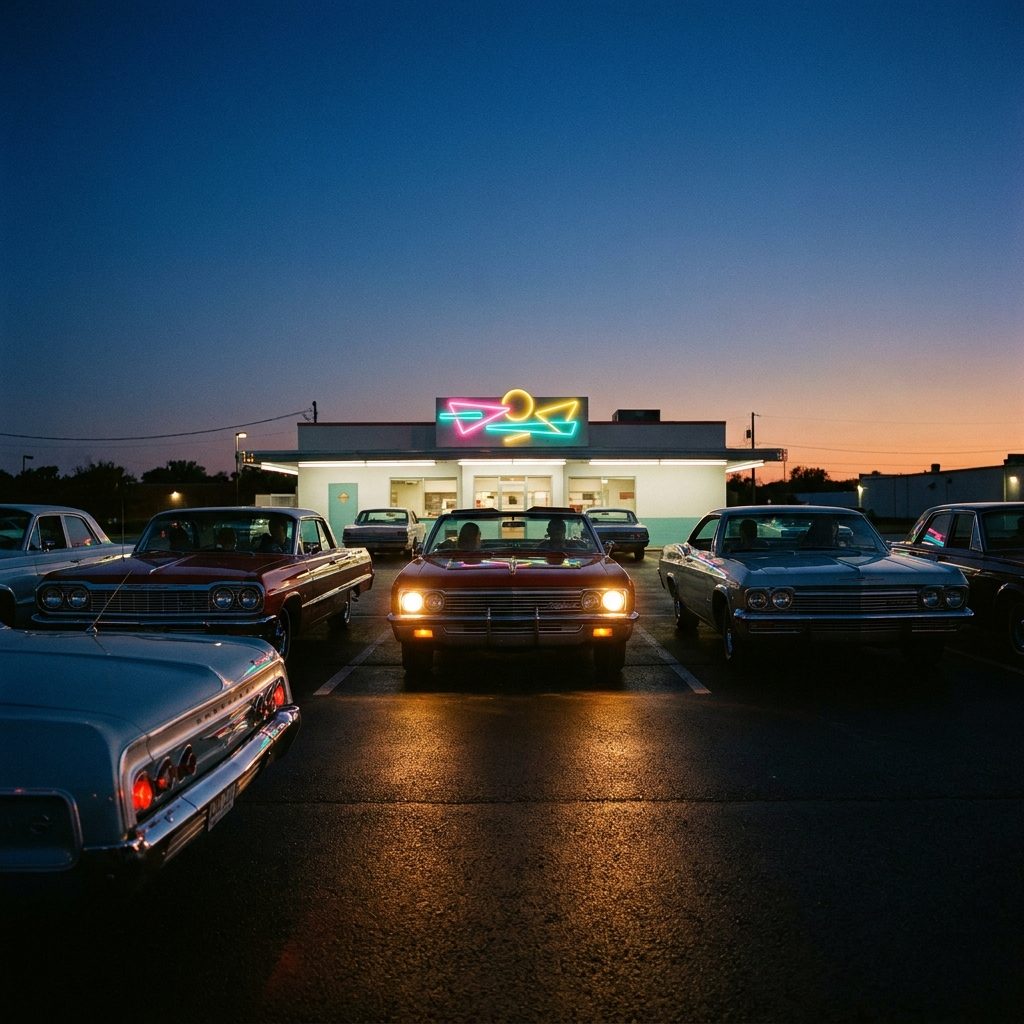
The signal. Headlights flick on, off, on again. It meant come over, or leave with us, or something none of us can quite remember now — but everybody understood then.
Sometimes it was for a carhop who was slow with the check. Mostly it was for the two girls in the Impala.
The Little Cardboard Kids Menu Shaped Like a Race Car
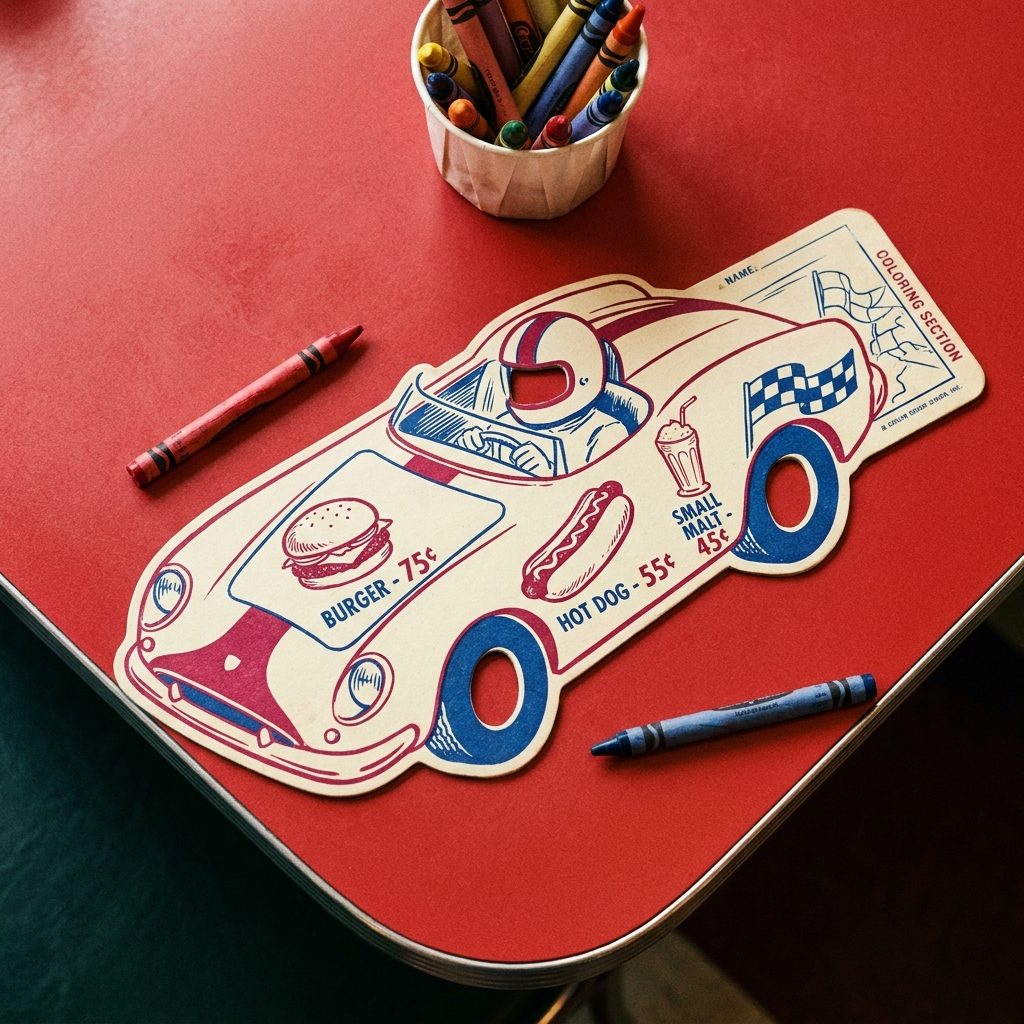
Punch-out windows, a checkered flag on the back, two crayons in a paper cup — always red and blue, never the color you actually wanted.
Half the kids in the back seat colored the wheels first. The other half went straight for the flag. You could tell a lot about a kid from that.
The Slow Cruise Through the Lot Before You Actually Parked
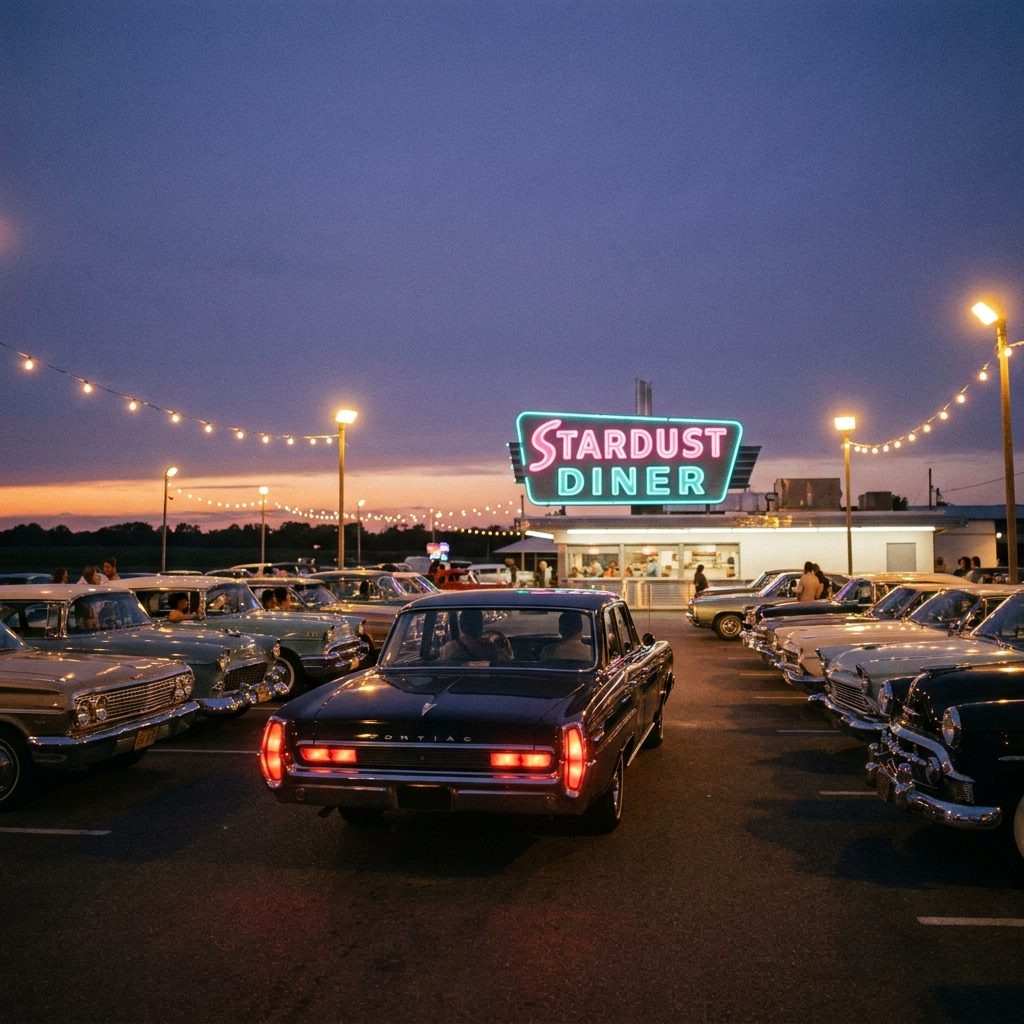
You didn’t park first. You crept the whole lot at three miles an hour, twice, sometimes three times, taking inventory — who was there, whose car was next to whose, what the situation was between the Ford and the Chevy in row two.
Only then did you pick a spot. And the spot you picked said everything about you.
The last car through was almost always the one everybody was watching for.
The Tray Boy Who Balanced Six Orders Like It Was Nothing
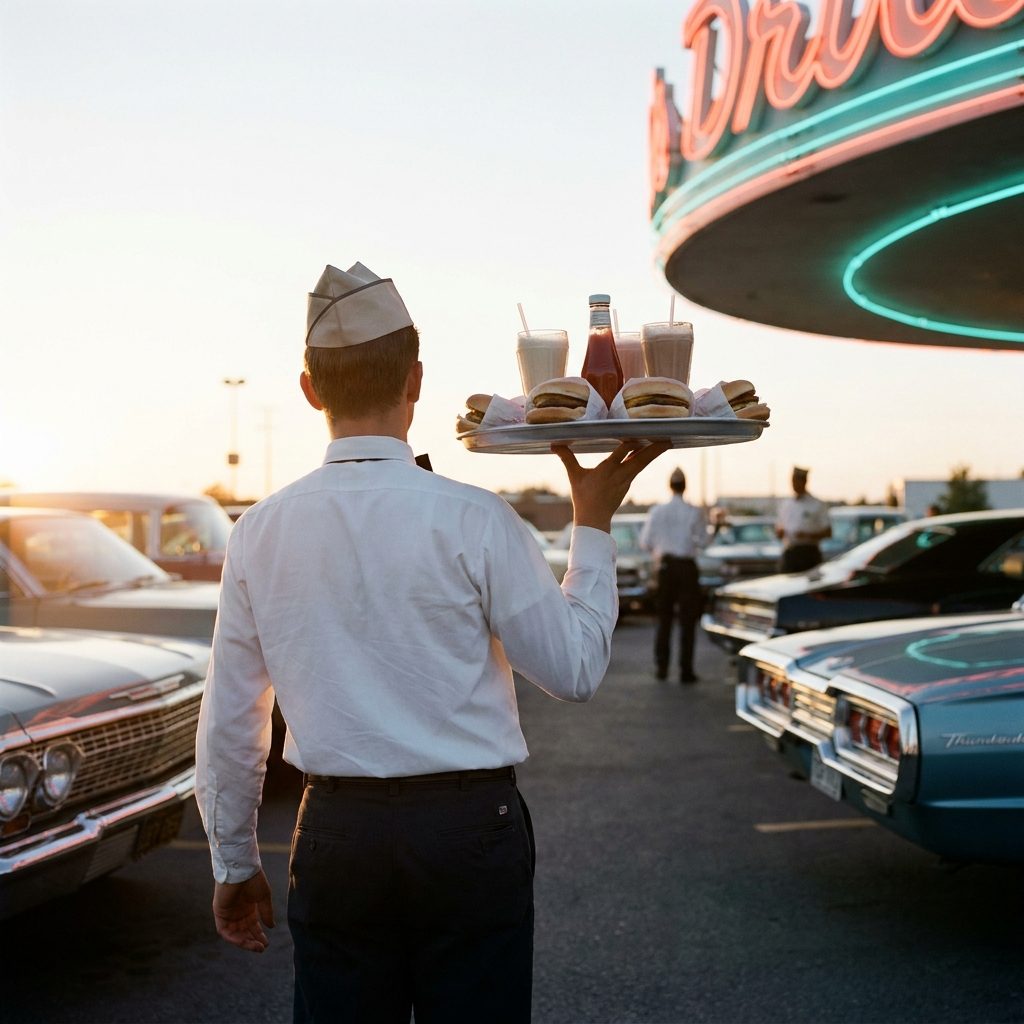
Nobody understood physics like a 1960s tray boy. Six drinks, four sandwiches, a bottle of ketchup — and he moved between cars with the confidence of a waiter at the Waldorf, except he was seventeen and getting paid in tips and Cherry Cokes.
The good ones never looked at the tray. They looked at the cars, spotted the next order, read the lot like a chessboard. You tipped extra when yours arrived with everything upright and the fries still hot.
The Little Metal Bell You Rang When You Were Ready to Order
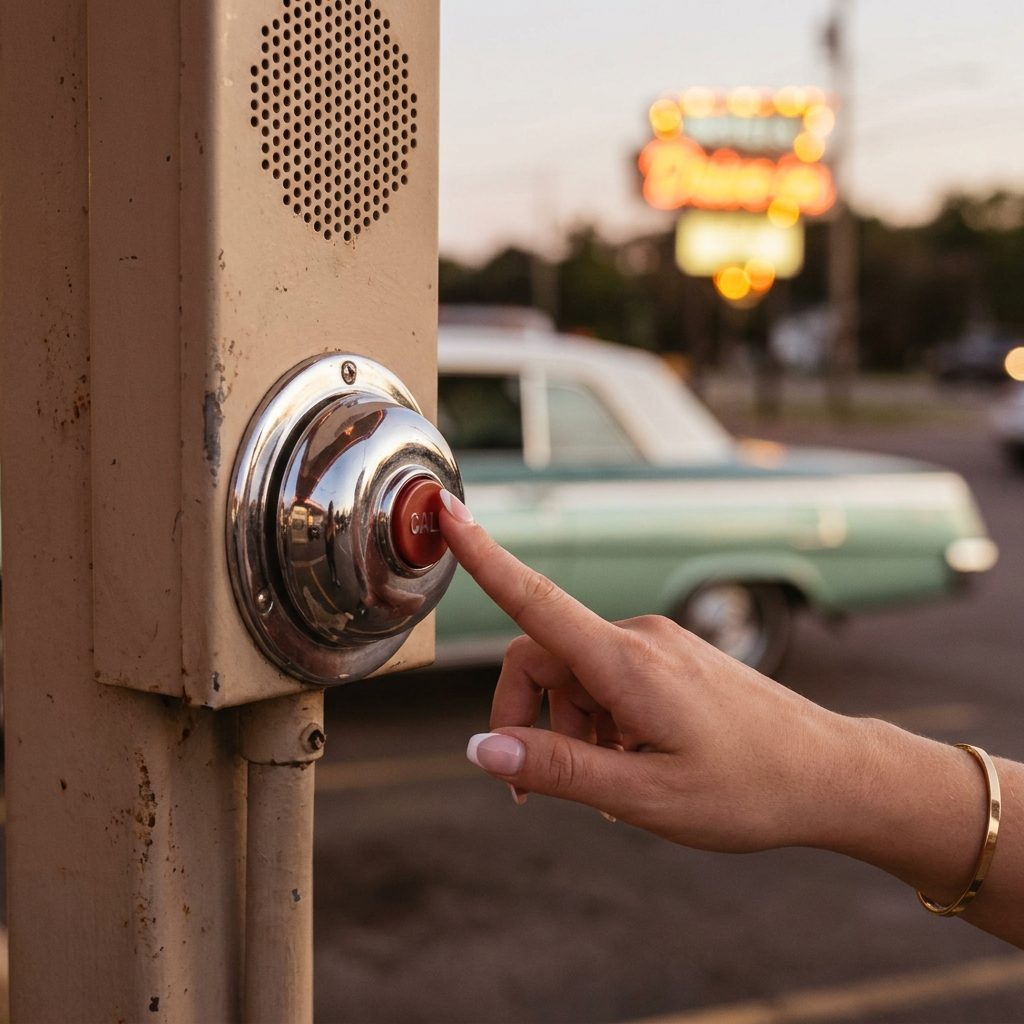
Some drive-ins skipped the speaker entirely. Just gave you a little chrome bell on the post. You pressed it, a buzzer went off somewhere inside the kitchen, and a carhop came running.
Felt oddly formal for a place that served food on a window tray. Like ringing for the butler — except the butler was named Denny and he was chewing gum.
The Radio in the Dashboard Tuned to the AM Station Playing Only Slow Songs After Nine
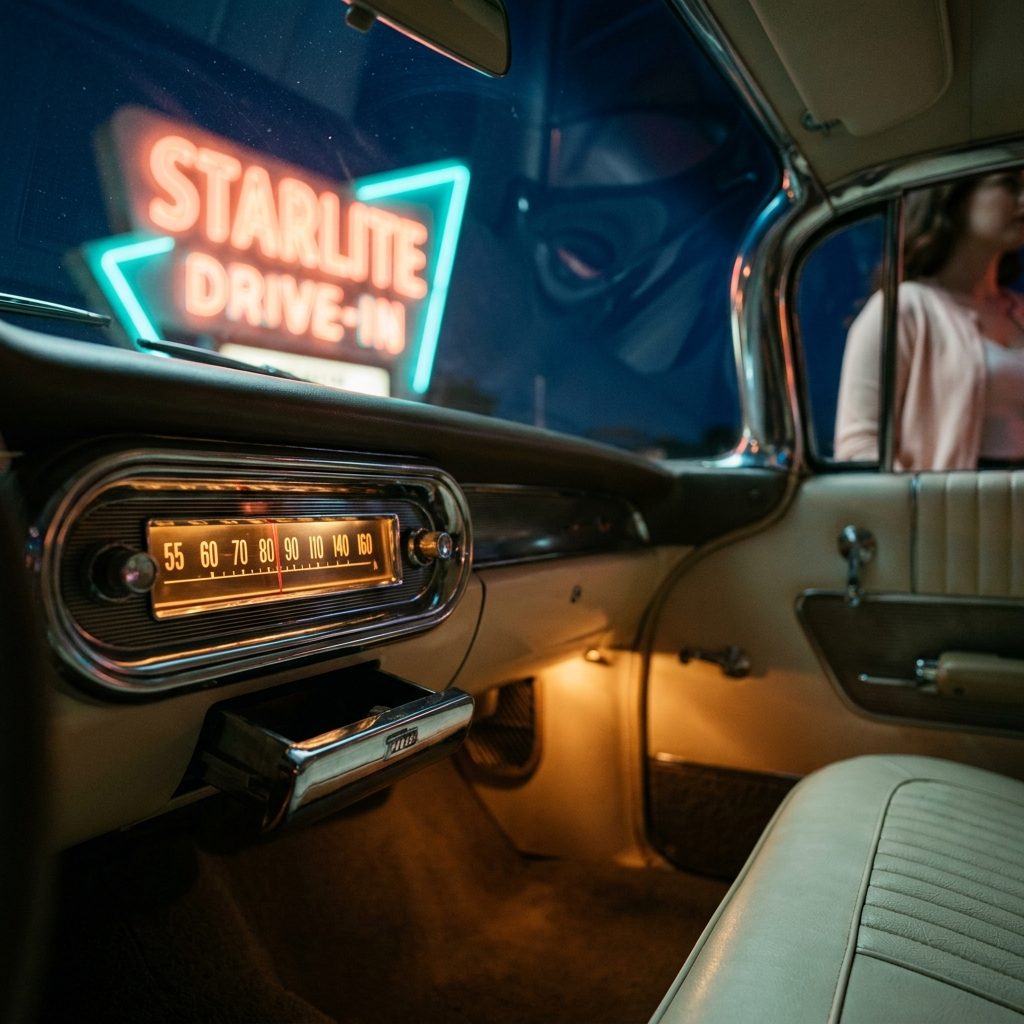
After nine, the AM dial belonged to the ballads. Every station in town flipped, at some agreed-upon signal, to something slower — The Platters, Roy Orbison, whoever was singing about missing somebody that week.
Which worked out fine. You were parked at a drive-in with a date, the food was mostly gone, and nobody wanted to be the one who suggested going home. So you let the DJ decide how long you stayed.
The Goodnight Wave From the Carhop as You Backed Out of Your Space
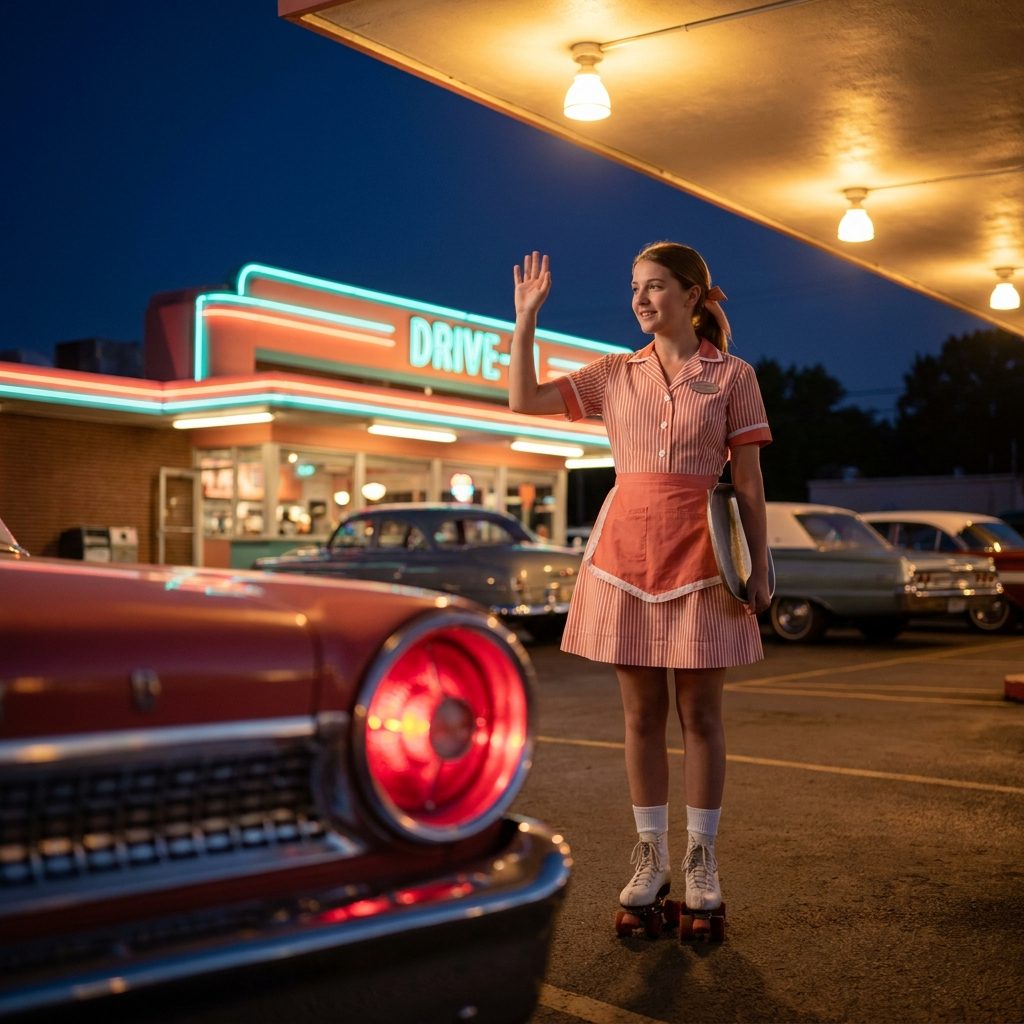
She waved at everybody. Regulars, strangers, the family with three kids crammed in the station wagon, the couple who hadn’t stopped talking long enough to eat their food. Didn’t matter. If you pulled out of that lot, you got the wave.
Cost her nothing. Bought the drive-in everything. You drove home feeling like somebody had noticed you were there — a small thing, and also the whole reason people kept coming back on Friday nights instead of eating at home.