Would you like to save this?
The smell hit you before the door closed behind you. Bacon grease, cigarette smoke, burnt coffee, something sweet drifting from the pie case near the register. A waitress in a mustard uniform pointed her pen at an empty booth without looking up, and somebody’s quarter was already halfway into the tabletop jukebox. That was a diner in 1975, running on rhythms nobody bothered to write down. Five decades later, the same buildings serve a different animal. Here’s what changed, one detail at a time.
Smoking Sections Were the Rule, Not the Exception
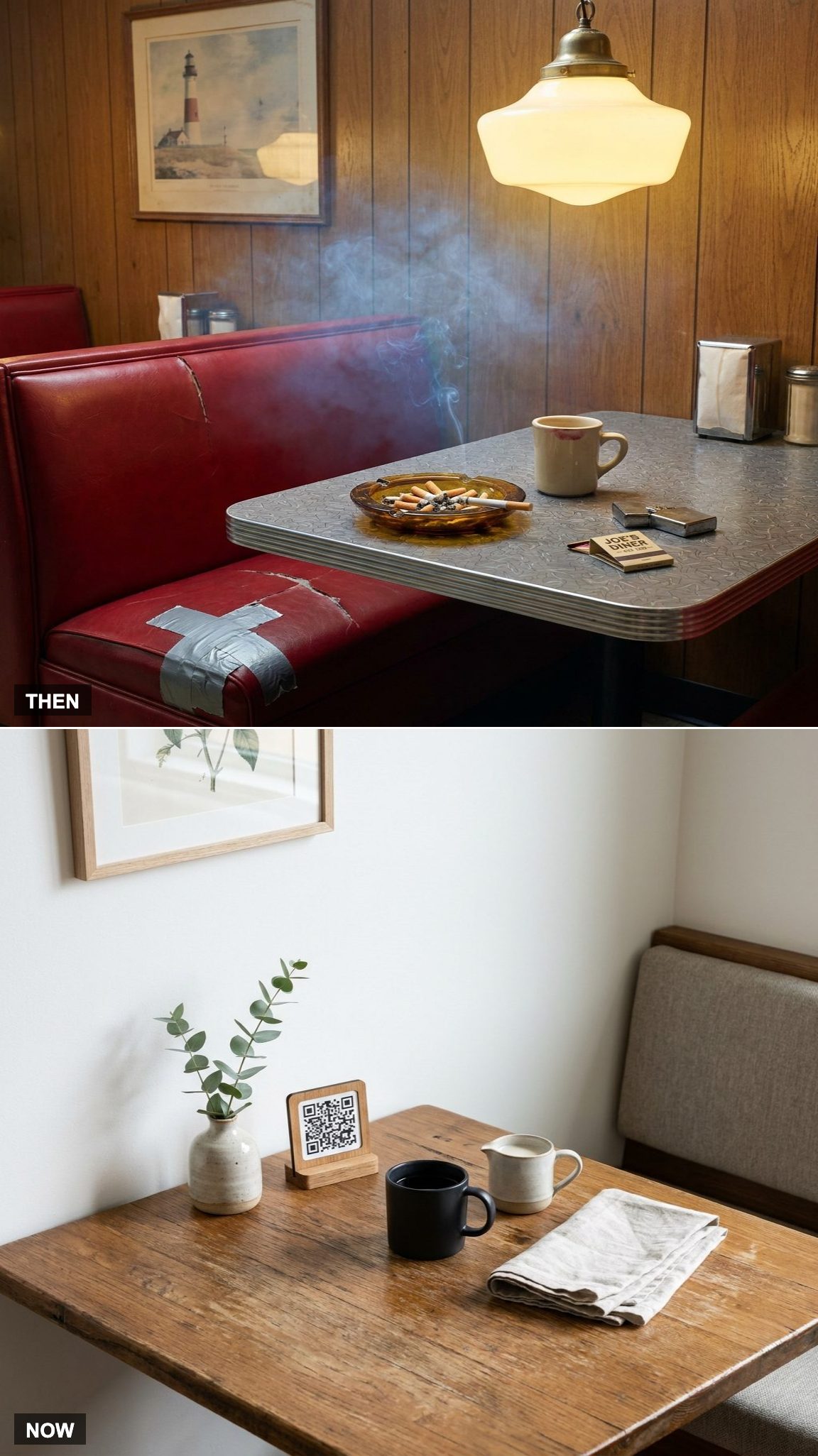
Every booth had an ashtray, and the waitress emptied it between courses without breaking stride. Somebody two tables over always had a Winston going, and by the time you left, your jacket smelled like the diner had followed you home. The smoking section? Usually just wherever you happened to be sitting.
Now the ashtray is a bud vase. Air is clean. A kid can eat pancakes without inhaling somebody’s second breakfast.
Handwritten Order Pads Gave Way to Tablets at the Hip
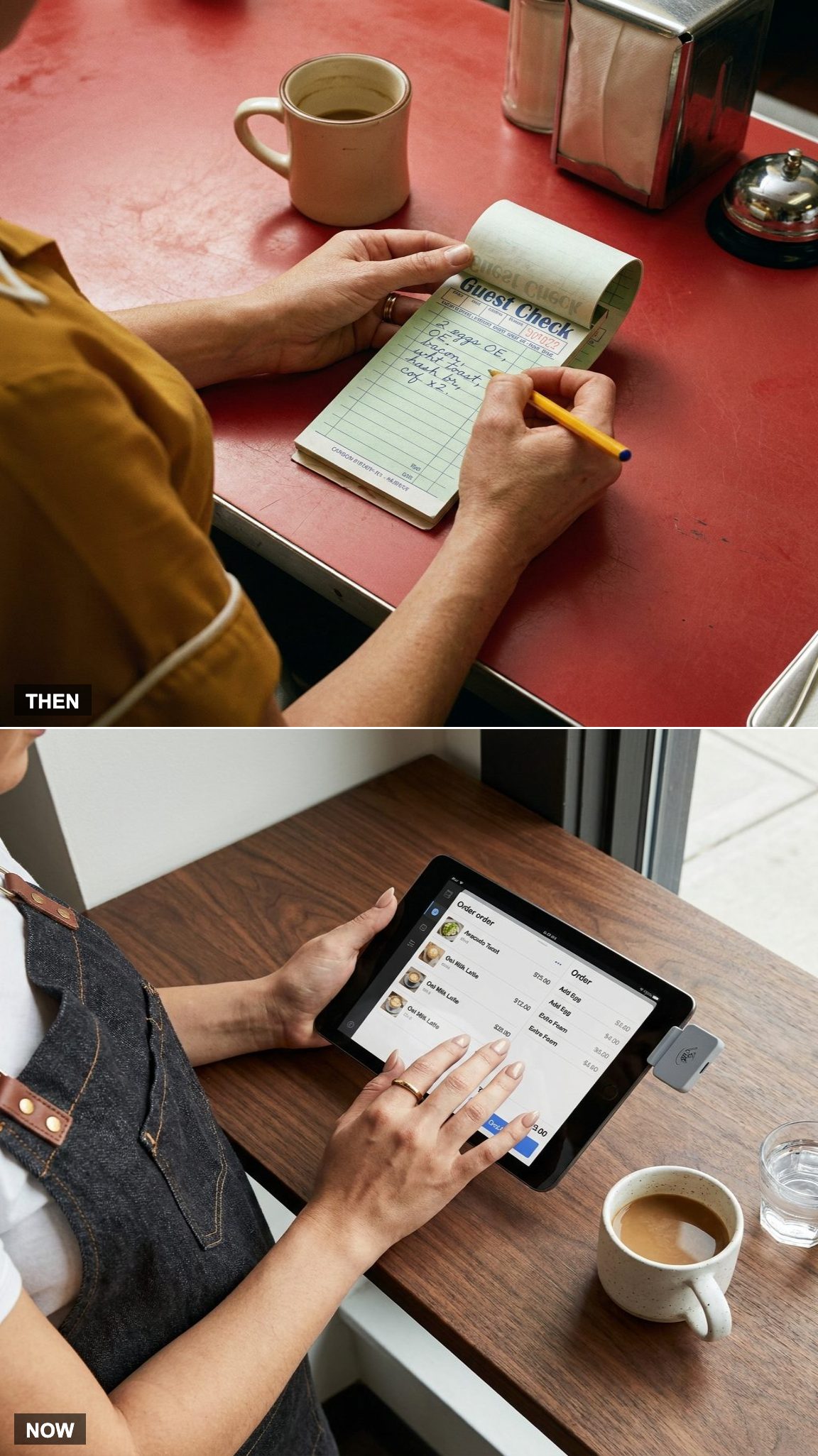
A green rectangle, a carbon copy underneath, and shorthand nobody outside the diner would recognize — that was the order pad. A good waitress could take a table of six without writing down a thing, then transcribe it later once the coffee round was done and the toast was up. The kitchen bell dinged, the ticket went on the wheel, and that was the entire system.
Now the same order goes into a tablet with dropdowns for every modifier. Faster and cleaner. Completely joyless if you were the kind of person who liked watching a pro work a pad.
Jukeboxes at Every Booth Replaced by Streaming Playlists Overhead
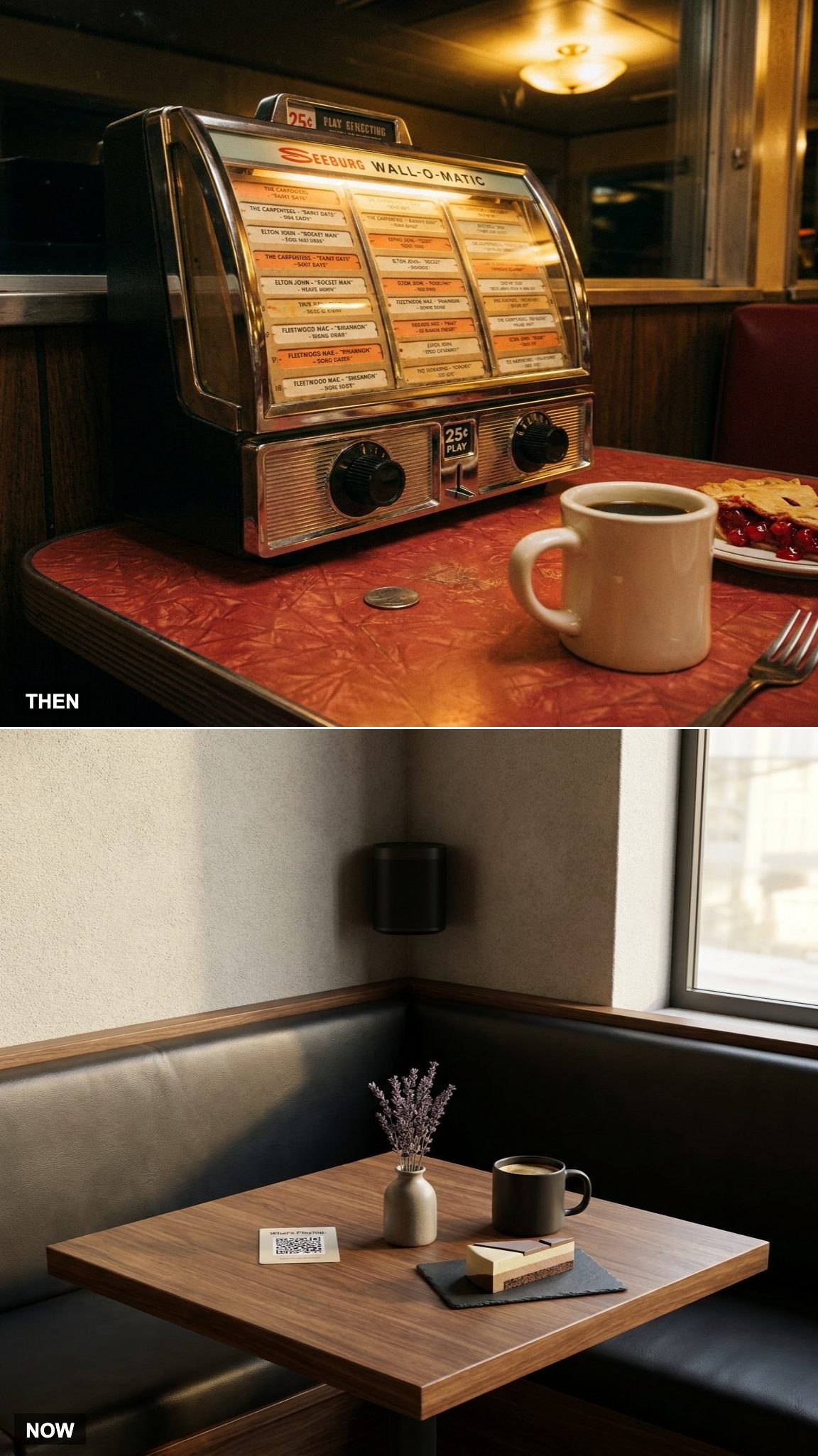
The tabletop jukebox was the greatest piece of furniture ever installed in an American restaurant. You put a quarter in, flipped through the little cards, punched B7 and D12, and heard your song about eight songs from now. Sometimes never, if the diner was busy and someone with more quarters had beaten you to it.
Now a Spotify playlist runs from a speaker in the ceiling. Probably better curated. Definitely less fun. You cannot pay a stranger’s music to play by feeding a machine near your french fries.
Cash-Only Registers Made Way for Tap-to-Pay Everything
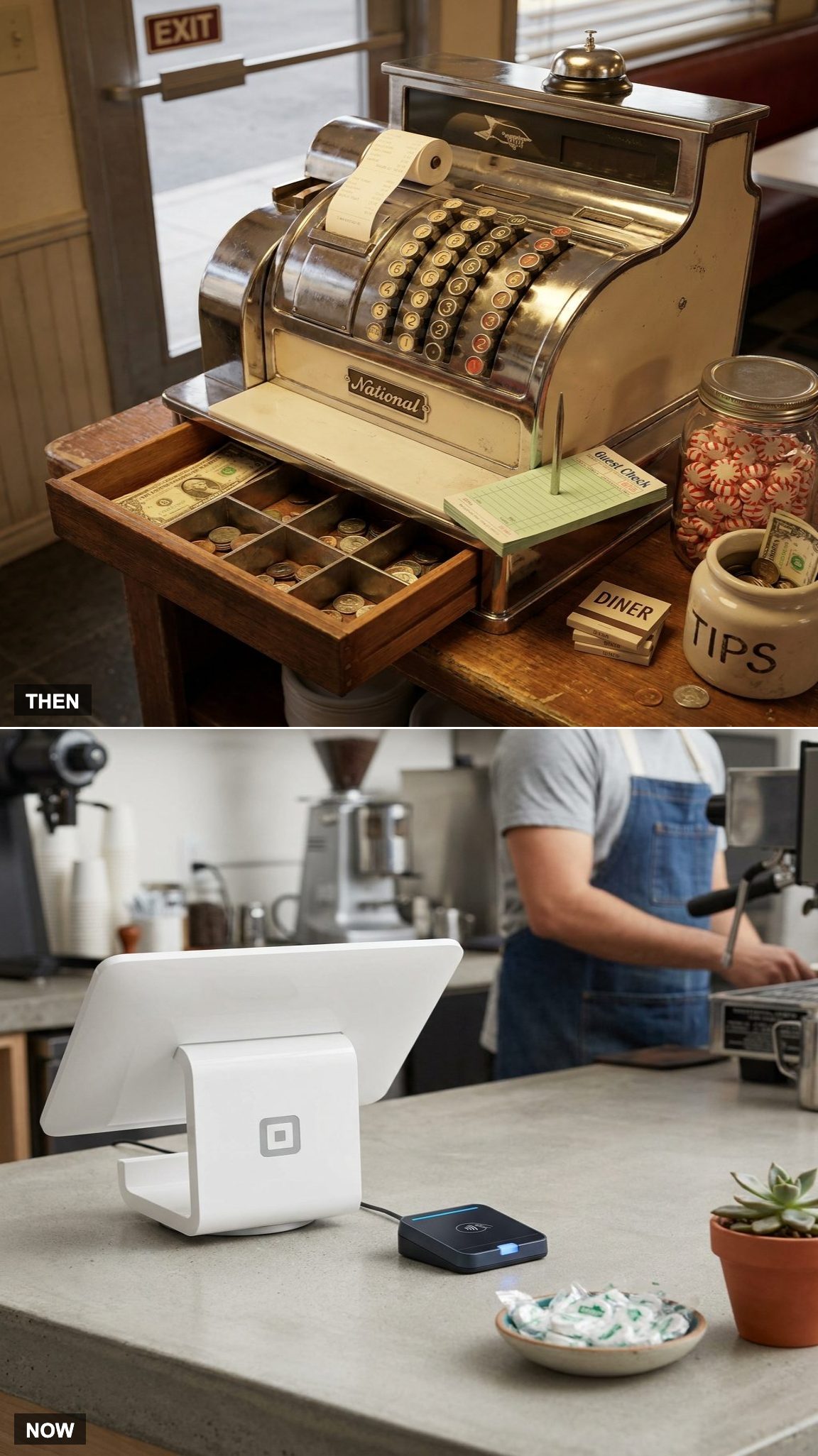
The register was mechanical and chrome, and it rang a small bell every time the drawer opened. You paid in cash, got change back in coins, and the waitress got her tip in whatever bills were left on the table when you walked out. Nobody had ever heard of splitting a check five ways on separate cards.
Now the tablet swivels toward you and asks for 18, 20, or 25 percent before you have finished chewing. Progress, sure. But the bell was better than the swivel.
Regulars Known by Name, Now Tracked by App
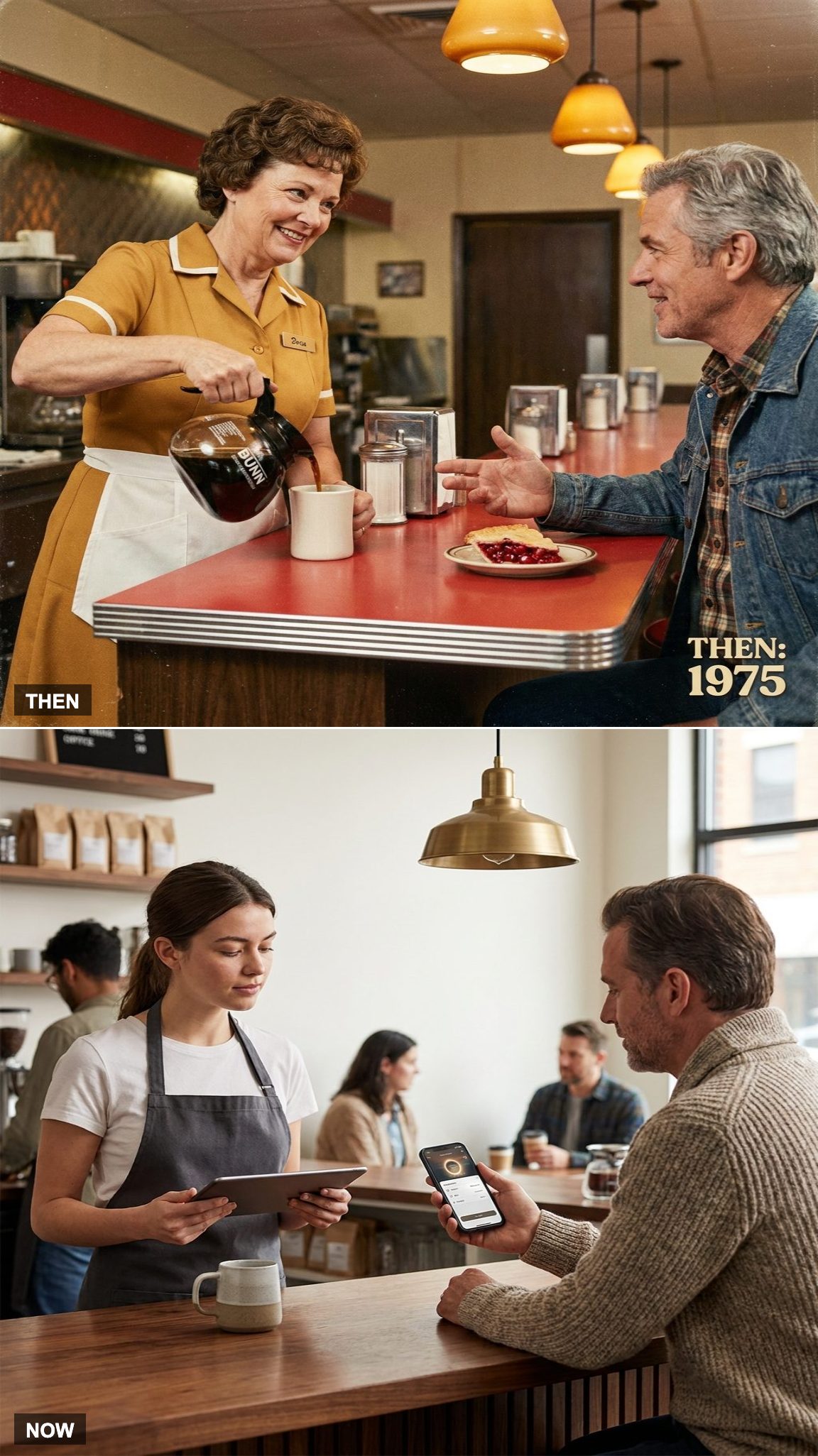
Doris knew you took your eggs over easy, that your wife had gone back to work at the county office, and that the last time you had cherry pie was a Wednesday, because Wednesday is when she made it. The relationship was the whole point of showing up three times a week.
Now an app remembers your order. It also knows your birthday and sends you a coupon. It does not know your wife went back to work.
The Rotating Pie Case Meets the Gourmet Dessert Display
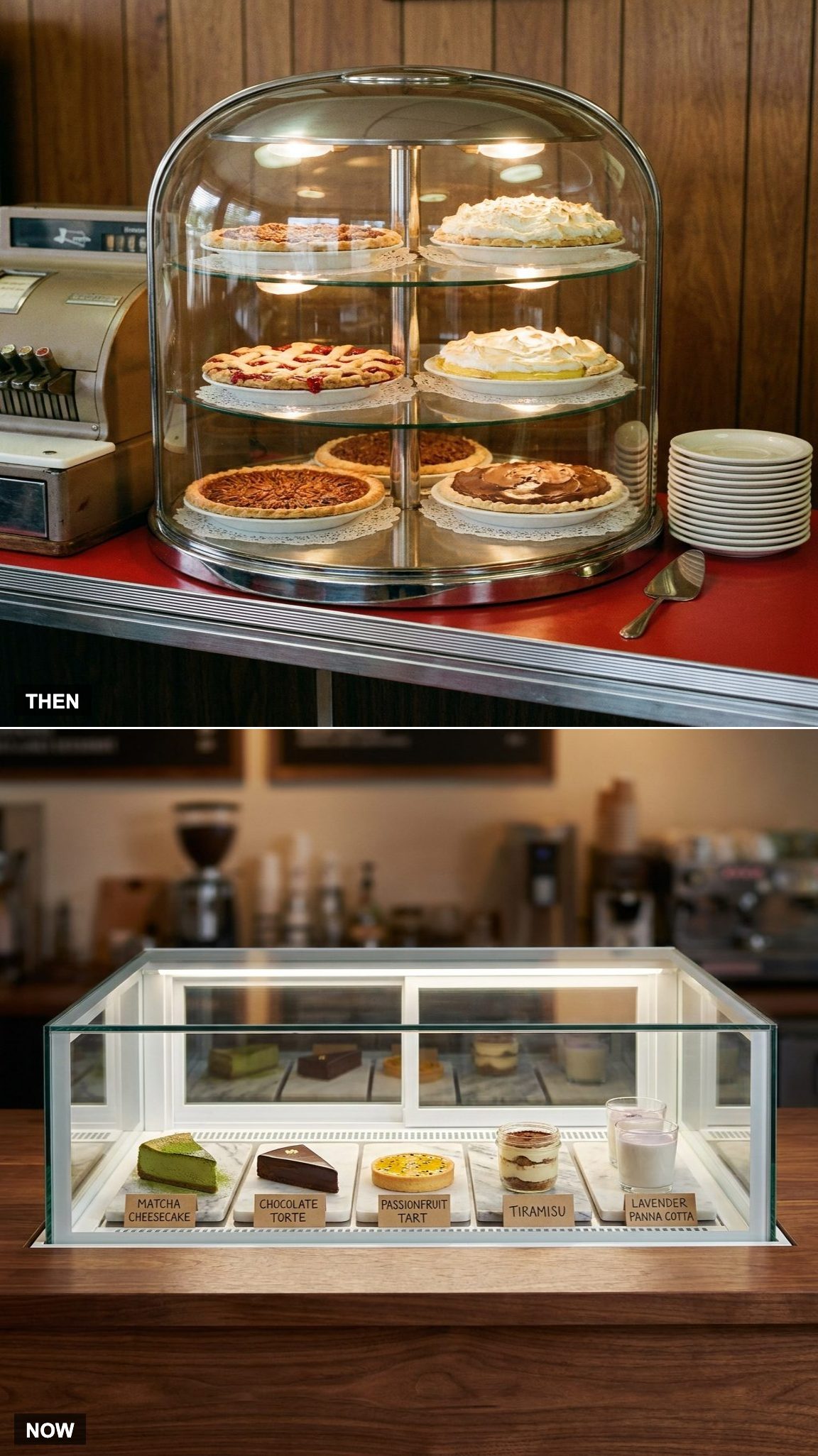
The rotating pie case was theater. You watched a cherry pie slide past a coconut cream and back around again, and by the time you had eaten your meatloaf you knew exactly which slice you wanted. The whole thing was designed to sell you dessert whether you came in for one or not.
Now the case holds cheesecake, panna cotta, and something called a passionfruit tart. Genuinely better food. Nothing rotates, though — and rotation was half the appeal.
A pie you can watch spin is a pie you are going to order. The rotating case understood human weakness better than any modern menu design ever will.
Breakfast Ruled the Menu. Now the Menu Rules All Day
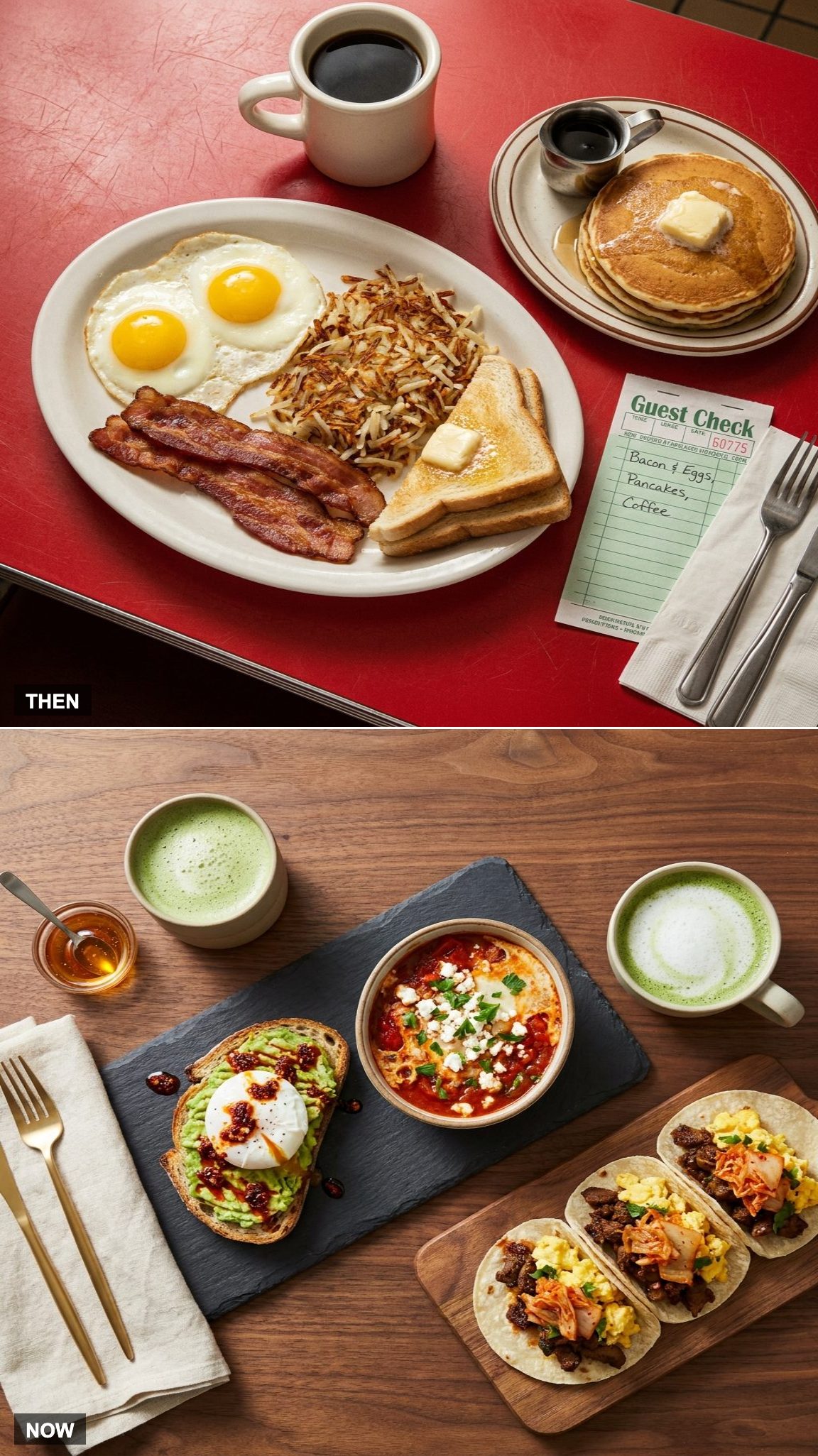
Breakfast was the diner’s whole personality — eggs any style, hash browns, bacon, sausage, pancakes, French toast, and a side of grits if you were far enough south. Lunch and dinner menus existed, but breakfast was what the diner did best and everyone knew it.
Now the same diner serves shakshuka at 3pm and a Korean breakfast taco at 9am. The categories collapsed. You can get eggs at dinner and a burger at 8 in the morning and nobody at the counter thinks it’s strange.
The Burger: From Two Toppings to a Tower of Extras
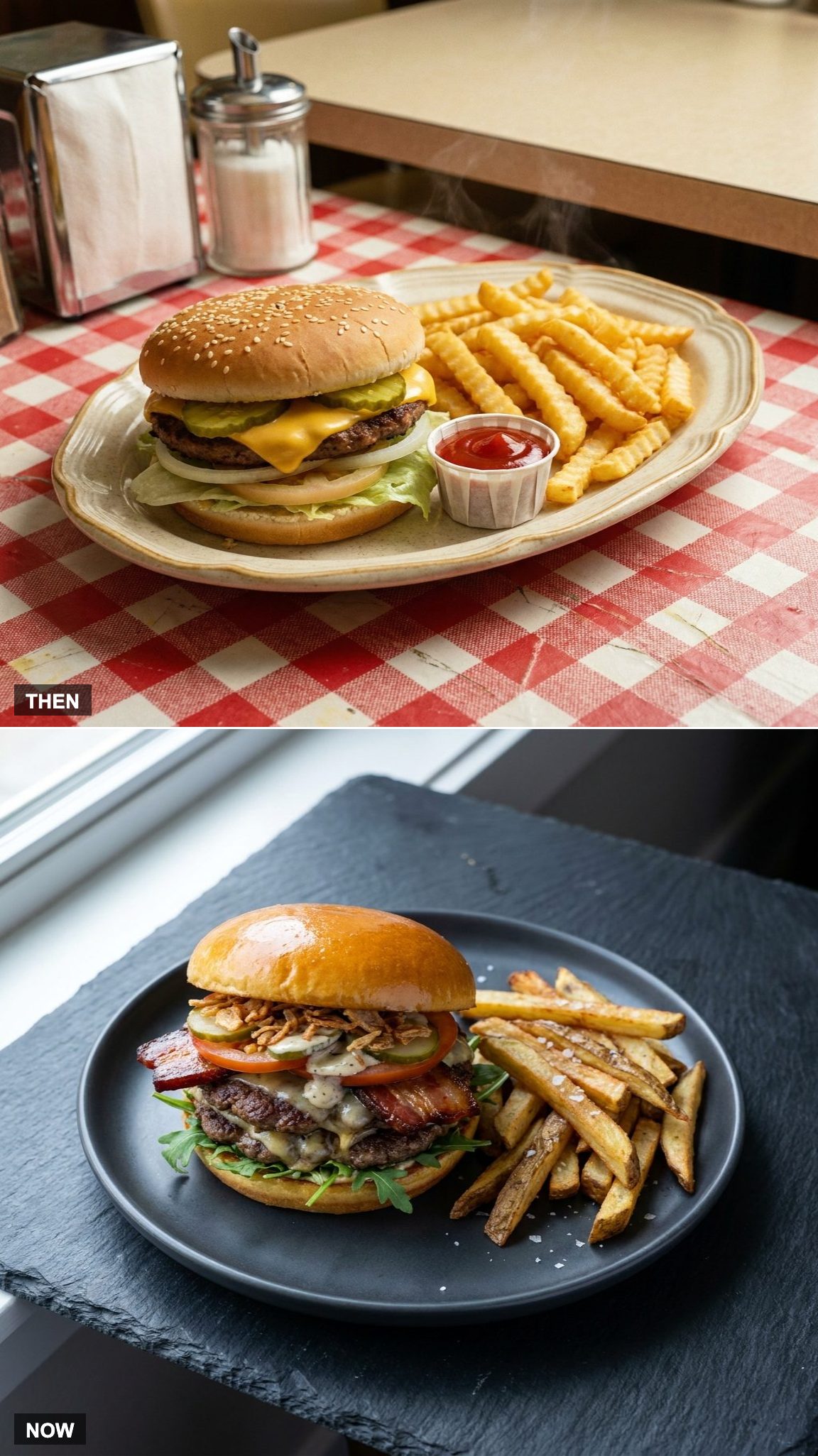
A 1975 diner burger was an honest sandwich — quarter pound of griddled beef, American cheese, two pickle chips, a tired lettuce leaf, and a tomato slice that had clearly seen better Februaries. Bun was plain sesame. Ketchup came in a little paper cup or squeezed from a glass bottle you had to smack on its base to get anything out of.
Now the burger is a construction project. Double smashed wagyu on brioche with truffle aioli, candied bacon, arugula, and heirloom tomato at fourteen dollars a pound, stacked taller than the glass beside it. Two hands. A strategy. Maybe a bib if you’re being honest with yourself.
The Milkshake: Hand-Spun on a Hamilton Beach vs. Instagram Bait
Would you like to save this?
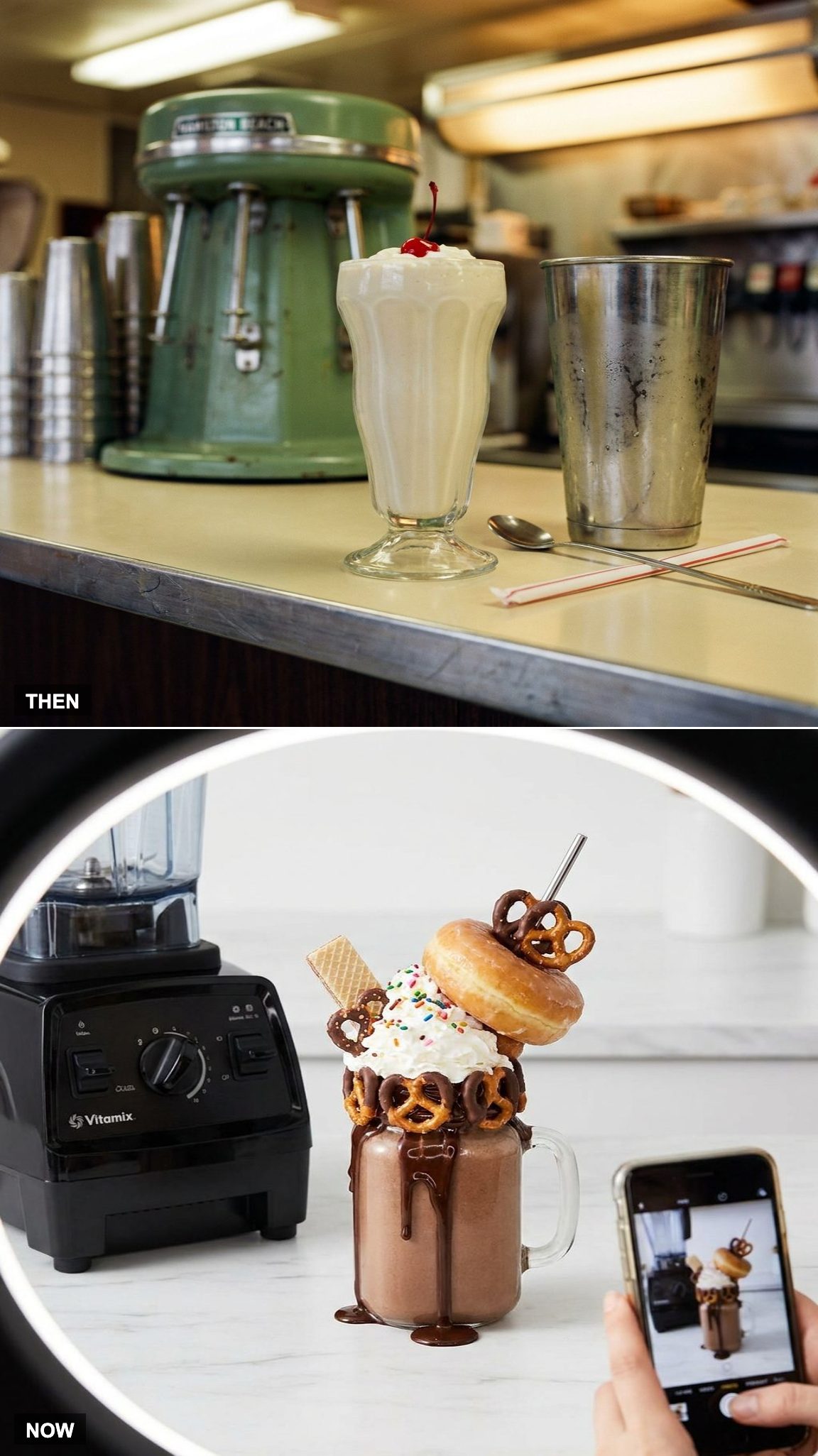
The 1975 milkshake was a two-part experience. You got the glass, and you got the extra portion still sitting in the cold stainless cup beside it, sweating a little ring onto the Formica. Always more than the glass could hold. Small kindness, visible from across the counter.
Now the shake is a photograph first and a beverage second. A donut skewered on top. A cookie involved somehow. Someone at the next table is holding their phone above it before anyone even takes a sip.
The Sign Out Front: Neon Buzz vs. Sans-Serif Minimalism
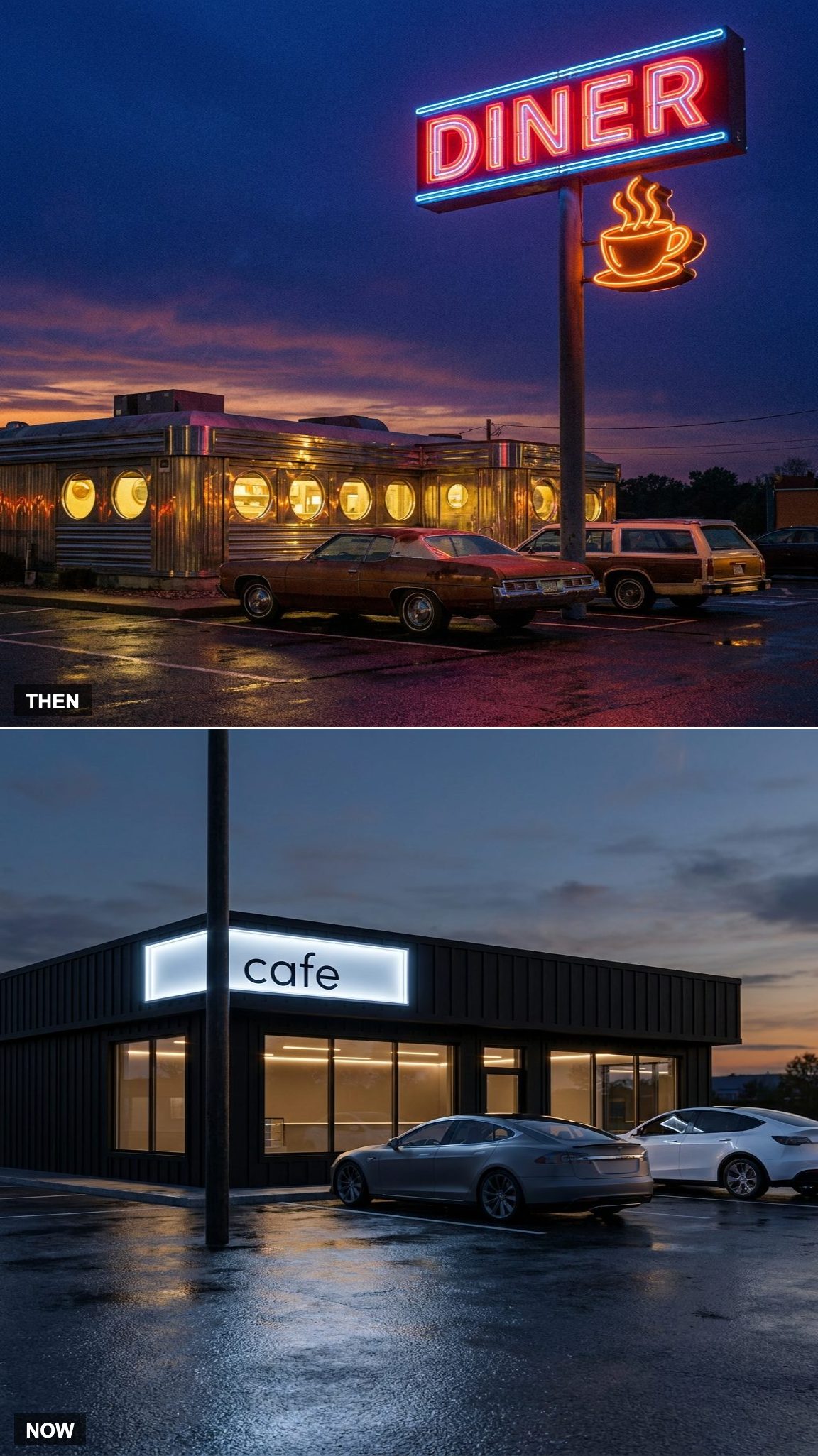
Neon was a promise you could read from half a mile out. Red script that said DINER, an orange coffee cup with steam that curled and uncurled on a slow loop, the whole rig humming faintly when you got close enough to hear it. That sign was doing actual work — telling you the place was open, telling you it was warm inside, telling you the coffee was already made and someone was watching the door.
The modern version whispers.
A single word, lowercase, on a white acrylic panel lit from behind. Drive past at forty and you’ll miss it entirely. That might be the point, or it might just be what happens when nobody in the design meeting has ever waited tables.
The Booth on Sunday Morning: Family Ritual vs. DoorDash Bag
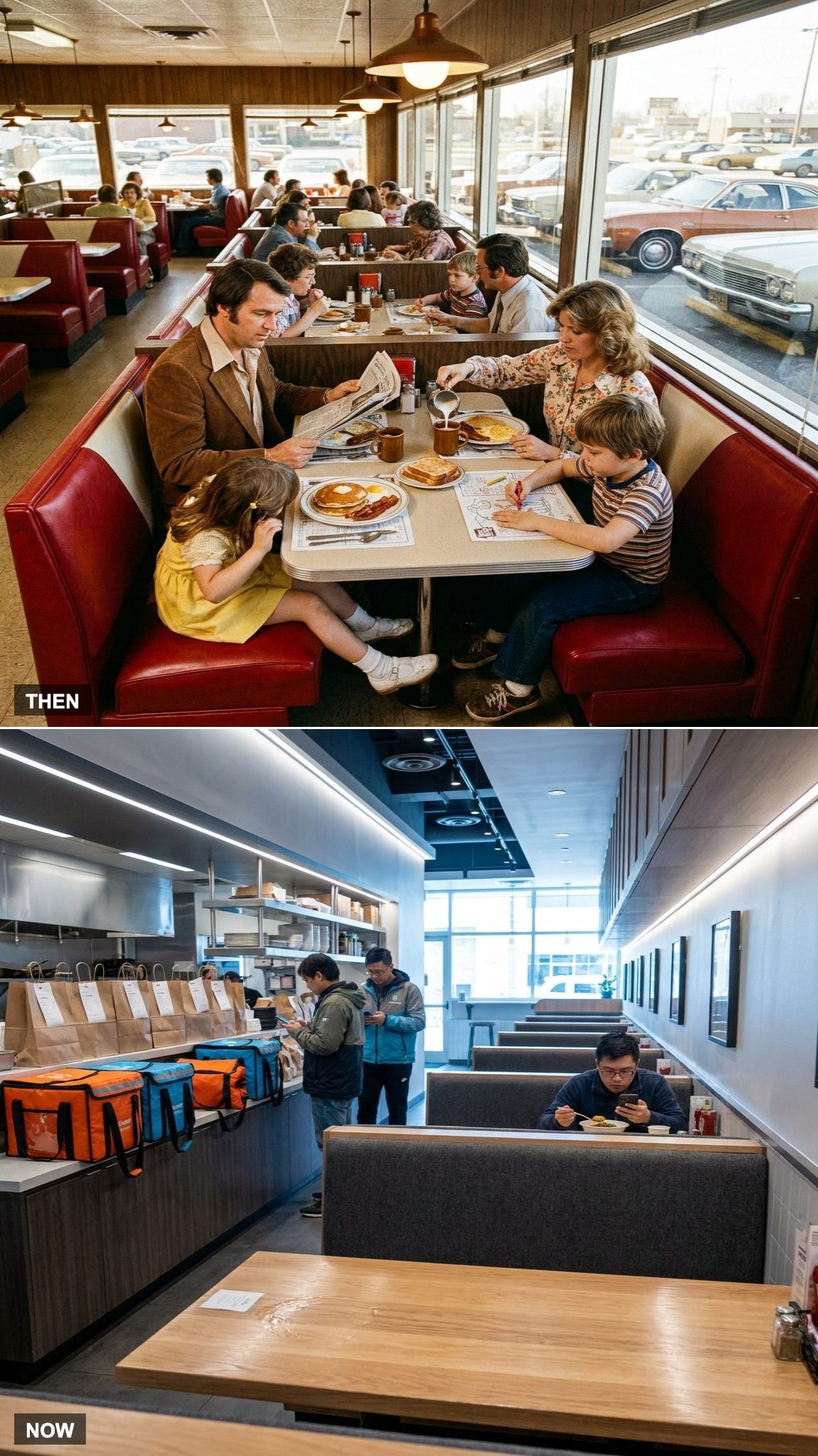
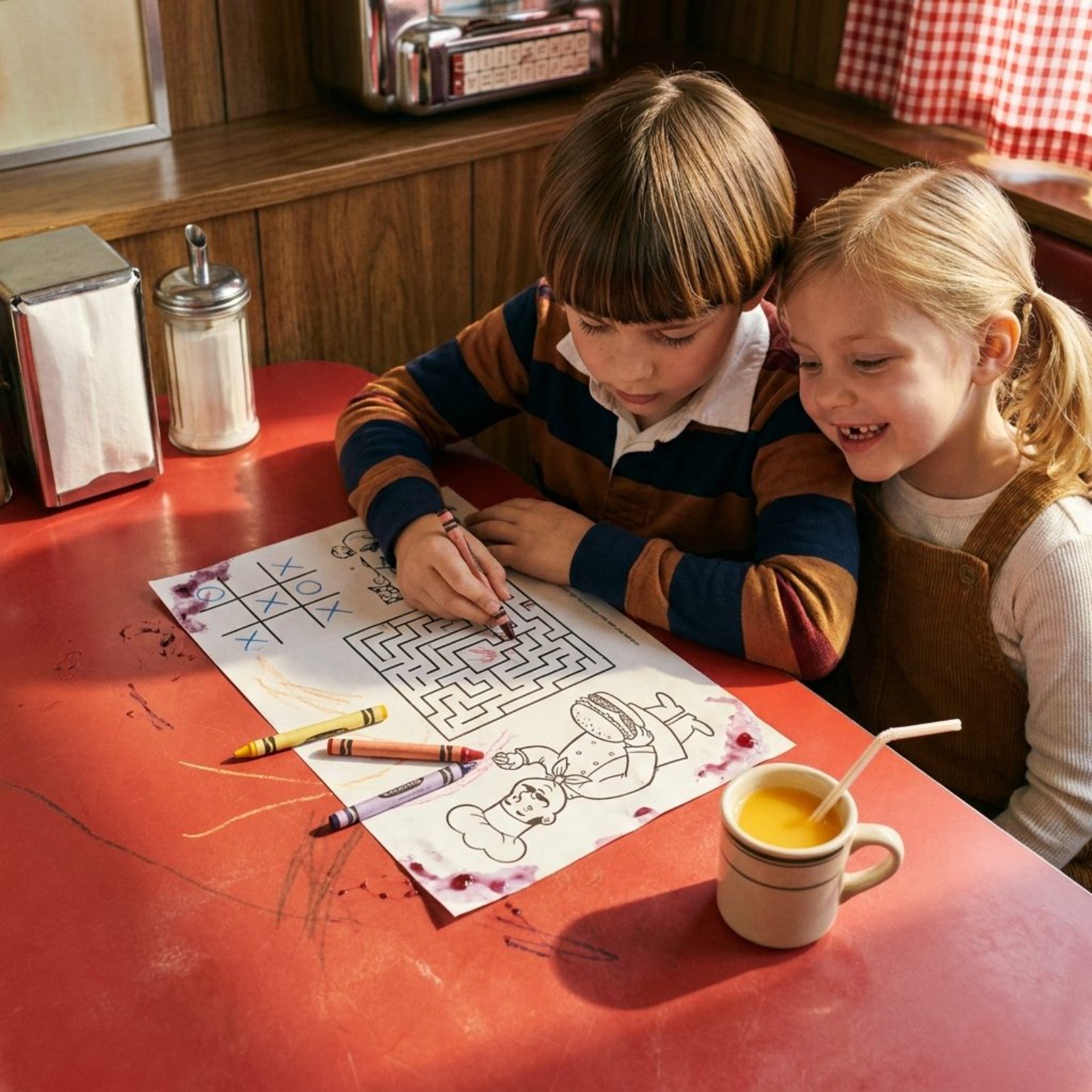
Sunday morning in 1975 meant the diner was full by nine — families in the booths, kids scribbling on placemats with the four crayons the hostess handed out, dads with the sports section folded into quarters, moms lingering over a second cup because it was the only quiet they’d get all week.
The booths are still there. Half of them are empty. Action has moved to the pickup counter, where brown paper bags stack up under order tickets and drivers in unmarked jackets stand around checking their phones.
The diner didn’t close. It moved into your kitchen.
The Open Grill: Line Cook Choreography vs. Ticket-Screen Efficiency
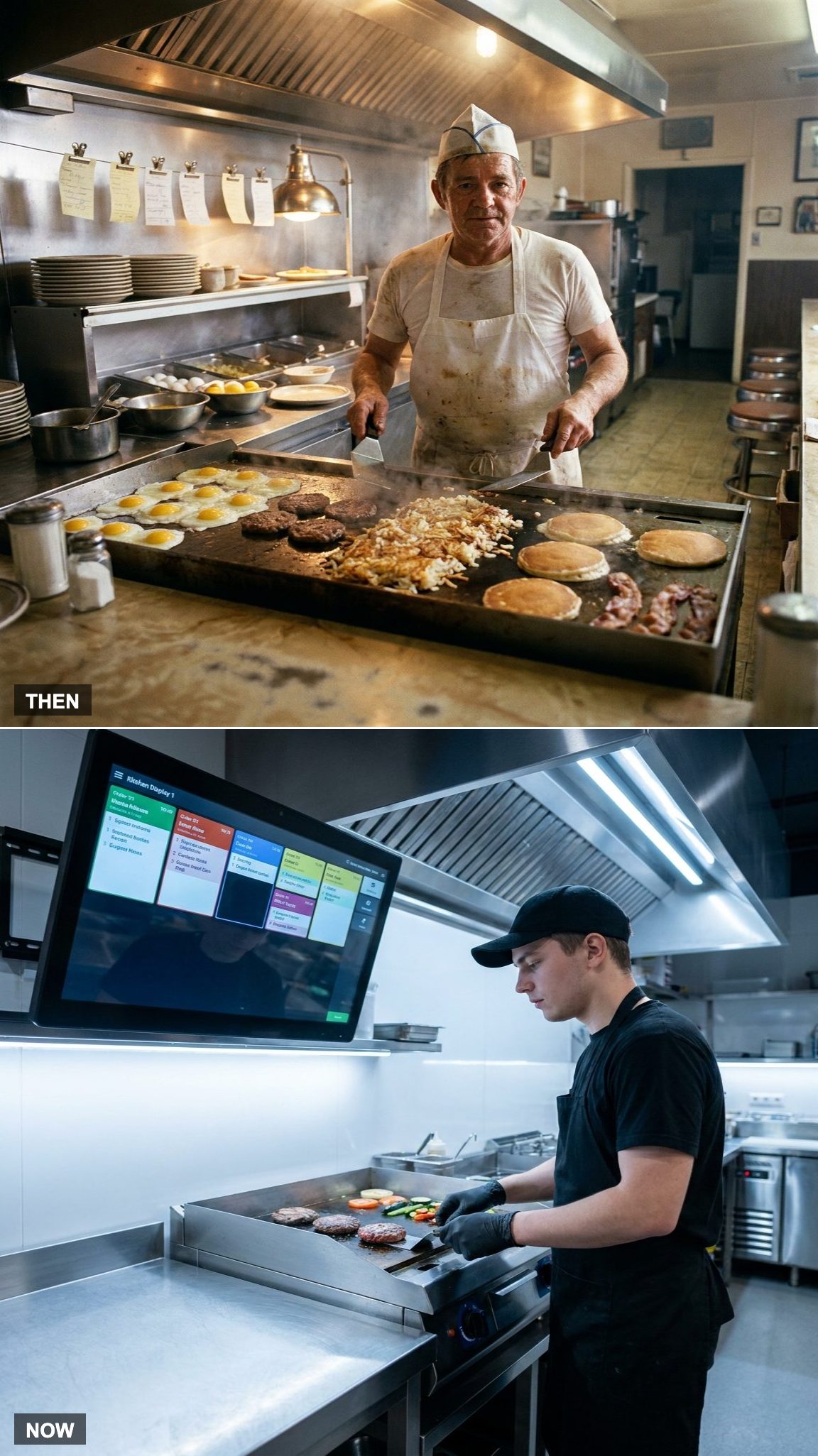
The line cook in 1975 was a performer. He worked a griddle the size of a dining room table with a spatula in each hand, and the whole show happened three feet from your face — twelve eggs at various stages, four burgers, hash browns, pancakes, bacon strips curling at the edges, all timed by memory. You watched him work while you drank your coffee, and that was half the meal.
The modern kitchen runs on a screen. Orders come in as colored blocks, timed to the second, routed to the right station. The cook is still skilled. You just can’t see it happen.
The Booth Itself: Cracked Red Vinyl vs. Boucle and Walnut
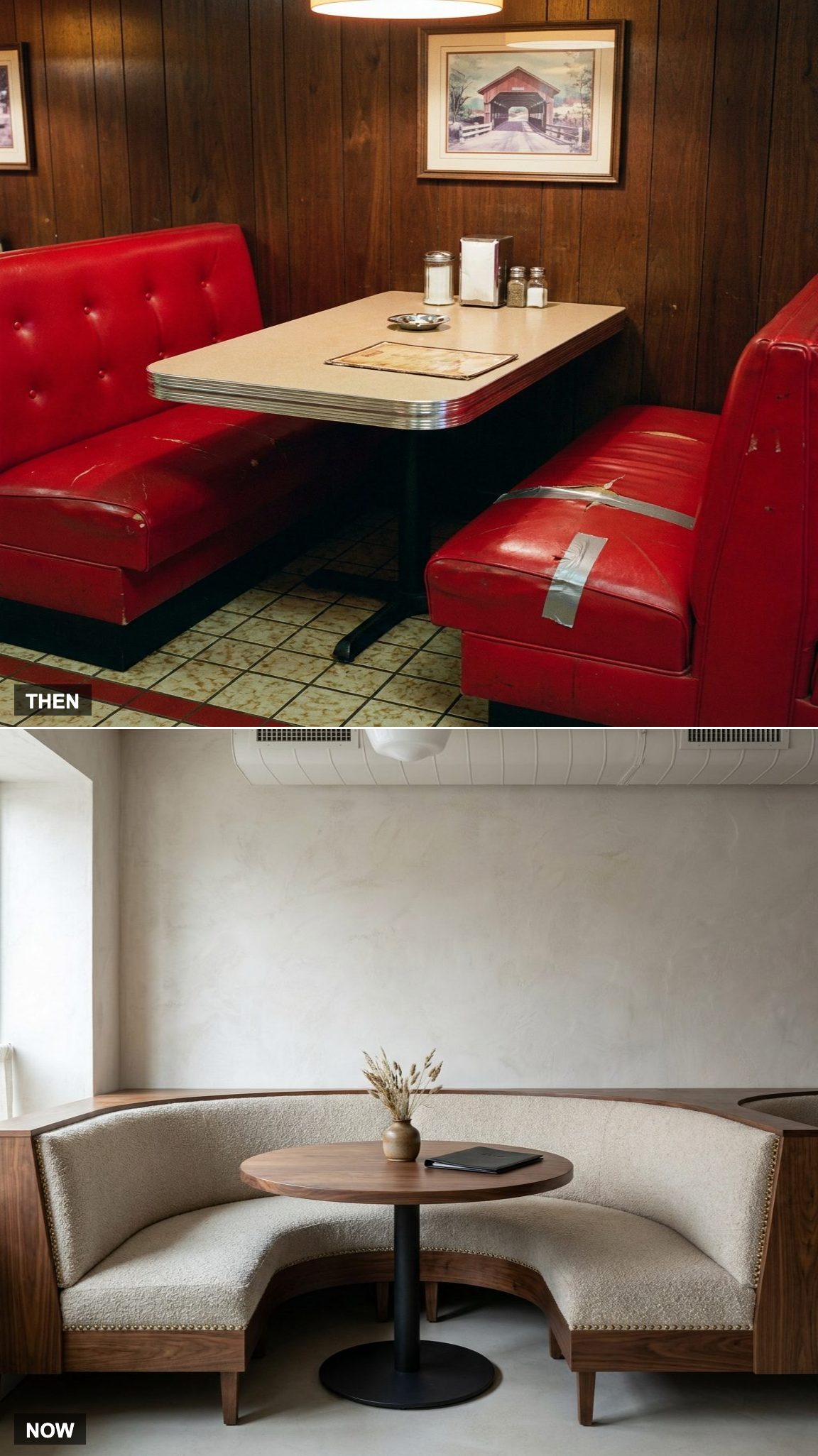
The booth was red vinyl and it had opinions. It squeaked when you slid in, stuck to the backs of your legs in summer if you were wearing shorts, and there was almost always a crack somewhere along a seam — sometimes patched with duct tape that matched absolutely nothing else in the building.
Now the booth is a curved banquette in oatmeal boucle with a walnut frame. Doesn’t squeak. Doesn’t stick. Also doesn’t remember anyone.
The Sugar Pourer and Cream Pitcher vs. The Basket of Packets
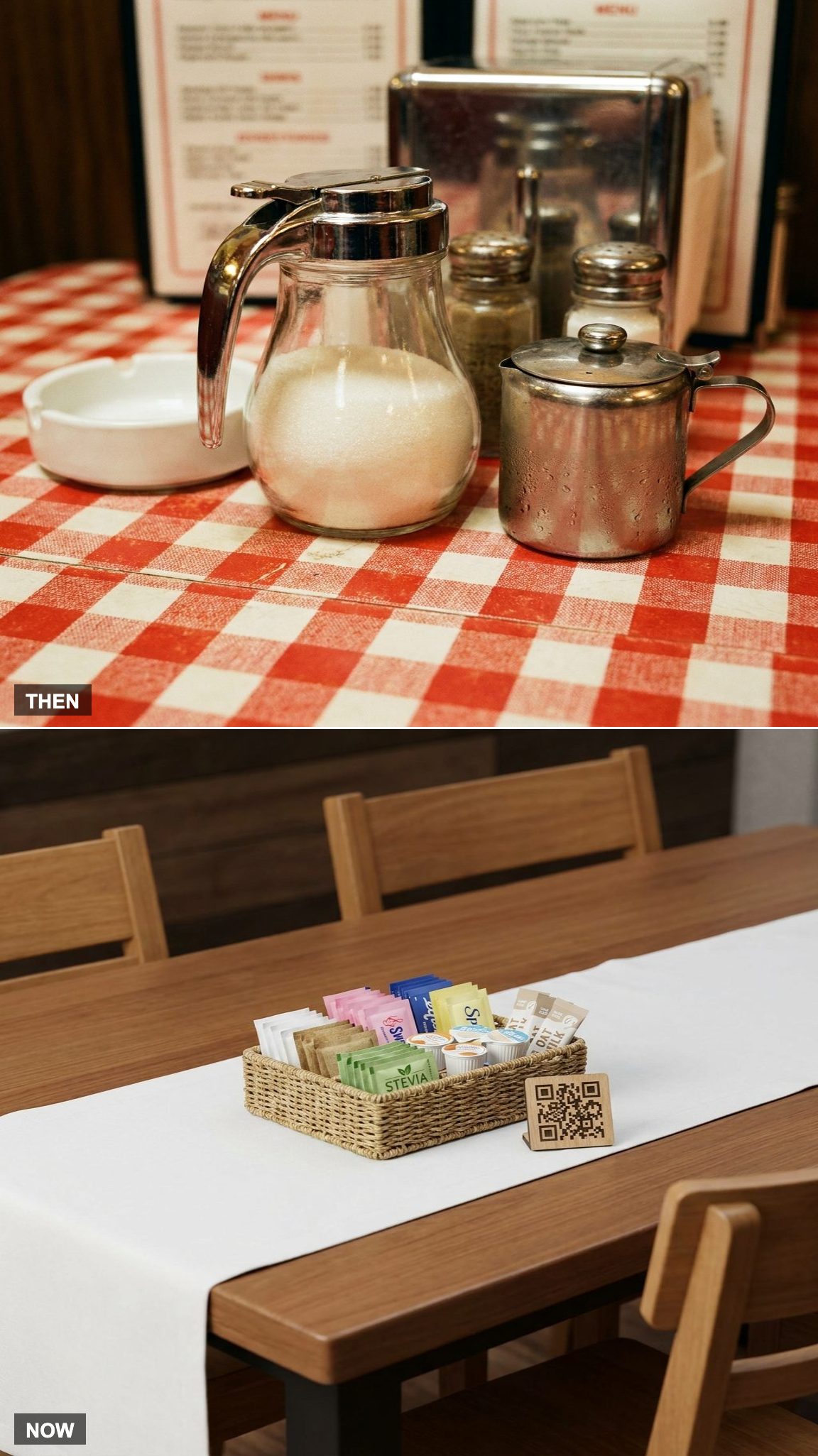
The glass sugar pourer was a fixture — chrome flip-top, satisfying weight, always about two-thirds full. You tipped it into your coffee and watched the sugar fall in a thin steady stream until you stopped. Cream came in a small steel pitcher, cold enough to sweat a ring onto the Formica within a minute.
Now the table holds a woven basket of packets. White sugar, brown sugar, pink, blue, yellow, green, plus non-dairy creamer in little plastic cups and oat milk in singles. You have options. You also have to read labels before your first cup of coffee.
The Soda Fountain vs. The Wall of Choices
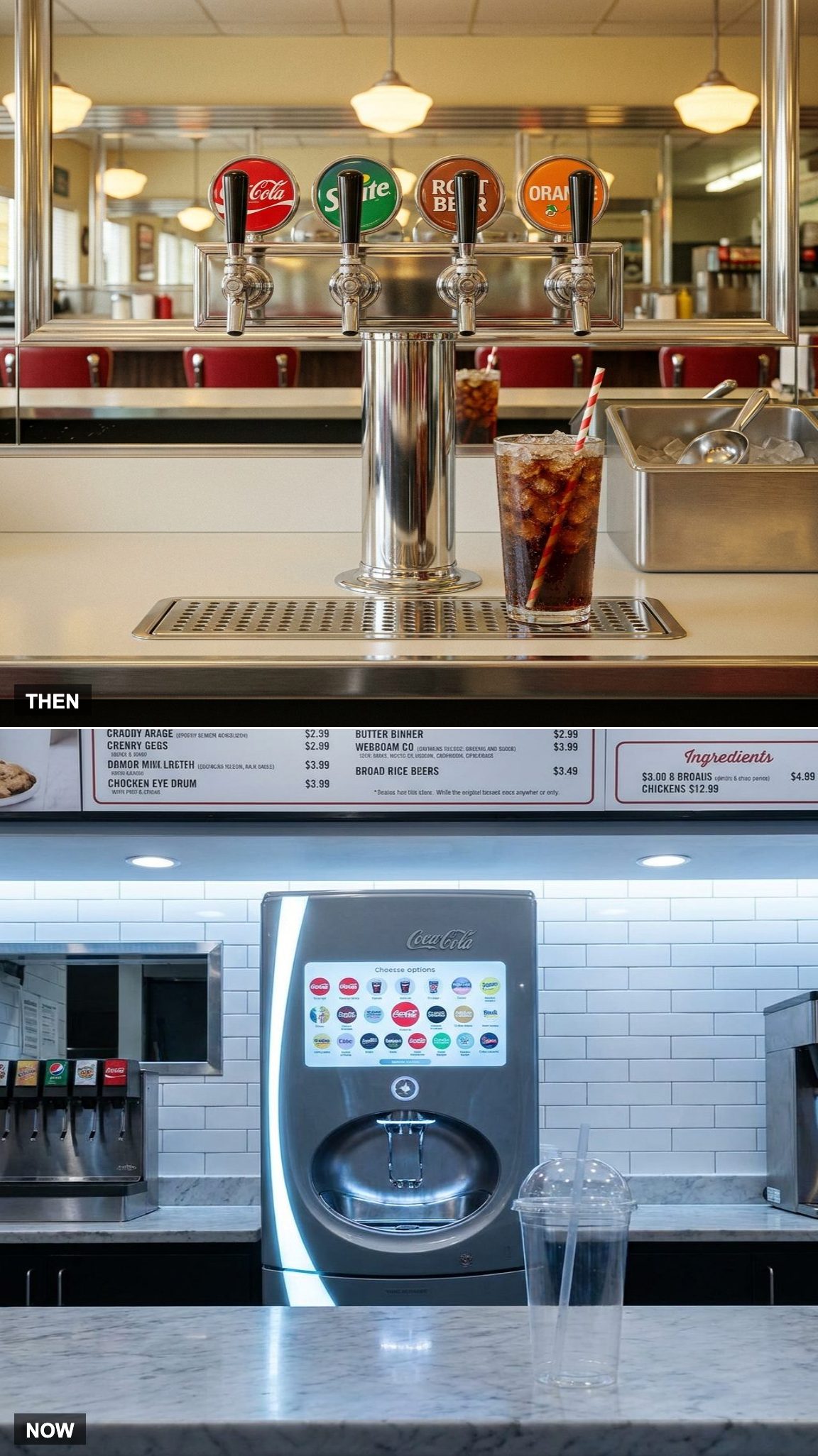
Four taps. Cola, lemon-lime, root beer, orange. That was the whole soda fountain in 1975 and nobody wrote a Yelp complaint about it. Glass came in one size, ice was crushed, straw was paper with red stripes, drink cost about forty cents.
The modern touchscreen offers something like a hundred combinations. Cherry vanilla Sprite. Peach Coke. Raspberry Fanta with a shot of vanilla if you’re feeling reckless. You stand there deciding for a full minute, and then you order the cola anyway.
The 24-Hour Sign vs. Closes at 9 on a Tuesday
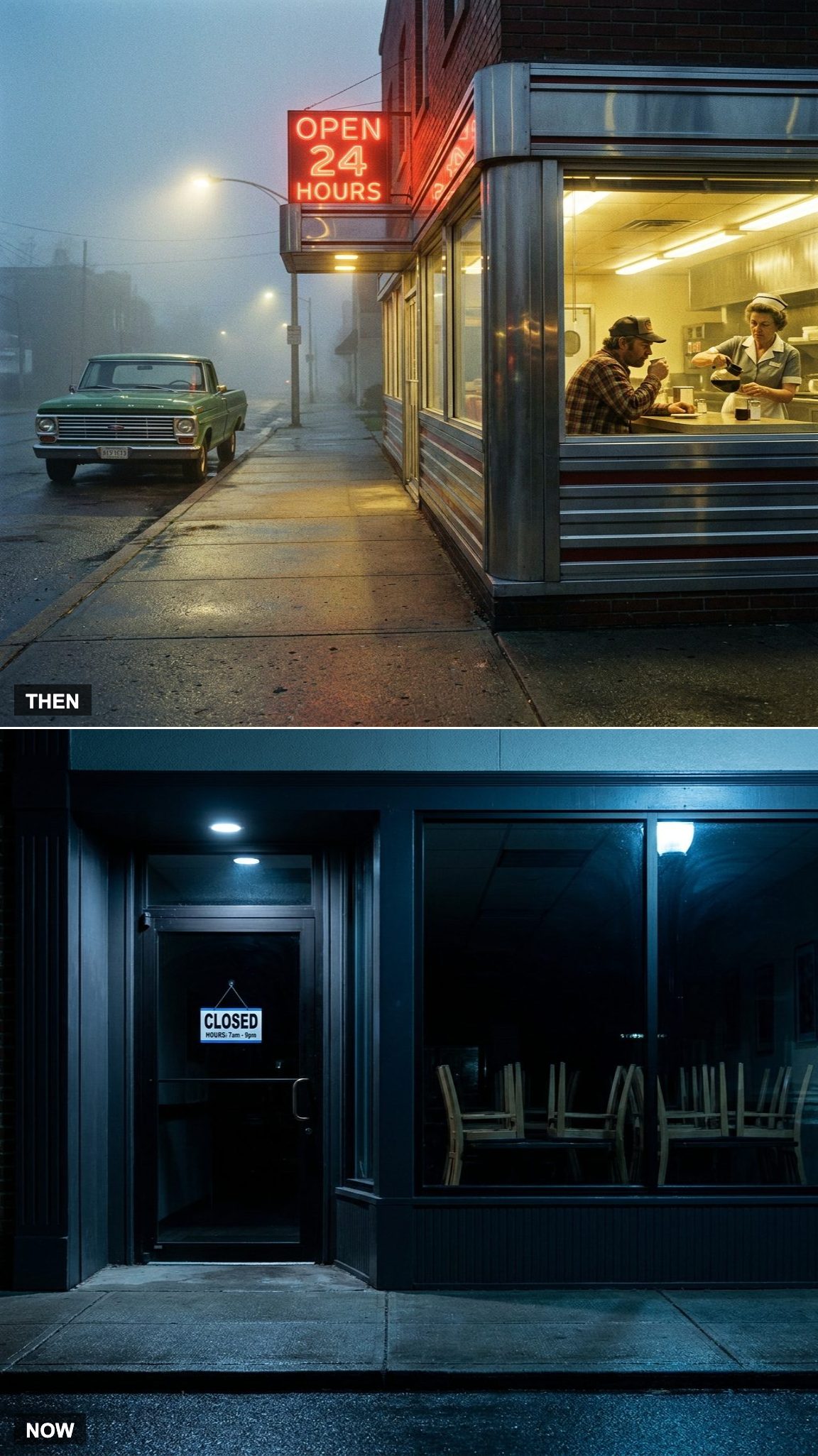
The diner used to be the one place you could count on at three in the morning. Neon said OPEN 24 HOURS and meant it. A trucker at the counter, a waitress named Dot refilling coffee without asking, a jukebox playing something from six years back. If you were awake, so were they.
Now the door is locked by nine on a Tuesday. Chairs stacked on tables, lights off, the sign says they open at seven. If you need coffee at three, that’s between you and a gas station.
The Chalkboard Special vs. The Digital Menu Board
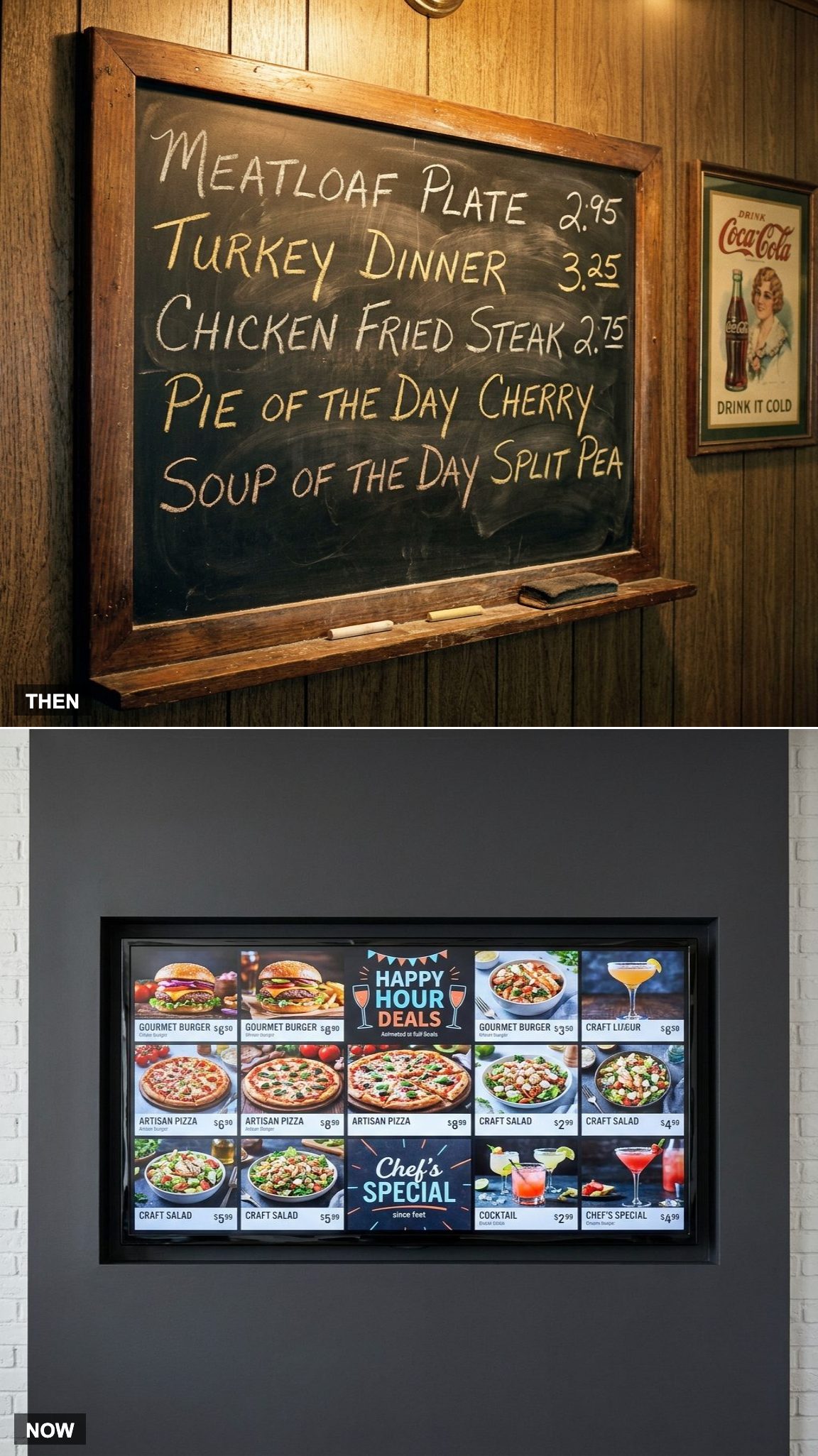
The daily special was written in chalk by whoever opened the place that morning. Meatloaf 2.95. Cherry pie. Split pea soup. Somebody’s real handwriting, with a smudge above the price where they’d changed their mind halfway through. You read it while you waited to be seated, and by the time you sat down you already knew what you wanted.
The digital screen cycles through nine promotions in thirty seconds. Full color photos, animated graphics, prices that appear and vanish before you finish reading them. Somewhere in there is today’s special. Good luck catching it on the loop.
The Kids’ Placemat: Crayon Wars vs. Screen Silence
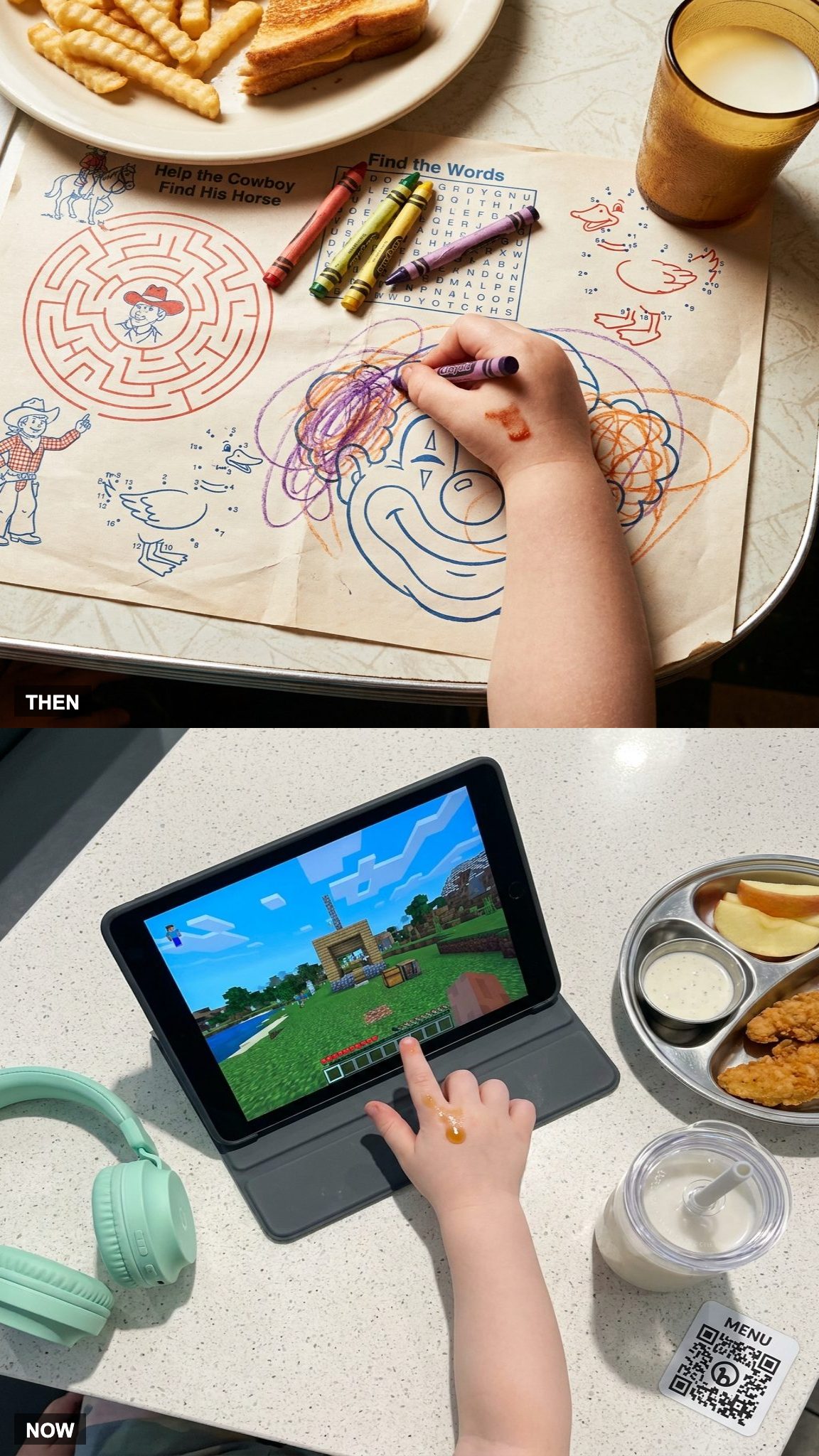
The paper placemat was a genius invention nobody credits. A maze, a word search, four crayons the hostess kept in a coffee can by the register, and suddenly a four-year-old would sit still long enough for parents to eat a hot meal. The kid walked out with a small trophy of purple scribbles.
The tablet does the sitting-still work now. Quieter. But nobody’s taping a Minecraft screenshot to the fridge.
The Plate Itself Got Louder
Would you like to save this?
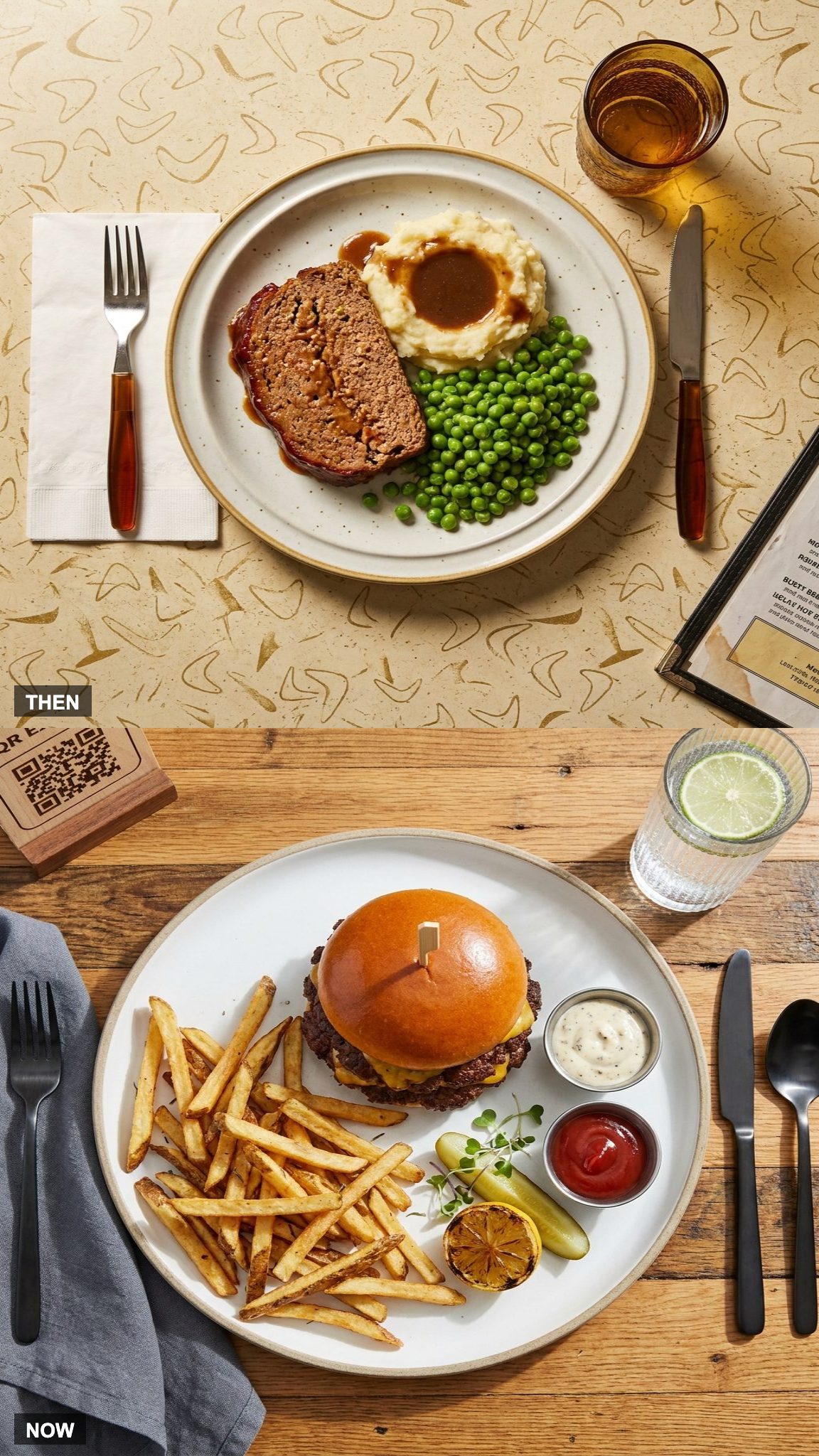
A 1975 dinner plate held food. A 2025 dinner plate holds a performance.
Meatloaf, potatoes, peas. That was the meal, and nobody left hungry. The plate ran nine inches across because nine inches was what a plate was. Fast-forward to now and the plate has to be fourteen inches, because the burger is double-stacked, the fries need their own zip code, and there has to be room for two dipping sauces nobody asked for.
Meatloaf Monday vs. The Cauliflower Bowl
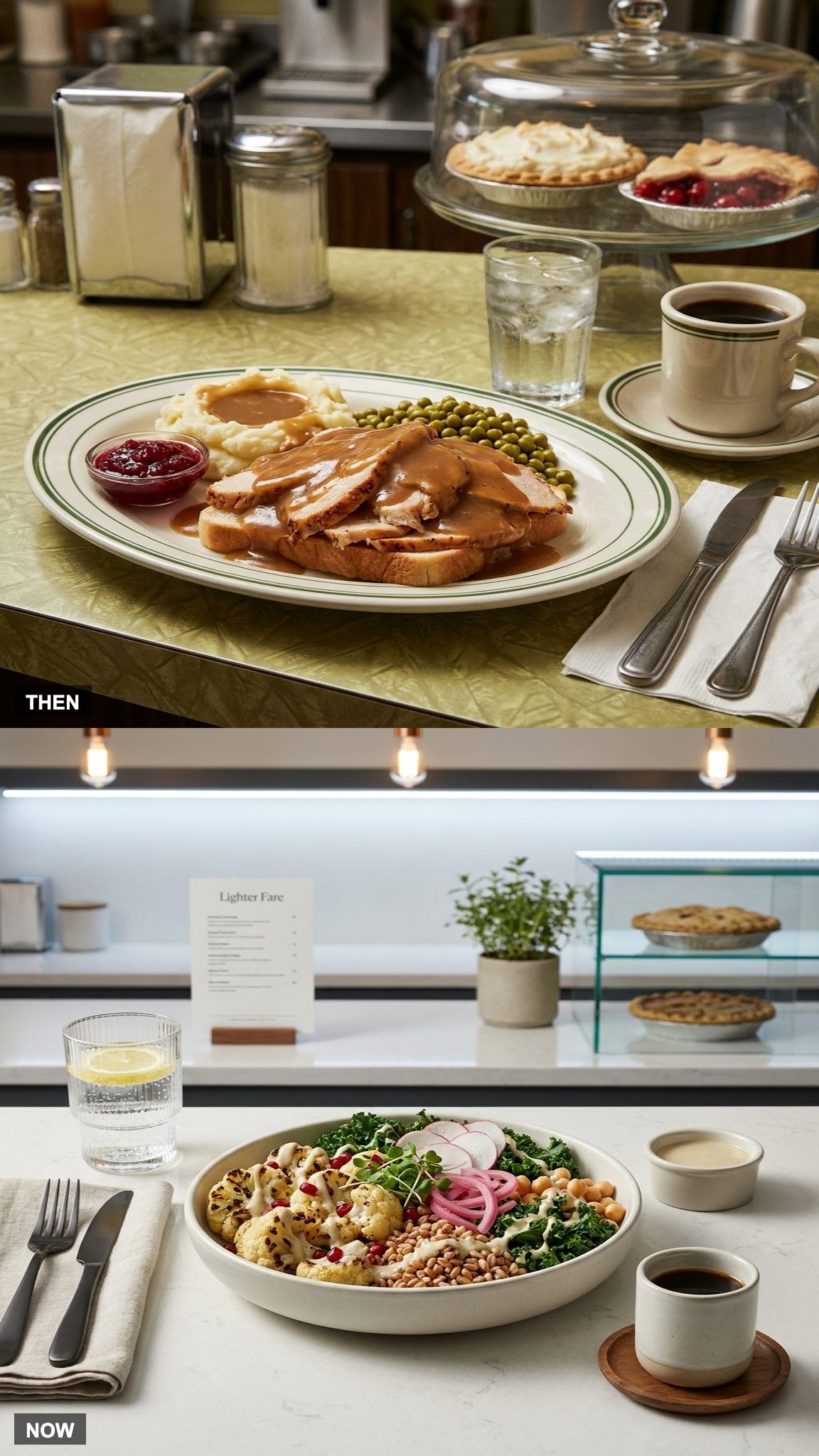
Hot turkey sandwich. Open-faced. Two slices of white bread doing nothing but soaking up gravy, which was the whole reason they were there. Nobody at that counter was counting a macro. Nobody had heard the word macro used that way.
The modern diner still serves comfort food, though there’s a grain bowl on the menu now, and a section labeled Lighter Fare, and the cauliflower has a paragraph written about it. Both things can be true. But the pie case has shrunk, and that one stings.
The Coffee Pot That Never Left the Burner
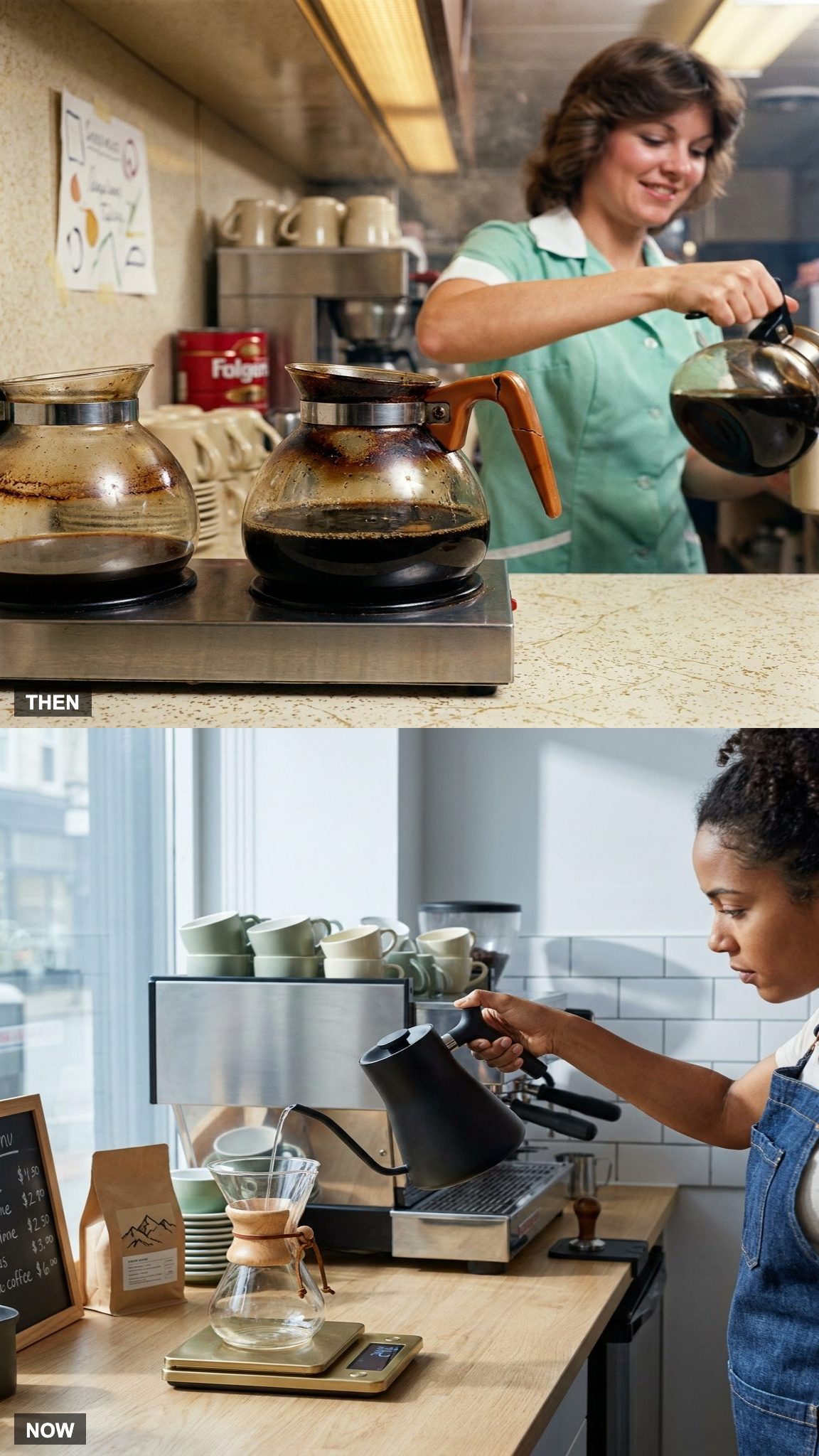
Coffee at a 1975 diner was a decision the kitchen had made hours ago, and you were drinking the consequences. Hot, brown, endless. The waitress topped you off before you noticed the cup was low, and nobody thought to ask where the beans came from. It came from a red can. That was the whole story.
Now there’s a menu for it. A farmer’s name. An elevation number. The coffee is genuinely better and it also costs six dollars and does not come with a free refill.
The Town’s Living Room Had Booths and Bad Coffee
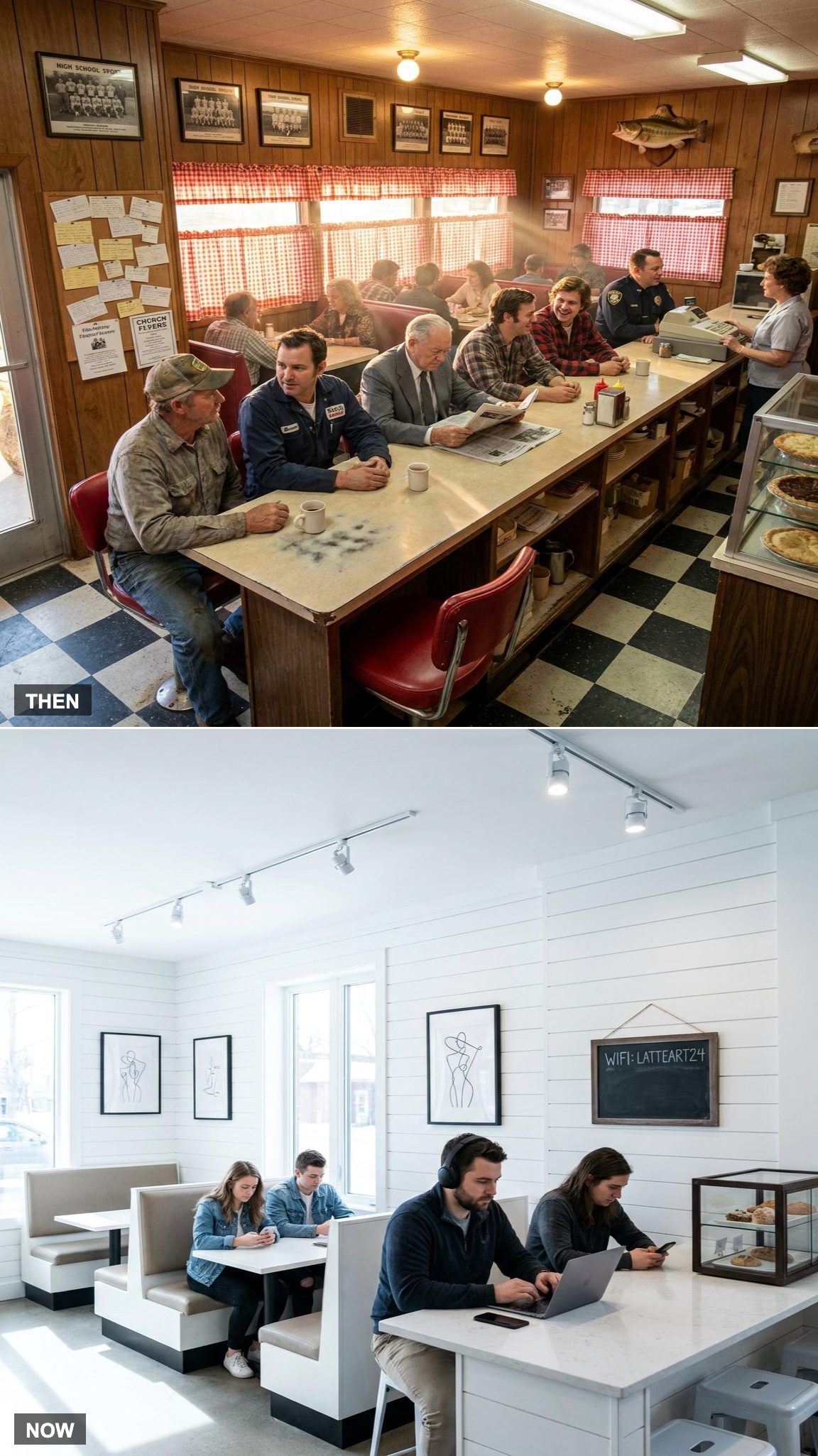
The 1975 diner was where the town figured itself out. The mayor ate breakfast next to the guy who fixed his transmission, the cop knew the kid he was probably going to have to talk to later that week, and obituaries were written in real time over the second cup. Deals happened between the eggs and the check.
That same town now has a coffee shop, a fast-casual place, a brewery, a co-working space, and a Facebook group. The living room got split into six rooms and nobody’s quite sure which one to sit in.
Every Diner Looked Like Itself
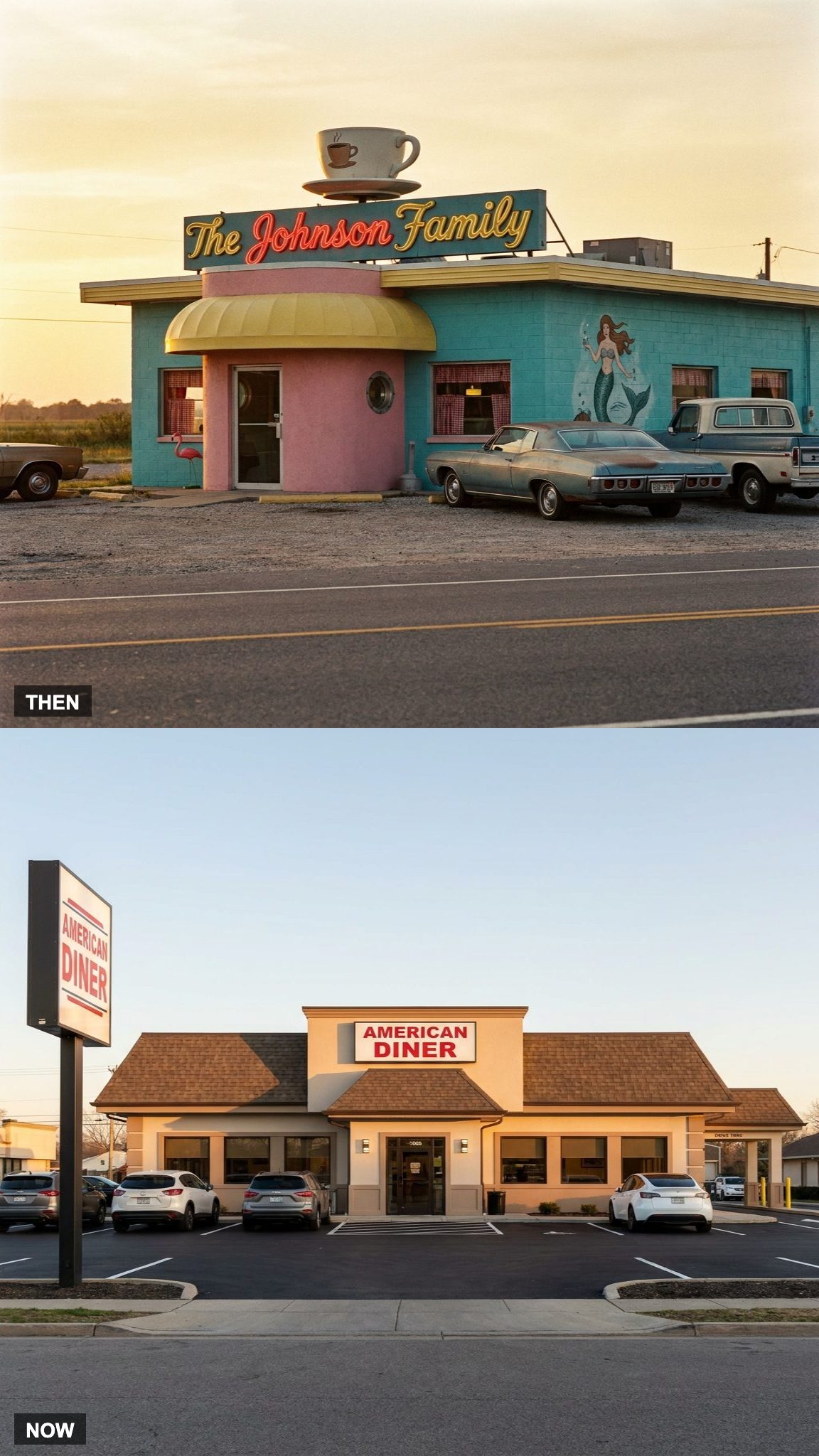
Mel’s did not look like Ruby’s, and Ruby’s did not look like the Blue Bell. Every independent diner in America was its own weird animal, built out of whatever the owner could afford in 1948, painted whatever color was on sale, decorated with whatever the owner’s cousin brought back from Florida.
The chain diner replaced most of them with a shape you can draw from memory. Beige box, brown roof, backlit sign. It’s fine. Fine is the problem.
The Two-Hour Coffee vs. the Fifteen-Minute Turn
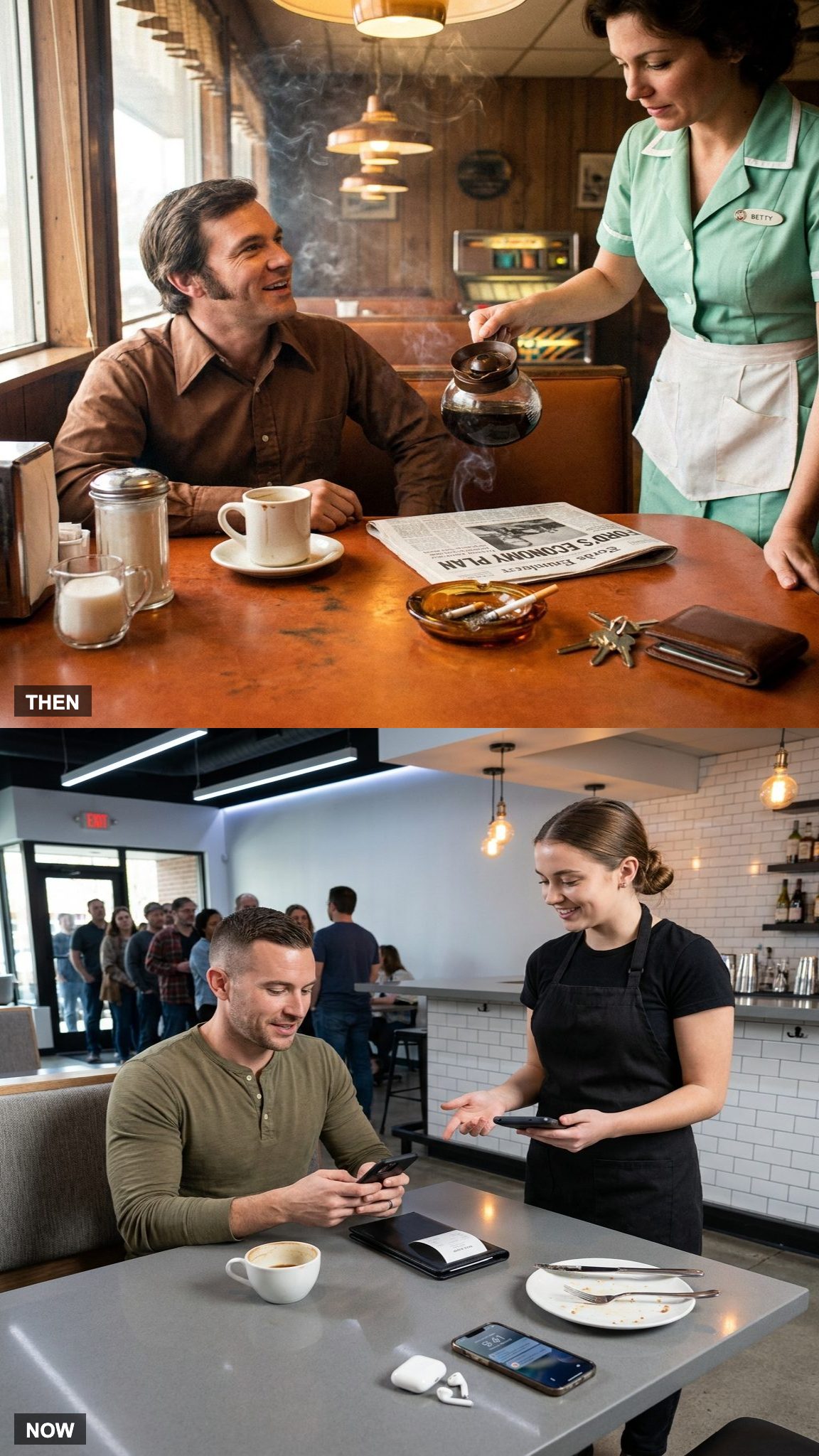
A cup of coffee in 1975 came with two hours of your life attached. You sat down, unfolded the paper, and lit a cigarette because you could. The waitress topped off the cup four times and never once mentioned the table. That booth was yours until you decided otherwise.
The table is a resource being tracked on a screen now. Turn times matter. Reservations stack. The check arrives with the entree because the next party is already waiting at the door. Nobody’s wrong for wanting the seat. But something got squeezed out of the middle, and it was the part where the actual talking happened.