Would you like to save this?
The stool spun. That was the first thing you did: sit down and give it a turn. The chrome edge of the counter caught the window light, the pharmacist worked somewhere behind the white partition, and the person at the fountain already knew what your dad ordered.
By the 1980s, drugstore soda fountains were survivors. Much of what made them memorable—the tile, the chrome, the milkshake tins, the hand-mixed drinks—had been carried forward from earlier decades. They were not trendy, and they were not trying to become anything new. They were simply still there, holding onto an older rhythm of American life.
The Revolving Pie Case Sitting Right Next to the Cash Register
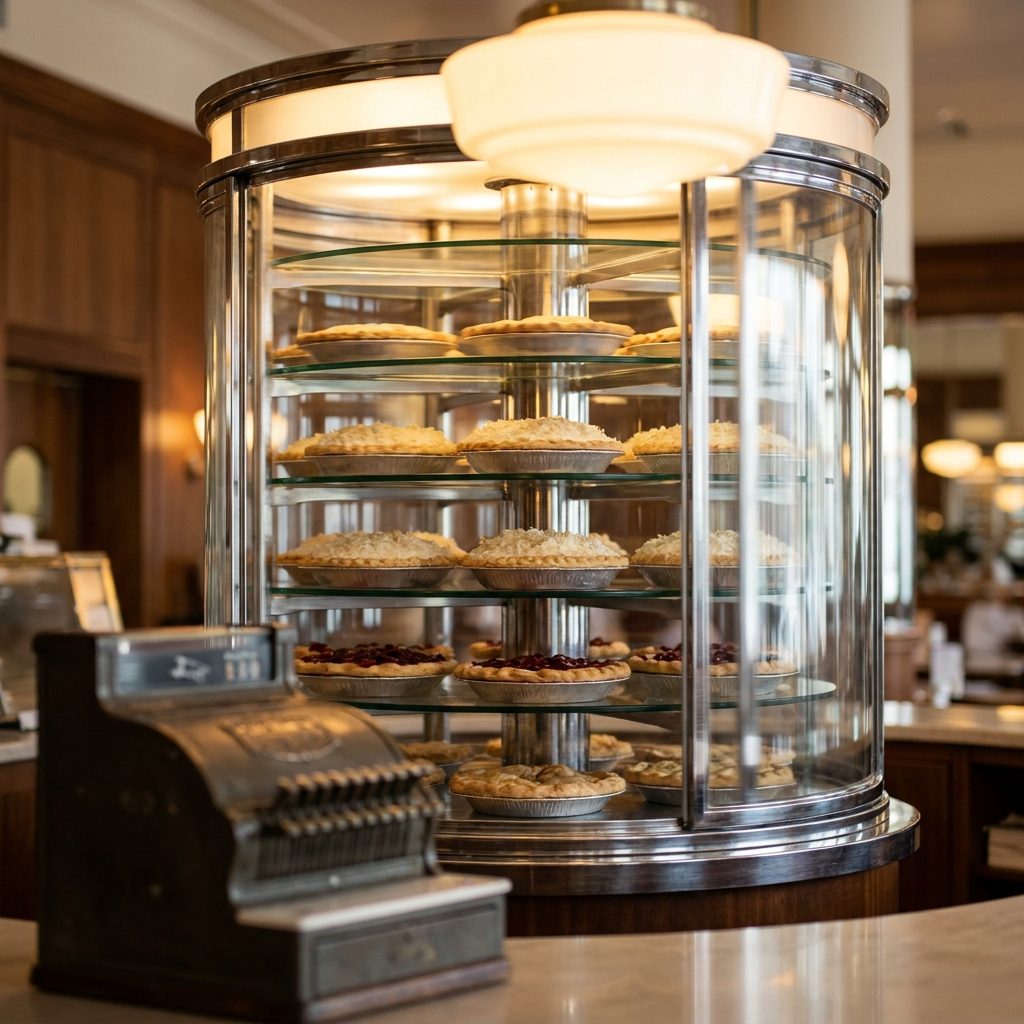
It spun slowly. A chrome-and-glass tower of coconut cream, cherry, and whatever the lemon meringue situation was that day rotated at about one revolution per ice age. The purpose was simple: make you look while you waited for a prescription, your change, or a cherry Coke.
The pies were probably made somewhere else and delivered that morning. You knew it. The person behind the counter knew you knew it. None of that mattered because coconut cream pie at eleven in the morning was still a perfectly reasonable drugstore decision.
The Paper Straw Wrapper You Blew Across the Counter
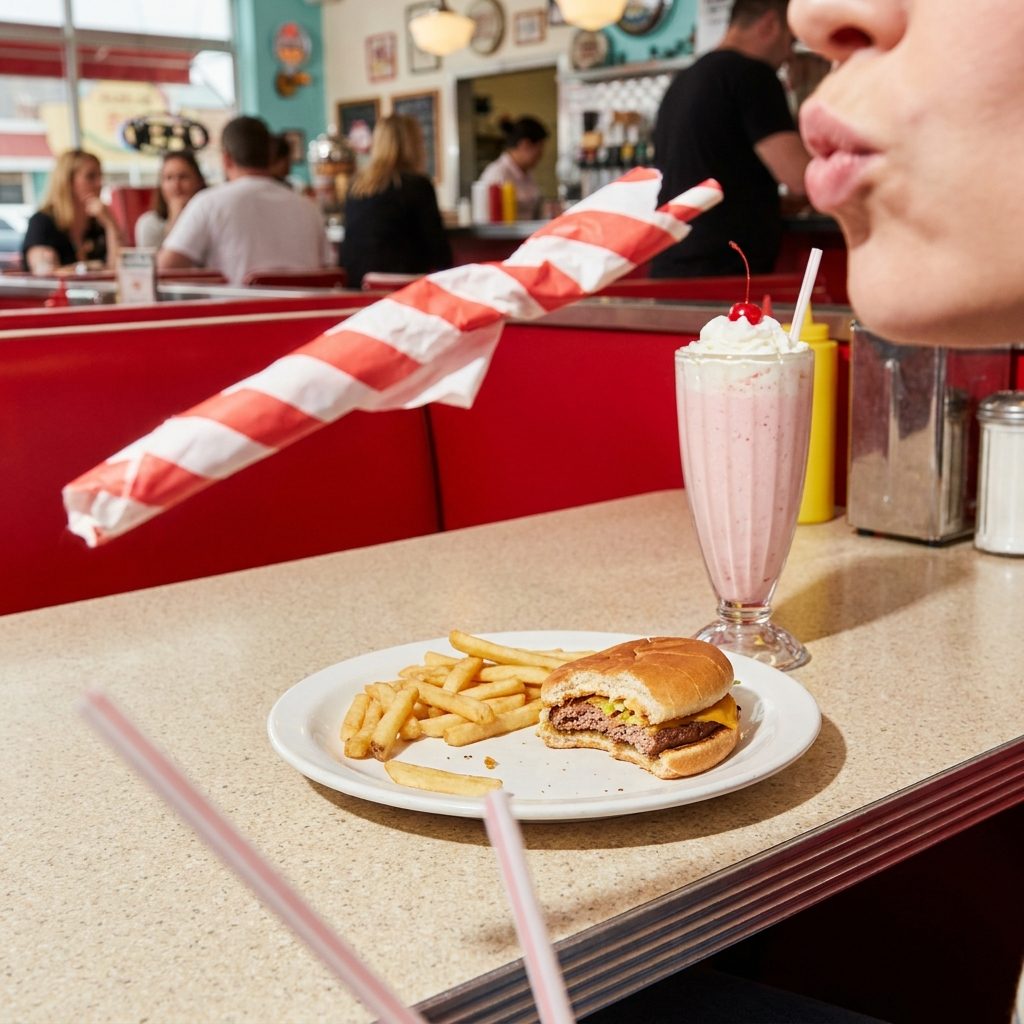
You compressed the wrapper to one end, aimed at whoever sat across from you, and blew. It was not the official purpose of the wrapper, but generations of children had reached the same conclusion independently.
Plastic had replaced paper straws in many places by the 1980s, but some old-fashioned fountains still used the paper kind. They softened at the bottom of a milkshake and made the first few minutes more entertaining than any plastic straw could.
The Pharmacist You Could Ask About Your Cough
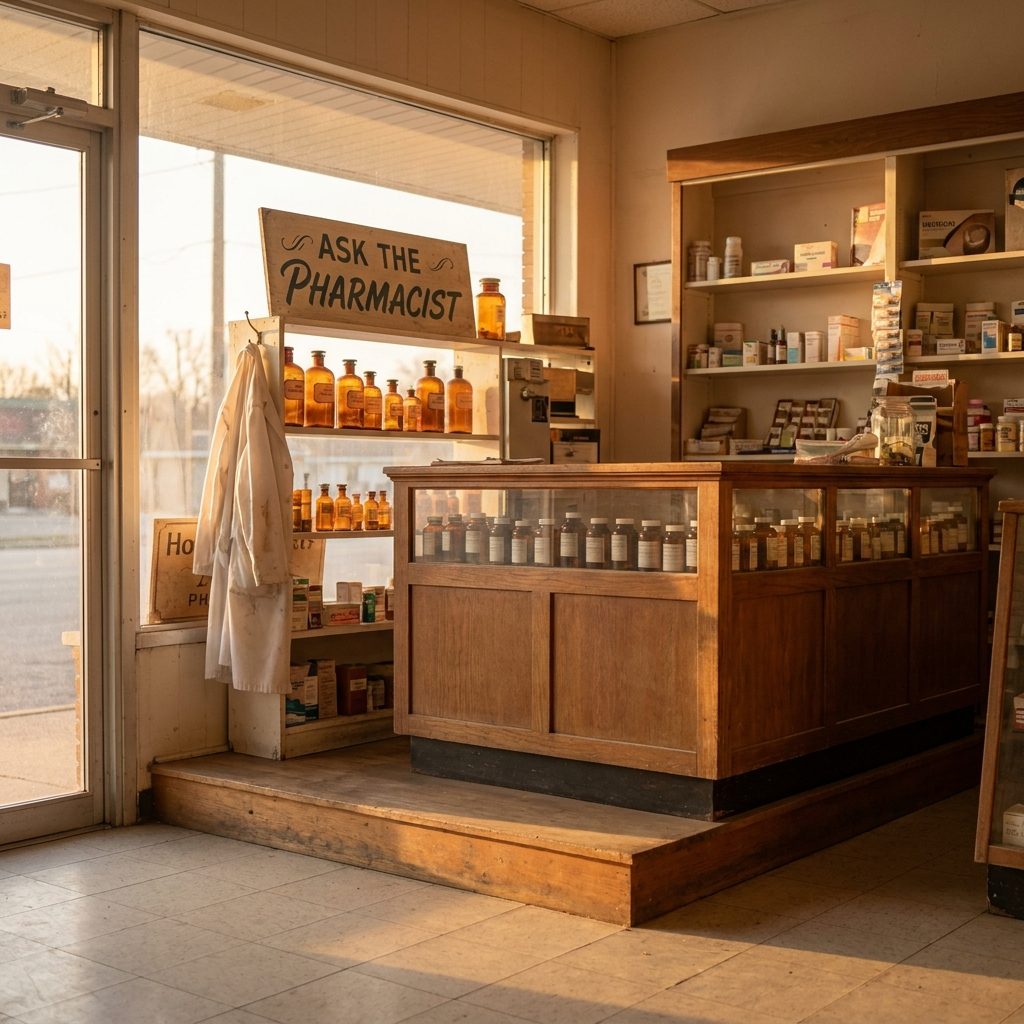
The pharmacy counter often sat slightly above the sales floor, making the pharmacist easy to find when you needed advice.
Before urgent-care clinics became common and before the internet could turn a cough into fourteen possible diseases, the local pharmacist was often the first person people asked. You might sit at the fountain with a cherry phosphate while a parent described a fever, rash, or stubborn cold.
Community pharmacists still answer those questions, but the combination of prescription counter, lunch counter, and neighborhood conversation has mostly disappeared.
“The drugstore was the town square for anyone who did not have anything seriously wrong, and sometimes for people who did.”
The Chrome-and-Vinyl Swivel Stools You Spun Once Too Many Times
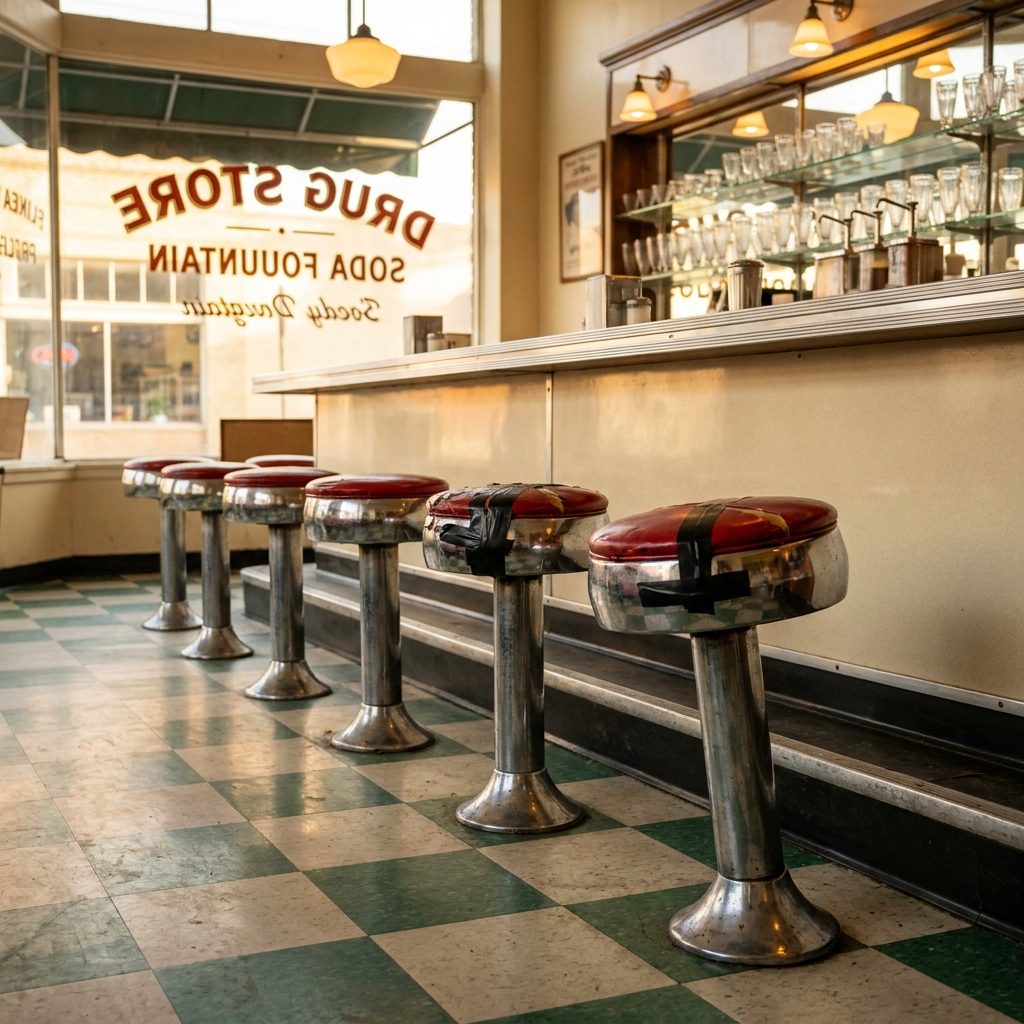
The stools sat a little too high for children, which was part of the appeal. You climbed up, gripped the counter, pushed off with one foot, and got three rotations if the bearings were healthy and one and a half if they were not.
Most fountains had at least one wobbler. The person behind the counter would tap the seat and suggest another without looking up from the milkshake tin.
The Metal Milkshake Tin Set Down Next to Your Glass
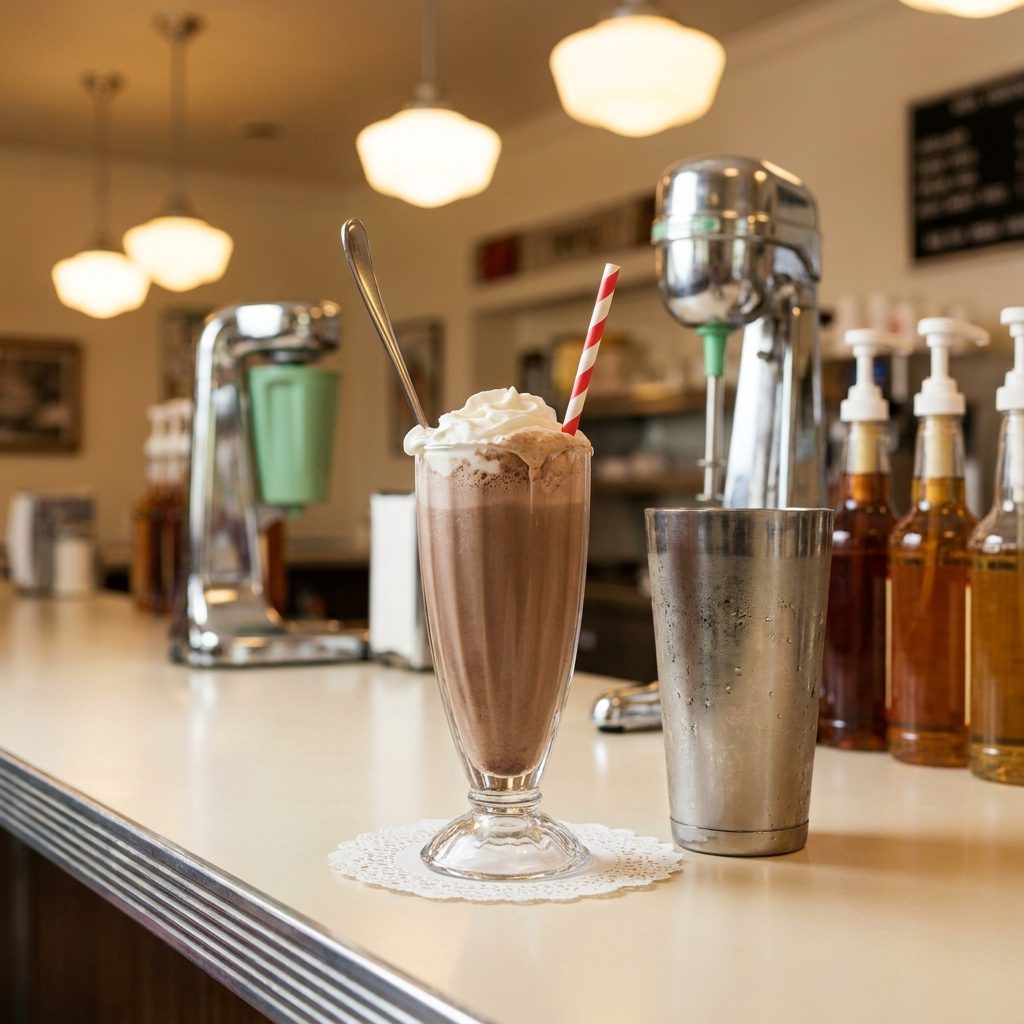
The glass held the first pour. The metal tin held the rest and sat beside it sweating onto the counter, chocolate frost climbing halfway up the outside.
You refilled the glass yourself. The extra tin made the shake feel larger and gave the whole thing a second act.
The Cherry Coke Mixed With Cherry Syrup at the Fountain
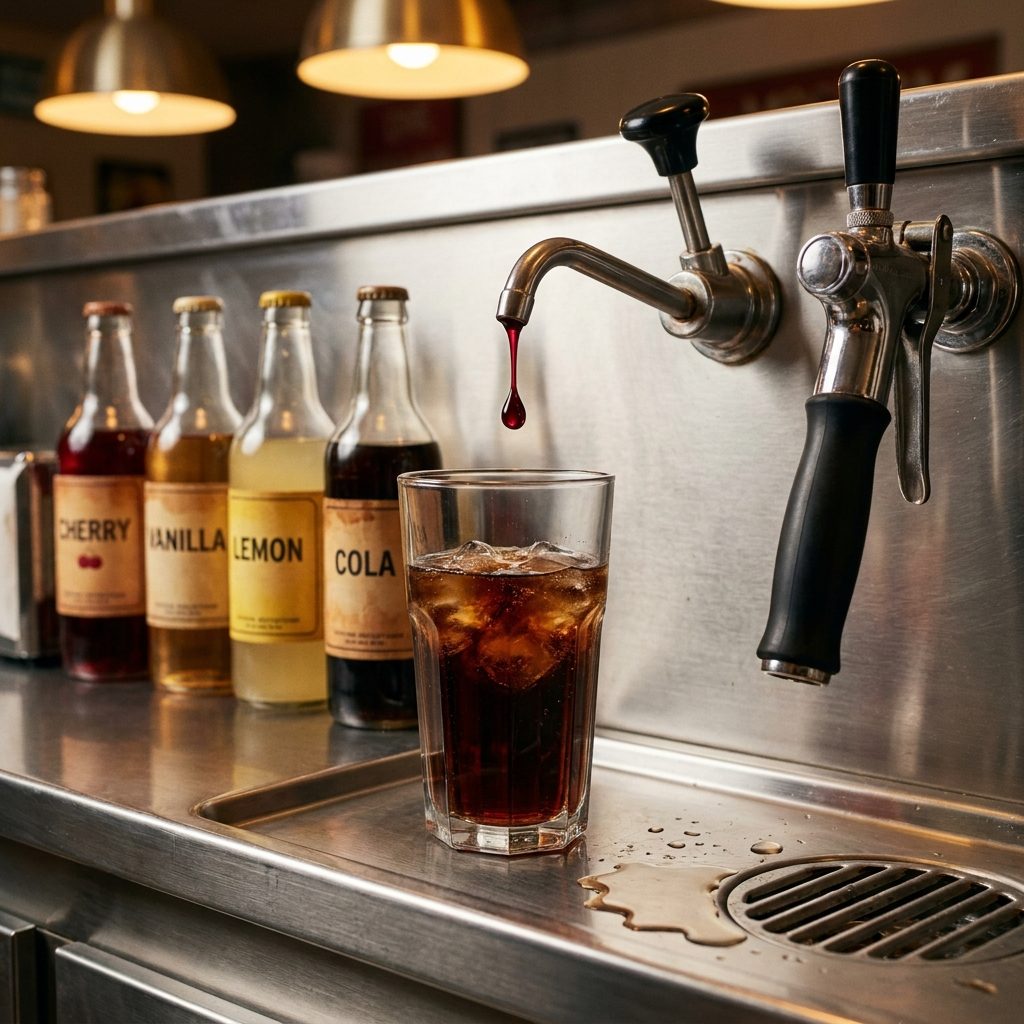
A shot or two of cherry syrup went into the fountain cola. That was all it took.
The syrup pooled at the bottom until you stirred it with a long spoon and the drink turned ruby-dark. The canned version may have been convenient, but it never reproduced the uneven sweetness of a drink mixed by hand.
The Grilled Cheese Made on the Small Flat-Top Behind the Counter
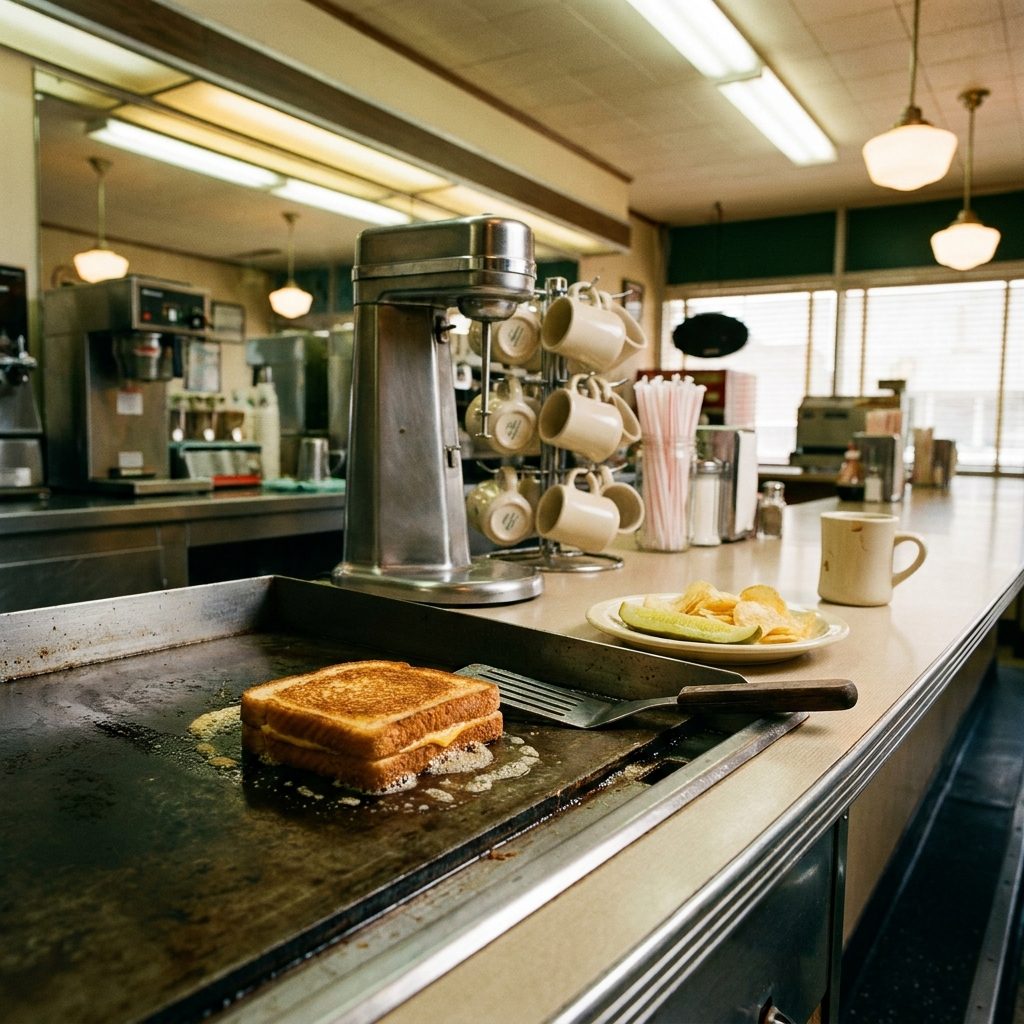
The griddle was smaller than a hotel-room desk and tucked beneath the counter lights. From the nearest stool, you could watch the entire build: white bread, butter, American cheese, more butter.
It arrived on a heavy cream-colored plate with a pickle spear and a small pile of chips. No reinvention required.
The Fountain Glass With the Bell-Shaped Curve
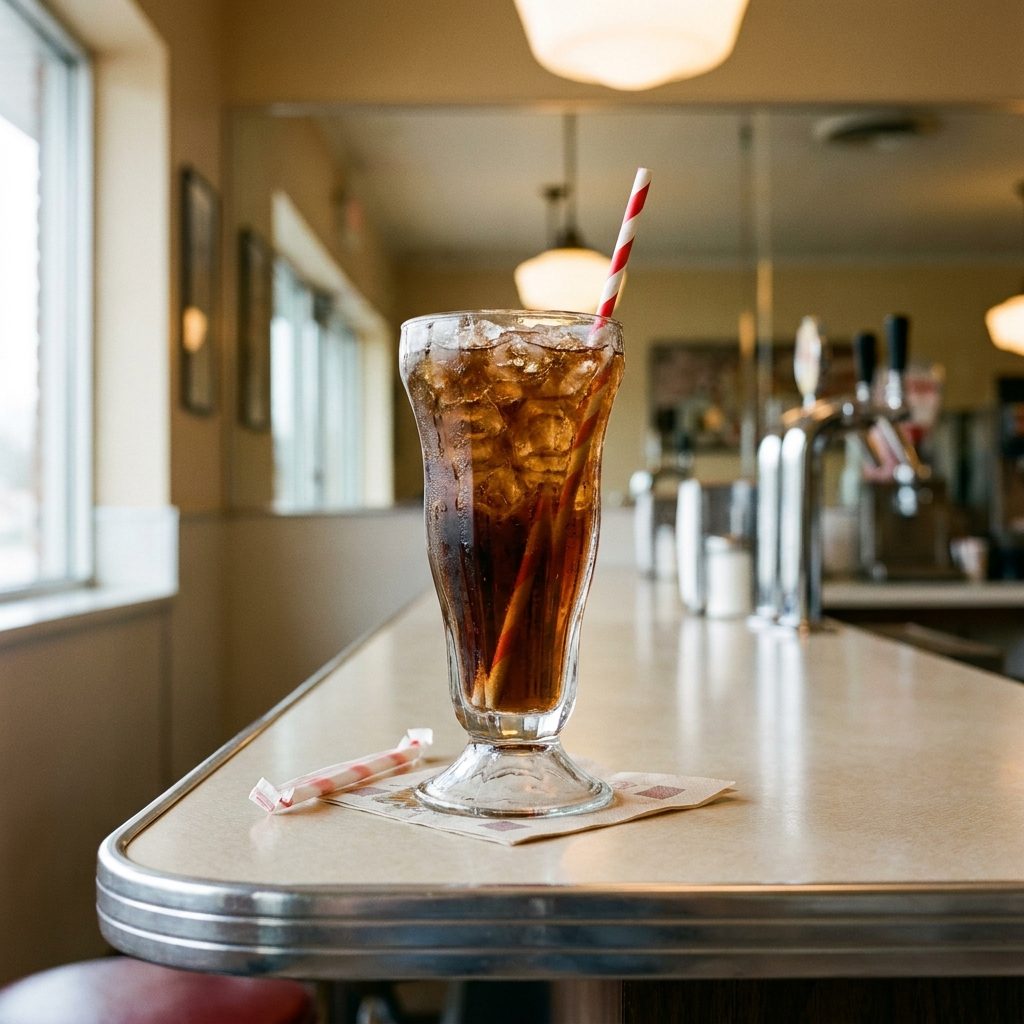
The shape mattered.
The flared top gave ice room to move, while the narrower base sat firmly on the counter. The heavy glass felt different from a can or paper cup, and you could judge what remained without looking.
The Ice Cream Scoops Resting in a Dipper Well
Would you like to save this?
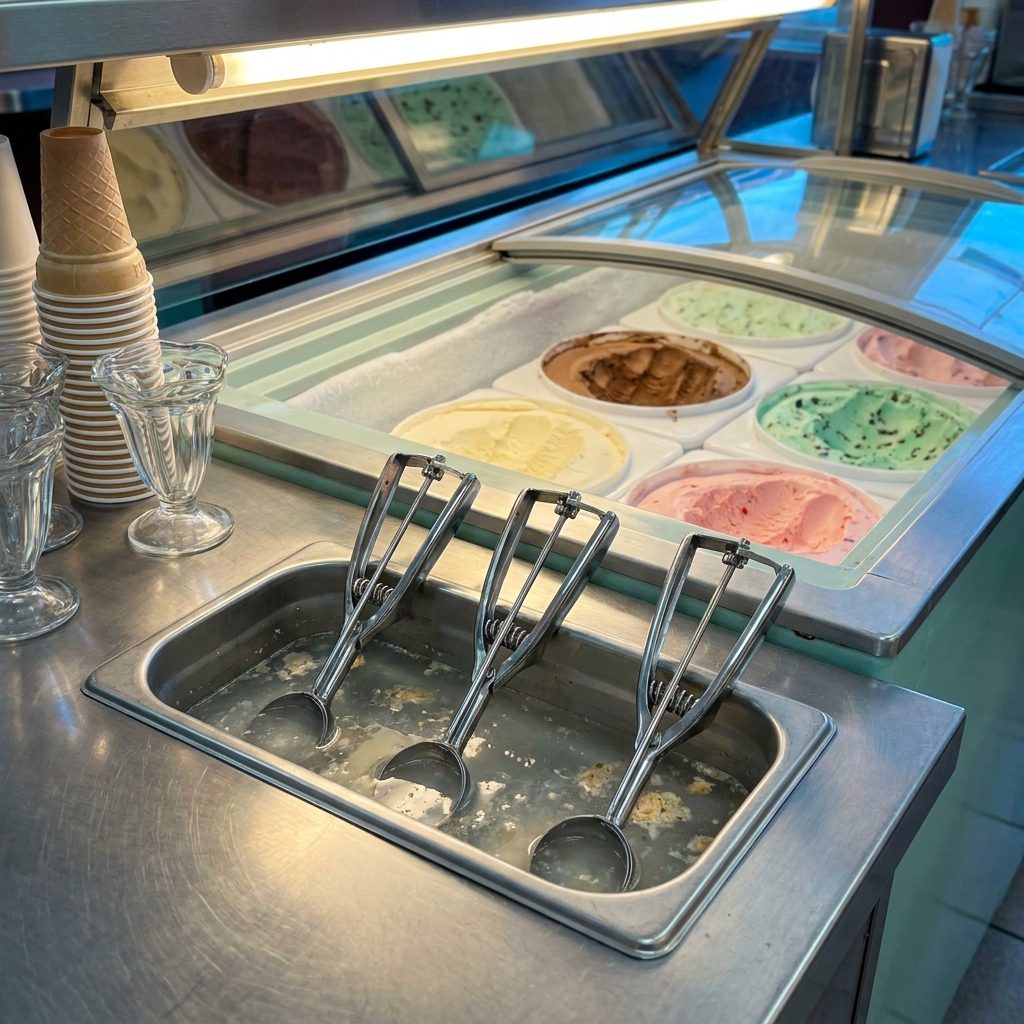
Several scoops rested in a shallow well of continuously refreshed water. The water rinsed away residue between orders, reduced flavor transfer, and kept the tools ready for the next frozen tub.
You could still see the scoop marks from the previous customer. Someone had ordered strawberry earlier, and the crater was still there, softening around the edges.
The Long Parfait Spoon That Was Actually Necessary
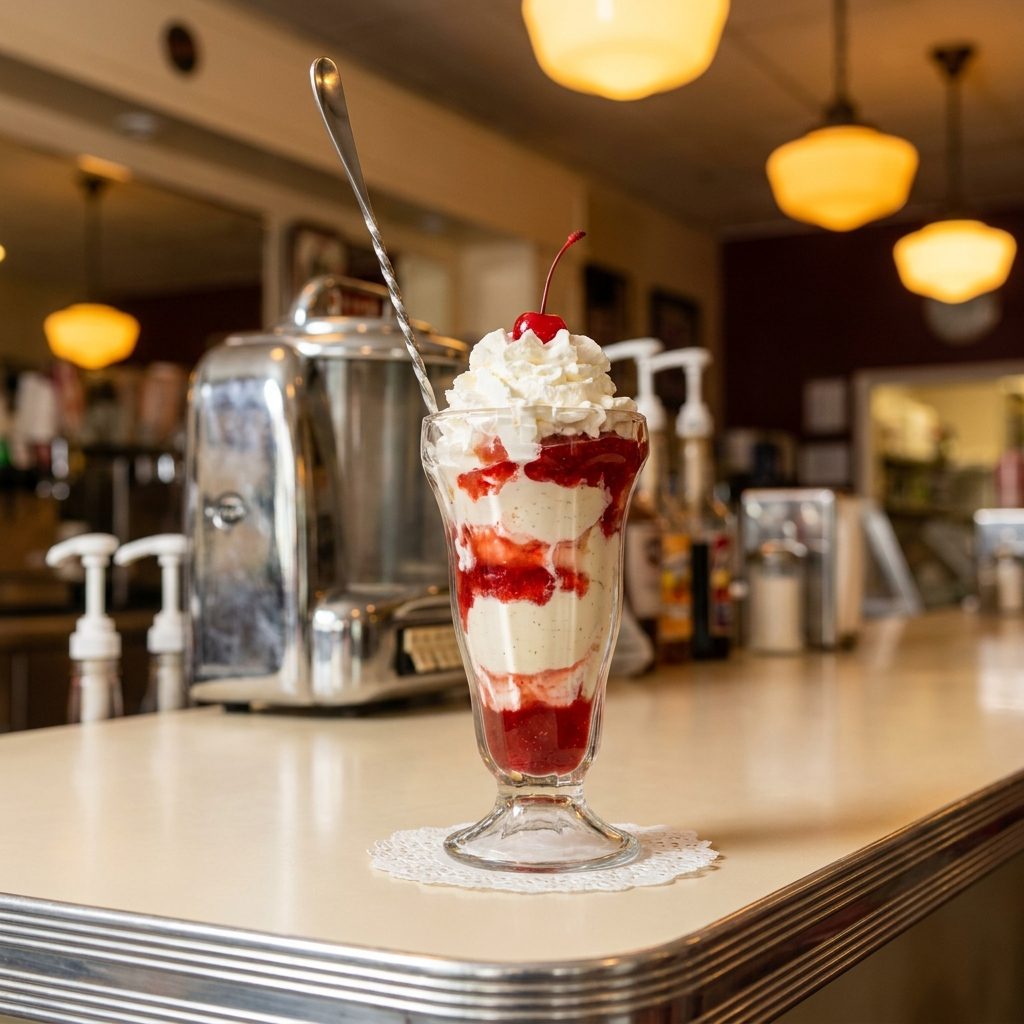
The tall, narrow glass made an ordinary spoon nearly useless below the halfway point. The long parfait spoon existed because the sundae glass required it.
Dragging the last streak of melted syrup and cream from the base was part of the order, not an afterthought.
The Green-Tiled Backsplash Behind the Fountain
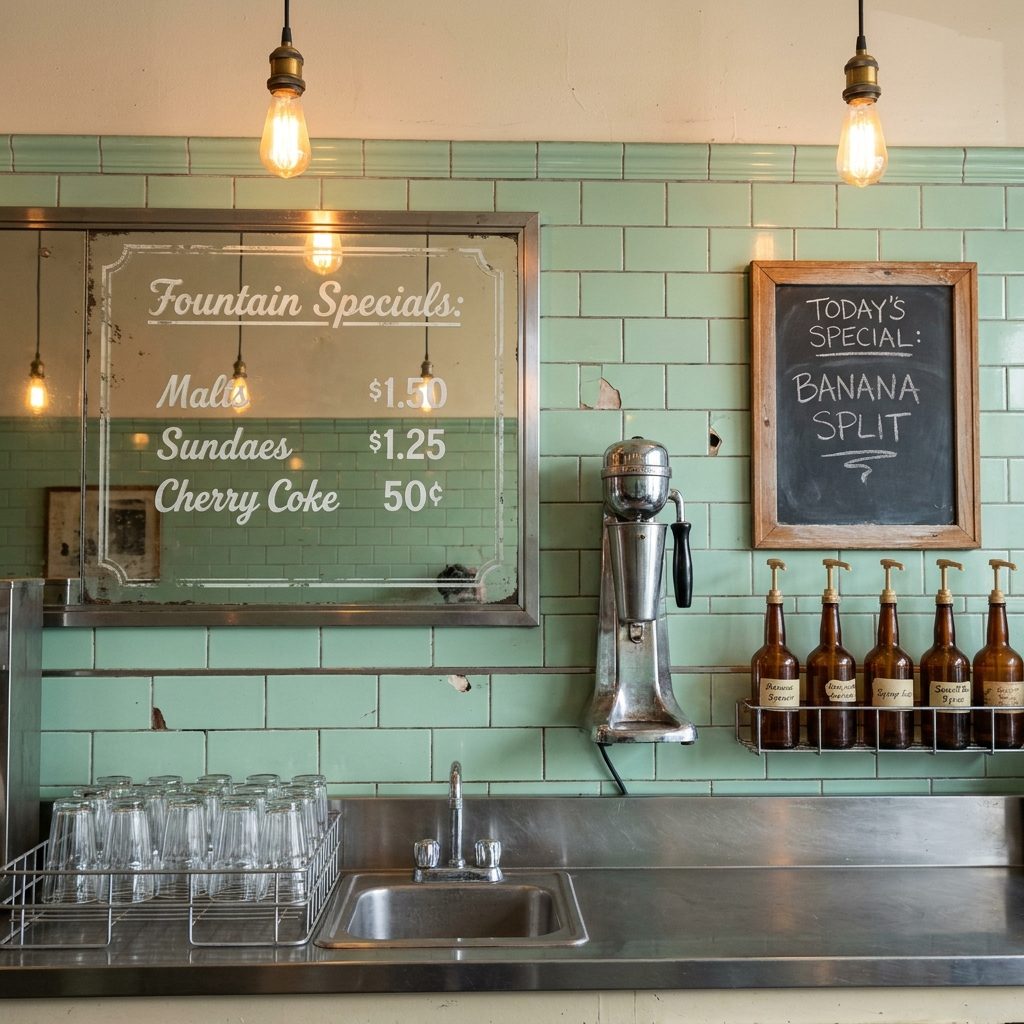
Pale green, cream, or a subway-tile grid with dark grout often ran from the counter to a mirror, with glass syrup bottles lined up above.
By the 1980s, that tile was usually inherited rather than newly installed. The room looked old because it was old, and the survival of those earlier finishes was part of the appeal.
The Egg Cream That Contained Neither Egg Nor Cream
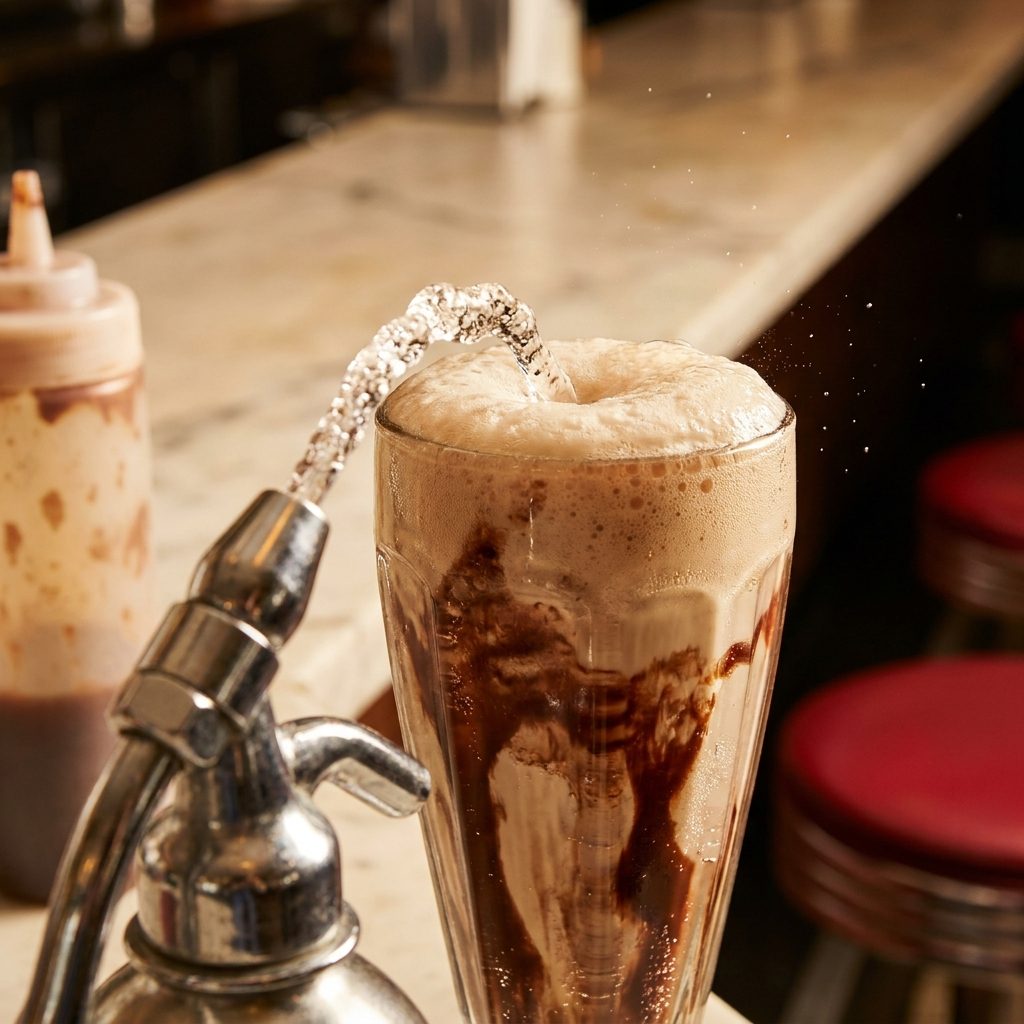
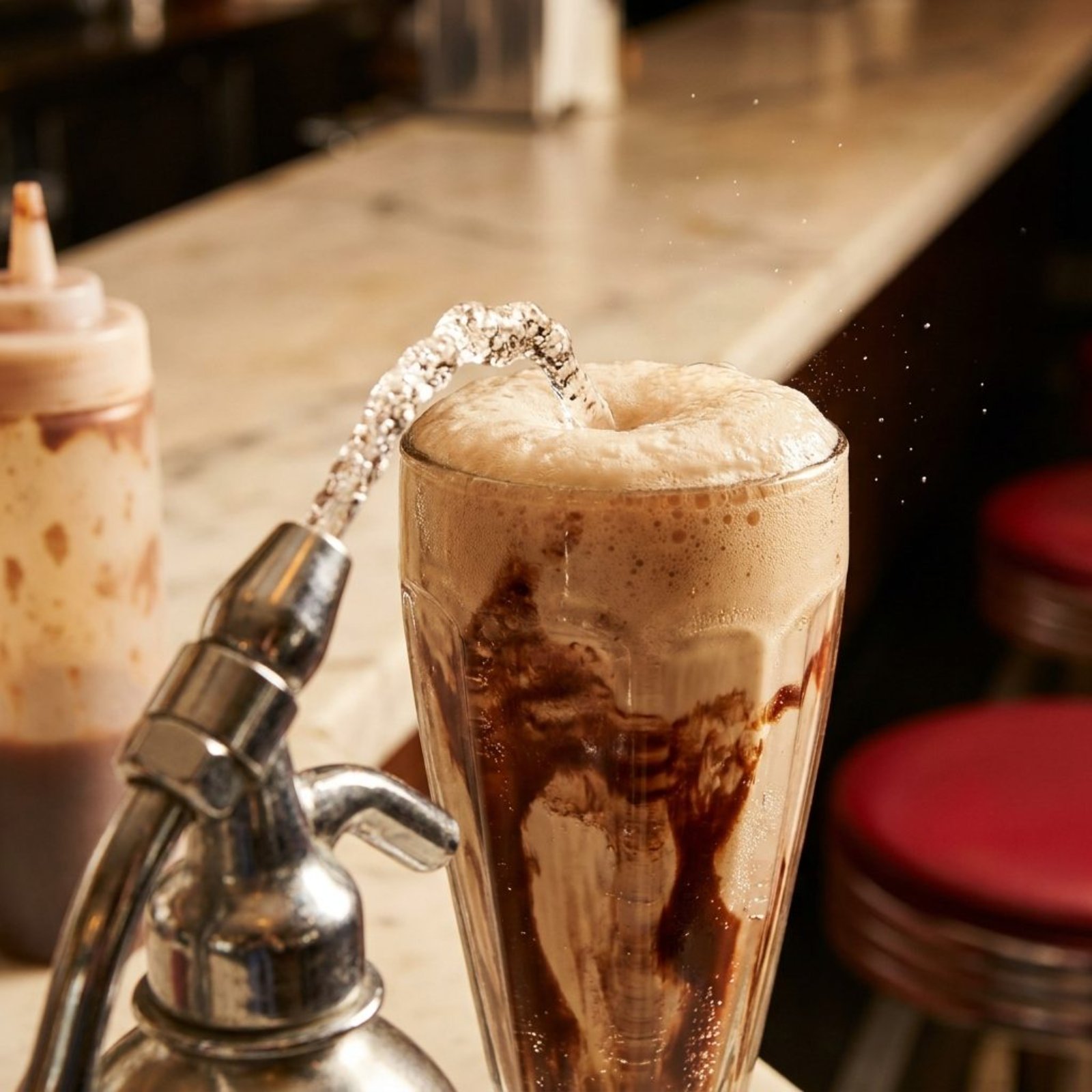
Fox’s U-bet chocolate syrup, milk, and a hard shot of seltzer were stirred quickly enough to build a foamy head. No egg. No cream. The name has confused people for more than a century.
By the 1980s, soda fountains could still be found around the country, but the egg cream remained overwhelmingly associated with New York. Watching one come together in less than a minute was part of the attraction. It tasted like chocolate milk that had remembered it could be sharper and lighter.
The Handwritten Chalkboard Listing the Sundae of the Week
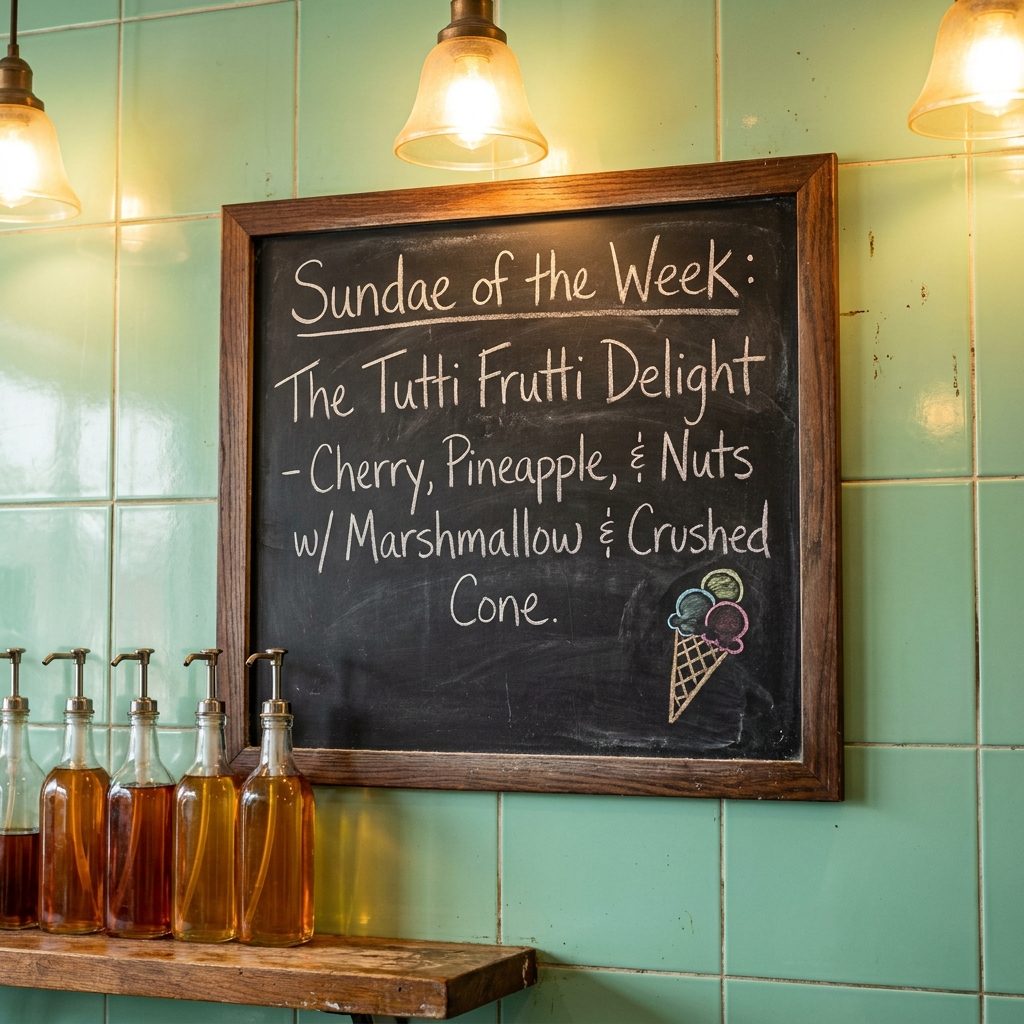
Someone working there had good handwriting, and it was usually the same person every week. Butterscotch banana split one Monday, hot fudge peanut butter the next.
The chalk smudged where the writer’s hand rested against the board. It left visible evidence that a specific person had been there that morning deciding what might sound good.
The Banana Split Boat That Required Two Hands and Commitment
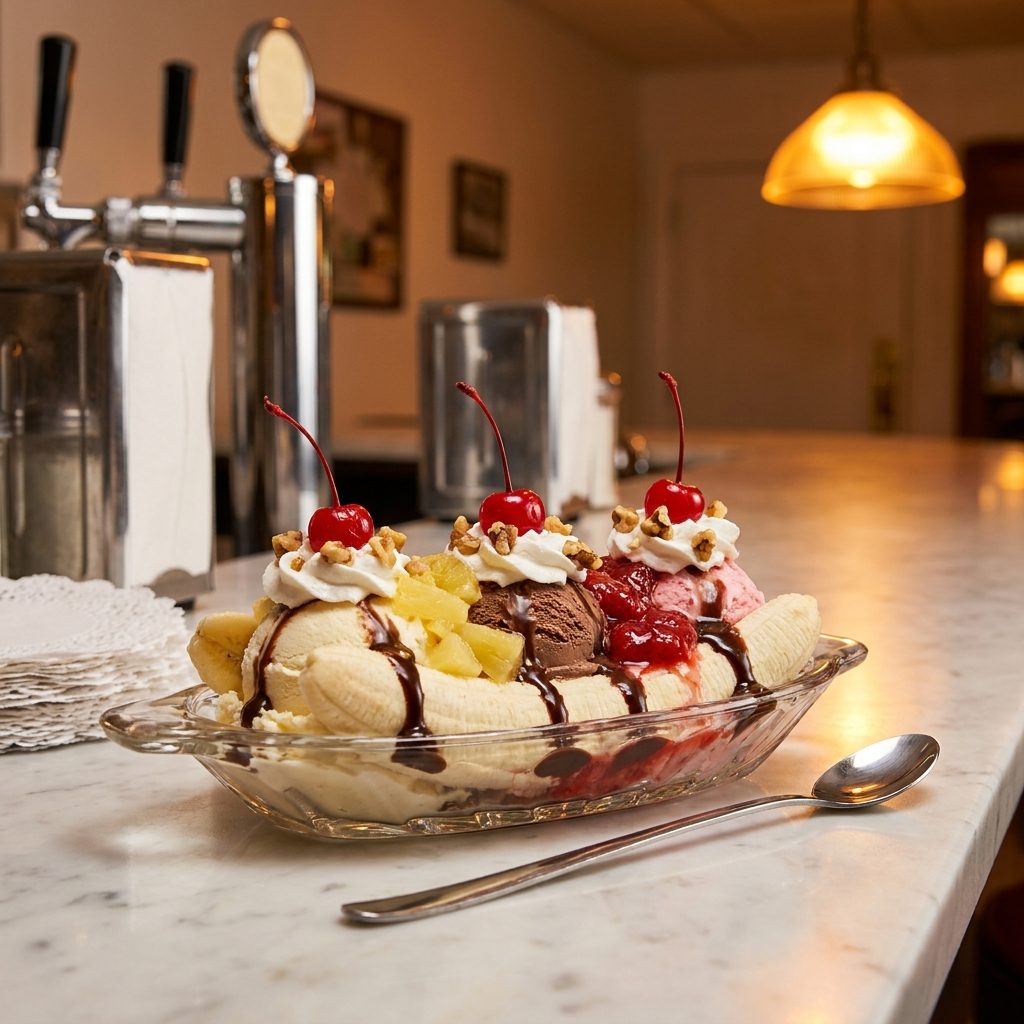
The banana split was less a dessert than a dare. Three scoops, a banana cut lengthwise, several sauces, whipped cream stacked high, and enough cherries to make one seem inadequate.
The pressed-glass boat dish made it official. Put the same ingredients in a bowl and the occasion disappeared.
The Wire-Backed Chairs That Left a Pattern on Your Legs
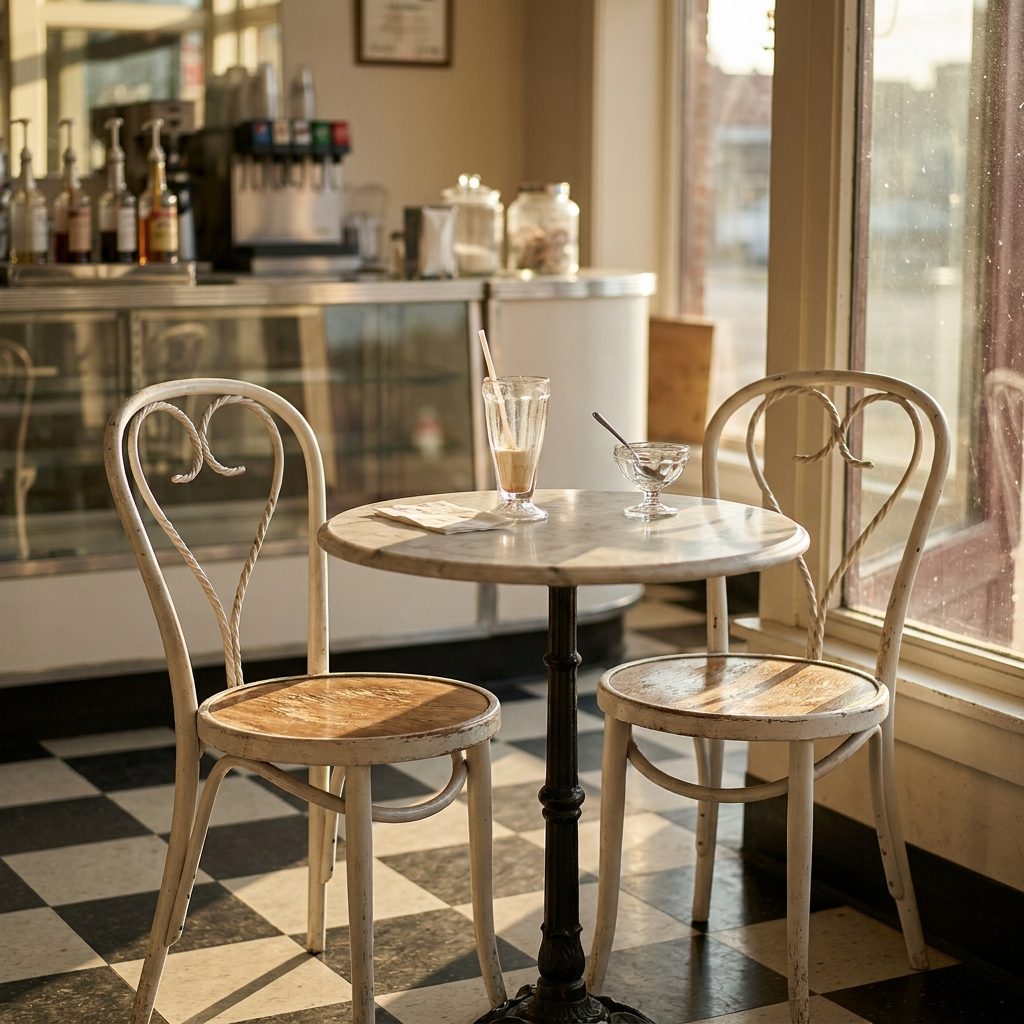
The chairs looked delicate and remained comfortable for about eleven minutes. After that, the wire began pressing its heart-shaped pattern into the backs of your thighs.
The design gave the room an old-fashioned ice-cream-parlor look. Comfort was not the primary assignment.
The Jukebox Selector Bolted to the Booth Wall
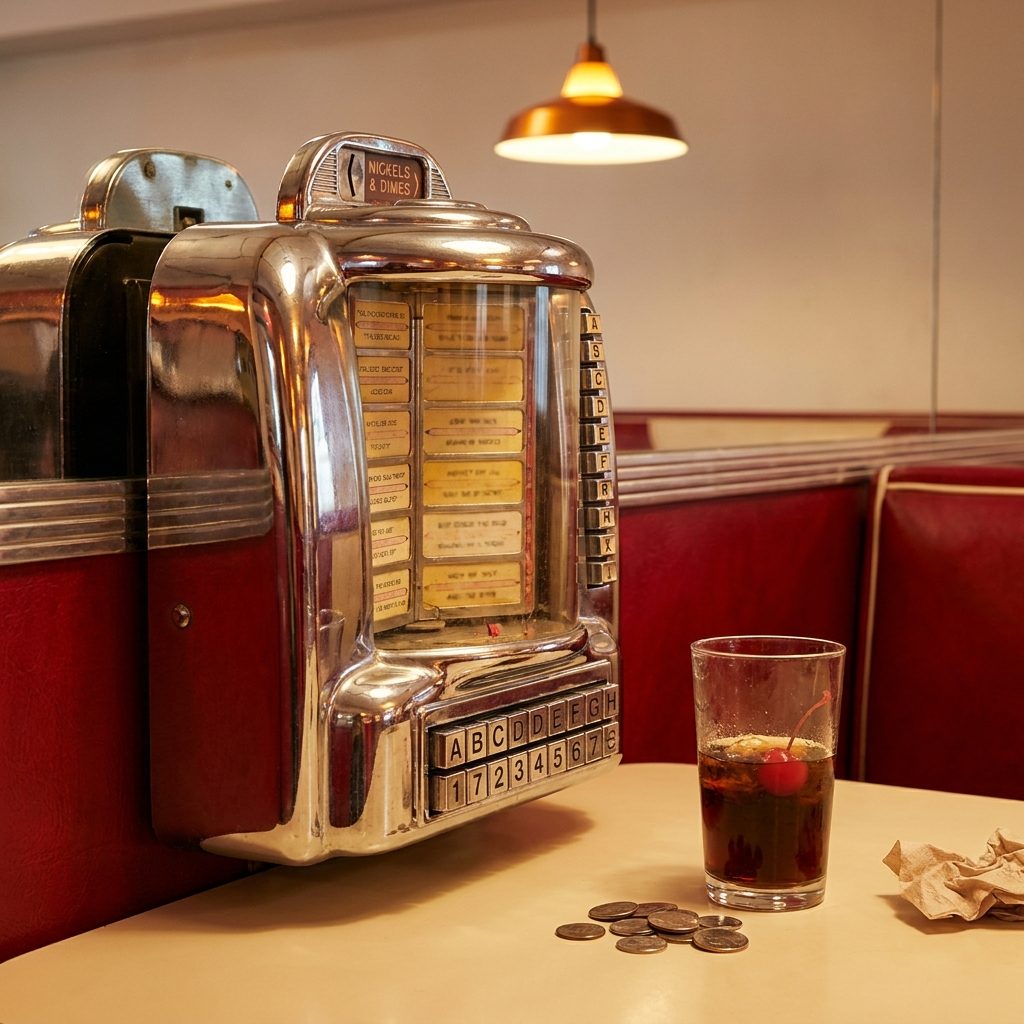
A dime—sometimes more, sometimes less depending on the machine and year—bought a song for the whole room. Everyone else was subject to your taste for the next three minutes, a small kind of authority rarely handed to a twelve-year-old.
The wallbox did not contain the records. It displayed the available selections and sent the choice to the main jukebox. Song strips sat behind glass and were replaced by hand, though popular ones often became smudged long before the next update.
The Extra Whipped Cream That Came From a Metal Pitcher
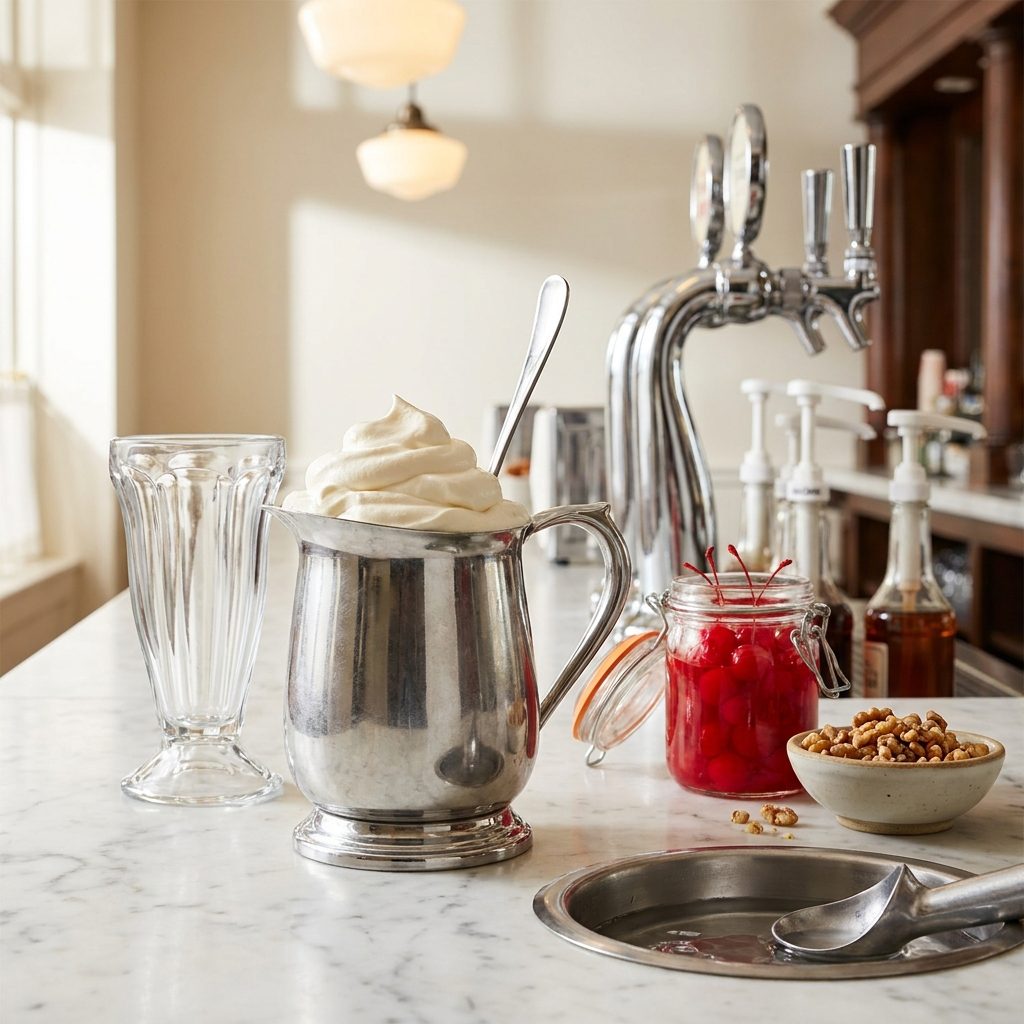
At fountains that still whipped their own cream, it was kept cold behind the counter and spooned onto sundaes by hand. Ask nicely and an extra dollop might appear without a new line on the bill.
Sometimes the pitcher remained within reach for a minute. That felt less like service than a temporary lapse in adult supervision.
The Root Beer Float Where the Ice Cream Fought the Foam
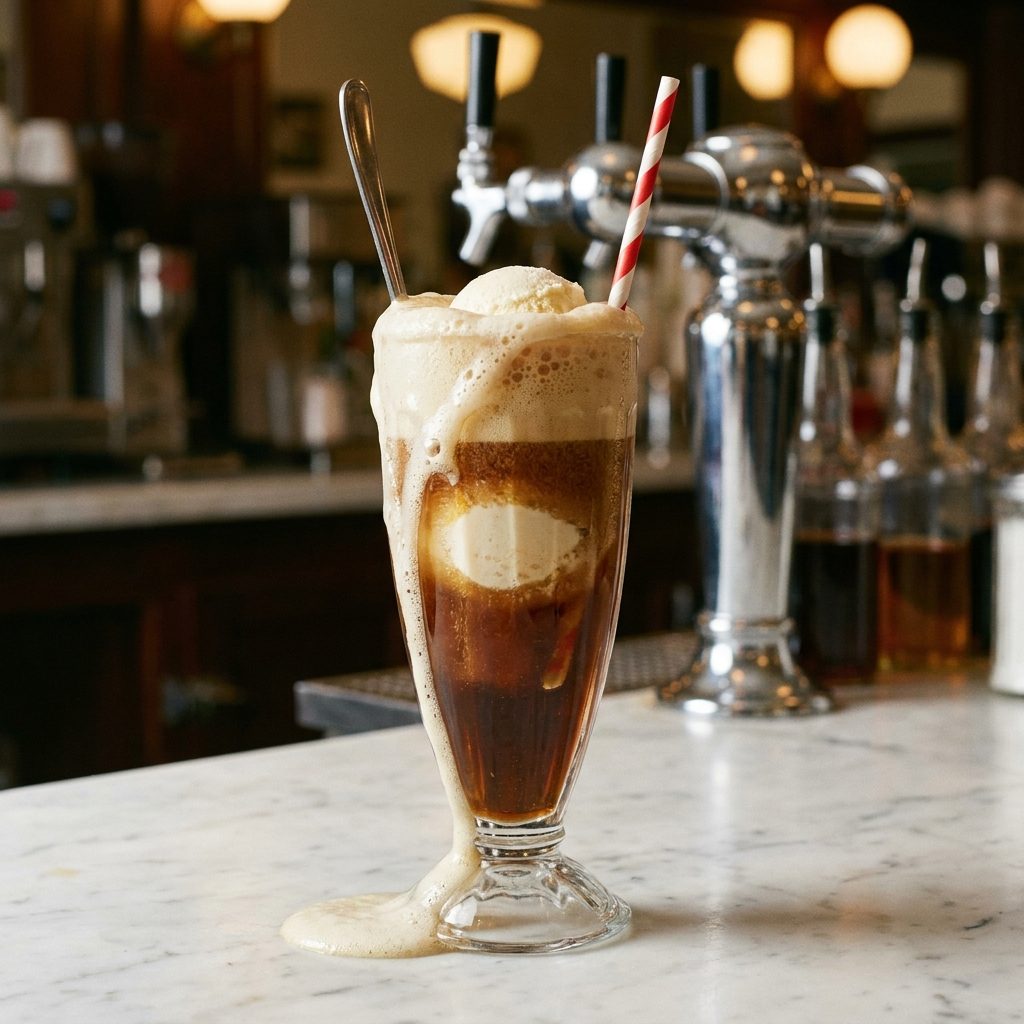
The battle started as soon as the ice cream hit the root beer. Foam climbed, threatened the rim, and demanded immediate attention from the straw.
Then came the middle stage, when drinking and eating happened at once and neither the spoon nor the straw seemed entirely correct. By the end, the ice cream had melted into a sweet layer at the bottom that somehow improved on everything above it.
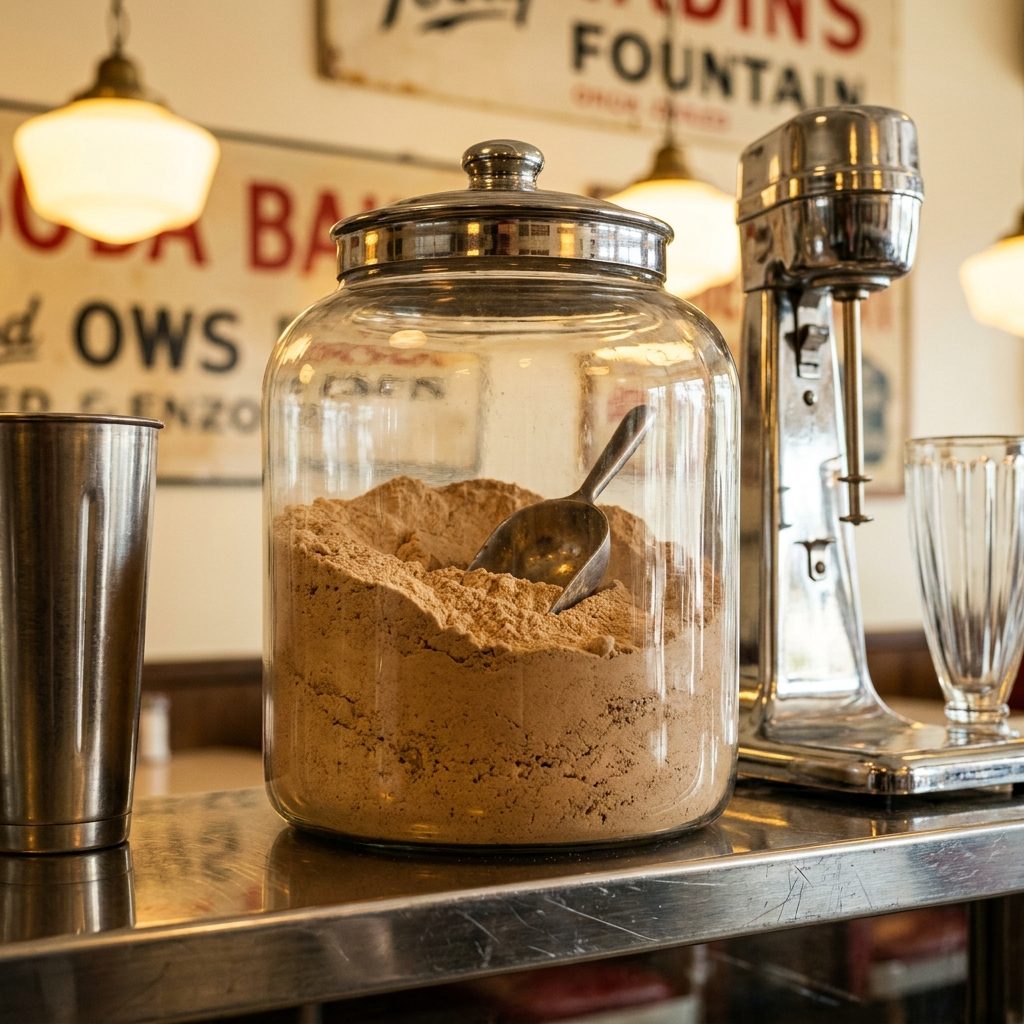
The Malted Milk Powder in the Big Glass Jar
Would you like to save this?
A malt was not merely another milkshake. A scoop or two of malted milk powder changed the flavor from straightforward sweetness to something toastier and more grown-up.
Children ordered chocolate shakes. Regulars knew to ask for a malt.
The Phosphate That Stayed on the Menu
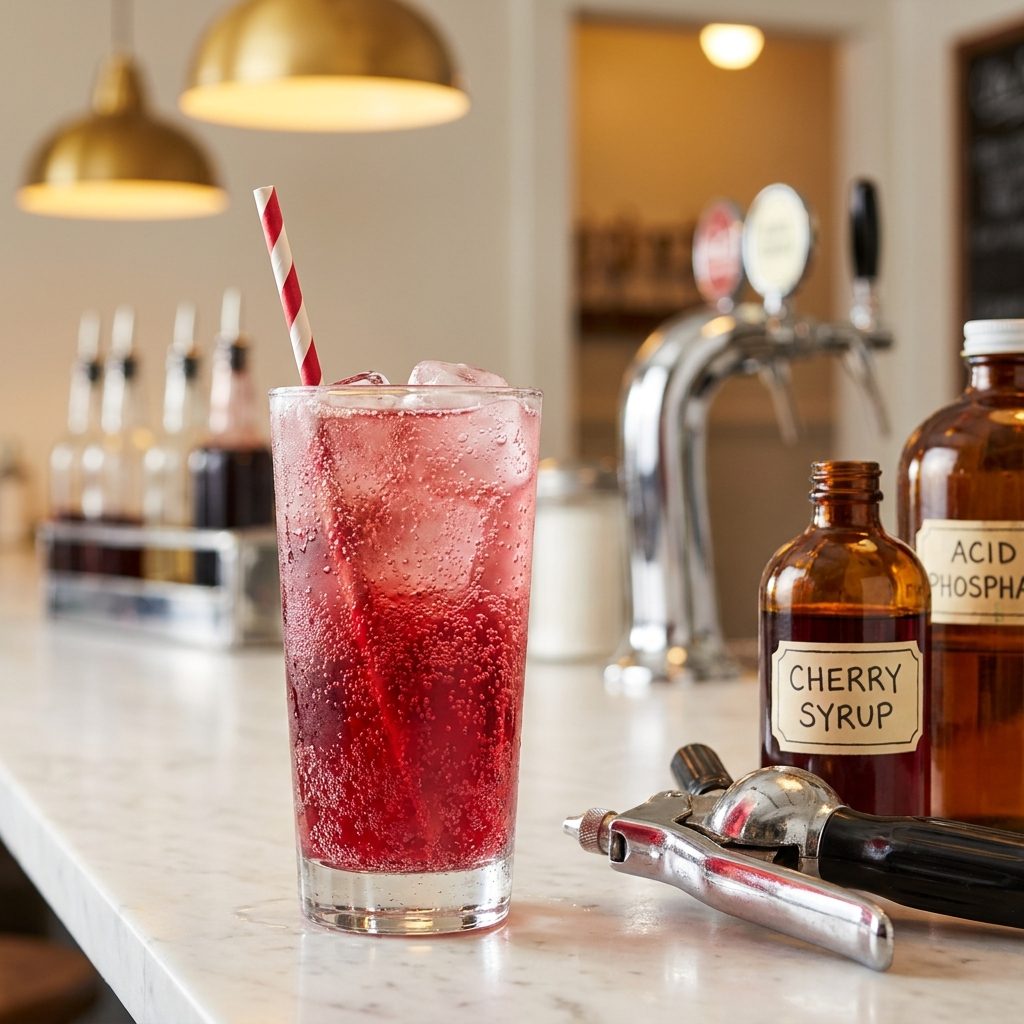
Cherry phosphate. Lemon phosphate. Orange phosphate. Older fountains sometimes kept them on the menu even after younger customers had stopped knowing what the word meant.
The drink combined flavored syrup, soda water, and a small amount of acid phosphate, which provided a tartness plain syrup lacked. By the 1980s, drinks mixed to order with acid phosphate had largely disappeared from mainstream menus, even though phosphoric acid remained common in commercial colas.
The Window Table Where Regulars Stayed for Two Hours
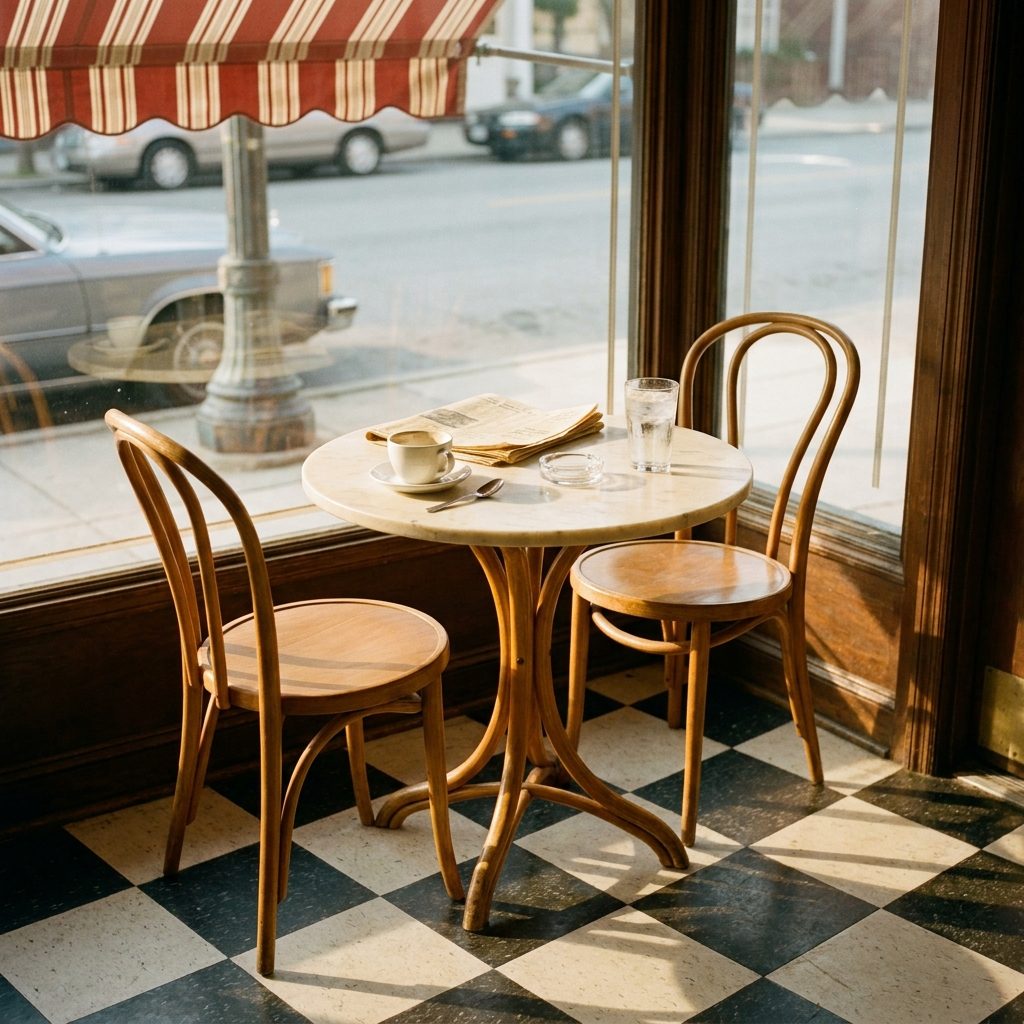
Some drugstores had two or three regulars who arrived at the same time, chose the same table, ordered coffee and perhaps a slice of pie, and stayed long enough for several refills.
They talked about weather, baseball, and whoever had failed to appear that morning. Nobody needed to reserve the table. Everyone understood whose it was.
The Lime Rickey Few People Still Ordered
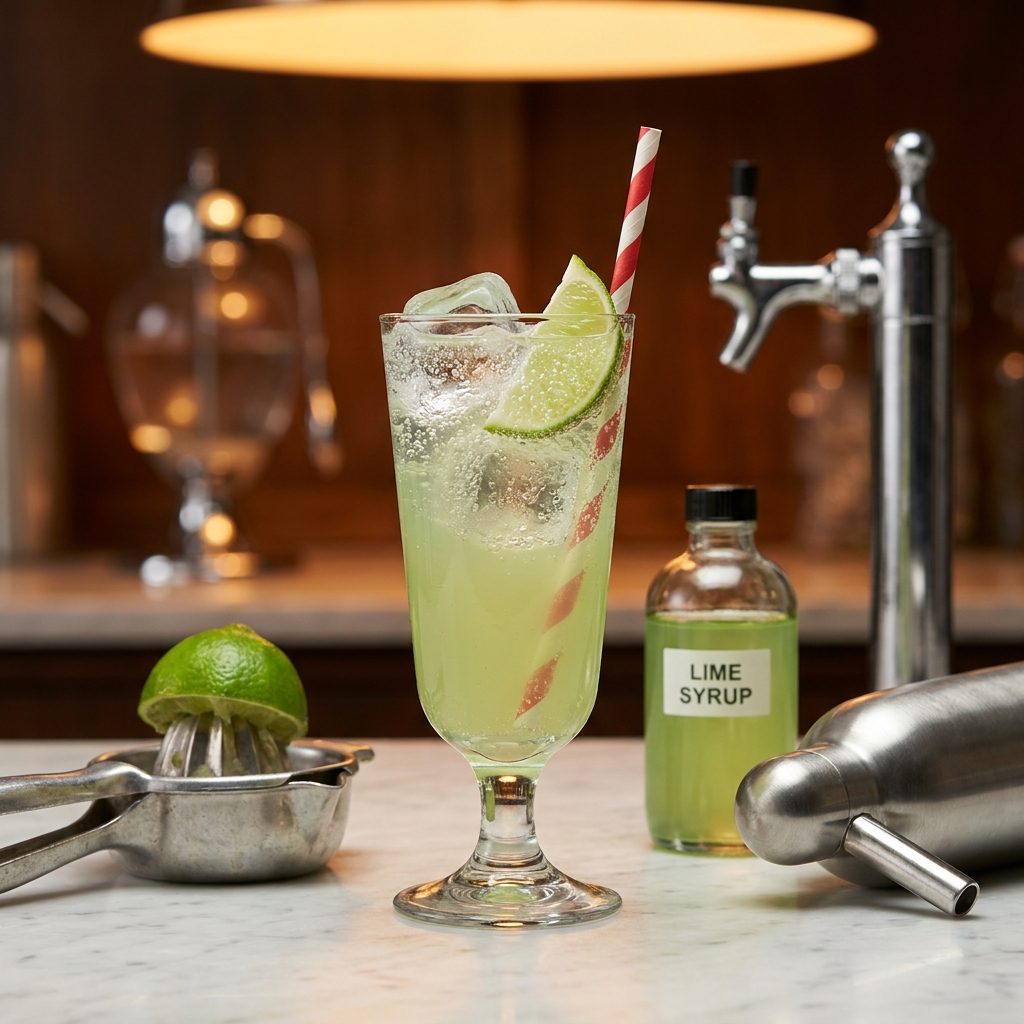
A lime rickey combined lime, carbonated water, and sweetening, though recipes varied by region and fountain. Some versions used lime syrup; New England became especially associated with raspberry-lime combinations.
The drink was tart, cold, and fizzy without the weight of a cola. By the late 1980s, fountains that still made one from fresh lime were becoming harder to find.
The Little Bell Over the Door
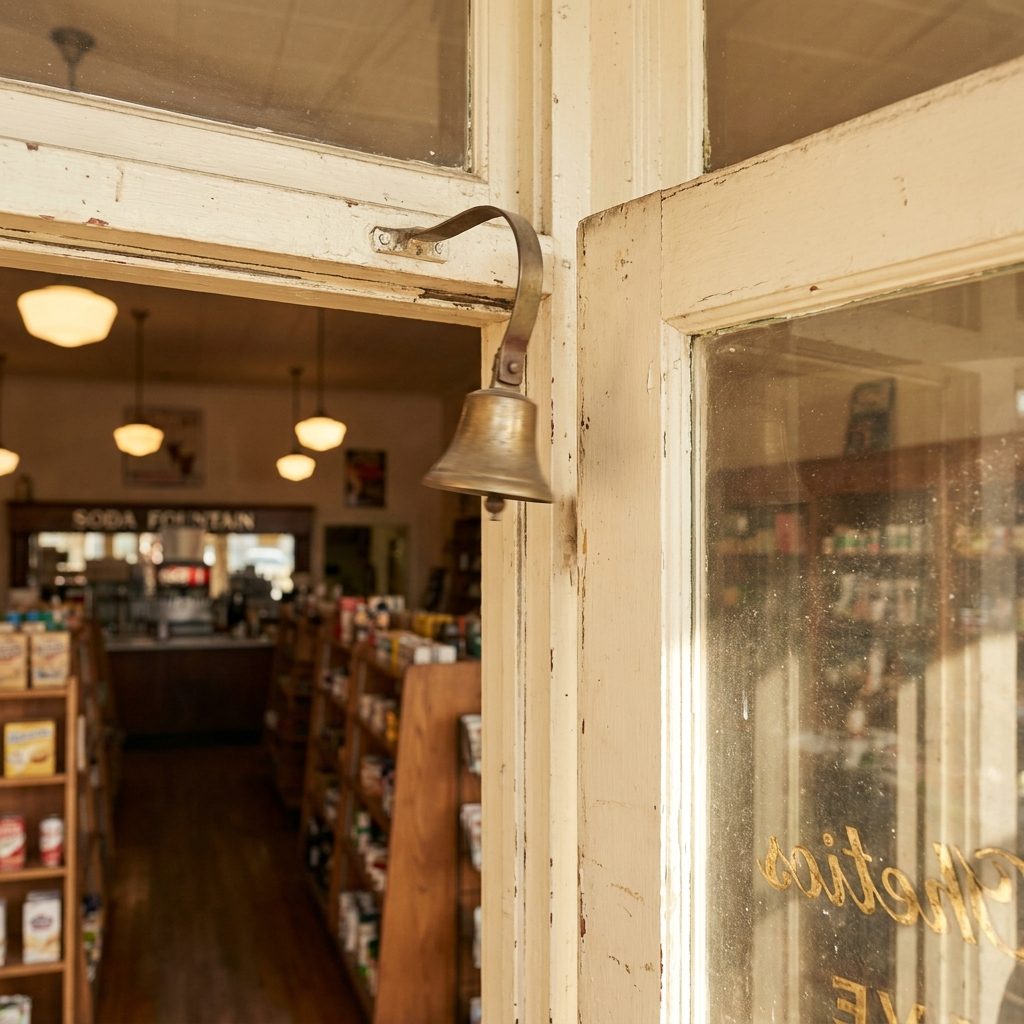
Many small drugstores had a brass bell mounted above the entrance. It rang as soon as the door opened, alerting the pharmacist, the counter staff, and every child hoping the next customer was not a parent arriving to collect them.
Modern stores tend to use an electronic chime or nothing at all. The brass bell gave each arrival more ceremony than the situation required.
The Napkin Dispenser That Refused to Cooperate
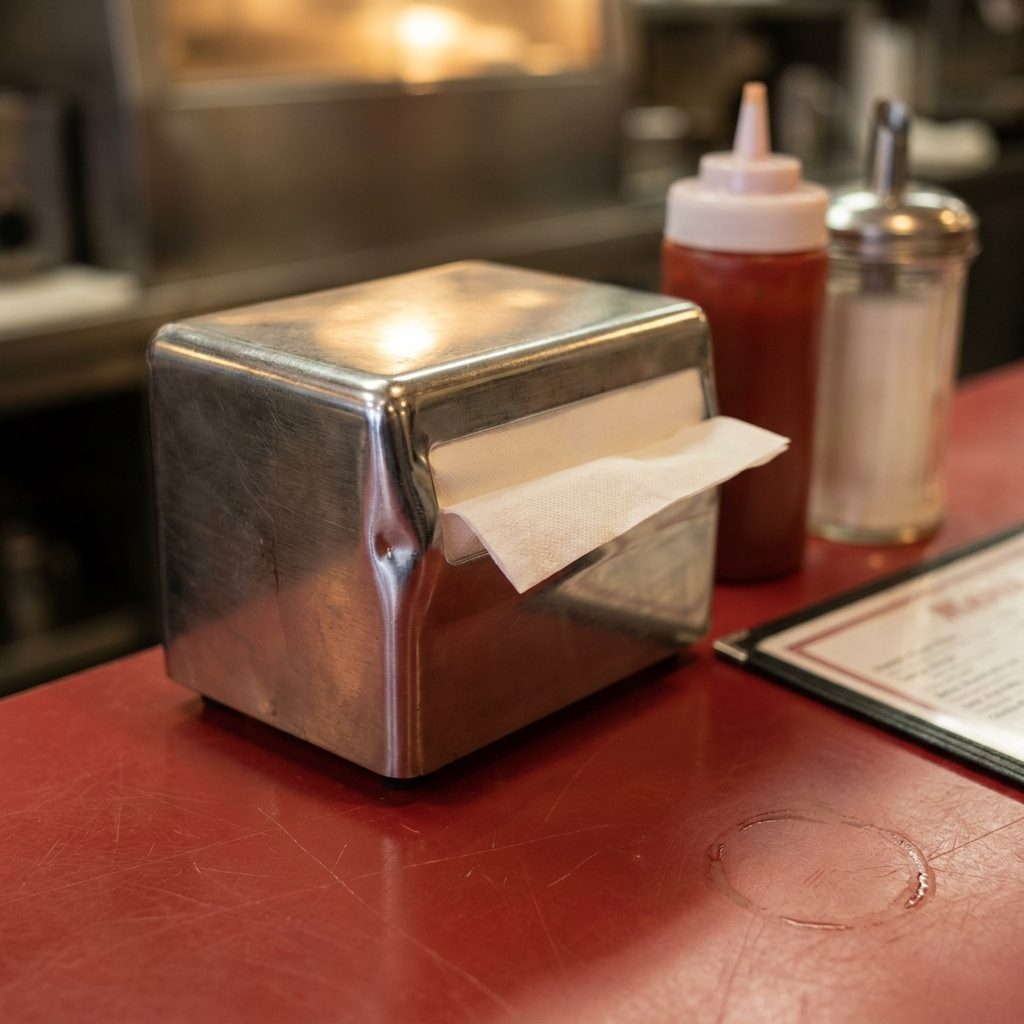
You pulled and the napkin tore in half. You tried again and received another half. On the third attempt, a whole napkin emerged with the corners of several others riding along.
Children developed personal theories about how to defeat the mechanism. Pull from the side. Pinch first. Reach under the flap. None of it worked consistently, and the dispenser remained between the ketchup and the sugar shaker looking innocent.
The Rotating Rack of Wooden Yo-Yos and Balsa-Wood Airplanes
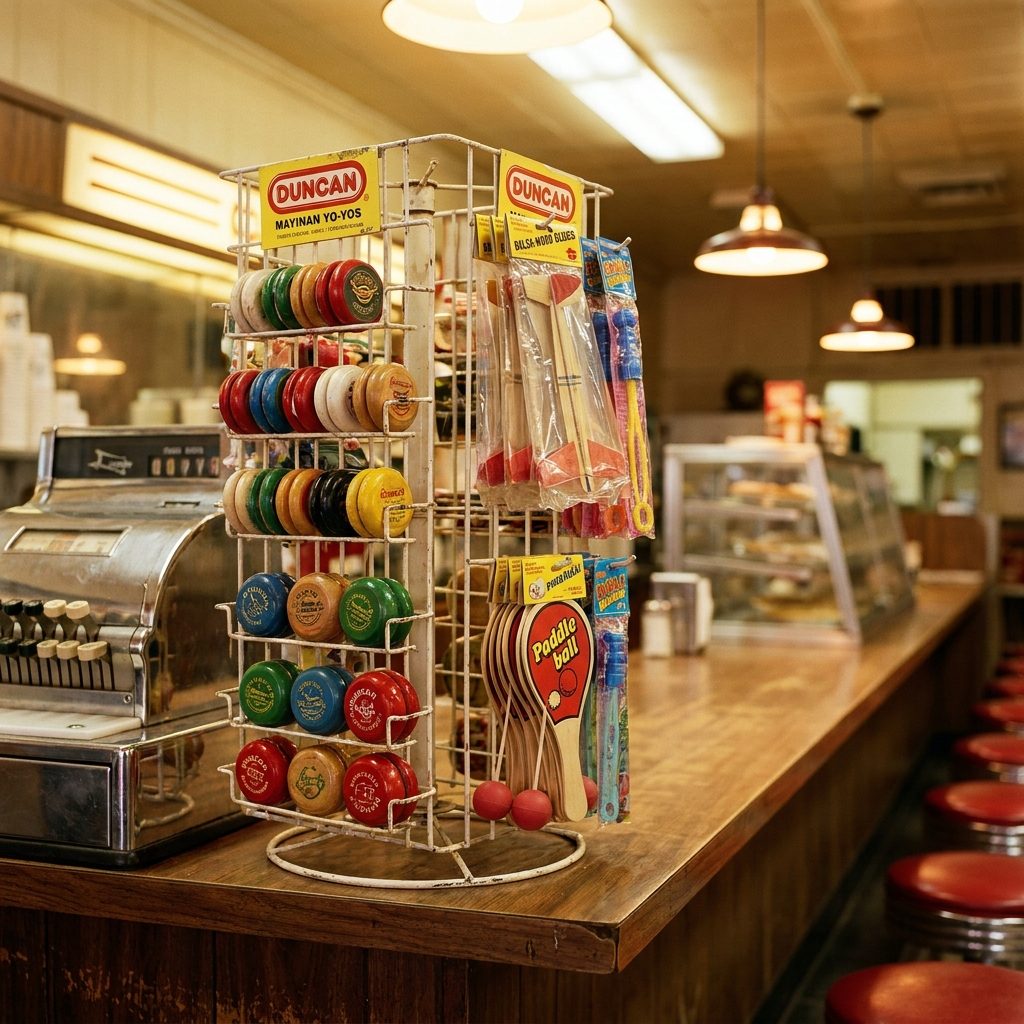
The rack stood within sight of the register for a reason. While a parent counted bills or waited for change, your attention went directly to the yo-yo with the red stripe.
A little money bought a Duncan. Less bought a balsa glider that flew beautifully for several throws before a wing snapped or the whole thing landed in a tree. The drugstore understood small joy and small heartbreak equally well.
The Chrome Rail Along the Front of the Counter
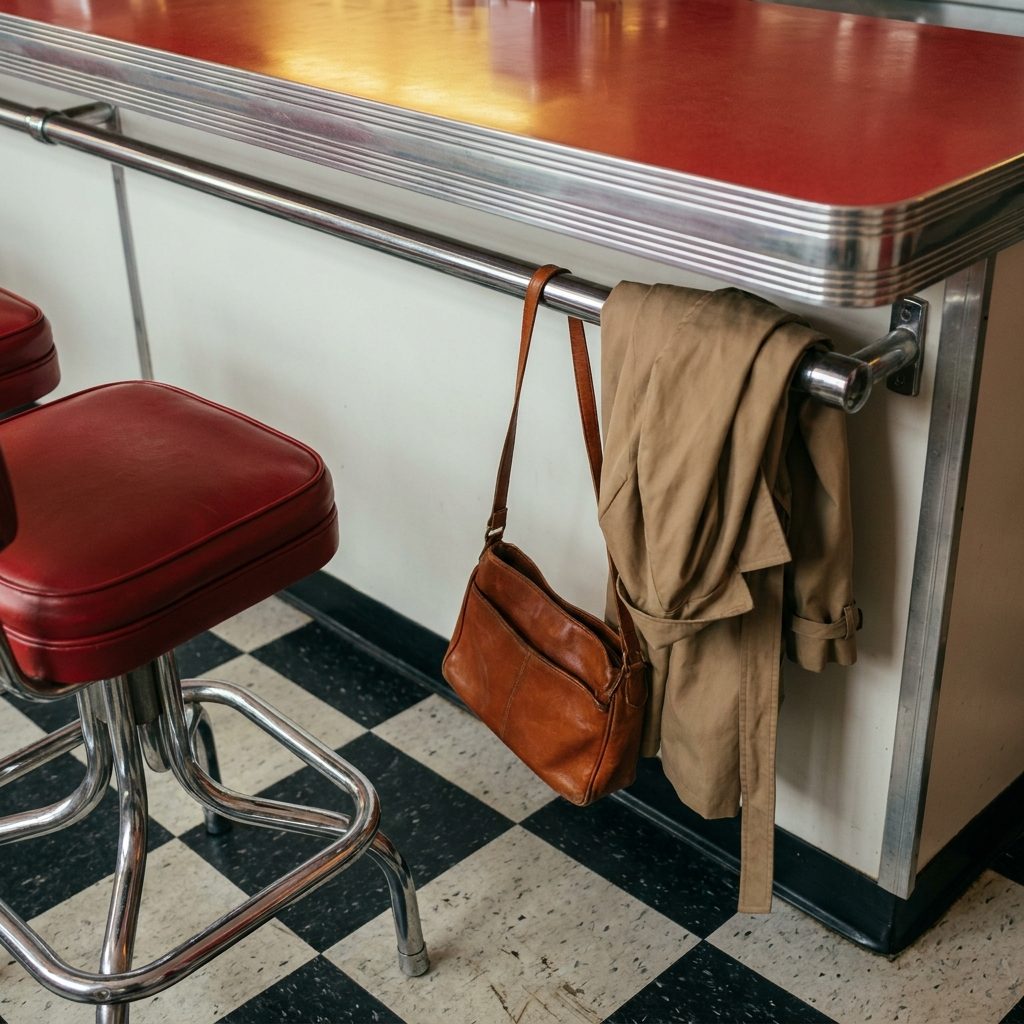
Nobody discussed the rail because nobody needed to.
Depending on its height and design, it might serve as a footrest, a place to steady yourself, or somewhere to hang a purse or coat rather than dropping it onto the floor. It was a practical detail shaped by watching how people actually used the counter.
When the counters disappeared, the rail usually went with them.
The Way the Whole Place Smelled Like Coffee, Vanilla Syrup, and Freshly Cleaned Counters
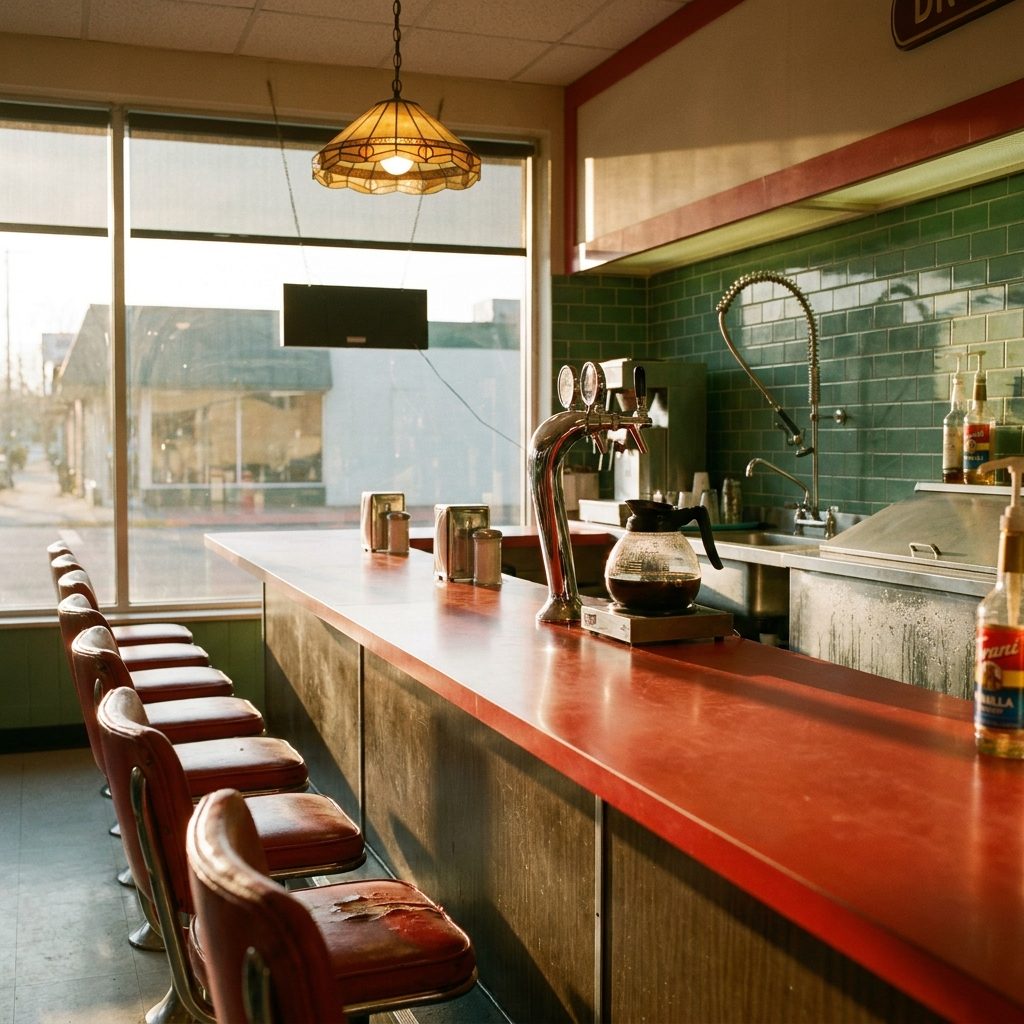
You could stand on the sidewalk and know you were close. Coffee had been sitting on the burner, vanilla syrup had been spilled and only mostly wiped away, and the counter carried a faint trace of whatever had been used to clean it.
Together, those smells formed something specific. Not exactly pleasant. Not unpleasant either. Simply the smell that meant you were about to sit down and order something cold with a spoon in it.
Chain coffee shops have their own recognizable scent. Nothing smells quite like the old fountains did.
Some smells do not return until you walk into a place that almost has them, and then you are twelve again for about four seconds.