Would you like to save this?
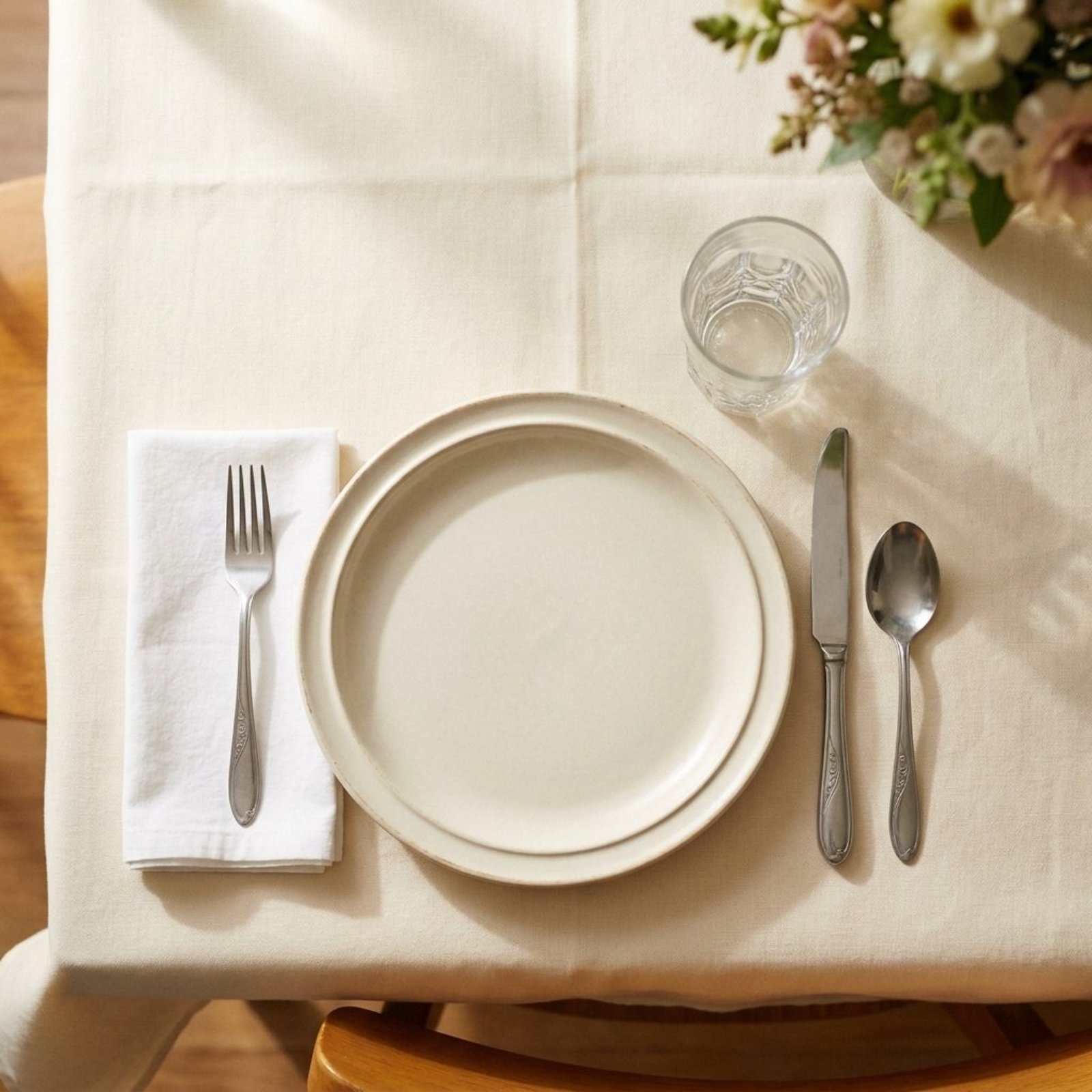
You reach for the fork without thinking. Left of the plate, tines up, handle aligned with the table edge. You may not remember who first showed you where it belonged, but your hands do.
Table-setting habits are not psychological tests, and no single napkin fold can diagnose a childhood. Still, small routines often preserve the households, rooms, and people that taught them. These 25 habits may not reveal everything about how you were raised, but they can carry more family history than they appear to.
The Triangle Napkin Fold That Often Comes From an Older Table-Setting Tradition
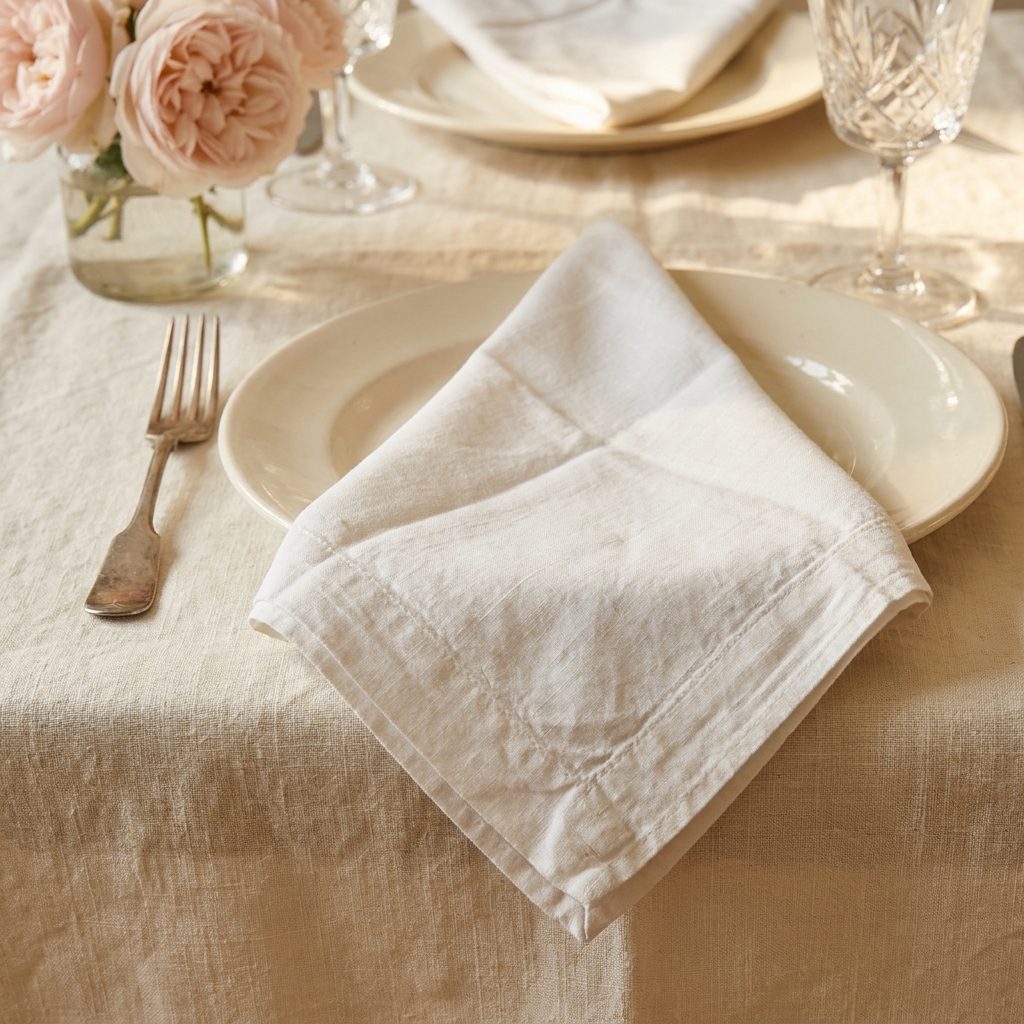
Some people fold a napkin into a rectangle and slide it under the fork. Others leave it loose. Then there are the triangle folders, who crease the square corner to corner and aim the point toward the plate.
That fold appeared in generations of etiquette guides, home-economics lessons, and formal family meals. Someone who still does it automatically may have learned from a parent or grandparent who treated even an ordinary dinner as a small ceremony.
The fold does not prove a particular decade or family structure. What it does suggest is that the habit was repeated often enough to outlive the table where it began.
The Knife Blade Facing Inward
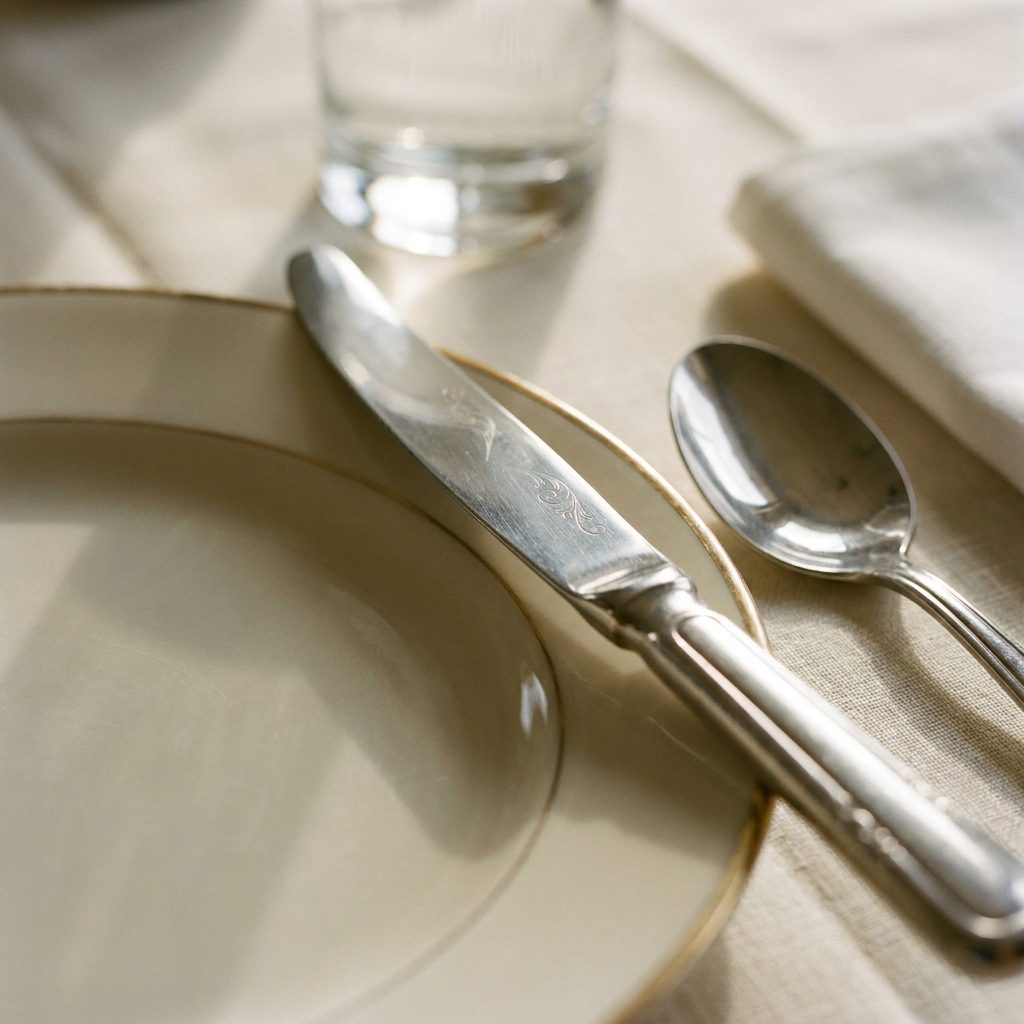
Standard Western table setting places the knife to the right of the plate with the blade turned inward. People who learned that rule early usually follow it without thinking.
The convention is often linked to older customs that treated an outward-facing blade as less peaceful or less courteous. Whatever its exact historical path, the modern rule is simple: blade toward the plate.
Doing it automatically does not prove that someone grew up in a formal household. It does show how one tiny etiquette rule can become muscle memory.
Reaching for Placemats Before a Tablecloth
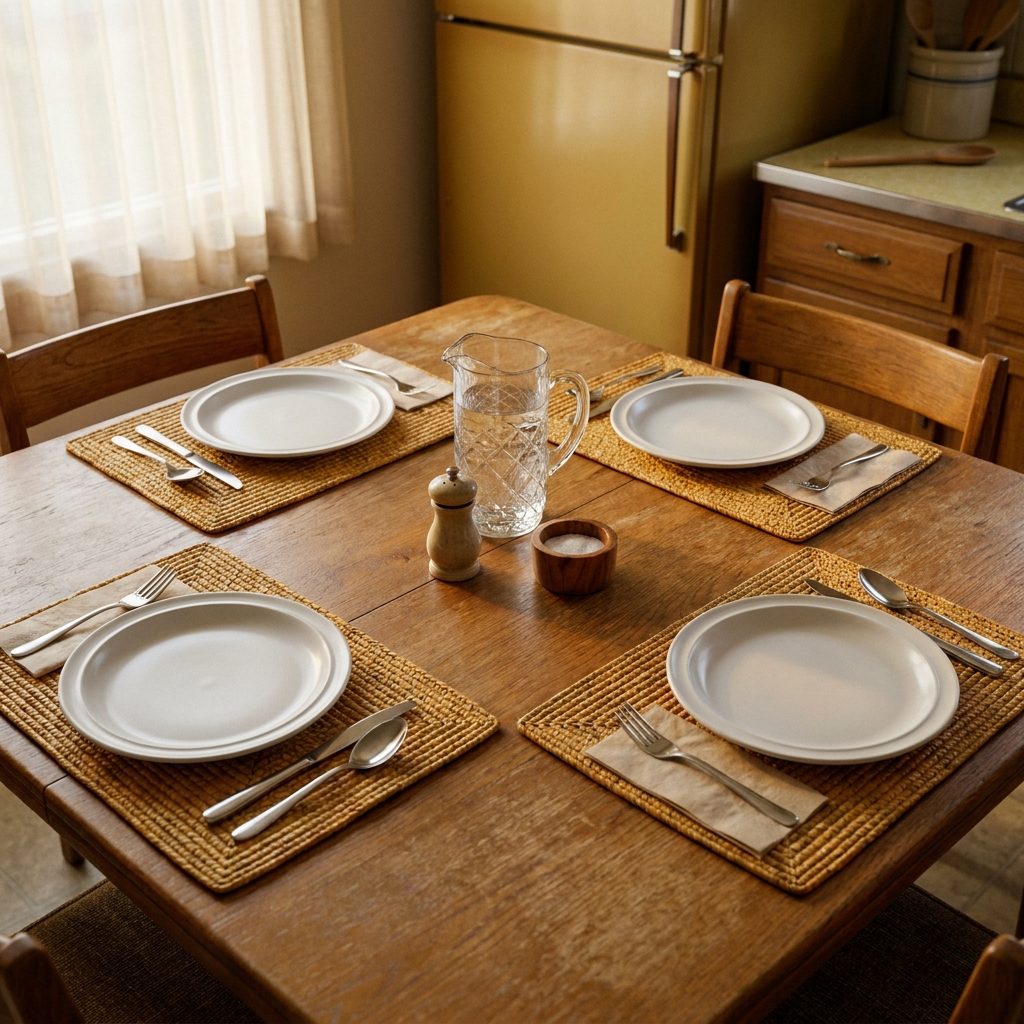
Placemat households and tablecloth households can feel like two different Americas.
The tablecloth often belonged to the dining room, Sunday dinner, and company. Placemats belonged to the kitchen table, where homework was pushed aside at six and the same vinyl rectangles were wiped down after every meal.
Neither tradition is more loving or more refined. They simply reflect different rooms and different rhythms. Reaching for a placemat first may mean the kitchen table was the center of family life, while a tablecloth may recall a household that separated everyday meals from formal ones.
The Bread Plate That Appears Even on a Tuesday
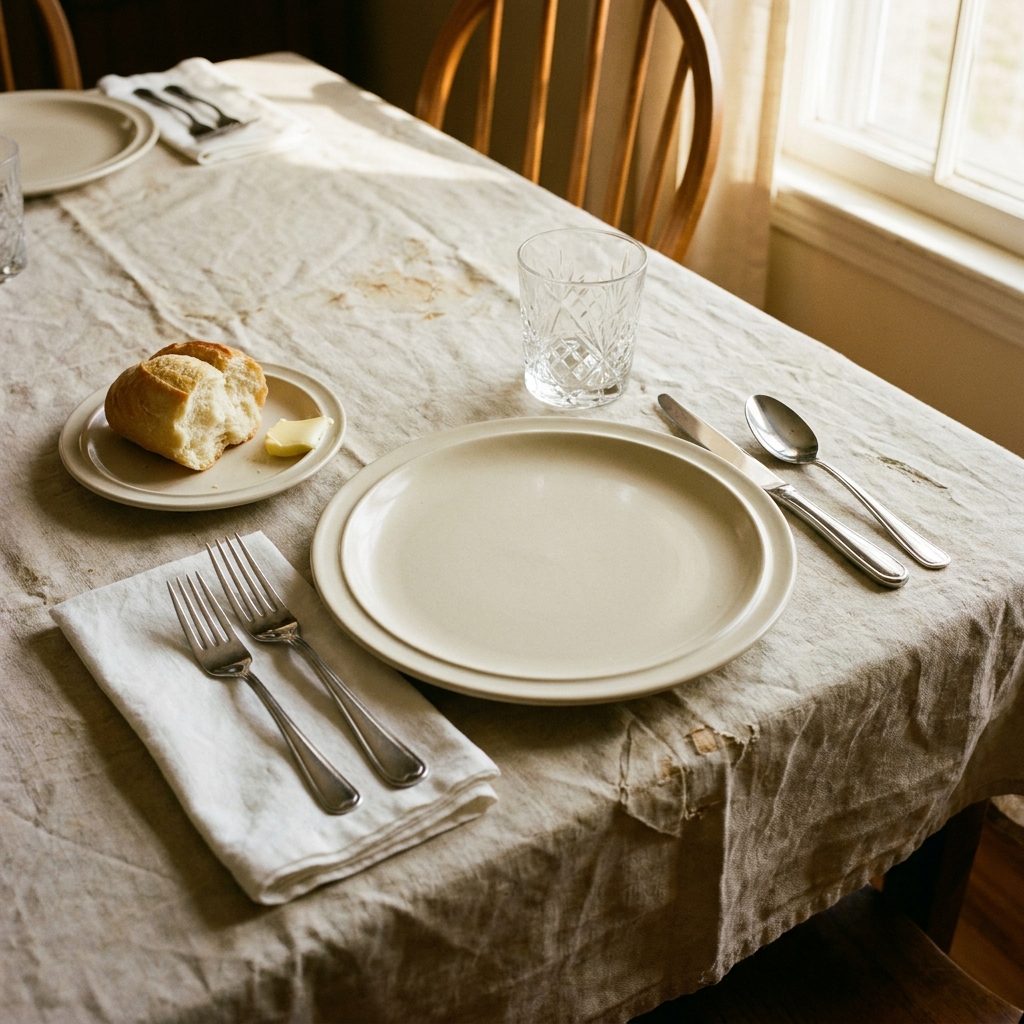
A bread plate is not necessary for spaghetti, meatloaf, or grilled cheese, yet some people still place one above the forks at every meal.
That habit may come from a household where formal place-setting rules were used regularly rather than saved for guests. In those homes, the extra plate was not showing off. It was simply part of what a complete table looked like.
Other people learn the same convention later from restaurants, etiquette books, or a partner. The bread plate cannot reveal exactly where the habit began, but it usually signals that someone prefers a table with a little more structure.
Setting the Table Before Carrying Food From the Kitchen
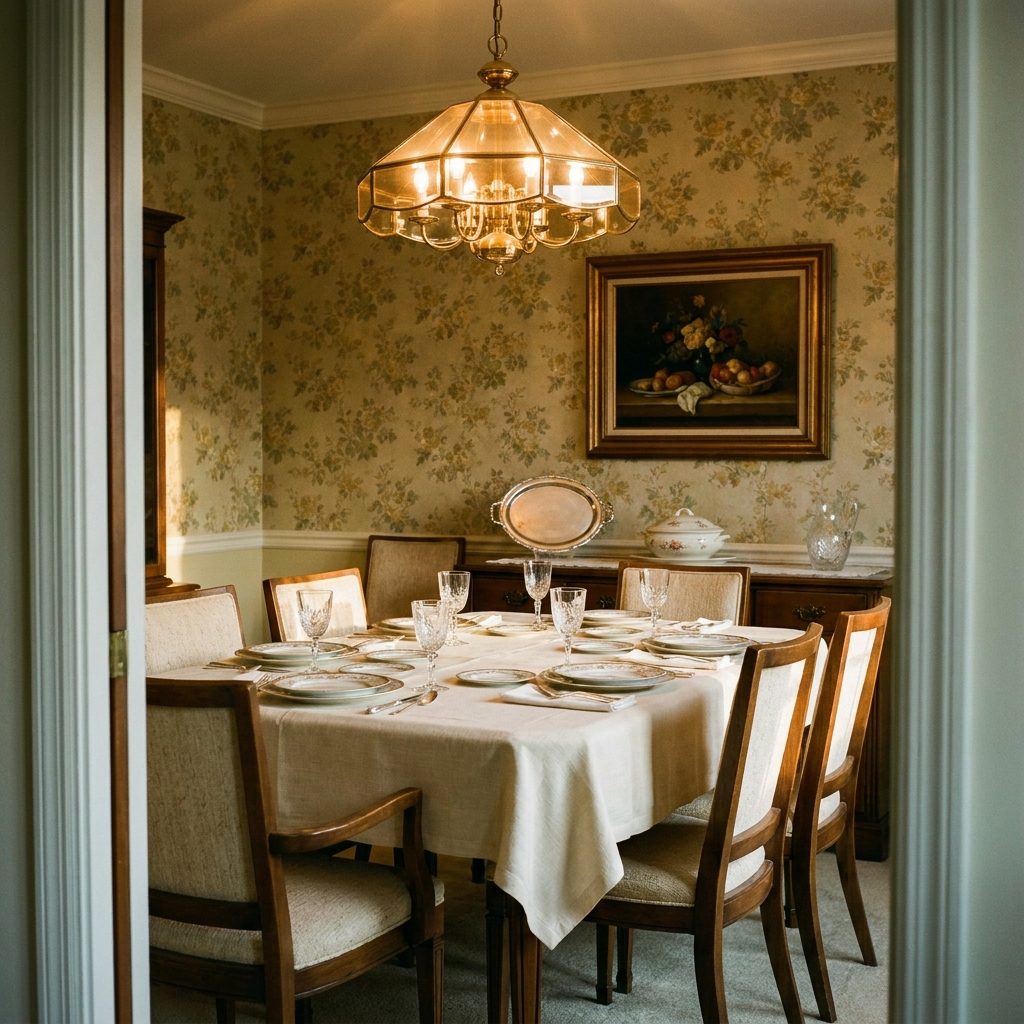
Some families set an empty table first and bring food out in serving dishes. Others plate everything at the stove and carry the finished plates over one at a time.
The difference often reflects architecture as much as manners. A separate dining room encourages one routine; an eat-in kitchen encourages another. By the 1970s, many American households were relying more heavily on the kitchen table for everyday meals.
Neither method reveals a better upbringing. It simply preserves the route dinner once took through the house.
The Water Glass Above the Knife
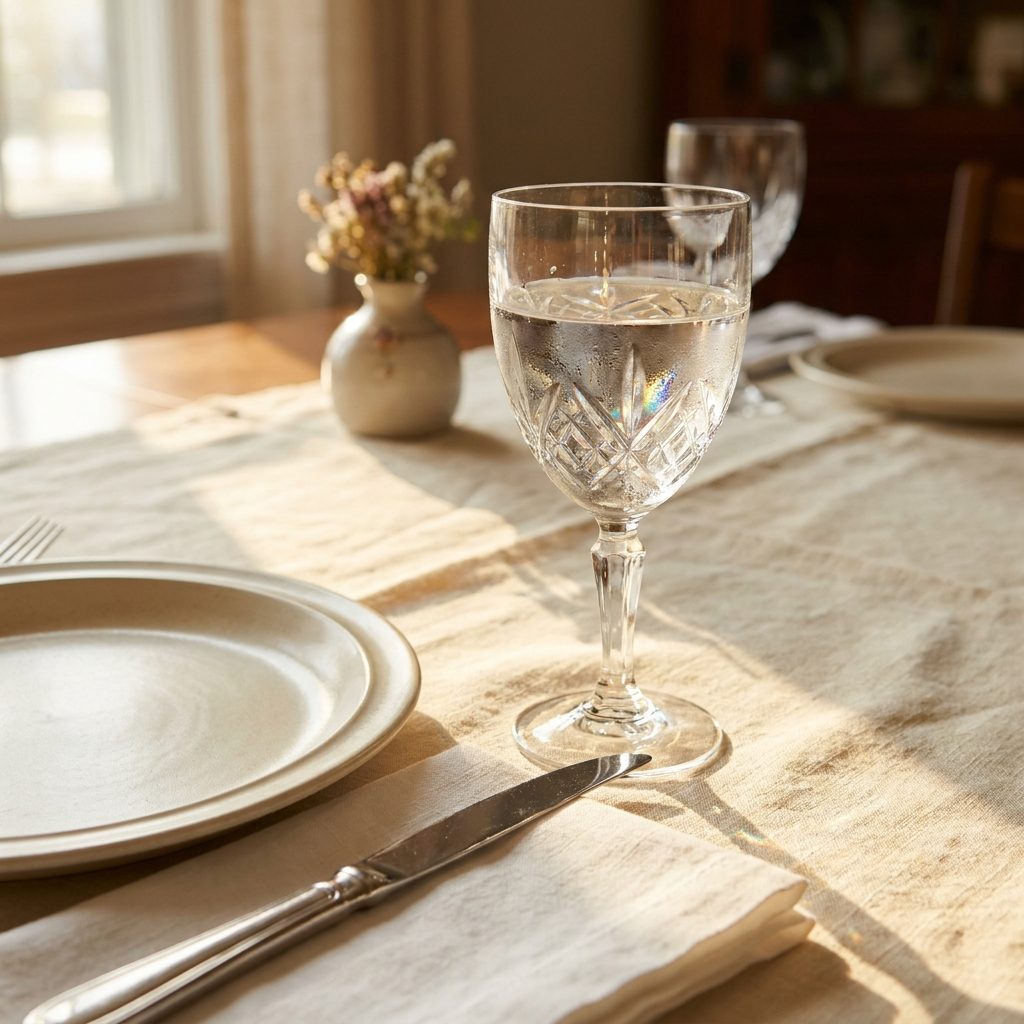
In a conventional place setting, the water glass sits above the knife on the right side of the plate.
The interesting part is not only where it goes, but what kind of glass appears there. One household uses a stemmed goblet. Another uses a pressed-glass tumbler, a jelly jar, or whatever matches closely enough.
Glassware can reflect budget, taste, inheritance, or simple practicality. A stem does not prove wealth, and a tumbler does not prove the lack of it. The glass mostly shows what the household considered normal.
Feeling Uneasy When the Fork Lands on the Wrong Side
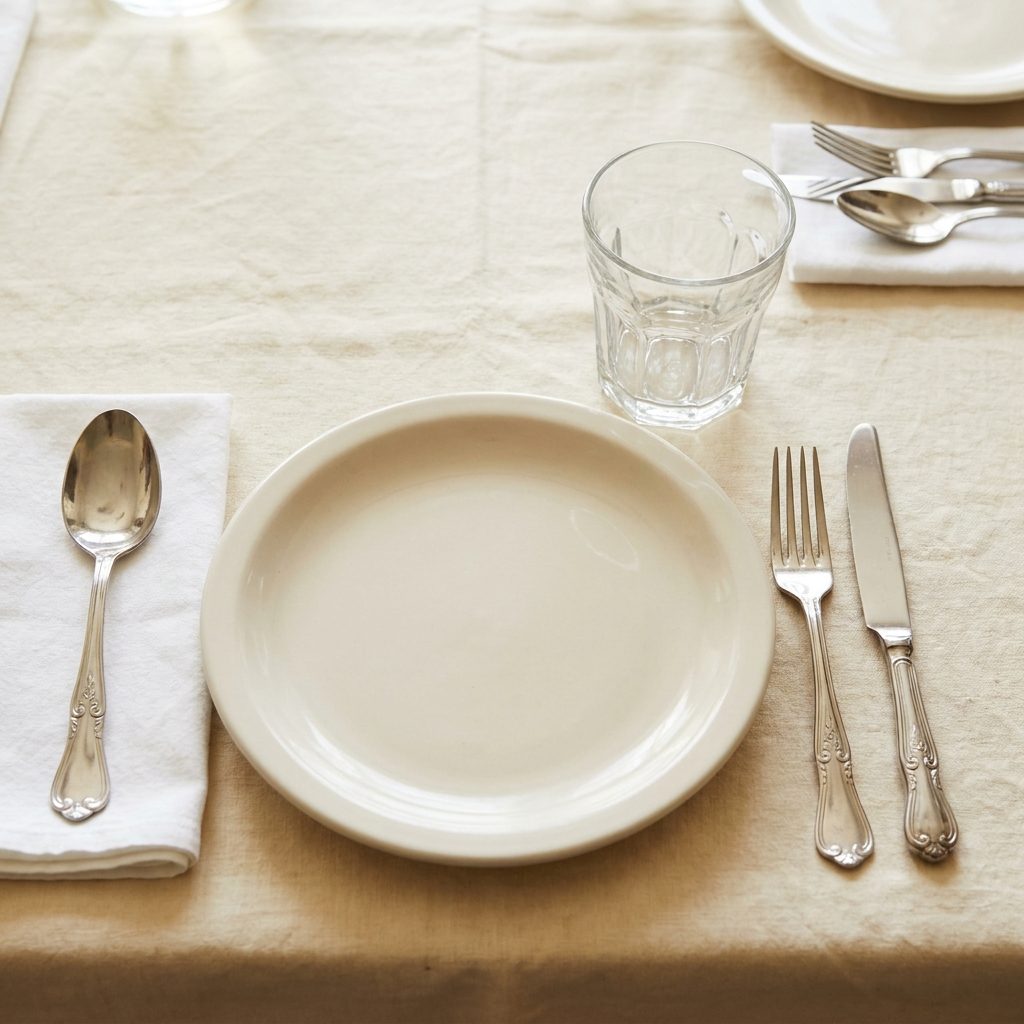
A guest helps set the table and places the fork on the right. You notice it before anyone else does.
That reaction is not a diagnosis. It is a learned expectation colliding with a different one. Repeated household rules can become so automatic that breaking them feels visually or socially wrong even when no harm is done.
The fork is not the important part. The speed of the reaction is. Somewhere along the way, the rule became part of how a properly finished table was supposed to look.
The Salt and Pepper Shakers That Never Leave the Table
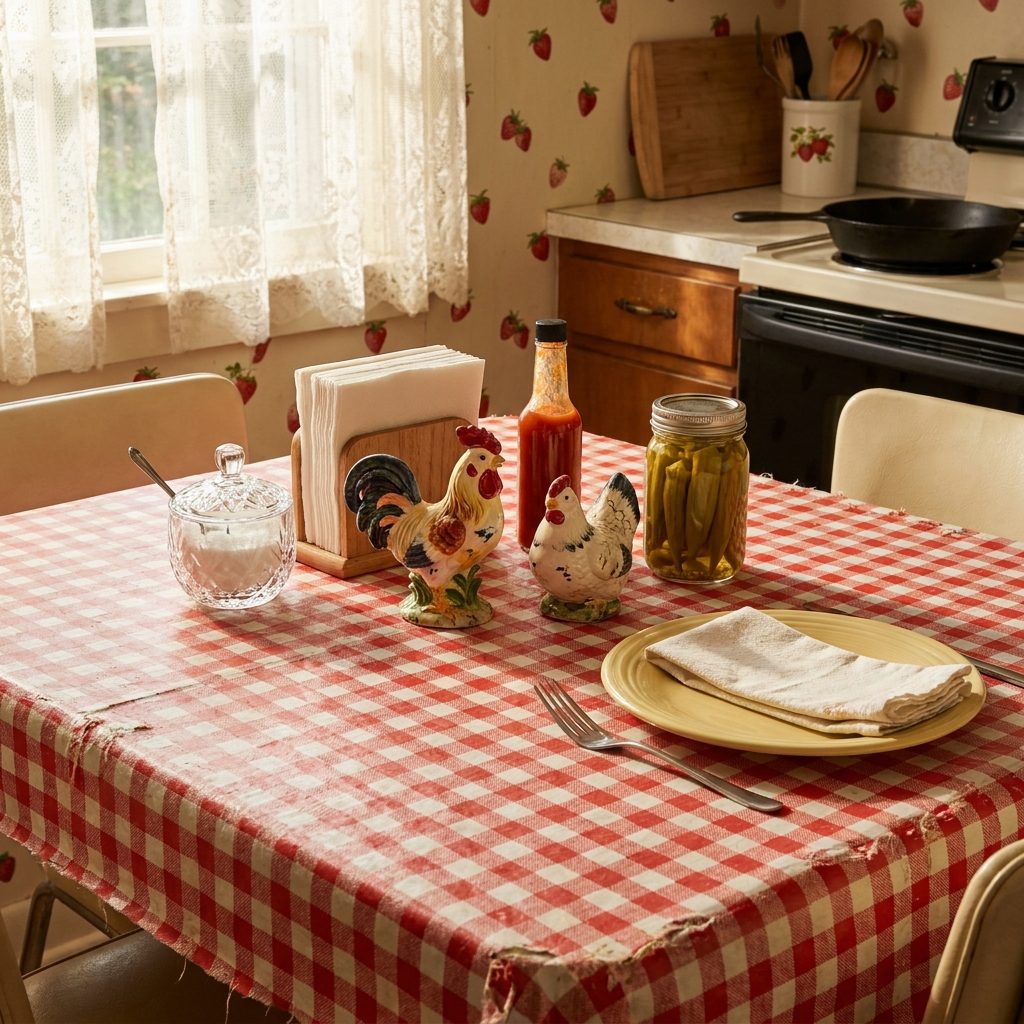
In some homes, salt and pepper are permanent table fixtures. In others, they arrive with the meal and disappear with the dishes.
The permanent pair may be ceramic roosters, plain glass shakers, or two pieces of a matching set that have stood beside each other for decades. In more formal service, the pair may be placed only when the table is set.
Passing salt and pepper together is a familiar etiquette convention. Keeping them on the table all day is not uniquely Southern, Northeastern, or Midwestern. It is simply one of those household rules that can feel local because families repeat it so consistently.
The Napkin Tucked Under the Fork
Would you like to save this?
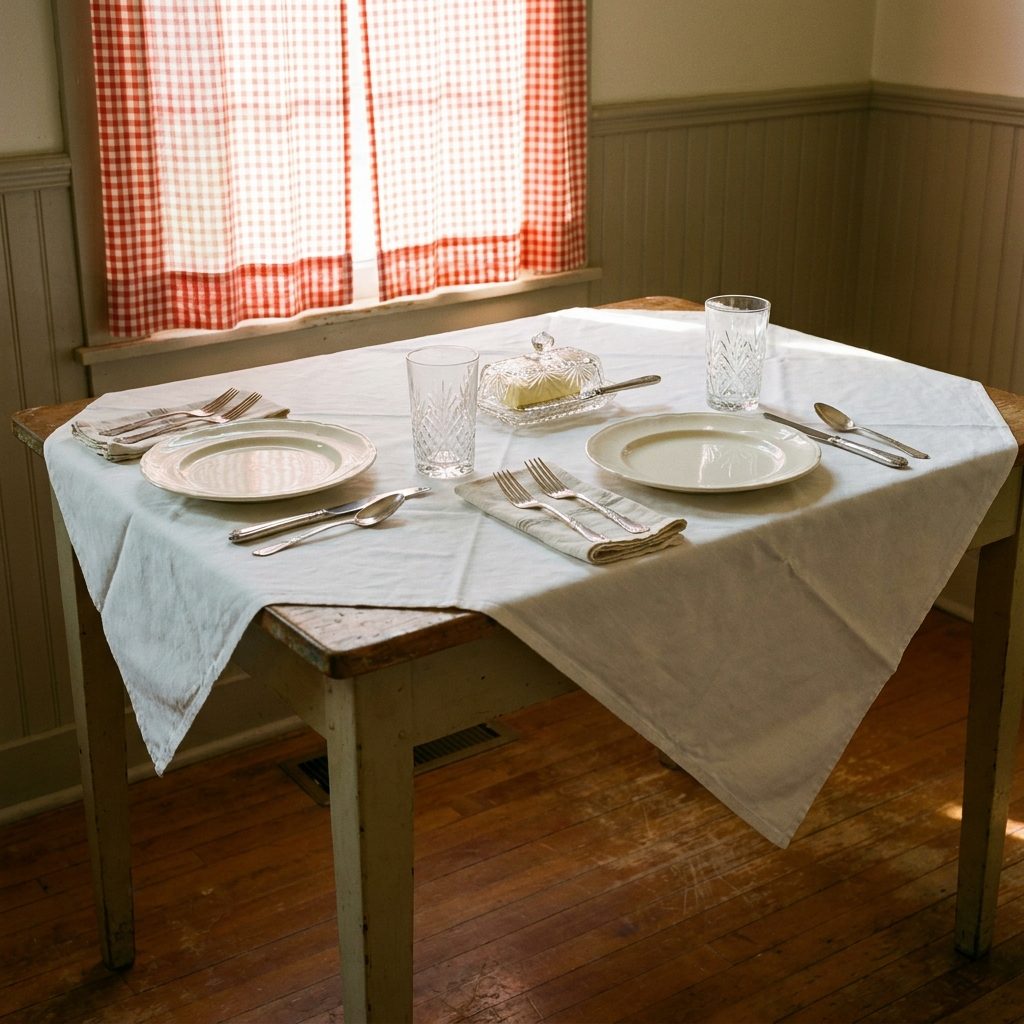
A napkin tucked neatly under the fork can come from hotel dining rooms, restaurants, home-economics classes, etiquette books, or a relative who liked a tightly organized place setting.
Domestic workers and hospitality staff were often trained in formal table service, and those skills sometimes moved into their own family kitchens. But the fold alone cannot prove that a mother or grandmother worked in service.
What it can show is familiarity with a finished place setting. Someone knew how to create one, and the person laying the table learned by watching.
The Fork Placement That Never Changes
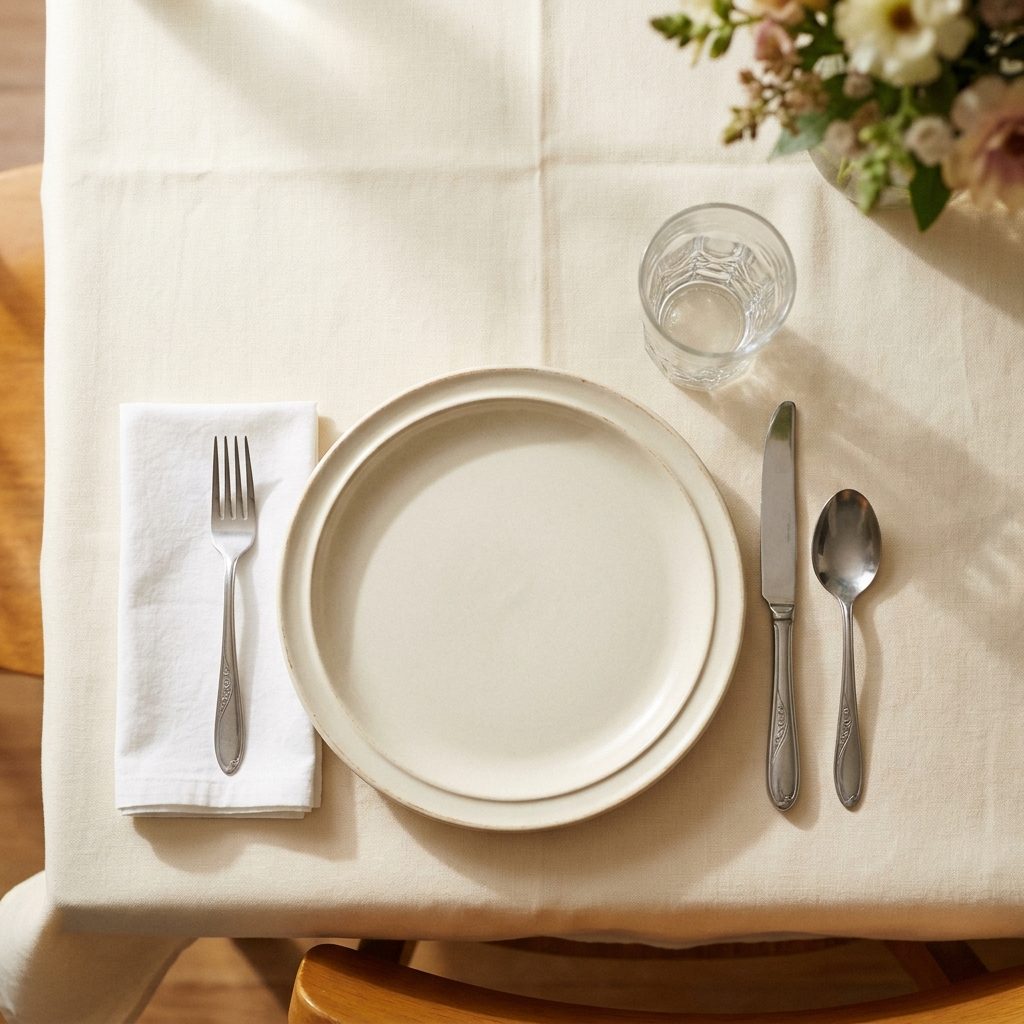
Forks go on the left. Knives and spoons go on the right. Knife blades face inward.
Those rules appeared in generations of etiquette manuals and home-economics lessons, and they remain standard today. The number of forks may change with the meal, but the basic left-right arrangement has been remarkably stable.
Small variations do not reliably identify the decade in which someone learned. They are more likely to reflect the number of courses, the household’s preferred level of formality, or the person who happened to teach the rule.
Setting the Table Before Cooking Begins
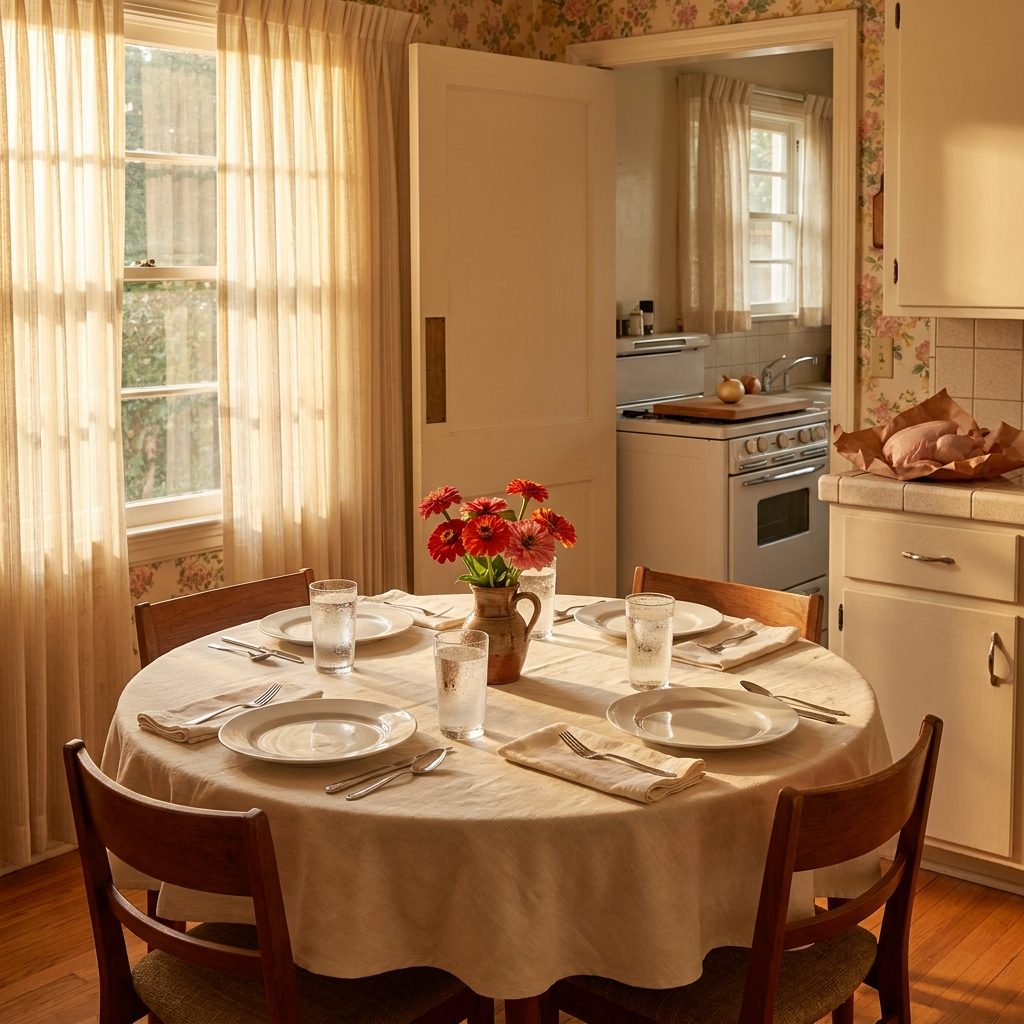
The pan is not out yet, but the placemats are squared, the forks are down, and the glasses are waiting.
For some cooks, this is simply efficient. Finishing the table first clears one task before the kitchen gets busy. For others, it creates a reassuring sense that the meal already has a destination.
Family routines can provide predictability, but setting the table first does not prove that someone grew up in a safe or unsafe home. It may be nothing more dramatic than a workflow learned from the person who cooked dinner every night.
The Dessert Fork That Appears Before Dinner
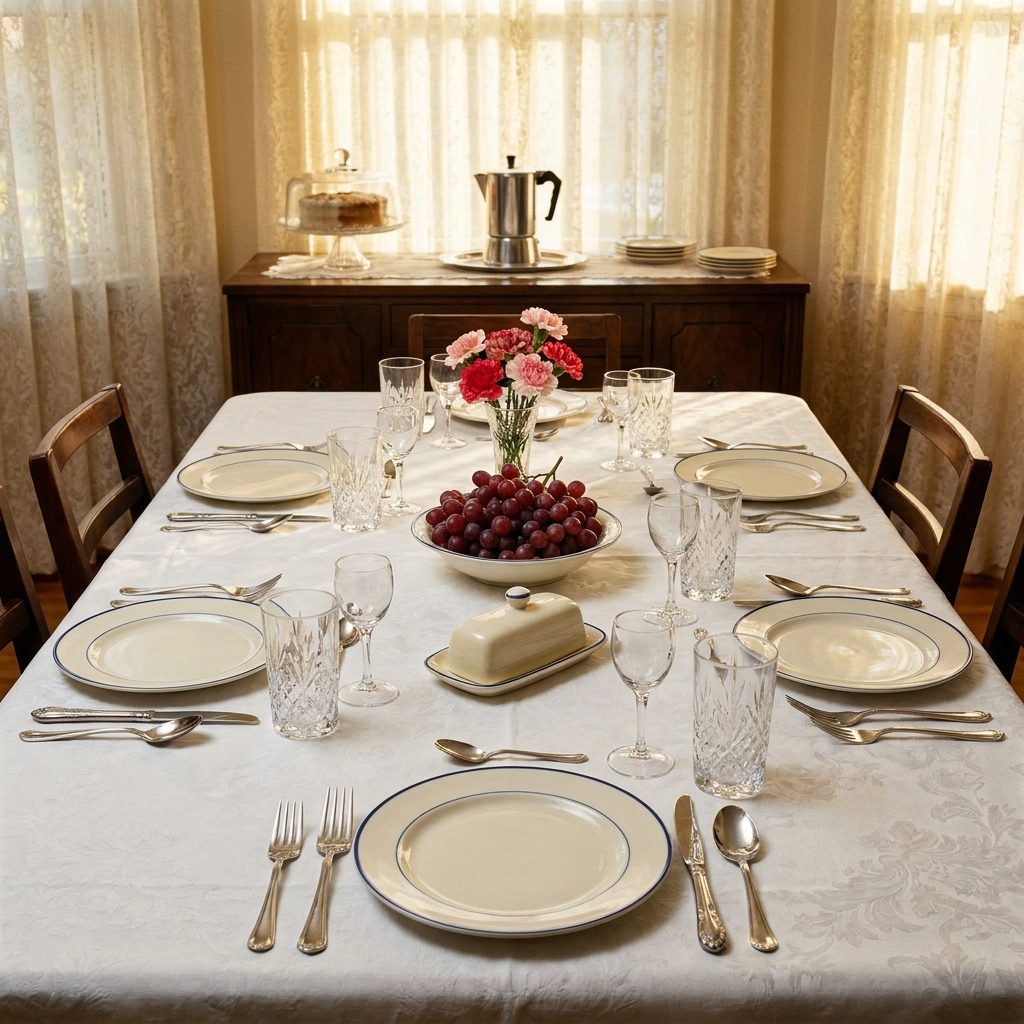
A dessert fork may be placed horizontally above the plate, or it may arrive later with dessert. Both approaches are conventional.
When it appears before anyone sits down, the table looks planned from beginning to end. That often suits households where Sunday dinner, holiday meals, or company dinners followed a familiar sequence.
The fork does not prove that dessert was mandatory or that the family never improvised. It simply signals that someone likes the table to announce the whole meal in advance.
The Need to Align Every Piece of Silverware
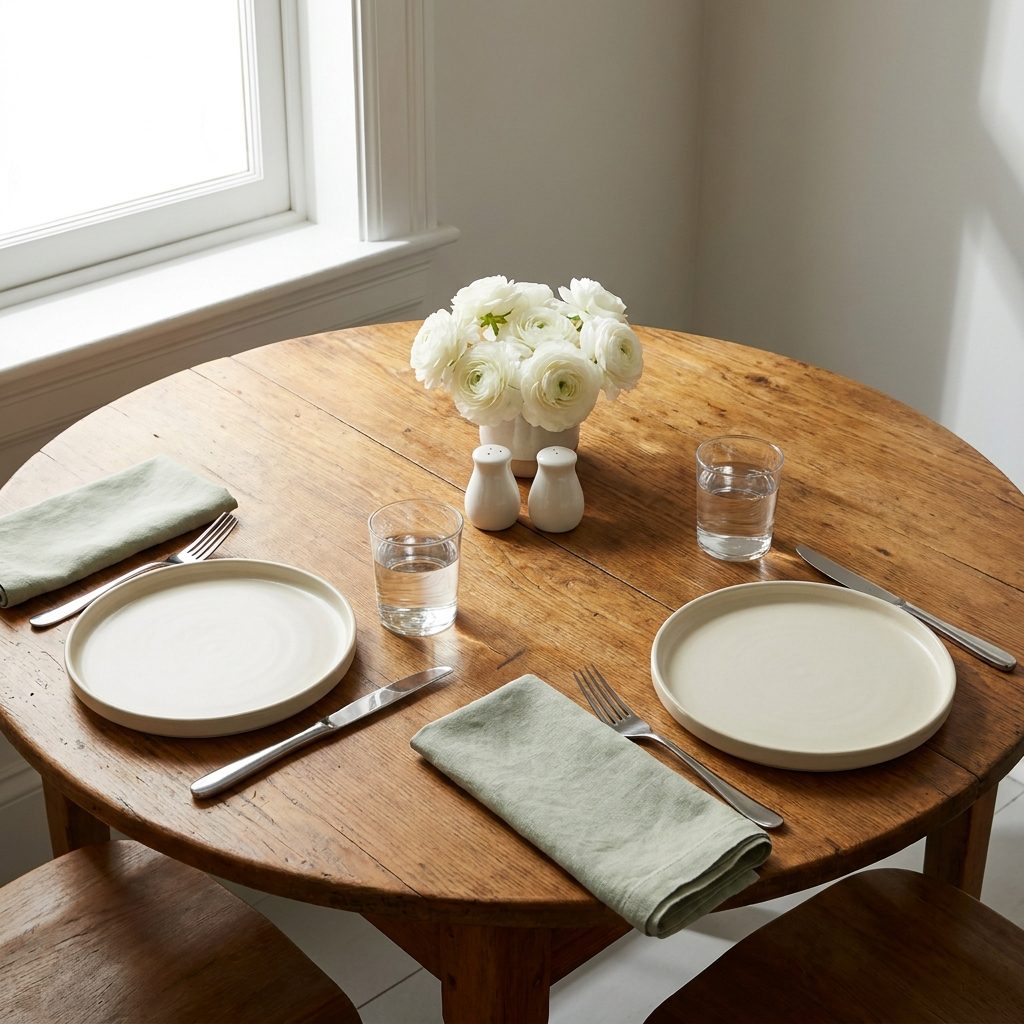
Some people notice immediately when one fork sits lower than the others. They straighten the handles, center the salt and pepper, and make the glasses line up before sitting down.
A preference for order is common and does not by itself indicate trauma, OCD, or an unpredictable childhood. Symmetry can be aesthetically satisfying, easier to repeat, or simply part of how someone learned to set a table.
For a few people, precise arrangement may also feel calming. That is a possibility, not a diagnosis. A straight fork is only a straight fork until the person setting it says otherwise.
The Butter Knife Resting on the Bread Plate
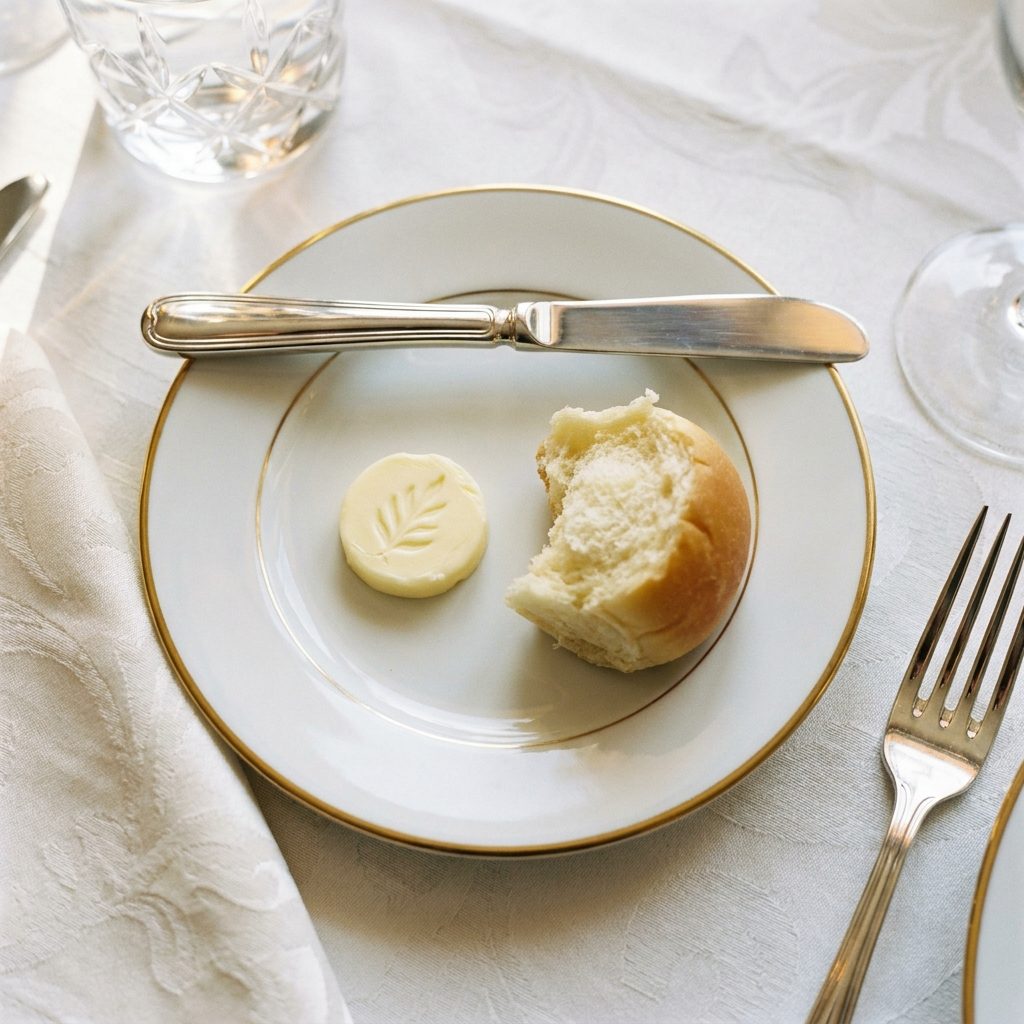
In a formal or informal place setting that includes a bread plate, the butter spreader commonly rests diagonally across it with the handle toward the diner and the cutting edge turned toward the center of the plate.
That detail shows familiarity with one conventional arrangement, not proof of a formal upbringing. People learn table setting from many places: family, restaurants, school, work, books, or simple curiosity.
The individual butter spreader is smaller and rounder than a dinner knife. Its presence adds one more specialized piece to a table that might otherwise get by perfectly well without it.
Ironing a Tablecloth for an Ordinary Weeknight
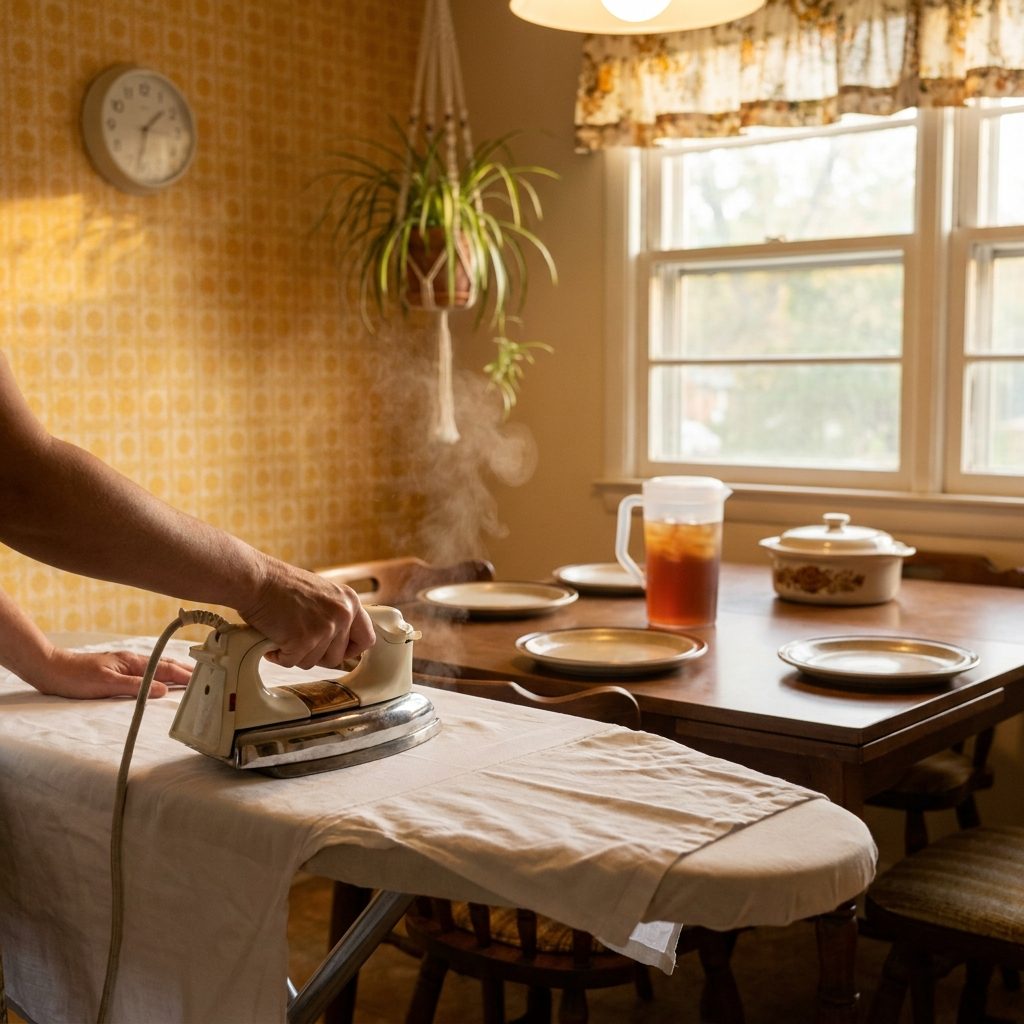
Tuesday. Meatloaf. And someone is pressing the center seam of a cotton tablecloth for four people who may not notice.
Family researchers often distinguish between routines, which get things done, and rituals, which carry meaning. An ironed tablecloth can be both. It smooths the cloth, but it may also preserve the feeling that an ordinary meal deserves care.
That does not mean every pressed tablecloth hides grief or obligation. Sometimes the explanation is simpler: someone likes how it looks and learned that a wrinkled cloth meant the table was not finished.
Setting Extra Places After the Family Has Changed
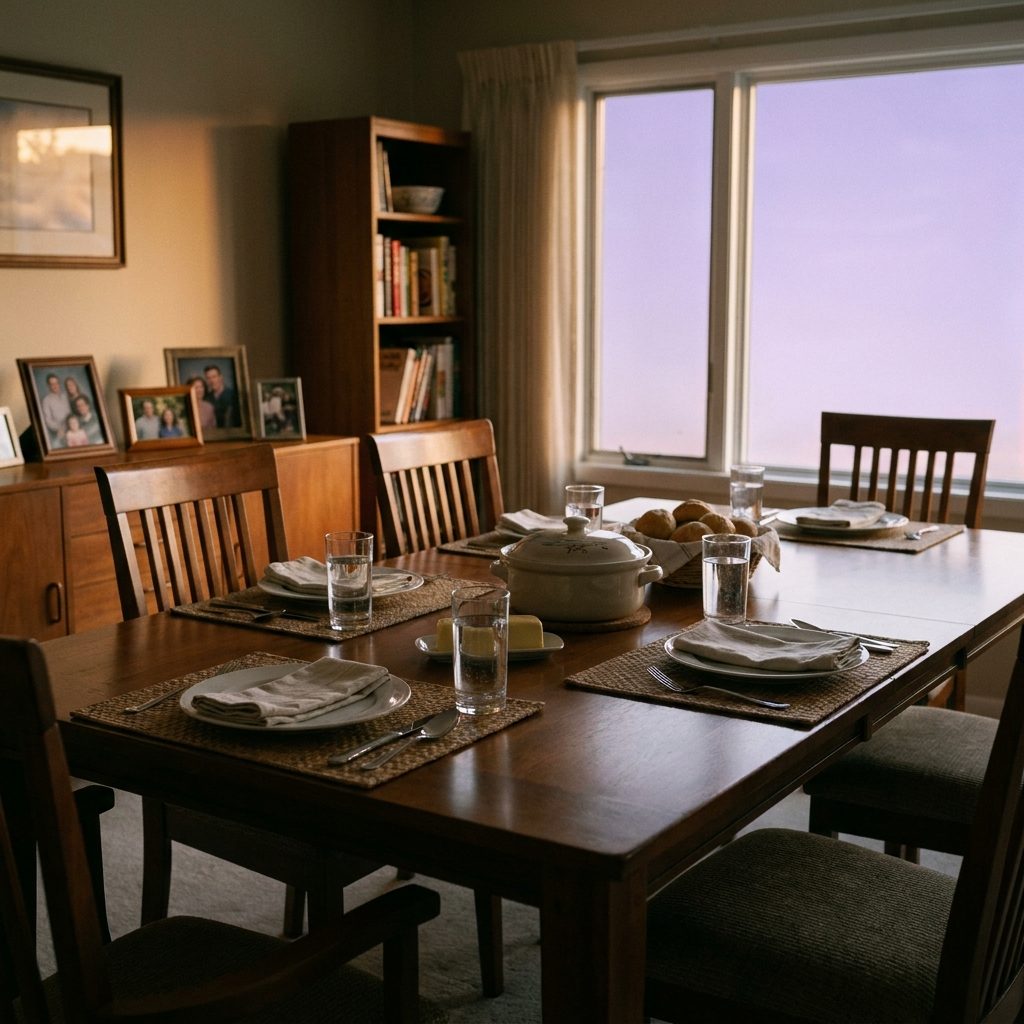
Two people are eating, but four or five placemats still go down.
The reason may be visual balance, habit, expected guests, or the memory of a larger household. For some people, setting fewer places makes a changed family structure feel newly visible. For others, the extra settings mean nothing beyond a table that looks better when it is full.
The habit can carry grief, but it does not always. The meaning belongs to the person setting the table.
Cloth Napkins as the Everyday Default
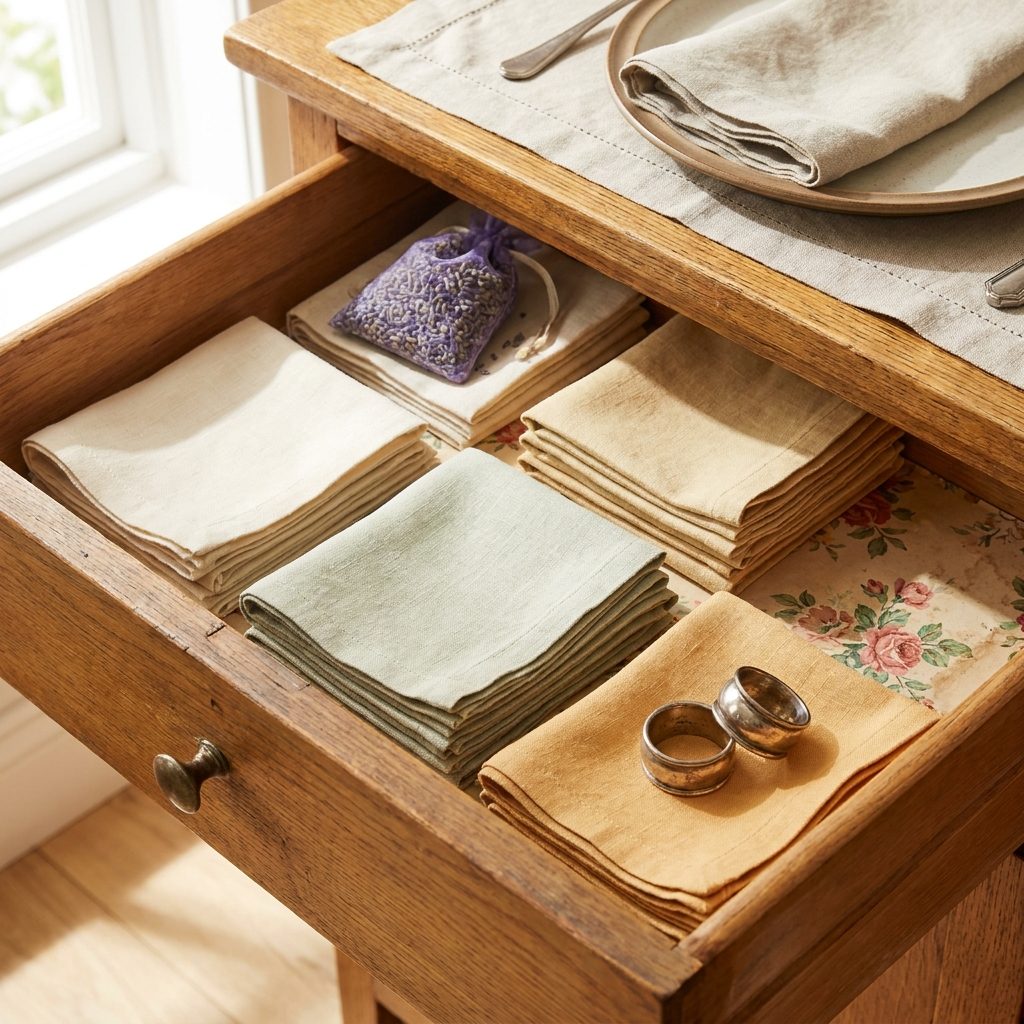
Cloth napkins for grilled cheese. Cloth napkins for the grandchildren. Cloth napkins on a Wednesday when paper would be easier.
That habit often comes from a household with a regular laundry rhythm and a linen closet built to absorb the extra work. It may also come from thrift, environmental preference, aesthetics, or the simple fact that cloth was what the family always used.
Using cloth does not prove class, refinement, or a particular kind of mother. It only shows which version of ordinary dinner became ordinary to you.
The Napkin Fold That Changes From Family to Family
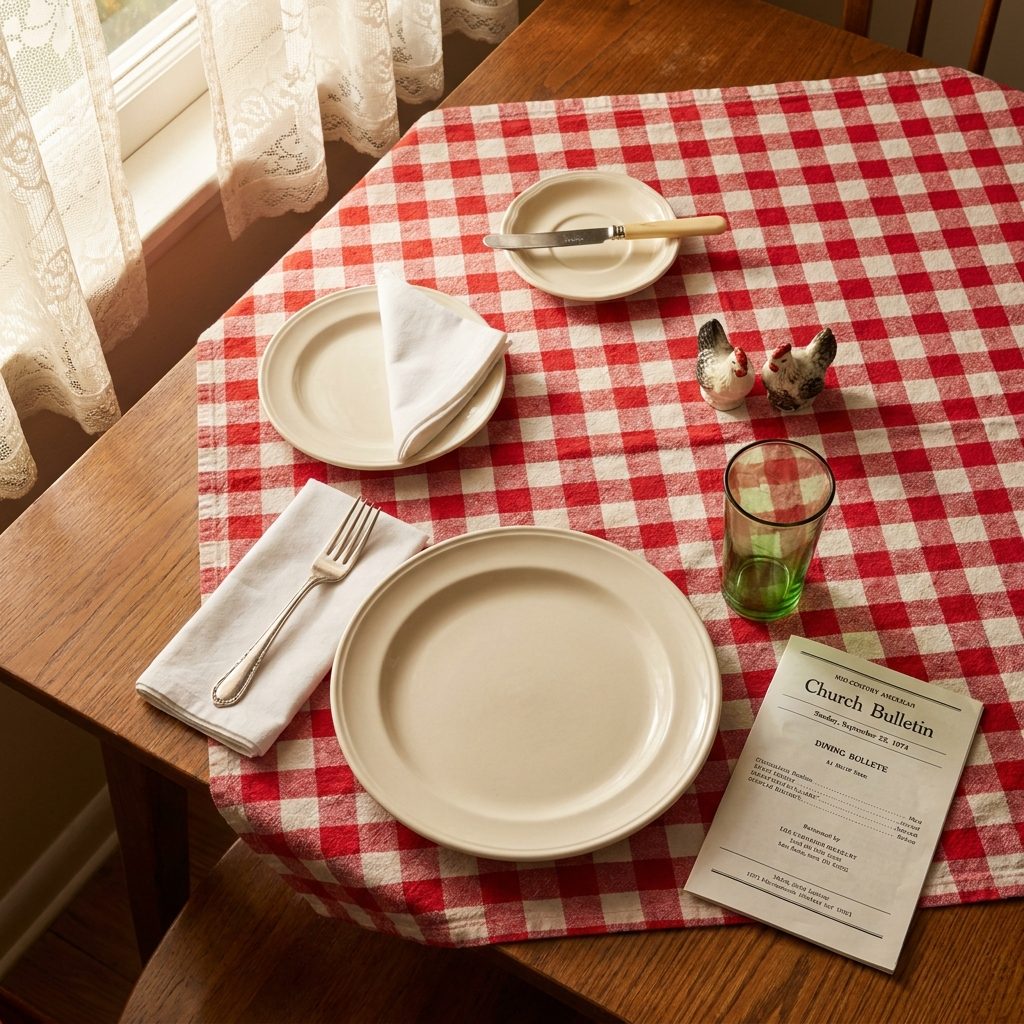
One family folds napkins into rectangles. Another prefers triangles. Someone else tucks one corner beneath the fork so it does not slide.
Those differences can feel regional because relatives and neighbors often share habits. But there is no reliable evidence that one fold belongs specifically to Northeastern Catholic households, another to Midwestern Lutheran families, and another to Southern hostesses.
The real fingerprint is usually smaller than a region. It belongs to one household, one teacher, and one table repeated often enough that the hands remembered.
The Centerpiece That Makes the Table Feel Finished
Would you like to save this?
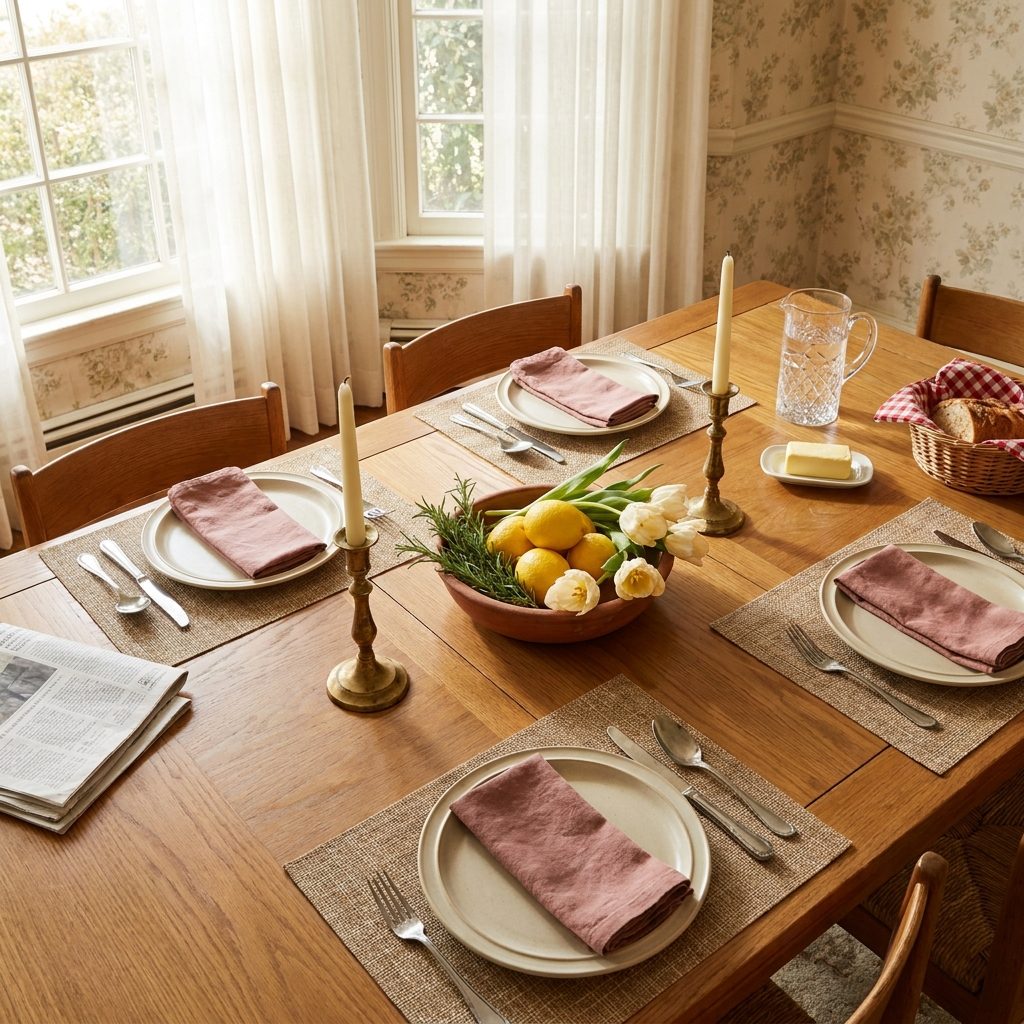
A bare table looks incomplete to some people. They add a bowl of fruit, a jar of flowers, or three lemons gathered from the counter.
Rituals and ordered arrangements can help people mark transitions and create a sense of connection. A centerpiece can perform that small job by signaling that the workday is over and the meal is beginning.
It does not reveal a hidden wound or prove that a mother used flowers to hold the household together. Sometimes the shoulders drop simply because the room now looks the way home is supposed to look.
Setting the Table Before Anyone Asks
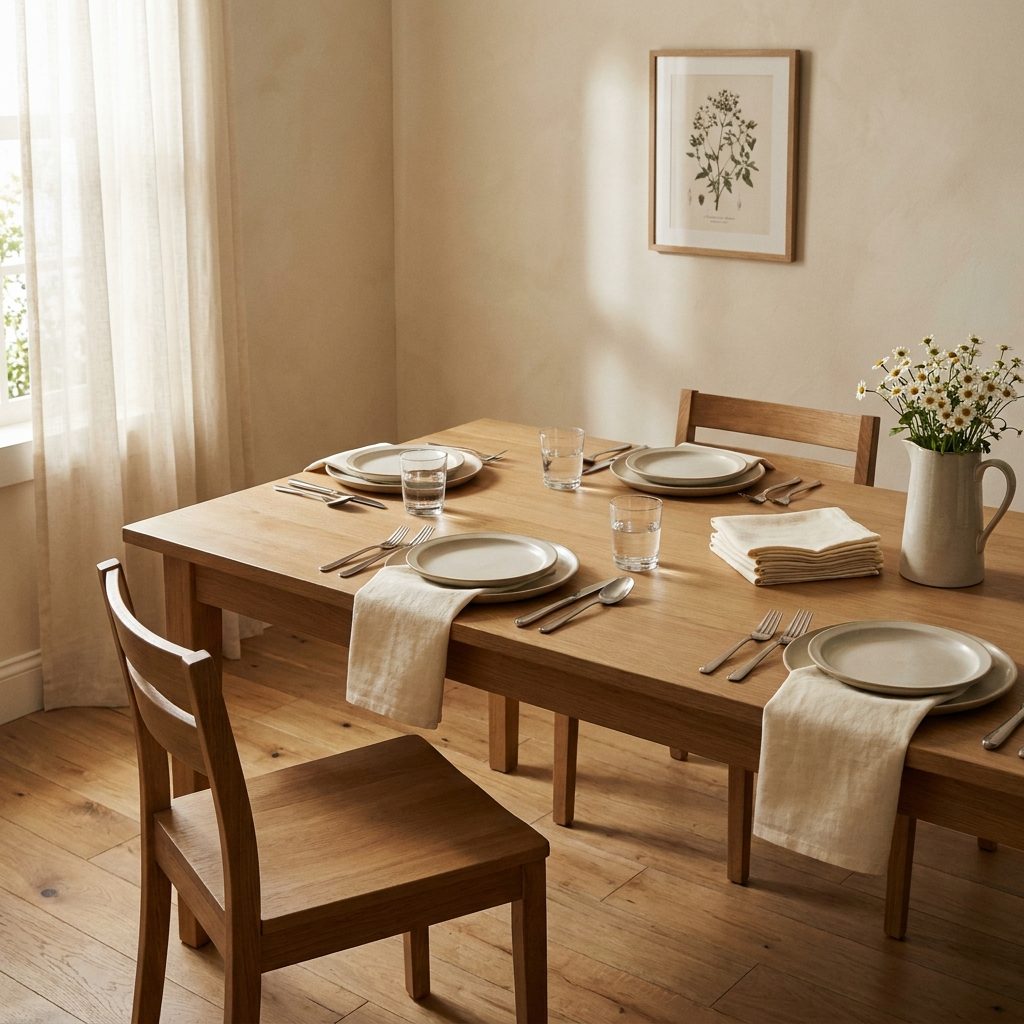
Some children become the person who sets the table without being reminded. Firstborn daughters often carried this responsibility in traditionally organized households, but the habit is not limited to them.
Ordinary chores are not automatically parentification. Parentification involves responsibilities that are developmentally inappropriate or that place a child in an adult emotional or practical role.
Setting the table may have been a simple contribution, a source of pride, or the beginning of a larger caretaker identity. The habit alone cannot tell you which.
Pulling Out the Good China for People Who May Not Notice
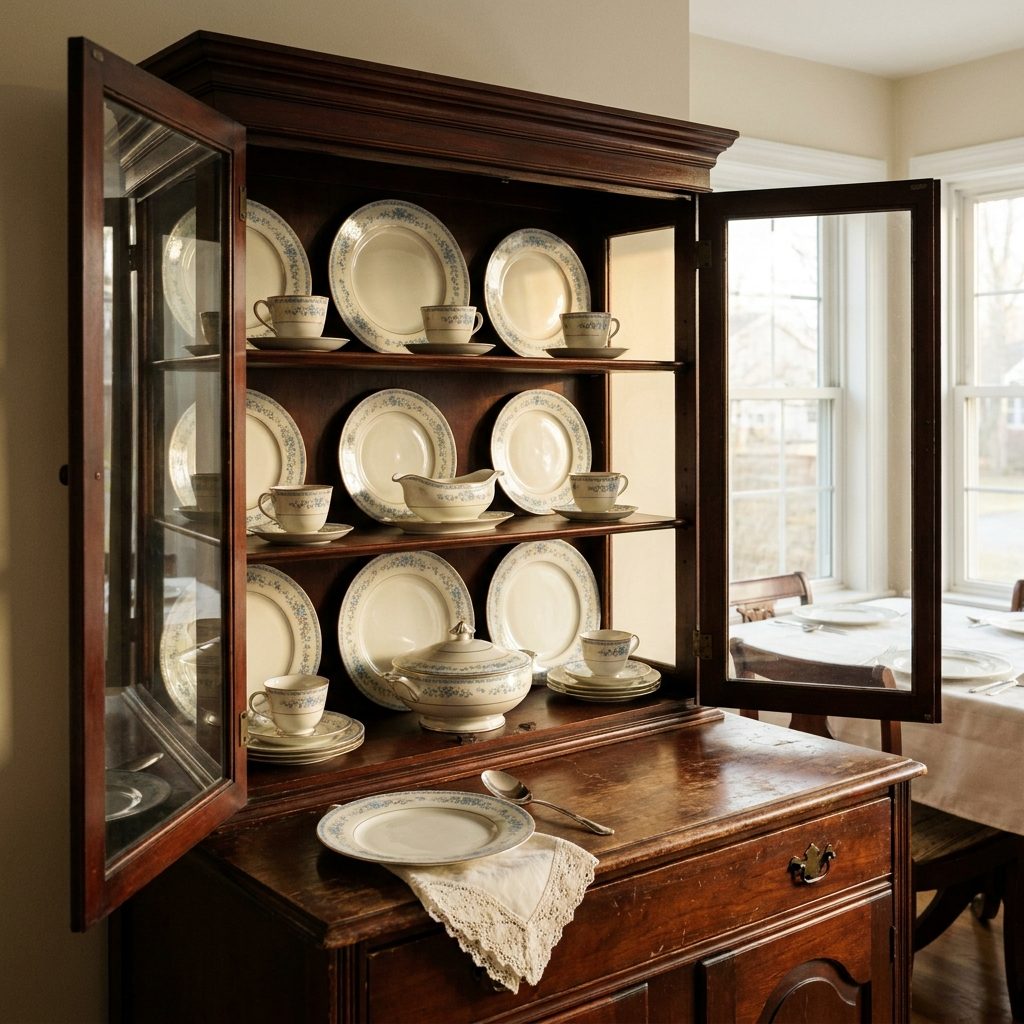
The wedding china lives in the top cabinet. It requires a step stool. Half of it has not been used in years, yet it still comes down for a dinner that would work perfectly well on ordinary plates.
Sometimes the china preserves a family tradition, completes the picture of hospitality, or finally puts dishes to use that someone else saved too carefully. It says the meal counts, even when the guests would have been just as happy with paper plates.
The china is not proof of class or emotional history. It is simply one of the clearest ways a household turns dinner into an occasion.
The Coaster Habit That Follows You Into Adulthood
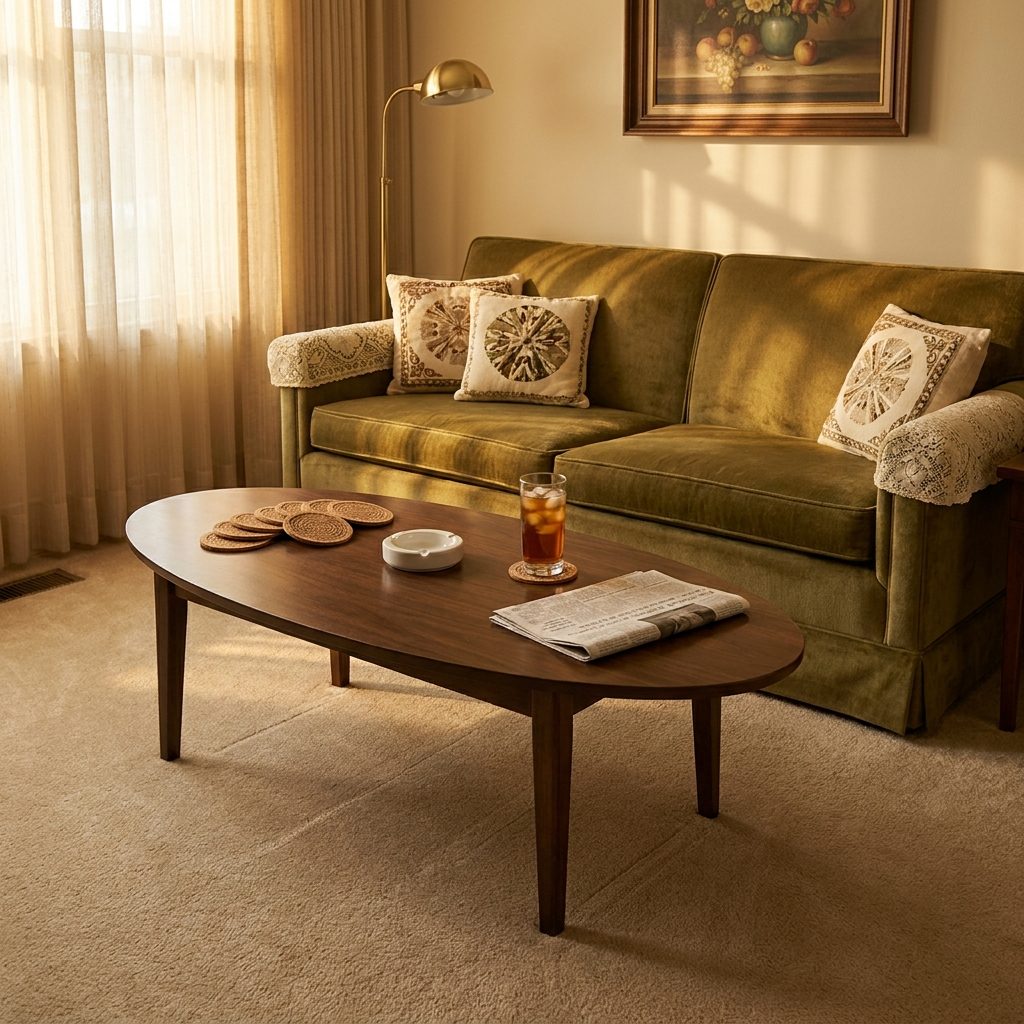
You keep coasters within reach of every seat. You may even slide one beneath a guest’s glass in the middle of a conversation.
That habit often comes from a house where water rings mattered and children heard about them early. It can reflect careful furniture ownership, a fear of damage, or nothing more dramatic than a well-repeated household rule.
The coaster does not prove that the furniture mattered more than the people. It only shows that someone taught you a wet glass leaves a mark.
The Empty Place at the Head of the Table
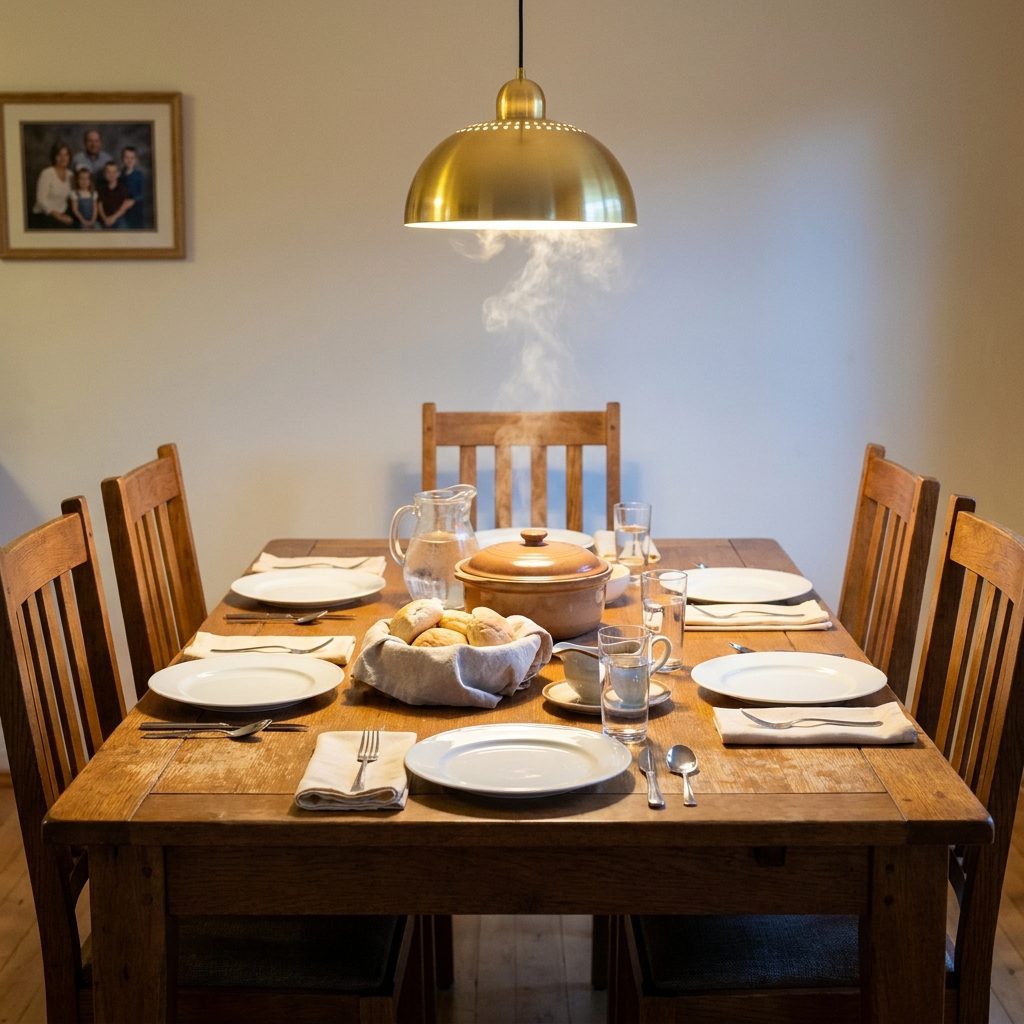
Some families continue setting the head of the table even when no one plans to sit there.
The habit may preserve a fixed seating arrangement, honor someone absent, balance the table, or simply continue a routine nobody has thought to change. For some people it carries grief. For others it carries no special meaning at all.
An empty place can feel full of history, but the history belongs to the household. The setting itself cannot tell the whole story.
The Saving Habits Associated With Depression-Era Households
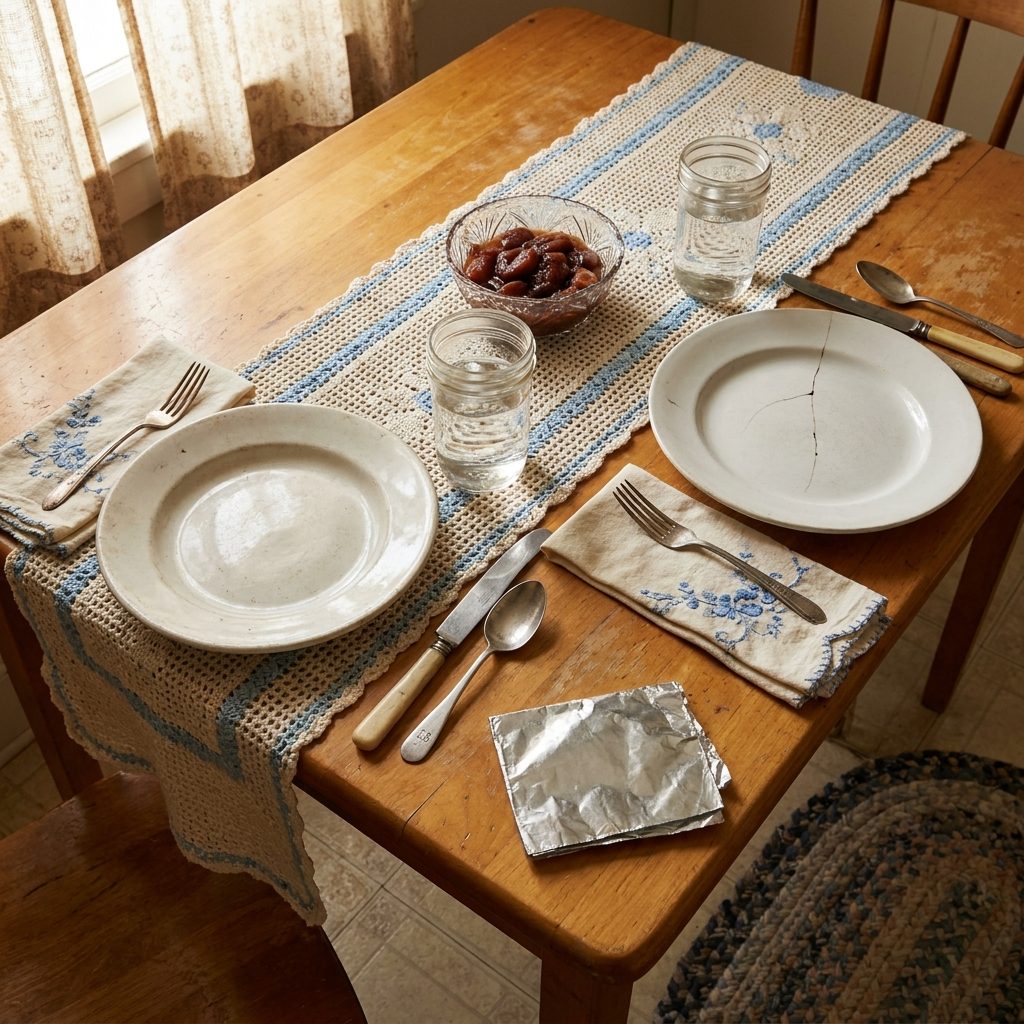
A clean paper napkin gets folded and saved. Foil is rinsed. Linens are patched. Nothing useful leaves the house without an argument.
People reused household goods long before the Great Depression, but that era became especially associated with visible habits of saving, repairing, and making do. Those habits often survived because children watched them every day.
Reusing one napkin does not prove a Depression-era grandmother. It may reflect thrift, scarcity, environmental concern, or plain dislike of waste. The behavior is old; the family story attached to it is specific.
The Final Walk Around the Table
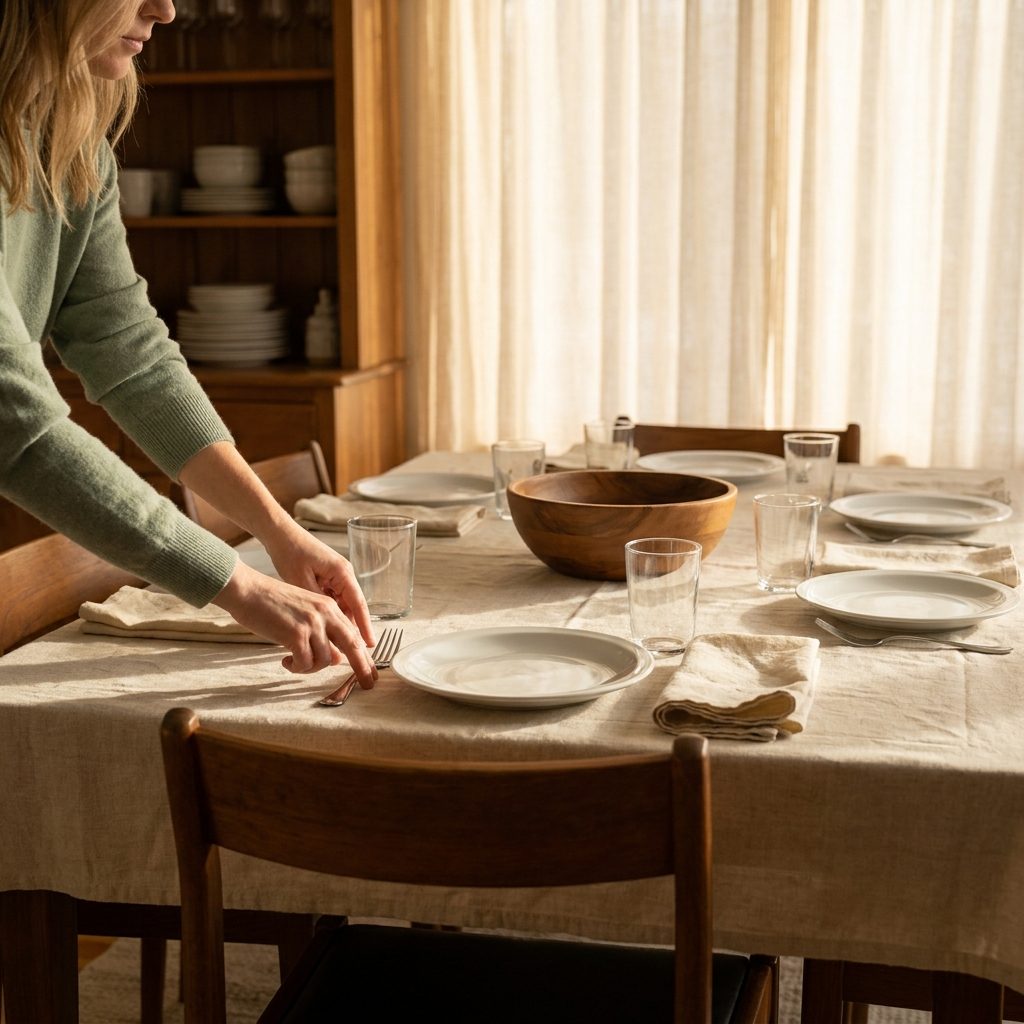
It happens in a few seconds.
Someone circles the table, straightens one fork, rotates a glass so the chip faces away, nudges the salt closer to the pepper, and pulls out a chair.
The gesture survives because ordinary behavior is learned through repetition. Nobody needs to announce the rule when a child has watched it happen a thousand times.
The final adjustment may come from a mother, father, grandparent, restaurant job, etiquette class, or habit developed alone. The hands remember the version of a finished table they have seen most often.
The way you set a table is not a complete map of your childhood. It is something quieter: a collection of learned movements, practical preferences, and family echoes that still appear whenever dinner begins.