Would you like to save this?
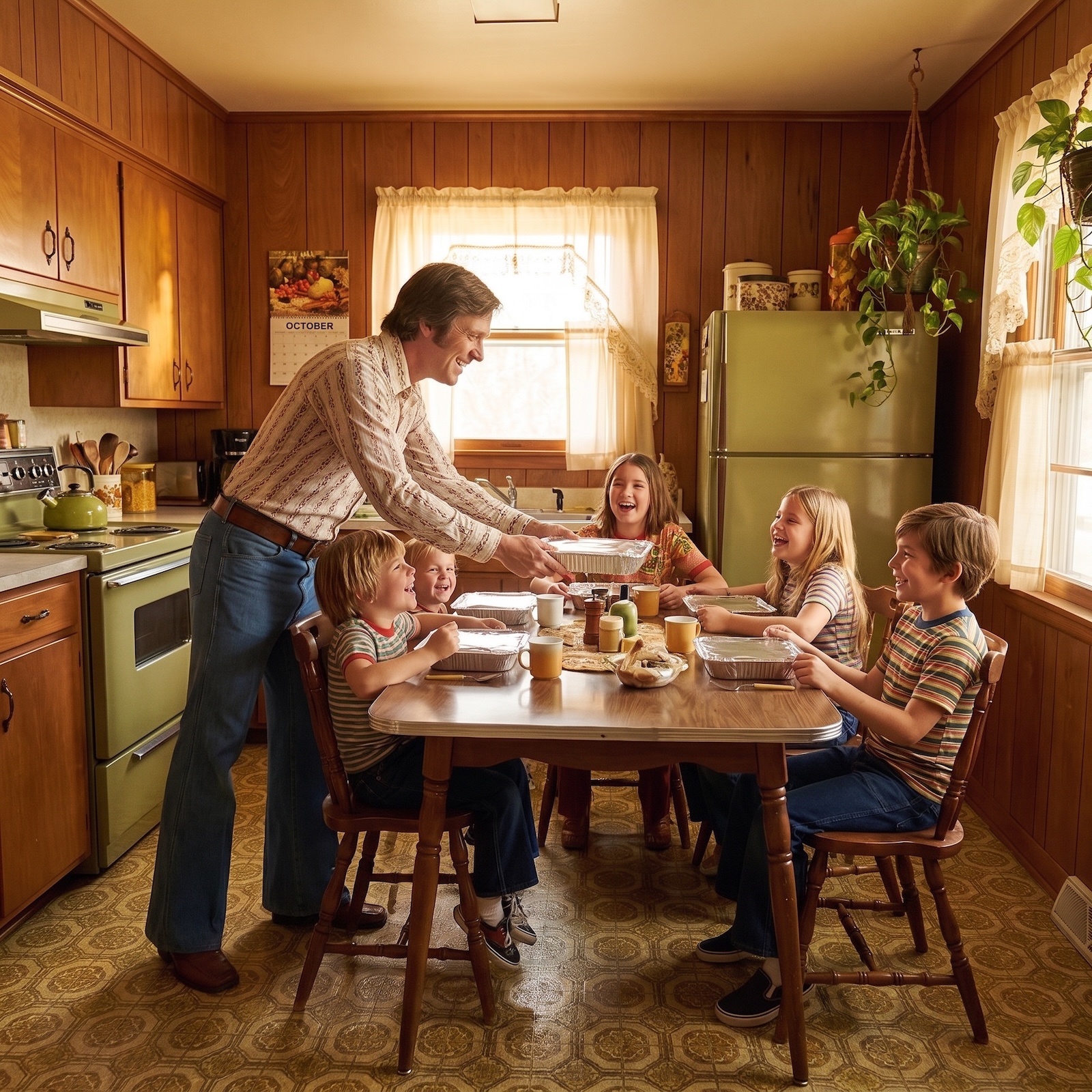
The foil went taut and shiny over its little compartments, and the whole thing felt heavier than dinner had any right to. Mom slid it onto the middle rack, shut the oven door, and the kitchen clock began the slowest half hour of the week. Soon the house smelled like Salisbury steak, hot gravy, and whatever mystery vegetable had been assigned to the corner compartment.
Then came the ceremony: the crackle of aluminum, the rush of steam, and the first look at whether the brownie had survived. These were the small rituals that turned a frozen brick into a Tuesday-night occasion.
32. The Foil Tray Heavy Enough to Feel Like You Were Carrying Something Important
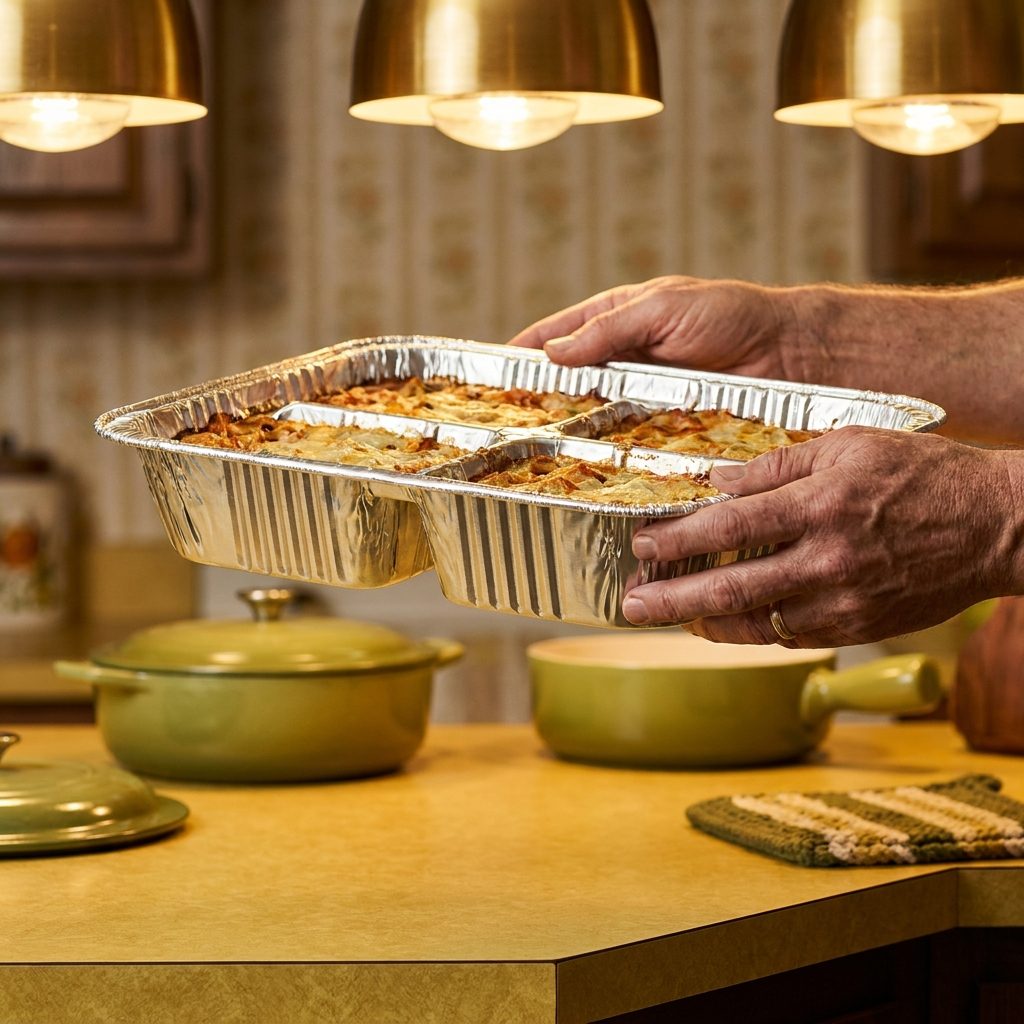
Nobody warns you about the weight until you’ve held one. Cold from the freezer, ridged under your thumbs, stamped compartments crimped into something that sat in your two hands like a tiny metal briefcase. You carried it to the oven with your arms straight out, the way you’d carry a cake you didn’t fully trust yourself with.
And those edges. Sharp enough that every kid in America got the same speech about watching your fingers, and every kid ignored it at least once—usually while peeling the crimp back for a look at what was underneath. Then, before it hit the trash, you’d give the empty tray a glance. Shiny, dented, a little grease-stained. It earned that half-second of respect.
31. Peeling Back the Foil and That First Rush of Steam
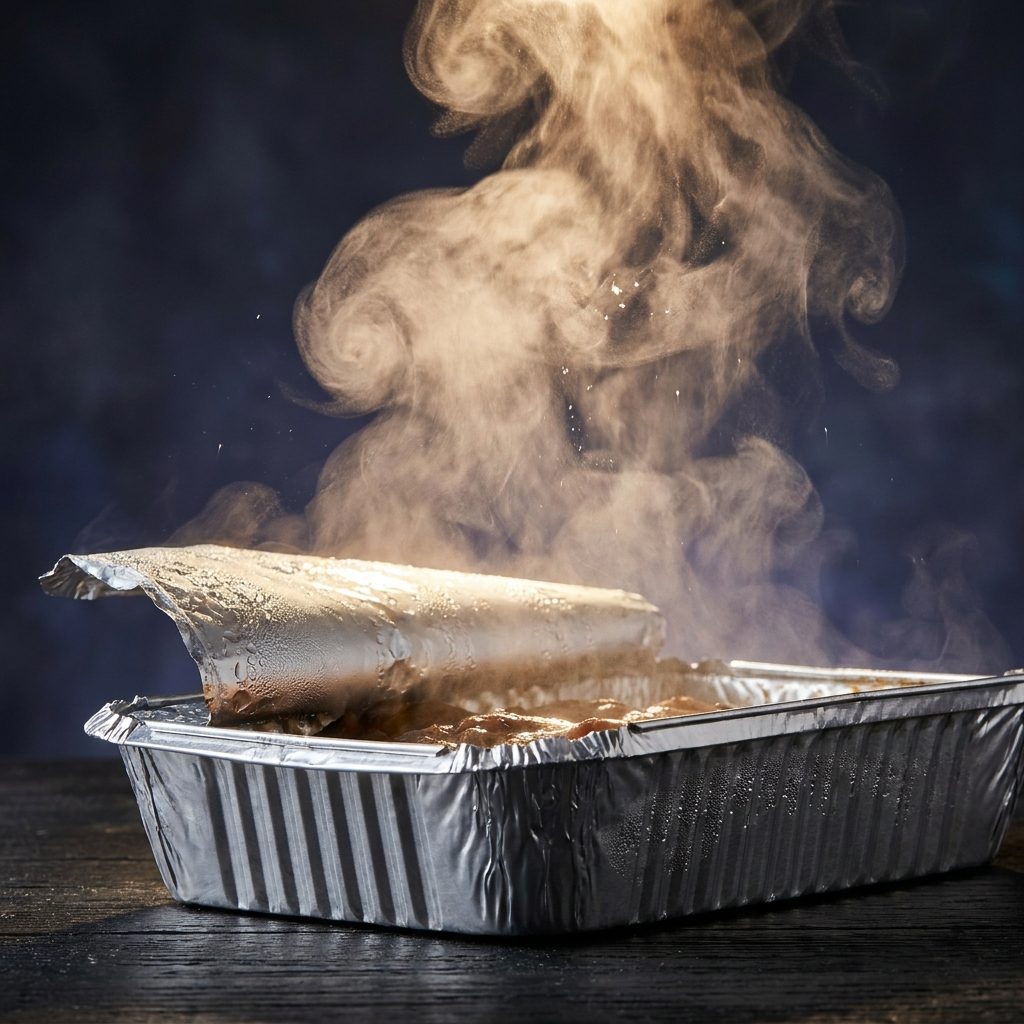
This was the part you waited for. The foil came off in one slow, crackling motion, and a hot cloud of steam hit you in the face carrying every smell at once.
You learned fast to peel from the far corner so the steam went up and not at your knuckles. I burned my fingers more than once being impatient. Worth it. That first look at what was actually under there—potatoes puffed up, gravy bubbling—felt like unwrapping something.
30. The Divider Walls That Kept the Gravy From Staging a Coup
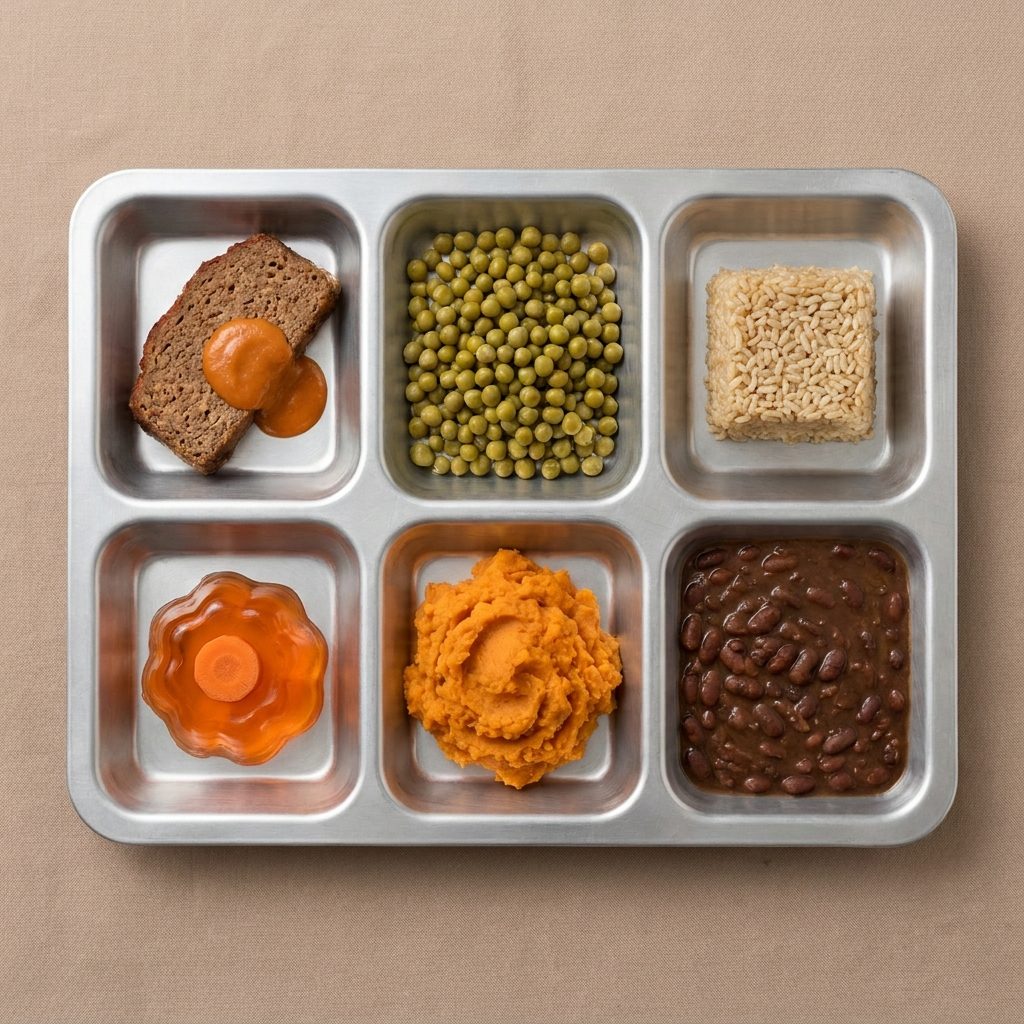
Corn on one side, meat and gravy on the other, and a little aluminum moat between them holding the line like it took the job personally.
I hated food touching as a kid. The tray was the only thing in my life that agreed with me. On a regular plate the gravy always found a way over—it crept into the peas, pooled under the fruit, ruined a perfectly good dessert with meat runoff. Not here. Each compartment stayed in its lane, so you could eat one square clean and move to the next without anything conspiring against you along the way. Some nights that felt like the most organized dinner in the house, which, honestly, says something about the rest of the house.
29. The Oven Preheat That Started 45 Minutes Before You Were Hungry
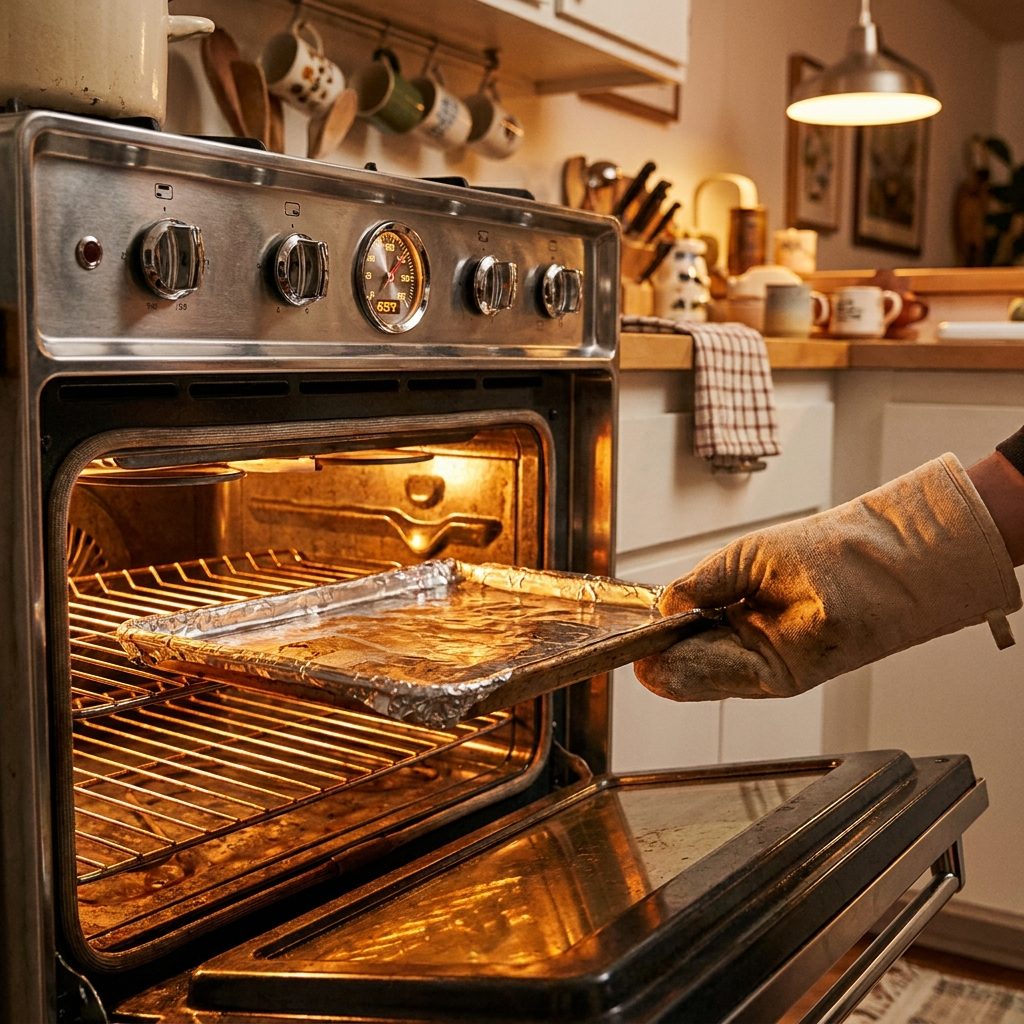
425 degrees. After the first few times you never read it off the box—it lived in your head, filed next to your phone number and your bike lock combination.
Depending on the box, the tray went onto the oven rack or a baking sheet. Foil on metal, the door swinging shut, and that was that. You were committed.
Microwaves existed, and ownership grew through the decade, but most TV-dinner nights still ran on the slow clock, and you planned the whole evening around the fact that food took time and the oven wasn’t going to negotiate about it.
28. Waiting 30 to 45 Minutes While Your Stomach Complained
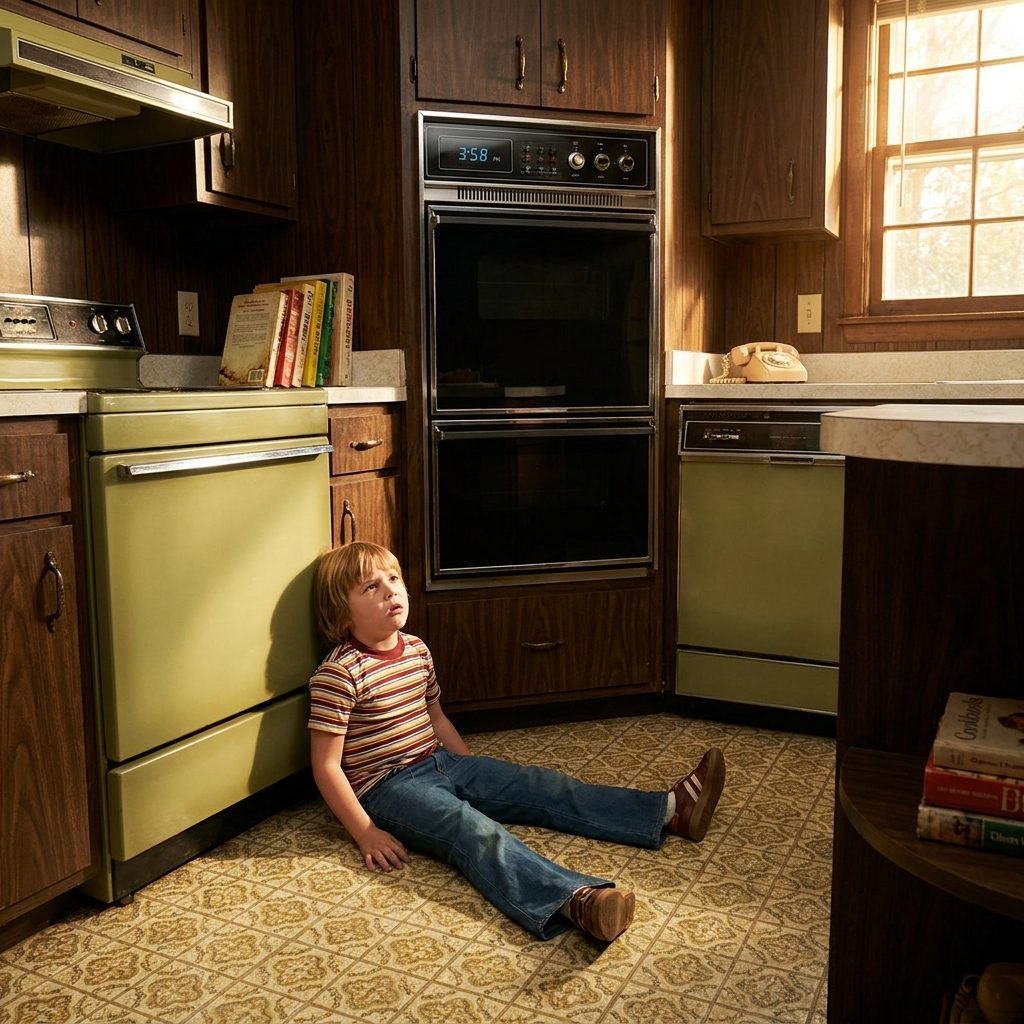
The box promised half an hour, and that half hour crawled. You’d already set up the tray and picked your TV spot, and dinner still sat in the dark cooking away, indifferent to how hungry you’d gotten.
Nothing you did made it faster. You checked the clock, then checked it again, and somehow the last ten minutes lasted longer than the first thirty.
27. The Oven Window Vigil Nobody Assigned You To

Forty watts of amber, tops. Behind the glass sat your tray, doing absolutely nothing you could measure, and you knelt on the kitchen linoleum anyway. Elbows on the door handle, nose close enough to feel the heat come off the glass, you waited for the foil to admit that something was finally happening under there.
Watching never sped it up. I knew that even then and stared anyway. There was a job in it—self-appointed, sure, but real. Nobody was pulling that dinner early on your shift. That little rectangle of light was the only television in the house worth watching before the real one flickered on.
26. Eating Dinner in Front of the TV, Which Was the Whole Point
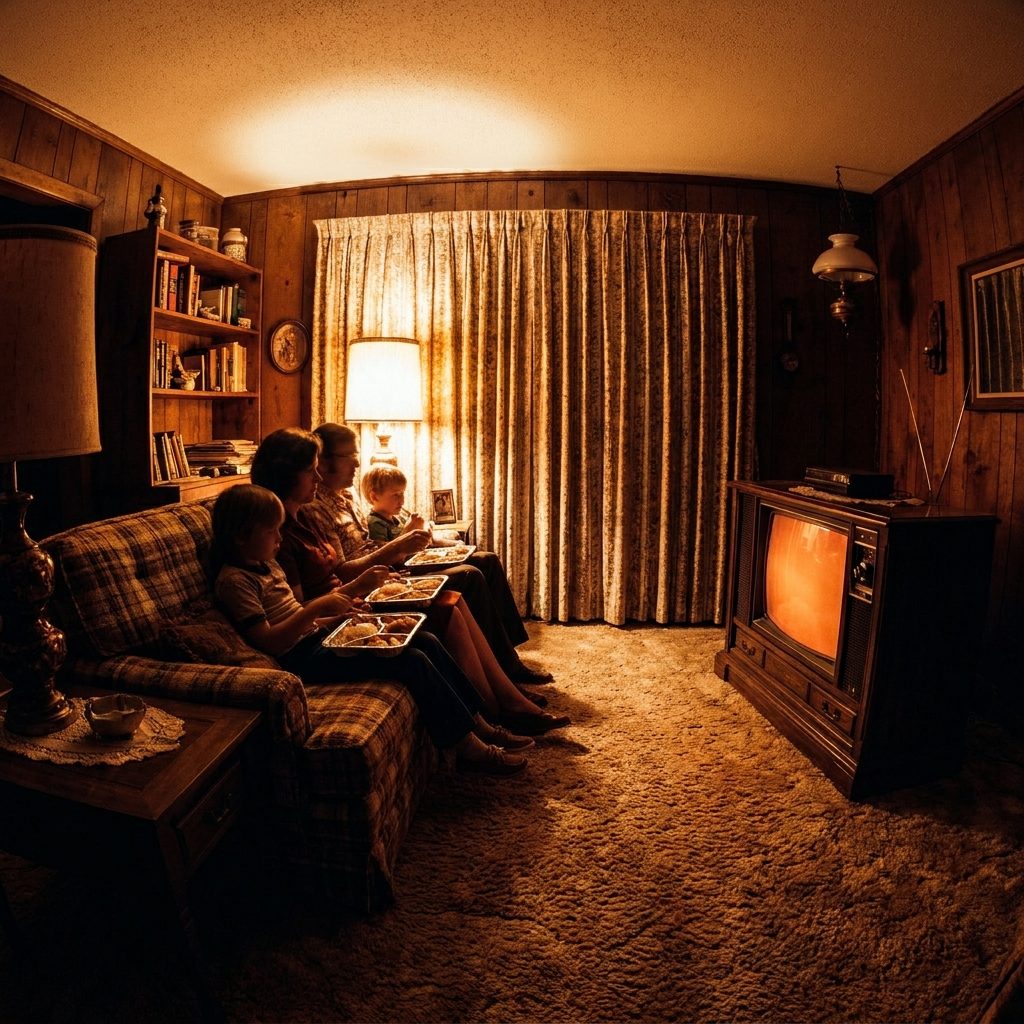
The clue was right there in the name. This was food you were meant to eat while the television did the talking, and for once nobody fought you on it.
You lined the tray up with the recliner, angled your seat toward the console set, and settled in. Dinner and the show ran on the same schedule. It felt a little like getting away with something—and a little like the modern world had finally shown up in your own living room.
The dinner table went quiet on TV-dinner nights, because the show was the conversation.
25. Fold-Out TV Trays With the Wood-Grain Top and Wobbly Legs
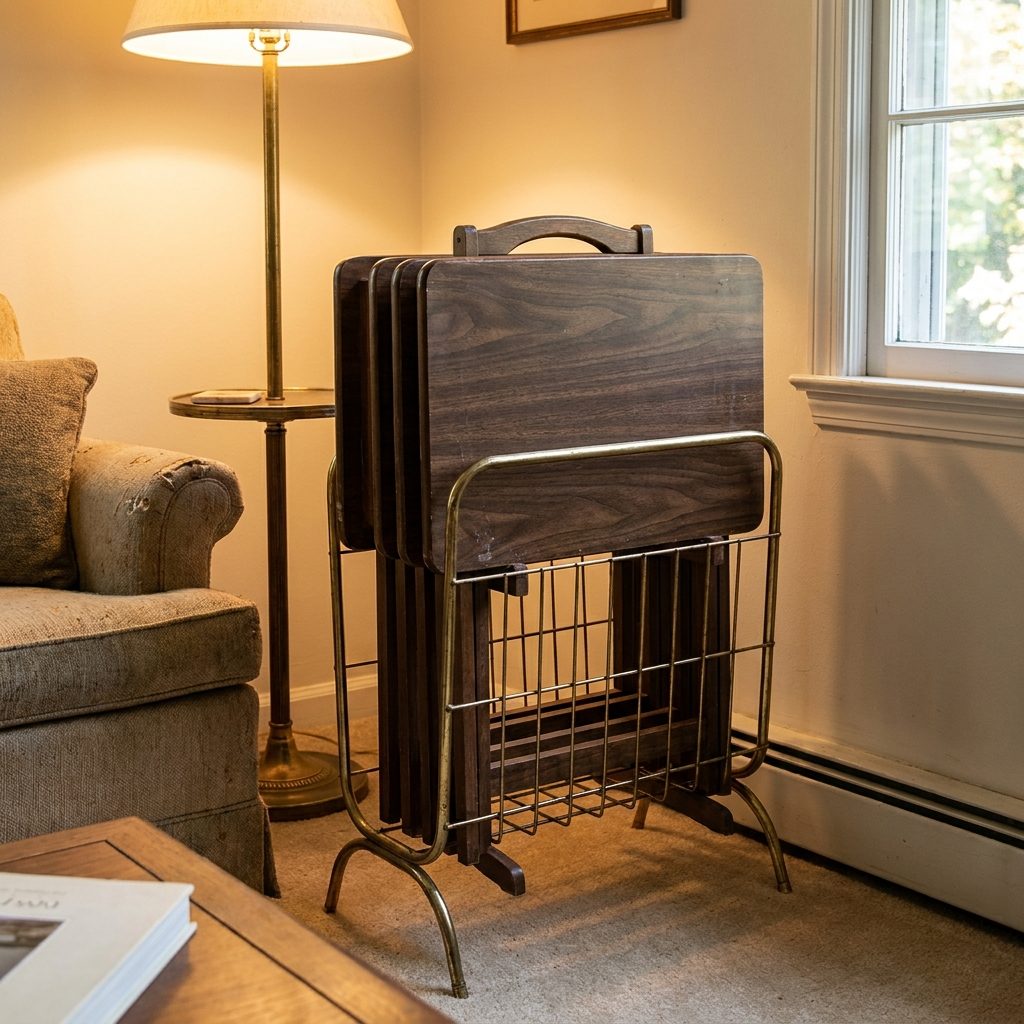
They came as a matching set of four, nested in a little wire stand in the corner, waiting for exactly these nights. You’d carry yours over, snap the legs open, and pray it held.
The tops wore fake wood grain or gold floral patterns, and at least one leg always locked funny. So you learned not to lean on it. Set it up wrong and the whole dinner threatened to slide into the shag.
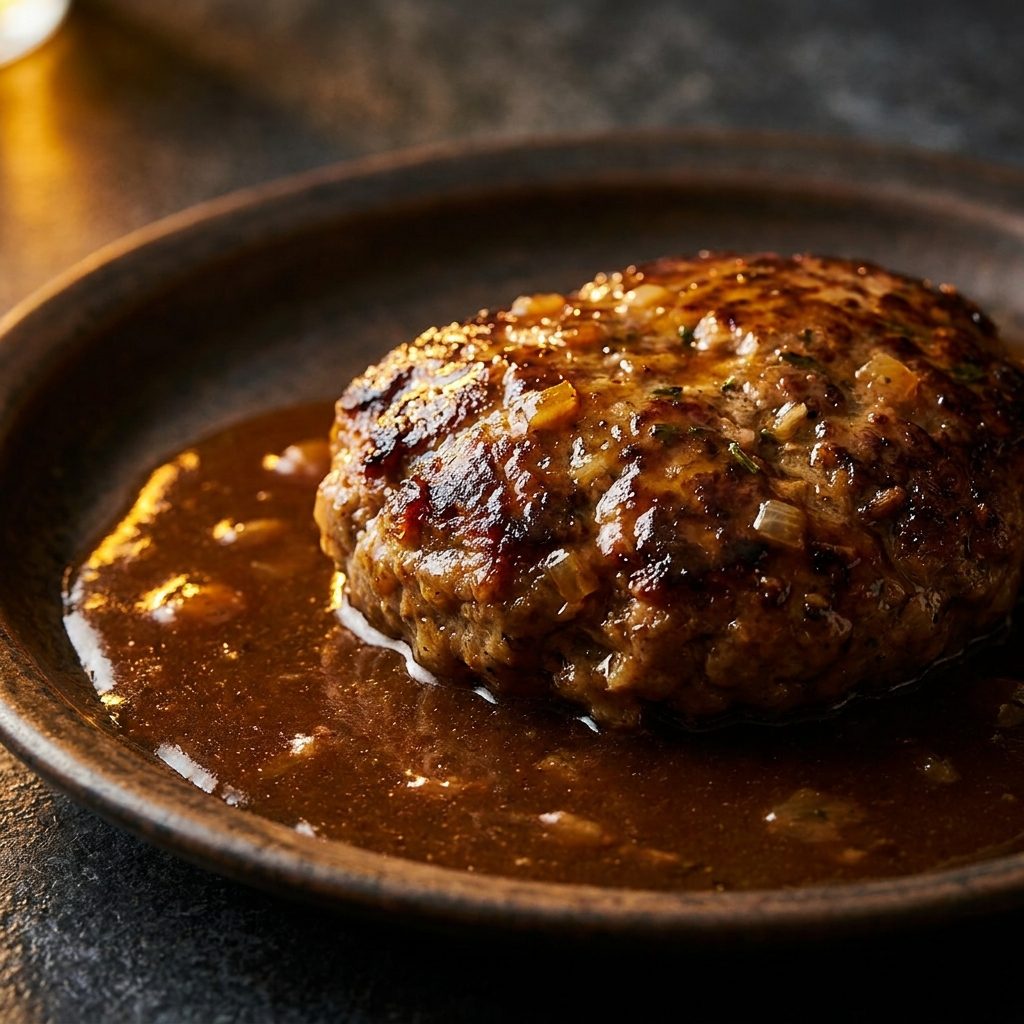
24. The Salisbury Steak You Picked When You Wanted Dinner to Feel Grown-Up
Would you like to save this?
You knew the gravy before the fork got there. That brown pool spread across the patty and seeped toward the potatoes until the whole compartment was one savory puddle nobody complained about.
Salisbury steak was the sophisticated order—the one you reached for when a plain drumstick felt beneath the occasion. It never matched the picture on the box. That stopped mattering somewhere around the second bite, when you dragged a forkful of potato through the gravy and decided the wait had paid off. The gravy did more work than the meat. I mean that as a compliment.
23. Fried Chicken That Somehow Stayed Crispy-ish Under the Foil
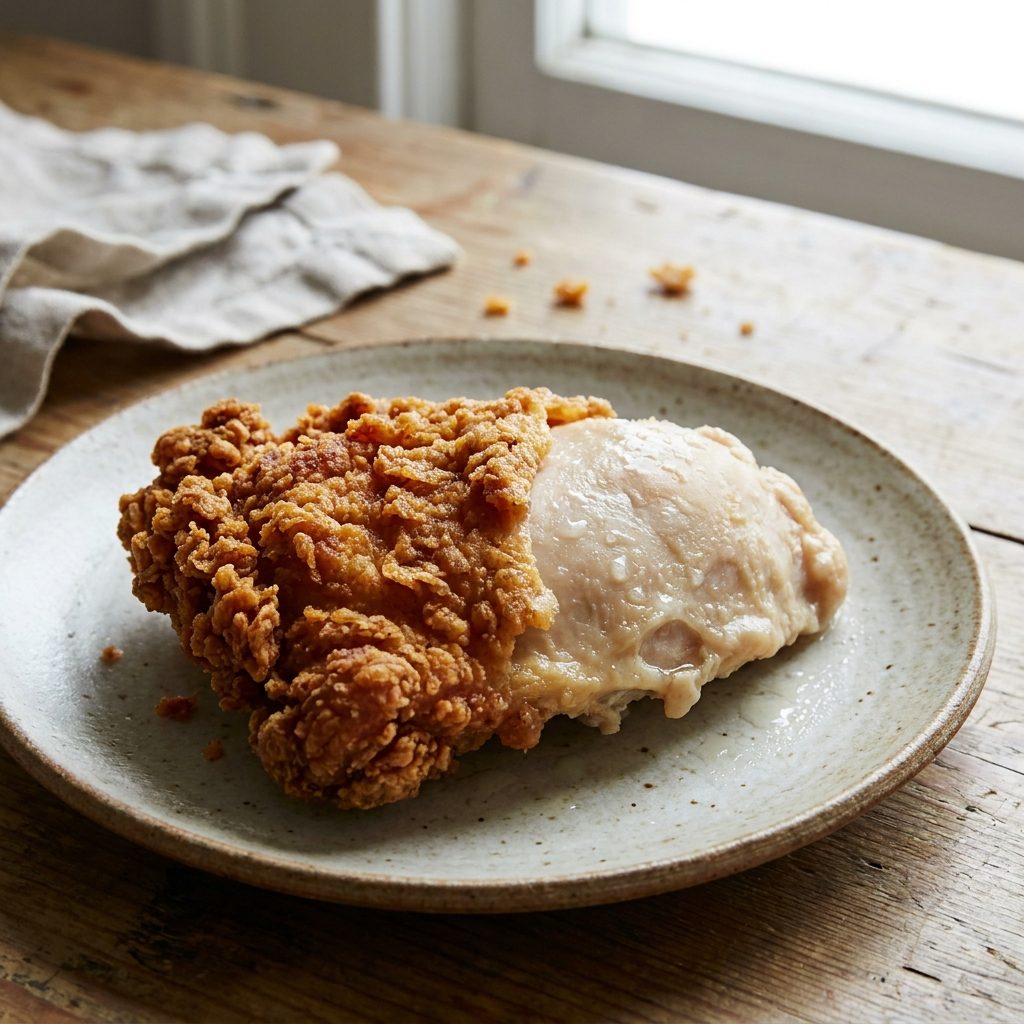
Everyone had an opinion on whether the fried chicken counted as crispy. It didn’t, really—not after forty minutes sealed under foil. Nobody cared.
The crust went a little soft, a little steamed, and it still tasted like the good version of dinner. You picked it up with your fingers, which felt slightly forbidden at the table but perfectly fine parked in front of the TV. Corner cobbler waiting, gravy potatoes on the side, a Friday show queued up. That was a good night.
22. Turkey With Gravy That Tasted Like a Weeknight Thanksgiving
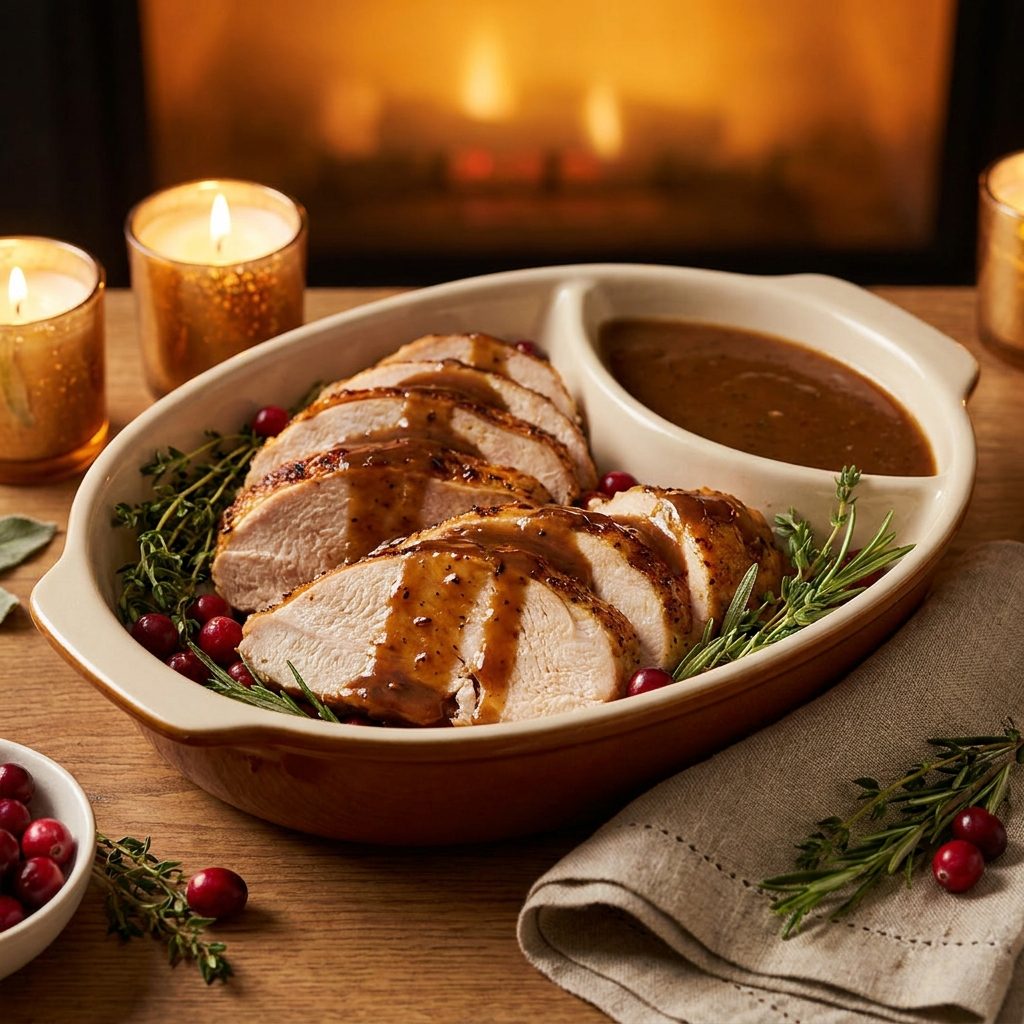
Turkey dinner was one of the freezer aisle’s familiar standbys, and Mom bought a stack whenever the price dropped. The turkey came in slices thin enough to see through, laid flat under gravy the color of unfinished drywall.
It didn’t taste like Thanksgiving. Not really. But it tasted like the idea of Thanksgiving, and on a Tuesday in February that was plenty. The gravy set up a skin if you let it cool, so you ate the turkey compartment first, fast, before it turned.
21. The Meatloaf Nobody Requested and Nobody Sent Back
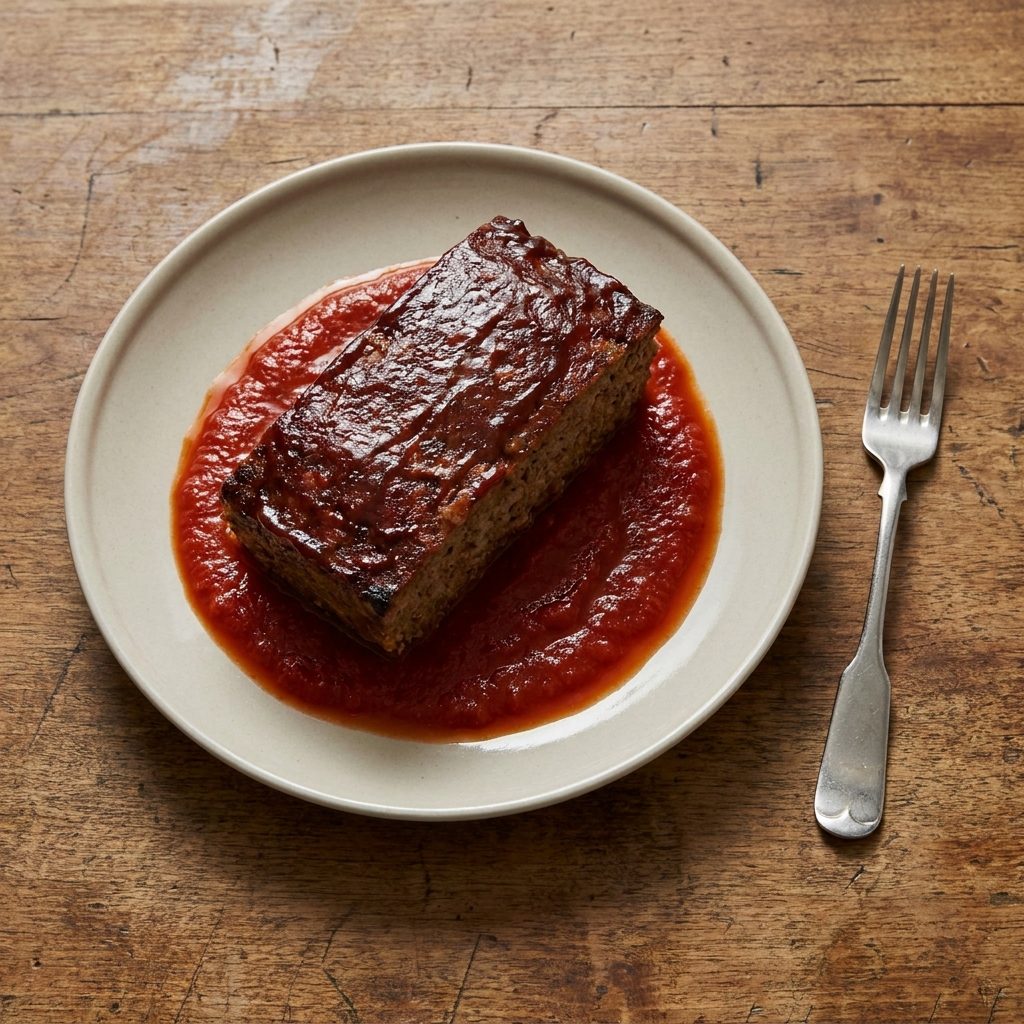
Meatloaf never had fans. It had acceptance, which isn’t the same thing. A dense little brick under a red glaze, sitting there like it knew it wasn’t the fried chicken tray but showed up anyway.
That glaze was the problem, and also the reason anybody put up with it. By the time the foil came off, the tomato sauce had wandered clear across the compartment to pool against the divider, clearly plotting its escape into the potatoes. I never stopped it. Never wanted to. I’d drag a forkful of mashed potato straight through the red on purpose. No argument required; the combination worked.
20. Fried Fish With a Breading That Went Soft on One Side
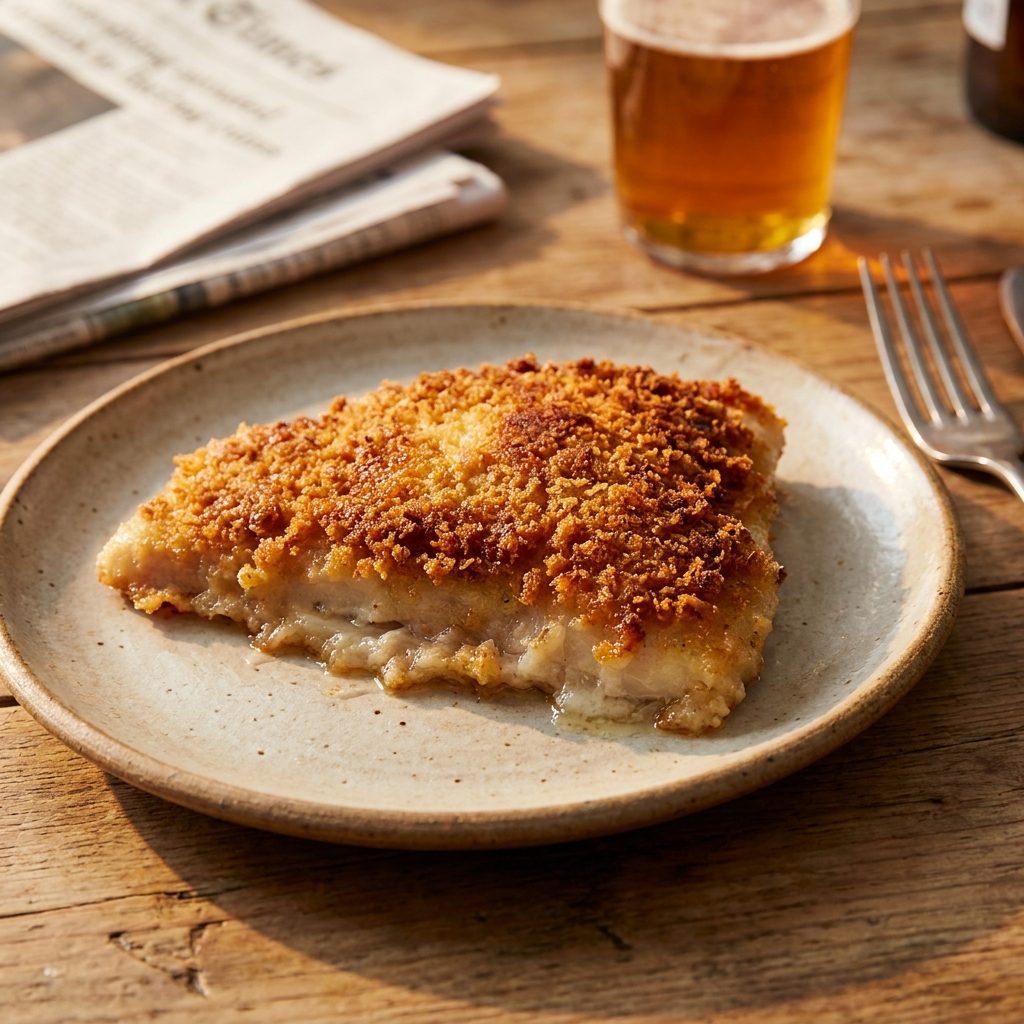
In many Catholic households, the fish dinner was a Friday thing.
The breaded fillet came out golden on top and faintly damp underneath, where it had sat against the foil steaming instead of crisping. You ate the crunchy half first, because even as a kid you understood the good part didn’t last.
There was usually a tartar sauce situation that never arrived, so you improvised. Ketchup. A shake of the salt packet. Whatever was on the TV tray. The fish held its own.
19. Mashed Potatoes With a Crust Like a Contour Map
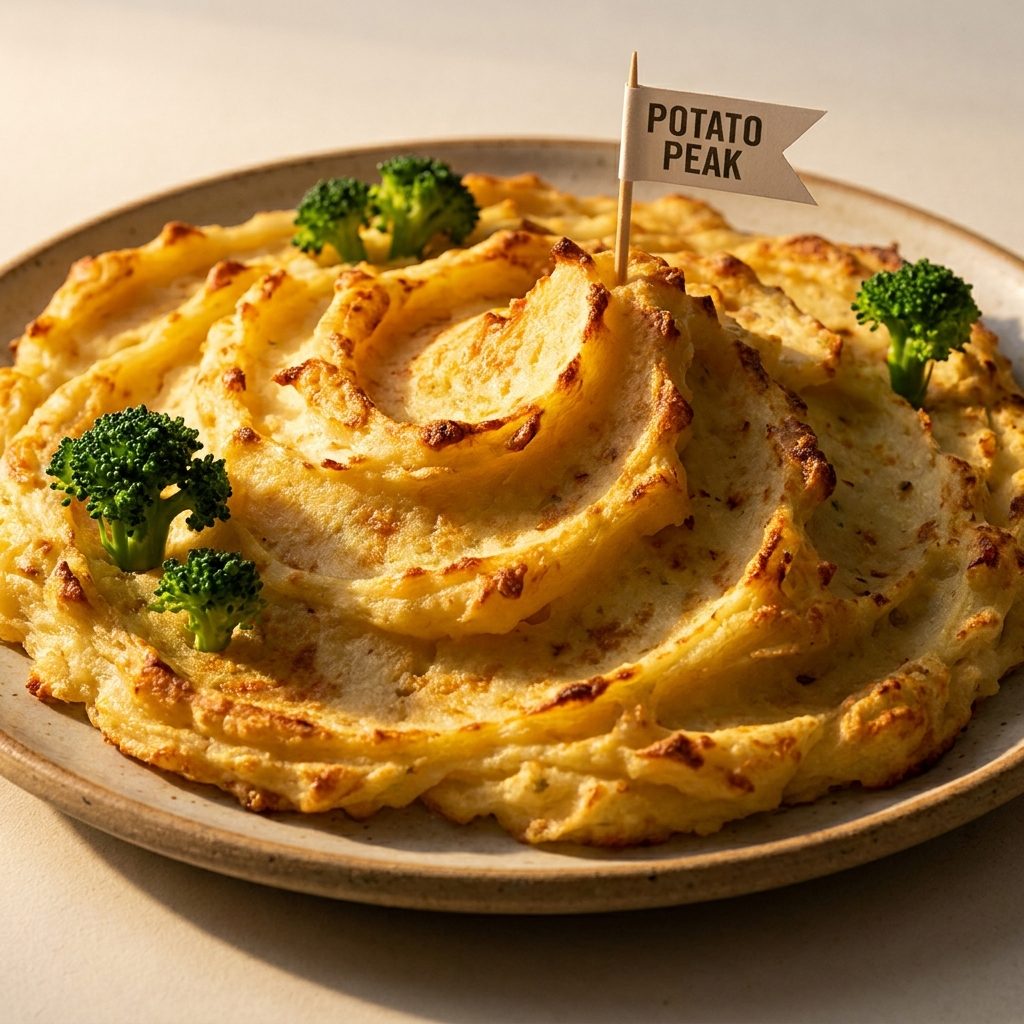
The mashed potatoes deserve their own paragraph, and here it is. Whipped into little peaks at the factory, then baked until the tips went golden and the surface cracked into a topography of crusty ridges and soft valleys.
You dug through the crust with your fork and hit the fluffy stuff underneath, still steaming. If you were lucky, a pat of margarine had pooled in the middle. And they soaked up whatever gravy or tomato had wandered over from the main compartment, which is exactly why they were the best part of most trays.
18. The Vegetable Compartment You Were Assigned, Not Asked About
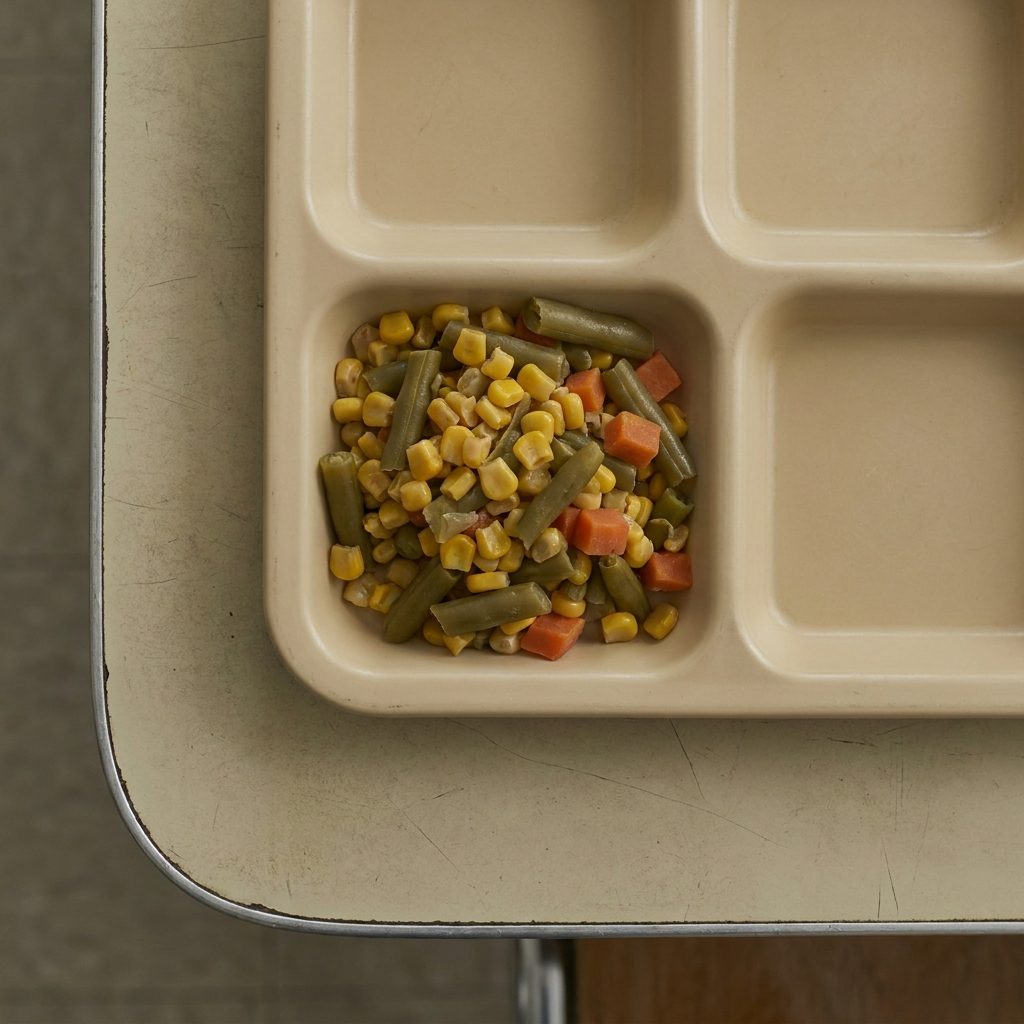
Nobody at the freezer aisle sat you down and offered options. Your vegetable arrived pre-decided, riding shotgun with whatever entrée you’d already committed to.
Corn was the lottery ticket—bright, a little buttery, sweet enough that it vanished before anything else on the tray. You rooted for corn.
Mixed vegetables were what you got when luck sat this one out. A sad little mob of diced carrots, peas, and green beans, all soaking up the same faint tin taste the tray lent everything it touched. So you saved them for last, or nudged them around with your fork and prayed nobody noticed. They stayed put anyway. That compartment existed for one reason: to remind you this counted as dinner, whether you finished it or not.
17. Macaroni and Cheese Bubbling Orange at the Edges
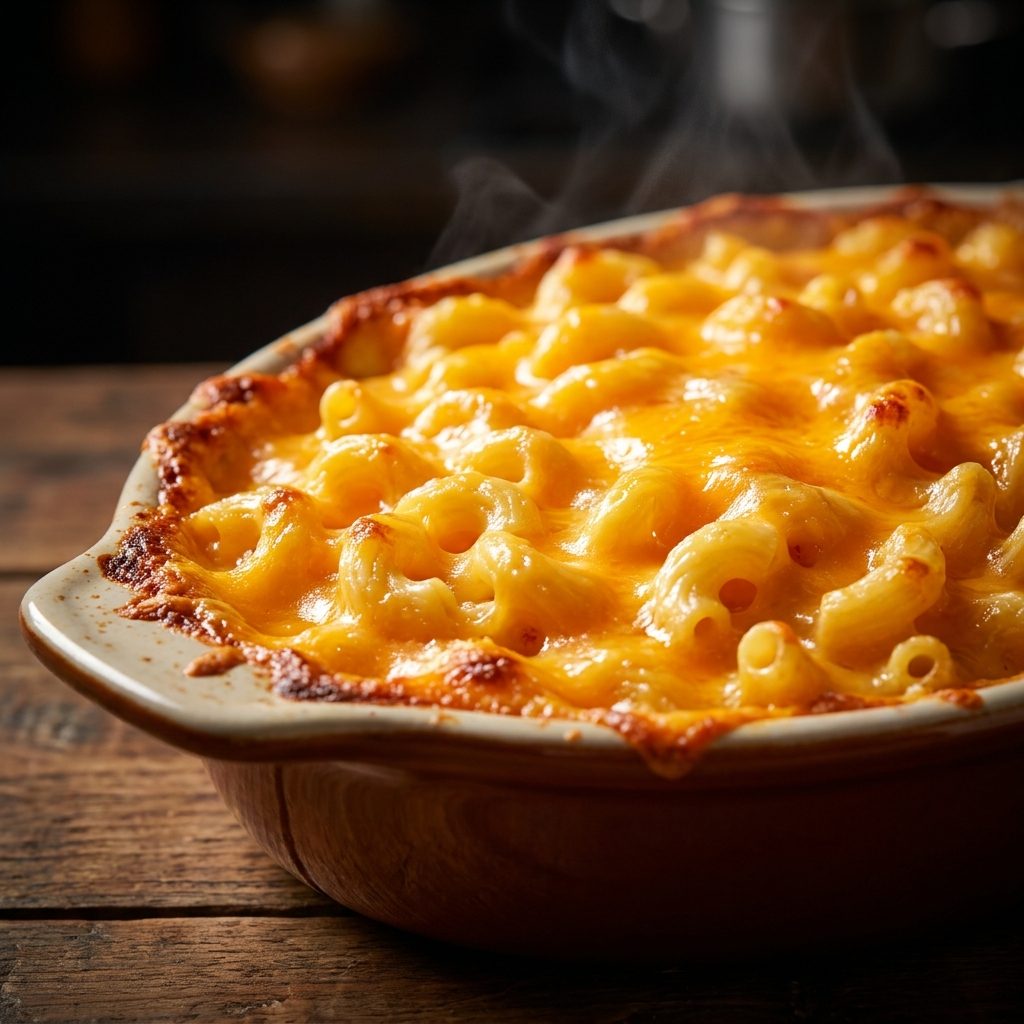
This was the compartment kids negotiated over.
The mac and cheese came out a shade of orange that exists nowhere in nature, bubbling at the edges where it had crept up the foil wall and started to brown. Those crispy edge bits were the prize. If you had a sibling, you divided them like a treaty.
It wasn’t the mac your grandmother made, and it didn’t try to be. Dense, salty, faintly gluey, and completely satisfying in the way only food eaten off a metal tray in front of the TV can be.
16. The Brownie You Poked to See If It Survived the Oven
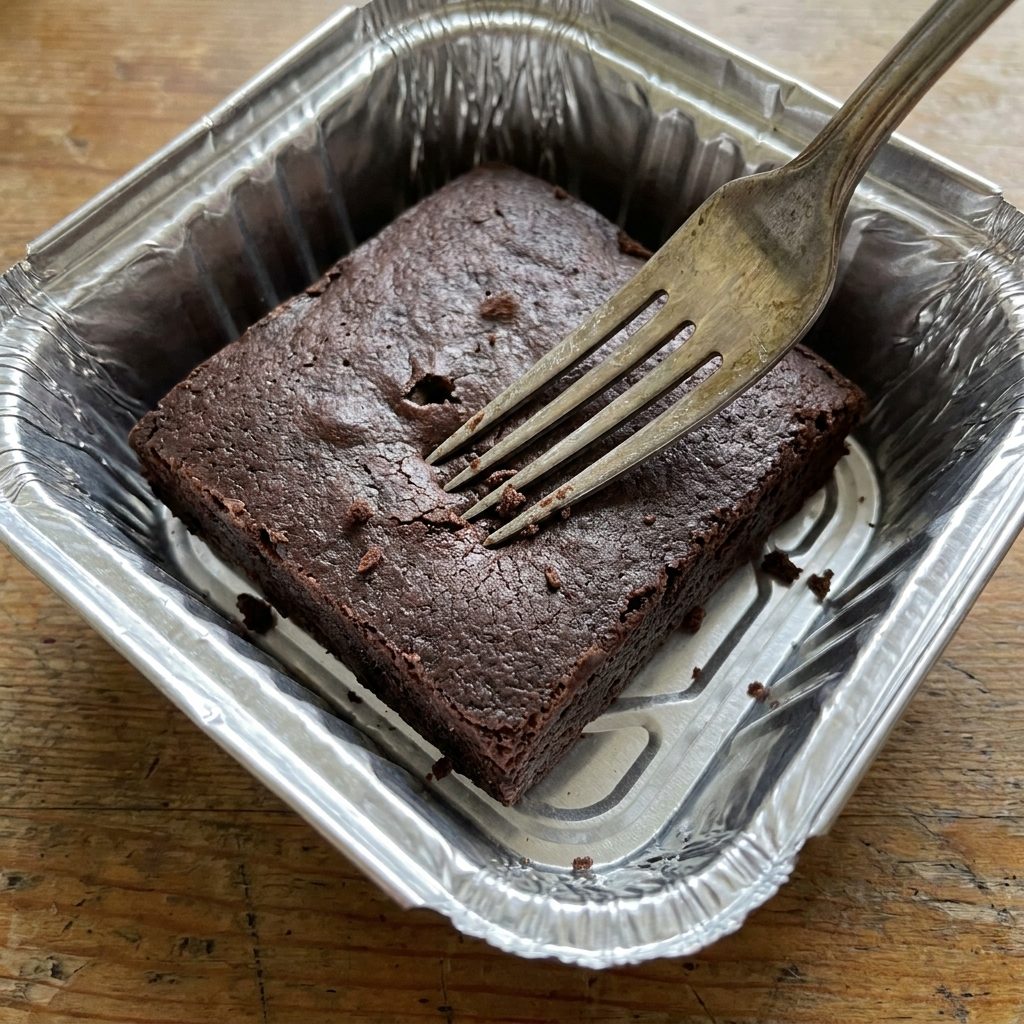
Every dinner ended with the same small experiment: press a fork into the brownie corner to find out which kind you’d been handed. Soft and fudgy meant you’d won. The one that clanged against the tines? The oven had gone too long again, and now you owned a chocolate brick.
Nobody threw it out. A hard brownie beat no brownie, and there was a strange satisfaction in prying the dense square loose in one piece, no crumbs, no casualties. Warm chocolate off a hot tray, earned by sitting through a meal you didn’t ask for. You kept your end of it.
15. The Apple Cobbler That Never Respected the Divider Wall
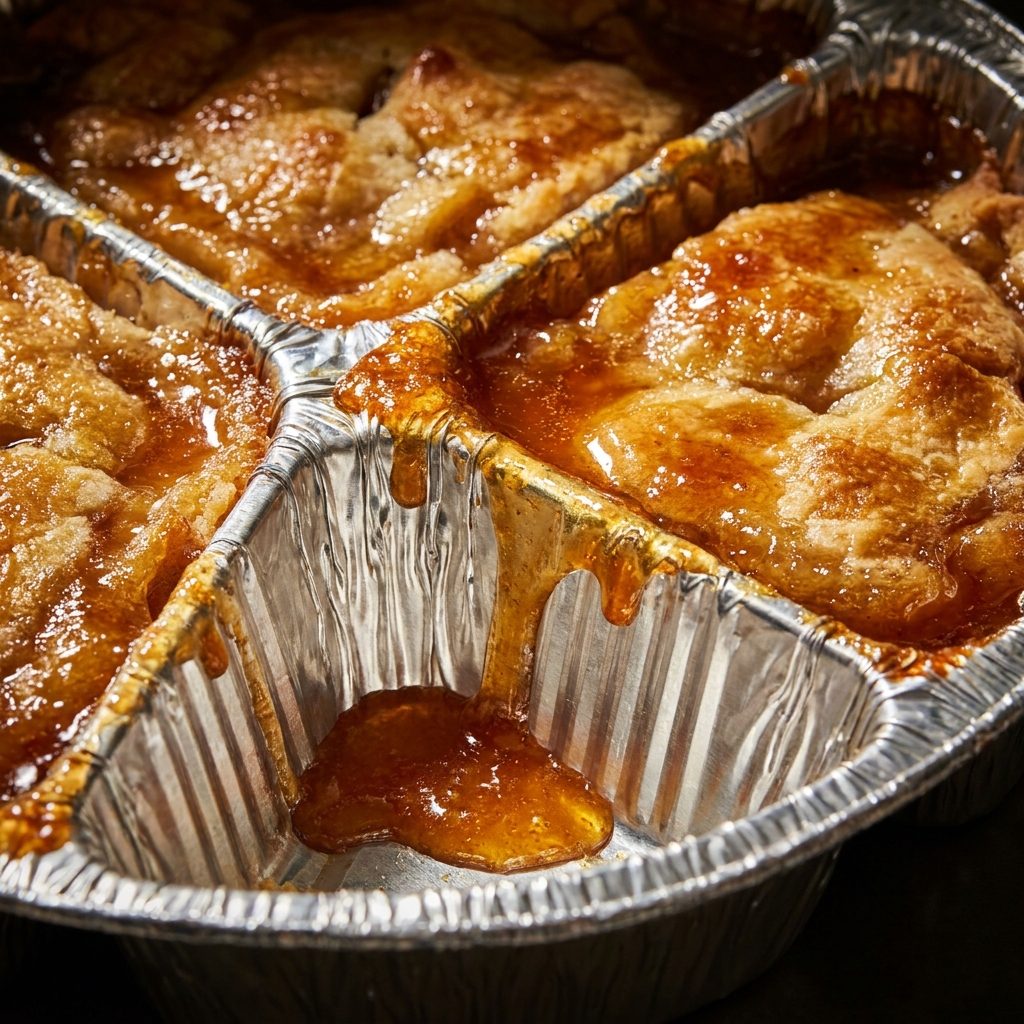
Every foil tray had one rule: stay in your compartment. The apple cobbler didn’t read the memo, and it came out of the oven bubbling like a tiny volcano while that syrup went hunting for the weakest seam in the aluminum.
Nine times out of ten it found the potatoes. You’d tilt the tray to slow it down and only make it worse, so eventually you gave up and let cinnamon apples pool against your Salisbury steak. Soft warm fruit under a crumb that had gone half-soggy. Eaten with the same fork that just left the gravy, no less. Nobody complained. That was simply how cobbler traveled.
14. Tiny Portion Sizes That Somehow Filled You Up Anyway
Would you like to save this?
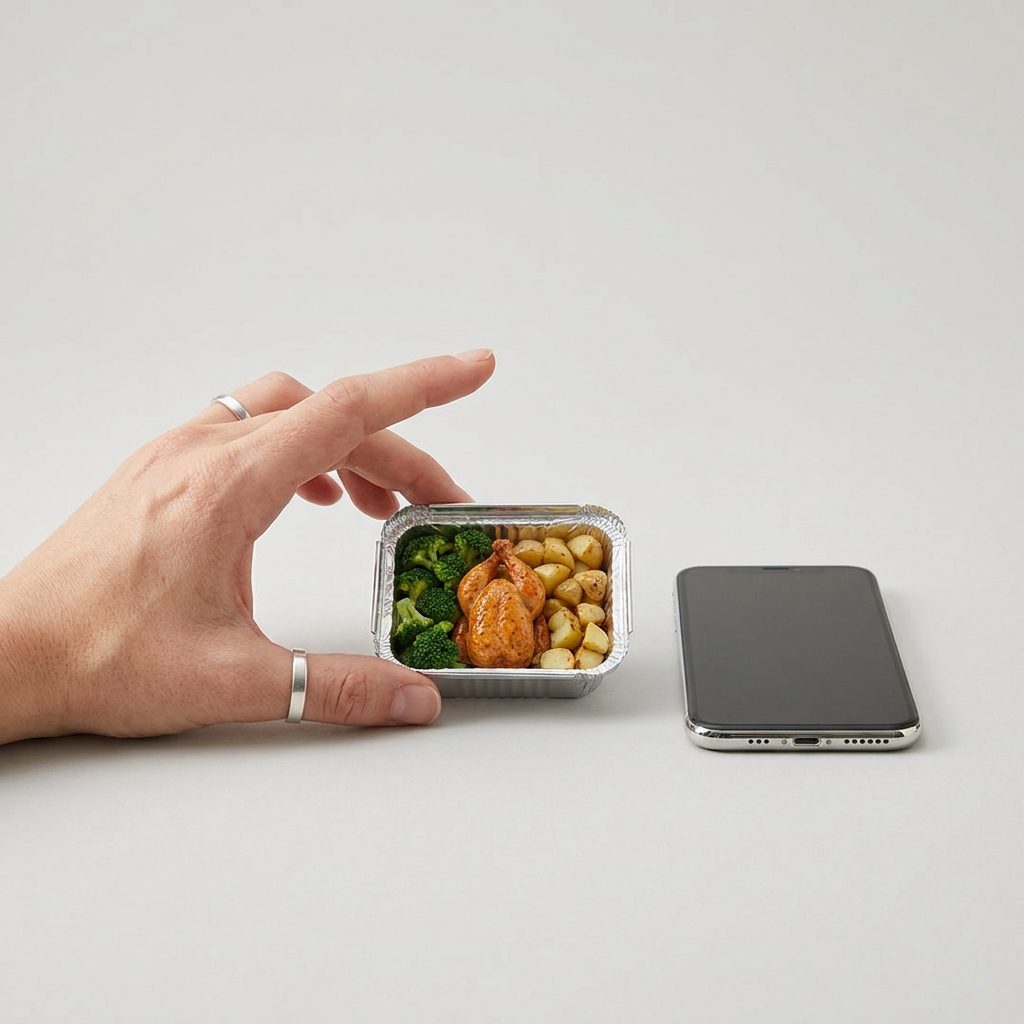
Look at one of those trays now and you’d wonder how it counted as a meal. The compartments were small, and the tall dividers did a lot of the visual work. A slice of turkey, a scoop of potatoes, a spoon of corn, a bite of brownie.
Sometimes it was enough; sometimes you went looking for a snack later. Maybe it was the salt. Maybe it was eating slowly, one compartment at a time, in front of the television with a glass of milk sweating on the tray. The ritual made those modest portions feel more substantial than they looked.
13. Hot Edges and Cold Centers
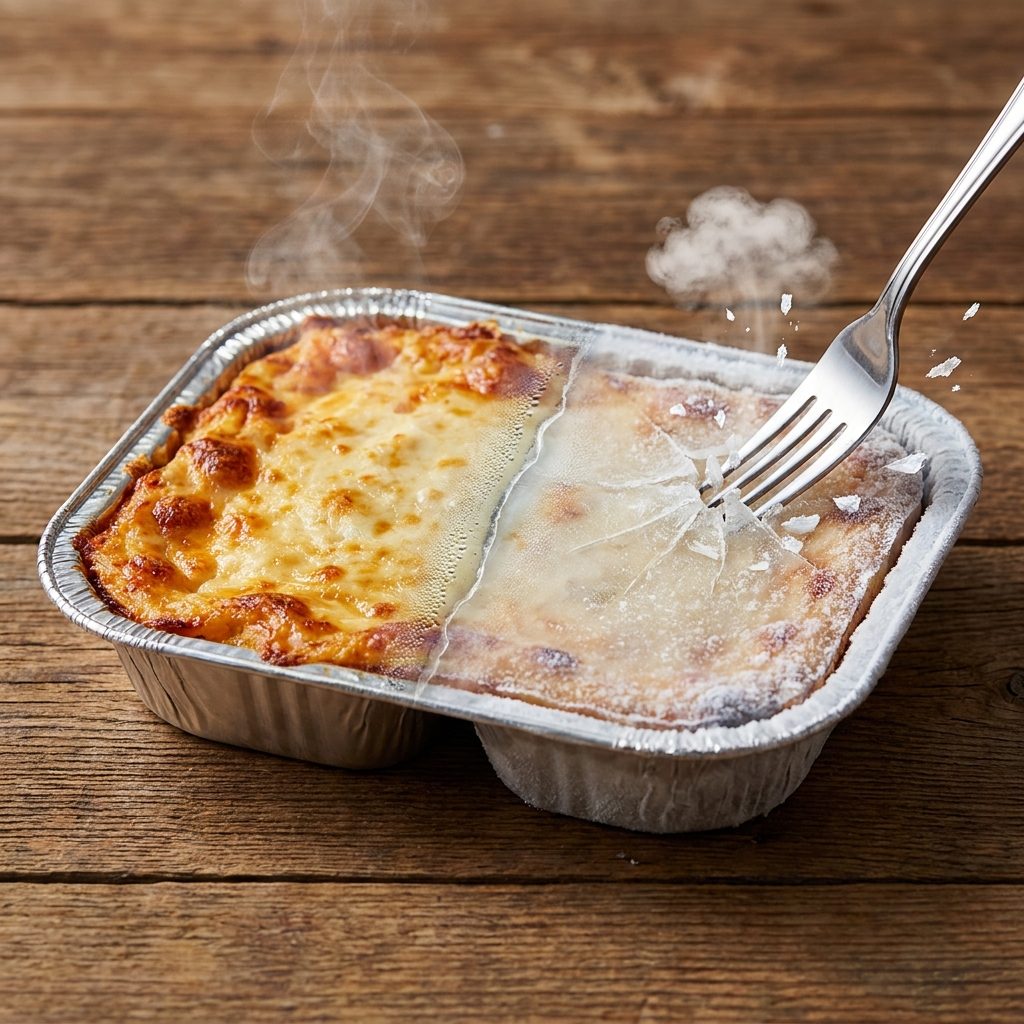
The mashed potatoes along the outside could come out molten enough to blister the roof of your mouth, while dead center sat a cold little core the oven never quite reached.
The uneven temperature became part of the routine. You forked through the potatoes, mixing the hot edges into the cold center until the whole compartment became edible.
12. The Whole House Smelling Like Roast Chicken by 5:30
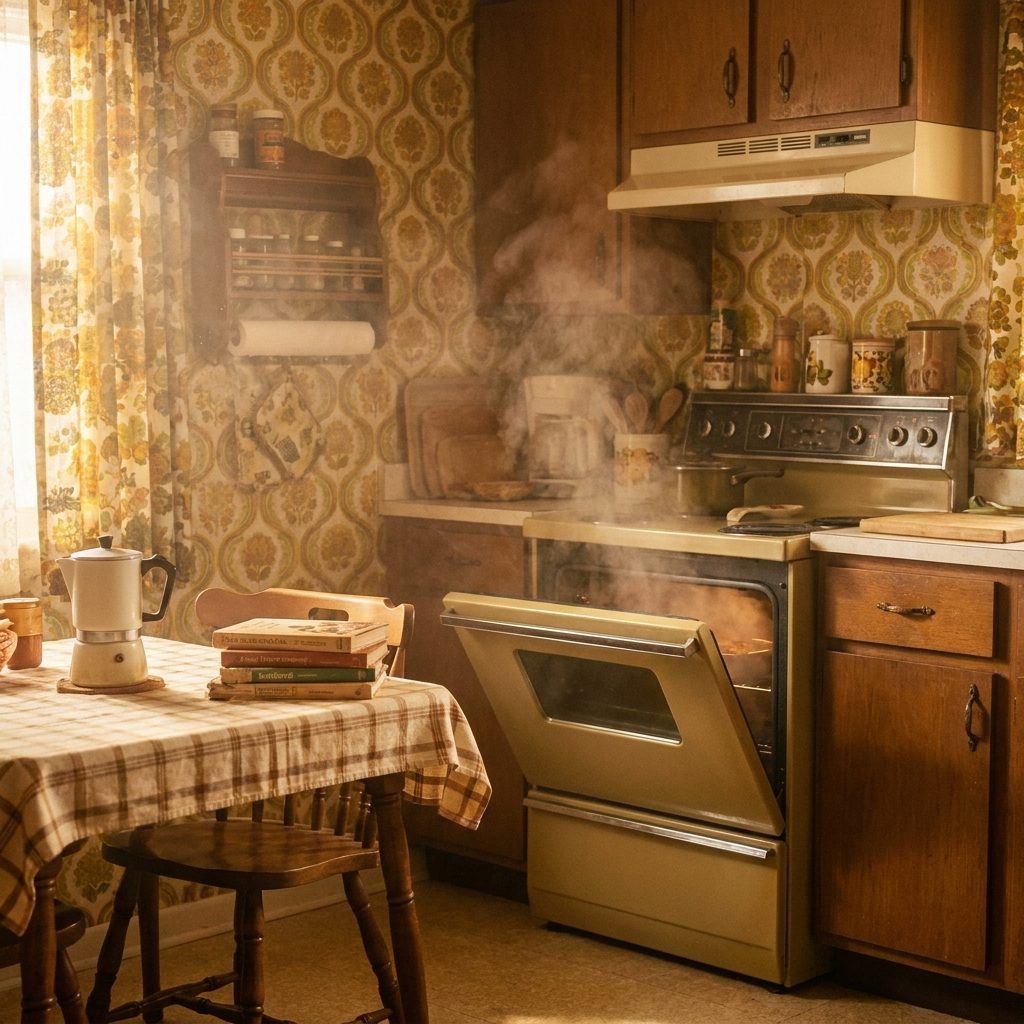
Nobody had to ring a bell. The oven did the announcing—that thick smell of browning skin and gravy gone hot, sliding down the hallway to find you wherever you were hiding.
You’d come in from the backyard with grass stains on your knees and catch it at the screen door. That was the signal. Homework got shoved aside, hands got a lazy rinse under the tap, and the countdown started for real.
This wasn’t the big Sunday roast. Smaller, quicker, a weeknight stand-in for the real thing, and it meant the stove got a break while the TV clicked on in the other room. That smell pulled more weight than any dinner bell ever did.
11. Mixing the Gravy Into Everything
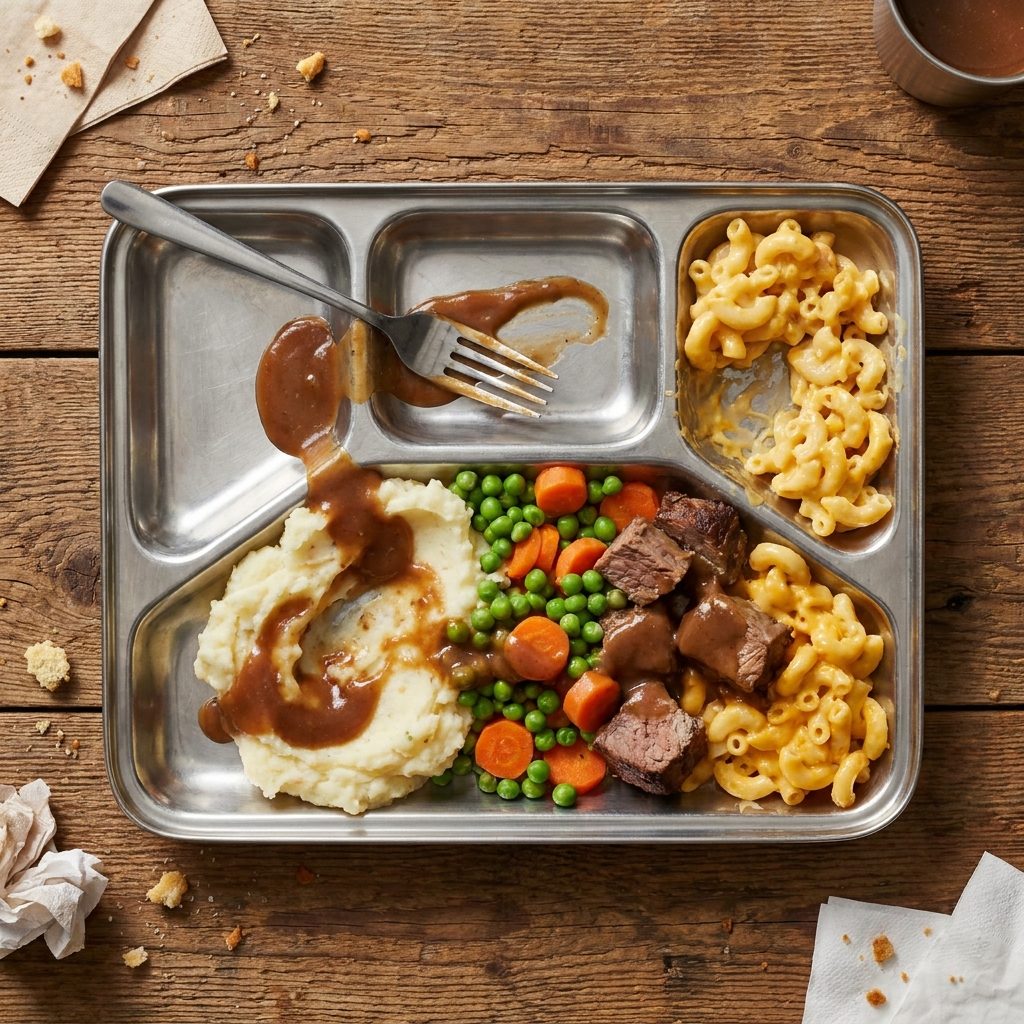
Not everyone respected the dividers. Some of us treated them as temporary suggestions.
Gravy went everywhere—over the potatoes first, that was standard, then dragged into the peas, then a little swirled into whatever meat you got that night. By the end, the tray was one glorious brown mess, and to some of us it tasted better that way.
10. The Dessert Compartment You Saved Until Everything Else Was Gone
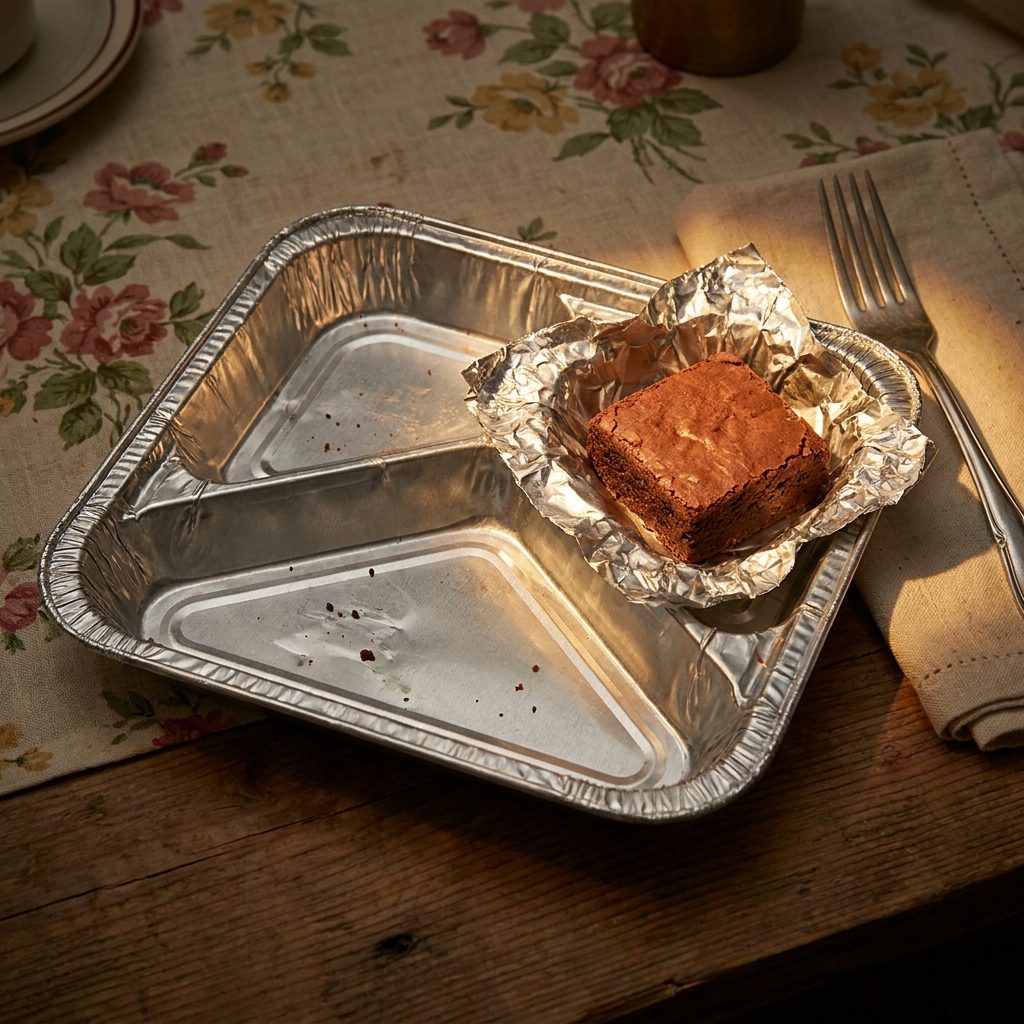
Everybody had a strategy. Mine was to treat that little cobbler square like a savings account, untouched until the peas were gone and the Salisbury steak had surrendered its last gravy.
Worth every second of waiting, too. A corner of warm cobbler or brownie, tasting twice as good because I’d suffered through the boring stuff to get there. And the kids who dove into dessert before the meat? Bold. A little reckless. I respected them and never once found the nerve to join them.
9. Metal Forks Scraping the Aluminum Tray
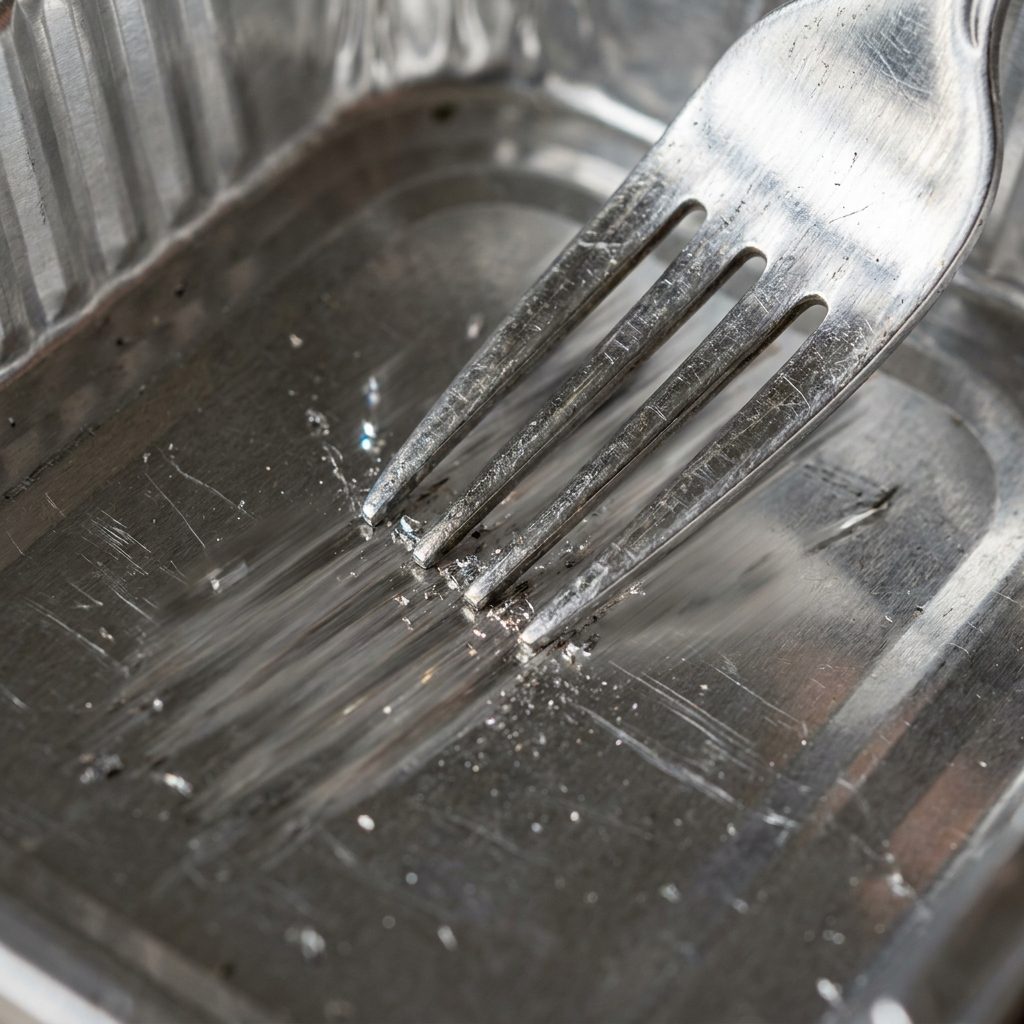
That sound. You know that sound.
Metal tines dragging across the thin aluminum bottom, a screech that set some teeth on edge and meant somebody was getting the very last of the gravy. Parents flinched, kids did it anyway, chasing crumbs of cobbler around the corner square long after the food was gone.
The tray gave a little under the pressure, wrinkled and warm, and eventually you’d just crumple the whole thing up and toss it. No dishes. That was the deal.
8. Burnt Corners Around the Edges
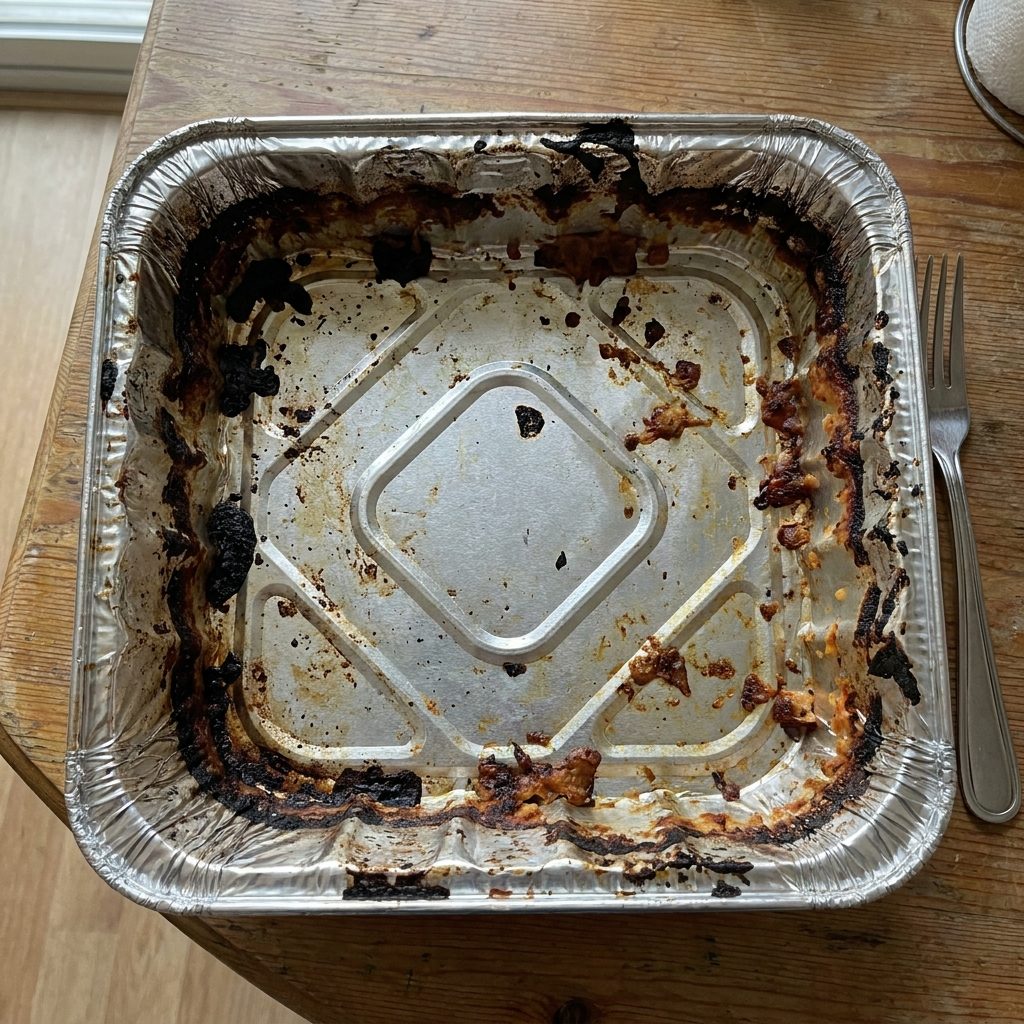
Leave it in a few minutes too long and the corners crisped up hard, the potatoes browning into a crust against the foil wall while the meat developed a dark chewy rim you either loved or picked off.
Some of us fought over those burnt bits. There’s a whole camp of people who swear the best part of any TV dinner was the crunchy edge that stuck to the aluminum.
7. When Swanson Became Shorthand for the TV Dinner
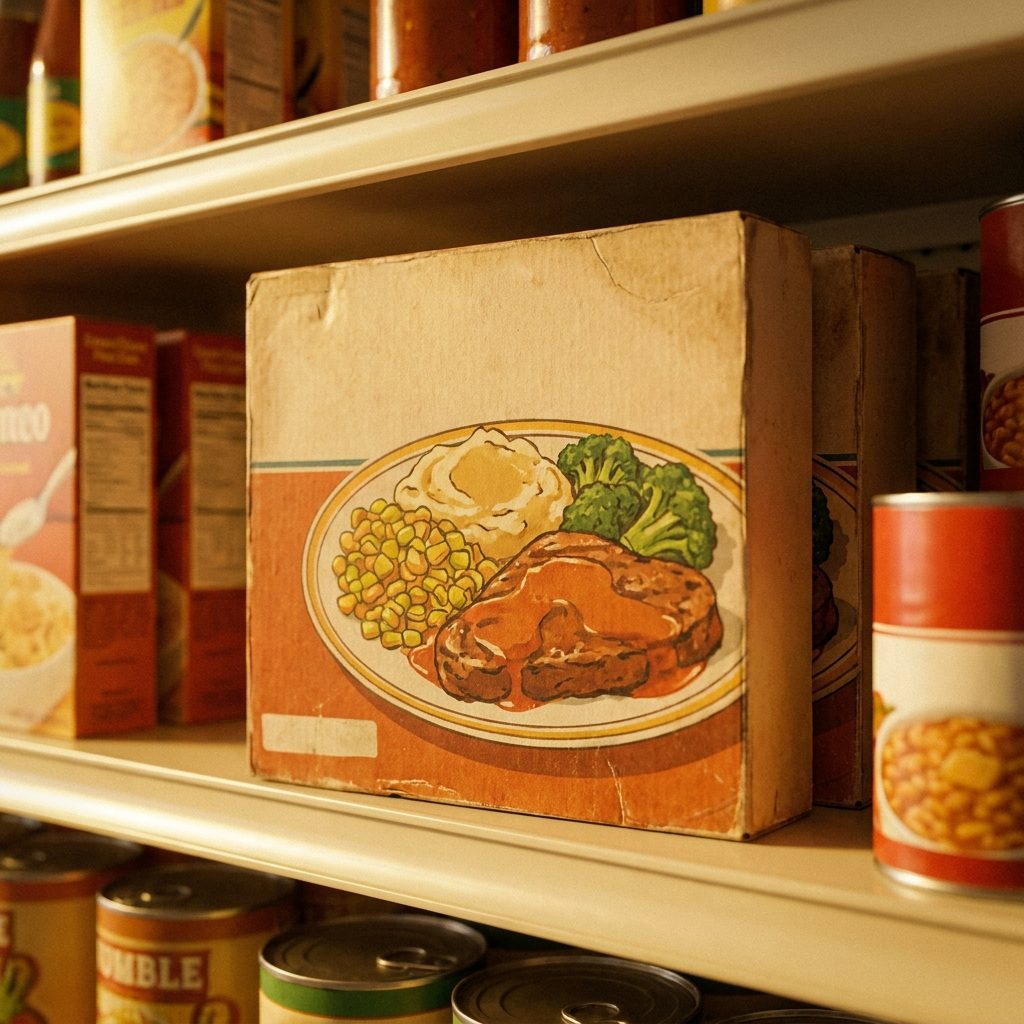
Say “TV dinner” in 1975 and one name came quickly to mind. Swanson had helped define the category so completely that the brand became shorthand for the whole idea.
By the 1970s, the freezer aisle held plenty of competitors, but Swanson still carried the familiarity of the original national craze. You did not always ask for a frozen dinner by type. Sometimes the brand name said enough.
6. The Box Art That Promised a Feast You Never Quite Got
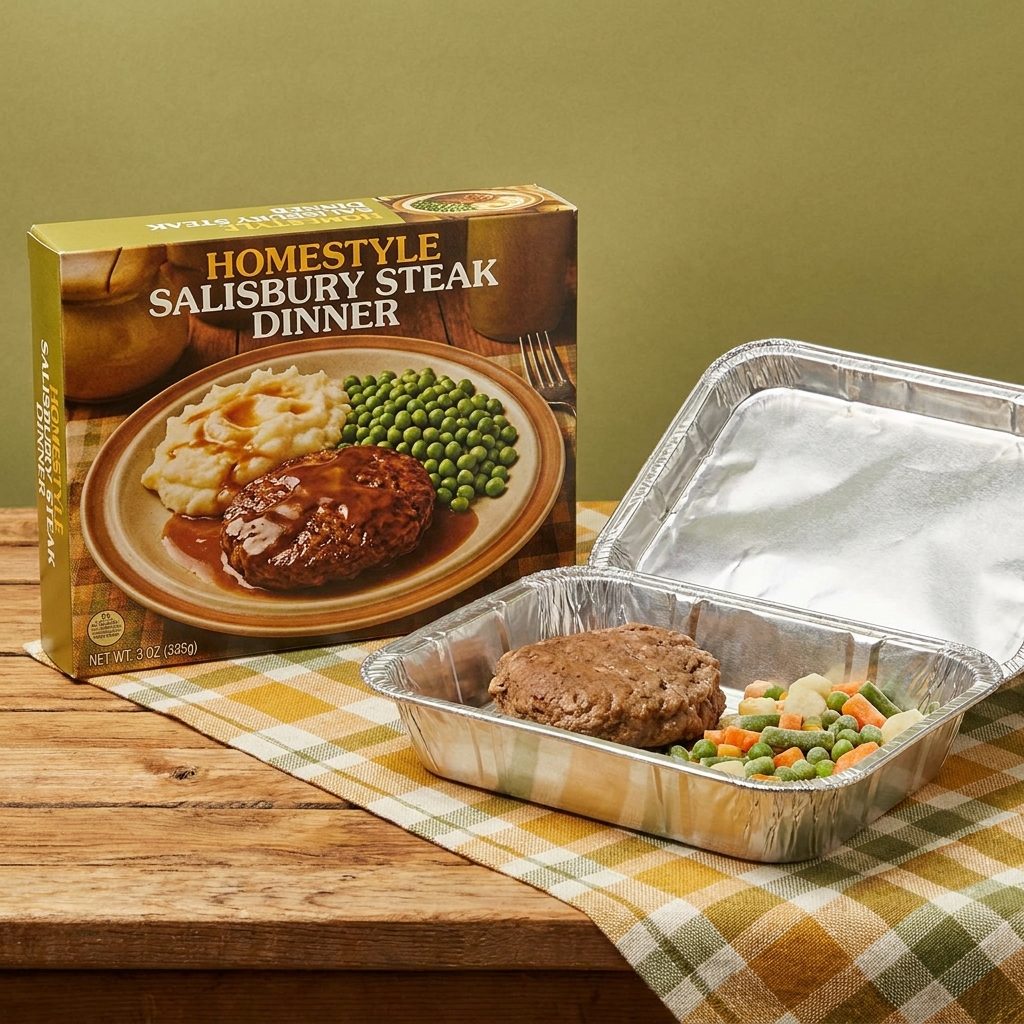
Every freezer-aisle box was a tiny con job, and everybody was in on it. The chicken glistened. Mashed potatoes stood up in a fluffy peak with a pat of butter melting down one side, and steam rose off the plate in the photo like the food had just come out of a real oven, cooked by somebody’s grandmother rather than a machine in New Jersey.
The tray inside never looked like that. Nobody cared. You’d lean toward the box with the best-looking picture, run your thumb across the glossy cardboard, and make your pick based on a photograph a food stylist spent hours arranging under studio lights. The art sold the dream while dinner handed you a gray piece of chicken that looked far less composed. And somehow that gap was part of the whole thing. We kept buying anyway.
5. Convenience for Busy Families
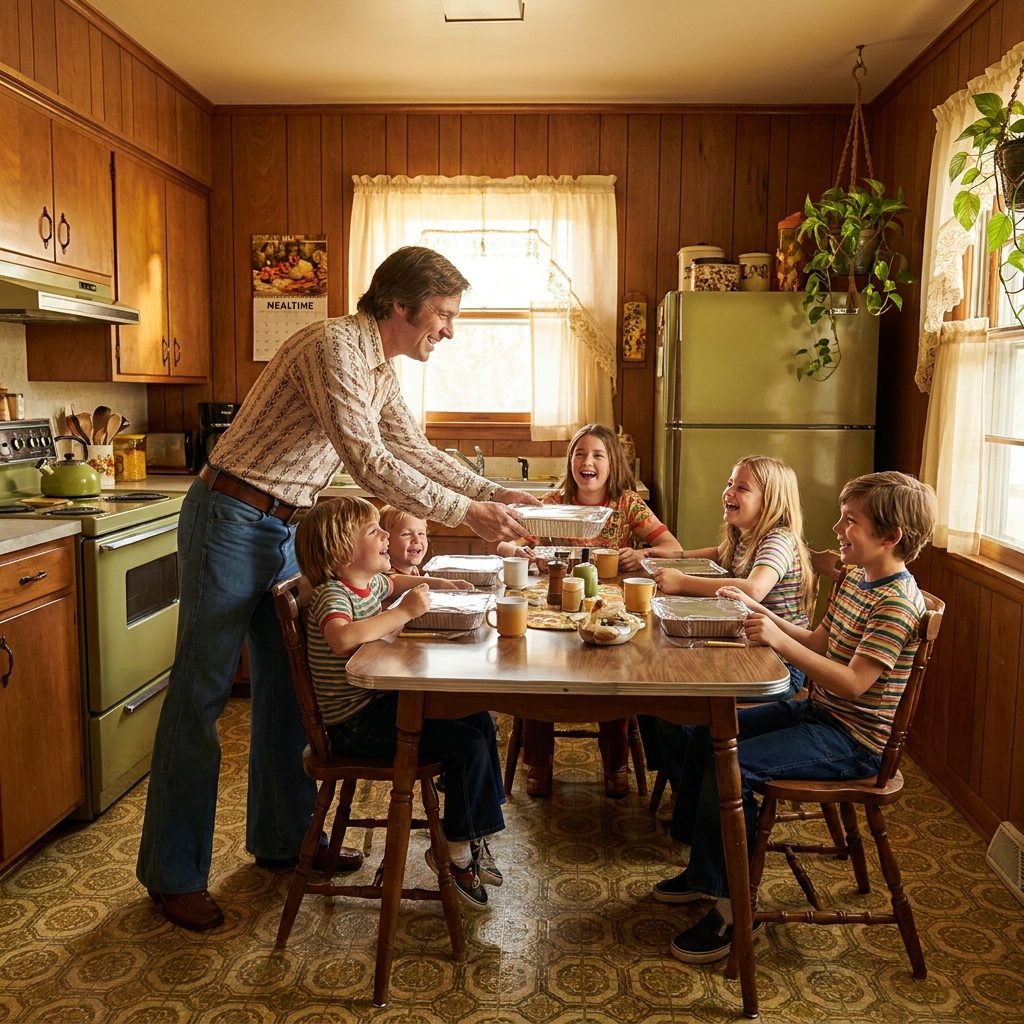
Nobody says this enough: these trays were freedom.
A working parent could get four kids fed in under an hour with zero pots to scrub, and everybody carried their own tray into the den for whatever was on that night. No setting the table. No arguing over who cleared it.
It looks quaint now, all that foil and those folding tables. But it bought families a night of ease when ease was difficult to come by, with no pots, plates, or cleanup waiting afterward.
4. Kids Finally Getting to Pick Their Own Plate

Would you like to save this?
Choice was the whole thing. At the dinner table you ate what was made, no questions. With TV dinners you got to stand at the open freezer, cold air on your face, and actually pick.
Fried chicken or Salisbury steak. The one with the brownie or the one with the apple dessert. A kid who never got a vote on anything suddenly held a decision that mattered, and the decision was yours alone—you learned your own taste standing on tiptoe in front of that frost-lined freezer, sorting boxes like a tiny quartermaster.
I still remember the small power of it. One box, your name on it in spirit, nobody else’s business.
3. The Friday-Night Version Everybody Actually Looked Forward To
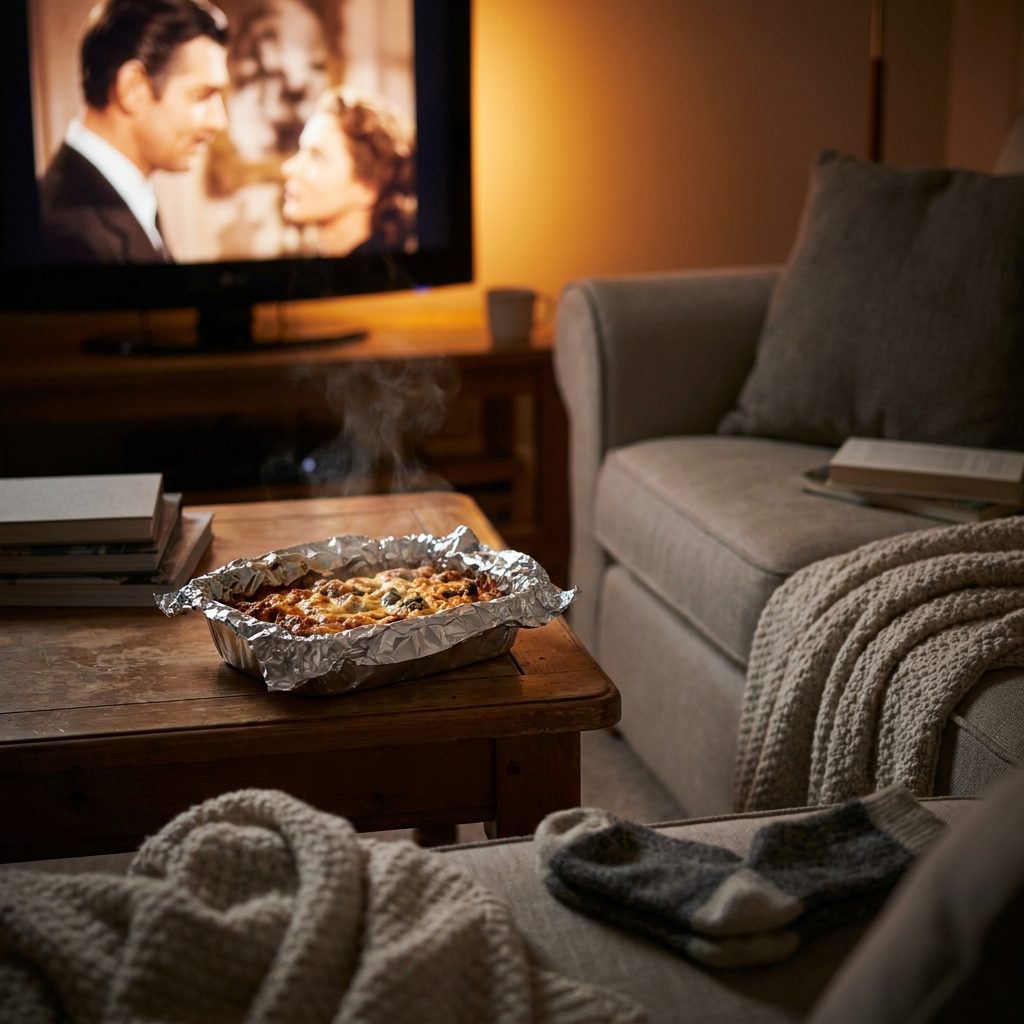
Weeknight dinner was a duty. The weekend TV dinner was a ritual.
Somewhere along the way it became the Friday thing, or the Saturday thing—the night nobody cooked and everybody was completely fine with that. Trays came out. The good show was on. And there was cola instead of milk, which alone told you the rules were different tonight.
It signaled the week was over. School done, work done, and here was a hot foil tray, a couch, and a couple of hours nobody owed to anybody.
2. When the Microwave Finally Cut the Wait Down to Minutes
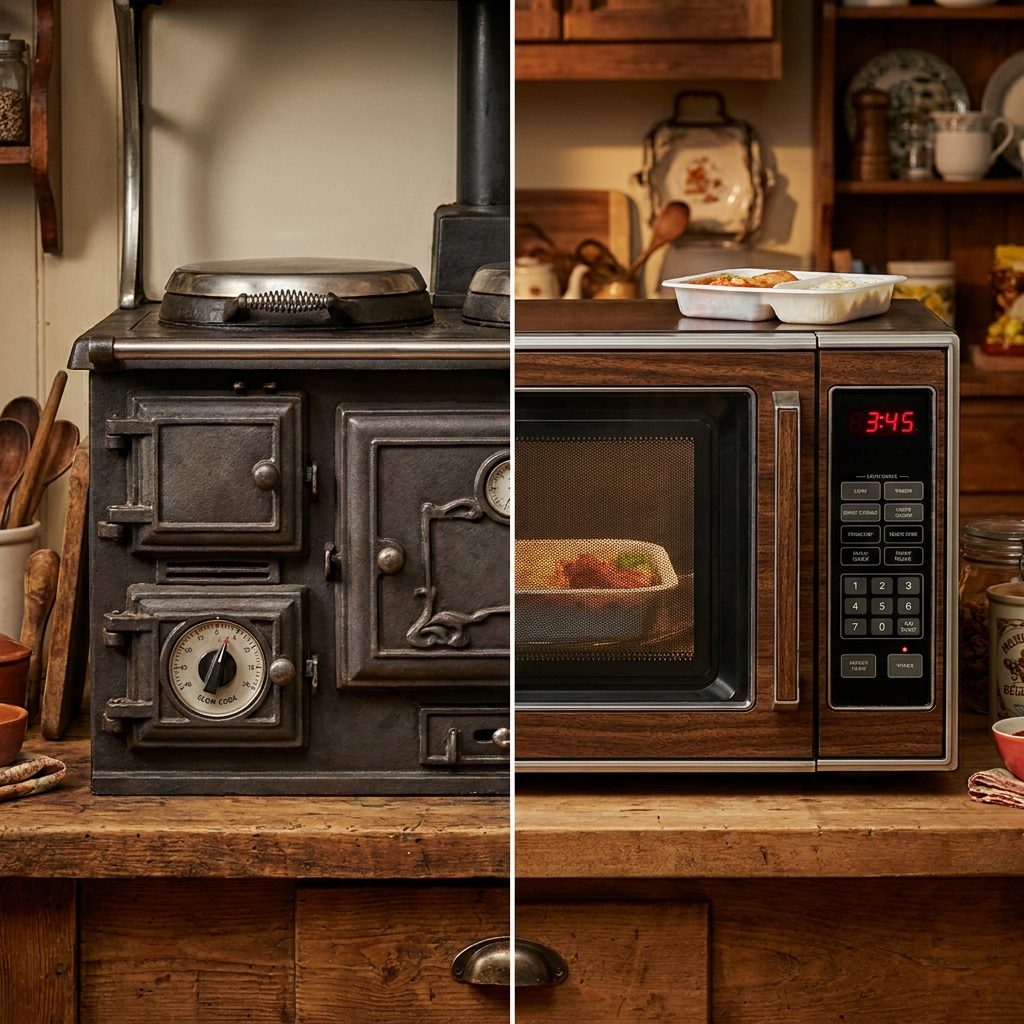
The oven version took the better part of an hour and heated the whole kitchen along with it. By the early 1980s, microwave-compatible paper and plastic trays were beginning to replace aluminum, and the math changed completely.
A few minutes. That was it. You watched through the little window, that hum filling the room, and dinner was ready before the commercials ended. Felt vaguely like the future had shown up in a cream-colored box with a brown dial.
The catch was the potatoes—lava-hot on top, still frozen dead center. So everybody learned to stir. Small price for a hot meal in the time it took to find something to watch.
1. How a Foil Tray Turned Into a Piece of America Itself
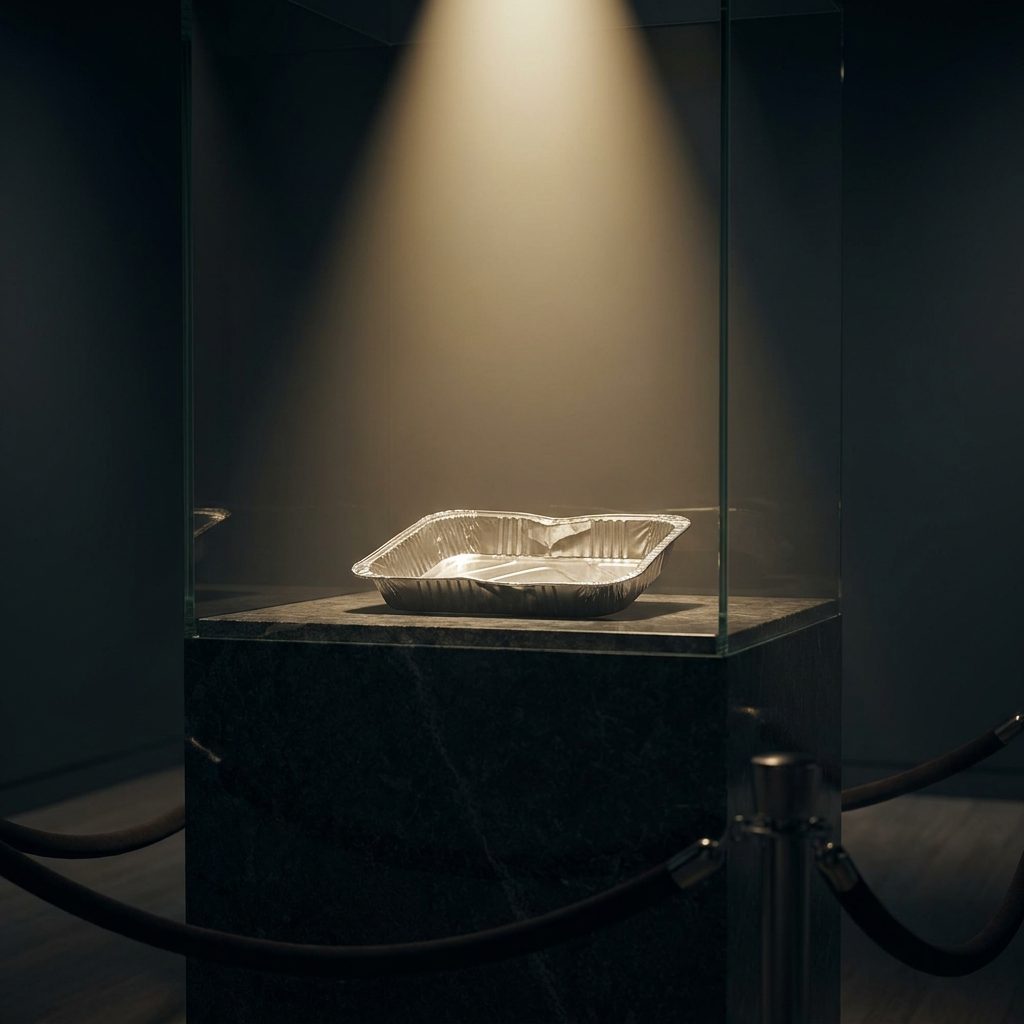
The tray earned its place. A Swanson TV Dinner tray now sits in the Smithsonian’s collection, which tells you it stopped being just dinner a long time ago.
Peeling back that foil was the closest thing suburban America had to opening a present at six o’clock. The compartments kept everything in its lane—potatoes never touched peas—and there was something deeply satisfying about a meal that came with its own borders drawn in.
It fed a country that suddenly had TV to watch and less time to cook, and it never once pretended to be more than it was.
That honestly is why we still remember it. Not a fancy meal. A widely shared ritual, even when everyone held a separate tray, and the sound of that foil pulling loose became part of a generation’s weeknight memory.