Would you like to save this?
The fellowship hall smelled like six kinds of cream-of-mushroom soup and a coffee urn that had been running since before the sermon. Long folding tables stood beneath butcher paper. Down one side ran a line of Pyrex and CorningWare, each dish wearing a strip of masking tape with somebody’s last name in ballpoint. You knew whose macaroni was whose before you ever tasted it.
What follows is the food that fed a whole congregation, plus the small rituals that came with it.
27. The Homemade Baked Macaroni and Cheese in the Cornflower CorningWare
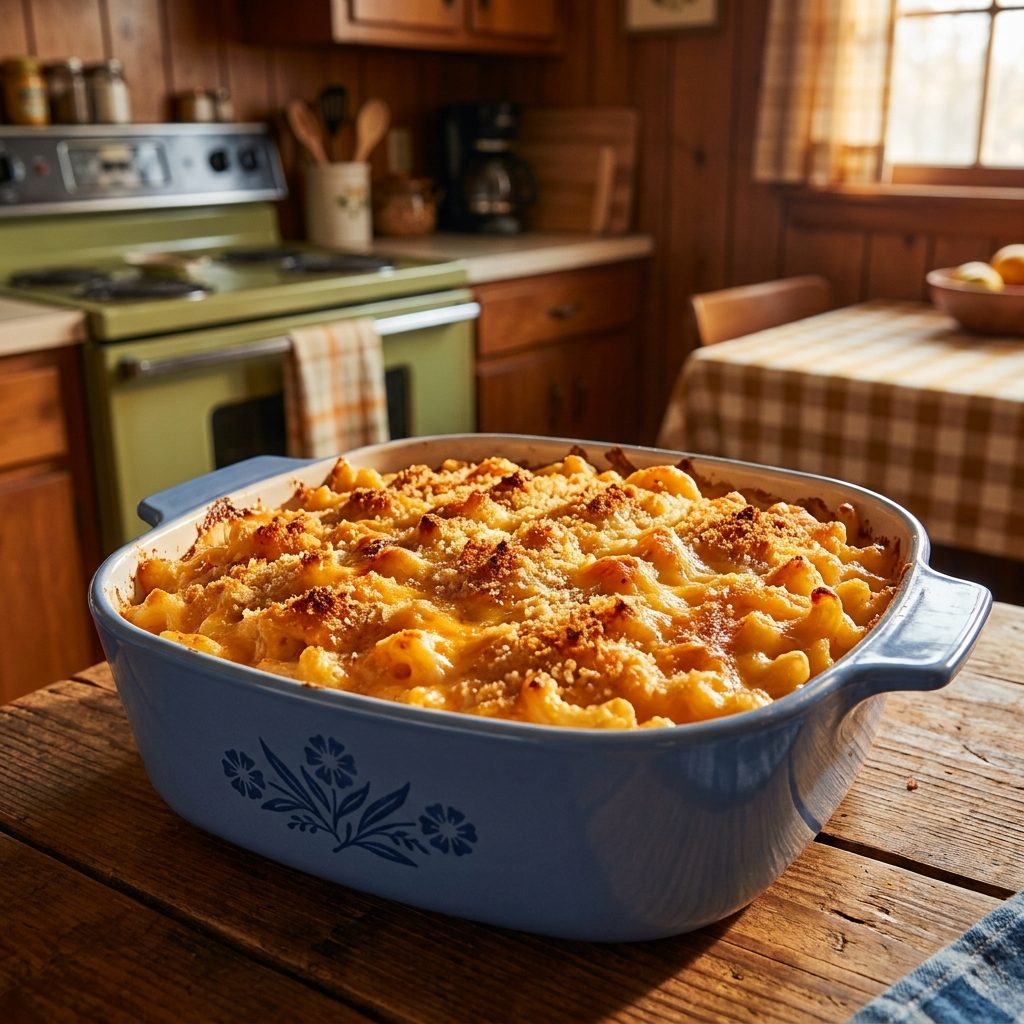
Somebody at every church made the macaroni and cheese everyone waited for, and everybody knew who. Not the boxed kind—the baked kind with sharp cheddar, a creamy sauce, and a breadcrumb top that shattered under the serving spoon.
It came in the cornflower CorningWare, the good dish, the one that only left the house for occasions. That was the tell. Boxed macaroni traveled in whatever was handy; this one arrived in the dish with a reputation.
I’ll admit I judged people by their mac and cheese as a child. Still do.
26. The Cast-Iron Mexican Cornbread Casserole That Counted as a Whole Meal
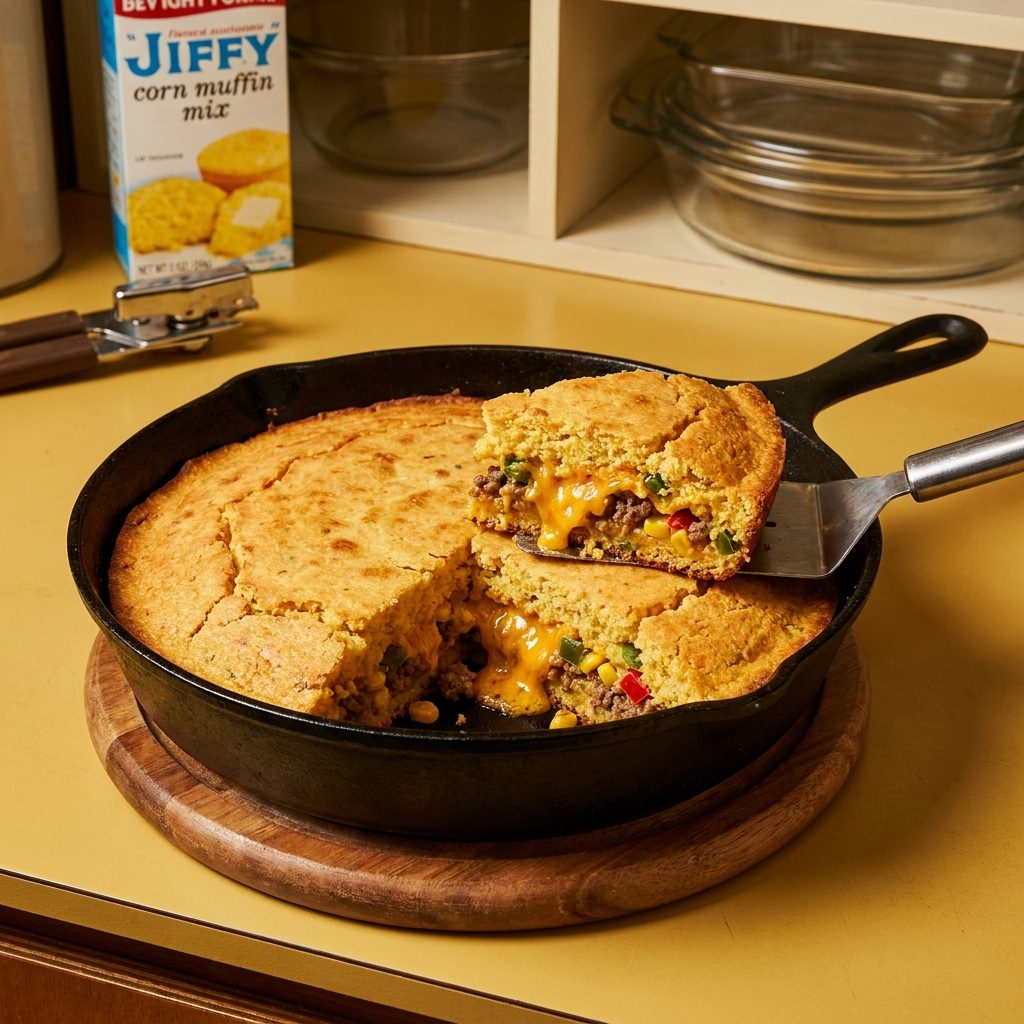
Now this one was a meal. You did not nibble at Mexican cornbread casserole—you sat down and dealt with it. Browned ground beef, creamed corn for sweetness, jalapeños for the brave, and cornbread baked until the top cracked and the cheddar pushed toward the edges.
The skillet mattered. Somebody’s grandmother had one she insisted could never touch soap, seasoned so black and smooth that her cornbread slid right out. Her casserole was better than yours, and everybody knew it.
“Mexican” was generous. The jalapeños were about as far south as the recipe traveled, and half the time they came from a jar. But the casserole was hot, heavy, and capable of feeding a crowd with a pound or so of beef and a box of corn muffin mix. That was its genius.
25. The Cabbage Roll Casserole That Skipped All the Rolling
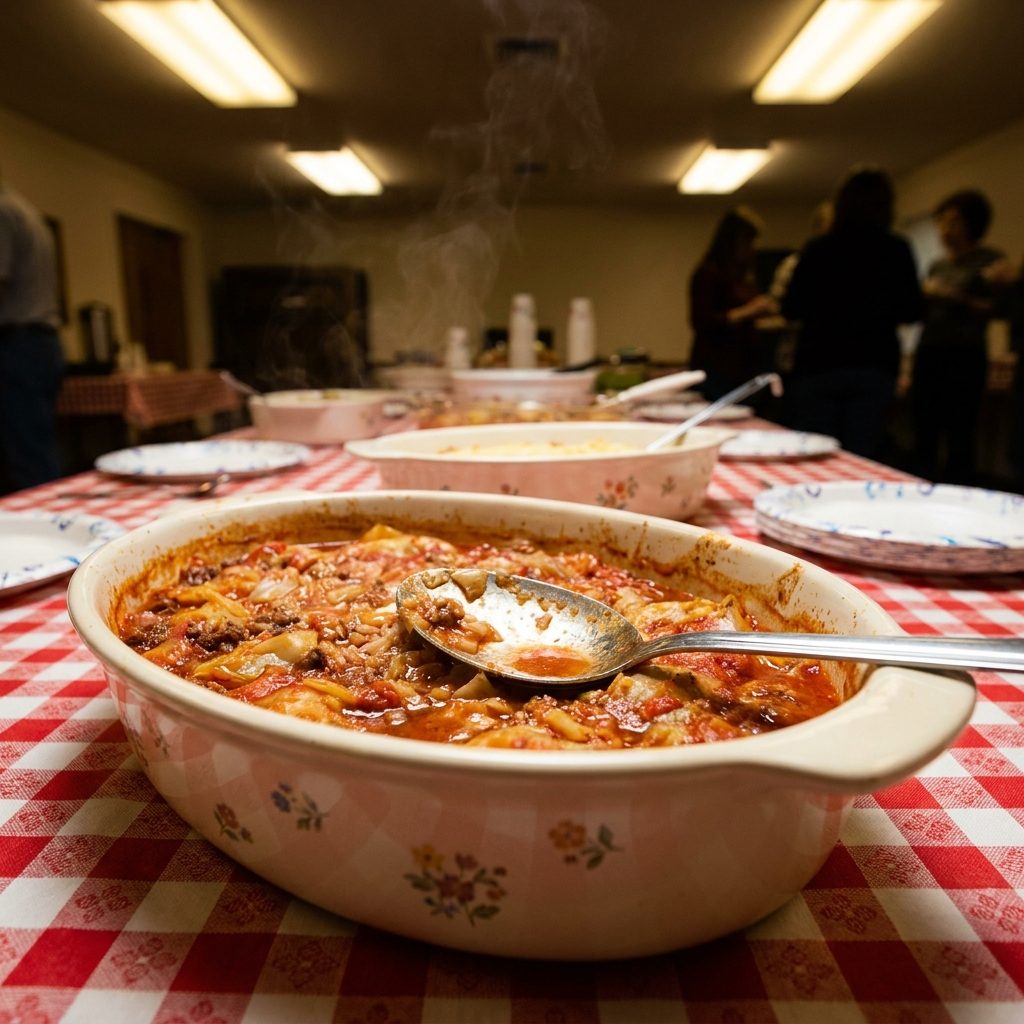
Somebody figured out you could get the flavor of stuffed cabbage without rolling forty individual leaves, and the church potluck was never the same.
Chopped cabbage, ground beef, white rice, onion, and tomato sauce went into one deep dish and baked until the cabbage turned soft and sweet. No rolling. No toothpicks. No leaves tearing at the worst possible moment.
This was the dish brought by people with four children, a Sunday school class, and no patience for anything requiring individual assembly. It looked humble in the pan, but it stayed hot on the buffet after the salads had gone limp and usually returned home with little more than sauce at the bottom.
24. The Relish Tray Standing Guard at the Front of the Buffet
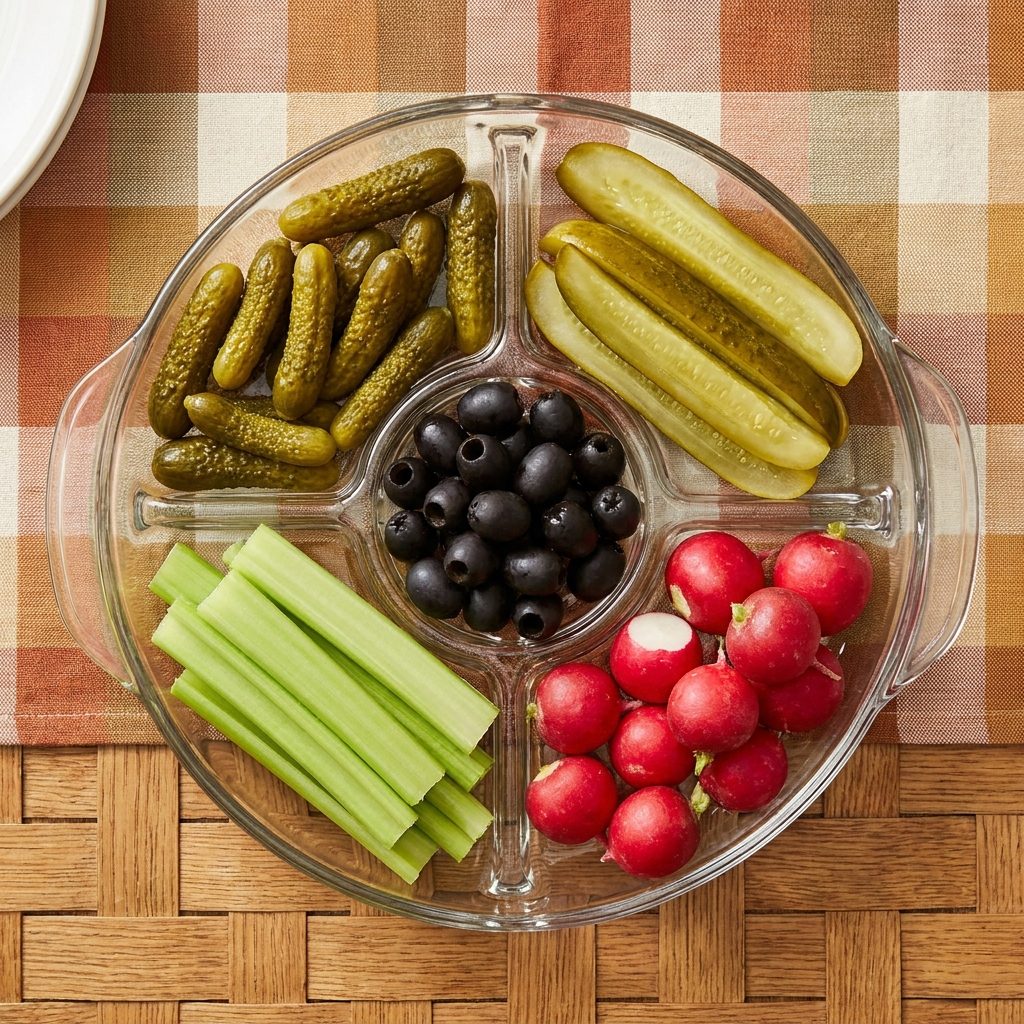
The relish tray sat at the start of the line like a bouncer—a divided glass dish with one wedge for sweet pickles, one for dills, and the remaining sections filled with black olives, celery, and radishes fanned out as though they had someplace to be.
Every child in the building went straight for the olives and put one on each fingertip. That was the law. Nobody ate a single radish, ever, but radishes appeared anyway because that was what belonged on a relish tray, and no one questioned it.
23. The Seven-Layer Salad Built to Be Admired Through Glass
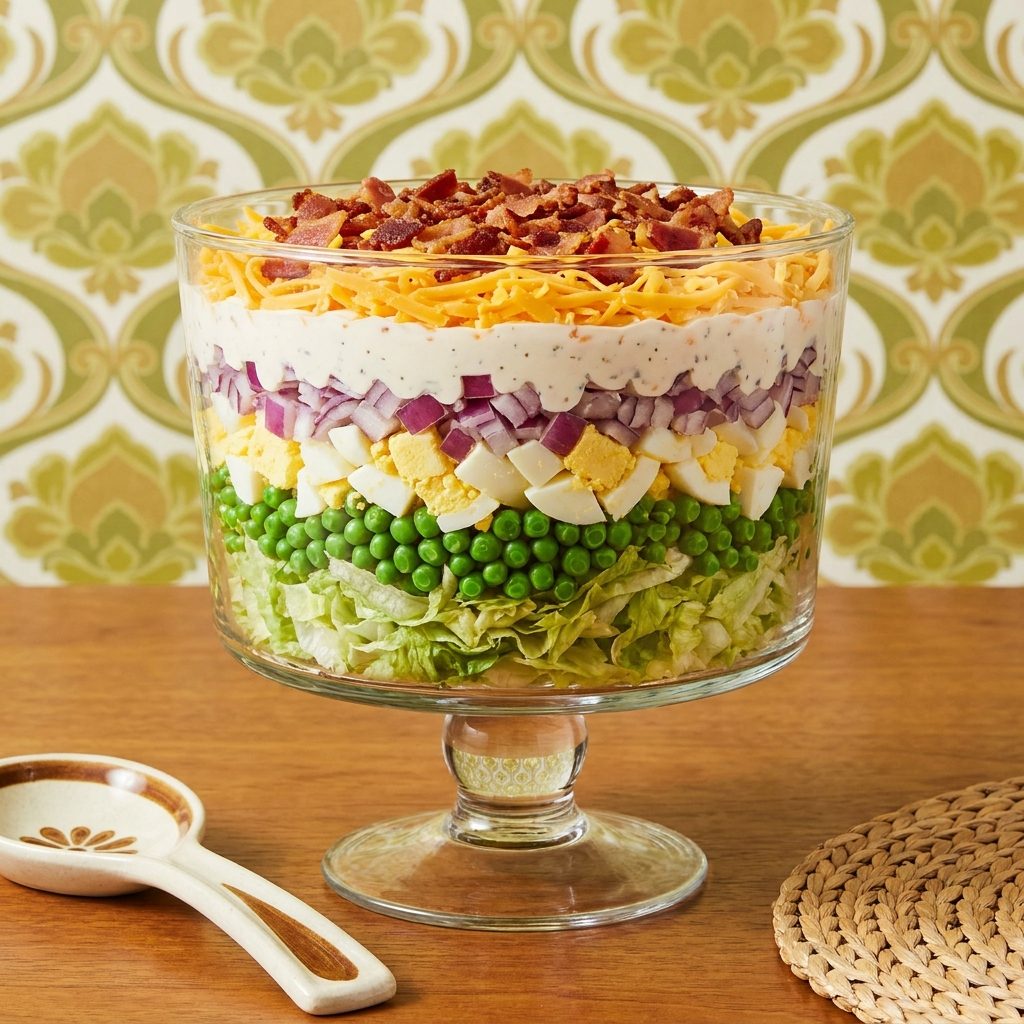
This was the show-off salad, and it knew it. You made it in a clear bowl on purpose so everyone could admire the stripes before anyone wrecked them with a serving spoon.
Iceberg lettuce on the bottom. Then red onion, peas, hard-boiled eggs, bacon, sharp cheddar, and a thick blanket of Miracle Whip sealed all the way to the edge so the salad would not dry out overnight. Seven layers, all accounted for.
You did not stir it. You served downward so every plate received at least a little of everything.
22. The Double-Crust Apple Pie Inside Its Dented Metal Carrier
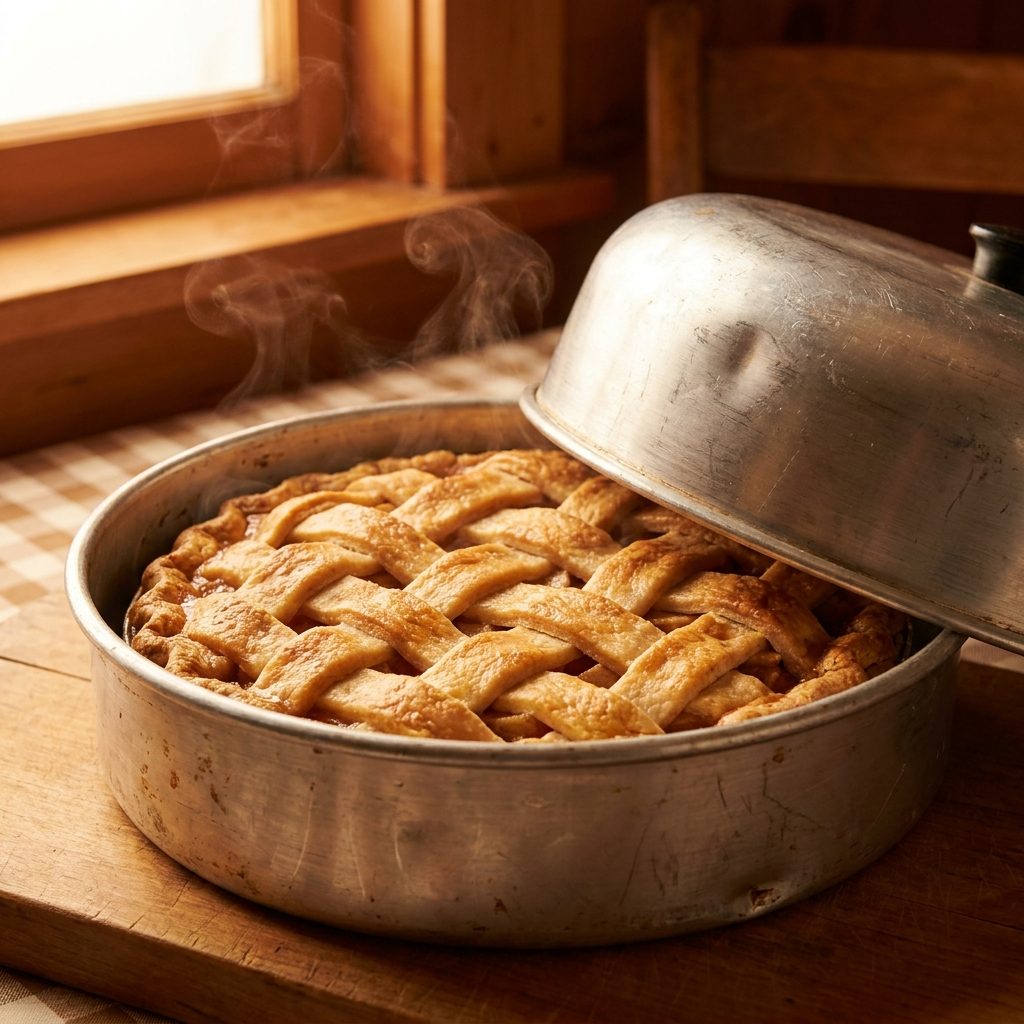
The carrier gave it away before the pie ever came out. That round aluminum thing with the domed lid and little hinge, dented on one side, had crossed church parking lots four times a year for longer than anyone could remember. Lift the lid, and you got the whole thing at once—cinnamon, butter, warm apple.
The apples had been peeled at the kitchen table the night before while the television ran in the other room. The crust was where the argument began. Some cooks swore by lard, others by shortening, and each would explain why her way was right while handing you a slice of the other woman’s pie.
21. The Ambrosia Salad in the Avocado-Green Tupperware Bowl
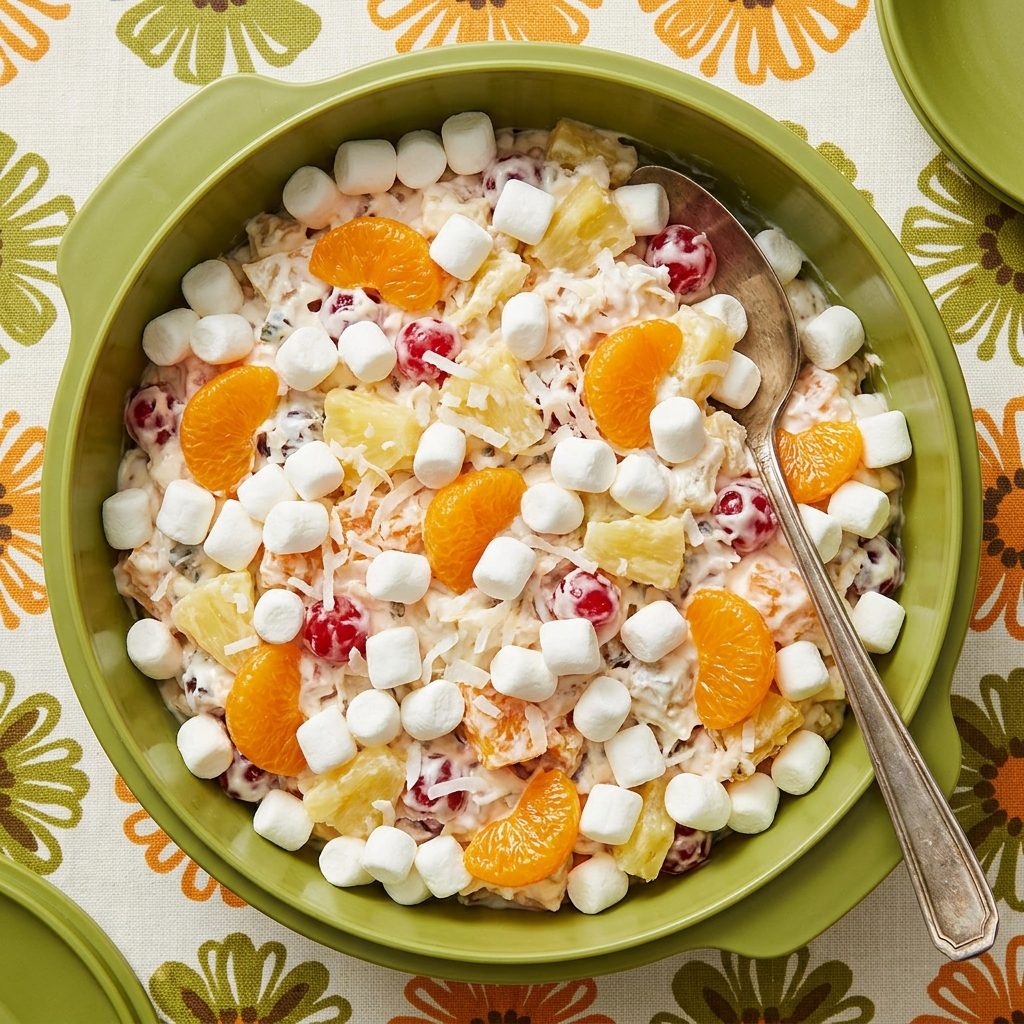
Dessert masquerading as salad. Nobody was fooled, and nobody cared.
Ambrosia lived in the biggest Tupperware bowl in the house, the avocado-green one with the burp seal, and it arrived cold. Mini marshmallows, sweetened coconut, drained mandarin oranges, pineapple, and enough whipped topping to hold the whole thing together in soft peaks.
It sat in the salad section on a technicality. Children went straight for it and skipped the seven-layer salad entirely, causing a measurable amount of quiet resentment among the seven-layer women.
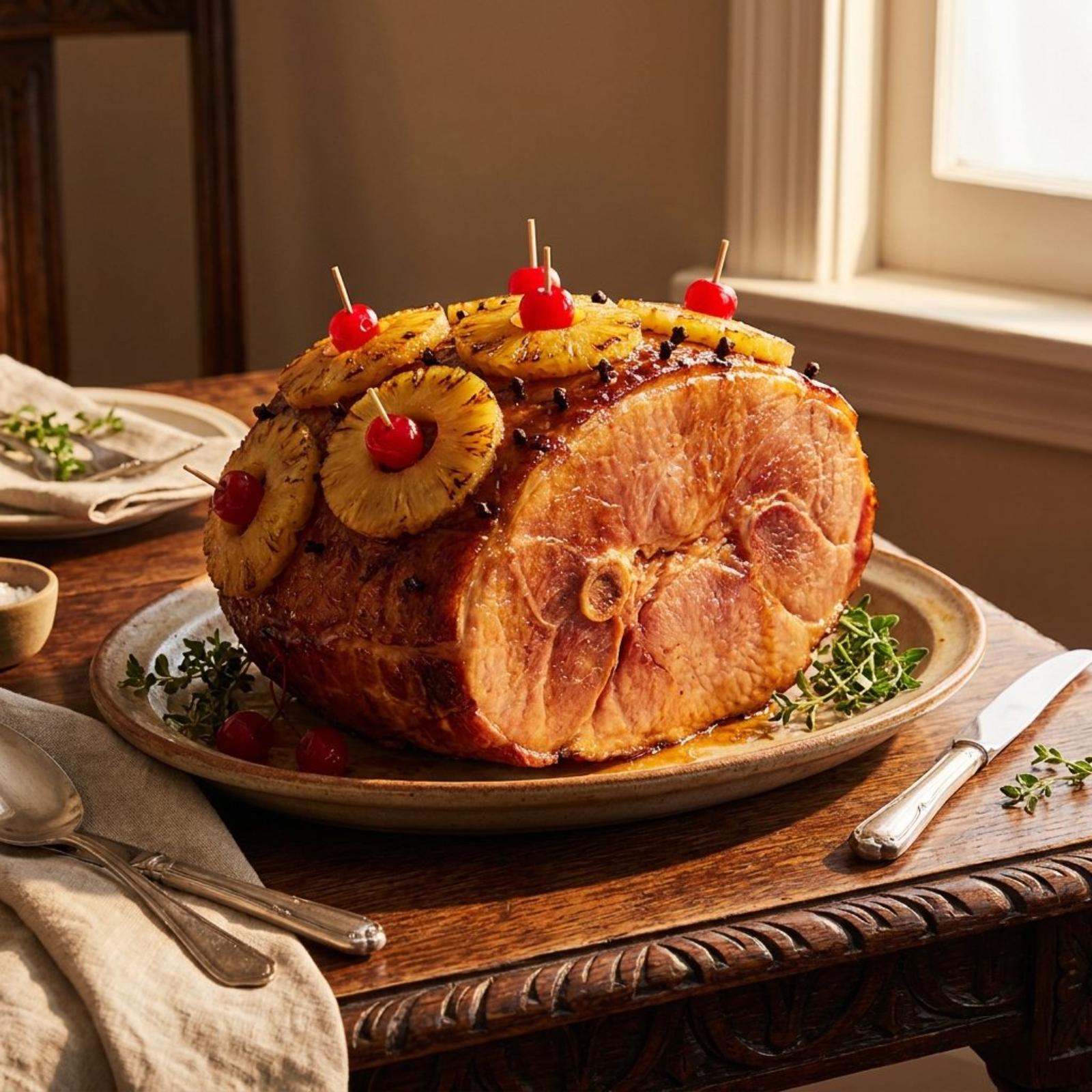
20. The Brown Sugar and Pineapple-Glazed Ham Reserved for Important Sundays
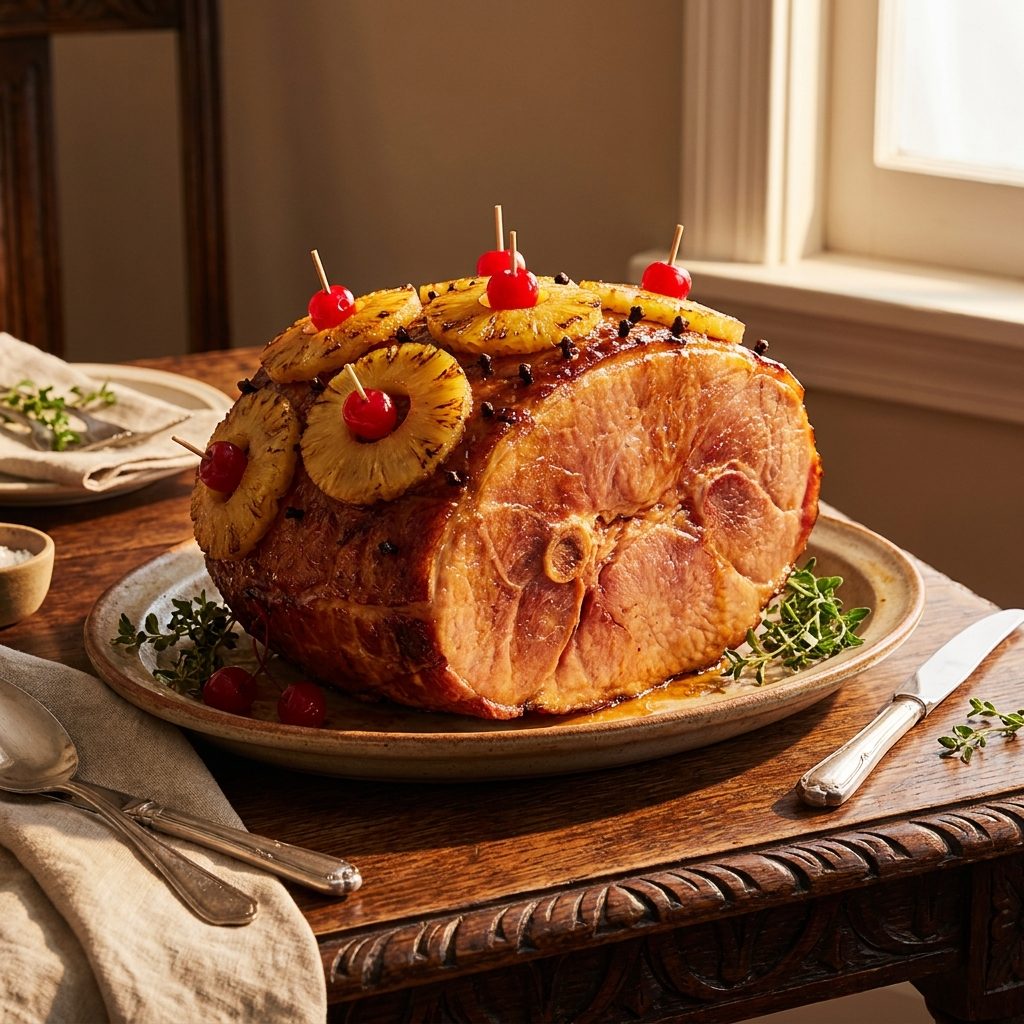
The ham told you what kind of Sunday it was. It did not appear for an ordinary potluck. It came out for Homecoming, Easter, and the Sundays when the whole congregation arrived in good clothes and the youngest children were passed around the vestibule.
Pineapple rings were pinned on with toothpicks, with a cherry in the center of each one. A dark brown-sugar crust formed across the outside, and the carver knew to include a little of it with every slice.
This was one of the few dishes that arrived on the good platter—the one kept on the highest shelf and brought down only when the calendar demanded something larger than usual.
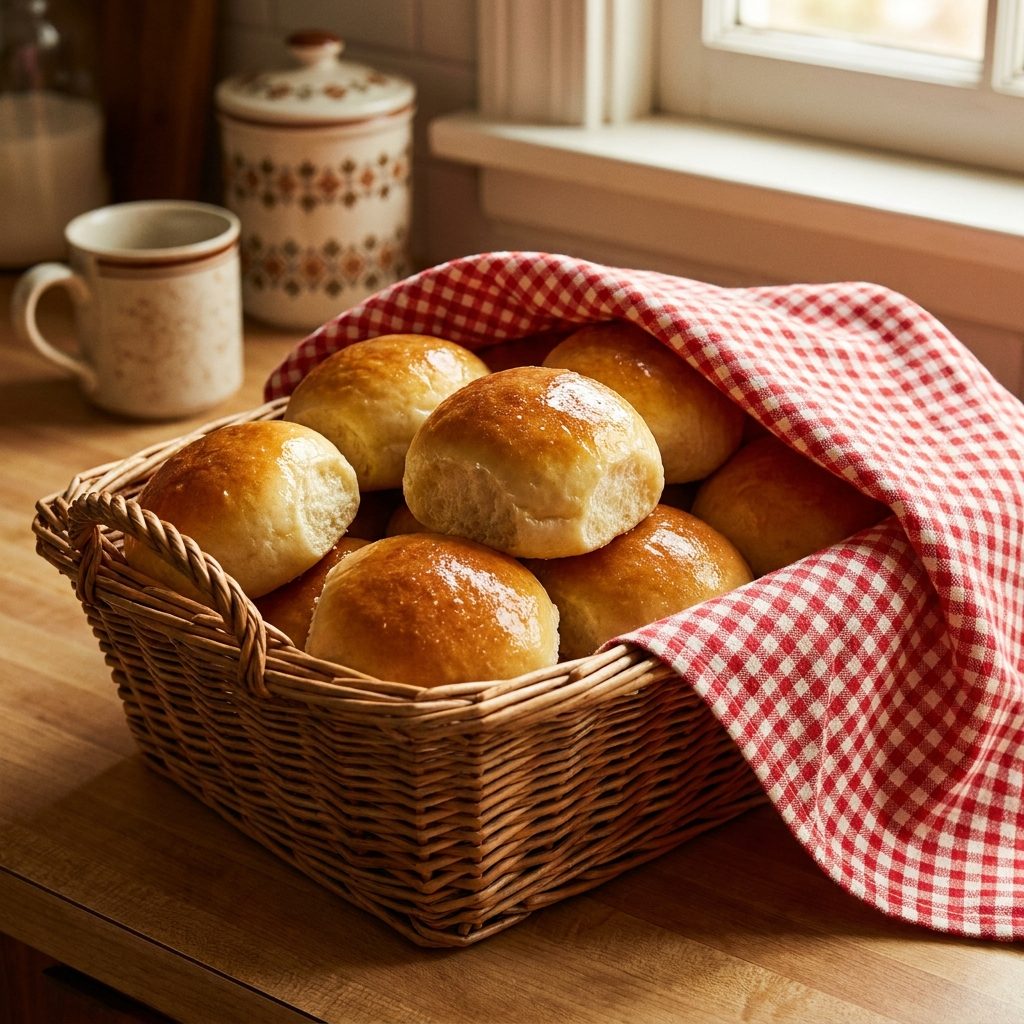
19. The Homemade Yeast Rolls Wrapped in a Clean Kitchen Towel
Would you like to save this?
The rolls came in a basket wrapped in a towel, and the entire arrangement ran on faith—faith that they would stay soft from the oven to the fellowship hall through a service that lasted however long it lasted.
Lift the corner, and the smell of yeast and butter rose from the basket. Every congregation had a woman known for those rolls. Everyone knew who she was, and she never once admitted they were any trouble.
18. The Stuffed Green Peppers That Arrived as Individual Meals
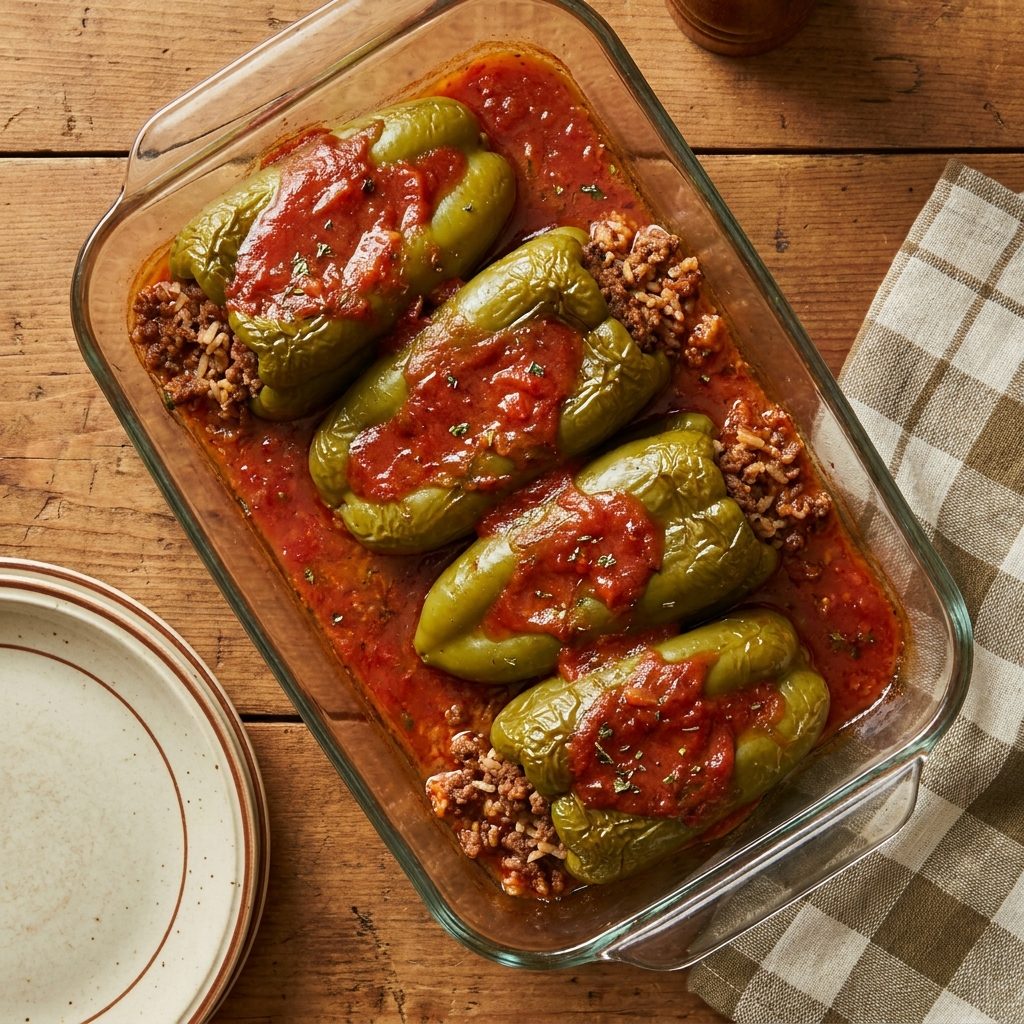
Six or eight peppers stood upright in a Pyrex dish, packed with ground beef, white rice, tomato sauce, and onion. They baked until the peppers slumped and could be cut with the side of a fork.
Unlike the cabbage casserole, every pepper arrived as its own portion. It was economical, easy to double, and required no argument over how large a serving spoonful ought to be.
Children remained suspicious of all that green. Scoop out the beef and rice from the middle, though, and suddenly there was no problem at all.
17. The Tuna Noodle Casserole Crowned With Crushed Potato Chips
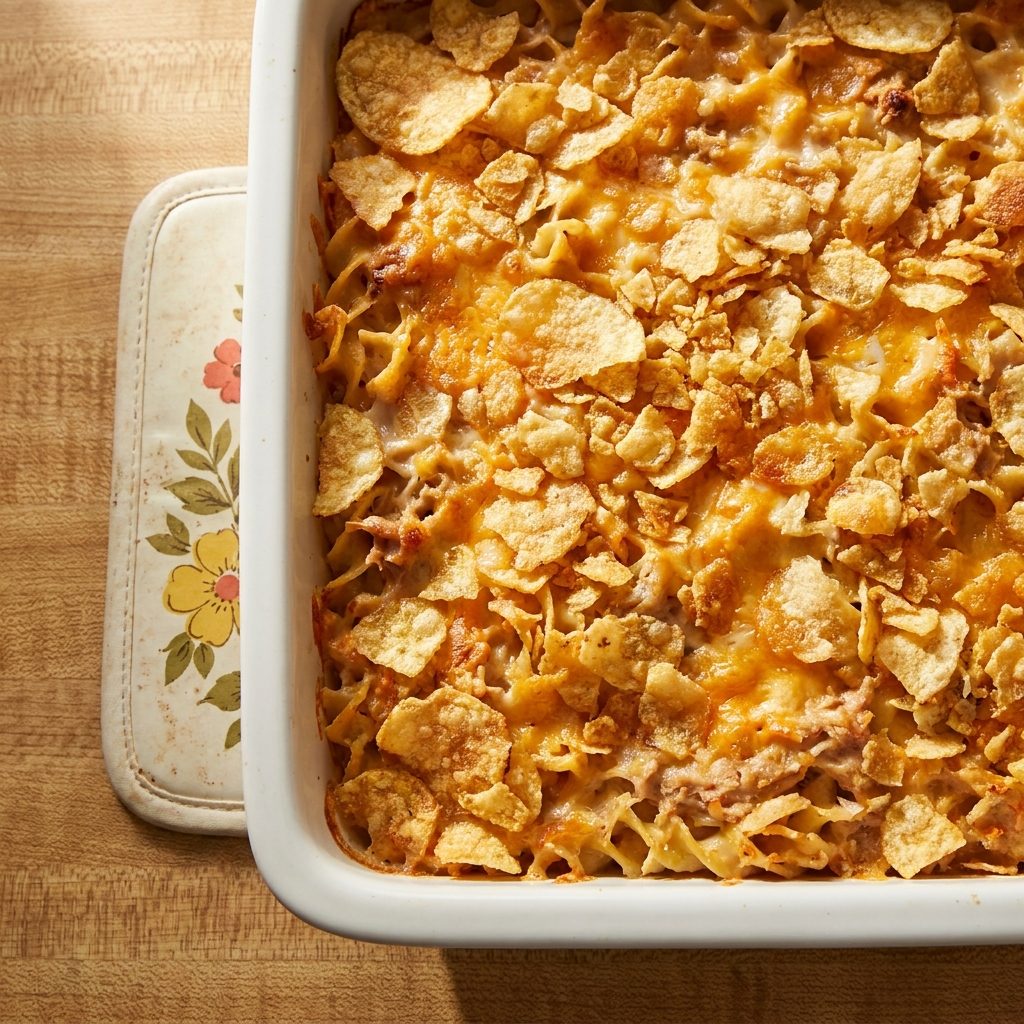
Every church had a tuna noodle cook. You recognized hers by the chip topping, always a shade more golden because she pulled the casserole from the oven immediately before leaving the house.
The recipe was mostly cans, egg noodles, and the remains of a bag of potato chips: condensed cream of mushroom soup, tuna, noodles, and whatever chips were rattling around the pantry. Some versions added peas, cheese, celery, or another can of soup. The topping was the one point nobody negotiated.
It was not fancy, and it made no claim to be. The familiar casserole disappeared scoop by scoop while flashier dishes were still waiting for attention.
16. The Green Bean Casserole That Nearly Always Had Competition
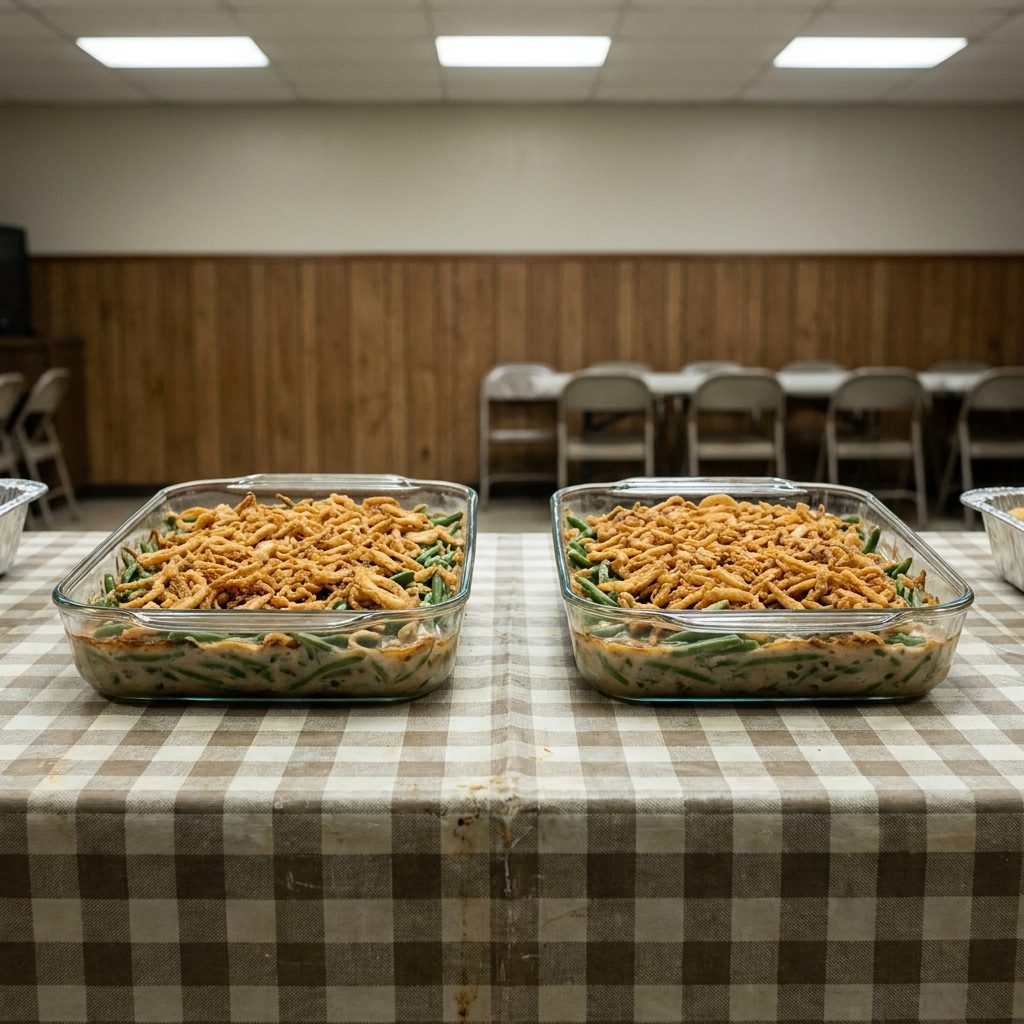
This was the one that showed up twice. Two green bean casseroles at a single potluck was not unusual, and everybody politely behaved as though the duplication had been planned.
Canned green beans, condensed cream of mushroom soup, a splash of milk, and French-fried onions were stirred together, with more onions saved for the top. The whole dish came together in about the time it took the oven to preheat, which explains why it followed the congregation through weddings, funerals, Wednesday-night suppers, and most of the church calendar.
The careful cooks added the final onions late enough to keep them crisp. Everybody else served theirs soft and hoped no one mentioned it.
15. The Jiffy Corn Casserole That Never Left Once It Arrived
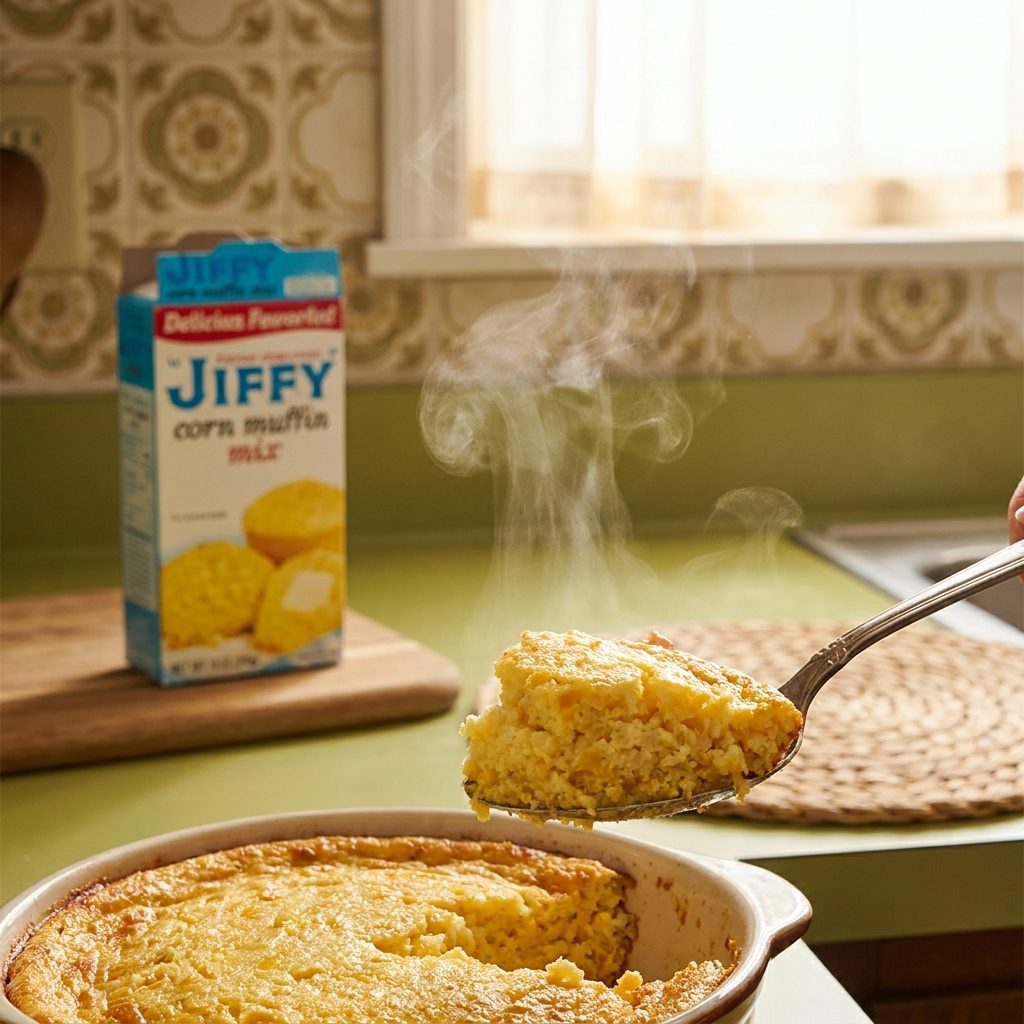
The later arrival. Corn pudding and spoon bread had been around for generations, but the familiar Jiffy-based casserole became a potluck fixture in the later 20th century and then refused to leave.
The recipe fit on an index card: a box of Jiffy corn muffin mix, creamed corn, drained whole-kernel corn, butter, sour cream, and an egg in some versions. Stir, pour, bake.
It came out somewhere between bread and pudding, sweet and soft, and it sat comfortably beside ham, chicken, beans, or anything else on the table. Children liked it because it tasted like cornbread that had stopped pretending to be sensible.
14. The Broccoli Rice Casserole Bubbling With Velveeta
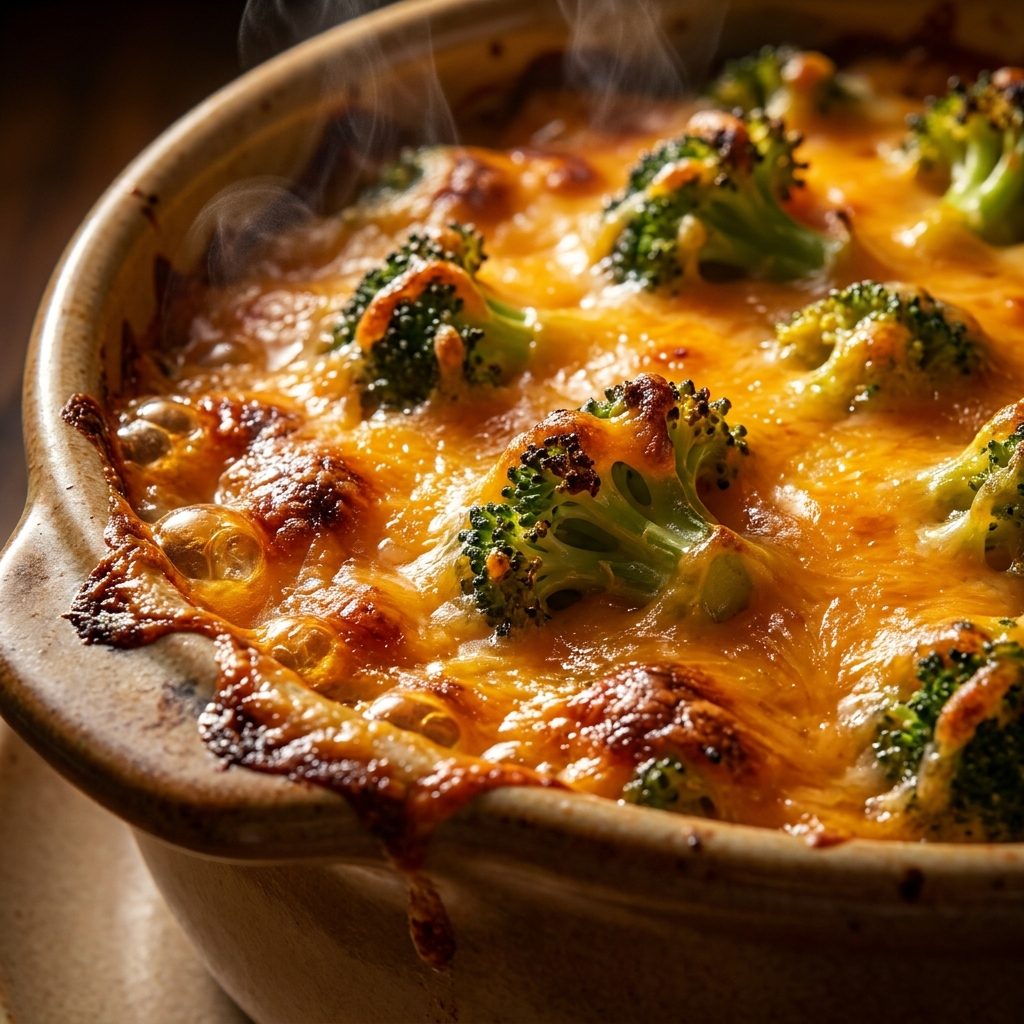
You could hear this one before you saw it. It arrived from the oven still bubbling at the edges, where the Velveeta had crept up the sides of the dish and browned.
Rice, chopped broccoli, condensed soup, and a bright orange block of processed cheese cut into cubes melted into a sauce with no lumps and no manners. It was rich in a way that felt slightly illegal on a Sunday, and the presence of broccoli did very little to improve its alibi.
13. The Lime Jell-O Salad Released From the Fancy Mold
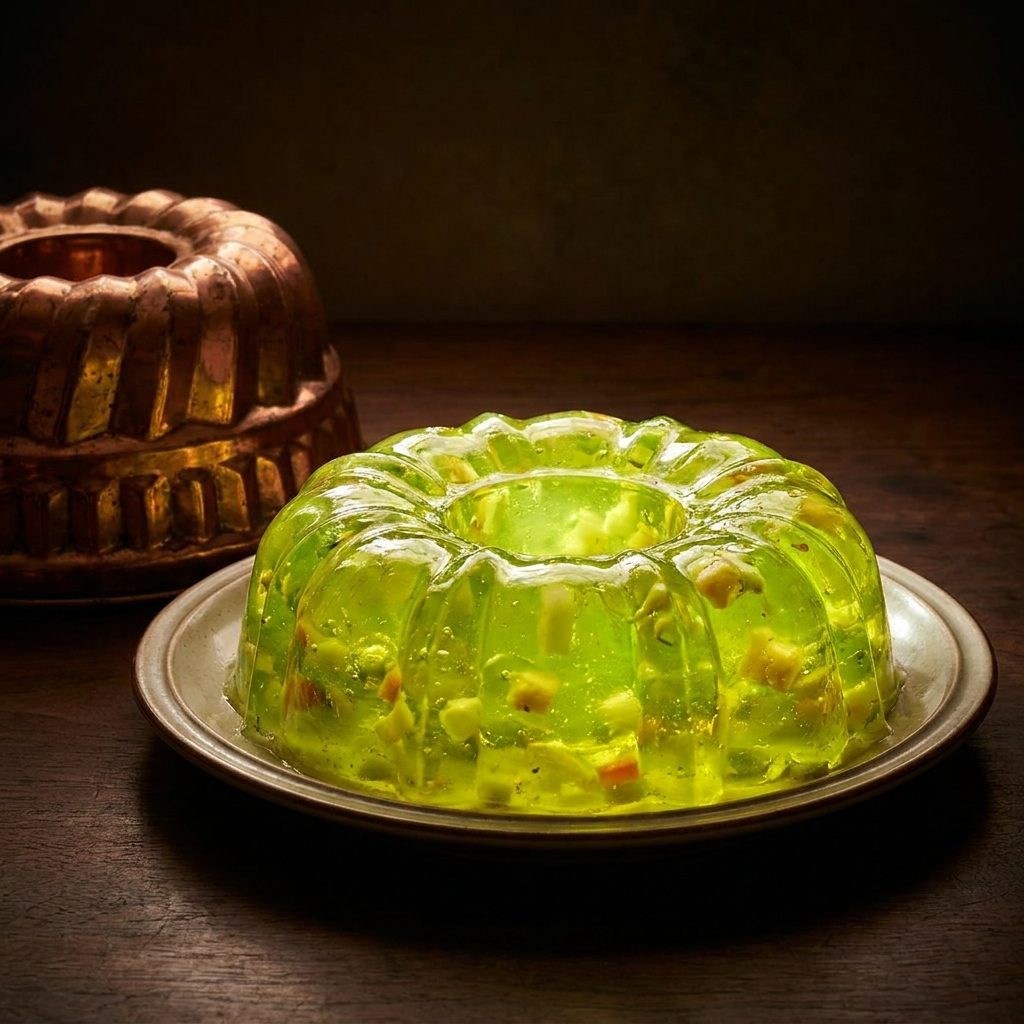
There was always one wobbling on its plate at the far end of the salad table, catching the fluorescent light like a piece of green stained glass.
Lime Jell-O formed the base. Then came the additions that made no earthly sense together and somehow worked: small-curd cottage cheese, crushed pineapple, chopped pecans, and whipped topping folded in until the mixture turned cloudy.
It set overnight in a fluted mold and was inverted onto a plate the next morning while everyone held their breath. Half the congregation loved it. The other half accepted a polite spoonful and found somewhere beneath a roll to hide it.
12. The Deviled Eggs Riding in the Harvest Gold Carrier
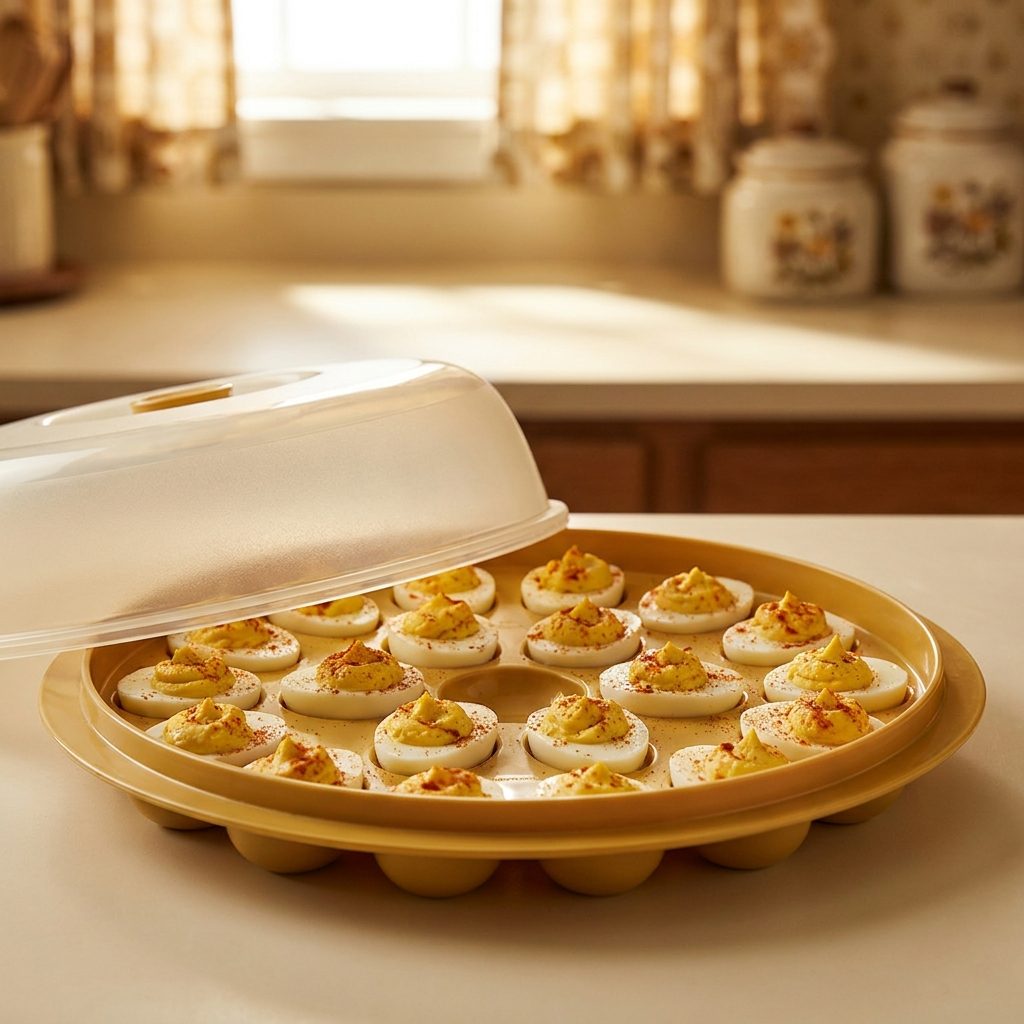
The carrier was the point. That harvest gold Tupperware egg tray with the snap-on dome existed for one mission: getting two dozen deviled eggs to the fellowship hall without one sliding into the next.
Inside sat the halves, filled with whipped yolks, Miracle Whip, mustard, and whatever small adjustment separated one family’s recipe from another. Each received paprika from a shaker held high for even coverage.
Bring deviled eggs, and you carried the tray home empty and slightly sticky. You washed it, dried it, and knew it would be filled again the following month. Some church foods ran on a schedule.
11. The Potato Salad Made From Measurements Like “Some” and “Enough”
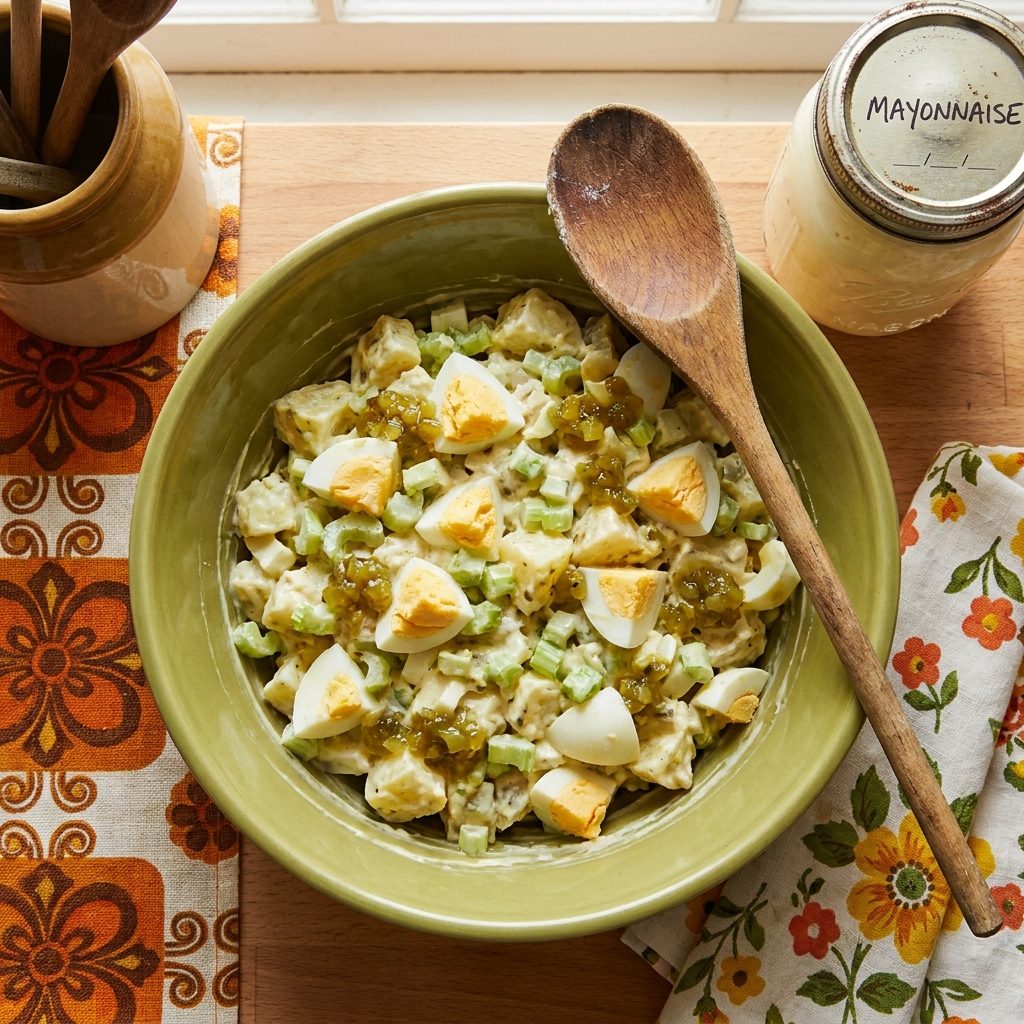
Every family had one bowl for potato salad—avocado green, harvest gold, or some shade Tupperware had invented and everyone else had accepted. It came out for funerals, reunions, picnics, and the fellowship hall.
The recipe lived in someone’s head. Ask for it, and you received a shrug followed by the word “some.” Some Miracle Whip. Some mustard. Some pickle juice if the mixture looked dry.
You could identify the cook before reading the masking tape. One version had more egg, another leaned hard on sweet pickle, and a third was the one people quietly hoped had arrived that Sunday.
10. The Sweet Baked Beans With the Dark, Caramelized Edges
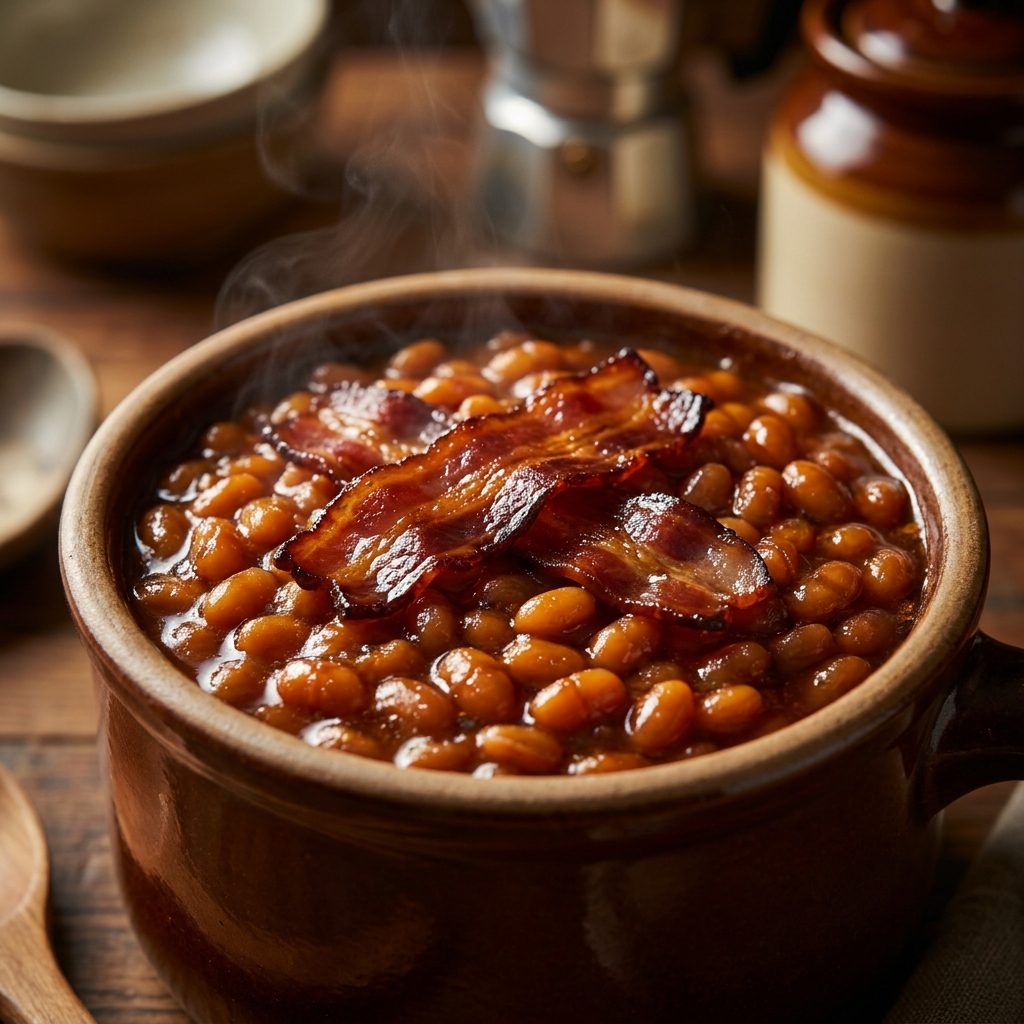
Somebody’s beans had bacon arranged across the top. Somebody else’s had it stirred through. This was a genuine and ongoing debate that no church committee ever settled.
The shallow dish arrived warm, wrapped in a bath towel on the passenger seat, and the smell of brown sugar and onion escaped before the lid came off.
The best part lived near the edge, where the beans had reduced against the crock and gone almost to candy. There was enough perimeter for several people to claim a dark spoonful, though everyone still watched the serving spoon to see where it landed.
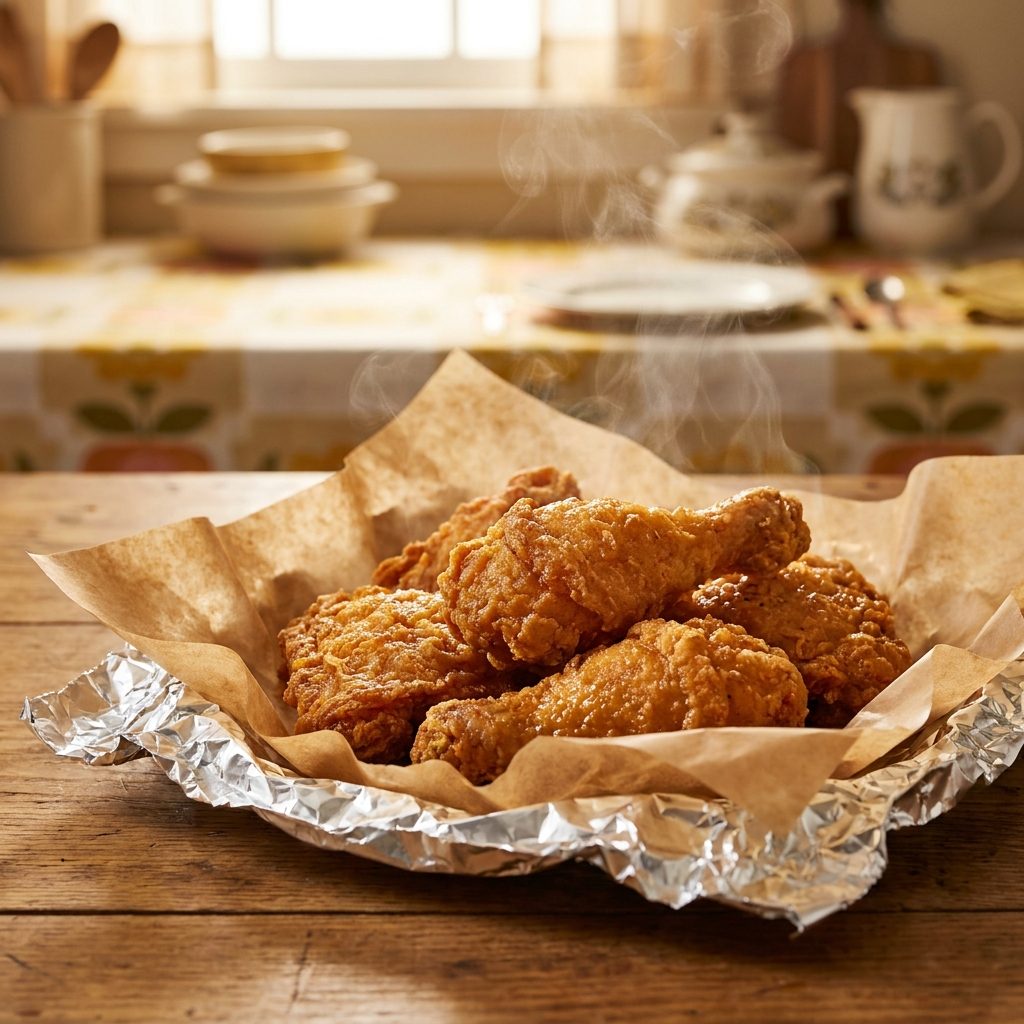
9. The Fried Chicken Everyone Had to Wait for Until After the Blessing
Would you like to save this?
The chicken always seemed to arrive first and wait the longest. It was wrapped in wax paper, then foil, then a dish towel, and carried into the fellowship hall while the crust was still crisp.
By modern food-safety standards, cooked chicken should be held properly hot or refrigerated rather than left warming for hours. Memory, however, preserves the foil crackle, the smell of peppered crust, and the unbearable distance between the final amen and the first serving piece.
Nobody’s chicken tasted like your grandmother’s, and everybody’s grandmother made it best. Both things could be true at once.
8. The Cocktail Meatballs Simmered in Grape Jelly and Chili Sauce
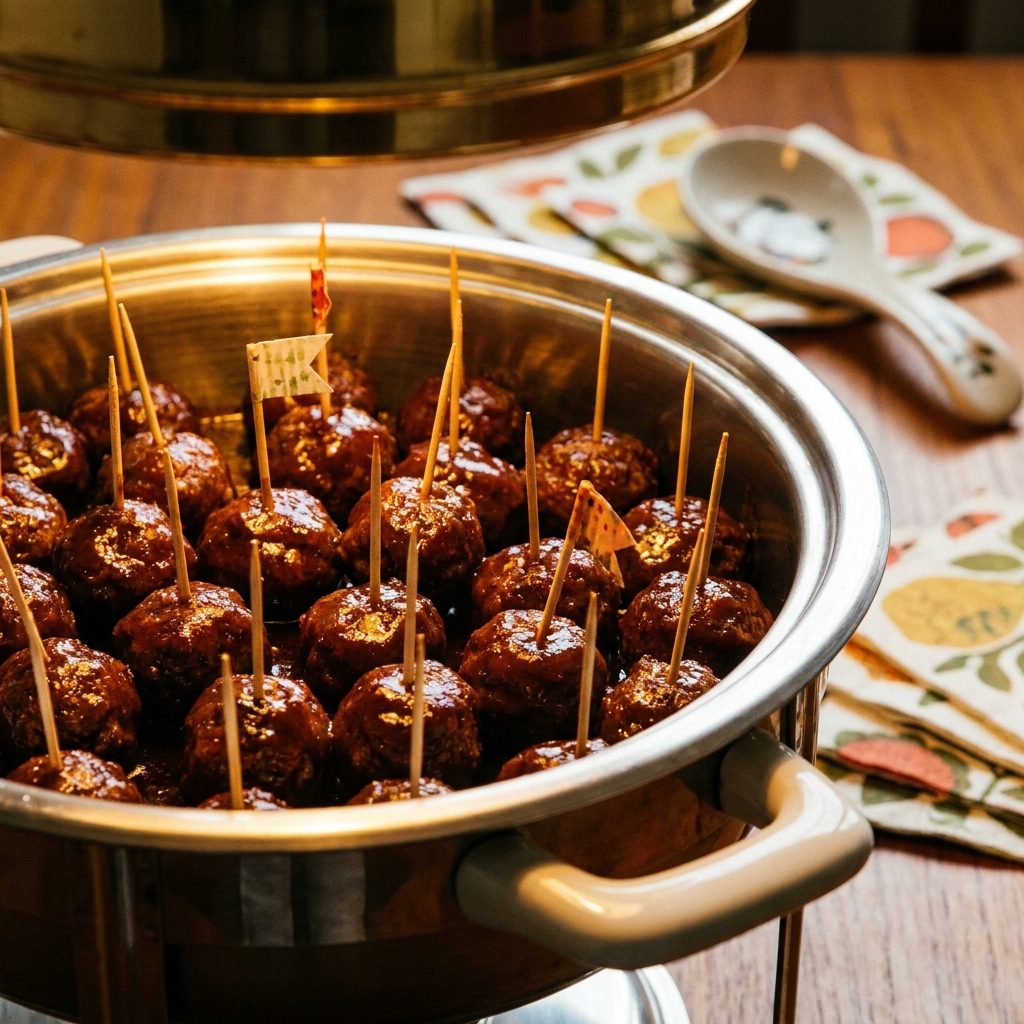
Grape jelly and chili sauce. That was the entire secret, and it made no sense until you tasted the combination. Then it made perfect sense.
The meatballs occupied the appetizer stretch of the table, with toothpicks fanned out beside them like little flags. Return for another after making one circuit of the room, and the dish might already be down to a smear of glaze and a graveyard of used picks.
Somebody’s aunt brought them to everything. On the rare occasion she did not, people noticed and asked questions.
7. The Banana Pudding With Wafers Softening at the Edges
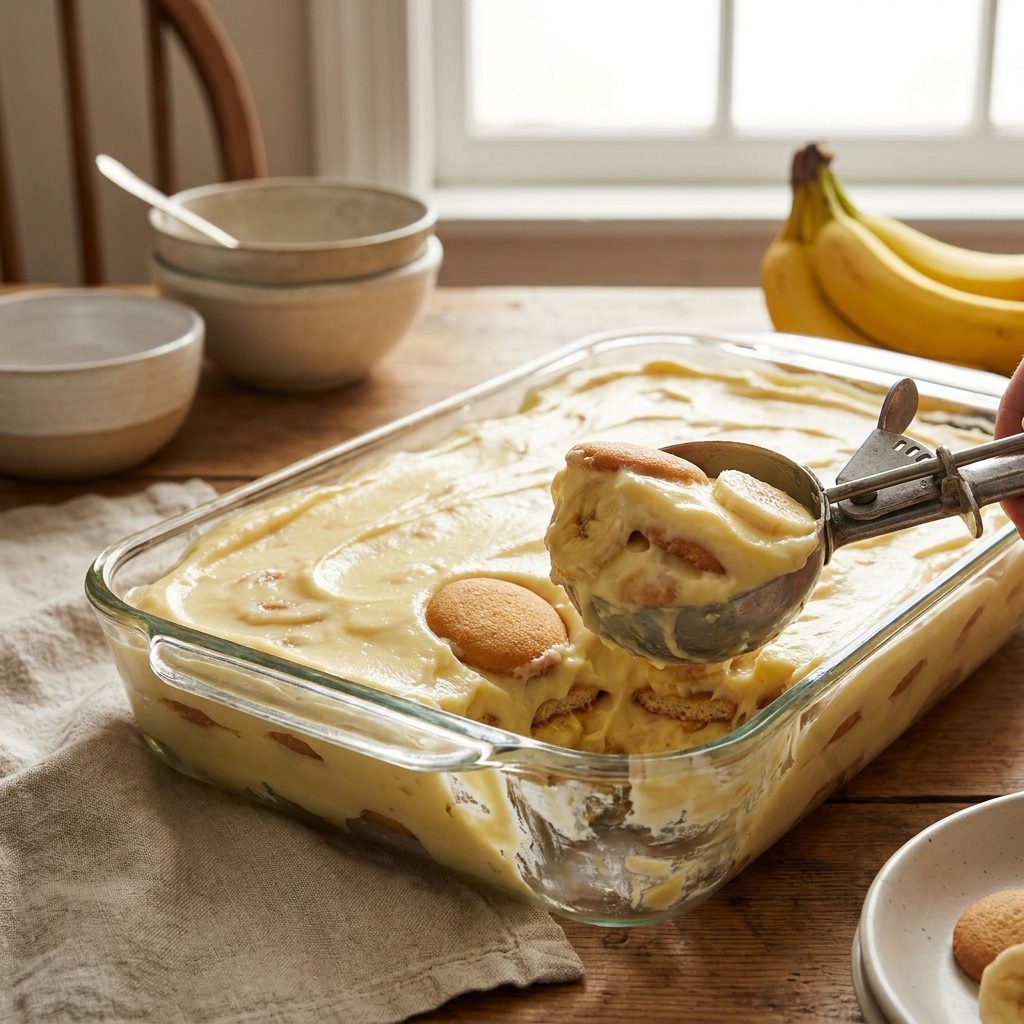
Somebody always made too much, and nobody complained. The pudding arrived in a long glass baking dish, its wafers already softening where they met the custard and bananas.
The meringue was the tell. A good church cook browned it just enough to hold a peak, and the toasted top made her dish recognizable from several tables away.
The pudding belonged on the cold-food table, kept chilled until the serving spoons came out. Once the line began moving, however, children required no encouragement. They took a generous scoop and left the green bean casserole to the adults.
6. The Sheet Cake With Buttercream Roses for the Biggest Sundays
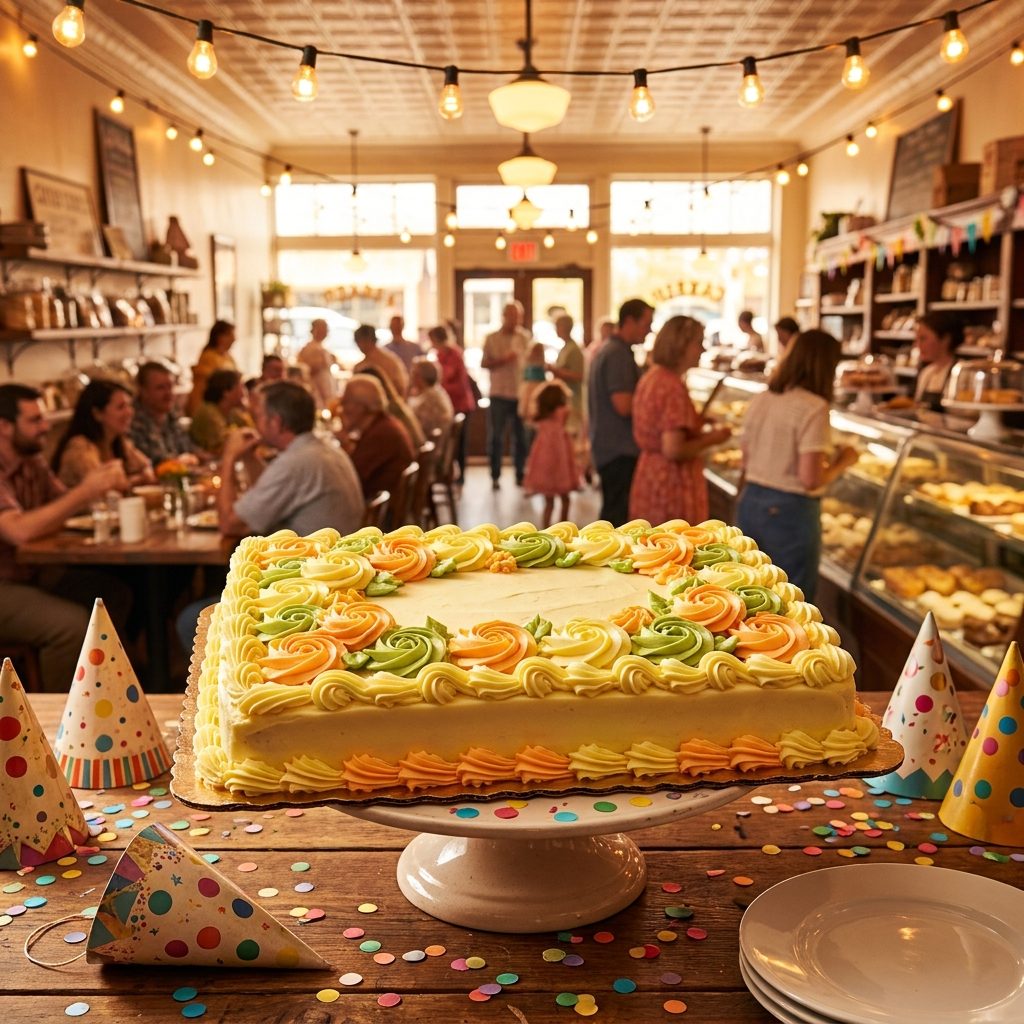
This was the big one. Church anniversary, Homecoming, Pastor Appreciation Day, or the Sunday somebody decided a milestone required frosting—the sheet cake arrived in a wide white box and demanded two steady pairs of hands.
Nobody was pretending the cake itself had been made entirely from scratch. Boxed mixes might be doubled or combined to fill a large sheet pan, then covered with buttercream by the one person in the congregation who owned serious decorating tips.
The roses came out slightly lopsided. That was part of their authority.
The cake was cut into a careful grid, but the pieces carrying the largest roses required immediate negotiation.
5. The Squash Casserole That Made the Garden Surplus Disappear
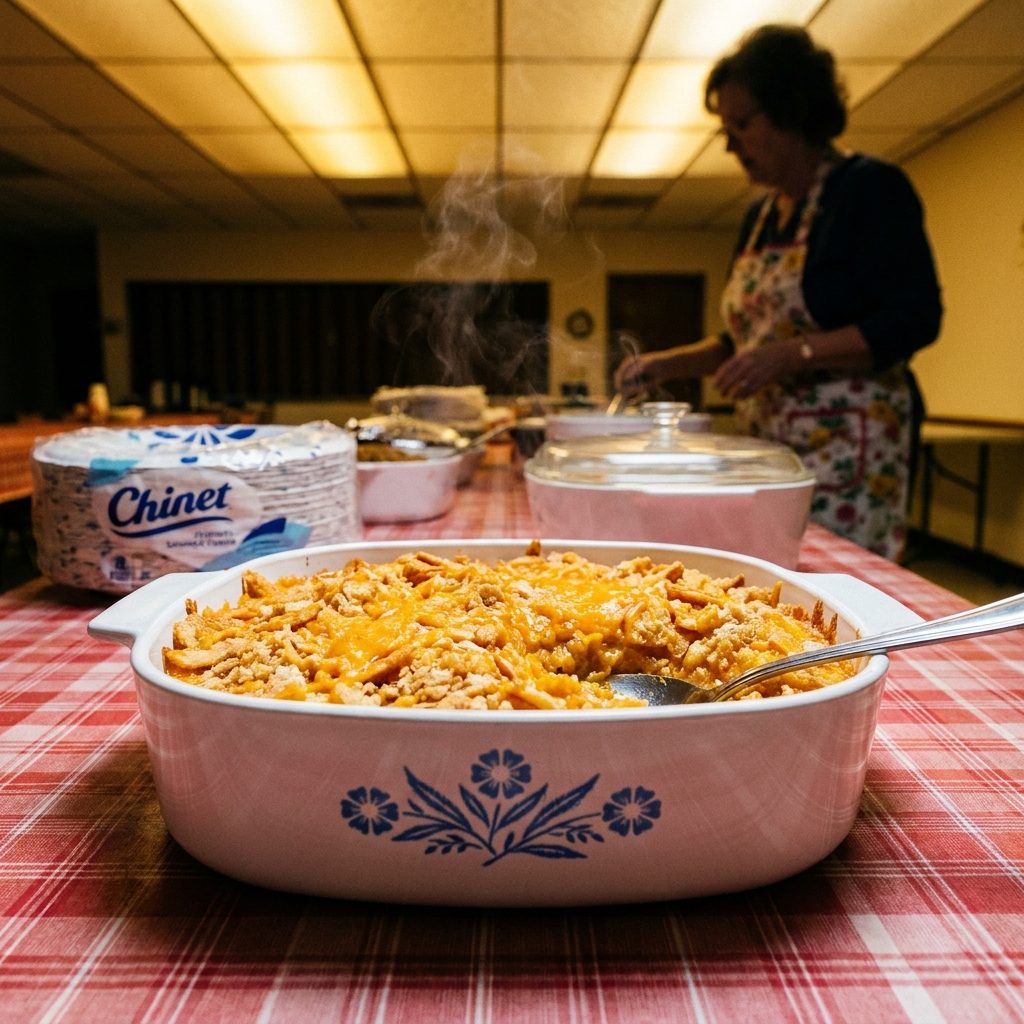
Nobody planted a garden intending to make this casserole. It appeared when every yellow squash ripened at once and neighbors had already stopped answering the door.
The squash was sliced thin, mixed with condensed soup or a creamy binder, covered with cheddar, and buried beneath crushed buttery crackers. After baking, the interior turned soft and almost custardy while the topping stayed crisp.
That contrast did the persuasive work. People who would not touch plain squash at dinner accepted a second spoonful once it arrived under orange cheese and cracker crumbs.
4. The Ham and Potato Casserole That Gave Sunday Dinner a Second Life
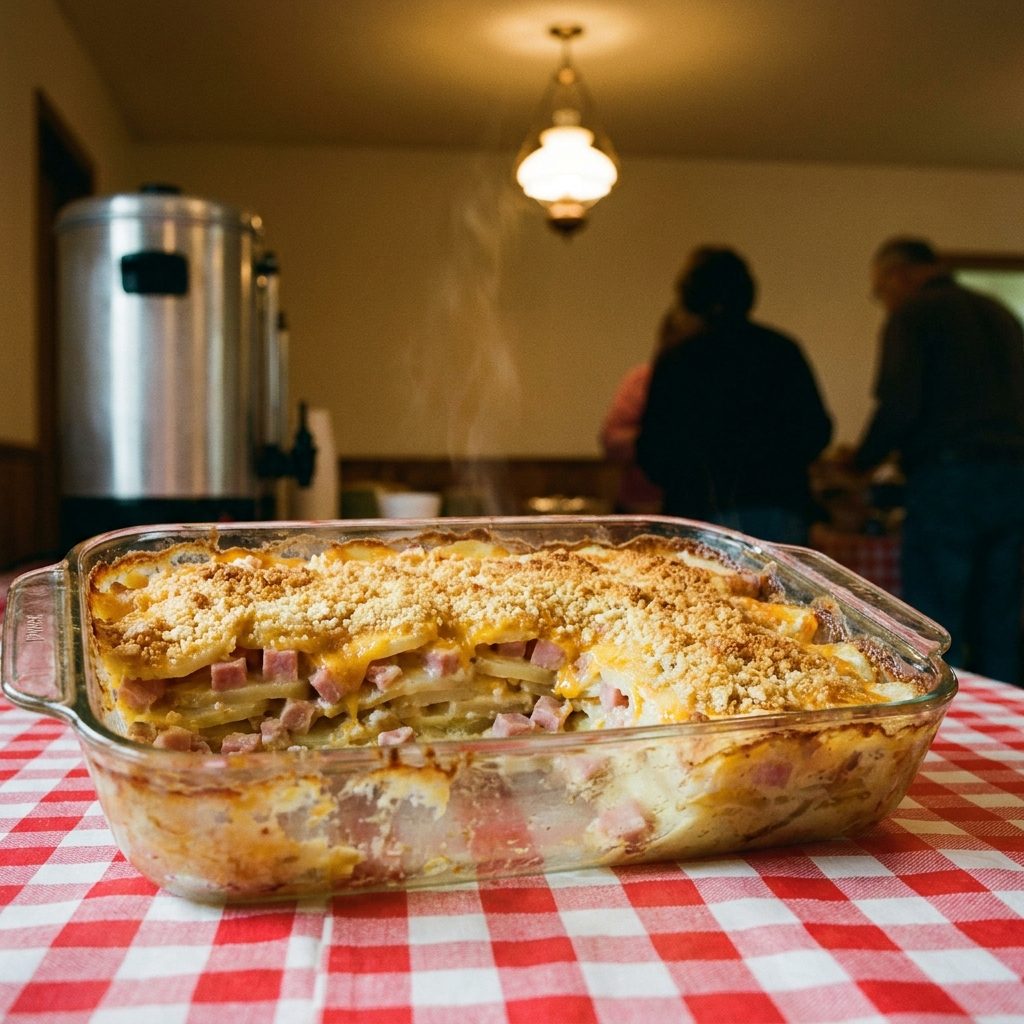
Ham and potato casserole was what happened to Sunday’s ham by the middle of the week. Nobody let good ham go to waste, so the meat was diced and layered in a Pyrex dish with thin potatoes, cream of celery soup, and cheddar.
Cracker crumbs went across the top because this era treated an uncrumbed casserole as unfinished business. Through the glass sides, the layers formed a small geological record of thrift—potato, ham, cheese, sauce, repeat.
The corners browned more deeply, the middle stayed soft, and the pan turned leftovers into enough food for another table. It did not need to be fancy. It needed to be hot and plentiful.
3. The Beef and Noodle Casserole Teenagers Loaded Three Scoops Deep
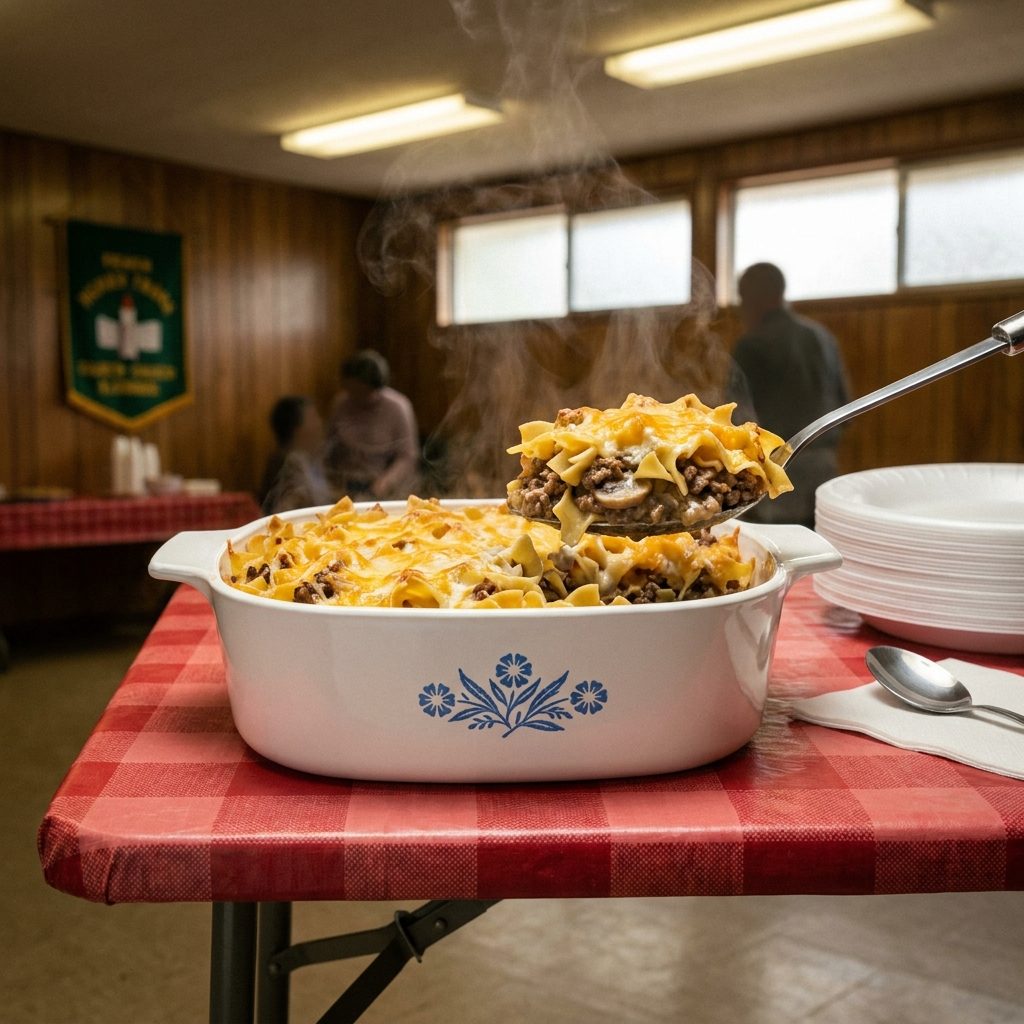
Beef and noodles was the buffet workhorse: familiar enough for cautious eaters, substantial enough for teenagers, and easy to stretch across a larger pan without losing its character.
Egg noodles, browned ground beef, condensed cream of mushroom soup, and cheddar formed the basic arrangement. It baked in the CorningWare with the little blue flowers, the dish that came out for company and returned home to be washed by hand.
It did not photograph well. Nobody cared. The appeal was a serving spoonful that held together, cheese browned near the sides, and enough left in the pan to justify returning after everyone else had gone through.
2. The Turkey Tetrazzini That Rescued the First Thanksgiving Leftovers
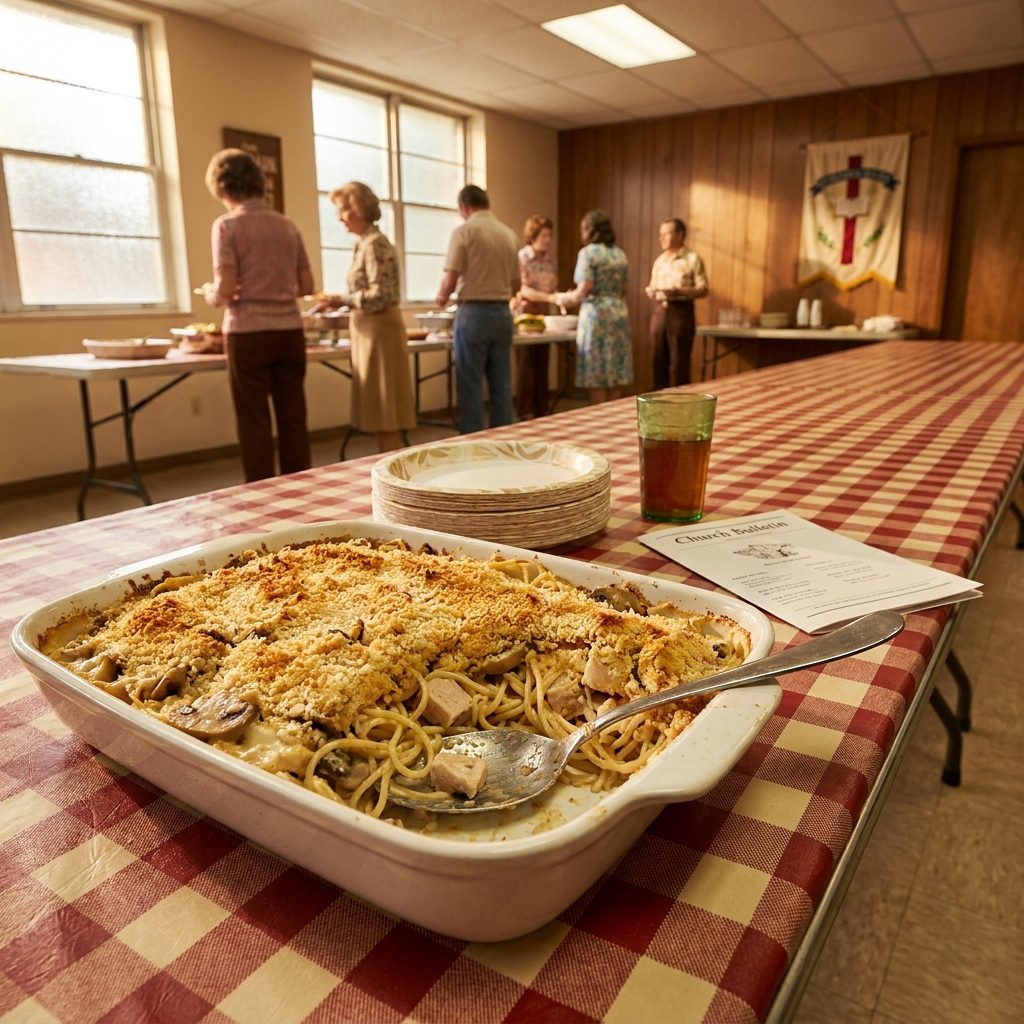
Turkey tetrazzini was what happened to the Thanksgiving bird during the first few days after the holiday, when throwing away usable turkey remained unthinkable. The meat was folded into spaghetti with mushrooms, a creamy sauce, and enough Parmesan to give the casserole a little ceremony.
The breadcrumb top supplied the contrast. Buttered and browned, it cracked beneath the serving spoon and gave the soft pasta underneath something to push against.
The leftovers had changed clothes, acquired a breadcrumb topping, and returned to church as company food.
The name was Italian, but the condensed-soup logic was thoroughly American. The dish was associated with opera singer Luisa Tetrazzini, although the precise origin of the original recipe remains disputed. Nobody at the fellowship hall needed the history. The casserole was warm, economical, and large enough to share.
1. The Baked Spaghetti Cut Into Squares Before Anyone Let It Rest
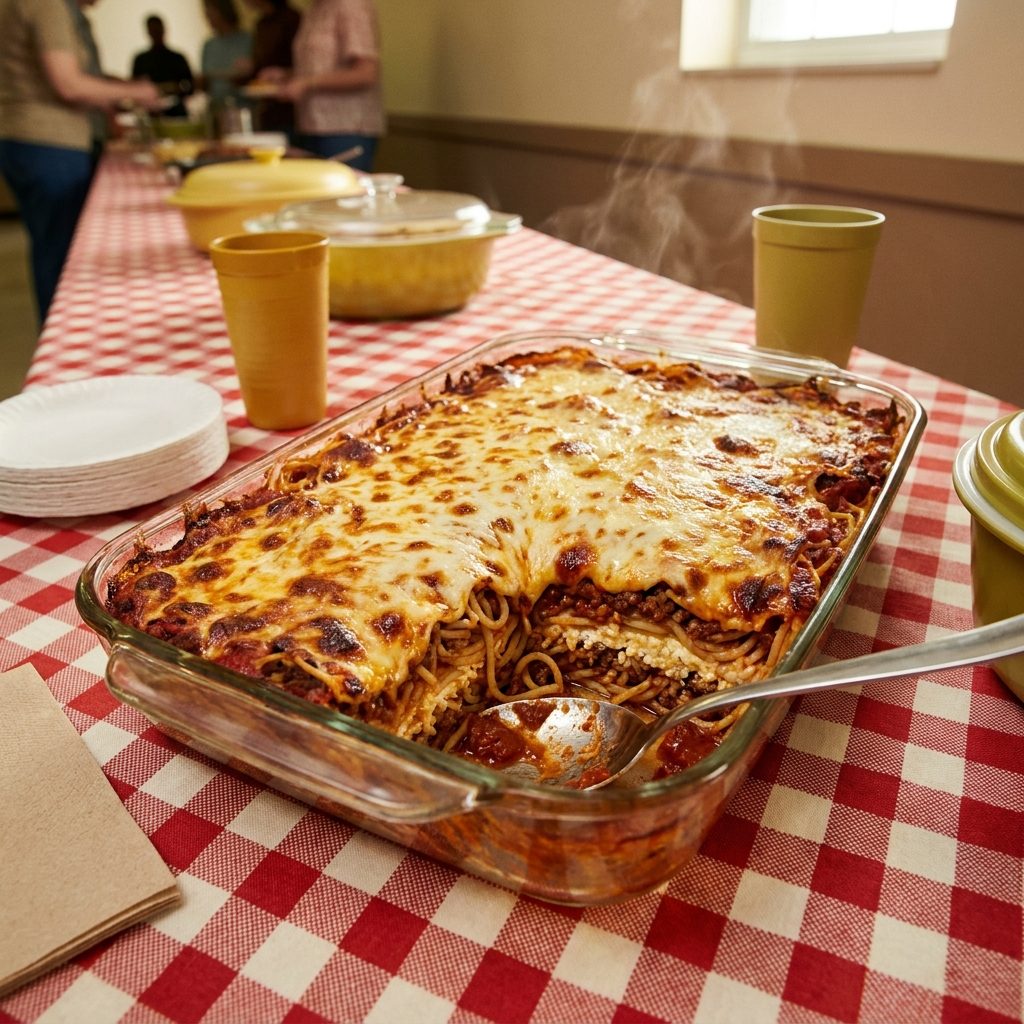
Somebody’s mother always brought baked spaghetti, and it arrived in the clear rectangular Pyrex that had made the same trip dozens of times. You could recognize it from thirty feet away by the top: mozzarella baked into a golden sheet, with dark edges where the cheese met the glass.
Underneath sat the entire construction. Spaghetti, meat sauce thick with ground beef, cottage cheese standing in for ricotta, and more mozzarella holding the upper layers together.
Let it rest, and baked spaghetti could be cut into tidy squares. Nobody waited that long. The first serving collapsed slightly, the cheese stretched from the spoon, and all pretense of neatness ended there.
The browned edge pieces attracted attention, but the soft center had its own advantage: more sauce, more cheese, and no need to pretend you had come back only to talk. By the time the last dishes were claimed and the masking tape peeled away, the middle was gone too.