Would you like to save this?
The casserole tells on you before you set it down on the folding table. It gives up the whole household. The way it runs on a weeknight, who’s really in charge of the stove, whether anyone in the family has ever taken a risk in their life. All of it, baked in and covered with foil.
You already know this. You’ve stood in a church basement and clocked the difference between the family that brought a bubbling homemade thing at 8 a.m. and the one that slid in late with a store box and zero shame. Those are two different nervous systems. Two different ways of moving through the world.
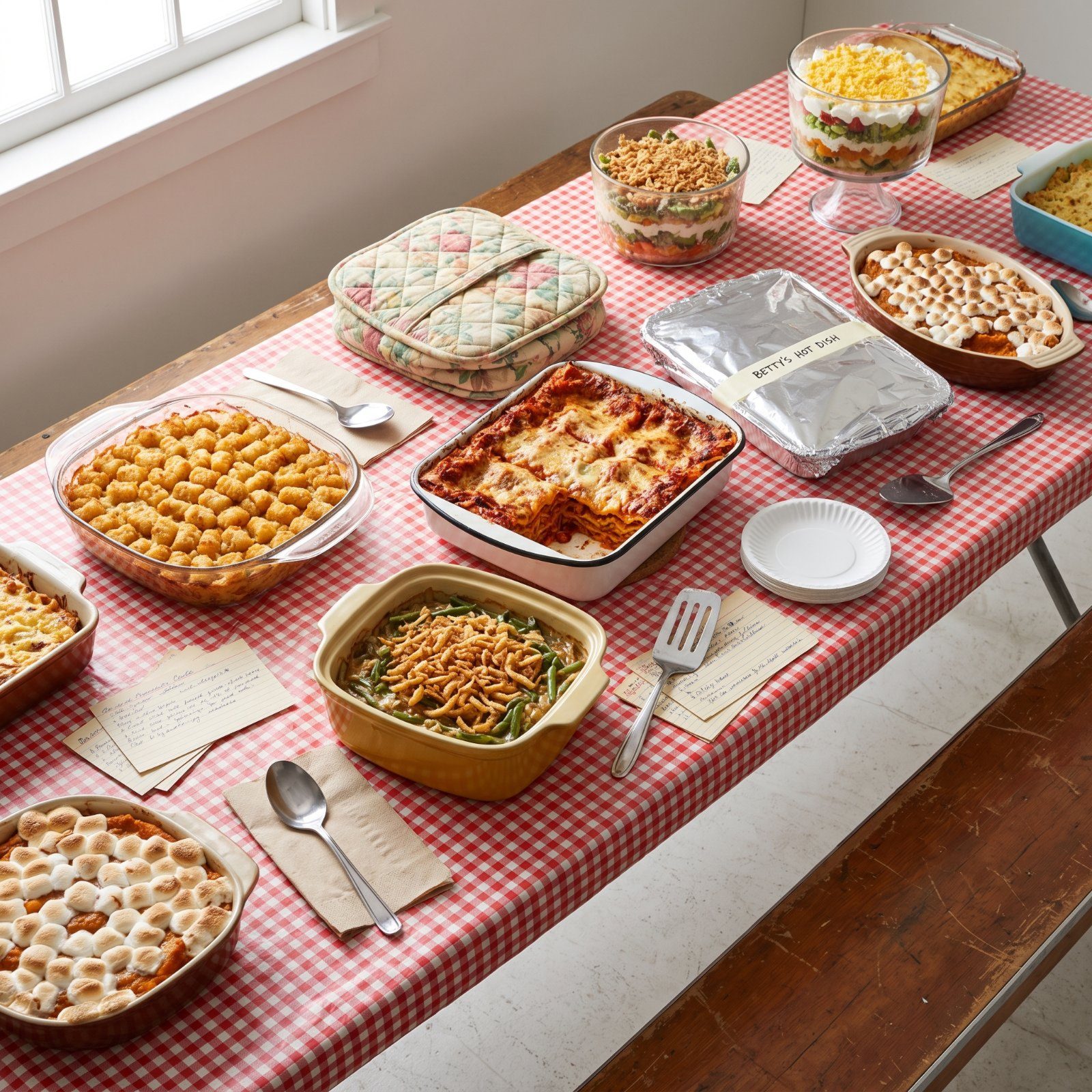
We went through twenty signature potluck casseroles and read each one like a personality test. Some readings are flattering. A few sting. All of them are truer than they should be.
The Casserole That Showed Up First to Every Church Basement (And What Being Early Says About a Household’s Whole Nervous System)
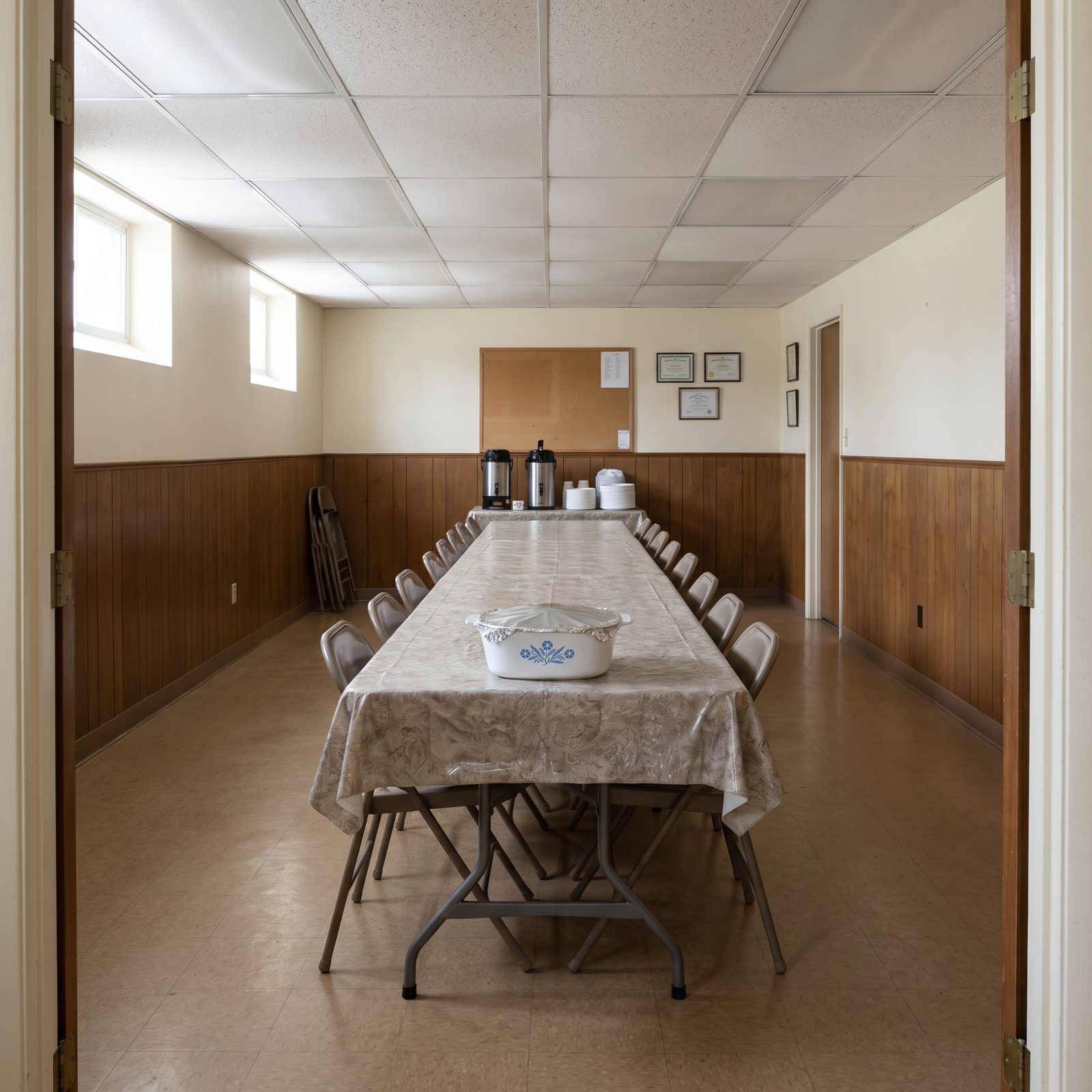
You know the dish. Foil-wrapped, still warm, sitting alone on the folding table twenty minutes before anyone else arrives. Usually a scalloped potato bake or a baked ham-and-noodle number in a white Corningware dish with the blue cornflower on the side. The household that brings it was in the parking lot at 4:40 for a 5:00 supper.
Here’s the thing about being that early. It’s rarely just good manners. Source One study on Big Five personality and punctuality found conscientiousness predicted every aspect of showing up on time, but chronic earliness tracked specifically with neuroticism, the anxiety-prone trait. Getting there first buffers the fear of being caught out.
So the family with the first casserole down runs on a particular kind of engine. Half of them are the planners who like the buffer minutes. The other half physically cannot relax until the dish is safely on the table. Both look identical from the outside. Both got there before the coffee urn was even plugged in.
Why the Tater-Tot-Topped Dish Signals a Family That Runs on Weeknight Triage, Not Recipes
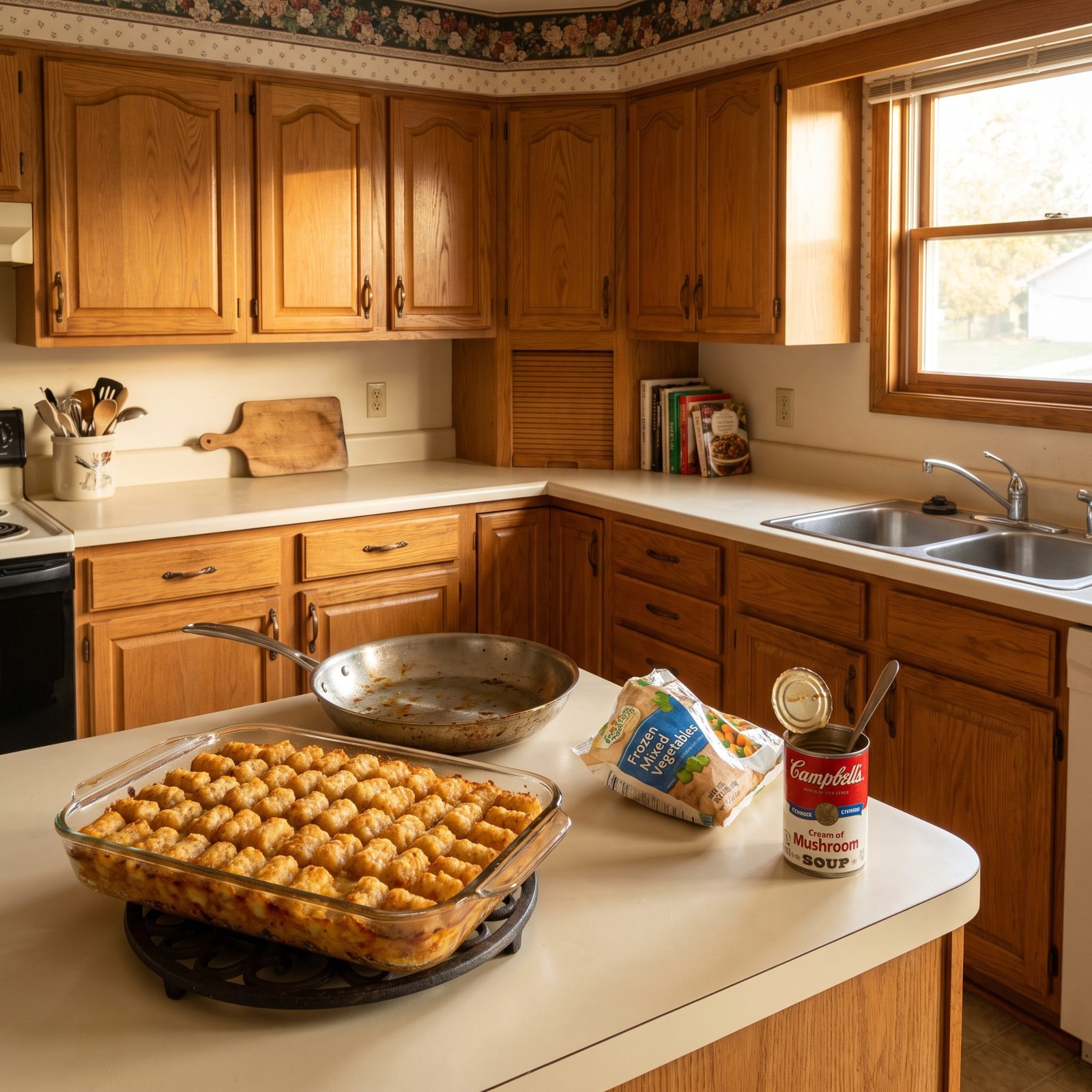
The tots are the tell. Ground beef, cream of mushroom soup, a bag of frozen mixed vegetables, and a bag of Tater Tots laid across the top in tidy rows like shingles on a roof. Baked in the 13×9 until the tops go gold. This is the dish of a household that cooks by inventory, not by cookbook.
The hotdish (and in Minnesota it’s hotdish, one word, don’t argue) was Source invented during the Depression to stretch food into a filling meal, with the first printed recipe showing up in a 1930s Grace Lutheran Ladies Aid cookbook out of Mankato. Tater tots joined in the 1950s and never left.
What it says about the house: dinner happens no matter what. Somebody’s got a shift ending at 5:30 and a kid at hockey by 6:15. The tot dish requires no measuring, forgives substitutions, and reheats fine. It’s not lazy cooking. It’s a family that has solved the weeknight and stopped apologizing for the solution.
The One-Ingredient-Away-From-Fancy Casserole That Betrays a Household Quietly Competing With the Neighbors
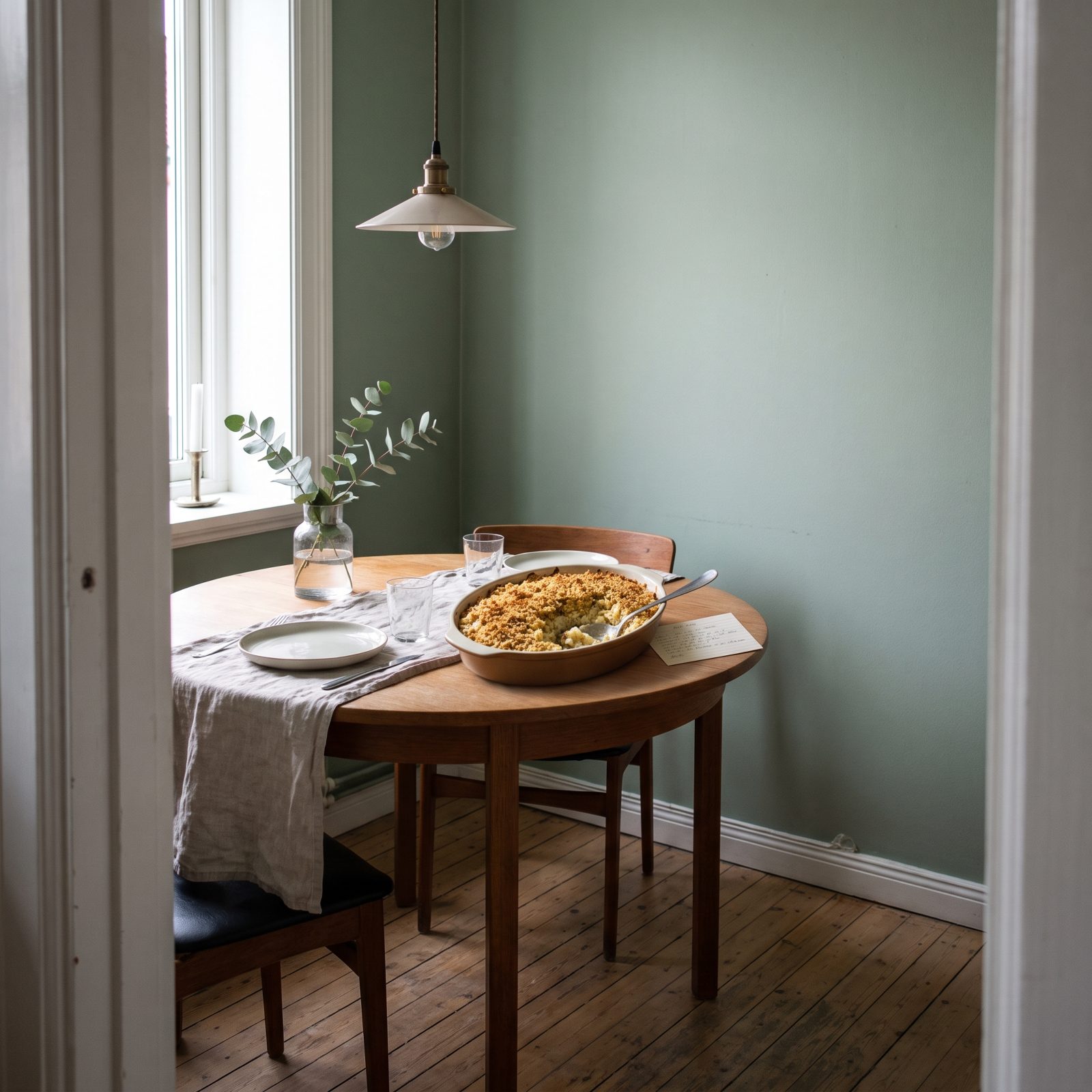
There’s always one dish at the potluck that’s trying a little harder than it needs to. The chicken and rice bake, except with a crumbled Ritz-and-butter crust, a handful of slivered almonds, and just enough sherry that someone will ask what’s in it. That question is the whole point.
This is the household running the upgrade. The base recipe is standard church-basement issue, but one ingredient got added specifically so it wouldn’t read as standard. Almonds. A different cheese. Fresh herbs from a windowsill pot. The tell is that the addition is visible or askable, never a quiet flavor improvement.
No shame in it. Comfort food does real social work. Source A 2025 Cognition and Emotion paper by Reid, Wildschut, Sedikides and colleagues found nostalgic food raises comfort largely by strengthening social connectedness. The upgraded casserole wants that connection and a little quiet standing. It wants to belong at the table and be remembered after.
The Green Bean Number With the Fried Onions on Top: The Psychology of the Recipe Nobody Dares to Change
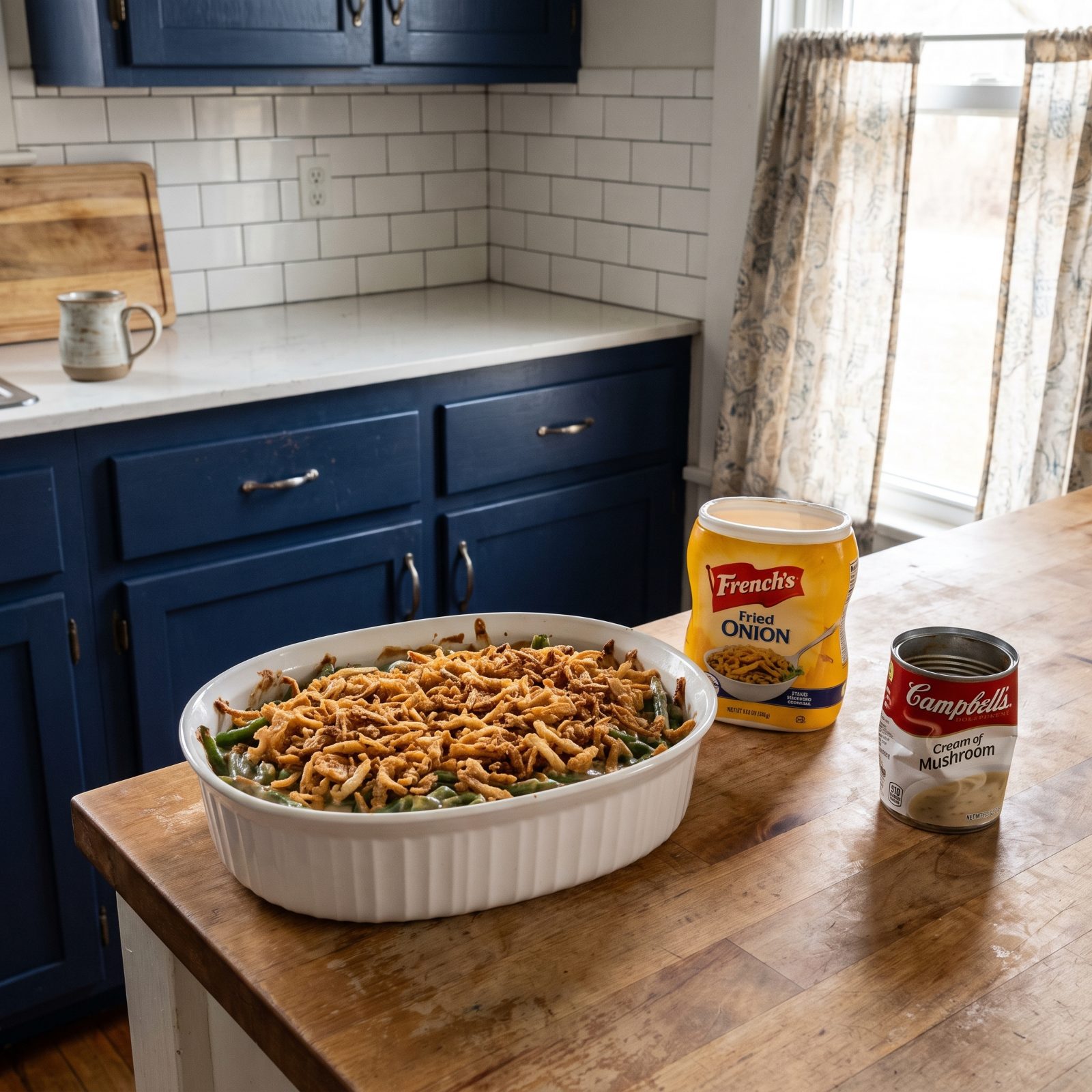
Six ingredients. Canned green beans, a can of cream of mushroom, milk, soy sauce, black pepper, and a can of French’s fried onions dumped on top for the last five minutes. It has not changed in seventy years, and it will not change on your watch either.
Dorcas Reilly built it in the Campbell’s test kitchen in Camden in 1955, originally calling it Green Bean Bake. Source It took off once the recipe hit the soup cans, and today roughly 20 million American households serve it every Thanksgiving.
The household that brings this one is guarding a ritual, not making a dish. Try swapping fresh beans for canned and watch a grown adult get genuinely tense. That reaction isn’t about taste. Source Nostalgia researchers describe food-evoked nostalgia as a bittersweet reliving of the past tied to social connection. Change the recipe and you’re not improving dinner. You’re editing someone’s memory of their grandmother’s kitchen, and they can feel it happening.
What the Cheese-to-Everything-Else Ratio Reveals About Who’s Actually in Charge of the Kitchen
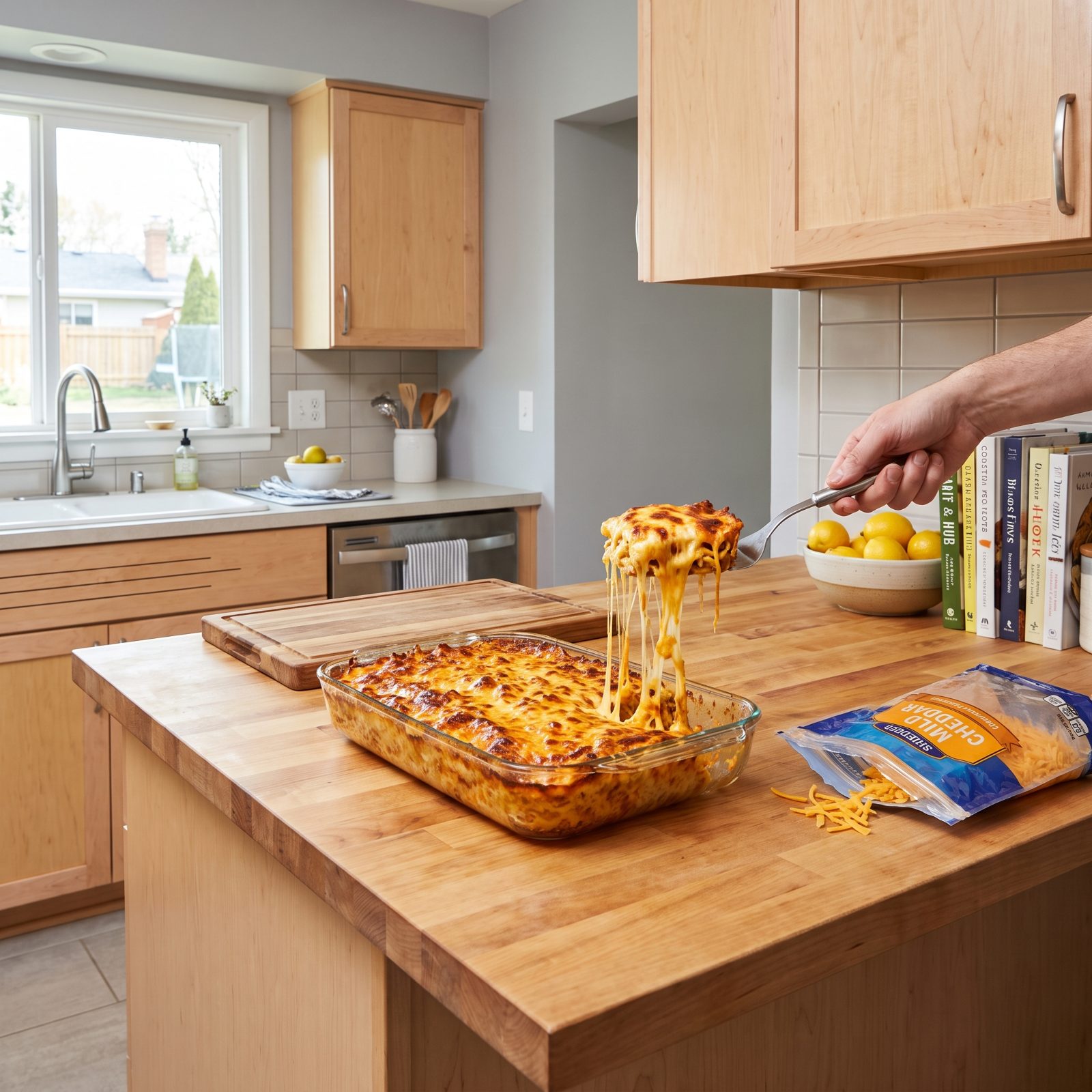
Cut into the casserole and watch what happens at the edge. If the cheese pulls up in long ropes and the top has that dark blistered crust, a kid had veto power in that kitchen. If it’s a modest golden dusting you can barely find, an adult with opinions about “too rich” was running the show.
The cheese ratio is a negotiation made visible. Every family casserole is a treaty between the person who wants it to taste like a party and the person watching the grocery bill. You can read who won by the pound.
And the pull matters more than logic says it should. Source Researcher Chelsea Reid notes the olfactory bulb ties directly to brain regions handling memory and emotion, which is why that melted-cheddar smell can drop you back into a specific kitchen faster than any photo. The household heavy on cheese isn’t just feeding people. It’s stamping a smell into everyone at the table, whether they signed off on it or not.
The Casserole Made From a Soup Can, and Why That’s a Confession About How This Family Spends a Tuesday
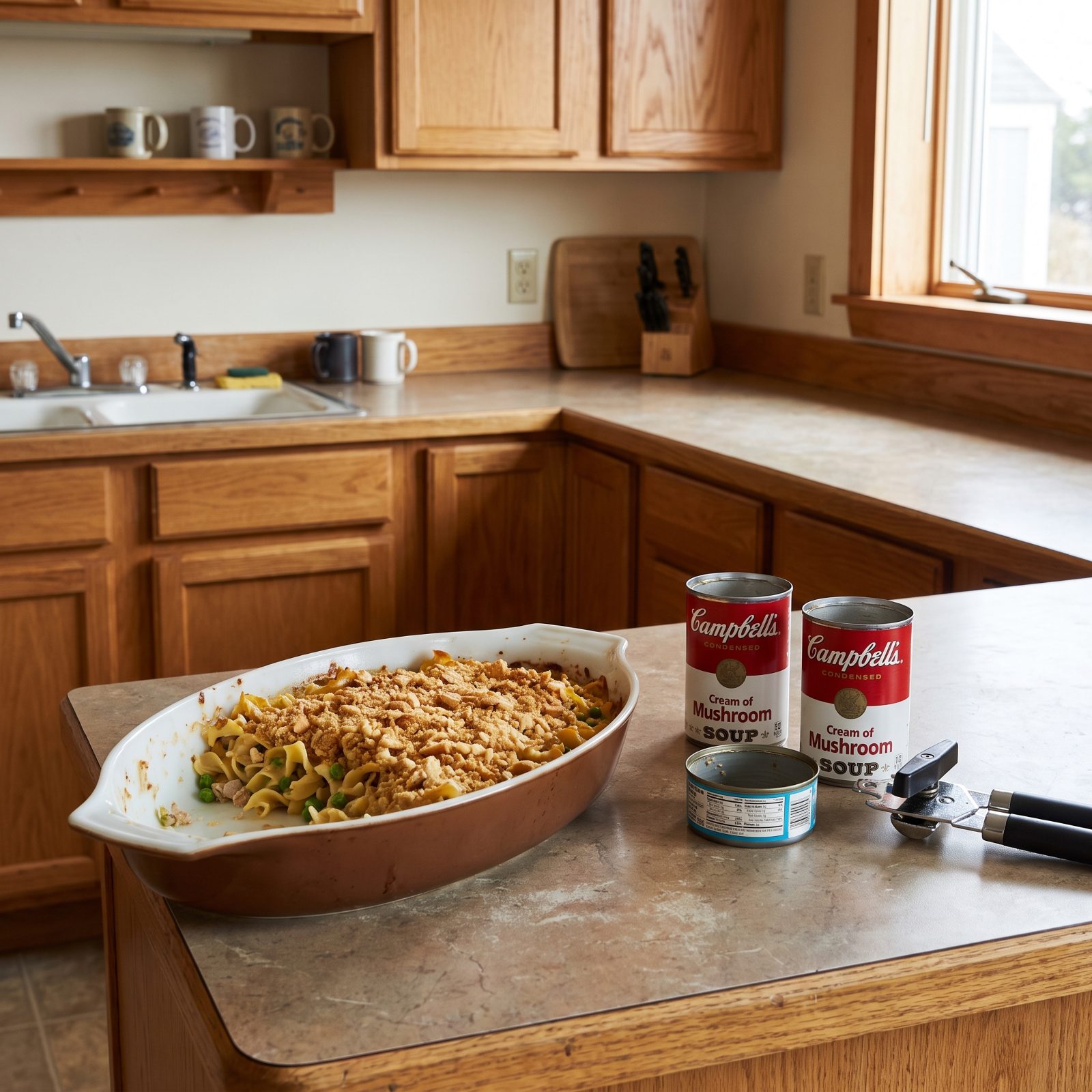
Tuna noodle. Egg noodles, a can of cream of mushroom, a can of tuna, a handful of frozen peas, crushed crackers on top. Twenty minutes of hands-on, maybe less. It is the most honest dish at the potluck, because it tells you exactly what a random weeknight looks like in that house.
The condensed soup can was engineered for precisely this. Source Campbell’s started making cream of mushroom in 1934, and it was the first of their soups marketed as a sauce as well as a soup, so useful as casserole glue in Minnesota Lutheran kitchens that it earned the nickname “Lutheran binder.”
No apology needed. The family bringing the soup-can dish isn’t cutting corners on love. They’re spending their Tuesday energy somewhere other than a roux, and they’re being upfront about it. There’s a quiet confidence in a household that shows up with the six-ingredient classic and doesn’t pretend it took all afternoon.
The Dish That Traveled in a Quilted Carrier With the Owner’s Name Taped to the Bottom (And the Territorial Instinct Behind It)
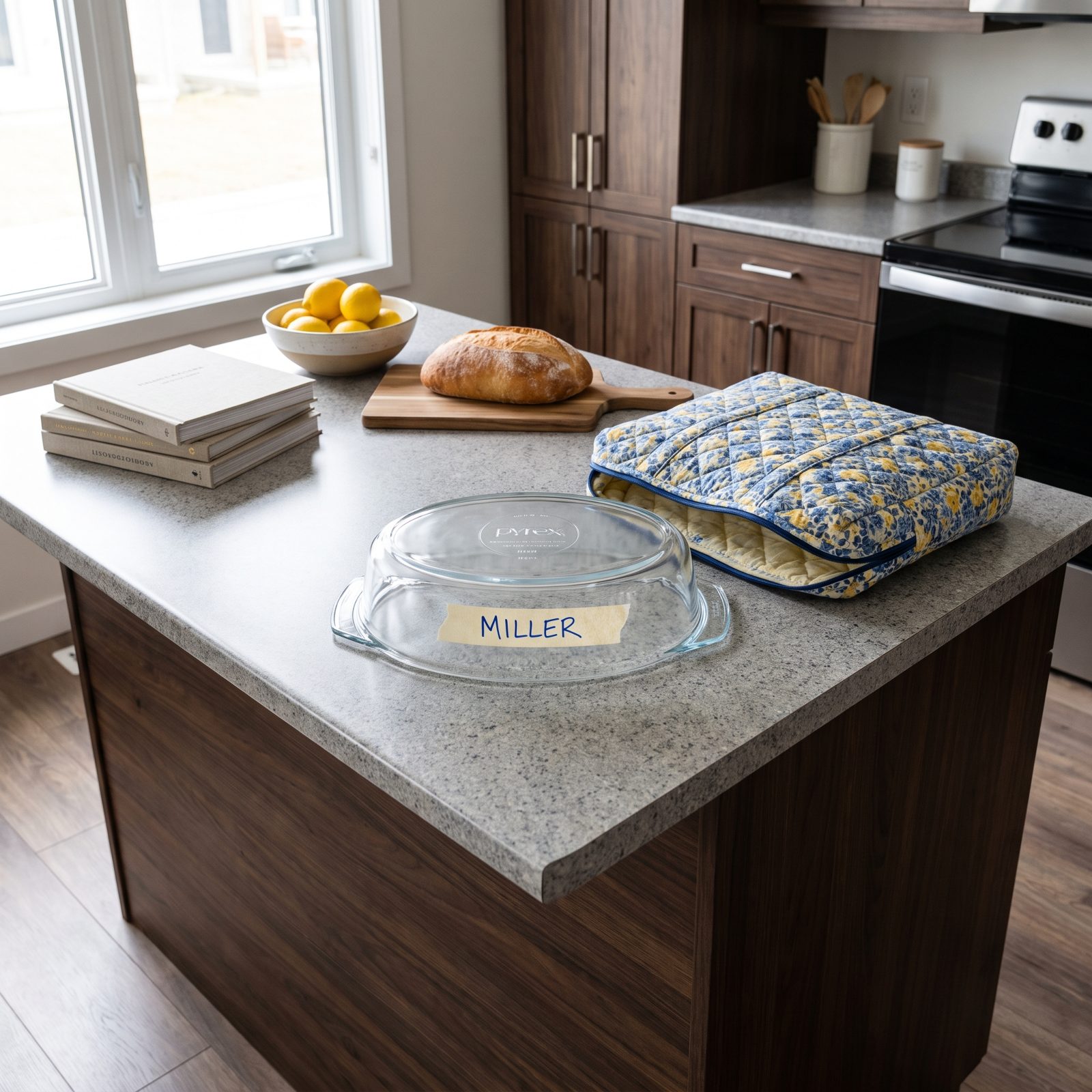
Flip the dish over. There it is. A strip of masking tape with a last name in ballpoint, or lately a return-address label stuck to the bottom of the Pyrex. The whole thing rode over in a quilted carrier with a zipper and a Velcro flap, temperature-locked, handles reinforced. This household is not losing a dish at a potluck. Not this time. Not again.
The name tape is a small monument to a specific betrayal. Everyone who has hosted a family reunion knows the empty spot in the cabinet where a good casserole dish used to live before it walked off in someone else’s carrier in 1994. The tape is the scar tissue.
It’s territorial, sure, but it’s also deeply relational. Source That 2025 food-nostalgia research found these shared eating occasions build comfort through social connectedness. The labeled dish is a thing that leaves the house, feeds the group, and comes home. The name on the bottom is a promise that the household intends to keep showing up, dish in hand, indefinitely.
Why the Household That Brings the Hot Dish Is Reading the Room Better Than the One That Brings the Dessert
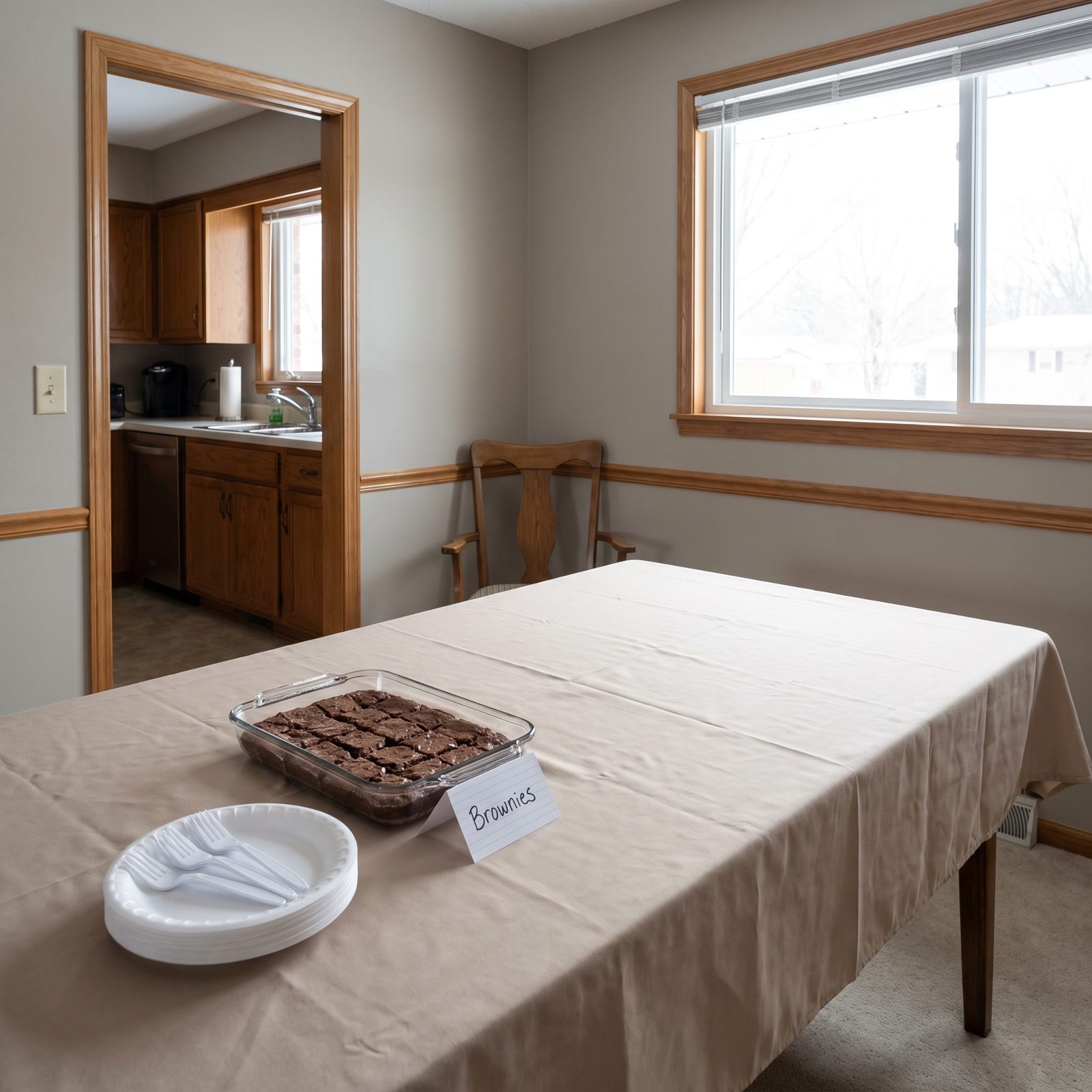
Dessert is easy. Everyone loves the person who brought the sheet cake. But the household that shows up with the hot main dish, the sausage-and-potato bake or the big pan of scalloped ham, took on real risk. They had to guess how many mouths, keep it hot in transit, and gamble that the table needed a workhorse and not a fourth brownie tray.
That’s not generosity. That’s social reading. The hot-dish household is doing the math nobody thanks them for: somebody has to feed the crowd, and they volunteered for the hard job.
There’s a reason it lands. Source As a Mankato pastor put it about hotdish, the dish “was made to be with other people.” The main course is a commitment to the whole gathering, not just the sweet ending. Source And the research bears out why it sticks in memory: food-evoked nostalgia is a powerful, mostly positive experience precisely because it’s wrapped up in feeding the people we care about. The dessert gets the applause. The hot dish gets remembered.
The Sweet Potato Casserole With Marshmallows: When a Family Can’t Tell the Difference Between Dinner and Comfort
Would you like to save this?
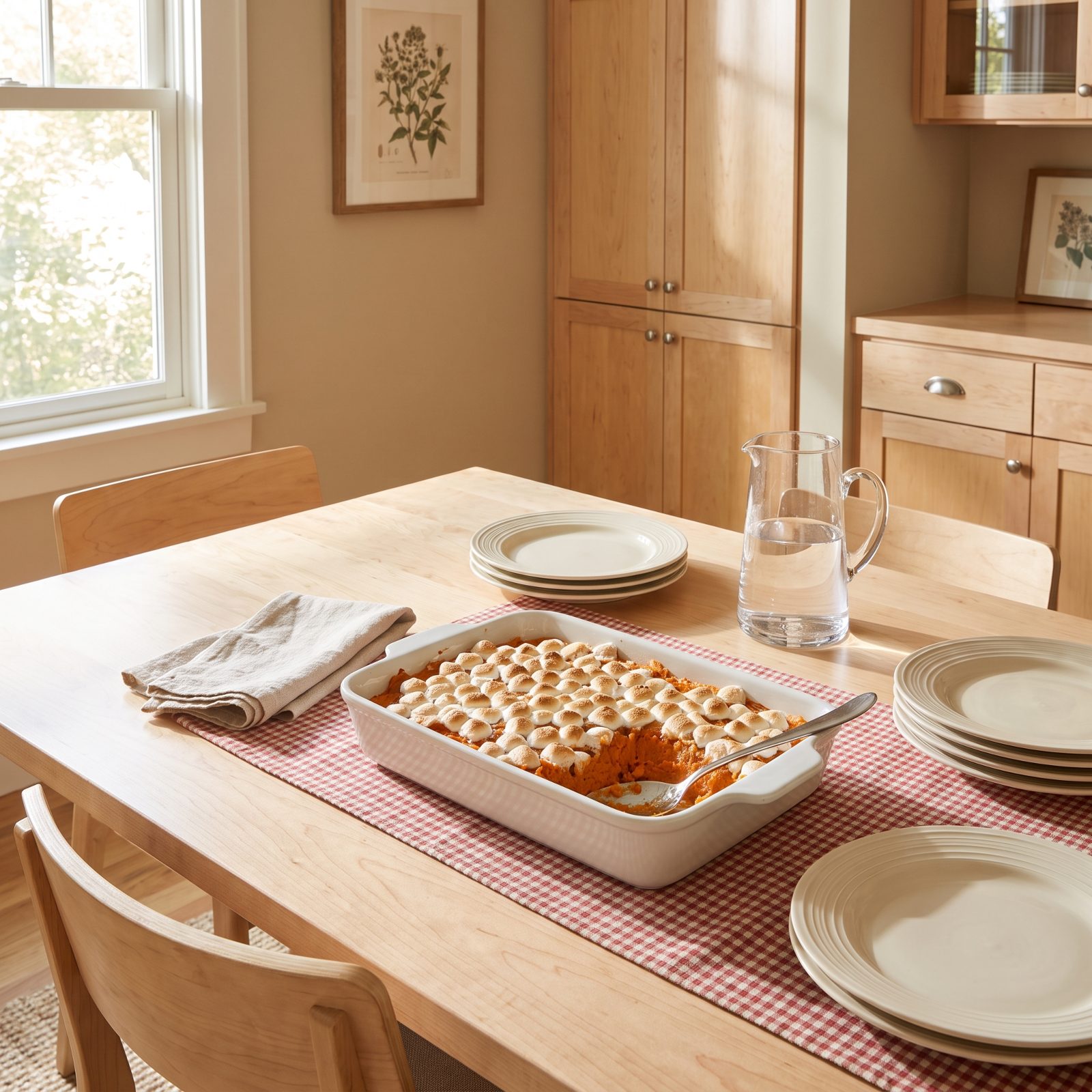
Orange under a browned marshmallow crust, brown sugar caramelizing at the edges of a chipped Corningware dish, a serving spoon that comes up sticky every time. This is the casserole that lands on the table as a vegetable and gets eaten like dessert. Nobody in the household is confused about this. That’s the whole point.
A family that makes this every year has decided, quietly, that dinner is allowed to comfort you. And the research backs the instinct. (Source) found that nostalgic foods deliver emotional benefits even when participants only imagined eating them, pointing to a psychological payoff that runs deeper than sugar. The high-sugar, high-starch profile is not a bug. It’s (Source), foods tied to childhood and prepared the same way every single time.
The marshmallows aren’t a garnish. They’re a signal. This house treats a Tuesday like a holiday if it feels like one.
The Seven-Layer Anything and the Personality Type That Needs Every Layer to Show
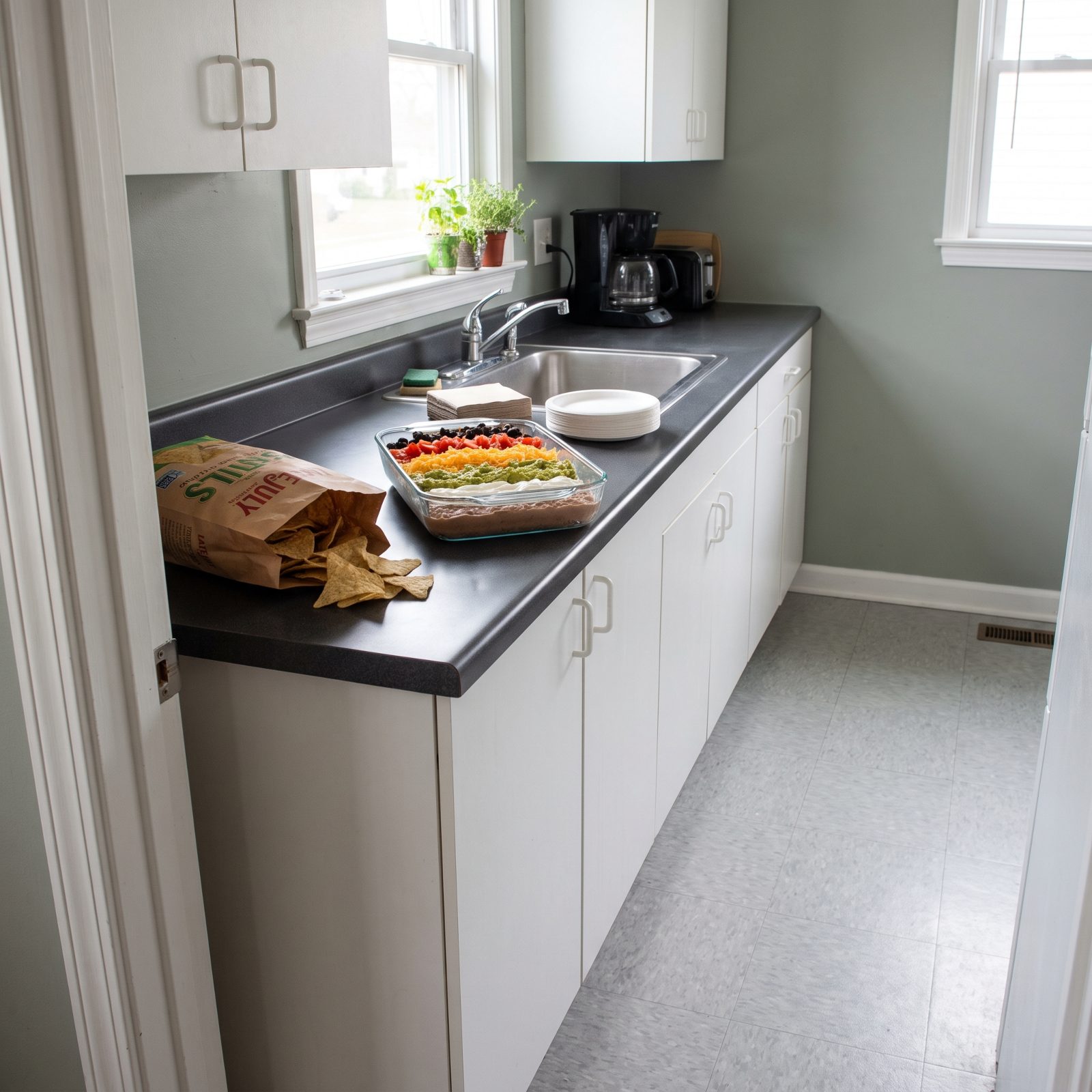
Glass dish, always glass. Never ceramic. Because the whole reason this casserole exists is so you can see the strata from the side: refried beans, then a sour cream tier, guacamole, cheese, tomatoes, olives sliced into little wheels. Seven-layer taco dip in a clear Pyrex, presented so nobody misses the engineering.
Ceramic would hide the work. This household will not hide the work.
There’s a real personality read here. The person who builds a layered dish and serves it in glass wants the effort acknowledged, and that’s a normal human wiring, not a flaw. Cooking for a group is an implicitly social act, a way of saying I made this for you without saying it out loud. The glass dish just says it a little louder. The layers are a visible receipt for care.
What Bringing the Same Casserole to Every Single Event Says About a Household’s Relationship to Risk
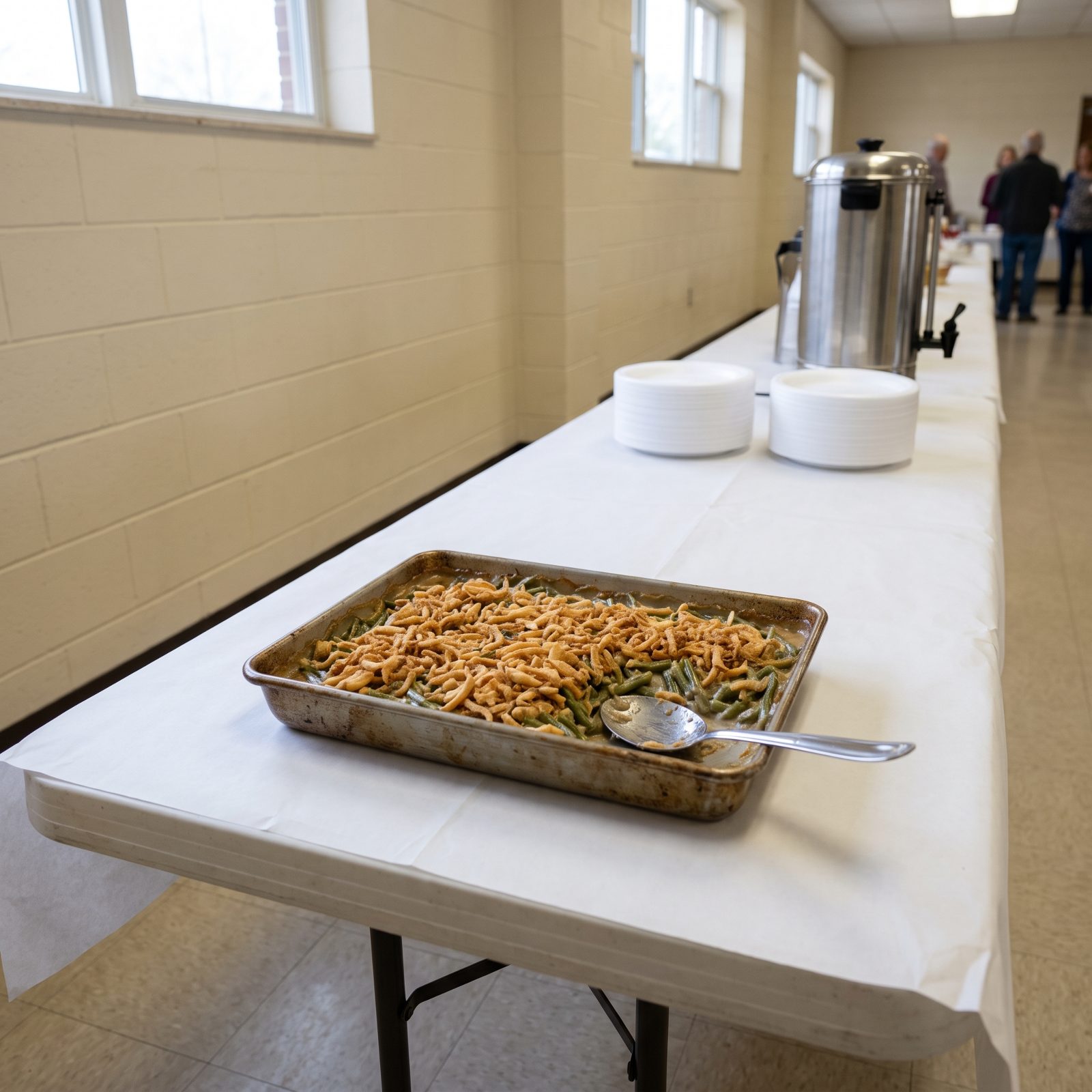
You already know what they’re bringing. You knew before the invitation went out. Green bean casserole with the fried onions on top, in the same battered 9×13, every graduation, every funeral, every Fourth of July for as long as anyone can remember.
This isn’t laziness. It’s a decision about risk, made once, decades ago, and never revisited. And there’s comfort logic underneath it. (Source) describing dishes tied to “the security of childhood.” A household that brings the same dish every time has turned security into a strategy. No new recipe means no risk of the new recipe flopping in front of everyone you know.
The reliability is the gift. A dish that shows up unchanged is a small promise that some things won’t. At a funeral, that’s not nothing. That’s the whole reason it works.
The Regional Tell Hiding in Whether It’s Called a ‘Hotdish,’ a ‘Casserole,’ or Just ‘The Thing Mom Makes’
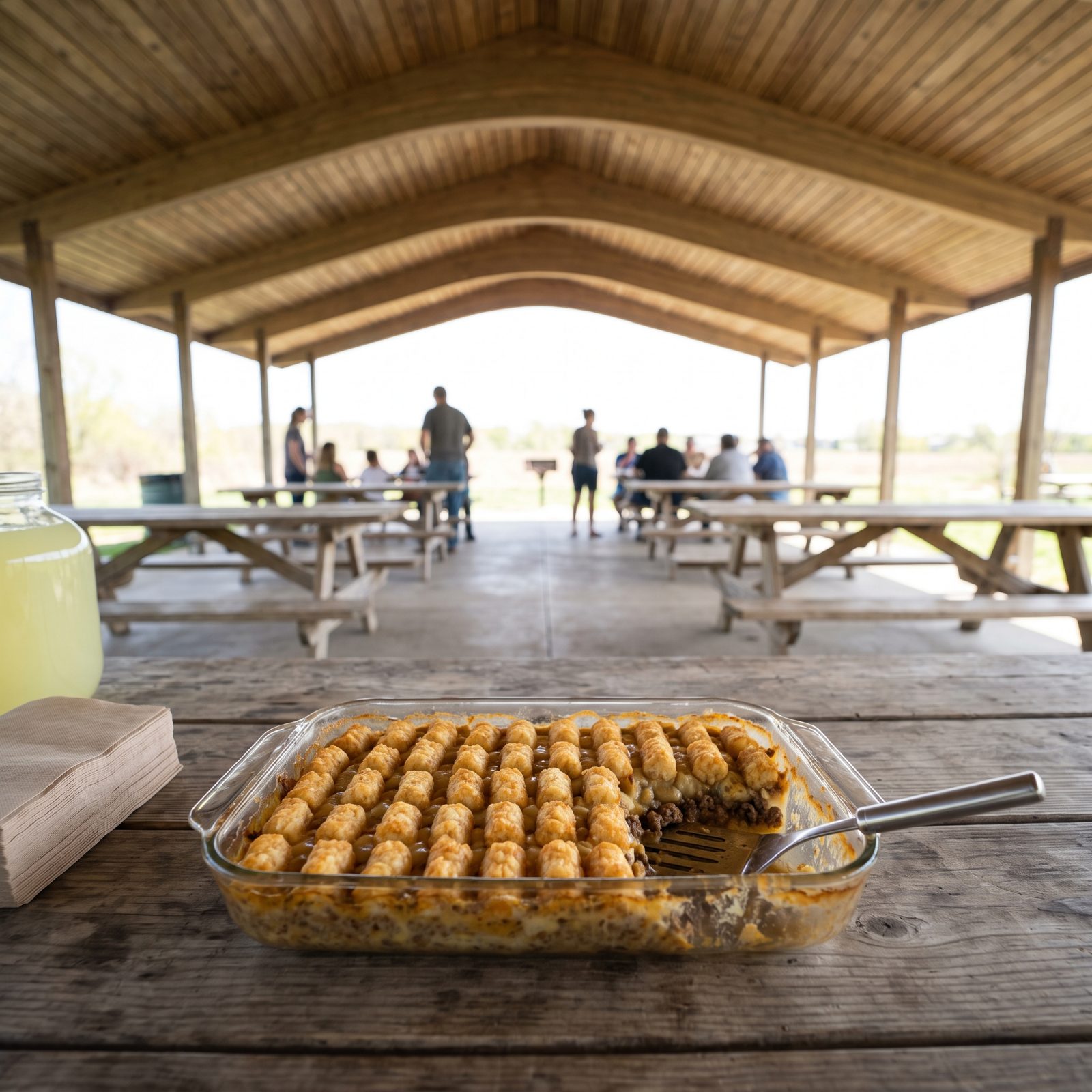
The name gives away the map. Tater tots in neat rows over ground beef and cream of mushroom soup, baked in a single dish and carried straight to the potluck. Call it a hotdish and you’ve just told everyone you’re from the Upper Midwest.
The word isn’t decoration. (Source), right as canned goods were driving the first casserole boom, and it stuck hard to that one pocket of the country. (Source), so common locals barely notice it’s regional until an outsider asks.
Everywhere else, it’s just casserole. And in some houses it never got a real name at all, only “the thing Mom makes,” which is its own kind of tell. That household doesn’t cook from a tradition. It cooks from one specific person. The dish is named after her, even if the name is just hers.
The Overachiever’s Lasagna That Turns a Potluck Into a Silent Referendum on Effort
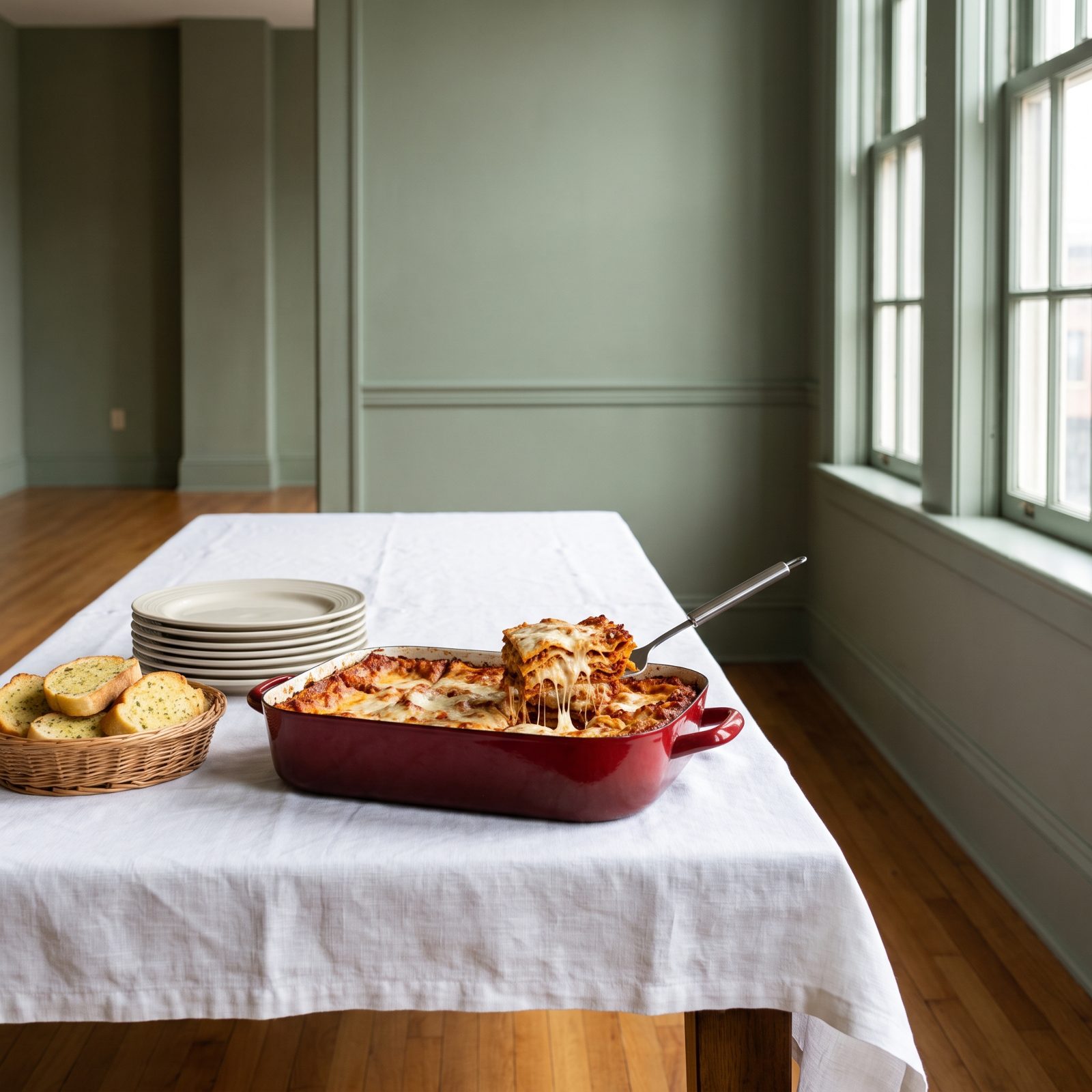
It arrives in a deep enamel roaster, still radiating heat, corners crisped, the cheese pulled into strings when the first square comes out. Homemade sauce. You can tell. Everyone can tell. And the moment it hits the table, something shifts in the room.
Nobody says anything. But everyone recalibrates. The store-bought crowd suddenly clocks their own dish, and the effort gap becomes the quiet subtext of the whole meal.
Here’s the thing about the person who makes this: some of them are generous, and some are running a scoreboard only they can see. Perfectionists, research notes, are (Source), driven by a need for approval. A four-hour lasagna at a paper-plate potluck can be pure love. It can also be a bid. Usually it’s both, tangled up, and the maker couldn’t tell you which is which.
The lasagna is delicious either way. That’s what makes it so effective.
Why the Family That Brings Store-Bought and Owns It Is Psychologically Healthier Than Everyone Else at the Table
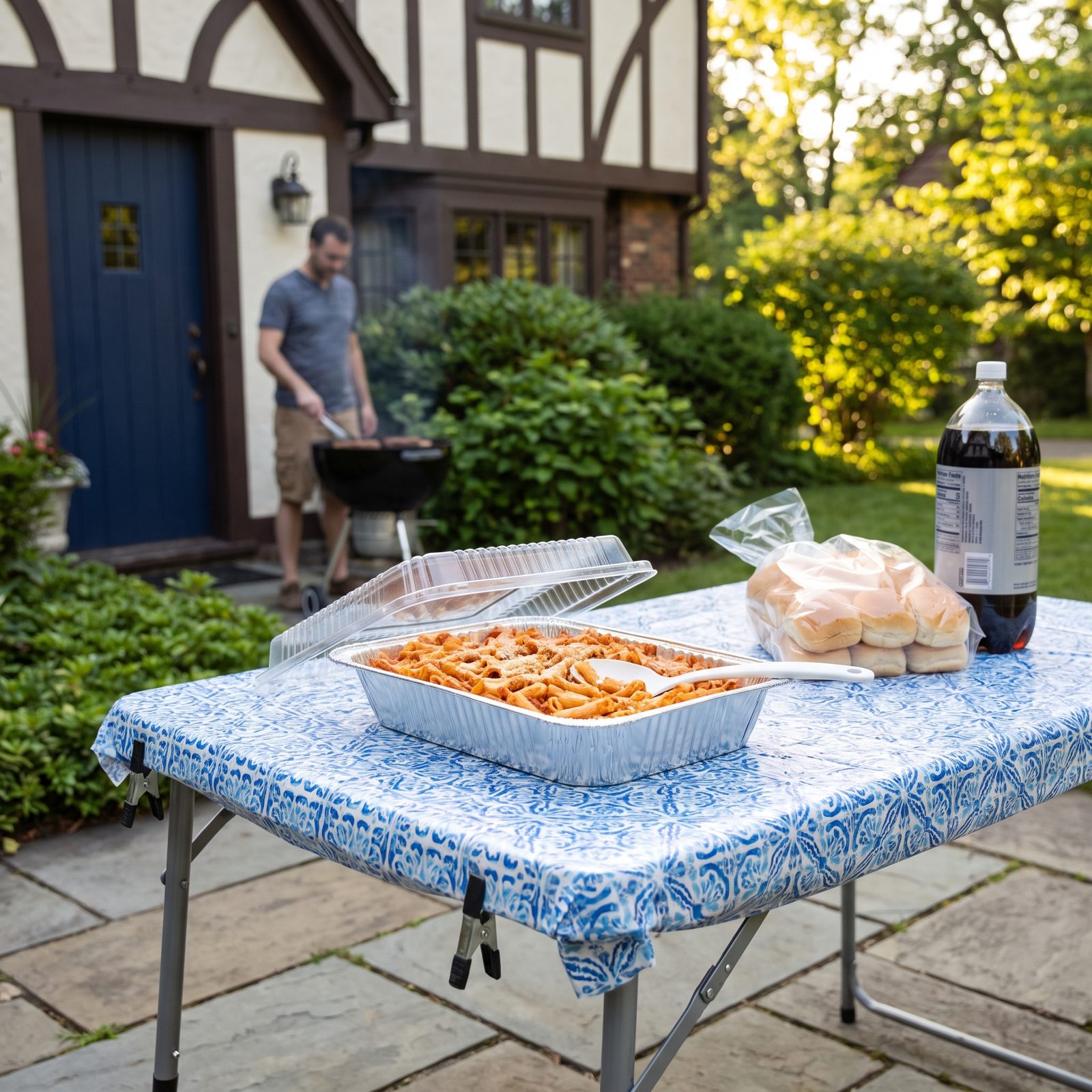
Foil pan. Still has the deli sticker on the lid. They didn’t peel it off, didn’t decant it into a nicer dish, didn’t pretend. They set it down, said “I got this at the grocery store, it’s good,” and went to find a drink.
That family is fine. Genuinely, measurably fine.
The whole point of a shared meal isn’t the dish. It’s the sitting down together. (Source), one therapist puts it plainly, it’s about making space for people to connect. Store-bought lasagna does that job exactly as well as the four-hour version. Meanwhile, perfectionism runs the other direction, tying self-worth to performance and turning food events into sites of evaluation and comparison.
The family that owns the foil pan has opted out of that game entirely. They showed up. They brought food. They’re present instead of anxious. I’ll say it flat: that’s the healthiest plate on the table, and it cost eleven dollars.
The Casserole Nobody Finishes, and the Household That Keeps Making It Anyway: A Study in Loyalty Over Feedback
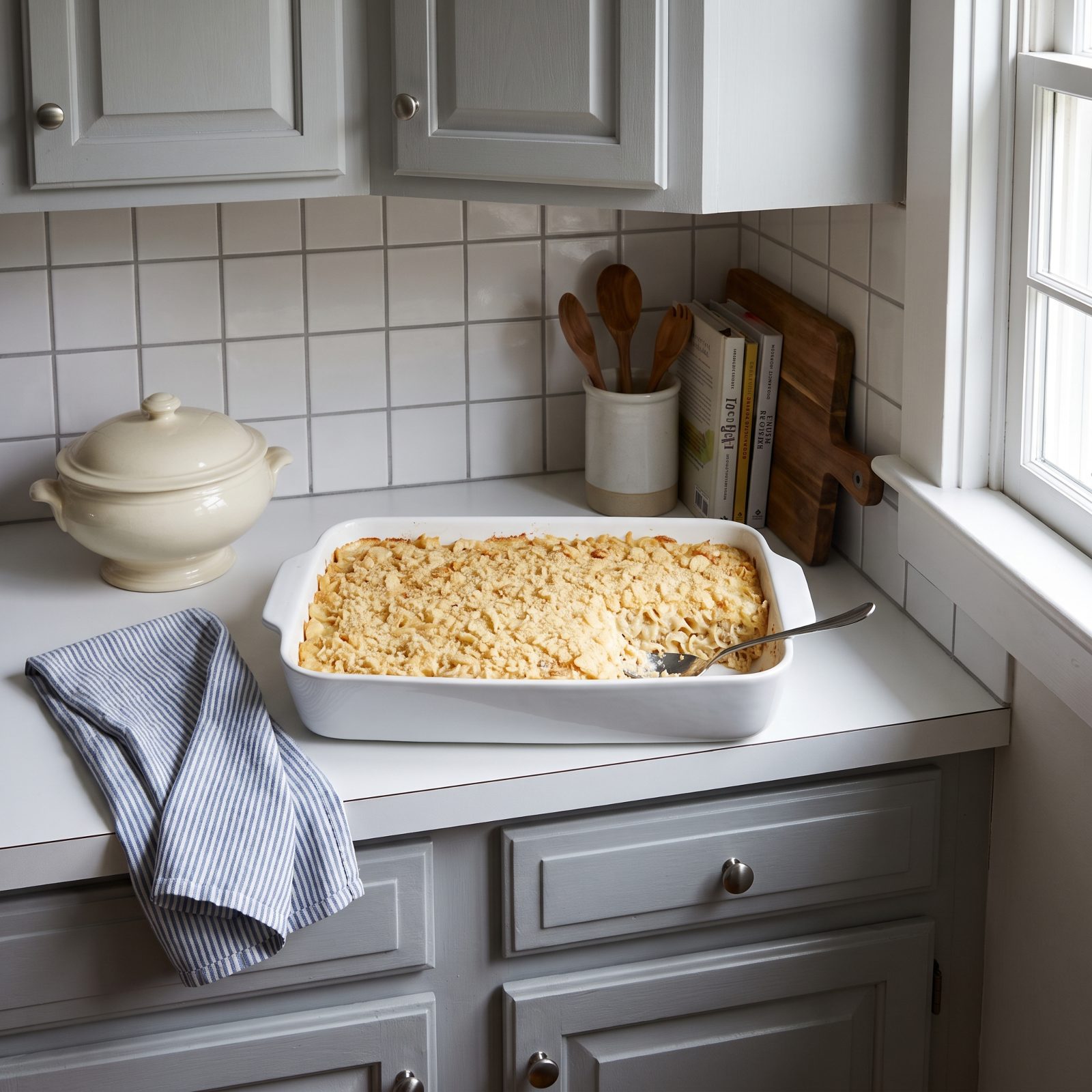
Tuna noodle. Gray-ish. Cream of celery soup, egg noodles, a lid of crushed potato chips gone soft in the middle. It comes back home three-quarters full every single time, and next event, there it is again. Same dish. Same result. Undeterred.
This household is not reading the room. This household has decided the room is wrong.
There’s something almost admirable in it. The dish stopped being about whether people eat it a long time ago. It’s a fixed point, a tradition that outranks its own reviews. Comfort foods work this way partly because they’re (Source), the sameness is the value, not the flavor. The maker isn’t cooking for the crowd. They’re cooking for a memory, and the crowd is incidental.
Loyalty over feedback. You can find that exhausting or you can find it moving. Depending on the day, I find it both.
The Recipe Card in the Handwriting of Someone Now Gone (And Why That Dish Tastes Different Than It Should)
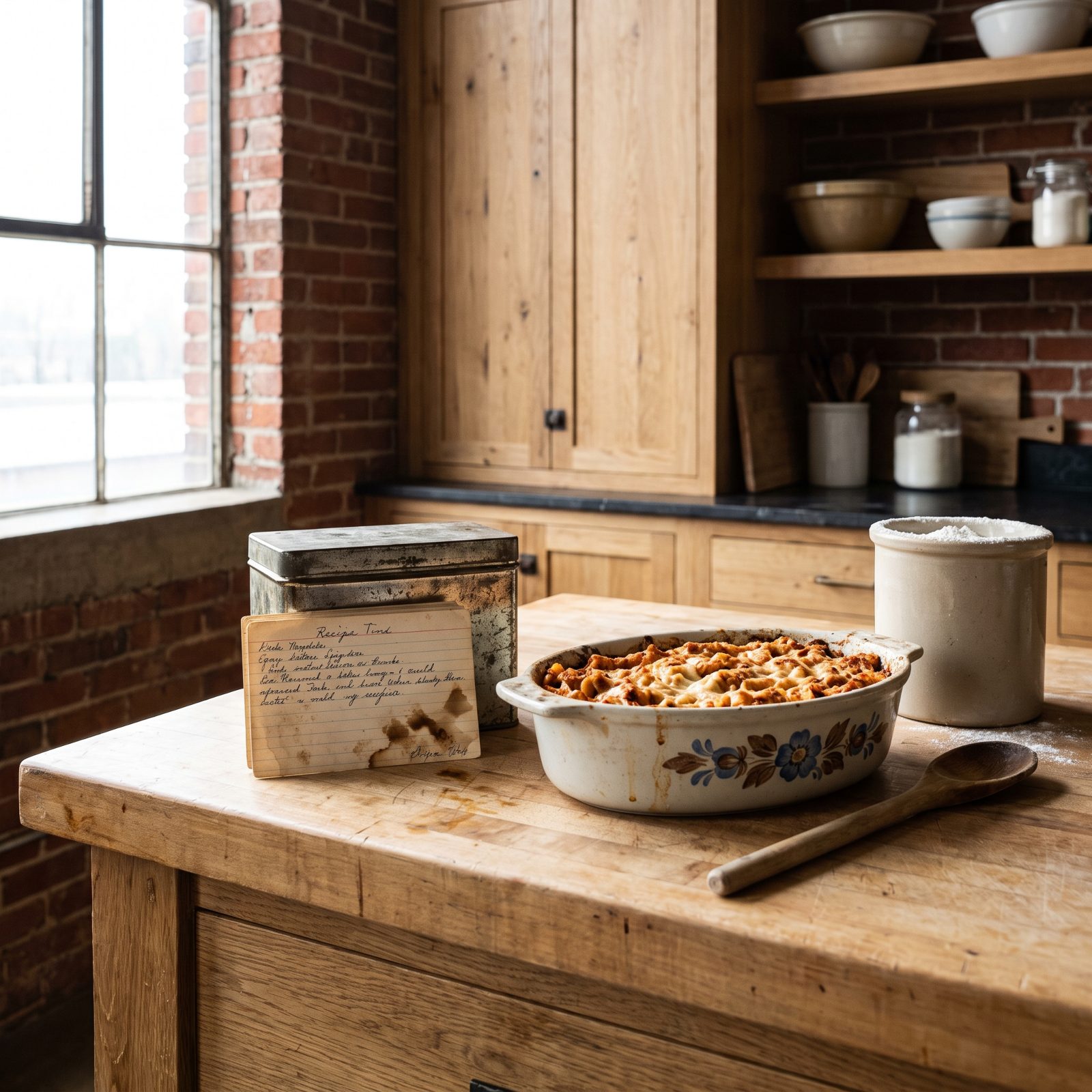
The card is stained. Butter-blotched at one corner, the ink faded where a thumb rested on it for forty years. The handwriting belongs to someone who isn’t here anymore. And every time this casserole gets made, that card comes out, and the kitchen goes a little quiet.
The dish tastes different than the ingredients say it should. There’s a reason for that, and it isn’t the recipe.
Grief researchers call it continuing bonds, the understanding that (Source). Making a lost person’s recipe is one of the most common ways families keep that connection alive. (Source) through the ordinary act of eating. The recipe card is a tangible anchor. So is the taste.
You’re not just making a casserole. You’re spending an hour with someone. That’s why it tastes like more than it is. It always will.
The Backyard-Buffet Casserole Left in the Sun Too Long: The Optimism-Bias Household in Its Natural State
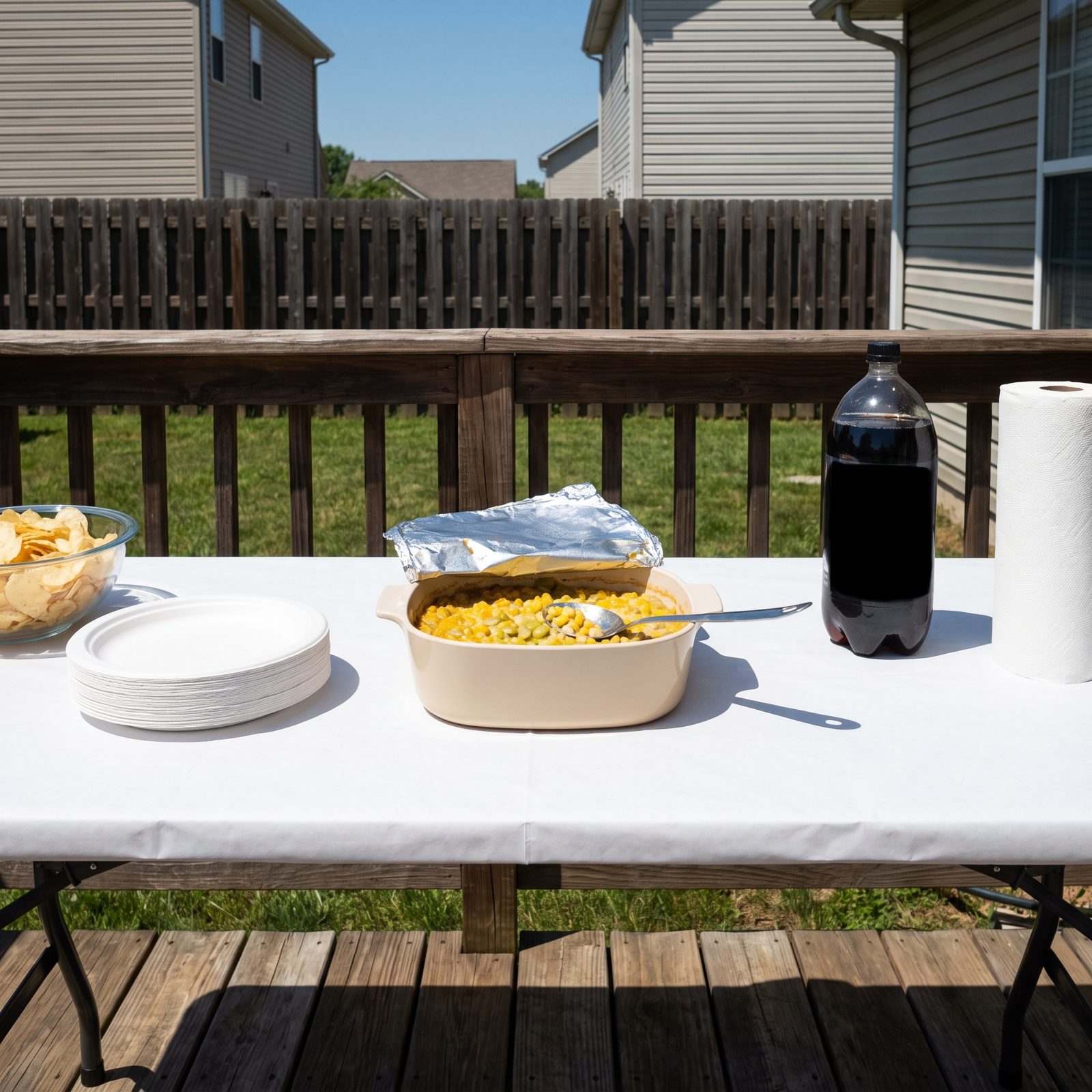
Corn-and-lima-bean bake in a beige Corningware dish. Foil peeled halfway back. It’s been on the folding table under a July sky since eleven, and nobody’s touched the serving spoon since the burgers came off the grill. The cheese has gone from melted to lacquered to something with a shine you don’t trust. And the household that made it? They will absolutely eat it. They already decided that back in the kitchen.
This is the optimism-bias family. Neuroscientist Tali Sharot found that roughly 80 percent of us lean this way, wired to expect the best outcome even against the evidence in front of us. Source They didn’t forget the casserole in the sun. They just genuinely believe it’ll be fine. It usually is. That’s the trap and the gift both.
You know this family. They double-book the weekend and make it work. They plan the reunion for the one Saturday it rains. The casserole is just the edible version of a worldview.
What It Means When a Family’s Signature Dish Is Actually Just an Assembly Job With No Cooking Involved
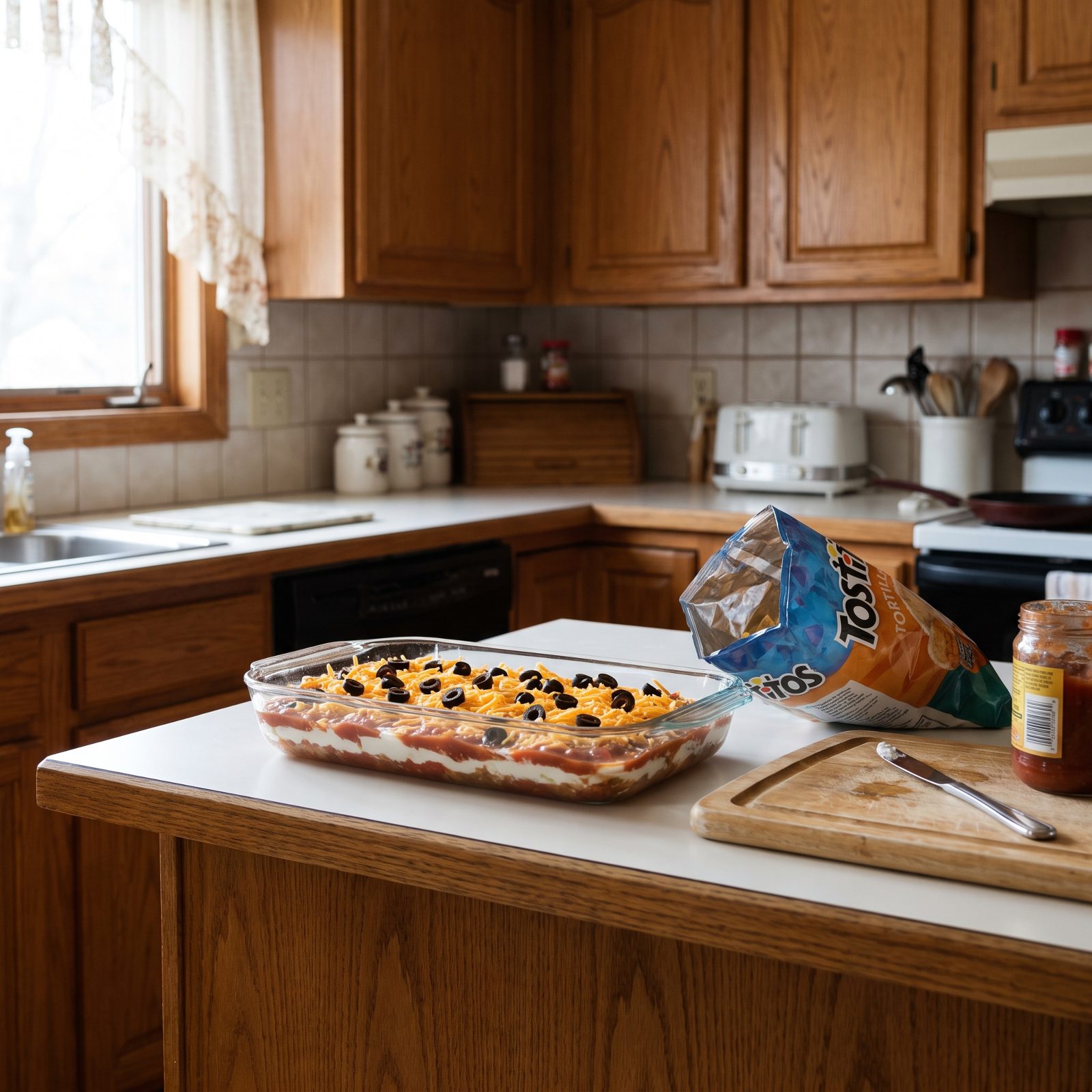
Layer of cream cheese. Jar of salsa poured on top. Bag of shredded cheddar. A can of black olives, drained. That’s the “famous” dip, and everyone at the reunion asks for it, and the person who made it will tell you, straight-faced, that it’s a family recipe.
Nothing was cooked. Nothing was even warmed. It was assembled, the way you assemble a bookshelf, and the honesty of that is the whole personality. This household values the gathering over the performance of the gathering. They’d rather be out on the deck talking to you than tied to a stove proving something.
And here’s the quiet genius: the assembly dish always disappears. Kids can navigate it. Nobody’s scared of it. There’s a reason the seven-layer everything and the boxed-mix bars outlast the ambitious quiche every single potluck. The effort a dish demands has almost nothing to do with whether it comes home empty.
I have opinions about people who look down on the no-cook contribution. Those people usually bring the quiche. The quiche comes home.
The Casserole With a Secret Ingredient They Won’t Tell You (And the Power Game Baked Right In)
Would you like to save this?
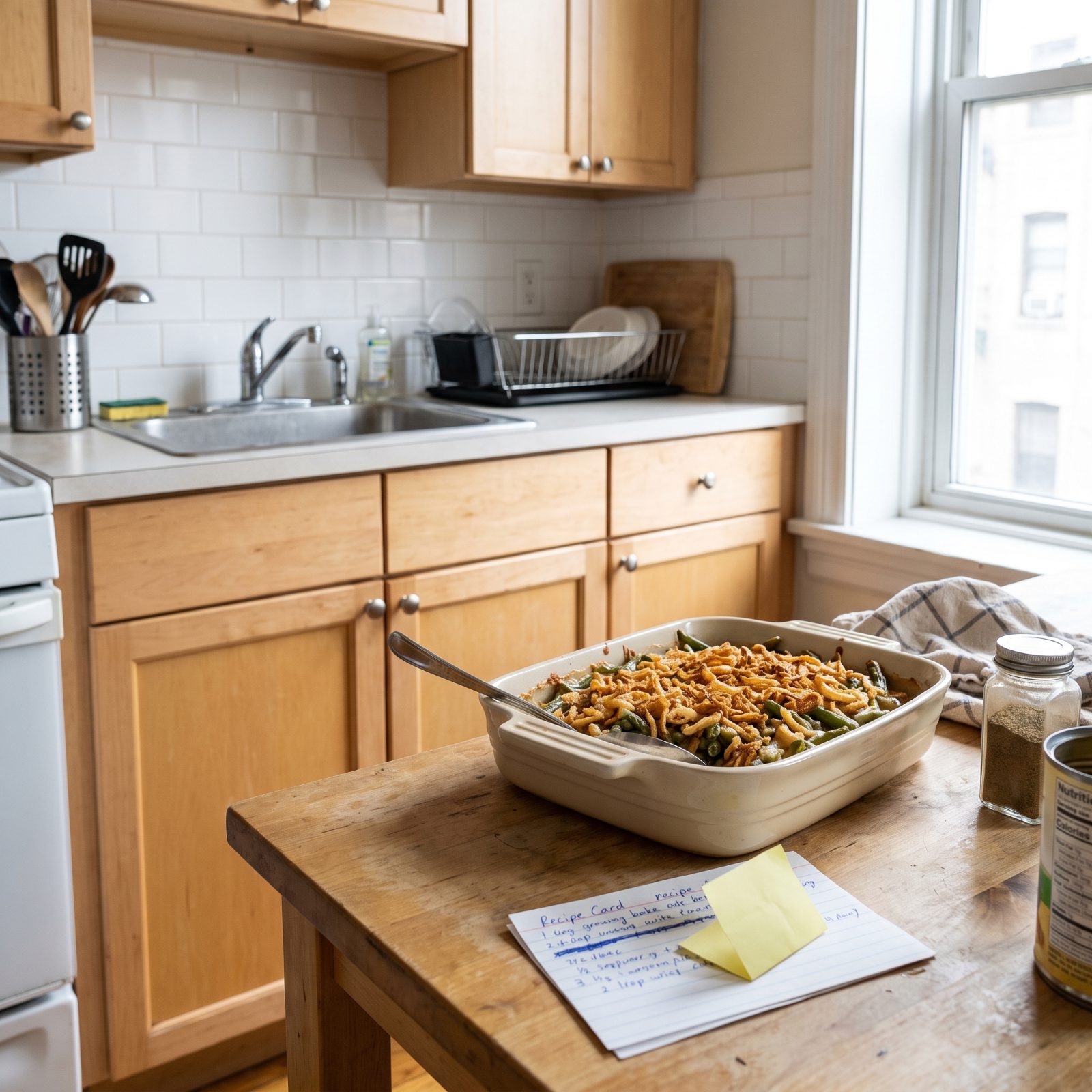
Ask for the recipe and watch the face change. A little smile. A slow “oh, I could never.” The green-bean bake or the hash-brown casserole that everyone begs for, and the maker holds the last card like it’s a deed to land nobody else can buy.
Sometimes it’s nutmeg. Sometimes it’s a splash of the good sherry. Sometimes, honestly, it’s a can of soup they’re embarrassed about. Doesn’t matter. The withholding is the point. Recipes aren’t legally protected as intellectual property in the U.S., so the only thing making a family recipe “secret” is the sheer will of the person guarding it. Source
There’s real psychology under the drama. Holding something back creates ceremony, a small hush at the kitchen counter, a status only you carry. Source This household runs on soft influence. They’re not loud. They don’t need to be. They know that the person who can make the thing nobody else can make never has to fight for a seat.
The Dish That Comes Back Home Empty Every Time, and the Quiet Confidence of the People Who Make It
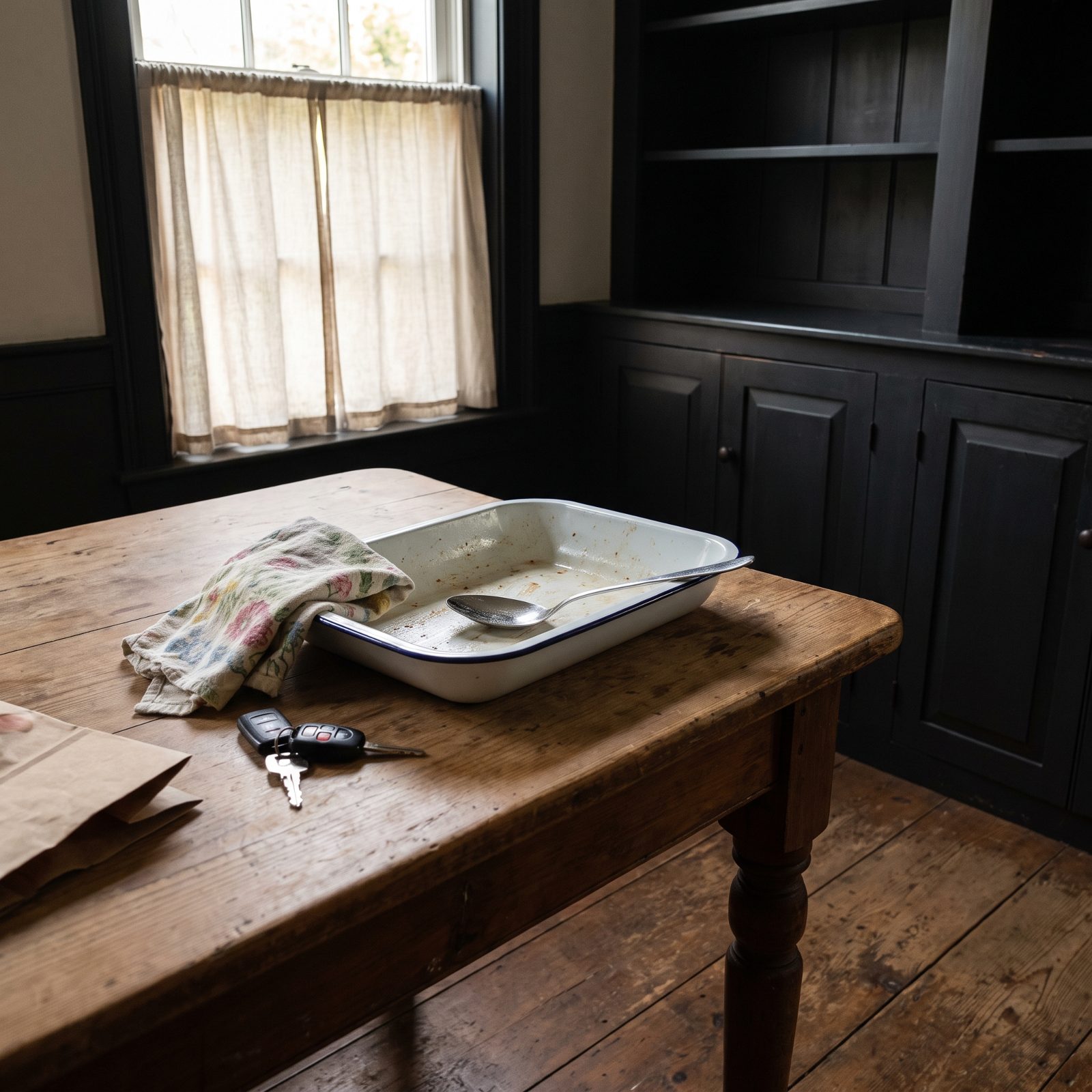
Same battered enamel roaster. Same faded floral kitchen towel folded over the handle. It goes to every gathering full and comes back scraped down to the burnt corner nobody could reach. The household that makes it doesn’t hover near the food table waiting for compliments. They already know.
This is the most secure family at the potluck. Not the loudest. Not the fanciest. The one whose dish is a known quantity, made the same way for twenty years, and they’ve stopped needing to prove it. Confidence that doesn’t announce itself is the rarest kind, and it shows up in the fact that they didn’t bring a backup, didn’t bring extra napkins to fuss with, didn’t ask three times if people liked it.
The empty dish going home is a receipt they don’t even bother reading. That’s the tell. Anxious cooks watch the pan. Settled ones already left to go say goodbye to somebody at the door.
The Bottom Line
Here’s what the casserole actually says: it’s not the recipe, it’s the repetition, your family’s signature dish is the one story you’ve all agreed to keep telling about who you are, dished out warm and defended at every table. Whether it’s the unchangeable green bean number or the store-bought thing you own without apology, that dish is the shape of what your household decided is worth carrying, again and again, into a room full of other people’s decisions. Next time you set yours down on the folding table, notice which it is: the dish you make out of love, out of habit, or out of the fear of showing up with anything else.