Would you like to save this?
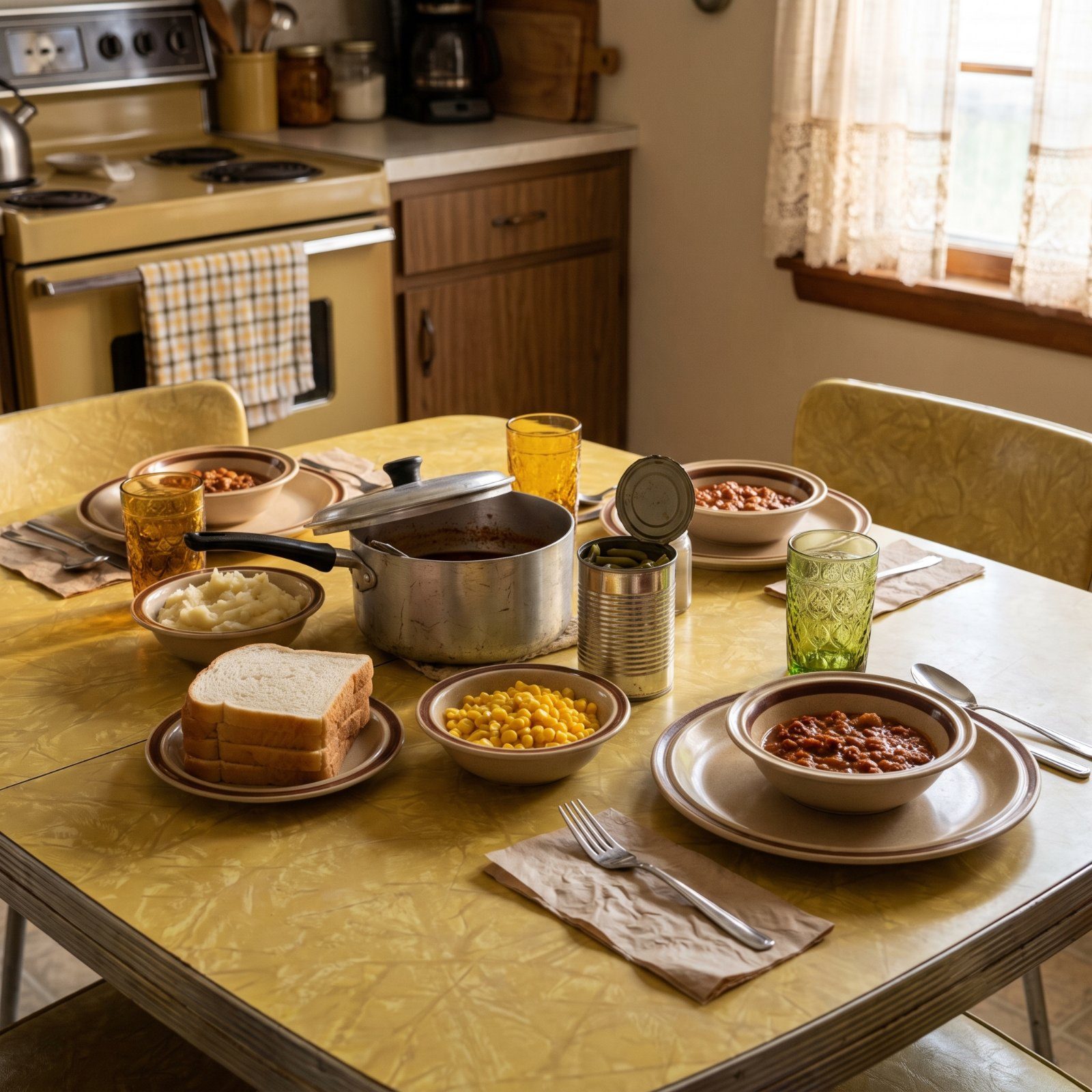
The last three days before payday had a smell. Canned tuna cracked open over a pot of egg noodles, the oven ticking away, a can of peas warming on the back burner while somebody set the table. Nobody called it frugal cooking in 1970. It was just Thursday. These were the meals stitched together from what was left in the cupboard, the meat drawer scraped clean, the leftovers coaxed into a second life. Modest portions. Patterned glasses, stainless forks, and a full pot that made the room feel less empty than the wallet did. What follows are the plates that held families together when the money ran out before the week did.
Tuna Noodle Casserole, the Can-Opener Classic
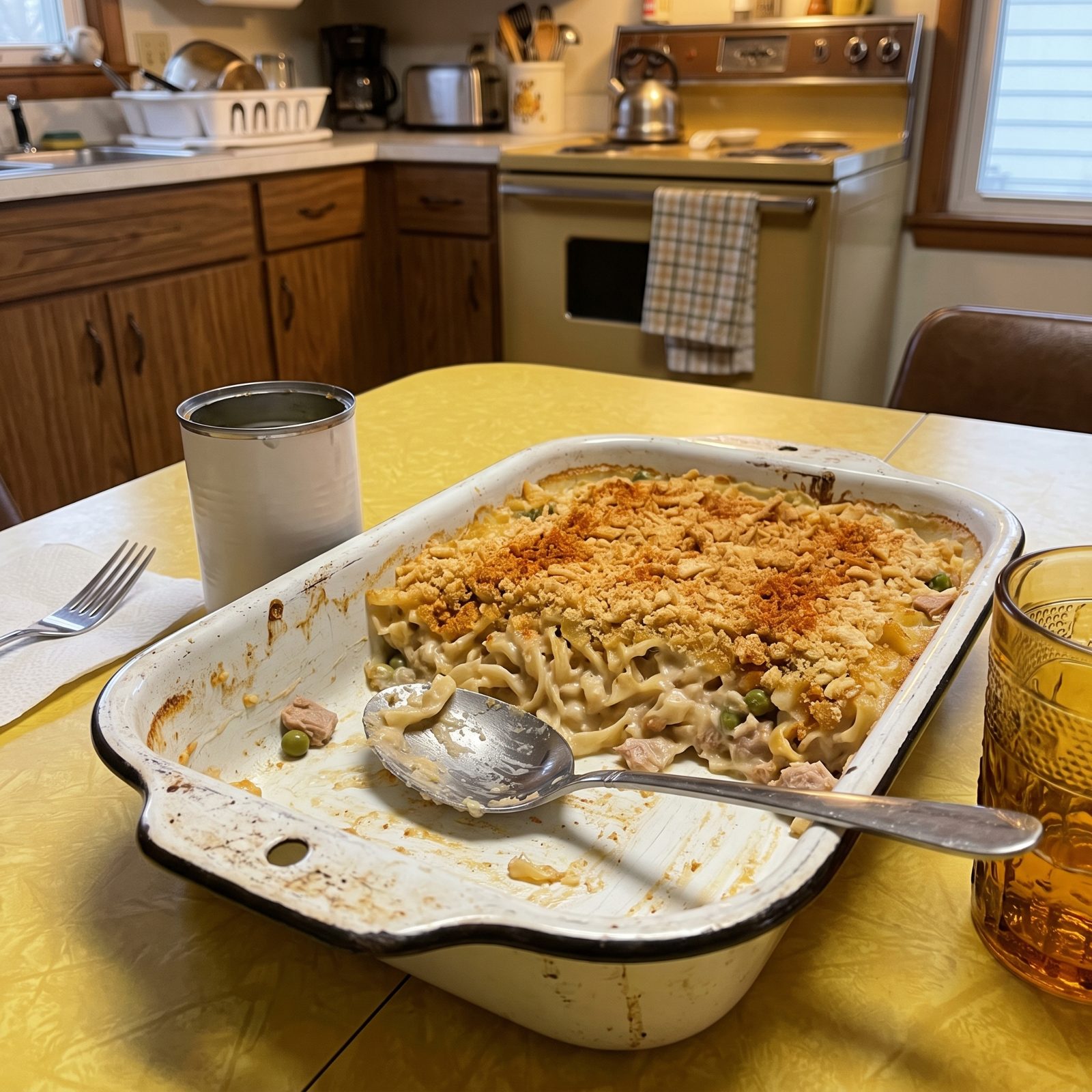
One can of tuna, one can of cream of mushroom, a bag of egg noodles, and dinner appeared out of nowhere. That was the trick of it. The soup did the sauce, the noodles carried the bulk, and the tuna made it a meal instead of a side.
The crushed-cracker top was the whole show. Too pale and it tasted like paste; golden and crackling and suddenly the cheapest dinner of the week felt like something you’d serve company.
Creamed Chipped Beef on Toast, the Army-Surplus Supper
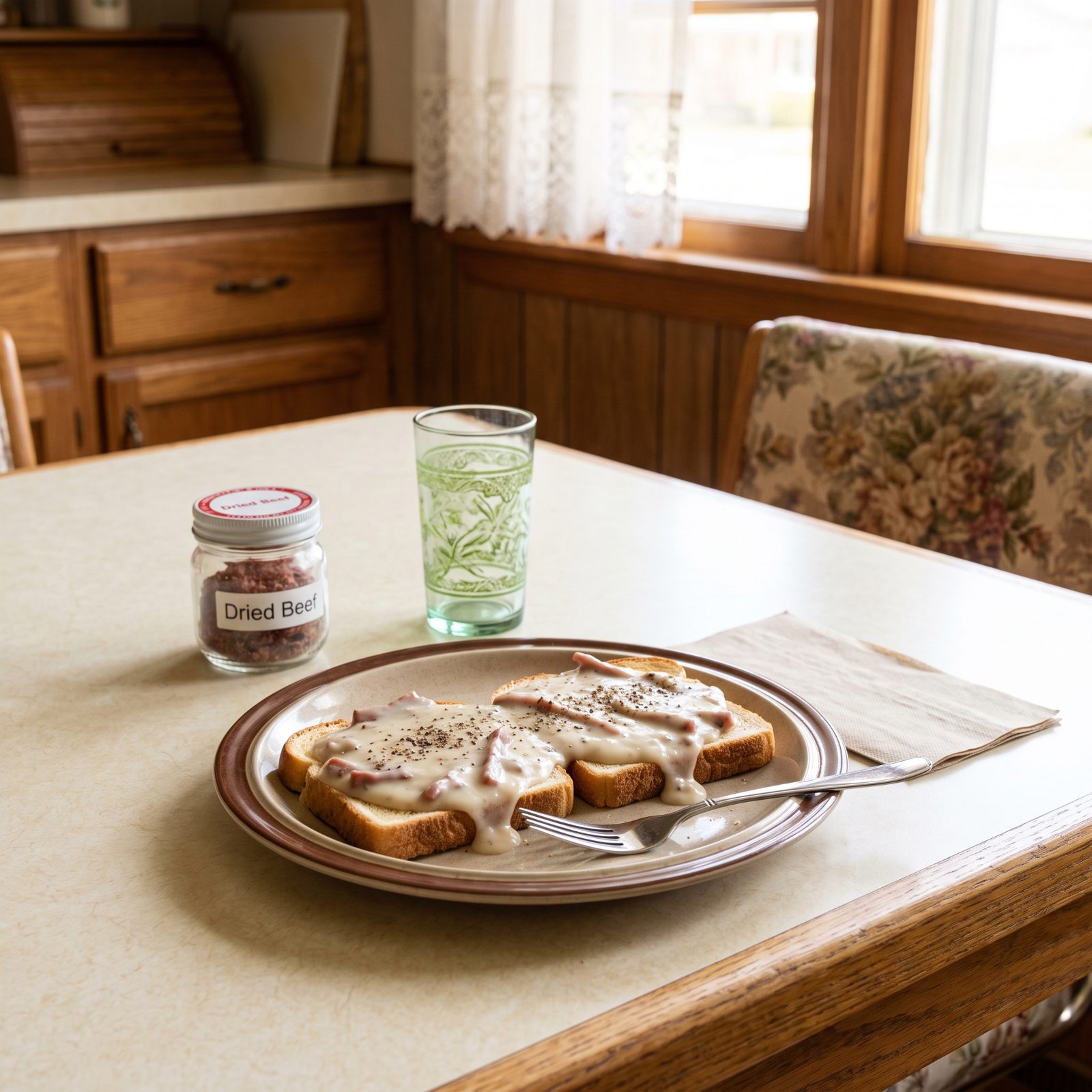
A jar of dried beef cost next to nothing and lasted forever in the cupboard. Chopped up, folded into a flour-and-milk white sauce, ladled over toast, it stretched into a hot dinner for a whole table. The men who’d served knew it by a name too crude to print here.
The sauce carried everything. Thick enough to coat the back of a spoon, salty from the beef, and cheap in a way that never showed on the plate.
Hamburger Gravy Over Mashed Potatoes
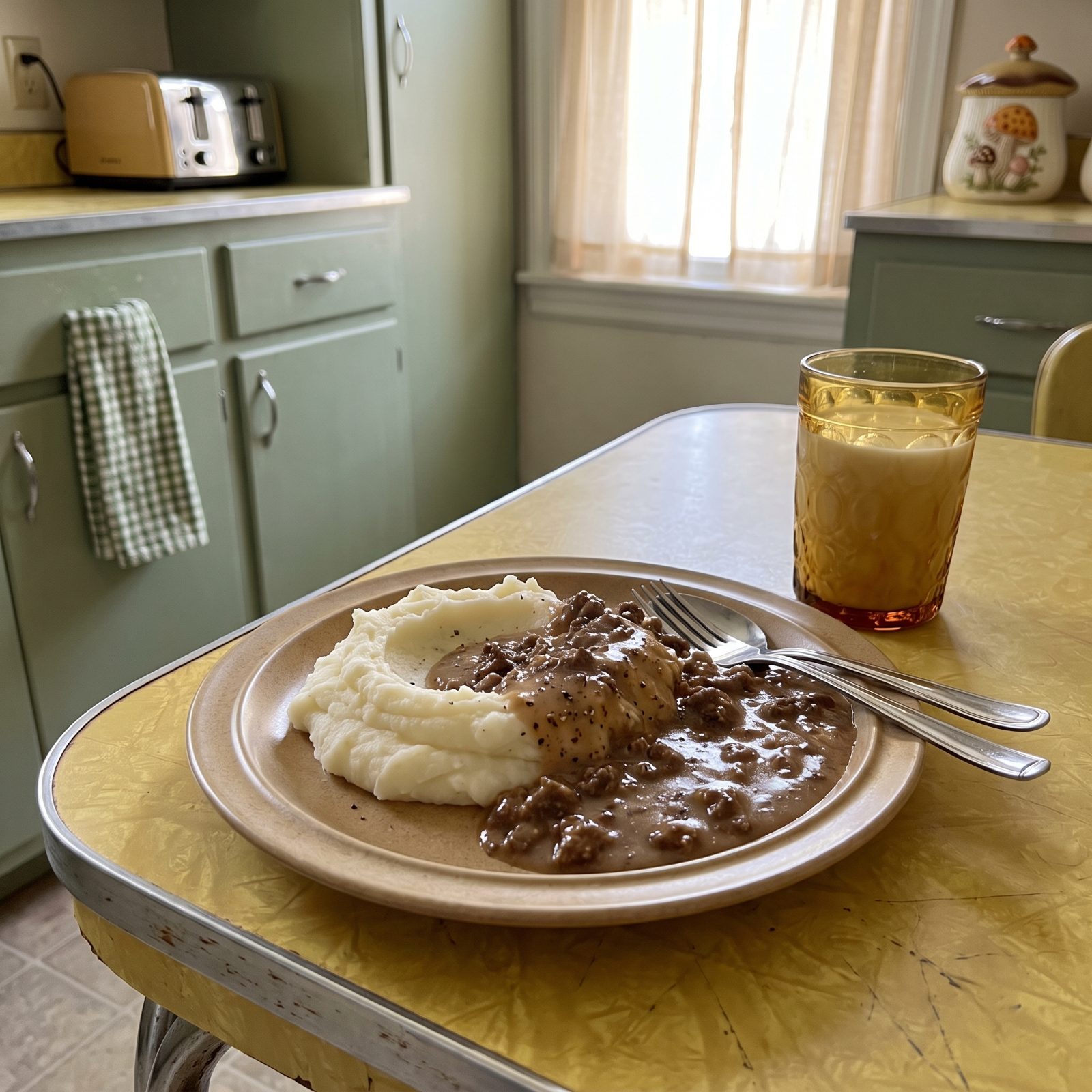
Half a pound of ground beef could feed four if you turned it into gravy. Brown the meat, sprinkle in flour, pour in milk, and keep stirring until it thickened into something that could drown a plate of potatoes.
The potatoes did the heavy lifting. Cheap, filling, endless. The gravy was just there to make them taste like meat night.
A little beef and a lot of potato was how you made Thursday feel like Sunday.
Beans and Franks, the Saturday-Night Standby
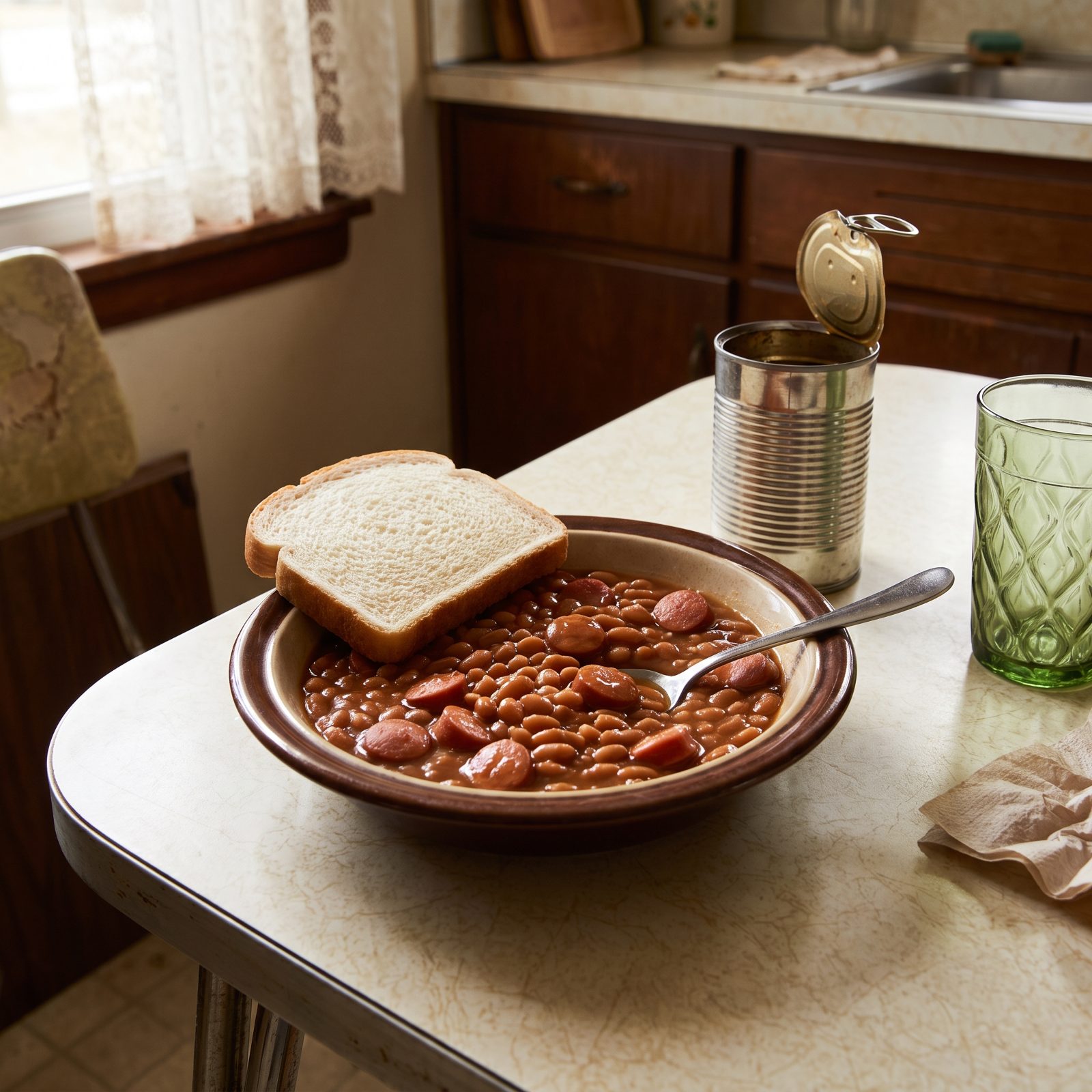
A can of pork and beans, a package of franks sliced into coins, and maybe a spoon of ketchup or mustard if you wanted to dress it up. Fifteen minutes on the stove and the house smelled like molasses.
Kids never complained about this one. The beans went sweet and sticky, the franks turned plump, and a torn piece of white bread wiped the bowl clean.
Fried Bologna Sandwiches, the Meat That Curled
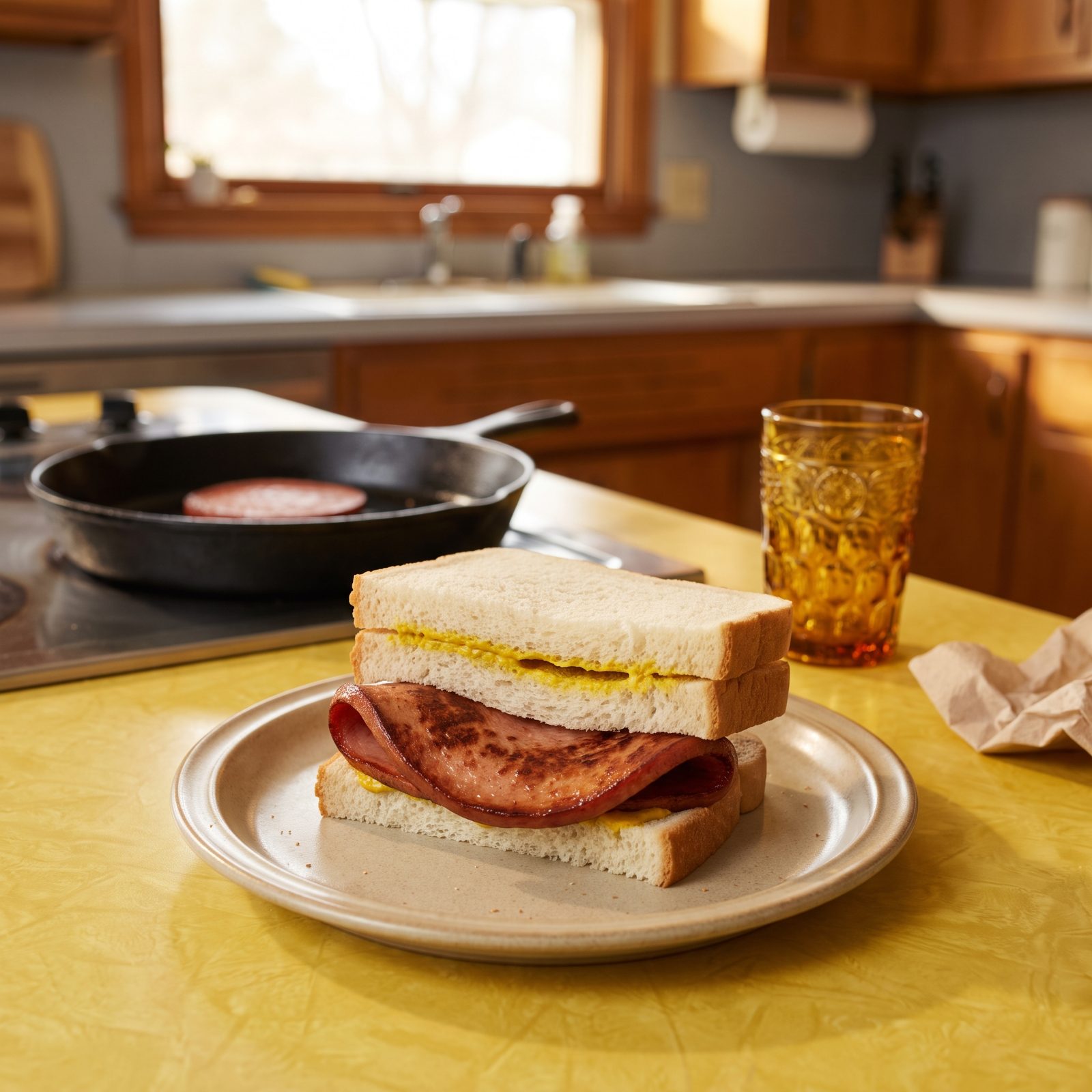
You had to cut a little slit in the edge or the bologna would dome up in the skillet and rock like a hubcap. Everybody learned that the hard way once. After that, four little cuts and it fried flat.
Fried, the cheapest lunch meat in the case turned into something crisp at the edges and hot in the middle. Yellow mustard, white bread, done. A quarter’s worth of dinner and nobody the wiser.
Macaroni and Tomatoes, Two Cans and a Pot
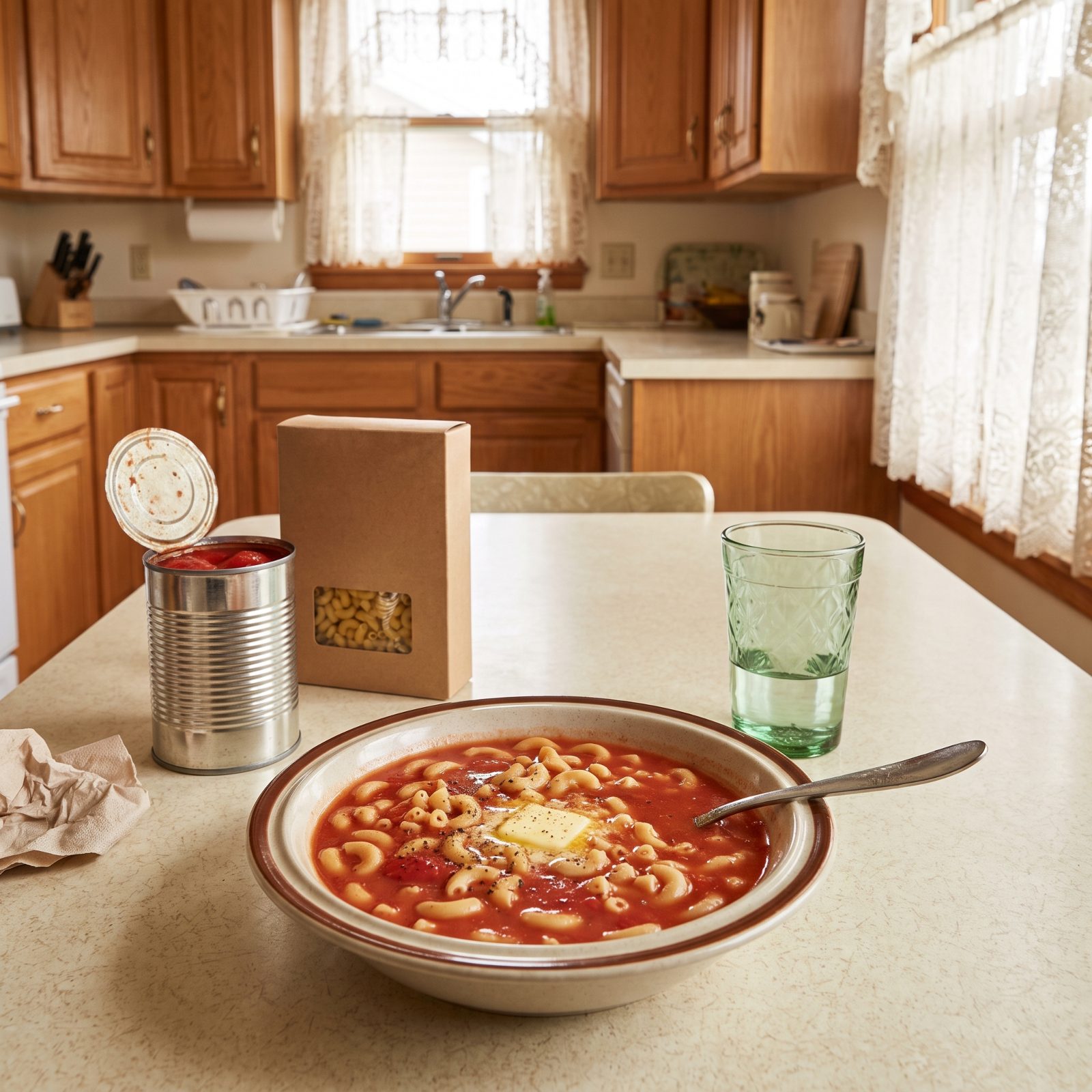
A box of macaroni, a can of tomatoes, a pat of butter, and salt. That was the whole ledger, and it cooked into a soupy, comforting bowl that landed somewhere between pasta and soup, and nobody minded.
Southern kitchens made it with a pinch of sugar to cut the acid. Northern ones left it plain. Either way it stretched to fill every bowl on the table and cost about a dime a head.
Potato and Onion Fry-Up, the Bottom of the Bin
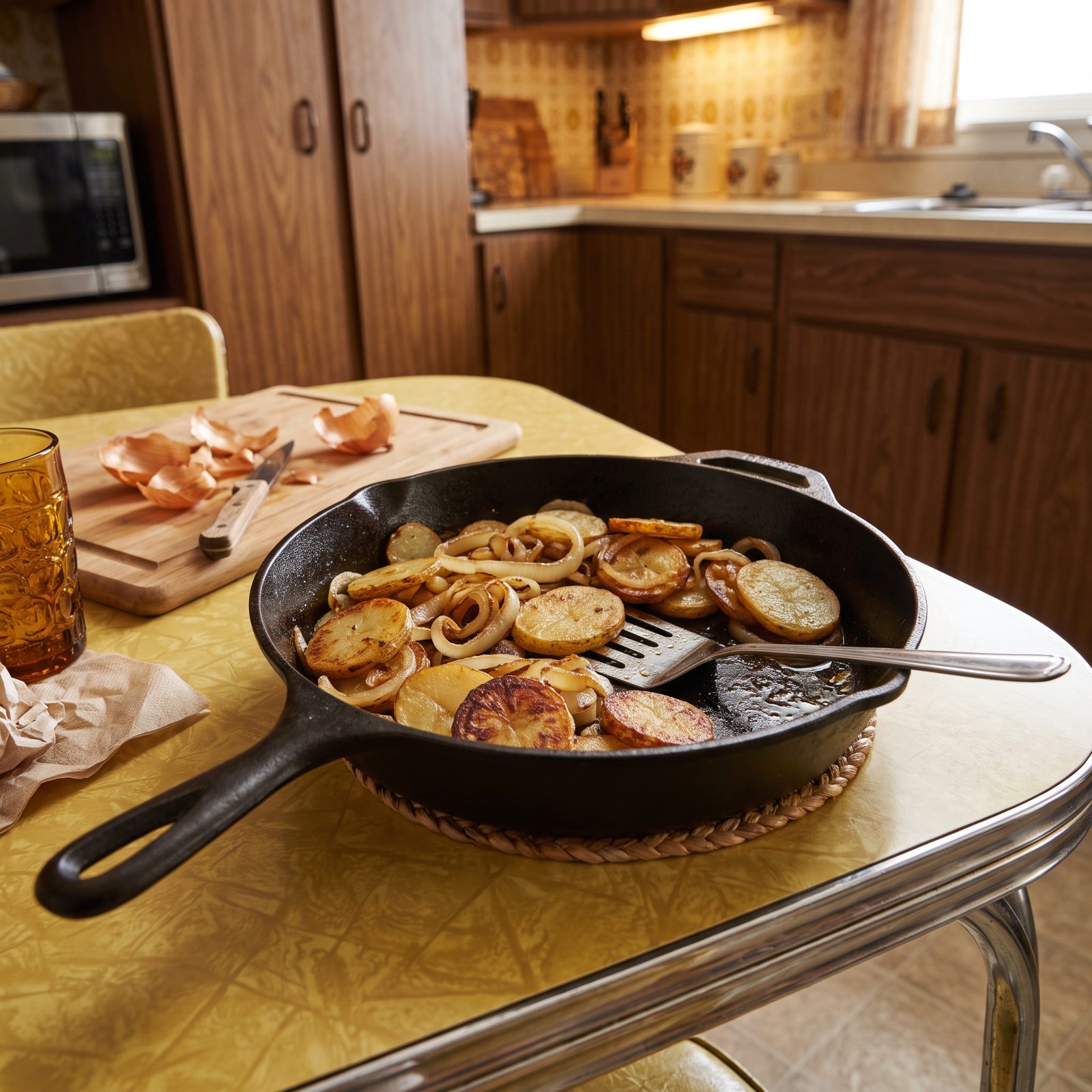
When the potato bin was down to the sprouty ones and there was half an onion rolling around the drawer, this was dinner. Sliced thin, fried in whatever fat lived in the coffee can by the stove, and left alone long enough to catch color.
The smell alone brought everyone to the kitchen. Crisp edges, soft middles, onions gone sweet and dark, and a fried egg cracked over the top if there happened to be eggs. Nothing to it but everything you needed.
Salmon Patties with Canned Peas
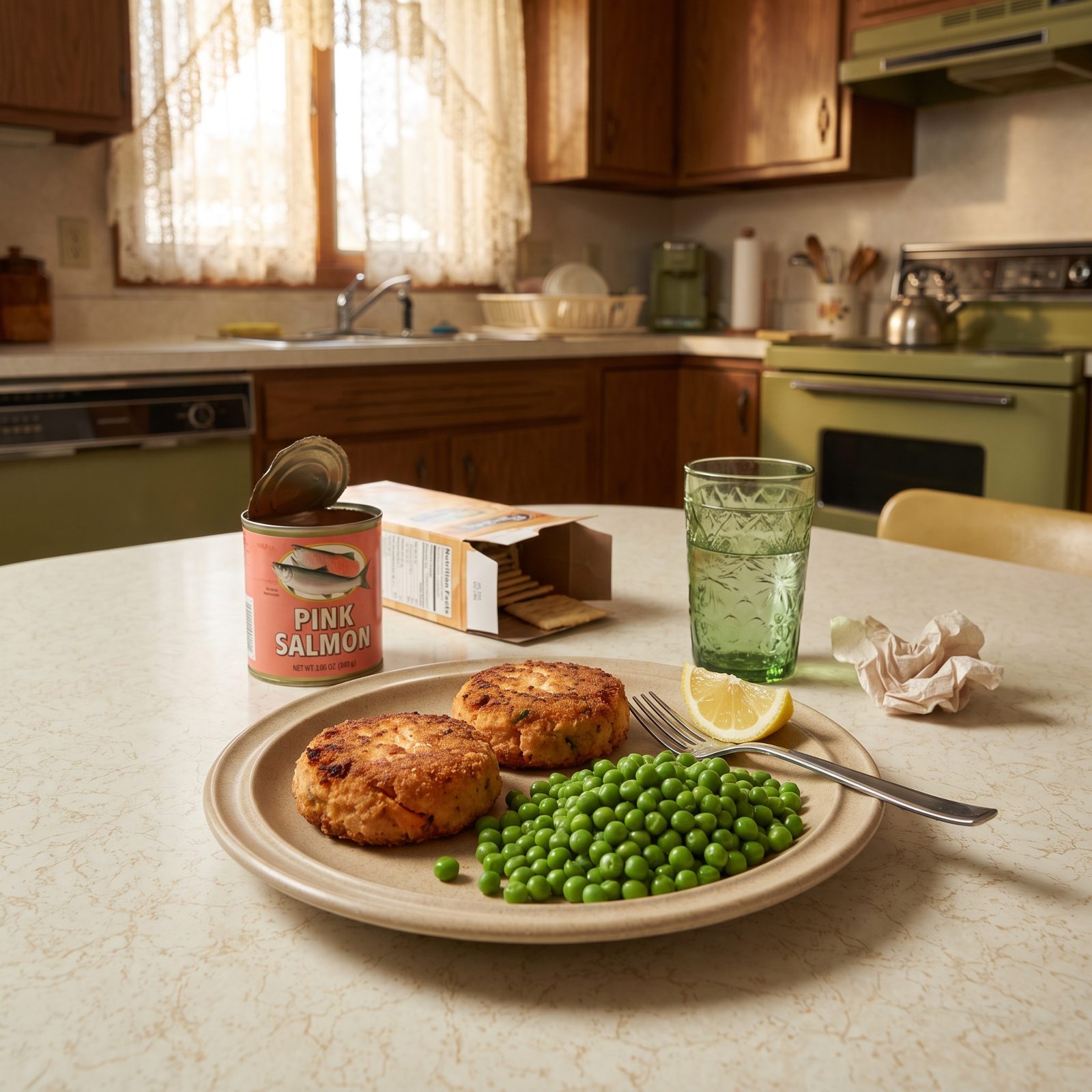
A can of pink salmon, an egg to bind it, crushed crackers or a little flour, and you had patties frying before the kids finished washing up. The bones went right in. Somebody would always crunch one and complain, and somebody older would say it was the calcium.
A can of peas warmed on the back burner rounded it out to a plate. Cheap fish, cheaper vegetable, and it looked like a proper supper.
Corned Beef Hash with Fried Eggs on Top
Would you like to save this?
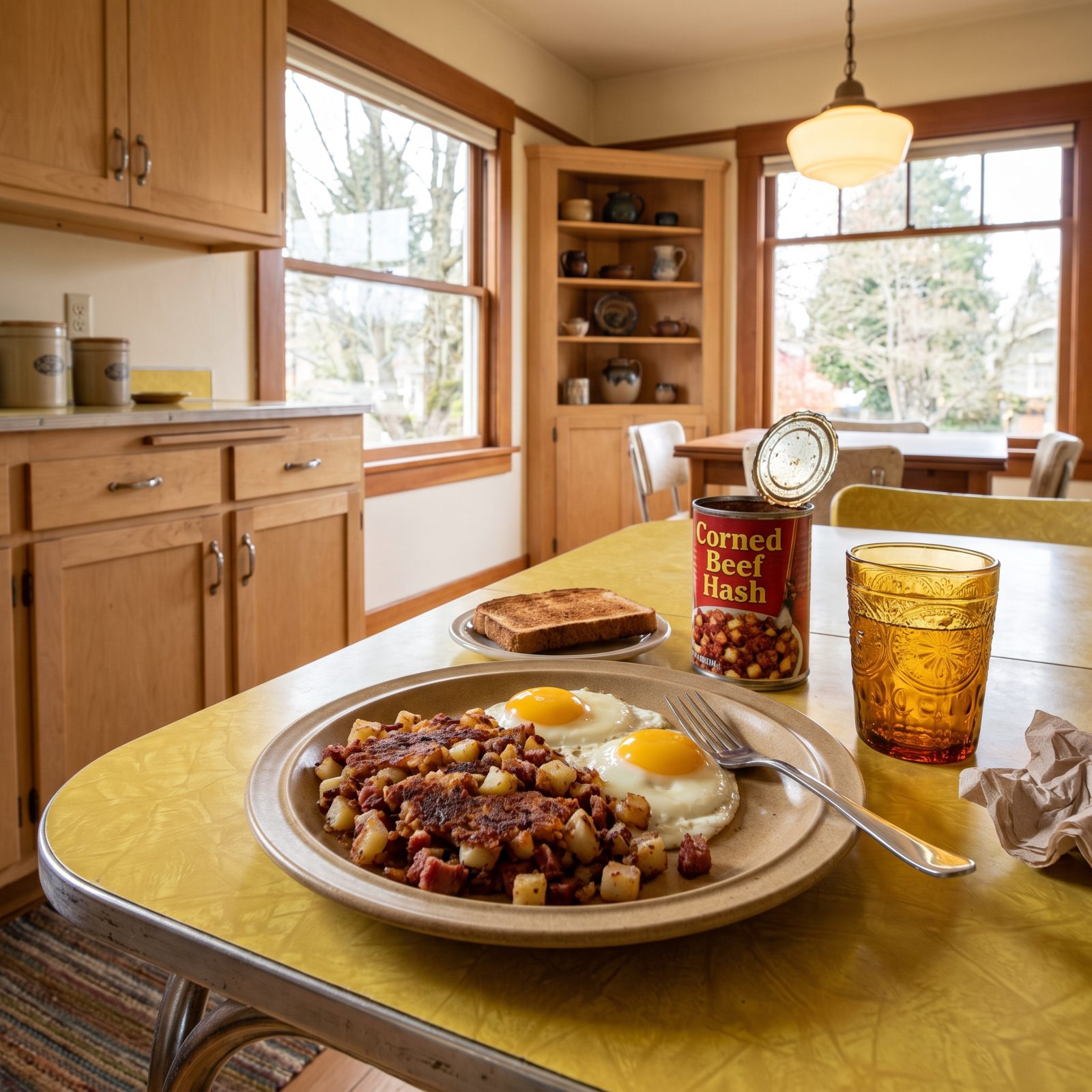
Straight from the can, pressed into a hot greased skillet, and left there. That was the only rule. Nobody stirred it. You let the bottom crust into a dark, crackling layer and flipped it in pieces.
An egg on top turned breakfast food into dinner and made the can go further. Break the yolk, let it run through the crispy bits, and a cheap little can fed the whole table without anyone feeling short.
American Goulash, the One-Pot Payday Rescue
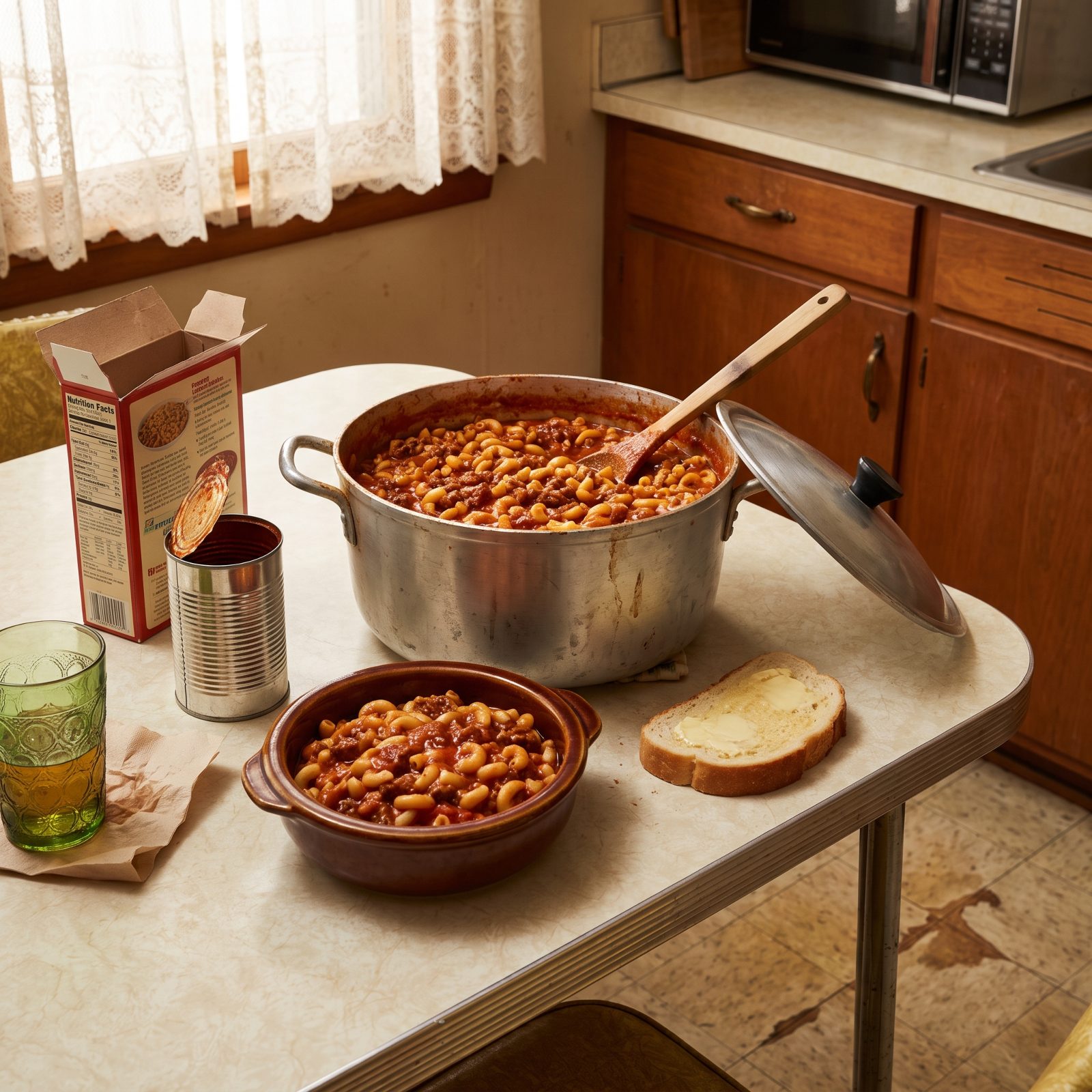
Everything went in one pot and everything stretched. A little ground beef, a box of elbows, a can or two of tomatoes, and whatever seasoning lived in the cabinet door. It fed the family tonight and reheated better tomorrow.
This was the meal you made when payday was still two sleeps away and the meat drawer was nearly empty. It never looked like sacrifice. It looked like a full pot on the stove and steam on the window, which is what a hungry kid remembers long after the reason for it is forgotten.
Chicken and Dumplings Built From Sunday’s Leftover Bird
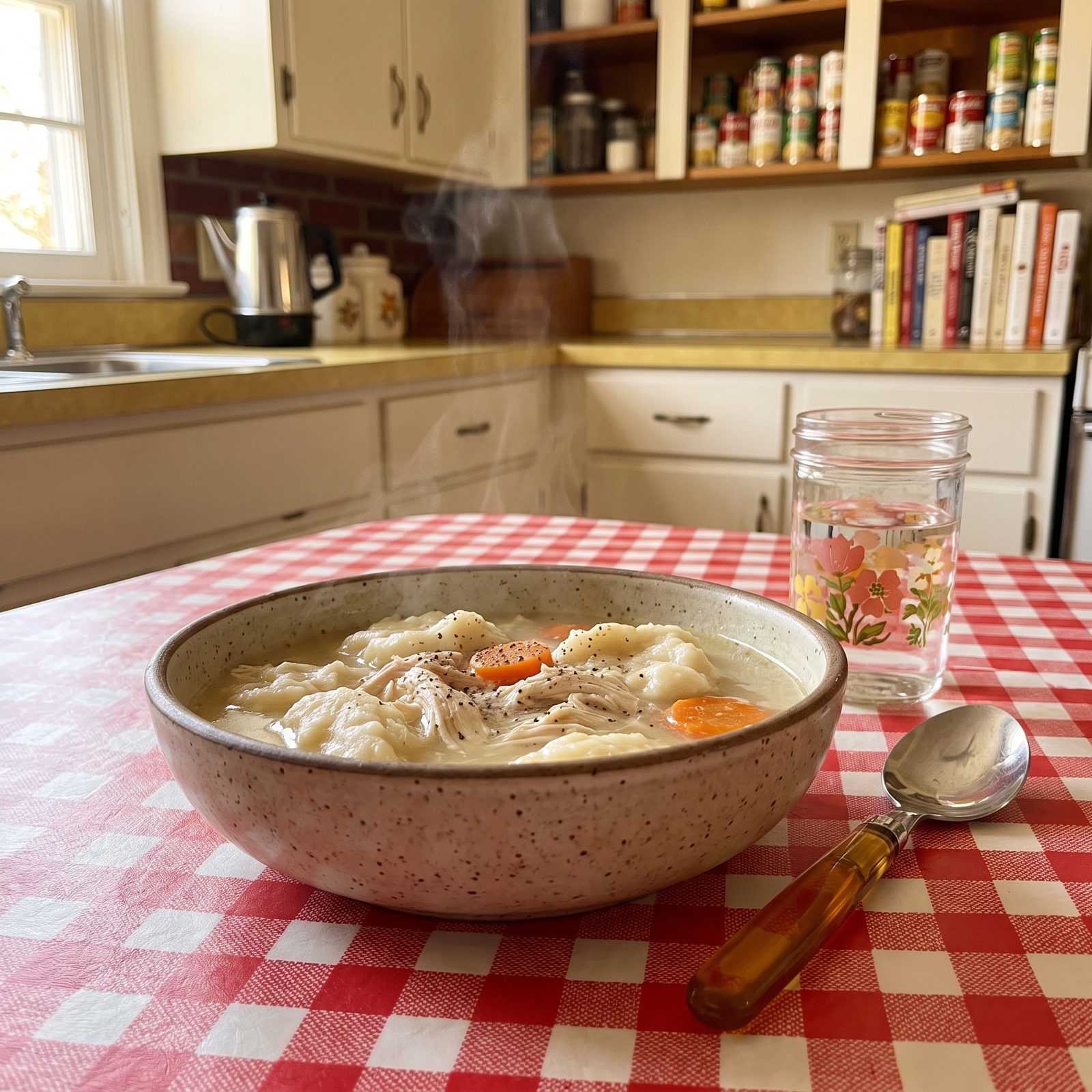
The carcass from Sunday’s roast chicken didn’t go in the trash. It went in the biggest pot in the house, covered in water, and simmered all afternoon until every last bit of meat let go of the bone. That broth was the whole meal’s foundation, and it cost nothing.
The dumplings were flour, a little baking powder, and drippings from the fat cap. Dropped in by the spoonful, they swelled up soft and heavy. A single cup of shredded meat could fill a pot that fed the whole table, because the dumplings did the real filling.
Navy Bean Soup With a Skillet of Cornbread
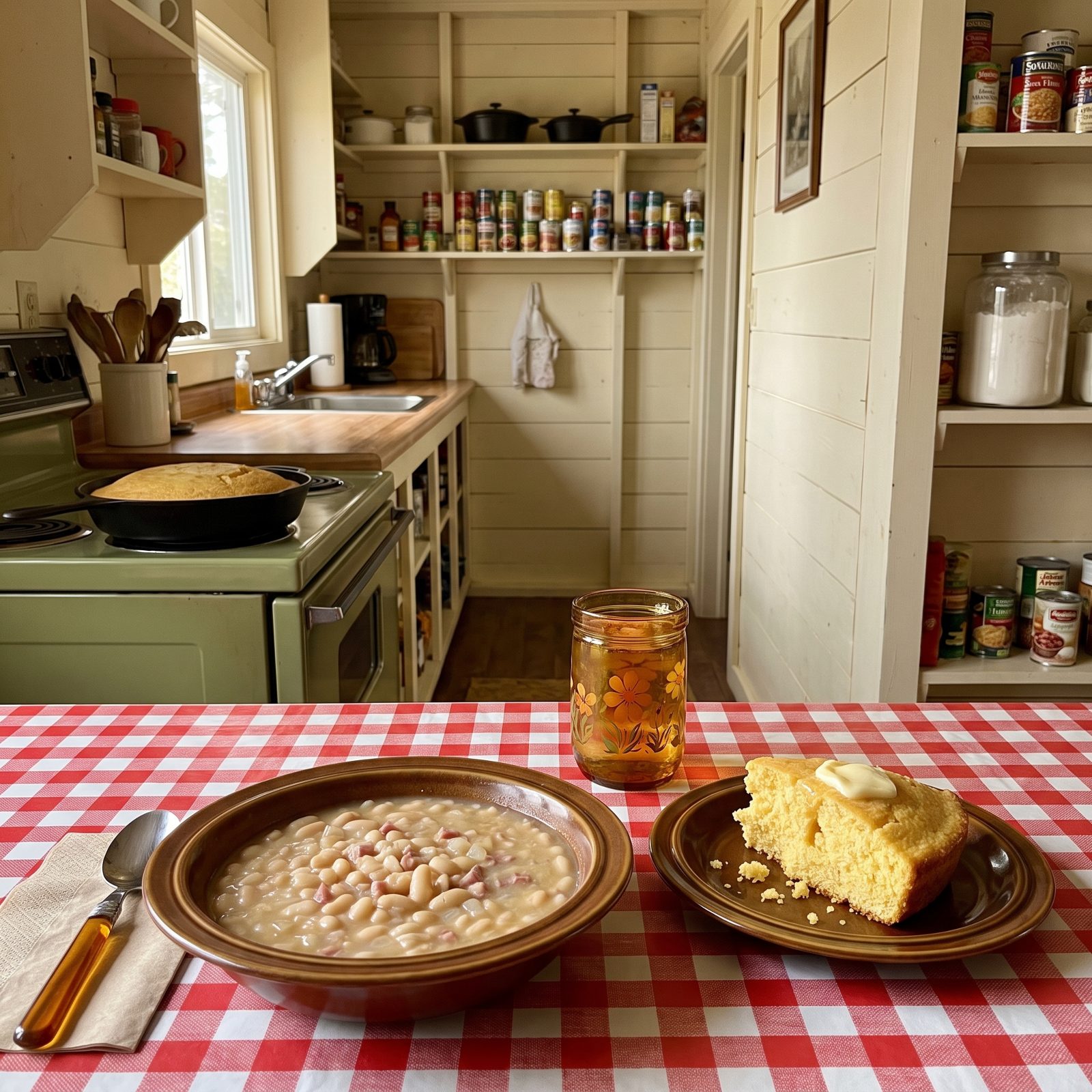
A bag of dried navy beans cost pennies and could feed a family for two nights. You soaked them overnight, threw in a ham bone saved from a holiday dinner and an onion, then let it all go low and slow until the beans broke down and thickened the broth themselves.
The cornbread wasn’t a side. It was the vehicle. You crumbled it right into the bowl and let it soak up the soup until every spoonful had both — cheap, filling, and enough to stick to your ribs through a whole night shift.
Meatloaf Stretched With a Cup of Oatmeal
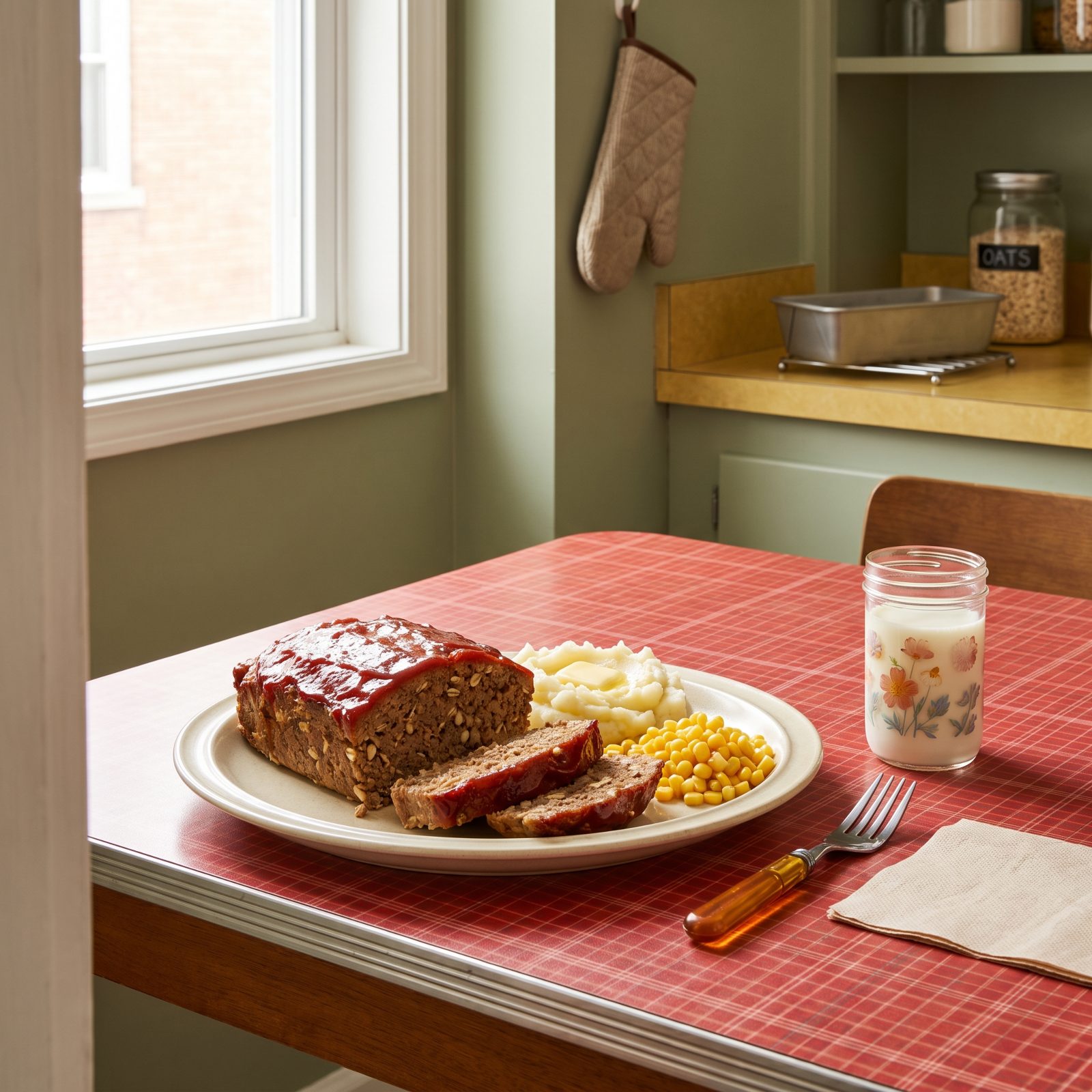
One pound of ground beef doesn’t feed six. Not on its own. So the oatmeal went in — a full cup of it — soaking up the egg and the milk and swelling into the meat until the loaf pan was full and nobody could tell the difference.
The glaze on top was ketchup and a spoon of brown sugar, and that sweet-tangy crust was what everyone actually came for. Kids fought over the end slices. And here’s something nobody admits: oatmeal meatloaf holds together better than the all-beef version. It slices clean instead of crumbling.
Cabbage and Noodles, the Two-Ingredient Miracle
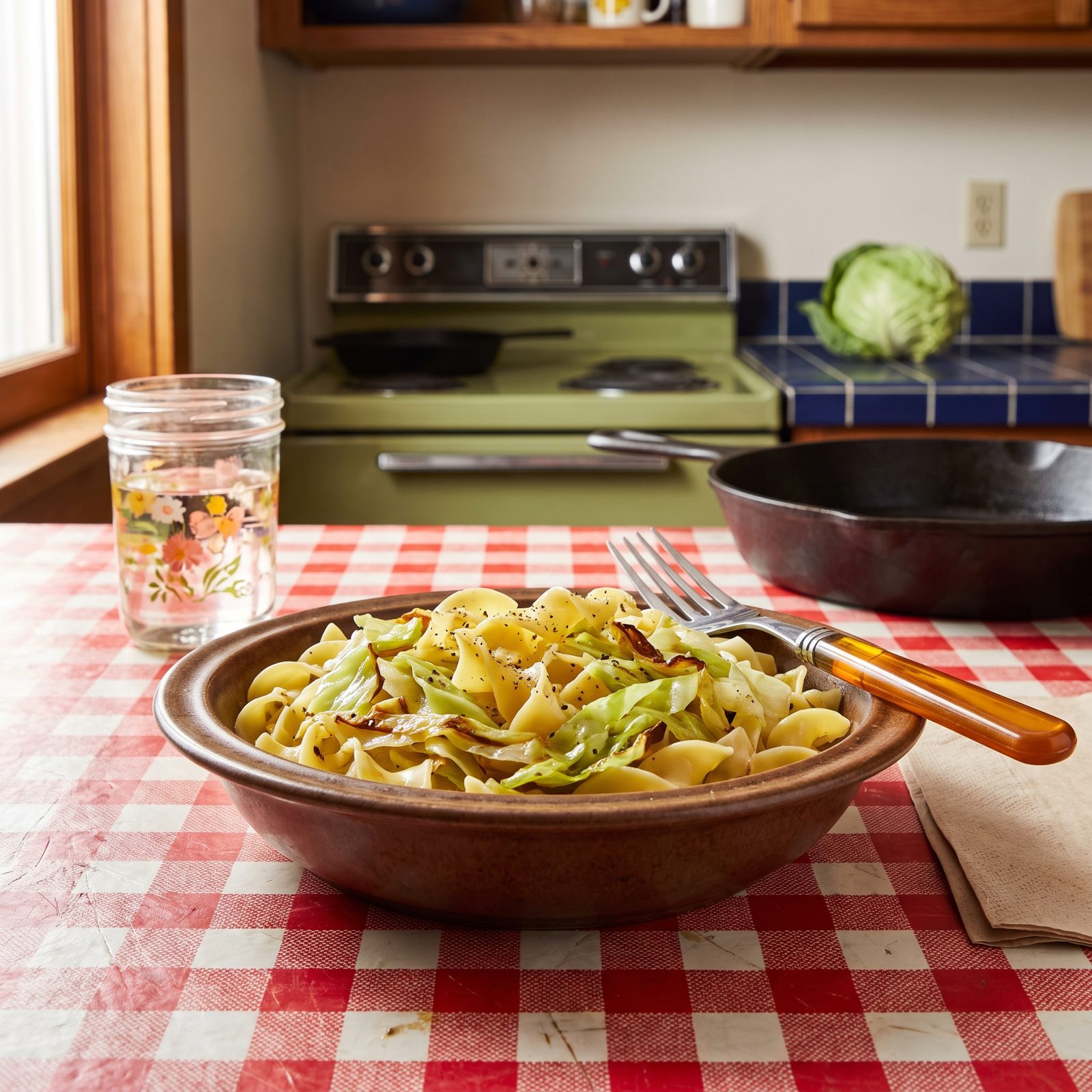
Two ingredients. That’s the whole recipe. A head of cabbage cost almost nothing and a bag of egg noodles wasn’t much more. You cooked the cabbage down slow in whatever fat you had until it went sweet and soft, then folded in the noodles with plenty of salt and pepper.
Hungarian and Polish families brought this one over, and it fit the American payday crunch perfectly. No meat required — though a little bacon grease in the pan never hurt anybody. It filled you up for about what a candy bar costs now.
Spanish Rice That Made One Pound of Beef Feed Everyone
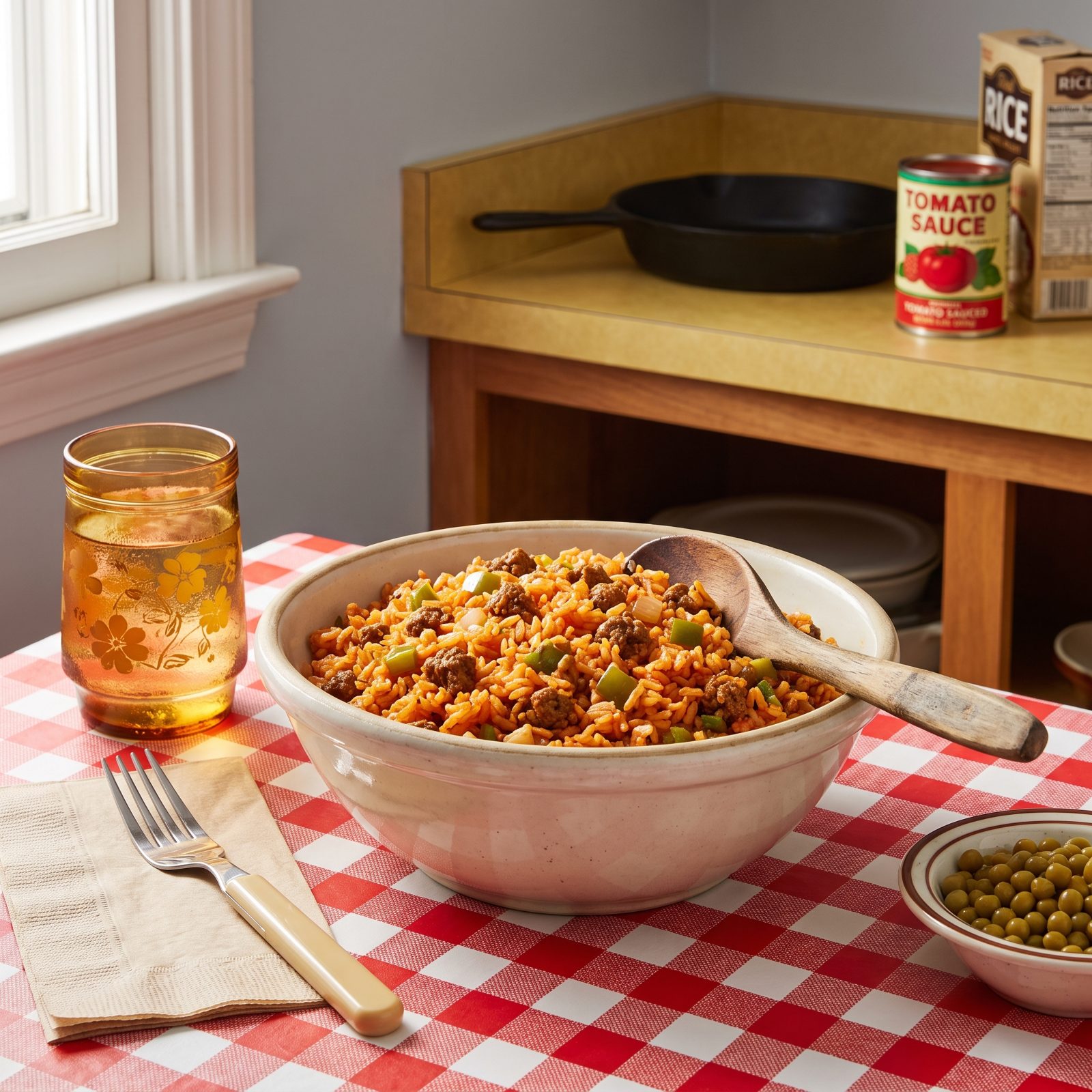
Rice is cheap and it multiplies. That was the secret. You browned a pound of ground beef in the skillet, then added a couple cups of rice, a can of tomato sauce, an onion, a green pepper, and enough water to cook it all down into one big skillet of red-tinted comfort.
The beef flavored everything without ever being the main event. Kids ate two bowls and thought they’d had a feast. It reheated fine the next day, which mattered when payday was still 48 hours out.
Creamed Peas on Biscuits, Sunday Supper on a Dime
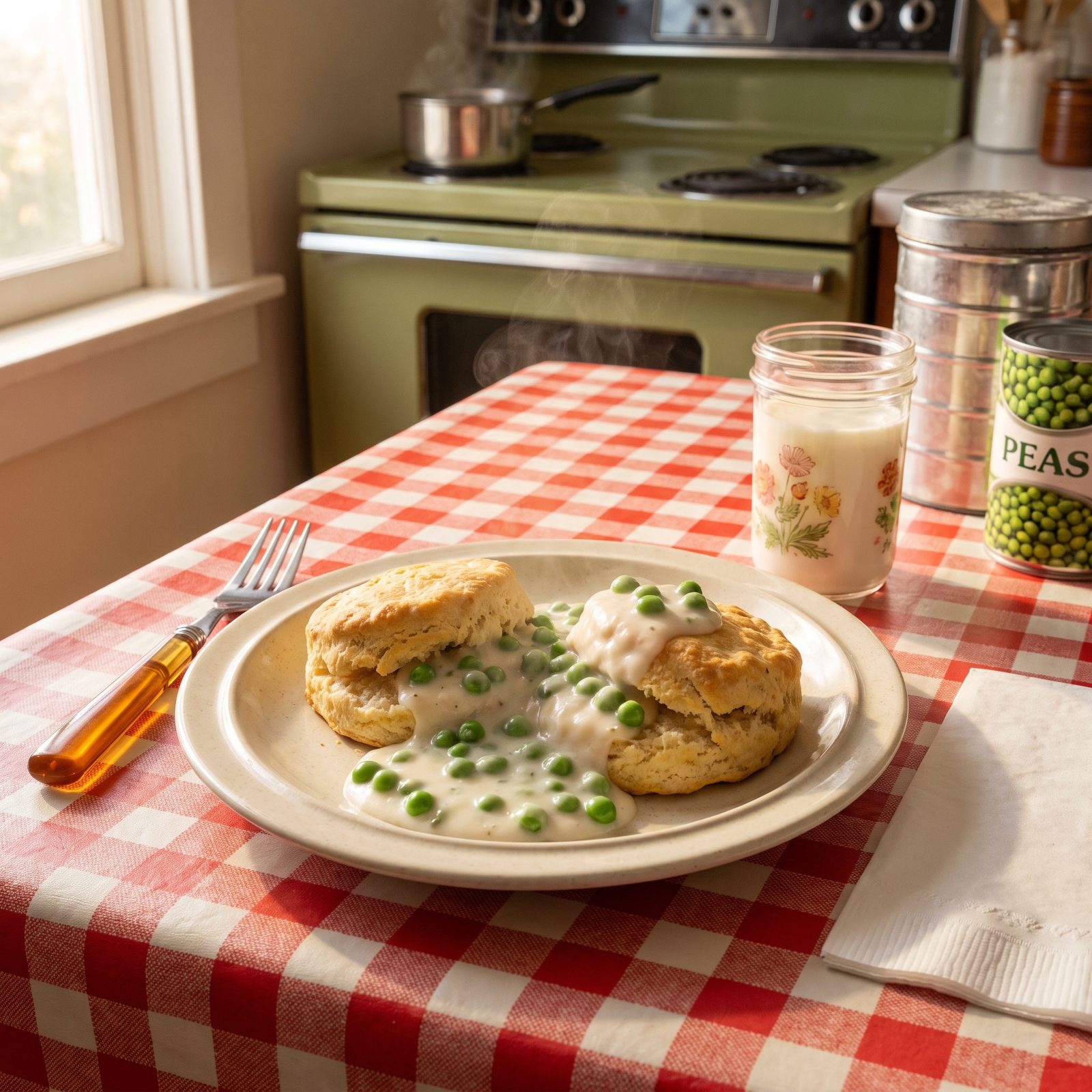
A can of peas, a spoon of flour, a pat of margarine, and some milk. That’s a white sauce, and that white sauce turned into dinner the second it hit a hot biscuit.
This was the meal for the very last night before payday, when the pantry was down to flour and a couple of cans. Nobody complained. Warm biscuits under creamy peas felt like a treat, not a compromise. I’ll defend creamed peas on toast to anyone — underrated, and it costs about nothing.
Stuffed Bell Peppers, Rice Doing the Heavy Lifting
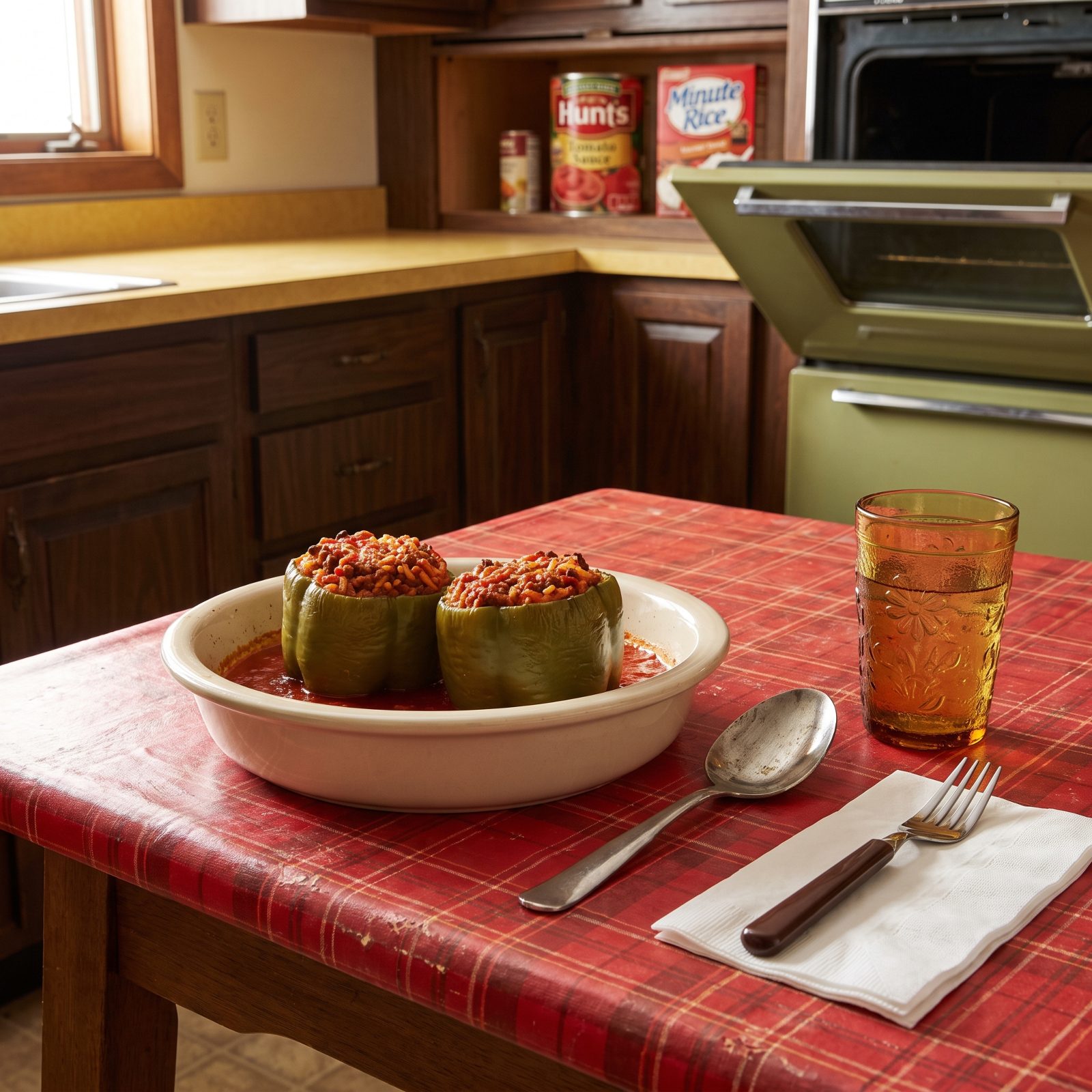
Bell peppers went on sale and a family bought a bag. Each one became a little edible bowl, hollowed out and packed with a mix that was mostly cooked rice, a little ground beef, an onion, and tomato.
The filling was maybe a third meat, if that. But the pepper softened in the oven and the rice soaked up all the tomato and suddenly you had a hot, substantial dinner that looked like real effort. One pound of beef, six peppers, everybody fed.
Potato Pancakes With a Spoon of Applesauce
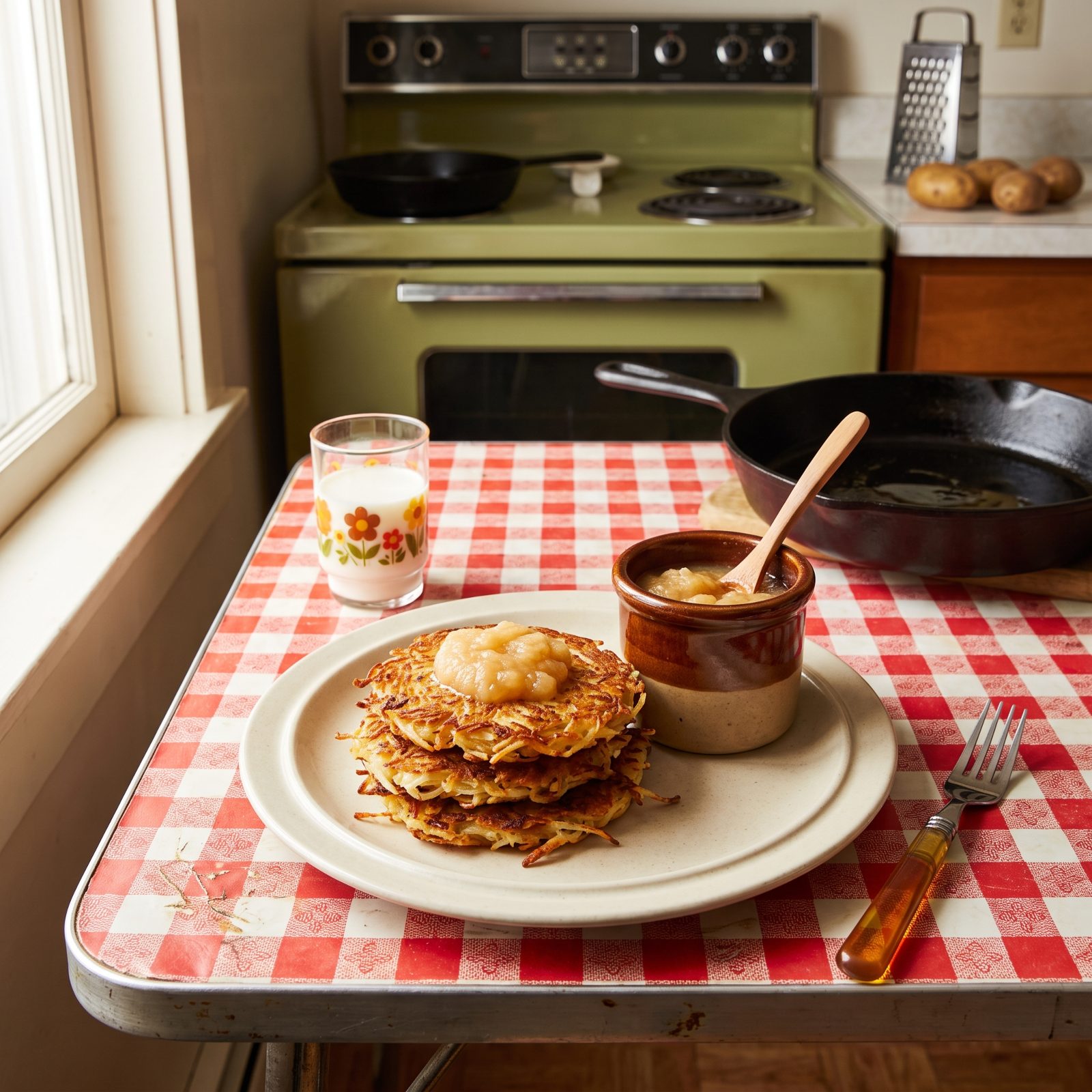
Potatoes were the cheapest thing in the house, and they could carry a whole dinner.
You grated them raw, squeezed out the water, bound them with an egg and a little flour, and fried them in whatever fat was in the pan. The edges crisped up dark and lacy while the centers stayed soft.
The applesauce on the side wasn’t a garnish — it was the sweet counterpoint that made a plate of fried potatoes feel like a meal instead of a snack. Sometimes these got made from leftover mashed potatoes, which is its own quiet genius. Nothing went to waste.
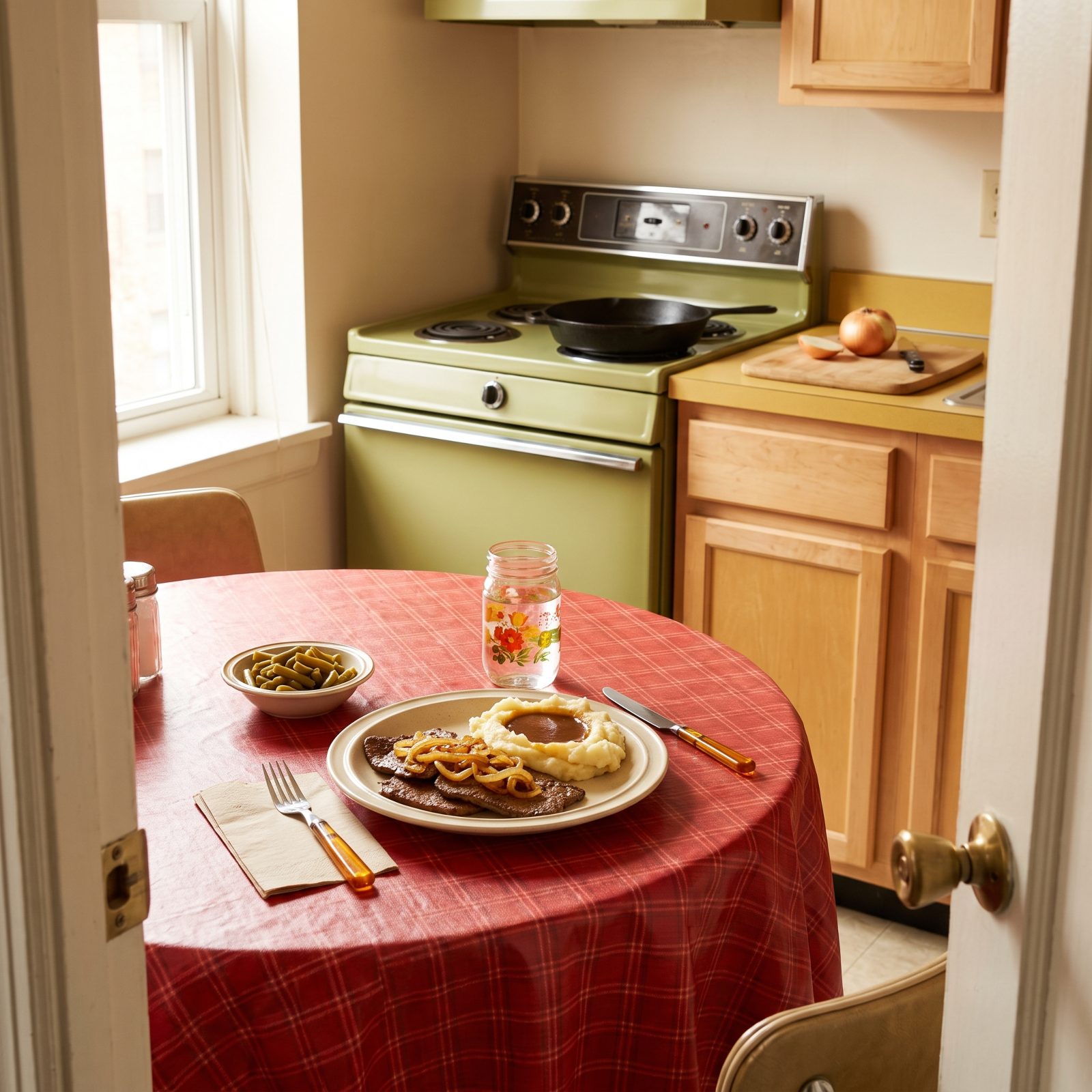
Liver and Onions Over Mashed Potatoes
Would you like to save this?
Liver was one of the cheapest cuts at the butcher counter, and for good reason. Not everybody wanted it. But cooked right — dredged in flour, fried quick so it stayed tender, then buried under a mountain of slow-cooked sweet onions — it was iron-rich and it went a long way.
The mashed potatoes underneath caught all the drippings. That was the meal. Cheap protein, cheap starch, and a pile of onions that cost next to nothing to turn into something almost fancy.
Scalloped Potatoes With the Last of the Ham
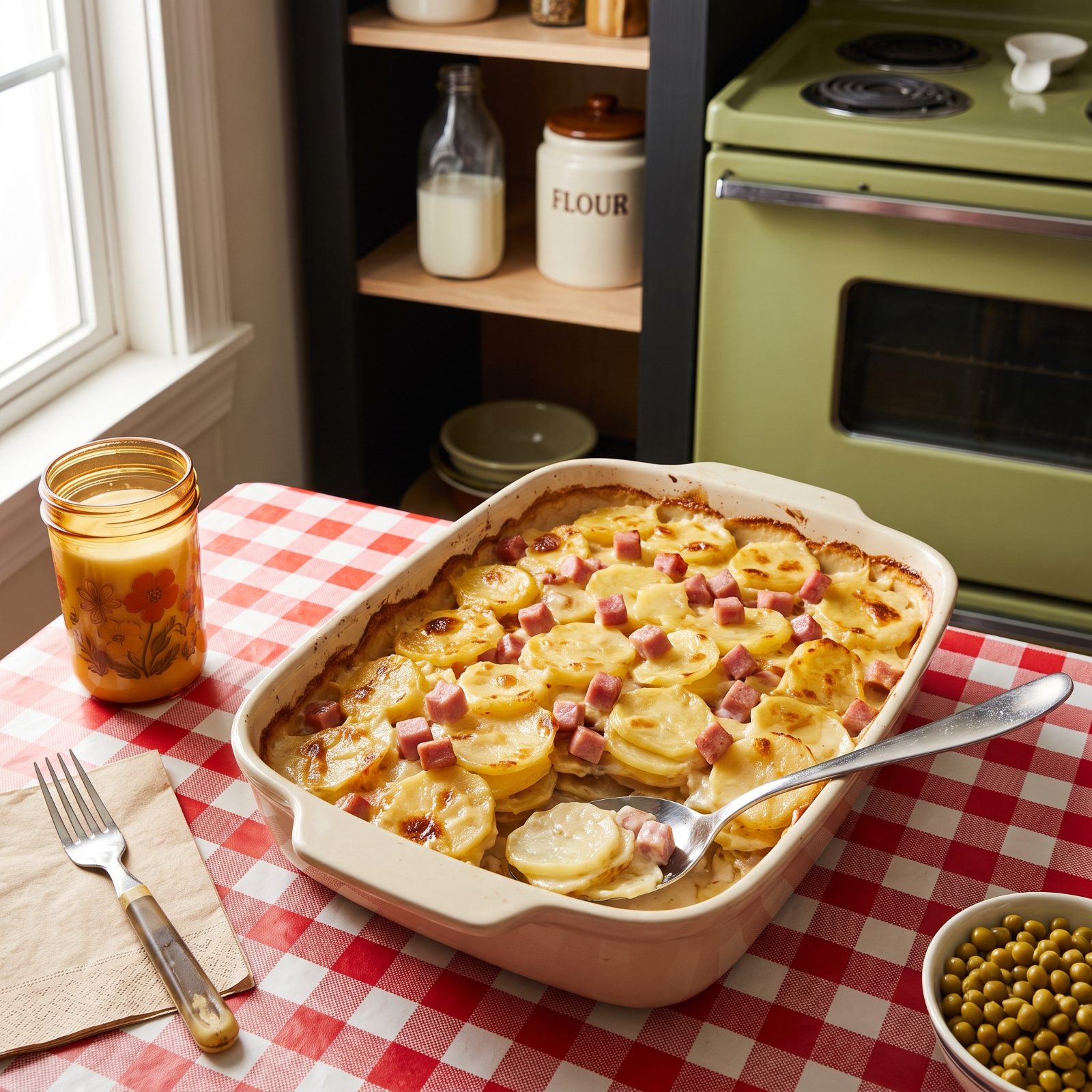
The Easter ham didn’t end at Easter. The last scraps — too small for a sandwich, too good to throw out — went into a dish of sliced potatoes layered with milk, flour, and butter, then baked until the top browned and the whole thing bubbled at the edges.
A handful of diced ham flavored an entire casserole. The potatoes handled everything else. It came out of the oven hot and heavy and golden, stretching one holiday’s worth of meat across a whole other week of dinners. That was the payday-eve magic. You never really finished anything — you just kept finding one more meal in it.
Chili Served Over a Bed of Crushed Saltines
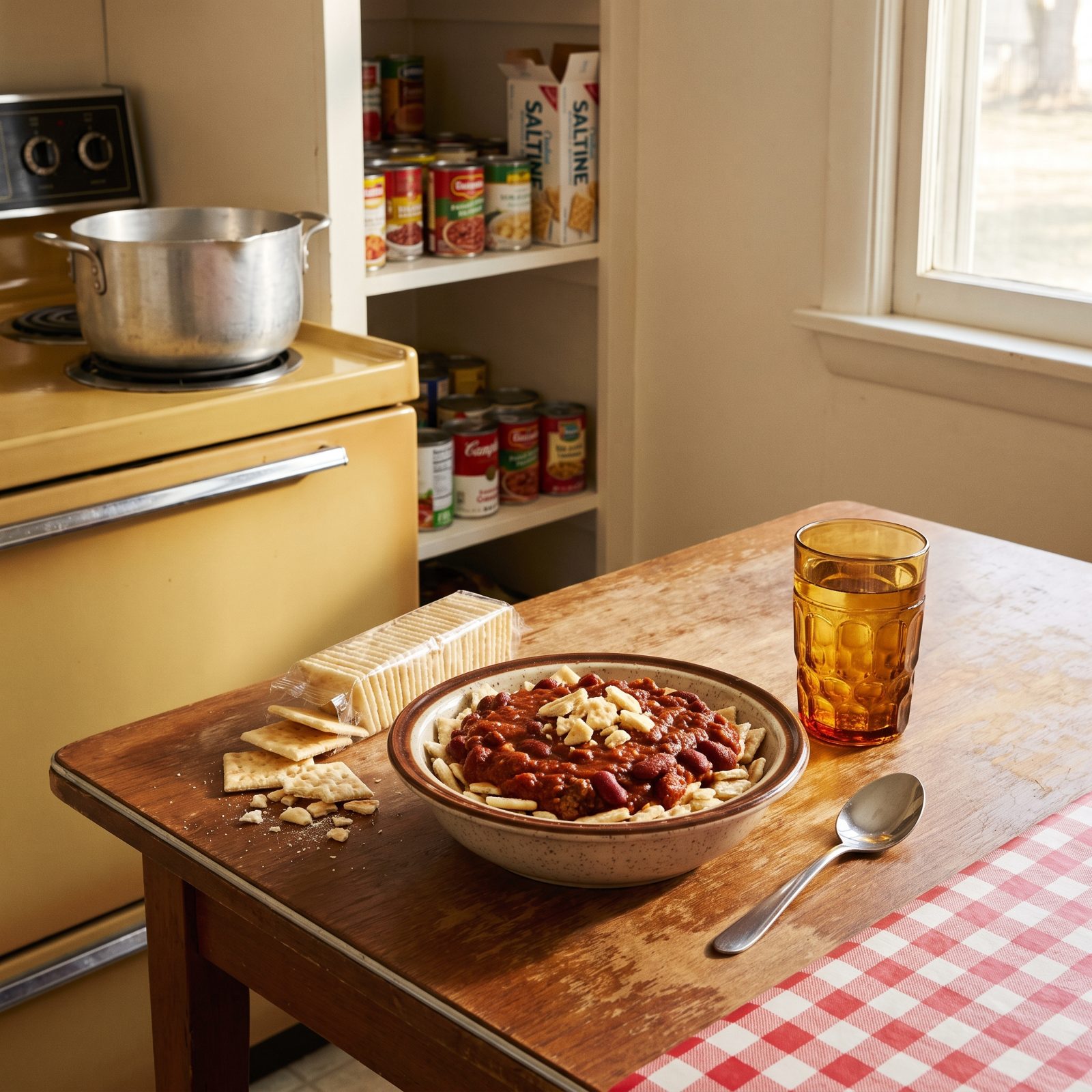
A pound of ground beef could feed a family of six if you buried it in beans and floated the whole thing on crackers. That was the arithmetic. Chili over saltines wasn’t a Texas thing or a Cincinnati thing — it was a broke thing, and it worked because the crackers drank up the liquid and made two ladles feel like three.
The saltines went in the bowl first, crushed by hand, then the chili poured over and softened them into something between a dumpling and a thickener. By the time you got to the bottom it was more like a savory porridge. Nobody complained.
Baked Beans with a Slice of Steamed Brown Bread
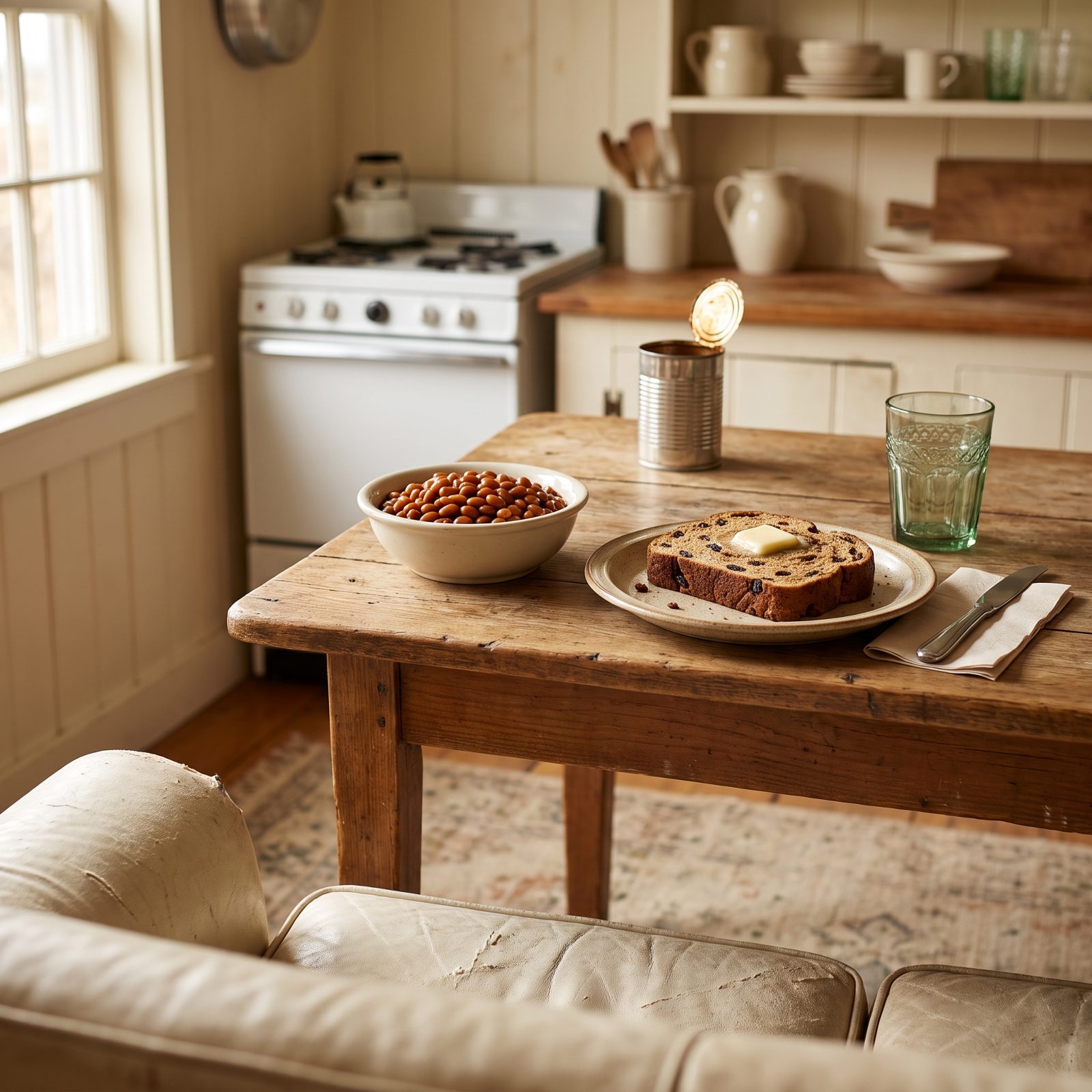
Saturday supper in a lot of houses meant a can of baked beans doctored up on the stove, plus a slice of brown bread that also came out of a can. Yes, a can. You steamed it, slid the cylinder of dense, raisin-flecked bread out whole, and cut it into rounds.
The beans got a spoon of molasses and a little mustard so they’d taste less like the can they came from. Butter on the warm bread was the whole reward. Cheap, filling, and the kitchen smelled sweet all afternoon.
Egg Salad Sandwiches with a Bowl of Canned Soup on the Side
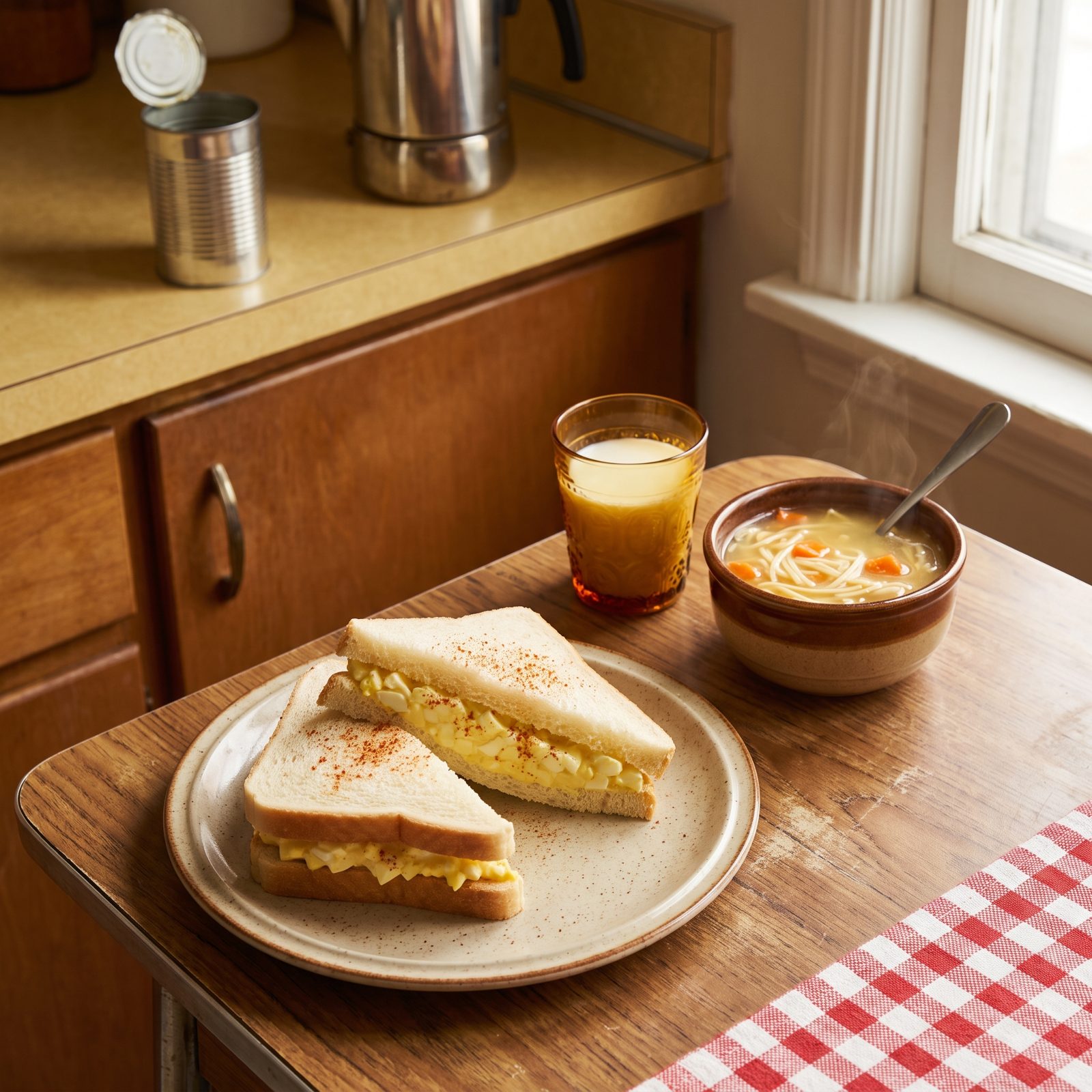
Six hard-boiled eggs, a spoon of mayonnaise, and a shake of paprika fed everybody for the cost of, well, six eggs. Egg salad was what you made when payday was two days out and the lunchmeat drawer held nothing but a curl of dried-out bologna.
The canned soup on the side did the real work — a bowl of chicken noodle turned a snack into supper. Kids got milk, grown-ups got coffee, and nobody left the table hungry.
Tamale Pie Built Around a Can and a Box of Cornmeal
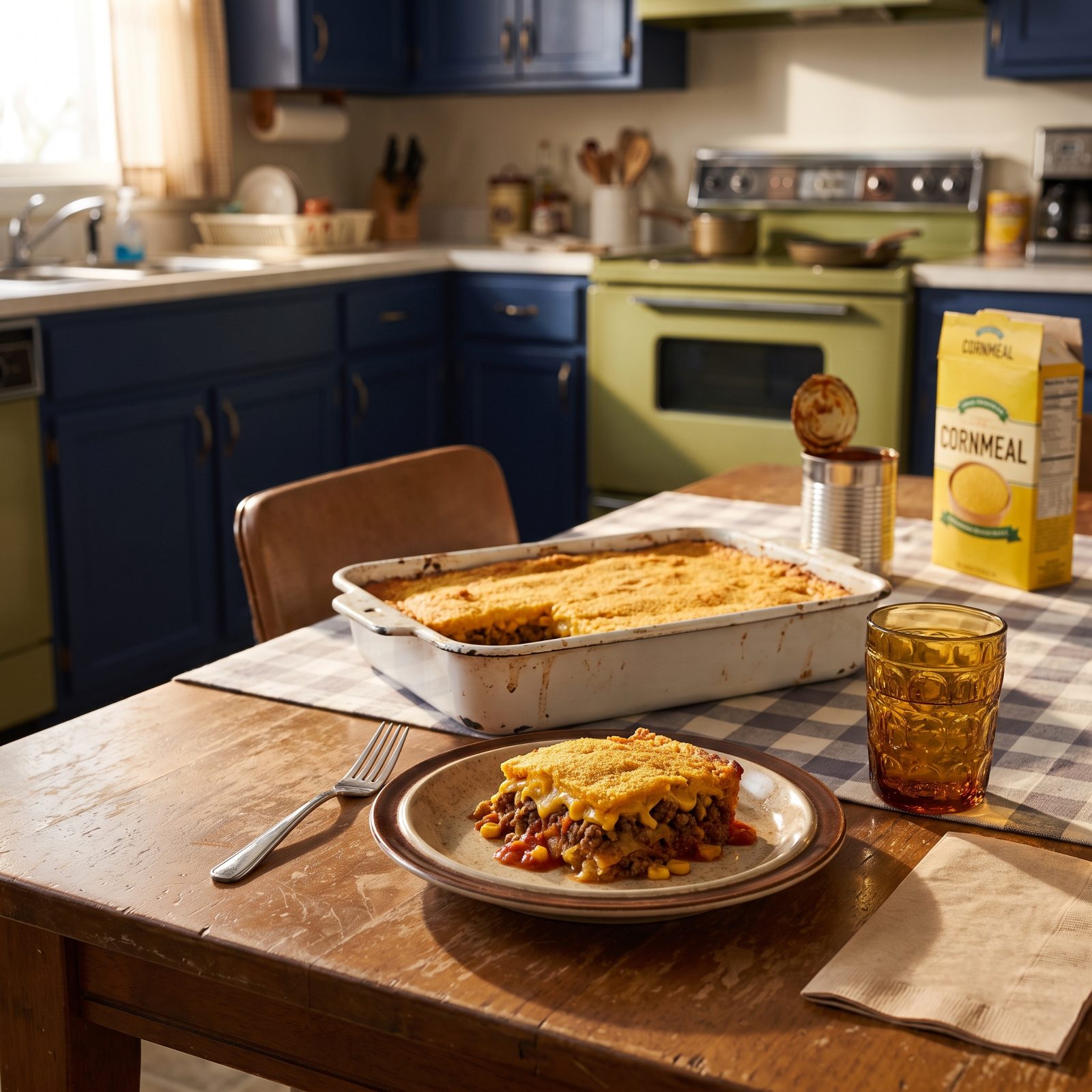
Here’s a dinner assembled almost entirely from what was already on the shelf. A can of tamales, a can of corn, a can of tomatoes, some cornmeal, and whatever ground beef you could spare, layered in a dish and topped with a cornmeal batter, then baked until the top went gold.
Tamale pie stretched one small can of tamales across a whole 8-by-8 pan. The cornmeal crust puffed and browned and gave you something to cut into squares. Looked like effort. It was mostly just opening cans in the right order.
Cottage Cheese and Canned Peach Plates on a Hot Night
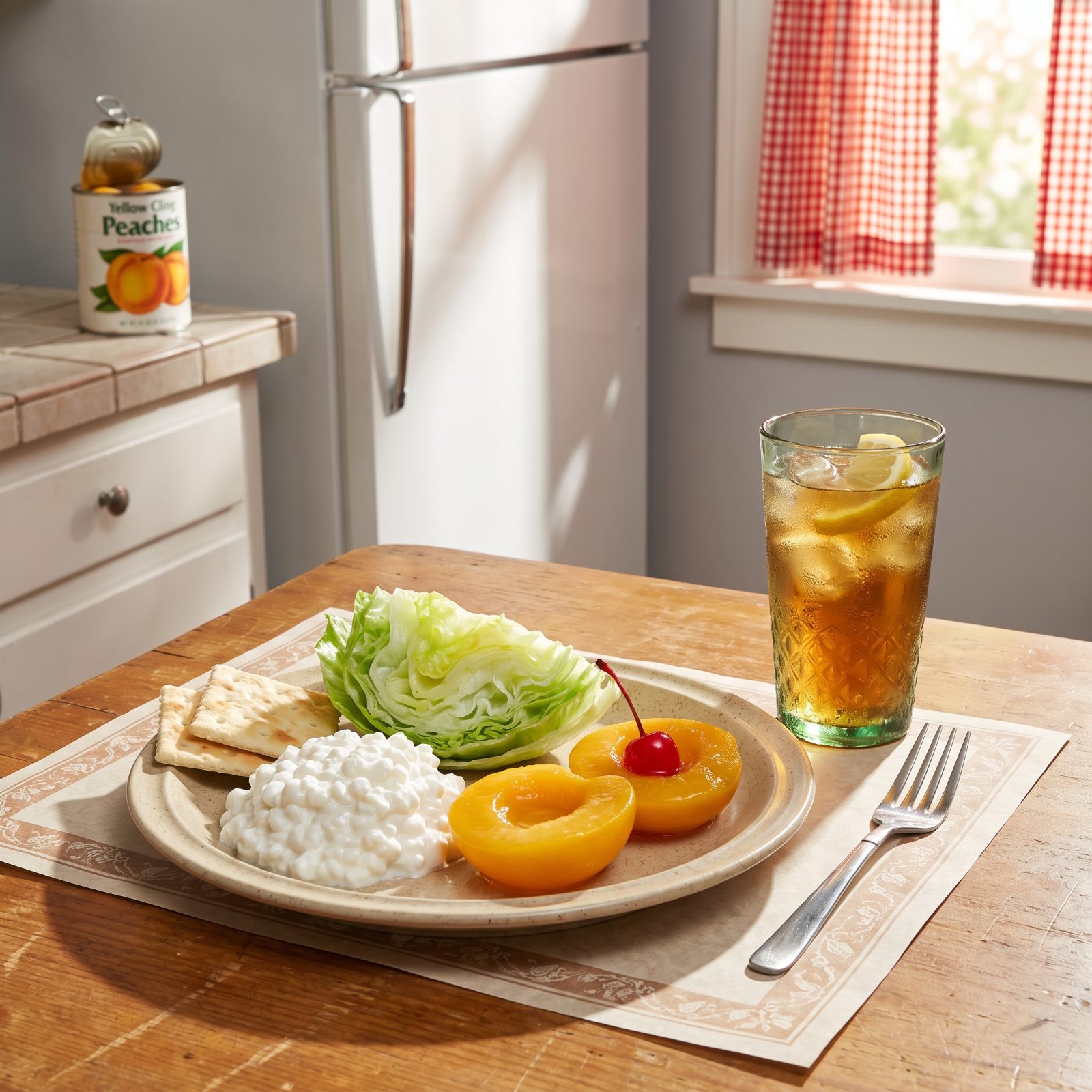
When it was too hot to turn on the stove and there was nothing to cook anyway, out came the cold plate. A scoop of cottage cheese, a couple of canned peach halves in their own syrup, a lettuce leaf underneath just for the look of it.
It felt like a diner special, which was the point. A cook could put this together in ninety seconds and it read as an actual meal, not a surrender. The maraschino cherry was pure showmanship. I won’t pretend I didn’t eat around it to save it for last.
Chipped Ham Barbecue Sandwiches Simmered on the Stove
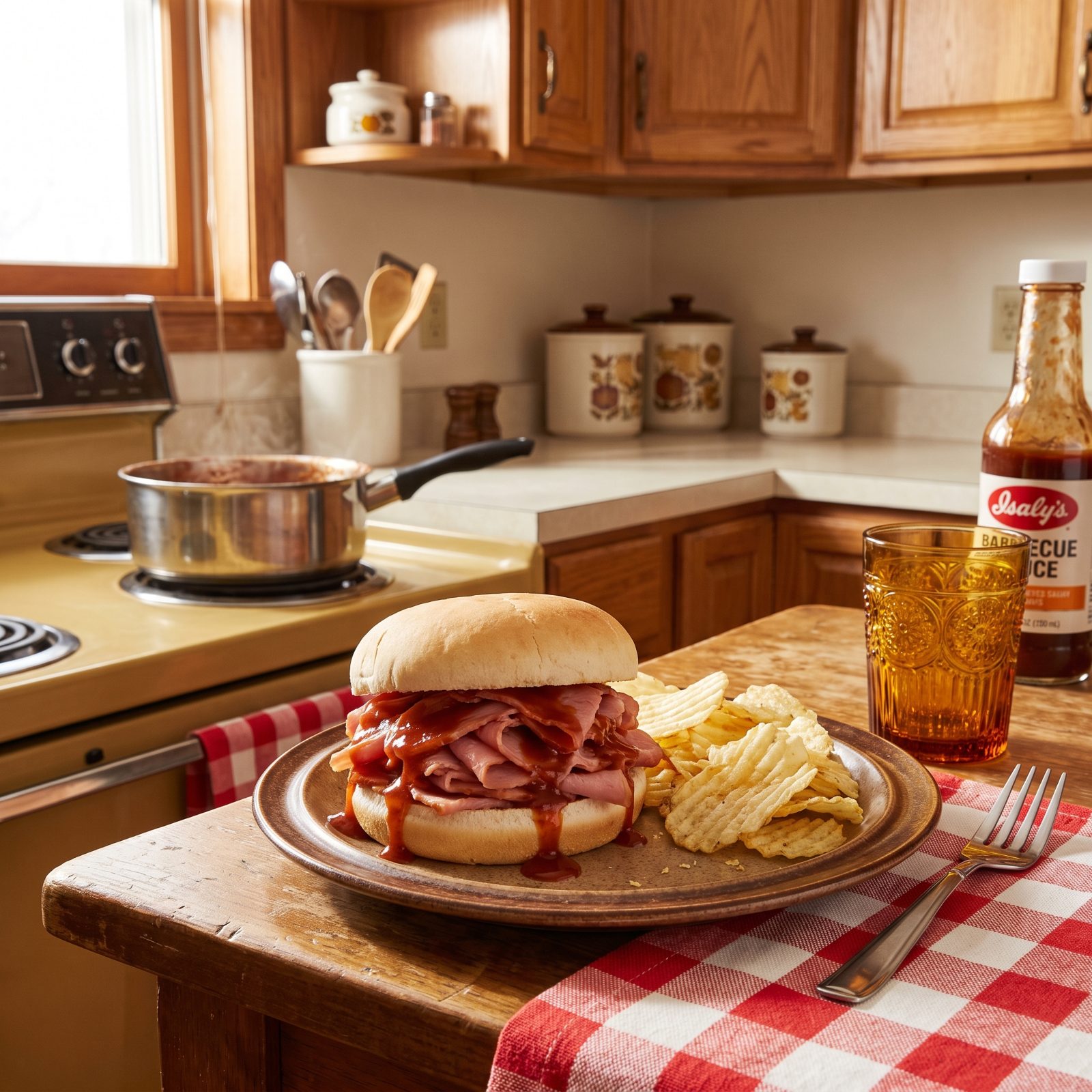
Pittsburgh knows this one cold, but chipped ham barbecue lived in a lot of towns under a lot of names. You bought the cheapest chipped ham at the deli counter — the stuff shaved so thin it was almost lace — and simmered a pound of it in barbecue sauce until it went soft and saucy.
Piled onto white buns, it looked like way more meat than it was. That’s the trick with shaved ham: a little spreads a long way. Two dollars of ham became sandwiches for the whole table, and the leftovers tasted better the next day, cold, straight out of the pan.
Vegetable Soup Assembled from Whatever the Refrigerator Was Hiding
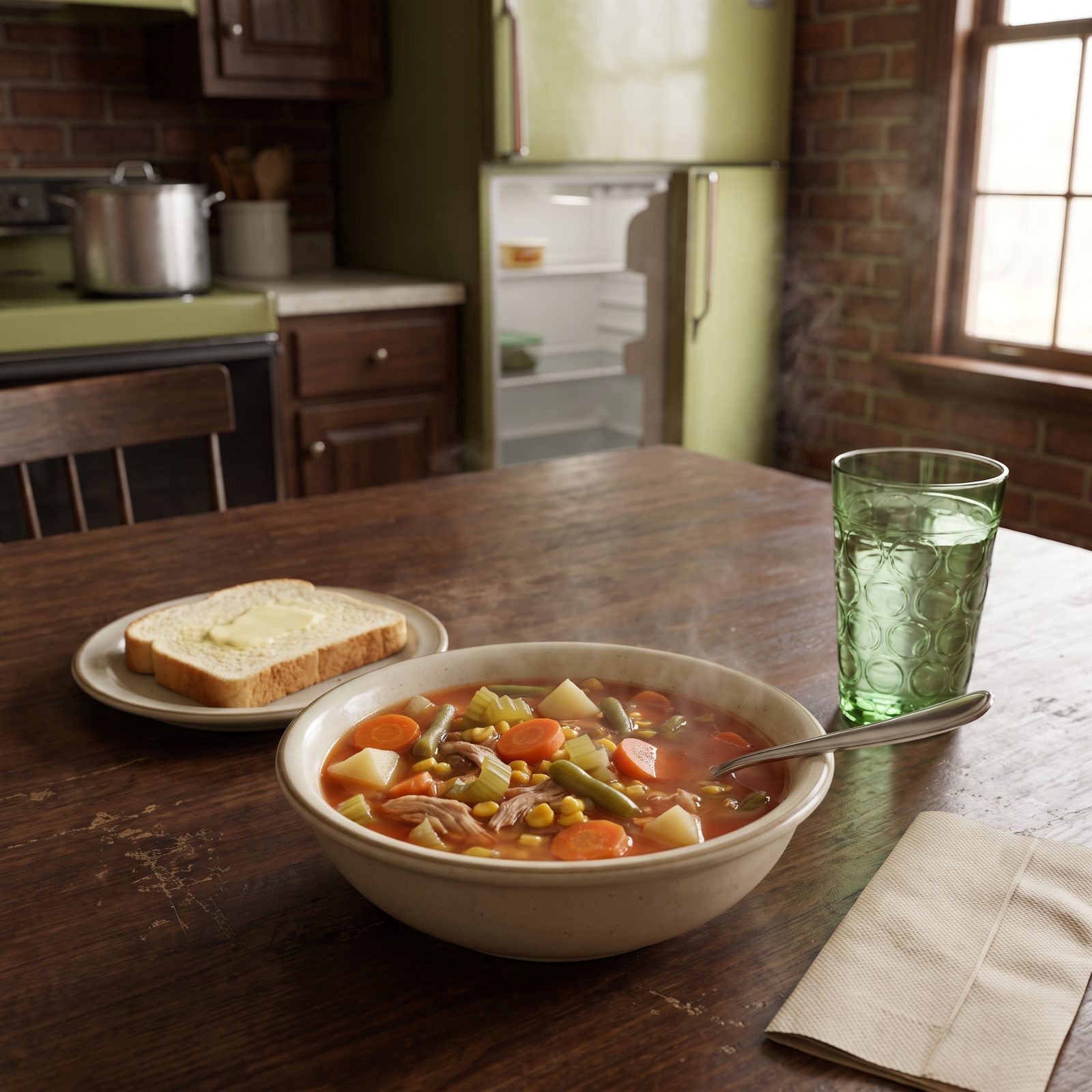
Every good kitchen had a soup that changed shape every single time, and two days before payday it changed a lot. The half-carrot, the celery going soft, the last three green beans, the corn nobody finished, a heel of leftover roast. Into the pot with water and a can of tomatoes, and there was dinner.
Nobody wrote this recipe down because there wasn’t one. You looked in the fridge, took stock, and made it work. The best pots came from the emptiest fridges. I still think a soup made on purpose never tastes as good as one made from desperation.
Cornmeal Mush with a Fried Egg on Top
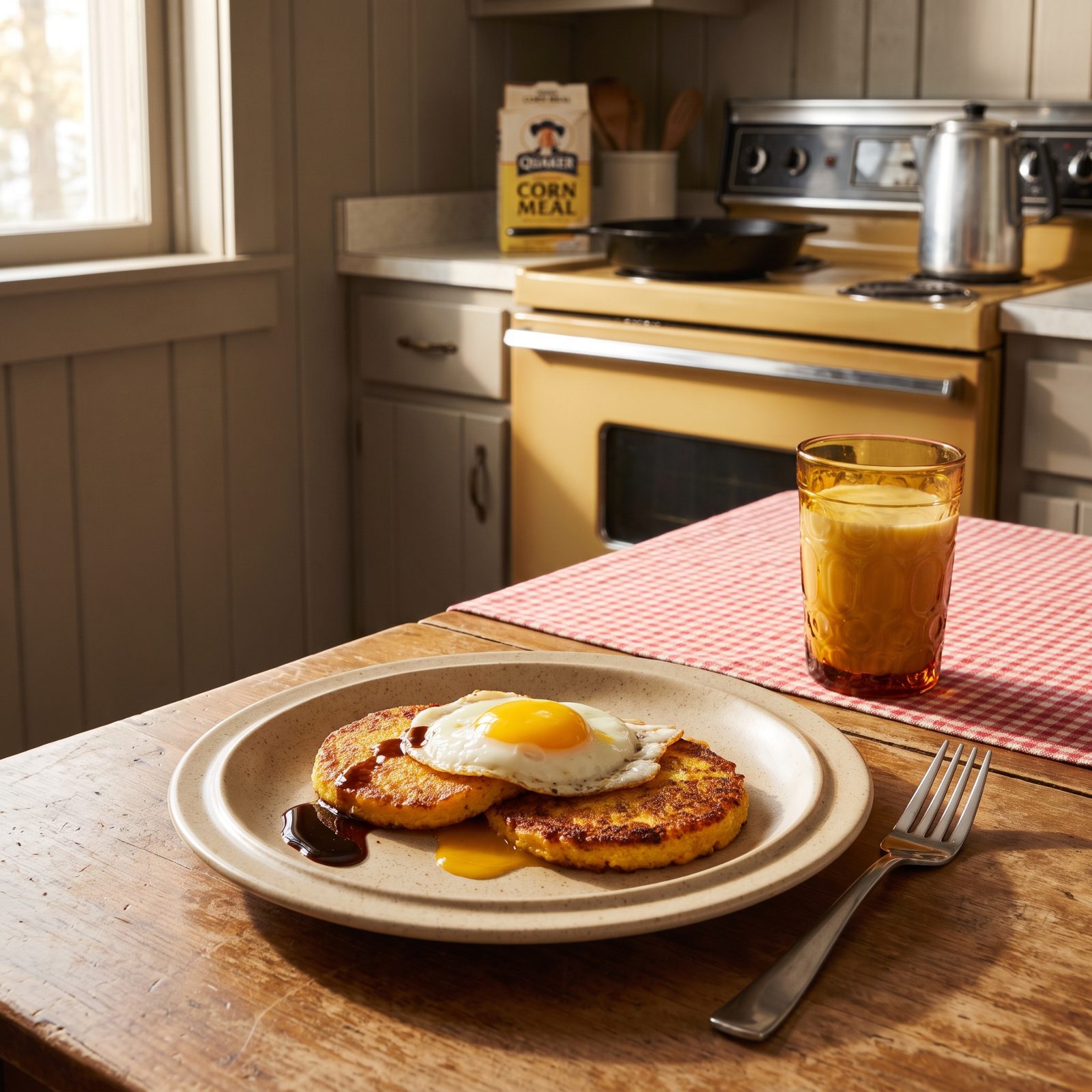
Cornmeal, water, salt. That’s the whole grocery list. You cooked the mush the night before, poured it into a loaf pan, and let it set in the fridge overnight. Come morning — or come dinner — you sliced it and fried it in a little grease until the edges crisped.
A fried egg went on top when there was one to spare. Some folks poured syrup over the whole thing, sweet and savory at once. It cost pennies and it filled you clean up to your collar. This was the meal that carried whole households through the tightest weeks.
Kielbasa with Sauerkraut and Potatoes in One Pan
Would you like to save this?
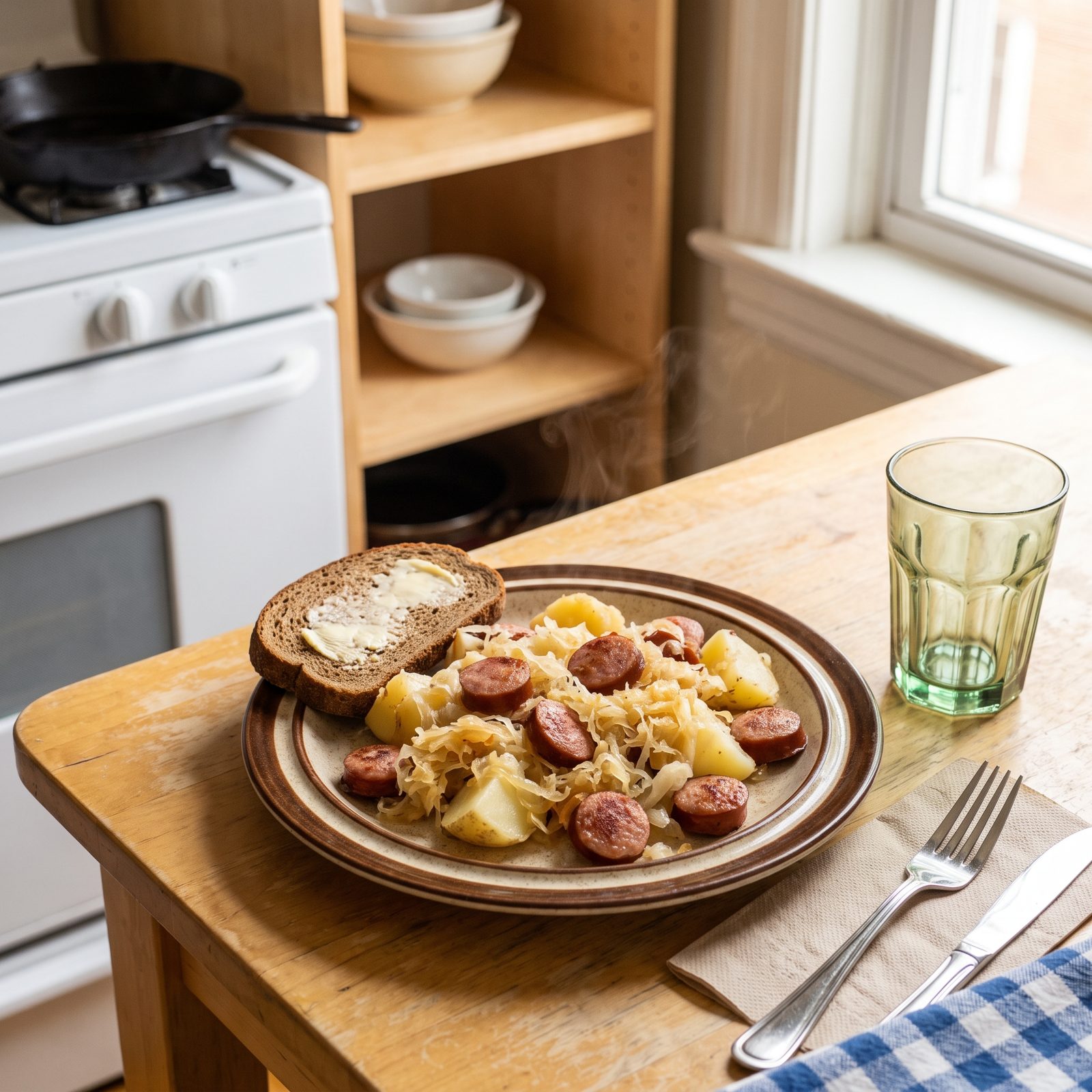
One ring of kielbasa, a can or bag of sauerkraut, and a few potatoes went into a single skillet and came out feeding everybody. The sausage browned, the kraut cooked down tangy, and the potatoes soaked up the drippings. One pan, one burner, no fuss.
A ring of sausage cost little and went a long way sliced into coins. Payday-Thursday food in a lot of Eastern European kitchens across the industrial North — the kind of dinner that filled the house with a smell meaning somebody had figured out how to make cheap taste like plenty.
Tomato Soup and a Grilled Cheese Cut Corner to Corner
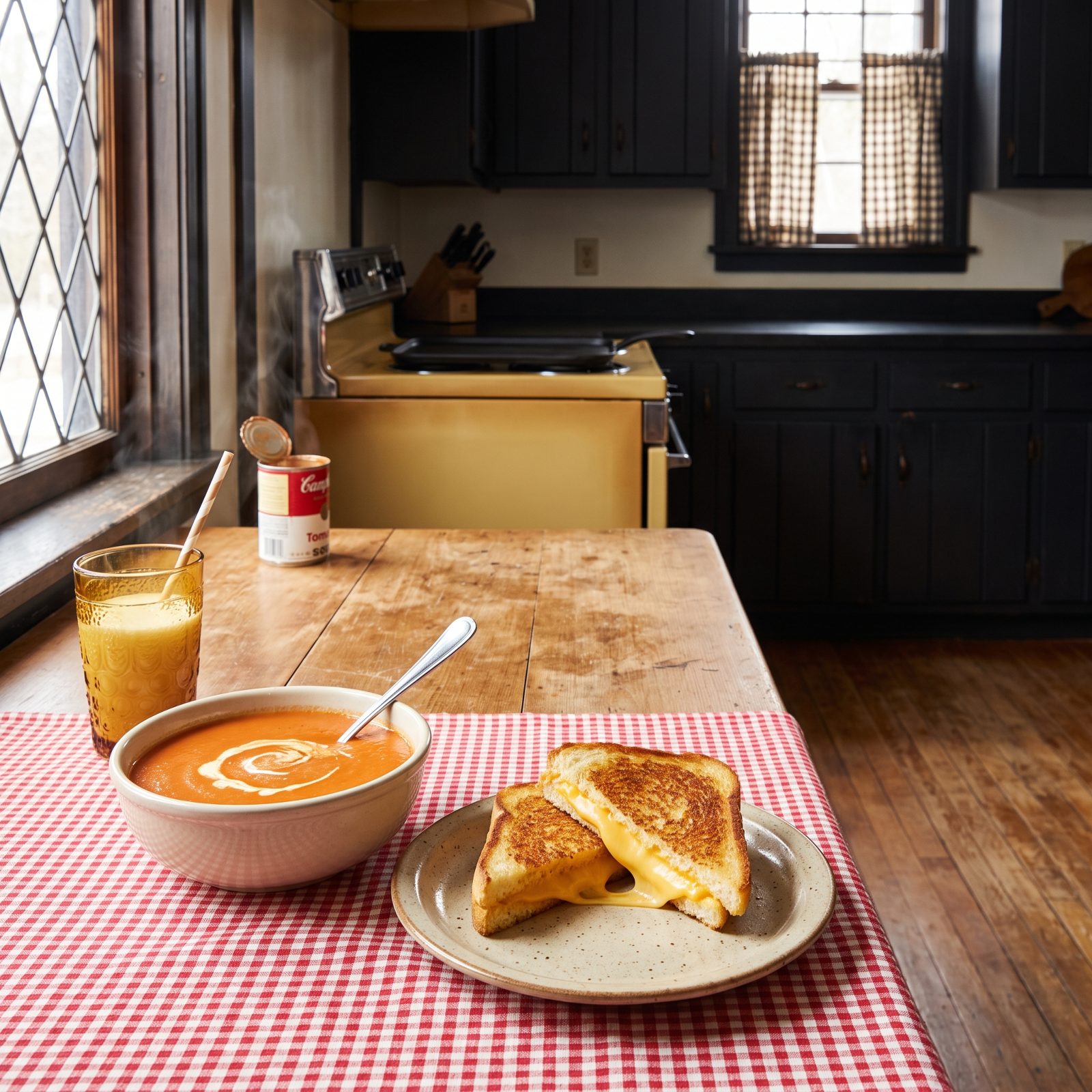
The one everybody had. A can of condensed tomato soup, made with milk if there was milk and water if there wasn’t, and a grilled cheese pressed on the griddle until the butter crisped the bread. Cut on the diagonal, always. A grilled cheese cut straight across is a different sandwich and you know it.
You dunked. That was the ritual — corner of the sandwich into the soup, wait a beat, eat it before it fell apart. This is the meal that ended a hundred hard weeks and somehow still felt like being taken care of. Some cheap dinners are just survival. This one was comfort.