Would you like to save this?
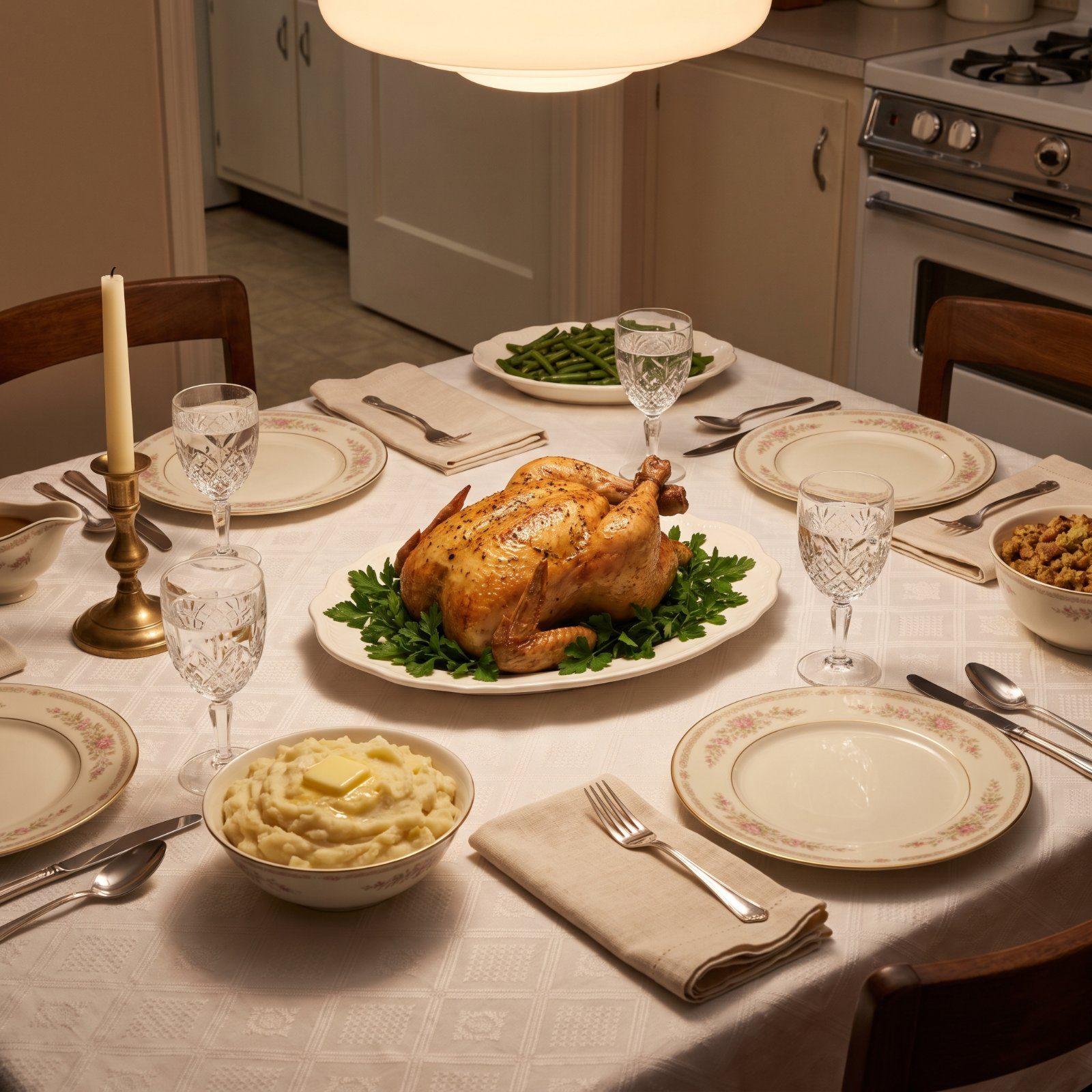
The oven came on around ten in the morning and didn’t cool off until the last plate was dried. A 1950s Sunday roast wasn’t a meal you threw together — it was an all-day operation run out of one kitchen, with one apron and about forty separate manual tasks nobody thought to complain about. We recreated the whole thing, photo by photo, from the polished silver down to the snapped beans. Here’s what a full Sunday actually took, back when the whole house smelled like roasting chicken by noon.
Deciphering the Handwritten Sunday Dinner Menu
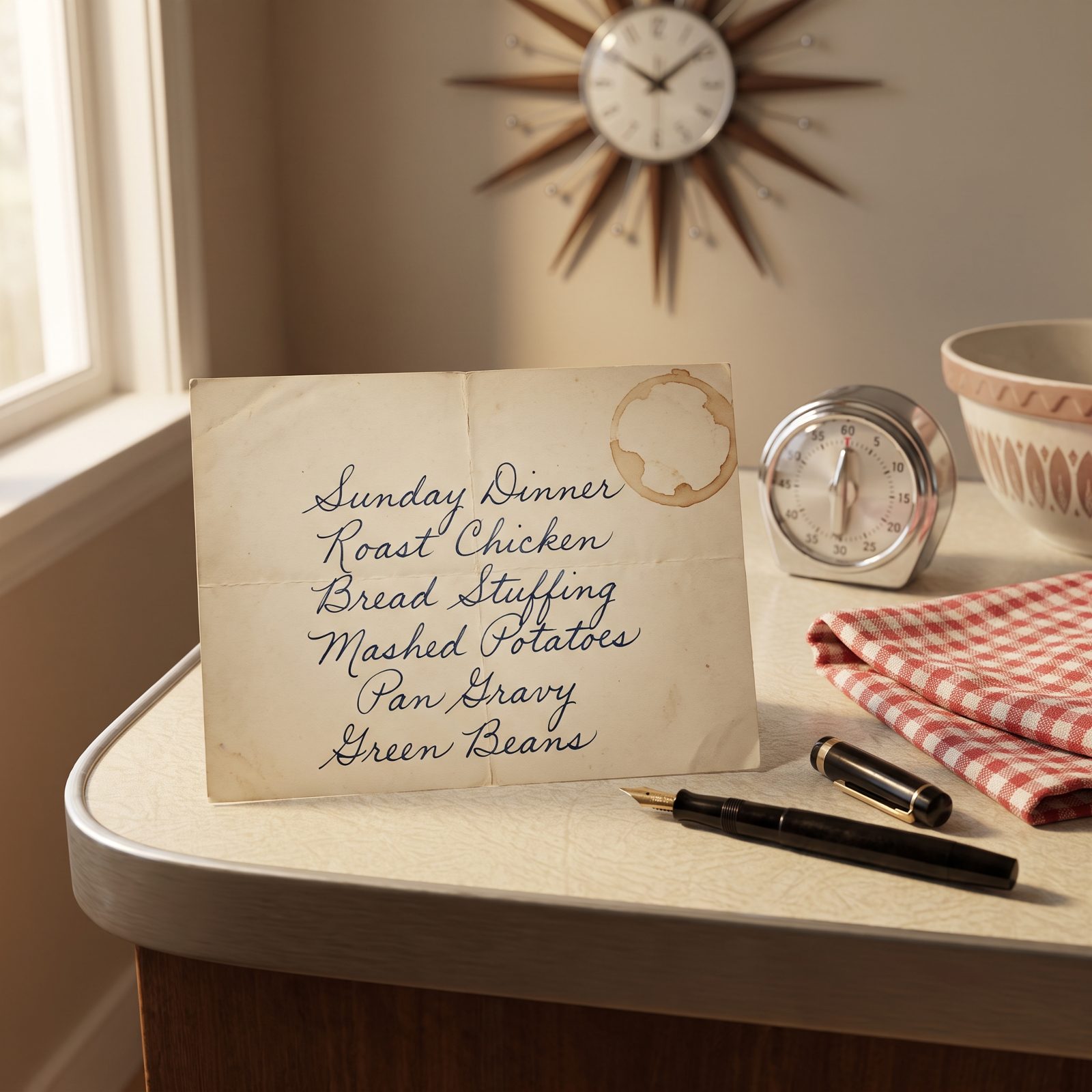
It always started with a card. Not a cookbook, not a recipe app — a card in someone’s own handwriting propped against the flour canister, the whole meal laid out in cursive that leaned hard to the right.
Half the fun of recreating this was reading it. The stuffing note just said “day-old” and trusted you to know the rest, and the gravy line ran three words. These menus assumed you’d made the dinner a hundred times, which most cooks had.
Polishing the Silver Before Cooking Begins
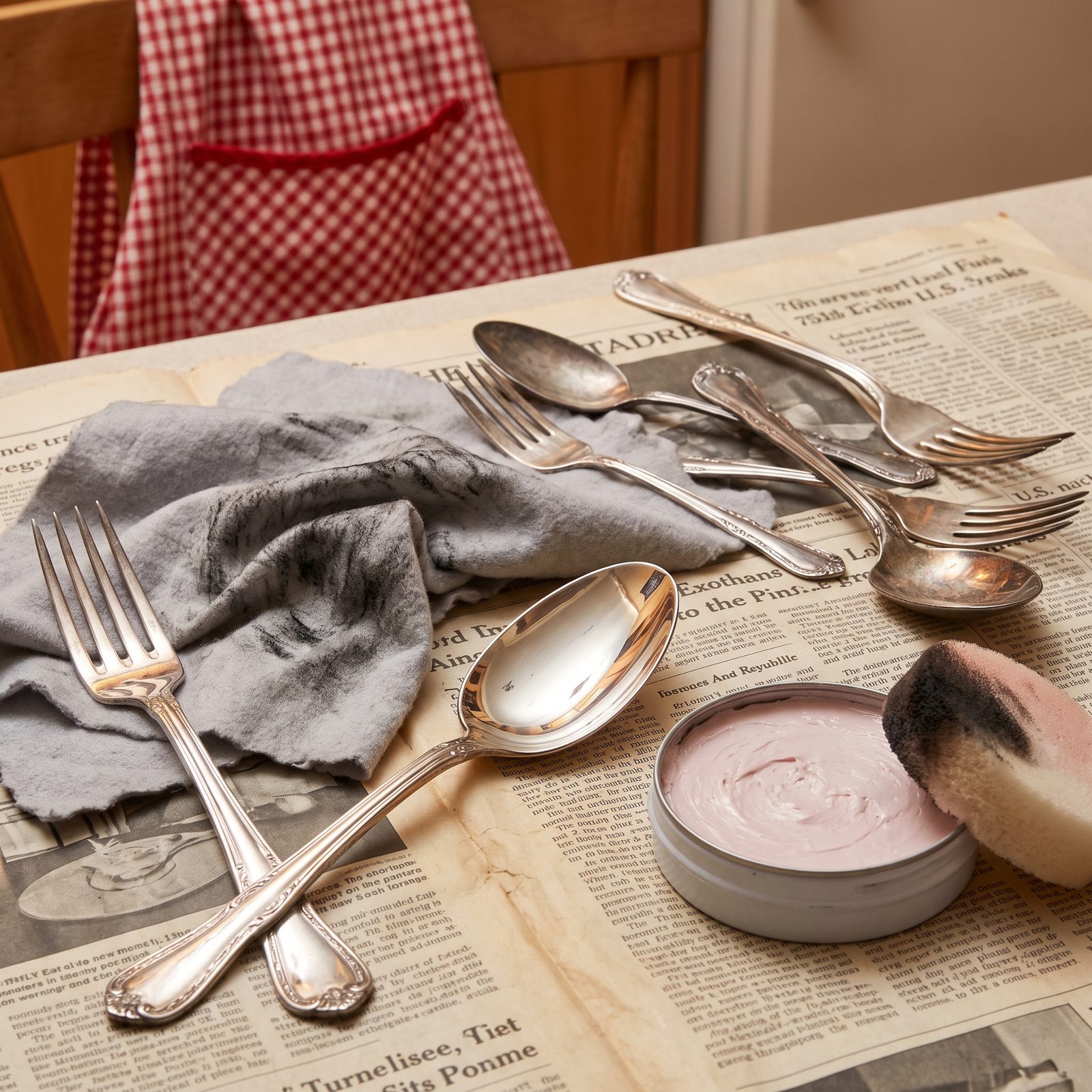
Before a single potato got peeled, the silver came out — and it needed help. A whole set pulled from a felt-lined chest, half of it gone gray at the tines, waiting for the pink paste and a lot of elbow work.
You dip the cloth, work it into the pattern, and watch the tarnish smear black onto the flannel while the metal underneath goes bright. Oddly satisfying and completely thankless, because nobody at the table ever said a word about the forks. Which was the whole idea. Good silver was supposed to disappear into the meal.
Ironing a Full White Damask Tablecloth
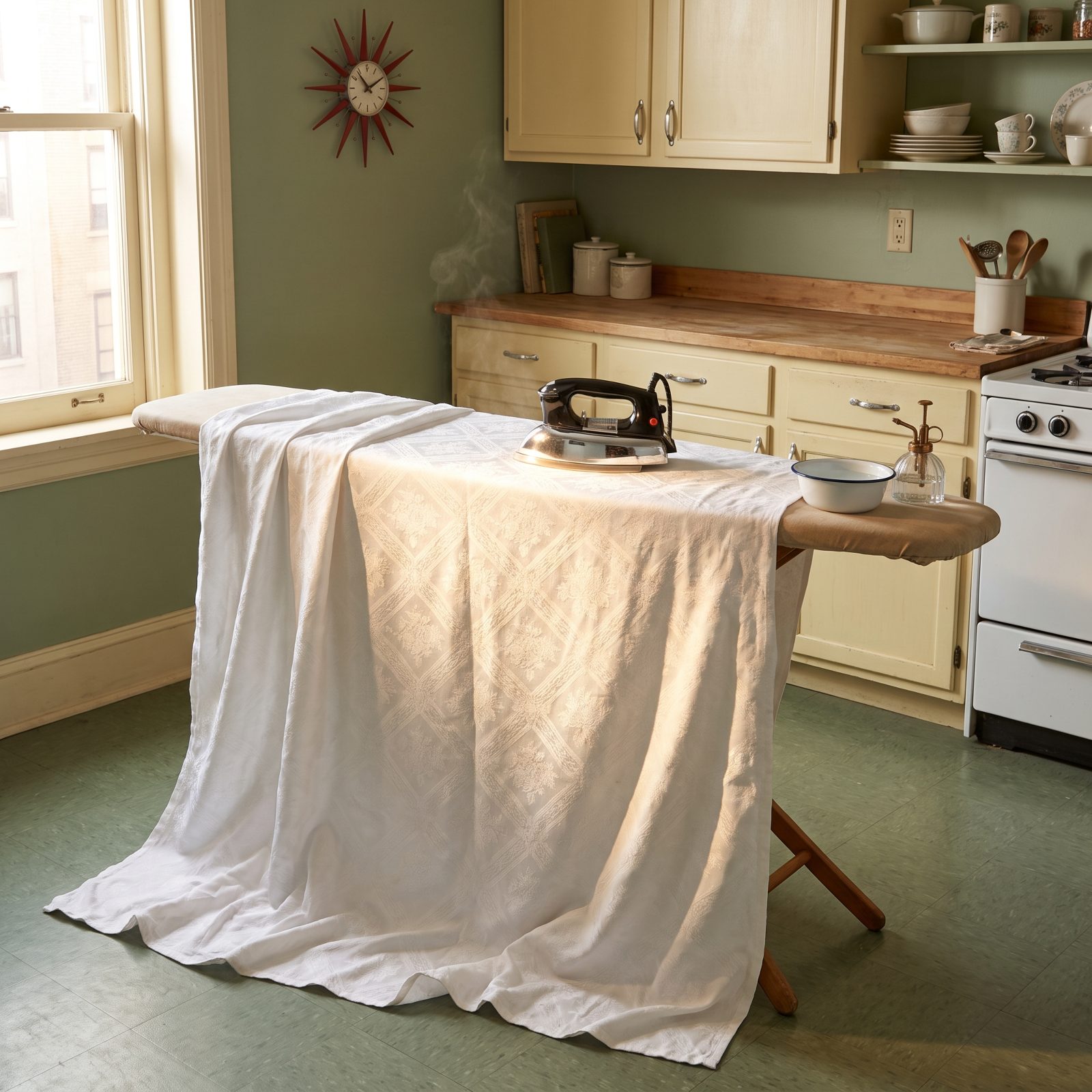
A white damask cloth fresh off the line is a wrinkled disaster, and there’s no shortcut. You sprinkle it damp, roll it up so the moisture spreads, then press it in long sections with a heavy chrome iron until the jacquard pattern shows up in the sheen.
The trick was ironing it on the table itself so you didn’t crease it again folding it. I got this wrong the first pass and had to start over. Damask holds a wrinkle like a grudge.
Thawing and Cleaning a Whole Roasting Chicken
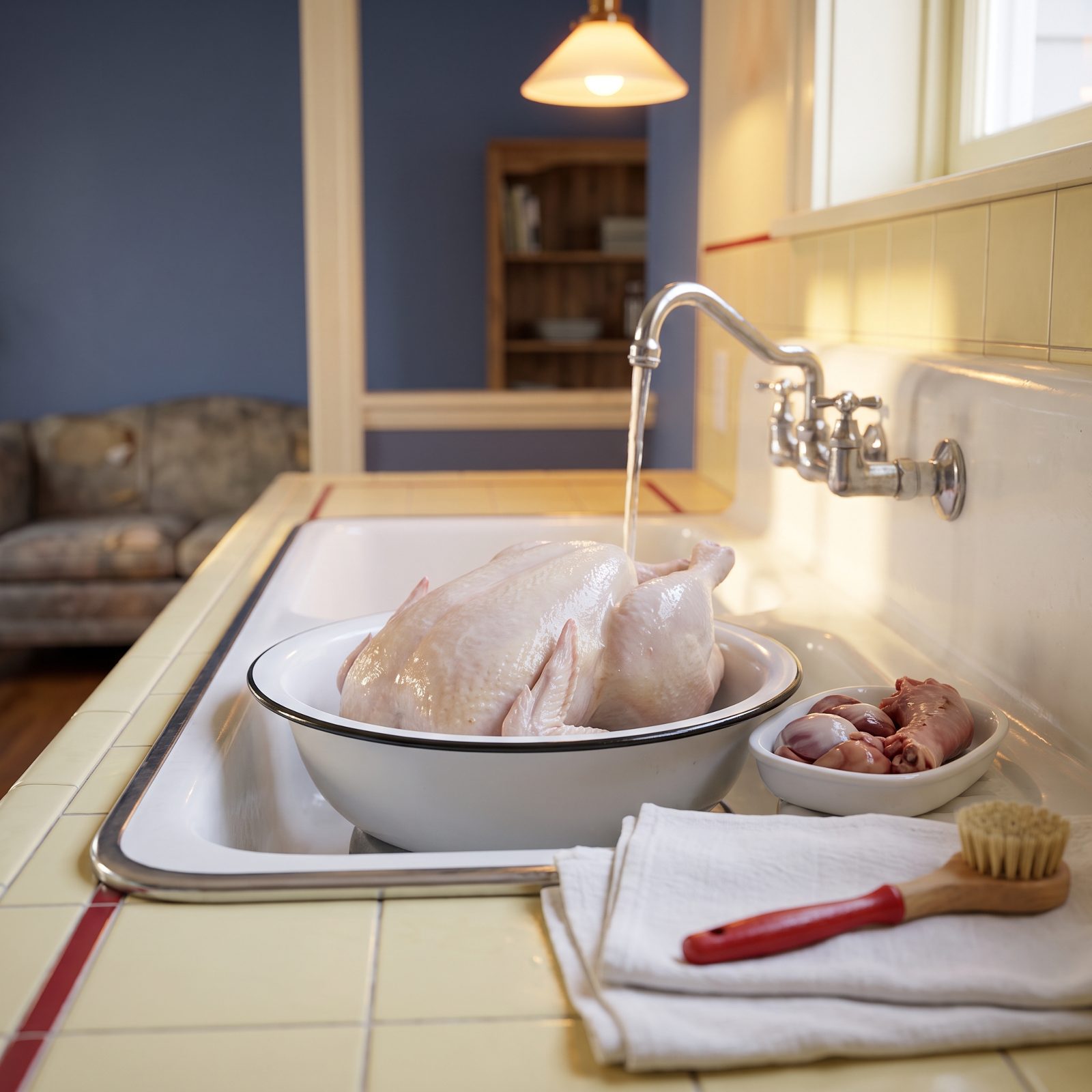
The bird didn’t come oven-ready. It came whole and cold, giblets tucked inside in a little paper packet, and a neck you had to fish out.
Recreating this part reminded me how much handwork went into a chicken before it ever saw heat. Rinse it, pat it dry, pull the pin feathers nobody caught at the packing plant, set the giblets aside for the gravy. None of it was fast, and skipping steps showed up later at the table.
Making Poultry Stuffing from Day-Old Bread
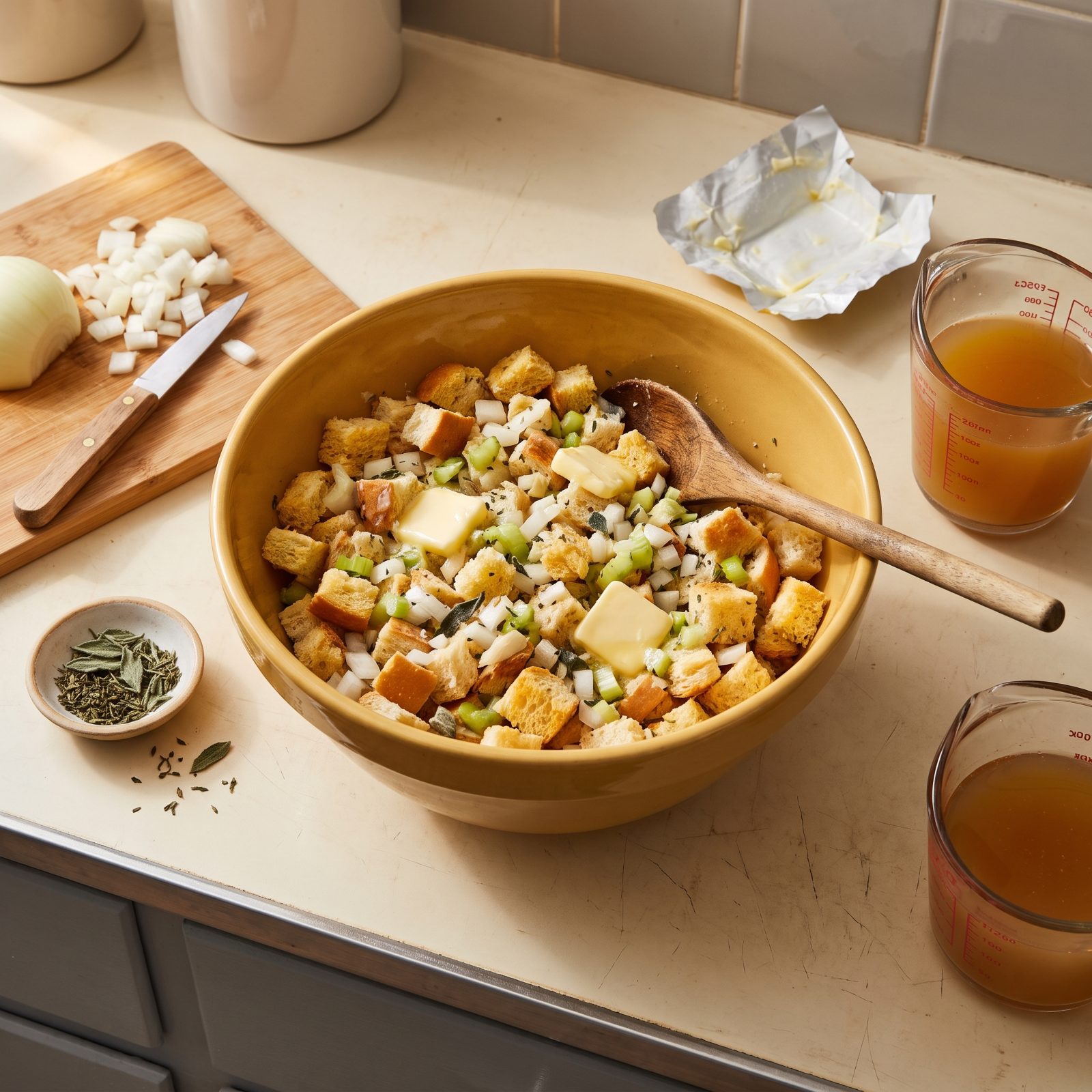
Nobody bought stuffing in a bag. You saved the ends of the week’s bread, let them go stale on purpose, then tore them by hand into a bowl the size of a hubcap.
Diced onion, celery, a handful of sage and thyme, plenty of butter, enough broth to bind it without drowning it. You mix it with your hands because a spoon can’t feel when it’s right. Some cooks packed it into the bird, some baked it in a dish alongside — and both camps were dead certain the other was wrong.
Trussing the Chicken with Kitchen Twine
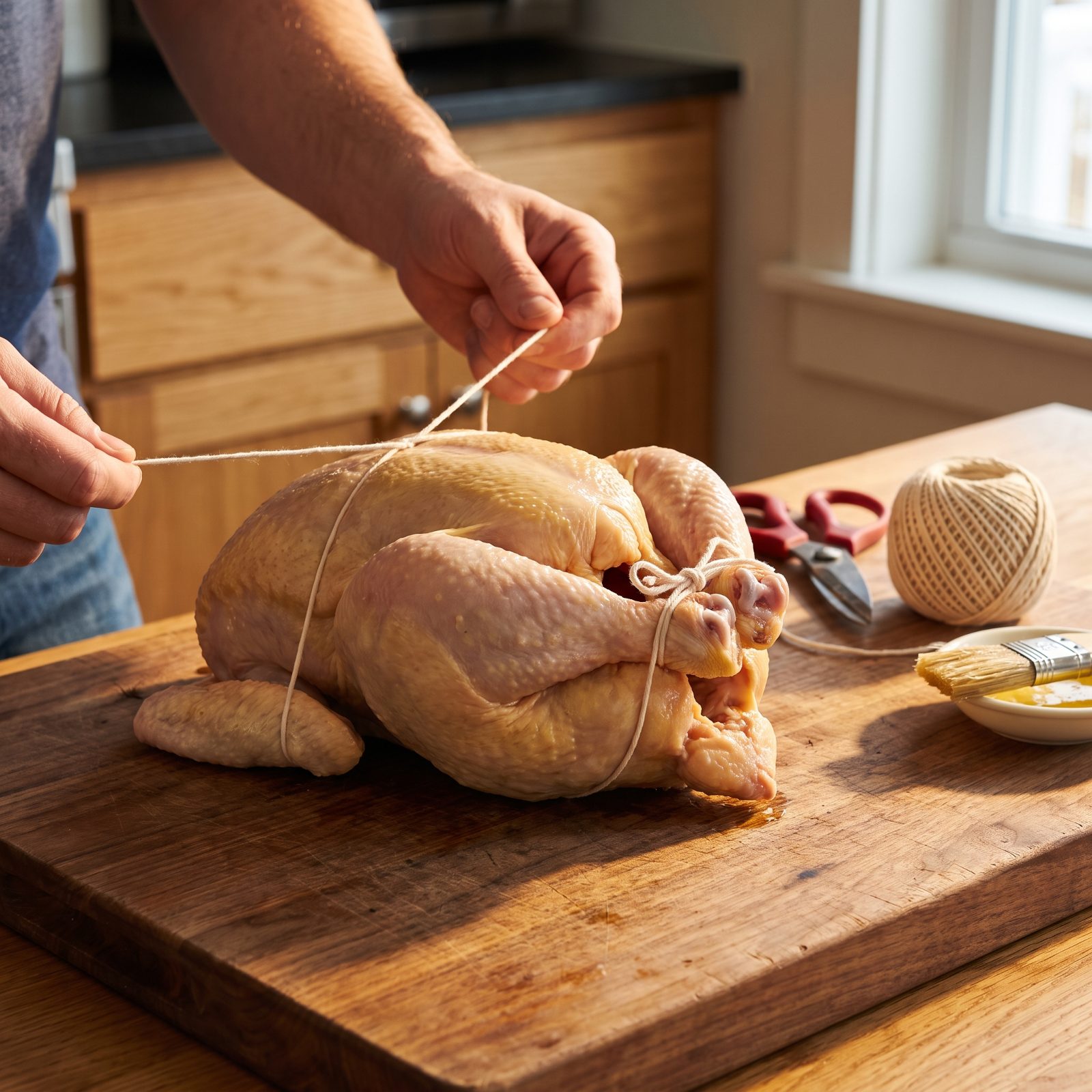
Trussing looks fussy until you understand why it’s there. Tie the legs, tuck the wings, cinch the whole bird into a tight bundle, and it roasts evenly instead of splaying open and drying out at the edges.
The twine had to be cotton, never anything synthetic. You loop it under the tail, cross it over the drumsticks, and pull. A well-trussed chicken holds its shape all the way to the platter. A loose one flops apart the second the knife goes in.
Basting the Bird Throughout the Afternoon
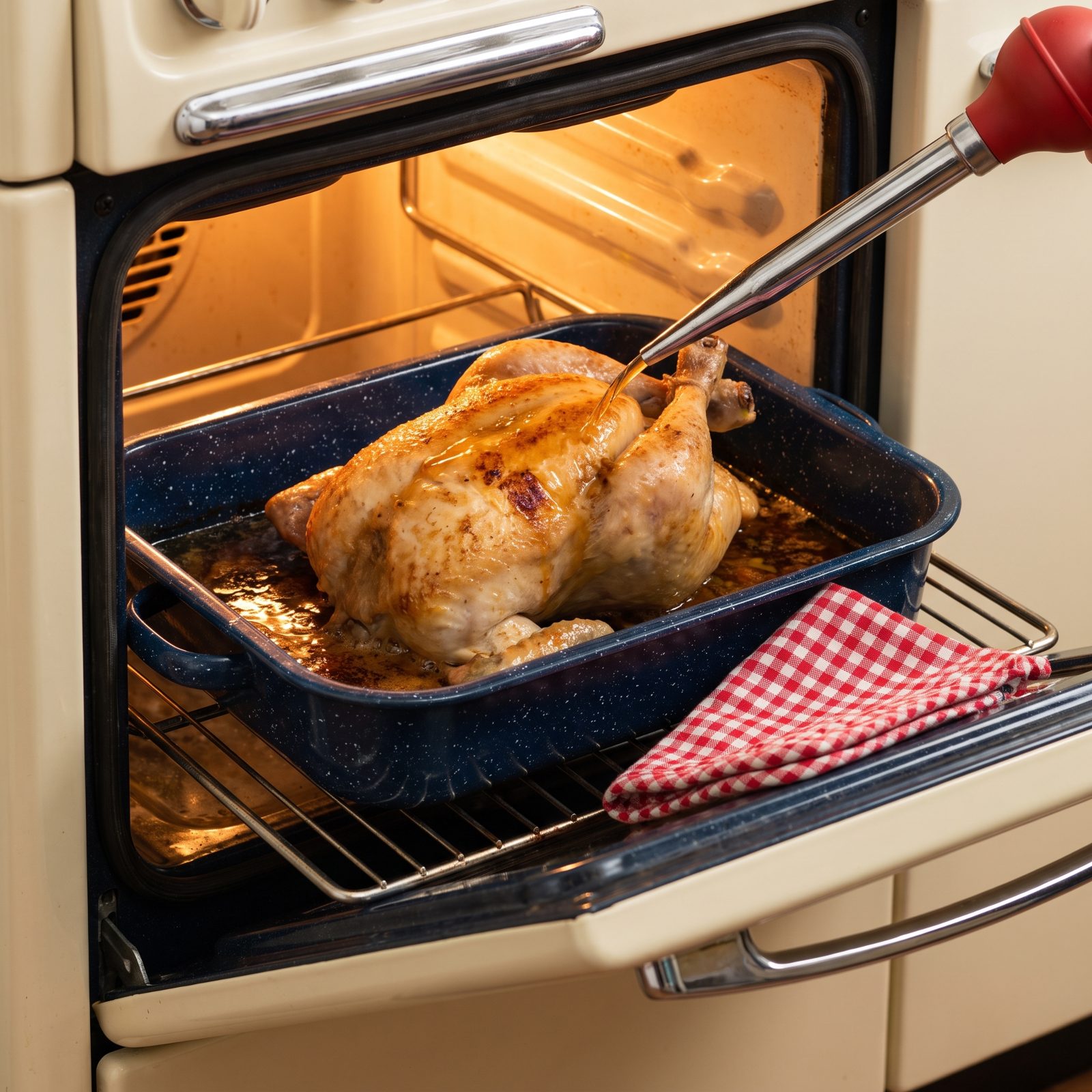
Every twenty minutes or so the oven door came open and the whole kitchen caught a wave of hot chicken smell. That’s basting — draw up the pan juices with a bulb baster, spoon them back over the skin, close the door, wait.
Do it enough times and the skin goes from pale to lacquered mahogany. Skip it and you get pale, tough patches. It tied the cook to the kitchen all afternoon, which is exactly why the meal felt like an occasion. You couldn’t wander off. The bird needed you.
Peeling and Hand-Mashing an Entire Pot of Russet Potatoes
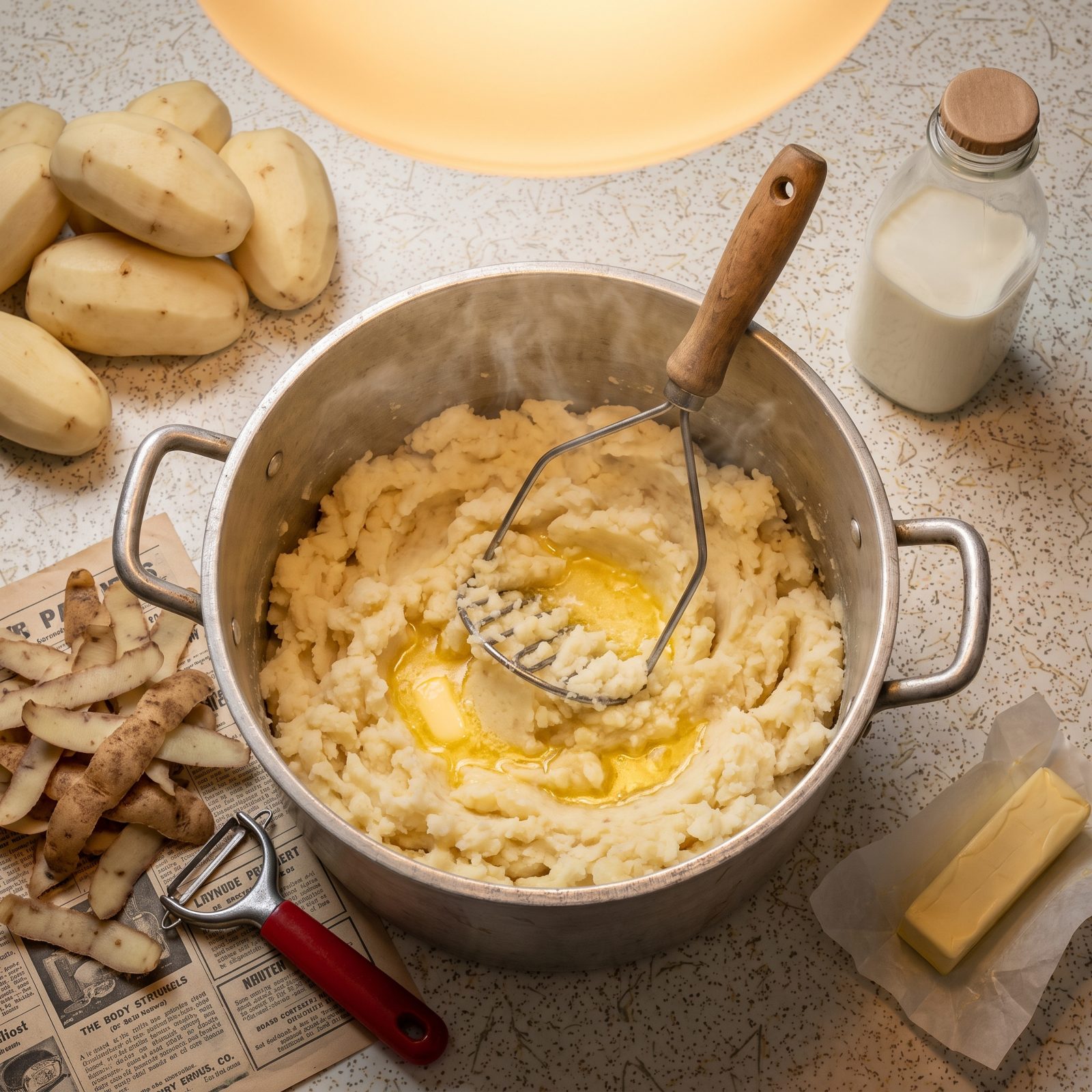
Five pounds of russets, peeled one at a time with a swivel peeler over a spread of newspaper. The peels alone filled a bowl. No food processor, no ricer for most households — just a hand masher and a strong arm.
You boil them soft, drain them, add warm milk and a serious amount of butter, then mash until your wrist complains. Lumps meant you quit early. The good stuff took a while, and by the time the potatoes hit the table nobody remembered how long the peeling took.
Making Pan Gravy from the Roasting Drippings
Would you like to save this?
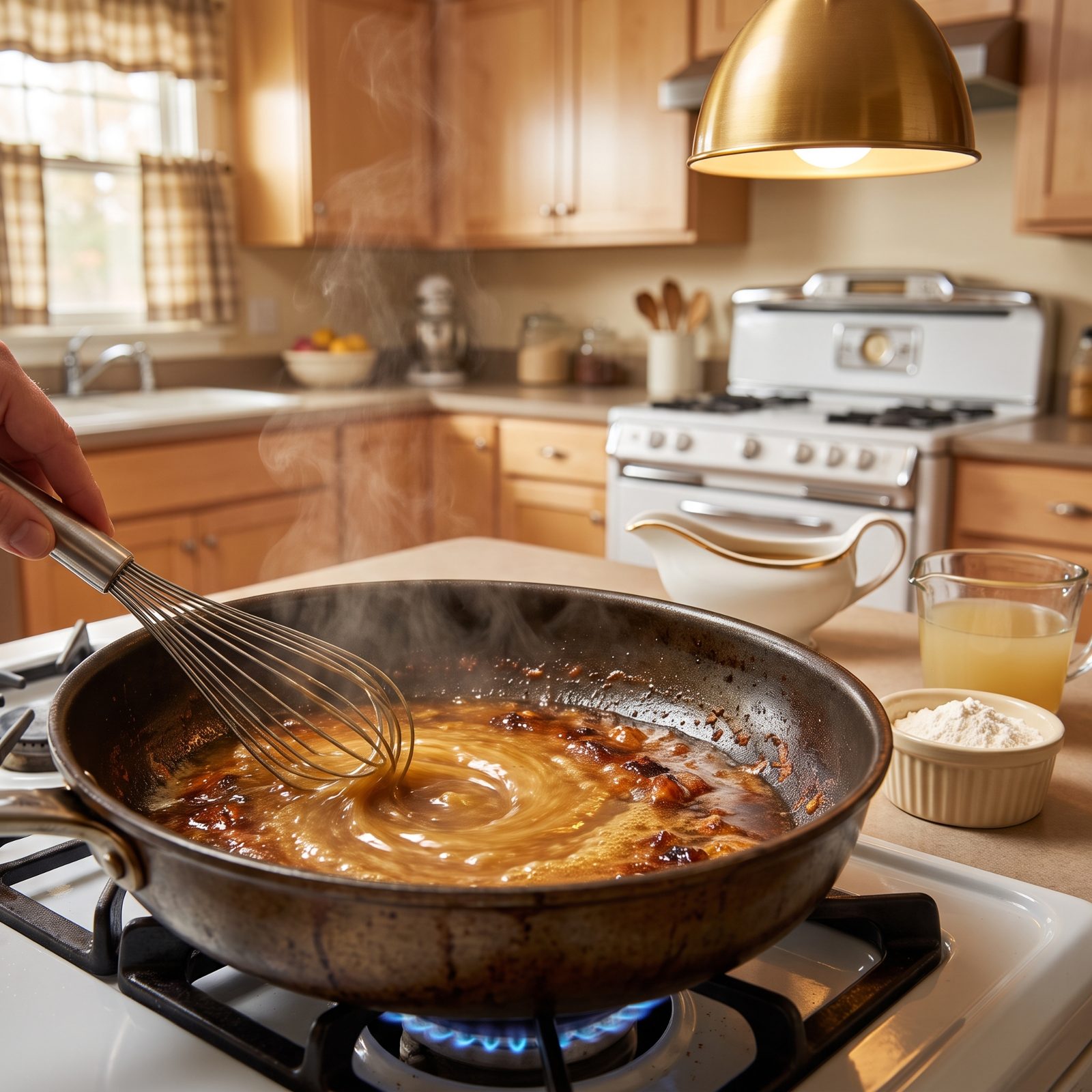
Gravy was where a Sunday cook proved herself. You didn’t dump the pan drippings — you set the roasting pan right on the burner, whisked flour into the fat, scraped up every browned speck stuck to the bottom, and slowly worked in broth until it went glossy.
Get it right and it’s silk. Rush it and you get lumps or a raw-flour taste that ruins the whole plate. All that basting fed directly into this pan, which is why nothing got thrown away. The dinner was one long chain, and gravy was the last link before the table.
Snapping Fresh Green Beans One by One
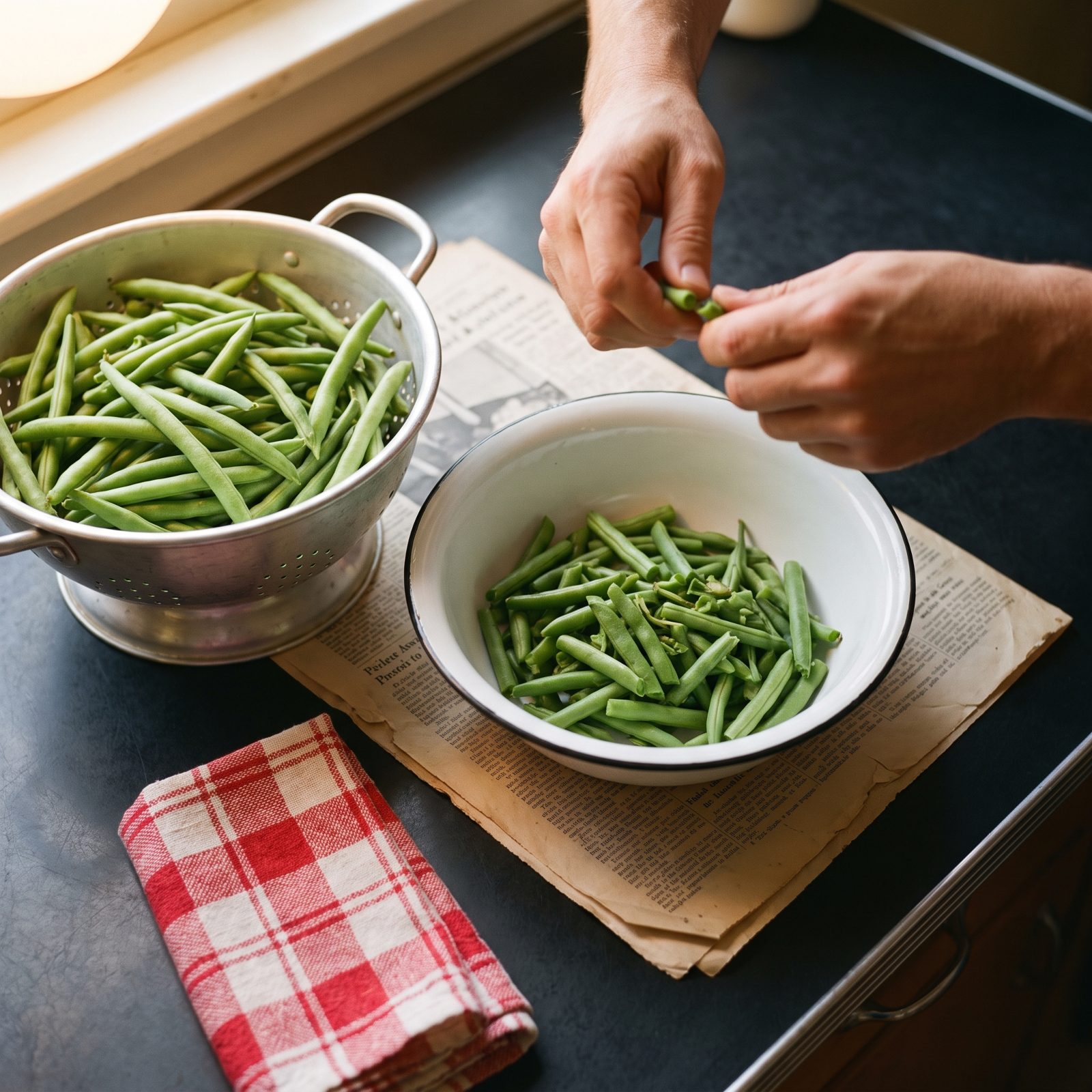
The last job before serving, and one of the quiet ones. Fresh beans, snapped end to end, stem tip pinched off, dropped into the bowl one at a time.
It’s the kind of task that got handed to whoever wandered into the kitchen. Nobody rushed it. There’s a soft, dry snap to a good bean, and the sound of a whole bowlful getting done meant dinner was nearly on. You’d cook them simple — a little butter, maybe a pinch of salt — and set them out steaming next to a bird that had taken all day to reach the table.
Glazing Carrots in Butter and Brown Sugar Until They Shine
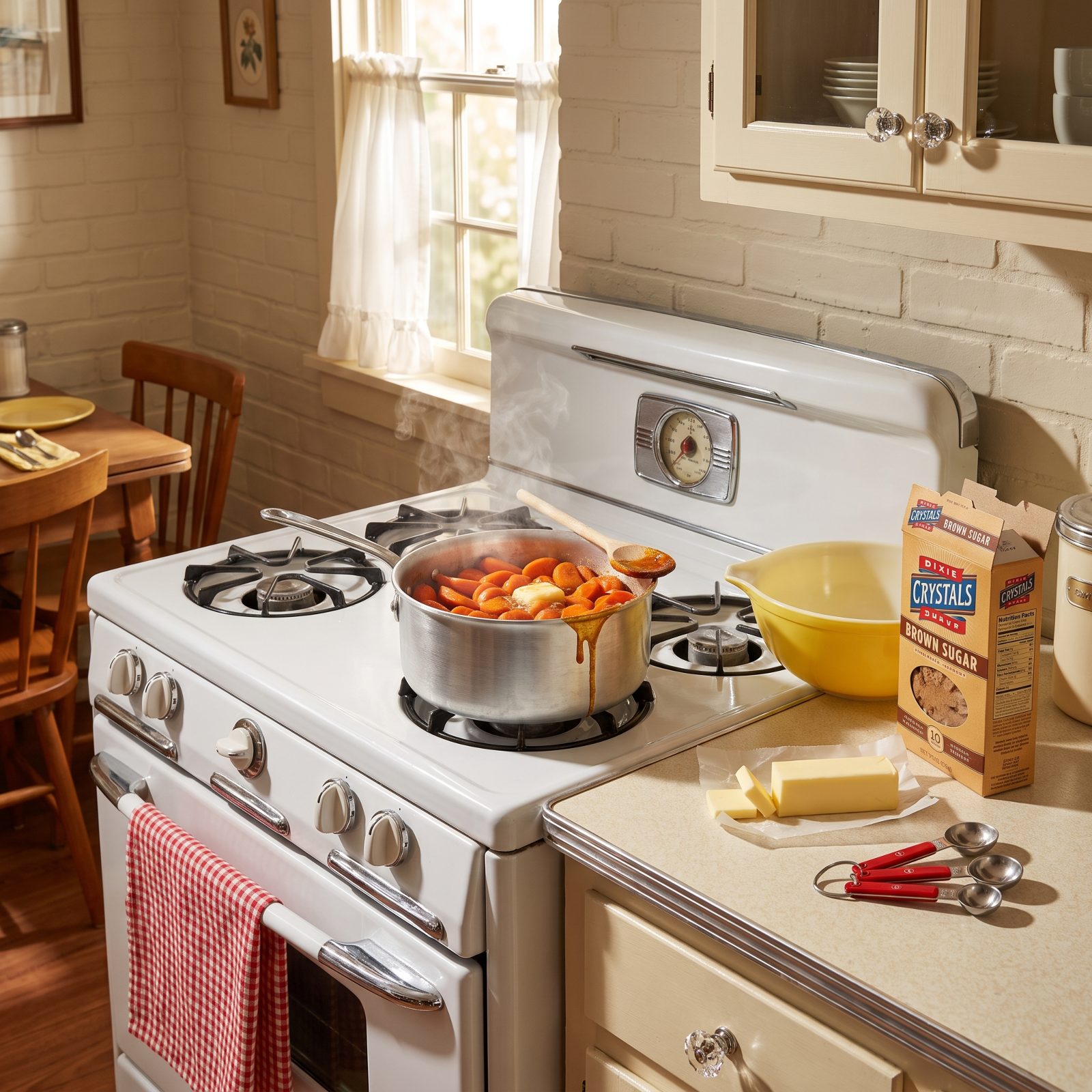
Sunday started with a knife and a bag of carrots. You peeled them by hand and sliced them into coins, then stood over the range while butter and brown sugar turned into something that stuck to the spoon.
Here was the trick nobody wrote down properly. Low heat, constant attention, and enough patience to let the sugar tighten around each round without scorching. Walk away for two minutes and you had a burnt pan and a ruined side dish.
The payoff? Carrots that gleamed like they’d been varnished. On a table crowded with roast and potatoes, they were the color everybody’s eye went to first.
Building a Molded Lime Gelatin Salad Layer by Layer
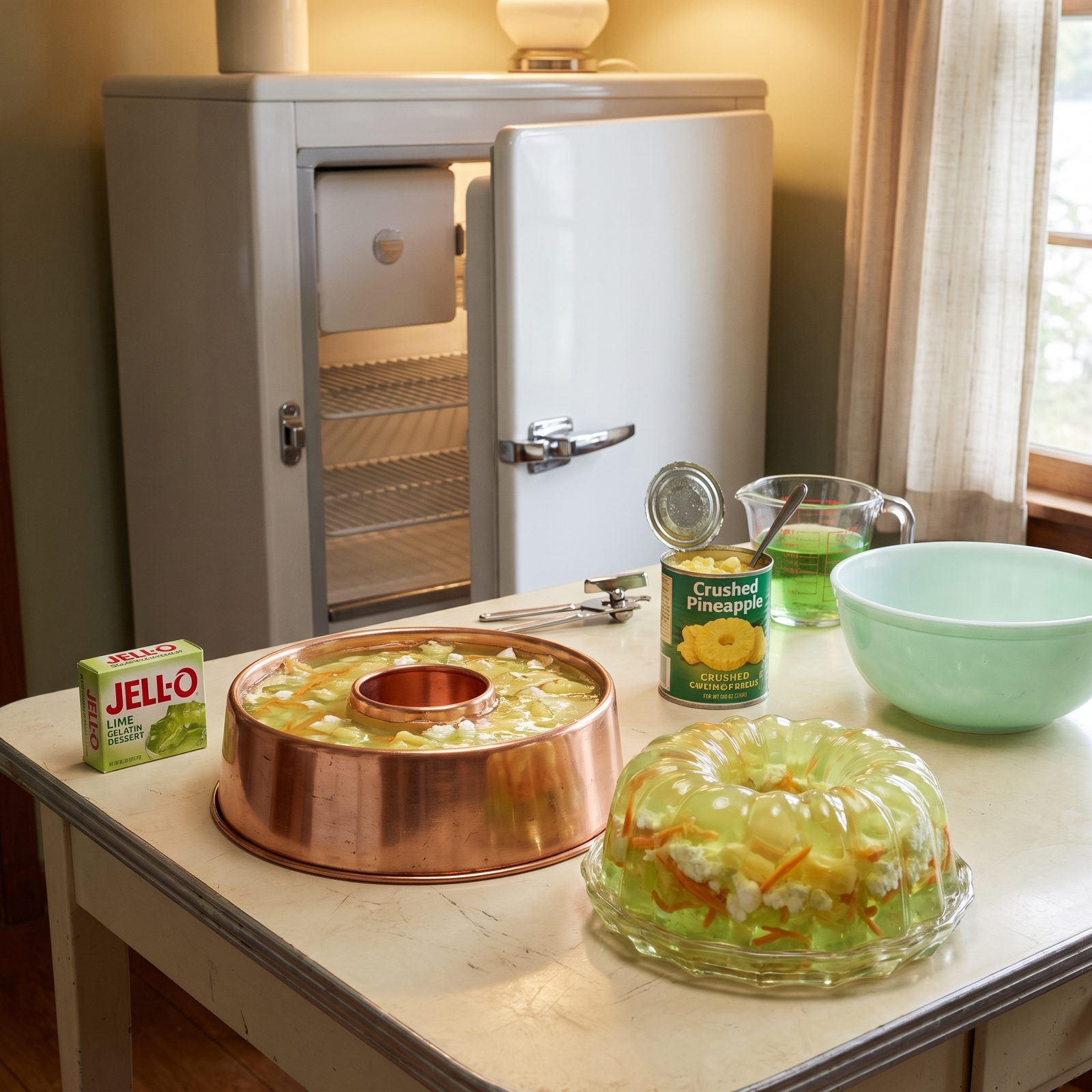
The molded salad was a small feat of timing. You dissolved the powder in boiling water, let it cool to the exact stage where it was thick but still pourable, then folded in the pineapple and cottage cheese before it set too far.
Get the timing wrong and the fruit sank to the bottom in a sad heap. Get it right and everything hung suspended, like insects trapped in amber.
Then came the wait — hours in the icebox, followed by the nerve-wracking unmolding. You dunked the copper ring in warm water and prayed the whole thing dropped clean onto the plate. When it did, you had a centerpiece that wobbled when you set it down.
Mixing Refrigerator Rolls and Waiting for the Dough to Rise
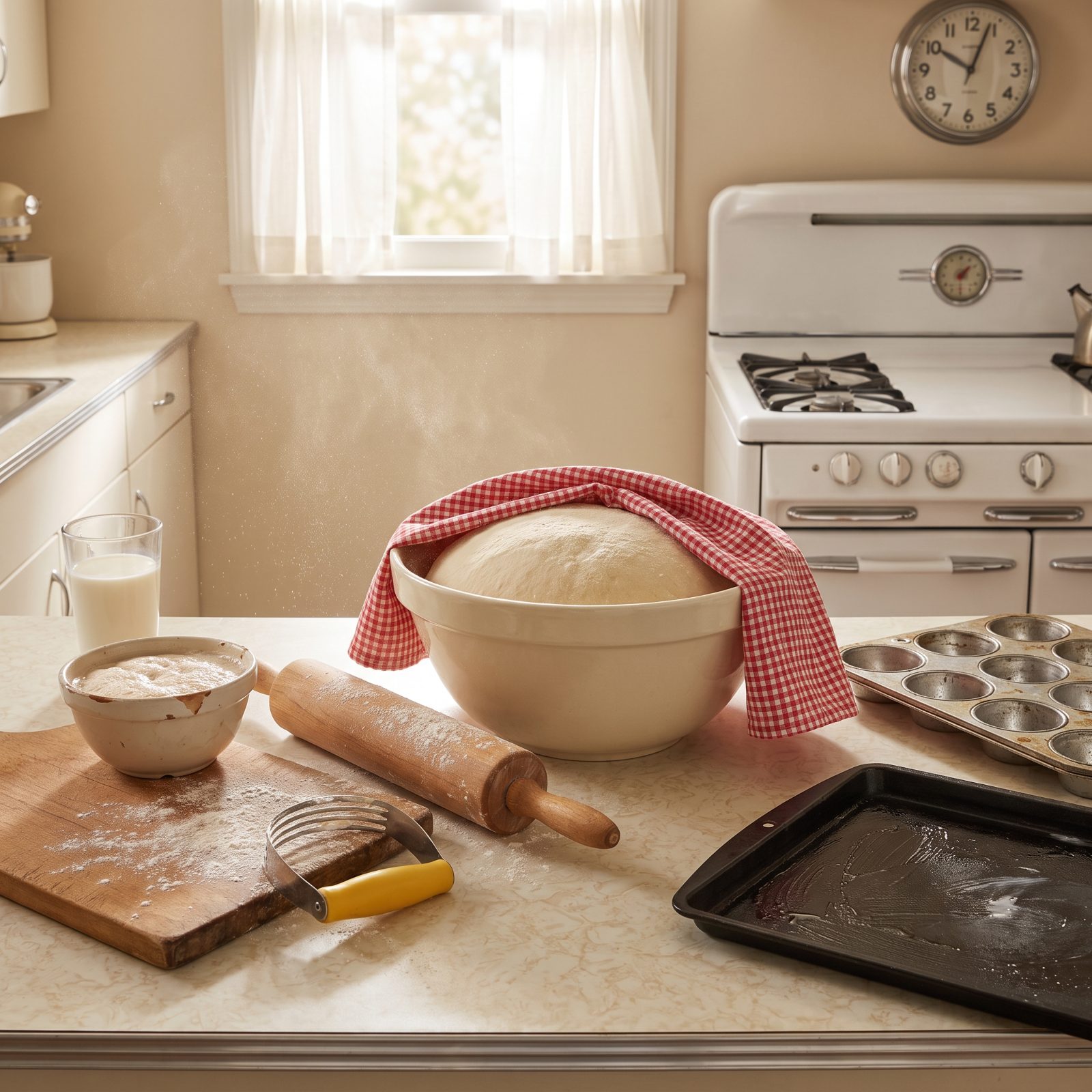
Refrigerator rolls demanded something modern life has almost forgotten: waiting on purpose.
You proofed the yeast in warm milk, mixed the dough by hand, then covered the bowl and set it somewhere warm to double. No shortcut existed. The dough rose on its own schedule and Sunday dinner bent around it, not the other way around.
Punch it down, shape the rolls, wait again. By the time they went into the oven the whole kitchen smelled like yeast and butter, and out came a roll so soft it pulled apart in sheets.
Preparing Deviled Eggs for the First Course
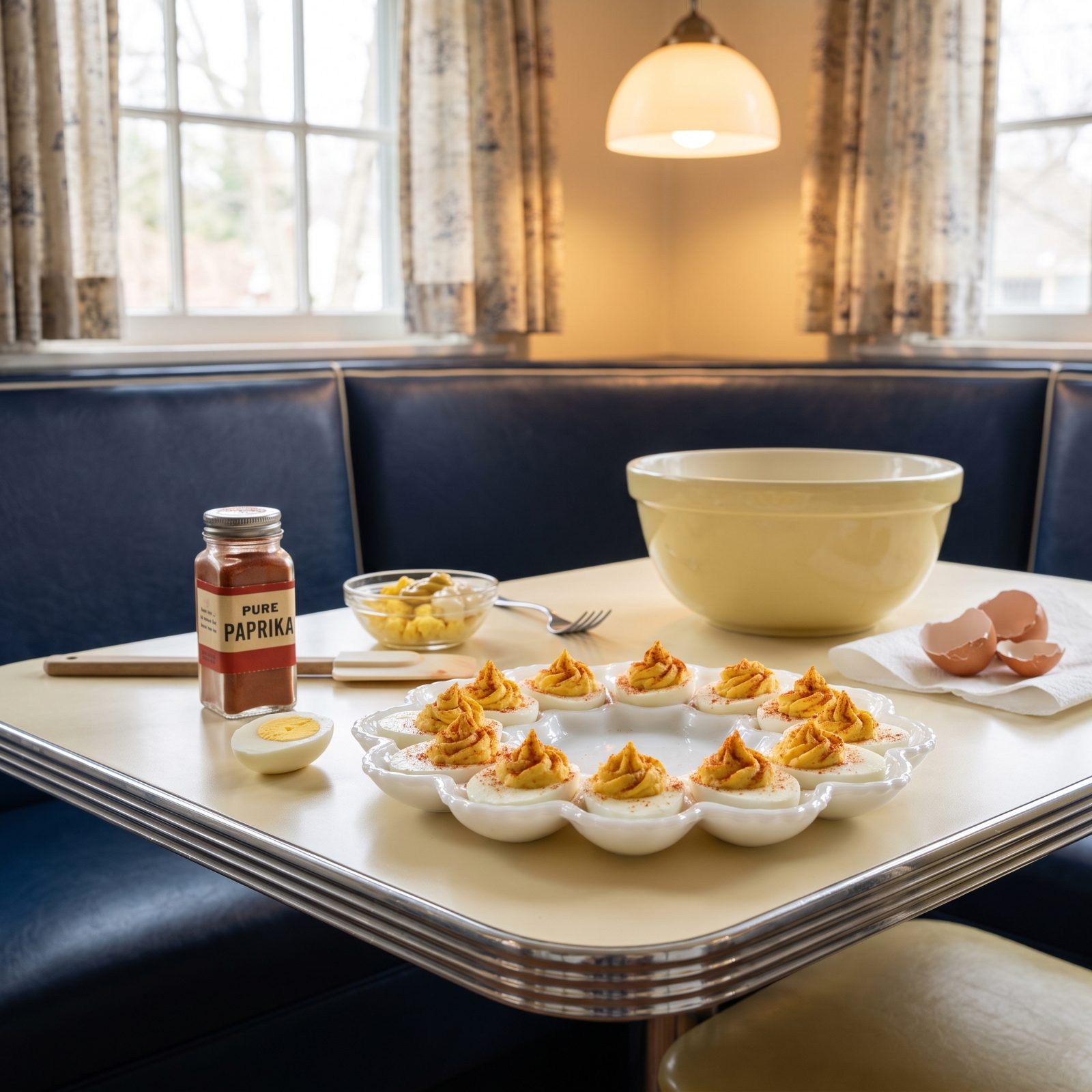
Somewhere in most 1950s kitchens lived a special plate with a dozen little wells, and it only came out for occasions. That plate meant deviled eggs, which meant company was worth the effort.
The work was fussier than it looked. Boil the eggs, cool them, peel them without tearing the whites, then scoop the yolks and mash them smooth with mustard and mayonnaise. A piping bag — or a spoon, if you were less fancy — filled each white into soft peaks.
A dusting of paprika on top, red against pale yellow. The first course was set before anyone sat down.
Making a Layer Cake from Scratch, One Bowl at a Time
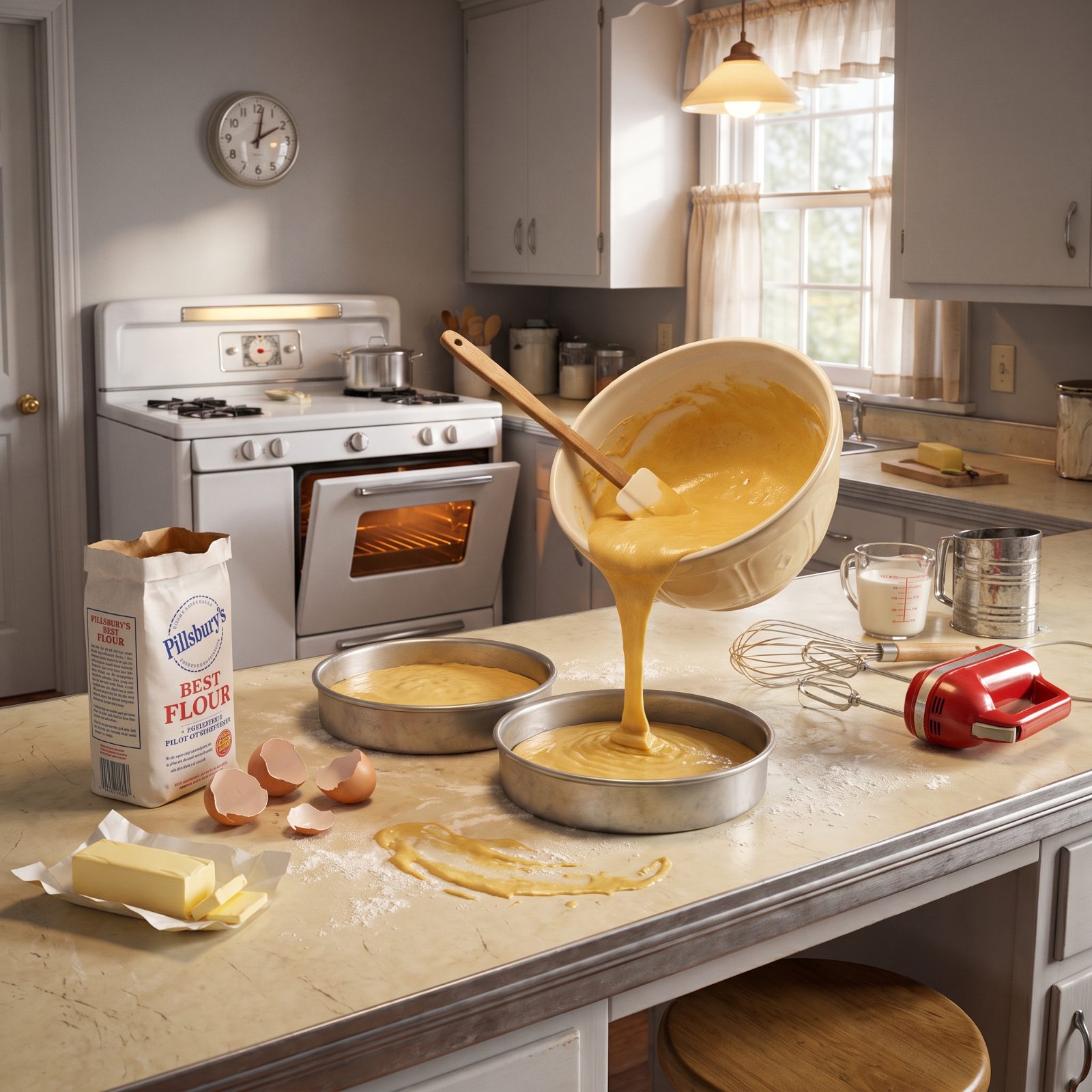
No box. No mix. Just a stack of bowls and a stick of butter softening on the counter.
A scratch layer cake meant creaming butter and sugar until pale, adding eggs one at a time, then alternating flour and milk so the batter stayed smooth. Every step called for a different bowl or cup, and the sink filled up fast.
You greased and floured the pans, divided the batter evenly — measured by eye, corrected by conscience — and slid them into an oven you’d learned to trust without a reliable thermostat. Two golden layers cooling on a rack, waiting to be stacked. That was the reward.
Whipping Seven-Minute Frosting Over Simmering Water
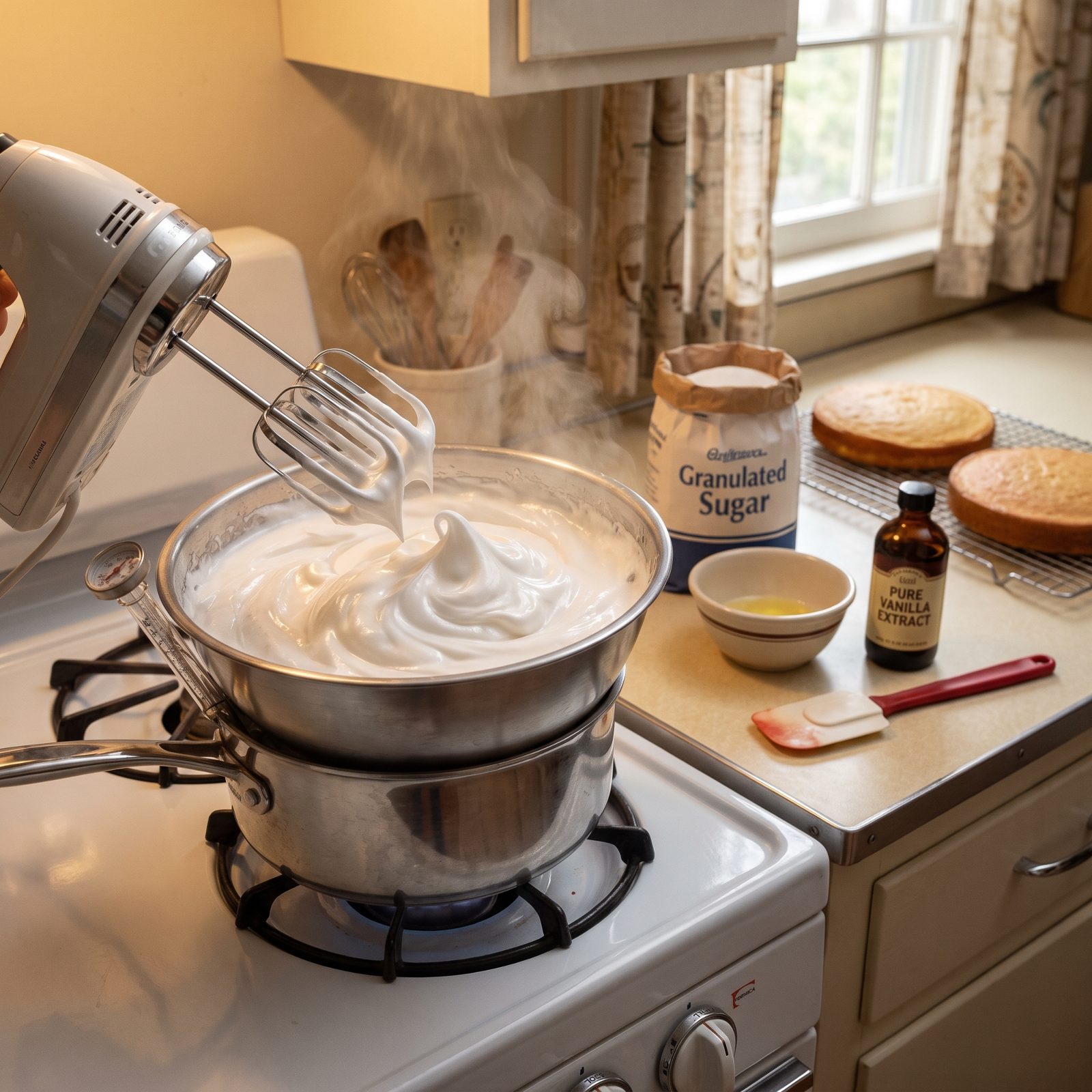
Seven-minute frosting taught you patience and endurance at the same time.
You beat egg whites, sugar, and a little corn syrup in a bowl set over simmering water, holding the mixer steady the entire time. Seven minutes doesn’t sound long until your arm is doing it while steam fogs your face.
The frosting climbed from a watery froth into glossy white peaks that stood up on their own. Spread over the cooled layers, it set into a marshmallow shell with a faint crackle across the top. Worth every minute your wrist spent complaining.
Packing the Leftovers in Waxed Paper and Glass Bowls
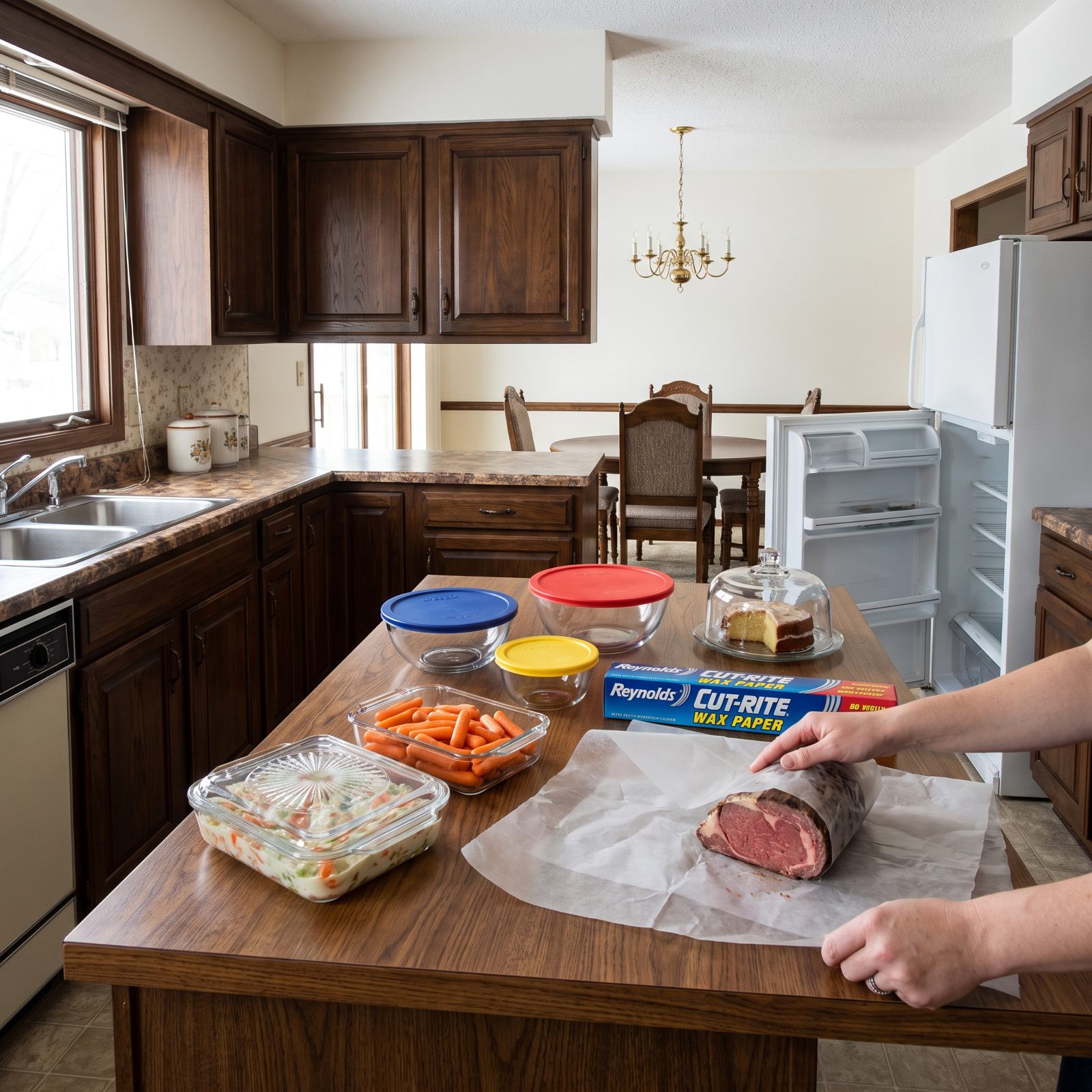
Long before plastic snap-lids, leftovers went to bed in waxed paper and glass.
You wrapped the roast tight so it wouldn’t dry out, spooned the carrots and salad into nesting bowls, and stacked everything in the icebox with the covered cake taking the place of honor. Somewhere in the house, somebody was already planning tomorrow’s cold roast sandwich.
Scrubbing the Roasting Pan After Everyone Left the Table
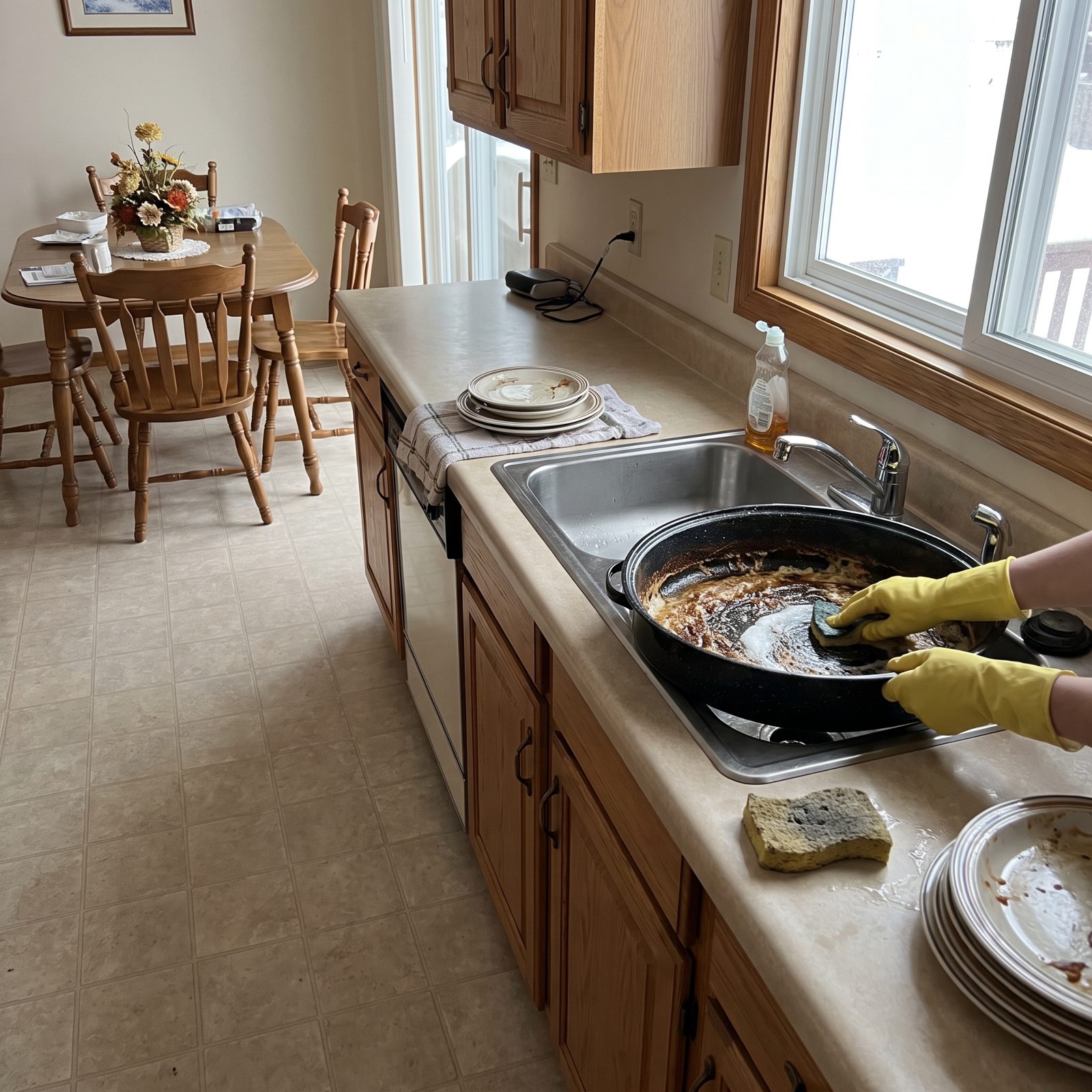
Every good Sunday dinner ended the same way. Alone at the sink, elbow-deep, working at the one pan that refused to give up its drippings.
The roasting pan was the last soldier standing. The plates rinsed easy and the glasses dried in the rack, but that pan had baked-on fat welded into its corners. So you soaked it, you scoured it, and you earned it.
There’s something honest about that final scrub with the house quiet and the leftovers put away. A whole day of bowls and waiting and glazing and whipping came down to one pan and a scouring pad. And then the kitchen was yours again, ready to do it all next Sunday.