Would you like to save this?
The fork came first. That was always the tell. Nobody grew up eating real Chicago deep dish with their hands, not the kind that arrived at the table still bubbling in the pan, cheese darkening into a lacy crust around the edge like the pizza had decided to become part of the dish.
The 1970s version was not built for speed, convenience, or eating in the car. It was built to stop the table, slow everyone down, and make one slice feel like dinner had already won. These are the memories that prove it did.
29. The Way the Mozzarella Was Laid Down First, Directly on the Dough
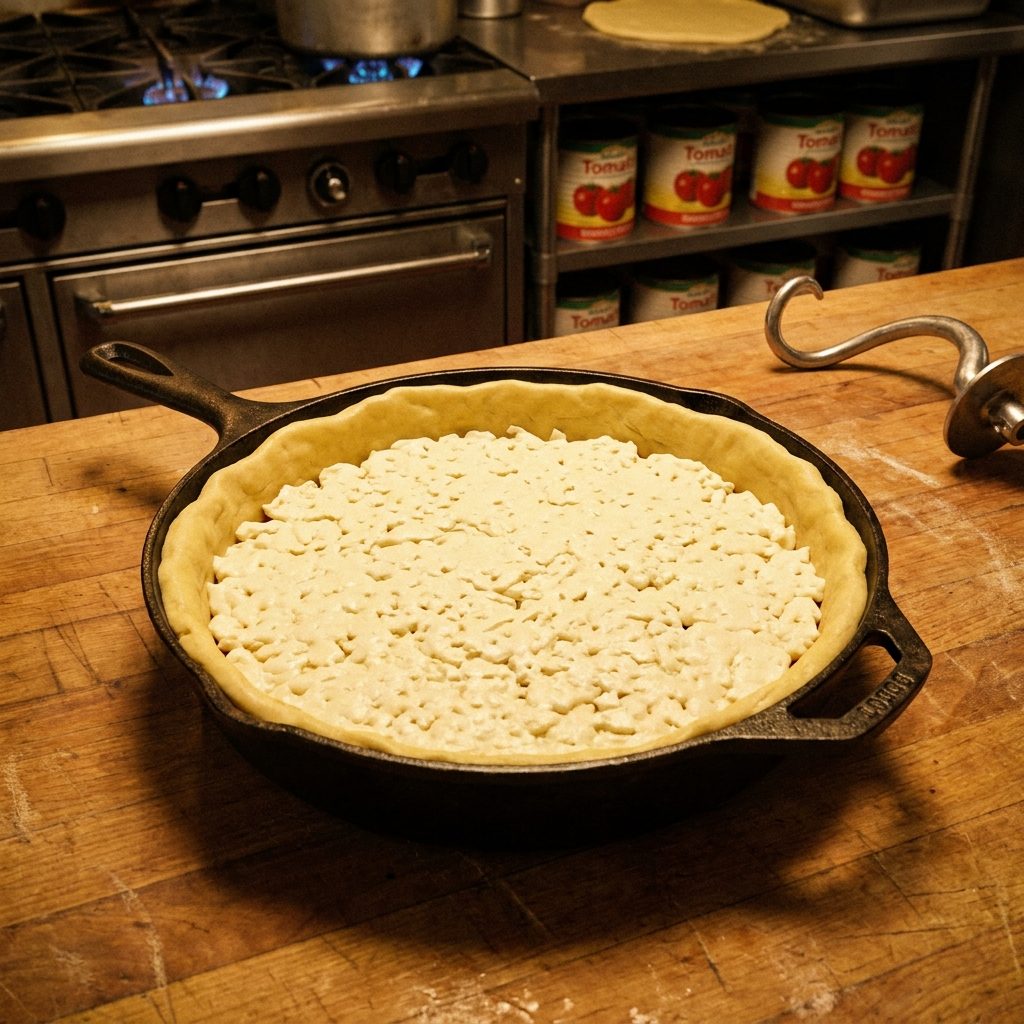
Everyone who grew up eating deep dish understood, on some level, that the whole thing was built upside down. The cheese went in first, pressed against the dough before a single spoonful of sauce was added. It was a practical decision, it kept the crust from going soggy, but the result felt almost luxurious. A full layer of whole-milk mozzarella sitting directly on the butter-enriched dough, baking into something between a cheese pull and a sealed crust.
You didn’t fully appreciate the logic until you were older. As a kid, you just knew the first bite was different from anything else. The cheese wasn’t on top. It was everywhere.
28. The Cornmeal-Dusted Bottom Crust That Crunched Like Nothing Pizza Had Any Right to Do
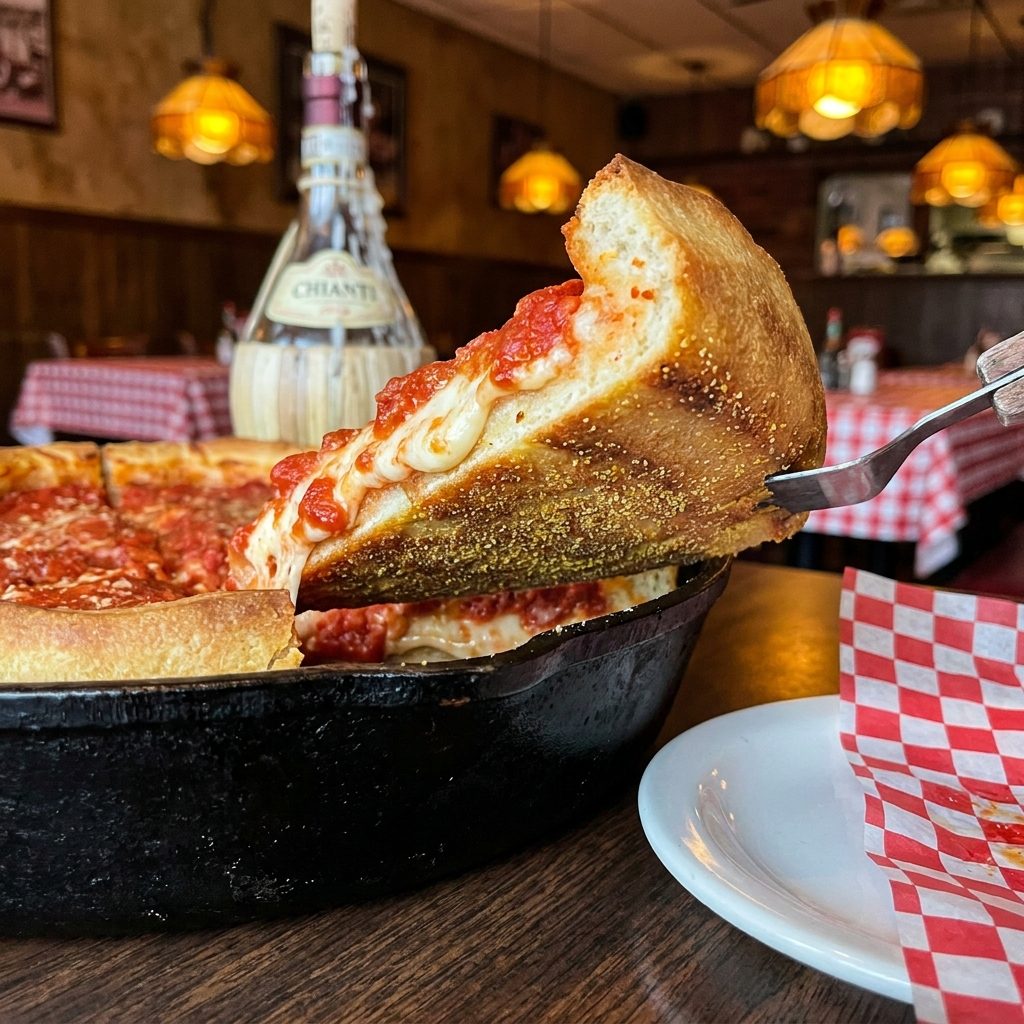
That bottom crust was the part nobody talked about but everyone remembered. Cornmeal-dusted, pressed into a well-seasoned pan that had seen a thousand pies before yours, it came out of the oven with a crunch that had no business existing on something you’d call pizza. More like a short pastry than a bread crust. Slightly sweet, noticeably buttery, with that gritty texture from the cornmeal that hit before the cheese did.
Pick up a slice wrong and the whole structure shifted. You learned fast to use both hands.
27. The Sausage That Came as a Single Flat Patty Pressed Edge to Edge Across the Whole Pie
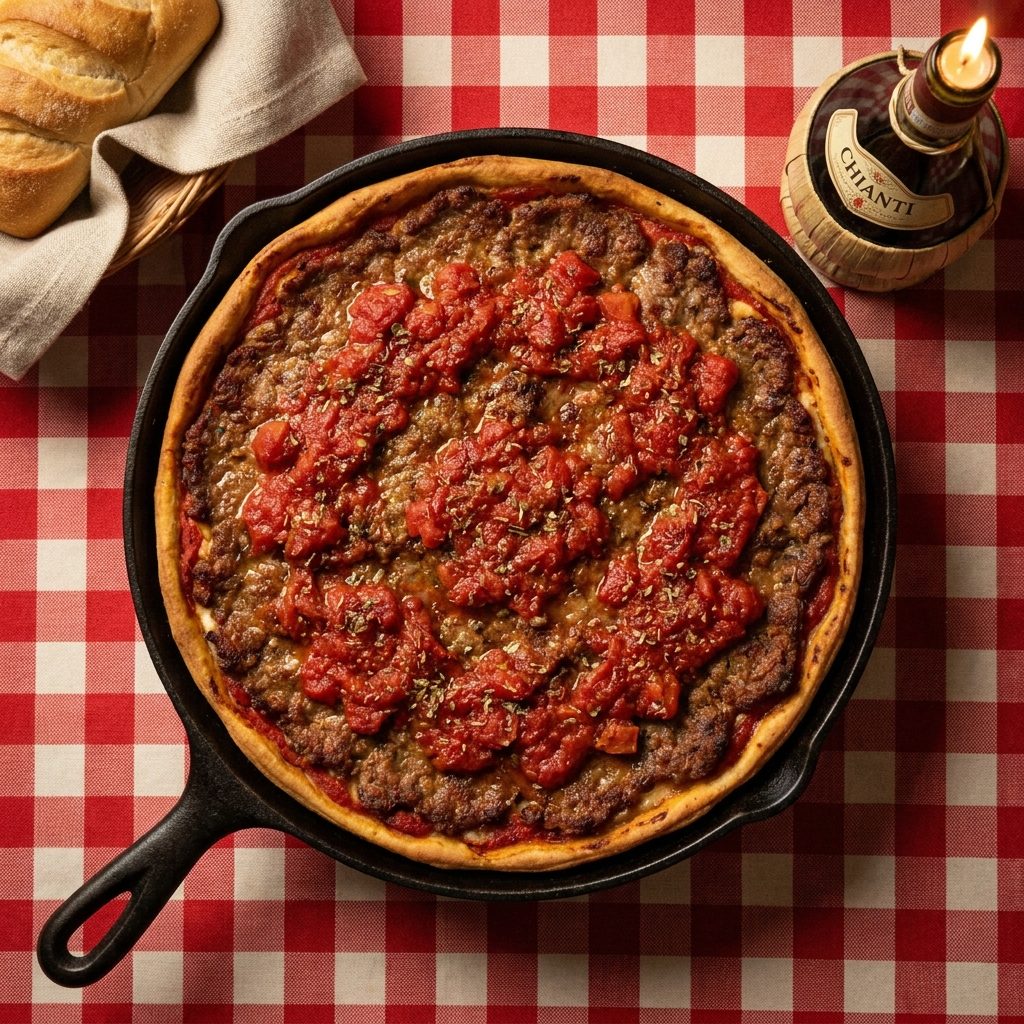
At every other pizzeria in America, sausage meant little browned crumbles or pre-sliced rounds that slid around when you cut the pie. Chicago deep dish had a different idea entirely. The sausage went in as a single pressed sheet, raw, seasoned, spread flat from one wall of the pan to the other, then baked inside the pie until it cooked through and locked into the cheese layer beneath it.
The result was something structurally different from a topping. It was more like a layer. Every bite got sausage whether you aimed for it or not. That was the whole point.
26. The Green Bell Pepper and Onion Combination That Perfumed the Entire Dining Room
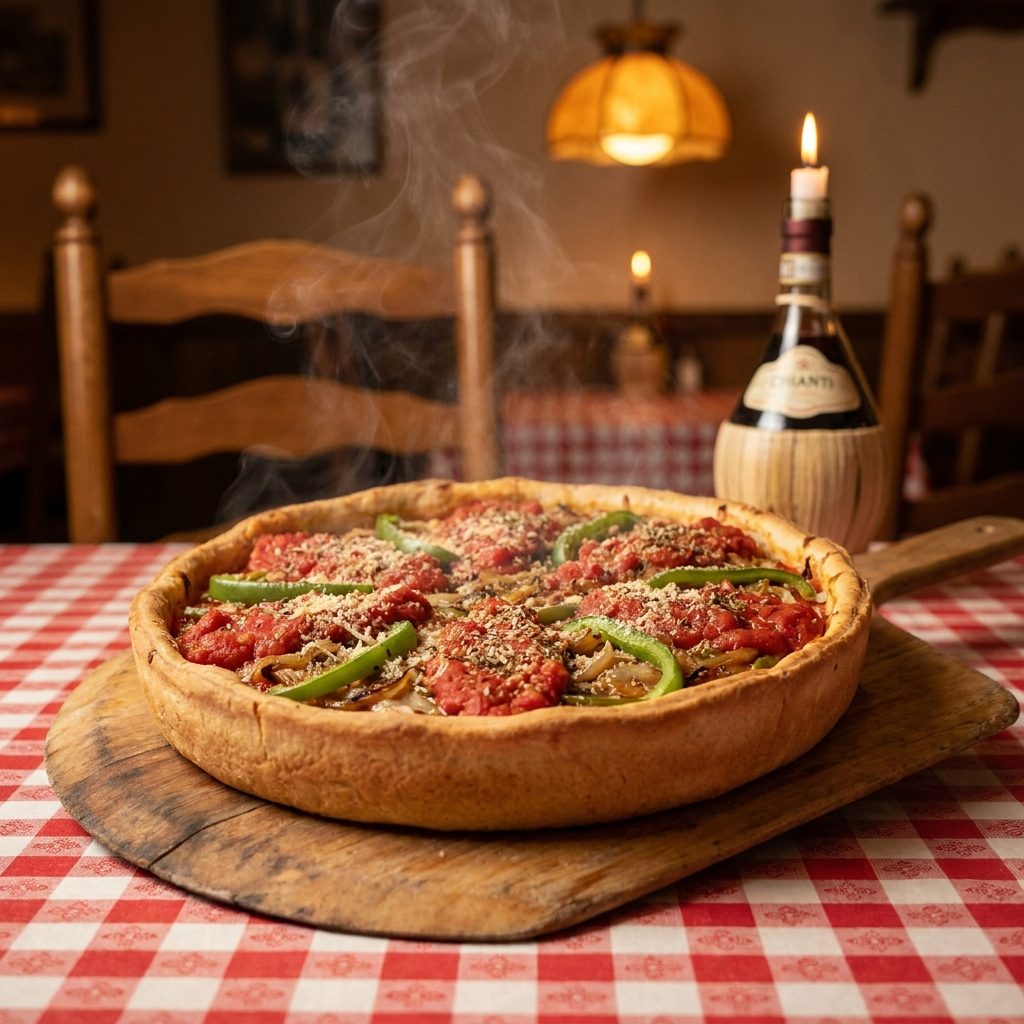
Walk into any serious Chicago deep dish place on a Friday night in the 1970s and that smell hit you before you got your coat off. Green bell peppers and onions, baking inside the pie, going soft and sweet in the oven heat. It wasn’t a garnish. It was structural. The peppers and onions collapsed into the cheese layer and disappeared except for the flavor they left behind.
The combination had a specific perfume, slightly sweet, faintly bitter at the edges from the char on the pepper skins. It came home with you in your clothes. You didn’t mind.
25. The Grated Romano That Came Shaken From a Green Cardboard Canister at the Table
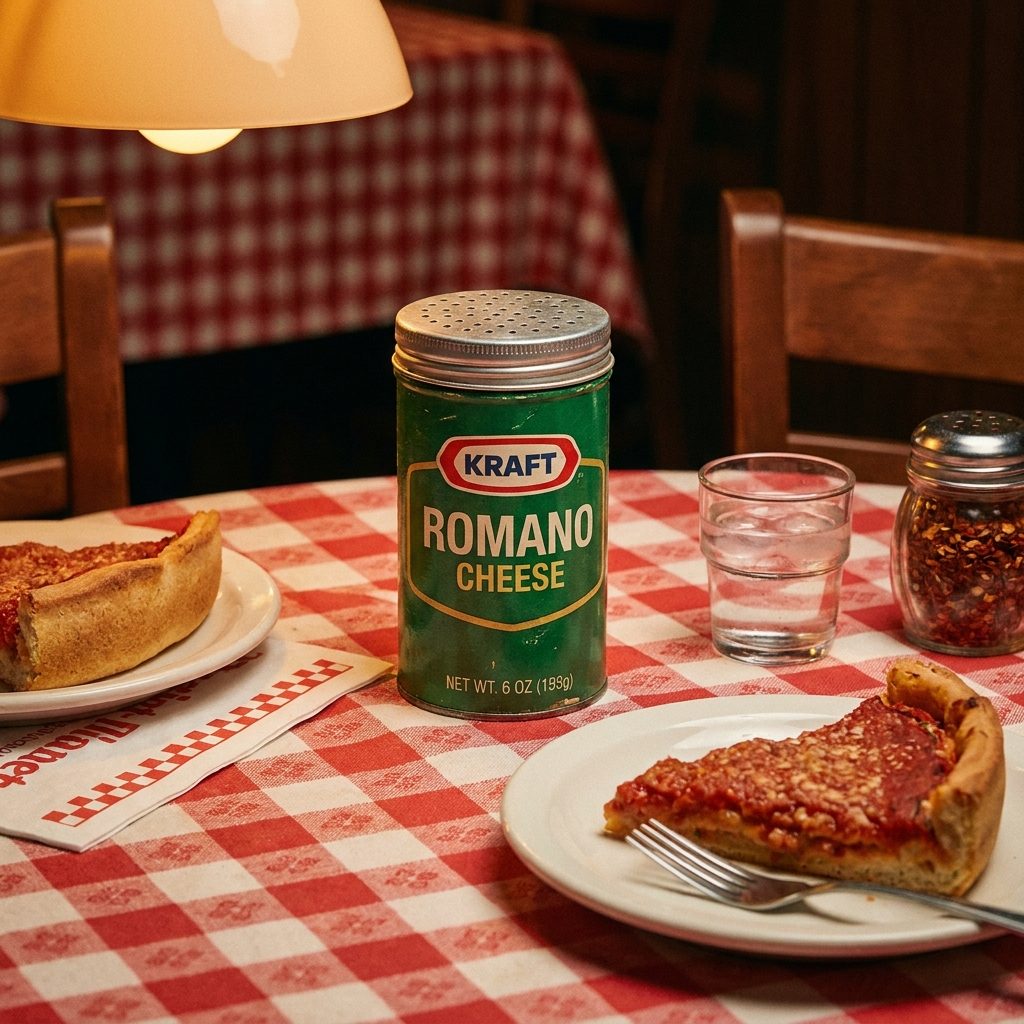
It was always on the table. Green cardboard canister, silver perforated lid, a faint smell of salt and dried cheese every time you unscrewed the top. Romano, not Parmesan, at the serious places, sharper, a little funkier, more insistent. You shook it over a slice of deep dish that already had more cheese than any reasonable person needed, and you did not feel bad about it.
Nobody at the table ever said no to the green canister. That’s just the truth.
24. The Anchovy Option Nobody Ordered But Everybody Noticed on the Menu
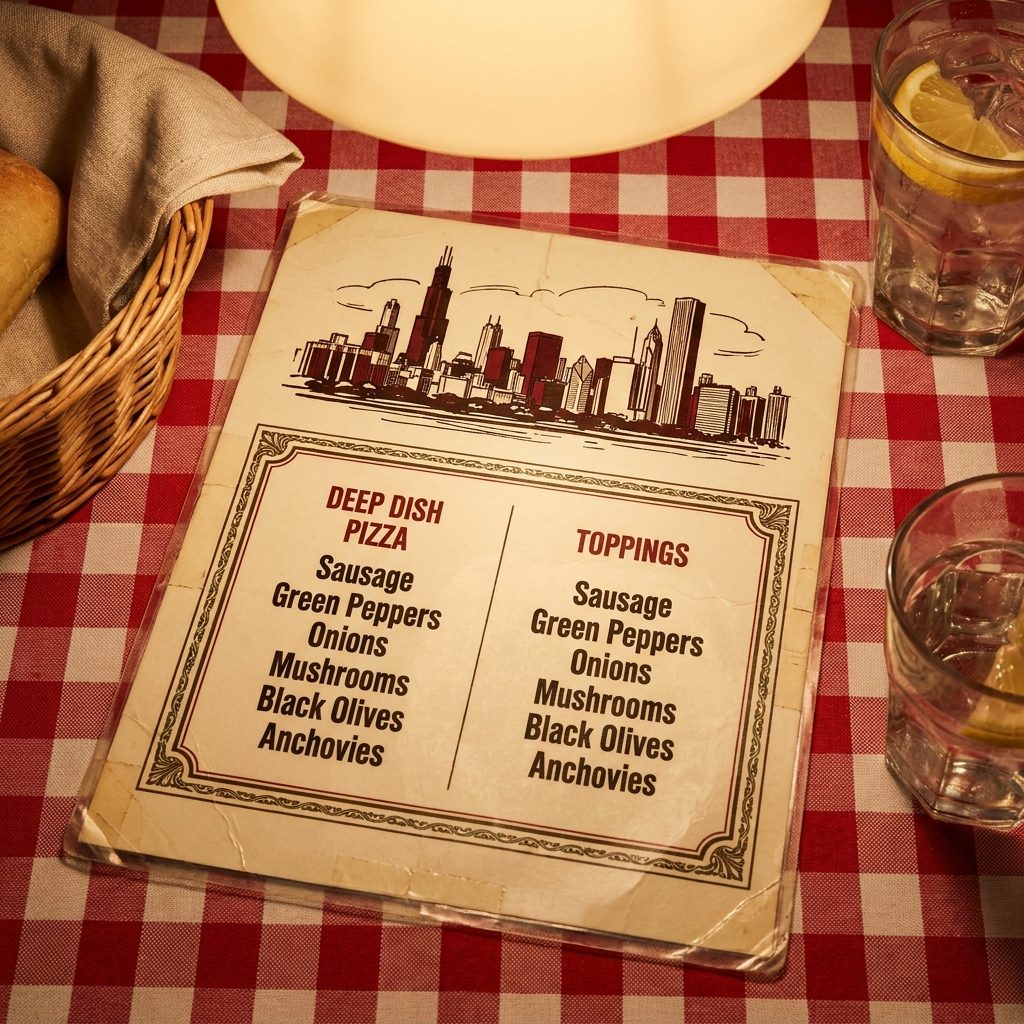
It was always there on the menu, listed between mushrooms and black olives like it was perfectly normal. Anchovies. The option nobody at your table ever seriously considered but someone always brought up, usually the uncle who wanted to seem adventurous. The menu had it. The kitchen had them. And every few Saturdays, somewhere in the dining room, somebody actually ordered anchovies on a deep dish, and you could tell because the smell drifted past your table about forty minutes later.
23. The Black Olive Halves That Sank Into the Cheese and Reappeared in Every Single Bite
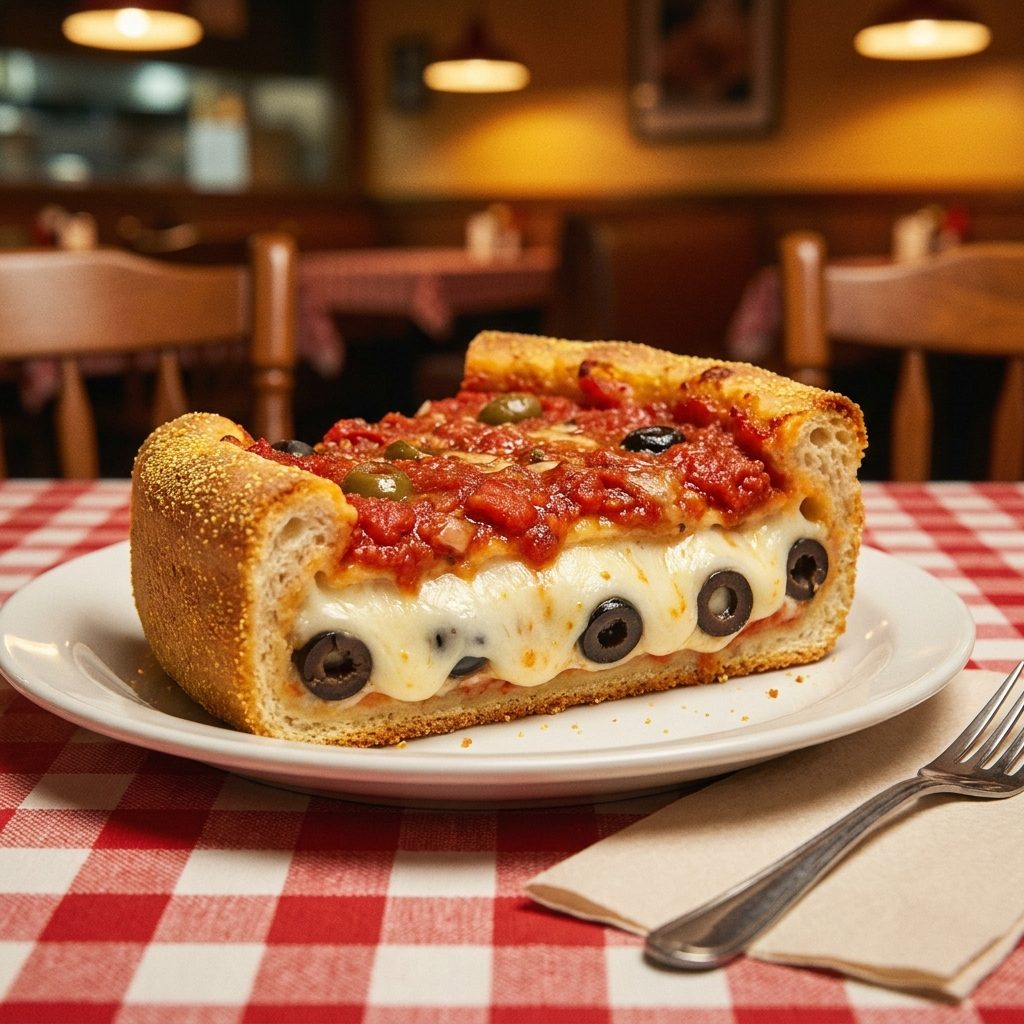
Canned black olives, halved, scattered across the pie before it went into the oven. They sank. That was the thing about deep dish toppings, nothing stayed on the surface the way it did on a flat pie. The olives pressed down into the cheese layer during the long bake and came up in the cross-section of every slice, soft and slightly briny, showing up whether you planned for them or not.
Kids picked them out. Adults left them. By the second slice, even the kids usually left them.
22. The Way the Waitress Carried the Pan to the Table With a Folded Cloth Because the Handle Was Still Hot
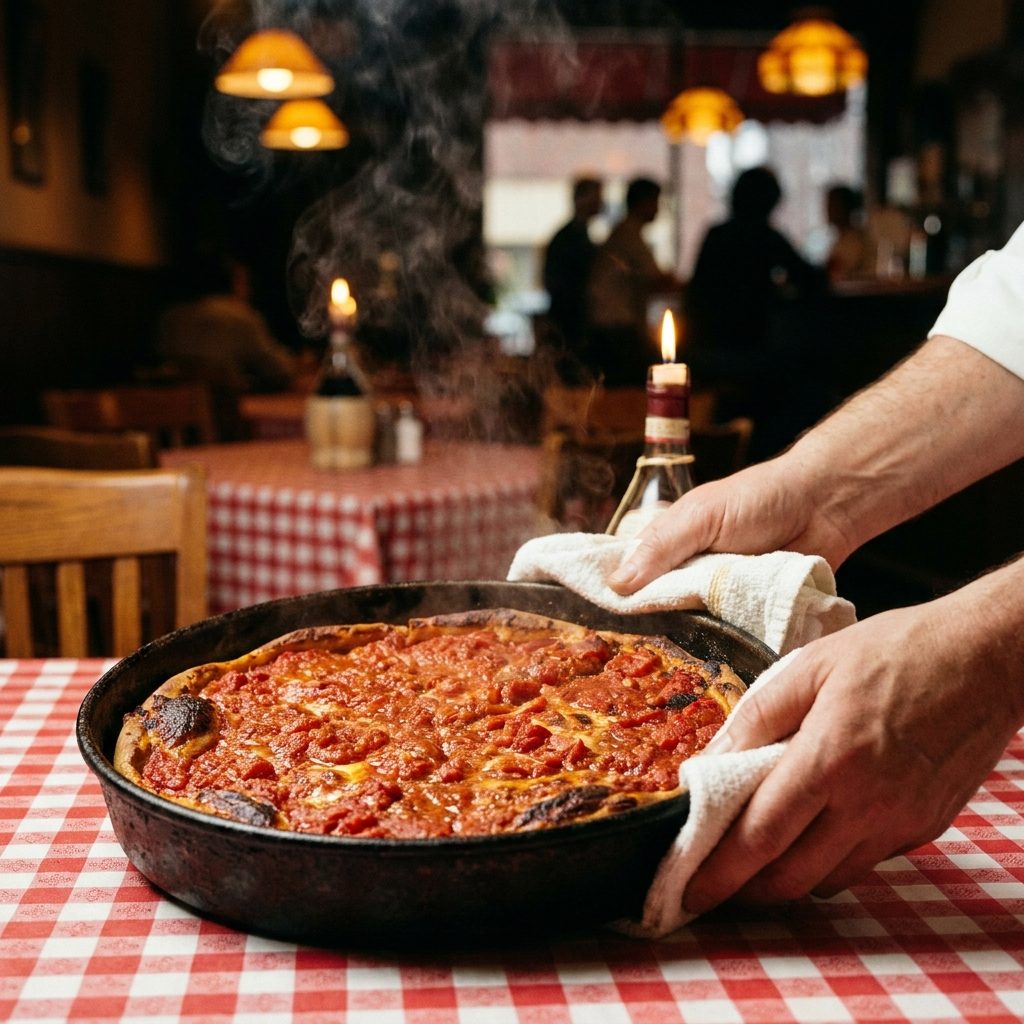
The pan came out of the oven so hot it needed a folded cloth just to carry it across the dining room. You heard it before you saw it, the slight metallic sound of the cast iron against the trivet they’d set on the table. The waitress would say don’t touch, and she meant it, and she said it with the practiced calm of someone who had watched people touch it anyway and regret it immediately.
That arrival was its own ritual. The steam, the smell, the burnt-cheese ring still crackling faintly against the hot pan wall. The pie wasn’t done resting. You weren’t supposed to cut it yet. Nobody waited.
21. The Way the Waiter Carried That Deep Pan With a Folded Towel Like He Was Delivering Something Consecrated
Would you like to save this?
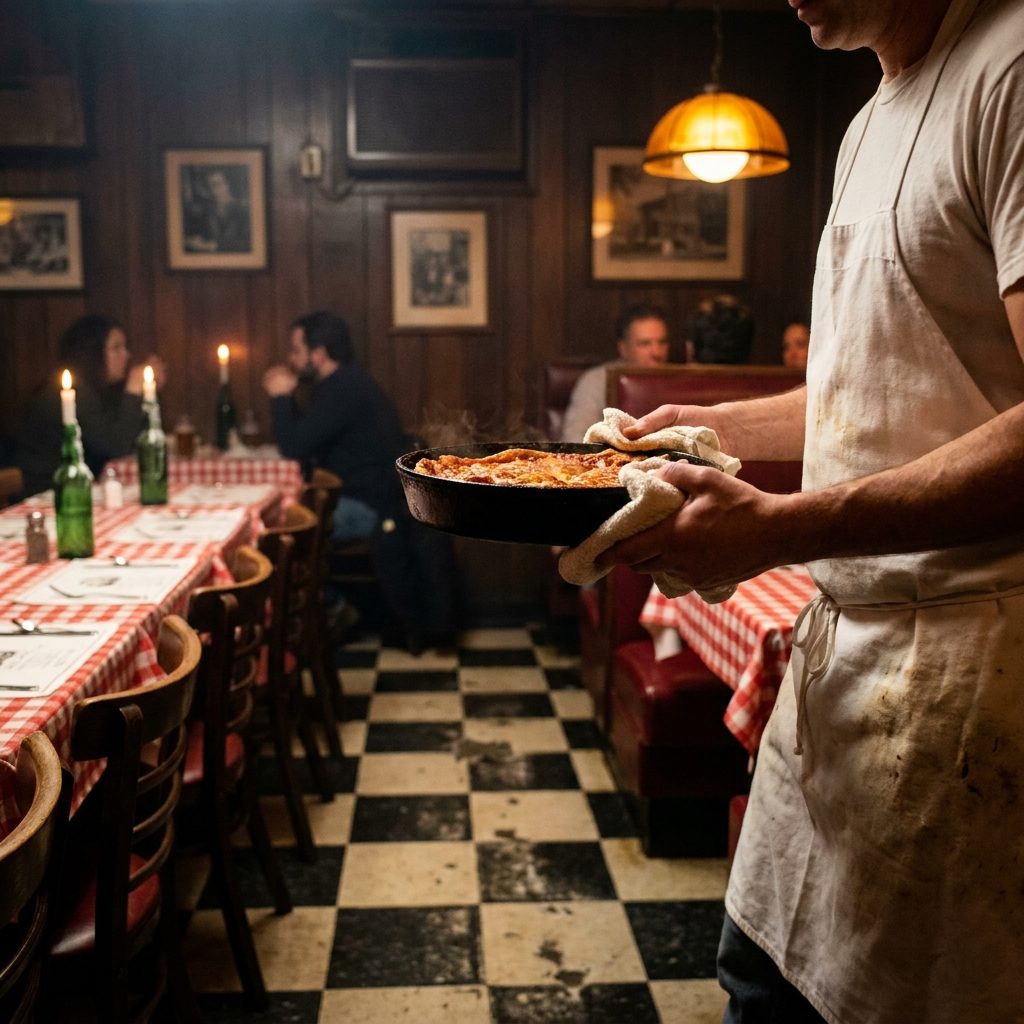
He didn’t carry it casually. Nobody did. The cast-iron pan arrived folded in a cloth like a reliquary, the server’s arms slightly extended, pace deliberate. The whole table went quiet the moment it appeared at the edge of the booth.
There was something in that presentation that communicated weight, literally and otherwise. This was not a plate of food. This was a project someone completed on your behalf, and the folded towel was the ceremony that said so.
20. The Green Chianti Bottle With the Wax Stalactites Serving as the Table’s Candle Holder
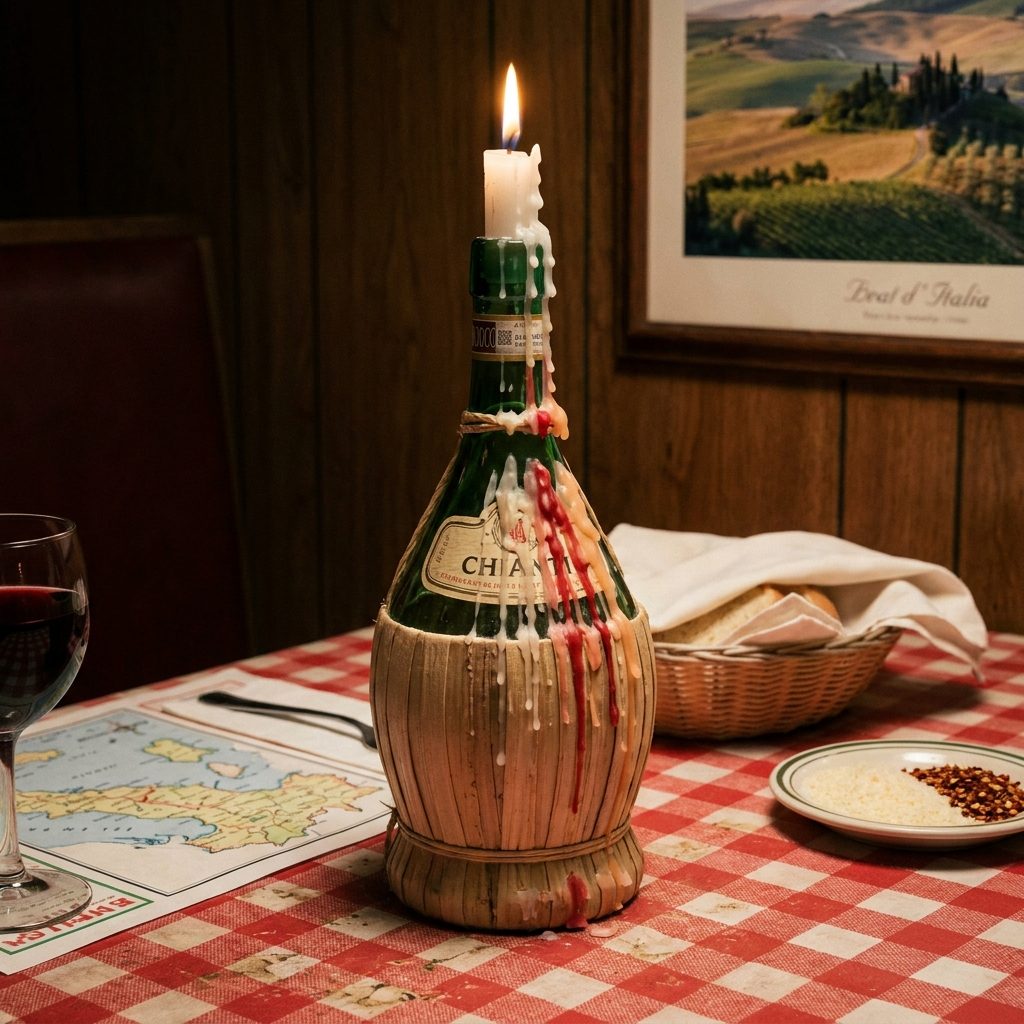
Every table had one. A Chianti bottle that had been on duty so long the wax had gone geological, layer after layer from every dinner that came before yours. Red wax, cream wax, pale orange from some candle someone swapped in during a shortage. The whole column of it hardening into something that looked like it belonged in a cave.
Nobody ordered it. Nobody chose it. It was just there, permanent as the salt shaker, and it was the first thing you reached toward when you sat down in the dark.
19. The Cheese Layer That Was Half an Inch Thick Before You Even Got to the Sausage
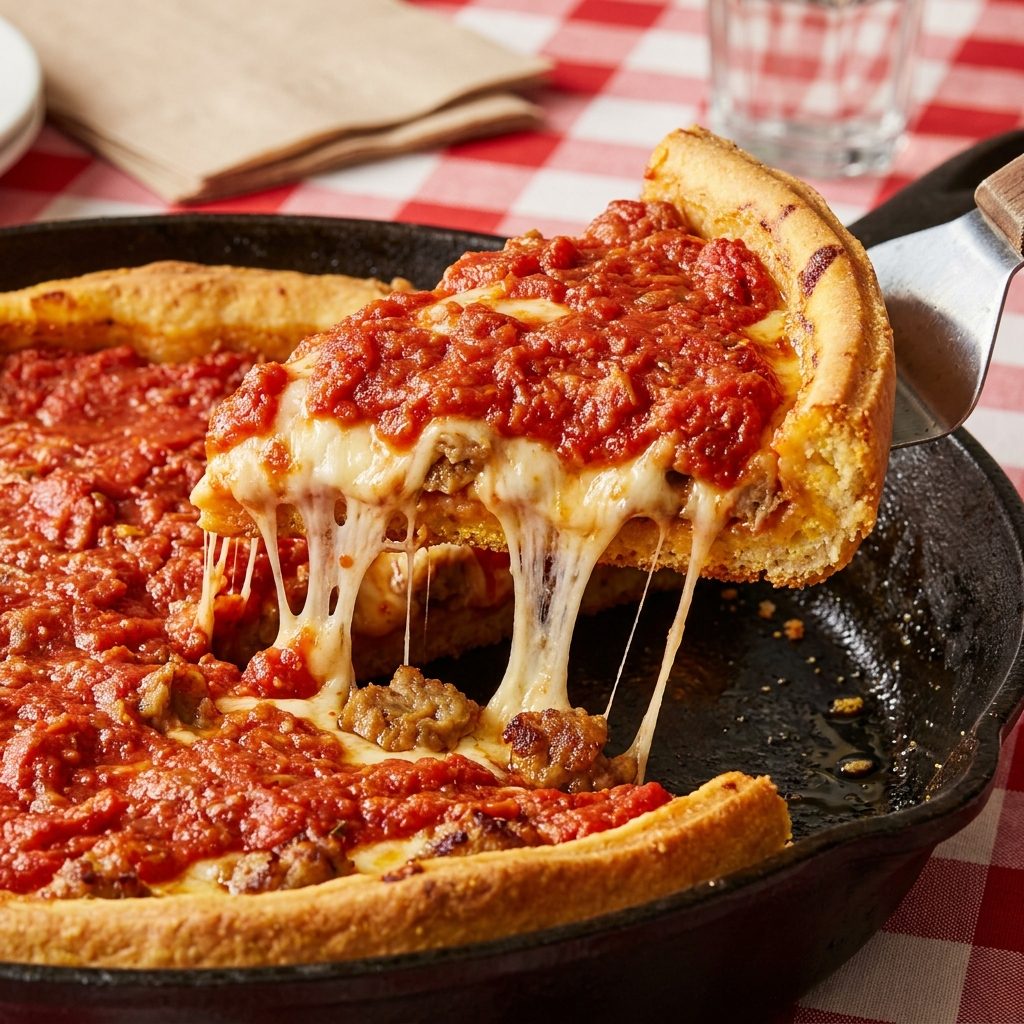
The ratio was inverted and everyone knew it and nobody minded. Crust, then sausage, then a slab of mozzarella that had no business being that thick, then sauce on top to keep the cheese from burning. You weren’t building a pizza. You were excavating one.
The cheese pull on a Chicago deep dish was a structural event. It stretched and stretched and then snapped back toward the pan, and you had to work quickly before it cooled into something less cooperative. A fork was not optional. It was survival equipment.
18. The Paper Placemat With the Chicago Neighborhood Map Printed in Red Ink
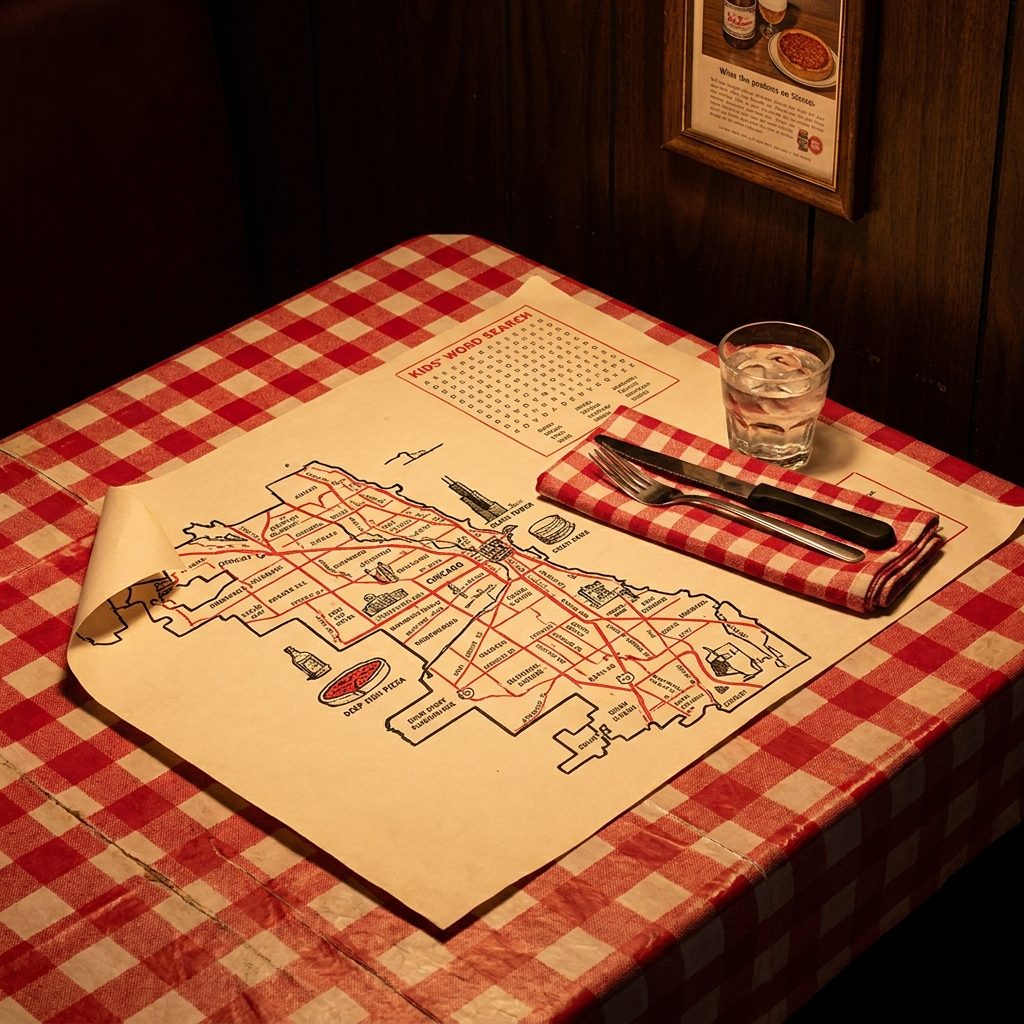
While the deep dish spent forty minutes in the oven, the placemat held the table together. A paper map of Chicago neighborhoods printed in red ink, block after block of the grid, tiny labels for Wicker Park and Logan Square and Bridgeport. Kids traced the streets with a finger. Adults folded the corners without thinking about it.
By the time the pizza arrived, the placemat was soft at the creases and someone had filled in the word search. It went under the pan anyway.
17. The Fennel Sausage They Pressed Flat Across the Bottom Like a Second Crust
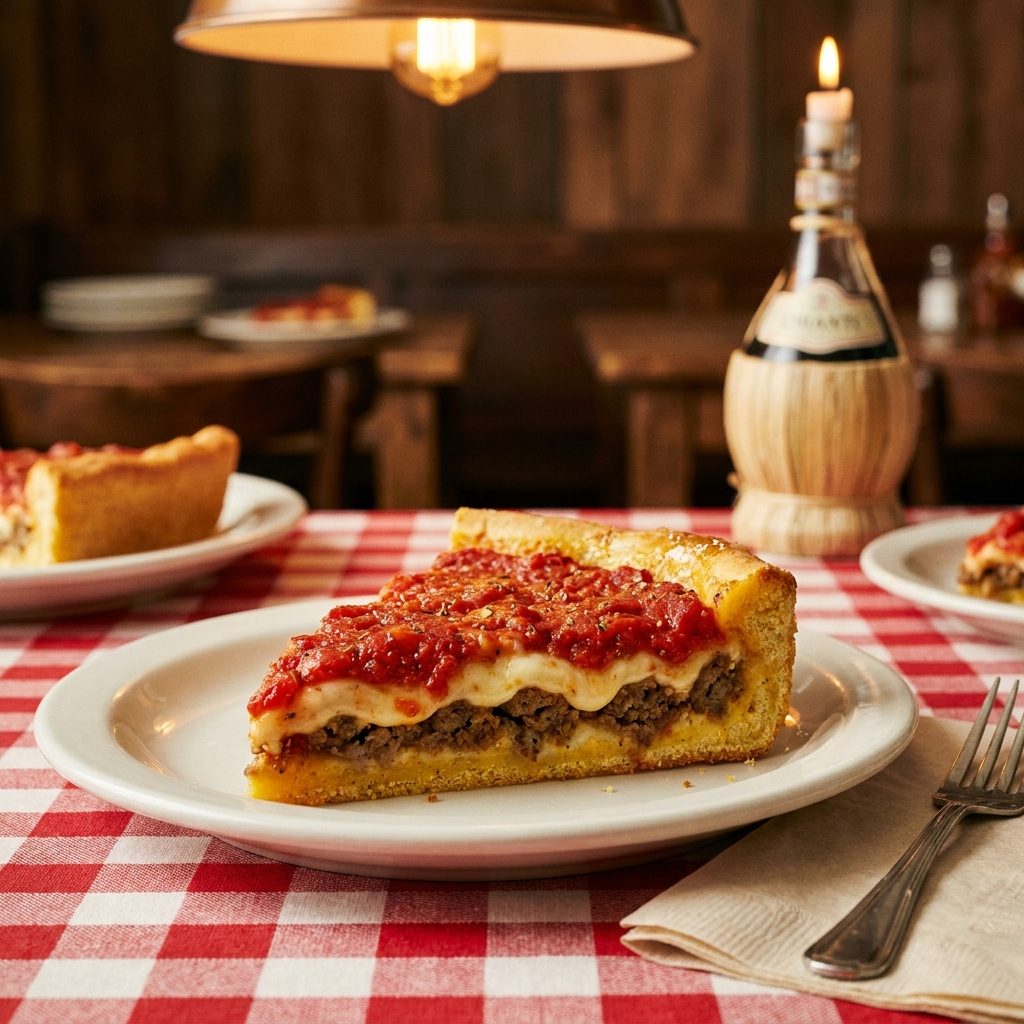
It wasn’t crumbled on top. It was pressed. Sheet-flat, edge to edge, a solid layer of fennel-heavy Italian sausage laid directly on the crust like a foundation before anything else went in. When you cut through it the cross-section showed you what was happening inside: four distinct strata, each one earning its place.
The fennel was the thing. Not sweet Italian, not pepperoni. Fennel sausage with a little heat, the kind that left a warm aftertaste and made every bite of cheese that followed taste even colder by comparison. Chicago pizzerias understood this. They built around it.
16. The Plastic Red Pepper Flake Shaker That Was Always Two-Thirds Empty
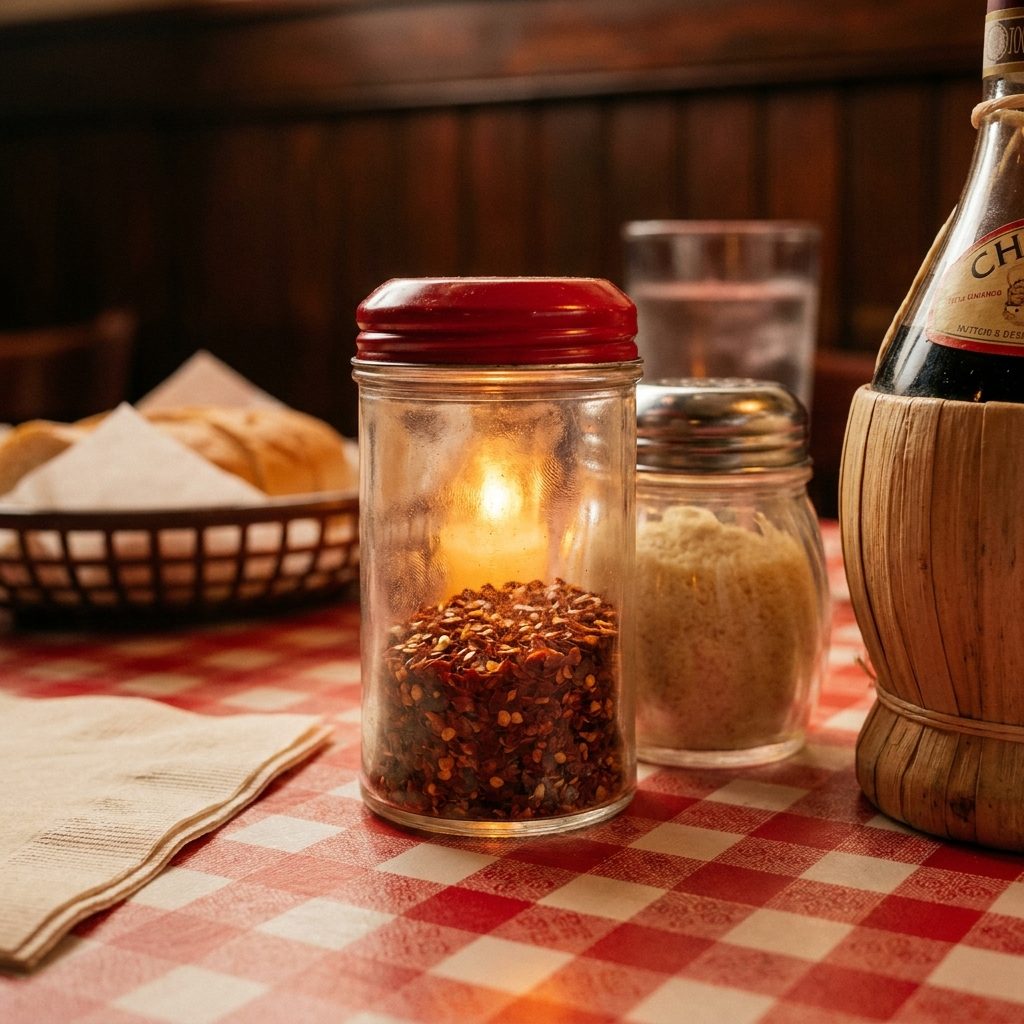
The red pepper flake shaker at a Chicago deep dish place was always two-thirds empty and the lid was always slightly stuck. You’d shake it twice, get nothing, shake it hard, and suddenly half of what was left landed on one slice. There was no middle setting.
Nobody ever saw a staff member refill it. It existed in a permanent state of almost-empty, like it had been that way since the restaurant opened and everyone had simply accepted the terms.
15. The Booth With the High Wooden Backs That Made Every Table Its Own Private Room
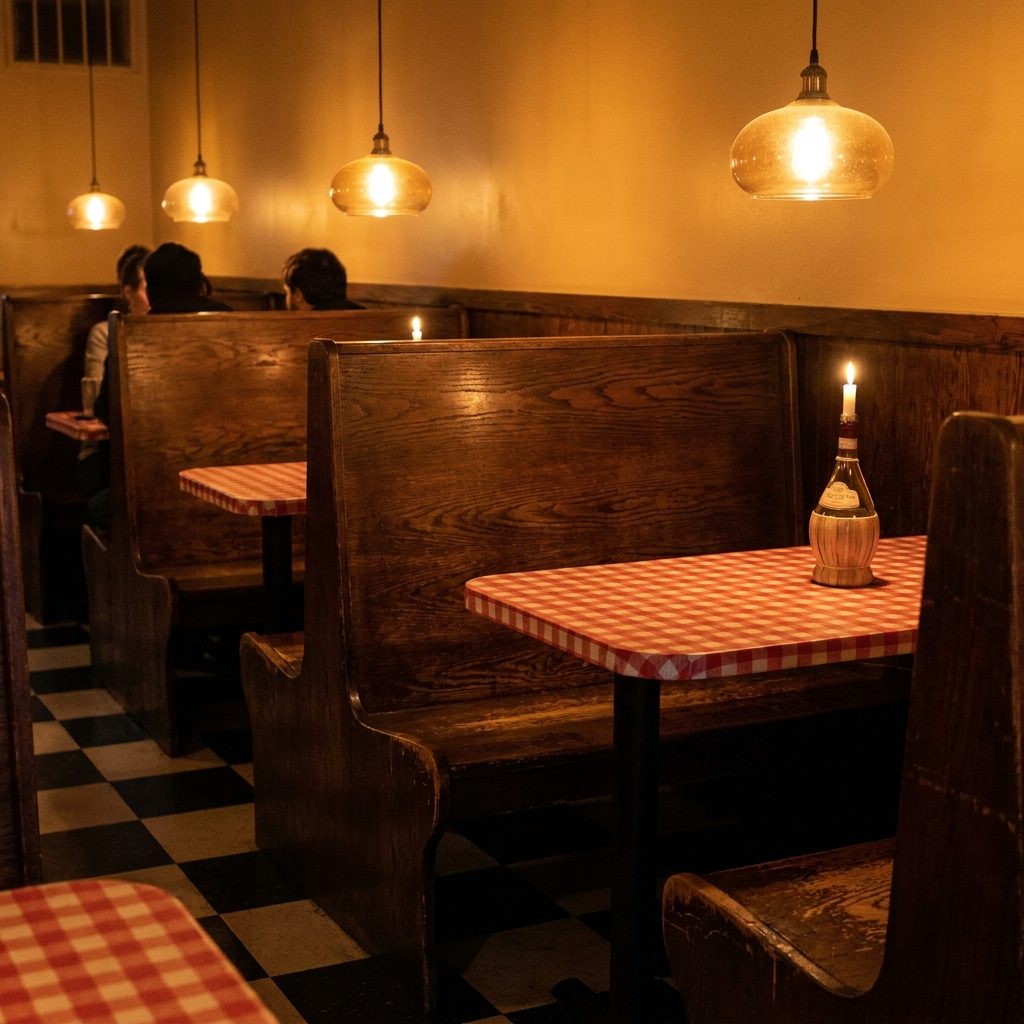
The booths in the old Chicago pizza places were built for privacy. Not the low-backed banquettes that came later, but tall dark wood partitions that rose past your head and turned each table into its own room. You could hear the next booth but you couldn’t see them. Sound carried. Eye contact didn’t.
There was something about sliding into one of those booths with a family-sized deep dish on the way that felt like settling in for the long haul. Which you were. The pizza was forty-five minutes out. Nobody was going anywhere.
14. The Butter-and-Cornmeal Crust That Left a Grease Spot Through the Cardboard Before You Got Home
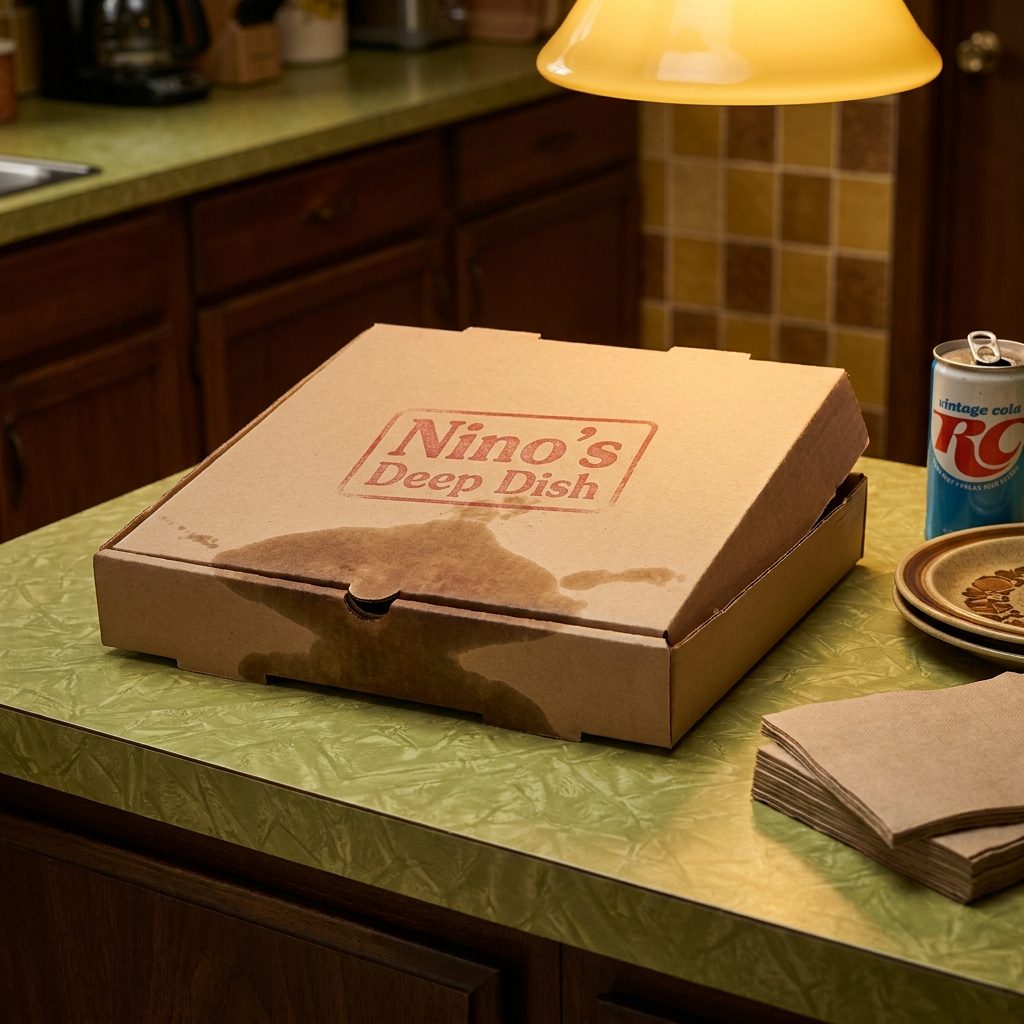
You could measure the drive home by the grease stain. Five minutes and it was just a damp spot at the center. Fifteen minutes and it had spread to the corners. Pull into the driveway after twenty-five minutes in Friday traffic and the bottom of the box was translucent, the cardboard gone soft, the whole thing warm and heavy in your arms like a casserole dish that had given up on being structural.
The buttery cornmeal crust was the culprit and nobody blamed it. That grease was the proof of what was inside.
13. The Burnt-Cheese Ring Around the Cast-Iron Pan That Meant It Was Done Right
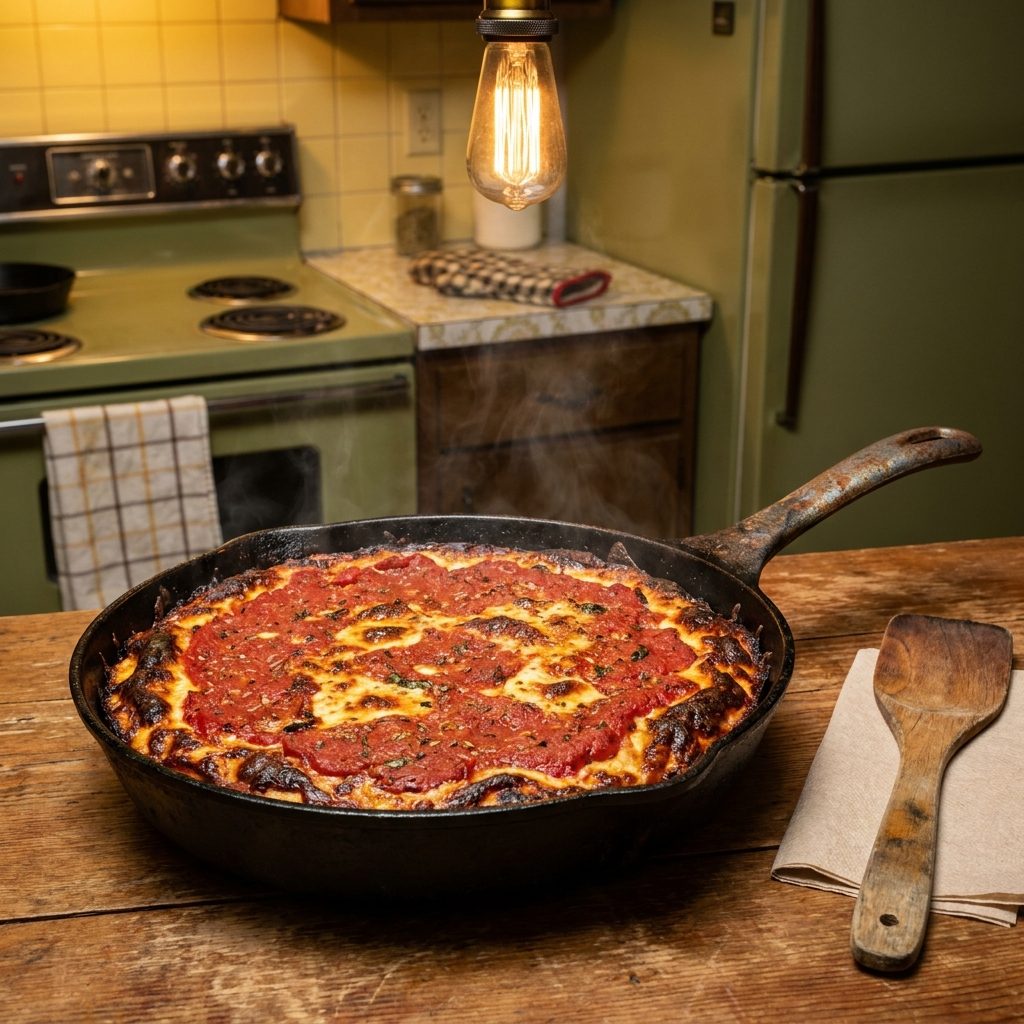
Nobody called it a mistake. That dark, crackling ring of cheese fused to the inside edge of the pan was the whole point. Pull a Chicago deep dish out of the oven before that ring formed and you’d pulled it too soon. Everyone who grew up eating it learned that fast.
The corner piece was fought over precisely because it had the most of it. Two full sides of burnt-cheese crust, buttery and slightly bitter in the best way, holding a wall of filling that hadn’t moved an inch during baking. A structural achievement and a flavor accident at the same time.
12. Waiting 45 Minutes at the Table With Just a Bread Basket and a Candle Stuck in a Chianti Bottle
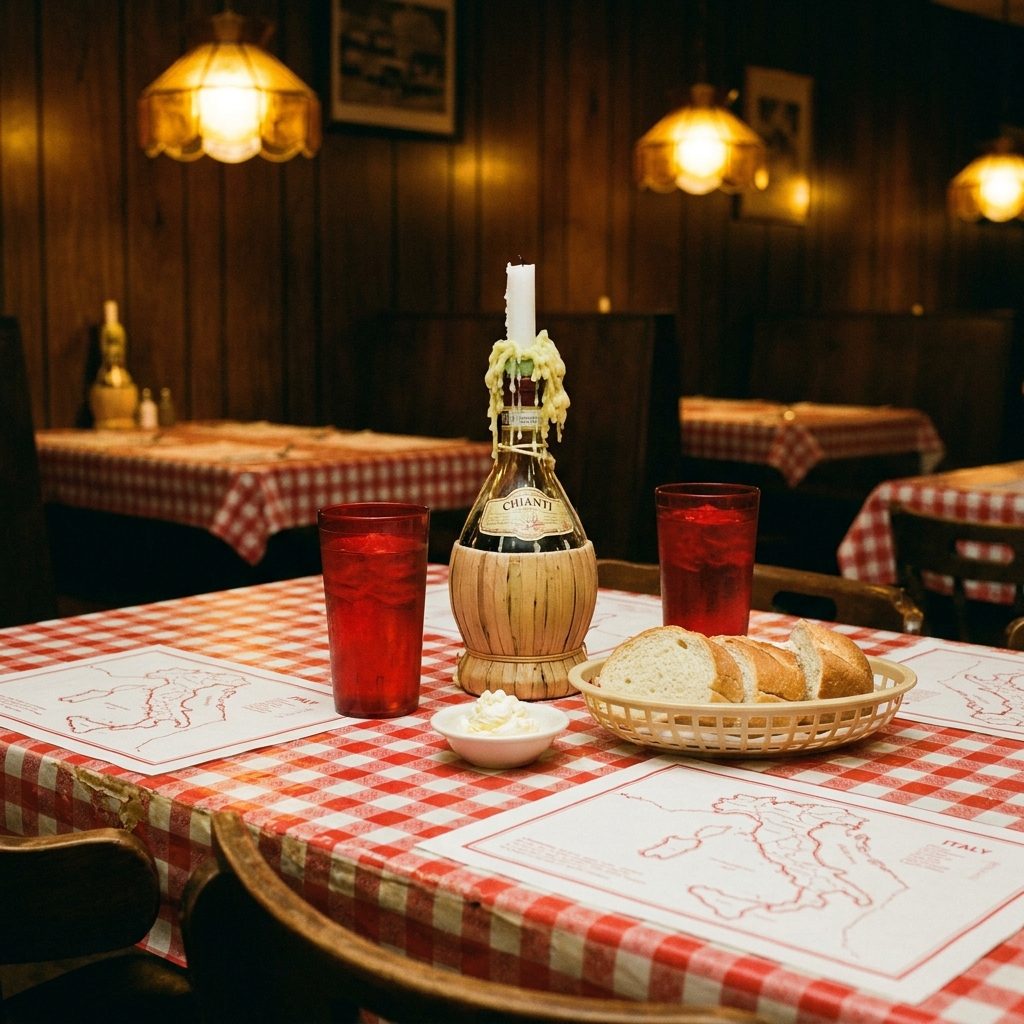
The bread basket arrived within two minutes. The pizza arrived within forty-five. That gap was simply the deal, understood by everyone at the table from about age seven onward. You ate the bread. You drank the water. You watched the candle drip down the Chianti bottle and you waited.
Nobody complained. Not really. The waiting was built into the math of a Chicago deep dish and every family in the city knew it. The pie was assembled in layers, baked low and slow in a pan that needed time to do its work. Showing up hungry and impatient was a personal planning failure, not the restaurant’s problem.
11. The Chunky Crushed-Tomato Sauce That Sat on Top Instead of the Bottom
Would you like to save this?
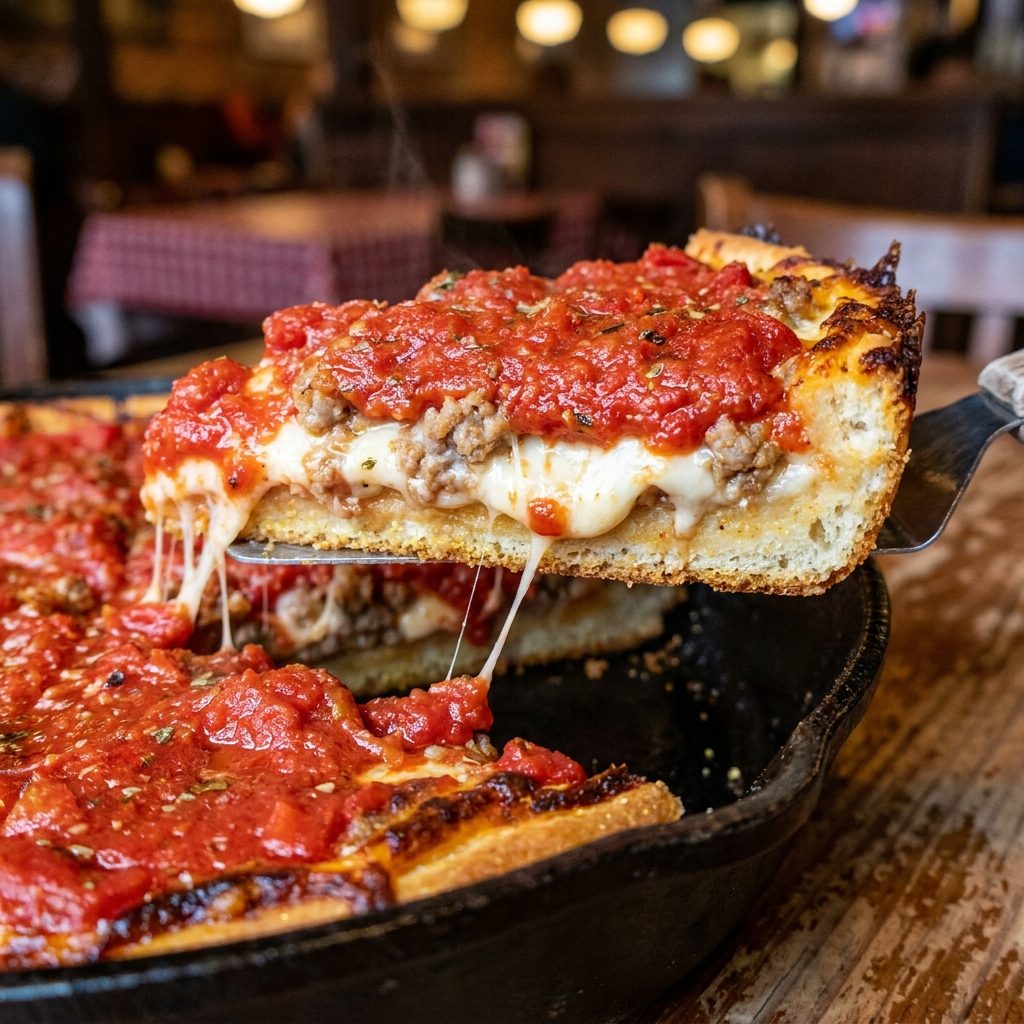
The first time someone from New York saw a Chicago deep dish assembled, they thought it was being made wrong. Cheese first, then meat, then sauce on top. The whole architecture was inverted. That was the point. The sauce on top stayed bright and fresh during the long bake while the cheese melted into the crust underneath without burning.
That chunky, barely-cooked crushed tomato sauce had a particular quality nothing else matched. Not smooth, not sweet. Tomatoey in a raw, direct way, with oregano and a little heat sitting right on top of every bite. It was doing a completely different job than marinara, and it knew it.
10. The Takeout Box That Was More Like a Cardboard Casserole Dish
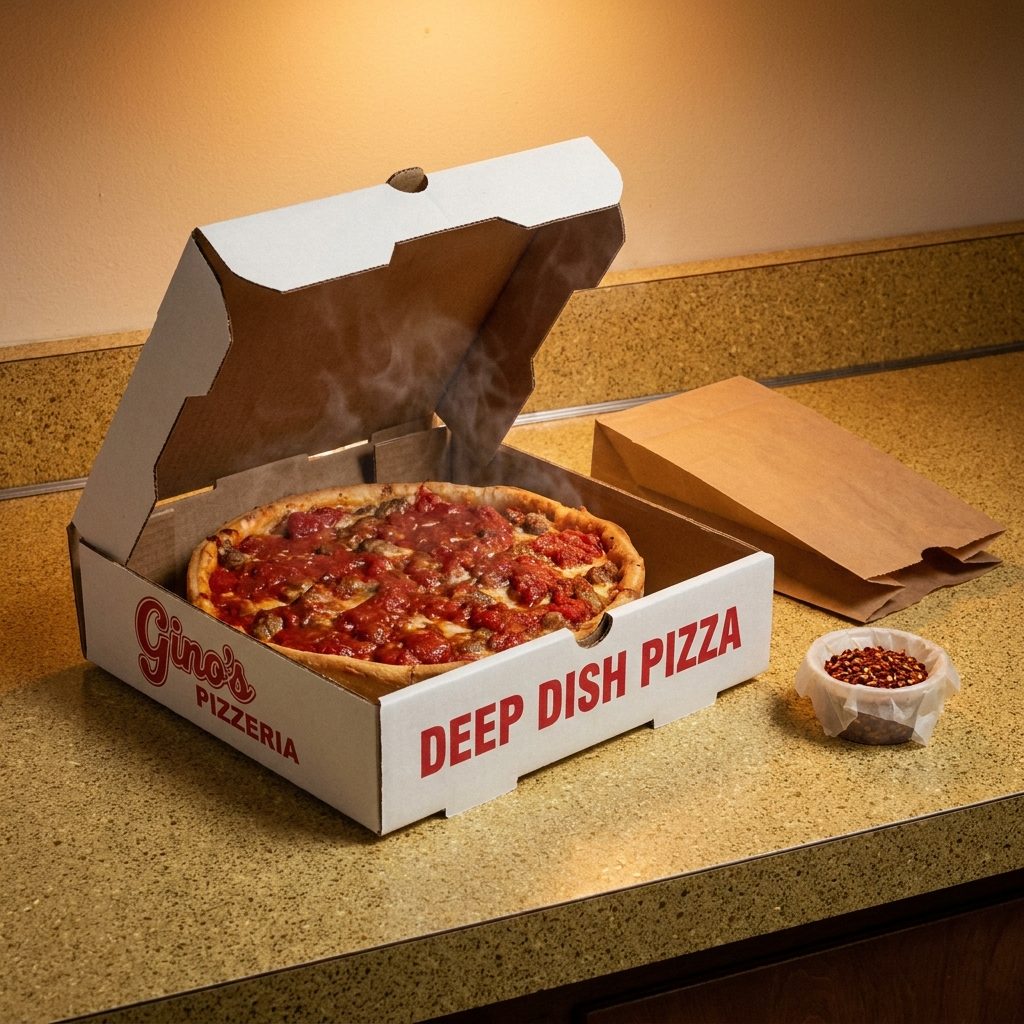
Standard pizza boxes were flat. Chicago deep dish takeout boxes were basically cardboard casserole dishes with lids. They had to be. A regular flat box would have been destroyed in about forty seconds by a pie that was two inches of cheese, meat, and molten tomato standing inside a butter crust.
Getting one of those boxes into the back seat of a station wagon without tilting it was a co-pilot job. Someone held the box level the entire ride home while the driver navigated and everyone else sat very still. It felt like transporting something fragile and important, which it was.
9. The Sunday-After-Church Deep Dish That Was the Only Reason Anyone Got Through the Morning
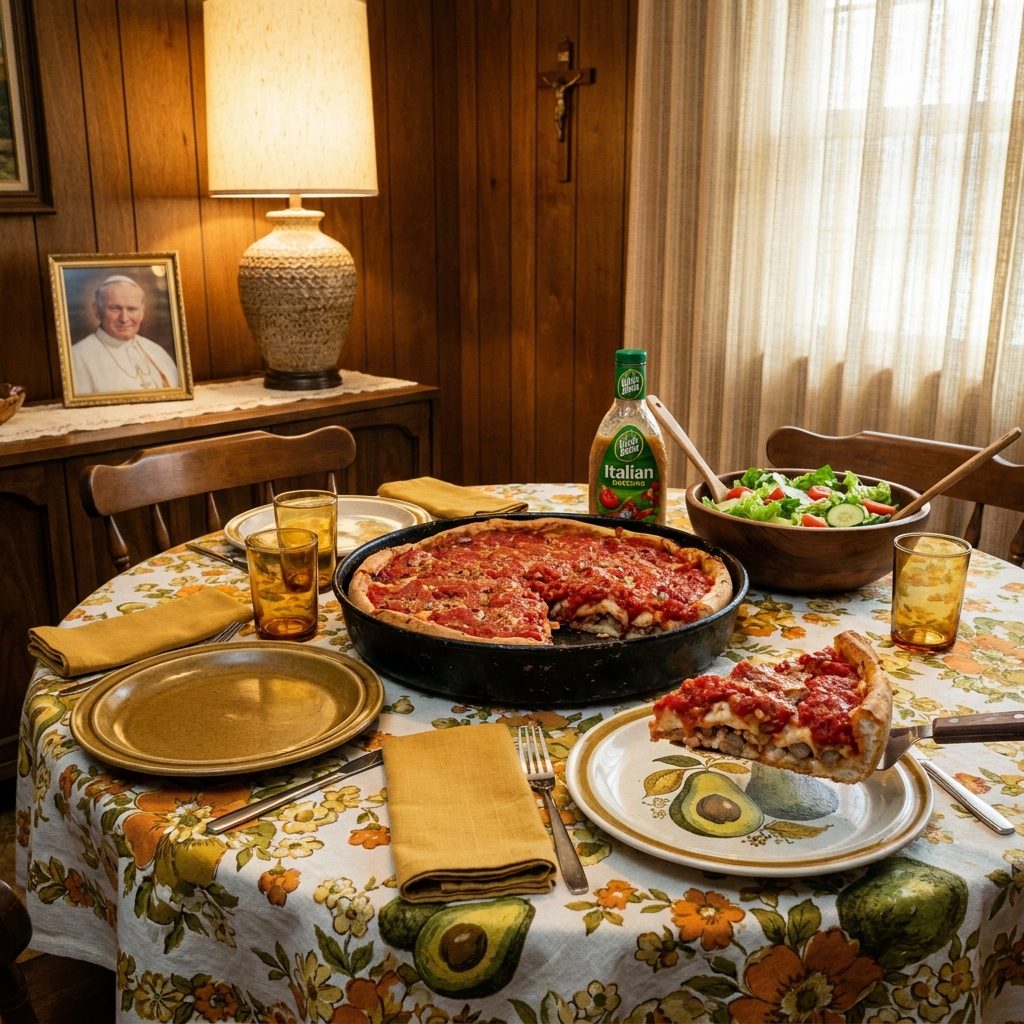
The deal was always the same. Sit through Mass, get deep dish. Nobody said it out loud but everybody understood it. The reservation was made for noon, which meant leaving the church parking lot before the crowd or accepting that you’d be waiting outside on the sidewalk in your good clothes.
By the time the pizza arrived at the table, the morning had already been long enough that a single slice felt like compensation. And a Chicago deep dish slice in the 1970s was compensation. It was a full pound of food in a wedge, enough to silence the backseat for the entire ride home and most of the afternoon.
8. The Way the First Slice Fought You Like It Didn’t Want to Leave the Pan
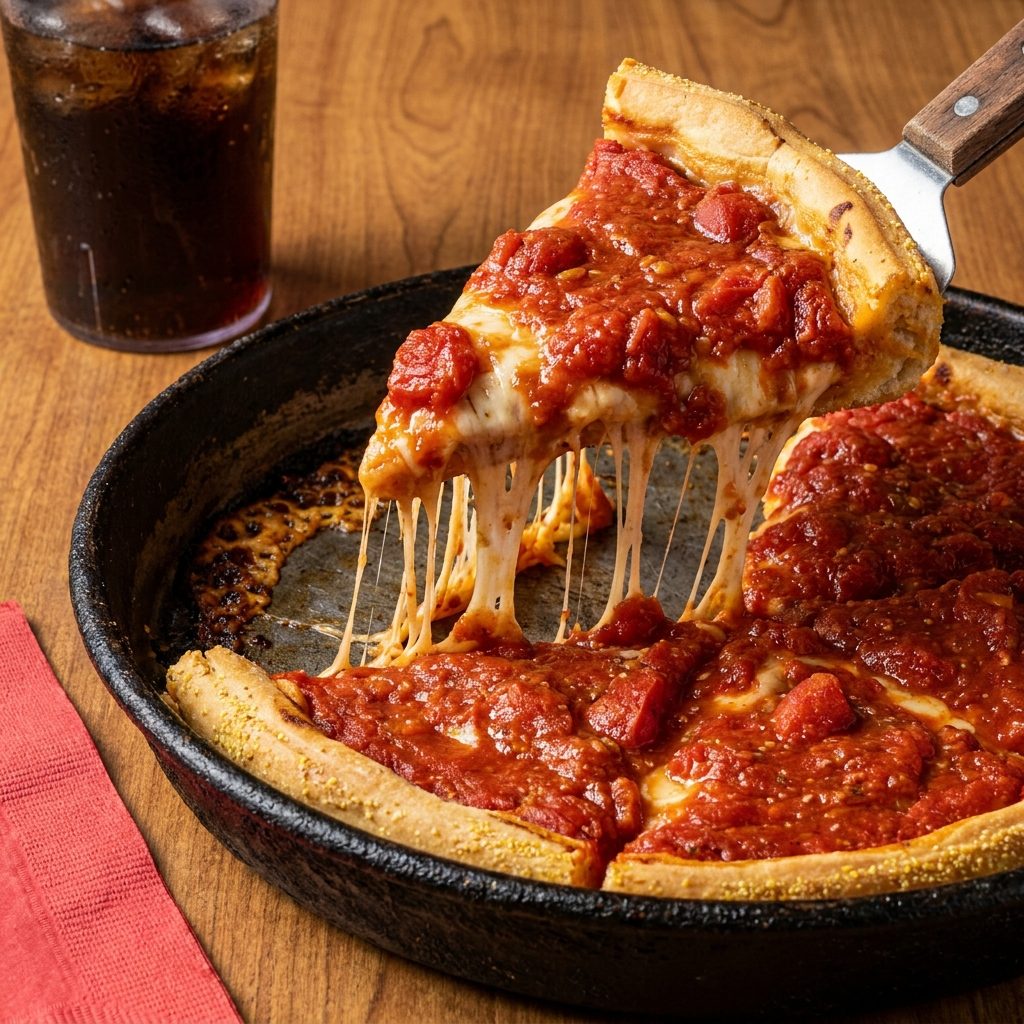
That first slice never came easy. You’d work the spatula under the crust, angle it just right, and the cheese would stretch into these ropes that flat-out refused to break. Somebody always reached across with a fork and sawed through the strands while the server stood there pretending this wasn’t a two-person operation.
A pizza that surrendered its first slice without a fight wasn’t a deep dish worth ordering. The cheese had to protest. The crust had to grip the pan like it had roots. You earned that piece, and the structural drama of actually getting it onto your plate—the tilt, the wobble, the near-collapse—was half the ceremony of sitting down at a place like Giordano’s or Lou Malnati’s or wherever your family swore loyalty.
7. The Family-Style Italian Salad With the Single Pepperoncini Everyone Ignored
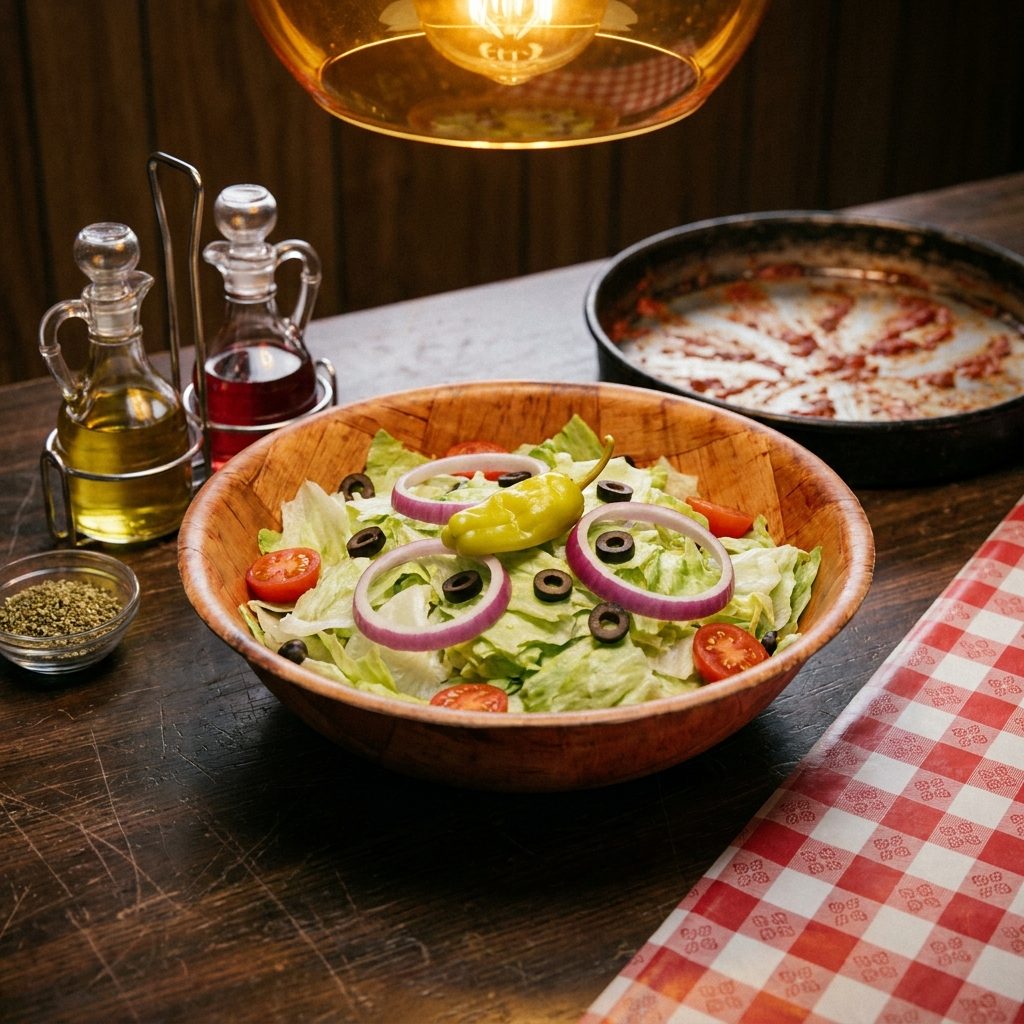
It arrived before the pizza. Always. A big wooden bowl of iceberg, some tomato wedges, red onion rings, and that single pepperoncini perched on top like a garnish nobody had bothered to think through. Oil-and-vinegar cruets came alongside, and someone’s mom always overdressed her portion while everyone else waited for the real food.
The salad existed as a pacifier—something to push around your plate during that long wait. Nobody talked about it afterward. Nobody praised it. But it was always there, and when the wooden bowl landed on the table, you knew the deep dish was officially in the oven. That was its whole function. A signal flare made of iceberg lettuce.
6. The Draft Beer in a Frosted Mug That Made the Wait Almost Bearable
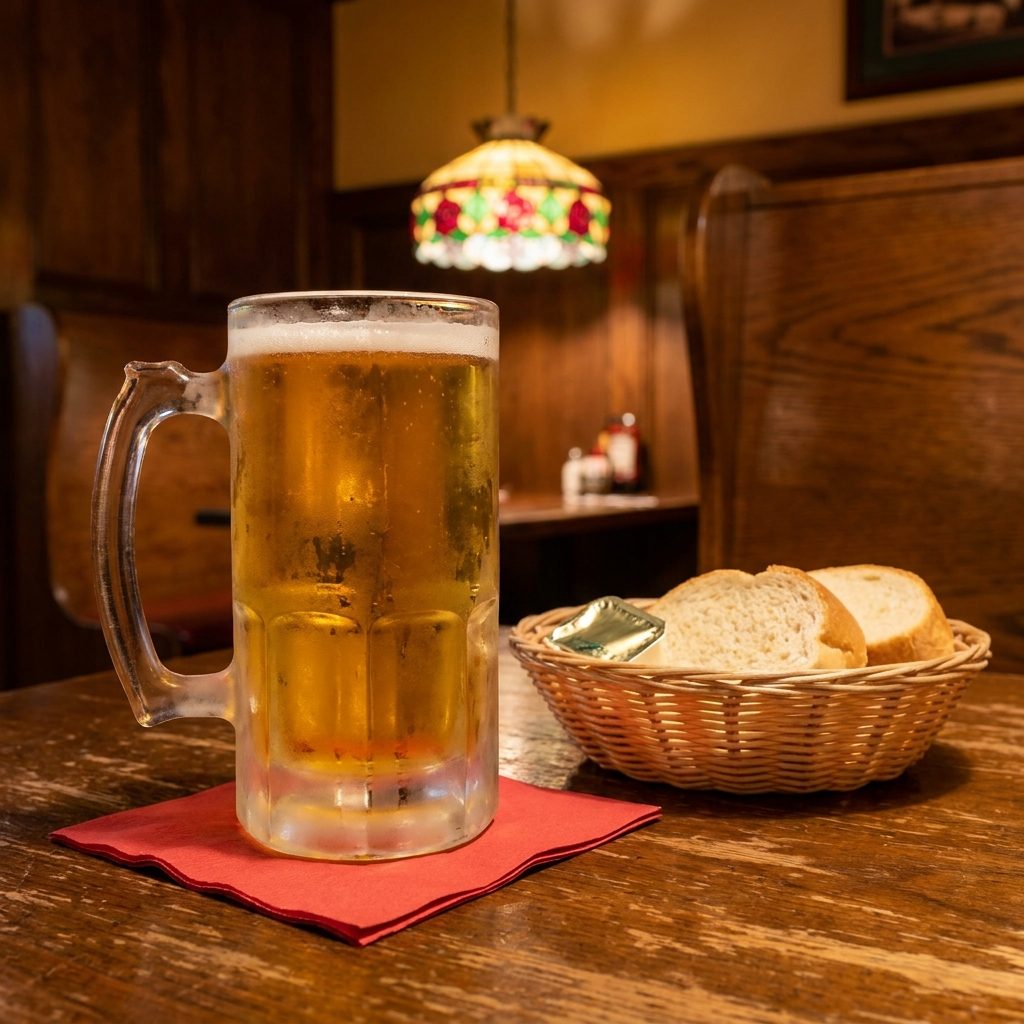
Cold. So cold the glass fogged over the second it touched the table. Old Style or Schlitz, usually, poured from a tap into one of those heavy mugs they kept in the freezer. Your fingers stuck to it slightly, and that first sip tasted like patience rewarding itself.
By the time the pizza arrived, the mug was half empty and warming up. Nobody cared. The beer had done its job—filled the dead air between sitting down and that moment the server finally appeared carrying a cast-iron pan wrapped in a towel. The bread basket pulled the same duty. Between the two of them, they got you through forty-five minutes of staring at wood paneling and a Tiffany lamp without losing your mind.
5. The Way the Crushed Tomato Sauce Pooled in the Center Like a Red Lake After the First Slice Was Gone
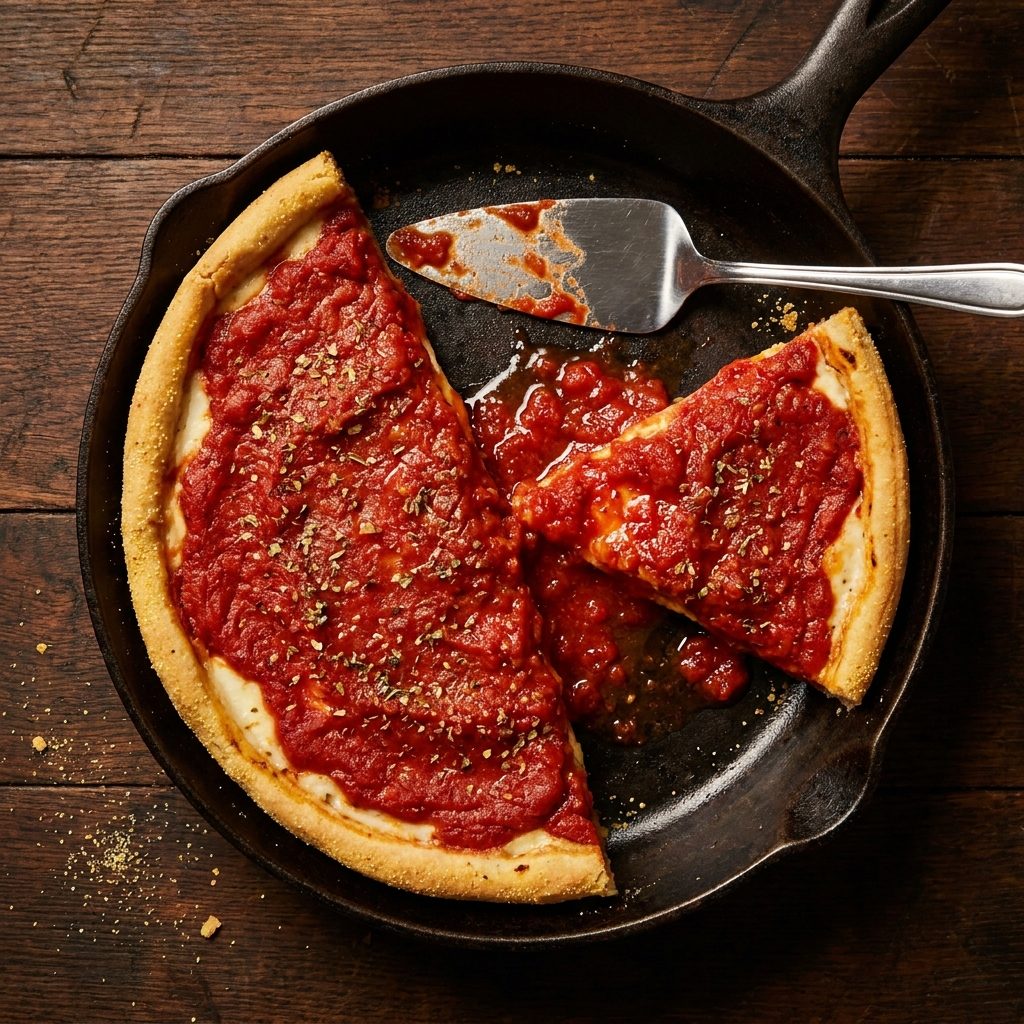
Once that first piece came out, the sauce moved. It slid down the interior wall of the crust and gathered in the empty wedge like a tide filling a gap between rocks—thick, chunky, almost orange-red from the olive oil mixed in.
You’d watch it happen. Somebody always dragged a piece of bread through that pool before the next slice got served, the unofficial appetizer course between slices one and two. The sauce never stayed where the recipe intended. It had its own agenda, and every version of that agenda involved the lowest point of the pan.
4. The Garlic Bread That Came Wrapped in Foil and Steamed Itself Into Submission
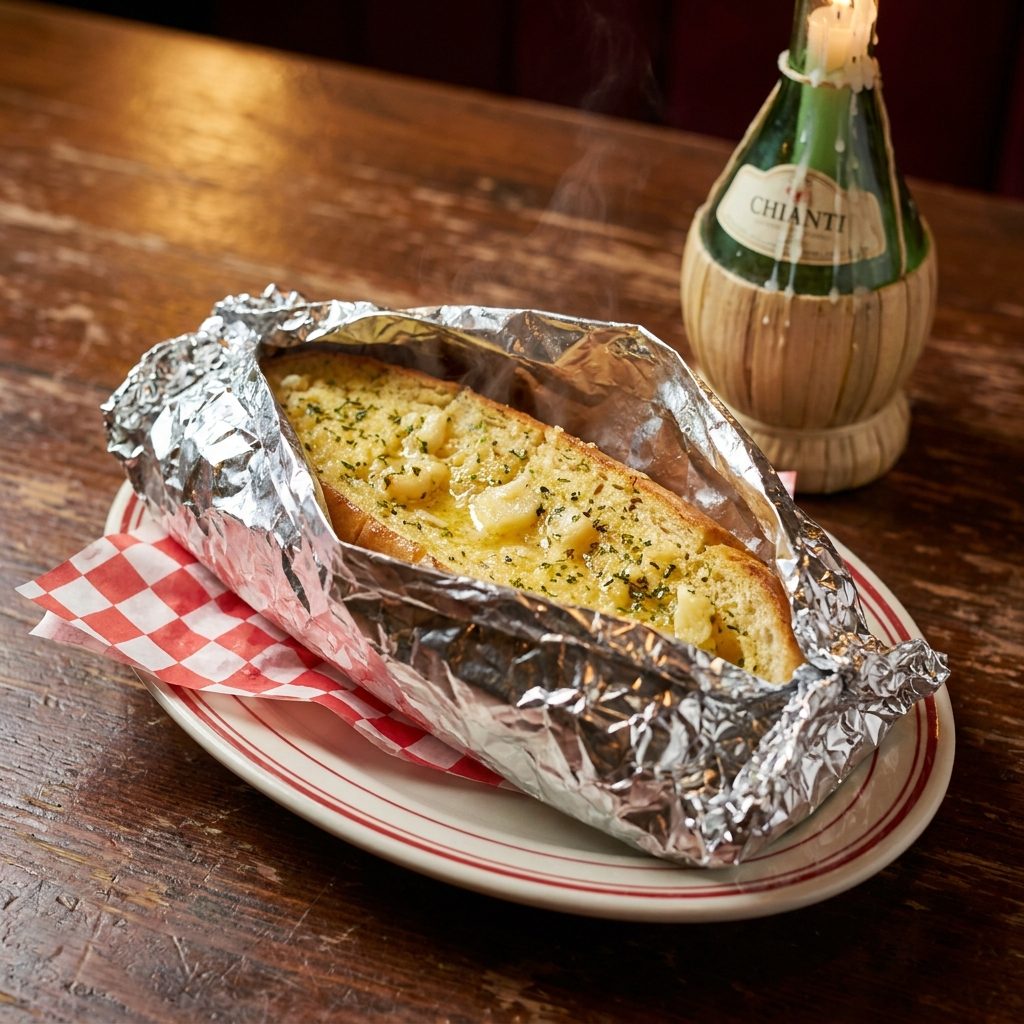
Soft. Always soft. Whatever crispness the bread had going into the oven was gone by the time it reached the table, killed by its own foil coffin and replaced by a pillowy, butter-saturated limpness. You peeled back the aluminum and the garlic hit your nose before your hands even touched the loaf.
Margarine, probably. Mixed with garlic powder and maybe some parsley flakes for the look. A standard Italian loaf, sliced but not all the way through so it held together in one piece. And god, it was perfect—not because it was good bread, because it wasn’t, really. It was warm and greasy and it showed up during the wait. Sometimes that’s the entire qualification a food needs.
3. The Parmesan in the Glass Shaker That Had Turned Into a Single Solid Block by Friday Night
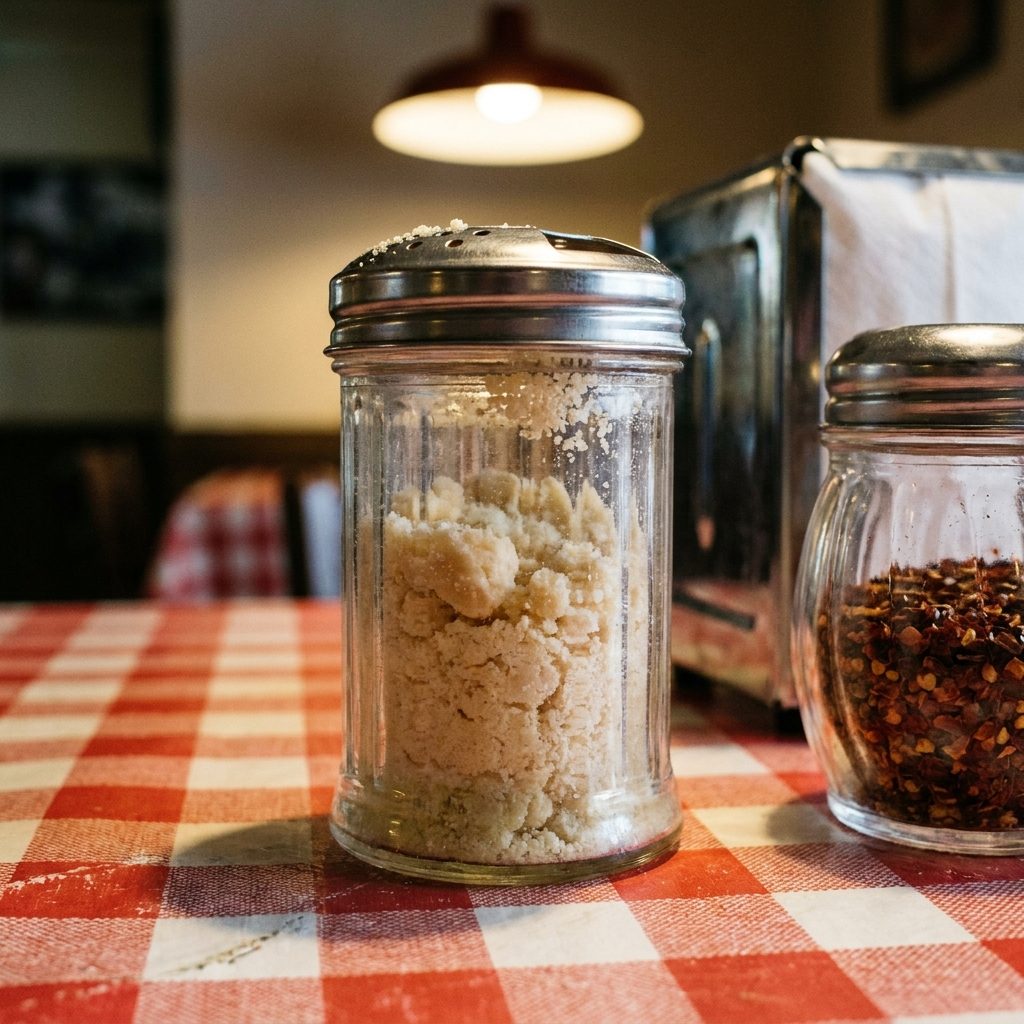
You’d pick it up, turn it over, shake. Nothing. The cheese had fused into a solid cylinder somewhere around Wednesday and no amount of wrist action was going to change that by Friday night.
So you’d unscrew the cap and bang the bottom against your palm like you were coaxing ketchup from a glass Heinz bottle. A few granules would break loose. Maybe. Somebody at every table inevitably took a butter knife and went in like an archaeologist, chipping the block into rubble, shaking the whole contraption again with renewed confidence. Nobody complained. Nobody flagged down the server. Every pizzeria in the city had the same shaker with the same problem, and we all just accepted it as a small tax on eating out.
2. The Sausage Grease That Soaked Through Two Napkins and Left a Mark on Your Jeans You Wore Home
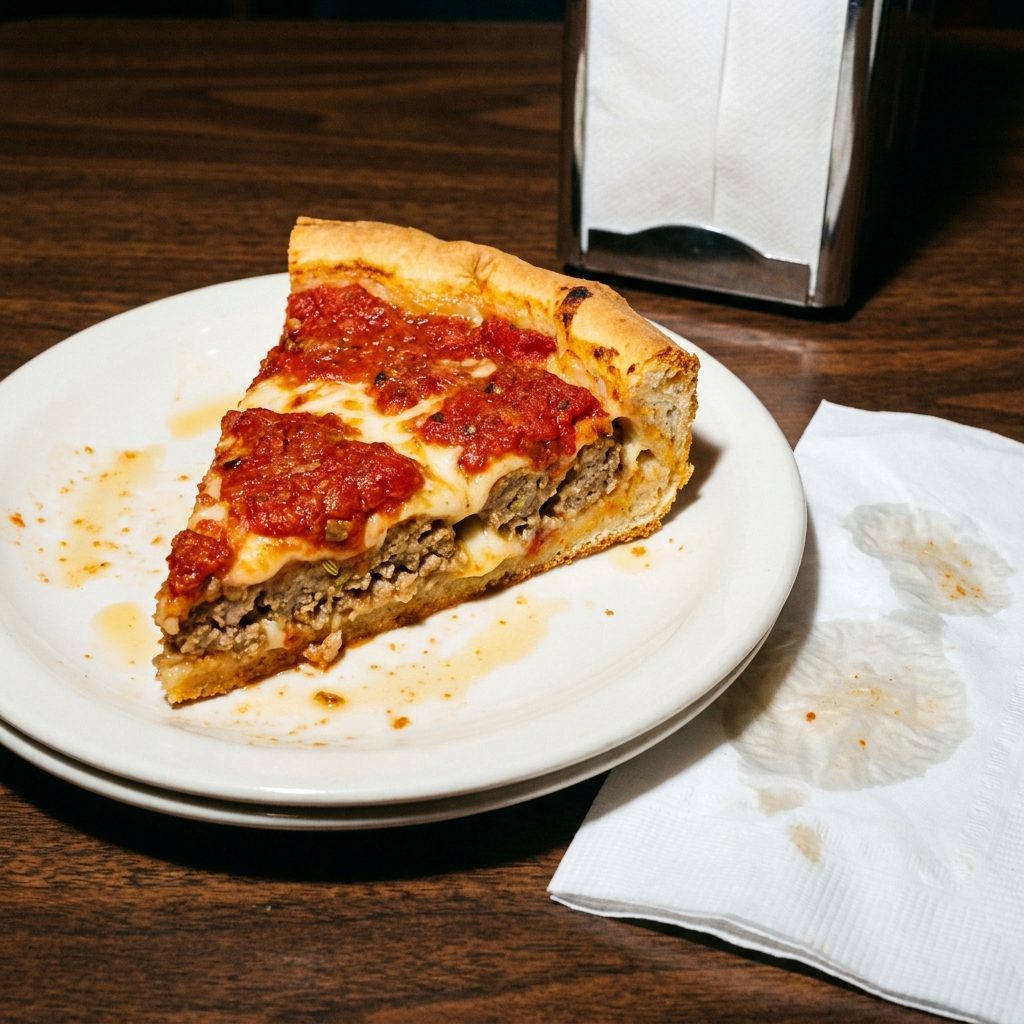
The napkin was gone in seconds. You’d press it against the slice out of habit and watch it turn translucent immediately—wax paper held up to a lamp. The grease wasn’t just cheese. It was that flat-pressed fennel sausage, baking in a buttered pan for the better part of an hour, releasing everything it had into the crust below and then some.
Fold the napkin. Grab another. Keep eating. The spot on your jeans wouldn’t announce itself until later—in the car, under the streetlight, a small dark circle on your thigh. Evidence you couldn’t wash out. My mother had a whole theory about pre-treating with dish soap, and it never worked.
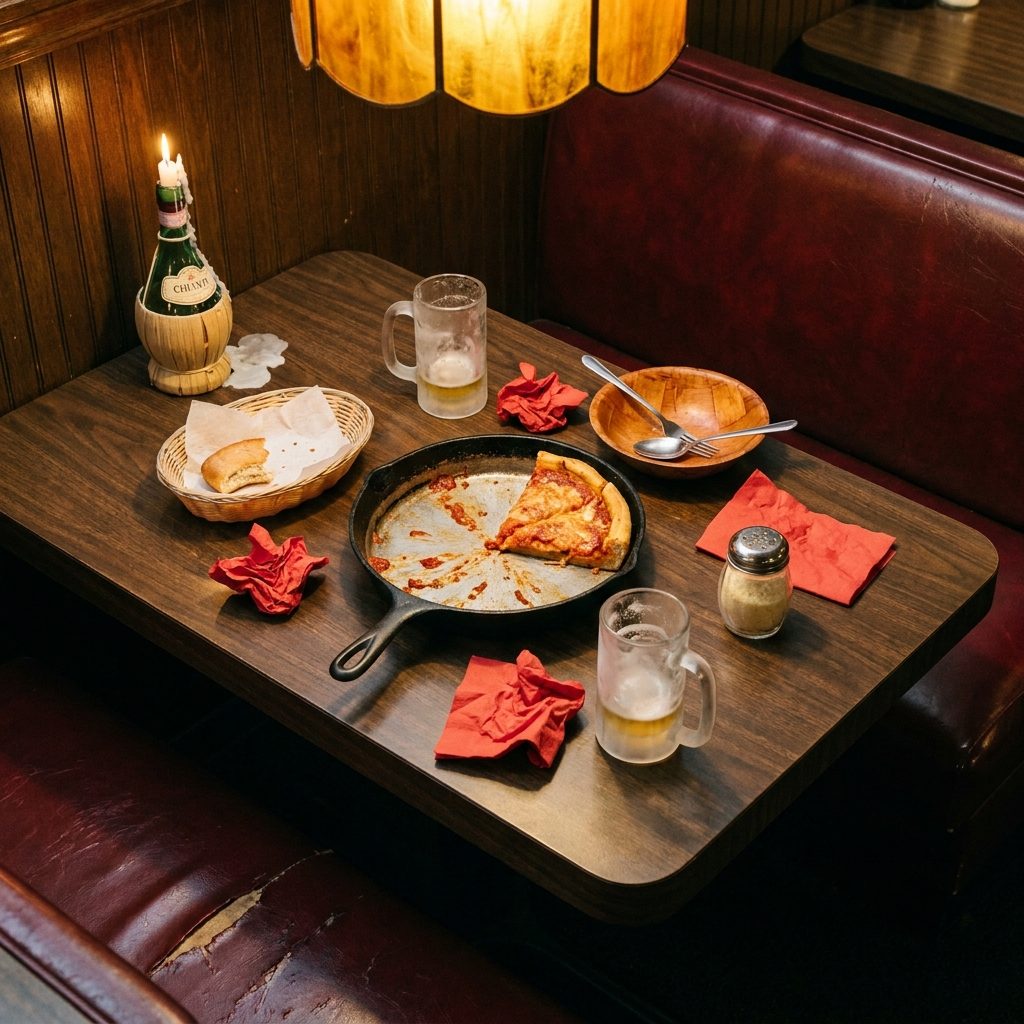
1. The Way Nobody Ordered Dessert Because a Single Slice of Deep Dish Had Already Ended the Conversation
Would you like to save this?
The waitress would ask. She had to. “Can I get you anything else?” And the whole table would go quiet, everyone exchanging the same look—the one that said I physically cannot.
One slice of deep dish weighed more than most entrees at a normal restaurant. The crust alone qualified as a meal. The inch-thick cheese layer was a second one. Then there was the sausage. By the time you finished a single piece, your body had already started internal negotiations about whether standing up was even realistic, let alone walking to the car. Dessert menus collected dust at these places. Spumoni sat on the menu the way a fire extinguisher sits behind glass—technically there if you need it, functionally ignored by every human in the building.