Would you like to save this?
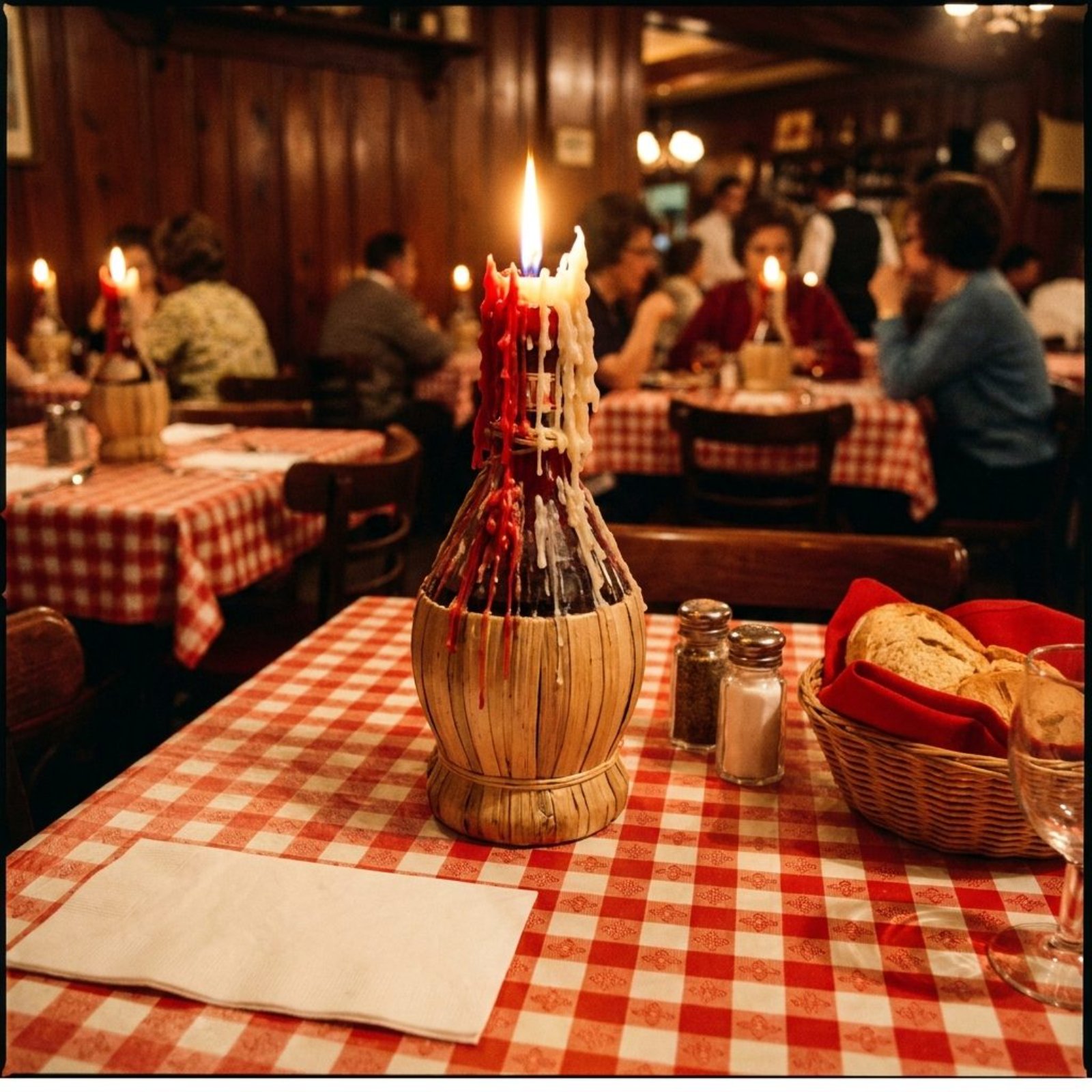
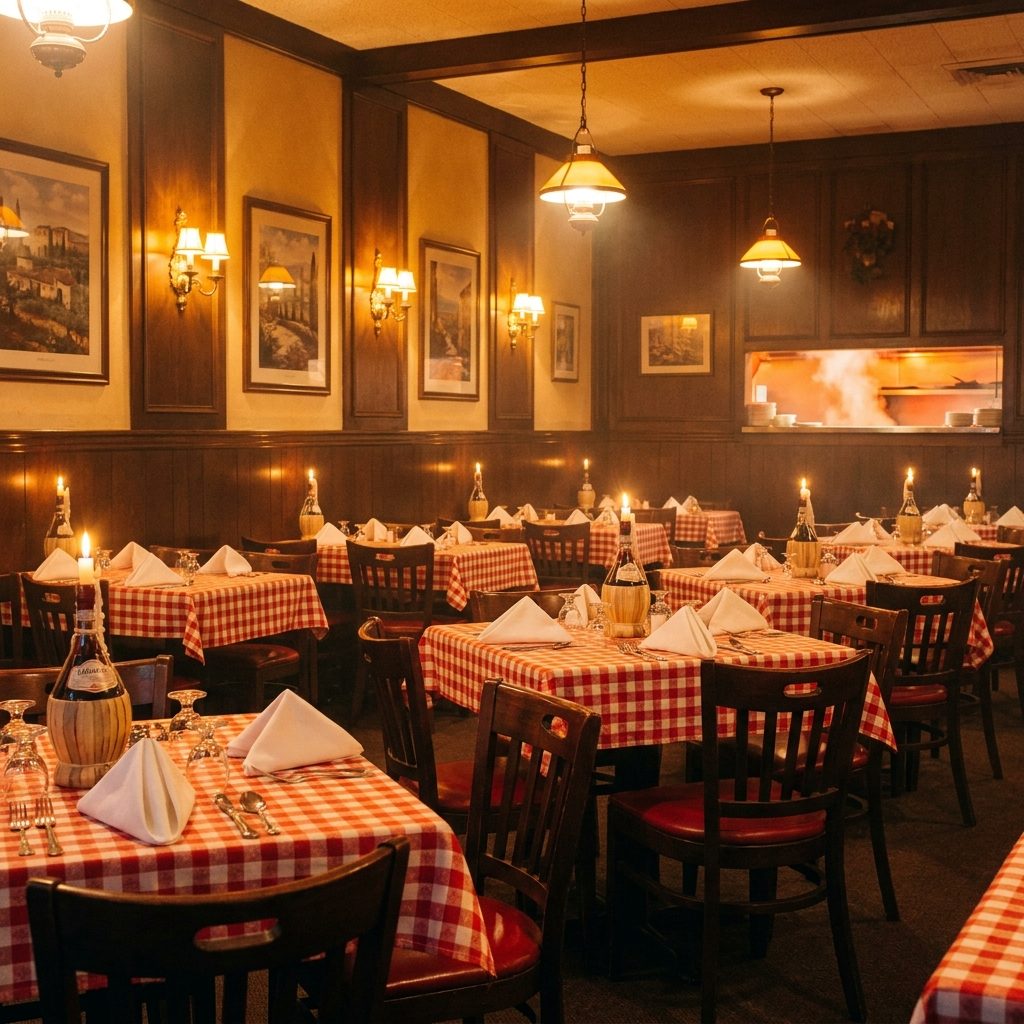
The breadsticks arrived before anyone asked. A candle burned inside a straw-wrapped Chianti bottle, wax crawling down the neck like the place had secrets. Red sauce landed in heavy white bowls. The waiter called your father “sir” without smiling. Garlic, cigarette smoke, and aftershave were already working the room.
This was not dinner because nobody felt like cooking. This was dinner out. Somebody wore a sport coat. Somebody’s mother had perfume on. Kids sat up straighter. The booths were dark, the menus were huge, and every table looked one raised eyebrow away from a family announcement, a business deal, or a fight over the second carafe.
That was the power of 1960s Italian restaurants. They made spaghetti feel serious. They gave red sauce a lighting plan. Dinner needed more than food. Dinner needed a room, a ritual, a little swagger, and just enough trouble to feel worth dressing for.
21. The Waiter Who Knew Your Name and Your Father’s Order Before You Sat Down
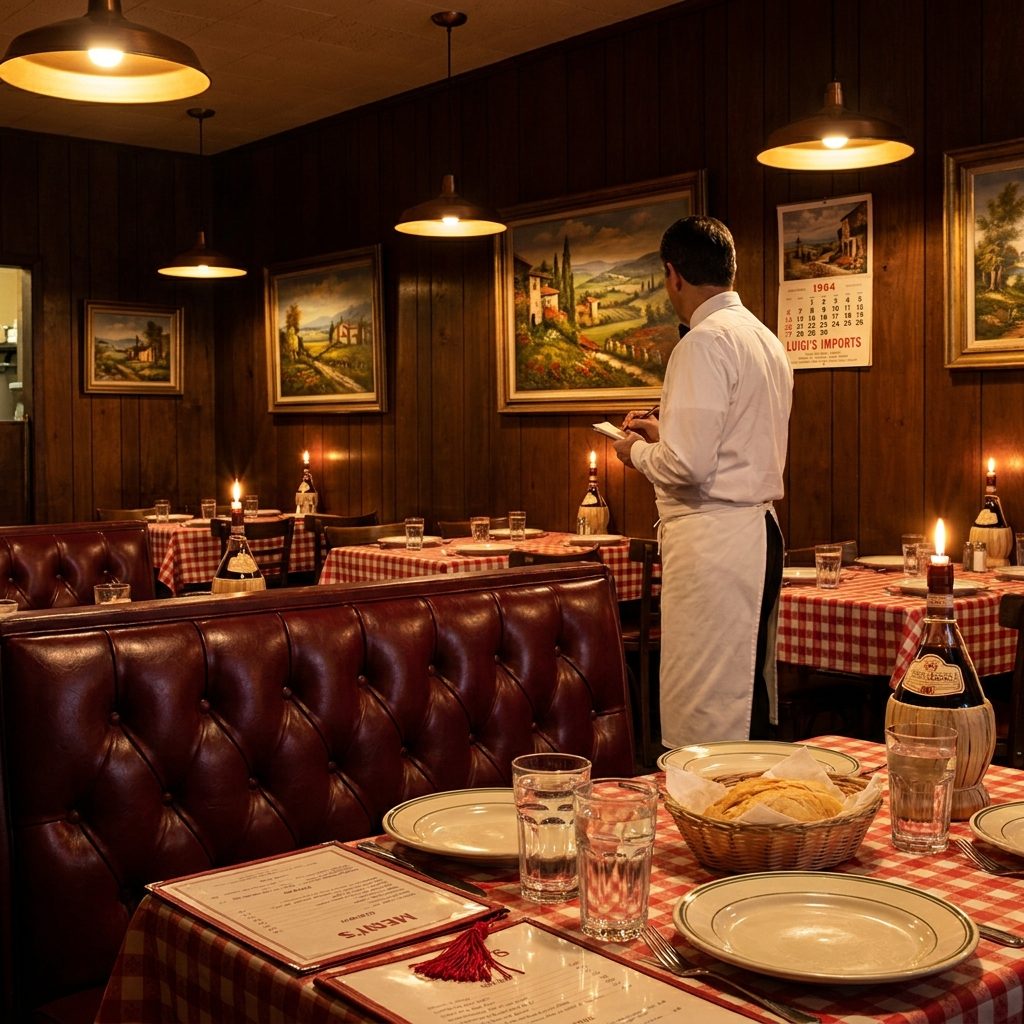
There was a specific kind of dignity to being recognized at a restaurant. Not the loud celebrity-entrance kind. The quiet kind, where the waiter came over, said your father’s name, and asked if you were starting with the usual antipasto without looking at his notepad.
In the Italian-American restaurants of the 1960s, the waiter was often part of the family, or close enough to it. He remembered birthdays. He steered you away from the veal on Thursdays without explanation. He was the reason you came back, and everyone understood that without saying it.
20. The Lazy Susan in the Middle of the Table That Spun the Whole Meal Into Reach
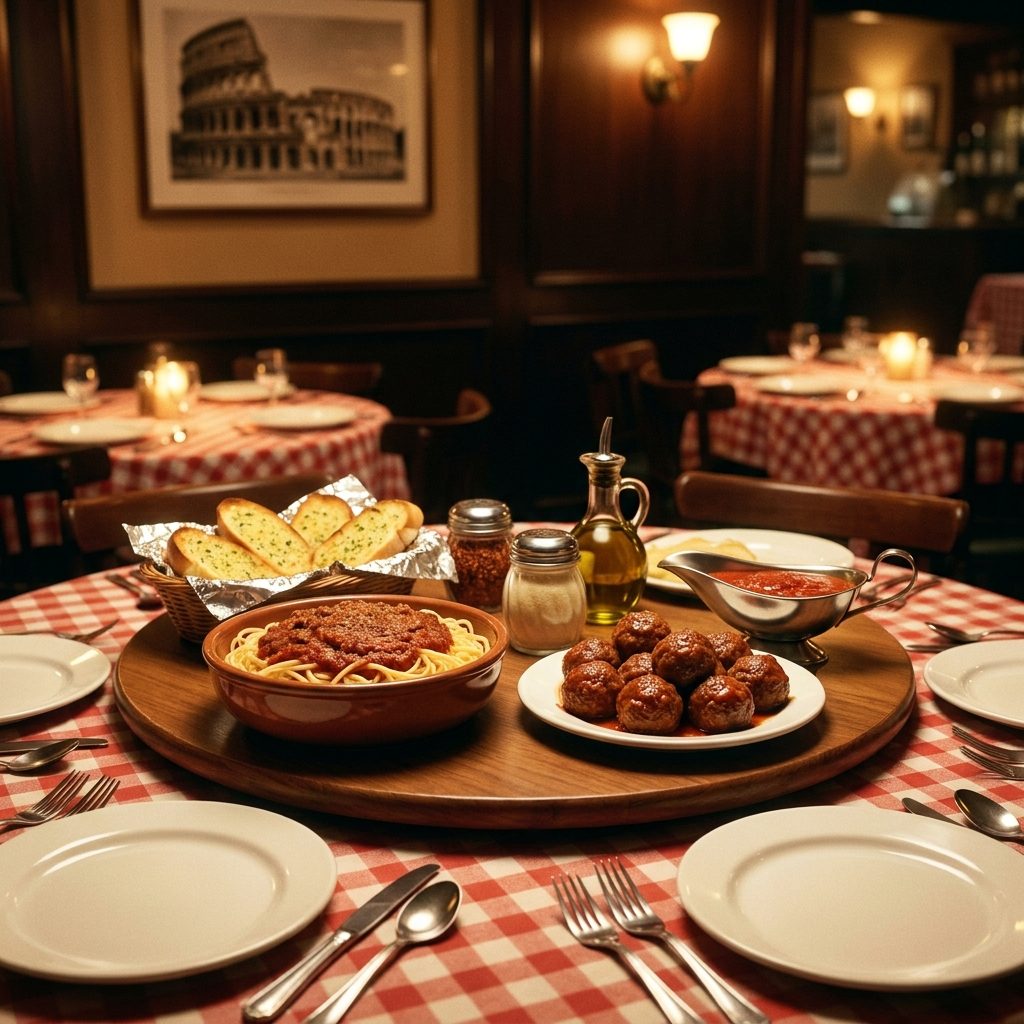
The Lazy Susan was a piece of furniture that understood families. Spin it left and the meatballs came to you. Spin it right and the garlic bread made its rounds. Nobody had to ask anyone to pass anything, which, at a table of six relatives with opinions, was a minor miracle of engineering.
In the bigger Italian-American restaurants that served parties and Sunday crowds, the round table with the spinning center was a deliberate choice. It kept the food moving, kept the conversation moving, and kept anyone from having to stand up and reach across Aunt Carmela.
19. The Printed Menu With the Red Tassel That You Read Like It Was Literature
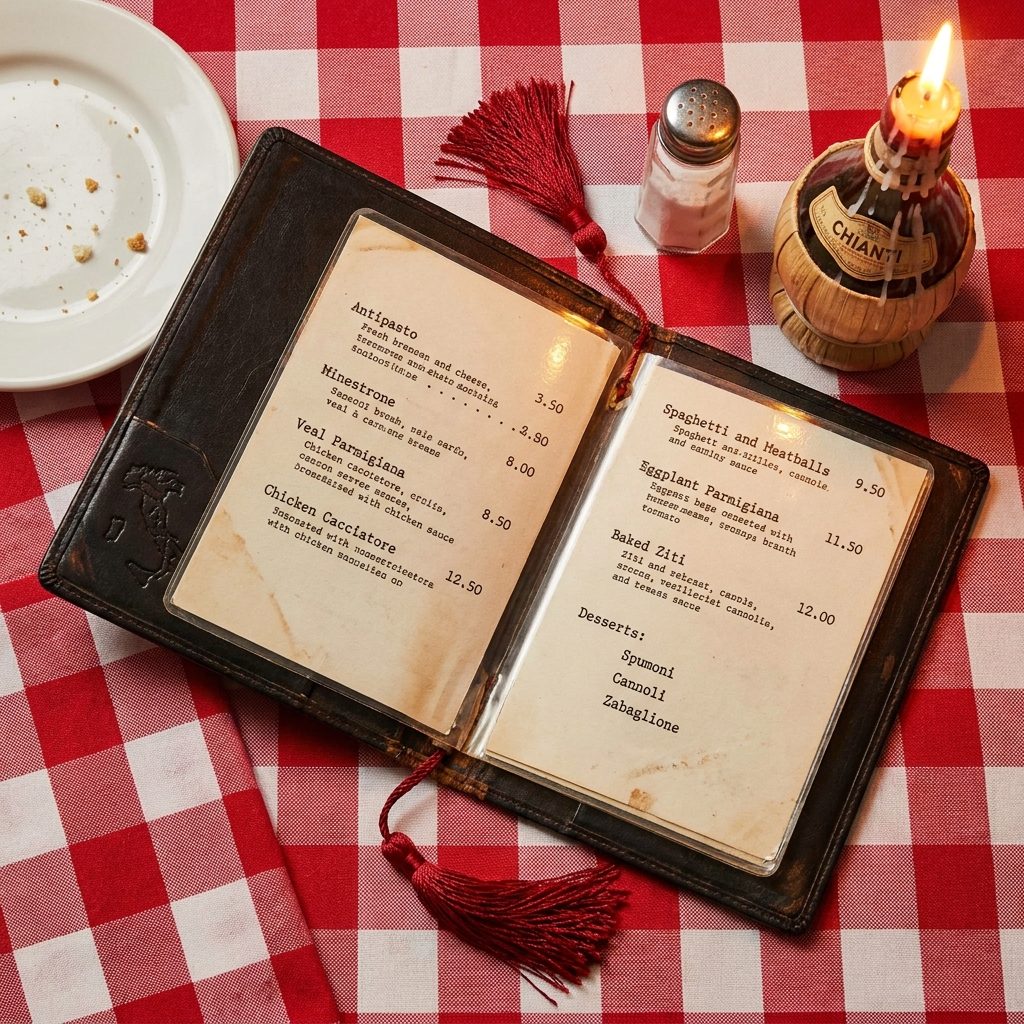
The menu at a proper Italian-American restaurant in the 1960s had weight to it. Actual physical weight, from the leather cover, the thick laminated pages, and the red tassel that draped over your hand while you read it. You held it differently than a paper menu. You held it the way you held something that expected to be taken seriously.
The dishes were the same ones your grandmother made, but printed in two columns with prices beside them, which made the whole thing feel official. Ordering veal Parmigiana off a leather-bound menu was not the same as having it at home. It was a statement that the evening mattered.
18. The Spumoni That Arrived Unannounced at the End of the Meal
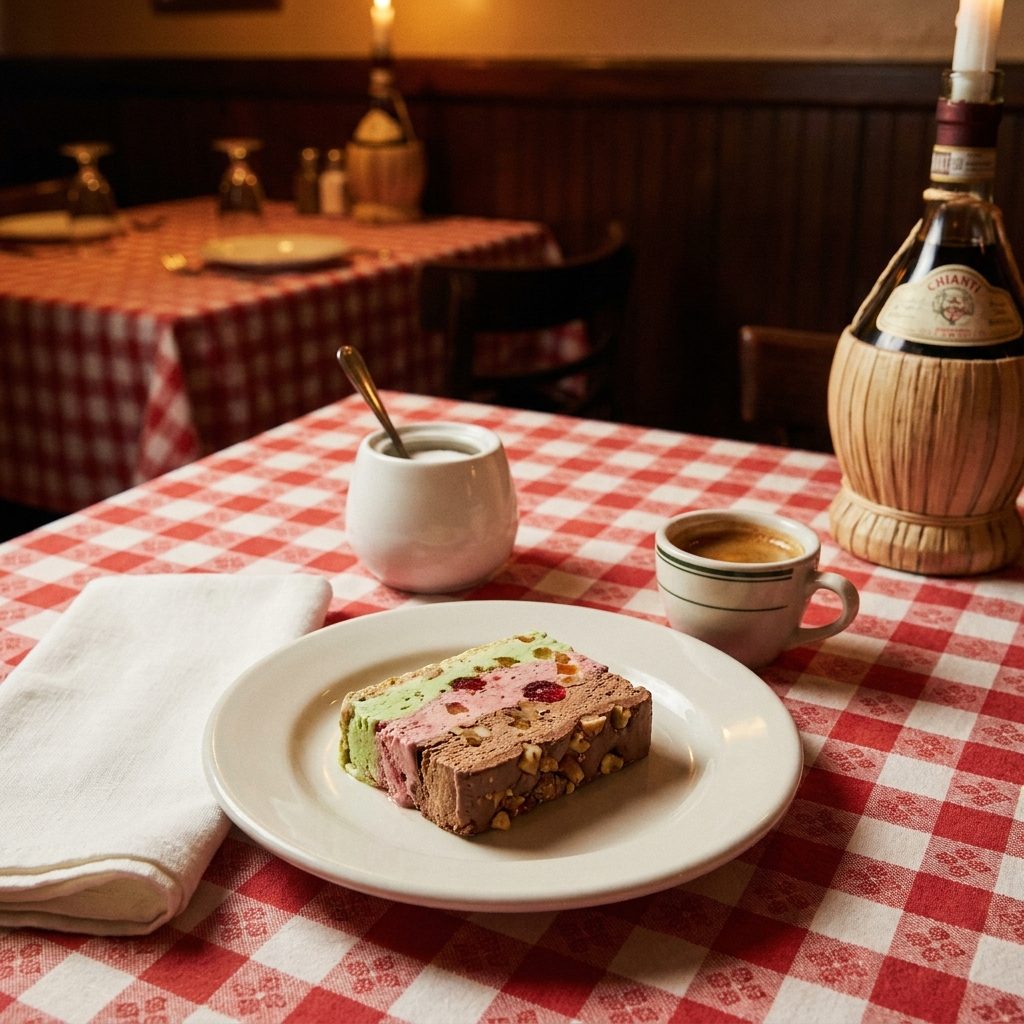
Nobody ordered it. It just appeared. The waiter set the plate down without asking, a thick rectangular slice of spumoni in three stripes, cherry and pistachio and chocolate, each layer distinct, with small pieces of candied fruit pressed into it like evidence of something.
Spumoni was the Italian-American restaurant’s way of saying the meal was finished and you had done well. It came with the espresso, and together they were the signal that it was time to sit back, loosen slightly, and stop talking about anything important. The whole decade of dining out had this kind of punctuation. A dish that arrived on the house felt like being trusted.
17. The Bread Basket That Arrived Before Anyone Had Even Ordered
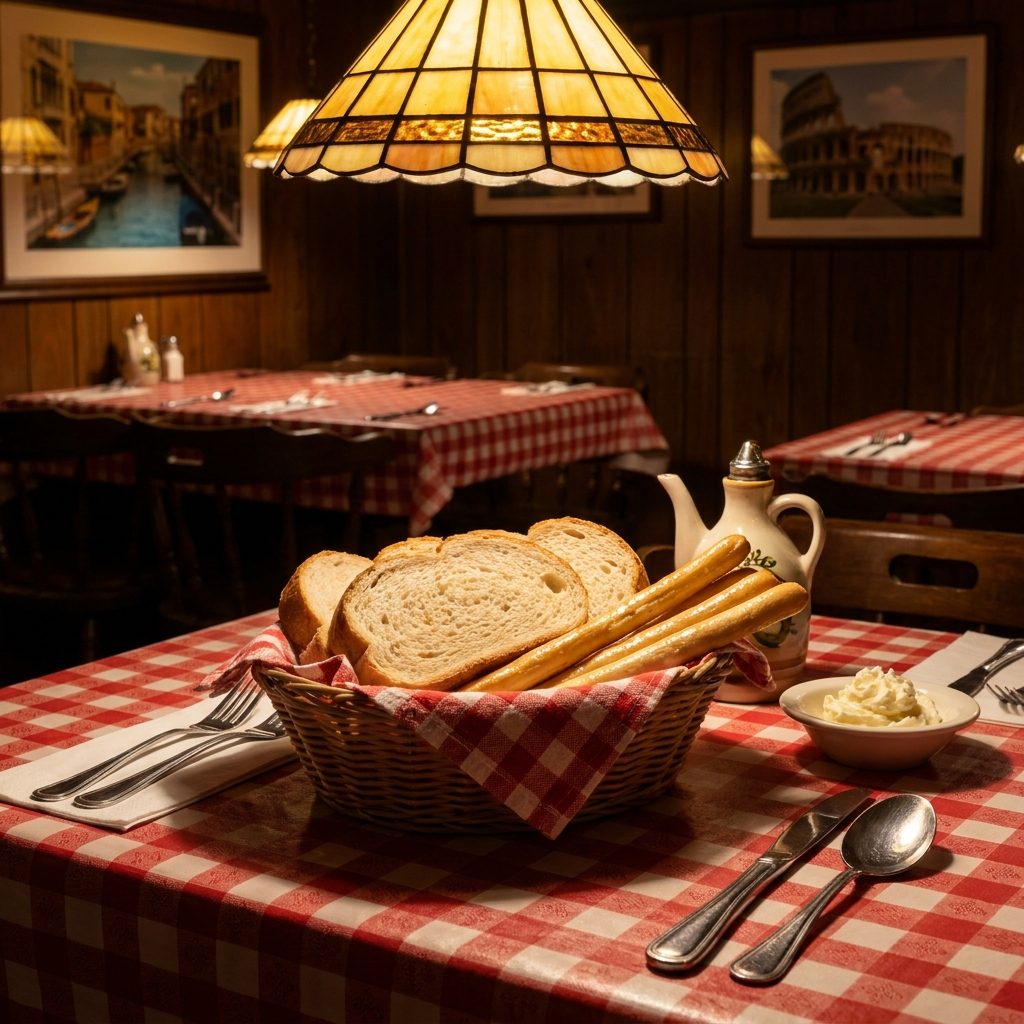
Nobody asked for it. Nobody had to. The bread basket simply appeared, set down by a quiet hand before the menus were even open, as if the kitchen already knew you were hungry from the cold and the drive over. A few thick-cut slices, a couple of breadsticks, a little ceramic dish of butter that was never quite room temperature.
It was the restaurant’s way of saying: relax, you’re here now. In 1965, that gesture felt genuinely civilized. It still does.
16. The Coat Check Ticket Folded Into Your Mother’s Evening Bag
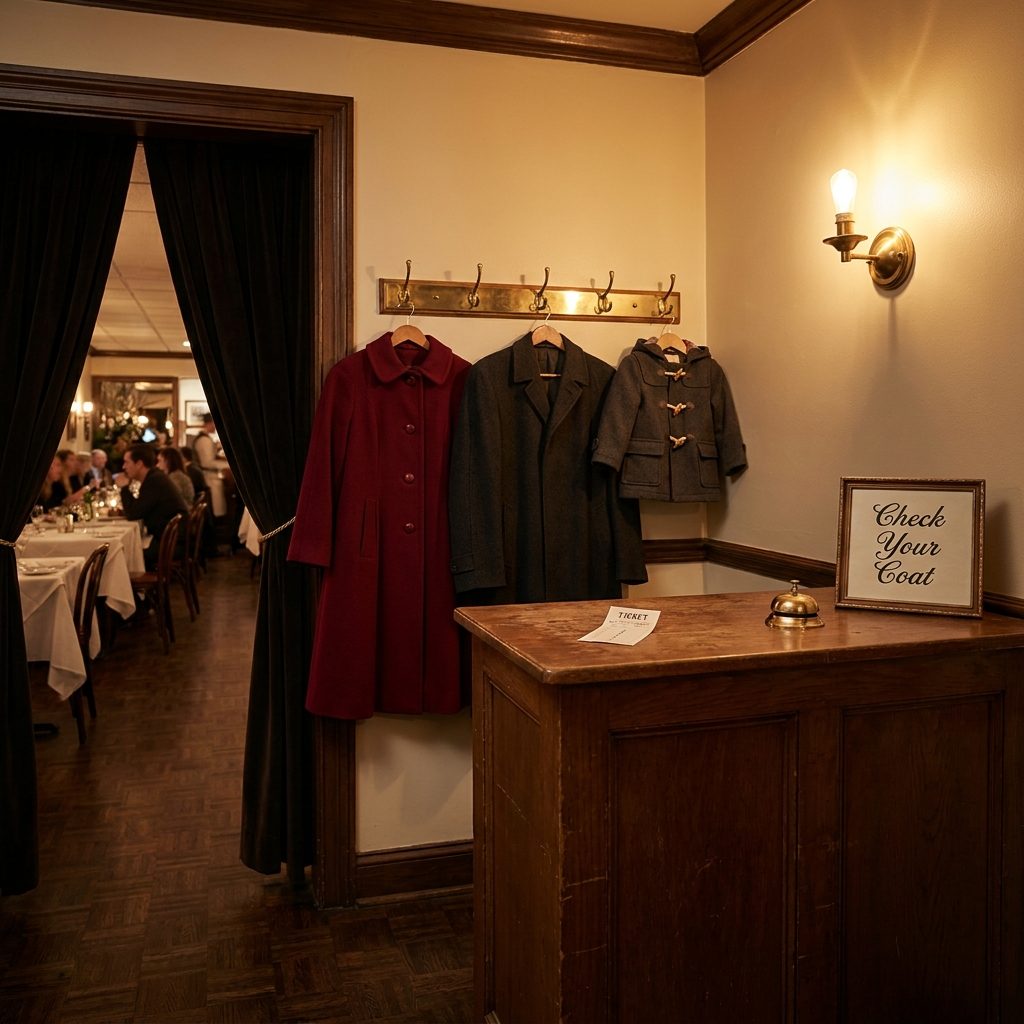
There was a ritual to it. You handed over your coat at the little wooden counter, took the numbered ticket, and that was the formal beginning of the evening. Your mother tucked the stub into her purse as if it were a passport. Losing it would have been a minor catastrophe.
Restaurants that had a coat check were restaurants that took themselves seriously. You sensed that even as a kid, without knowing why. The coat going away meant something. It meant tonight was different from a Tuesday at home.
15. The Table Lamp With the Red Shade That Made Everyone Look Warmer
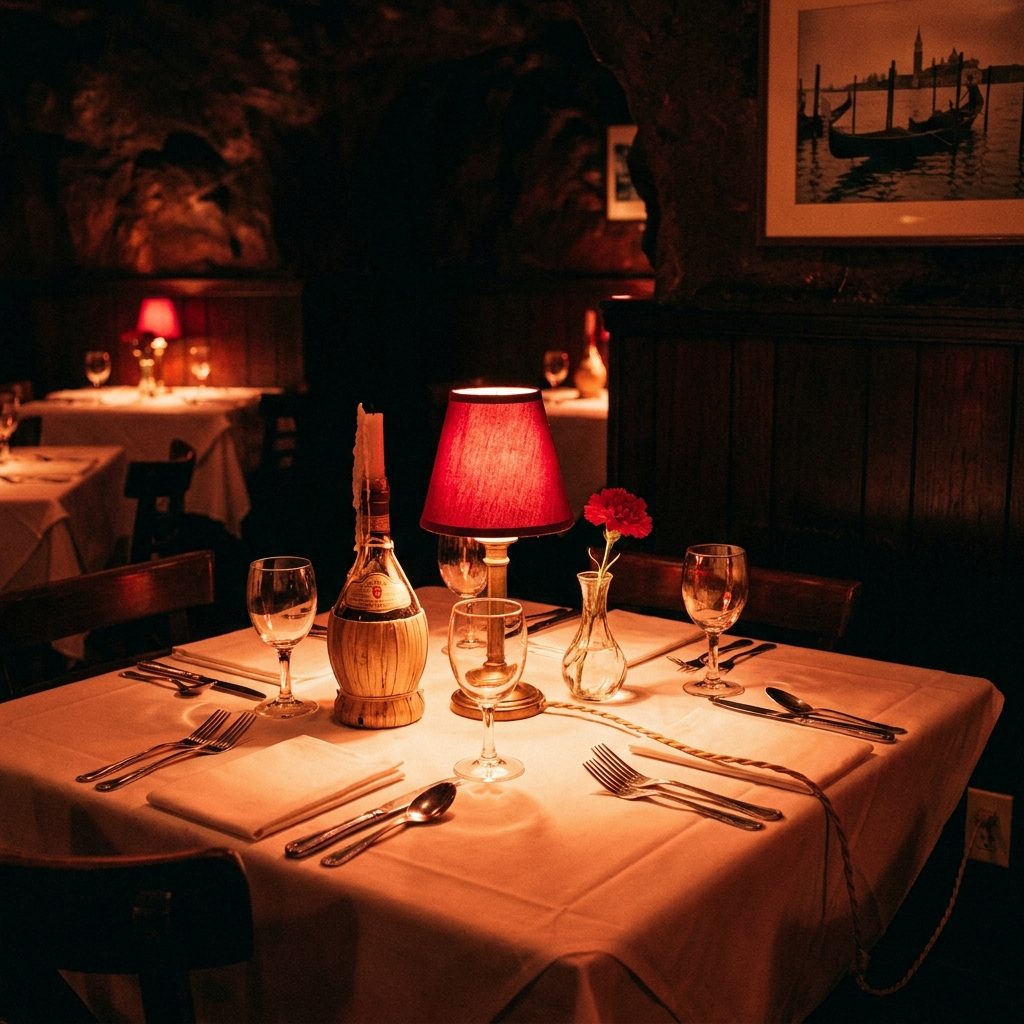
Every table had one, a little lamp with a red or amber shade that threw just enough light to read the menu and not a lumen more. Restaurants understood something then that a lot of places have forgotten: darkness is hospitable. It tells the room to slow down.
The red glow made everyone look like they were having the best night of their lives. Maybe that was the point.
14. The Caesar Salad Prepared Tableside Like It Was a Ceremony
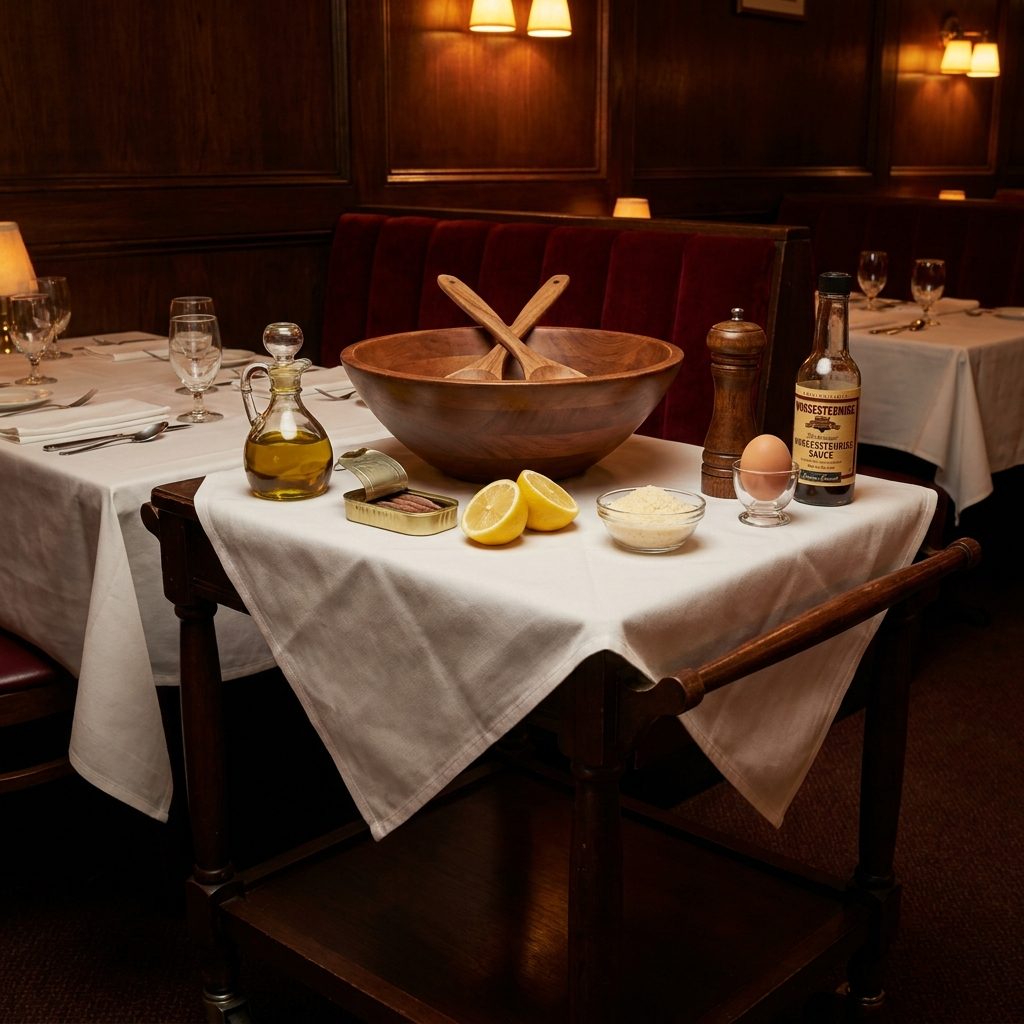
The cart came out on wheels. A wooden bowl, a raw egg cracked tableside, an anchovy tin pried open with quiet confidence. The waiter worked without explanation, because the preparation was its own explanation.
Nobody at the table spoke during the Caesar. You watched. That was the correct response.
It took maybe four minutes. It felt longer, in the best possible way. The salad that arrived had been built specifically for your table, on your timeline, while you sat there. No kitchen had touched it. That mattered enormously in 1963, and it still would.
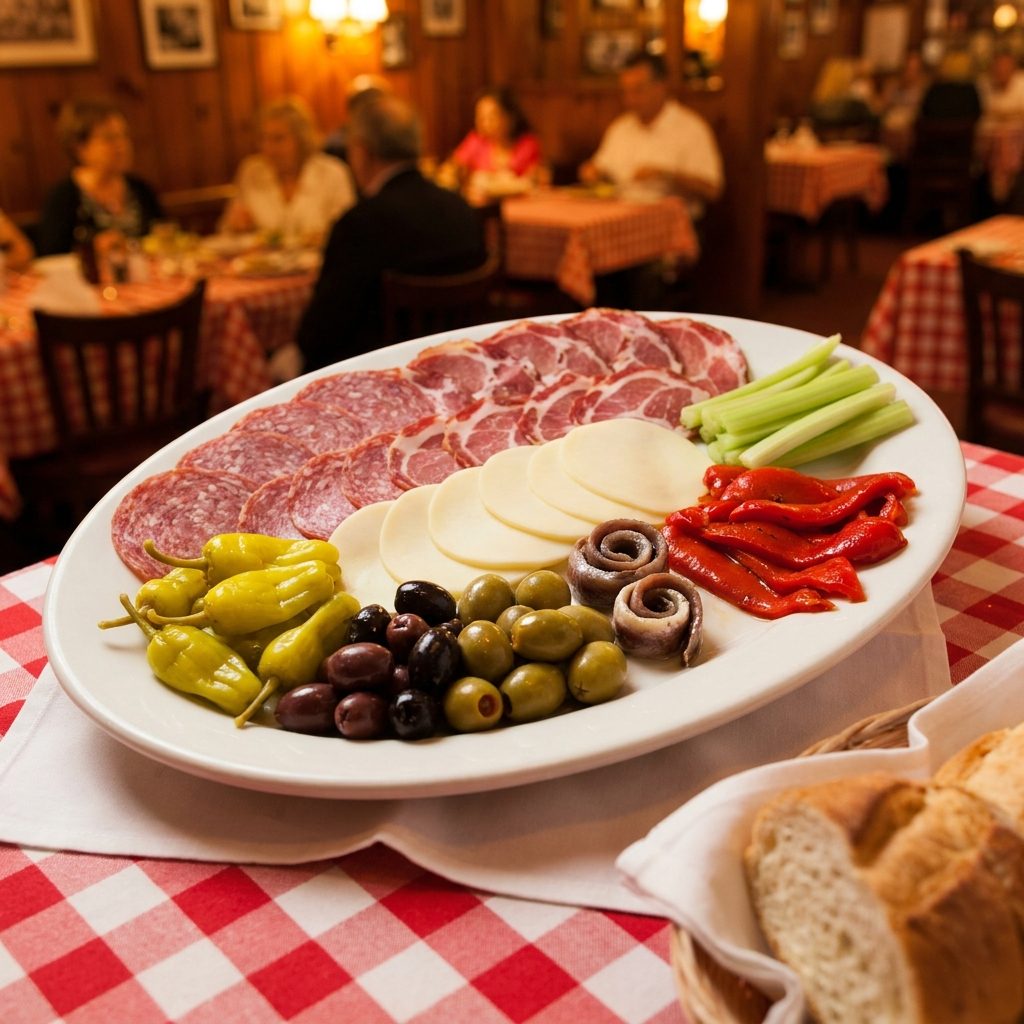
13. The Antipasto Plate That Arrived Like a Small Charcuterie Museum
Would you like to save this?
Cold cuts arranged on an oval plate like they had somewhere to be. Provolone fanned in a half-circle, salami layered in overlapping slices, pepperoncini piled at the corner, olives in a small heap that always seemed to contain more olives than the heap could logically hold.
The antipasto arrived before the pasta and before the salad, which made it technically the third thing to arrive before the actual meal. Nobody complained. You ate the celery stick and waited for the good part.
12. The Strolling Accordion Player Who Appeared Mid-Pasta
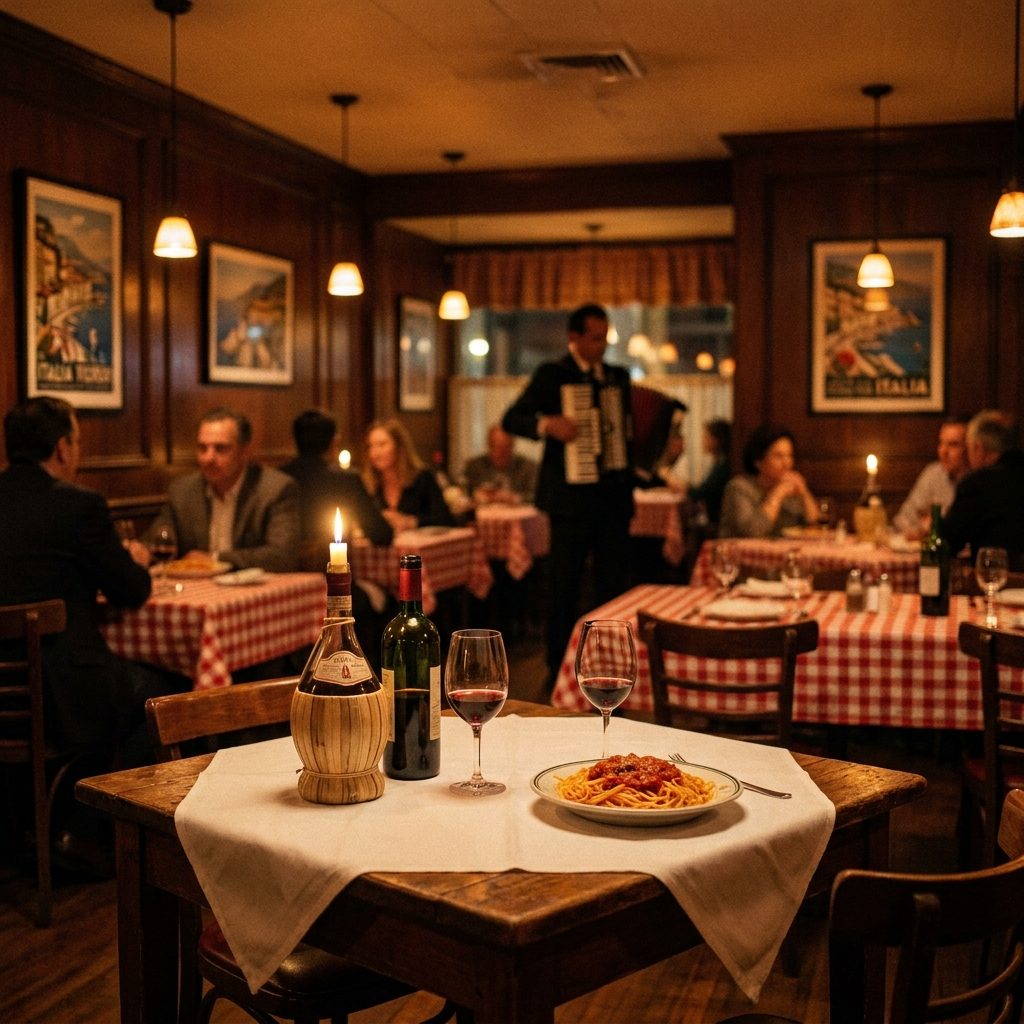
He materialized without introduction, already playing something that sounded vaguely like ‘O Sole Mio,’ moving between the tables with the unhurried confidence of a man who owned the room by inches. Your father smiled. Your mother looked slightly embarrassed in a pleased way. You weren’t sure where to look.
The accordion player was not an interruption. He was proof you were somewhere that had gone to the trouble of making the evening feel like an occasion. That’s a distinction worth preserving.
11. The Relish Tray That Sat on the Table Like a Forgotten Art Form
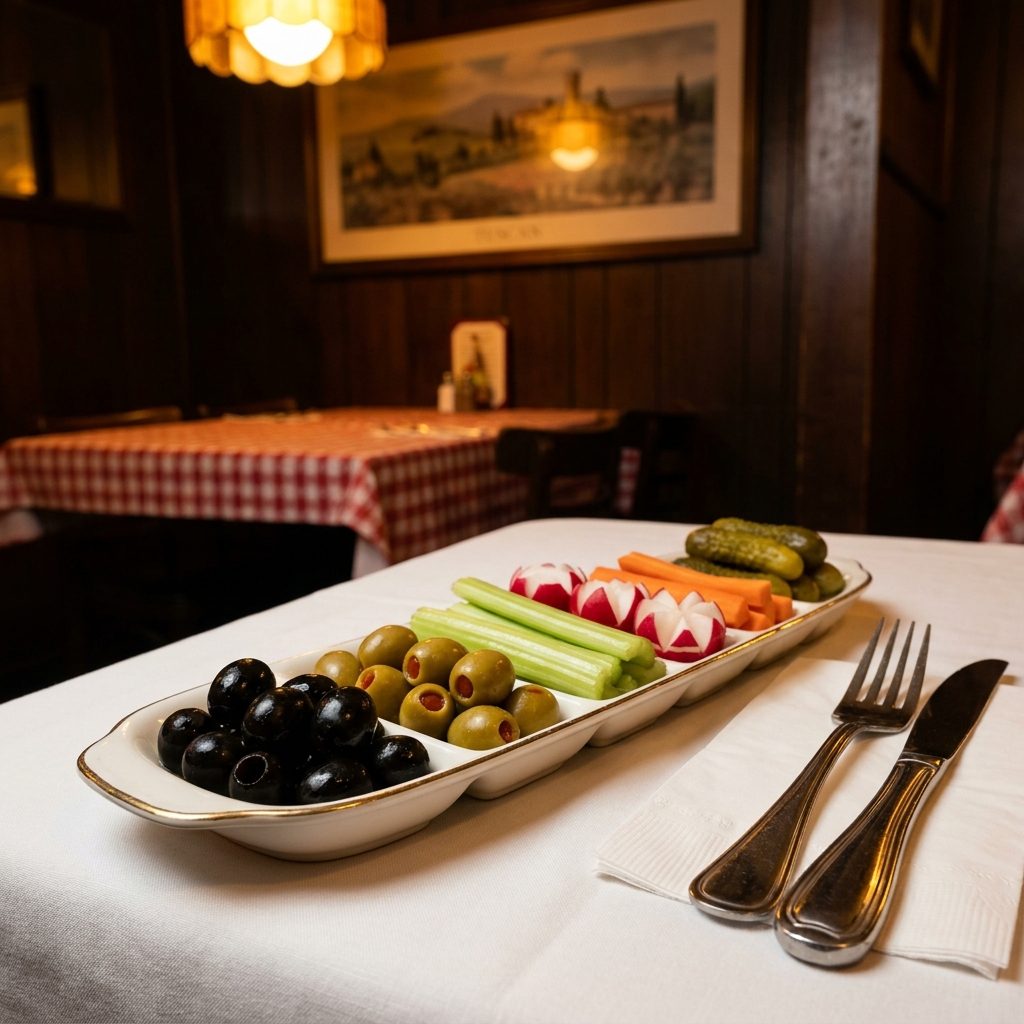
Before the bread basket, sometimes alongside it, sometimes instead of it: the relish tray. A long divided ceramic dish, the kind with the gold rim, arriving with black olives, green olives, celery sticks, carrot sticks, and radishes carved into roses by someone in the kitchen who had the patience for that sort of thing.
Nobody ever finished the relish tray. It wasn’t really for finishing. It was for having something to do with your hands while the adults talked and the kitchen worked. Restaurants that still do this, and a few still do, feel immediately trustworthy.
10. The Captain’s Chair at the Head of the Booth That Meant Dad Was Paying
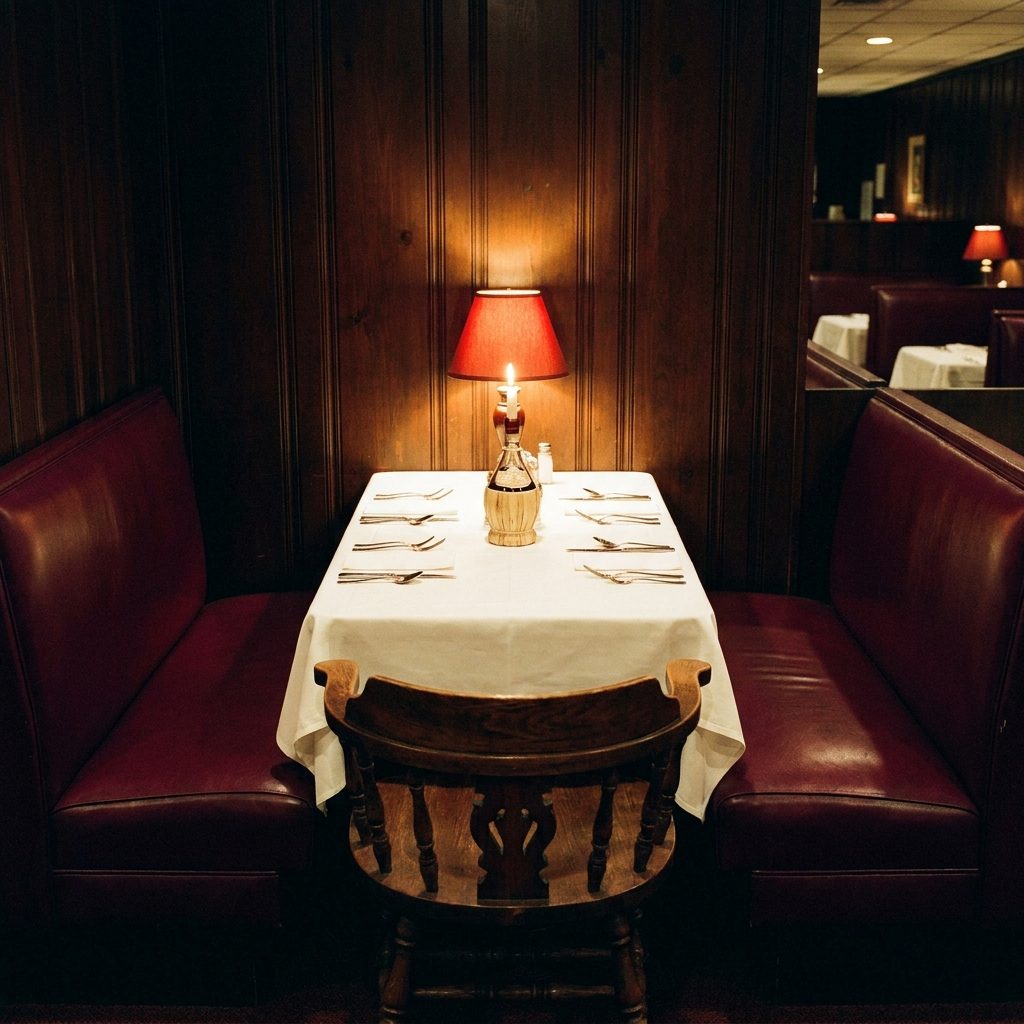
Some booths had it, one real chair at the head of the table instead of bench seating, usually wooden, usually with a carved back, always slightly more substantial than everything around it. The host’s chair. In practice, it was where your father sat, because your father was paying, and somehow that geography made sense to everyone without being discussed.
Restaurants understood hierarchies. They built them into the furniture. You absorbed all of this without knowing it, and decades later you still instinctively know which seat is the right one to take.
9. The Bread Basket That Arrived Before You Even Opened the Menu
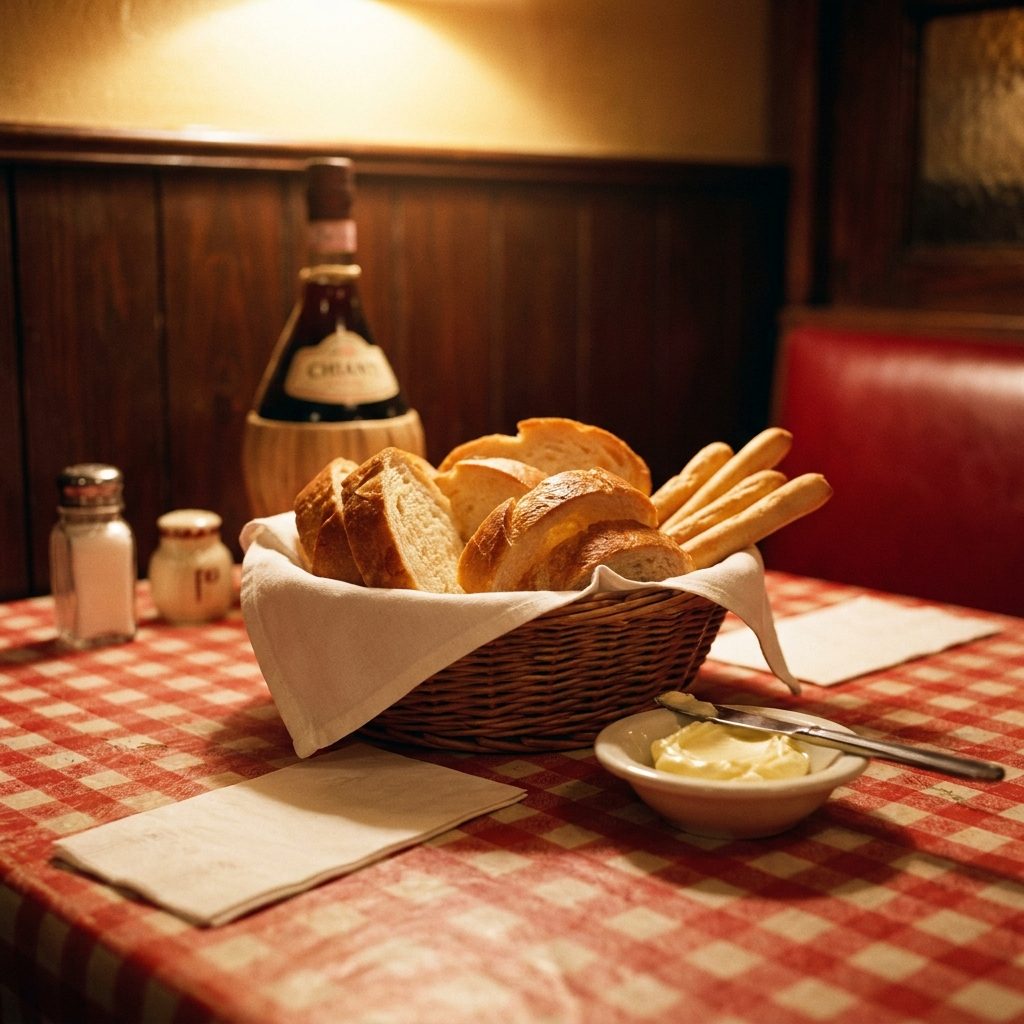
It showed up without asking. No one ordered it, no one requested it, and there was never a charge for it on the bill. The bread basket was just there, planted on the red-checkered tablecloth like a welcome handshake before the waiter had even introduced himself. Crusty Italian bread, a little soft inside, with a pat of butter that had been sitting out long enough to spread without tearing anything.
It set the whole tone. You were in a place that fed you before it asked anything of you. That felt like something.
8. The Pepper Grinder That Was Taller Than a Child’s Forearm
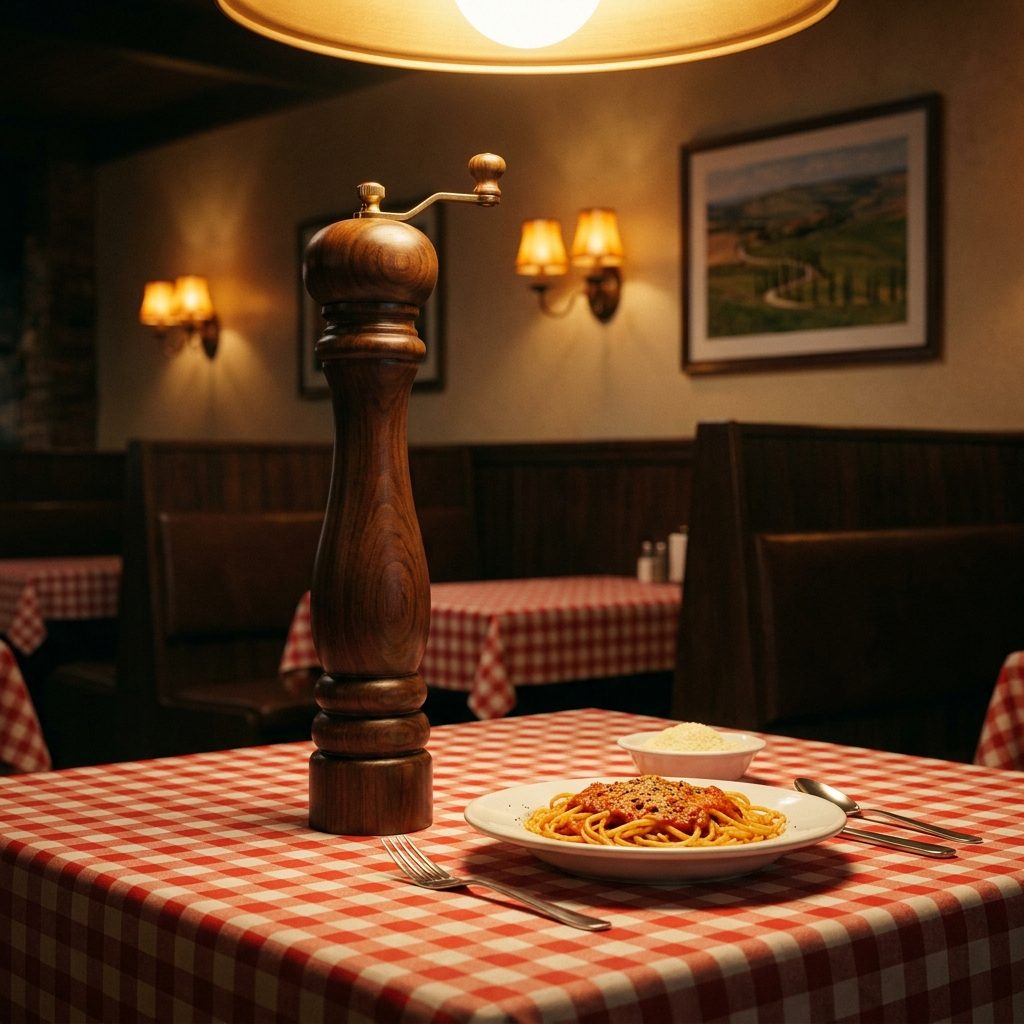
The waiter carried it over with both hands and a straight face, like a man presenting a trophy. The pepper grinder at any good Italian-American restaurant in the 1960s was less a kitchen tool and more a piece of theater, dark walnut, two feet tall, requiring actual effort to operate.
He’d grind it over your plate and ask “when,” and you’d say “when” a beat too late because you were watching the whole performance. That grinder made you feel like you’d ordered something serious.
7. The Coat Rack by the Door That Held the Whole Neighborhood’s Winter
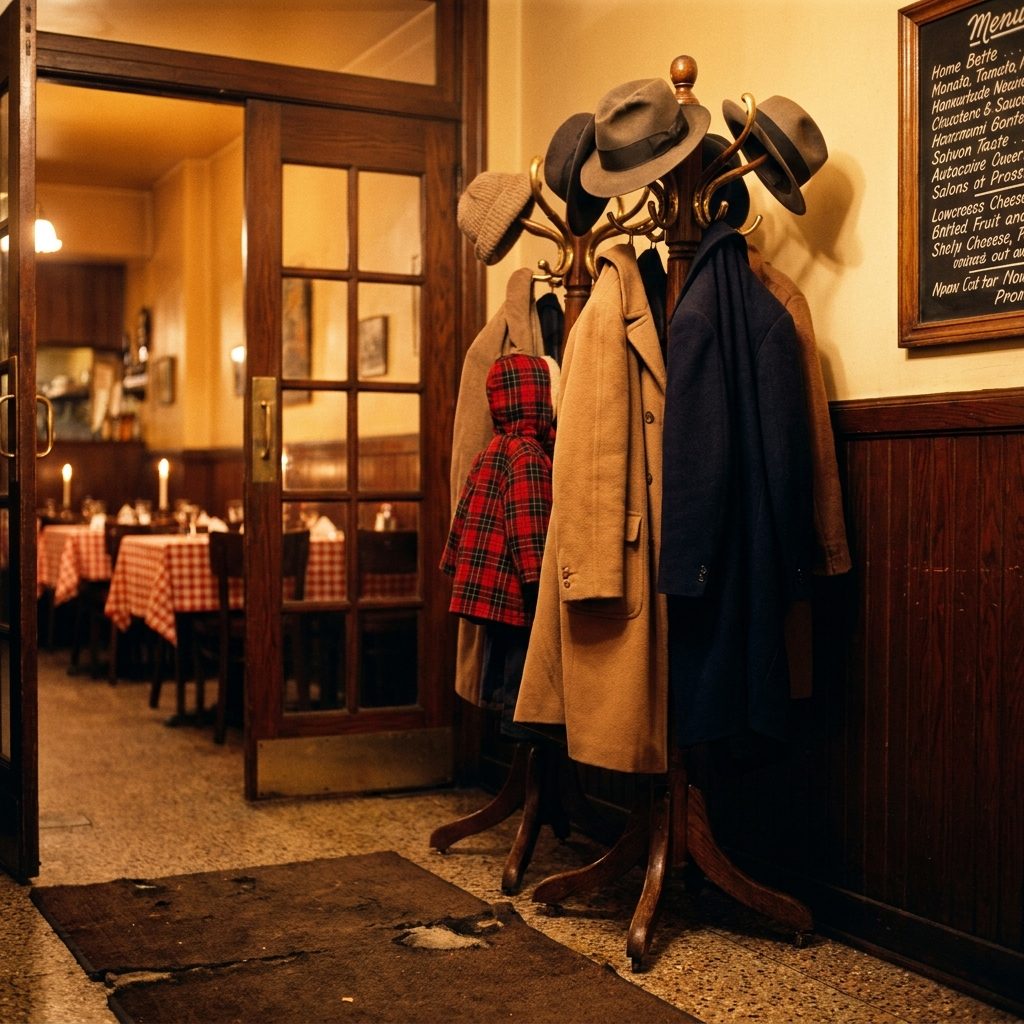
Nobody checked their coat at these places. You just hung it yourself on the rack by the door and hoped for the best. By 7 p.m. on a Saturday, that rack held half the neighborhood, wool overcoats and women’s dress coats and at least one man’s hat that nobody ever claimed.
Walking past it on the way out, slightly full and slightly warm, you found your coat by memory and felt the cold of the outside world before you even opened the door. That coat rack was the line between the meal and everything else.
6. The Signed Celebrity Photo on the Wall Near the Bar
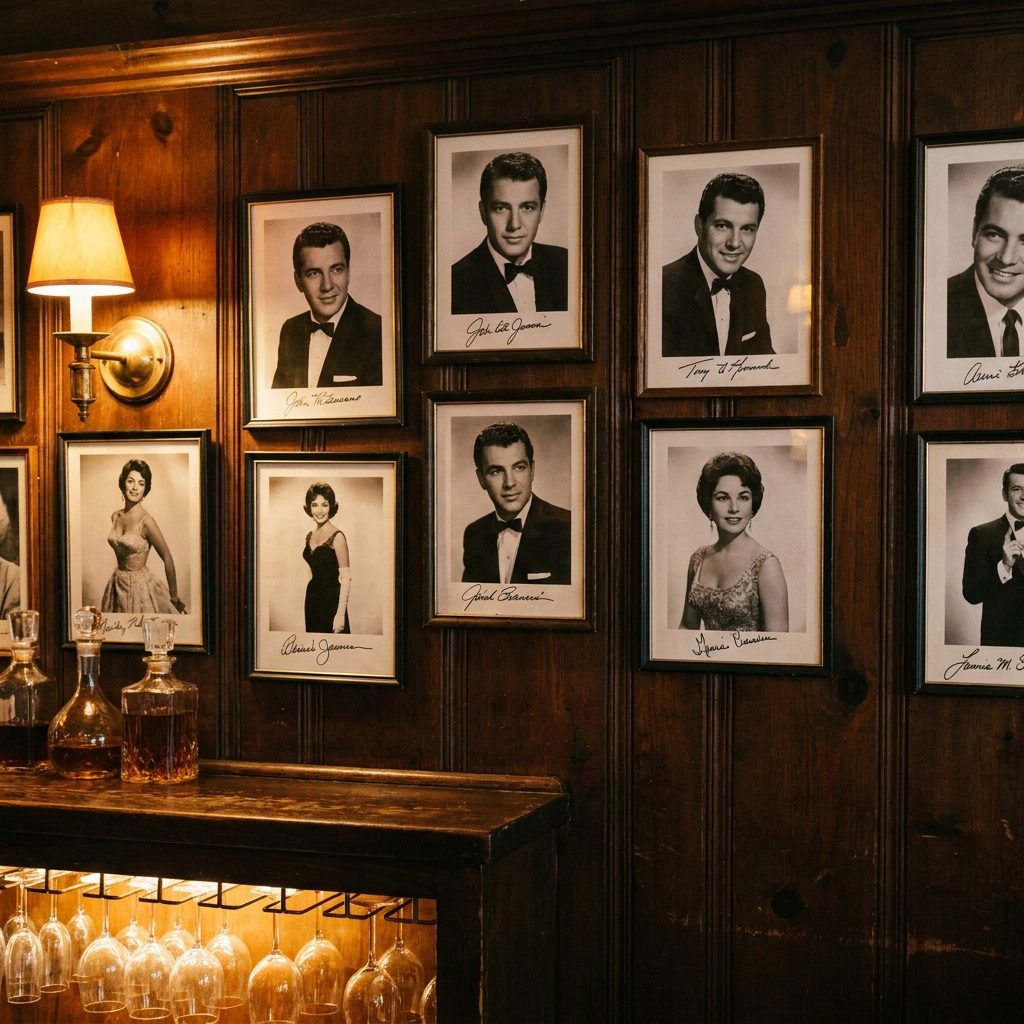
Every Italian restaurant worth anything had them. A cluster of framed eight-by-tens near the bar or the host stand, each signed across the bottom in fountain pen. Crooners, character actors, local politicians, a boxer who’d had a good decade. Nobody questioned whether the owner actually knew these people.
The photos said: important people eat here. And somehow that was enough. You sat down feeling like you’d been let into something.
5. The Antipasto Plate That Was Really Its Own Small Meal
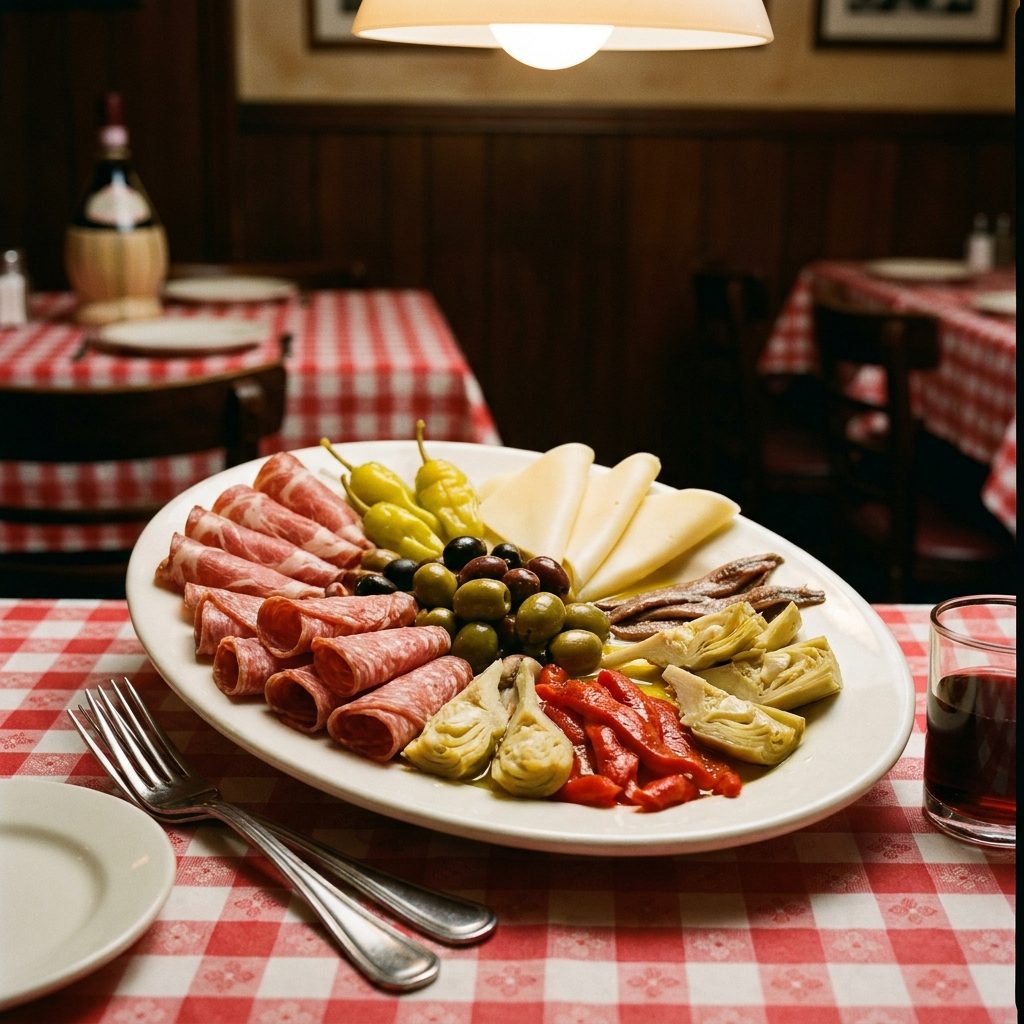
It arrived on an oval platter and covered enough table to cause a brief logistical problem. Rolled salami, folded provolone, a hill of olives, pepperoncini, anchovies if you were adventurous, marinated artichoke hearts glistening with oil. The antipasto plate in a 1960s Italian-American restaurant was not a starter in any restrained sense of the word.
You ate half of it and then had to remind yourself there was an entree coming. The discipline required was real.
4. The Ice Water Poured From a Sweating Metal Pitcher Without Being Asked
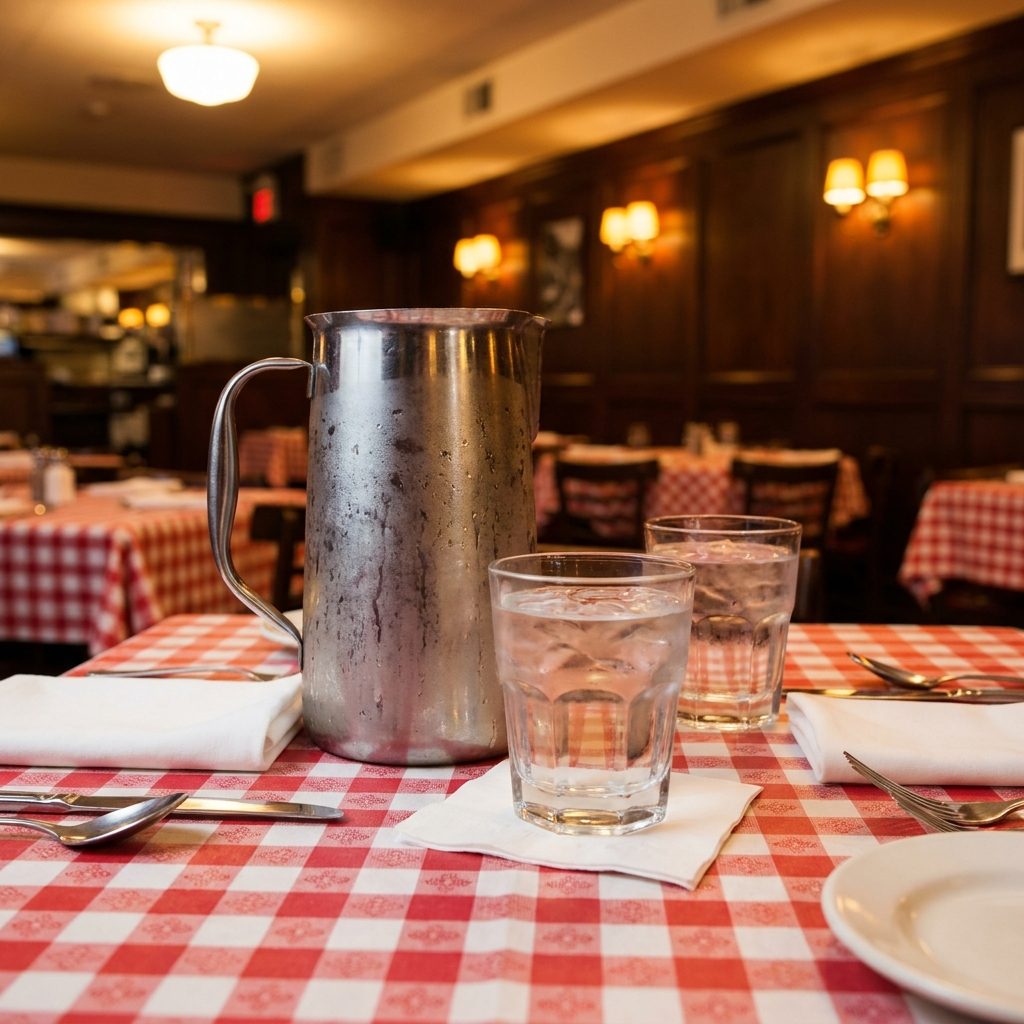
Before the menu, before the bread, before anything, a metal pitcher of ice water appeared at the table and glasses were filled without ceremony or comment. That pitcher was always sweating. The water was always colder than you expected.
Nobody does this anymore the same way. It was just assumed you were thirsty and that the restaurant’s job was to fix that immediately. There was something quietly dignified about the whole transaction.
3. The Way the Whole Room Smelled Like Garlic Before You’d Taken Your Coat Off
Would you like to save this?
You smelled it on the sidewalk. You definitely smelled it when the door opened. By the time you had your coat off and were being led to a table, the garlic and olive oil had already done their work on you, you were hungry in a way that had nothing to do with what time it was.
That smell was the whole promise of the evening compressed into one lungful. Every Italian-American restaurant from the 1960s had a version of it, and none of them were exactly the same, but all of them meant the same thing: sit down, you’re in the right place.
The garlic got there before you did. It always did.
2. The Mural of Naples on the Back Wall That No One Ever Questioned
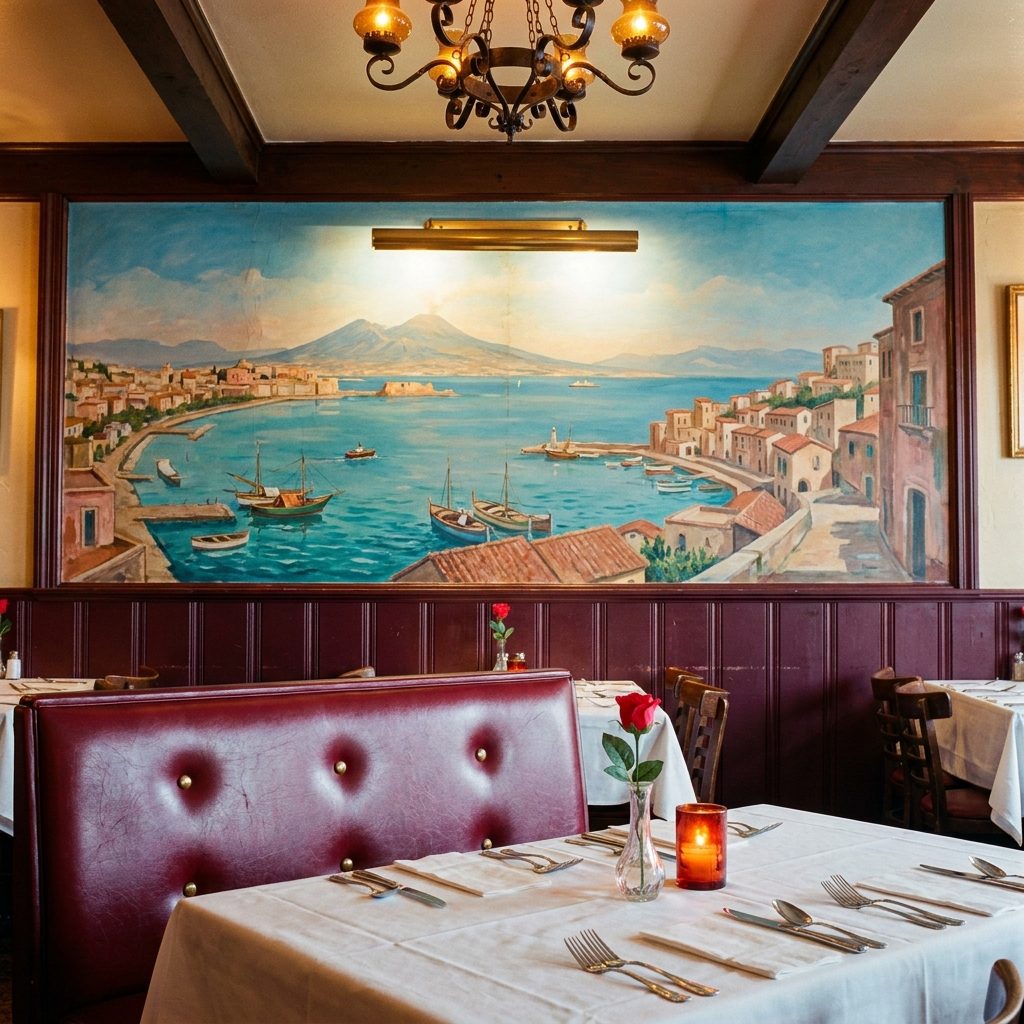
Somewhere between the kitchen door and the back booth, there it was. A hand-painted Bay of Naples stretching six feet across the plaster — Vesuvius hovering peacefully over fishing boats, terracotta rooftops tumbling toward water so blue it could only exist in acrylic paint. Nobody in the dining room had been to Naples. Honestly? The owner might not have been either. Didn’t matter one bit.
That mural turned a strip-mall storefront into somewhere else entirely. You sat beneath it eating veal piccata and for a solid stretch of dinner you were not in New Jersey. The colors ran a little faded, the perspective tilted slightly wrong, the boats possibly too large for the harbor they were floating in. Perfect anyway. Every neighborhood Italian place had one — painted by a cousin or a friend of a cousin — and every single one made the room feel like it held a passport tucked behind the register. Some of them were genuinely beautiful if you stopped chewing long enough to look. Most people didn’t. They just felt the room was warmer than it should have been, and left a bigger tip.
Every table had one. The Chianti bottle with its wicker basket bottom and its years of accumulated wax, built up drip by drip like some slow geological process happening right next to the breadbasket. Nobody ordered the Chianti for the wine. The bottle was the point.
1. The Chianti Bottle With the Wax Drippings That Doubled as a Candle Holder
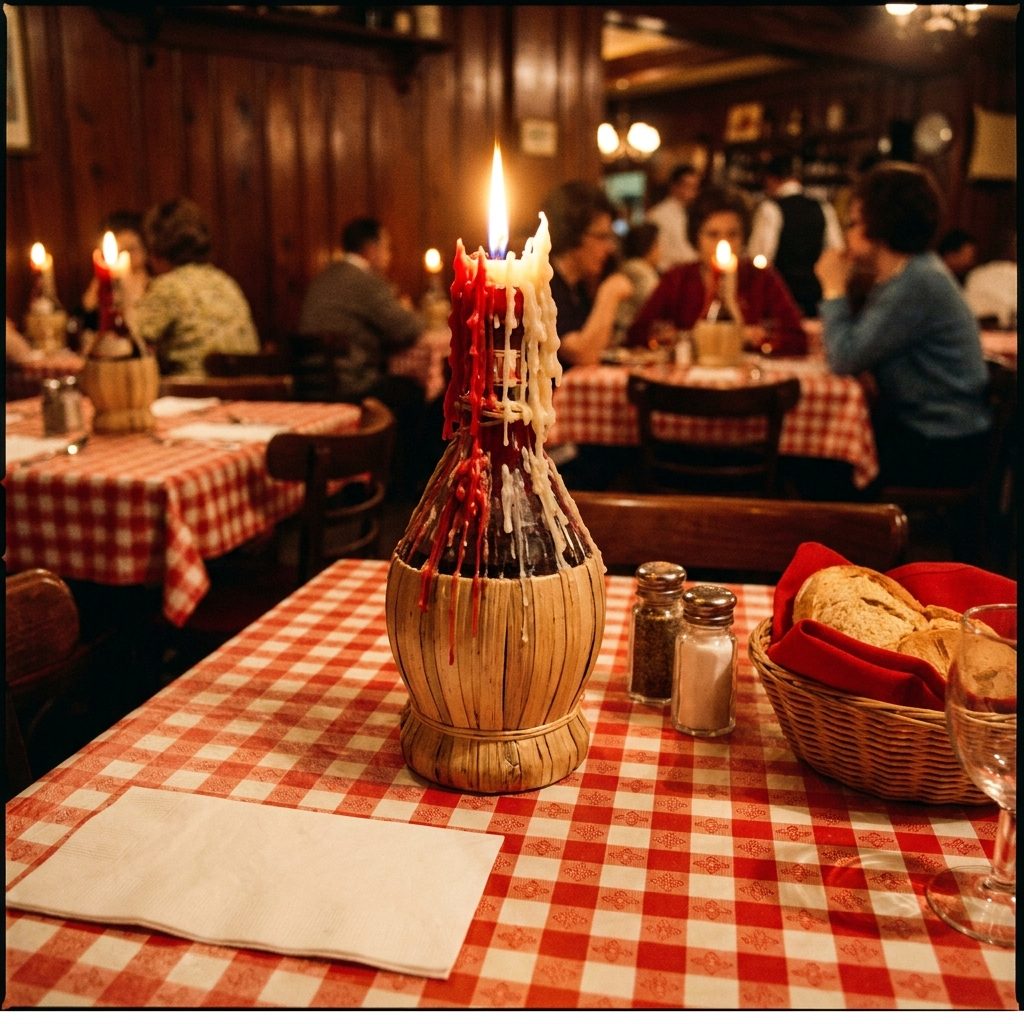
Every table had one. The Chianti bottle with its wicker basket bottom and its years of accumulated wax, built up drip by drip like some slow geological process happening right next to the breadbasket. Nobody ordered the Chianti for the wine. The bottle was the point.
It was the single most effective piece of restaurant atmosphere money could not buy, because it came free with every empty bottle and a willing owner who never threw anything away. The wax stalactites meant the place had been here a while. That was the whole message.