Would you like to save this?
Friday arrived differently when you were a kid in the 1980s. Not because of anything on TV, and not just because school was over, but because someone pulled into that parking lot with the red roof glowing against a darkening sky, and suddenly dinner felt like an occasion.
Pizza Hut was not fast food. It was not home. It occupied its own category entirely, somewhere between family restaurant, reward, and tiny suburban event. What follows are the specific things that made a 1980s Pizza Hut feel like a big night out.
15. The Pitcher of Pepsi That Arrived Before Anyone Asked for It
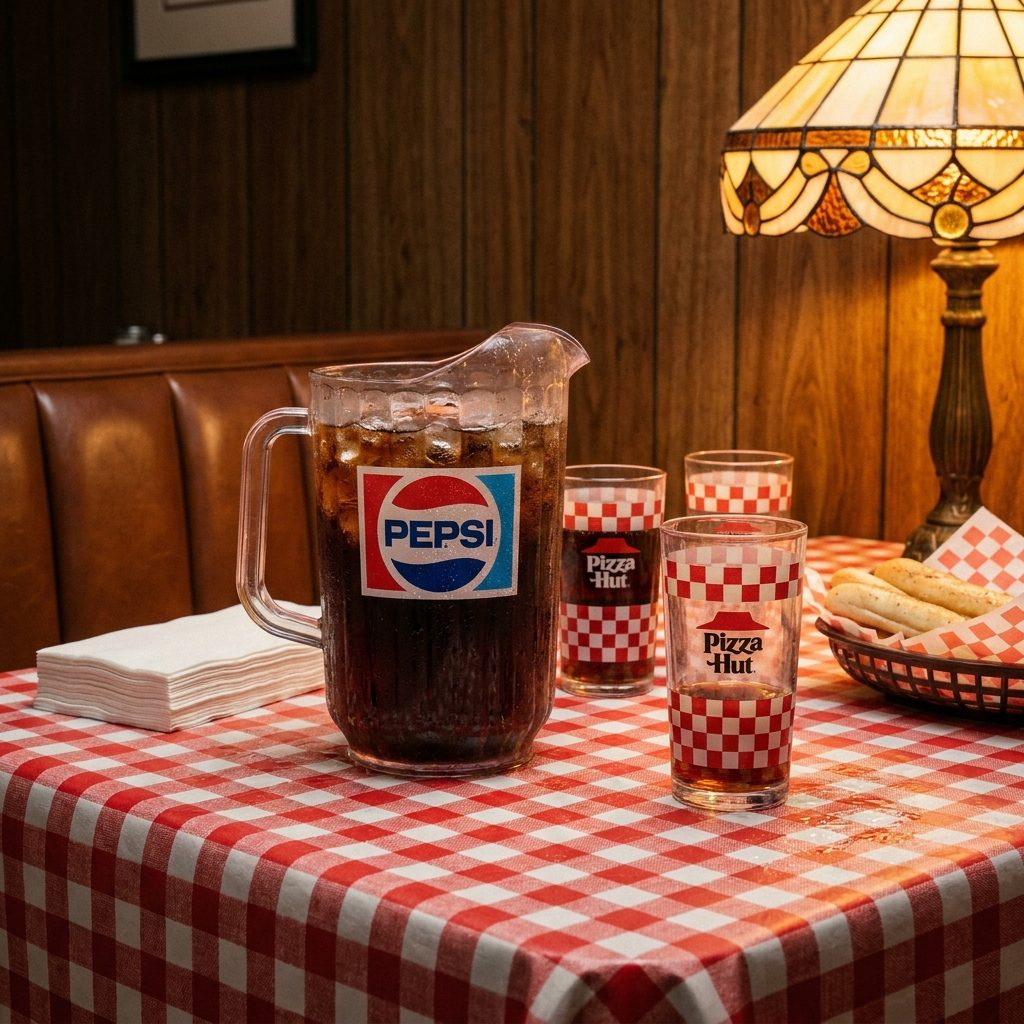
It came before the menus were even put down. The server set the pitcher in the middle of the table without a word, and the ice shifted, and that was the sound that meant the night had officially started. Pepsi or 7-Up, depending on what they had on the fountain that week.
A pitcher of soda at a restaurant in 1983 felt like extraordinary abundance to a kid. Unlimited. Refillable. Nobody was counting.
14. The Supreme Pizza That Came Out in a Pan So Hot the Cheese Was Still Bubbling
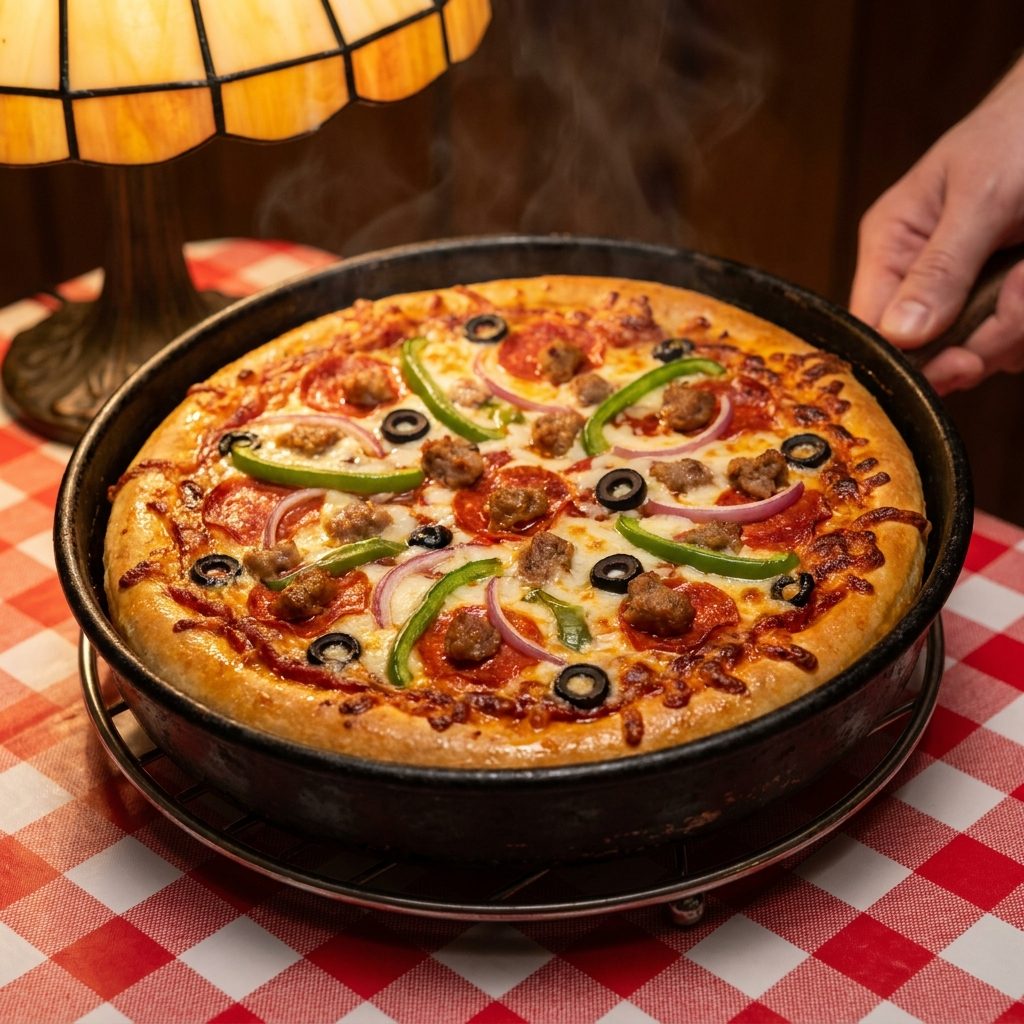
The server carried it with a folded towel under the pan and set it down with a warning nobody needed because you could hear it the second it came through the kitchen door. That cheese ring around the edge of the pan, the one that had gone from melted to golden to almost burnt, was the best bite on the table and everyone at the booth knew it.
Pan Pizza launched nationally in 1980. Within a few years it was outselling Thin ‘N Crispy. The logic was obvious: a buttery, high-sided crust that held its heat for fifteen minutes and left an oil ring on every paper napkin in the basket. That ring was a promise kept.
13. The Coat Hooks on the End of Every Booth That Nobody Could Reach
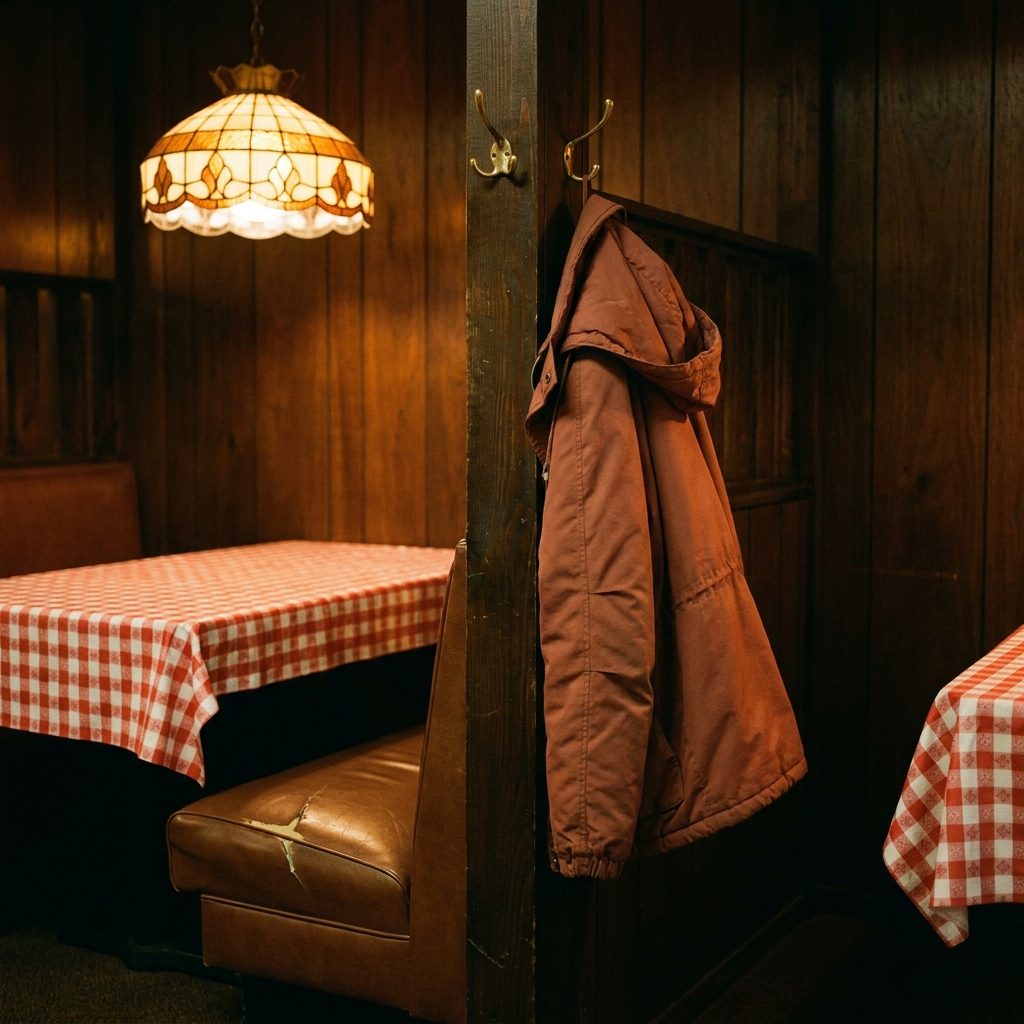
Every Pizza Hut booth had them, mounted at just the height where a grown adult could hang a coat without thinking about it and a nine-year-old had to stand on the seat to reach. Nobody stood on the seat. The coat went on the bench instead, got sat on, and came home with a red-checkered vinyl imprint on the back.
12. The Plastic Serving Stand the Pizza Sat On So It Didn’t Block the Whole Table
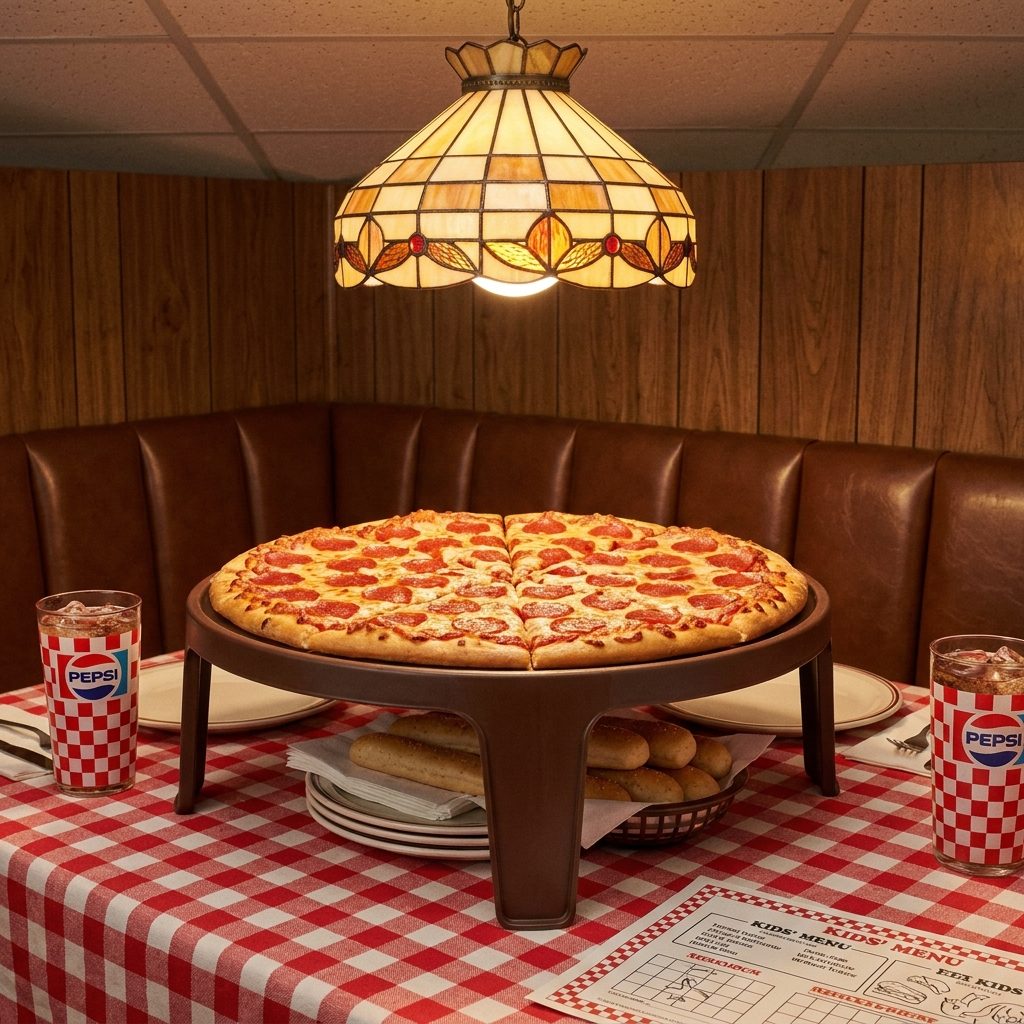
It was a practical object. A raised plastic ring, sometimes red, sometimes the color of a decision nobody made on purpose, that lifted the pizza pan off the tablecloth so four people could actually fit plates around it. Nobody thought about it consciously. It was just there, and the pizza was elevated, and that felt vaguely ceremonial.
11. The Green Salad Dressing Bottles That Lived at the Edge of Every Table
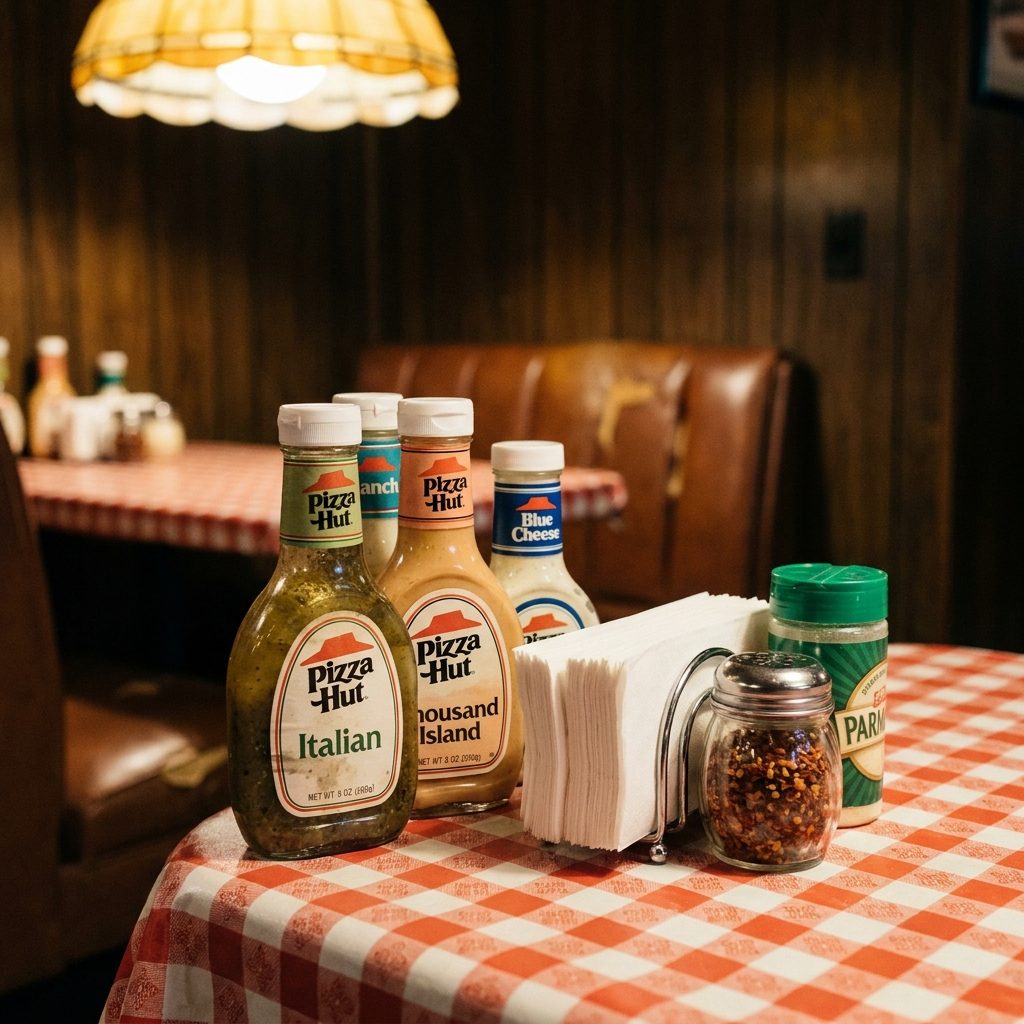
Even if you were not getting salad, those dressing bottles were at your table. Italian, Ranch, Thousand Island, maybe Blue Cheese on a good day, all slightly sticky at the cap. The Parmesan shaker with the green lid lived next to them, and the red pepper flakes shaker next to that, and if you were the kid at the table you shook both onto a breadstick before anyone noticed.
10. The Red Roof Sign Out Front Glowing Against a Dark Parking Lot Sky
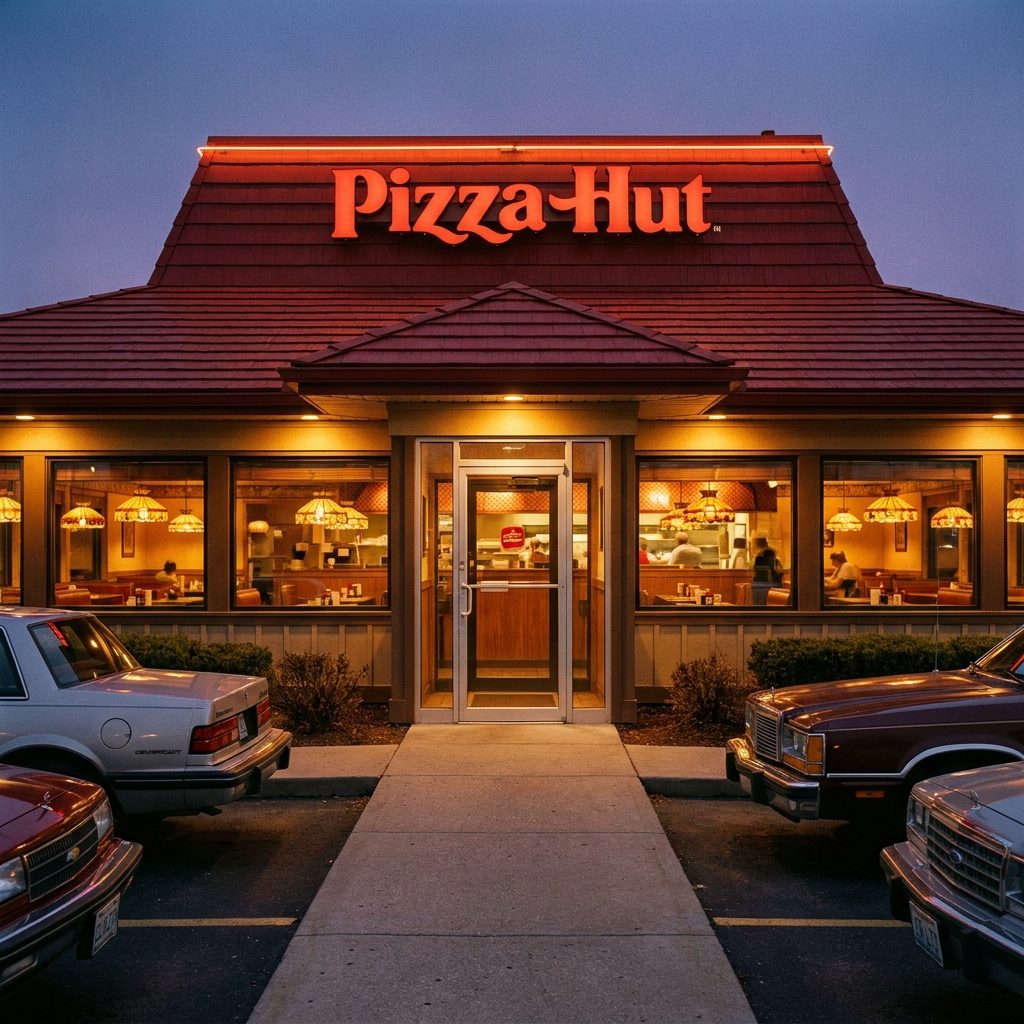
You spotted it from the back seat before your parents turned into the lot. The red roof caught the last of the evening light in a way that nothing else on the strip mall did, and then the sign came into view, and that was it. The negotiation about where to go for dinner was officially over and you had won.
That roofline was one of the most recognizable silhouettes in American commercial architecture for about thirty years. When they started replacing the buildings with generic red-roofed boxes in the 1990s, something specific went with them. You can’t explain it to anyone who wasn’t there, but the shape of that roof meant something.
9. The Breadsticks That Came in a Basket With the Dipping Sauce Nobody Ordered But Everyone Ate
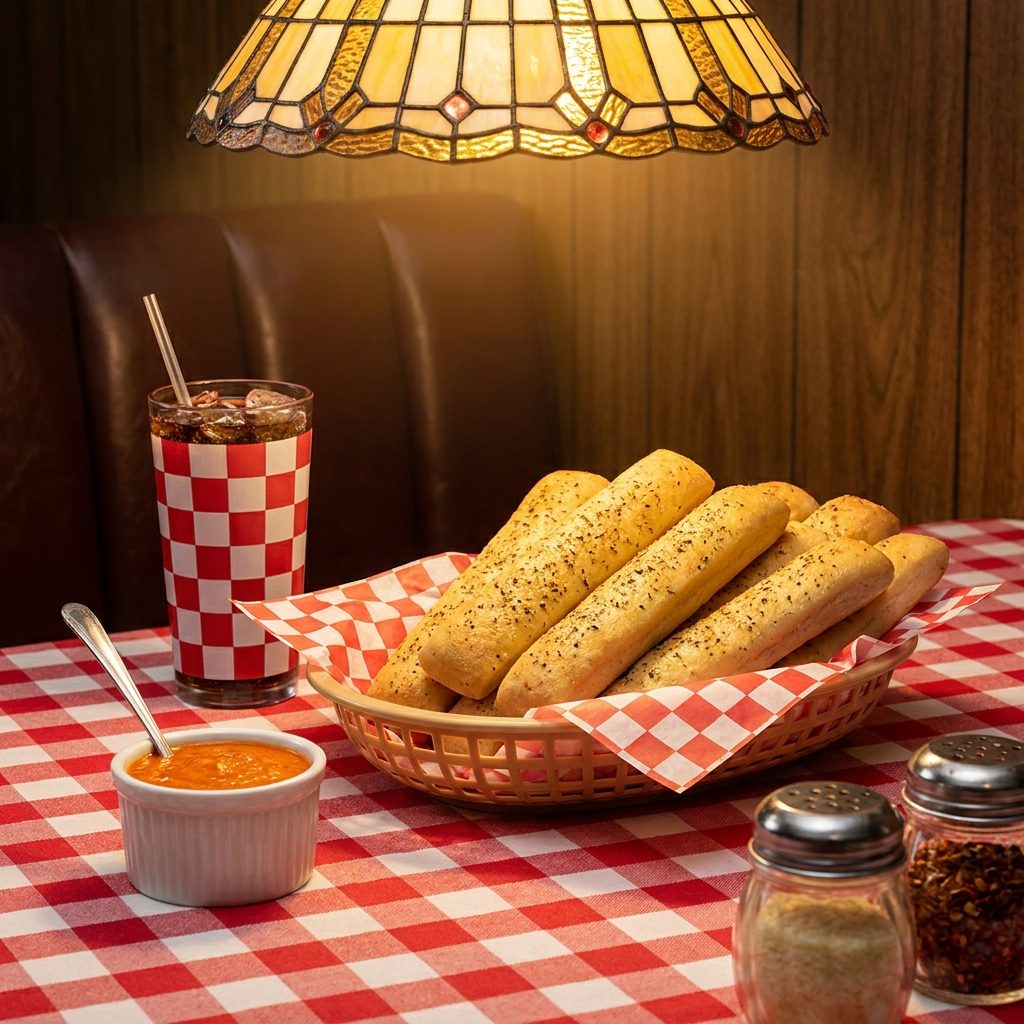
Soft, herbed, slightly glistening, and gone before the pizza arrived. The breadsticks at Pizza Hut in the 1980s were not a side dish. They were the opening act, and the dipping sauce came with them whether you mentioned it or not, and that sauce was the color of a slow simmer and tasted like the whole restaurant smelled.
8. The Salad Bar With the Sneeze Guard and the Ladle That Was Always Sticky
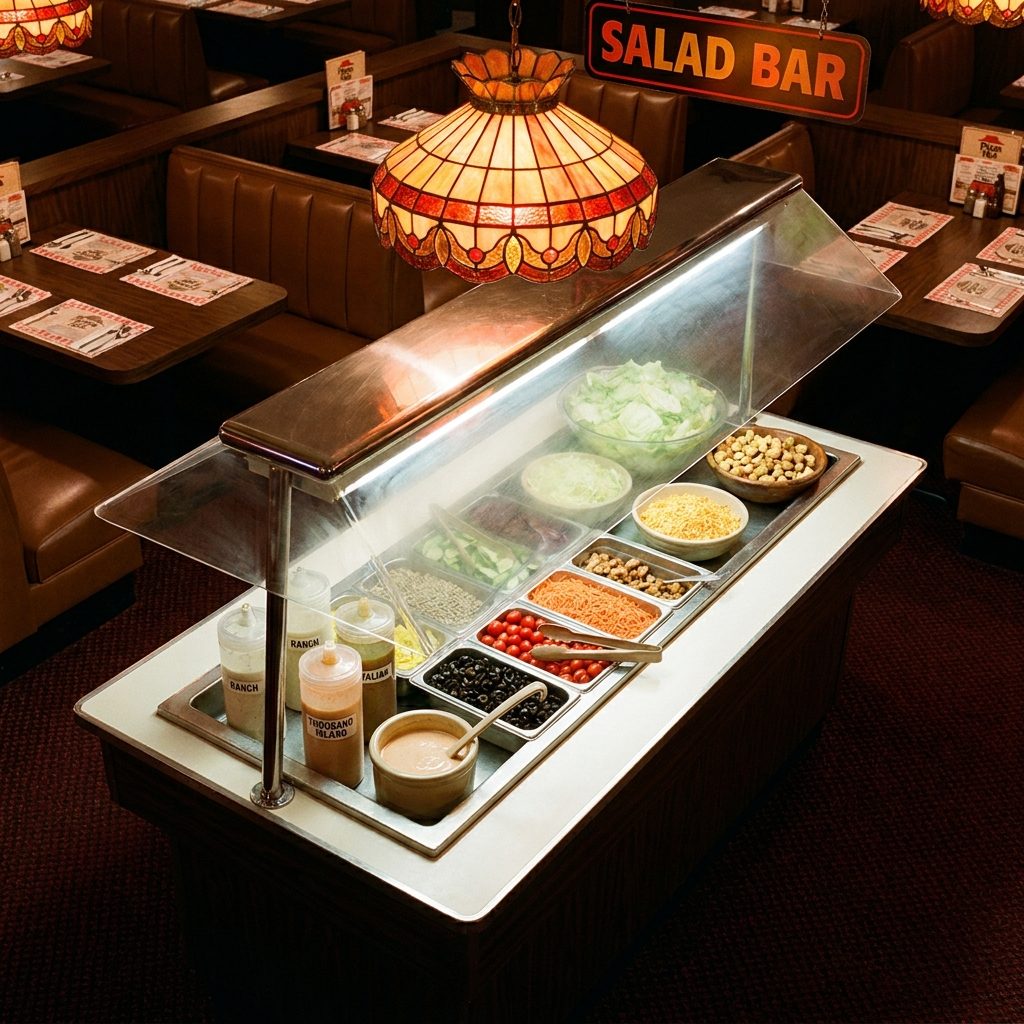
Every Pizza Hut salad bar in 1985 had the same iceberg lettuce, the same plastic ladle sitting in a puddle of its own drips, and the same sneeze guard that a generation of kids breathed directly onto. The croutons were always slightly soft. The Ranch was always running low. And none of it mattered, because getting to go up and build your own plate felt like the most independent thing a nine-year-old could do on a Friday night.
The salad bar was the warm-up act. You weren’t there for the salad. But you filled that small brown plastic bowl to the rim anyway, and you carried it back to the booth like you’d accomplished something.
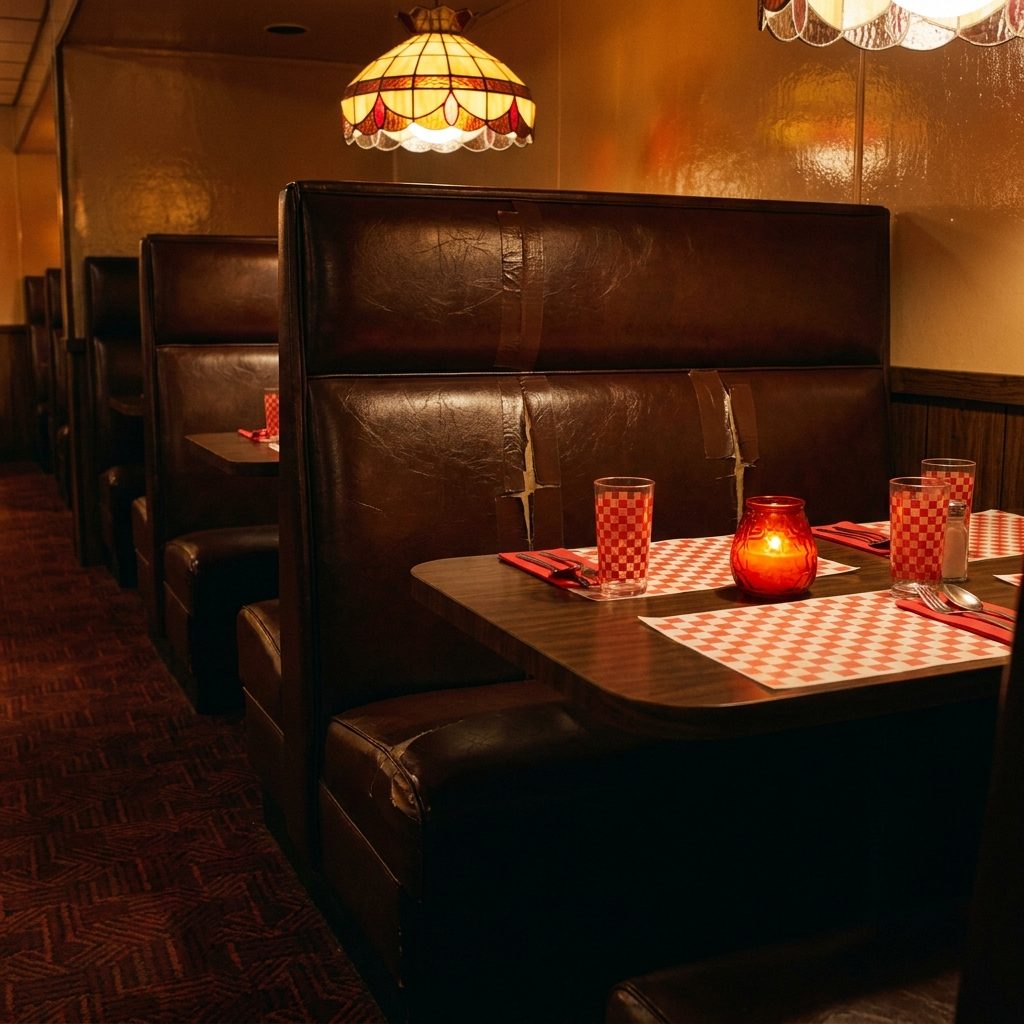
7. The Brown Vinyl Booth That Stuck to the Back of Your Legs in Summer
Would you like to save this?
The booths at Pizza Hut were not soft. They were slick brown vinyl with all the give of a gymnasium bleacher, and in August they pulled at the back of your bare legs every time you slid toward the window. By the time the pizza arrived your thighs had a story to tell.
But something about sliding into that booth still signaled that the night was officially starting. The high seatback made it feel private. The dim lamp overhead made it feel like somewhere. For a family that ate dinner at the kitchen table 360 nights a year, that booth was an event.
6. The Stained-Glass Tiffany Lamp Hanging Over Every Single Table
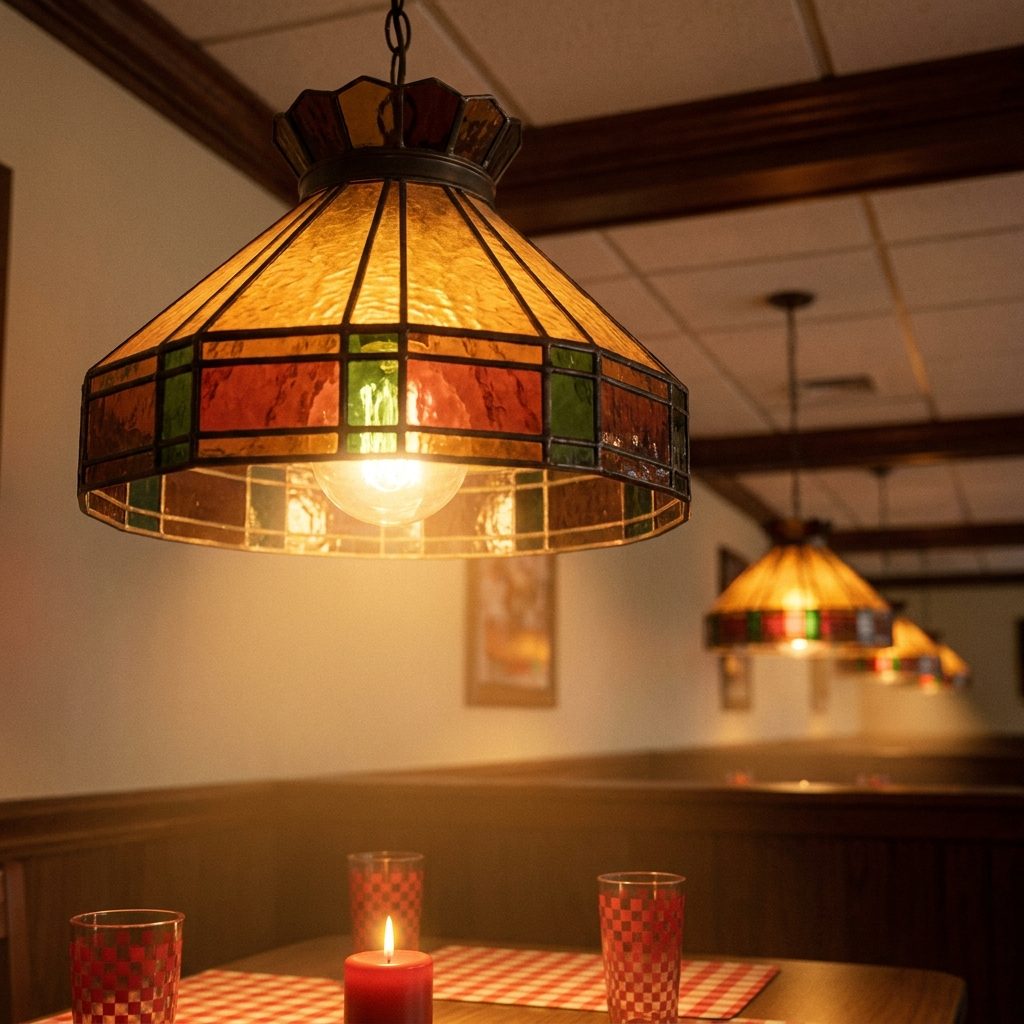
Nobody called it a Tiffany lamp. Nobody knew what it was called. You just knew that the hanging lamp over the booth was made of colored glass panels in red and amber and brown, and that it turned the whole table into a warm little cave of light that made the pizza look better than it had any right to look.
Pizza Hut installed versions of these lamps across hundreds of locations starting in the 1970s and kept them through the 1980s. They were practical. They were also accidentally beautiful. They gave every booth the feeling of a private dining room, which for a suburban family in 1983, was exactly the point.
5. The Tabletop Pac-Man or Ms. Pac-Man Console Near the Soda Fountain
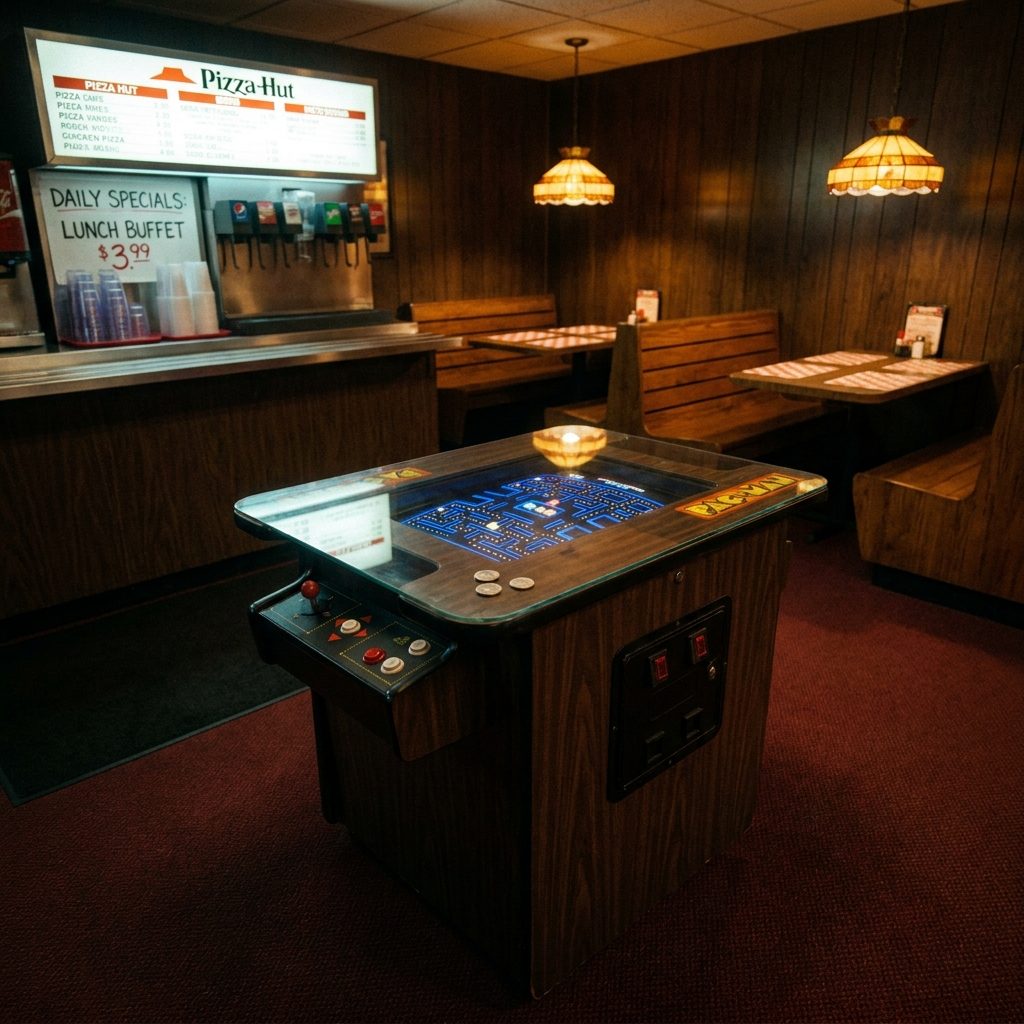
There was always a machine near the soda fountain. Sometimes Pac-Man. Sometimes Ms. Pac-Man. Sometimes Donkey Kong if the franchise owner had connections. It sat there glowing blue-white against the warm amber of the dining room like a small portal to somewhere else entirely, and every kid who walked past it looked at their dad with the same expression: please.
If you got a quarter, you played standing up, one hand on the joystick, the other steadying yourself on the edge of the cabinet. If you got two quarters, you were having the best Friday of your life. The pizza was secondary. It was always secondary.
4. The Red-and-White Checkered Drinking Glasses Slippery With Condensation
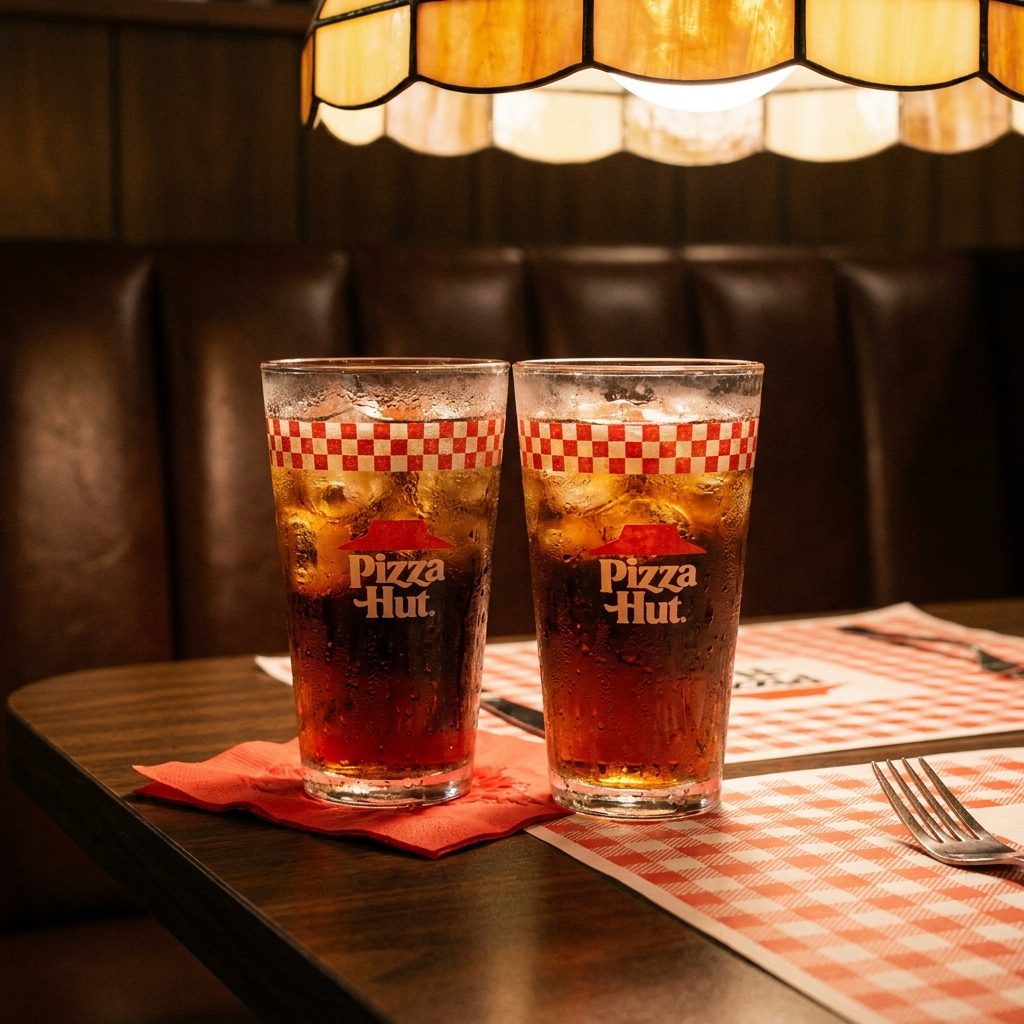
The glasses were always a little too cold and a little too slippery. The red-and-white checkered pattern wrapped all the way around, the same pattern as the placemat and the tablecloth and every napkin dispenser in the building. Pizza Hut committed to the checkerboard and did not blink.
Those glasses felt like something you were supposed to be careful with, and you weren’t always careful. The condensation pooled under the glass and soaked through the paper placemat within about four minutes. You slid the glass across the wet ring without thinking about it, and your dad said don’t do that, and you did it again anyway.
3. The Personal Pan Pizza That Arrived in Its Own Little Black Pan
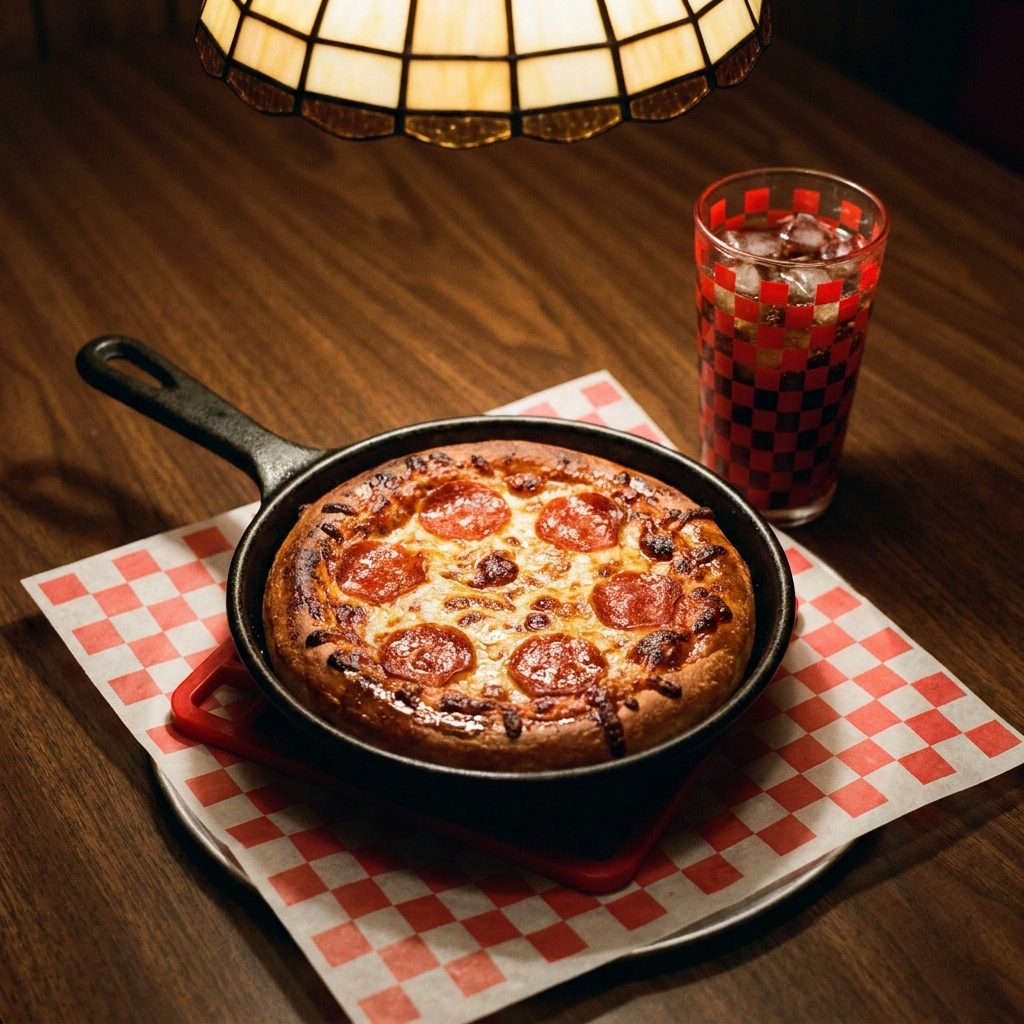
The personal pan pizza came in its own little black pan and it arrived to the table still sizzling, the cheese tight against the crust wall in a way that a grown adult’s pizza never quite managed. Six inches across. Perfectly yours. You did not share it and nobody asked you to.
For BOOK IT! kids in the mid-1980s, this was the prize at the end of the reading log. Five stars, one personal pan, one certificate, and a Friday night at Pizza Hut that felt genuinely earned. The pizza tasted better because of the paperwork.
2. The Pizza Hut Menu With the Red Leatherette Cover and the Laminated Pages Inside
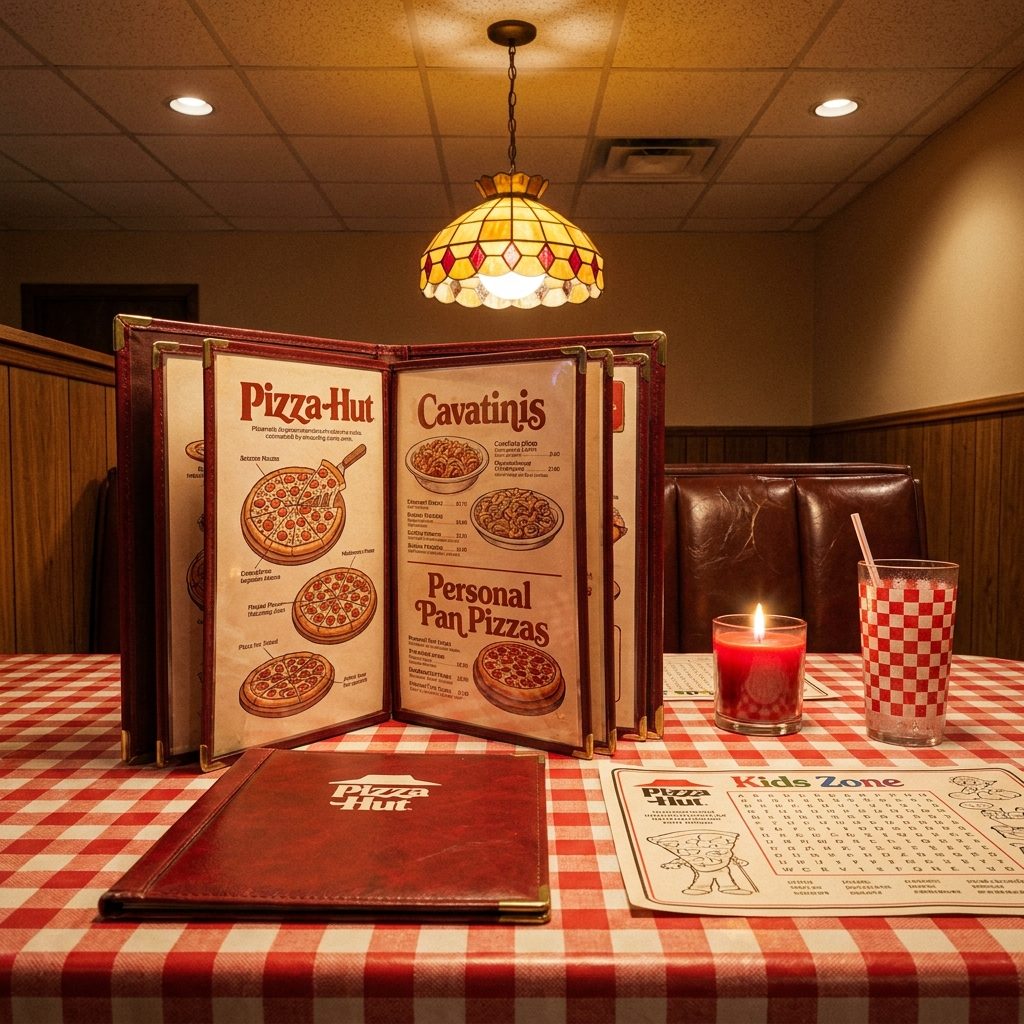
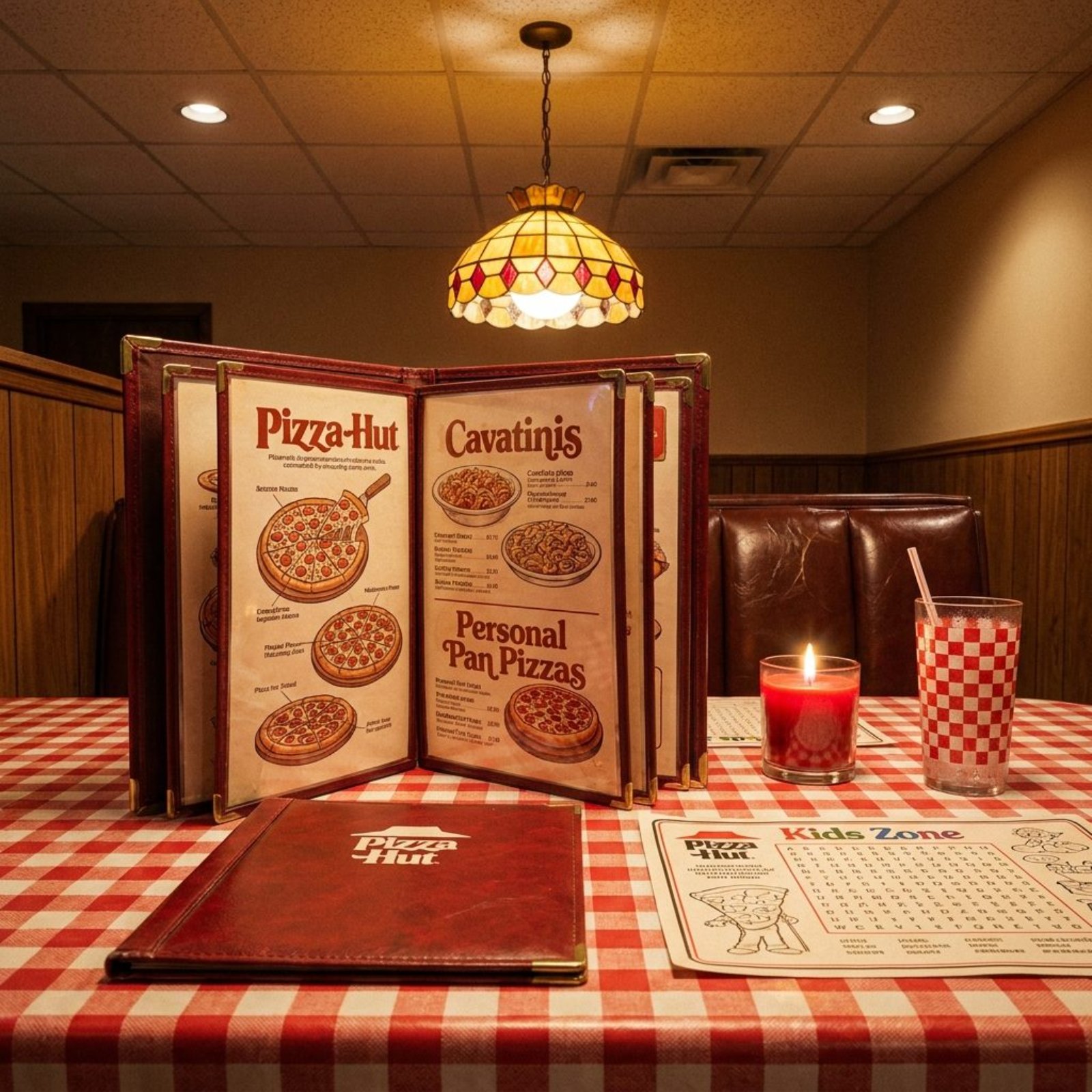
The covers were the color of a stop sign and soft at the corners from ten thousand sets of hands before yours. You opened it and the laminated pages caught the light from the Tiffany lamp above, and suddenly the decision between Thin ‘N Crispy and Pan felt like it carried real weight.
The menu had everything: Supreme, Super Supreme, Pepperoni Lovers, pasta, dessert pizza. But nobody at the table was reading it. Everyone already knew what they were getting. The ritual of opening it was the point.
1. The Red Wax Candle in the Short Glass Holder That Burned at Every Table All Night
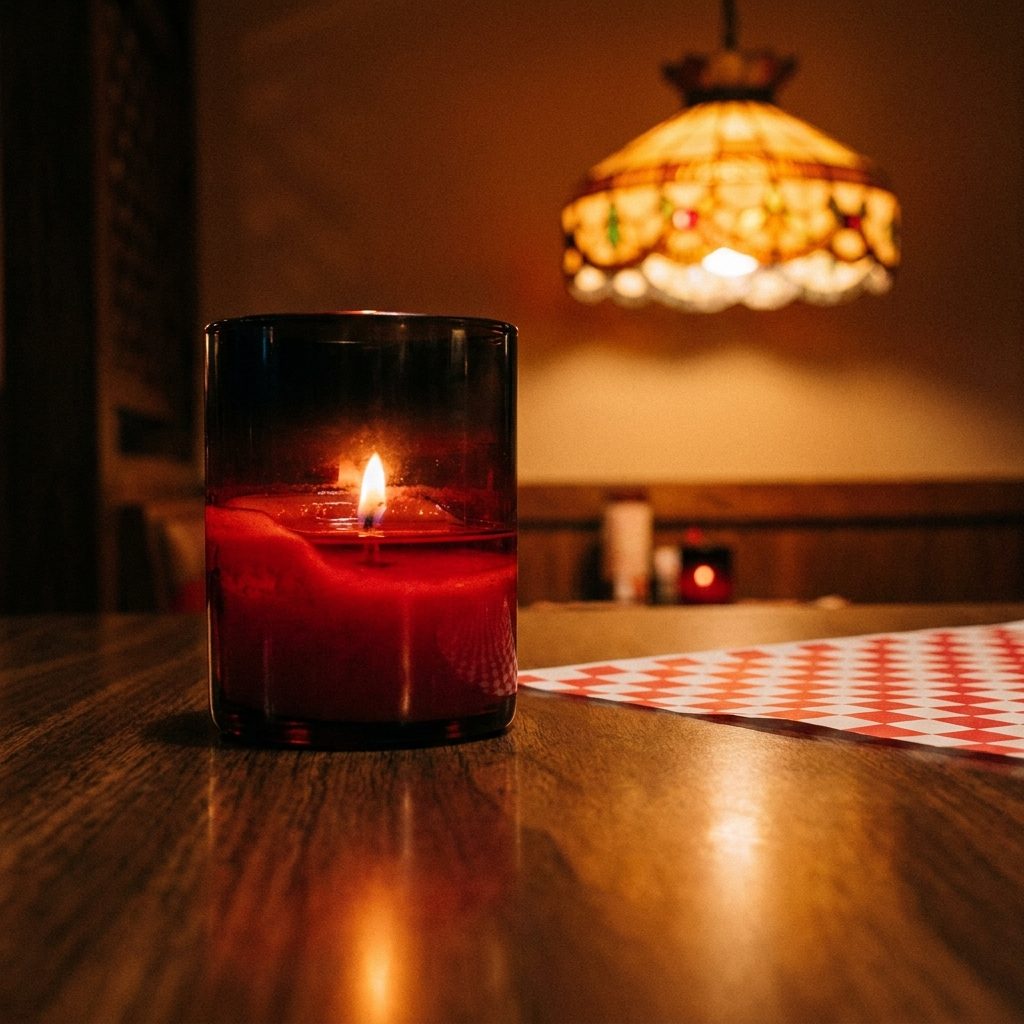
Every table had one. The little red glass holder with the stubby candle inside, flame going all night, wax pooling at the top in a clear liquid ring. You were not supposed to touch it. You always touched it. You tilted it just slightly to see the liquid wax slide, and your mom said stop it, and you absolutely did not stop it.
The candle made the table feel formal without being formal. It was the thing that made Pizza Hut feel like a restaurant and not just a place you got food. In 1983, that distinction mattered. A candle on the table meant tonight was something.