Would you like to save this?
The smell hit you before you reached the kitchen door. Tomato sauce, browned meat, a low simmer that had been going since three in the afternoon. In the 1960s, spaghetti night was its own event, not fancy, not fussed over, just a pot on the stove and the whole family about to crowd around a table with mismatched chairs. These are the memories from those dinners. You’ll recognize every one.
Please note that some of the images in this article were created with the assistance of AI.
31. The Sunday Sauce That Started on Saturday Night
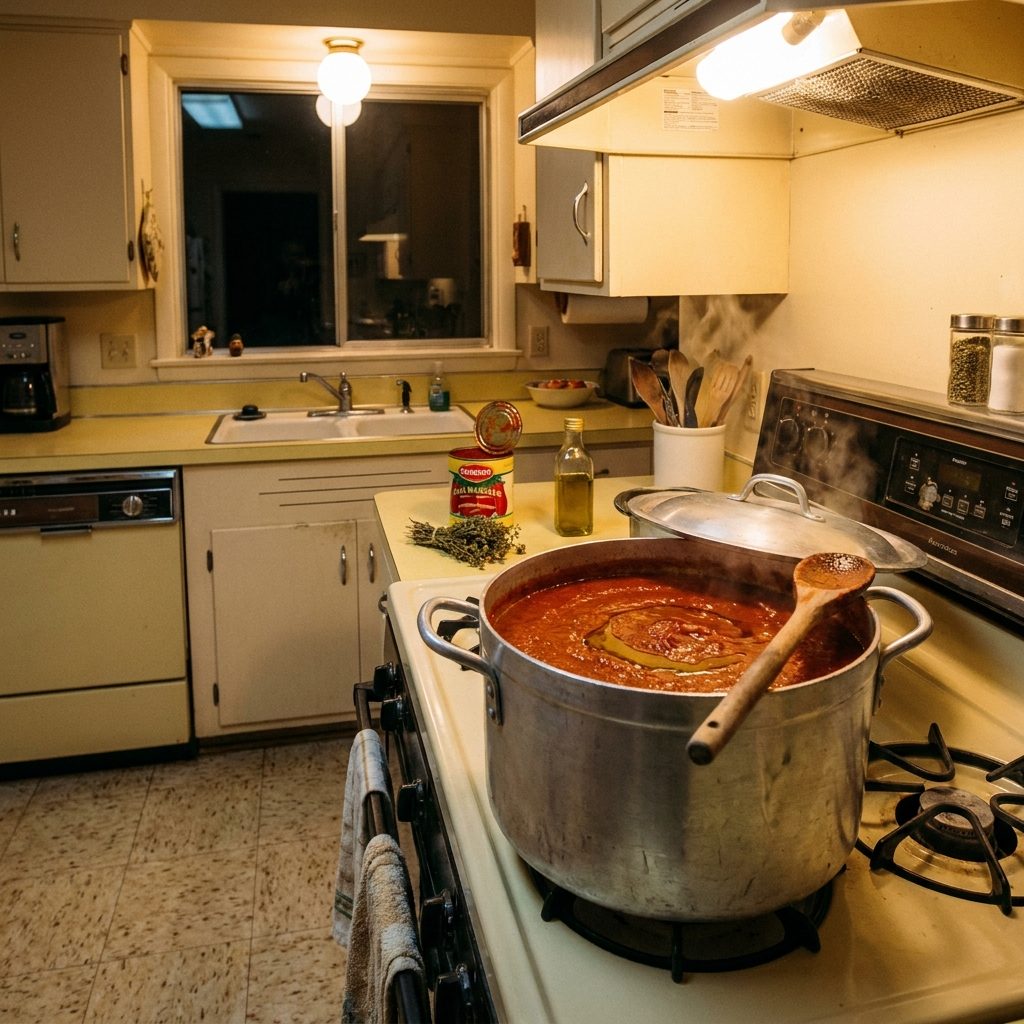
It started Saturday night so Monday’s dinner would taste like Sunday had never ended. The pot went on the back burner around nine, the heat turned so low the sauce barely moved, and by morning the whole house smelled like something had been decided. Nobody called it meal prep. They just called it sauce.
The longer it cooked, the less it tasted like tomatoes and the more it tasted like the family itself.
30. The Parmesan Cheese That Came in the Green Cardboard Cylinder
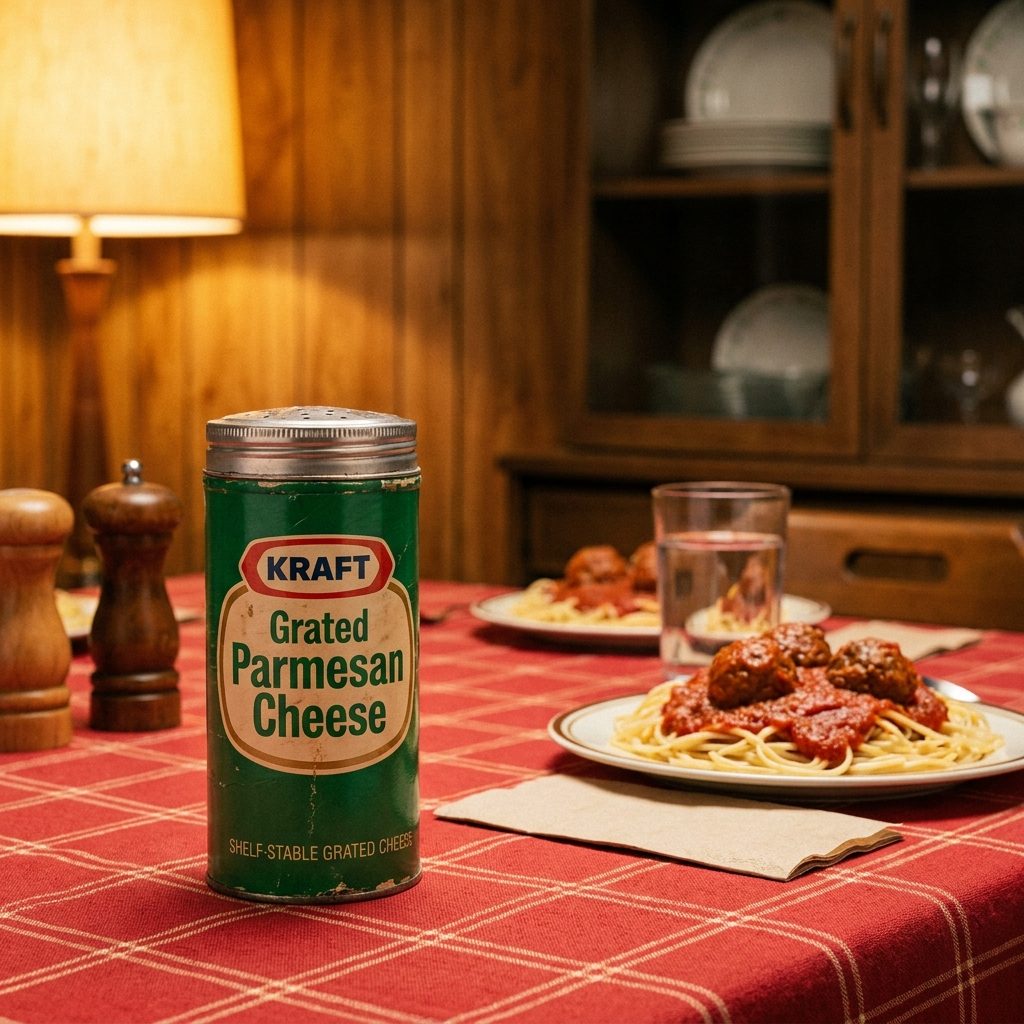
Nobody called it Parmigiano-Reggiano. Nobody called it much of anything. It just lived on the table, the green cylinder with the silver shaker top that left a fine white ring on the tablecloth wherever it sat. You twisted off the top and shook it over your spaghetti until the pile was high enough, and the smell that came out was sharp and a little funky and completely right.
It was shelf-stable and grated months ago and none of that mattered at all.
29. The Cast Iron Skillet That Browned Every Meatball That Ever Lived in Your House
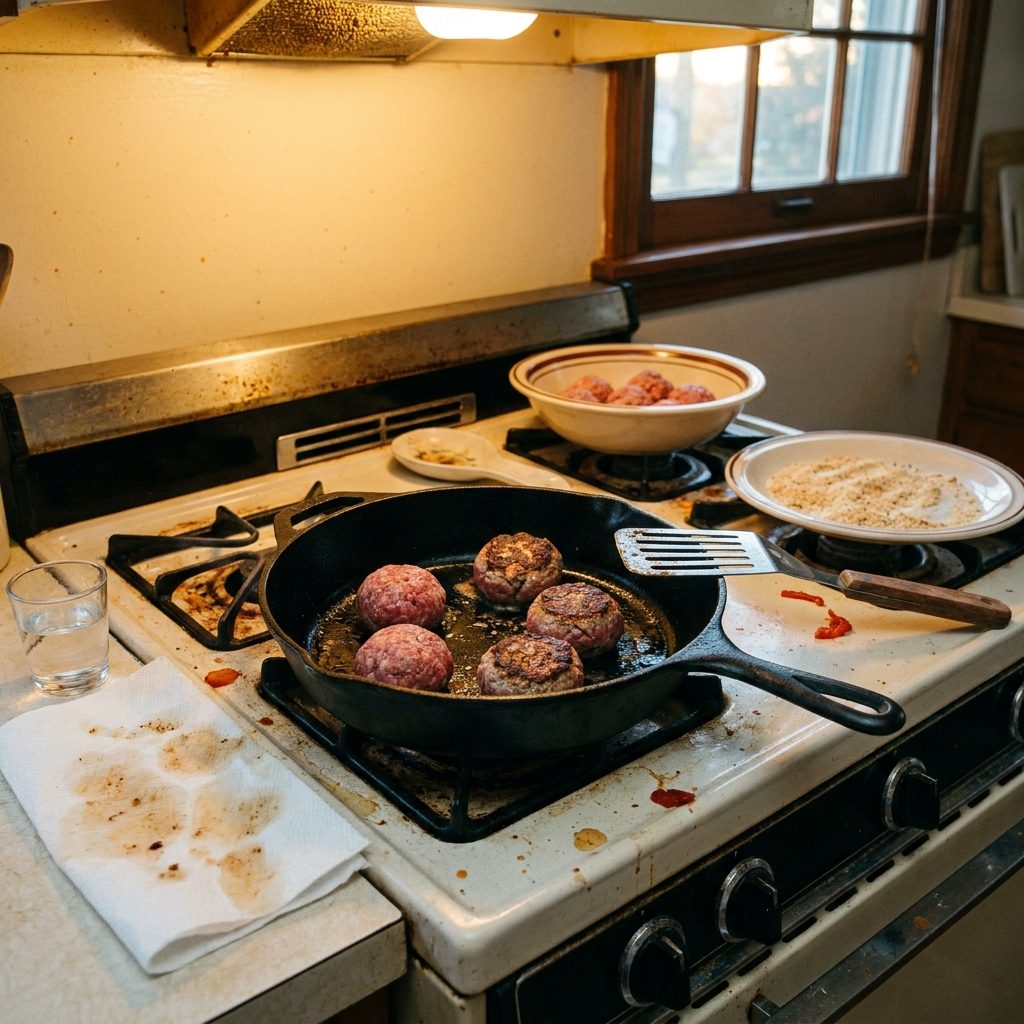
The sear came first. Before the meatballs ever touched the sauce, they went into the cast iron with a sound like an argument and came out with a crust on the outside that the sauce could never have given them. That skillet weighed more than some of the kids and it stayed on the back of the stove between uses because nobody wanted to put it away.
The browned bits left in the pan after? Those went into the sauce too. Nothing was wasted.
28. The Box of Ronzoni That Got Measured by Eye, Never by the Package
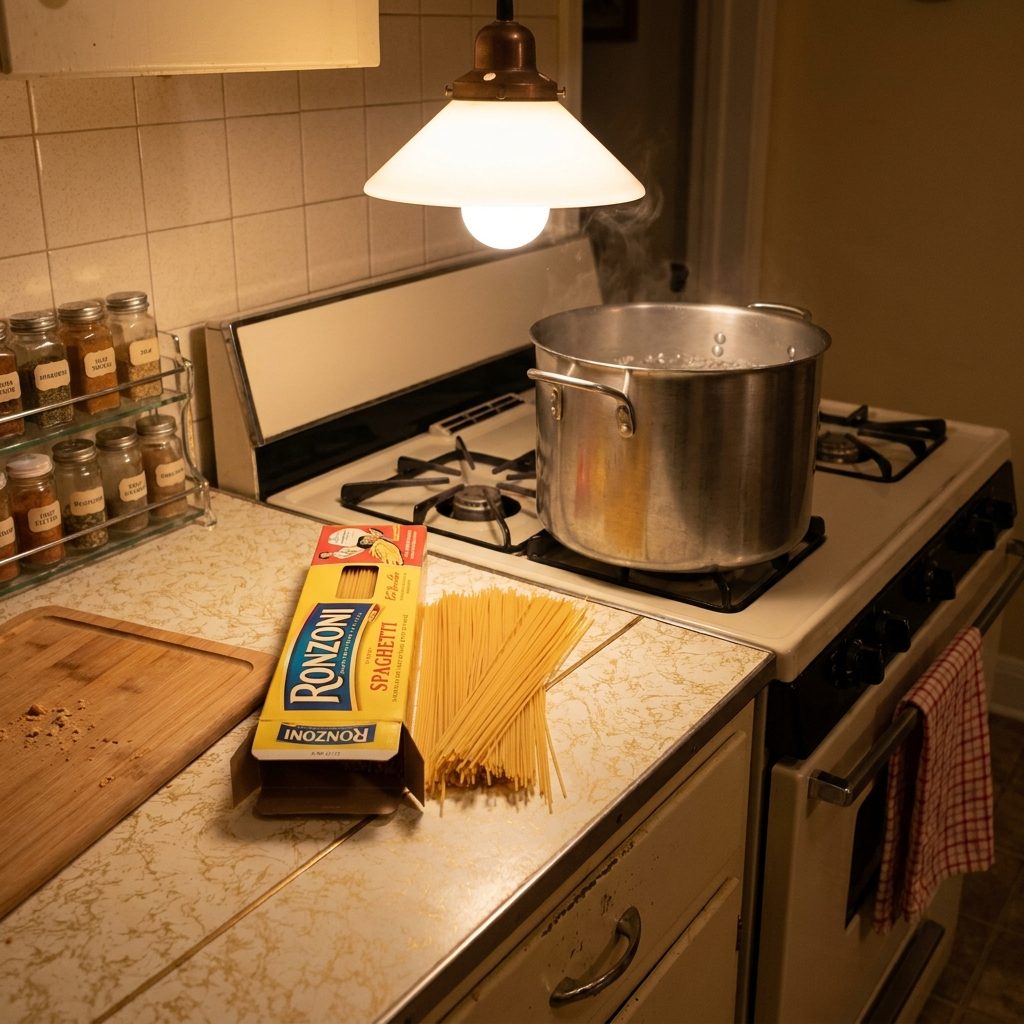
The box said one pound. The cook said however much looks right. That gap between those two instructions is where a lot of family dinner math lived in the 1960s. You grabbed a fistful of dry spaghetti, held it up, decided it was enough or it wasn’t, and added a few more strands just to be safe. It was always enough. It was usually more than enough.
27. The Tomato Paste Can That Got Rinsed Out Into the Sauce
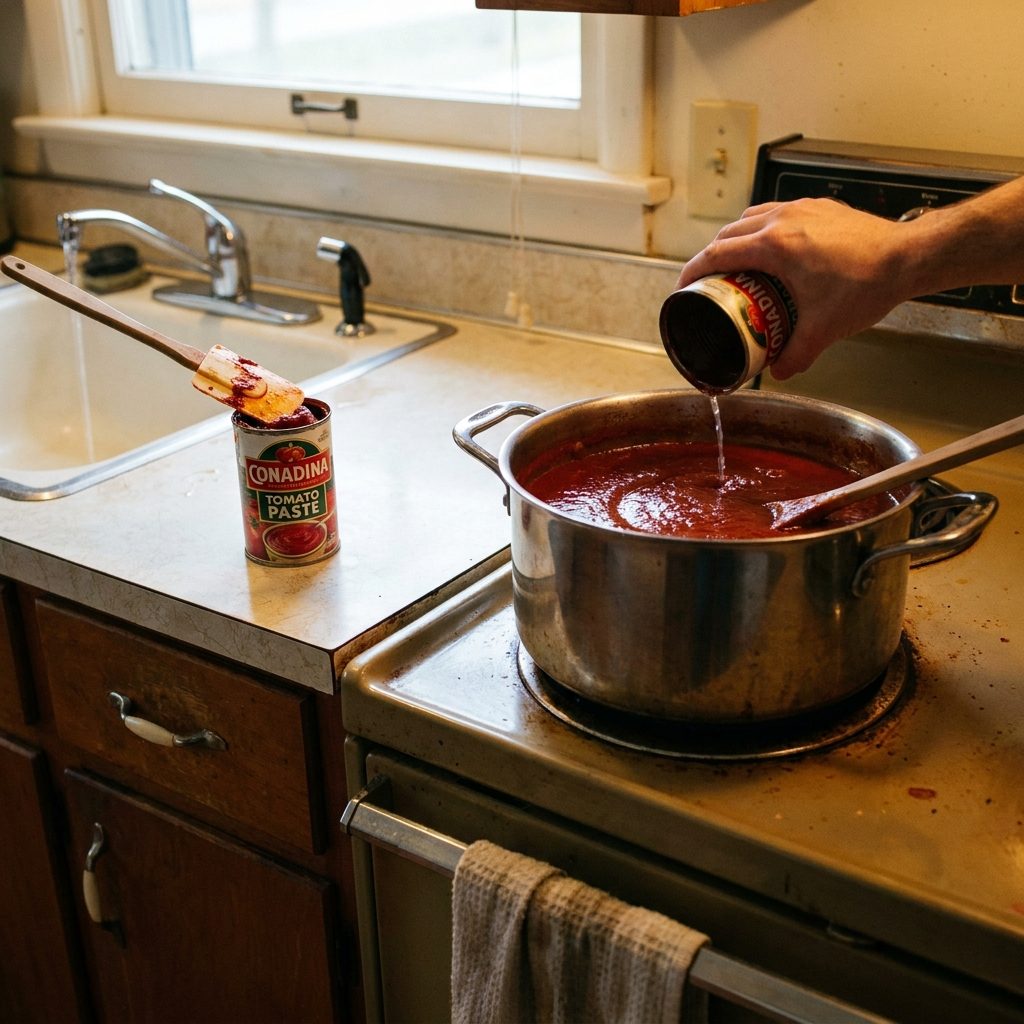
Not a single drop was getting left behind. You scraped the paste into the sauce, filled the can halfway with water, swirled it, and poured that in too. It wasn’t frugality exactly, more like principle. The tomato paste cost what it cost, the sauce needed liquid anyway, and the math was obvious. Every Italian-American kitchen in the country was doing the same thing simultaneously and none of them had talked it over.
26. The Way the Meatballs Got Stretched When the Week Got Long
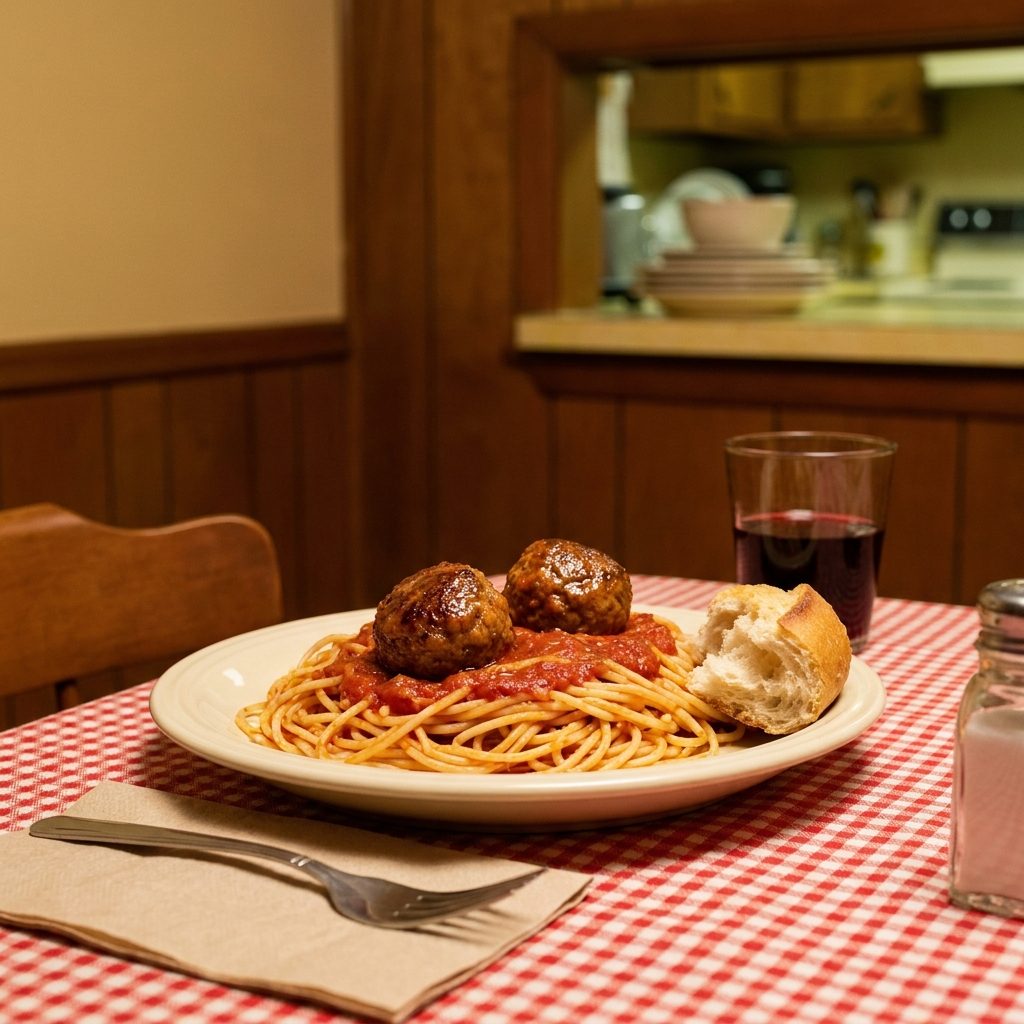
By Thursday, the meatballs were smaller. Not bad, just adjusted. The same pound of beef had to get to Friday now, so you made them a little rounder, a little more compact. They were still meatballs. They were still dinner. And they still disappeared off every plate before anyone pushed back from the table.
Nobody commented on the size. That was the agreement.
25. The Church Bulletin on the Table That Served as a Placemat When the Good Ones Were in the Wash
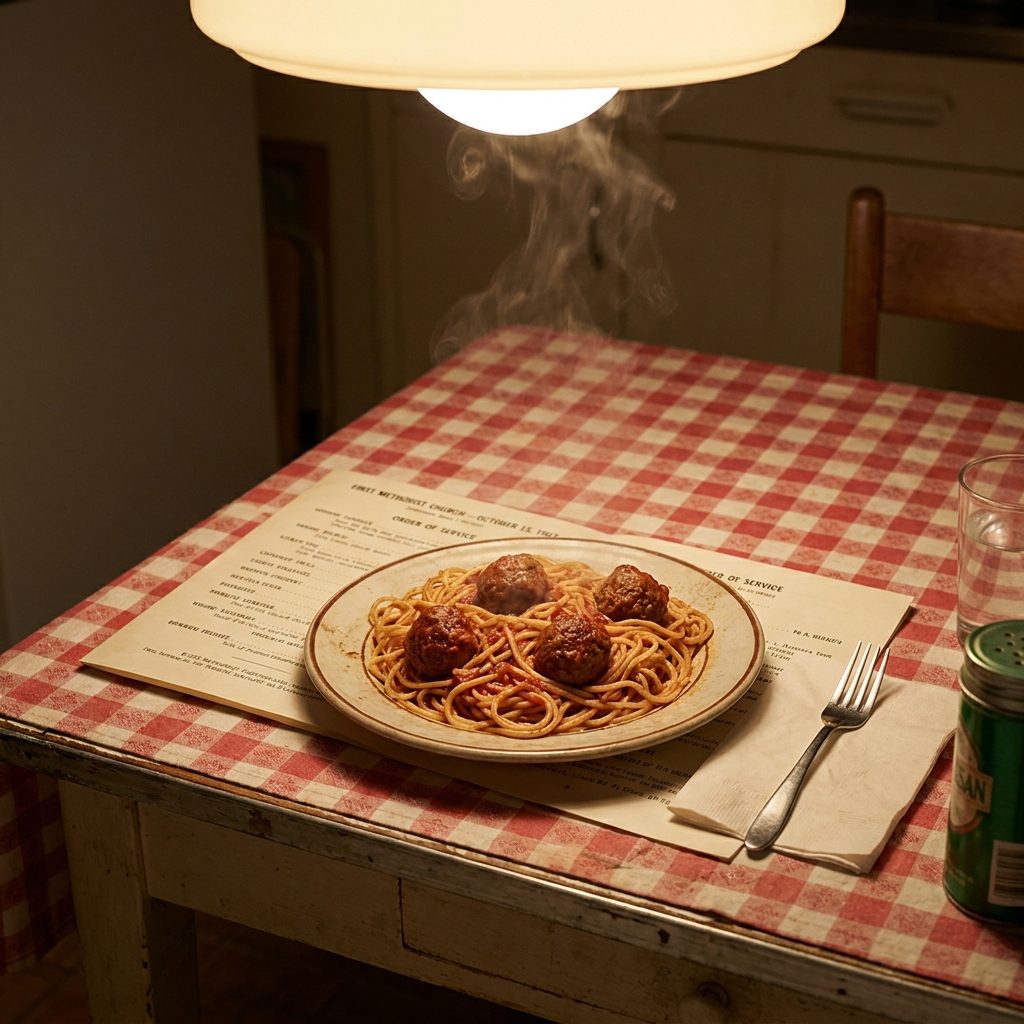
The Sunday paper. A folded paper bag. A church bulletin. When the cloth placemats were damp on the drying rack, you used whatever was flat. The rule was simple: put something between the hot plate and the table. The surface survived either way. Nobody thought anything of it, and forty years later the church bulletin somehow became the detail that brings the whole kitchen back.
24. The Second Helping Nobody Asked For That Appeared on Your Plate Anyway
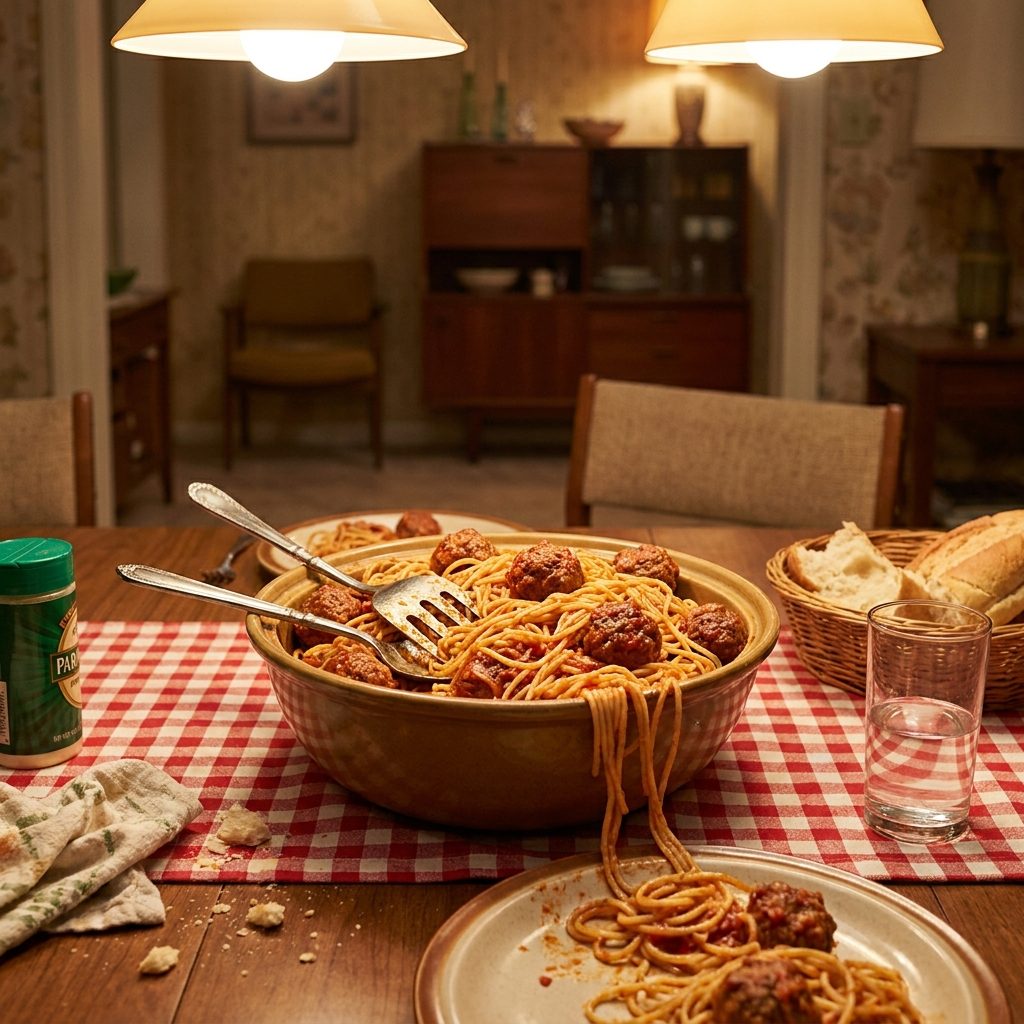
You didn’t ask. You didn’t have to. The serving spoon appeared over your shoulder mid-sentence and more spaghetti landed on your plate before you could object. This was not a question. It was a statement about how meals worked in this house, and the statement was: you will eat until I am satisfied that you have eaten enough.
Resistance was possible in theory. In practice, the meatball was already on your plate and it smelled too good to argue with.
23. The Pot of Sauce That Simmered on the Back Burner All Sunday Afternoon
Would you like to save this?
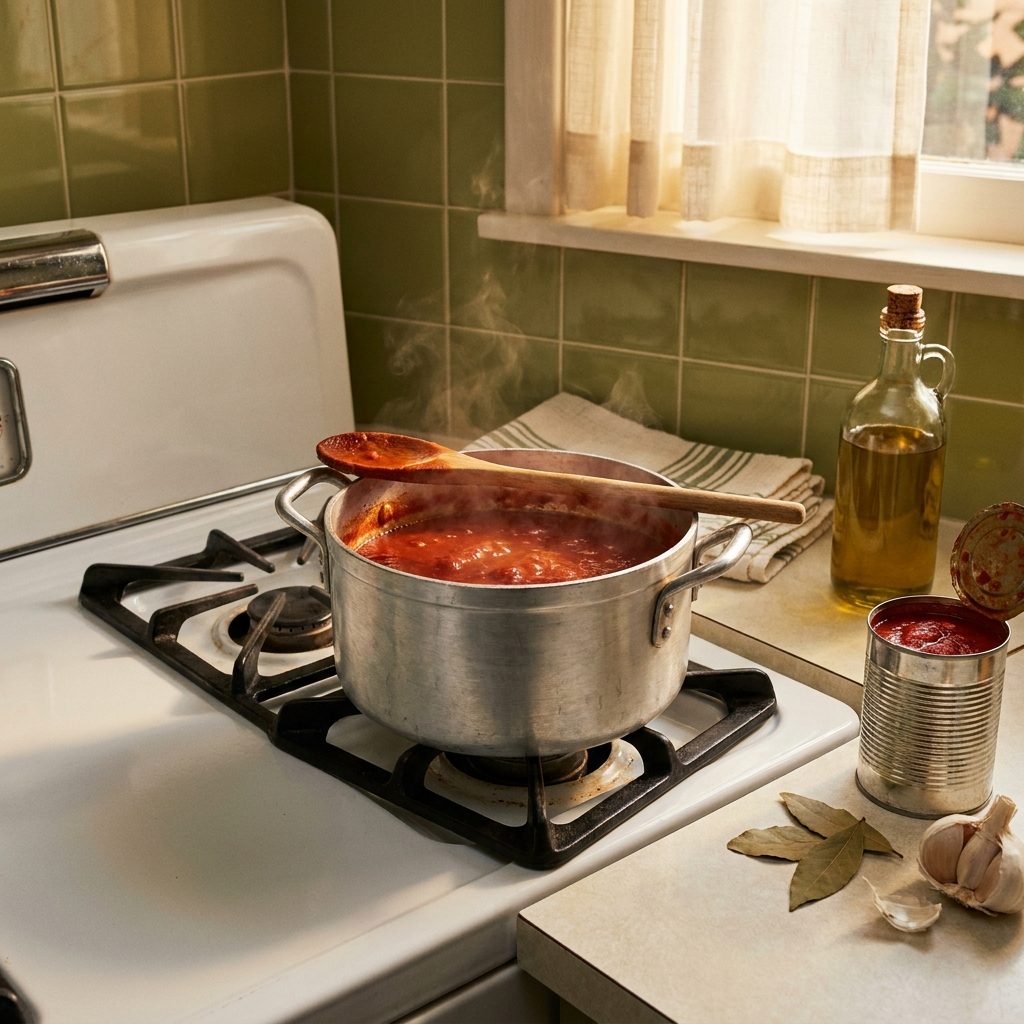
Sunday sauce wasn’t made quickly and everyone understood that. The pot went on after church, set to a low burble that would barely move the surface for the next three or four hours, and the smell reached every room in the house by noon. You didn’t stir it constantly. You checked it. There’s a difference.
By the time dinner arrived, the sauce had deepened to something no jar ever replicated. The meatballs had been in there since early afternoon, absorbing every herb in the pot. Anyone who says canned sauce tastes the same has never spent a Sunday in that kitchen.
22. The Parmesan Cheese in the Green Cardboard Shaker That Smelled Like Exactly What It Was
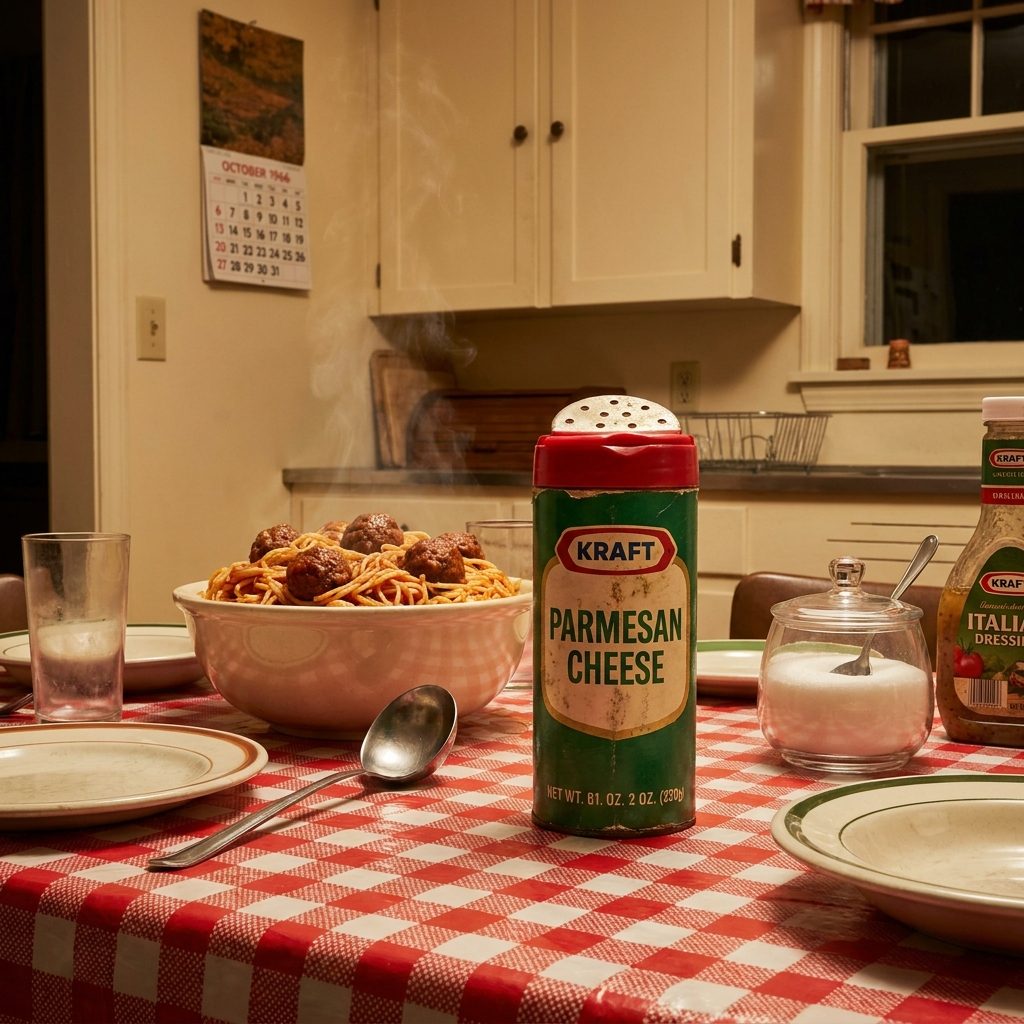
Pre-grated parmesan from the green cardboard tube was not considered a compromise in 1965. It was just the parmesan. It lived on the table alongside the salt and pepper like a member of the family, and everyone shook it freely over everything, including things it had no business being on.
The smell when you opened the cap was aggressive and specific in a way that fresh-grated parmesan genuinely is not. No one complained. That smell meant dinner was ready.
21. The Meatball Recipe Written on a Torn Index Card in Your Grandmother’s Handwriting
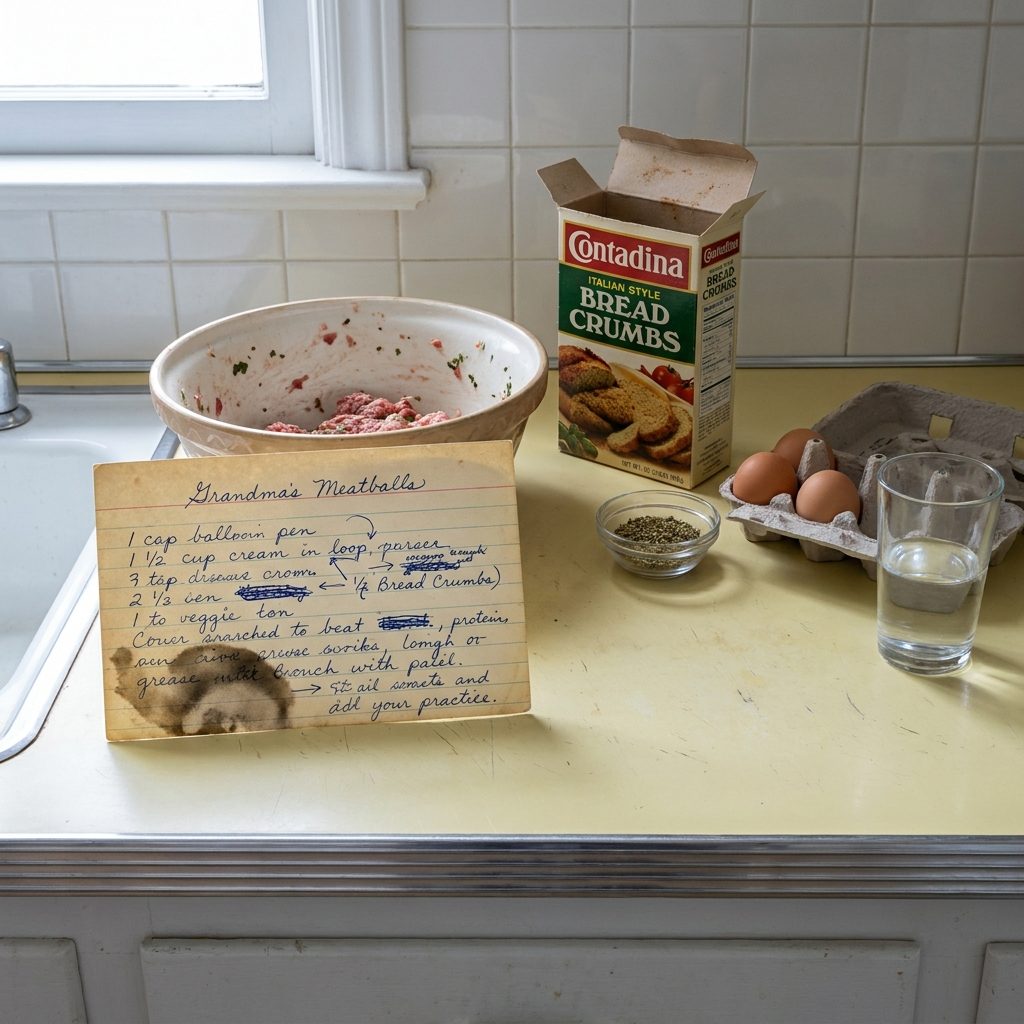
Nobody in the family wrote down the full recipe. A few lines, the amounts that mattered most, maybe a note about how long to brown them. The rest you were supposed to watch and remember.
That index card has survived four decades, two kitchen renovations, and at least one flood in a basement where the recipe box got stored. The grease stain in the corner is from the first time someone made it solo, pressing the card flat to read it mid-mix. It went better than expected.
20. The Way the Fork Twirling Never Quite Worked and Everyone Had a Different System
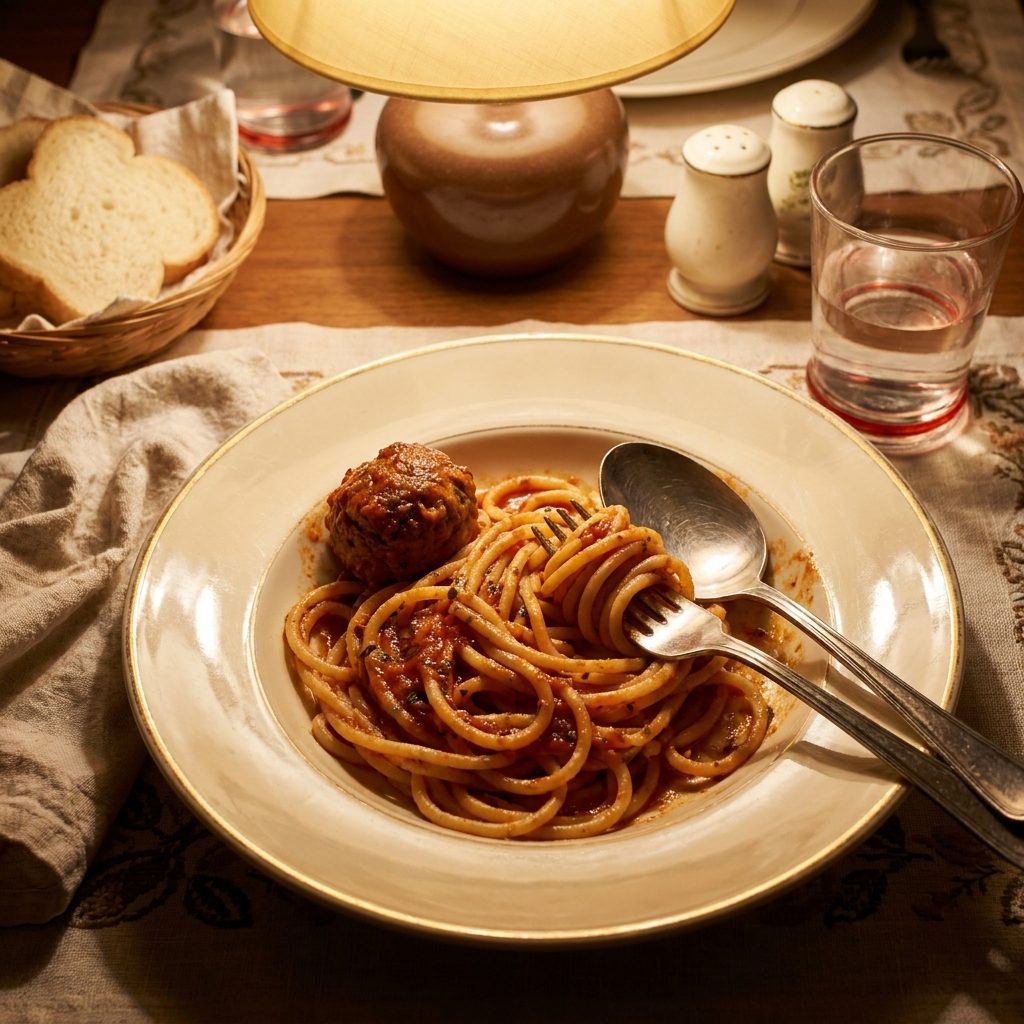
The spoon-assist method was standard in half the households in America. The other half considered it unnecessary and said so. Neither side ever convinced the other, and the argument resurfaced at every spaghetti dinner with the reliable timing of a commercial break.
Kids mostly gave up and cut it. Adults pretended not to notice. Someone always ended up with a sauce splatter on their shirt sleeve, and that was just the price of participation.
19. The Checkered Oilcloth Tablecloth That Wiped Clean With a Damp Rag and Nothing Else
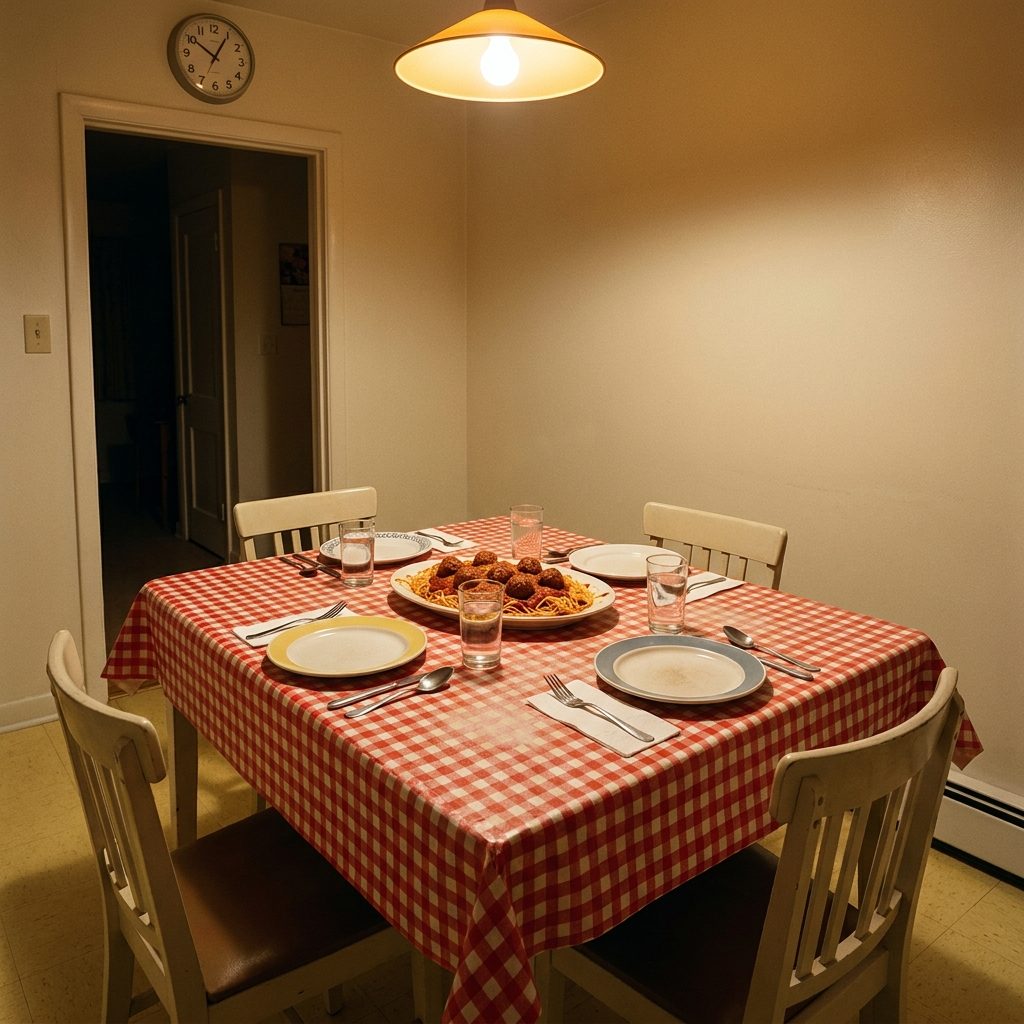
The checkered oilcloth was the workhorse of the family dinner table. It didn’t need ironing. It didn’t need dry cleaning. After a spaghetti night it needed a wet rag and maybe thirty seconds of attention, and it was ready for tomorrow.
The pattern never fully died. You still see it on restaurant tables in places that want to signal Italian-American comfort without spending much money on the signal. The original was not ironic. It was just practical and it worked.
18. The Leftover Plate Covered With Wax Paper in the Fridge That Was Better the Next Day
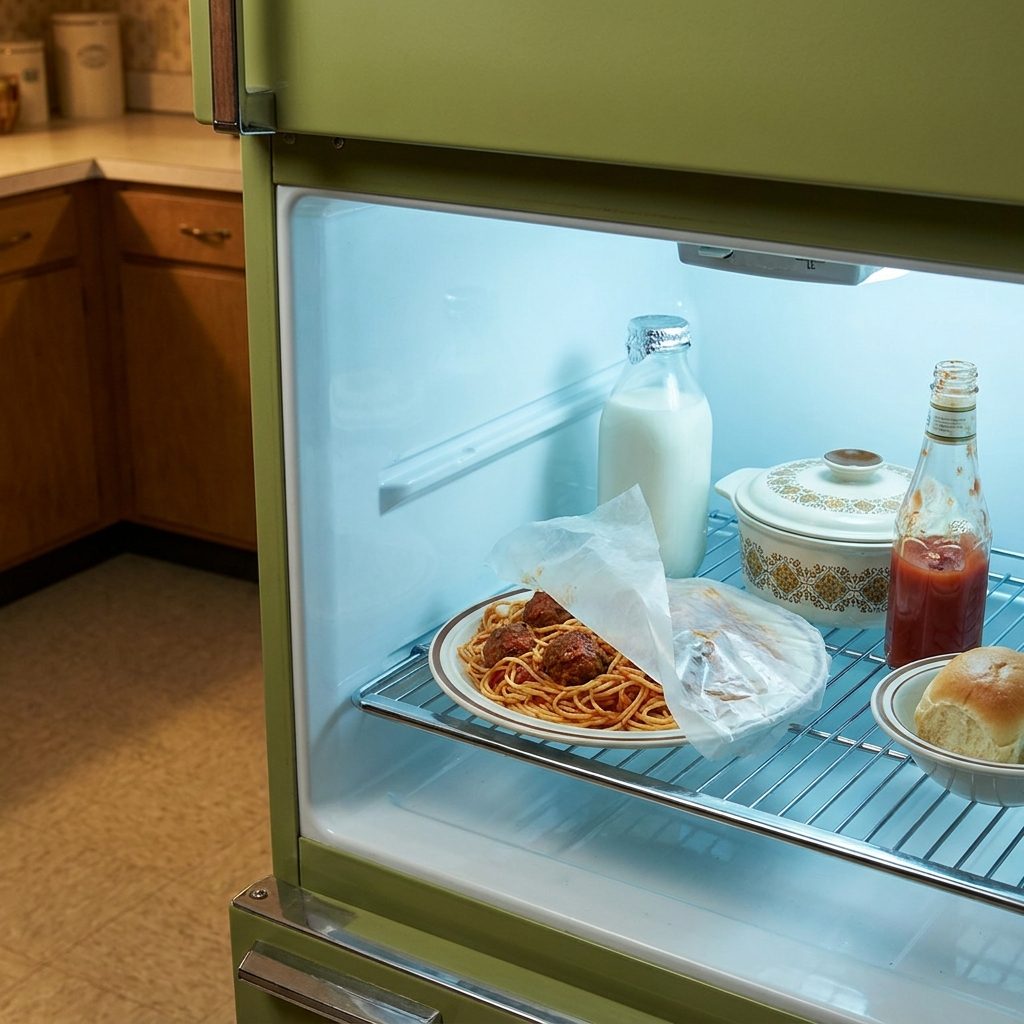
Cold spaghetti with sauce that had tightened overnight into something almost jammy, reheated in a pan with a splash of water and eaten alone at the kitchen table on a Tuesday afternoon. This was not a lesser version of the meal. A strong argument exists that it was the better one.
The wax paper cover was the standard. Plastic wrap existed but felt wasteful for a plate that would be gone by lunch tomorrow anyway. Some things were just understood without being discussed.
17. The Moment Someone Announced There Were Only Two Meatballs Left and the Table Went Quiet
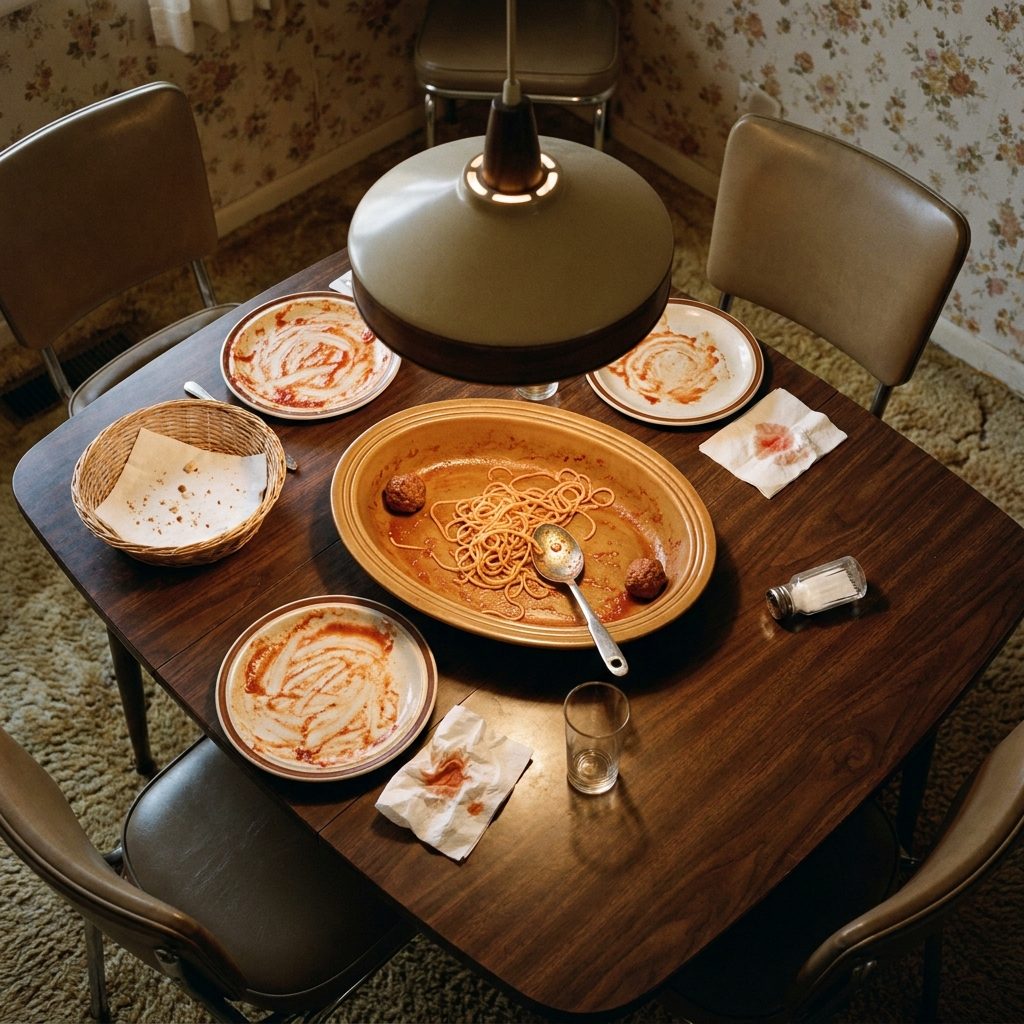
Two meatballs, four people at the table. The math was not complicated but the politics were. Whoever had been loudest about not being hungry five minutes ago was now reconsidering their position. Dad usually got one. The other depended entirely on the dynamics of that particular evening.
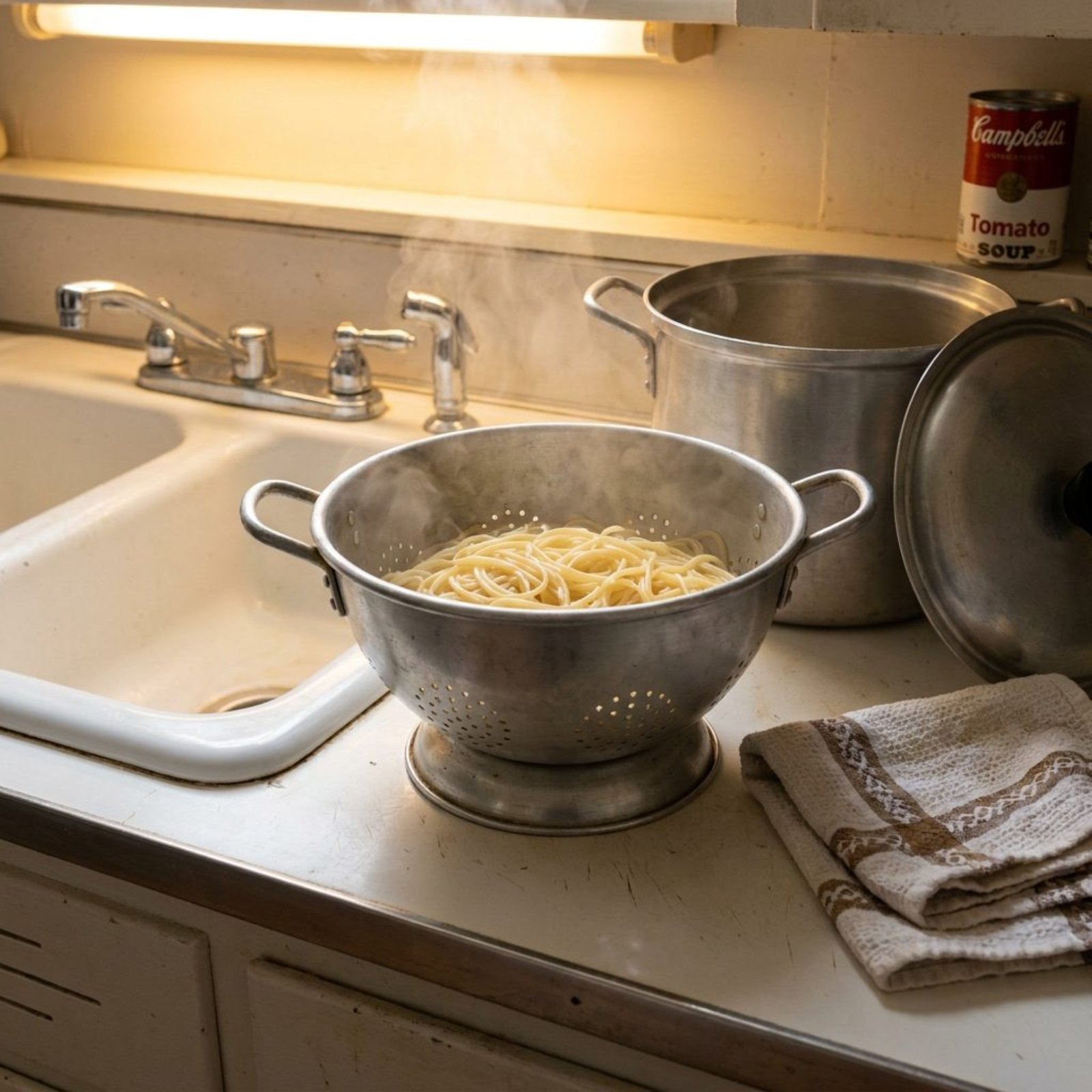
16. The Steam That Fogged Your Glasses When You Drained the Pasta Over the Sink
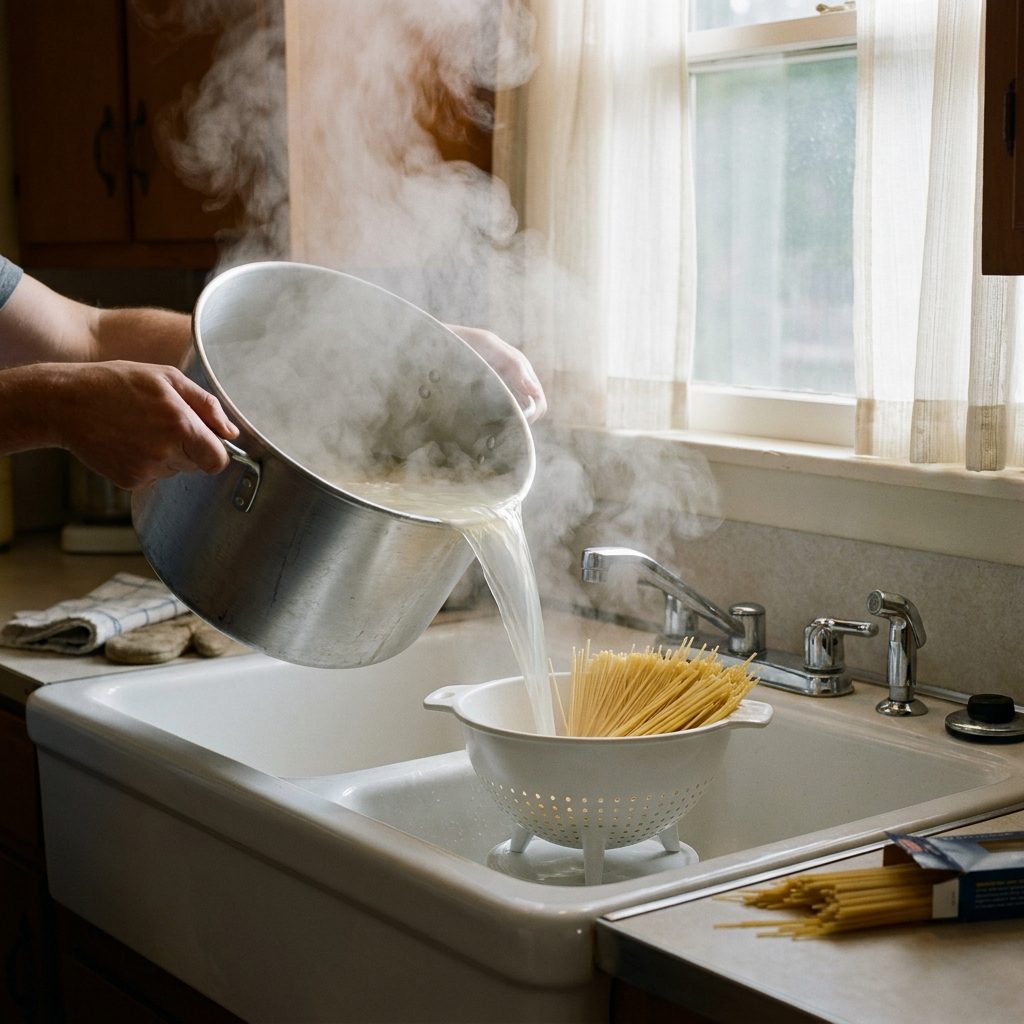
The steam hit you in the face every single time and somehow it was always a surprise. The glasses fogged completely, the window above the sink dripped condensation, and for about eight seconds you were operating entirely on memory and feel, tipping that pot by instinct while the kitchen turned into a sauna.
Nobody got burned. The colander caught everything. The pasta sat there steaming in the sink for the thirty seconds it took to shake it dry and dump it into the bowl, and the smell in that moment was the specific smell of dinner being almost ready.
15. The Pyrex Baking Dish That Never Fully Came Clean
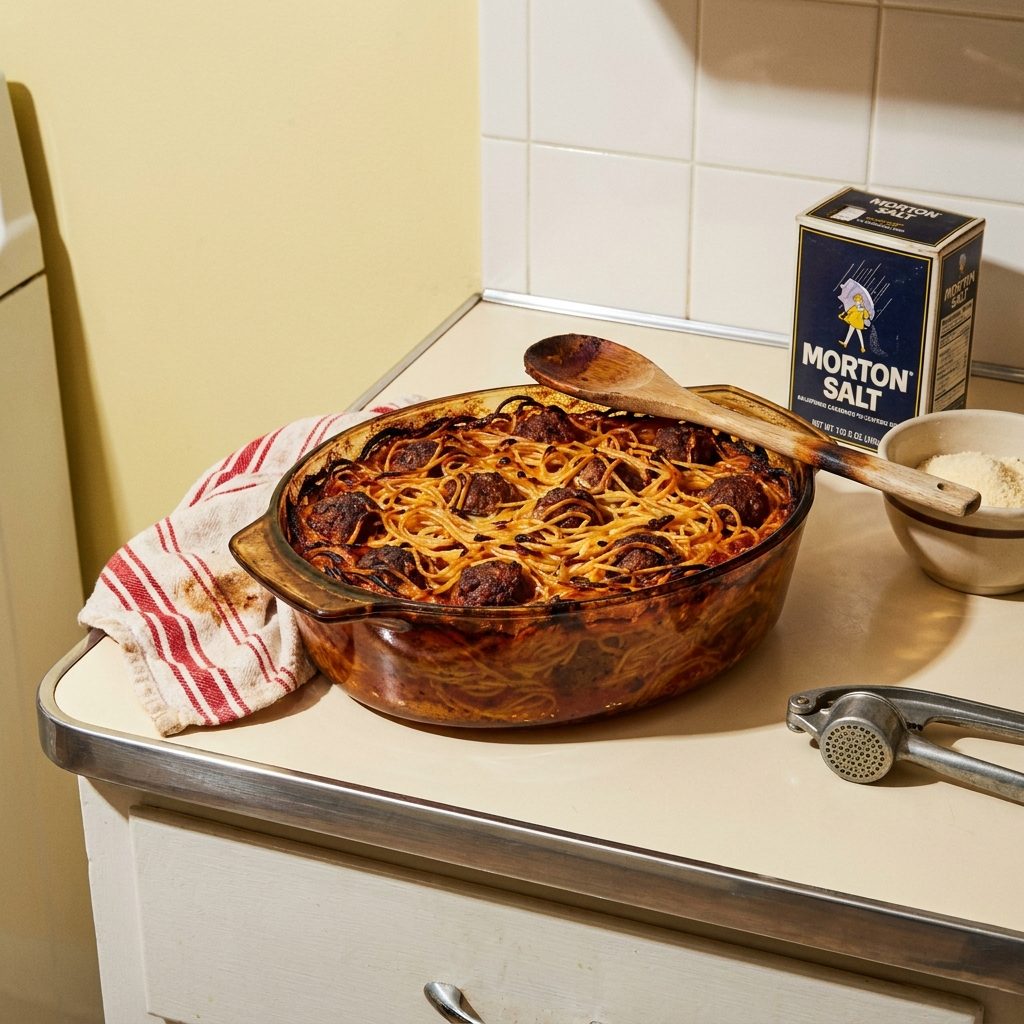
Every family had one of these dishes, and every one of them was permanently stained. The amber glass went into the oven holding Tuesday’s spaghetti and came out smelling like Sunday. You could scrub it with Brillo and the ghost of last month’s sauce would still be there, baked into the corners in a faint rust ring that no amount of Dawn was going to fix.
The Pyrex baking dish was the 1960s workhorse. It went from oven to table without ceremony, usually on a folded dish towel to protect the tablecloth, and Mom served directly from it with a wide spoon that was also permanently red. Nobody minded the staining. It meant the dish was being used.
14. The Smell of Garlic Browning in a Pan Before Anything Else Happened
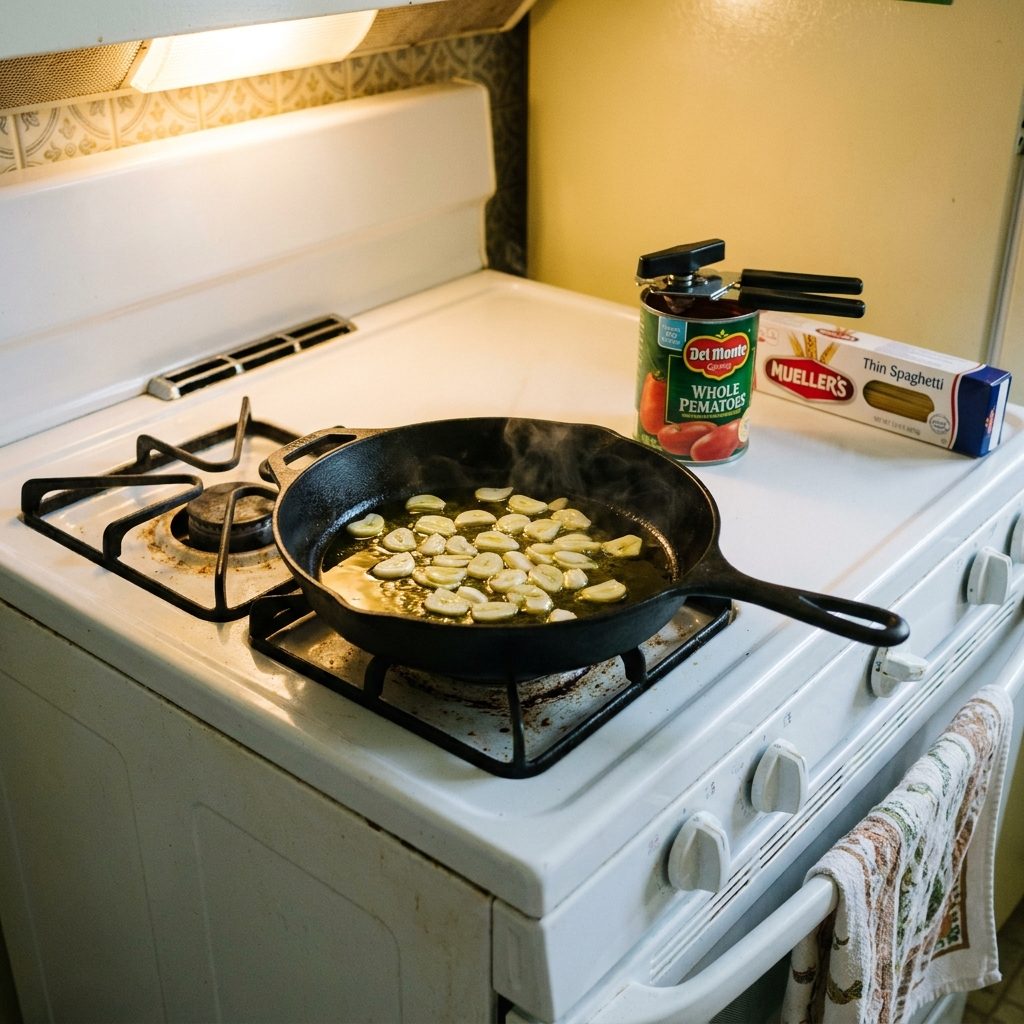
Before the sauce went in, before the meatballs went in, before the water even started boiling, there was this: garlic in hot oil, just for a minute, the smell moving through the whole house like an announcement.
Kids doing homework at the kitchen table would look up. Dads reading the paper in the living room would fold it. Everyone in the house knew, without being told, that something good was coming. The garlic hitting the oil was the dinner bell, and it worked every single time.
13. The Argument Over Whether to Break the Spaghetti in Half Before Boiling
Would you like to save this?
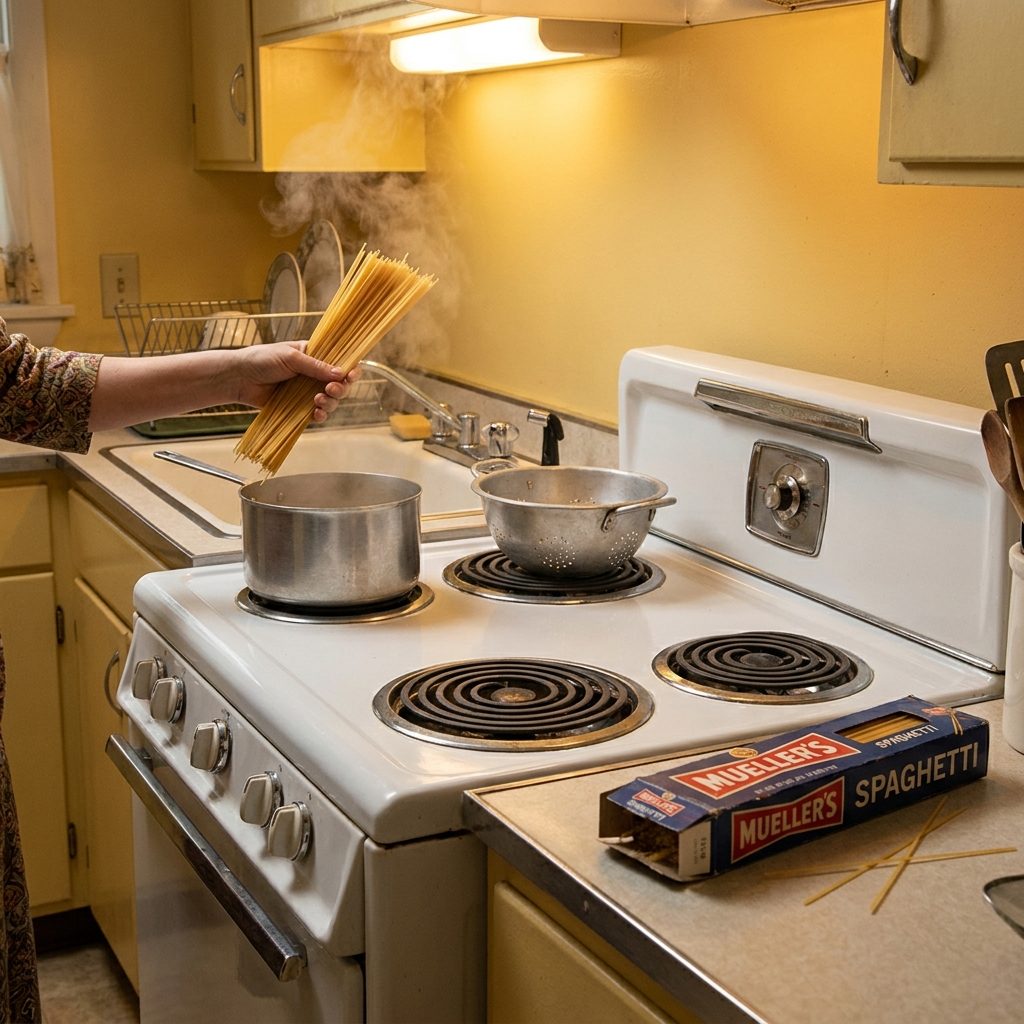
This was a real disagreement in real households. Some mothers snapped the spaghetti clean in half before dropping it in the pot, on the grounds that it was easier to stir and easier to eat. Other mothers considered this a kind of small violence against the pasta and would not do it under any circumstances.
The children had opinions too, usually inherited from whichever parent was loudest about it. Nobody was neutral. It’s a minor thing in the scope of a weeknight dinner, but it was the kind of minor thing that defined how a family did things, and you can still probably remember which side yours was on.
12. The Bread Basket That Arrived Before Everything Else and Disappeared Immediately
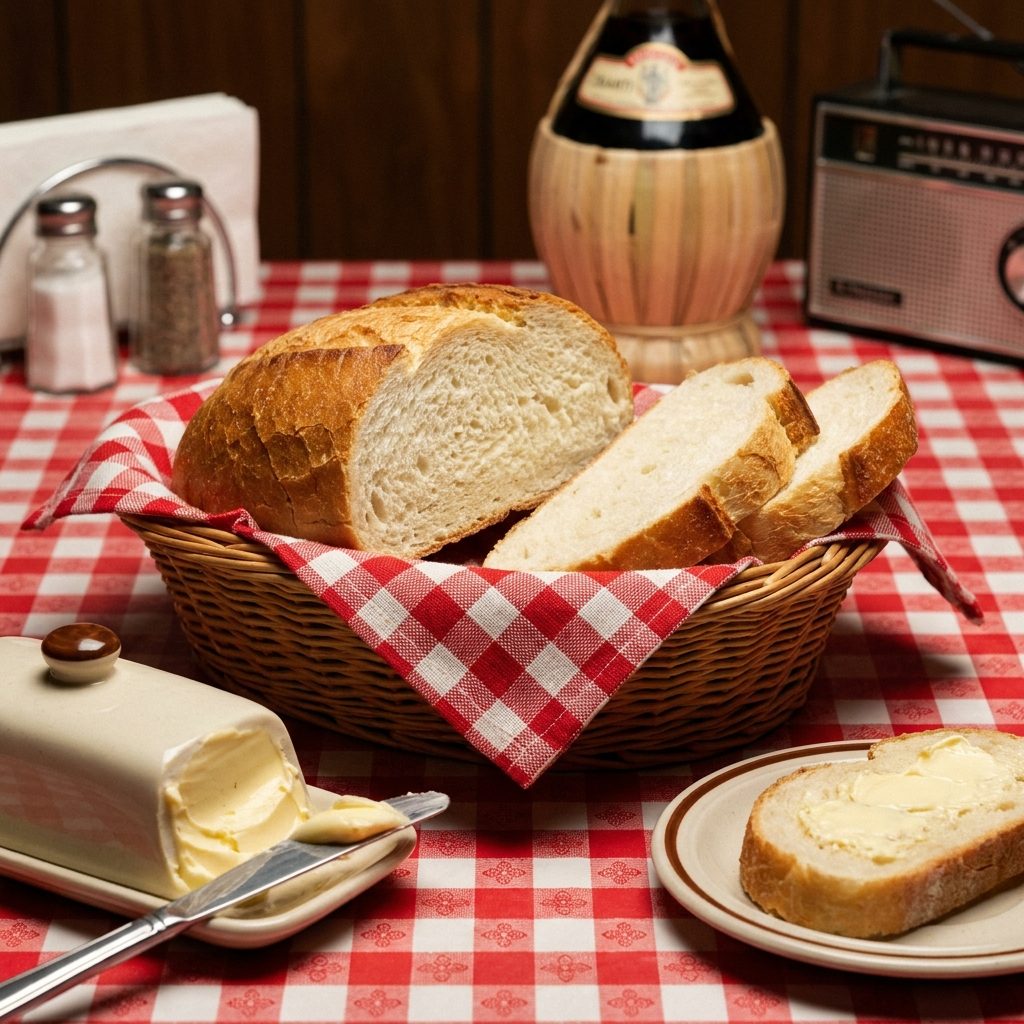
The bread came out first, and it was gone before the spaghetti reached the table. Italian bread from the bakery two blocks over, or from the A&P if it was a weeknight and nobody had time, either way dropped into a basket with a cloth napkin and a butter dish and absolutely no instructions about pacing yourself.
By the time the pasta arrived, the bread was crumbs and the butter was marked up like a road map. Everyone had filled up on it and nobody said anything because the meatballs were coming and the whole table was optimistic.
11. The Colander With the Three Legs That Sat on the Counter for Forty Years
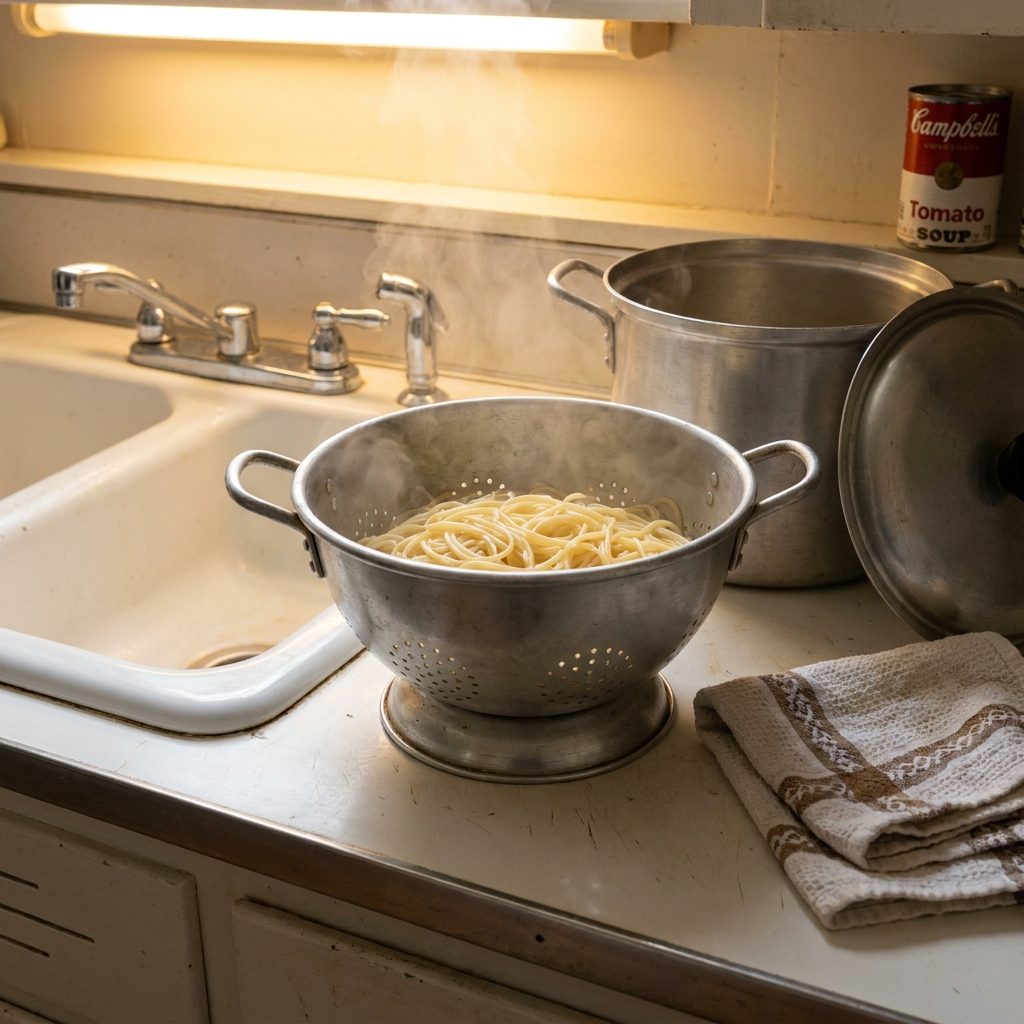
This specific piece of equipment deserves its own moment. The three-legged aluminum colander. It stood on its own little feet in the sink while you poured the pasta water out, then got moved to the counter where it sat draining while the sauce got a final stir. It was probably a wedding gift. It lasted longer than most of the furniture in the house.
Generations of spaghetti passed through it. You didn’t replace it because there was nothing wrong with it. It was a colander. It had three legs and holes and it worked. Some of them are still in kitchens right now.
10. The Tuesday Night That Became the Night Everyone Was Home for Once
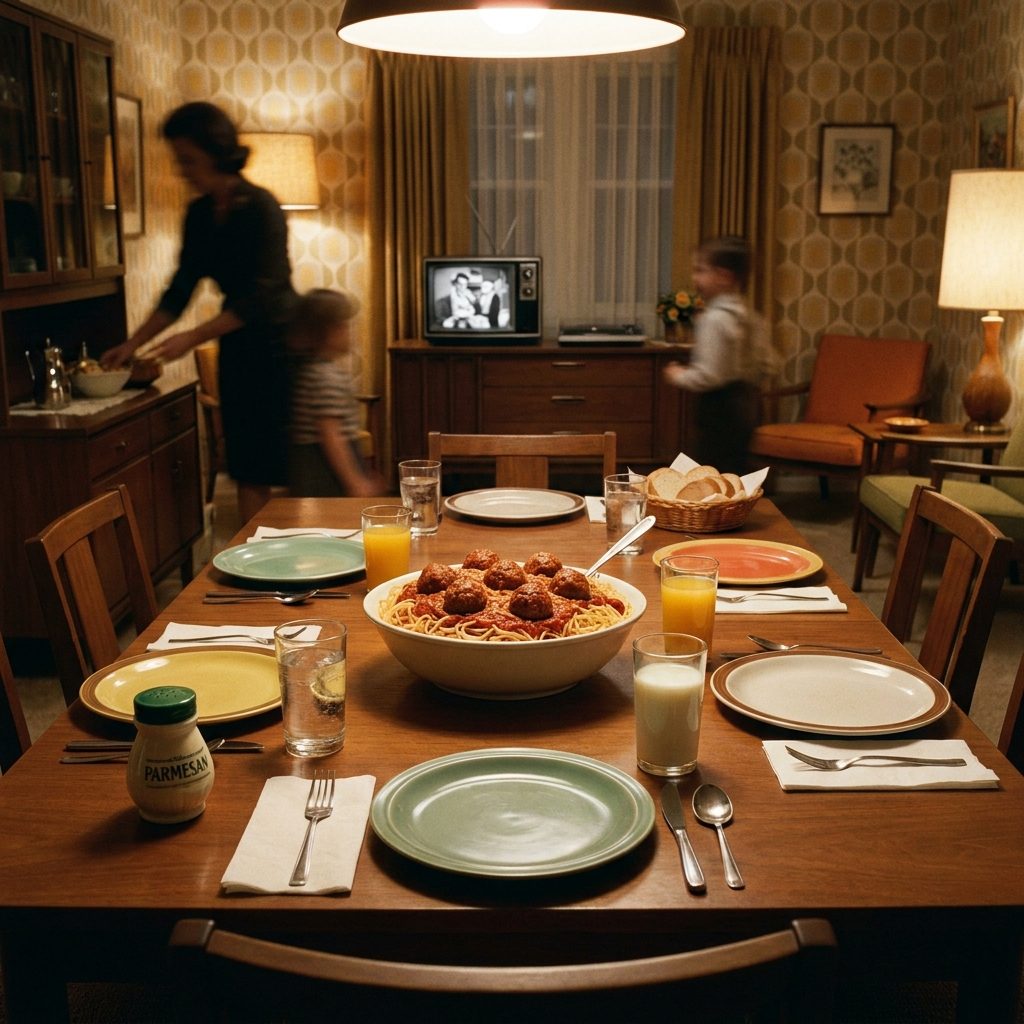
Most nights someone was somewhere else. Dad was late. The oldest kid had basketball. The youngest had a cold and was eating toast in the bedroom. But some Tuesdays everything aligned and all five seats were full and nobody had anywhere to be by 7:30, and Mom put the whole bowl in the center of the table and it was just dinner.
Spaghetti and meatballs was the meal for those nights, the one that stretched, the one where second helpings were expected. You didn’t need a reason to make it. The fact that everyone was home was reason enough.
Some Tuesdays everything aligned and all five seats were full and nobody had anywhere to be by 7:30.
9. The Meatball That Fell Off Your Fork and Rolled Across the Good Tablecloth
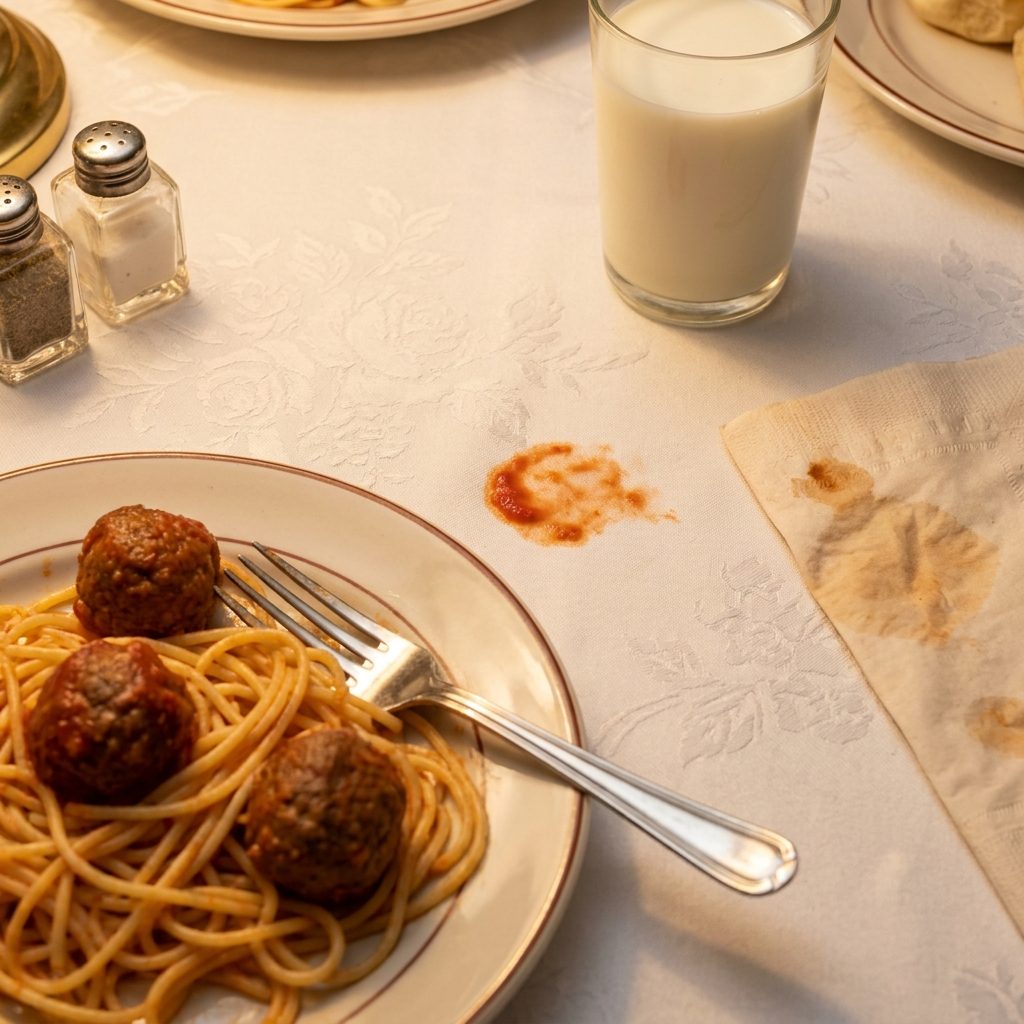
The meatball was round and the plate was slightly tilted and the fork was at the wrong angle, and that was all it took. One second it was dinner, the next it was a crisis. It left a sauce trail across the tablecloth like a small comet.
If it was the everyday tablecloth, nobody said much. If it was the good one, the one that came out for Sunday dinners or when Grandma was over, there was a sharp inhale from across the table followed by a napkin applied with real urgency. The meatball itself continued to roll, indifferent, until someone stopped it.
8. The Wooden Spoon That Lived in the Sauce Pot and Nowhere Else
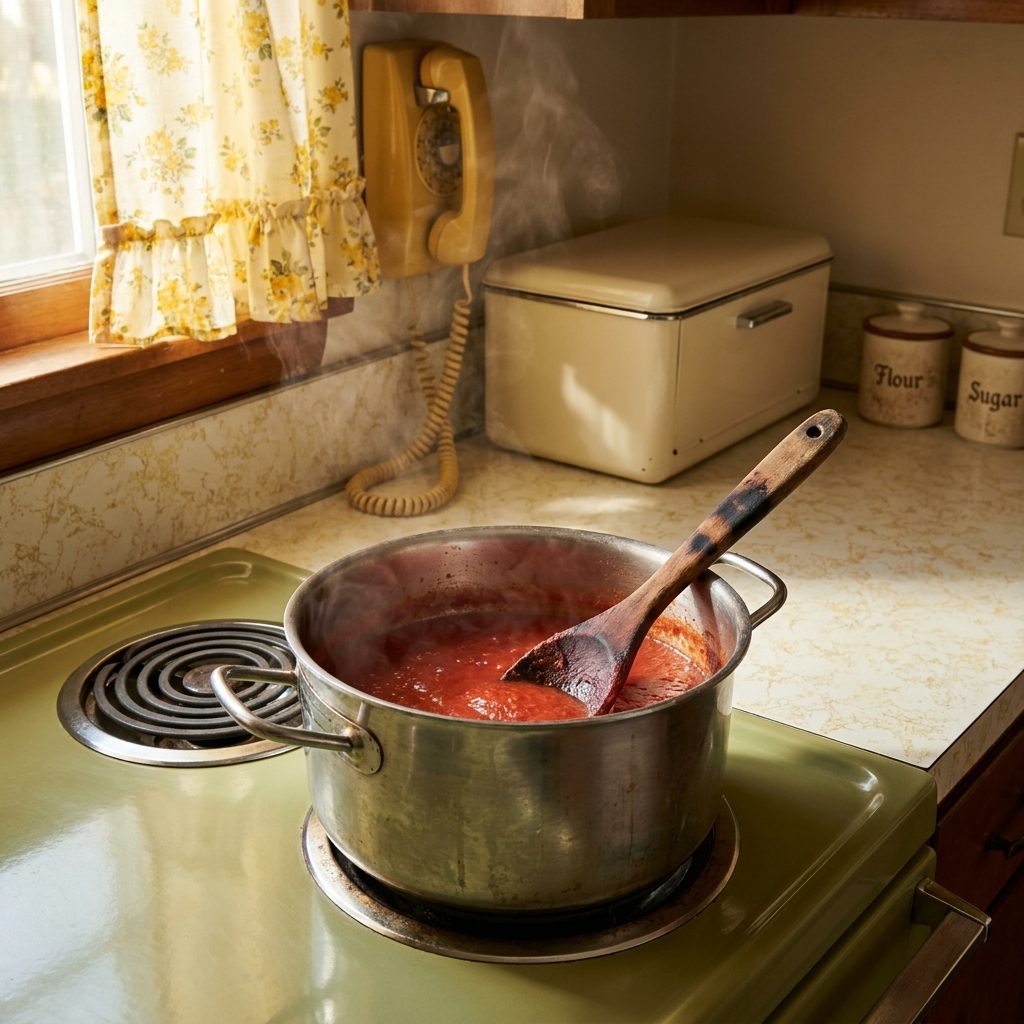
Every Italian-American kitchen had one. Not the spoon rotation a modern kitchen goes through — one spoon. The sauce spoon. Stained a permanent burgundy that no dishwasher on earth would ever have touched, because it never went in the dishwasher and honestly it barely got washed at all.
It got a rinse. Sometimes a wipe on the apron. Back in the pot. The theory, if you asked, was that the sauce seasoned the spoon and the spoon seasoned the sauce, and nobody was going to be the one to test that by scrubbing it clean.
7. The Loaf of Italian Bread From the Bakery That Came Home in a Thin Paper Sleeve
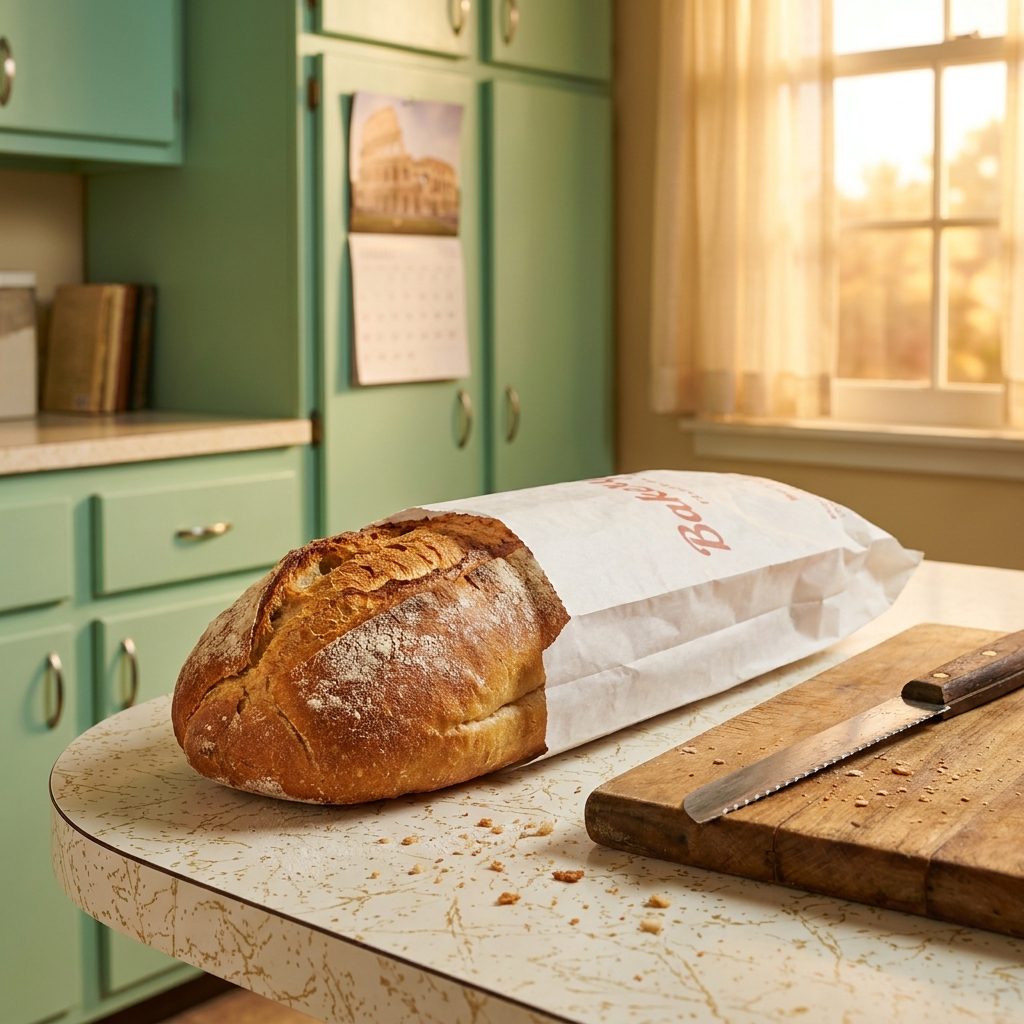
Someone was sent for the bread, and that counted as a job. You walked to the bakery, pointed, and the woman behind the counter slid the loaf into a paper sleeve so thin it was almost translucent. You carried it home warm against your ribs.
Half of it was gone before it hit the table. The heel got eaten on the walk home, and nobody said anything about it because everybody had done the exact same thing at the exact same age.
6. The Sunbeam Mixmaster on the Counter That Never Got Put Away
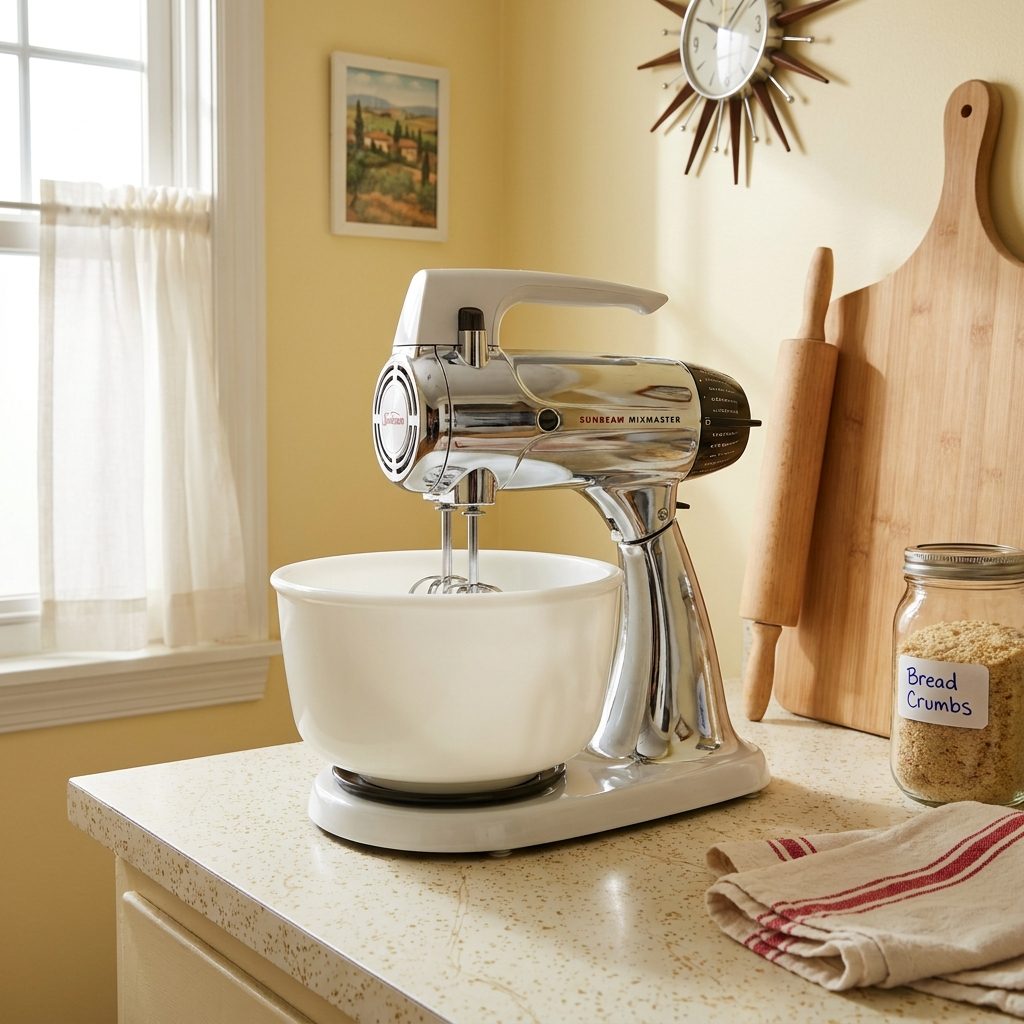
It weighed a ton. That’s really why it stayed on the counter — nobody had the arm strength to haul it in and out of a cabinet, and it got used constantly anyway, so what was the point of pretending.
The Mixmaster ran the cookies at Christmas, batter on birthdays, and the meatball mix on Sundays when someone’s arms were tired. It hummed at a pitch you could identify from two rooms away.
5. The Kids’ Table Set Up in the Kitchen Doorway on the Nights the Cousins Came Over
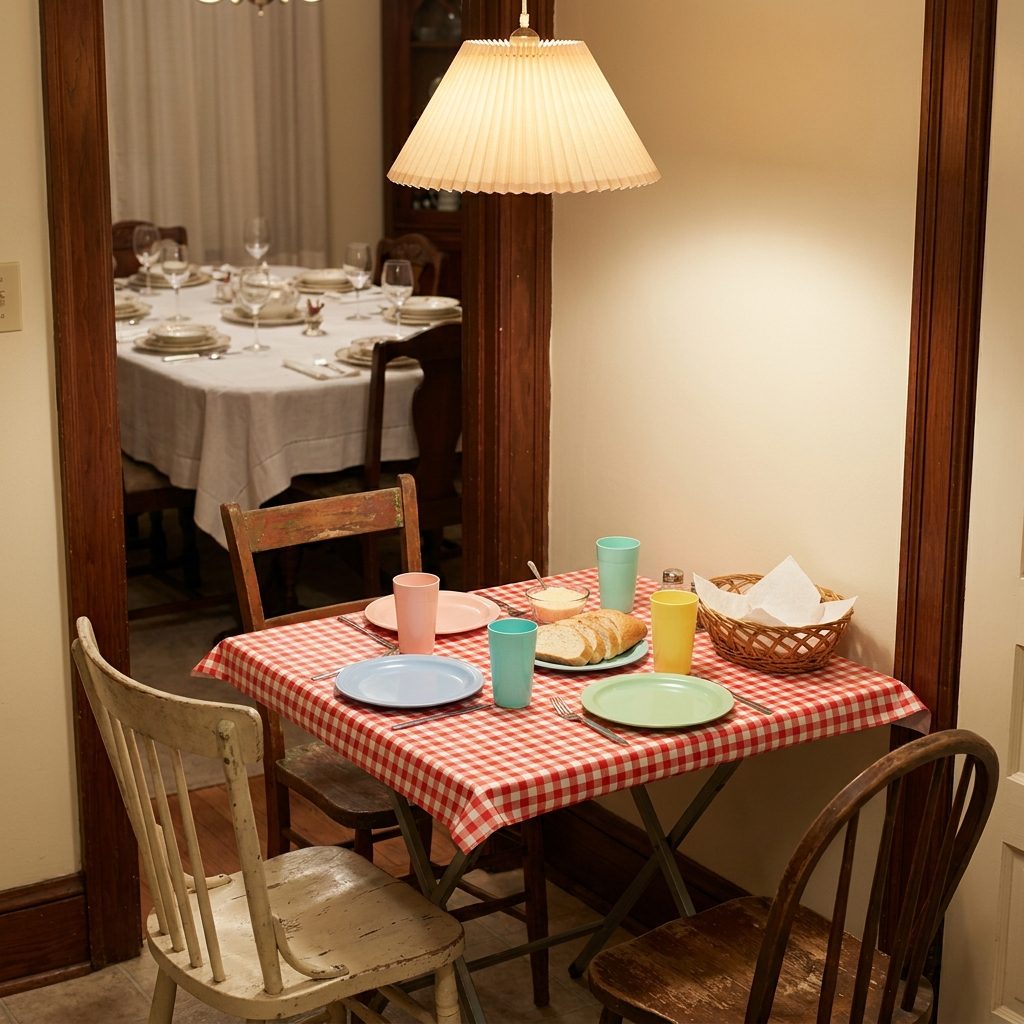
Kids ate in the kitchen. Adults ate in the dining room. This was not negotiable, and it was not a punishment, though it sometimes felt like one when you could hear the grownups laughing at something and you were stuck listening to your cousin describe his rock collection in exhausting geological detail.
The kids’ table had melamine because someone was going to knock something over before dessert. The adults had the good china. That math checked out even at age eight.
4. The Bottle of Chianti in the Straw Basket That Nobody Actually Drank But Everyone Kept on the Table
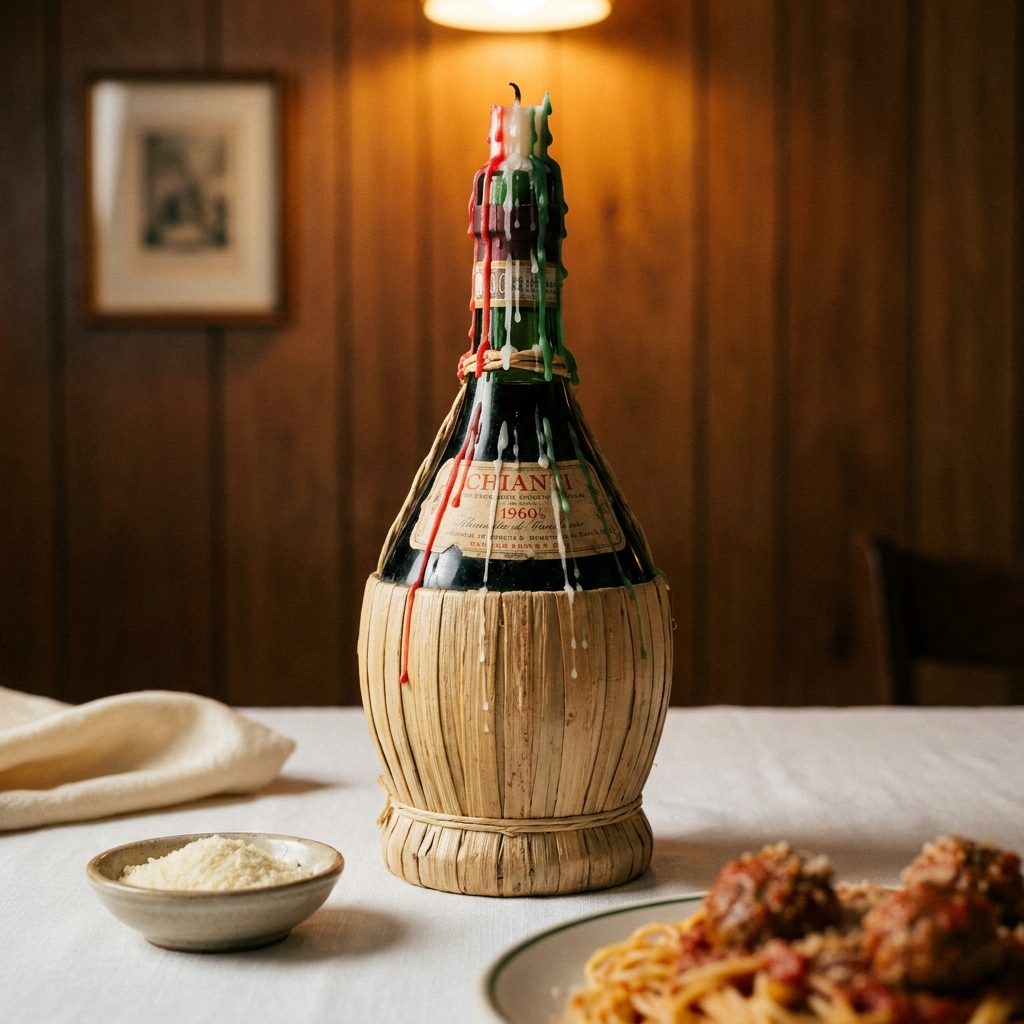
The Chianti bottle in the straw basket did not contain wine. It contained the memory of wine. Someone had drunk it years ago, then jammed a candle in the top, then a second candle, then a third, and by 1964 there was more wax than bottle and the whole thing looked like a small dripping cathedral.
It moved with the family through three apartments and one house. Never got thrown out. It was, in some quiet way, part of the family.
3. The Meatball Sandwich Made From Sunday’s Leftovers on Monday for School Lunch
Would you like to save this?
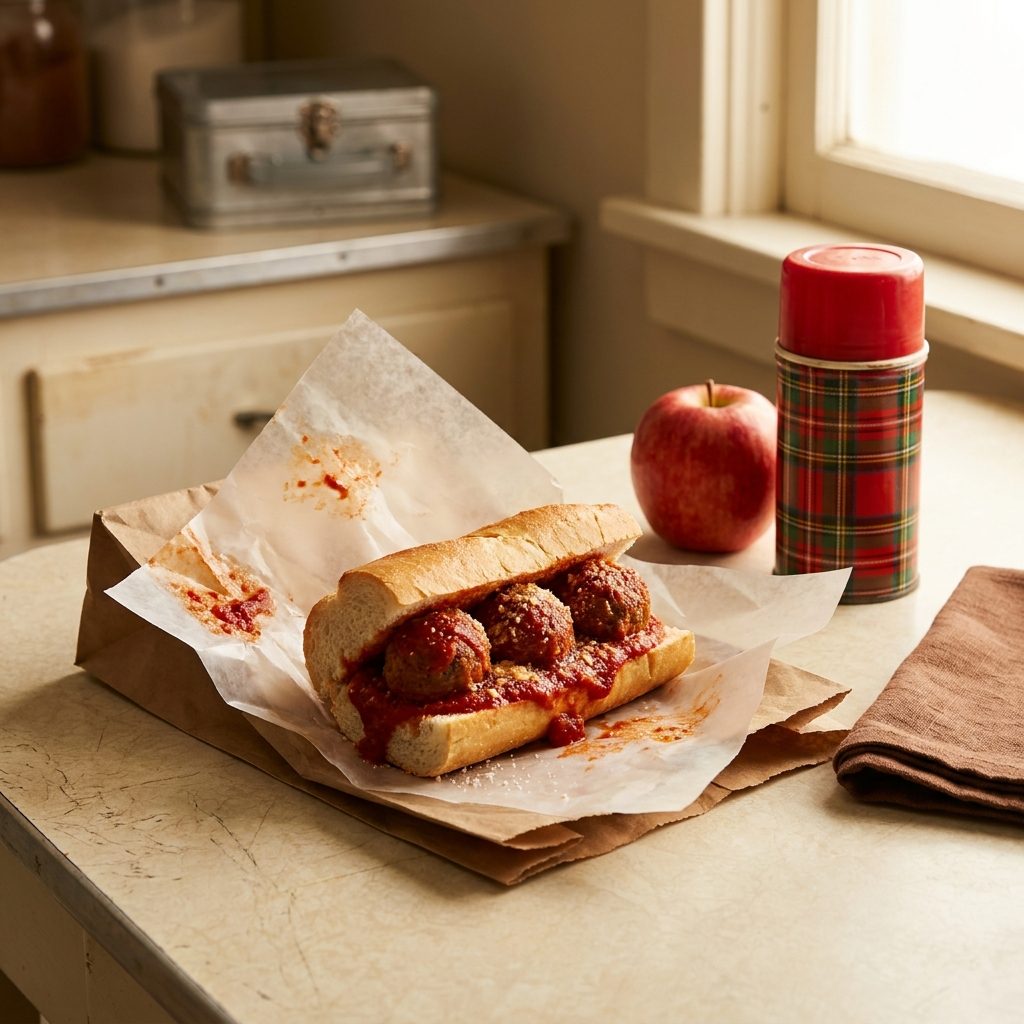
Monday lunch, if you were lucky. Two meatballs and a heel of Sunday’s bread, mashed together and wrapped in wax paper that would be soaked through by the time you got to the cafeteria.
You opened it and the whole table looked over. The kid with the bologna on Wonder Bread stared. You handed him half a meatball. That’s how alliances got formed in fourth grade.
2. The Way the Sauce Spattered Onto the Stove and Nobody Wiped It Until the Sauce Was Done
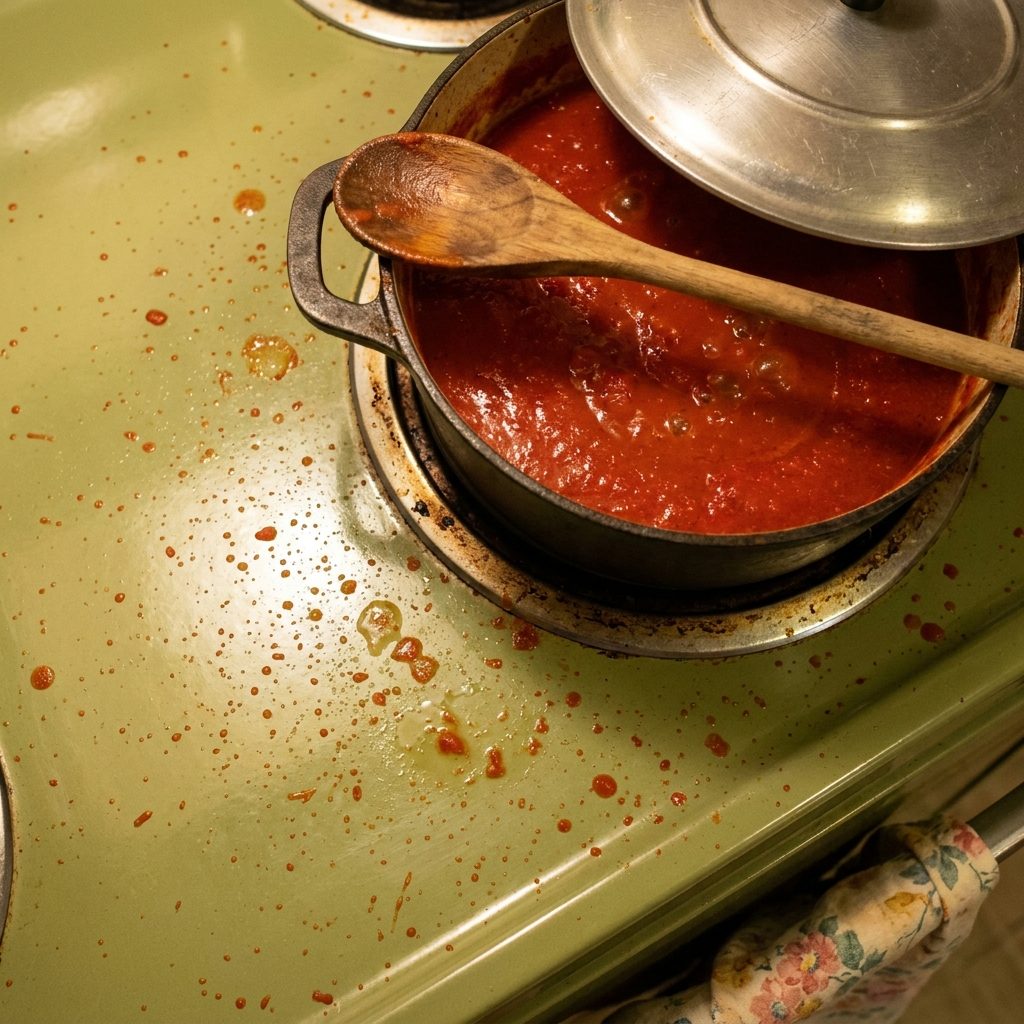
The sauce spat. That was its whole personality. The lid stayed tilted so steam could get out, which meant droplets of tomato launched themselves onto the stovetop at random intervals for hours on end.
You did not wipe them up. You could not wipe them up. The sauce was still going, and you wiped when the sauce was done — by then the drops had baked themselves onto the enamel and required a whole different tool to remove. That’s what Saturday was for.
1. The Grandmother in the Housecoat Who Showed Up Sunday Morning and Took Over the Kitchen Without Asking
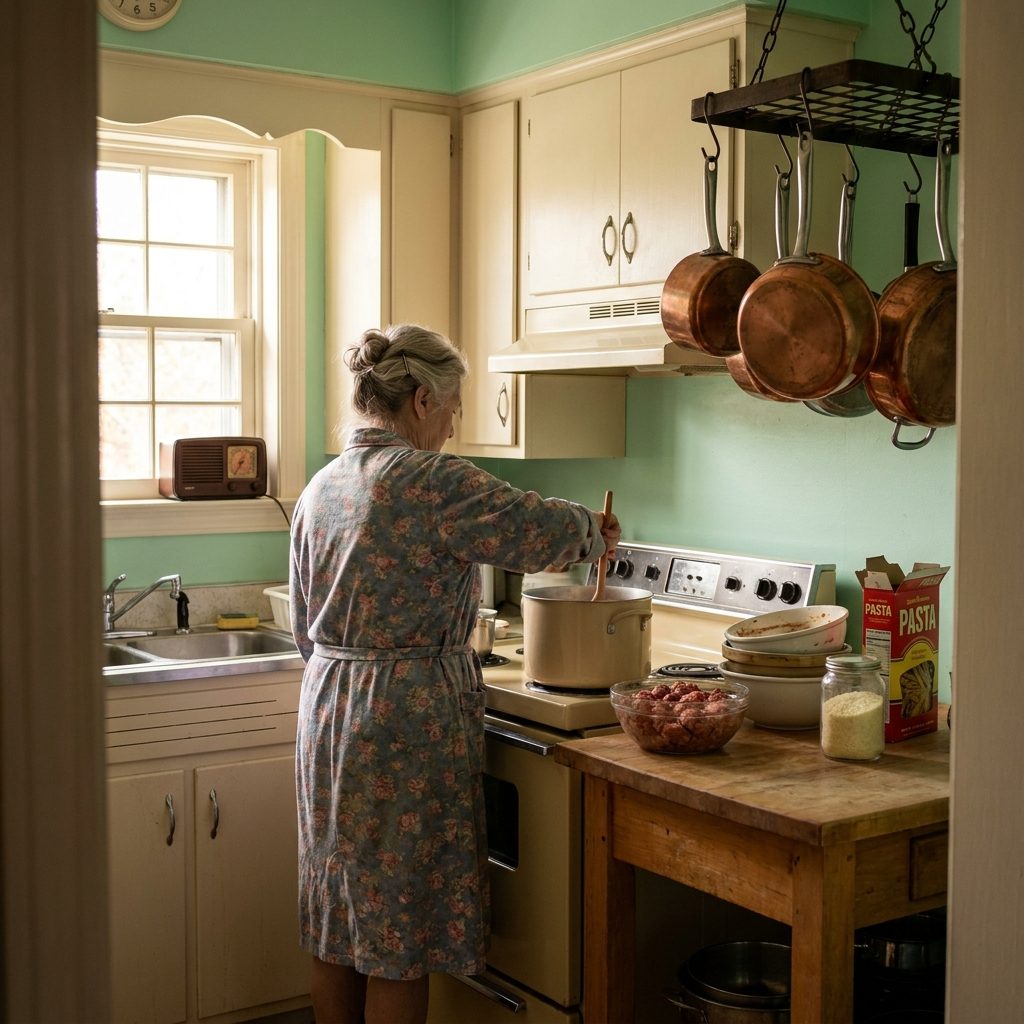
She came over to help. That’s what she said. What she actually did was walk into your mother’s kitchen and start rearranging it — the salt was in the wrong place, the heat was too high, the meatballs were too big, and this was not how her mother did it, and by extension, not how it should be done.
Your mother stood in the doorway with her arms folded. Your father found something to do in the garage. The sauce, in fairness, was excellent.