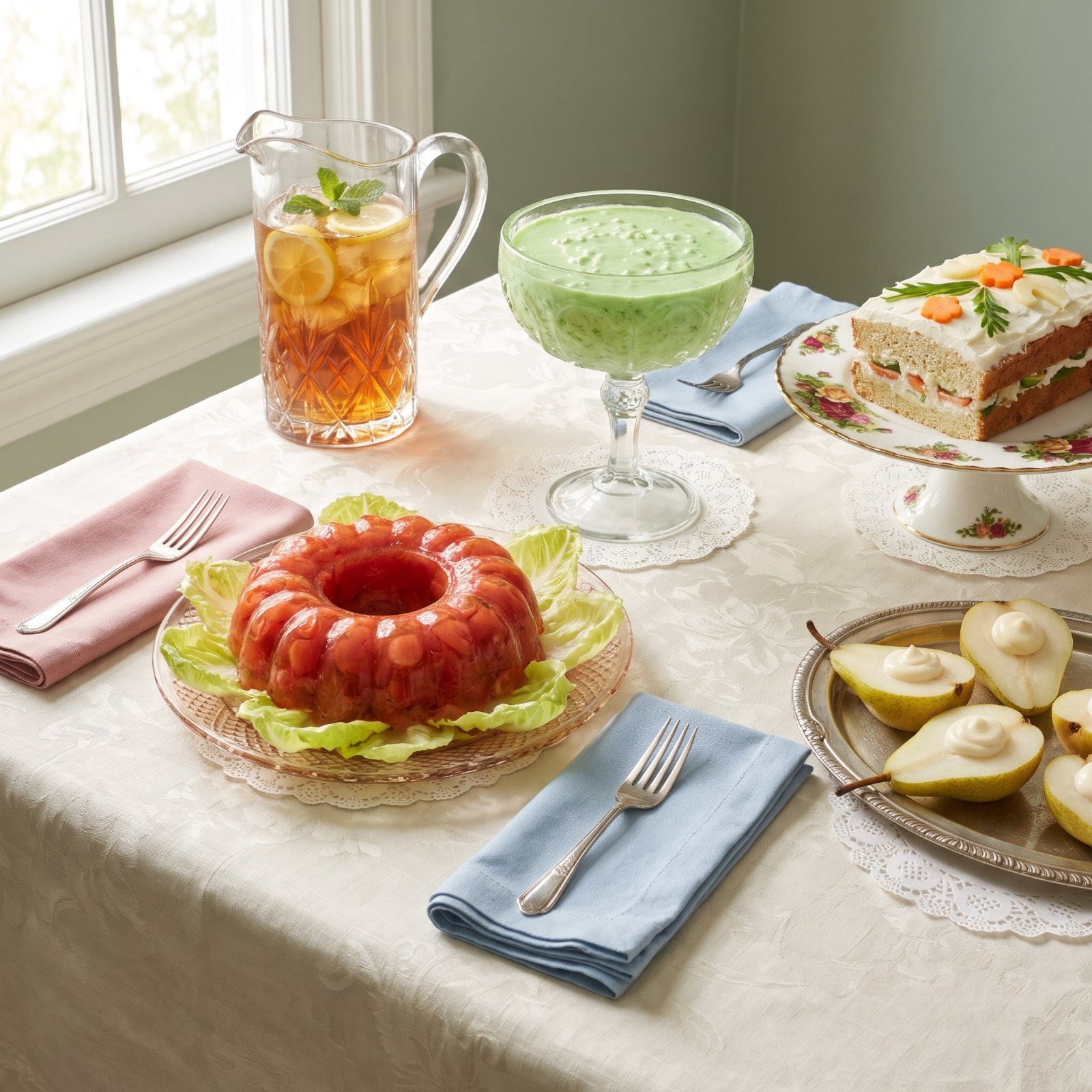
Somewhere in a suburban dining room, a hostess is unmolding a salmon-shaped block of pink mousse onto a lettuce leaf, and she is proud. The 1960s ladies’ luncheon ran on gelatin, mayonnaise, and nerve. None of this was a mistake. These dishes were the height of hostessing, photographed in color for every magazine your grandmother clipped, and the food gleamed and wobbled and stood at attention like it had somewhere to be. What follows is a table set the way it actually was, before anyone decided fruit should never meet mayonnaise.
Please note that some of the images in this article were created with the assistance of AI.
32. The Infamous Banana Candle Salad
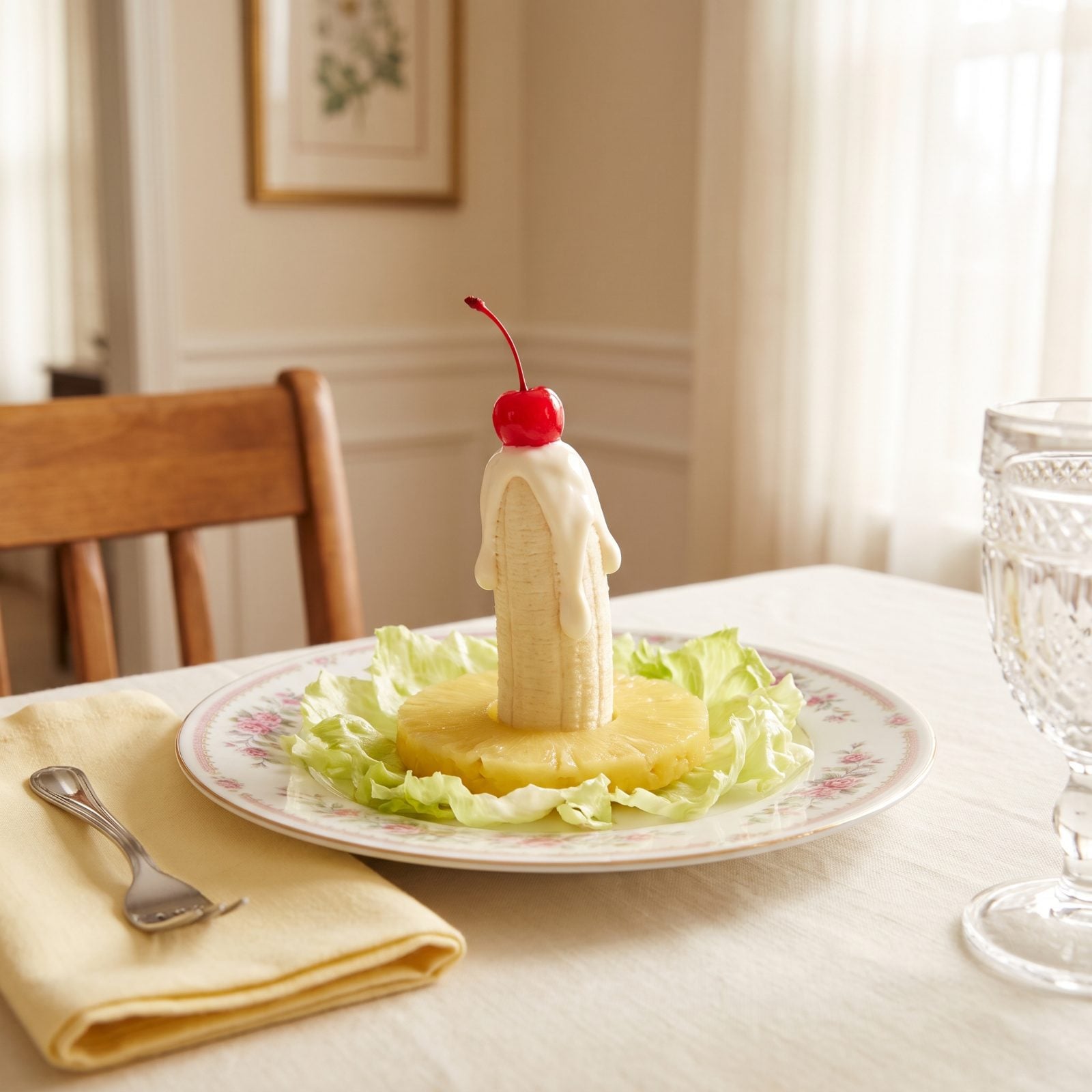
Nothing announces a mid-century luncheon quite like a peeled banana standing at full attention in a pineapple ring, crowned with a cherry and a trickle of mayonnaise meant to read as dripping candle wax. Yes, the mayonnaise was the wax. People ate it with a fork and thought nothing of it.
Every children’s charity cookbook and church bulletin printed a version. Cheerful, upright, and it photographed like a centerpiece. Set one down at brunch now and watch the table go quiet.
31. Tomato Aspic on a Lettuce Leaf
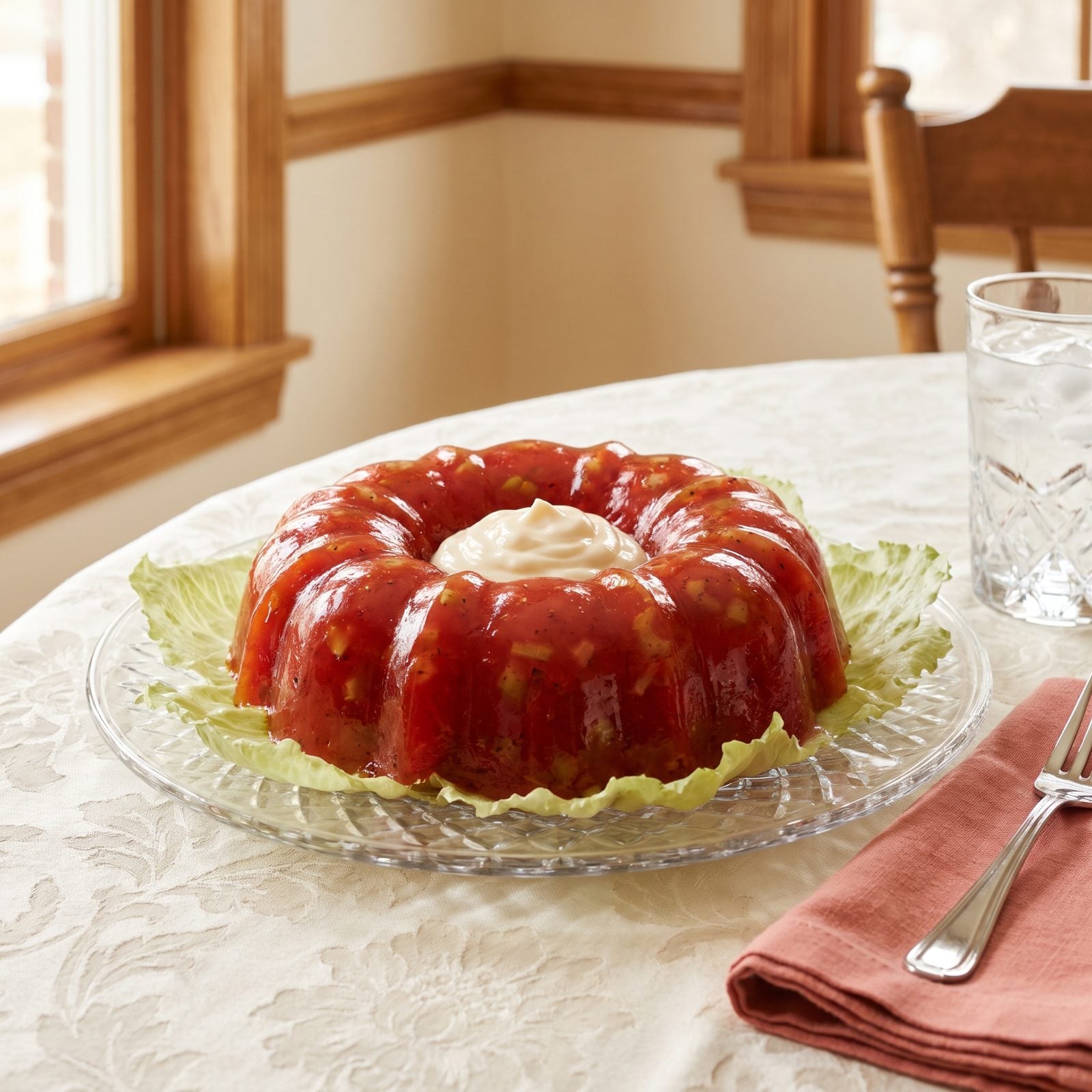
Imagine tomato juice, gelatin, and a whisper of celery set into a trembling red ring, slid onto a lettuce leaf, and served cold as a first course. This was not dessert. It was savory, and it was everywhere.
Tomato aspic sat at the respectable end of the gelatin spectrum, the one a serious hostess trusted. It paired with cold chicken and finger sandwiches, and a good one held its shape all the way to the last fork. A bad one went to pieces, which was its own small luncheon tragedy.
What Our Readers Say
- Today, food photos that look like the 1960s got hearts from our readers 36% of the time, compared with 68% for the other images in the same articles.
- When Piaci Pizza readers loved a food photo and gave a reason, comfort came out on top, with nostalgia and ingredients tied close behind.
From Piaci Pizza reader polls and votes.
30. Pear Halves with Mayonnaise and Cheddar
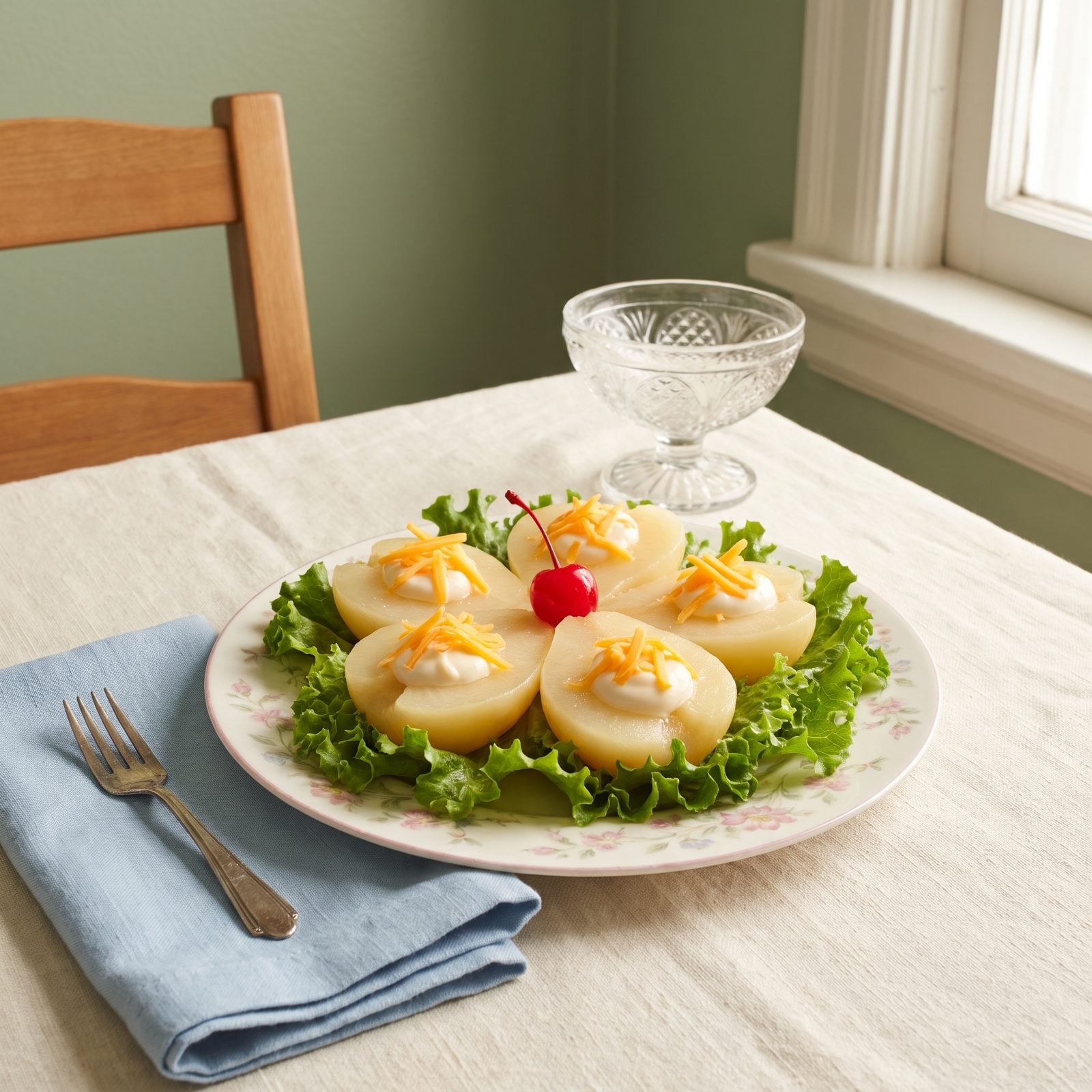
A slippery canned pear half, a scoop of mayonnaise nested in its hollow, a confetti of shredded cheddar across the top. Sometimes a cherry. This was considered a salad, filed proudly between the soup and the cold cuts.
The logic ran on contrast: sweet fruit, tangy mayo, sharp cheese, all cold. Nobody questioned it. That mayonnaise-on-fruit handshake defined an entire decade of hostessing.
29. A Cream-Cheese-Frosted Sandwich Loaf
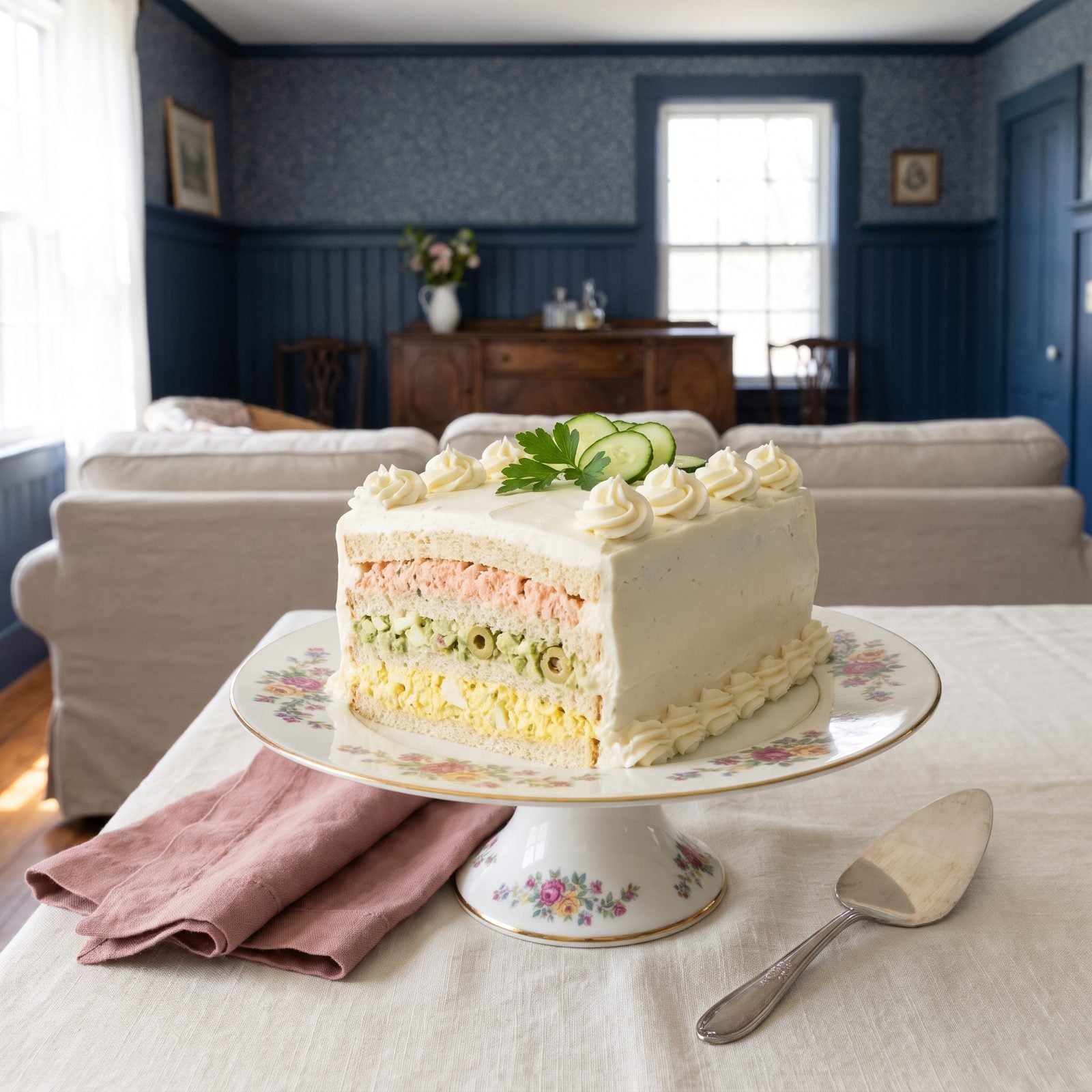
From across the room it looked like a frosted layer cake. Then the hostess cut a slice and out came stripes of salmon salad, egg-and-olive, and chicken, all bound in thin bread and sheathed in cream cheese smoothed on like buttercream.
The sandwich loaf was the showstopper, the dish you made when the bridge club or the new neighbor was coming. It took real effort: layering, chilling, frosting with an offset spatula, piping little rosettes on top. A savory cake that fooled the eye, right up until the first bite reminded you it was salmon salad.
28. Perfection Salad Suspended in Gelatin
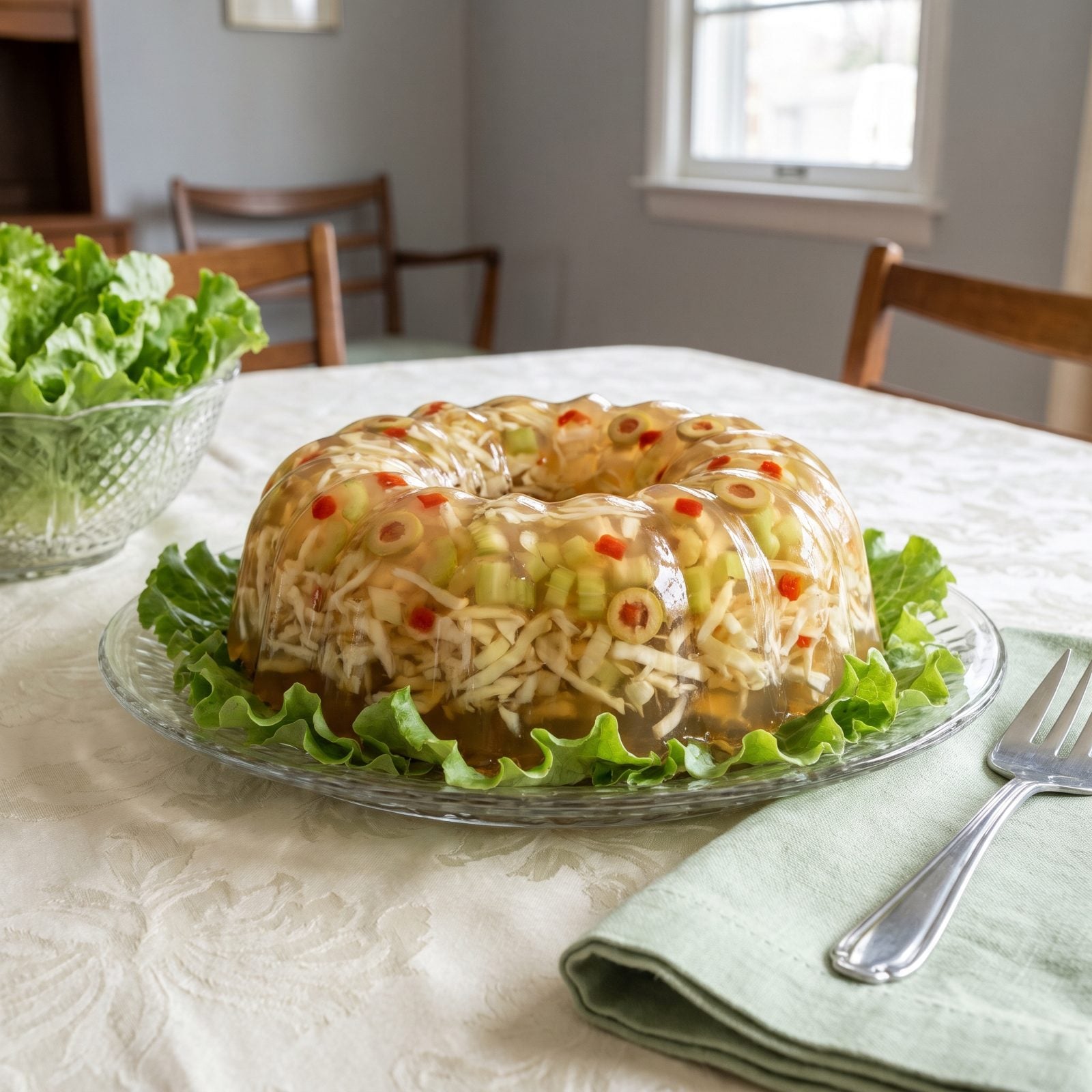
Shredded cabbage, celery, pimento, and sliced olives frozen in place inside a clear vinegar gelatin, unmolded and sliced like a terrine. This was the dignified one, a savory salad for people who considered tomato aspic a bit flashy.
Perfection salad placed in a recipe contest back in 1905 and never left the American table after that. By the 1960s it was a luncheon regular, prized because the vegetables hung suspended in mid-air, which was genuinely hard to pull off. Get it right and you had bragging rights. I’ll admit the suspended-olive effect is kind of mesmerizing.
For what it’s worth, salad photos get fewer hearts from our readers than the other images in the same articles, earning hearts 47% of the time versus 68%.
27. Lime Gelatin with Cottage Cheese
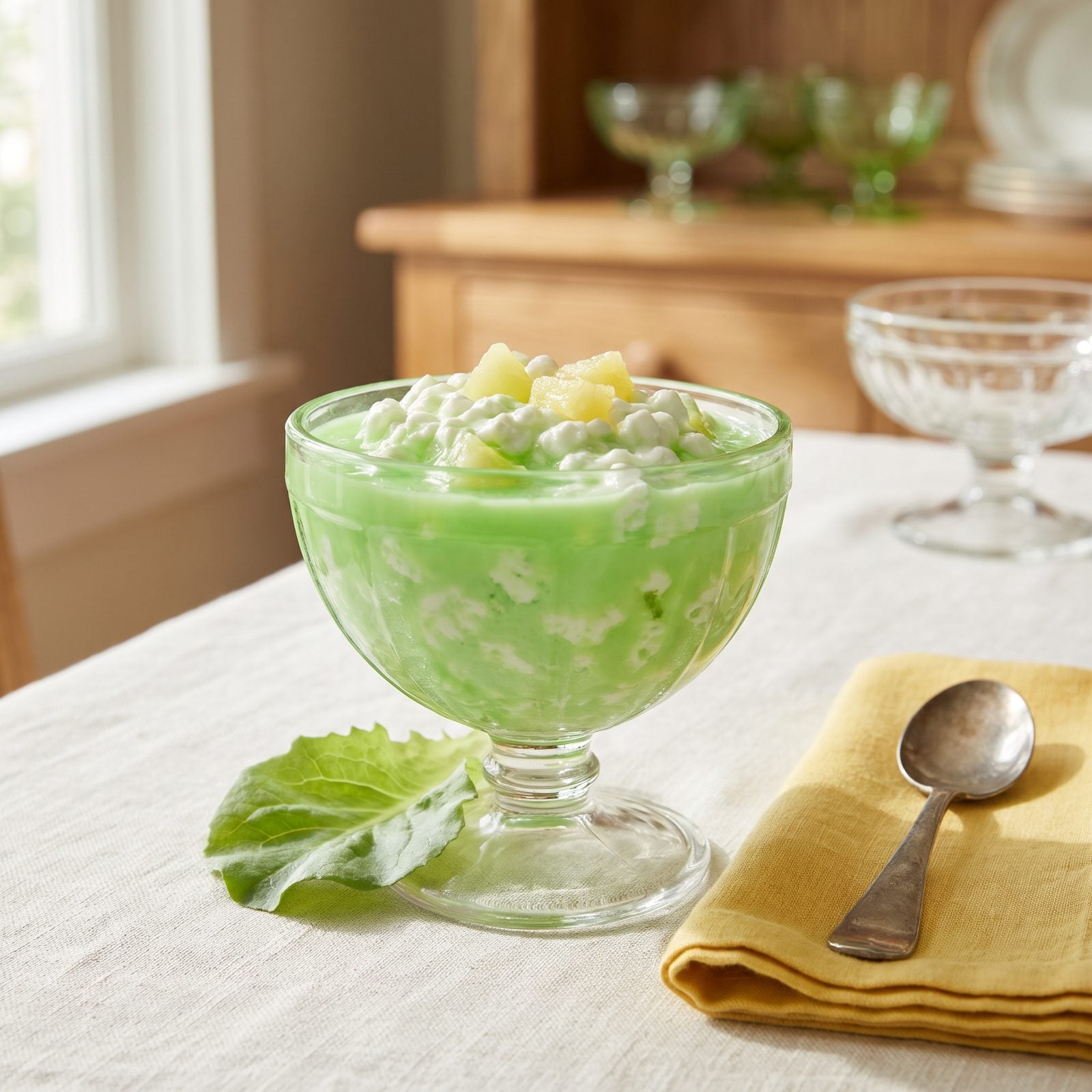
Lime gelatin, cottage cheese, and a handful of canned pineapple, stirred together until the green turned milky and the curds hung throughout. Served in a little footed glass dish, it blurred the line between salad and dessert so completely that nobody bothered to decide which it was.
This one showed up at every potluck and every luncheon in the Midwest. Cheap, fast, forgiving. You could not really ruin it, which is more than you can say for aspic.
26. Crown Jewel Gelatin Dessert
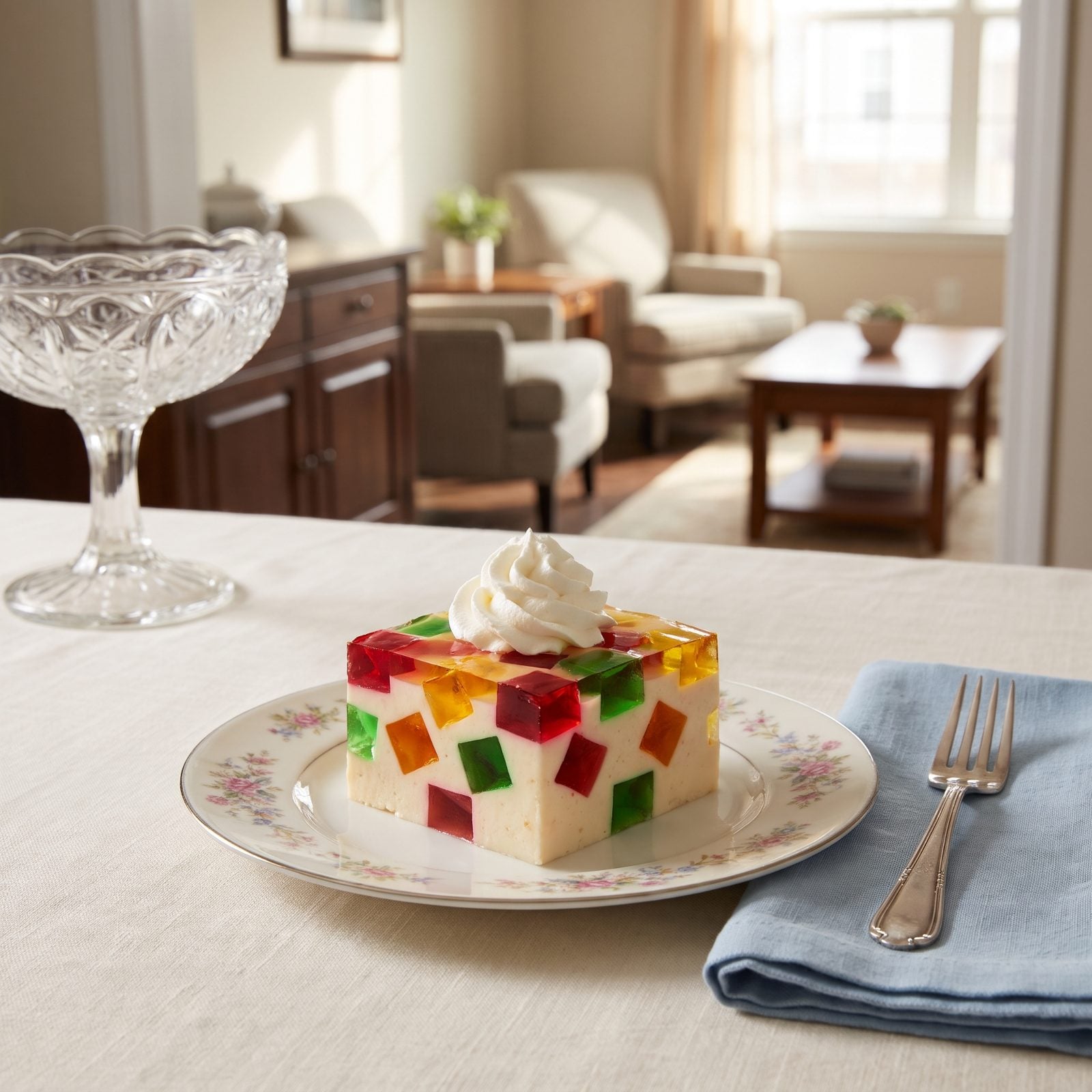
Set colored gelatin cubes, cut them into jewels, then suspend them in a creamy base so light passes through like stained glass. Slice it and each square revealed a little mosaic of red, green, and gold. You made this to impress, and it did.
Crown jewel gelatin, sometimes called broken-glass cake, took three days of staged chilling. Hostesses treated it as the dessert equivalent of needlepoint: fussy, time-consuming, and proof that you cared.
25. Frozen Fruit Salad Cut into Squares
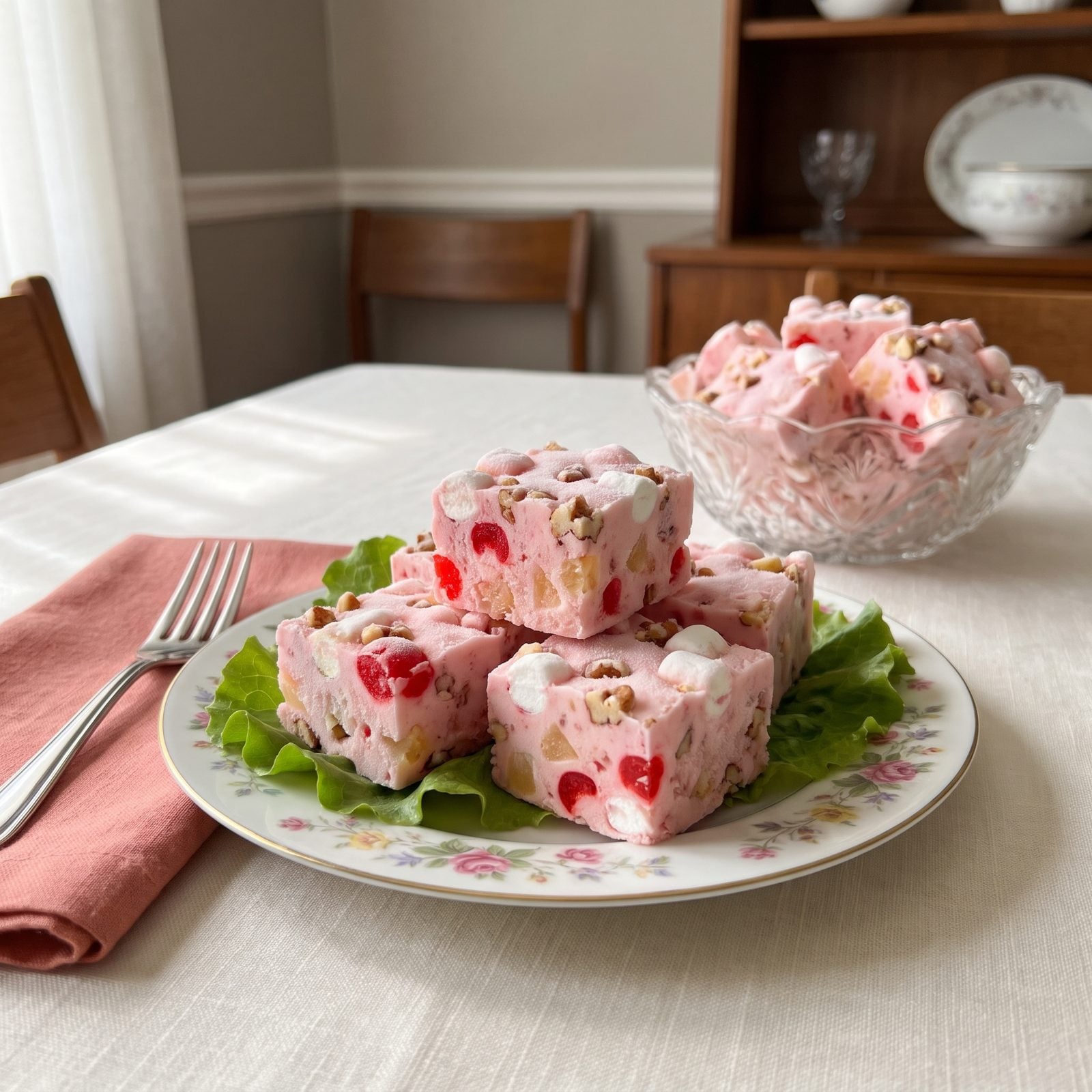
Whipped cream, cream cheese, crushed pineapple, cherries, marshmallows, and nuts, all folded together, frozen solid, then cut into cold pink squares and served on lettuce. The lettuce was non-negotiable. Everything in 1960s luncheon service, no matter how sweet, arrived on a leaf.
Frozen fruit salad bridged the dessert-salad divide better than anything on the table. Rich enough for the end of a meal, cold enough to pass as a salad, and the hostess got to make it a day ahead. That last part mattered more than taste.
24. Salmon Mousse Mold
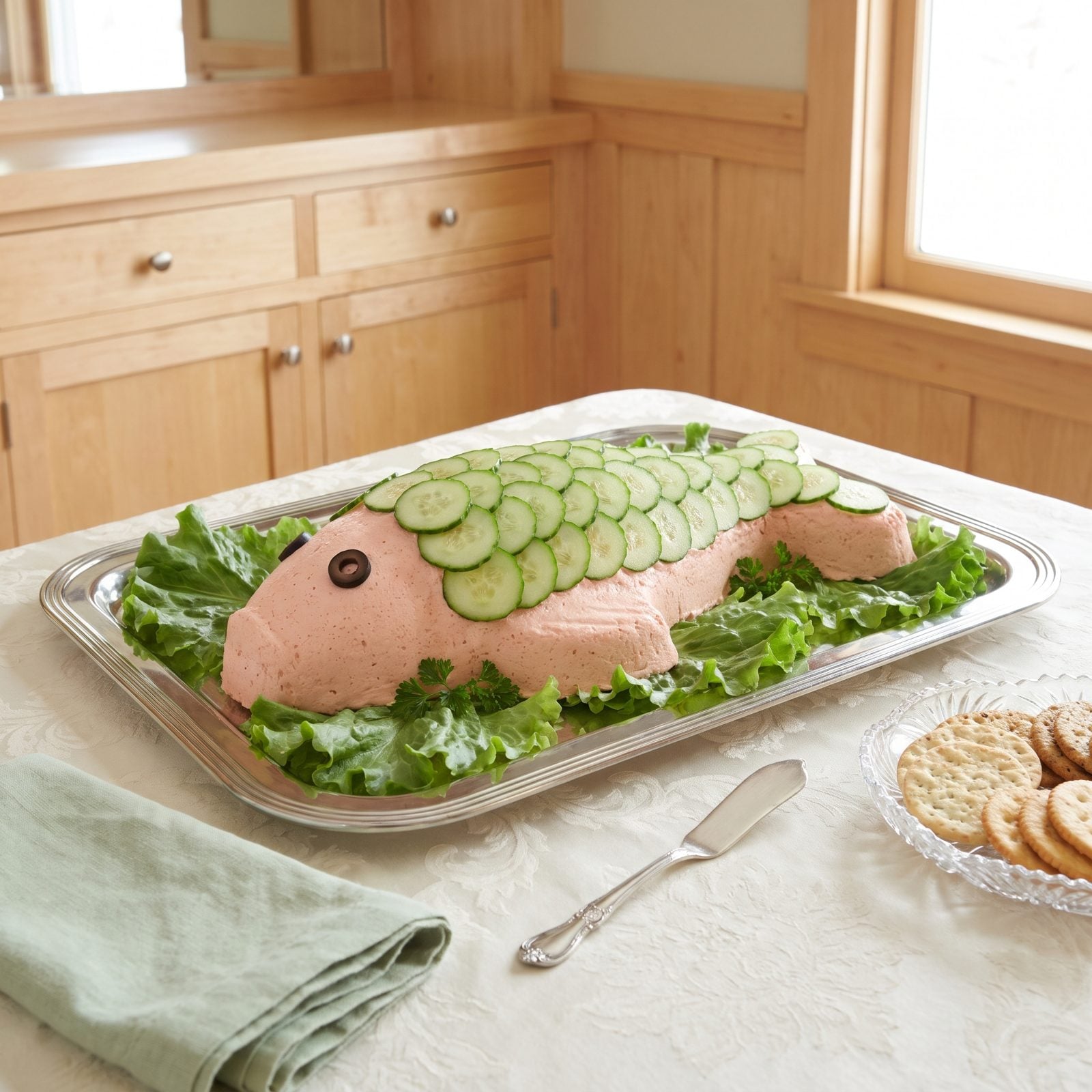
Canned salmon, gelatin, mayonnaise, and whipped cream blended smooth, pressed into a fish-shaped copper mold, and turned out onto a silver tray wearing cucumber scales and an olive eye. The fish shape, fins and tail included, was the whole point. A plain pink mound would not do.
Salmon mousse was the sophisticated hostess’s move, the one that said she owned the specialty molds and knew how to use them. Spread on a cracker, it was actually pretty good. The little fish staring back at you was the part people remember.
23. Chicken Salad in Pineapple Boats
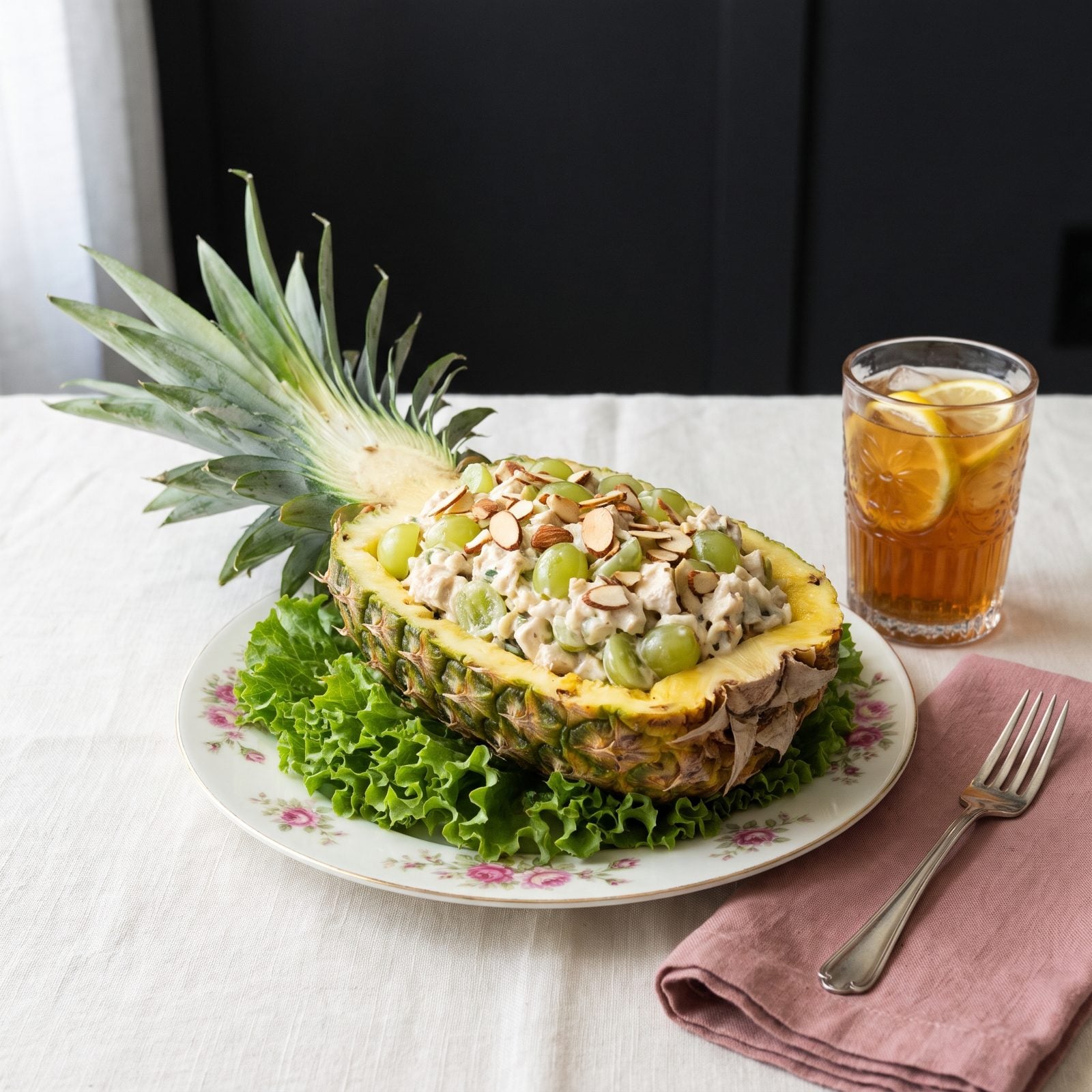
Hollow out half a pineapple, leave the leafy crown attached for drama, and pile the cavity with chicken salad flecked with grapes and almonds. The pineapple was serving dish and garnish at once, standing tall with its green spikes like something that happened to hold lunch.
This was the luncheon’s showpiece, the dish that felt tropical and generous and a little bit like a vacation. Honestly, strip away the era and it still holds up. Of everything on this table, the pineapple boat is the one I’d happily eat today.
22. Tuna-Stuffed Tomatoes Standing at Attention
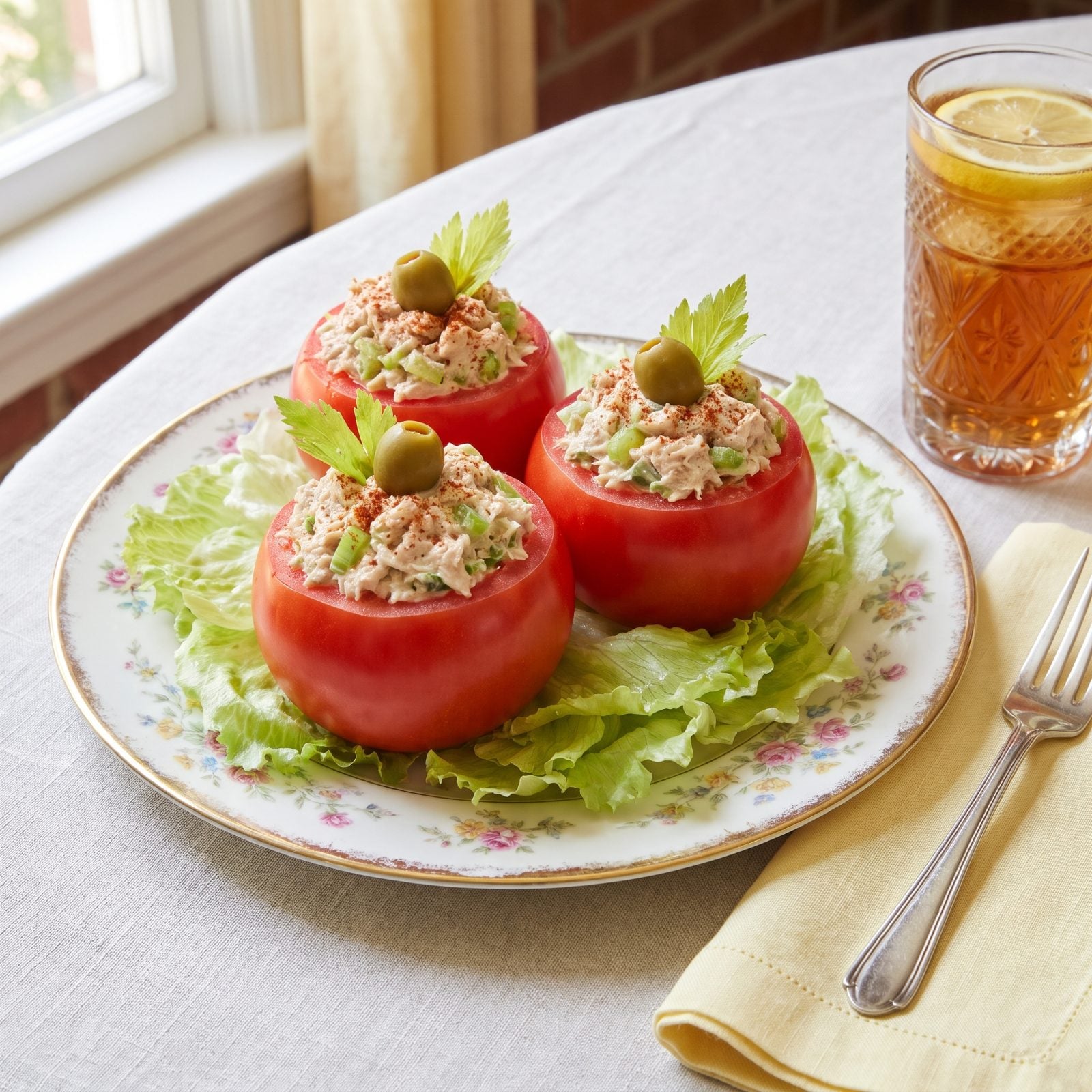
A whole tomato, scooped out and packed with tuna salad, served as the main event. Not a garnish. The centerpiece of a luncheon plate, sitting on a single lettuce leaf like it was waiting for applause.
The hollowing was the ritual — you cut the top, spooned out the seeds, salted the inside, and turned the whole thing upside down to drain before the tuna ever came near it. Paprika on top, mandatory. A modern brunch table would stare at this and wonder where the avocado toast went.
21. Crab-Stuffed Avocado Halves, Served Cold and Proud
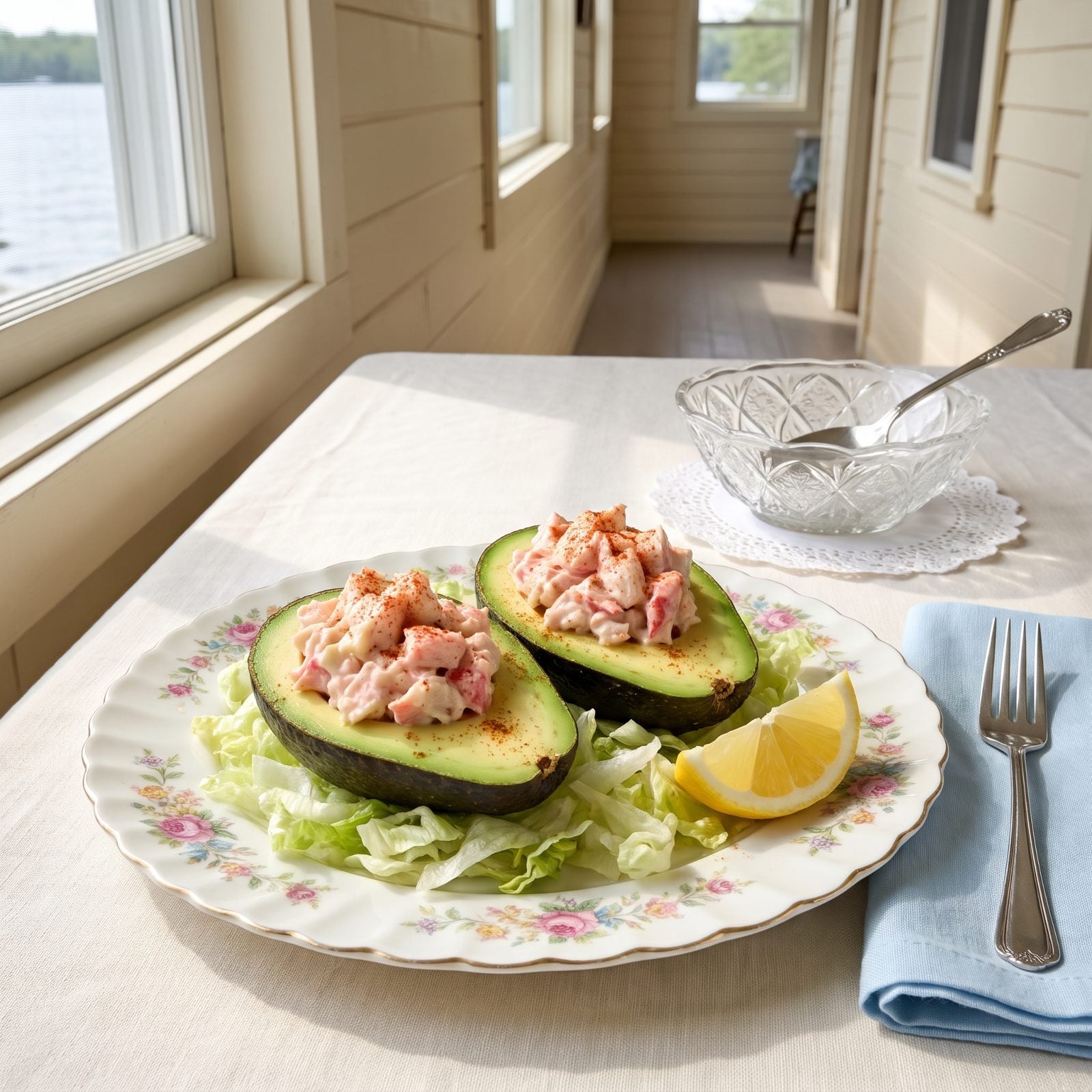
Half an avocado was a serving vessel long before it was a brunch cliché. You filled the hollow where the pit had been with cold crab salad, set it on lettuce, and sent it out unheated.
The crab came out of a can, the dressing was mayonnaise loosened with lemon, and the whole arrangement passed for rather elegant. I’ll admit it still sounds good to me, which is more than I can say for a few others coming up.
20. Ham and Asparagus Roll-Ups Under a Blanket of Sauce
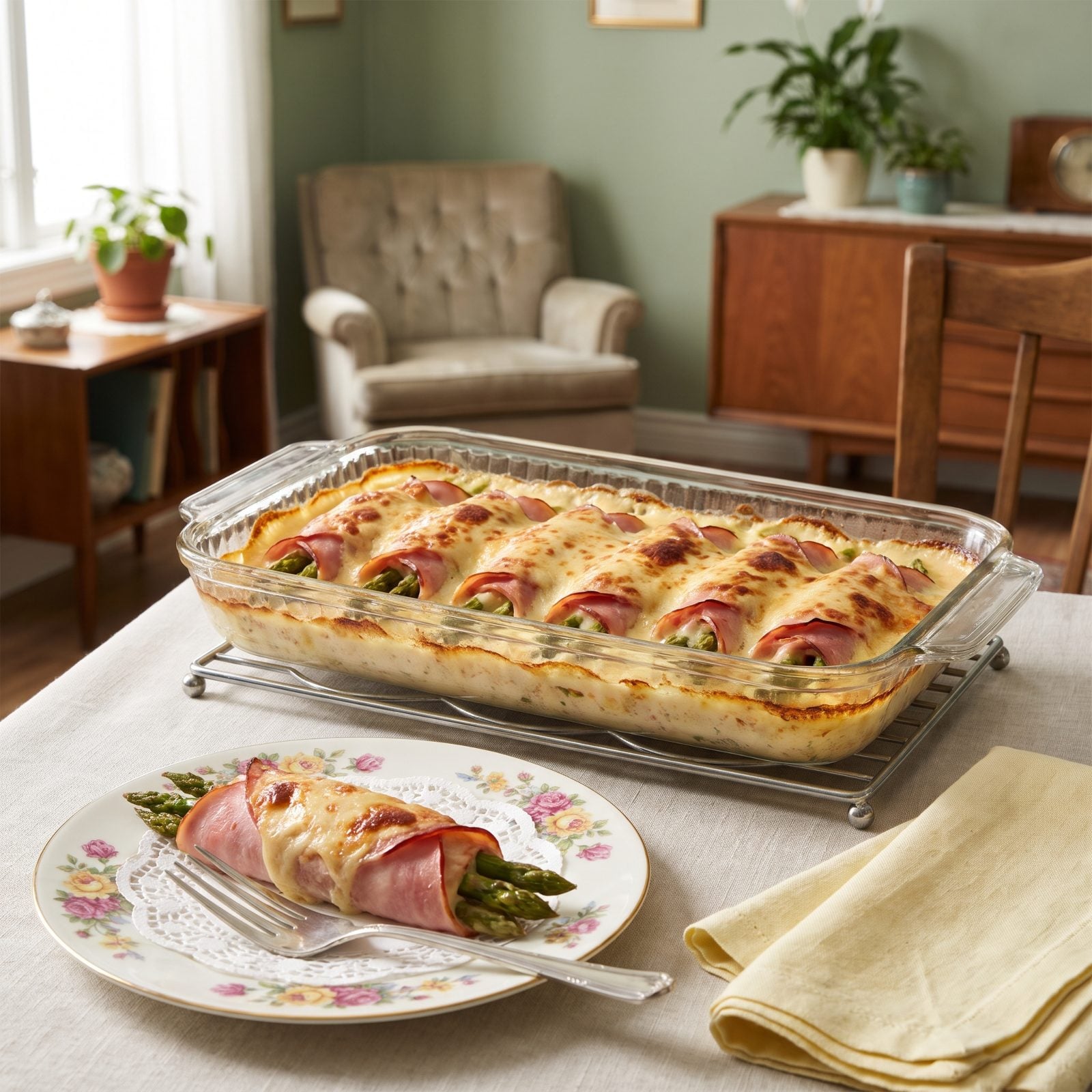
You took a slice of boiled ham, laid a bundle of asparagus spears across it, rolled it up tight, lined the rolls in a dish, and then drowned them in cheese sauce under the broiler.
Canned asparagus was common, which meant the spears bent without snapping. The ham was thin deli ham, nothing fancy. It arrived warm and a little wobbly, sauce pooling at the bottom of the dish.
19. Chicken à la King Spooned Into Pastry Shells
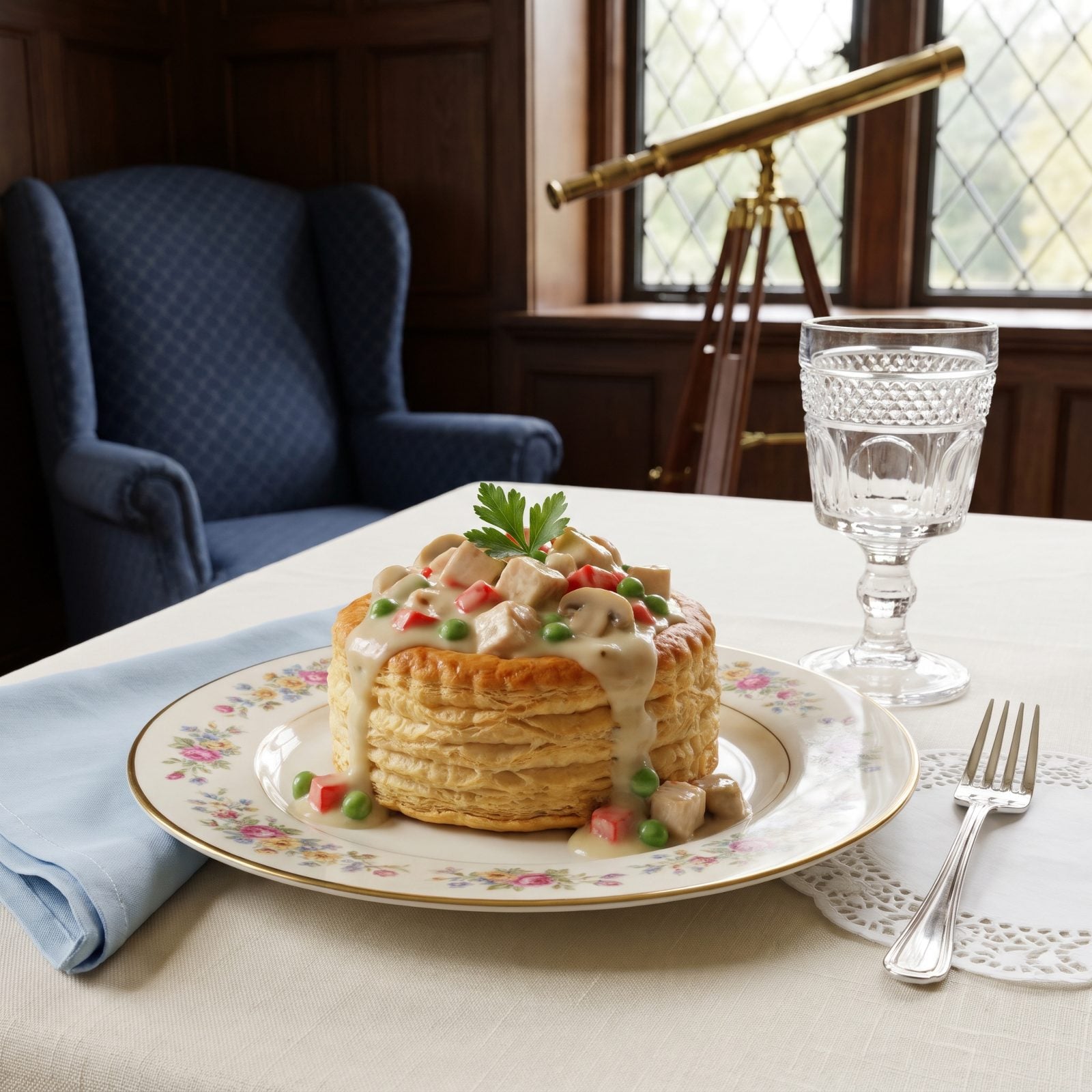
The pastry shell carried the whole production. A crisp vol-au-vent cup, store-bought or baked that morning, filled to overflowing with chicken in a sherry-spiked cream sauce studded with pimento and peas.
This signaled you had company worth impressing. The filling was comforting and a little rich, the pastry collapsed the moment your fork touched it, and those red pimento flecks were there mostly for color. One chafing dish fed a crowd and looked like effort even when it wasn’t.
18. Creamed Tuna Poured Over Crisp Toast Cups
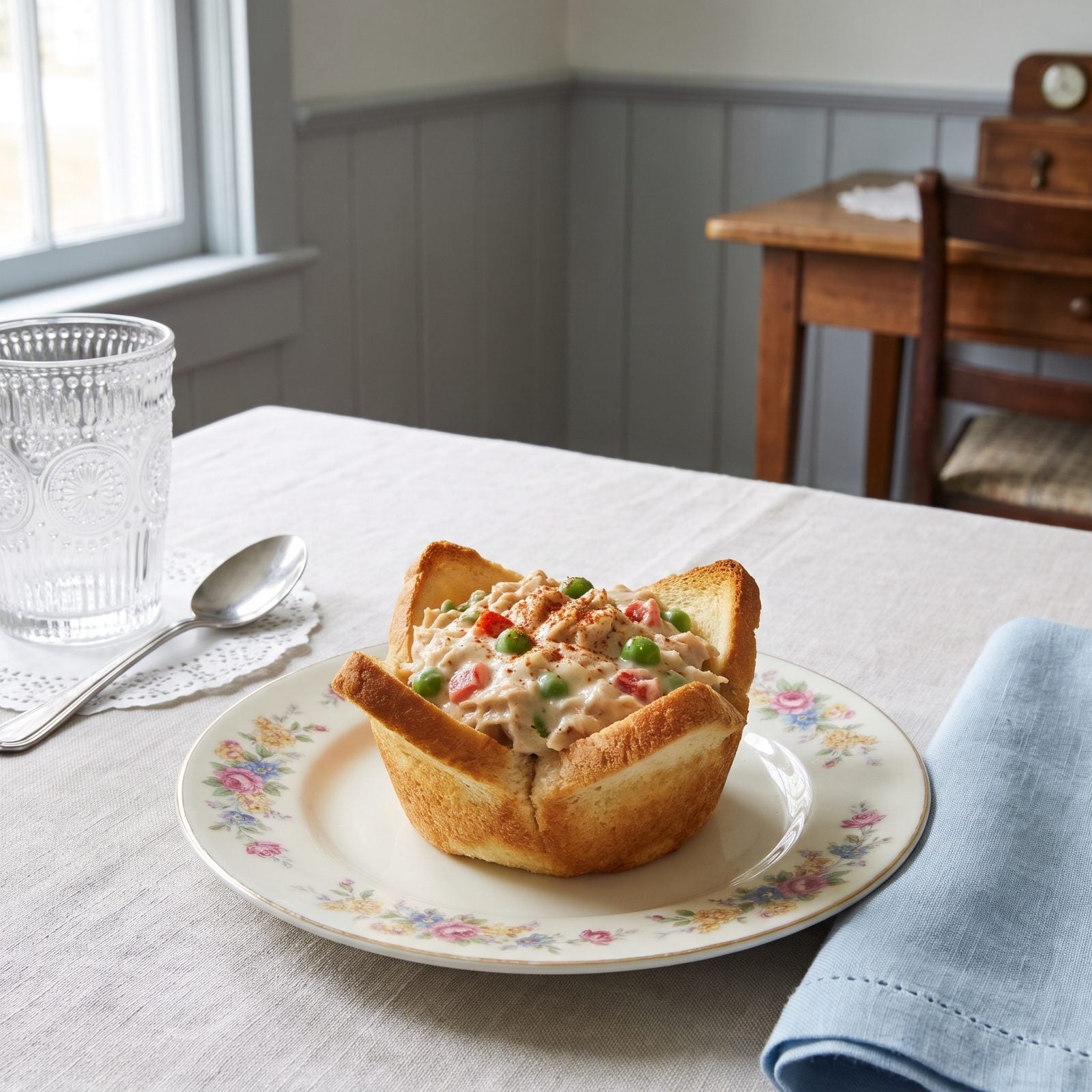
Flaked tuna, a flour-and-milk white sauce, maybe some peas, poured steaming into crisp toast cups built from slices of bread. Thrifty, hot, and perfectly respectable company food.
That toast cup is the detail that would stop a modern brunch cold. You trimmed the crusts from plain white bread, pressed each slice into a muffin tin, and baked them into crisp, golden-rimmed cups before the creamed tuna went inside. One can, turned into a hearty plateful.
17. Hot Chicken Salad Casserole, Topped With Crushed Potato Chips
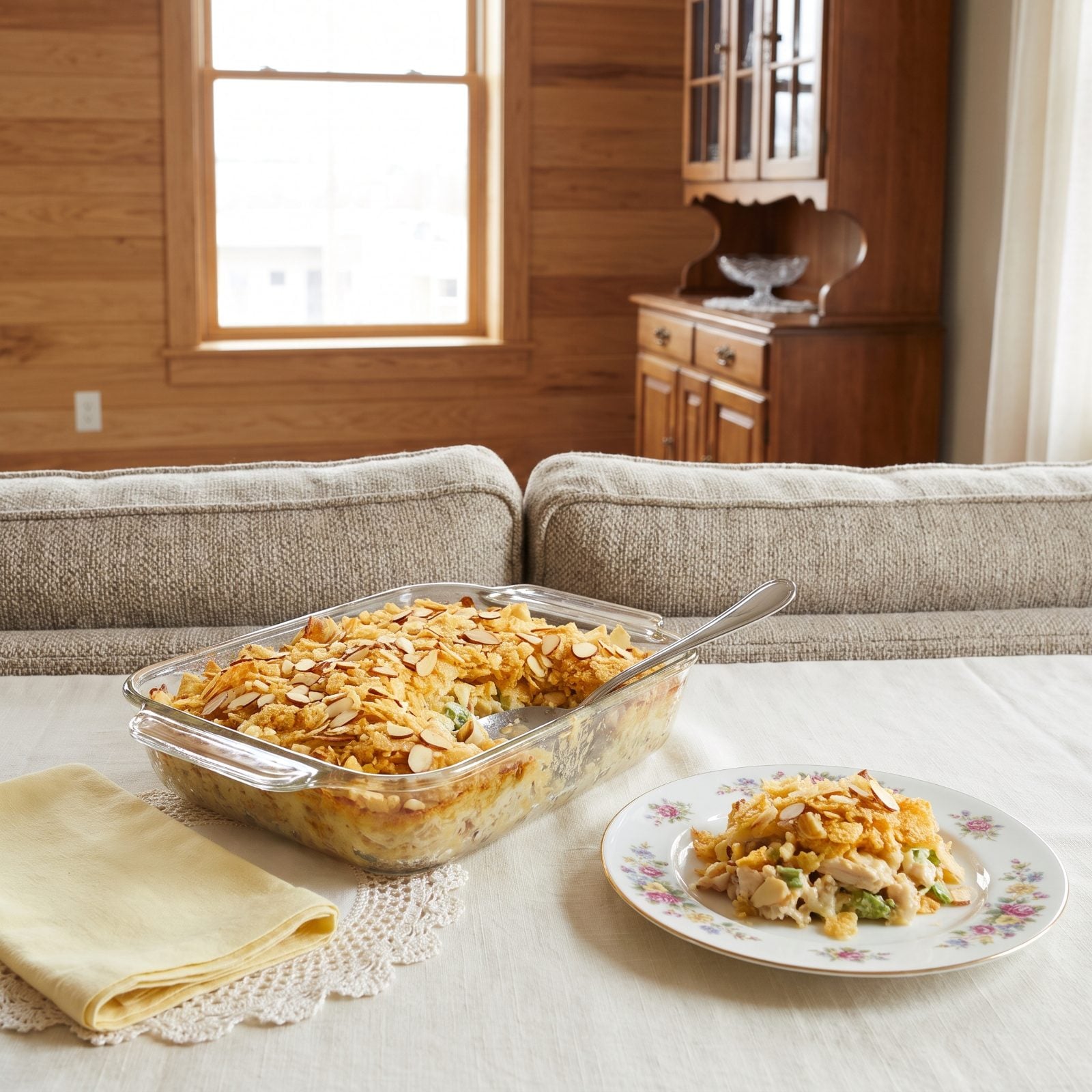
Chicken salad, but baked. Diced chicken folded with celery and water chestnuts, bound with mayonnaise and a can of cream-of-mushroom, then crowned with crushed potato chips and slivered almonds and sent into a hot oven.
The cold-salad-served-warm idea is what trips people up now. The water chestnuts stayed crunchy, the chip topping went crisp and golden, and the whole thing came out bubbling at the edges. Bridge luncheons, baby showers, the hostess’s good Pyrex — it turned up everywhere.
16. Salmon Croquettes Napped With Cream Sauce
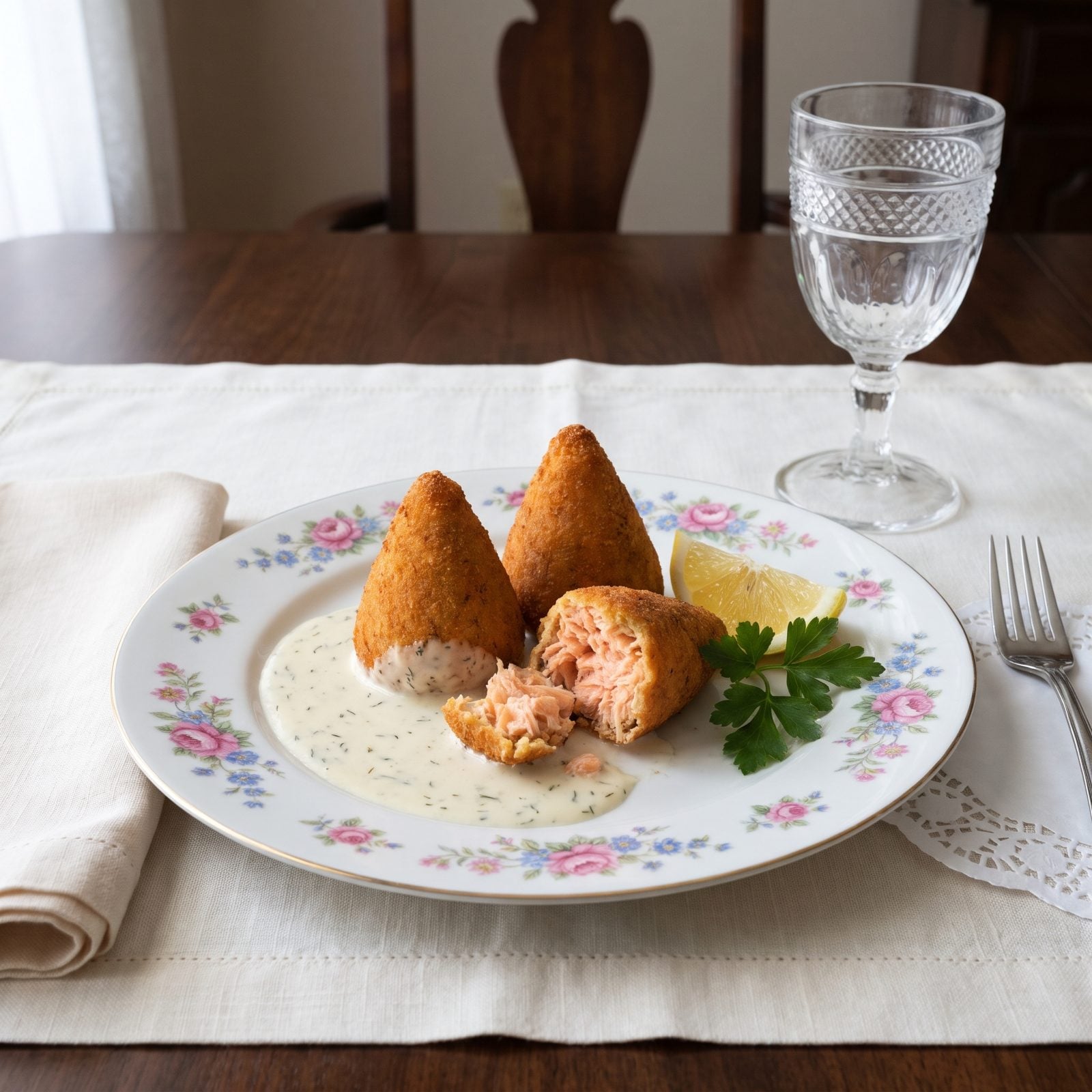
Canned salmon mashed with cracker crumbs and egg, shaped by hand, rolled in crumbs, fried into croquettes, then served beside a pool of cream sauce. Crunchy outside, soft inside, sauce alongside for dipping.
Every family had a version, usually inherited from a grandmother. The sauce was non-negotiable — a basic white sauce or a dill cream spooned onto the plate alongside right before serving. Cold with a lemon wedge, it was a weeknight supper; hot beside a pool of cream sauce on the good china, it became luncheon fare.
15. Brown-Sugar-Glazed Ham Loaf, Sliced Thin
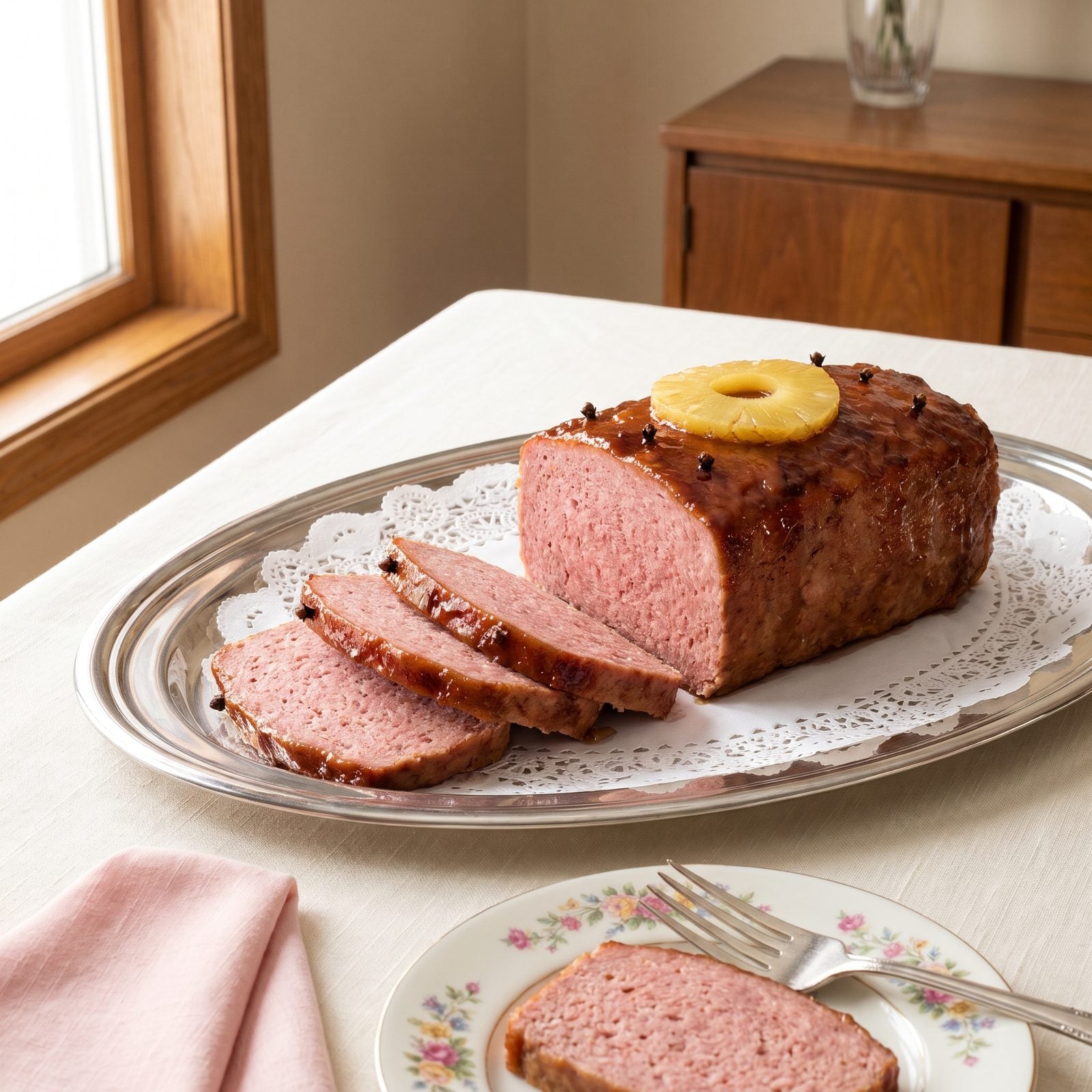
Ground ham and pork, mixed with crumbs and egg, pressed into a loaf pan and baked under a sticky brown-sugar-and-mustard glaze until the top lacquered. Sliced thin, it fanned across a silver tray.
This one straddled the line between luncheon and potluck. The sweet-savory glaze was the draw, often brushed on with a pineapple ring pressed into the top, and cold leftovers went into sandwiches the next day. I’d happily eat a slice right now, which tells you the ham loaf aged better than its reputation.
14. Seafood Newburg Ladled Over Toast Points
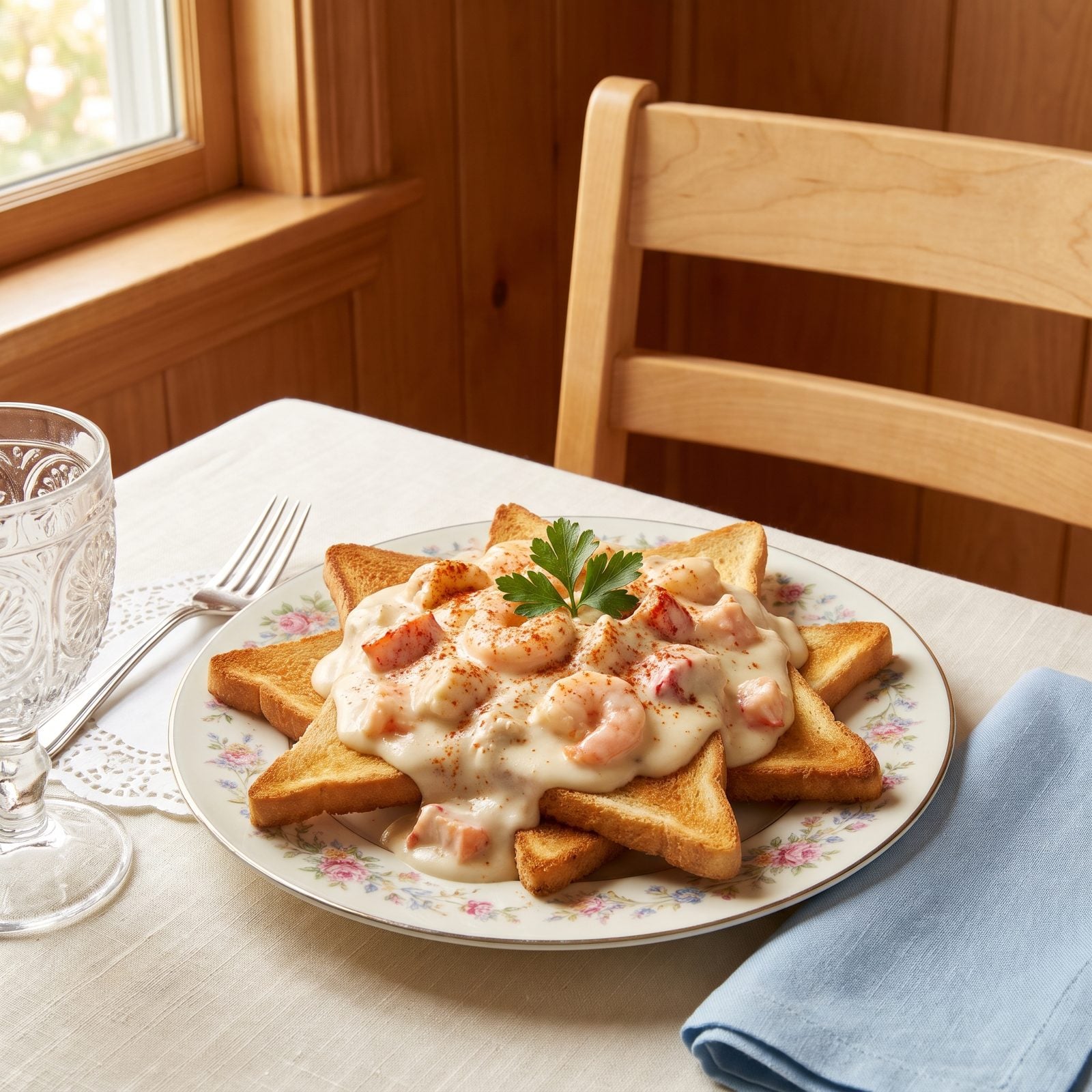
The grand dame of the luncheon table. Shrimp, crab, and sometimes lobster in a sherry-laced cream sauce thickened with egg yolks, ladled over crisp toast triangles with the crusts cut off.
Newburg came out when the guest list mattered. Rich enough to feel special, built from a chafing-dish sauce that hostesses took dead seriously. Those toast points were cut into precise triangles and fanned around the plate, their one job to soak up the sauce without going soggy too fast.
13. Three-Layer Ribbon Sandwiches, Cut Into Dainty Strips
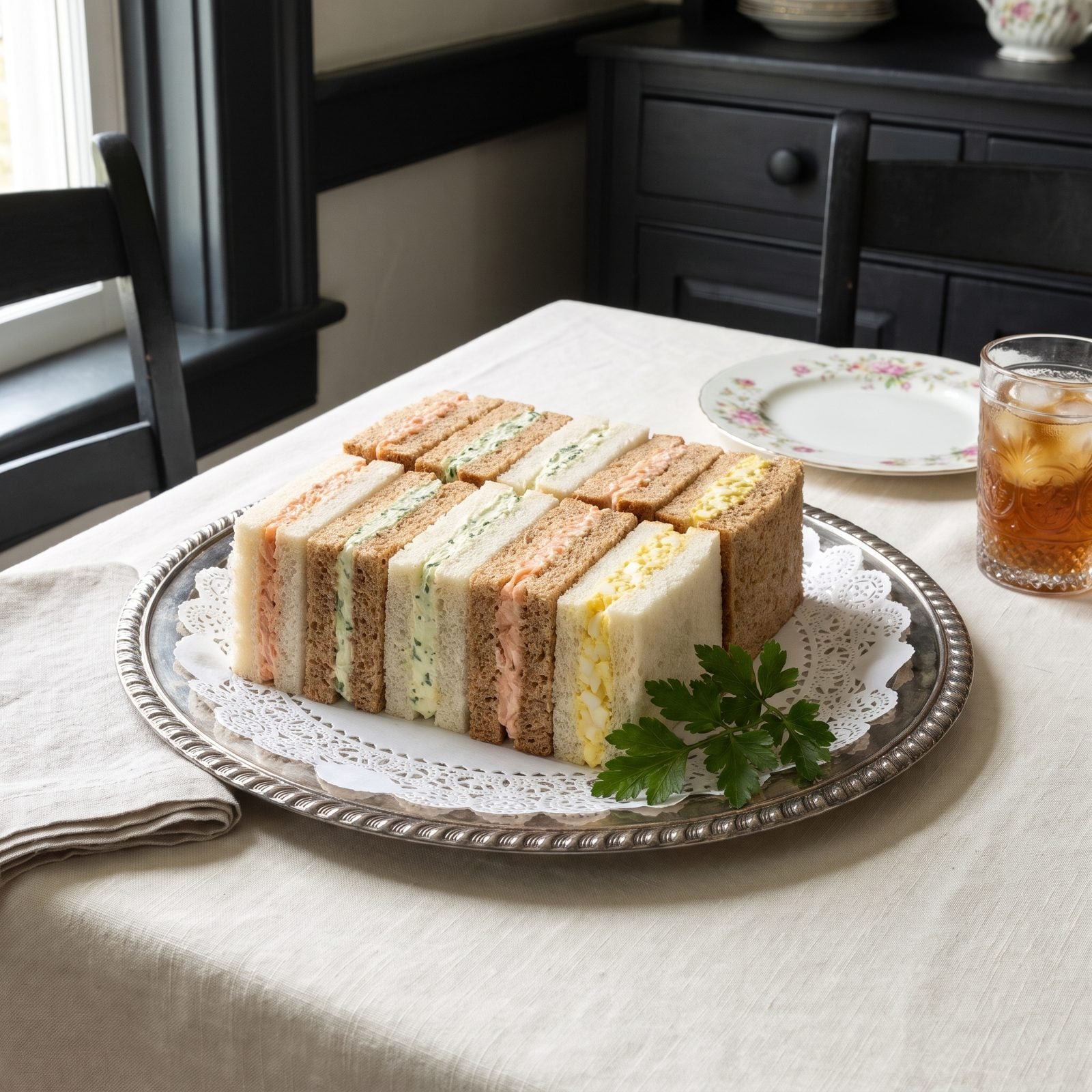
The prettiest thing on the table. Slices of white and wheat bread, often alternated, stacked with tinted fillings between them, crusts shaved off, then cut into fingers and stood upright side by side, in two rows one behind the other, so each little sandwich showed its stripe of filling.
The fillings were color-coded for effect — pink salmon spread, green cream cheese tinted with a drop of food coloring, pale egg salad. Precision mattered. A good ribbon sandwich had sharp, even layers and no sag, and the whole lot stacked on a silver tray like little flags. Finger food meant to be admired first, eaten second.
12. Olive-Nut Finger Sandwiches on Trimmed White Bread
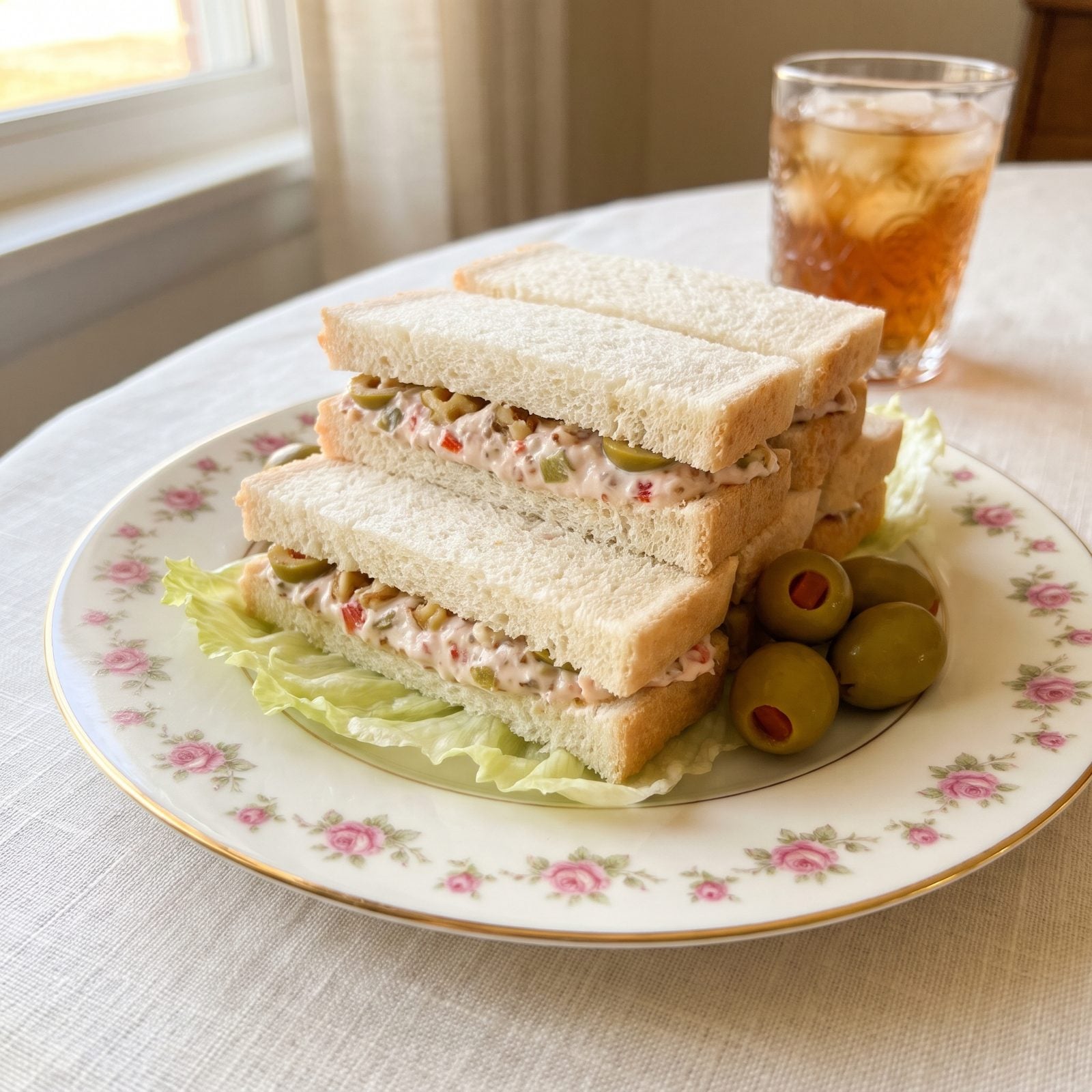
Cream cheese, chopped green olives, a fistful of walnuts, and a splash of the olive brine for good measure. That was the whole trick. The brine turned the spread a faint blush and gave it a salty bite that modern palates, raised on avocado toast, would find genuinely startling.
These went on soft white bread with the crusts cut away, then sliced into rectangles small enough to eat in two bites without disturbing your lipstick. A hostess made a mountain of them the night before and kept them under a damp tea towel in the icebox.
11. Pineapple Cream Cheese Sandwiches, Sweet and Unapologetic
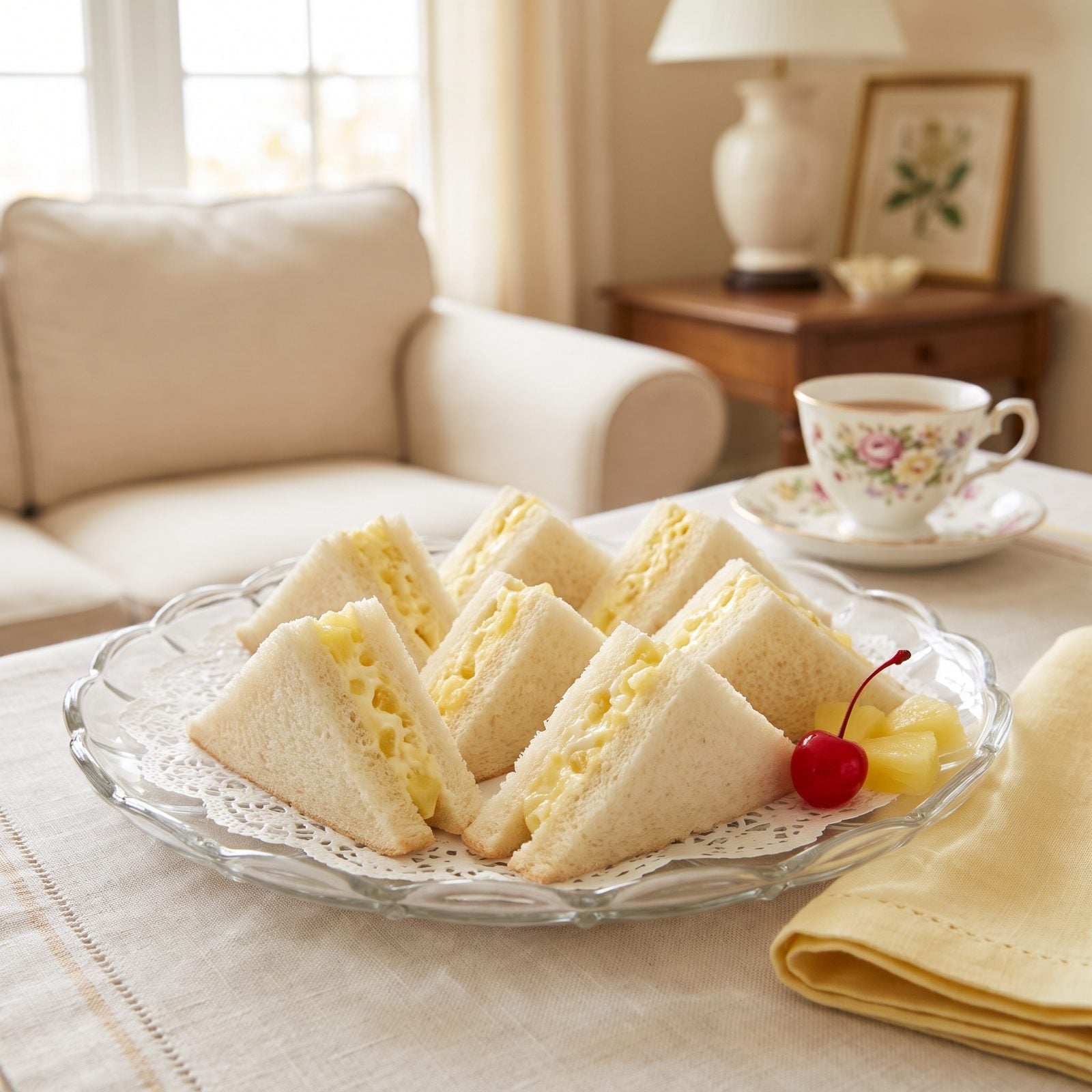
Here is where a modern brunch guest raises an eyebrow. A sandwich that’s essentially dessert, served as a savory course, and nobody at the 1965 table blinked.
Crushed pineapple folded into softened cream cheese, drained well so it didn’t soak the bread, spread between trimmed white slices and cut into triangles. Sweet, cool, a little tangy. It anchored a spread that treated sugar as a background note rather than a confession. You either loved these or quietly passed the plate along. I’m firmly in the loved-them camp.
10. Stuffed Celery Sticks Filled Edge to Edge
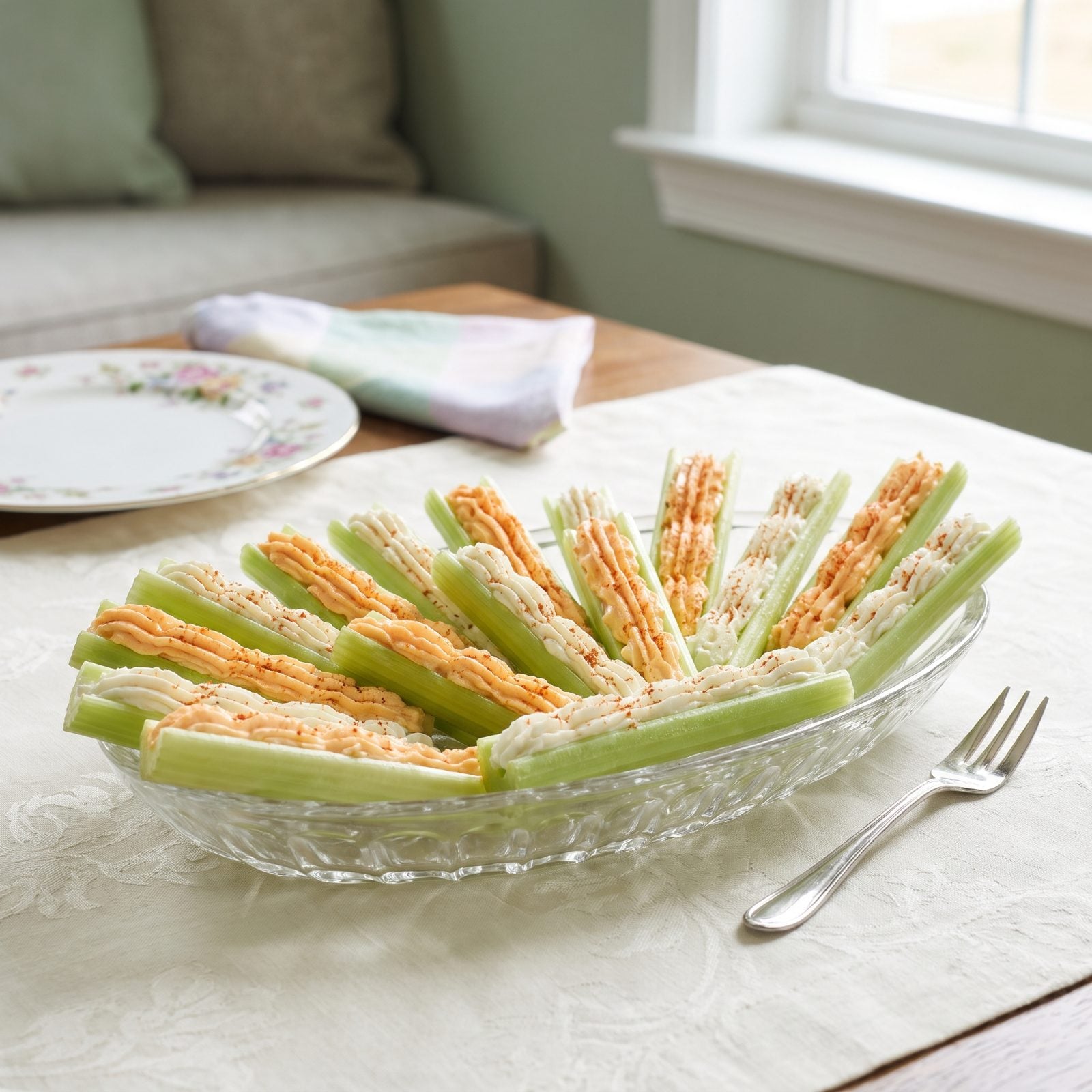
The crunch did half the work. A ribbon of cream cheese or pimento spread piped down the channel of a celery stalk, dusted with paprika for color, then cut straight across into long, finger-length sticks.
They cost almost nothing and looked like effort, which made them a hostess favorite. Cool, crisp, salty, endlessly refillable. You’ll still find them at a church supper if you know where to look, but on a modern brunch table they’d read as a curiosity.
9. A Port-Wine Cheese Ball Rolled in Chopped Walnuts
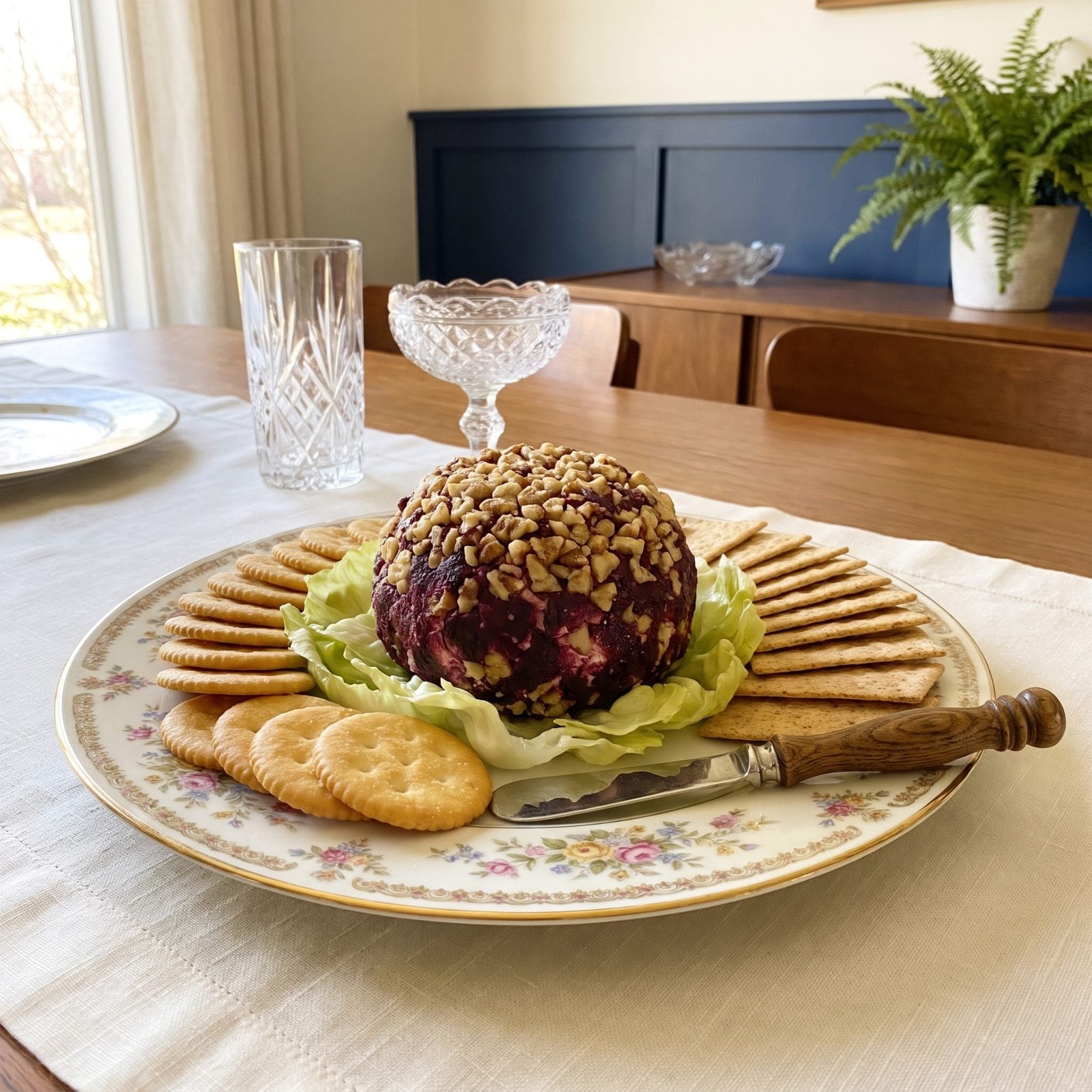
Every neighborhood had one woman whose cheese ball was requested by name. Sharp cheddar mashed with cream cheese, a slug of port, a dash of Worcestershire, chilled into a sphere and rolled in chopped nuts until it looked like something excavated from a dig site.
You set it out an hour early so it softened to spreadable, surrounded it with a fan of crackers, and handed guests a little spreader. It held court on the coffee table through countless bridge games and open houses.
A cheese ball is the only hors d’oeuvre that improves the longer the party runs late.
8. Clam Dip with a Bowl of Ridged Potato Chips
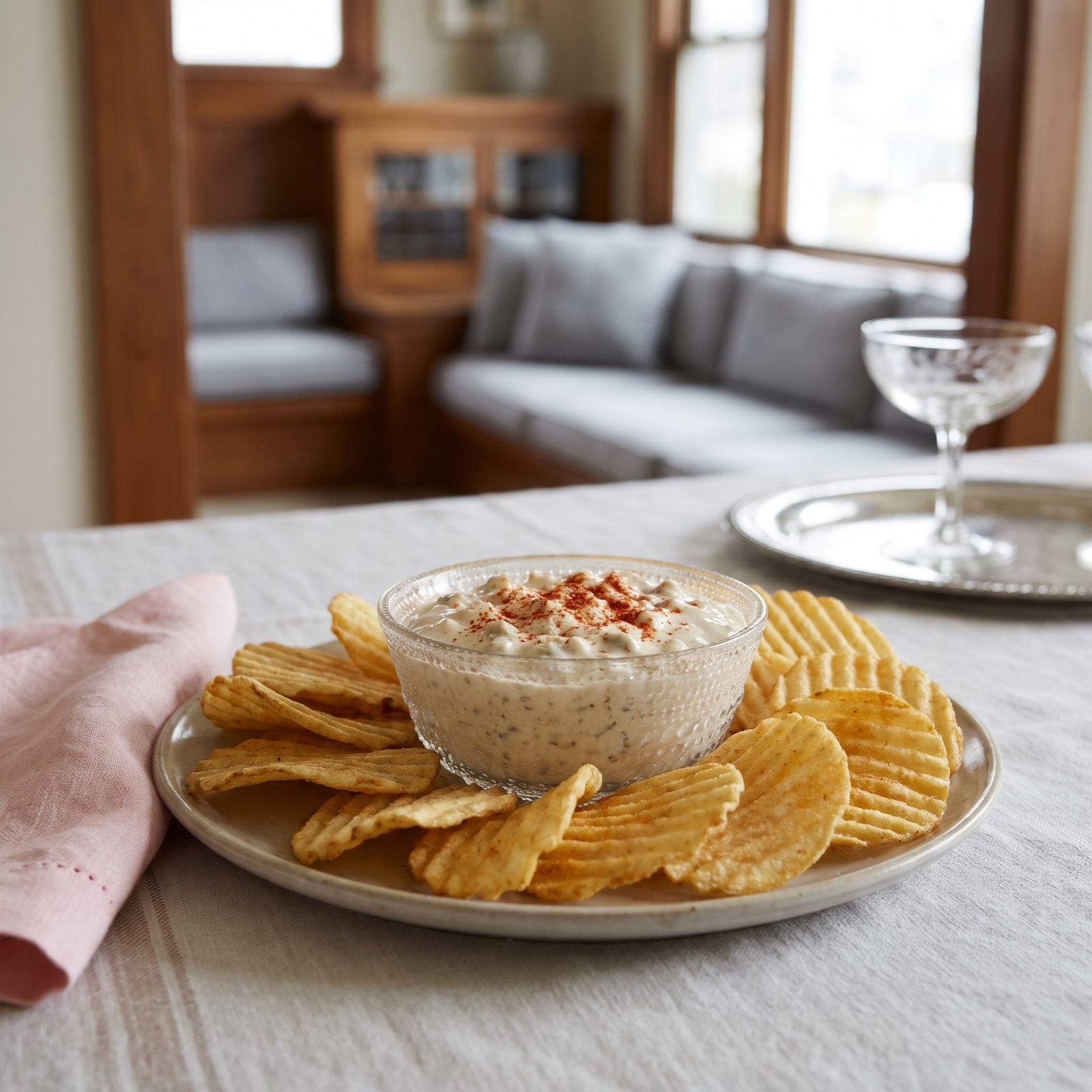
Sour cream and cream cheese beaten smooth, a can of minced clams stirred in with a little of the juice, lemon, a shake of Worcestershire. That’s the dip. The chips had to be the wavy ridged kind, strong enough to survive a vigorous scoop without snapping.
It sat in a pressed-glass bowl in the middle of the chips and vanished by the second round of drinks. Canned clams doing the heavy lifting of an appetizer, and nobody thought twice about it.
7. Bacon-Wrapped Rumaki Speared on Toothpicks
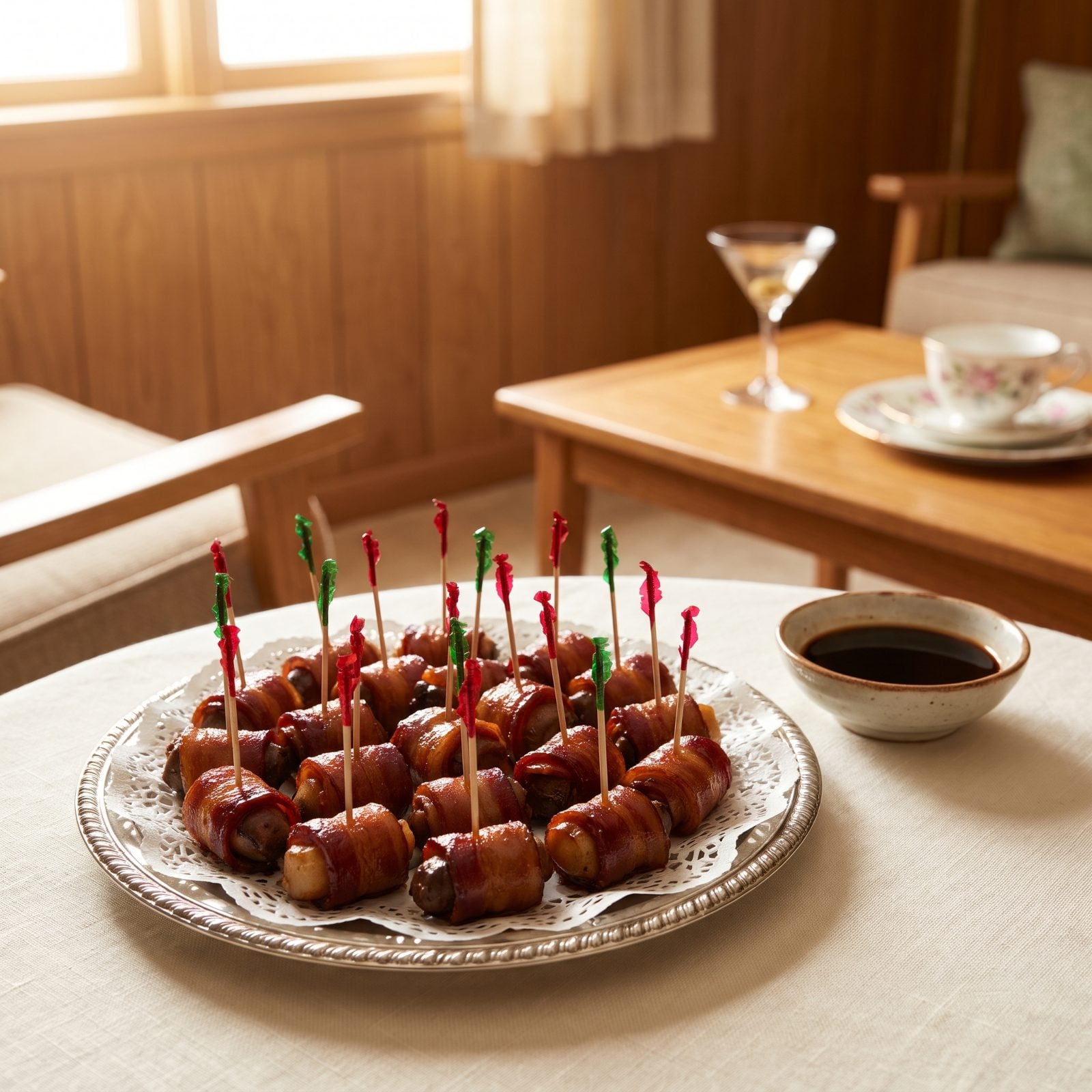
Chicken liver and a water chestnut, wrapped in bacon, marinated in soy and brown sugar and ginger, then broiled until the bacon lacquered up shiny. The tiki craze crept into the suburban luncheon through dishes exactly like this.
The frilled toothpick was not optional. It was the serving system and the decoration at once. A hostess made rumaki when she wanted the afternoon to feel a little worldly, a little Polynesian, a little beyond the usual relish tray. Chicken livers at a ladies’ lunch? That would send a modern brunch crowd into mild shock.
6. A Silver Relish Tray of Pickles, Olives, and Pickled Everything
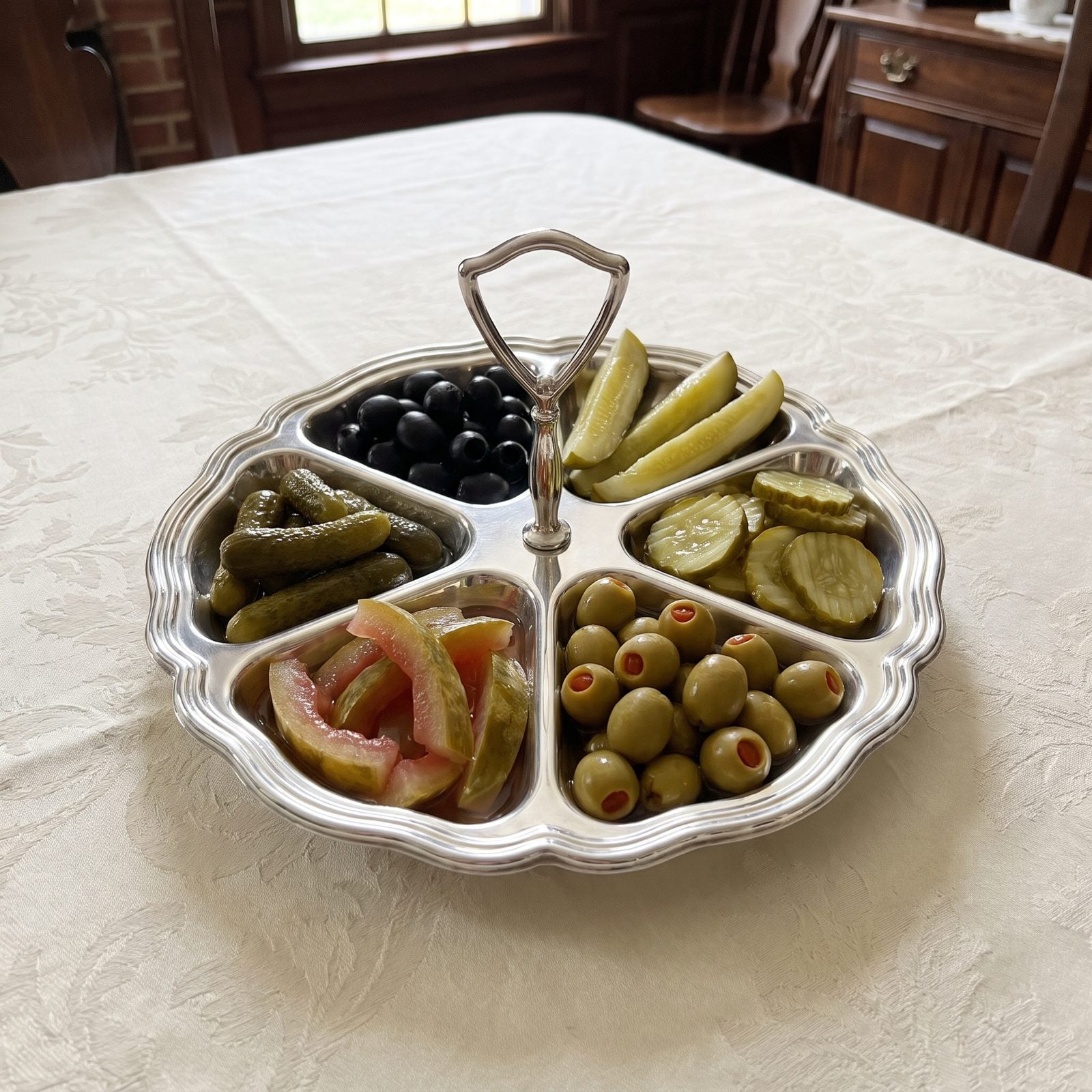
The relish tray was its own event. A divided silver dish with little compartments, each holding something briny: dill spears, bread-and-butter chips, black olives, stuffed green olives, sweet gherkins, maybe a lonely section of ruby-red pickled watermelon cubes nobody touched.
It wasn’t a course so much as a landscape of condiments masquerading as food. Out it came, polished, for every gathering, then straight back to the cabinet after. A modern table might offer a small ramekin of cornichons and call it charcuterie. The 1960s hostess offered six kinds of pickle and a proper silver vessel to hold them.
5. Radish Roses Perched on a Bed of Crushed Ice
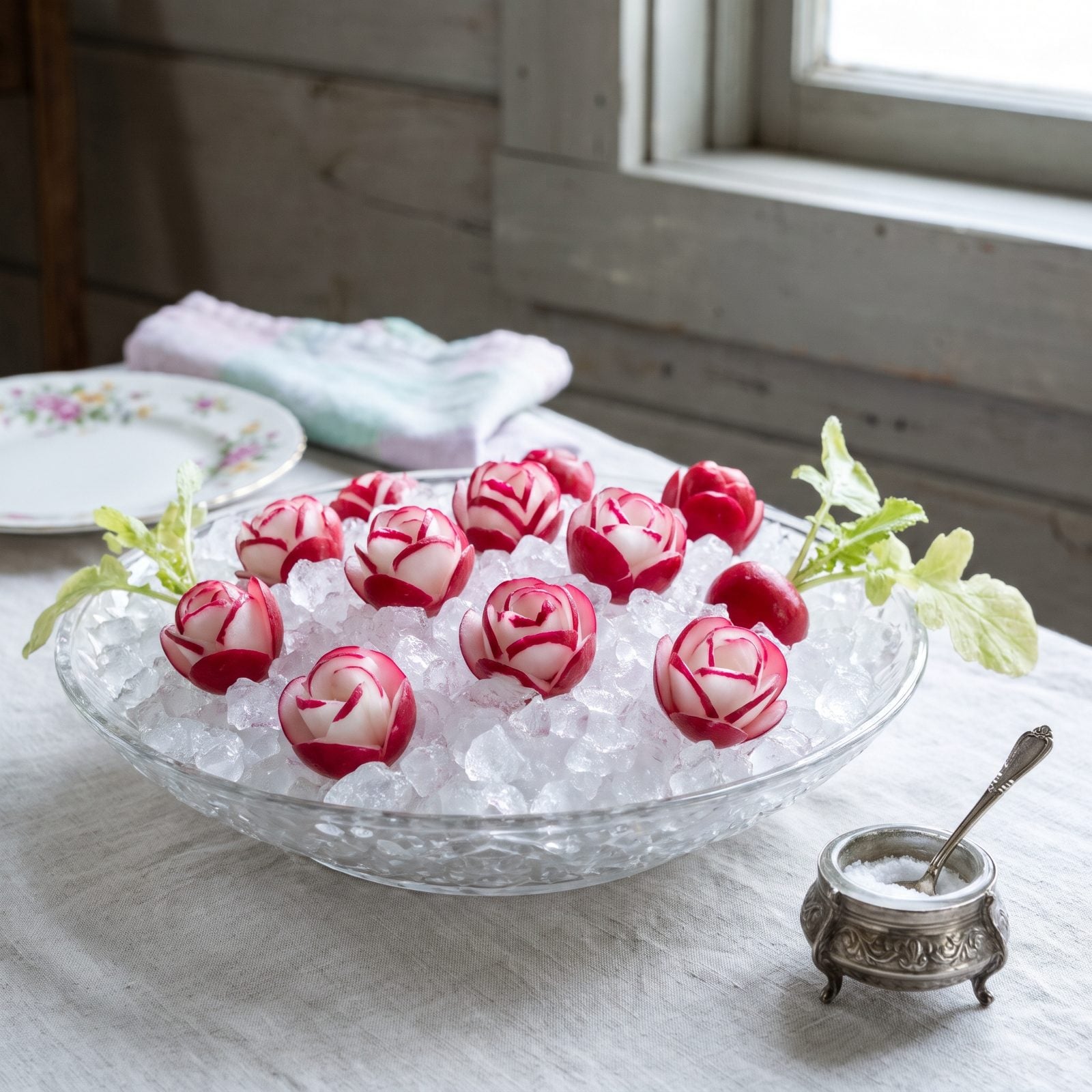
This one took real knife work. A radish, cut with careful petal slices around the edges, then dropped into ice water until the cuts bloomed open like a flower. You arranged them on crushed ice with a little dish of salt alongside.
Barely food, really. Mostly they were proof that someone had spent her whole morning carving vegetables into decorations, and that kind of unhurried, decorative effort feels like it belongs to another century entirely.
4. Glazed Copper Penny Carrots, Sweet and Sliced Thin
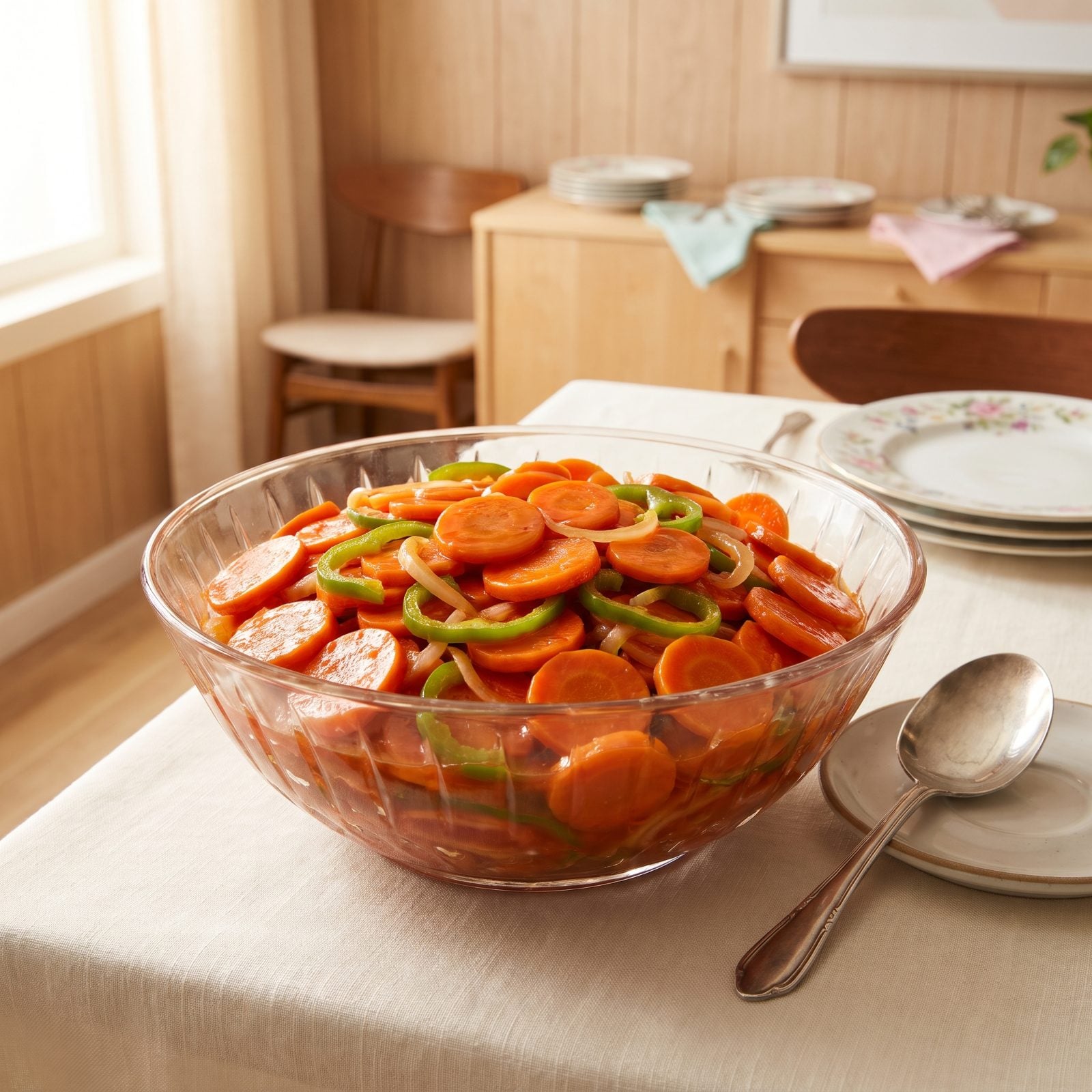
A salad that was really a candied vegetable. Carrot rounds cooked soft, then marinated in a sweet-sour glaze of tomato soup, sugar, vinegar, and oil, with onion and green pepper thrown in for color.
The slices looked like copper coins stacked in the bowl, which is exactly how the dish got its name. It sat in the icebox overnight and got better the second day, which made it the perfect thing to carry to a potluck luncheon. Condensed tomato soup used as a dessert-adjacent dressing for carrots. A modern brunch crowd would need a minute to process that one.
3. A Chilled Tomato Juice Cocktail in a Frosted Coupe
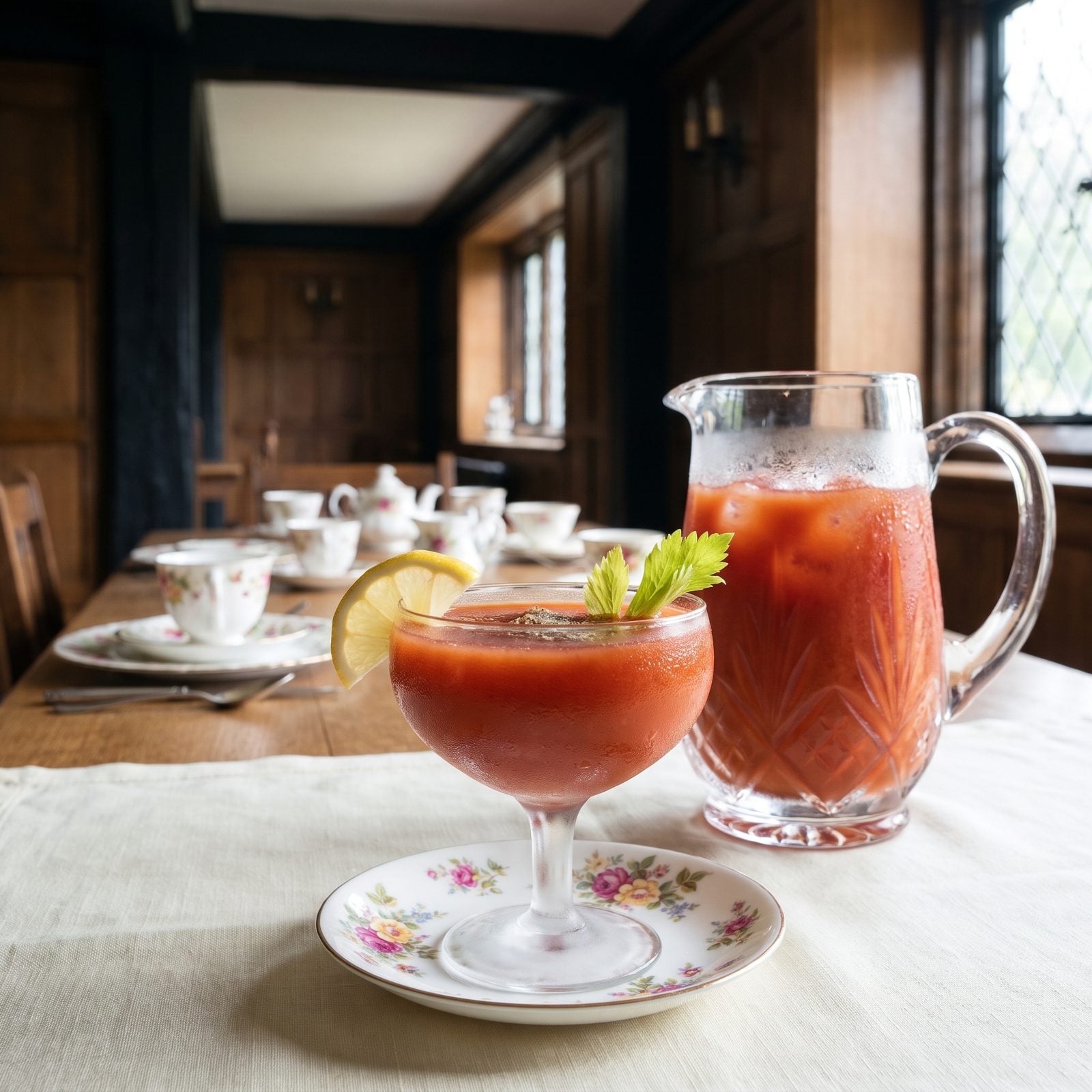
Not a Bloody Mary. No vodka, no celery stalk the size of a baton, no pickle skewer. Just cold tomato juice seasoned with lemon, a little Worcestershire, and celery salt, poured into a stemmed glass and served as the opening course before anyone touched a sandwich.
It arrived chilled, sometimes with a tender celery leaf, sometimes plain. The idea of leading a midday meal with a glass of savory tomato juice has nearly vanished from American tables. And honestly? I’d take one right now. There’s something clean and bracing about it that a mimosa never quite manages.
2. Sherbet Punch Fizzing in the Cut-Glass Bowl
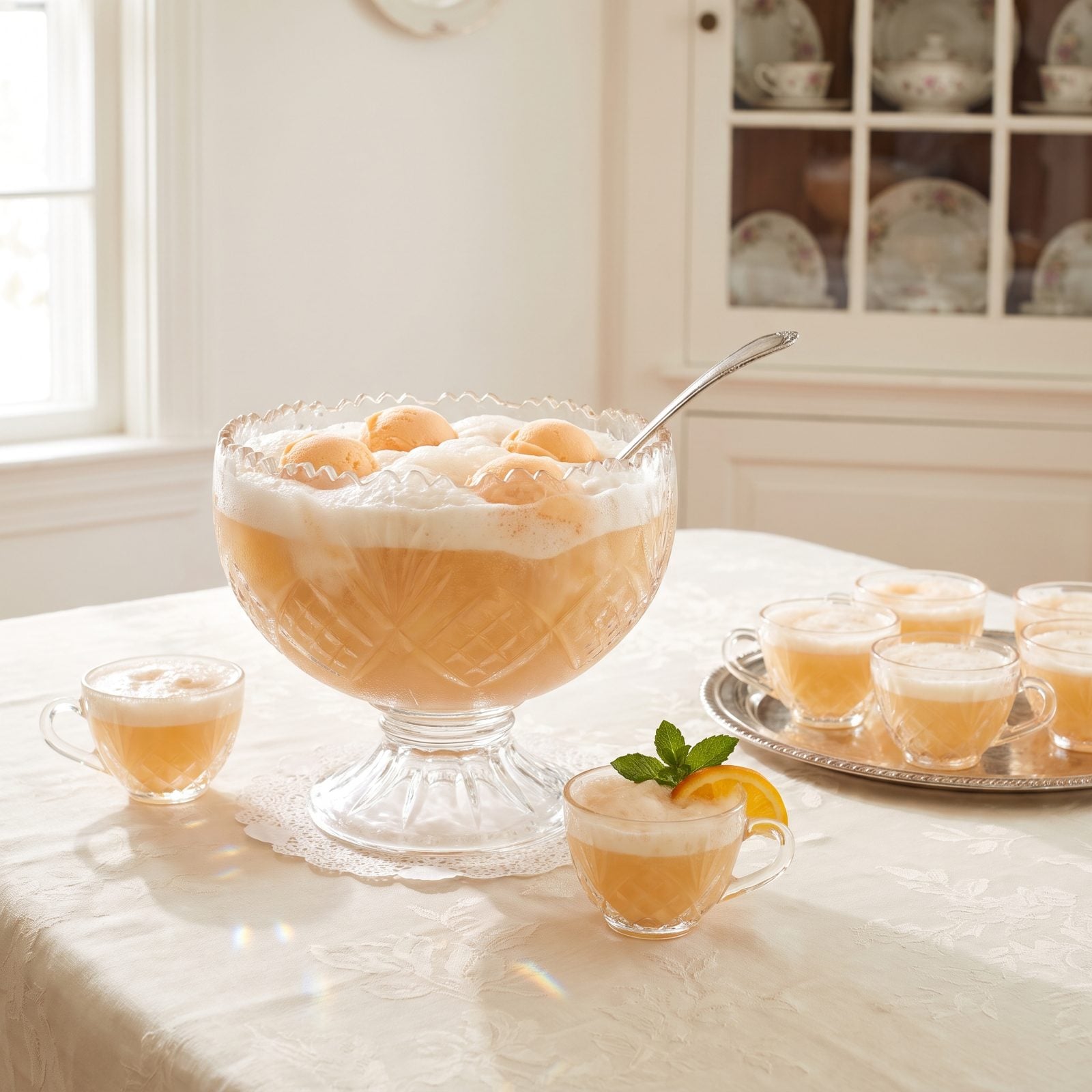
Scoop a brick of orange sherbet into a bowl of ginger ale and watch it foam. That hiss, that pale creamsicle froth climbing the sides of the cut-glass bowl, was the sound of a luncheon starting. No bartender, no shaker — just two ingredients and a silver ladle.
The clever part was how it changed as it sat. Early guests got cold fizz while latecomers got something closer to a float, the sherbet half-melted into a sweet orange slush. Nobody complained either way.
You won’t find this at brunch now. We traded the punch bowl for a bottomless carafe and lost the theater of it. A modern table would read it as a dessert, maybe a kids’ party drink. In 1965 it was the welcome, the icebreaker, the thing a hostess ladled while asking after your mother.
1. Hot Bouillon Sipped From a Handled Cup
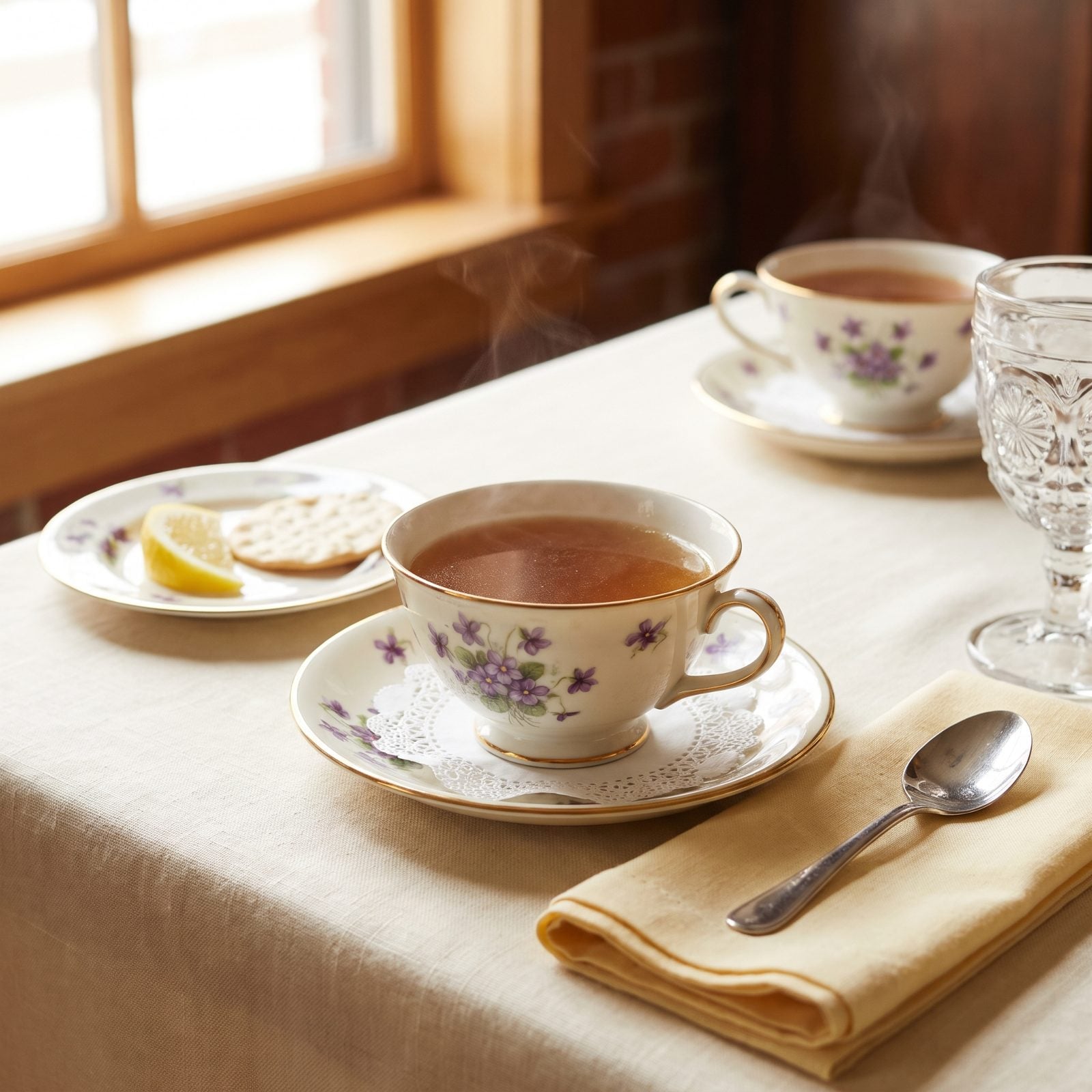
Soup you drank instead of spooned. Clear bouillon, poured steaming into a gold-rimmed, violet-sprigged china cup with two small handles, passed around before the chicken salad arrived. You hooked a finger through its handle the way you would a teacup on a cold morning.
Sounds like nothing. It was everything. A hot cup of broth settled the table, gave everyone’s hands something to do, and bought the hostess ten minutes in the kitchen. And the handle mattered — it meant you could sip, not spoon, and keep the conversation going.
Walk into brunch today, ask for beef bouillon in a handled cup, and you’d get a confused look. We moved on to tomato bisque in wide bowls and espresso in paper cups. But there was a quiet grace to opening a meal with something warm and clear, no garnish fighting for attention, just salt and beef and steam.